
Maple Porter
intro
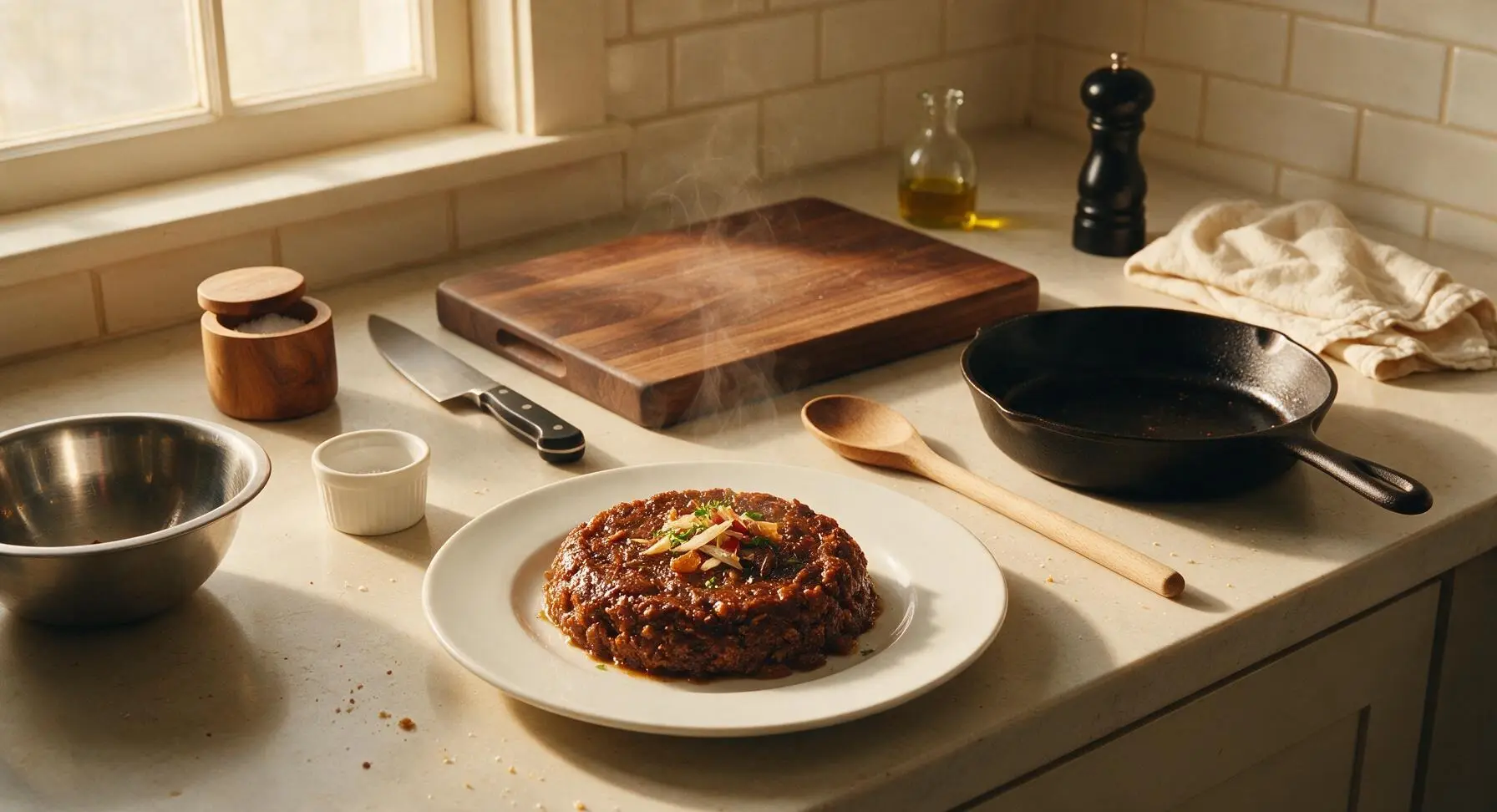
Rich, roasty homemade porter layered with warm maple sweetness, smooth chocolate malt notes, and a dry, creamy finish—perfect for sipping on crisp autumn evenings.
Ingredients
Steps
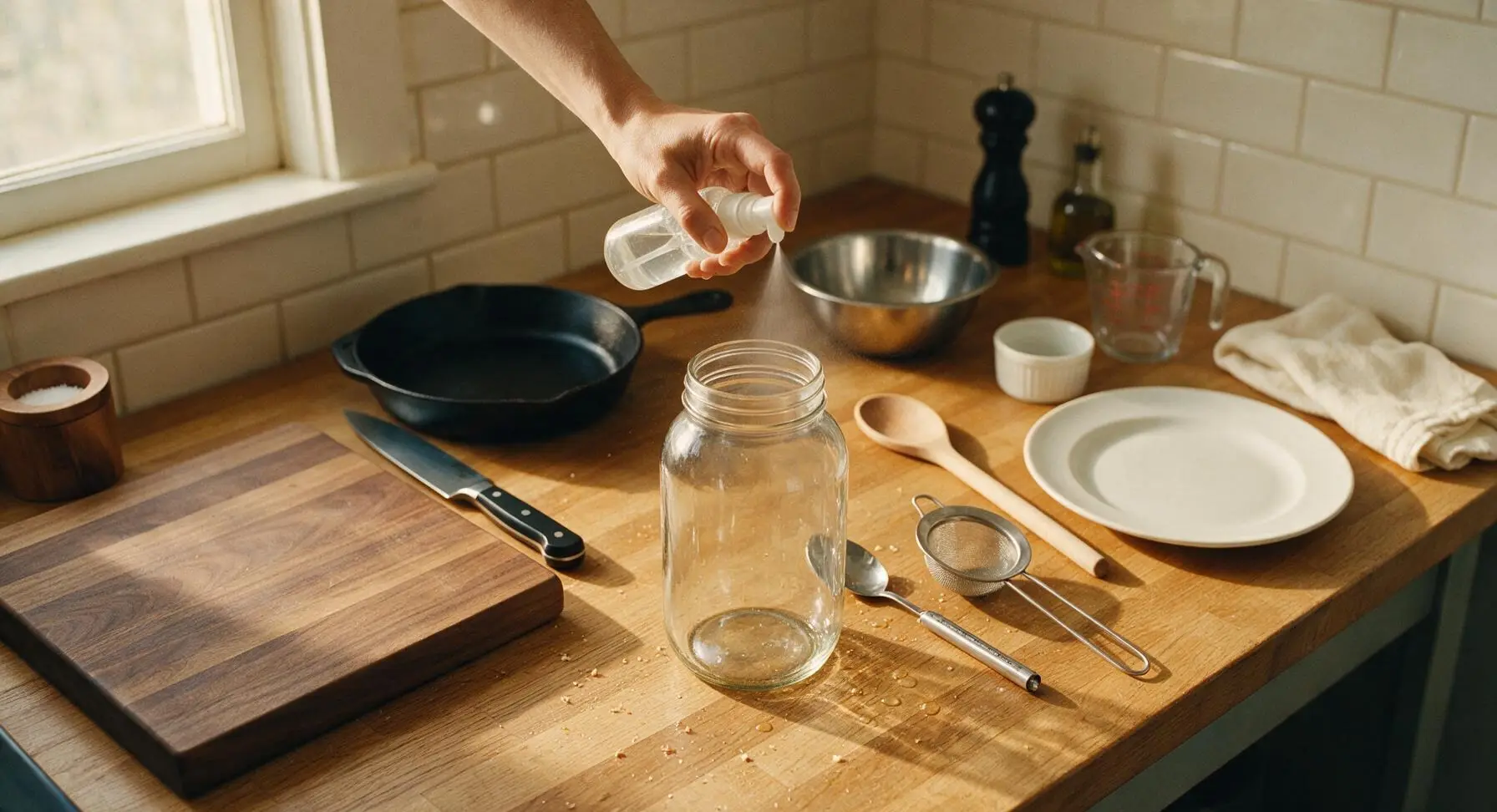
Sanitize All Equipment
Mix no-rinse food-grade sanitizer per package instructions to create a sanitizing solution. Spray all surfaces that will come into contact with cooled wort: the interior of the fermentation jug, auto-siphon, stirring spoon, strainer, thermometer probe, and swing-top bottles. Allow items to air dry completely for 5 minutes; do not wipe sanitizer away, as it leaves no residual flavor and prevents bacterial growth that causes off-flavors.
Steep Specialty Grains
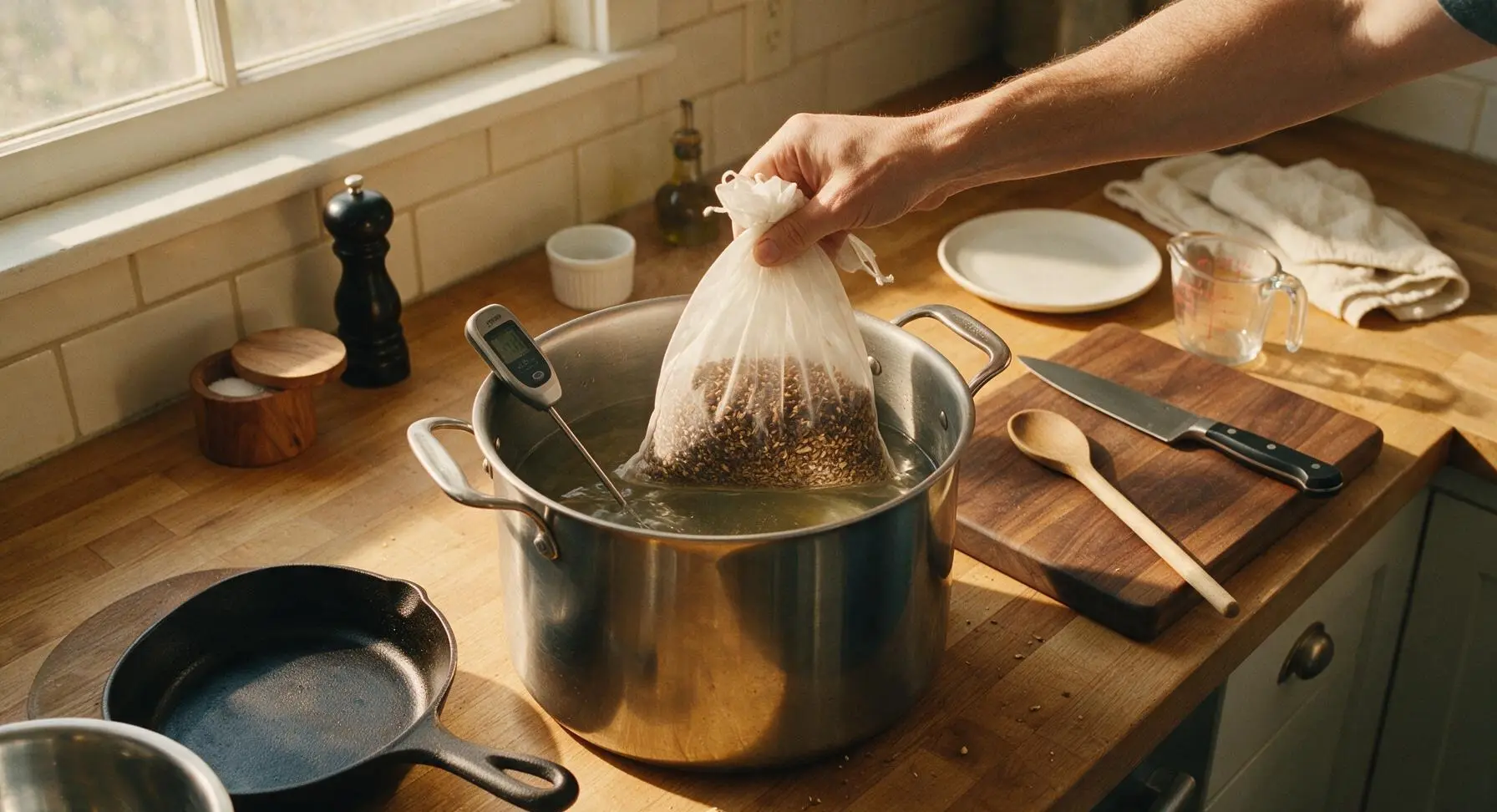
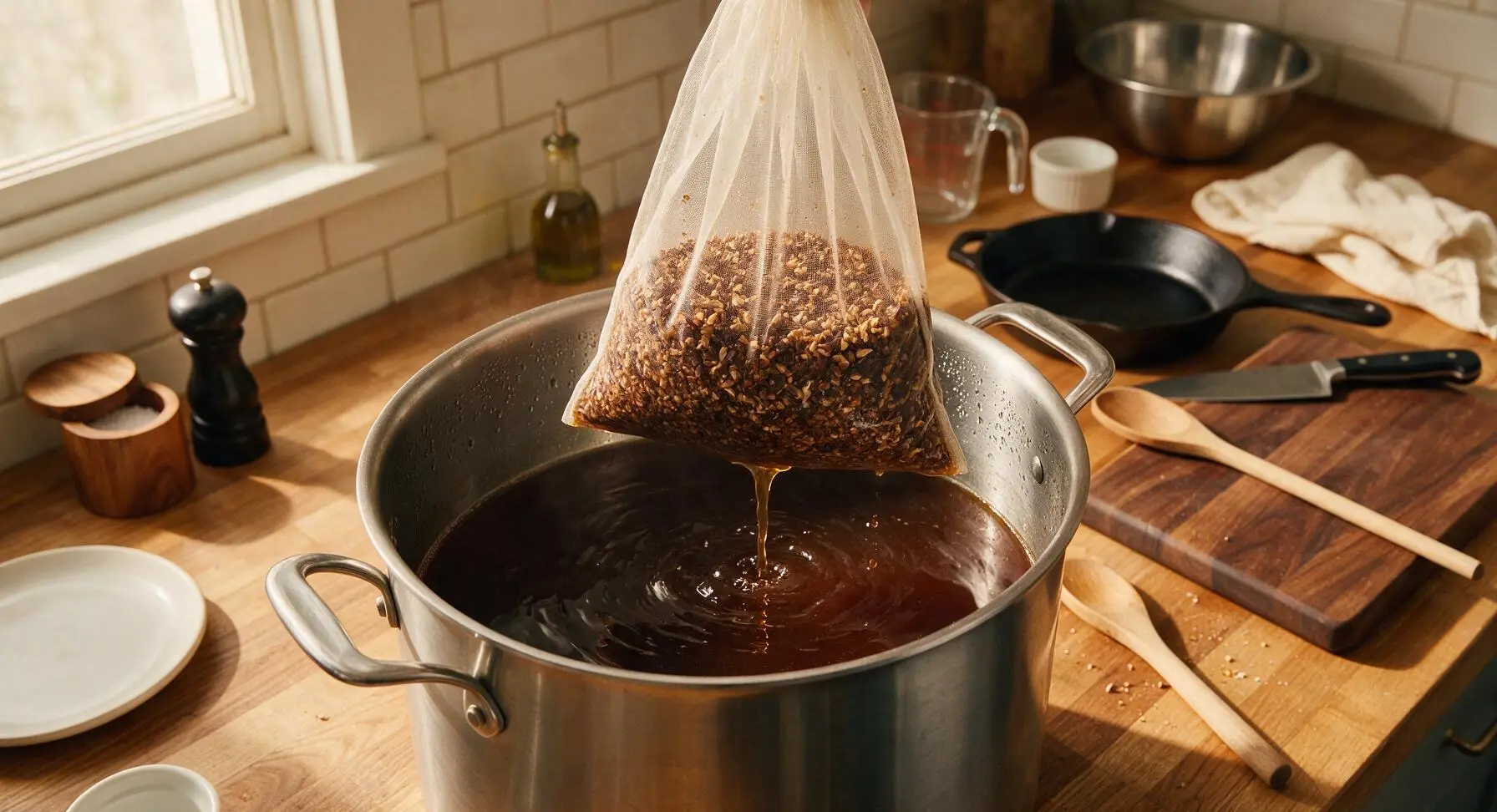
Pour 2L of filtered water into the 8-quart stainless steel stock pot, and heat to 67C (153F). Add crushed chocolate malt and caramel 60L malt to the nylon grain bag, tie the drawstring closed, and submerge fully in the heated water. Hold the temperature steady between 65-68C (150-155F) for 20 minutes, never allowing the water to boil. The water will deepen to a rich chestnut brown as sweet, roasty malt flavors leach out of the grains.
Bring Wort to Boil
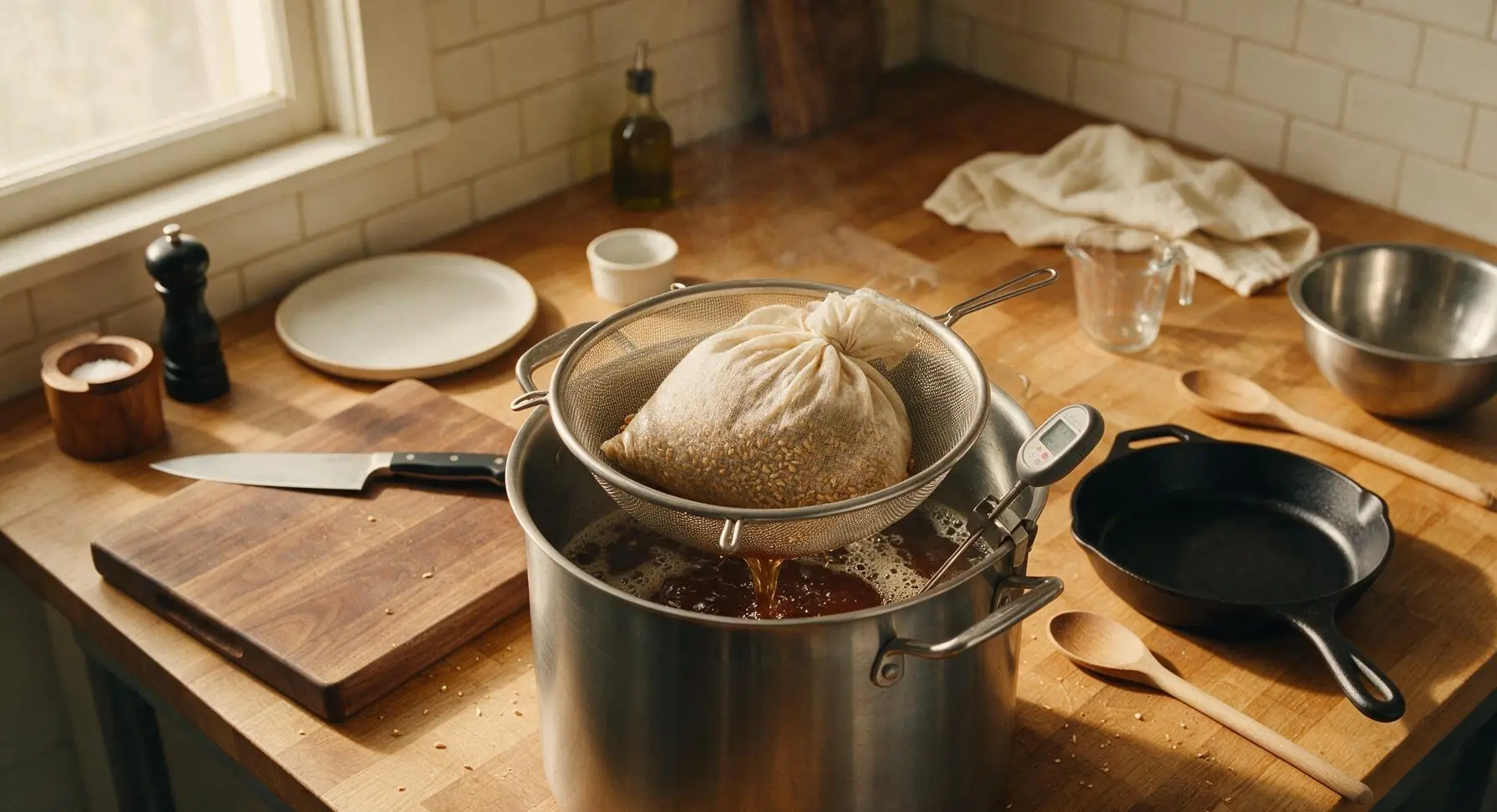
Lift the grain bag out of the pot, set it on the fine-mesh strainer positioned across the pot rim, and let it drain fully for 5 minutes. Do not squeeze the bag, as this presses harsh astringent tannins into the wort. Add the remaining 2L of filtered water to the pot, then heat over medium-high to bring the wort to a gentle rolling boil. Watch closely to prevent boilovers as the wort heats.
Add Hops and Maple
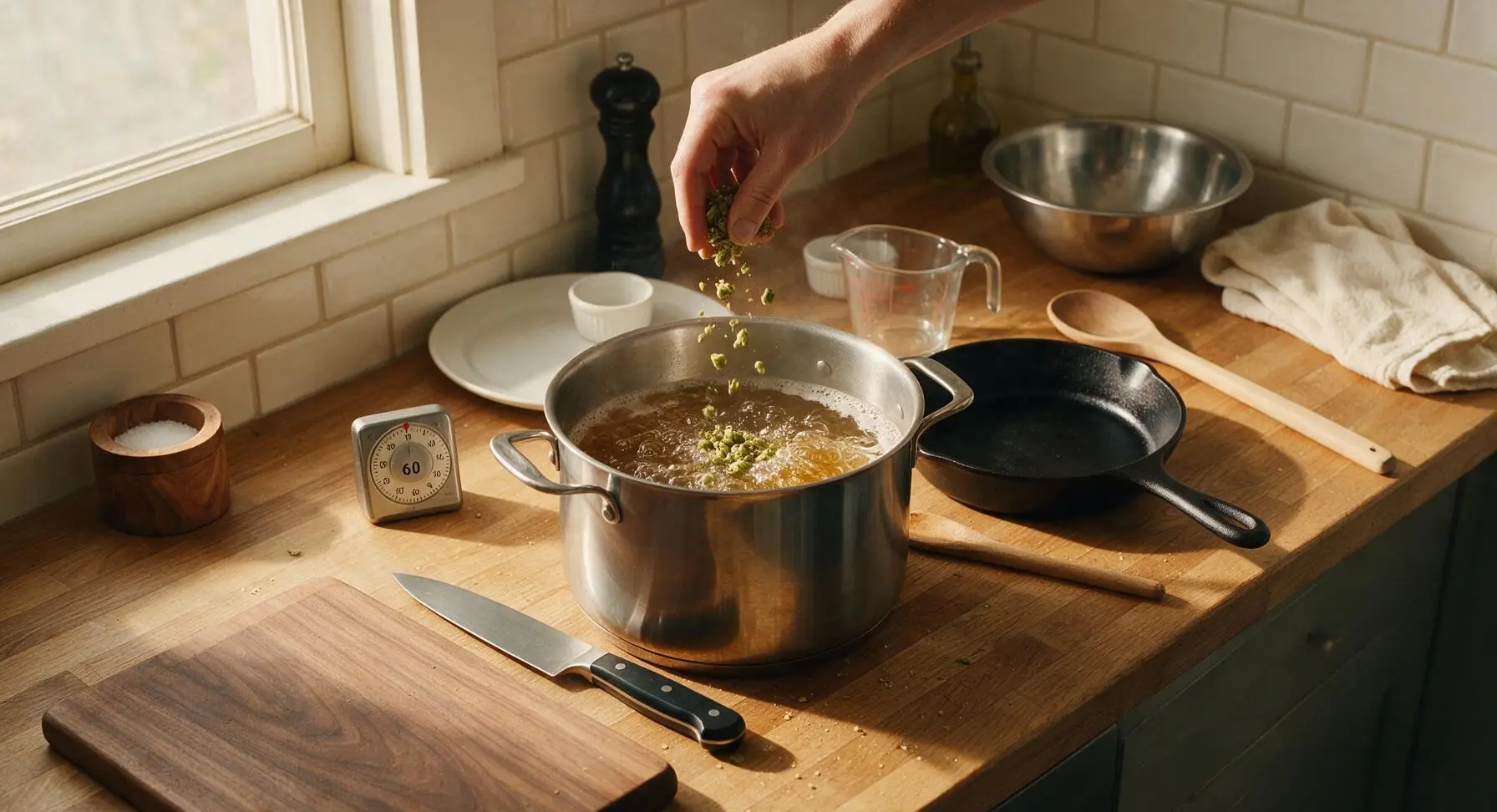
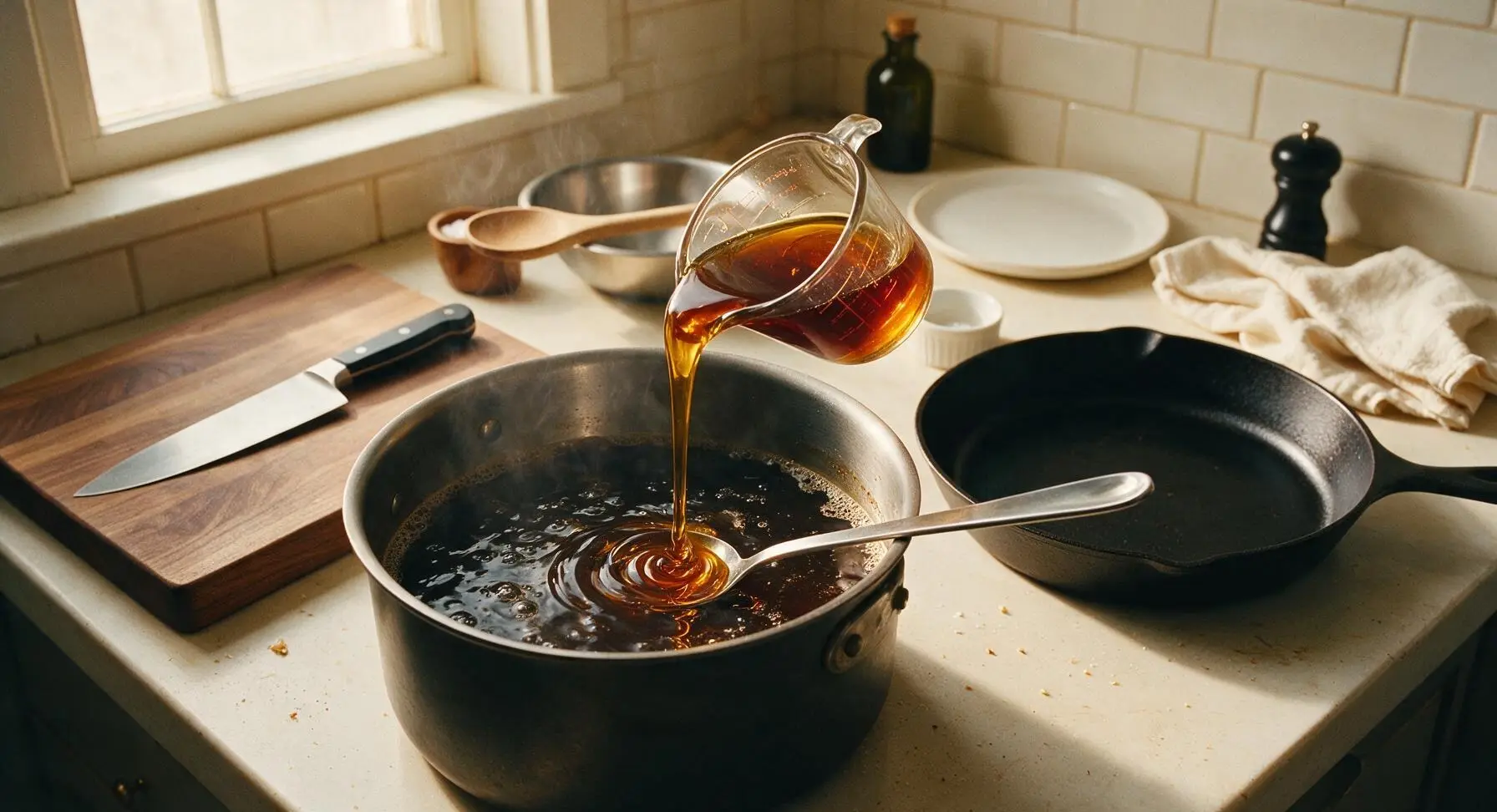
Once the wort reaches a steady rolling boil, set a timer for 60 minutes. Add 10g of East Kent Goldings hops at the start of the boil to provide balanced bitterness. With 10 minutes remaining in the boil, pour in all 120ml of dark maple syrup, stirring gently with the long stainless steel spoon to fully incorporate. With 2 minutes remaining in the boil, add the final 4g of East Kent Goldings hops to add bright, earthy aroma. Maintain a gentle rolling boil for the full 60 minutes.
Cool Wort Rapidly
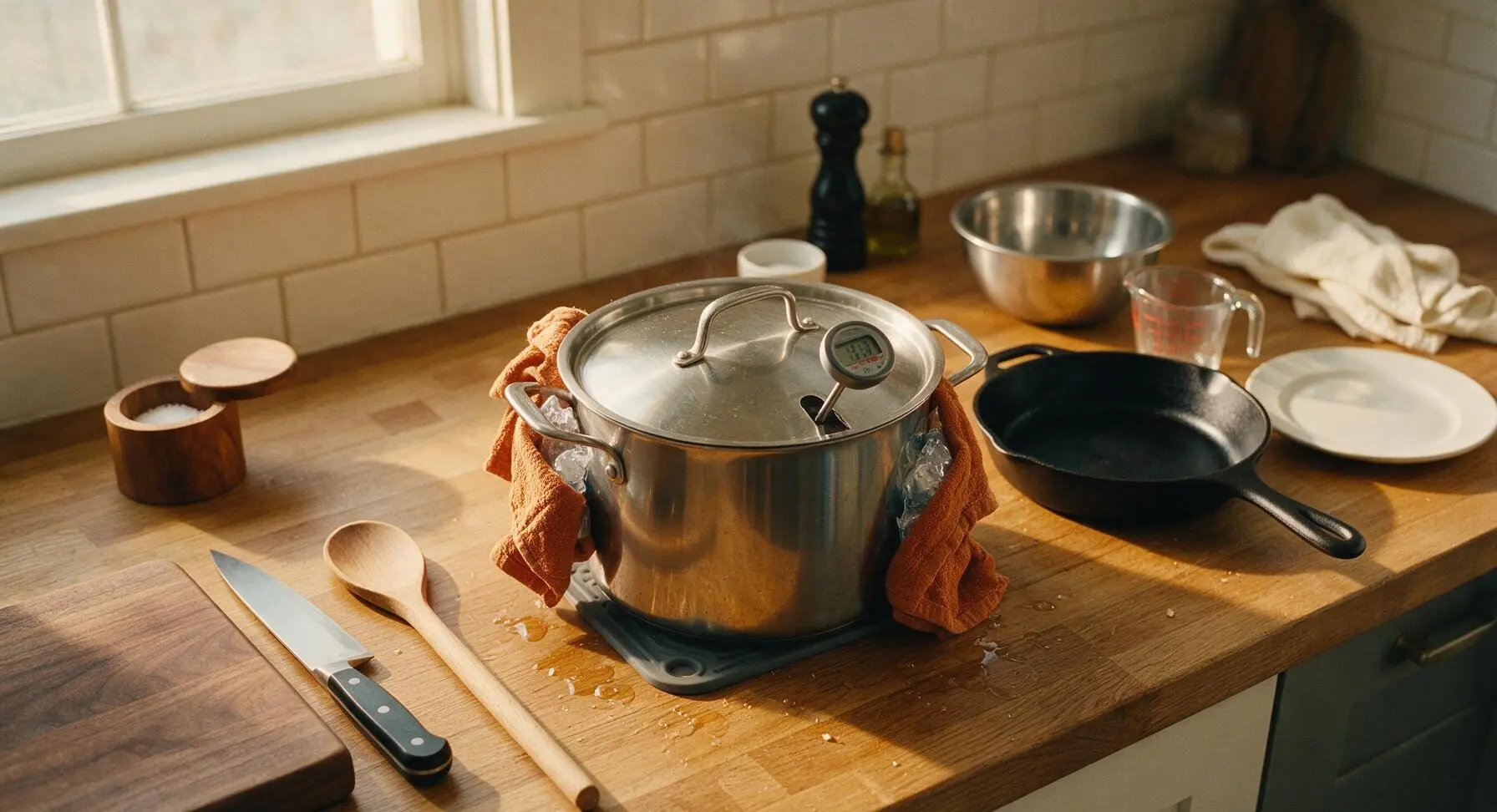
When the 60-minute boil finishes, turn off the heat and place the lid securely on the stock pot. Set the pot on the silicone trivet on the counter, and wrap frozen ice packs in the corner of the burnt orange towel to tuck around the pot sides to cool the wort to 21C (70F) in 15-20 minutes. Check temperature regularly with the sanitized thermometer, stirring gently every 5 minutes to distribute coolness evenly. Do not allow any un-sanitized surfaces or water to touch the wort.
Transfer to Fermenter
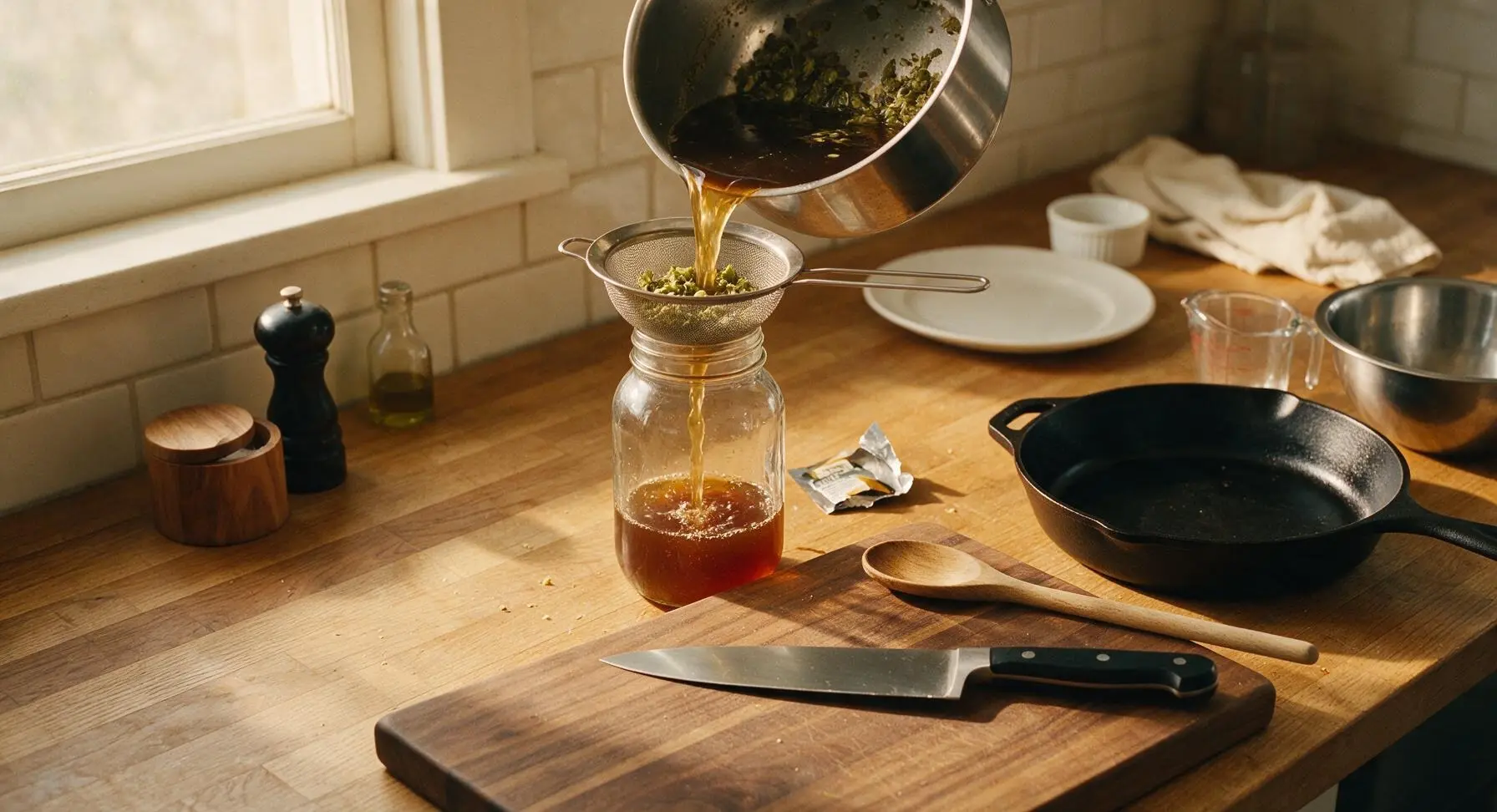
Once the wort cools to exactly 21C (70F), pour it through the sanitized fine-mesh strainer into the 1-gallon glass fermentation jug to filter out hop solids. Tear open the packet of US-05 ale yeast, and sprinkle the dry yeast evenly across the surface of the wort. Seal the jug with a sanitized airlock filled halfway with sanitizer solution, then move the jug to a dark, temperature-stable 18-21C (65-70F) space to ferment for 2 weeks, until no more bubbles rise through the airlock.
Prime and Bottle Beer
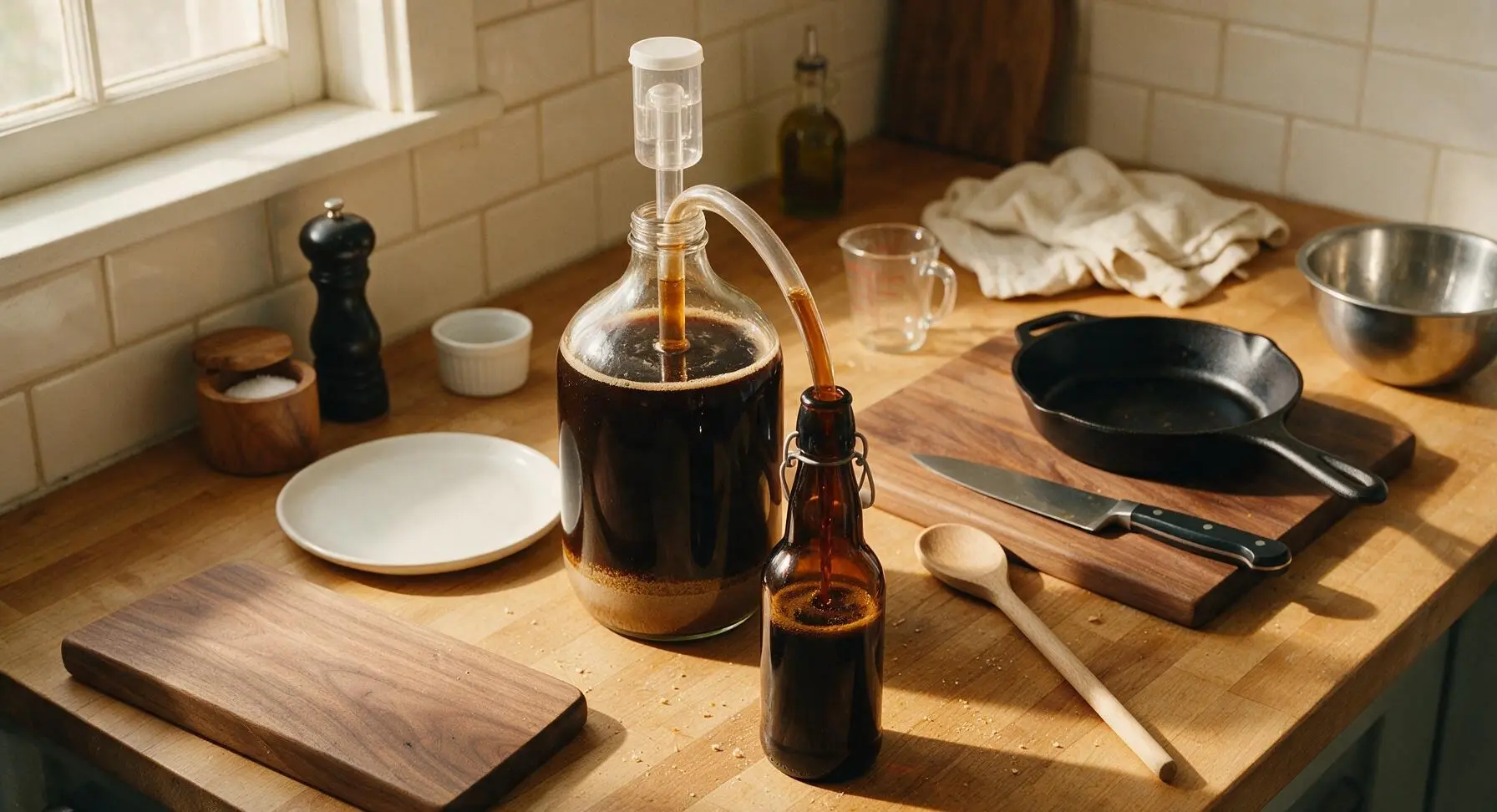
After 2 weeks of fermentation, boil 25g of dextrose priming sugar in 50ml of water for 5 minutes, let cool fully, and pour into the bottom of a sanitized bottling vessel. Use the auto-siphon to gently transfer the fermented porter from the glass jug into the bottling vessel, taking care not to disturb the thin tan layer of yeast sediment at the bottom of the jug. Siphon the beer into sanitized amber swing-top bottles, leaving 2.5cm (1 inch) of headspace at the top of each bottle, then seal tightly with the metal swing clasps.
Condition and Serve
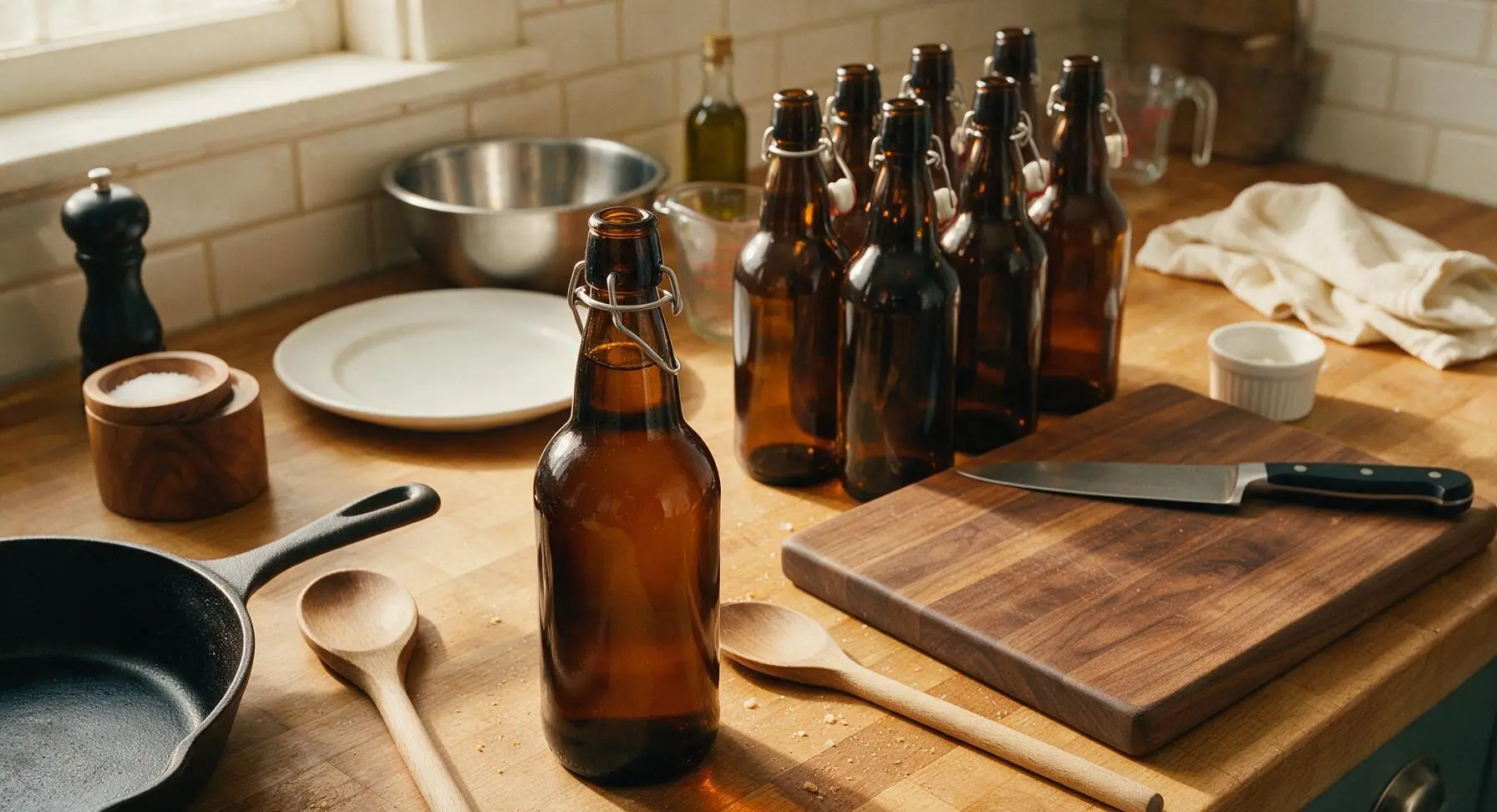
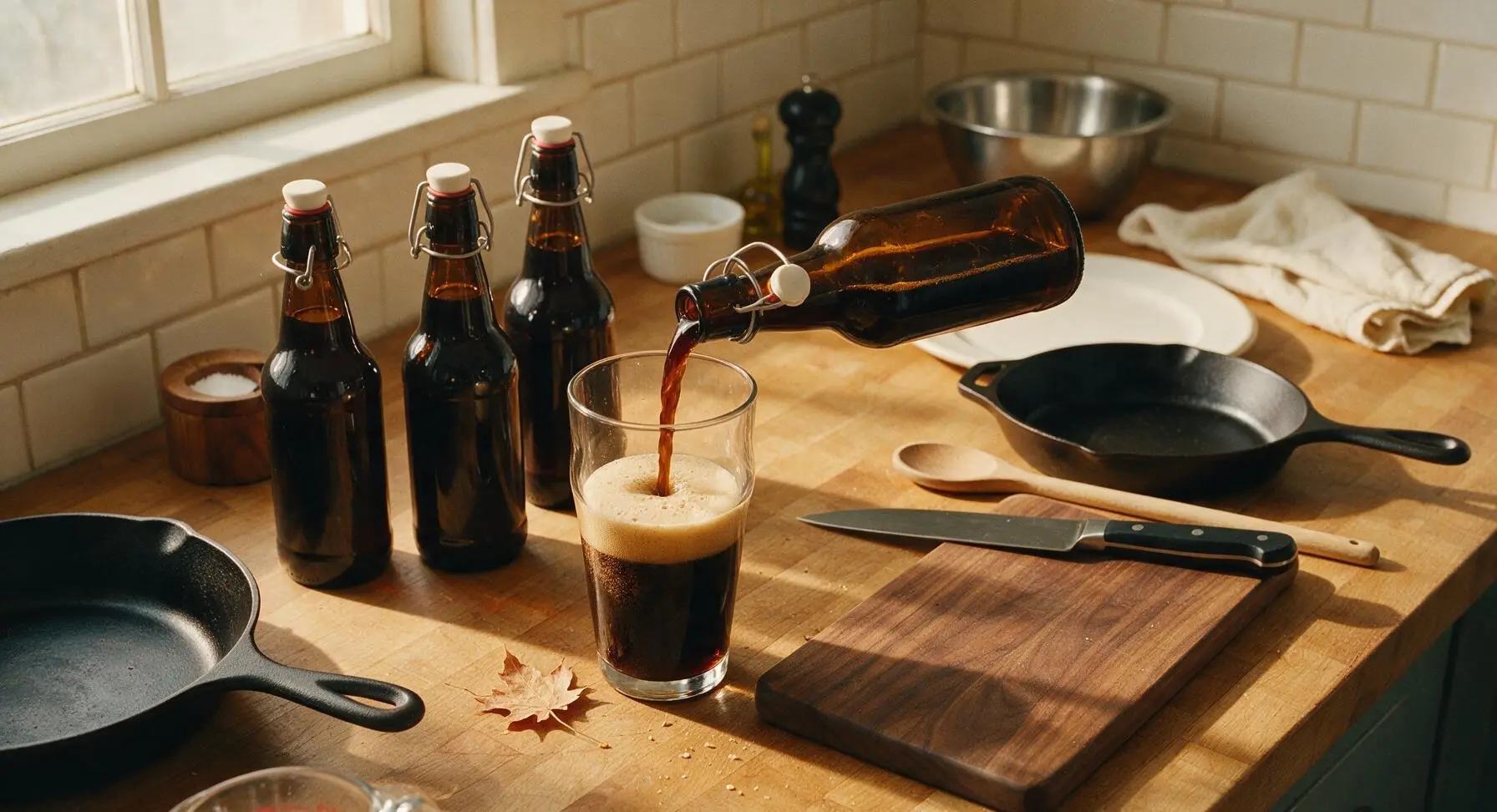
Store sealed bottles in the same dark, room-temperature space for 2 full weeks to allow natural carbonation to develop. Once carbonation is complete, chill bottles in the refrigerator for at least 24 hours before serving. Pour gently into a pint glass, leaving the thin layer of yeast sediment at the bottom of the bottle, to serve.
Tips
2.Resist the urge to squeeze the grain bag after steeping: squeezing presses bitter, astringent tannins from grain husks into the wort, which will leave a dry, puckering aftertaste in your finished porter.
3.Do not chill bottles immediately after filling: yeast need room temperature to consume the priming sugar and create carbonation. Chilling too early will stall yeast activity, resulting in flat, under-carbonated beer even after weeks of waiting.






OMG, this maple porter turned out so much better than the store-bought stuff I usually grab for game nights! I followed the recipe exactly, only added a tiny extra splash of Vermont maple syrup because I had a leftover bottle from a trip, and my buddies were begging me to brew a second batch before the first keg even kicked. Total game changer for our weekend tailgates. Cook time was totally manageable even as someone who’s only been homebrewing for 6 months!
I made this for my husband’s annual backyard bonfire last weekend and even my brother-in-law who swears he only drinks cheap light lager went back for three glasses! I was worried the medium difficulty meant I’d mess it up since I’ve never brewed anything before, but the step-by-step instructions were so clear. The maple flavor isn’t overpowering at all, just warm and cozy — perfect for crisp fall evenings. SO good.
Tried this recipe last night and wow, I was not expecting the roasted malt to pair so nicely with the maple. I did cut the 1 hour 15 minute cook time by about 10 minutes because I got distracted watching the football game and it still turned out great! Next time I’m gonna add a pinch of cinnamon to see how that hits, might be chef’s kiss for Thanksgiving pre-game drinks.
Brought a growler of this maple porter to our neighborhood potluck last weekend and people were literally coming up to me all night asking for the recipe! I was worried the maple would make it too sweet, but it’s perfectly balanced with that deep, roasty porter flavor. My only note is that you definitely want to use real maple syrup, not the fake pancake stuff — I tested a tiny batch with the fake stuff first and it just tasted off. 10/10, will be brewing this all fall and winter!
Solid recipe overall! The flavor was great once it was fully carbonated, but I ran into a little hiccup with the initial boil — the instructions didn’t mention how high to keep the heat, so I ended up with a little boil-over that made a mess on my stovetop. Once I adjusted the heat it went smoothly, though. The end result was definitely worth the cleanup, I’ll just know to keep a closer eye on it next time.
Just cracked open my first bottle of this last night after letting it condition for 2 weeks, and WOW. My dad has been homebrewing for 20 years and he said this is one of the best porters he’s ever tasted, homemade or otherwise! The maple notes come through right at the end, it’s so smooth you barely notice the ABV (which is dangerous, tbh). Can’t wait to make a double batch for our family Thanksgiving dinner this year.