
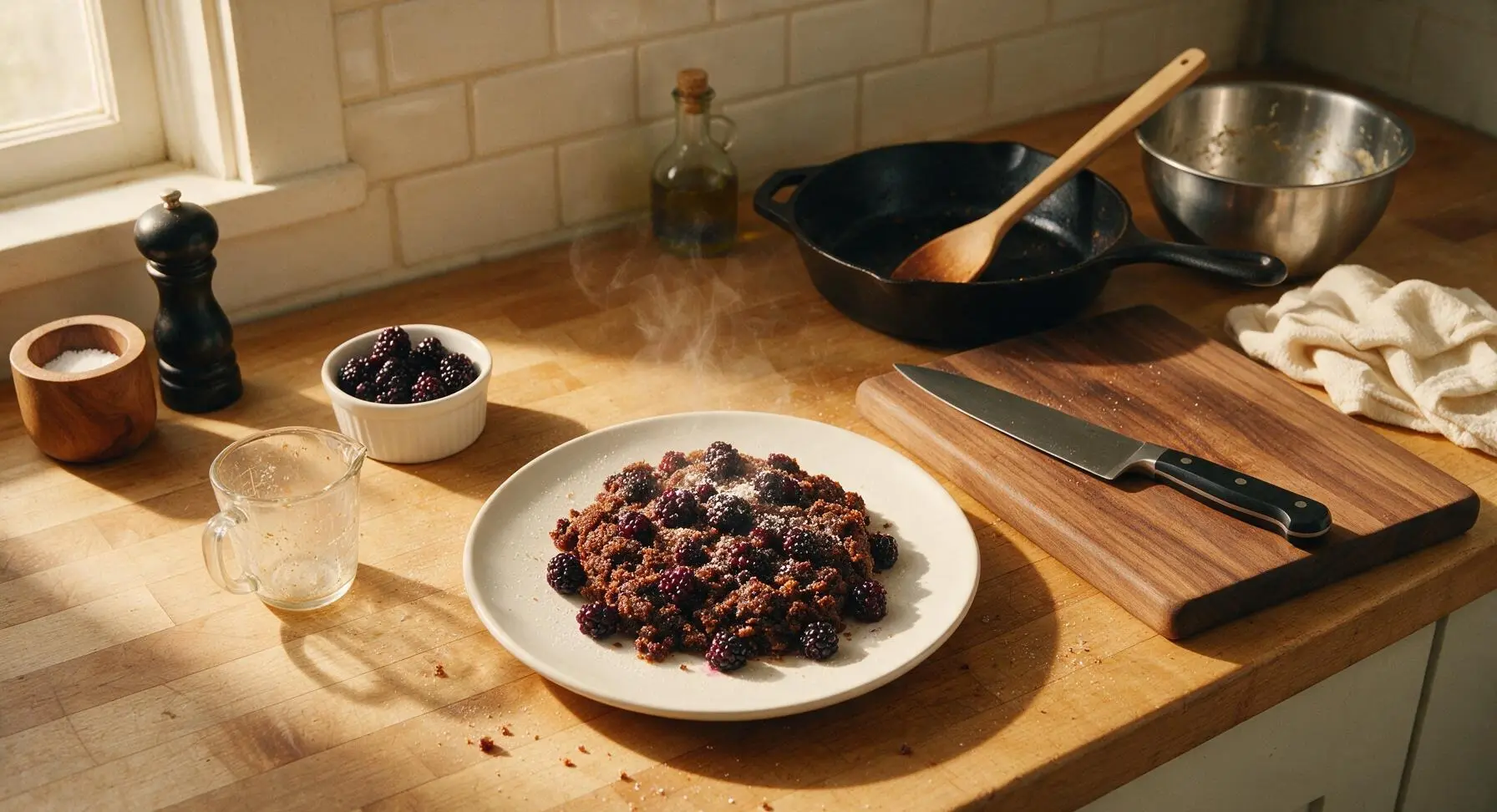
Marionberry Stout

title 1
Marionberry Stout
⏱️ cook time 1 hour (active wort boil) + 4 weeks total fermentation and carbonation
🍽️ servings 10
⚡ Difficulty medium

intro

Roasty, smooth homemade stout brightened with tart, juicy Oregon marionberries, balancing deep malt notes with bright berry sweetness, perfect for summer backyard gatherings.

Ingredients
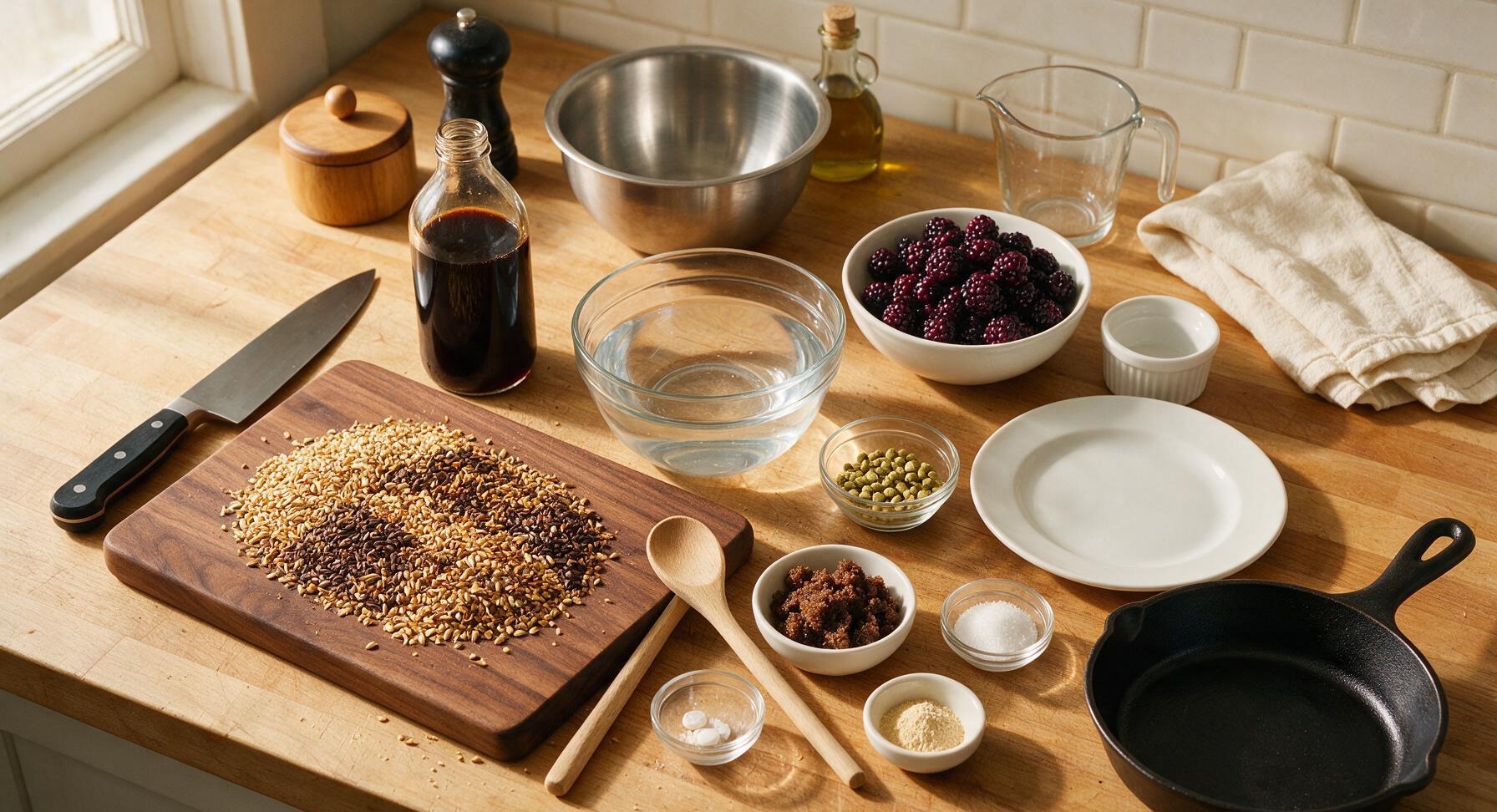
Crushed stout malt blend (pale, chocolate, roasted barley, crystal malt) 1.2 lbs
Dark liquid malt extract 1 lb (1.5 cups)
Fresh or frozen thawed marionberries 2 cups, divided
Cold filtered water 1 gallon, divided
Cascade hop pellets 0.5 oz, divided
American ale yeast 1 (5g) packet
Dark brown sugar 1/4 cup
Crushed Camden tablet 1 tablet
Priming sugar (for carbonation) 2.5 tsp (divided per bottle)

Steps

1

Sanitize Brewing Equipment

Fill the 2-gallon opaque white HDPE bucket with 1 gallon of cool water and mix in no-rinse brewing sanitizer per package directions. Submerge the stainless steel spoon, stock pot lid, strainer, funnel, carboy, airlock, auto-siphon, and swing-top bottles in the solution for 2 full minutes. Remove and air-dry on a clean section of counter; do not towel-dry to avoid introducing lint or bacteria. All surfaces that touch cooled wort must be fully sanitized to prevent off-flavors.
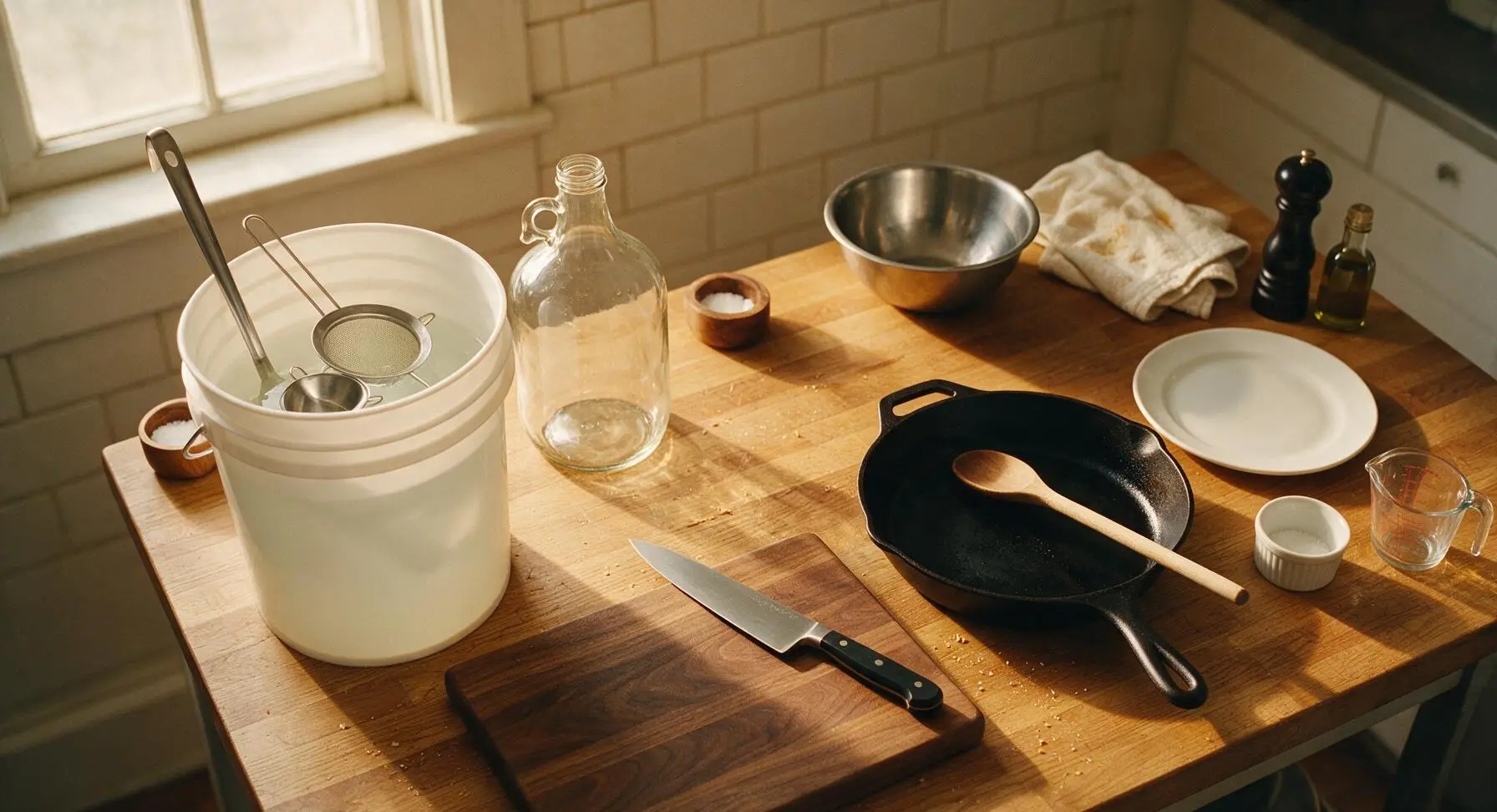
Step 1
step1:Sanitize Brewing Equipment
2

Steep Roasted Malt Grains

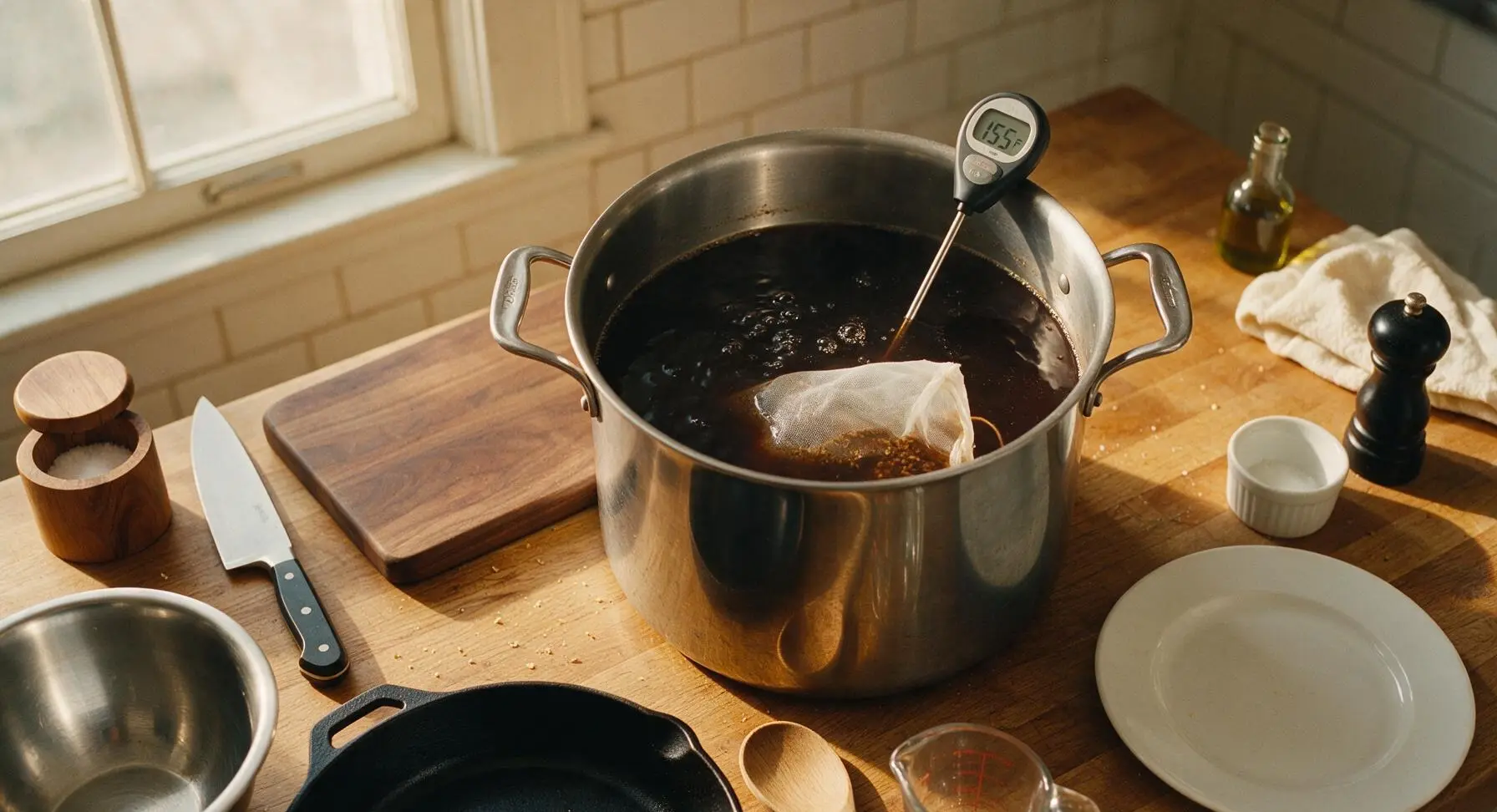
Pour 2 quarts of cold filtered water into the 8-quart stainless steel stock pot, and heat to 155°F (68°C) measured with the digital instant-read thermometer. Place the crushed roasted stout malt blend in the fine-mesh white nylon grain bag, submerge in the heated water, cover, and hold temperature steady at 150-155°F for 30 minutes. Do not let the water boil, as this will extract harsh bitter tannins from the grain husks. The water will turn a deep, rich dark brown color as the malts steep.
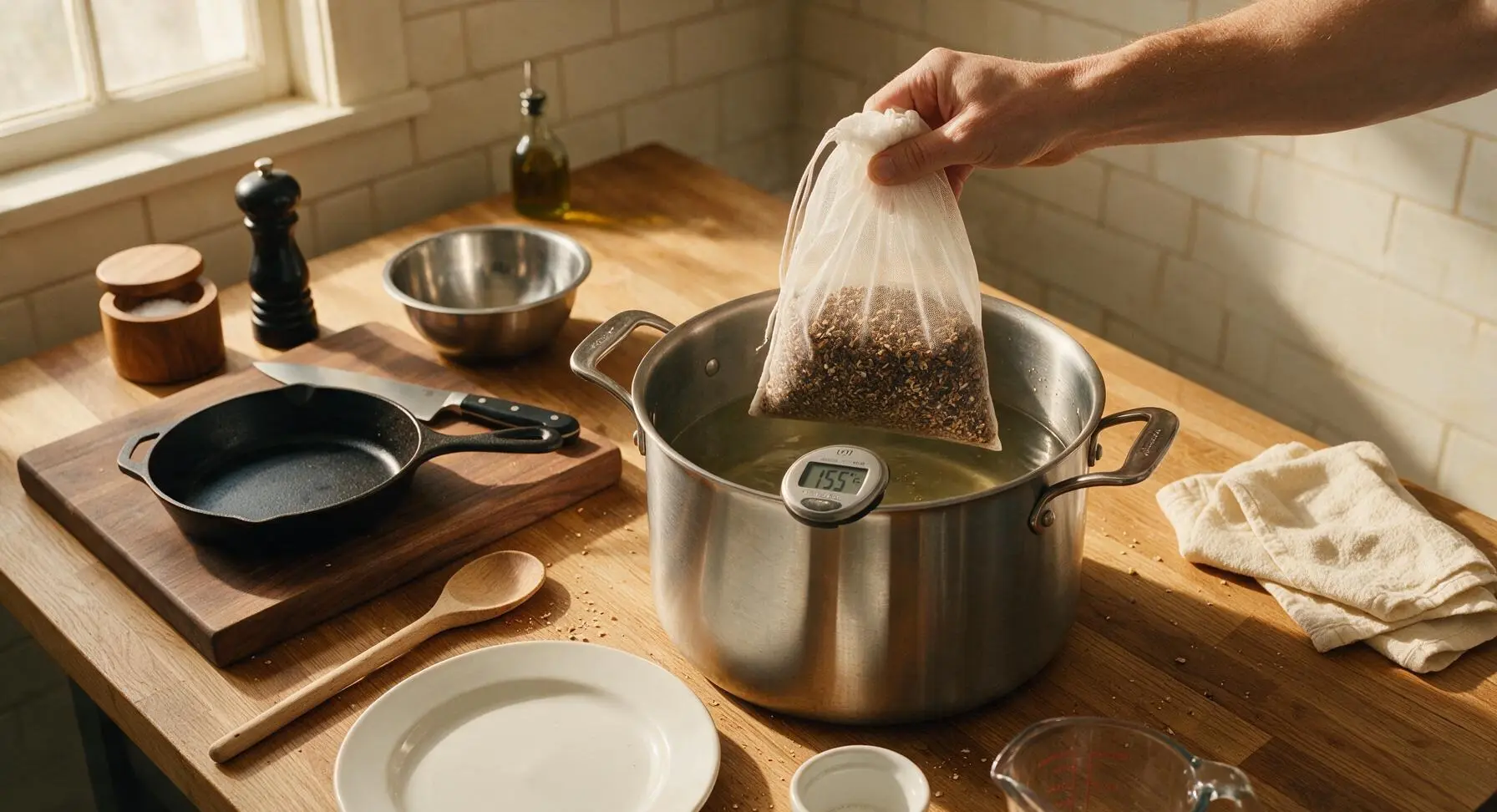
Step 2
step2:Steep Roasted Malt Grains
Step 2
step2:Steep Roasted Malt Grains
3

Boil Wort With Hops

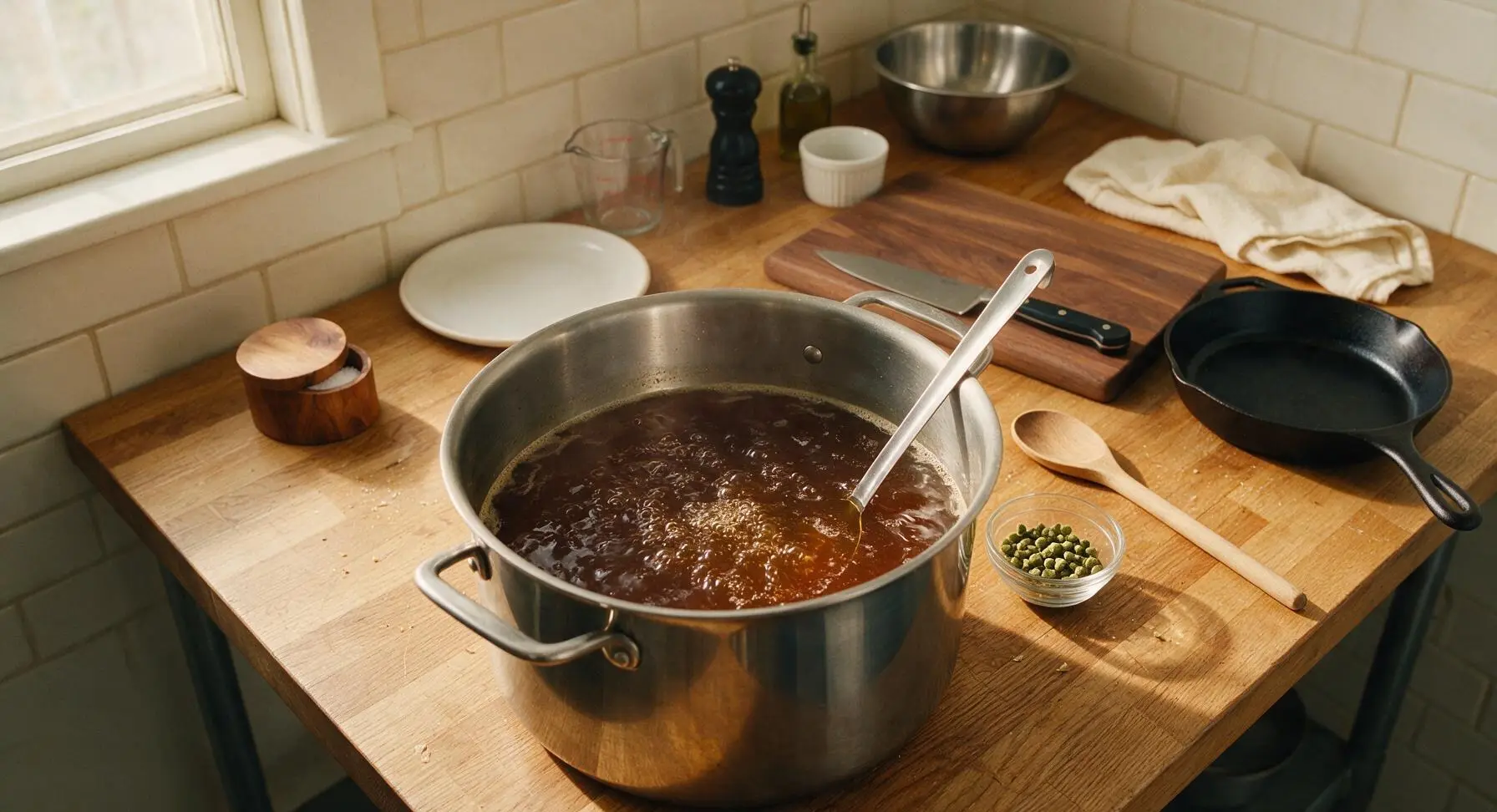
Remove the grain bag from the pot, let drain fully (do not squeeze, as this adds tannins), then bring the liquid (now called wort) to a gentle rolling boil. Stir in the dark liquid malt extract and dark brown sugar with the long stainless steel brewing spoon until fully dissolved, no clumps remaining. Once boiling returns, add 0.3 oz of the Cascade hop pellets, set a timer for 60 minutes, and maintain a gentle rolling boil (adjust heat to avoid boilovers). With 5 minutes remaining in the boil, add the remaining 0.2 oz of Cascade hop pellets for bright aroma.
Step 3
step3:Boil Wort With Hops
4

Cool Wort and Pitch Yeast

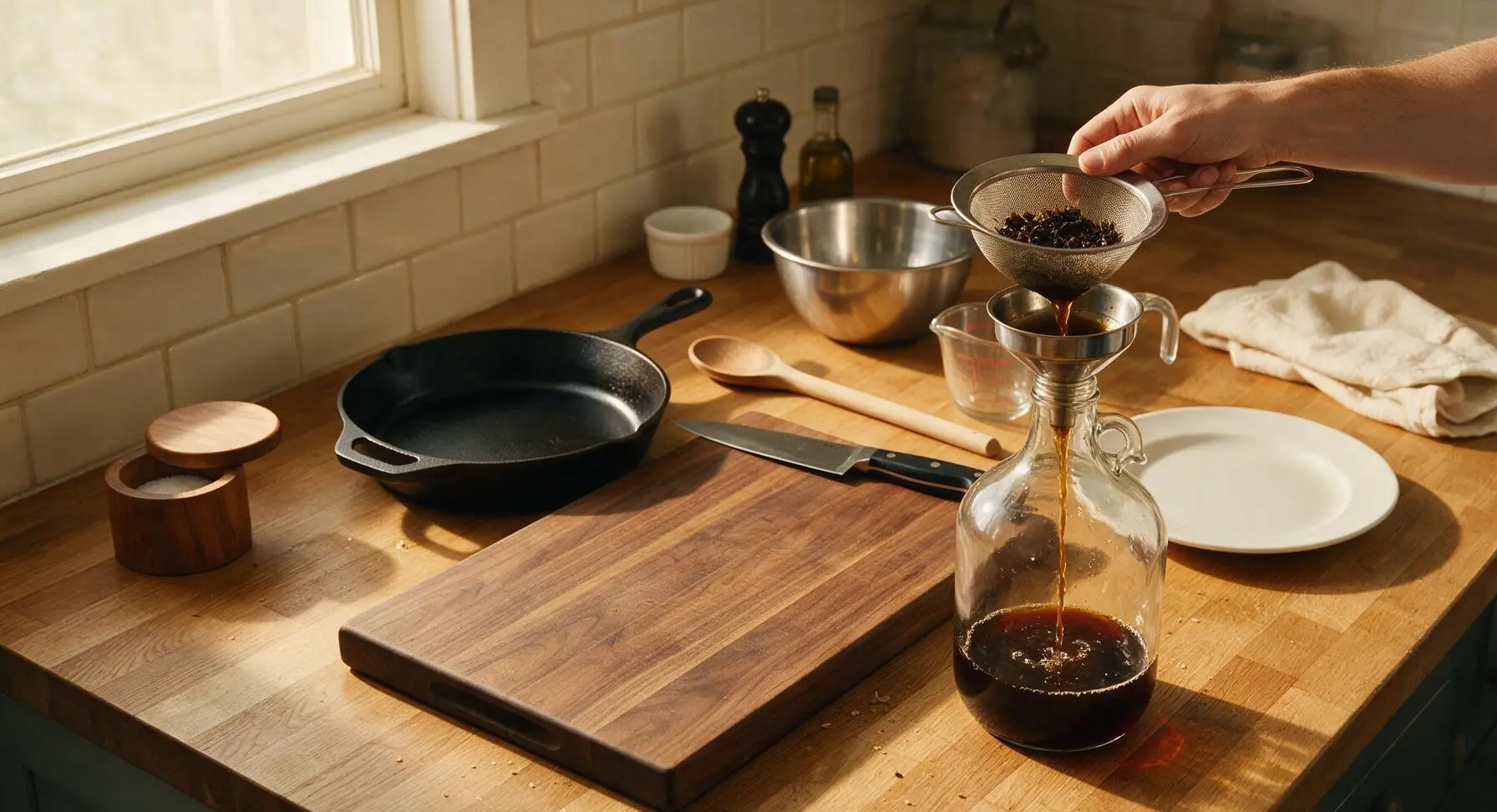
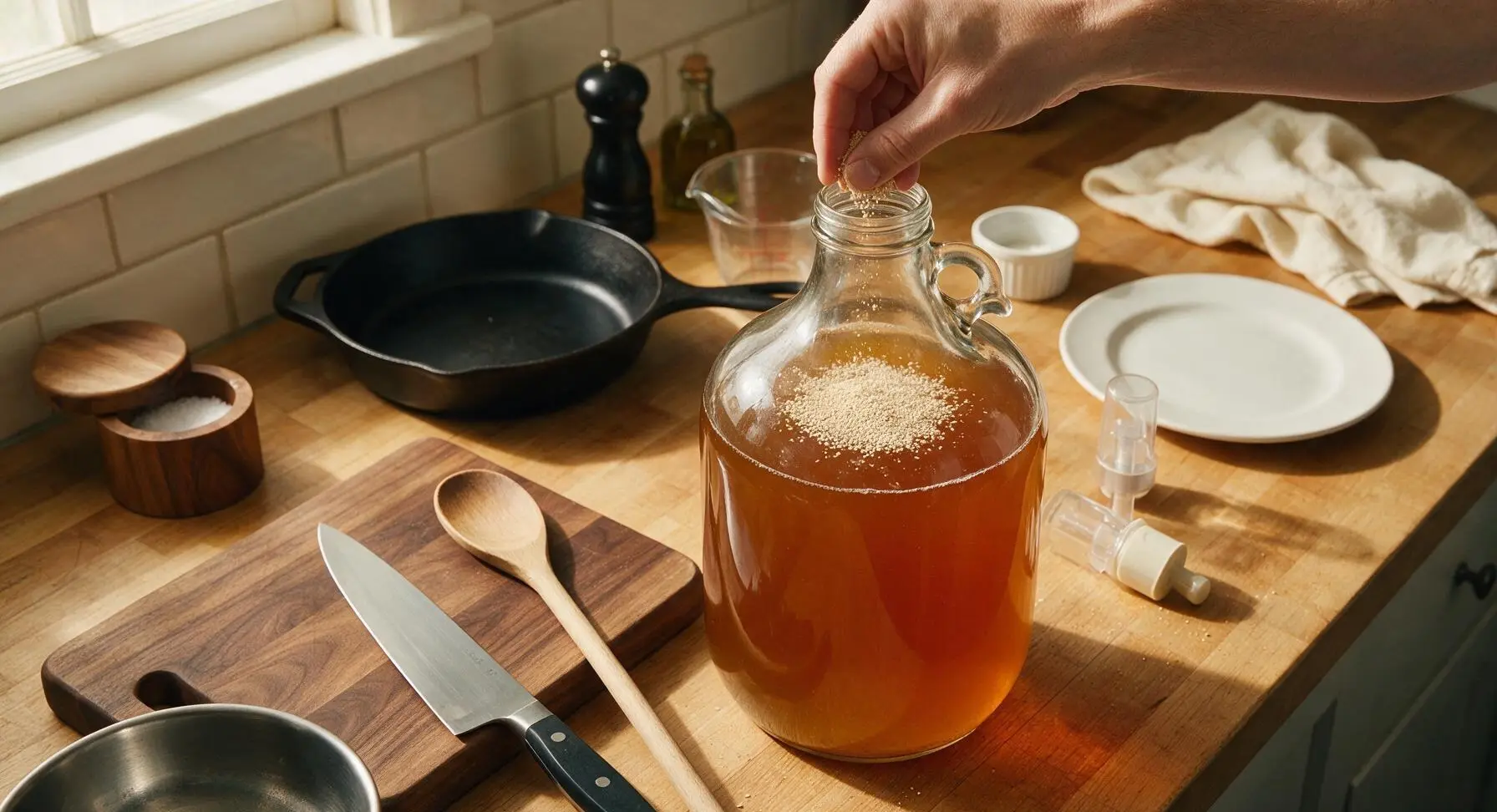
After the 60-minute boil is complete, remove the pot from heat and place it in a sink filled with ice water to cool the wort rapidly to 70°F (21°C), checking temperature frequently with the digital thermometer (this takes 15-20 minutes). Once cooled, place the small stainless steel funnel in the mouth of the sanitized 1-gallon glass carboy, pour the cooled wort through the fine-mesh stainless steel strainer to remove hop debris, then top off with cold filtered water to reach the 1-gallon volume mark. Sprinkle the entire packet of ale yeast over the wort surface, seal the carboy with the sanitized rubber stopper and airlock filled halfway with sanitizer solution. Store in a dark, 65-70°F space for primary fermentation.
Step 4
step4:Cool Wort and Pitch Yeast
Step 4
step4:Cool Wort and Pitch Yeast
5

Add Marionberries for Fermentation

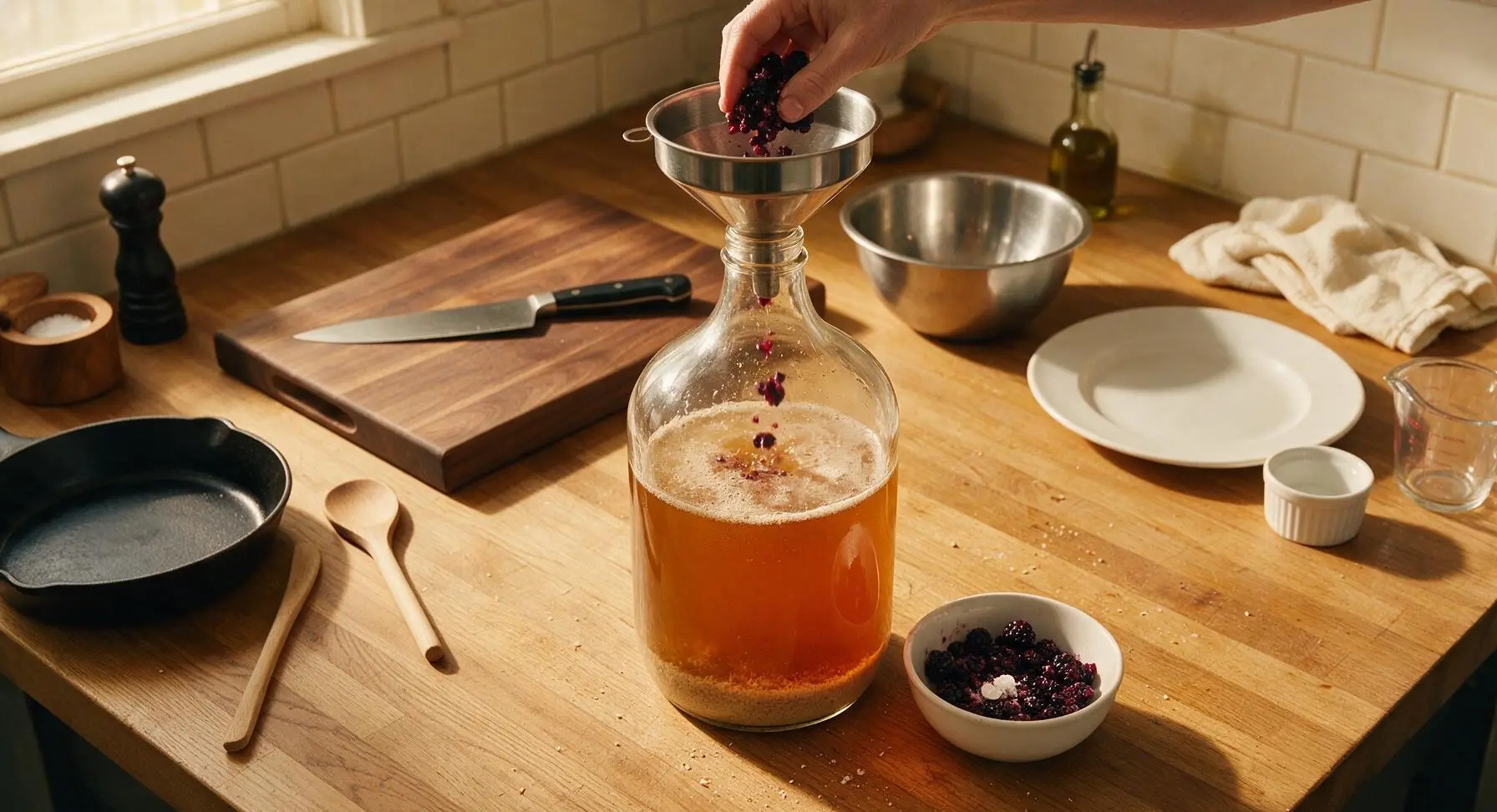
After 7 days of primary fermentation (when vigorous bubbling in the airlock slows to 1 bubble every 30 seconds), sanitize the carboy opening. Lightly crush 1.5 cups of marionberries, toss with the crushed Camden tablet to kill wild surface yeast, and add the crushed berries directly to the carboy. Reseal the airlock, and let ferment for an additional 7 days at 65-70°F, until all bubbling stops and the beer is clear, with a deep purple tint from the berries.
Step 5
step5:Add Marionberries for Fermentation
6

Rack and Bottle Beer

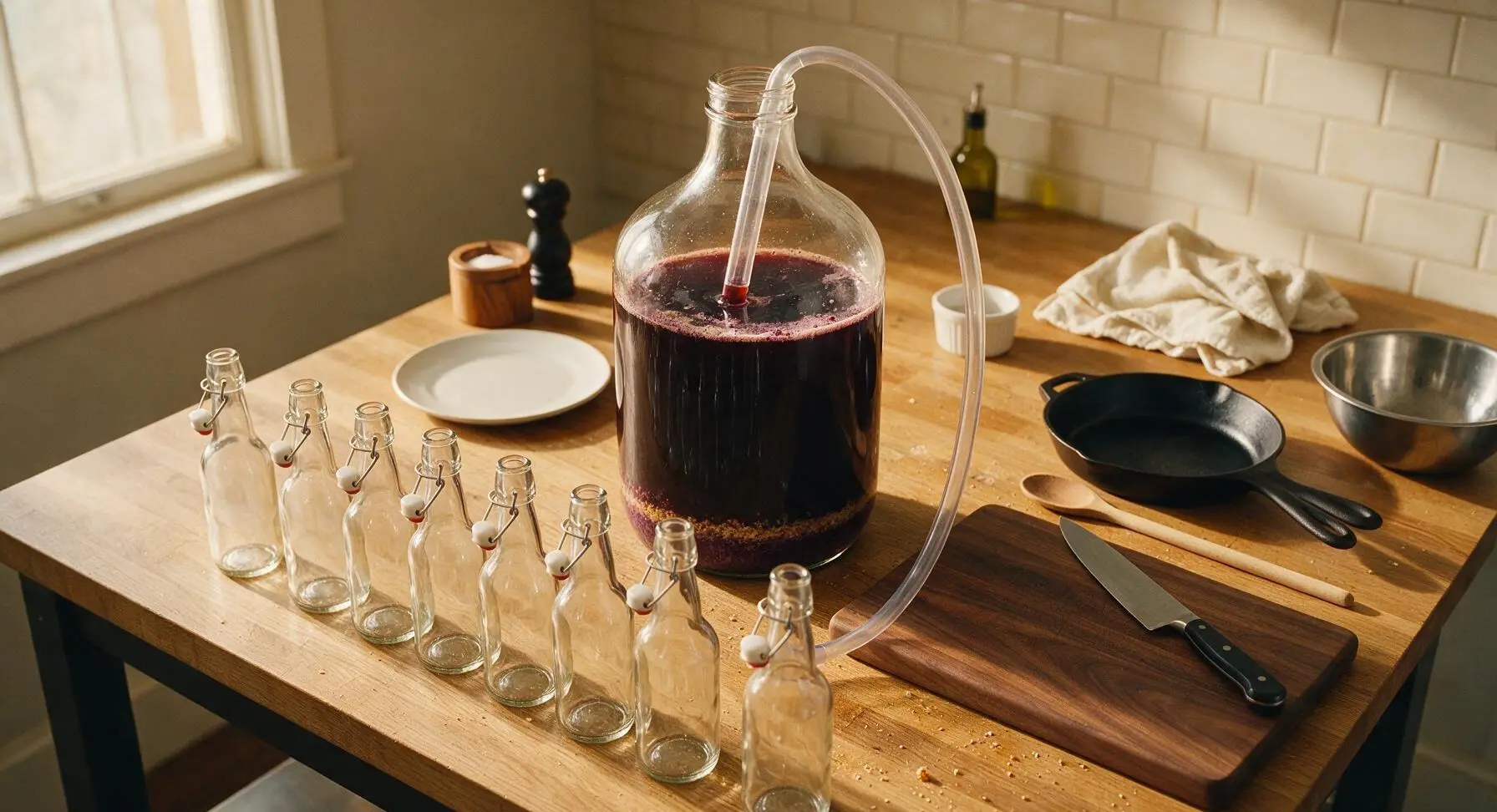
Once fermentation is complete (no airlock bubbles for 48 hours), sanitize the auto-siphon and tubing. Siphon the clear marionberry stout off the fruit and yeast sediment into sanitized 12oz swing-top glass beer bottles, leaving 1 inch of headspace at the top of each bottle. Add 1/4 tsp priming sugar per 12oz bottle before sealing the wire bail closure to create natural carbonation. Store bottles in a dark 70°F space for 2 weeks to carbonate fully.
Step 6
step6:Rack and Bottle Beer
7

Chill and Pour for Serving

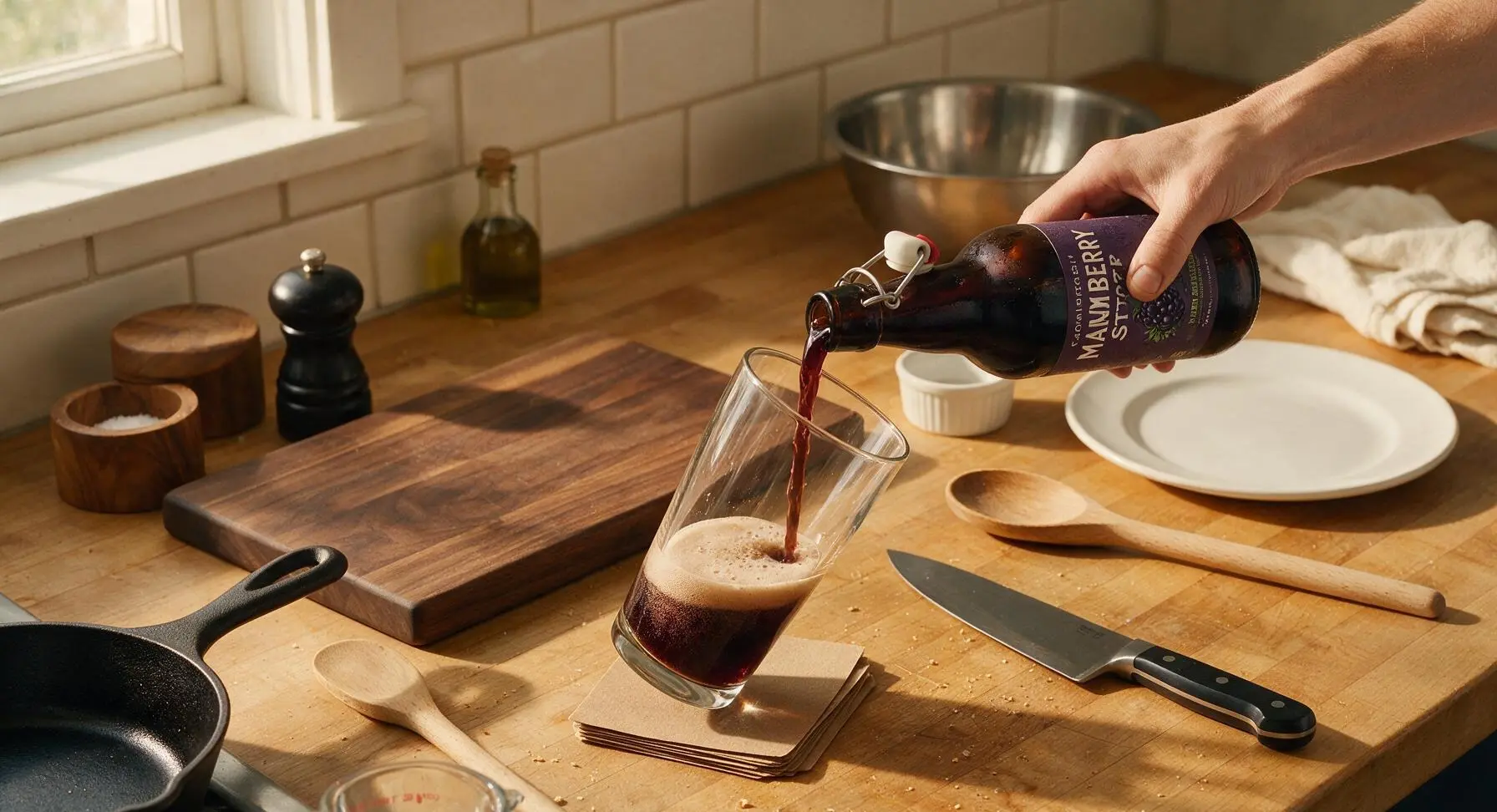
After 2 weeks of bottle carbonation, chill bottles of marionberry stout in the refrigerator for 24 hours to reach 45°F (7°C), the ideal serving temperature for a fruited stout. Pour slowly into the 16oz clear imperial pint glass at a 45-degree angle, then tilt upright to create a 1-inch tight tan foam head. Garnish with a fresh marionberry skewered across the rim if desired.
Step 7
step7:Chill and Pour for Serving

Tips

1.Do not squeeze the grain bag after steeping: Squeezing presses harsh, astringent tannins from grain husks into the wort, which will create a dry, bitter aftertaste instead of a smooth, roasty finish.
2.Use frozen marionberries if fresh are out of season: Frozen berries are picked at peak ripeness and frozen immediately, and their cell walls break down during thawing to release more juice and bright marionberry flavor into the stout during secondary fermentation.
3.Avoid temperature swings during fermentation: Keeping fermenting beer at a steady 65-70°F prevents off-flavors like overly fruity esters or solvent-like notes from forming, resulting in a clean, balanced stout that lets the dark malt and tart marionberry flavors shine.


✨ You May Also Like

Drinks & Beverages
🍜 Mexico

A bright, balanced tequila-based cocktail with zesty fresh lime, smooth orange liqueur, and a signature salt rim, perfect for warm summer sipping.

⏱️ 5 minutesDrinks & Beverages ★ 4.9
Drinks & Beverages
🍜 United States

Thick, creamy, nostalgic classic vanilla milkshake with a rich, smooth texture, topped with whipped cream and a cherry for cool, sweet refreshment.

⏱️ 5 minutesDrinks & Beverages ★ 4.7
Drinks & Beverages
🍜 United States

A bright, golden strong ale with fruity banana-clove notes, subtle hop spice, and soft carbonation, brewed in classic Trappist Tripel tradition.

⏱️ 2 hours aDrinks & Beverages ★ 4.5
Drinks & Beverages
🍜 United States

A frothy, nostalgic American soda fountain treat pairing bubbly cold root beer with creamy vanilla ice cream, perfect for cooling down at warm weather gatherings.

⏱️ 20 minuteDrinks & Beverages ★ 4.8
Drinks & Beverages
🍜 United States

Tart, funky, effervescent American Wild Ale is a complex fruity craft beer brewed with wild yeast, delivering bright, zesty notes perfect for warm-weather sipping.

⏱️ 2 hours aDrinks & Beverages ★ 4.4
Drinks & Beverages
🍜 United States

Bright, bubbly copycat of the iconic American caramel cola, balanced with citrus and warm spice, perfect for sipping ice-cold on hot days.

⏱️ 15 minuteDrinks & Beverages ★ 4.8

Marionberry Stout:Frequently Asked Questions

1.Can I use frozen marionberries instead of fresh for this recipe? ▾
Frozen marionberries work fantastically here—they’re usually picked and frozen at peak ripeness, so they often have brighter, more consistent flavor than out-of-season fresh berries. Just thaw them fully before use, don’t discard the sweet, tart juice that collects in the bag, and pick out any mushy or discolored berries before adding them to your fermenter.
2.Do I need specialized professional homebrewing equipment to make this marionberry stout? ▾
You don’t need a fancy, high-end setup! Core basics include a 5-gallon food-grade fermentation bucket with an airlock, auto-siphon, bottling wand, and no-rinse brewer’s sanitizer, all available in affordable $50 starter kits. You can repurpose a large 3+ gallon stockpot for the wort boil, so you don’t need dedicated brewing pots to get started.
3.How long does this stout need to ferment before it’s ready to drink? ▾
Primary fermentation takes 7-10 days at a steady 65-70°F, when active bubbling from the airlock slows to a near stop. After that, add your prepared marionberries for 3-5 days of secondary fermentation to pull in bright, juicy berry flavor, then bottle condition for 2 weeks to build smooth carbonation before chilling and serving.
4.Can I substitute marionberries with another berry type if I can’t find them locally? ▾
Absolutely! Marionberries have a signature tart-sweet, jammy depth, but you can swap in an equal weight of fresh or frozen blackberries, boysenberries, or loganberries if they’re easier to source. Just avoid overly sweet, low-tart cultivated berry varieties, as they won’t cut through the rich, roasty malt profile the way marionberries do.
5.Why does the recipe call for Cascade hops specifically, instead of other hop varieties? ▾
Cascade is a classic American hop with bright, citrusy, slightly piney notes that complement both roasty malt and tart marionberries perfectly without overpowering either. It delivers mild, balanced bitterness that keeps the stout from tasting cloyingly sweet, unlike sharper, resinous IPA hops that would clash with the delicate berry flavor.
6.How do I prevent marionberries from introducing off-flavors or bacteria to my brew? ▾
First, fully sanitize any equipment that touches berries after the wort boil. For fresh berries, rinse gently in cool water and pick out any moldy or mushy specimens first. You can also quick-pasteurize fresh or thawed berries by heating them to 160°F for 5 minutes before adding to secondary, which kills wild yeast without cooking out bright berry flavor.
7.What ABV can I expect from a properly brewed batch of this marionberry stout? ▾
When brewed to the recipe specs, this stout lands at a very approachable 5.8-6.5% ABV—sessionable enough for all-day summer backyard sipping, but still rich enough to feel satisfying. You can bump ABV slightly by adding an extra 8 ounces of dark liquid malt extract during the boil if you prefer a stronger, fuller-bodied brew.
8.Can I skip secondary fermentation and add marionberries directly to primary fermentation? ▾
I don’t recommend that shortcut! Adding berries during active primary fermentation will blow off most of the delicate, bright marionberry aroma along with rapid CO2 release, leaving you with faint, muted berry flavor instead of that signature tart pop. Waiting until primary slows locks in that fresh, juicy character without wasting fruit.
9.How roasty is this stout? Will it taste overly bitter or burnt like some heavy stouts? ▾
This is a smooth, approachable stout, not an intensely bitter imperial stout! The blend of pale, chocolate, roasted barley, and crystal malt delivers subtle coffee and dark cocoa notes without the harsh, ashy burnt flavor that comes from overdoing roasted grains. Marionberry sweetness and mild hop bitterness balance those roasty notes perfectly for easy drinking.
10.Do I need to strain out all the marionberry seeds and pulp before bottling? ▾
You’ll want to separate the bulk of seeds and thick pulp when siphoning beer out of secondary into your bottling bucket, to avoid clogged bottling wands and gritty texture in your finished glass. You don’t need to filter out every tiny bit of pulp, though—a small amount adds nice depth, just avoid siphoning the thick seed sludge at the fermenter bottom.
11.Can I adapt this recipe to make a non-alcoholic marionberry stout? ▾
You absolutely can! Swap the fermentable malt extract for a non-alcoholic dark malt syrup base made for NA brewing, skip adding active brewer’s yeast, and add a tiny amount of food-grade hop extract for that classic stout bitterness. Stir in pureed marionberries after chilling, carbonate with carbonation drops in sealed bottles, and chill 3 days before serving.
12.What’s the best way to serve this marionberry stout for summer backyard gatherings? ▾
Skip the frosty, ice-cold mug treatment for this one! Serve it chilled to 45-50°F—just a touch warmer than standard lager temperature—to let both the roasty malt notes and bright marionberry flavor come through. It pairs perfectly with grilled burgers, dark chocolate brownies, or sharp cheddar for an easy, crowd-pleasing spread.
13.How long will bottled marionberry stout stay fresh if I don’t drink it right away? ▾
Stored in a cool, dark spot away from direct sunlight and big temperature swings, properly sealed bottles will stay fresh for up to 6 months. That said, the bright marionberry flavor is most vibrant in the first 3 months after bottling, so I recommend drinking it within that window for the best balance, rather than aging it like a heavy imperial stout.
14.I only have dry dark malt extract on hand—can I use that instead of liquid? ▾
You can absolutely substitute dry dark malt extract! Use 1 pound of dry dark malt extract for every 1.25 pounds of liquid dark malt extract called for, since dry extract is more concentrated. Just stir it fully into boiling wort to avoid clumps that can sink to the pot bottom and scorch, which would add unwanted burnt off-flavors.
15.Why does the recipe specify cold filtered water, instead of regular tap water? ▾
Most tap water has chlorine, chloramine, or mineral off-notes that can make finished stout taste flat, medicinal, or soapy, even if your tap water tastes fine to drink straight. Cold filtered water removes those additives without stripping out the trace minerals that help yeast ferment properly, leading to a cleaner, brighter final flavor that lets malt and berries shine.
16.What level of carbonation is ideal for this stout? I don’t want it to be over-fizzy. ▾
This stout shines with smooth, medium carbonation, around 2.2-2.4 volumes of CO2—less bubbly than a wheat beer or seltzer, but enough to lift berry and malt flavors on your tongue. To hit that level, add 3/4 cup of corn priming sugar to your bottling bucket right before siphoning in fermented beer, for consistent, even carbonation across every bottle.
17.I accidentally added my Cascade hops 15 minutes too early during the boil—will that ruin the batch? ▾
That small misstep won’t ruin your stout at all! Adding hops 10-15 minutes early will just add a touch more mild bitterness and slightly less bright hop aroma, which is easy to balance. Toss in an extra 1/2 cup of thawed marionberries during secondary to amp up that bright, fruity note to compensate, and no one will even notice the timing error.

Comments (16)

3 days ago

OMG this homemade marionberry stout is a total game changer! I brewed it for my buddy’s annual backyard potluck last weekend and everyone was begging for the recipe. The berry sweetness cuts the roasty stout flavor perfectly, not too cloying at all. 1 hour active boil was way more manageable than I thought for a homebrew, even as a total newbie. Only note: I used frozen marionberries since fresh are hard to find by me, worked like a charm!

2 days ago

Seconded on the frozen marionberries! I thawed mine first and strained out the seeds so it didn’t get that weird gritty texture, 10/10 would do that again. Brought a growler to family dinner last night and my dad who only drinks macro stouts said it was better than his usual go-to.

yesterday

So glad you both loved it! Frozen berries work perfectly here because they’re picked and frozen at peak ripeness – no need to splurge on fresh if they’re out of season. Straining the seeds is a great pro tip, thanks for sharing that with the crew!

1 week ago

SO good! I was worried a 4 week ferment would be too long but it was so worth the wait. I bottled half in 12oz bottles to keep in the fridge for weeknight treats and kegged the other half for game nights. The marionberry flavor is bright but doesn’t overpower that classic rich, chocolatey stout vibe I love. Will absolutely be adding this to my regular homebrew rotation.

30 minutes ago

Hey, quick question! I’m gathering supplies to make this this weekend and I don’t have a dedicated fermentation chamber – will my garage (which stays a pretty consistent 65-68 degrees this time of year) work okay for the 4 week ferment? Don’t want to mess this up because it sounds incredible!

5 minutes ago

That temperature range is actually perfect for stout fermentation! You don’t want it to get much above 72 or you’ll get off-flavors, but 65-68 is right in the sweet spot. Just make sure it’s not sitting in direct sun and you’ll be all set. Can’t wait to hear how it turns out!

yesterday

Brewed this last month and cracked my first bottle last night – y’all. The dark chocolate and marionberry combo tastes like a fancy dessert beer you’d pay $15 a 4-pack for at the liquor store. I added a tiny extra dash of vanilla bean at bottling and it was chef’s kiss.

2 hours ago

Wait how much vanilla did you add? I’ve been thinking about tweaking this recipe to add a little vanilla note but don’t want to overdo it and cover up the berry flavor!

5 days ago

Tried this recipe last batch and messed up the first ferment a little – I added the marionberries too early and they got a little funky tasting. Wait, when does the recipe say to add the berries again? I think I skipped that step note somehow. Still drinkable, but not as good as I know it can be!

3 days ago

I remember the note says to add thoroughly sanitized, crushed marionberries when you rack the wort to secondary fermentation, about 5-7 days into primary. Adding them too early kills that bright berry flavor and leads to that weird fermented funk you’re talking about, I made the same mistake my first time making fruit beer!

3 days ago

@HomebrewNerdZack is exactly right! Adding berries too early can kill that fresh berry aroma and lead to odd fermented fruit notes, so that’s probably what happened with your batch. Next round, add them when you rack to secondary and you’ll get that perfect bright marionberry flavor. You’ve got this!

5 days ago

Brought a growler of this to our neighborhood block party last weekend and it was the first keg to kick! People who don’t even like dark beer were going back for seconds. The marionberry adds just enough fruity brightness to win over the light beer drinkers, it’s such a crowd pleaser. 10/10 for gatherings.

2 hours ago

Is there any way to adapt this to be gluten free? My partner has celiac and we’ve been looking for a good gluten free stout recipe that actually has depth of flavor, this sounds right up our alley!

30 minutes ago

Great question! You can absolutely swap the malted barley for a gluten free malt base (I like a mix of pale millet malt, roasted buckwheat, and a little chocolate rice malt to get that same rich stout depth) and use a gluten free brewer’s yeast. Just make sure all your equipment is thoroughly sanitized to avoid cross-contamination, and you’ll get a nearly identical final flavor!

1 week ago

Wait, the recipe says 1 hour active boil plus 4 weeks total fermentation and carbonation – is that 2 weeks primary, 1 week secondary with berries, then 1 week bottle carb? Just trying to plan my brew schedule for next month so I have it ready for my camping trip.

5 days ago

That’s exactly the timeline I used! Did 14 days primary at 66 degrees, racked to secondary with the berries for 7 days, then bottled with a little priming sugar and let them carb at room temp for 7 days before sticking in the cooler. Turned out perfect for our last trip, no weird off flavors or flat bottles.

5 days ago

That timeline is spot on! The only small adjustment I’d note is if your house is cooler than 65 degrees, you might want to add 2-3 days to bottle carbonation to make sure the fizz is where you want it. Hope it’s a hit on the camping trip!

2 weeks ago

My husband is an avid homebrewer and I made him make this for our anniversary dinner last week. I’m not even a big stout drinker but I had two full glasses! The berry flavor is so fresh, it pairs so well with the dark chocolate cake we had for dessert. Will be making this again for sure, even if I have to beg him to brew another batch.

5 minutes ago

Has anyone tried adding a little extra tartness to this? I love sours and stouts, wondering if tossing in a little lactobacillus before primary would make a killer marionberry stout sour, or if that would ruin the balance.

just now

I did that with my last batch! Did a 24 hour sour mash before boiling, then followed the rest of the recipe exactly. It’s got the perfect little tart zing that pairs so well with the sweet marionberries and roasty malt. Just don’t let the sour mash go too long or it’ll get too puckery!

3 days ago

Okay full transparency, I messed up my first batch because I forgot to sanitize the berry bag and got a little mold on top of the secondary ferment. Rookie mistake! Learned my lesson, going to pick up some no-rinse brewer’s sanitizer this week and try again. Does anyone have tips for making sure the berries don’t introduce bacteria?

2 days ago

I freeze my berries for 72 hours before adding them, that kills off most of the wild bacteria on the skin, then I give them a quick dip in no-rinse sanitizer while they’re still frozen before crushing and adding to secondary. Haven’t had a mold issue in 10+ years of brewing fruit beers!

2 days ago

Great question! Freezing the berries first like @OldBrewerRick suggested is a fantastic hack, and making sure you crush them only after they’re sanitized will help avoid introducing any unwanted bacteria. I also recommend giving your airlock a quick wipe down with sanitizer every few days during secondary to keep things sterile. You’ve got this on round two!

1 week ago

Brewed a double batch of this for football season and it’s going to be my go-to tailgate beer all fall. It’s rich, flavorful, and the marionberry gives it a fun twist that stands out from all the boring light lagers everyone else brings. Even my buddy who swears he “only drinks IPAs” said it was fire. 5 stars no notes.

2 hours ago

How sweet is the final beer? I don’t love super sweet stouts, I prefer more roasty, dry profiles. Should I cut back on the marionberries a little to reduce the fruit sweetness, or is it pretty balanced as written?

30 minutes ago

As written, the final beer is nicely balanced – the roasty, slightly bitter stout base cuts the marionberry sweetness so it doesn’t come across cloying, and it finishes fairly dry. If you prefer an even drier profile, you can cut the marionberry amount by 25% and add a half ounce of extra roasted barley during the boil to amp up that roasty depth. That’ll get you right where you want to be!

yesterday

I live in a tiny apartment and don’t have a ton of fancy equipment – do I need a full secondary fermenter for this, or can I just add the berries straight to my primary fermenter after the first week? I only have one 5 gallon carboy right now.

2 hours ago

I do all my small batch brews in my tiny Brooklyn apartment too! I just add the sanitized berries straight to primary after 7 days, no secondary, and it turned out great. Just make sure you leave enough headspace for the extra little bit of fermentation kick you get from the fruit sugars so it doesn’t bubble out the airlock.

2 hours ago

You absolutely don’t need a dedicated secondary fermenter if you’re short on space! Adding sanitized berries straight to primary after high krausen (around day 5-7) works totally fine, just keep an eye on the airlock for the first 24 hours after adding them because the extra sugar can cause a quick little fermentation burst. Enjoy!

2 weeks ago

Paired this with smoked brisket at our weekend cookout and I’m never going back. The dark roasty notes stand up to the smoky meat perfectly, and the little pop of marionberry cuts through the fat so nicely. Everyone was raving about the beer and food combo, it was chef’s kiss. SO good.

5 days ago

For anyone on a budget, I was able to grab all the grain and hops for this recipe from my local homebrew shop for under $25, and I used frozen marionberries from the grocery store for $3 a bag. Way cheaper than buying fancy craft stout, and it tastes better! Total win.

3 days ago

Thanks for the cost breakdown! I’ve been nervous to get into homebrewing because I thought it would be super expensive to start, but this makes it feel way more doable. Can’t wait to pick up supplies this weekend!



