1.Is it legal to make traditional Appalachian corn moonshine at home in the United States?
▾
Federal law requires a formal distilled spirits permit to distill alcohol at home for personal use, regardless of batch size, and most U.S. states have additional restrictions or outright bans on unlicensed home distillation. Always check your state’s alcohol control board rules before sourcing equipment or starting a batch, and never sell unlicensed homemade spirits.
2.Why does this recipe call for non-chlorinated filtered water instead of regular tap water?
▾
Chlorine and chloramine added to most municipal tap water can kill or slow the distiller’s yeast responsible for fermentation, leading to stuck ferments, low alcohol yield, or harsh, chemical-tasting off-notes in your final moonshine. If you only have tap water, leave it uncovered on the counter for 24 hours to let chlorine dissipate, or run it through a carbon filter rated to remove chloramine.
3.Can I use whole yellow corn kernels instead of the cracked yellow corn listed in the ingredients?
▾
Whole corn kernels have a tough outer hull that prevents their starchy, sweet interior from breaking down properly during the mashing process, leading to weak corn flavor and low alcohol yield. If you only have whole corn, crack it into coarse, uneven pieces with a sanitized grain mill or heavy rolling pin before using it to get that classic sweet corn finish.
4.What does crushed malted barley do in this recipe, and can I skip it to save money?
▾
Crushed malted barley contains natural, active enzymes that break down corn’s dense starch into fermentable sugars that yeast can feed on to produce alcohol. Skipping it will lead to extremely low yield, stuck fermentation, and thin, bland flavor. Don’t substitute unmalted barley—it lacks those critical enzymes and won’t support a proper mash.
5.How do I tell when my corn mash is fully fermented and ready to distill?
▾
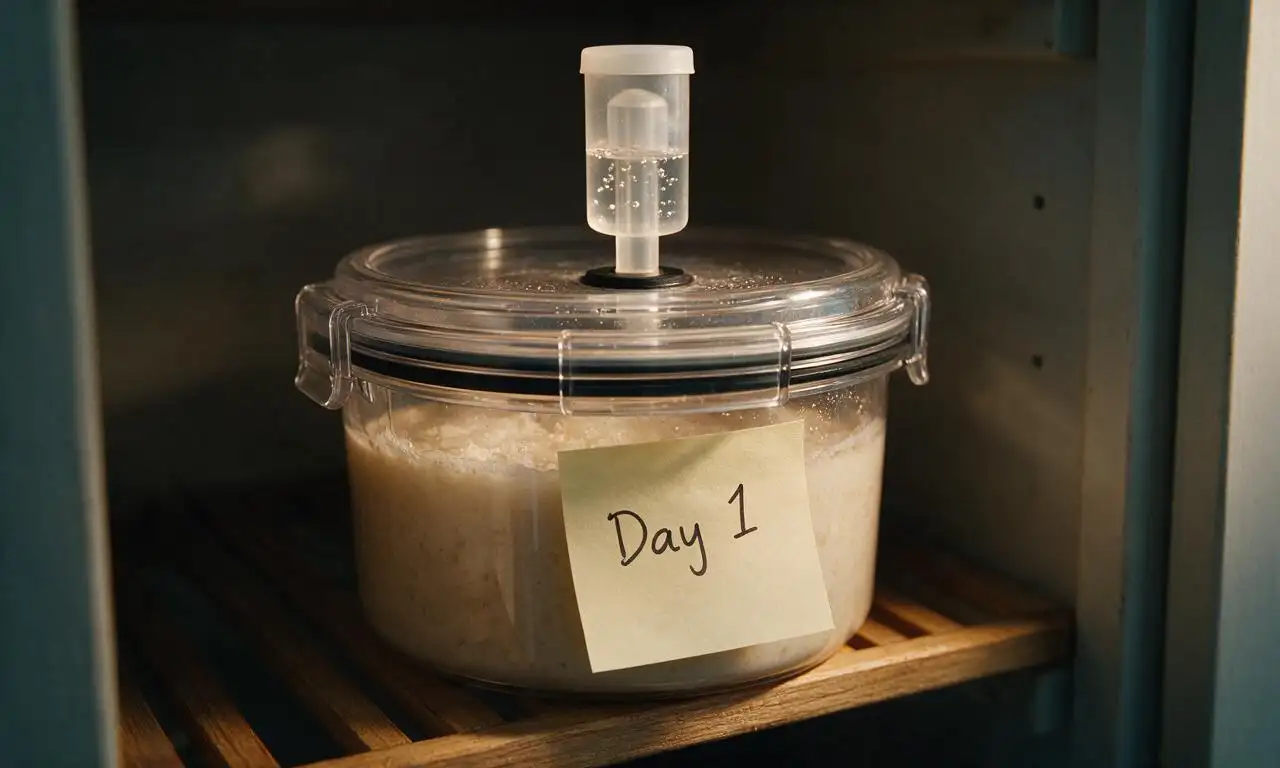
Fermentation is complete when your airlock stops bubbling entirely for 2–3 straight days, the mash tastes dry with no residual sugary sweetness, and you get a stable specific gravity reading of 1.000 or lower on a hydrometer for two consecutive daily tests. Rushing this step leads to lower yield and harsh, unbalanced flavor in your final spirit.
6.Can I use regular active dry baking yeast instead of distiller’s yeast for this mash?
▾
Baking yeast is formulated for bread rise, not high-alcohol fermentation, so it dies off once alcohol levels hit roughly 8% ABV, leading to low yield and bready, off-flavors that overpower the sweet corn notes. Distiller’s yeast is bred to tolerate 12–15% ABV and produce a clean, smooth spirit base that lets the corn flavor take center stage.
7.What temperature should I keep my mash at during fermentation for the best results?
▾
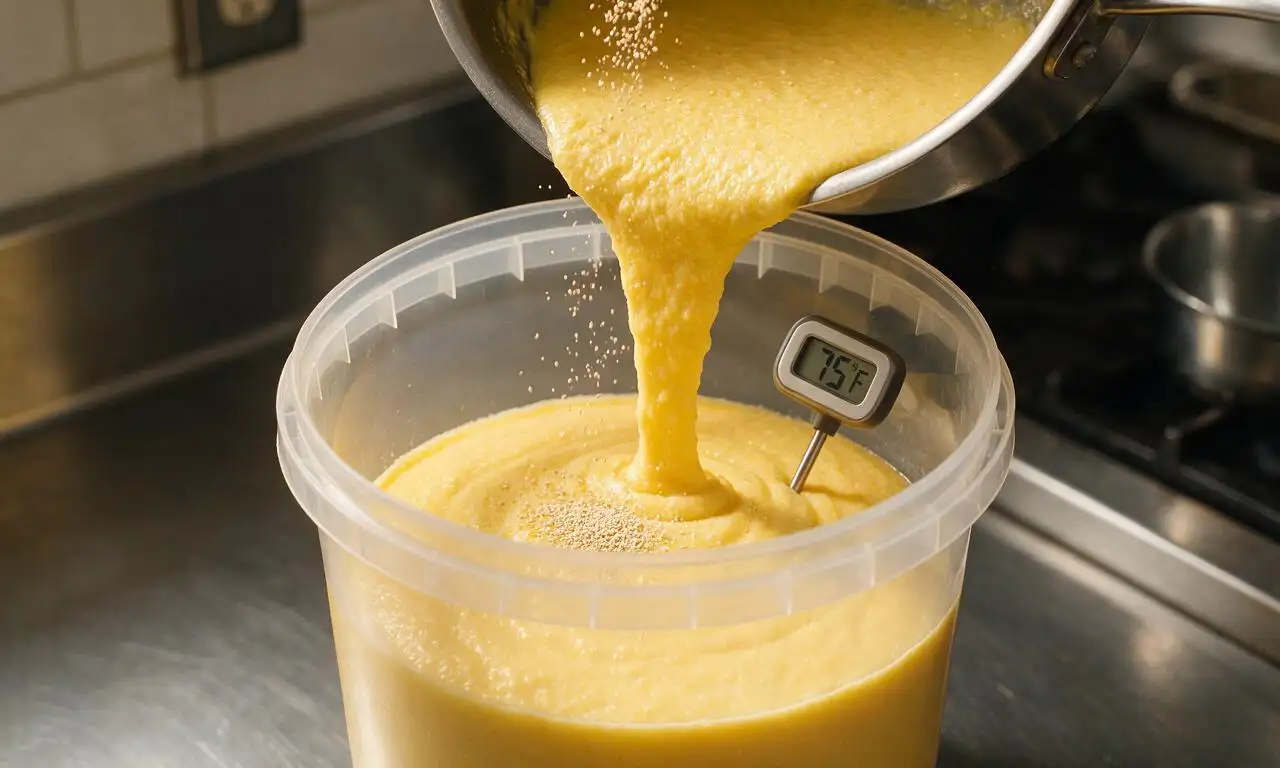
Store your sealed fermentation vessel in a dark, draft-free spot that stays a consistent 70–75°F for the full 7–10 day fermentation period. Temperatures above 80°F trigger harsh, fusel alcohol production that makes your moonshine taste sharp and burning, while temps below 65°F make yeast go dormant and stall fermentation entirely.
8.I thought old-school moonshine was just corn and grain—why is granulated white sugar in the ingredient list?
▾
Many traditional small-batch Appalachian moonshine recipes used a modest amount of white sugar to boost alcohol yield when corn starch conversion was less consistent with old-fashioned mashing methods. The amount here is carefully balanced to preserve that signature sweet corn finish, rather than creating the harsh, overly boozy flavor of cheap sugar shine.
9.What steps do I need to take during distillation to avoid dangerous methanol contamination?
▾
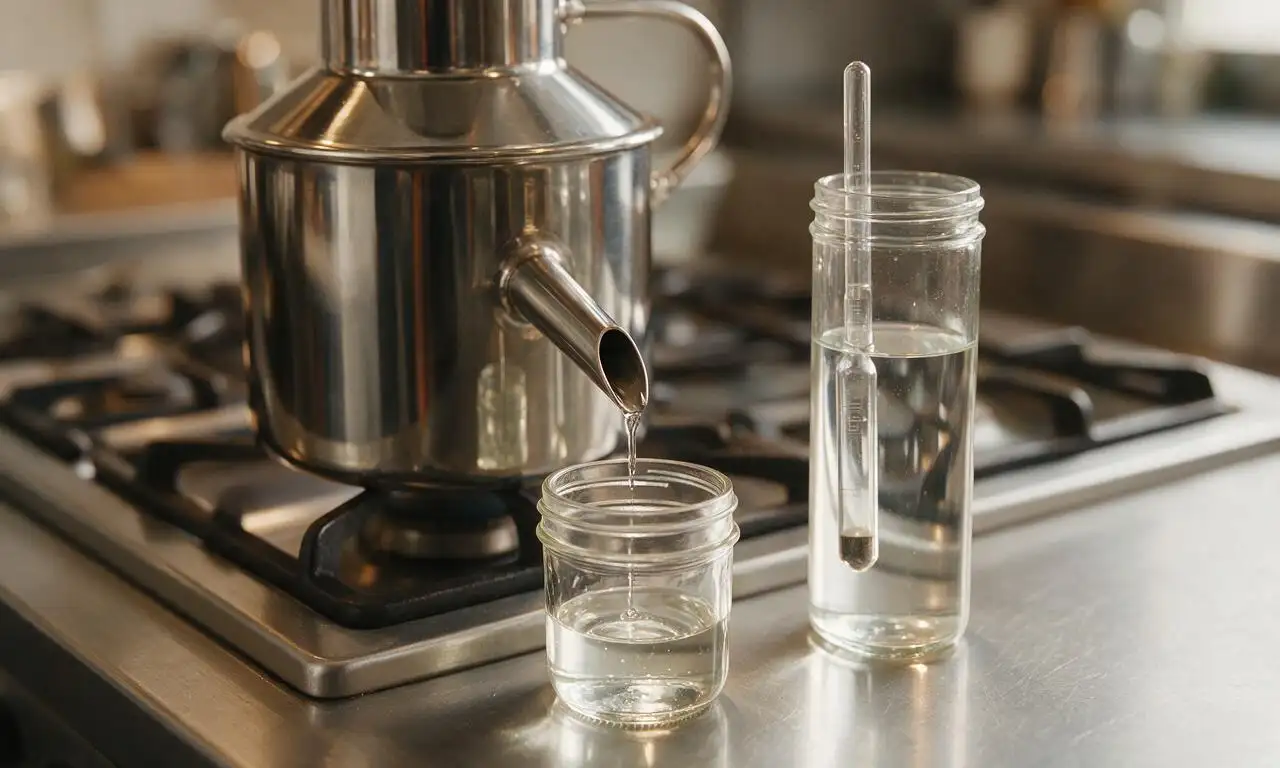
Always discard the first 5–10% of your distillate (called the "foreshots" and "heads") at the start of every run, as this fraction contains concentrated methanol and other toxic volatile compounds that cause serious illness. Only collect the smooth, sweet-smelling "hearts" fraction for drinking, and set aside the bitter, weak "tails" for future re-distillation.
10.My last batch of moonshine tasted harsh and bitter instead of smooth—what did I do wrong?
▾
Harsh, bitter flavor almost always traces back to one of three common missteps: fermenting at too high a temperature, failing to discard the foreshots and heads at the start of your distillation run, or collecting too much of the bitter tails fraction at the end. You can mellow slightly harsh batches by filtering through food-grade activated carbon, or letting them rest in sealed glass for 2–3 weeks.
11.Do I need to age this corn moonshine in oak barrels, or can I drink it right after distillation?
▾
This is a traditional unaged corn spirit, so it’s designed to drink soon after distillation. Once you’ve collected the hearts fraction, let it rest in a loosely covered glass jar for 24–48 hours to let sharp volatile notes dissipate, then it’s ready to sip. You don’t need oak aging, though you can add a small toasted oak chip if you want a subtle woody, whiskey-like depth.
12.How long does finished corn moonshine stay good, and what’s the best way to store it?
▾
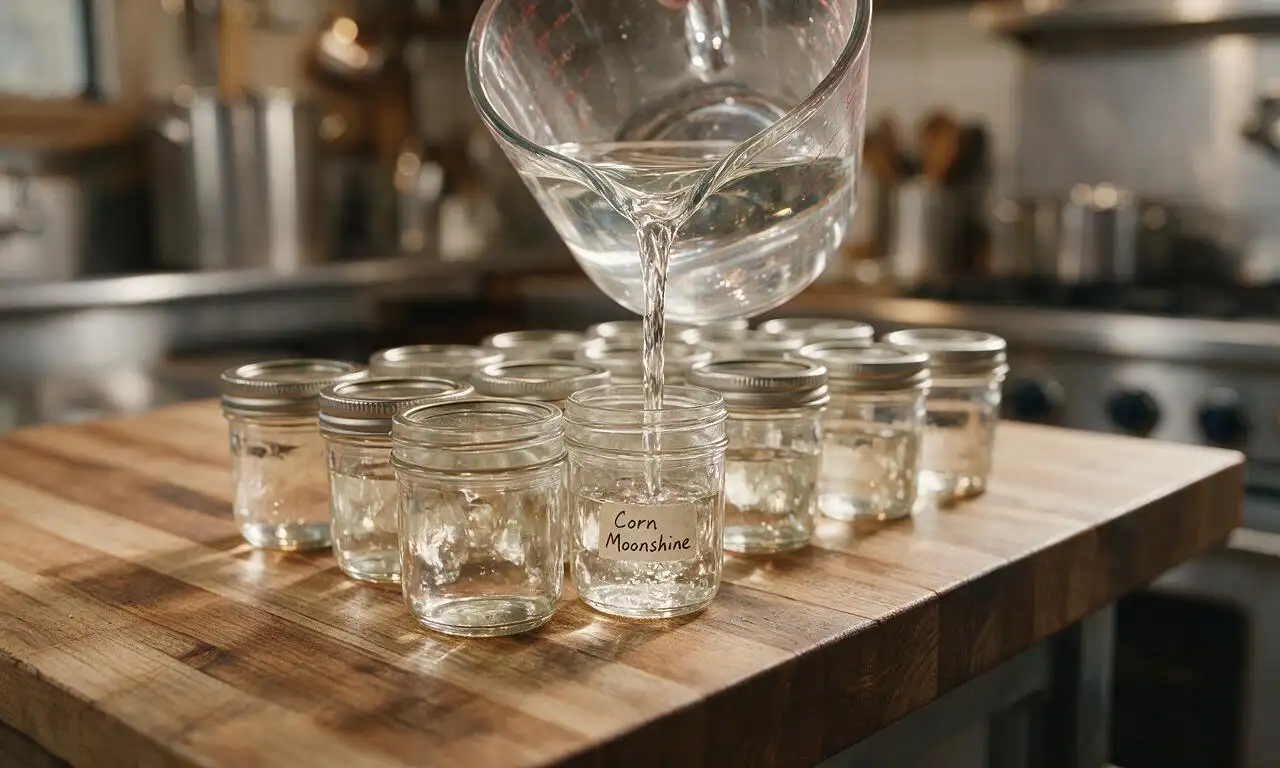
Properly distilled moonshine is shelf-stable indefinitely when stored in a clean, airtight glass jar in a cool, dark spot away from direct sunlight, as its high alcohol content prevents spoilage. Avoid long-term storage in plastic containers, as high-proof alcohol can leach plastic compounds into the spirit over time, creating unpleasant chemical off-flavors.
13.What proof should I dilute this moonshine to for casual sipping?
▾
Most traditional Appalachian sipping moonshine is cut with non-chlorinated filtered water to between 80–100 proof (40–50% ABV), which balances the bold sweet corn flavor without the burning harshness of straight, undiluted off-the-still spirit. Always dilute small test samples first to find your preferred strength, rather than watering down an entire batch at once.
14.Is it traditional to add fruit or other flavorings to this corn moonshine, or is it always served plain?
▾
While the base recipe is plain, corn-forward, many Appalachian home distillers have long infused finished moonshine with local foraged or homegrown ingredients like peaches, blackberries, apples, cinnamon sticks, or wild honey. Let infusions sit for 1–2 weeks in a cool dark spot, then strain out all solids before storing to prevent spoilage.
15.I noticed a thin layer of mold on top of my fermenting mash—can I still use it, or do I have to dump it?
▾
A thin, pale white layer of surface mold usually happens if your equipment wasn’t fully sanitized or fermentation temps fluctuated early on. If there’s no green, black, or pink discoloration, carefully skim the mold layer off and proceed with distillation. If you see any colored mold, dump the entire batch to avoid risk of harmful bacteria contamination.
16.Can I build a homemade still from scrap parts to make this recipe, or do I need special equipment?
▾
For safety and consistent, great-tasting results, always use a purpose-built, food-grade copper or stainless steel pot still designed for spirit distillation. Scrap-built homemade stills often contain leaded solder or have poor seals that can let pressurized alcohol vapor build up, leading to fire risks, toxic contamination, or ruined batches.
17.How much finished, drinkable moonshine should I expect from one batch of this recipe?
▾
With a properly converted mash, fully completed fermentation, and careful separation of the heads and tails fractions, you can expect roughly 1–1.5 gallons of smooth, 100-proof drinkable corn moonshine from a standard 5-gallon mash batch. Yield will be slightly lower if you cut extra heads and tails for an ultra-smooth final product.
18.Is this moonshine only for straight sipping, or can I use it in cocktails?
▾
This smooth, subtly sweet corn moonshine works beautifully in cocktails! It makes a fantastic swap for vodka or unaged white whiskey in drinks like Moscow mules, spiked apple cider, old fashioneds, or spiked lemonade. Just adjust your pour size to account for its higher proof compared to most commercial spirits to avoid over-serving.
19.Do I need to strain the solid corn and barley bits out of my mash before distilling it?
▾
Yes, always strain all solid grain particles out of fully fermented mash using a sanitized fine-mesh strainer or cheesecloth before pouring it into your still. Left-behind solids can scorch on the bottom of the still pot during heating, creating a burnt, ashy flavor that ruins the entire batch, and can clog vapor lines to cause dangerous pressure buildup.







Grew up in eastern Kentucky drinking my papaw’s homemade moonshine, and this recipe tastes EXACTLY like what he used to make! So smooth, no harsh burn, perfect corn flavor. Made a batch for our annual camping trip last weekend and everyone was begging for the recipe. 10/10 no notes.
Wait, quick question—can I substitute cracked corn if I can’t find whole kernel corn at my local feed store? I’ve been dying to try this but don’t want to mess up the fermentation process!
Game changer for fall football tailgates! I bottled up half the batch with a few cinnamon sticks and apple slices for a spiced version, and it was gone before the first quarter ended. SO smooth, way better than the store-bought stuff I’ve paid way too much for.
Was nervous to try my first ever moonshine batch because I thought it’d be way too complicated, but the step-by-step instructions were so easy to follow! Active time really was right around 4 hours like the recipe says, no weird hidden steps. Ended up with a super sippable final product that I’m already planning to make again for holiday gifts.
Tried my first batch and it came out a little harsher than I expected? Did I maybe rush the fermentation? I let it go 6 days instead of the full 7 because I was excited to bottle it lmao.
Brought a jar of this to our neighborhood potluck last week and people were going back for tiny sample cups all night! I will say, make sure you label it clearly so no one mistakes it for sweet tea like my neighbor did 😂
Solid, straightforward recipe. The corn comes through really nicely without being overpowering, and it mixes so good with lemonade for a summer cocktail. Will be keeping this in my regular rotation for backcountry trip treats.
Wait, does anyone know if I need a special still to make this? I’ve only ever done homebrewed beer before, never tried spirits, and I don’t want to drop a ton of money on equipment if I don’t have to.
This tastes just like the moonshine my daddy used to run back in the 50s out in the mountains! I added a handful of fresh blackberries from my garden to half the batch and it is out of this world. My grandkids (all 21+ of course!) went crazy for it.
Made this to go with our annual 4th of July BBQ spread and it was a total hit! We mixed up batches of moonshine sours, peach moonshine iced tea, even did a few shots to toast the fireworks. Only issue is I should’ve made a double batch, we ran out in 2 hours flat.
We made a batch while we were camped out in the Smoky Mountains last month, and it felt so fitting! Super easy to make even with our tiny camp kitchen setup, as long as you have a heat source and a way to seal your fermentation buckets. 10/10 vibe check.
As a bartender who’s always looking for unique homemade spirits for cocktail menus, this is a total home run. It’s smooth enough to sip neat, mixes beautifully in everything from old fashioneds to fruity tiki drinks, and the corn flavor adds such a nice depth you don’t get from store-bought neutral grain spirits. Already planning to feature this on our fall menu!
Okay be honest, how bad can I mess this up? I’ve never made any kind of fermented anything before, I can barely make boxed mac and cheese without burning it lmao. Is this actually doable for a total newbie?
Made a big batch of this to give out as Christmas gifts last year, bottled in cute mason jars with handwritten labels, and every single person asked for a refill this year. Total crowd pleaser, way more personal than a random store-bought gift.
Tried a lot of moonshine recipes over the years and this one is top tier. No weird aftertaste, no throat burn going down, just that nice sweet corn flavor that makes Appalachian moonshine famous. Don’t waste your time with other recipes, this is the one.
Oops, I accidentally let my fermentation go 10 days because I forgot about it while I was out of town for work. Is the batch totally ruined? I’m so mad at myself, I was looking forward to this for weeks!
OMG this is SO good! We did a taste test between this recipe and the expensive craft moonshine we bought at the liquor store last weekend, and every single person picked this homemade version as the better one. Saved myself so much money long term, I’ll never buy store bought again.
Quick tip for anyone making this: add a couple tablespoons of pure maple syrup to your mash before fermentation, it adds this amazing subtle warm sweetness that takes the corn flavor to the next level. I did this on my second batch and it came out even better than the first!
I’ve been making small batch spirits for over 20 years, and this recipe is about as authentic as it gets for traditional Appalachian corn moonshine. No weird added flavors, no gimmicks, just straight corn, sugar, yeast, and patience. The ratio of ingredients is spot on, the instructions are clear even for folks who are used to more complicated recipes. Well done.
Made a batch with my roommates for our senior week house party, and let me tell you, it was a legendary night. We mixed it with cherry Kool-Aid and it went down way too easy. 10/10 would make again, just maybe set a limit on how many cups people can pour lmao.