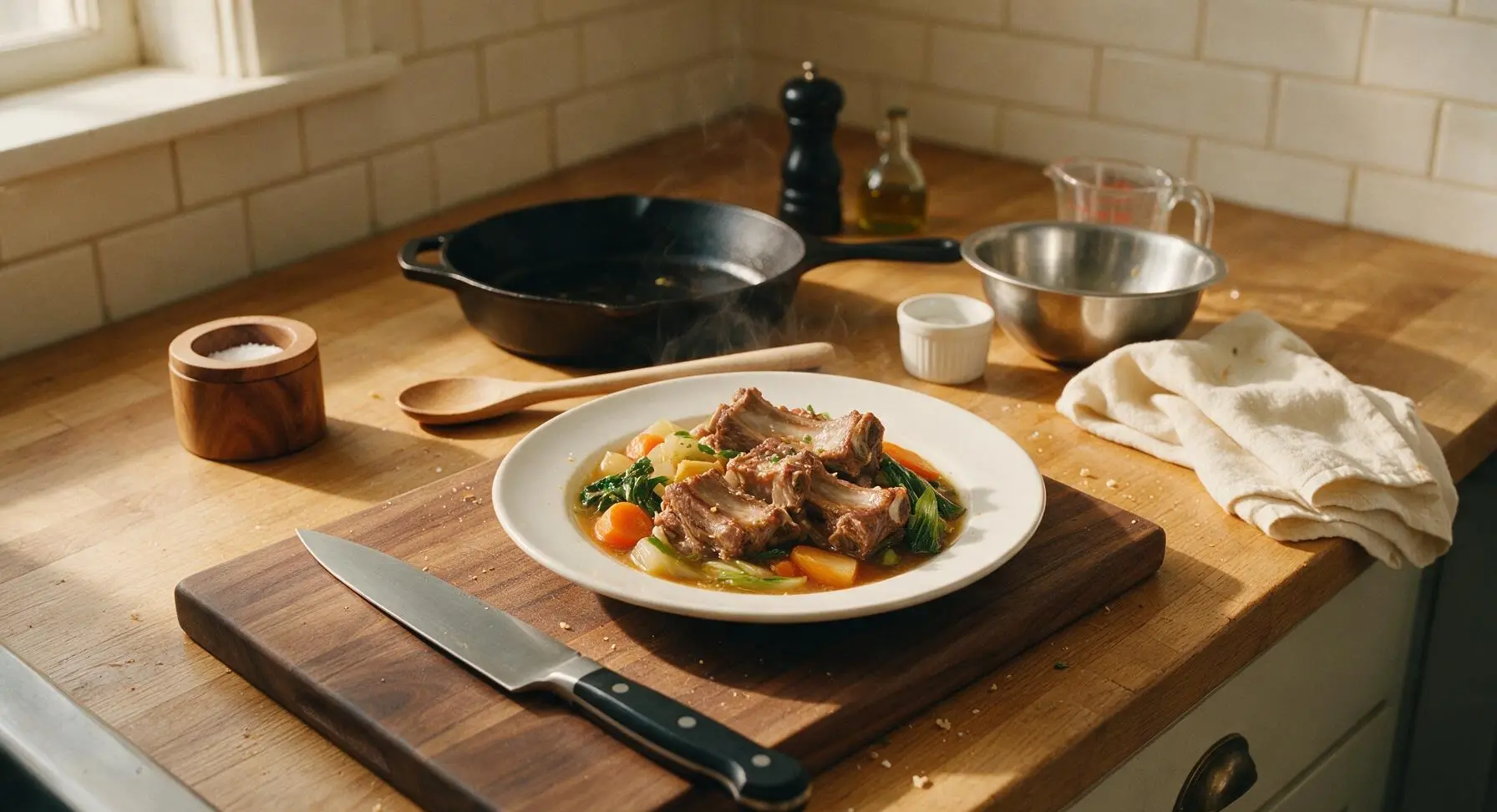
Nabe Ribs

title 1
Nabe Ribs
⏱️ cook time 1 hour 15 minutes
🍽️ servings 4
⚡ Difficulty medium

intro

Tender, fall-off-the-bone pork ribs simmered in umami dashi-soy broth with seasonal vegetables, a cozy, shareable one-pot meal perfect for cold winter nights.

Ingredients
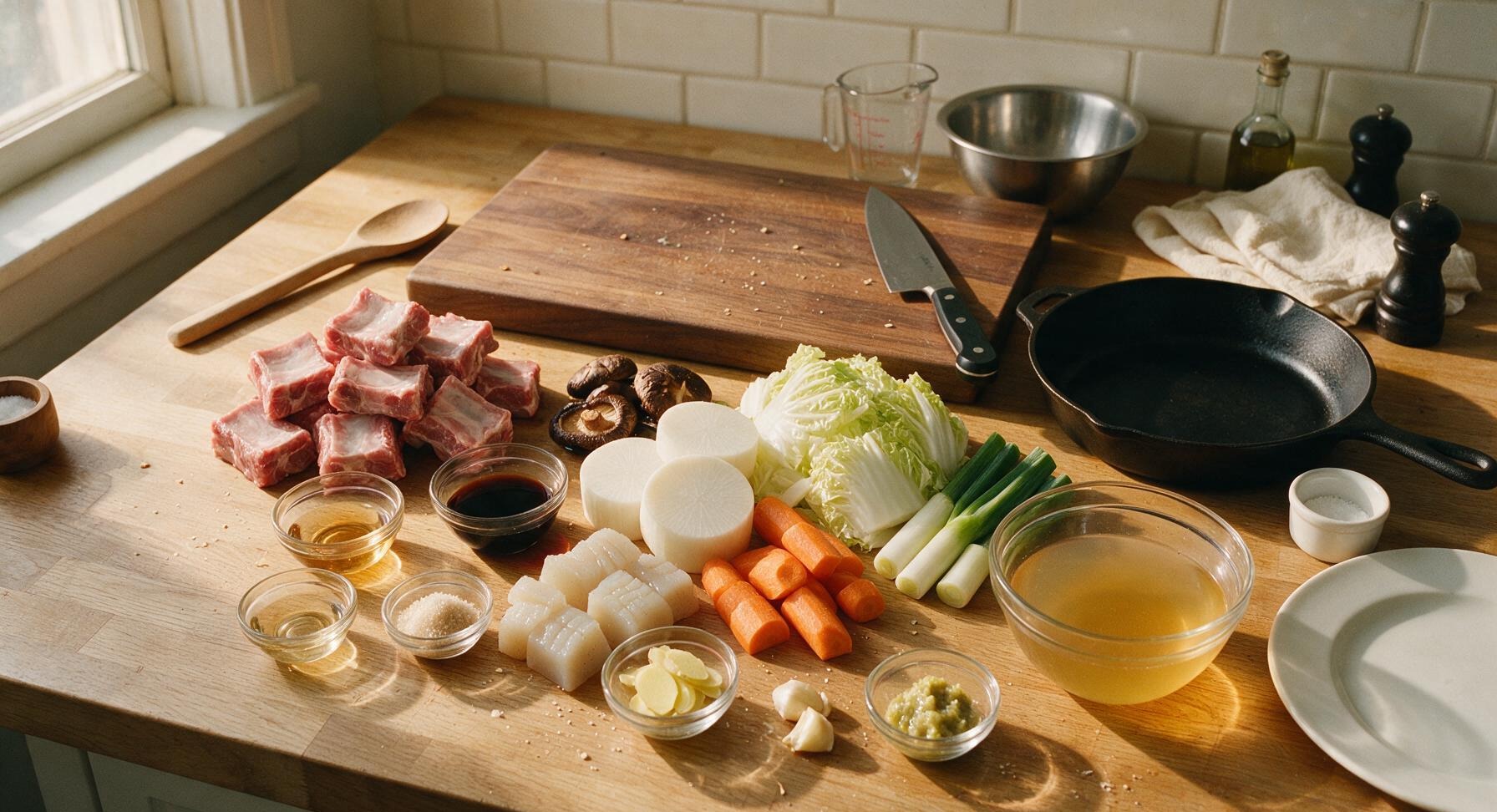
Bone-in pork spare ribs 800g, cut into 5cm individual rib pieces
Prepared dashi stock 800ml
Daikon radish 300g, peeled and cut into 4cm thick rounds
Carrot 2 medium (200g total), peeled and cut into 3cm rolling chunks
Dried shiitake mushrooms 4 pieces, rehydrated
Napa cabbage 1/4 small head (250g), cut into 5cm wedges
Negi (Japanese long green onion) 1 stalk, cut into 5cm lengths, green and white parts separated
Konnyaku (yam cake) 150g, cut into 2cm blocks, lightly scored on both sides
Soy sauce 3 tbsp, plus 1 tsp optional for adjustment
Mirin 2 tbsp
Cooking sake 1 tbsp
Raw sugar 1 tbsp
Fresh ginger 1 (2cm) knob, peeled and thinly sliced
Garlic 2 cloves, lightly crushed
Yuzu kosho (citrus chili paste) 2 tsp, for serving

Steps

1

Blanch the Pork Ribs

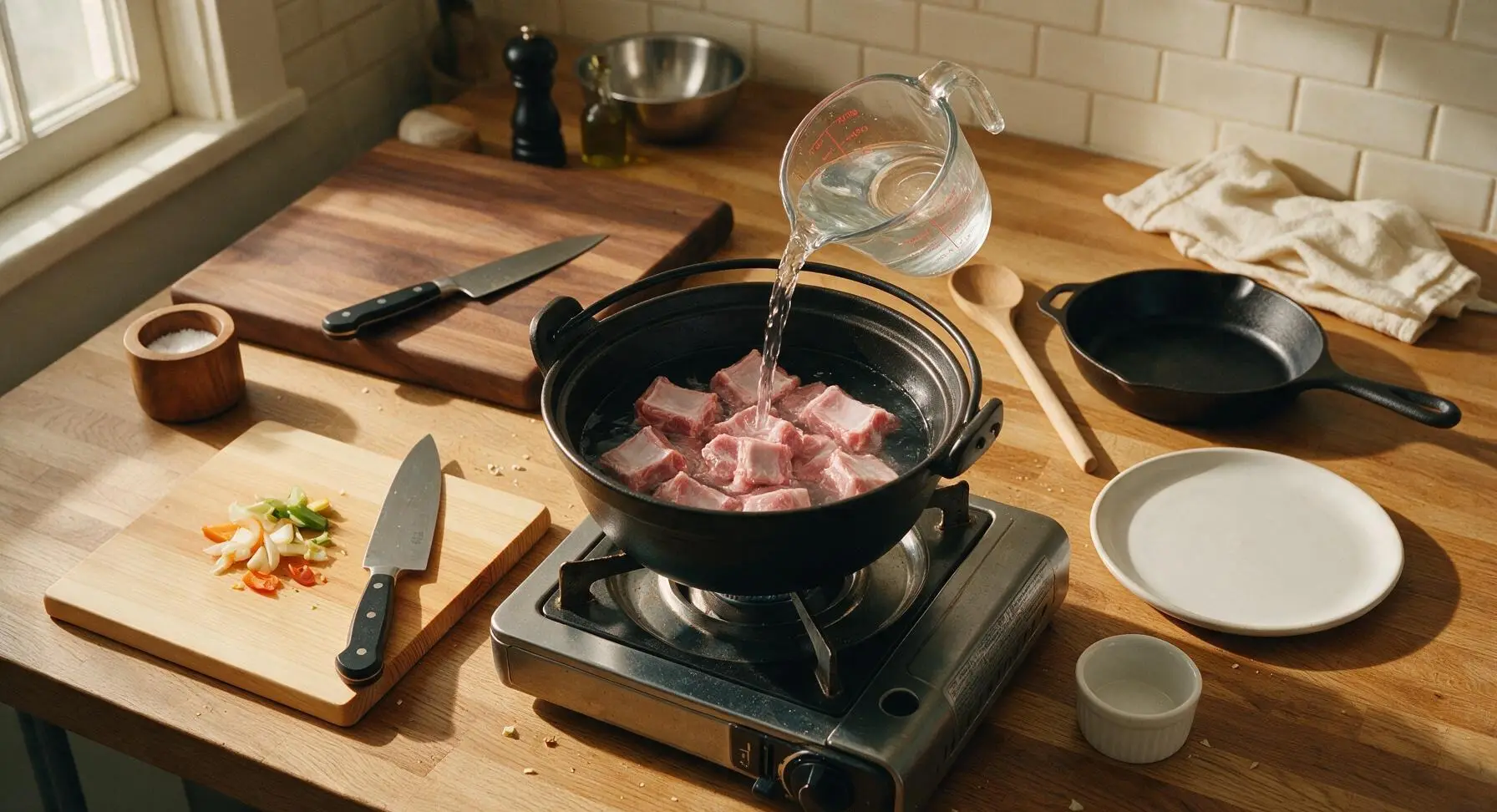
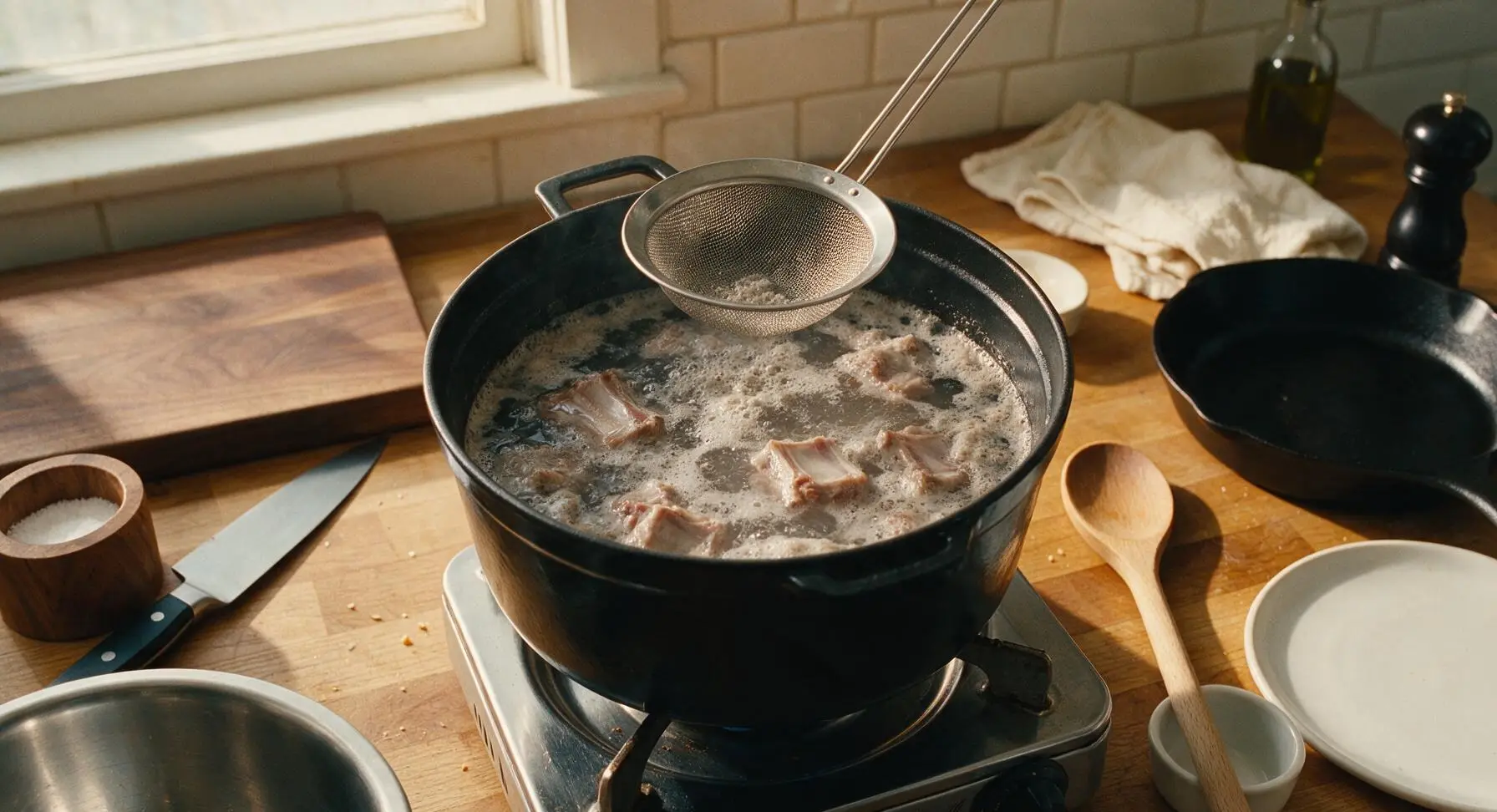
Place the cut 5cm individual pork rib pieces into the matte black enamel nabe pot set on the center portable butane stove. Pour cold water from the glass measuring cup over the ribs until they are covered by 2cm of water. Turn heat to medium-high and bring to a rolling boil, then cook for exactly 5 minutes to draw out blood and impurities, until thick grey foam rises steadily to the water surface.
Step 1
step1:Blanch the Pork Ribs
Step 1
step1:Blanch the Pork Ribs
2

Rinse Parboiled Ribs

Turn off the stove heat, use the skimmer to lift all ribs out of the blanching water, and discard all cloudy blanching water completely. Rinse each rib under warm running water to wash away any clinging grey foam, then pat ribs dry gently with the corner of the indigo cotton towel. Set cleaned ribs on the hinoki cutting board, and wipe the interior of the nabe pot clean of any residue before returning it to the stove.
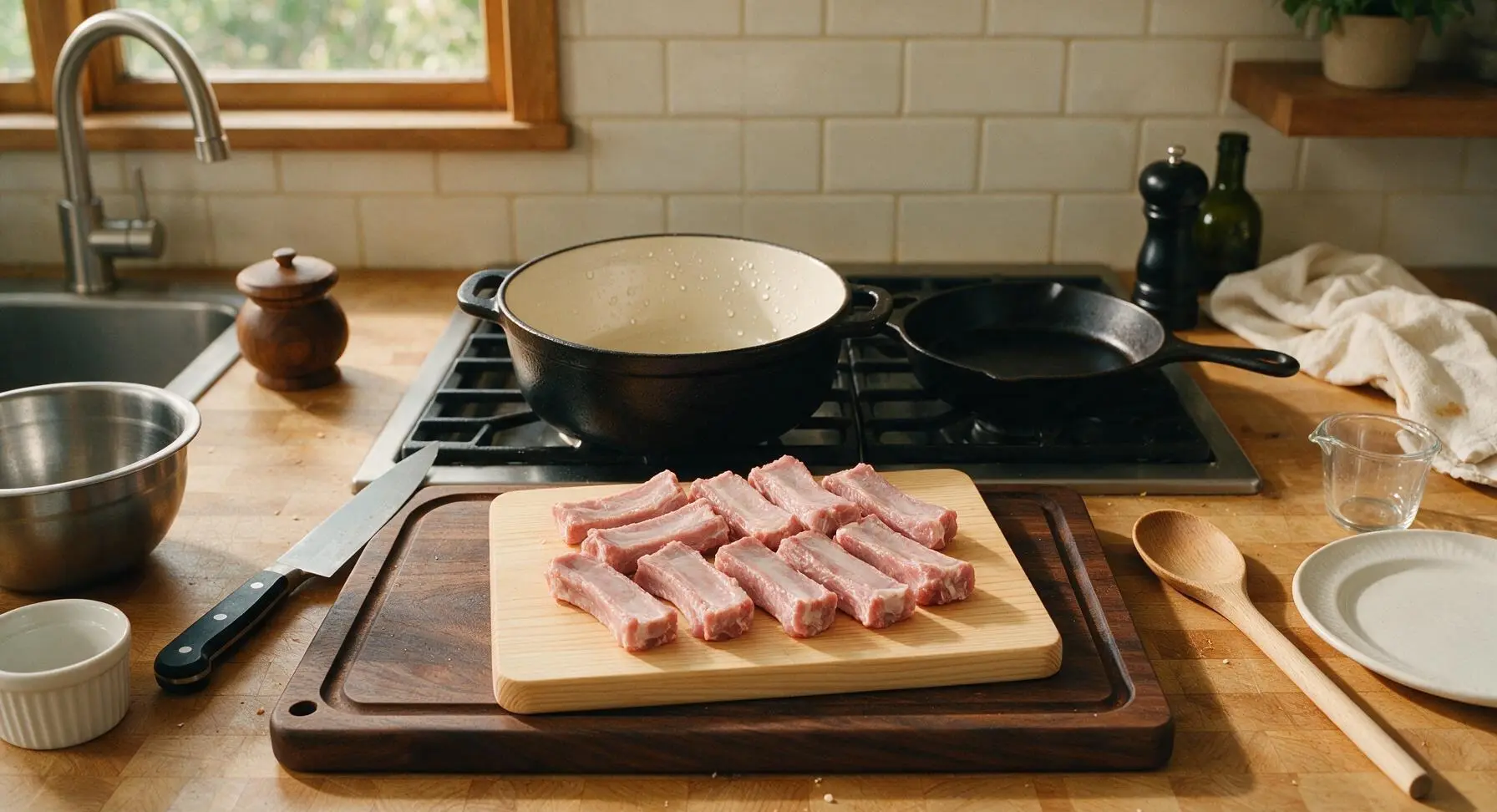
Step 2
step2:Rinse Parboiled Ribs
3

Simmer Broth Base

Return the clean nabe pot to medium heat, pour 800ml of dashi stock from the glass measuring cup into the pot, then add sliced ginger, crushed garlic, soy sauce, mirin, cooking sake, and raw sugar. Stir gently with the long bamboo chopsticks to fully dissolve the sugar, then bring the liquid to a gentle simmer (small bubbles breaking at the pot edges, no rolling boil) and hold for 3 minutes to allow flavors to meld.
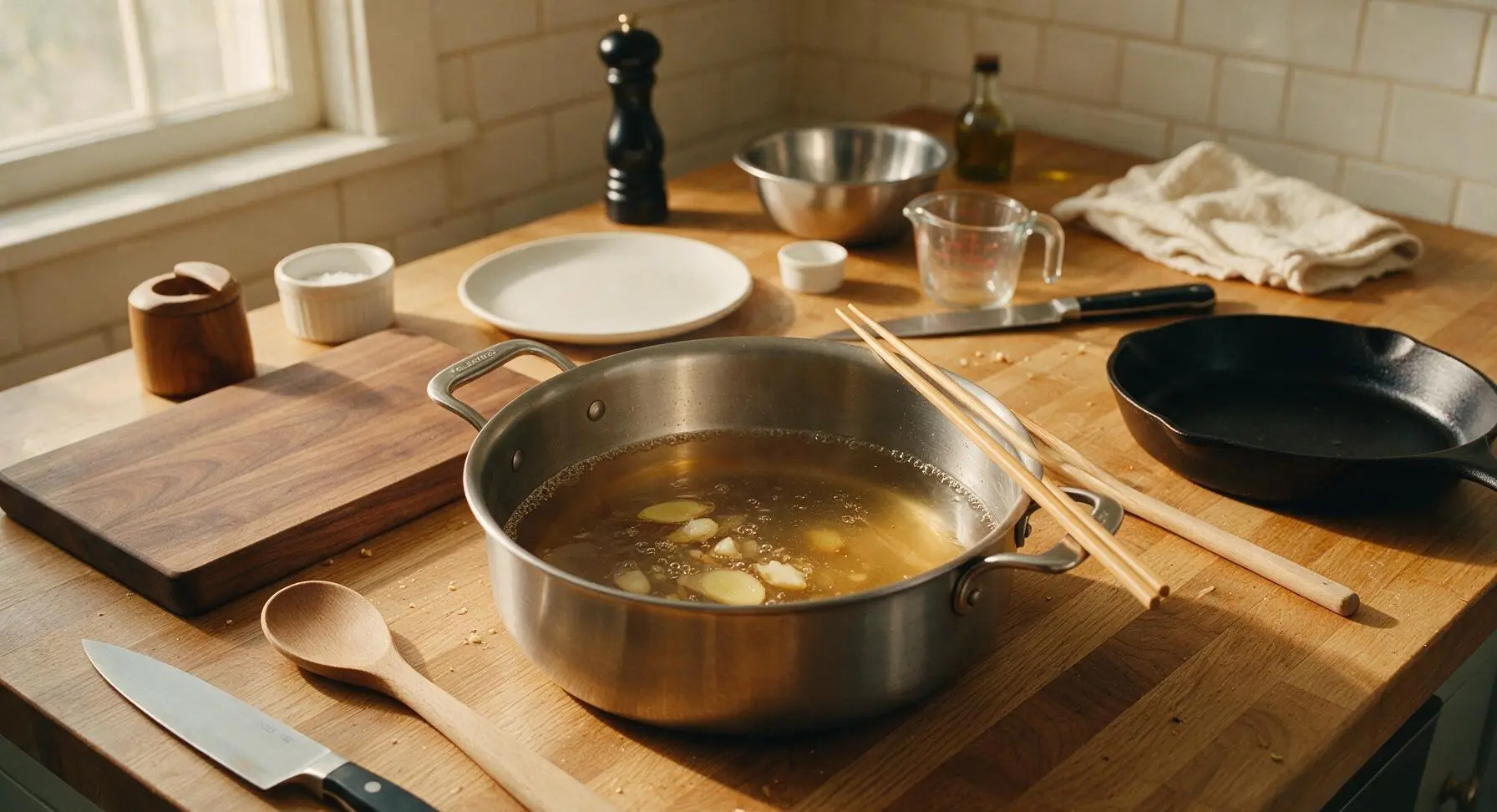
Step 3
step3:Simmer Broth Base
4

Slow Simmer Ribs

Add the rinsed, dried ribs back into the simmering broth, turn the stove heat to the lowest setting to maintain a bare simmer, then cover the pot with its tight-fitting lid. Cook for 45 minutes, checking occasionally to ensure the liquid never reaches a hard boil (rapid boiling will tighten meat fibers and make ribs tough). After 45 minutes, the meat should pull roughly 2mm away from the cut bone ends when prodded gently with chopsticks.
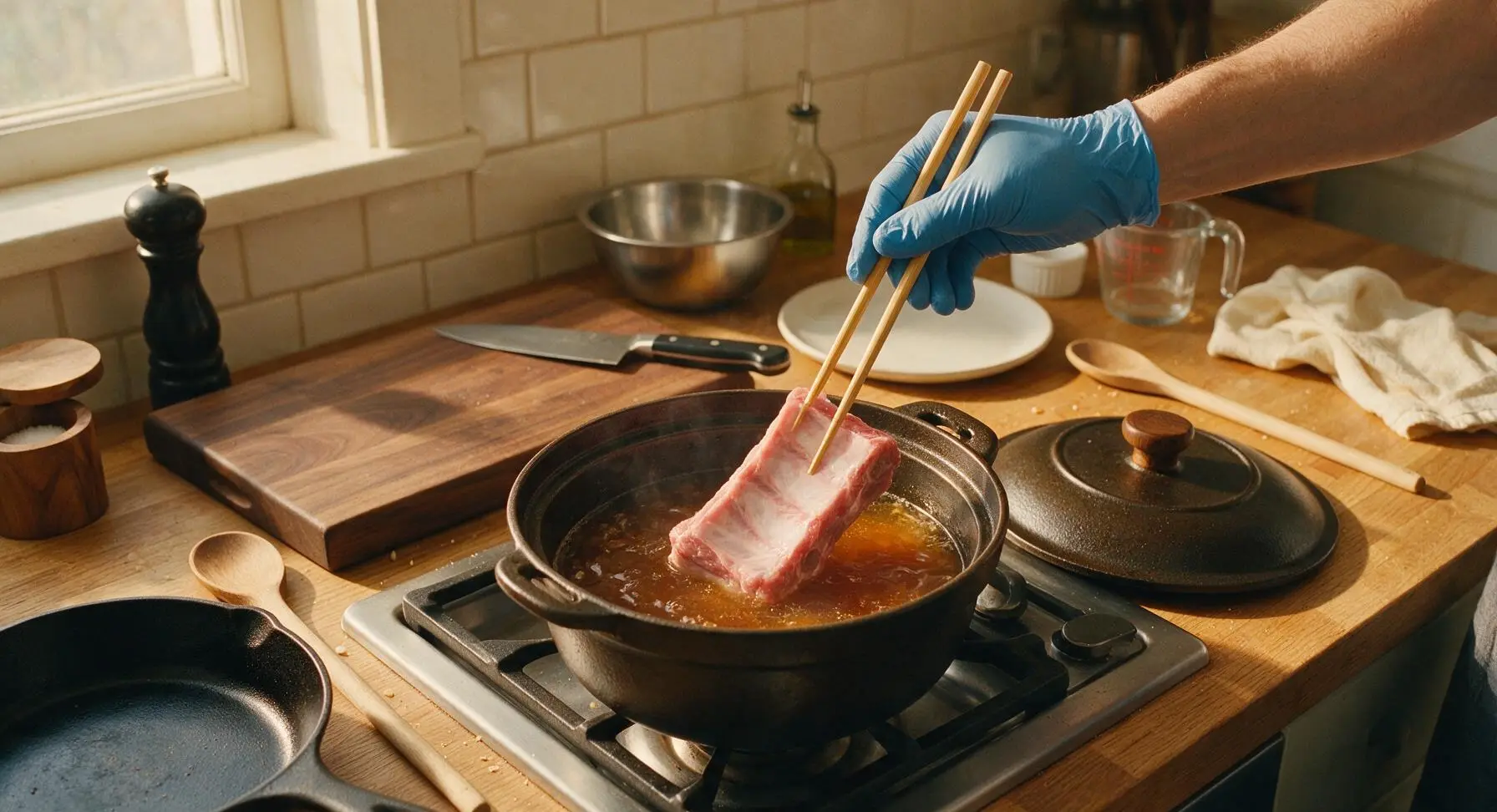
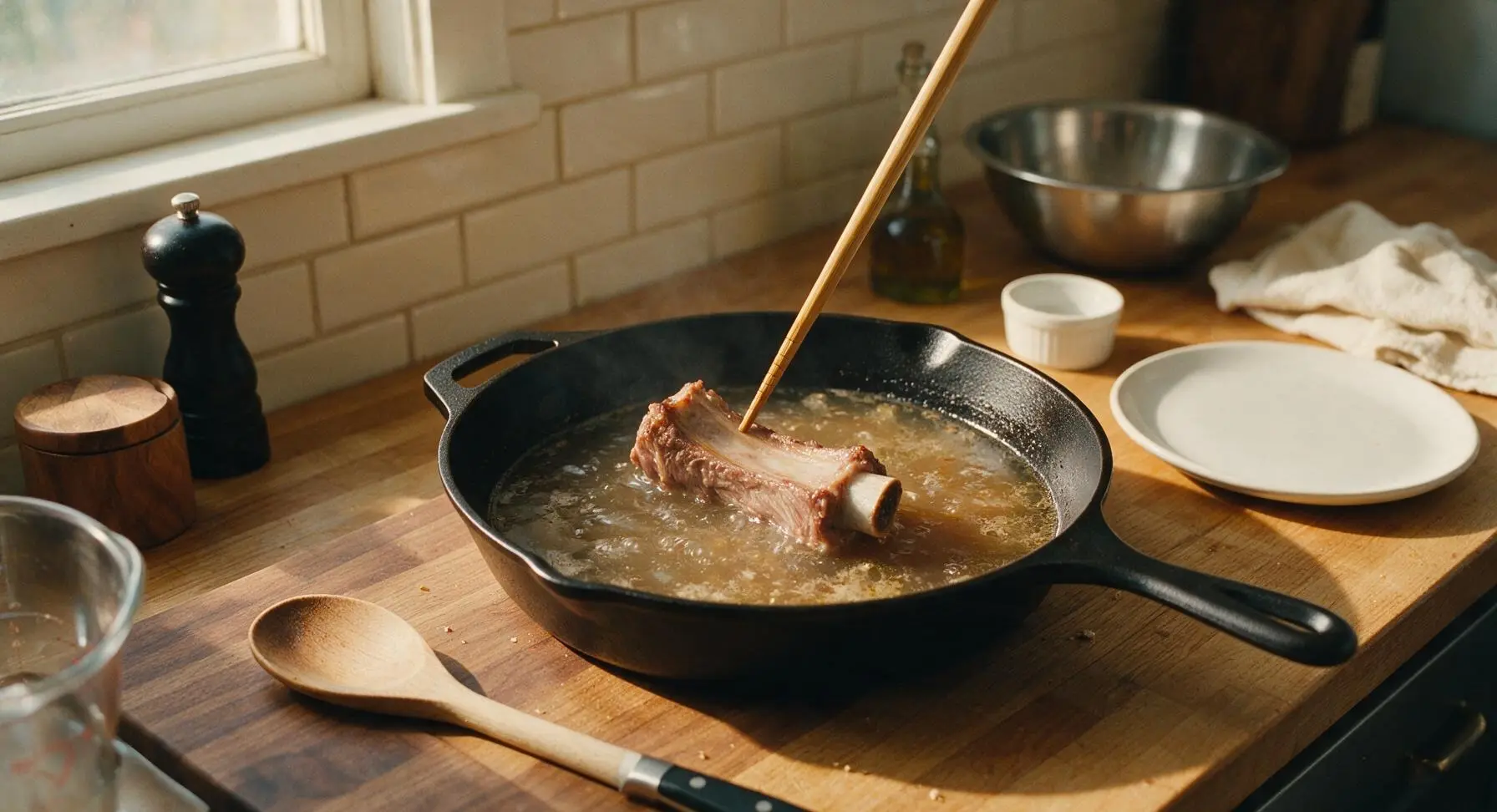
Step 4
step4:Slow Simmer Ribs
Step 4
step4:Slow Simmer Ribs
5

Add Root Vegetables

Remove the nabe pot lid, add the thick daikon rounds, carrot chunks, rehydrated shiitake mushrooms, and scored konnyaku blocks from the stainless steel mixing bowl, tucking each piece down into the broth around the ribs. Return the lid to the pot, and simmer for 15 minutes on low heat, until daikon is easily pierced with the tip of a knife with no resistance.
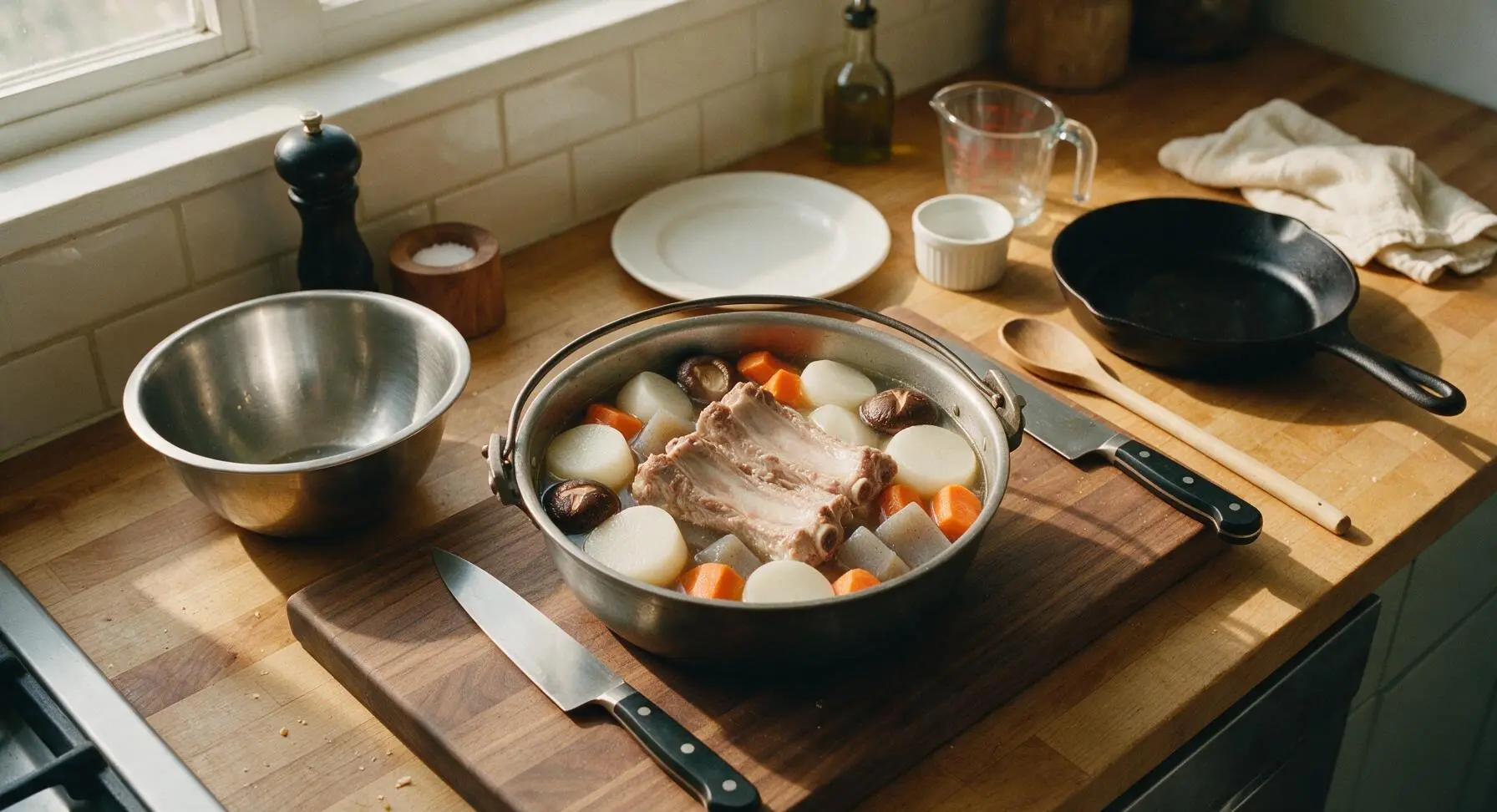
Step 5
step5:Add Root Vegetables
6

Add Tender Greens

Remove the pot lid again, add the napa cabbage wedges and white portions of the cut negi, tucking them into the top layer of the broth. Simmer uncovered for 8 minutes, until cabbage is wilted and translucent at the edges. Add the bright green negi pieces in the final 1 minute of cooking to retain their vivid color and crisp-tender texture.
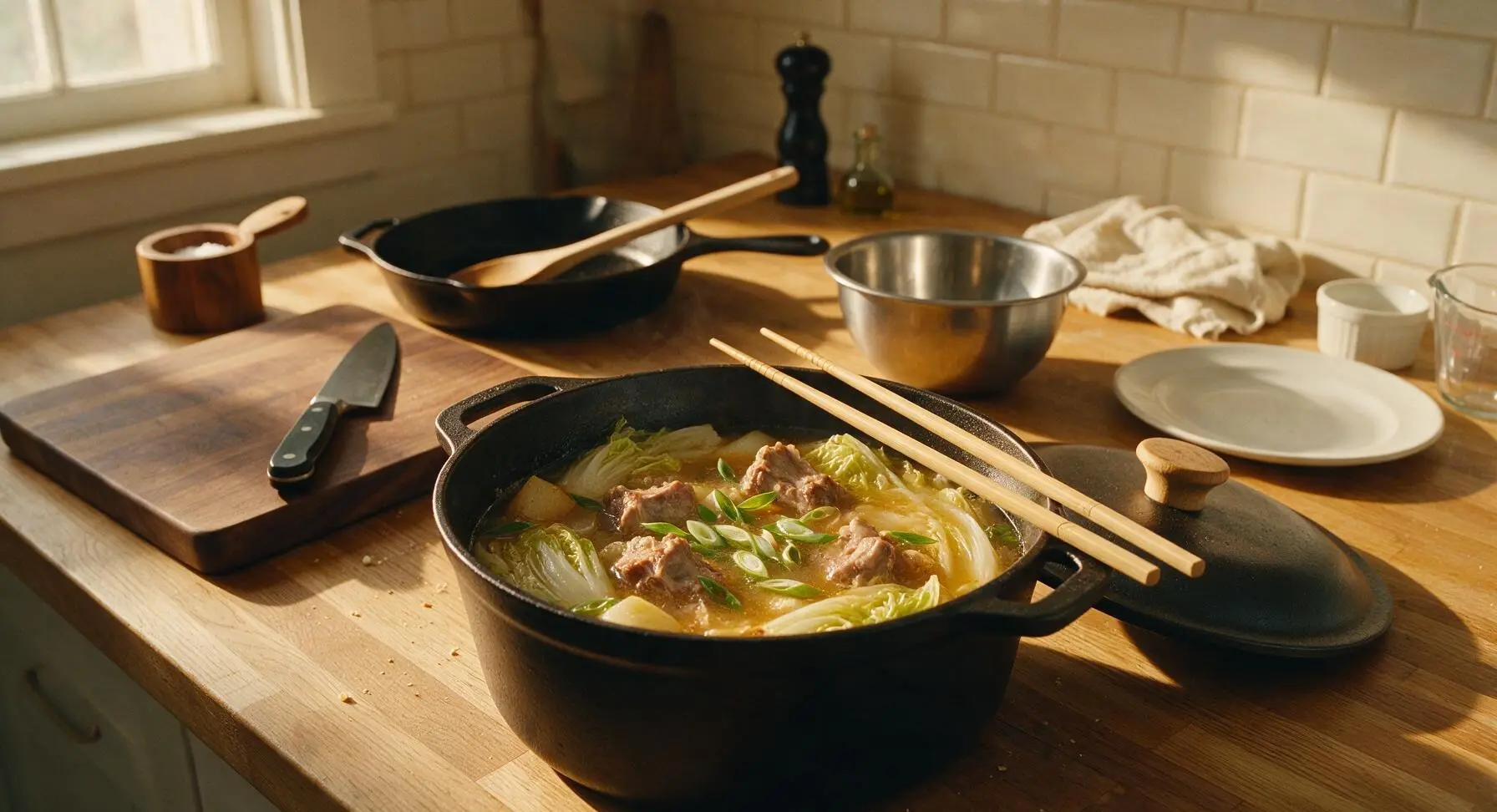
Step 6
step6:Add Tender Greens
7

Skim and Rest

Use the fine-mesh skimmer to gently lift any thin layer of excess surface fat or fine foam from the top of the broth, taking care not to break apart the tender vegetables. Taste the broth, and add 1 tsp extra soy sauce if it tastes under-seasoned. Turn off the heat, and let the nabe rest for 2 minutes off the heat to allow flavors to settle before serving.
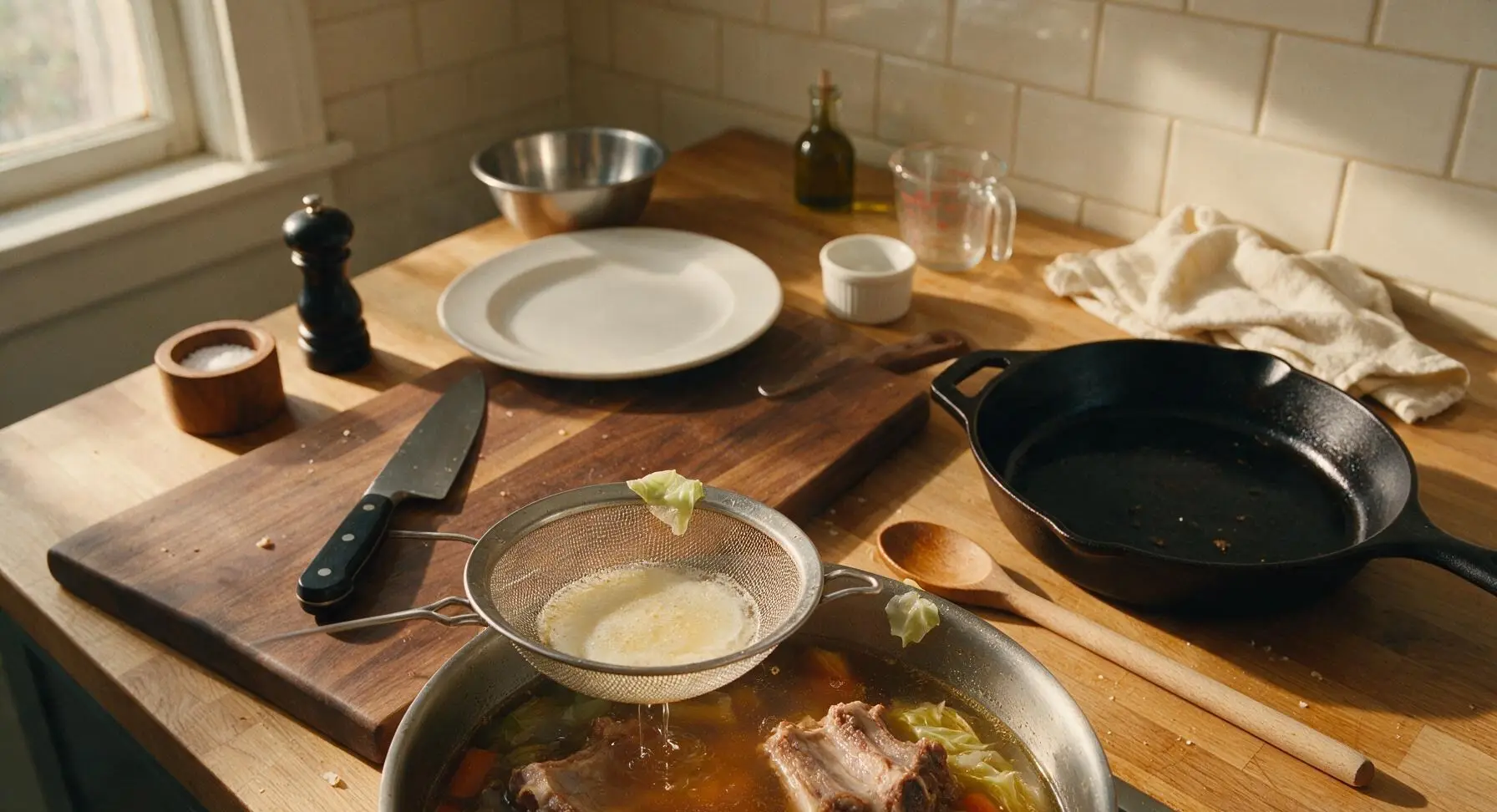
Step 7
step7:Skim and Rest

Tips

1.Always blanch ribs starting in cold water, rather than dropping them into boiling water: this slowly draws out blood and dissolved impurities as the water heats, resulting in a crystal-clear, clean-tasting broth instead of a cloudy, gamey final dish.
2.Maintain a bare, gentle simmer (not a rolling boil) for the full rib cooking time: high heat causes meat proteins to seize up and become tough, while low, steady heat breaks down connective tissue to produce melt-in-your-mouth, fall-off-the-bone rib texture.
3.Score konnyaku blocks in a shallow crisscross pattern on both sides before adding them to the pot: the cuts create extra surface area for the savory broth to penetrate the dense, mild yam cake, preventing bland, flavorless konnyaku.
✨ You May Also Like

Soups & Stews
🍜 Japan

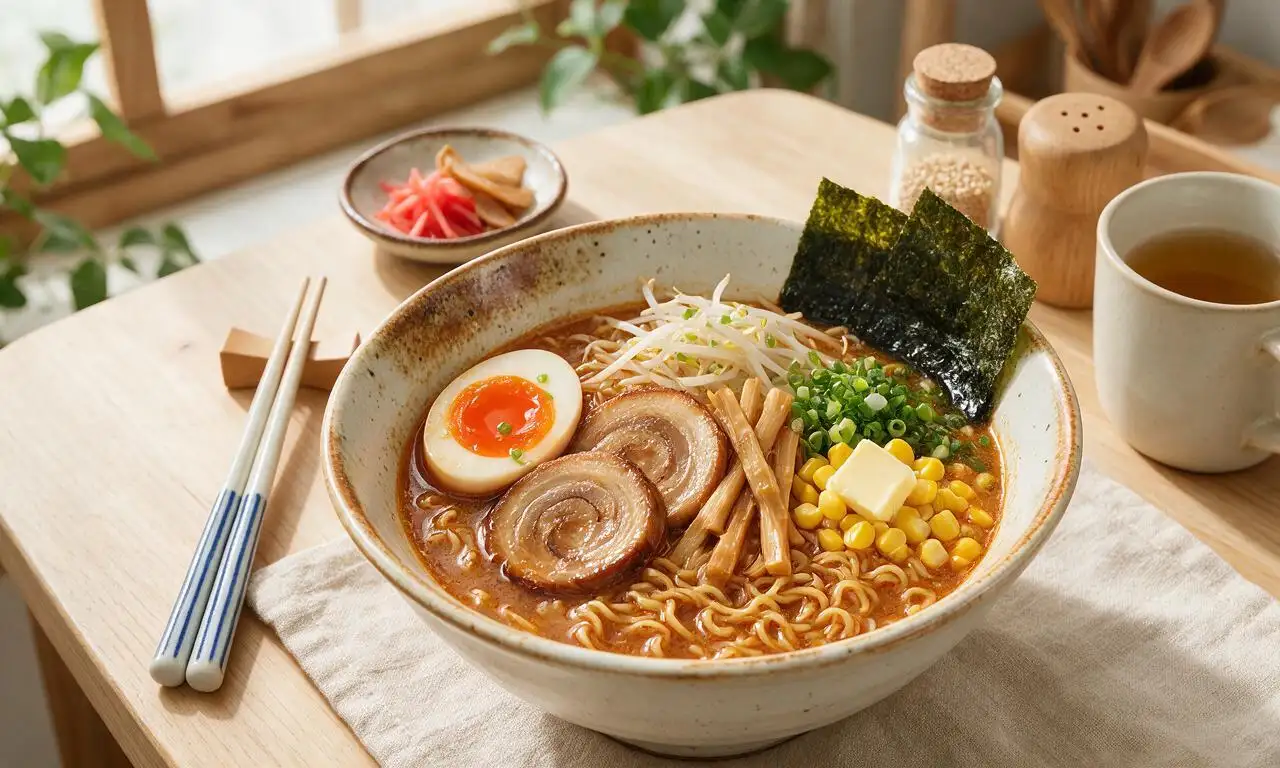
Rich, umami-dense Hokkaido-style miso ramen with chewy noodles, savory fermented broth, and classic toppings, a cozy, deeply satisfying warm meal.

⏱️ 45 minuteSoups & Stews ★ 4.5
Soups & Stews
🍜 United States

A hearty, peppery tripe and root vegetable stew with colonial Philadelphia roots, thick, warming, and packed with bold savory flavor for cold winter days.

⏱️ 2 hours 3Soups & Stews ★ 4.6
Soups & Stews
🍜 Mexico

Hearty, warming red pork posole loaded with tender hominy, slow-simmered in a rich smoky chile broth, served with zesty fresh garnishes for a deeply comforting, satisfying meal.

⏱️ 2 hours 3Soups & Stews ★ 4.7
Soups & Stews
🍜 United States

Warm, soothing classic chicken noodle soup loaded with tender chicken, soft egg noodles, and savory veggies, perfect for chasing chills and feeding the whole family.

⏱️ 40 minuteSoups & Stews ★ 4.9
Soups & Stews
🍜 France

Deeply savory caramelized onion broth topped with crusty bread and bubbly melted Gruyère, a timeless French bistro comfort food ideal for cold days.

⏱️ 1 hour 25Soups & Stews ★ 4.8
Soups & Stews
🍜 United States

Hearty, briny Maryland crab soup loaded with sweet blue crab, tender summer vegetables, and zesty Old Bay, a beloved Chesapeake Bay coastal comfort staple.

⏱️ 55 minuteSoups & Stews ★ 4.9

Nabe Ribs:Frequently Asked Questions

1.Can I use boneless pork ribs instead of bone-in spare ribs for this nabe? ▾
You absolutely can, though bone-in spare ribs deliver far richer, deeper umami to the broth as they simmer. If using boneless, cut ribs into 2-inch chunks and reduce the initial simmer time by 10–12 minutes to avoid drying out the meat, since there’s no bone to insulate it during slow cooking.
2.Do I need to parboil the pork ribs before adding them to the nabe broth? ▾
Parboiling is optional but highly recommended for a cleaner, less greasy broth. Cover ribs with cold water, bring to a rolling boil, simmer 5 minutes, then skim off gray foam and rinse ribs under cool water. This removes excess blood and surface impurities so your final broth stays clear and balanced, not murky or gamey.
3.What kind of prepared dashi stock works best for this recipe? ▾
For the most authentic flavor, use homemade awase dashi (a kombu and katsuobushi blend) if you have it, but high-quality refrigerated prepared dashi or low-sodium dashi powder mixed per package directions works great. Avoid pre-seasoned dashi with added soy or mirin at first, so you can control the final salt level to taste.
4.Can I make this dish if I can’t find daikon radish? ▾
You can absolutely swap daikon if it’s hard to source, though its mild, sweet, ultra-absorbent texture is ideal for soaking up savory broth. Great substitutes include peeled, cubed turnip, thick slices of napa cabbage core, or peeled, cubed rutabaga. Skip strongly flavored red radishes, which will overpower the delicate dashi base.
5.How long do I need to simmer ribs to get that fall-off-the-bone texture? ▾
After parboiling (if you use that step), simmer ribs in seasoned dashi at a gentle, low bubble (not a rolling boil) for 45–55 minutes. Test doneness by poking a chopstick into the thickest part of a rib—it should slide in with almost no resistance, and meat should pull easily from the bone without turning mushy.
6.Do I need to rehydrate dried shiitake mushrooms before adding them to the pot? ▾
Yes, rehydrate dried shiitake in warm (not boiling) water for 20–30 minutes before use for the best texture. Squeeze out excess moisture, trim tough woody stems, and save the strained soaking liquid to stir into the broth for extra earthy umami—just leave the gritty last tablespoon of soaking liquid out.
7.Can I make this nabe in a regular pot if I don’t have a traditional Japanese donabe? ▾
You don’t need a special clay donabe to make this recipe work perfectly. A heavy-bottomed Dutch oven or large stockpot with a tight-fitting lid works just as well for even, gentle heat distribution. If serving family-style at the table, transfer the pot to a portable tabletop burner to keep it warm through the meal.
8.What seasonings should I add to plain dashi to make the nabe broth? ▾
Season 4 cups of plain dashi with 3 tablespoons low-sodium soy sauce, 2 tablespoons mirin, 1 tablespoon sake, and 1 teaspoon granulated sugar, adjusting to taste. This creates a balanced, savory-sweet profile that complements rich pork without overpowering the natural sweetness of the slow-simmered vegetables.
9.Can I add other vegetables besides daikon, carrot, and shiitake to the nabe? ▾
Absolutely—nabe is meant to be flexible and use what you have on hand. Great add-ins include napa cabbage leaves, thick-sliced bok choy, cubed firm tofu, shirataki noodles, or sliced Japanese long onion. Just add quicker-cooking ingredients in the last 10 minutes of simmering so they don’t turn mushy.
10.How do I keep pork ribs from getting tough while they simmer? ▾
The key to tender, not chewy, ribs is keeping the broth at a gentle, steady simmer rather than a rolling boil. Vigorous boiling makes rib muscle fibers seize up and turn tough, while low, slow heat breaks down connective tissue gradually. Keep the lid slightly ajar if your pot runs hot to maintain a consistent temperature.
11.Can I make this nabe ahead of time for meal prep? ▾
This nabe actually tastes better made a day ahead! Let the cooked ribs and broth cool completely, then store in an airtight container in the fridge for up to 3 days. Fat will solidify on top for easy skimming if you want a lighter broth, and ribs will absorb even more savory flavor as the dish rests. Reheat gently before serving.
12.What’s the best way to cut daikon and carrot for this hot pot? ▾
Cut both daikon and carrot into 1.5-inch thick half-moons or rustic rolling rangiri wedges for even cooking. These thick cuts hold up well to long simmering without falling apart, and their flat edges make them easy to pick up with chopsticks. Peel both veggies first for the most tender, pleasant texture.
13.What’s a good non-alcoholic substitute for mirin and sake in the broth? ▾
If you avoid alcohol, swap the sake for an equal amount of low-sodium chicken or vegetable broth, and replace mirin with 2 tablespoons white grape juice mixed with 1/4 teaspoon extra granulated sugar per 2 tablespoons of mirin. This matches the mild, sweet depth mirin adds without boozy notes, keeping the broth well-balanced.
14.Why is my finished nabe broth so greasy, and how do I fix it? ▾
Greasy broth usually happens if you skipped parboiling the ribs, or used ribs with an extra-thick layer of surface fat. If your broth is too greasy when done, skim excess fat off the top with a large spoon, or drop a few ice cubes in for 10 seconds—fat will cling to the cold ice, making it easy to remove before serving.
15.Can I make this recipe in a slow cooker or Instant Pot? ▾
You sure can. For a slow cooker, add all prepped ingredients (parboiled ribs, veggies, broth, seasonings) and cook on LOW for 6–7 hours until ribs are tender. For an Instant Pot, cook on high pressure for 18 minutes, then do a 10-minute natural pressure release before quick-releasing remaining pressure for perfect ribs.
16.What are the best serving accompaniments for nabe ribs? ▾
Serve this nabe family-style straight from the pot, with small bowls of ponzu sauce, grated daikon, and shichimi togarashi (Japanese seven-spice blend) on the side for dipping. You can also add cooked udon noodles or steamed rice to soak up leftover broth at the end of the meal for a cozy, filling finish.
17.How do I pick the best pork spare ribs for this recipe? ▾
Look for spare ribs with even marbling of white fat through the meat, and a pale pink color with no gray or dry brown edges. Avoid ribs that are pre-marinated or pre-seasoned, as those will throw off the delicate dashi broth balance. Ask your butcher to cut a full rack into 2-inch individual rib pieces for easy prep.
18.Can I freeze leftover nabe ribs for later? ▾
Leftovers freeze really well for up to 3 months. Let the dish cool completely, then portion ribs, veggies, and broth into airtight, freezer-safe containers, leaving 1 inch of headspace for expansion. Thaw overnight in the fridge before reheating gently on the stovetop, and add a splash of extra dashi if the broth seems too thick.
19.Why does my simmered daikon sometimes turn bitter? ▾
Bitter daikon usually comes from using older, over-mature daikon that was stored too long, or cooking it at a too-high rolling boil. To avoid bitterness, pick smaller, firm daikon with bright, smooth skin, and add it once the broth is at a gentle simmer. If using extra-bitter daikon, blanch chunks for 3 minutes first before adding to the pot.

Comments (11)

2 days ago

OMG these nabe ribs were the perfect cozy dinner for our 30-degree Chicago night last week! The meat fell right off the bone, and my 7 and 9 year old ate two servings each even with the napa cabbage. I added extra mushrooms like we do for regular hot pot and it worked perfectly. 10/10 will make all winter long.

5 days ago

Tried this for our friend group potluck last weekend and everyone was begging for the recipe! Only thing is I cooked them a little too long on the simmer so some of the ribs got a bit mushy. Any tips for getting the texture just right?

3 days ago

So glad these were a hit at your potluck! For ideal tender-but-not-mushy ribs, keep the simmer low (no rolling boil!) and start checking for doneness at the 55 minute mark instead of waiting the full 75. That way you can pull them as soon as the meat gives easily with a fork but doesn't slide right off unprovoked!

1 week ago

Game changer. I’ve always done smoked ribs for game day but decided to switch it up for our cold weather watch party and I have zero regrets. The dashi broth adds such a deep umami kick I didn’t even know I was missing. We dipped the ribs in ponzu and it was chef’s kiss.

5 days ago

So stoked these were a hit for your watch party! Ponzu is the perfect dip for these — I love setting out a little grated daikon to mix into the ponzu for extra brightness if you want to level it up next time!

3 days ago

Pretty good! I used boneless country style ribs instead of bone-in because that’s what I had in the freezer, and it still turned out tasty, though I bet the bone-in adds way more depth to the broth. Cook time was a little shorter for the boneless cuts, fyi for anyone else making that swap!

2 hours ago

Wait has anyone tried making this in the Instant Pot? I work 9-5 and don’t always have a full hour+ to simmer on weeknights, but I’ve been craving this ever since I saw the recipe pop up on my feed.

30 minutes ago

I did it last week! 20 minutes high pressure with a quick release and it came out perfect, same fall-off-the-bone texture without the long simmer. Just make sure you don’t fill the pot past the max line with the broth!

2 weeks ago

SO good. I grew up eating nabe with my grandma in Tokyo and this recipe tastes exactly like the ones we’d make on cold winter nights when we didn’t feel like making a big fancy meal. I added a block of silken tofu cut into cubes and some bok choy at the end, just like she used to, and it transported me right back to her dining table.

1 week ago

Oh the silken tofu addition sounds genius! I never would’ve thought to add that, I’m definitely throwing that in when I make this next week.

1 week ago

That makes my day to hear, Hannah! Adding silken tofu and bok choy is such a classic, delicious call — I love that you got to add a personal family touch to the recipe.

yesterday

It was fine, but I think I prefer my ribs smoky and sauced up the traditional American way. The broth was really flavorful, don’t get me wrong, but it just wasn’t my vibe. My wife loved it though, so I’ll probably make it again for her at some point.

1 week ago

Made a big batch of this on Sunday for meal prep and it held up so well all week! I portioned the ribs and broth out with a scoop of rice and some steamed veggies, and it was way better than my usual sad desk lunch. Even my coworker asked for the recipe when she smelled me heating it up in the break room!

5 days ago

That’s such a smart meal prep idea! I’m so glad it held up for you all week — pro tip, if you’re storing it for meal prep, keep the noodles/rice separate from the broth so they don’t get soggy when you reheat.

30 minutes ago

Help! I tried making this last night and my ribs were tough? I followed the recipe exactly, simmered for 75 minutes, but the meat was still chewy. Did I do something wrong? I used pork spare ribs like the recipe said, not pre-cooked or anything.

5 minutes ago

Oh no! Did you cut the ribs into individual pieces before simmering? I made that mistake my first time — I left them in a whole rack and the heat didn’t penetrate all the way through, so some parts were super tough. Cut them into 1-2 rib chunks before you put them in the broth and that should fix it!

just now

I’m sorry the ribs turned out tough for you! Becky’s tip about cutting them into individual pieces is spot on — another common issue is if the simmer was too low, almost off, the meat won’t break down properly. You want a gentle, steady simmer with tiny bubbles breaking the surface, not a full boil but not completely still either. Give it another try and I bet they turn out perfect!

yesterday

Made this for my partner for our at-home date night last night and I got so many brownie points. We turned the lights down low, put on a Studio Ghibli movie, and ate the whole pot between us. 10/10 date night meal, way more impressive than ordering takeout and way cheaper too.

2 hours ago

I did this exact same date night last month! We did Spirited Away and it was the most perfect low-key date, no fancy reservation required. Already planning to make it again for our anniversary next month.

5 minutes ago

Quick question before I make this this weekend — the recipe calls for sake, but I don’t drink alcohol and don’t keep it in the house. What’s a good non-alcoholic swap that won’t make the broth taste off? I’m so excited to make these, they look incredible.

just now

I use a mix of 1 tbsp rice vinegar + 1 tsp sugar + 1/4 cup water to replace the sake every time I make Japanese hot pot, and you can barely tell the difference! Don’t use cooking sake either, that still has alcohol in it and usually added salt.

just now

Great question! That rice vinegar + sugar swap works perfectly, or you can use non-alcoholic sake if you can find it at your local Asian market. Just skip the cooking sherry a lot of sites recommend — it’s way too sharp and will throw off the umami balance of the broth.