nikujaga

title 1
nikujaga
⏱️ cook time 40 minutes
🍽️ servings 4
⚡ Difficulty easy

intro

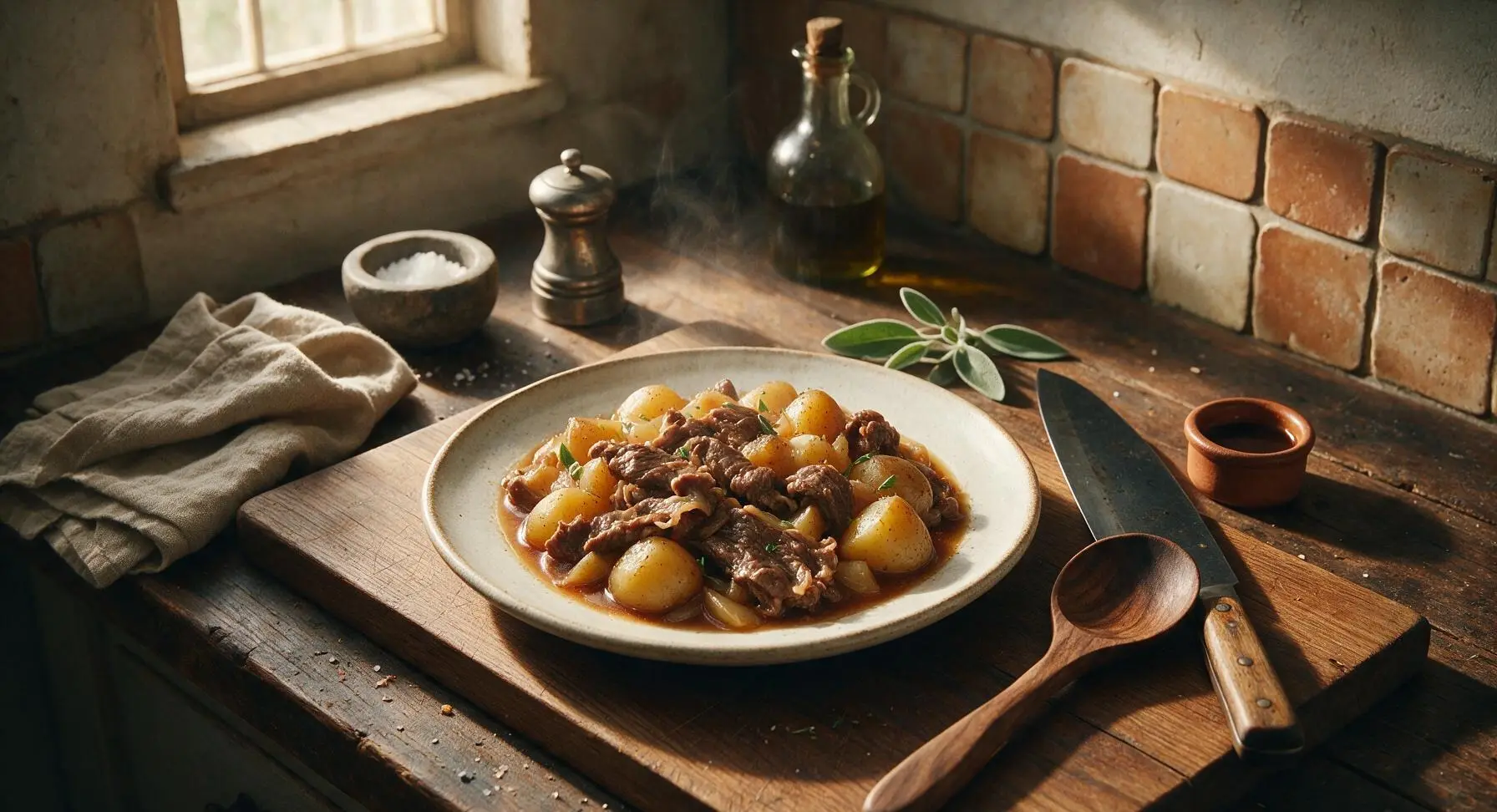
Tender marbled beef and waxy potatoes simmered in sweet-savory soy-mirin broth, the ultimate cozy Japanese home-style comfort food made for sharing.

Ingredients
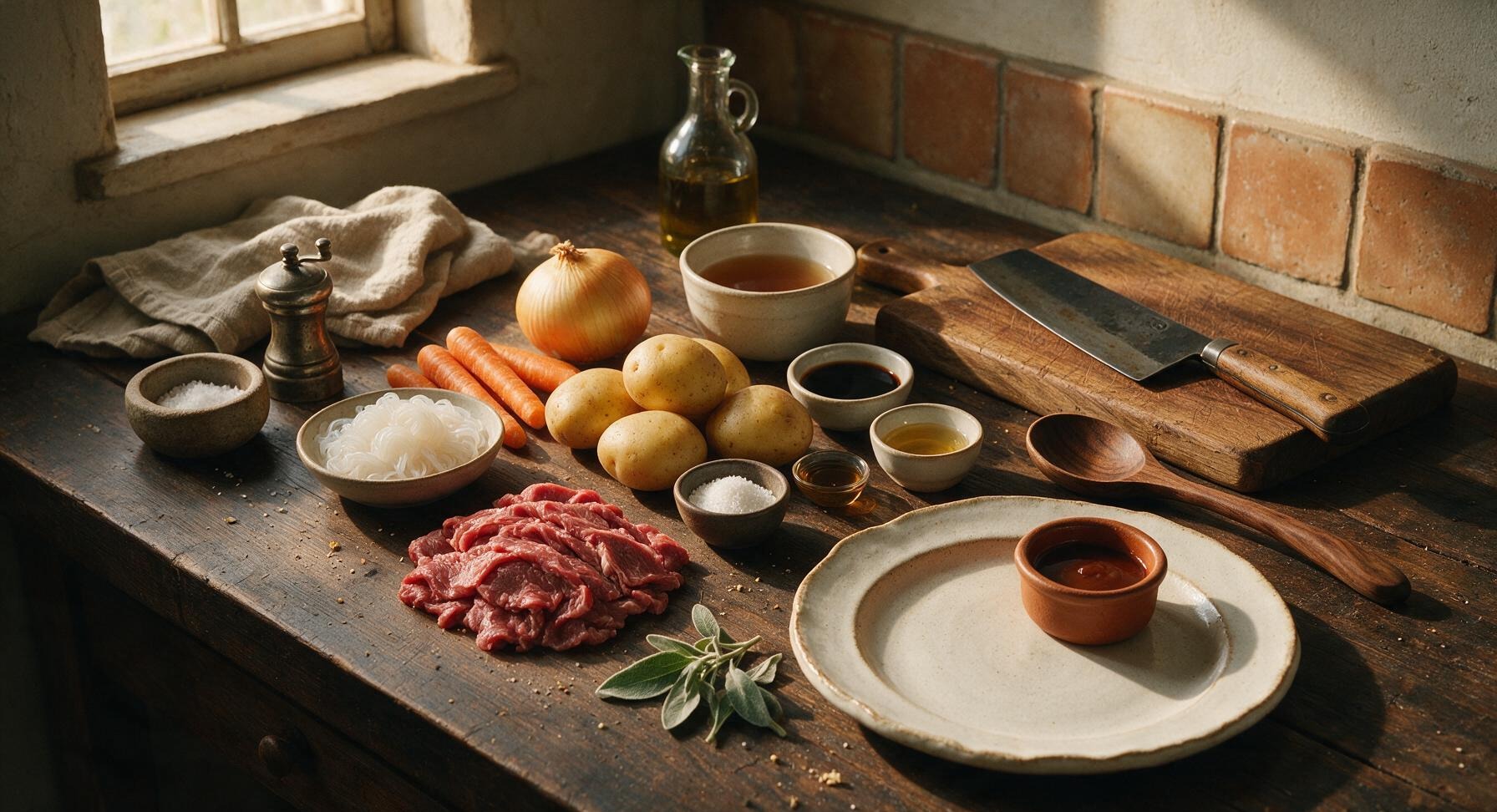
Thinly sliced beef chuck 400g
Waxy Yukon gold potatoes 600g (approx 4 medium)
Yellow onion 200g (1 large)
Carrots 180g (2 medium)
Shirataki konjac noodles 150g (1 pack, drained)
Neutral canola oil 1 tbsp
Dashi stock 500ml (2 cups)
Soy sauce 3 tbsp
Mirin 2 tbsp
Cooking sake 1 tbsp
Granulated sugar 2 tbsp

Steps

1

Chop All Vegetables

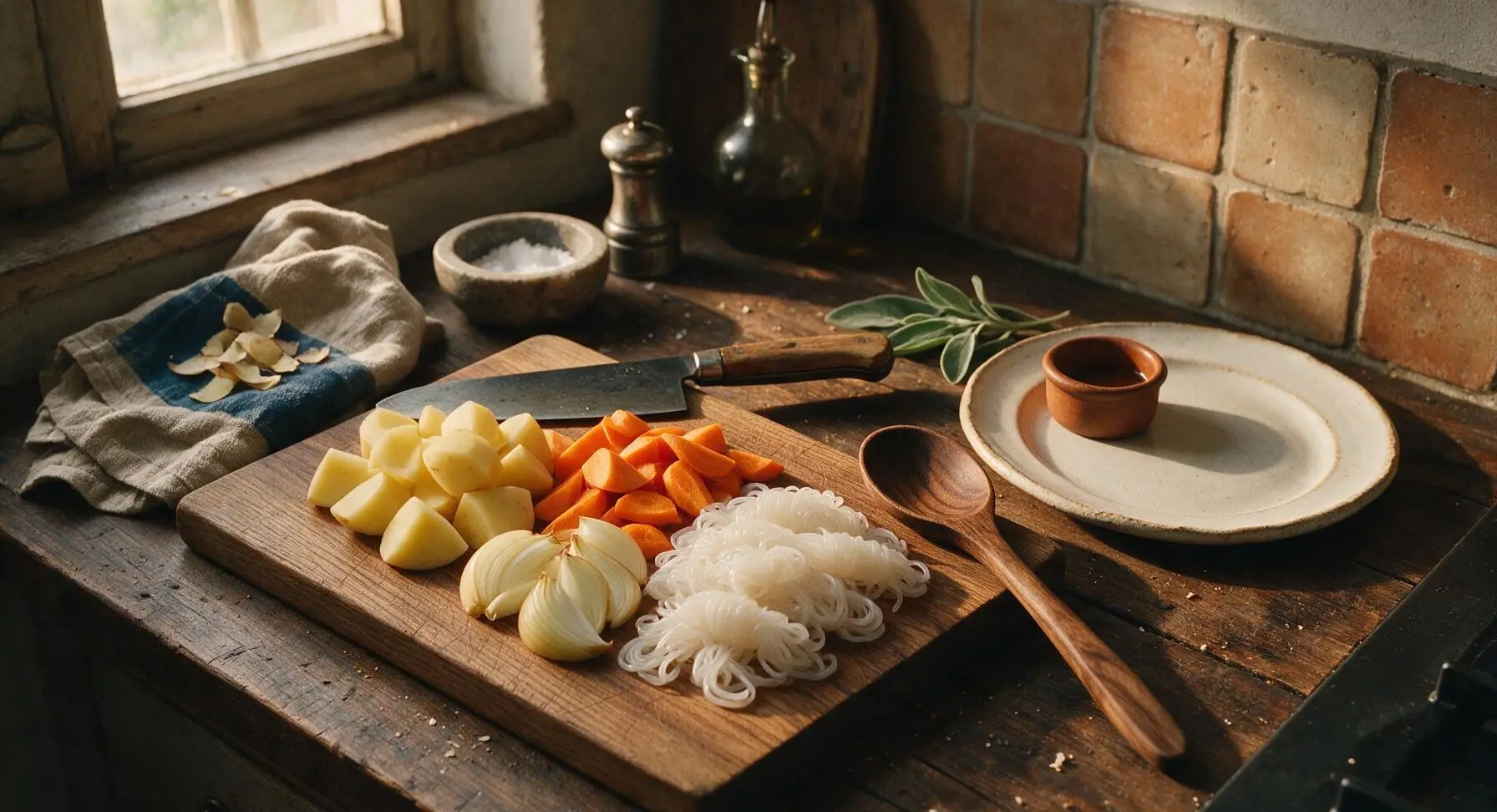
Place the light oak cutting board in its standard center-left position on the counter. Using the 7-inch stainless steel chef knife with walnut handle, peel potatoes and carrots, cut potatoes into uniform 4cm bite-sized chunks, carrots into 3cm rolling wedges. Cut the yellow onion into 1cm thick wedges, separating layers slightly. Rinse cut potatoes in cold water for 5 minutes to remove excess surface starch, then drain well. Cut drained shirataki noodles into 10cm lengths, and set all prepped vegetables aside on the cutting board.
Step 1
step1:Chop All Vegetables
2

Sear Thin Beef Slices

Retrieve the 24cm matte black carbon steel stew pot from the lower cabinet and place it on the counter’s central induction burner, heat to medium, then add 1 tablespoon neutral oil. Add the thinly sliced beef chuck, use the carved maple wood cooking spoon to break apart clumped slices, searing for 2 minutes until lightly browned on all edges with no bright raw pink remaining. Do not fully cook the beef through, as it will continue to simmer with the vegetables.
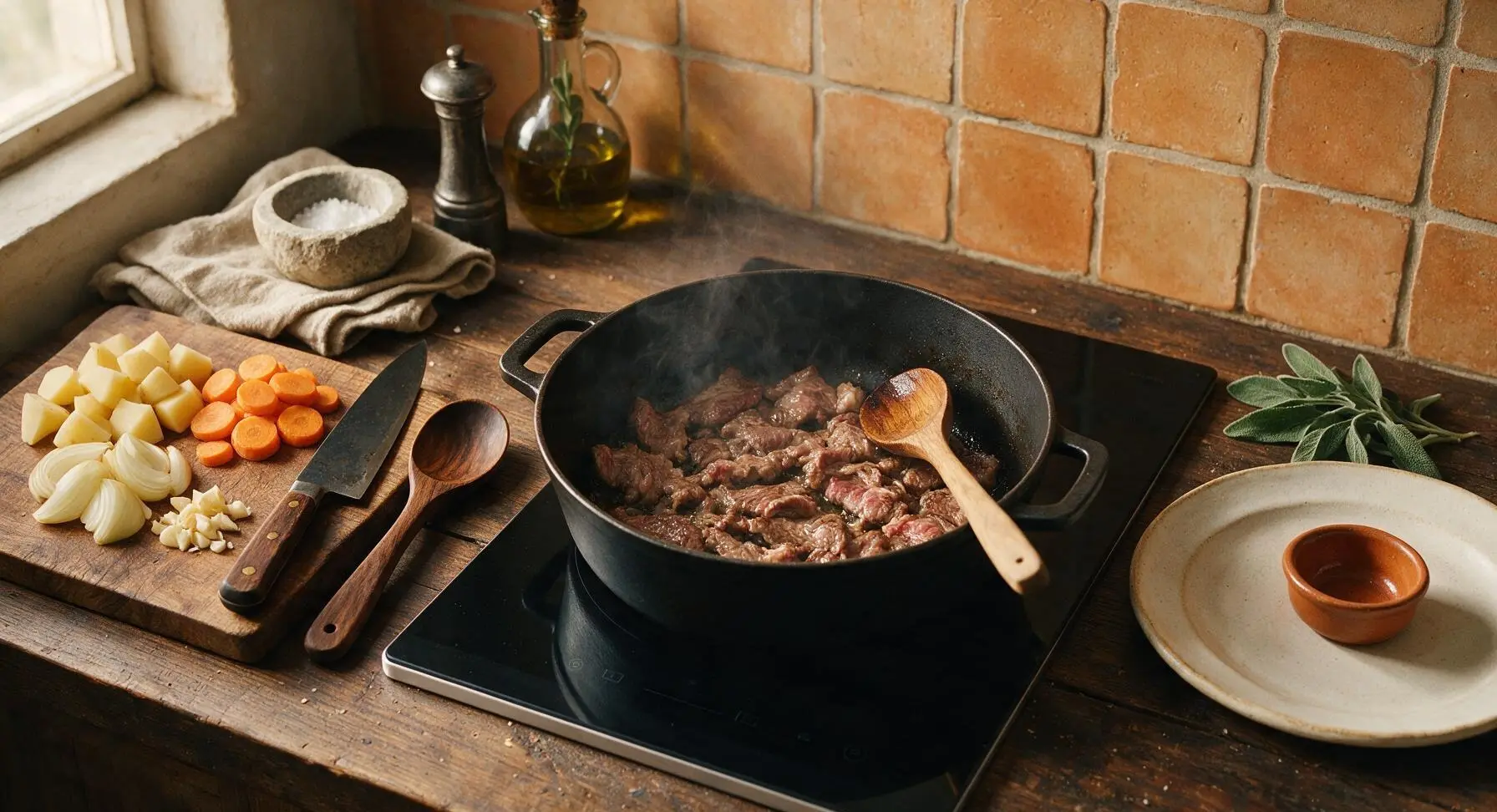
Step 2
step2:Sear Thin Beef Slices
3

Sauté Onion and Carrot

Add the cut onion wedges and carrot pieces to the pot with the seared beef, stirring with the maple spoon to coat every piece in oil and rendered beef fat. Sauté for 3 minutes over medium heat until onion edges turn soft and translucent, releasing a sweet, fragrant aroma, and carrot surfaces develop a faint glossy sheen.
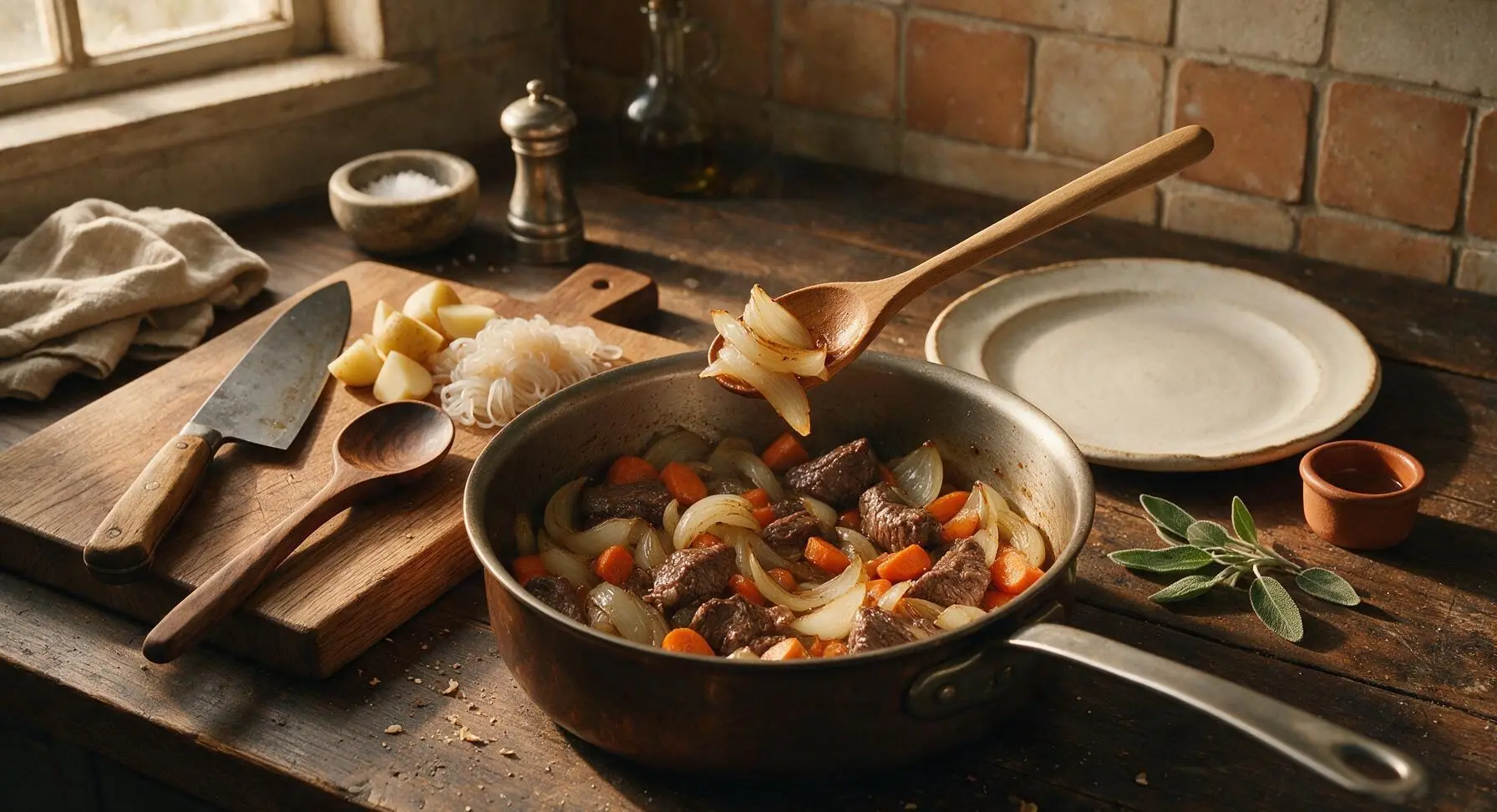
Step 3
step3:Sauté Onion and Carrot
4

Add Potatoes and Broth

Add the drained potato chunks and cut shirataki noodles to the pot, stirring gently to combine with the beef, onion, and carrot. Use the stainless steel measuring cups to pour in 500ml dashi stock, 3 tablespoons soy sauce, 2 tablespoons mirin, 1 tablespoon cooking sake, and 2 tablespoons granulated sugar, stirring once to dissolve the sugar. Bring the liquid to a gentle rolling boil, then use the spoon to skim any faint gray foam that collects on the surface.
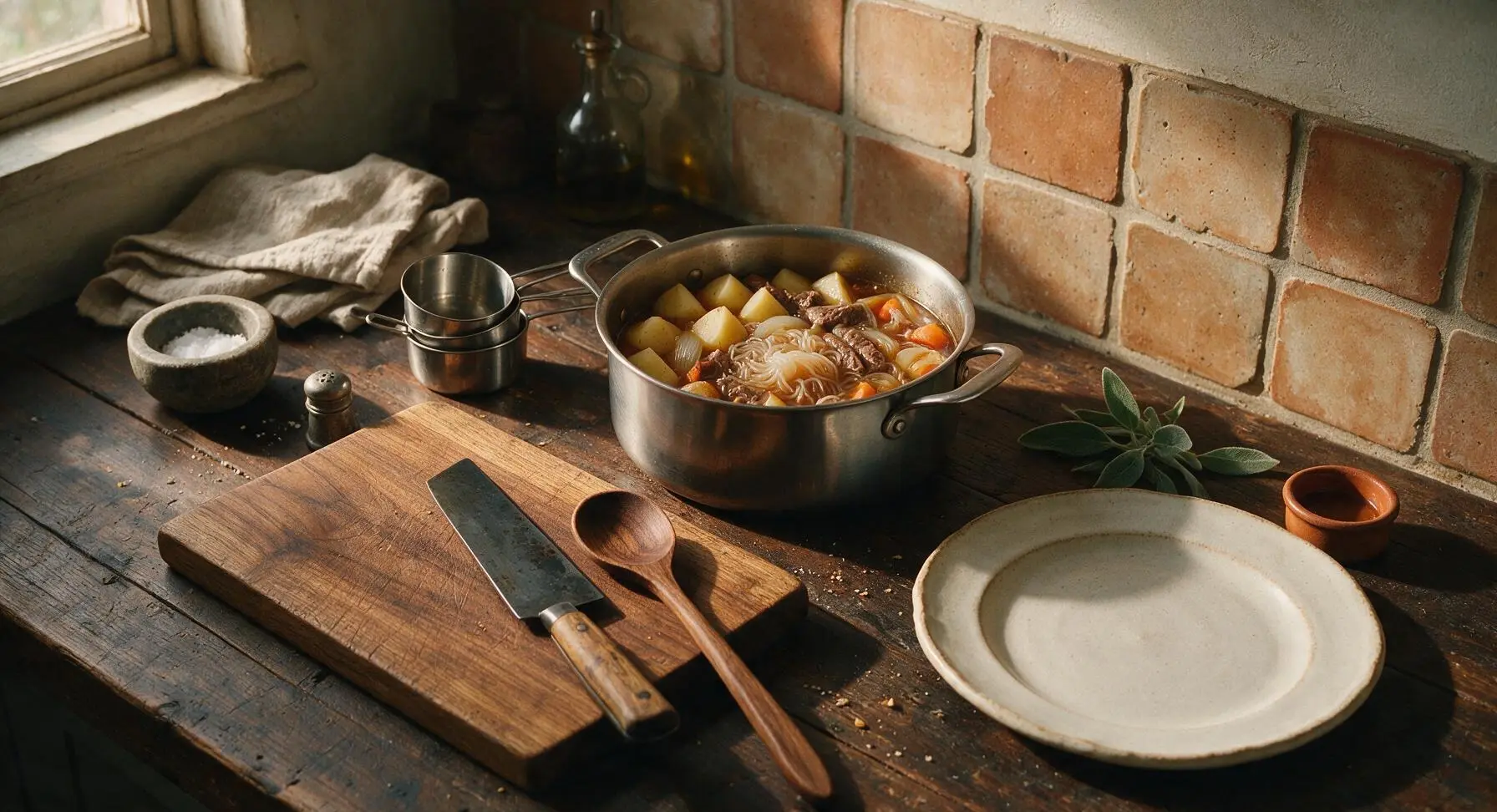
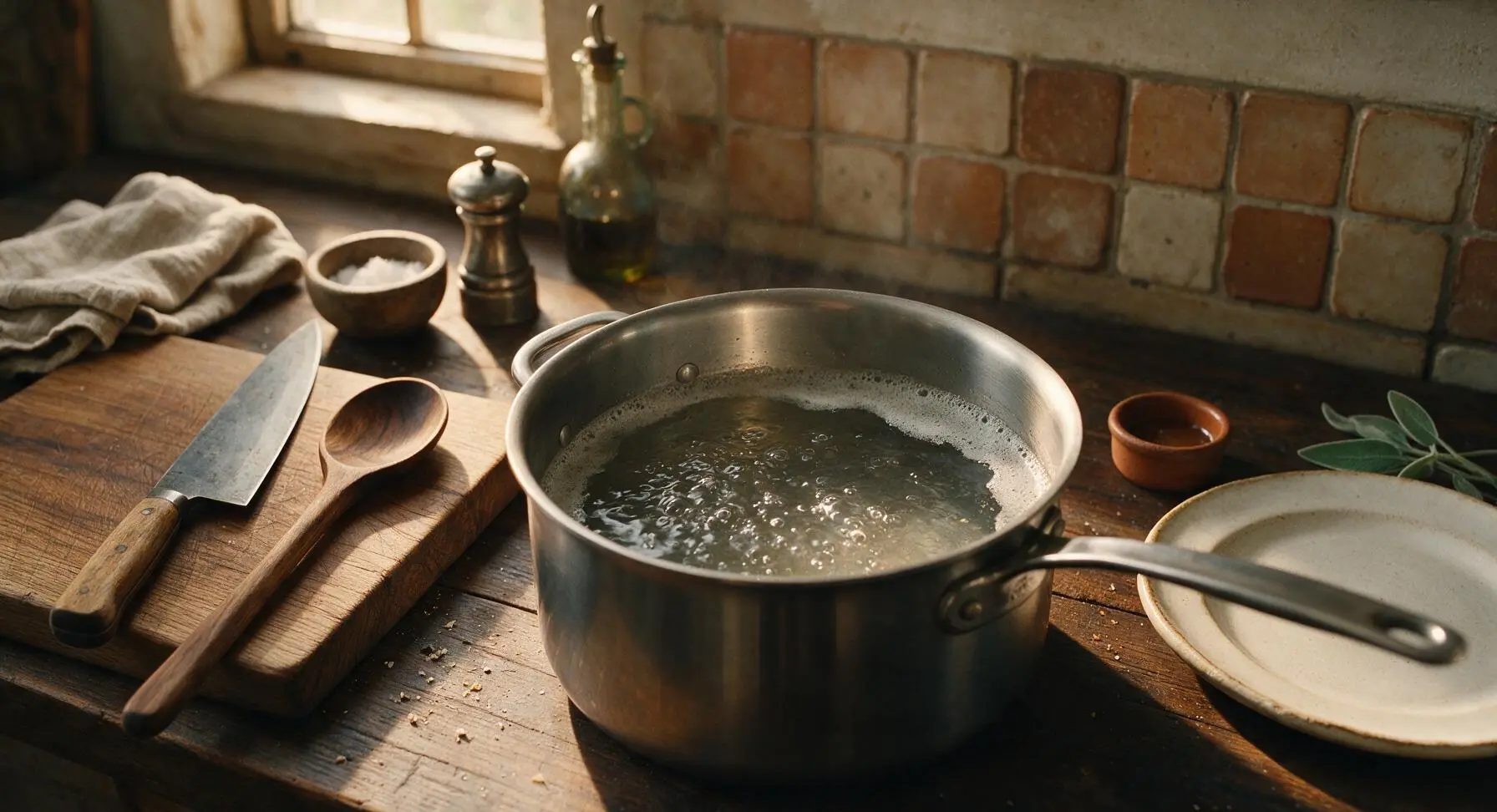
Step 4
step4:Add Potatoes and Broth
Step 4
step4:Add Potatoes and Broth
5

Simmer Until Tender

Reduce heat to the lowest setting, place a circle of parchment paper directly on the surface of the ingredients (acting as an otoshibuta/drop lid) to keep solids submerged in the broth. Simmer, uncovered by a regular pot lid, for 25 minutes, resisting the urge to stir, until potatoes are easily pierced with the tip of a knife and the liquid has reduced to a light, glossy coating. Avoid rapid boiling, as this will break potato chunks apart and make the broth cloudy.
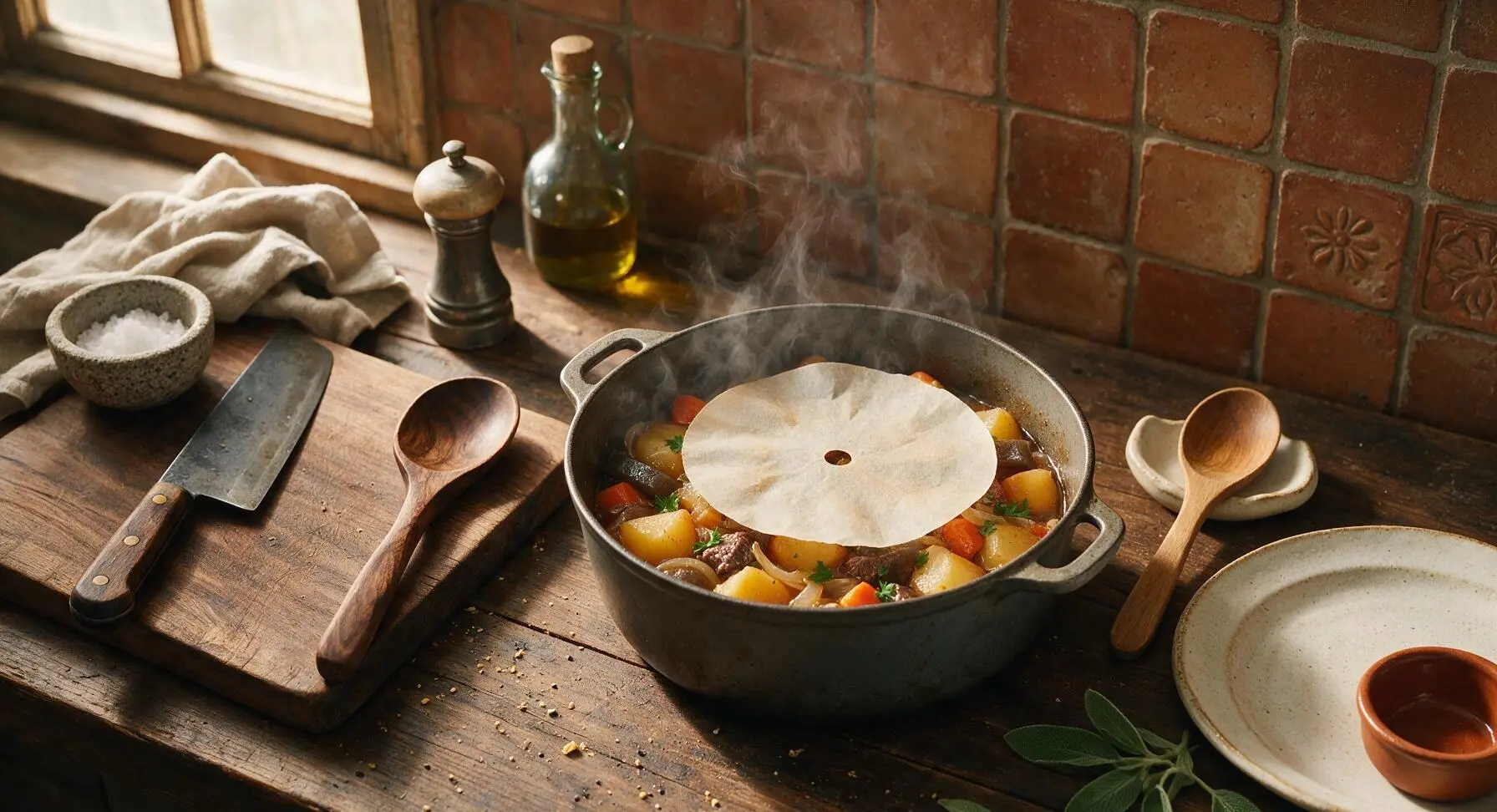
Step 5
step5:Simmer Until Tender
6

Rest to Meld Flavors

Turn off the heat, carefully lift and discard the parchment drop lid, and let the nikujaga rest for 10 minutes off the heat. This resting period allows the sweet-savory broth to absorb into the potatoes and beef, deepening flavor. Give one slow, gentle stir with the maple spoon to evenly distribute the glossy sauce across all ingredients.
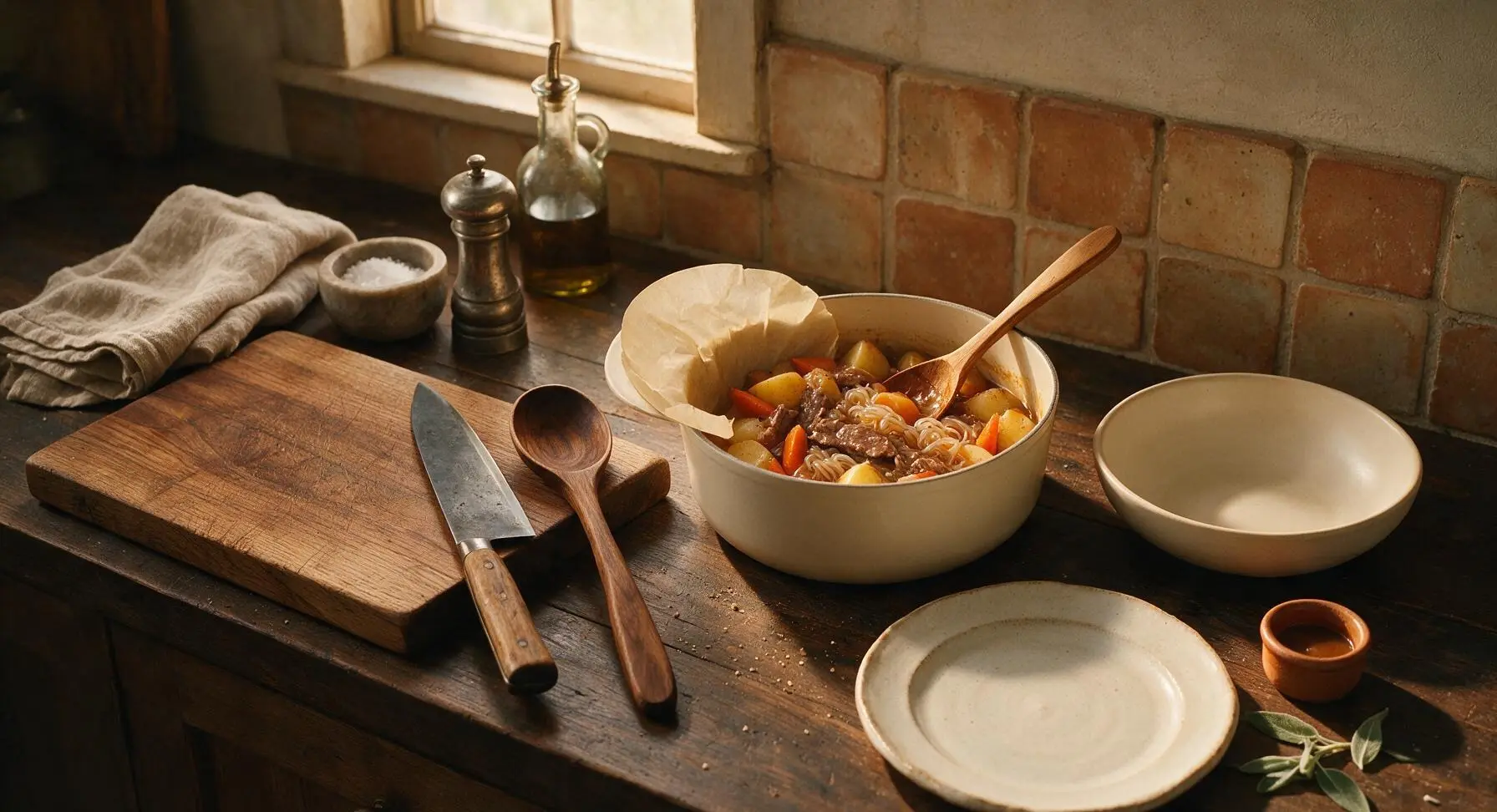
Step 6
step6:Rest to Meld Flavors
7

Plate and Serve Warm

Use the maple spoon to scoop generous portions of nikujaga into the 25cm matte cream ceramic shallow serving bowl, ensuring each scoop includes a mix of beef, potatoes, carrots, onion, and shirataki. Ladle 2-3 spoonfuls of the remaining glossy broth over the top, then tuck one small sprig of fresh mizuna (plucked from the potted plant at the back corner) at the edge of the bowl for a bright, fresh garnish. Serve alongside steamed white rice in the stacked small cream rice bowls.
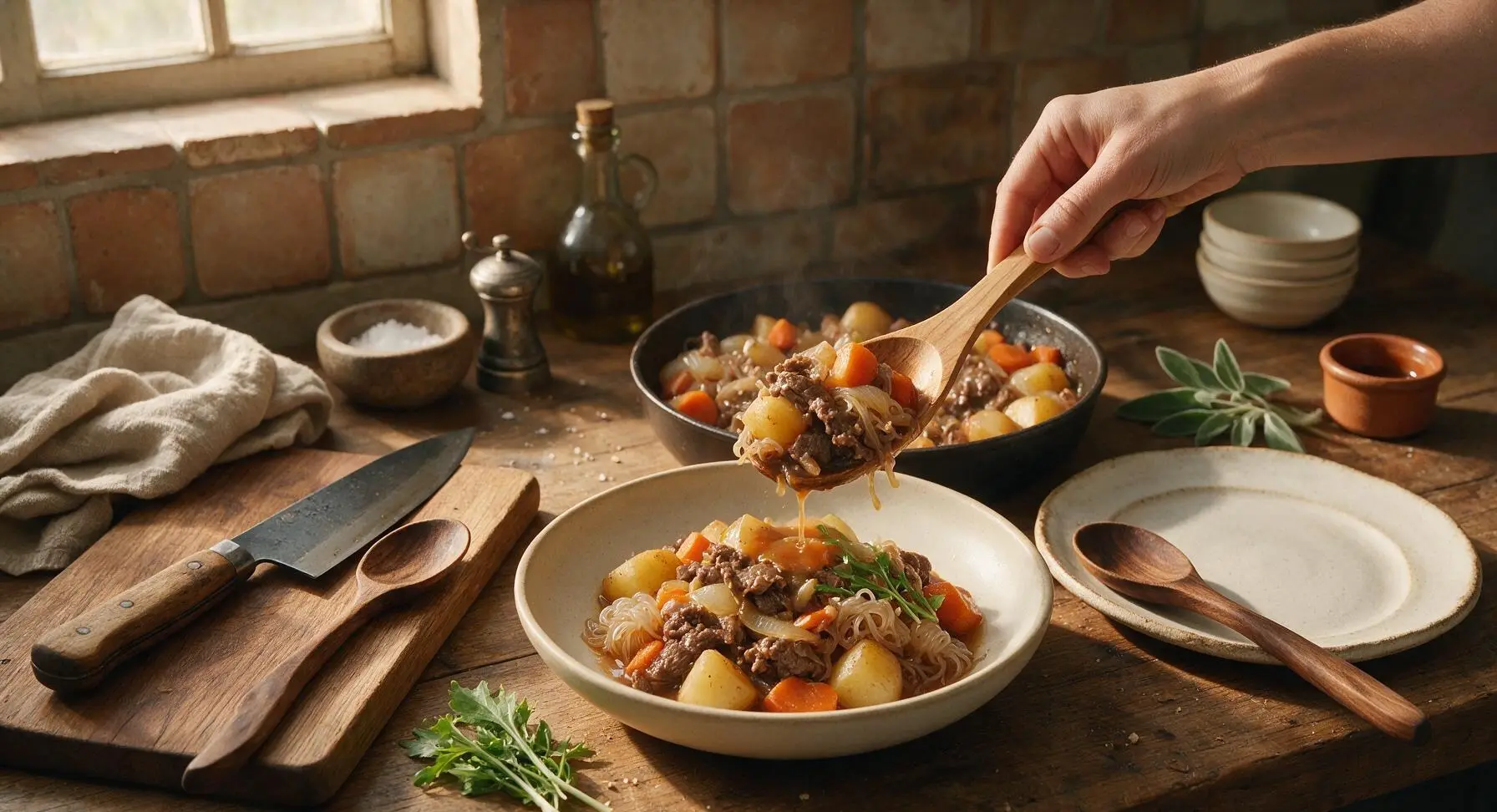
Step 7
step7:Plate and Serve Warm

Tips

1.Choose waxy potato varieties like Yukon Gold instead of starchy russets: waxy potatoes hold their shape during slow simmering and won’t turn mushy or break apart, even if you extend cooking time by a few minutes.
2.Use a parchment paper otoshibuta (drop lid) instead of a tight regular pot lid: the drop lid keeps ingredients evenly submerged in broth without trapping excess steam, creating a glossy, concentrated sauce instead of a watery final dish.
3.Let the nikujaga rest for 10 minutes after turning off the heat: as the dish cools slightly, the sweet-savory broth absorbs into the potatoes and beef, developing a deeper, more rounded flavor than serving immediately off the boil.
✨ You May Also Like

Soups & Stews
🍜 Japan

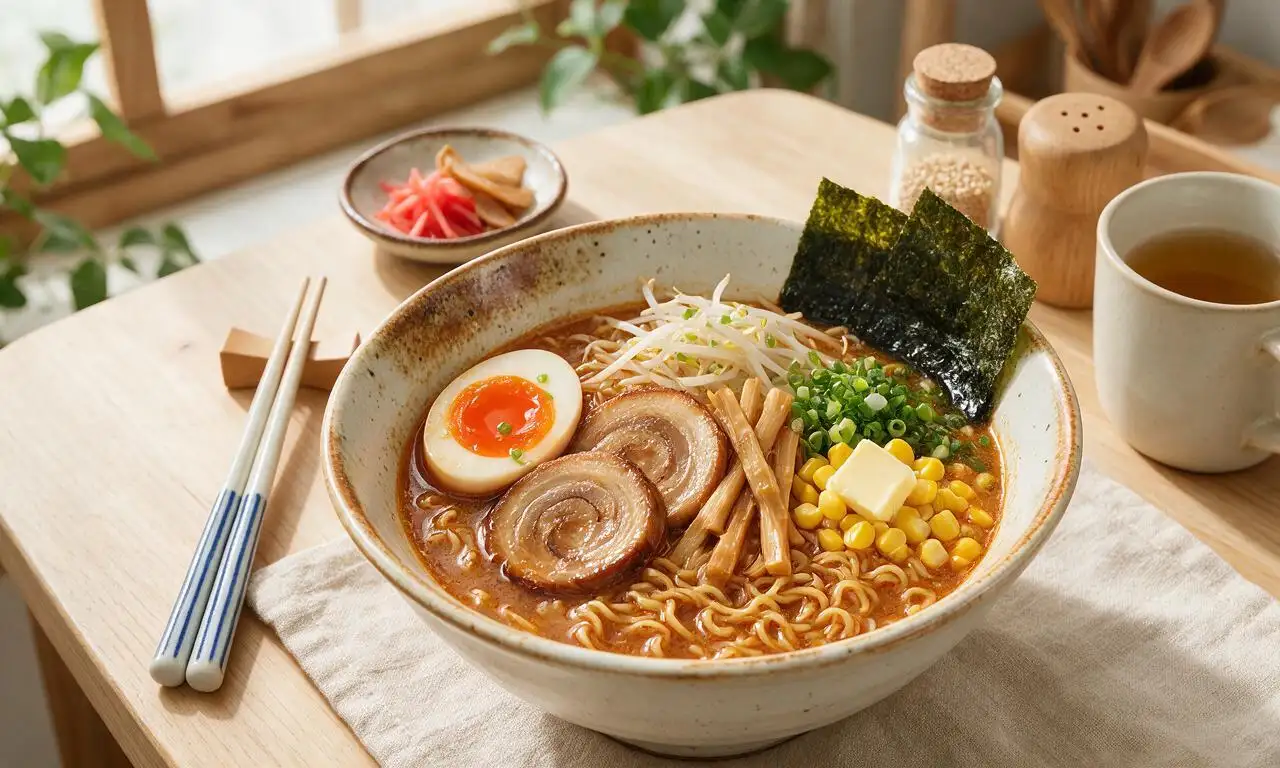
Rich, umami-dense Hokkaido-style miso ramen with chewy noodles, savory fermented broth, and classic toppings, a cozy, deeply satisfying warm meal.

⏱️ 45 minuteSoups & Stews ★ 4.5
Soups & Stews
🍜 United States

A hearty, peppery tripe and root vegetable stew with colonial Philadelphia roots, thick, warming, and packed with bold savory flavor for cold winter days.

⏱️ 2 hours 3Soups & Stews ★ 4.6
Soups & Stews
🍜 Mexico

Hearty, warming red pork posole loaded with tender hominy, slow-simmered in a rich smoky chile broth, served with zesty fresh garnishes for a deeply comforting, satisfying meal.

⏱️ 2 hours 3Soups & Stews ★ 4.7
Soups & Stews
🍜 United States

Warm, soothing classic chicken noodle soup loaded with tender chicken, soft egg noodles, and savory veggies, perfect for chasing chills and feeding the whole family.

⏱️ 40 minuteSoups & Stews ★ 4.9
Soups & Stews
🍜 France

Deeply savory caramelized onion broth topped with crusty bread and bubbly melted Gruyère, a timeless French bistro comfort food ideal for cold days.

⏱️ 1 hour 25Soups & Stews ★ 4.8
Soups & Stews
🍜 United States

Hearty, briny Maryland crab soup loaded with sweet blue crab, tender summer vegetables, and zesty Old Bay, a beloved Chesapeake Bay coastal comfort staple.

⏱️ 55 minuteSoups & Stews ★ 4.9

nikujaga:Frequently Asked Questions

1.Why do you recommend waxy Yukon Gold potatoes instead of starchy russets for nikujaga? ▾
Waxy Yukon Golds hold their shape beautifully through the slow simmer, turning creamy and tender without turning mushy or disintegrating into the broth. Starchy russets break down too easily, clouding the broth and leaving you with soggy, shapeless potato chunks instead of the firm, broth-soaked bites this dish is known for.
2.Can I substitute the thinly sliced beef chuck if I can’t find it pre-sliced at the store? ▾
Absolutely! Pop a block of beef chuck in the freezer for 45 minutes until it’s firm but not fully frozen, then slice against the grain into 1/8-inch thick pieces. Skip thick stew beef cuts—they won’t absorb the sweet-savory broth as well, and you’ll miss that signature tender, melt-in-your-mouth texture.
3.Do I have to include shirataki konjac noodles, or can I leave them out? ▾
They’re totally optional! Shirataki add a fun, springy chewy texture and soak up tons of broth, but if you don’t have them, just swap in extra potato or carrot chunks, or toss in blanched snow peas at the end of cooking for a pop of bright color and crunch. No need to make a special trip for them.
4.Why does my nikujaga always turn out mushy when I make it at home? ▾
Mushy nikujaga almost always comes from boiling it too vigorously instead of keeping it at a gentle, low simmer, or chopping your veggies (potatoes, onions, carrots) too small. Cut potatoes into 1.5-inch chunks, onions into thick wedges, keep heat low once the broth bubbles, and avoid over-stirring to help every ingredient hold its shape perfectly.
5.What’s the classic ratio for the sweet-savory simmer broth so it tastes authentic? ▾
For a standard batch with 1.5 lbs beef and 2 lbs potatoes, stick to a simple, balanced ratio: 2 tbsp sugar, 2 tbsp mirin, 4 tbsp soy sauce, and 2 cups dashi broth. You can tweak the sugar by a teaspoon or two to match your taste, but that’s the home-style balance most Japanese families use.
6.Can I make nikujaga ahead of time, and does it reheat well? ▾
It actually tastes better the next day! The flavors deepen and meld as it chills in the fridge, so making it 12-24 hours ahead is a smart meal prep move. Reheat gently on the stovetop over low heat, adding a splash of dashi or water if the broth thickens too much. It keeps for 3-4 days covered in the fridge.
7.Is there a good vegetarian swap for the beef that still feels authentic? ▾
Definitely! Swap the beef for thick slices of king oyster mushroom or pan-seared extra-firm tofu to get that satisfying, hearty bite, and use kombu dashi instead of bonito dashi for the broth base. You’ll still get that rich, umami-packed sweet-savory flavor that makes nikujaga so comforting, no meat required.
8.Do I need to peel the potatoes and carrots for this recipe? ▾
Peeling is traditional, but it’s not required! Yukon Gold skins are thin and tender enough that they won’t feel tough after simmering, so you can leave them on for extra fiber if you give them a thorough scrub first. Peel carrots only if their outer skin looks thick, woody, or blemished.
9.How do I prep shirataki noodles so they don’t make the broth taste odd? ▾
Shirataki have a slightly briny, earthy packaged smell right out of the bag, so don’t add them straight to the pot! Drain them, rinse really well under cold running water, blanch in boiling water for 2 minutes, then cut into shorter, bite-sized lengths. That removes any off-flavor so they only soak up delicious broth.
10.What are the best sides to serve with nikujaga for a full, cozy meal? ▾
Stick to classic Japanese home-style sides for a balanced spread: steamed short-grain white rice, a small bowl of miso soup, quick pickled cucumbers or daikon, and a shaker of shichimi togarashi on the table for anyone who wants a little spicy kick. Serve it family-style, no fancy plating needed.

Comments (8)

2 days ago

OMG this nikujaga recipe is a total game changer! I was nervous to make Japanese food at home since I always mess up the flavor balance, but this was so easy even on a busy weeknight. My 8 and 10 year old devoured seconds and asked if I can put this in the weekly meal prep rotation. Used thinly sliced beef I got from the Asian market down the street, threw in some extra shirataki noodles because we love them. SO good, will be bringing this to our next neighborhood potluck for sure!

yesterday

Wait how long did the shirataki noodles hold up for meal prep? I tried adding them to a stir fry once and they got all mushy after a day in the fridge, would love to add them here too!

2 hours ago

Great question! If you blanch the shirataki noodles for 1 minute before adding them to the simmer, they hold their texture really well for up to 3 days in the fridge for meal prep. So glad your family loved the recipe!

3 days ago

Super straightforward recipe, 40 minutes total cook time is no joke! I made a big batch on Sunday for work lunches all week, and it reheats like an absolute dream. I swapped the beef for pork loin since that’s what I had in the freezer, and it still tasted incredible. Only note is I added a tiny extra splash of soy sauce because I like my savory food a little saltier, personal preference thing. 10/10, no notes otherwise.

2 days ago

Love that pork swap! Thinly sliced pork works beautifully in nikujaga too, I do that all the time when I don’t have beef on hand. Totally get the extra soy sauce move, flavor should always be adjusted to your taste! So happy this worked for your meal prep.

1 week ago

I made this vegan by swapping the beef for king oyster mushrooms pulled into shreds and used vegetable dashi instead of the regular dashi, and it was chef’s kiss. My meat-eating roommate even stole a bite off my plate and said he’d eat the vegan version no complaints. Such a cozy, warm meal for cold Colorado nights!

yesterday

Brought this to my office potluck yesterday and people were literally coming up to me asking for the recipe before we even finished lunch. I followed the recipe exactly except I added a handful of snap peas for a little extra crunch and color, chef’s move. The potatoes get so creamy and soak up all that sweet-savory broth, I could drink that stuff straight. So easy to throw together too, I was shocked how low-effort it was for how impressive it tastes.

2 hours ago

Wait how early did you make it before the potluck? I feel like these simmered dishes always taste better the next day, did you make it the night before?

30 minutes ago

You’re totally right, nikujaga actually does taste even better after a day in the fridge because the flavors meld together! Making it the night before a potluck is a pro move, just reheat gently on the stove before serving.

5 days ago

Okay full transparency, I burn almost everything I make and I was convinced I’d mess this up too. But the instructions were so clear and it only took 40 minutes? I did it! It actually tasted like the nikujaga I got at a little Japanese restaurant when I visited Seattle last year. My girlfriend was so impressed she said I can cook dinner every night now lmao. Only mistake I made was cutting the potatoes too big so they took a little extra time to soften, next time I’ll dice them smaller.

3 days ago

So proud of you for nailing this! Don’t worry about the big potato chunks, we’ve all been there. Pro tip: cut potatoes into 1.5 inch wedges and soak them in cold water for 10 minutes before cooking, they’ll soften faster and cook more evenly. Can’t wait to hear what you make next!

2 weeks ago

Made this for our weekly family dinner with my parents and grandma last night, and grandma said it tasted just like the nikujaga her neighbor used to make when she was stationed in Okinawa in the 70s. Talk about a win! I served it with a side of steamed rice and pickled cucumbers, perfect cozy comfort food. The easy difficulty rating is so accurate, I didn’t feel stressed at all while making it even with guests coming over.

30 minutes ago

Dude, this is SO good. I’ve been making a version of nikujaga for years that I found on some random blog years ago, but this recipe’s ratio of soy, sugar, mirin and dashi is perfect. Not too sweet, not too salty, exactly the balance I’ve been trying to nail forever. I used thinly sliced chuck roast like the recipe says, and it got so tender it practically melted in my mouth. 10/10, replacing my old go-to recipe with this one.

5 minutes ago

That means so much to hear! Getting that sweet-savory balance just right is the trickiest part of nikujaga, so I’m stoked this ratio worked for you. Chuck roast is my go-to too, the marbling makes all the difference for that melt-in-your-mouth texture!

5 minutes ago

Made this in my dorm kitchen with a cheap hot plate and it still turned out amazing! I couldn’t find mirin at the corner store near campus so I used a little extra sugar and a splash of rice vinegar like I saw in a TikTok hack, and it worked pretty well. Super cheap to make too, all the ingredients cost me like $12 total and I got 4 meals out of it. Perfect broke college student meal.

just now

Wait did you use regular beef from the grocery store? My store only has thick cut steak, I don’t have a meat slicer in the dorm — did you freeze it for a bit to slice it thin?

just now

Love the dorm cooking hack for mirin! For the thin beef question: if you pop the steak in the freezer for 30-45 minutes until it’s firm but not frozen solid, you can slice it paper thin with a regular sharp knife, no fancy slicer needed. It works like a charm!