Oysters with Stout

title 1
Oysters with Stout
⏱️ cook time 12 minutes
🍽️ servings 4
⚡ Difficulty medium

intro

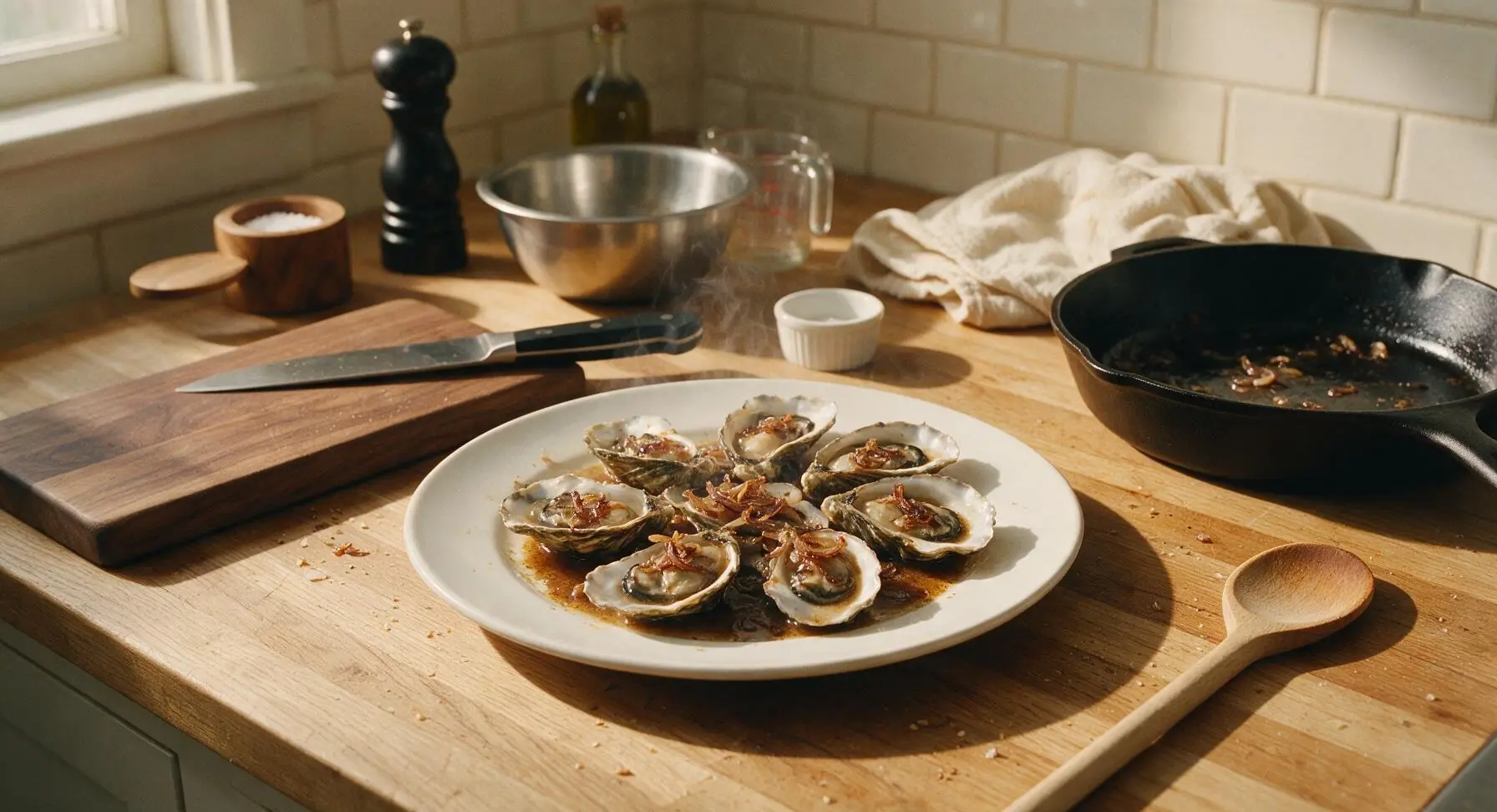
Briny, plump oysters bathed in roasty stout brown butter, topped with crispy shallots—this cozy, elegant pub classic balances malty depth and bright ocean flavor for a memorable shared starter.

Ingredients
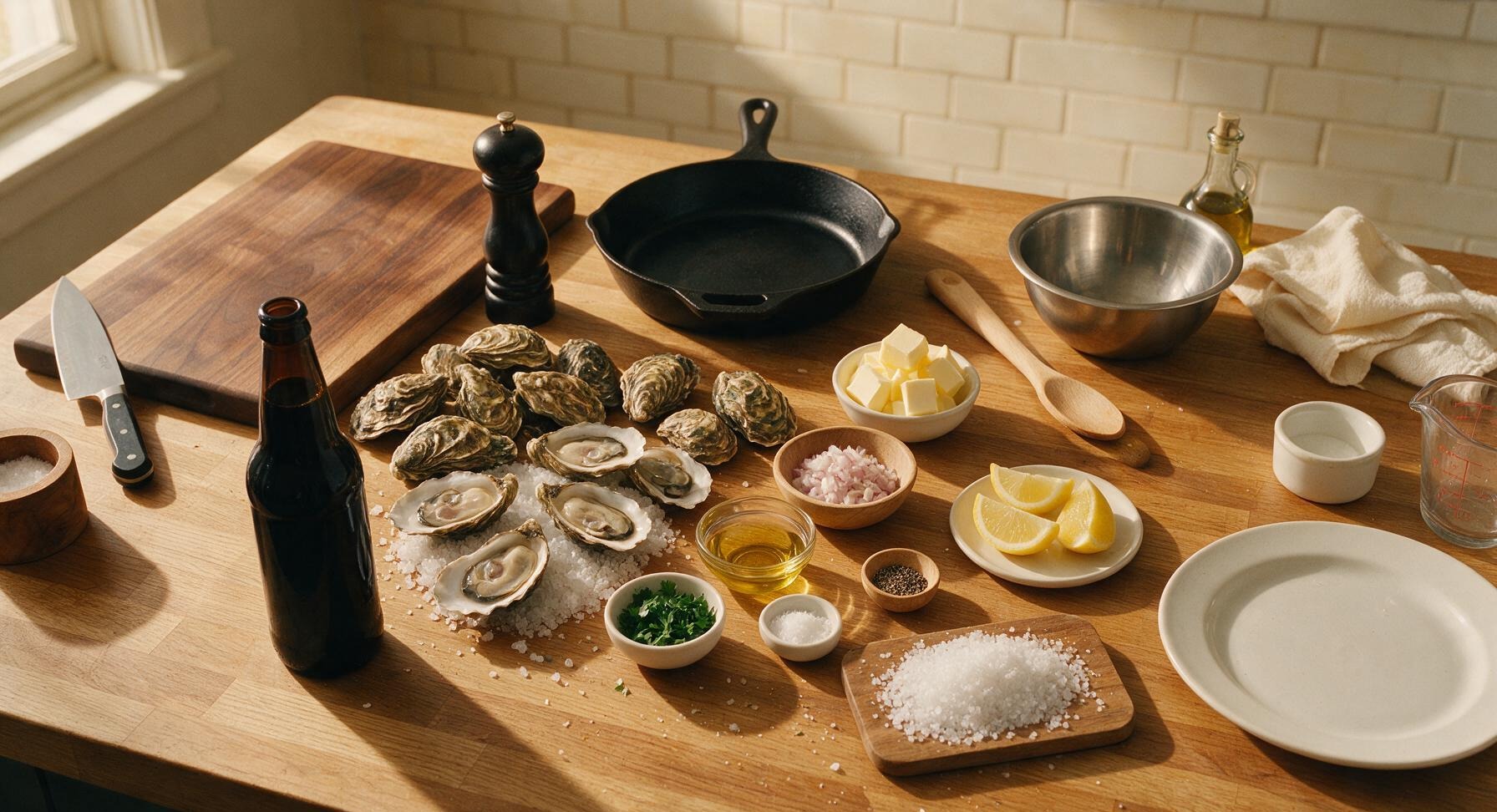
Fresh large oysters (in shell) 12 count
Dry export stout (e.g., Guinness) 500ml (350ml for cooking, remainder for serving)
Unsalted butter 4 tbsp (56g)
Shallots 2 medium (60g total)
Neutral canola oil 2 tbsp
Flat-leaf parsley 2 tbsp chopped
Flaky sea salt 2 tsp
Coarsely ground black pepper 1 tsp
Small lemon 1 (cut into 4 wedges)
Coarse rock salt (for platter) 1 cup (240g)

Steps

1

Scrub and Shuck Oysters

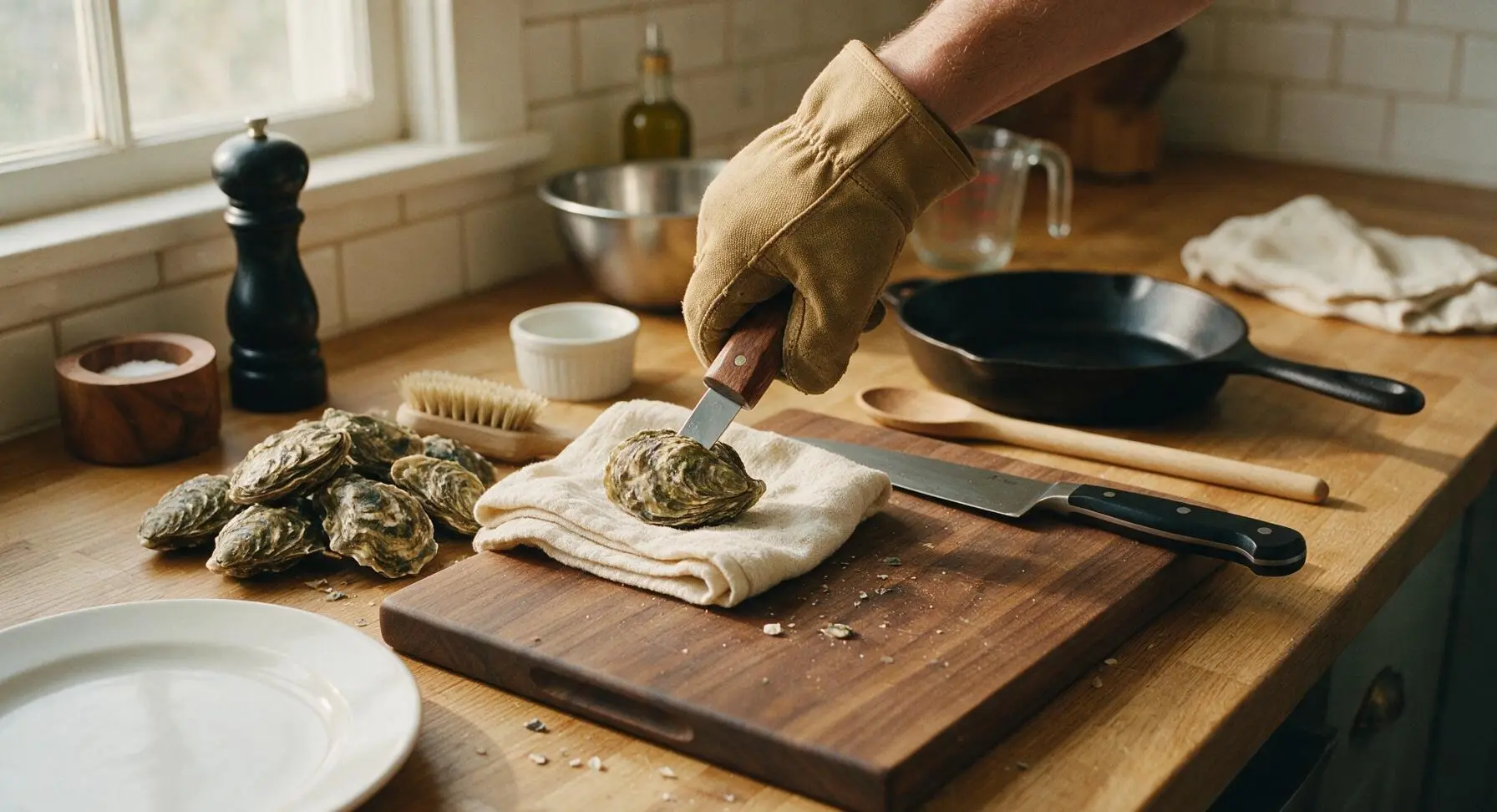
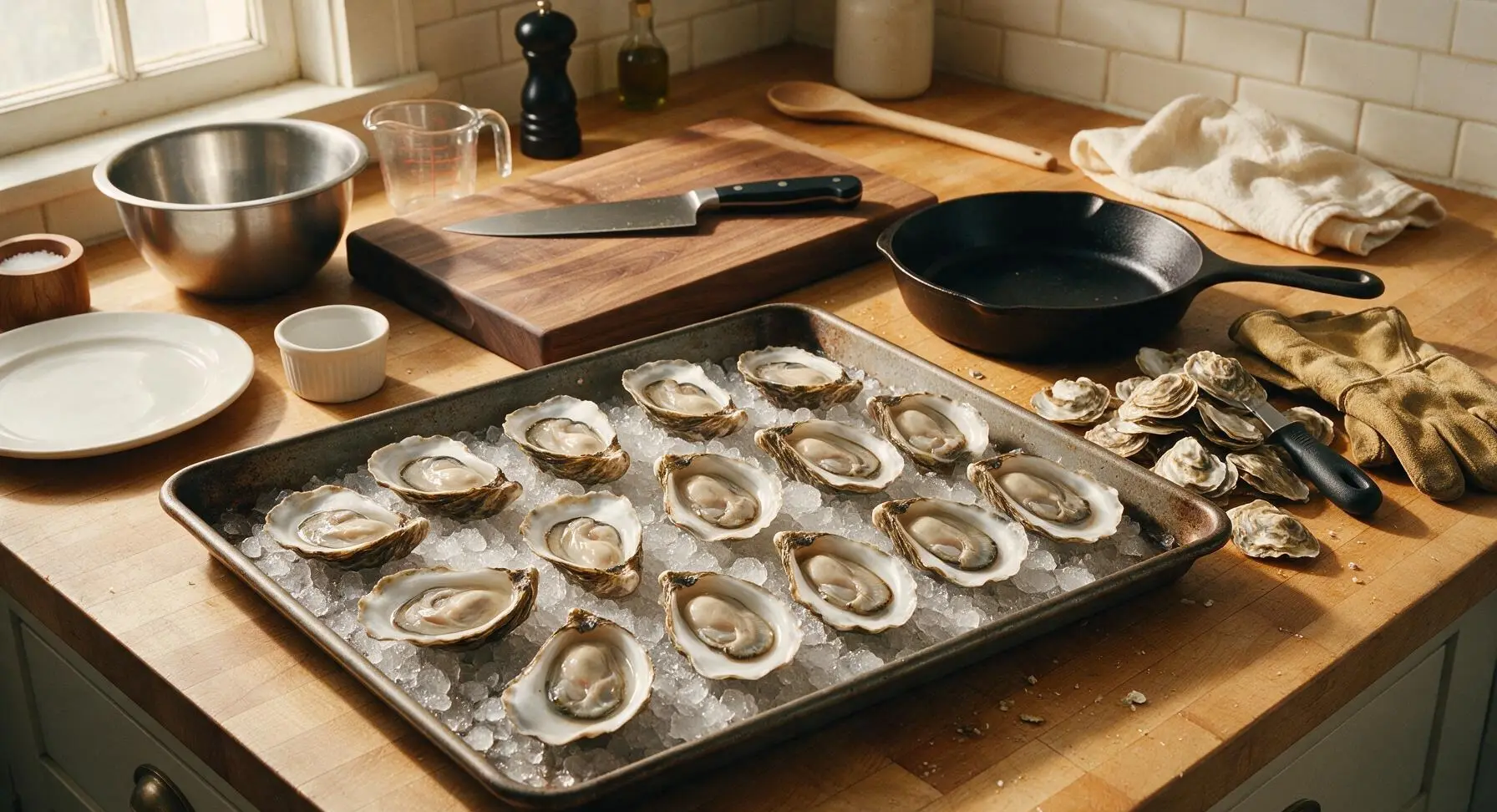
First, scrub all oyster shells under cold running water using the stiff bristle scrub brush to remove surface mud, barnacles, and debris. Fold the fixed oatmeal linen towel into a thick pad, wear the heavy tan canvas shucking glove on your non-dominant hand, and cradle each oyster flat-side up. Wedge the tip of the walnut-handled oyster knife into the oyster's hinged back edge, twist firmly to pop the shell seal, then slide the knife along the inside of the top flat shell to sever the adductor muscle. Discard the flat top shells, loosen the oyster meat from the deep curved bottom shell, and take care not to spill the natural clear oyster liquor. Arrange shucked oysters (in their bottom shells) on the large carbon steel baking sheet lined with a 1cm layer of crushed ice to keep them chilled during prep.
Step 1
step1:Scrub and Shuck Oysters
Step 1
step1:Scrub and Shuck Oysters
2

Fry Crispy Shallots

Peel the shallots and slice them into 1mm-thin rings using the black-handled chef knife. Heat 2 tablespoons neutral canola oil in the 1L stainless steel saucepan over medium-low heat (150C/300F). Add sliced shallots in a single even layer, stirring constantly with the stainless steel slotted spoon for 3-4 minutes until the rings turn pale golden brown. Watch closely, as thin shallot slices burn in seconds once they reach color. Immediately pour shallots and oil through the fine-mesh stainless steel sieve set over the small heatproof glass bowl to separate shallots from oil. Spread drained shallots on a layer of paper towel from the fixed roll, season lightly with a pinch of flaky sea salt, and set aside to crisp.
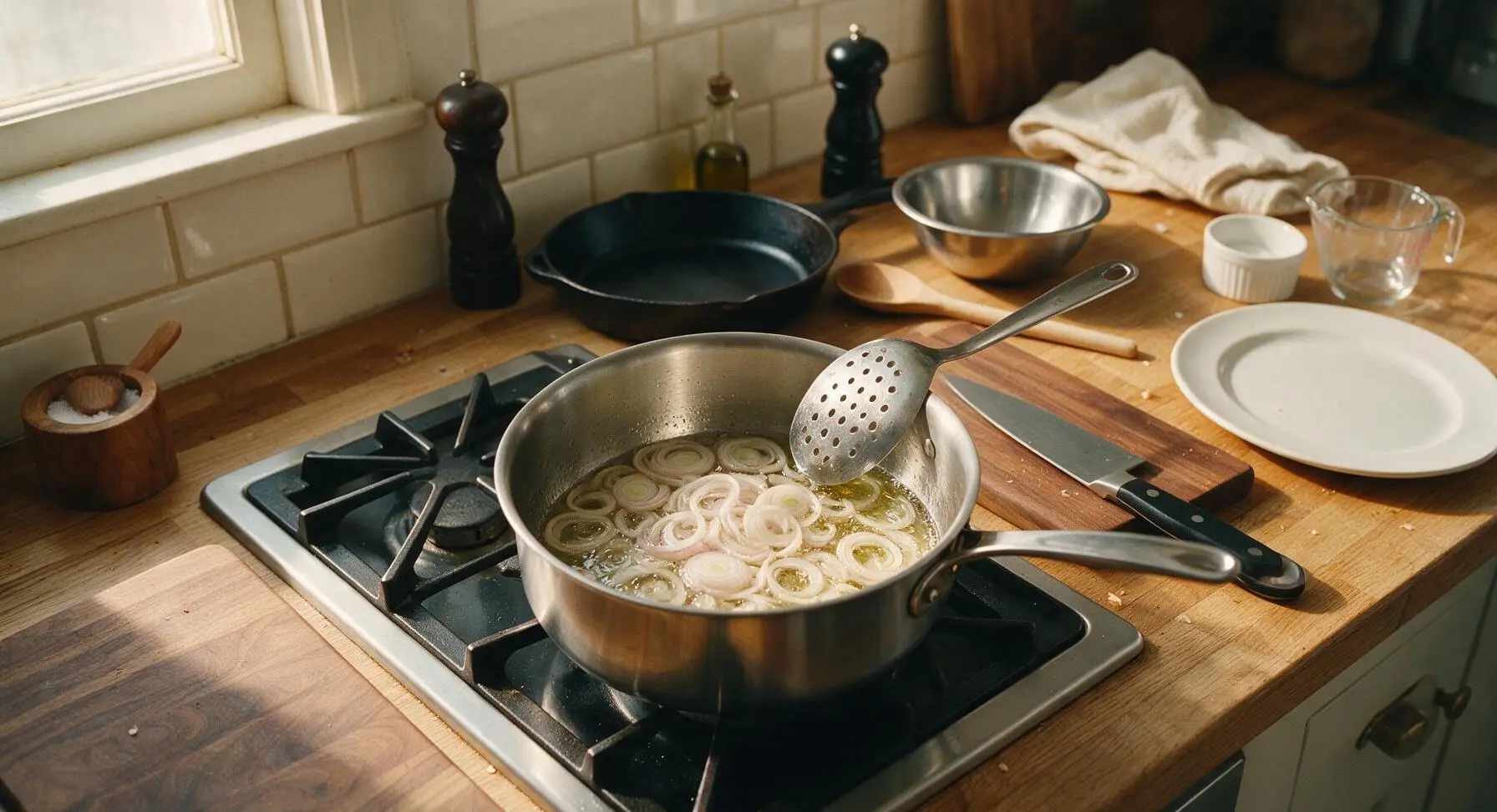
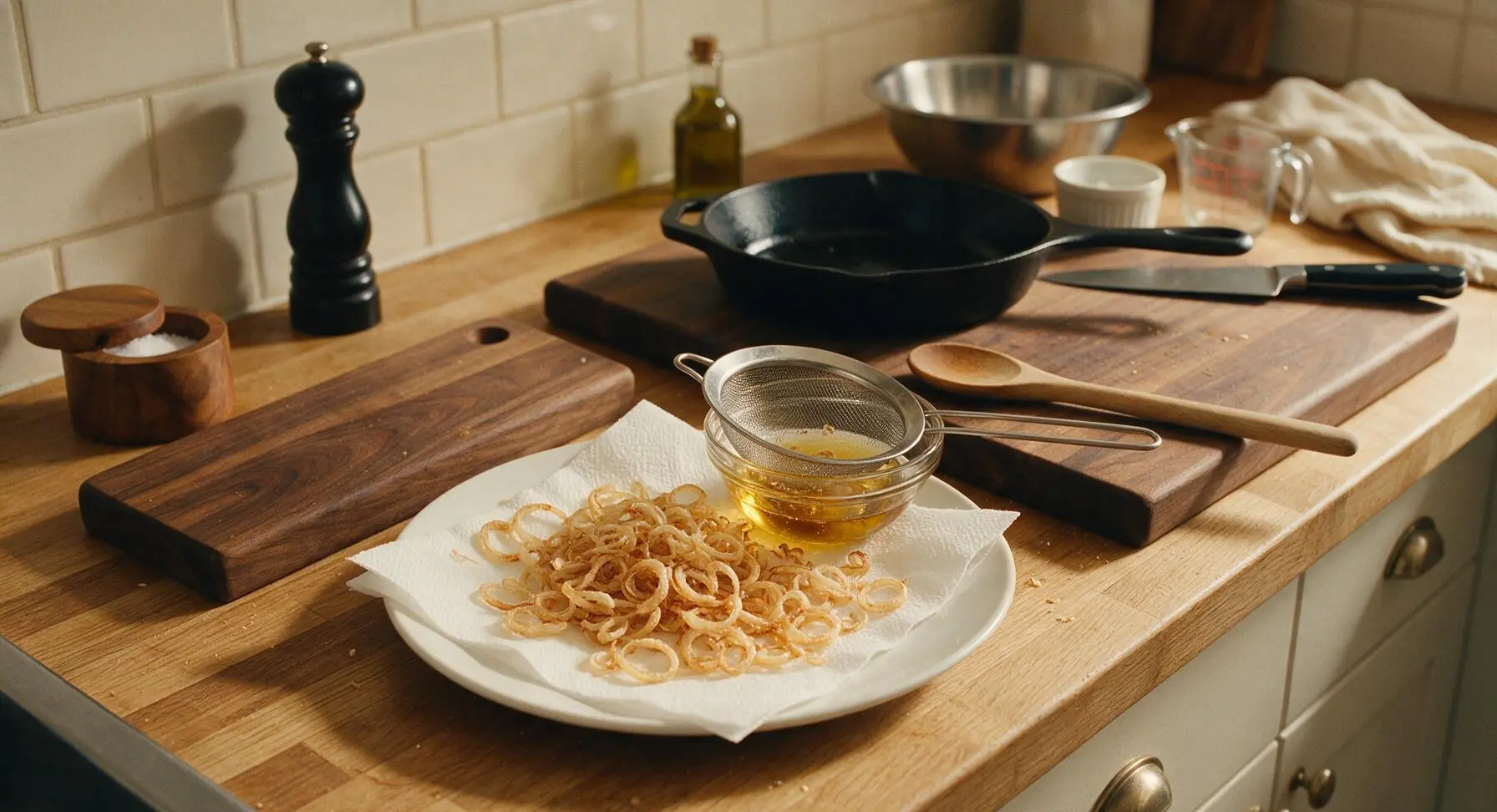
Step 2
step2:Fry Crispy Shallots
Step 2
step2:Fry Crispy Shallots
3

Reduce Stout Base

Pour 350ml of dry stout into the same stainless steel saucepan (no need to wipe out residual shallot oil, as it adds subtle savoriness) over medium heat. Bring to a gentle, low simmer, then reduce heat to medium-low to maintain slow, steady bubbles. Cook for 6-7 minutes, stirring occasionally with the charcoal silicone spatula, until the stout is reduced by half to roughly 175ml, with a lightly syrupy consistency that coats the back of a spoon. Avoid rapid boiling, as high heat will make the reduced stout taste harsh and bitter.
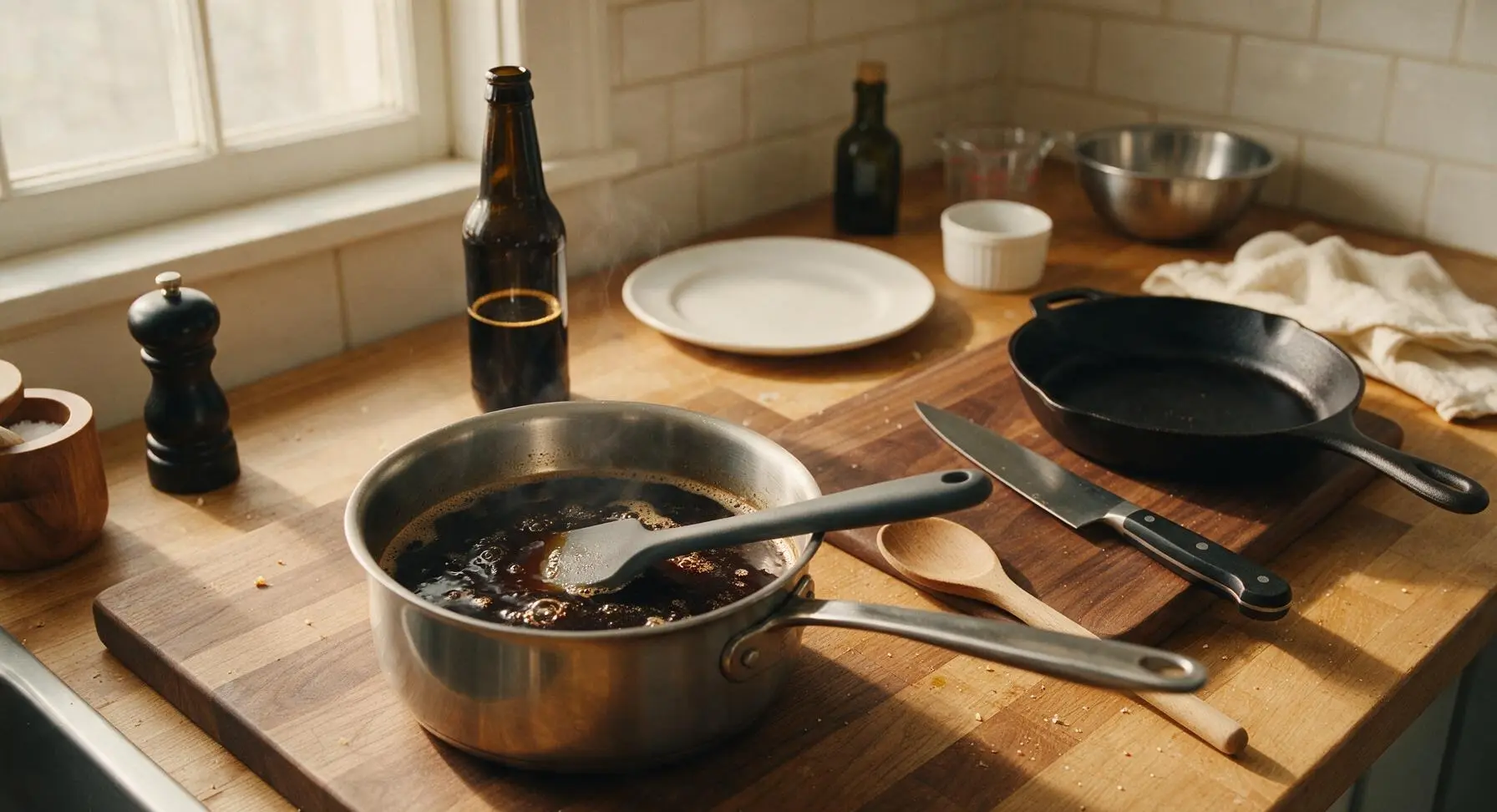
Step 3
step3:Reduce Stout Base
4

Make Stout Brown Butter

Add the 4 tablespoons of unsalted butter to the reduced stout in the saucepan, stirring continuously over low heat for 2-3 minutes until the butter fully melts, foams lightly, and turns a deep nutty golden color, with tiny brown milk solids collecting at the bottom of the pan. The aroma will be rich, malty, and nutty when ready. Remove the pan from heat immediately to prevent burning the milk solids, then stir in 1 teaspoon coarsely ground black pepper and a ½ teaspoon pinch of flaky sea salt.
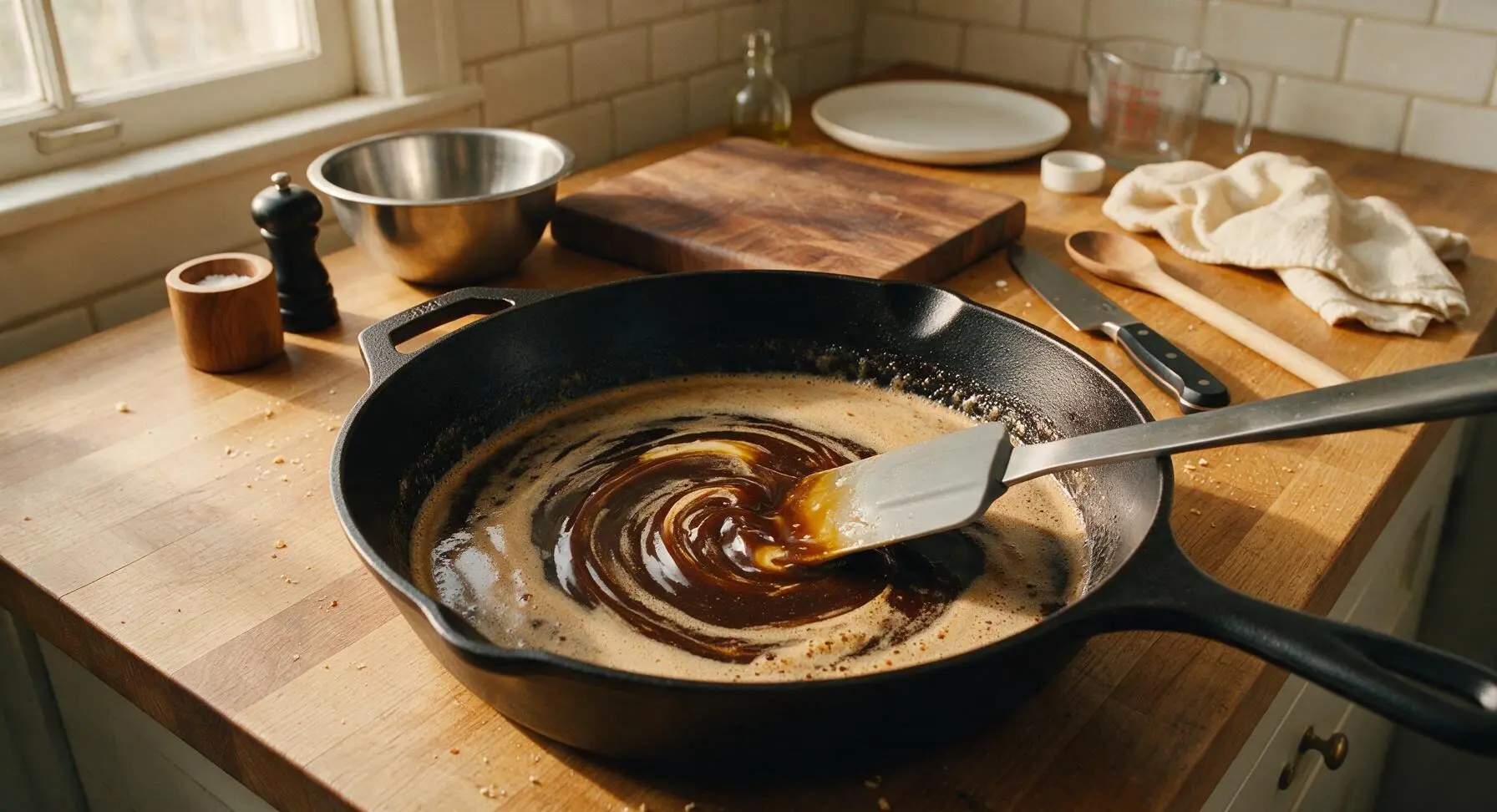
Step 4
step4:Make Stout Brown Butter
5

Cook Oysters Gently

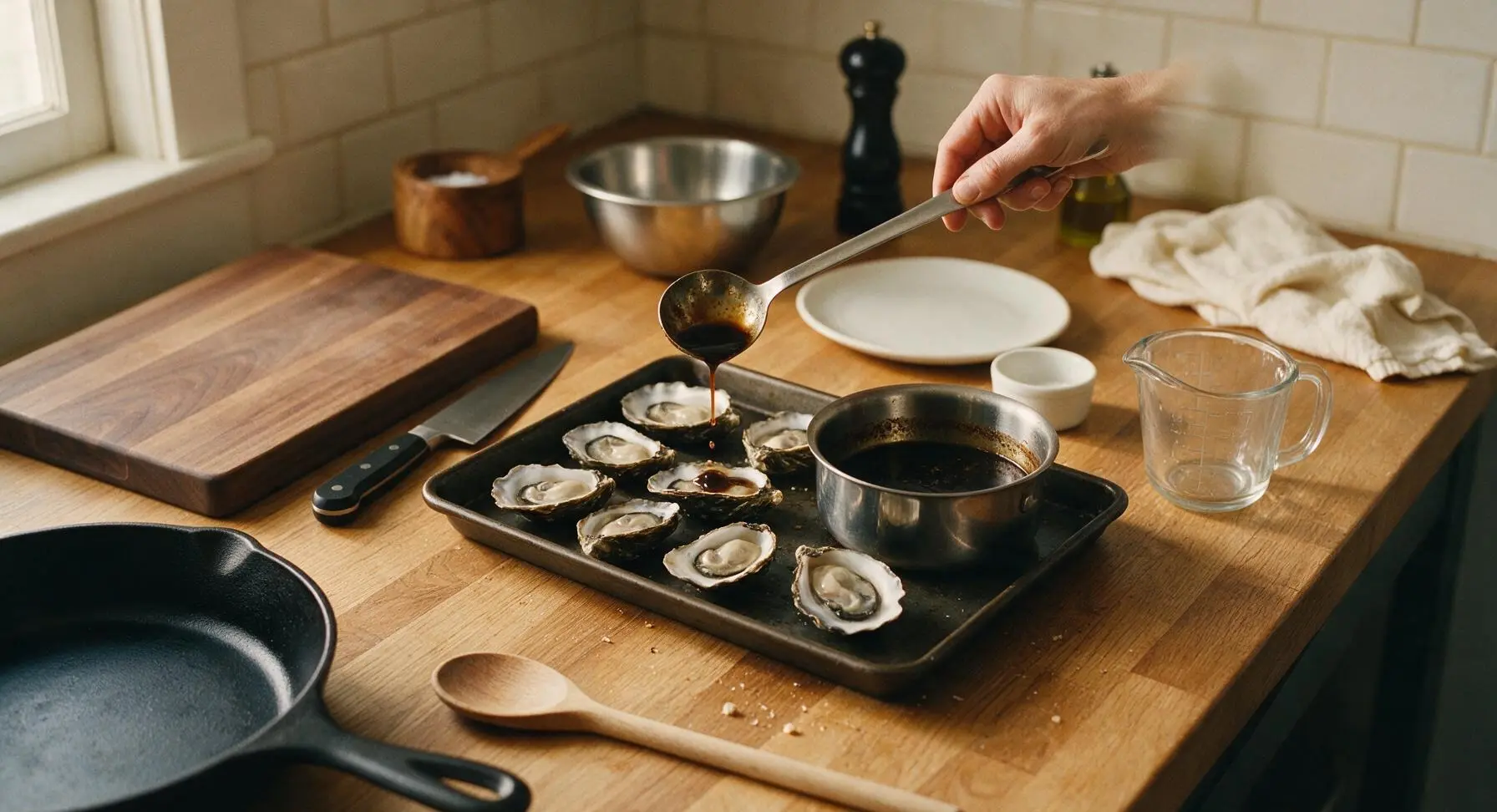
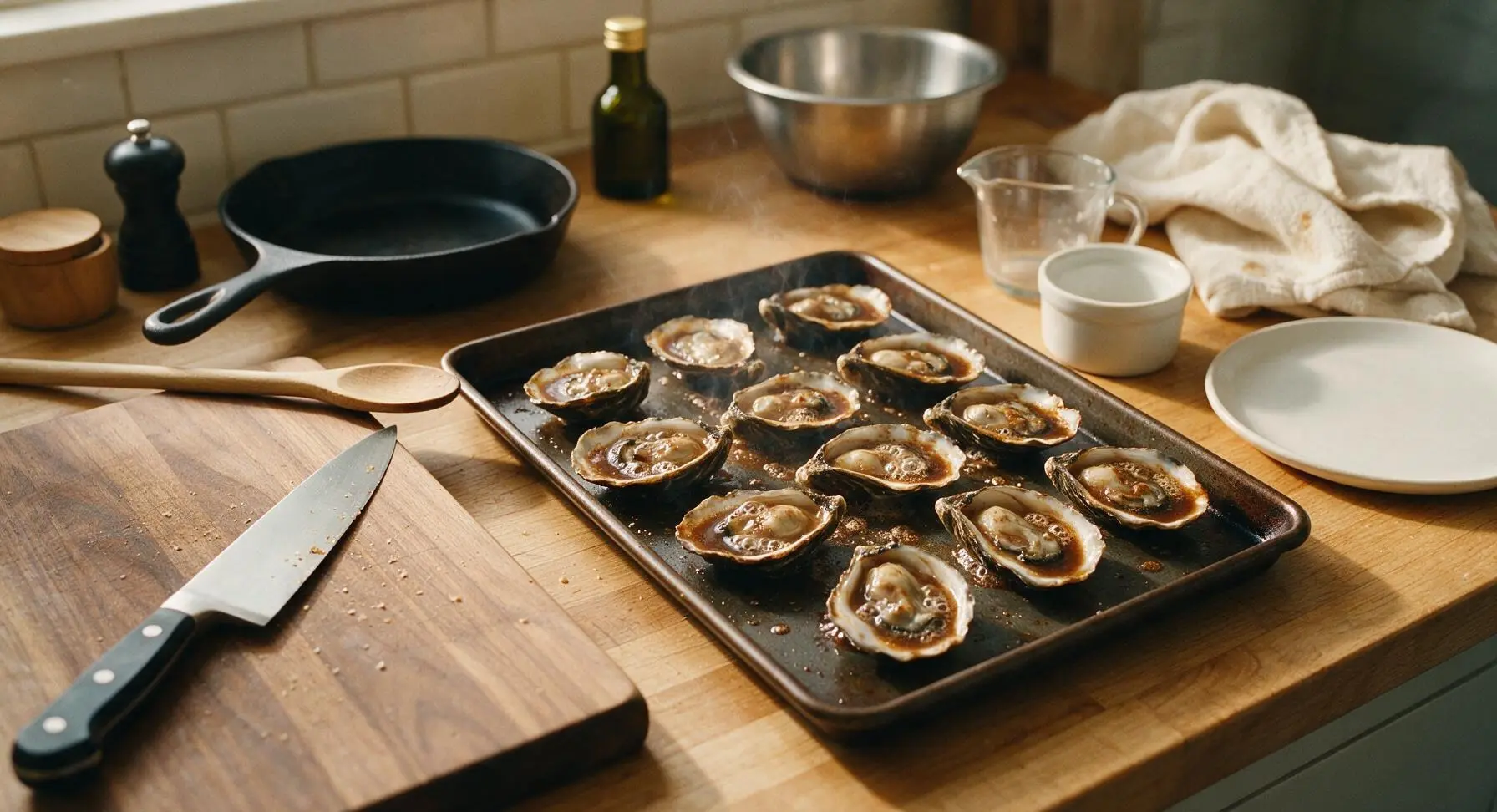
Remove the carbon steel baking sheet of shucked oysters from the ice, pat the exterior of each shell dry with a paper towel to prevent water from diluting the sauce. Use the long-handled stainless steel basting spoon to drizzle 1 teaspoon of the stout-brown butter mixture over each oyster, allowing the liquid to pool around the meat in the curved shell. Slide the baking sheet under a preheated 200C/400F broiler for 2 to 2.5 minutes, just until the edges of the oyster meat turn opaque and begin to curl slightly, and the sauce in the shells bubbles gently. Do not cook longer than 3 minutes, as oysters turn tough and rubbery when overcooked.
Step 5
step5:Cook Oysters Gently
Step 5
step5:Cook Oysters Gently
6

Plate and Garnish

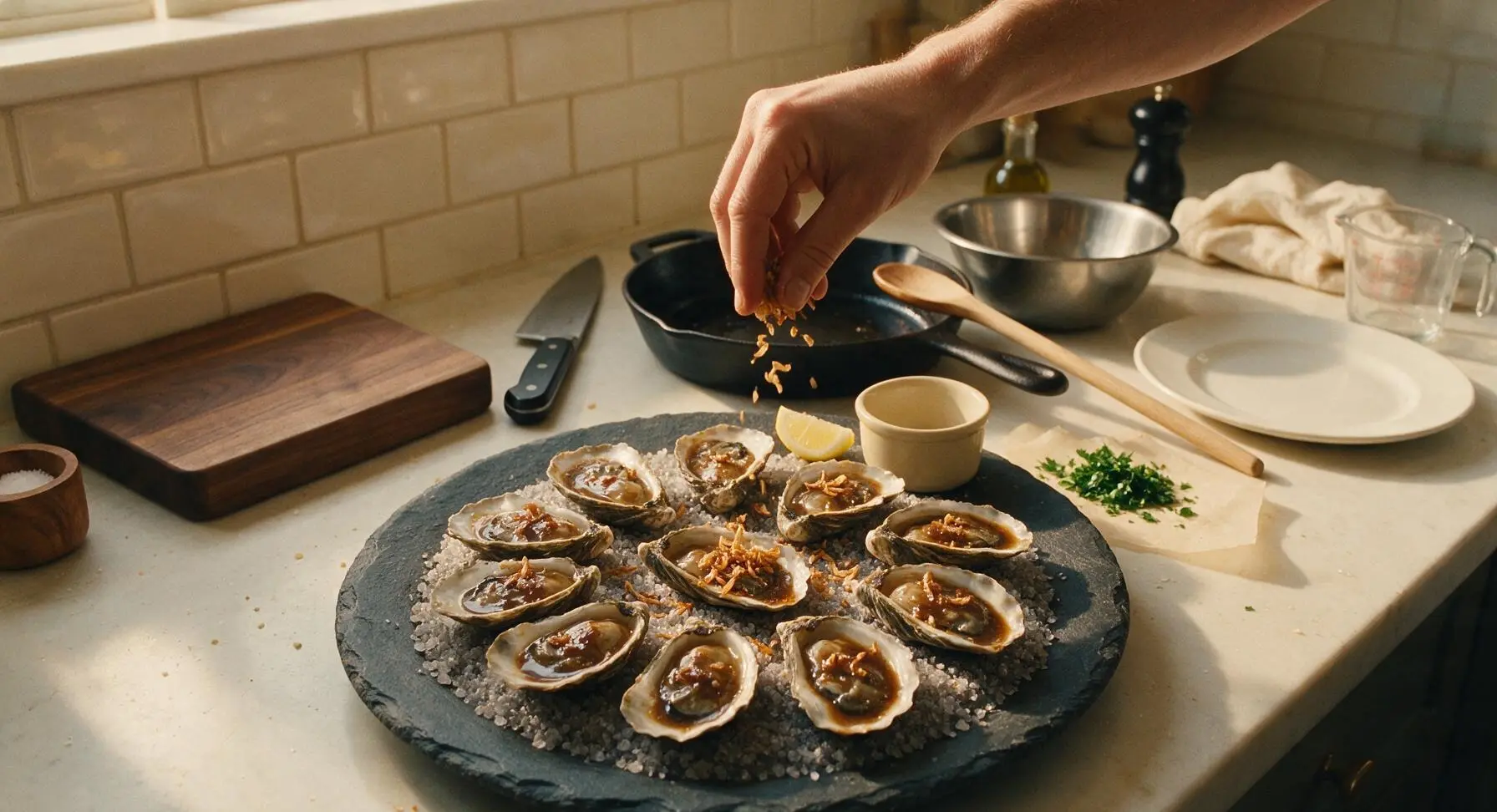
Spread the 1 cup of coarse rock salt in an even 1cm layer across the large dark slate serving platter to create a stable bed that holds oyster shells level and prevents sauce from spilling. Nestle each cooked oyster (in its shell) into the salt bed, arranging them in an even circle around the platter. Drizzle any remaining stout-brown butter sauce over the oysters, then top each with a small pinch of crispy shallots and a sprinkle of chopped fresh parsley. Fill the small matte cream ramekin with extra crispy shallots and place it on the platter edge, alongside lemon wedges for squeezing. Serve immediately while warm.
Step 6
step6:Plate and Garnish

Tips

1.When shucking oysters, work over a small bowl to catch any spilled natural oyster brine; stir this collected liquor into your stout reduction for extra bright, ocean-forward depth instead of letting it go to waste.
2.Remove fried shallots from the oil when they are just pale golden, not deep brown: residual heat in the paper-thin slices will continue to cook them as they drain, and waiting for dark brown color will result in bitter, burnt garnish.
3.Use a basic dry export stout for this recipe rather than high-alcohol, sweet imperial stouts: heavily sweetened or boozy stouts turn cloying and harsh when reduced, while dry, roasty stouts create a balanced, malty sauce that complements briny oysters perfectly.
✨ You May Also Like

Snacks & Appetizers
🍜 Mexico

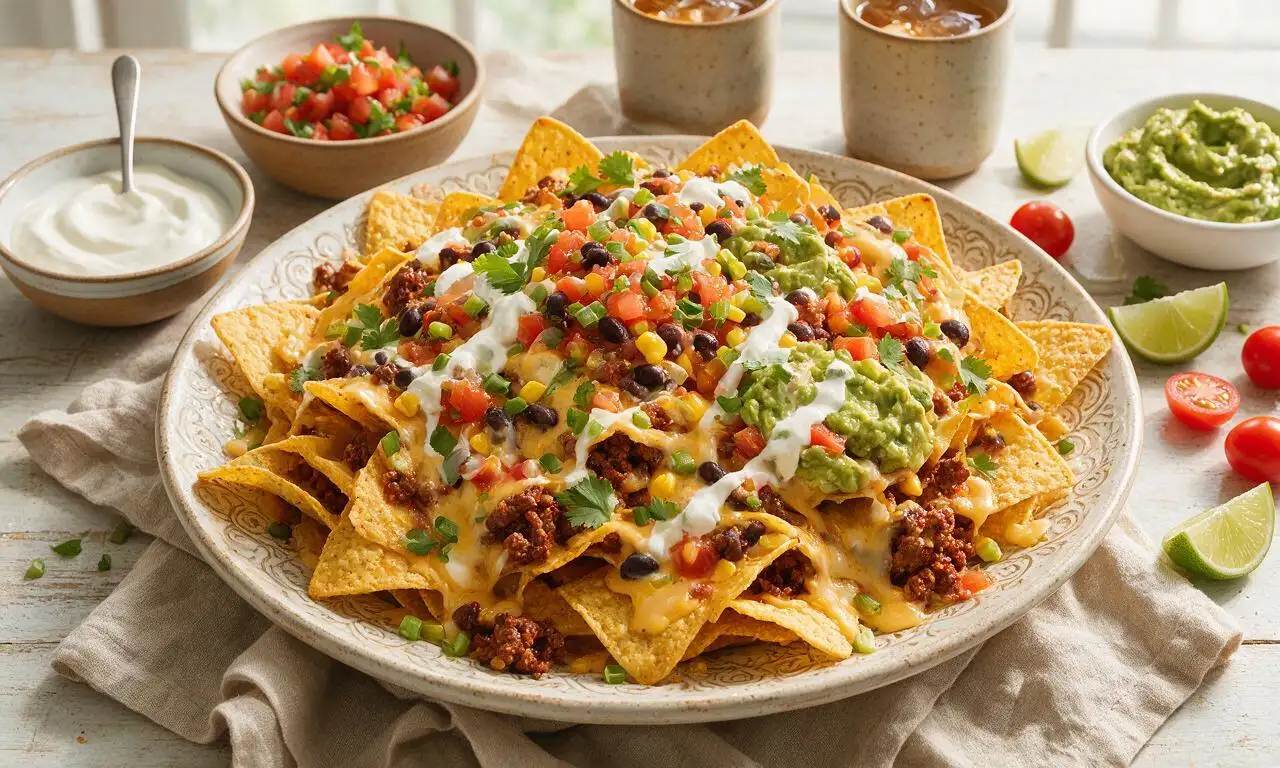
Crispy thick-cut tortilla chips piled high with seasoned beef, melted cheese, and bright fresh toppings for a shareable, crowd-favorite bite.

⏱️ 25 minuteSnacks & Appetizers ★ 4.8
Snacks & Appetizers
🍜 United States

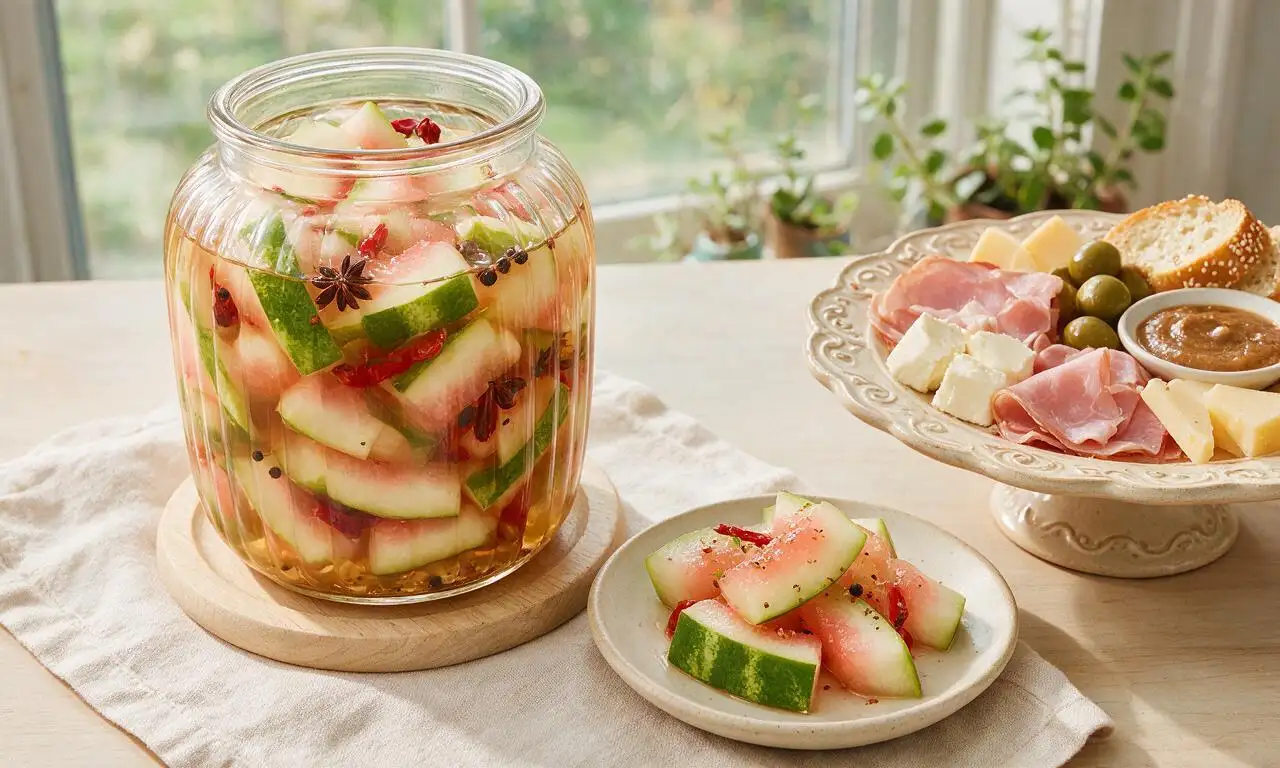
Crisp, sweet-tangy spiced pickled watermelon rind is a zero-waste summer staple, perfect with grilled meats, charcuterie, or eaten straight from the jar as a bright snack.

⏱️ 30 minuteSnacks & Appetizers ★ 4.6
Snacks & Appetizers
🍜 Germany

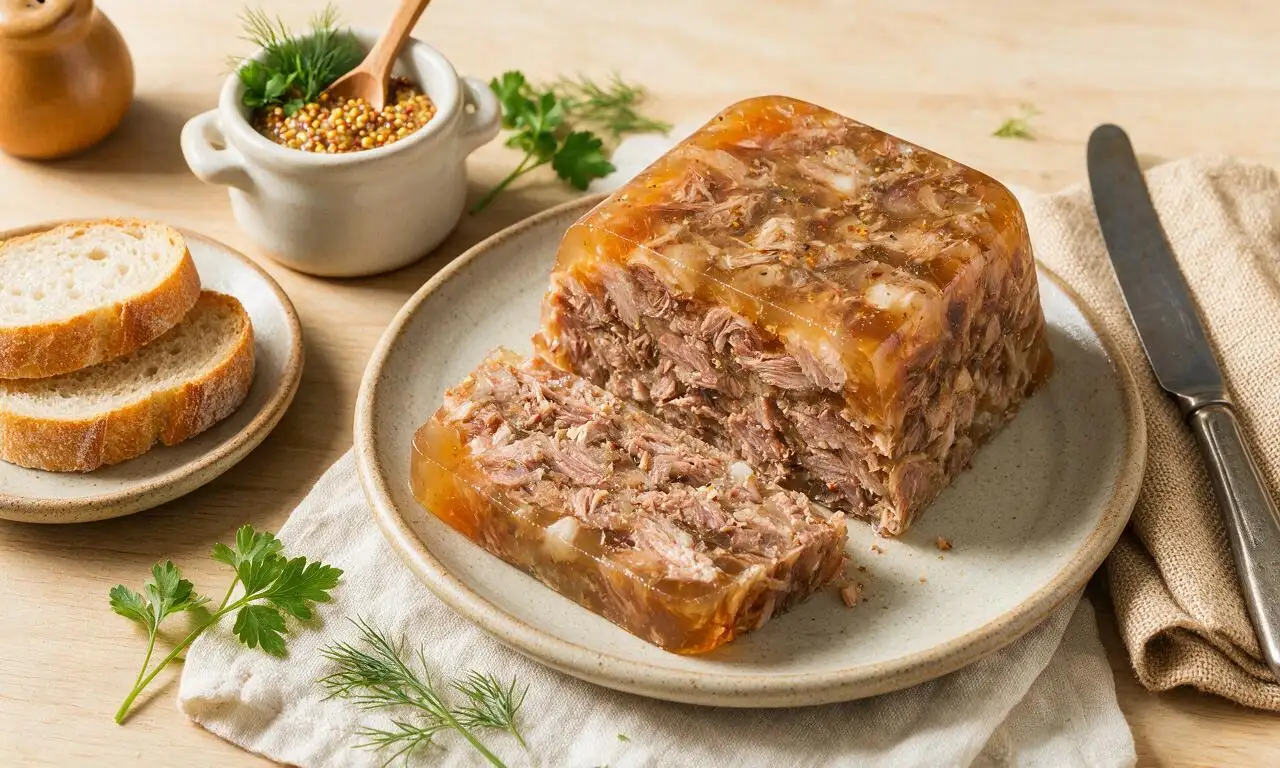
A tangy, jellied pork cold cut slow-simmered with aromatic spices, set into a firm sliceable loaf, served cold with mustard and crusty bread.

⏱️ 3 hours 4Snacks & Appetizers ★ 4.8
Snacks & Appetizers
🍜 United States

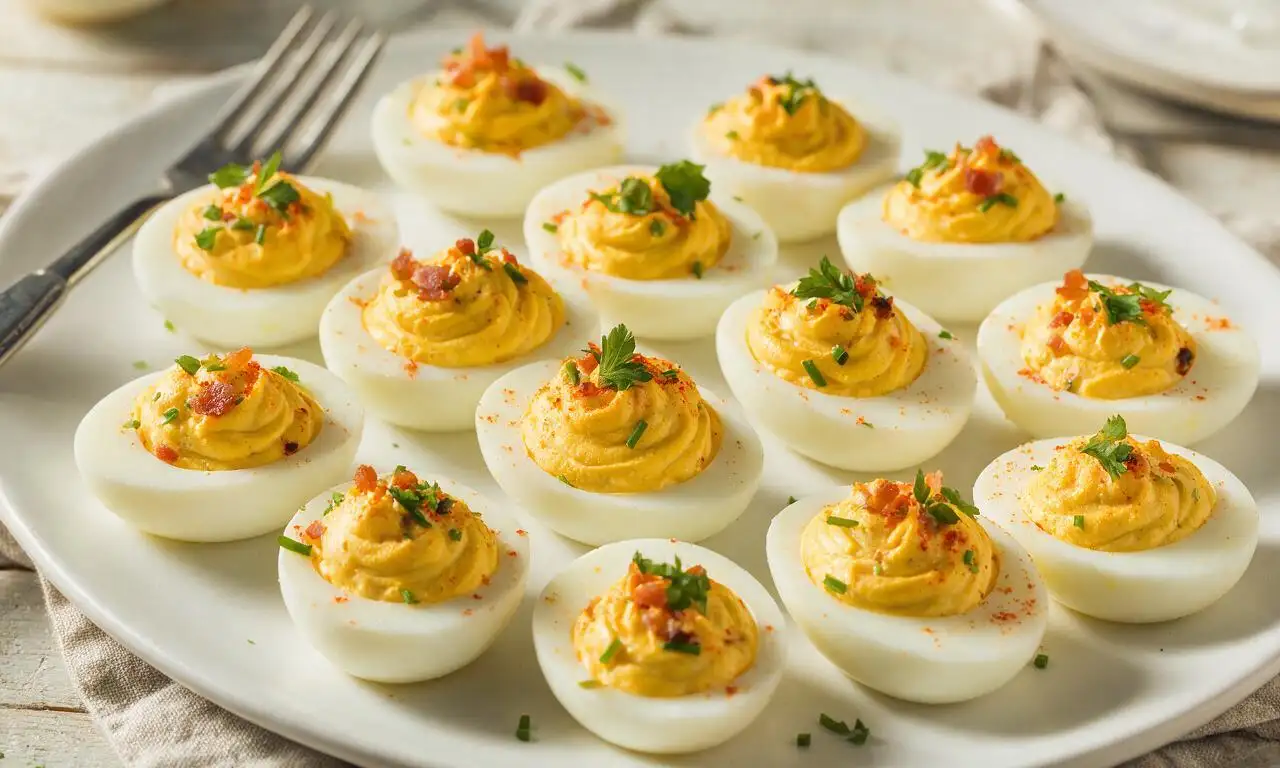
Creamy, tangy, perfectly seasoned hard-boiled egg halves filled with a rich, smooth yolk mixture, a timeless, crowd-pleasing bite for holiday and casual gatherings alike.

⏱️ 40 minuteSnacks & Appetizers ★ 4.8
Snacks & Appetizers
🍜 Russia

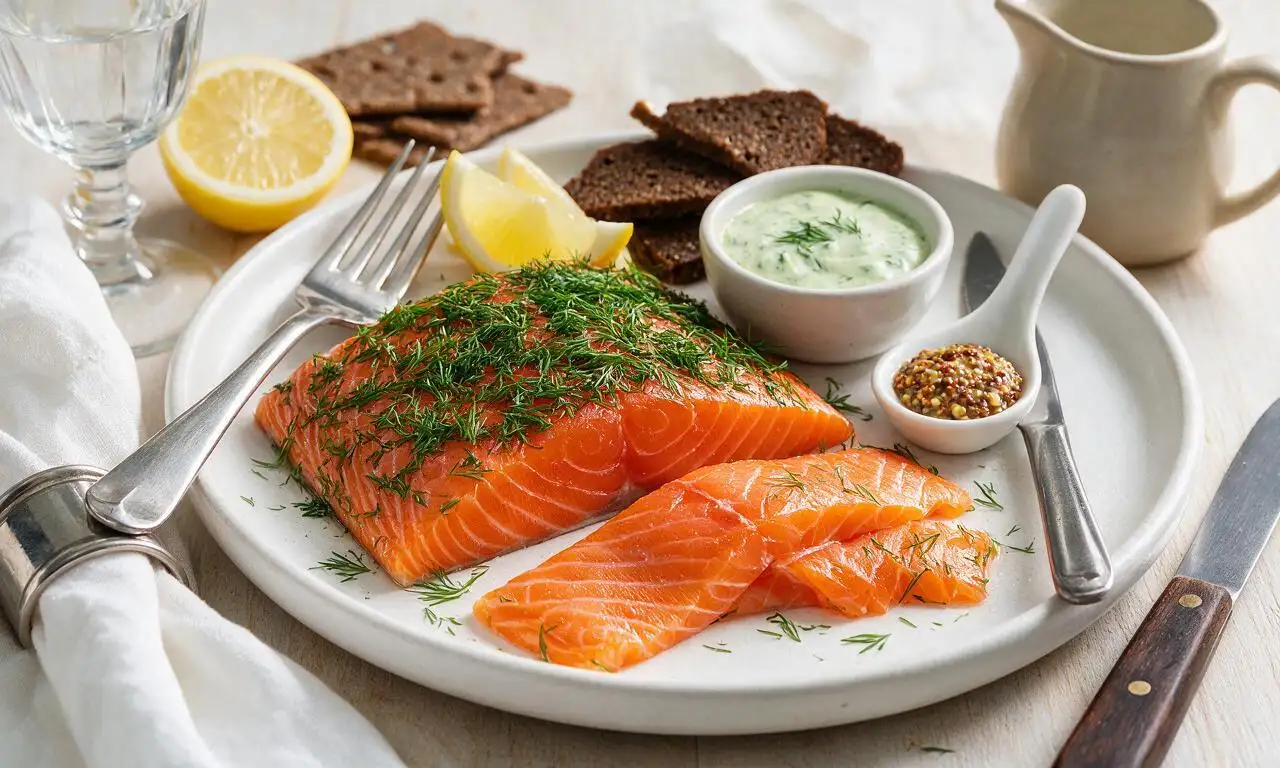
Silky, dill-forward no-smoke cured salmon, a Scandinavian classic with bright salty-sweet flavor, ideal for holiday starter platters and open-faced rye sandwiches.

⏱️ 48 hours Snacks & Appetizers ★ 4.7
Snacks & Appetizers
🍜 Japan

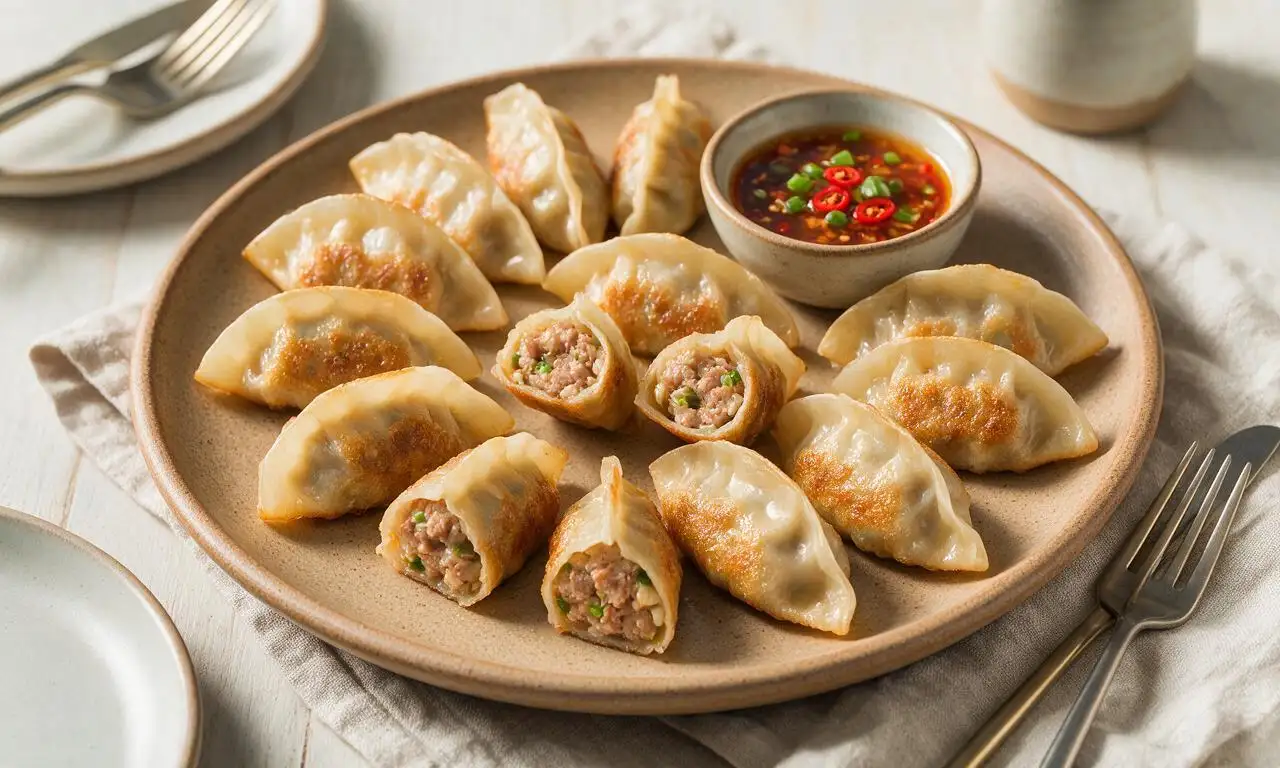
Crisp golden bottoms, juicy savory pork and vegetable filling, and tangy dipping sauce make these pan-fried gyoza a beloved shareable bite.

⏱️ 45 minuteSnacks & Appetizers ★ 4.8

Oysters with Stout:Frequently Asked Questions

1.What type of oysters works best for this oysters with stout recipe? ▾
Opt for medium to large briny East Coast oysters (like Blue Point or Wellfleet) or creamy Pacific oysters, 3–4 inches long in the shell, so they hold the stout butter sauce without spilling. Skip tiny, mild cocktail oysters—they’ll get overwhelmed by the roasty stout flavor, and their small shells can’t contain the toppings properly.
2.Can I use a different stout if I don’t have dry export stout like Guinness? ▾
Absolutely, just stick to dry, roasty stouts without added sweeteners or heavy coffee, chocolate, or pastry adjuncts. Avoid sweet milk stouts, high-alcohol imperial stouts, or flavored stouts—their sugar and bold add-ins will overpower the oysters’ brininess. A standard budget dry Irish stout works perfectly here.
3.Do I need to shuck the oysters raw before cooking them? ▾
Yes, shuck them first, but leave each oyster resting in its deeper, cupped bottom shell. Set the shells on a bed of rock salt on a baking sheet to keep them level, so they don’t tip and spill their natural brine or stout butter as they cook. Discard the flat top shell, and pick out any tiny shell fragments before adding toppings.
4.What if I struggle to shuck raw oysters at home? ▾
If shucking feels intimidating, pop whole, scrubbed oysters on a hot grill for 1–2 minutes just until their shells pop slightly at the hinge, then pry them the rest of the way open with a sturdy butter knife. Don’t leave them on heat long enough to cook fully—you only want to loosen the hinge, not make the oysters tough and rubbery.
5.Can I make the crispy shallots ahead of time? ▾
Definitely! Fry thinly sliced shallots in canola oil until pale golden, drain them well on paper towels, and store in an airtight container at room temperature for up to 2 days. Hold off on salting them until right before serving, or salt will draw out moisture and make them lose their light, crisp crunch.
6.Why do you call for unsalted butter for the stout brown butter? ▾
Unsalted butter lets you fully control the dish’s sodium level, since oysters are naturally quite briny and you don’t want the final bite to be overly salty. It also browns more evenly than salted butter, which often has added stabilizers that can muddle the nutty, roasty flavor you get when pairing it with reduced stout.
7.How do I keep oysters from tipping over while baking? ▾
Line a rimmed baking sheet with a ½-inch thick layer of coarse rock salt or crumpled aluminum foil, then nestle each shucked oyster (in its bottom shell) into the salt or foil so it sits completely level. This prevents oyster brine and stout butter from running onto the pan, and keeps toppings evenly distributed on each oyster.
8.How long should I cook the oysters after adding the stout butter? ▾
Bake them at 425°F for just 4–5 minutes, until the butter bubbles gently around the shell edges and the oyster is just opaque around its perimeter. Any longer, and the delicate oyster meat will turn tough, rubbery, and lose that bright, briny ocean flavor that balances the rich, malty stout butter.
9.Can I use olive oil instead of canola oil to fry the shallots? ▾
I don’t recommend it. Extra-virgin olive oil has a low smoke point and distinct fruity flavor that clashes with the malty stout and briny oysters. Neutral canola oil has a high smoke point that lets you get perfectly crisp, golden shallots without burnt, bitter notes, and it adds no competing flavors to the dish.
10.Do I need to reduce the stout before mixing it with brown butter? ▾
Yes, simmer ¼ cup of stout in a small saucepan over medium heat for 3–4 minutes until reduced by about half. This concentrates its malty, roasty flavor and cuts down on watery, flat beer taste. Let it cool slightly before whisking into warm brown butter so it doesn’t splatter or cause the sauce to separate.
11.Can I make this recipe for a large party ahead of time? ▾
You can prep all components 1 day ahead: shuck oysters and keep them chilled on a bed of ice, make the reduced stout brown butter and store it in the fridge, and pre-fry the crispy shallots. Assemble and bake oysters right before serving—they only take 5 minutes to cook, so they’ll be hot and fresh for guests without last-minute chaos.
12.What should I serve alongside oysters with stout? ▾
This starter pairs perfectly with crusty sourdough bread to soak up leftover stout butter, a simple arugula salad with lemon vinaigrette to cut through richness, and extra pints of the same dry stout you used in the recipe. Skip heavy, creamy sides that will compete with the dish’s balanced briny, malty flavors.
13.My brown butter tasted burnt last time I made it—what did I do wrong? ▾
Brown butter cooks extremely fast! Once butter melts and starts foaming, watch it closely, swirling the pan constantly, until you see golden brown specks at the bottom and smell a nutty, toasty aroma. Pull it off heat immediately and pour it into a cool bowl—residual pan heat will turn perfect butter bitter in 30 seconds flat.
14.Can I use pre-shucked, jarred oysters for this recipe? ▾
I don’t recommend it. Jarred oysters are usually preserved in extra brine, have a softer, mushier texture, and lack the fresh, bright ocean flavor of in-shell oysters. They also don’t come with their shells to hold the butter and toppings, so you’ll lose the classic presentation and balanced texture that makes this dish work.
15.How do I tell if raw in-shell oysters are fresh enough to use? ▾
Fresh in-shell oysters should feel heavy for their size, be tightly closed (or snap shut immediately when tapped), and have no strong, fishy odor when shucked. Any oysters that are gaping open, feel light, or smell sour or off should be discarded immediately—never risk foodborne illness from spoiled shellfish.
16.Can I grill these oysters instead of baking them? ▾
Absolutely! Nestle shucked oysters in a bed of rock salt on a hot grill over medium-high heat, spoon the stout butter over top, close the lid, and cook for 3–4 minutes until the butter is bubbling. The slight smokiness from the grill pairs beautifully with roasty stout and briny oysters for an even more classic pub feel.
17.Should I rinse oysters after shucking them? ▾
Give them a very quick, gentle rinse only if you see visible bits of broken shell or grit, but don’t soak them or scrub off their natural brine. That clear, salty oyster liquor is packed with bright ocean flavor that balances the rich, malty stout butter—rinsing it all off will leave the dish flat and one-note.
18.Can I add extra toppings to these oysters? ▾
Keep toppings minimal to let the oyster and stout shine, but a tiny pinch of flaky sea salt, a grind of black pepper, or a tiny squeeze of lemon right before serving works great. Skip heavy toppings like cheese, bacon, or thick hot sauce—they’ll overpower the delicate balance of malty butter, crispy shallot, and briny oyster.
19.How many oysters should I plan per person for a starter? ▾
Plan for 3–4 large oysters per person if you’re serving this as a standalone shared starter before a main course. If it’s part of a larger spread of small plates, 2 per person is plenty, since the rich brown butter and crispy shallots make these far more filling than plain raw oysters on the half shell.
20.My fried shallots came out soggy last time—what went wrong? ▾
Soggy shallots usually stem from one of two issues: either your canola oil wasn’t hot enough (aim for 325°F) when you added the sliced shallots, or you crowded the pan, which drops oil temperature and makes shallots steam instead of fry. Cook them in small batches, and pull them out pale golden—they’ll crisp more as they cool on paper towels.

Comments (8)

2 days ago

OMG, this oysters with stout recipe is a total game changer! I made these for my husband’s birthday dinner last weekend and he went back for seconds before I even sat down. The stout cuts the brininess of the oysters so perfectly, I never would’ve thought to pair them like that. 12 minute cook time is chef’s kiss for a fancy-feeling weeknight meal too!

yesterday

Wait, did you use a dry stout or a sweet milk stout? I’ve got both in my fridge right now and don’t want to mess this up for our potluck this Saturday!

yesterday

Great question! We recommend a dry Irish stout for this recipe — the roasted, slightly bitter notes balance the oyster brine best, but a milk stout will work if you prefer a sweeter, creamier finish! So glad you loved the recipe, SeafoodLover92!

just now

First time making cooked oysters at home and these were SO good! I was worried shucking would be a nightmare (medium difficulty is no joke, y’all) but once I got the hang of it, the whole thing came together super fast. Squeezed a little extra lemon on top and ate the whole dozen by myself oops. No regrets.

3 days ago

As someone who drinks stout with raw oysters all the time, I was skeptical cooking them together would work, but wow. The stout glaze caramelizes just a little on the edges of the oysters? Unreal. I used a local coffee stout I had on hand and it added this amazing subtle roasty note. 10/10 will make again for my next game night spread.

2 days ago

Love that you swapped in a coffee stout — that sounds incredible! The caramelization around the edges is one of our favorite parts too, it adds such a nice textural contrast. Thanks for giving the recipe a shot!

1 week ago

Help! I tried making these last night and my oysters got all rubbery? Did I overcook them? I followed the cook time but maybe my broiler runs hotter than most? Flavor was amazing but the texture was off, I really want to nail this for my family dinner next week.

5 days ago

I had the same issue my first go-round! I moved my oven rack up a couple inches so it was closer to the broiler and cut the cook time down to 8 minutes, they came out perfect the second time. Don’t give up!

3 days ago

Great tip from BBQ_Dad_Ohio! Oven temps can vary a ton, especially broilers. We suggest checking them at the 8 minute mark — they’re done when the edges just start to curl. You’ve got this for your family dinner!

30 minutes ago

Brought these to my neighborhood block party last weekend and people were swarming the platter! I was worried they’d be too fancy for a casual potluck but everyone was asking for the recipe before I even left. Pro tip: prep the stout butter ahead of time so all you have to do is shuck and top when you’re ready to broil. Total time saver!

yesterday

My kids loved it?! Wait I thought oysters would be a hard sell for my 8 and 10 year old but they saw me dipping the oysters in the extra stout butter and begged for bites. Next time I’m making a double batch because we ran out in 10 minutes flat. Who knew?

2 hours ago

Oh that makes me feel way better about making these for my picky teens! I was gonna skip it because I thought they’d turn their noses up, now I’m adding oysters to my grocery list for tomorrow.

2 weeks ago

Tried this last night for date night and it was perfect! We live in Florida so fresh oysters are super easy to come by, but I never thought to pair them with stout instead of my usual mignonette. My partner said it’s better than the oysters we got at that fancy seafood spot in Tampa last month. Wild!

1 week ago

Right?! I was blown away how much better they are than regular raw oysters with mignonette too. I added a pinch of Old Bay on top of mine, chef’s kiss.

1 week ago

So happy to hear date night was a hit! The Old Bay addition sounds amazing — that little kick of spice pairs perfectly with the rich stout butter. Thanks for sharing the tip!

2 hours ago

Wait, medium difficulty is so accurate here — shucking the oysters took me a minute to get right, but once I did, the actual cooking part was a breeze. The stout reduction is so rich and flavorful, I even used the leftover butter to dip some crusty bread in. Don’t let the shucking scare you off, it’s 100% worth the effort.

30 minutes ago

So glad you stuck with it through the shucking! That crusty bread dip hack is genius — we do the exact same thing with leftover stout butter, no sense letting any of that rich, flavorful goodness go to waste. Thanks for giving the recipe a try!