Head Cheese (Souse)

Head Cheese (Souse)
⏱️ cook time 3 hours 45 minutes (plus 12 hour mandatory chilling time)
🍽️ servings 8
⚡ Difficulty medium

intro

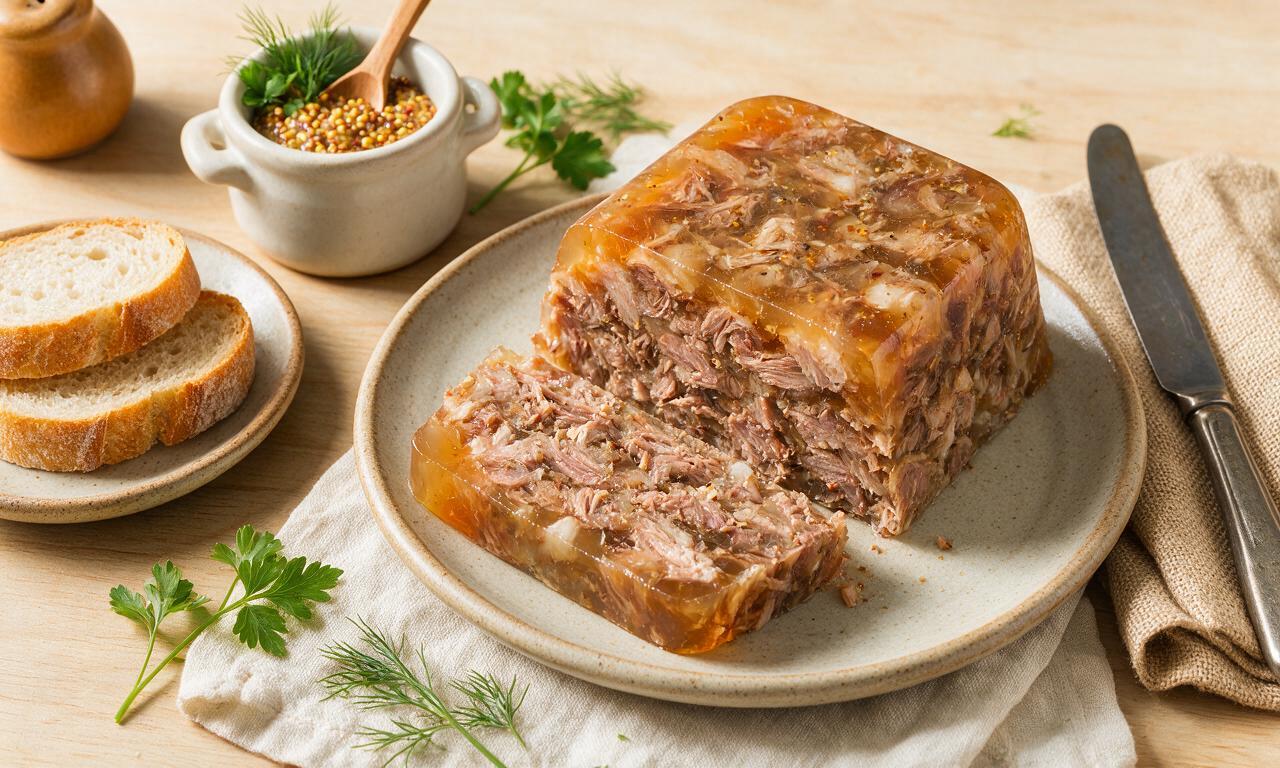
A tangy, jellied pork cold cut slow-simmered with aromatic spices, set into a firm sliceable loaf, served cold with mustard and crusty bread.

Ingredients

Cleaned split half pig head (eyes, brain, ear canals removed) 1800g (4 lbs)
Lengthwise split pork trotters 900g (2 lbs, ~2 trotters)
Yellow onion (quartered, skin on) 220g (1 large)
Carrots (coarsely chopped) 150g (2 medium)
Celery stalks (coarsely chopped) 120g (2 stalks)
Garlic cloves (crushed) 18g (6 cloves)
Distilled white vinegar 180ml (3/4 cup)
Kosher salt 30g (2 tbsp)
Whole black peppercorns 6g (1 tbsp)
Bay leaves 3 whole leaves
Whole allspice berries 2g (1 tsp)
Yellow mustard seeds 3g (1 tsp)
Finely diced pickled gherkins 100g (1/2 cup)
Fresh flat-leaf parsley (chopped) 15g (1/4 cup)
Cold water 3.8L (16 cups)

Steps

1

Rinse and Prep Meat

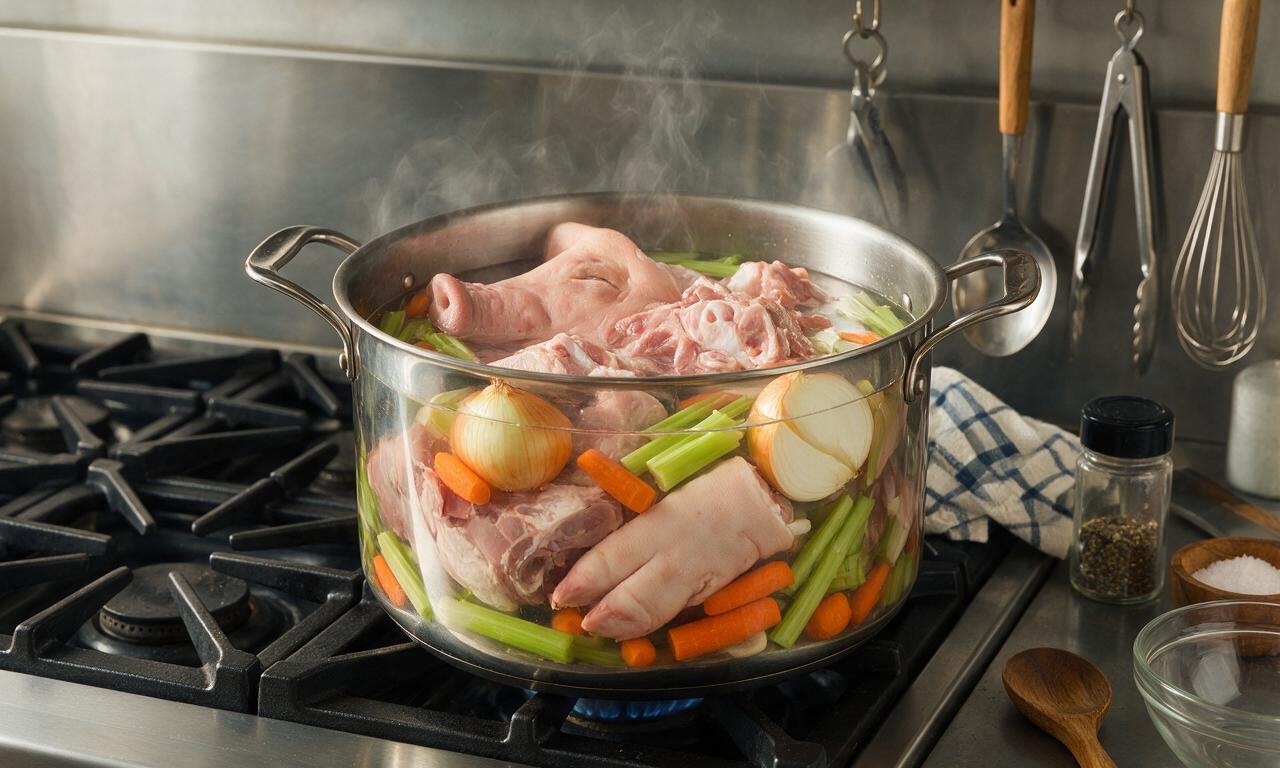
Rinse the split half pig head and pork trotters under cold running water for 5 minutes to wash away residual bone fragments and surface blood. Place all meat in a 10L (10 quart) stainless steel stockpot, add the quartered onion, chopped carrots, celery, crushed garlic, black peppercorns, bay leaves, allspice berries, mustard seeds, and 1 tablespoon (15g) of kosher salt. Pour 3.8L (16 cups) of cold water into the pot to submerge all ingredients by 2.5cm (1 inch). Heat over medium-high heat until the water reaches a rolling boil, then immediately reduce heat to low to maintain a gentle, bare simmer with only tiny bubbles breaking the surface.
Step 1
step1:Rinse and Prep Meat
2

Simmer and Skim Scum

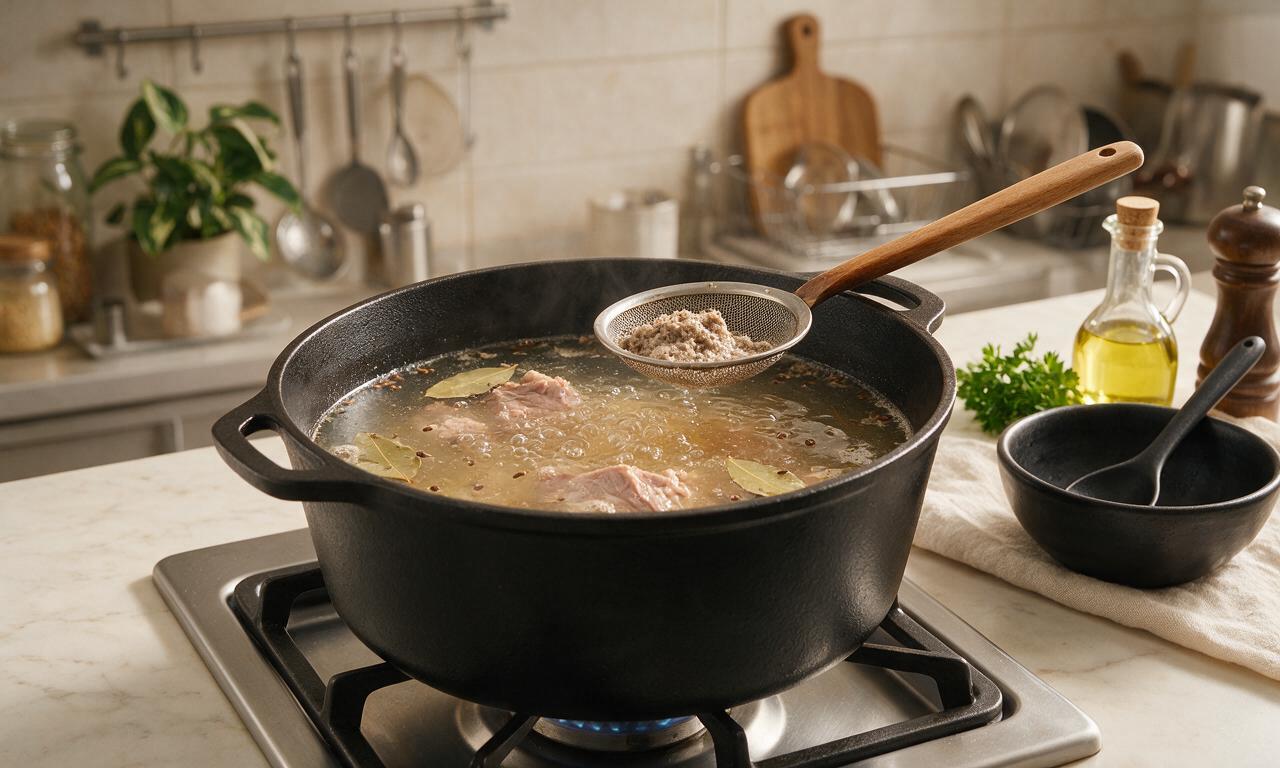
Keep the pot uncovered at low heat, skimming any gray foamy scum that rises to the surface with a slotted spoon every 15 minutes for the first hour of cooking. Continue simmering for a total of 3 hours, until the meat is extremely tender and pulls easily away from skull and trotter bones when prodded with a fork. Add 120ml (1/2 cup) increments of boiling water as needed if the liquid level drops below the top of the meat during cooking; do not allow the pot to boil rapidly, as this will cloud the stock and create a muddy finished texture.
Step 2
step2:Simmer and Skim Scum
3

Cool Meat and Strain Stock

Once the meat is tender, use tongs to carefully transfer the pig head and trotters to a large cutting board to cool for 20 minutes, until cool enough to handle comfortably. Line a fine-mesh sieve with 2 layers of cheesecloth and set it over a large heatproof bowl, then pour all remaining cooking stock through the sieve to strain out vegetables and spices; you should have approximately 1.2L (5 cups) of clear, pale golden stock. Discard the strained solids. When the meat is cool, pick all edible meat, soft skin, and tender connective tissue from the bones, discarding hard cartilage, bone fragments, and any thick, hard fat chunks. Tear or cut the collected meat into 1.2cm (1/2 inch) pieces.
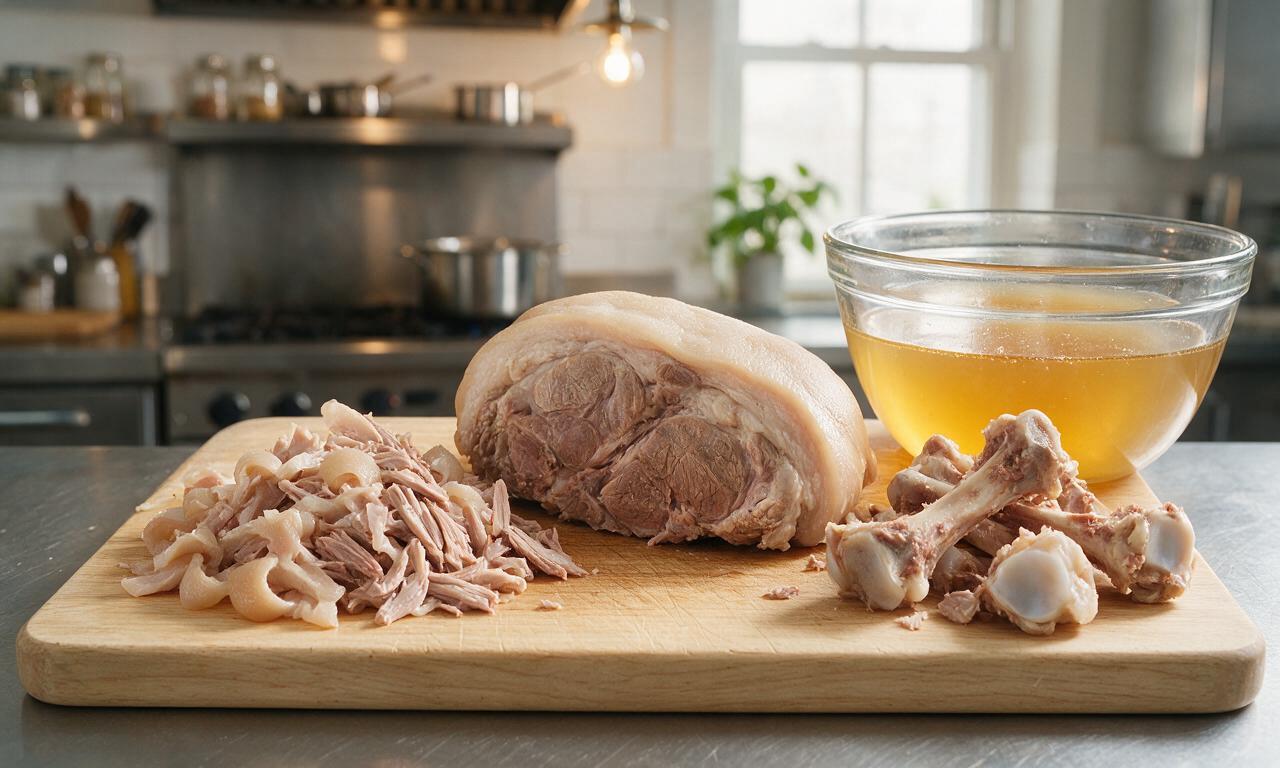
Step 3
step3:Cool Meat and Strain Stock
4

Combine and Simmer Stock

Pour the strained stock into a clean medium saucepan, add the remaining 1 tablespoon (15g) of kosher salt, white vinegar, diced pickled gherkins, and chopped parsley. Bring the mixture to a gentle simmer over medium heat, then stir in the cut pork pieces, mixing thoroughly to distribute all ingredients evenly. Taste the liquid and adjust salt if needed—it should taste slightly over-seasoned and tangy, as the flavor will mellow significantly when chilled. Simmer for 5 minutes over medium heat to meld the flavors together.
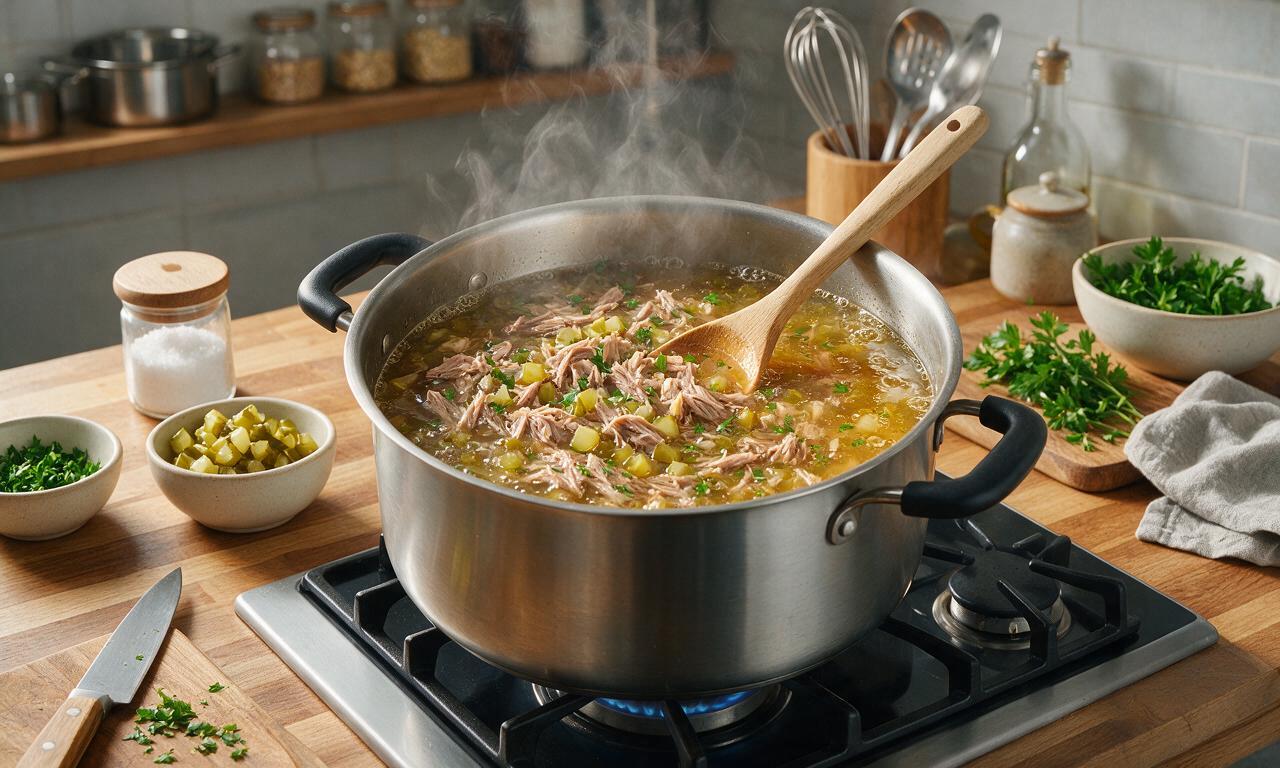
Step 4
step4:Combine and Simmer Stock
5

Fill and Press Loaf Pan

Remove the saucepan from heat. Ladle the meat and stock mixture evenly into a 23cm x 13cm (9x5 inch) glass loaf pan, pressing the meat down firmly with the back of a spoon so all pieces are fully submerged under the stock (the natural gelatin from the trotters will set the loaf as it chills). Let the pan cool to room temperature on the counter for 30 minutes, then cover tightly with plastic wrap and refrigerate for a minimum of 12 hours (overnight), until the loaf is completely firm and jellied, with no liquid sloshing when the pan is gently jiggled.
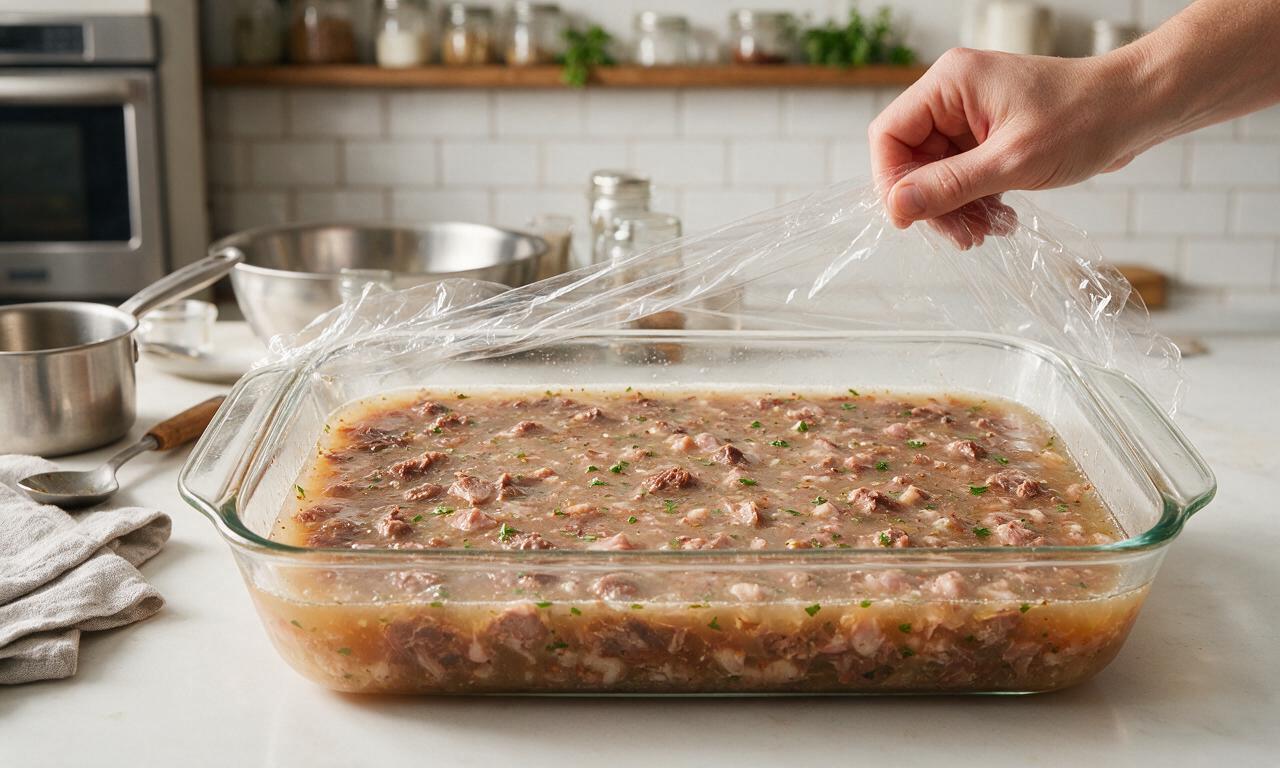
Step 5
step5:Fill and Press Loaf Pan
6

Loosen and Unmold Head Cheese

Once fully set, run a thin, sharp knife around the entire inner edge of the loaf pan to loosen the head cheese. Dip the bottom 5cm (2 inches) of the pan in warm tap water for 10 seconds to loosen the jellied base, then invert the pan onto a clean cutting board, tapping the bottom firmly to release the firm, jellied loaf. Slice into 6mm (1/4 inch) thick slices, and serve cold.
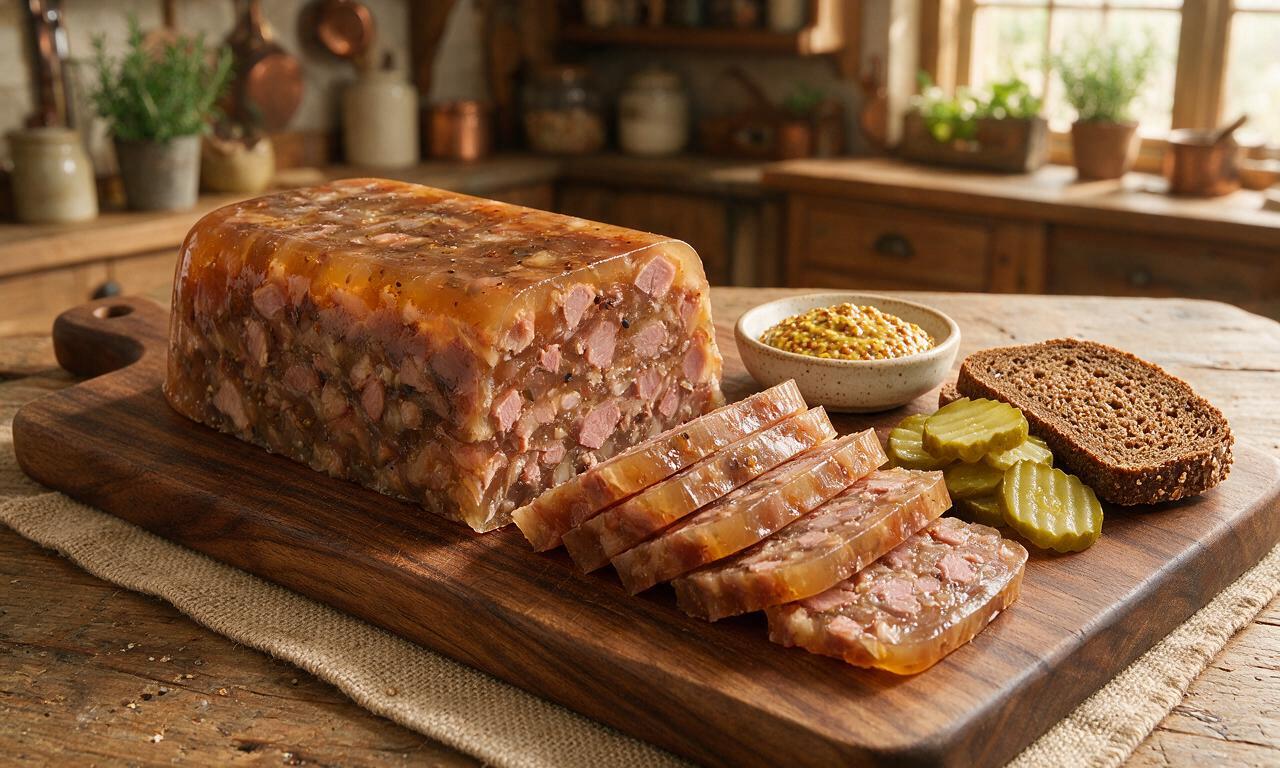
Step 6
step6:Loosen and Unmold Head Cheese

Tips

1.Do not replace pork trotters with powdered gelatin if you want a traditional, silky texture: trotters release natural gelatin during slow simmering that creates a cleaner, less rubbery set than commercial gelatin.
2.Skimming foam regularly during the first hour of simmering is non-negotiable for a clear, bright-tasting loaf; trapped scum will make the stock cloudy and give the finished head cheese a bitter, off flavor.
3.For a finer, more uniform texture, pulse 1/3 of the picked cooked skin and connective tissue in a food processor for 10 seconds before mixing it back in with the chunkier meat pieces, rather than leaving all pieces large.

✨ You May Also Like

Snacks & Appetizers
🍜 Mexico

Crispy thick-cut tortilla chips piled high with seasoned beef, melted cheese, and bright fresh toppings for a shareable, crowd-favorite bite.

⏱️ 25 minuteSnacks & Appetizers ★ 4.7
Snacks & Appetizers
🍜 United States

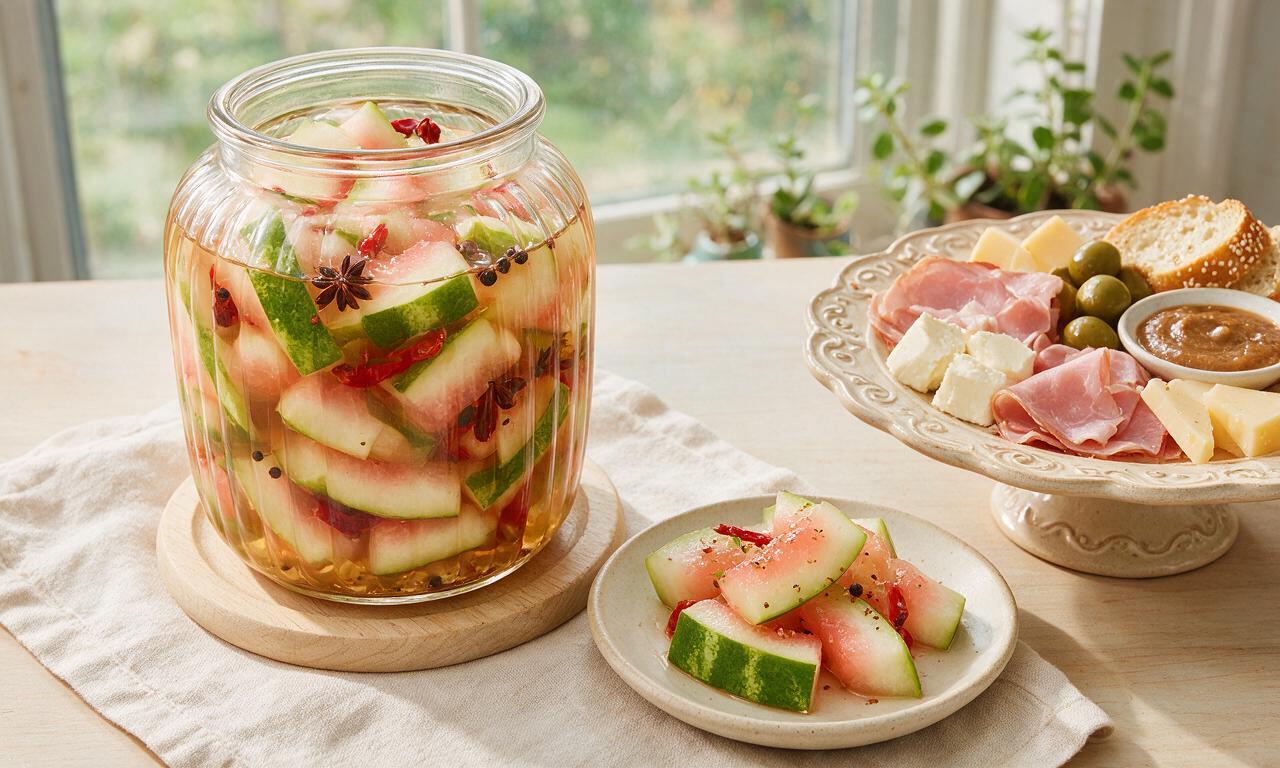
Crisp, sweet-tangy spiced pickled watermelon rind is a zero-waste summer staple, perfect with grilled meats, charcuterie, or eaten straight from the jar as a bright snack.

⏱️ 30 minuteSnacks & Appetizers ★ 4.8
Snacks & Appetizers
🍜 United States

Creamy, tangy, perfectly seasoned hard-boiled egg halves filled with a rich, smooth yolk mixture, a timeless, crowd-pleasing bite for holiday and casual gatherings alike.

⏱️ 40 minuteSnacks & Appetizers ★ 4.7
Snacks & Appetizers
🍜 Russia

Silky, dill-forward no-smoke cured salmon, a Scandinavian classic with bright salty-sweet flavor, ideal for holiday starter platters and open-faced rye sandwiches.

⏱️ 48 hours Snacks & Appetizers ★ 4.6
Snacks & Appetizers
🍜 Japan

Crisp golden bottoms, juicy savory pork and vegetable filling, and tangy dipping sauce make these pan-fried gyoza a beloved shareable bite.

⏱️ 45 minuteSnacks & Appetizers ★ 4.9
Snacks & Appetizers
🍜 United States

Portable, crispy-edged, creamy-centered baked mac and cheese muffins are handheld, mess-free comfort food perfect for casual sharing and quick snacking.

⏱️ 35 minuteSnacks & Appetizers ★ 4.6

Head Cheese (Souse):Frequently Asked Questions

1.Can my butcher prep the pig head for me instead of doing that messy work at home?
Absolutely! Most butchers will happily split the half pig head, remove the eyes, brain, and ear canals, and scrape off stray hair for you if you ask ahead. This cuts down on messy, time-consuming prep at home; just give the prepped head a quick cold rinse before cooking to wash away any leftover bone fragments or debris.
2.Why are pork trotters required for this recipe when the star ingredient is pig head?
Pork trotters are packed with dense, collagen-rich connective tissue that breaks down during slow simmering to create that firm, sliceable jellied texture head cheese is known for. The pig head has some collagen, but trotters guarantee your loaf sets firmly without the rubbery, artificial texture you get from adding store-bought powdered gelatin.
3.How long do I need to simmer the pork and vegetables for the right texture?
Plan for a low, gentle simmer of 3 to 3.5 hours total. You’ll know it’s done when meat pulls easily away from the skull and trotter bones with zero resistance, and the cooking liquid feels slightly tacky between your fingers when cool. Never boil rapidly, as that makes the broth cloudy and the meat tough and stringy.
4.Why does the recipe call for leaving the onion skin on instead of peeling it?
Leaving the papery golden outer skin on the quartered onion adds a warm, deep amber color to the finished broth, so your set head cheese has that inviting traditional pale golden hue instead of looking dull and gray. The onion, plus coarsely chopped carrots and celery, adds subtle earthy sweetness to the broth, and you’ll strain out all vegetable solids later so there’s no texture impact.
5.How do I keep my finished head cheese from tasting greasy?
After simmering, let the cooking liquid and meat rest for 20 minutes, then skim off the thick top layer of rendered fat with a wide spoon before pulling the meat. For extra insurance, chill the strained broth for 30 minutes first; the fat will solidify into a hard white sheet you can lift right off for a clean, non-greasy jelly base.
6.Do I need to add store-bought gelatin to get the loaf to set properly?
If you use the specified split pig head and pork trotters, you will not need any added gelatin at all. The long, slow simmer draws out more than enough natural collagen from the skin, bones, and connective tissue of those cuts to create a firm, sliceable set. Extra gelatin creates an unpleasantly rubbery, Jell-O-like texture that isn’t traditional.
7.What gives traditional souse its signature tangy flavor?
That classic bright tang comes from a modest splash of raw apple cider vinegar stirred into the strained cooking liquid right before you assemble the loaf, paired with the savoriness of slow-simmered pork and aromatic veggies. Don’t overdo the vinegar—you want a bright, balanced zing, not a sharp sour bite that overwhelms the mild pork flavor.
8.How should I prep the cooked pork before assembling the loaf?
Once the meat is cool enough to handle, pull every bit of tender meat, soft skin, and edible connective tissue off the head and trotter bones, discarding any hard gristle or small bone fragments. Tear or cut the meat into ½-inch bite-sized pieces instead of shredding it super fine, for a hearty, non-mushy finished texture.
9.What kind of pan works best for setting the head cheese into a sliceable loaf?
A standard 9x5 inch metal loaf pan works perfectly, though glass loaf pans or deep ceramic dishes work just as well if that’s what you have. Line the pan with plastic wrap with a few inches of overhang on all sides first, so you can lift the fully set loaf straight out easily without it sticking or breaking.
10.How long does the loaf need to chill before it’s ready to slice and serve?
You’ll need to let the assembled loaf chill, uncovered, in the refrigerator for a full 12 to 24 hours to set completely. Don’t try to slice it early—if the center is still soft, it will fall apart when cut. The long chill also lets the flavors meld, for a far more balanced taste than slicing after just a few hours.
11.Is it safe to eat head cheese cold straight from the fridge?
Yes! That is the traditional, intended way to serve it. As long as you simmered the pork long enough to reach a safe 165°F internal temperature during cooking, and keep the finished loaf stored covered at 40°F or below in the fridge, it is completely safe to eat cold, just like any other cooked deli cold cut.
12.What are the best classic sides and toppings to serve with souse?
Stick to simple, traditional pairings to let the pork flavor shine: thin slices served with sharp yellow or stone-ground mustard, crusty sourdough or rye bread, tangy dill pickles, or thin slices of raw sweet onion. Skip heavy, creamy sauces, as they clash with the bright tang of the jelly and mild, rich pork.
13.How long will homemade head cheese stay fresh in the refrigerator?
Properly stored in a tightly covered airtight container, your homemade head cheese will stay fresh for 7 to 10 days in the fridge. Keep it on a lower shelf where the temperature is most consistent, and don’t leave slices out at room temperature for more than two hours at a time to avoid bacterial growth.
14.Can I freeze leftover head cheese to extend its shelf life?
Freezing is not recommended for head cheese, unfortunately. The high collagen content that creates its signature jellied texture breaks down and becomes grainy and watery when frozen and thawed, leaving a mushy, separated loaf that won’t hold its shape. It’s best to make a batch sized to eat within the 10-day fridge window.
15.My loaf turned out soft and didn’t set firmly—what went wrong, and can I fix it?
A soft, unset loaf usually means you didn’t simmer the trotters and pig head long enough to draw out sufficient collagen, or you added too much extra water that diluted the natural gelatin. You can fix it easily: pour the soft loaf back into a pot, simmer gently for 30 minutes, re-pour into the pan, and chill for a full 24 hours.

Comments (8)

2 days ago

OMG I’ve been looking for a proper traditional souse recipe forever! My grandma used to make this for our annual Christmas family dinner and I could never get the texture right. Followed the recipe exactly, even waited the full 12 hour chill time (torture, let me tell you) and it turned out PERFECT. Sliced it up thin, served with mustard and pickles, and my picky teenager even asked for seconds. 10/10, will be making this for the potluck next month too!

yesterday

Wait how much gelatin did you end up adding? I tried making souse last year and it never set right, was super crumbly. Curious if you used extra or just the natural stuff from the cook!

yesterday

Great question! If you follow the simmer time as written (3 hours 45 minutes) you’ll get plenty of natural gelatin from the pork skin and connective tissue, no extra needed! Just make sure you don’t dilute the cooking liquid too much when straining, that’s the most common reason for it not setting.

1 week ago

Made this last weekend with the hog head we got from our fall hunt, game changer. Only thing I adjusted was adding a little extra vinegar and a pinch of red pepper flakes for a kick, turned out so good. Was worried the cook time would be too long but it was totally hands off for most of it, which was perfect while I was processing other cuts.

5 days ago

Love that you used wild hog for this, that adds such a great deep flavor! The extra vinegar and red pepper flakes sound like a fantastic twist, I’ll have to try that variation next batch I make.

3 days ago

Whoa I had no idea souse was this straightforward to make at home! I prepped a big batch on Sunday, sliced it up, and it’s been my go-to quick protein for lunch all week. Pairs so well with crackers and raw veggies, way less processed than the deli meat I usually buy. Only heads up: block off enough time for that mandatory chill, I almost tried to cut it early the first time and remembered last minute!

5 days ago

This recipe tasted exactly like the souse my daddy used to make down in the panhandle when I was a kid! I was a little intimidated because I thought it was super hard to make (medium difficulty had me nervous at first) but the steps were so easy to follow. My whole extended family raved about it at our Sunday cookout.

3 days ago

Wait is this really as ‘wild’ as people say? I’ve never had head cheese before and I’m curious but low key scared to try making it lol, is the flavor super strong?

2 days ago

So glad it brought back those wonderful childhood memories for you! And great question from @CityGirlEats – if you’re trying head cheese for the first time, the flavor is actually mild, savory, and reminiscent of a well-seasoned cold pork loaf, not gamey or overly strong as long as you thoroughly clean the pork head before simmering. It’s way more approachable than most people think!

30 minutes ago

Tried this recipe last night, followed all the steps but my souse came out a little saltier than I expected. Did I do something wrong? I used the amount of salt listed but maybe my pork head was pre-salted? Not a huge deal, I just ate it with extra unsalted crackers to balance it out, but wanted to ask for next time.

5 minutes ago

Sorry to hear it came out saltier than you preferred! That’s almost always because store-bought pork heads are sometimes pre-brined or cured in a salt solution before sale, which adds extra salt you don’t account for in the recipe. Next time, give the head a really good soak in cold water for a couple hours before cooking, and cut the added salt by 1/3 if you know it’s pre-brined, that should fix it!

2 weeks ago

SO good! I added a handful of fresh sage and some black pepper from my garden to the cooking liquid, and it gave the souse such a warm, earthy flavor. Brought a platter of sliced souse, mustard, and homemade rye bread to my neighbor’s game night and everyone was asking for the recipe. Worth every minute of cook and chill time, no cap.

1 week ago

Oh the fresh sage addition sounds insane! Do you add it whole during the simmer so you can fish it out later, or chop it up fine and leave it in?

1 week ago

I tied the whole sage sprigs up with kitchen twine along with the other aromatics so I could pull the whole bundle out before pouring into the loaf pan! Super easy, no random leaf bits in the final slices.

yesterday

I’ve made head cheese a handful of times over the years but this recipe is easily the best one I’ve tried. The ratio of meat to cooking liquid is spot on, and the spice blend doesn’t overpower the pork flavor at all. My husband took a whole loaf to his work potluck and it was gone in 10 minutes, guys were coming up to him asking when I’d make more.

2 hours ago

That’s such a good potluck idea! I’ve been trying to think of something unique to bring to our office holiday party and this would be perfect, way more memorable than the usual veggie platter.

2 hours ago

Full transparency: I grew up eating the weird jellied deli meat version of head cheese and hated it, so I went into this fully expecting to not like it. Boy was I wrong! Homemade is a total game changer, the texture is perfect, the seasoning is on point, it’s nothing like the grocery store stuff. I served it with pickled red onions and crusty sourdough and my roommate thought I bought it from a fancy butcher shop.