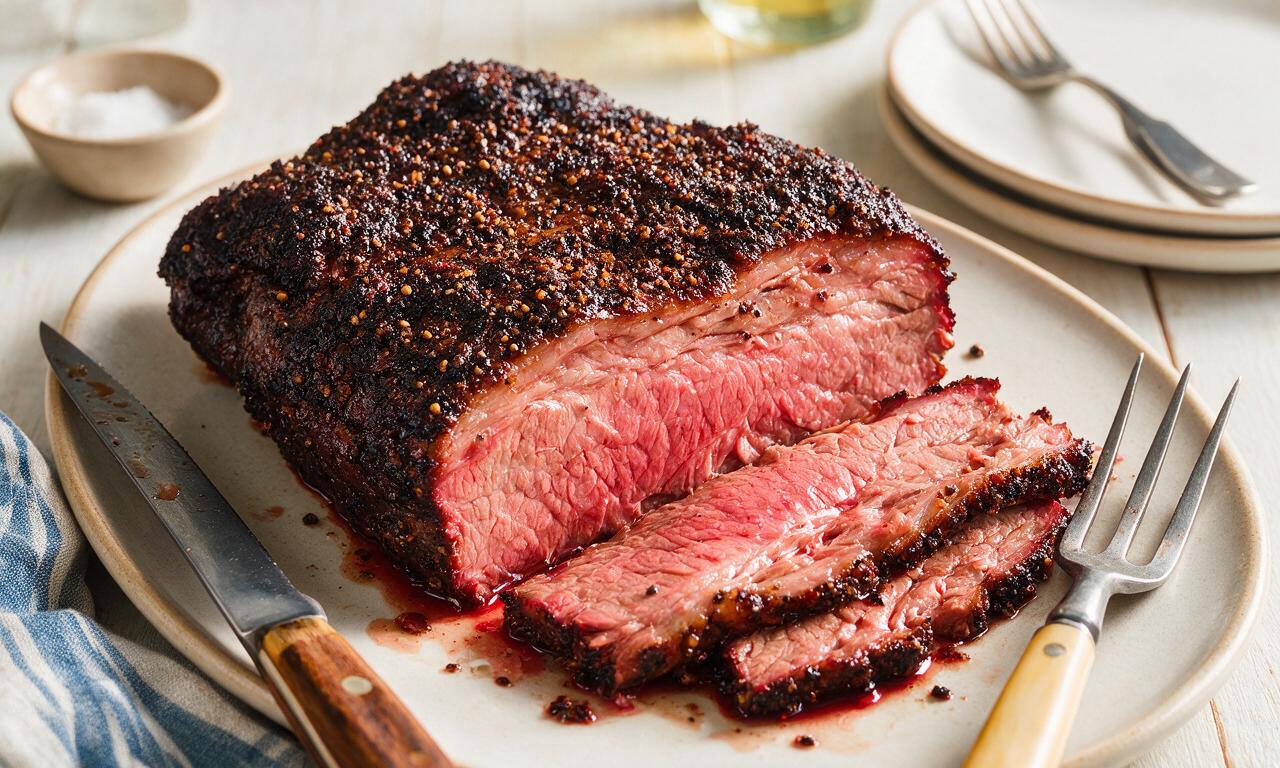
Packer Brisket

Packer Brisket
⏱️ cook time 13 hours
🍽️ servings 8
⚡ Difficulty hard

intro

Tender, juice-packed whole packer brisket with a crisp, peppery bark, slow-smoked Texas-style for pull-apart, smoky beef perfect for summer crowds.

Ingredients

Whole untrimmed packer beef brisket (point and flat muscles intact) 3.6 kg (8 lb)
Kosher salt 3 tbsp (45 g)
Coarse ground black pepper 3 tbsp (24 g)
Garlic powder 1 tbsp (9 g)
Onion powder 1 tbsp (7 g)
Smoked paprika 1 tbsp (7 g)
Yellow mustard 2 tbsp (30 ml)
Oak wood chunks 500 g (4 large chunks)
Pink butcher paper 1 x 1-meter sheet
Heavy-duty aluminum foil 1 x 60cm sheet

Steps

1

Trim the packer brisket

Place the cold 3.6kg whole packer brisket on a large stable cutting board. Use a sharp boning knife to trim hard, waxy fat from the flat end to leave a uniform 6mm (1/4 inch) thick fat cap, remove the tough silver skin from the exposed meat side, and trim loose, dangling fat pieces from the point end to create a smooth, even surface. Pat the entire brisket completely dry with paper towels after trimming, which takes approximately 15 minutes total.
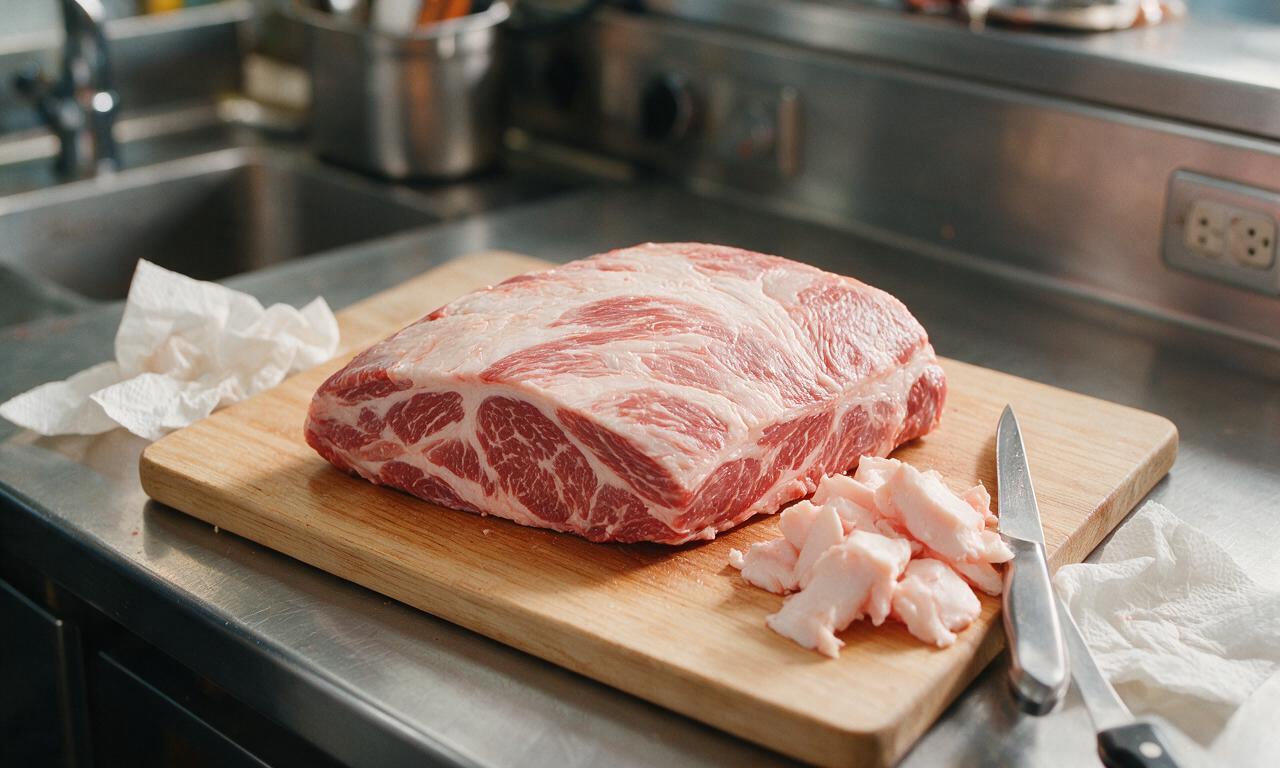
Step 1
step1:Trim the packer brisket
2

Apply seasoning rub

Stir 45g kosher salt, 24g coarse black pepper, 9g garlic powder, 7g onion powder, and 7g smoked paprika in a small mixing bowl to combine evenly. Coat the entire surface of the trimmed brisket with 30ml yellow mustard as a flavor-neutral binding agent, then sprinkle the dry rub evenly over all sides of the brisket, pressing gently to help the seasoning adhere so every surface has a thin, uniform coating. Let the rubbed brisket rest at room temperature for 45 minutes while you preheat your smoker.
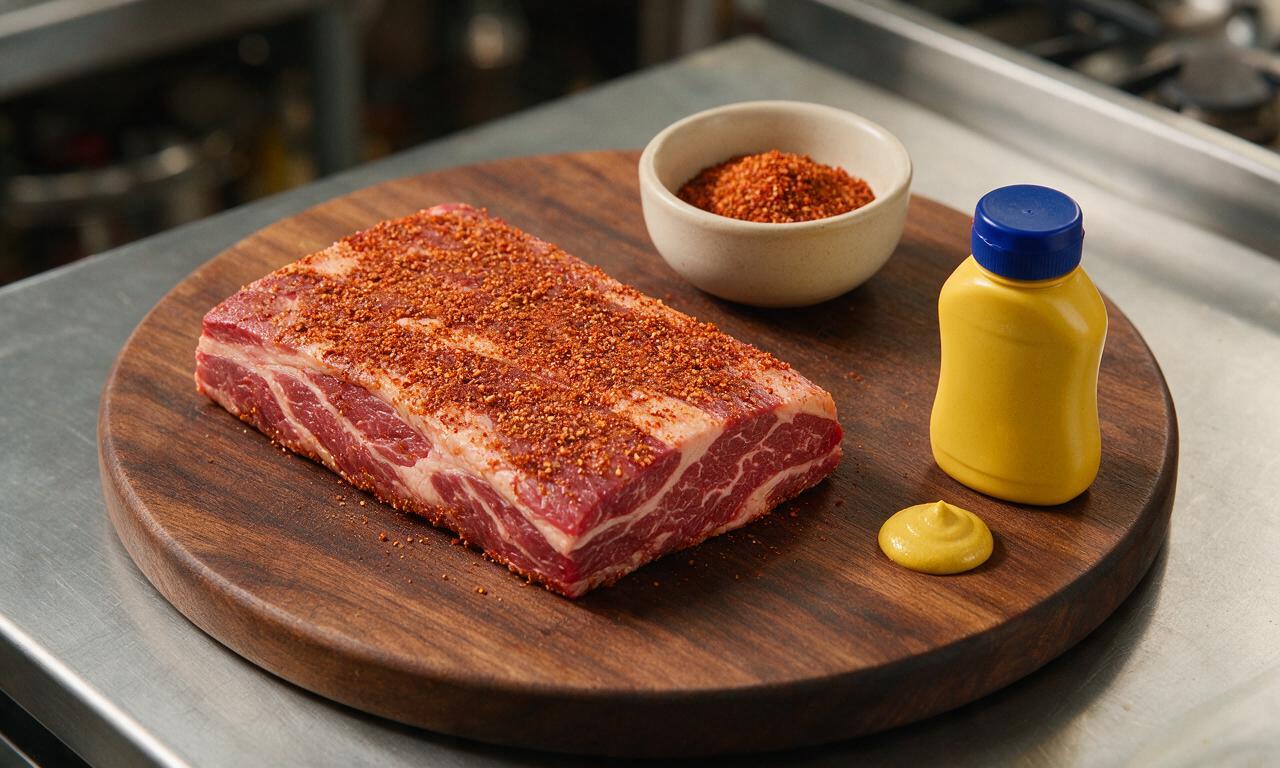
Step 2
step2:Apply seasoning rub
3

Preheat the smoker

Preheat your offset or pellet smoker to 107°C (225°F) set to indirect heat. Add 500g of oak wood chunks to the fire box once the smoker reaches target temperature, waiting until thin, wispy pale blue smoke flows from the exhaust (avoid thick, billowing white smoke, which creates bitter, ashy flavor on the meat). Place a metal water pan filled with 2L of warm tap water on the indirect heat side of the smoker to maintain a moist cooking environment.
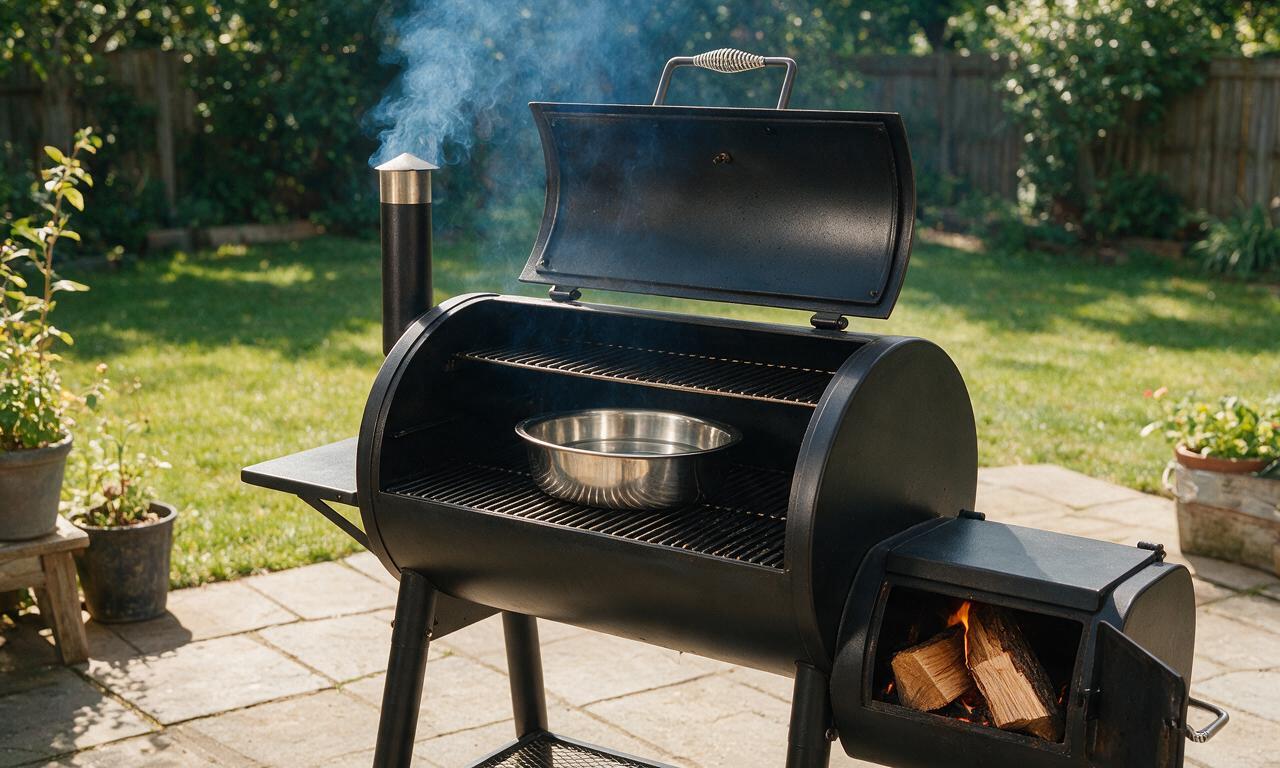
Step 3
step3:Preheat the smoker
4

Smoke through the stall

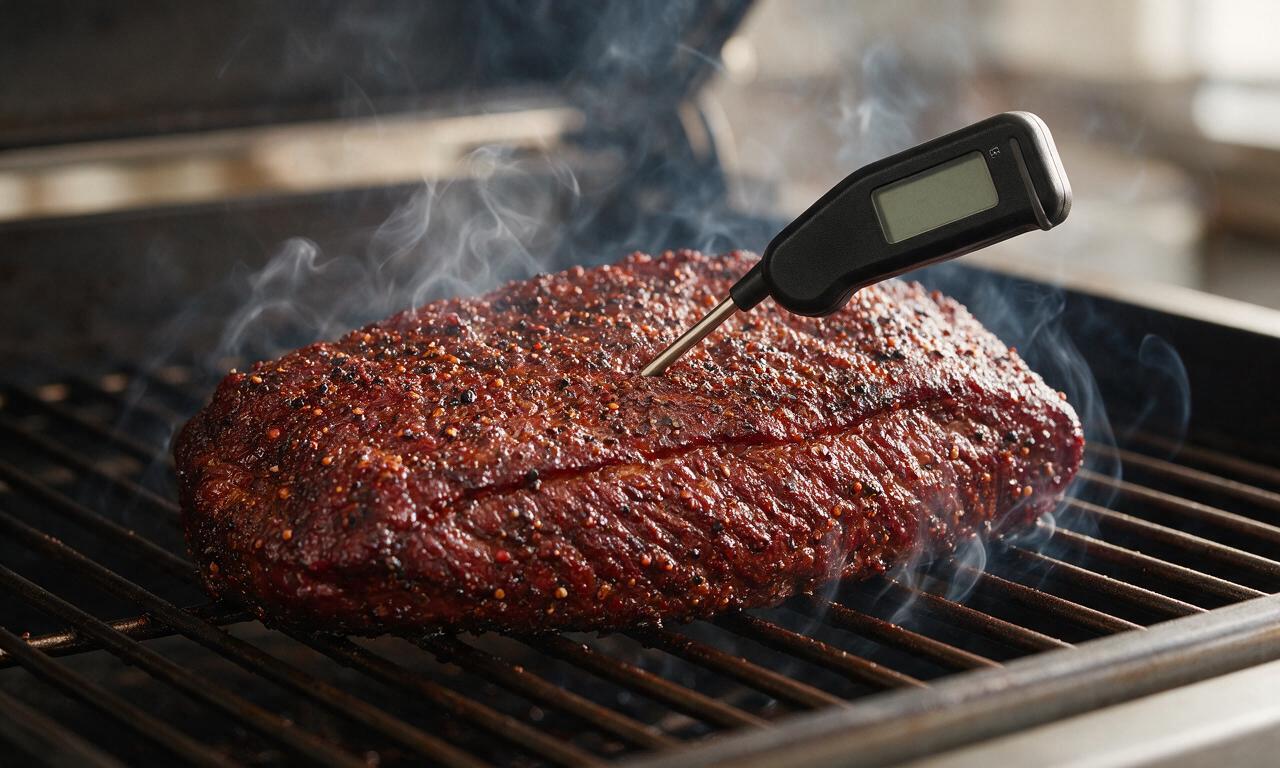
Place the seasoned brisket on the indirect heat side of the smoker grate, fat side up. Close the smoker lid and maintain a consistent internal chamber temperature of 107–121°C (225–250°F) for 6–7 hours, adding 1–2 small oak wood chunks every 2 hours to maintain steady, light smoke, until the internal temperature of the brisket's thickest point reaches 71°C (160°F), the temperature known as the 'stall' where evaporation cools the meat and stops temperature rise for several hours. Avoid opening the smoker lid unnecessarily during this period to prevent heat loss.
Step 4
step4:Smoke through the stall
5

Wrap and finish cooking

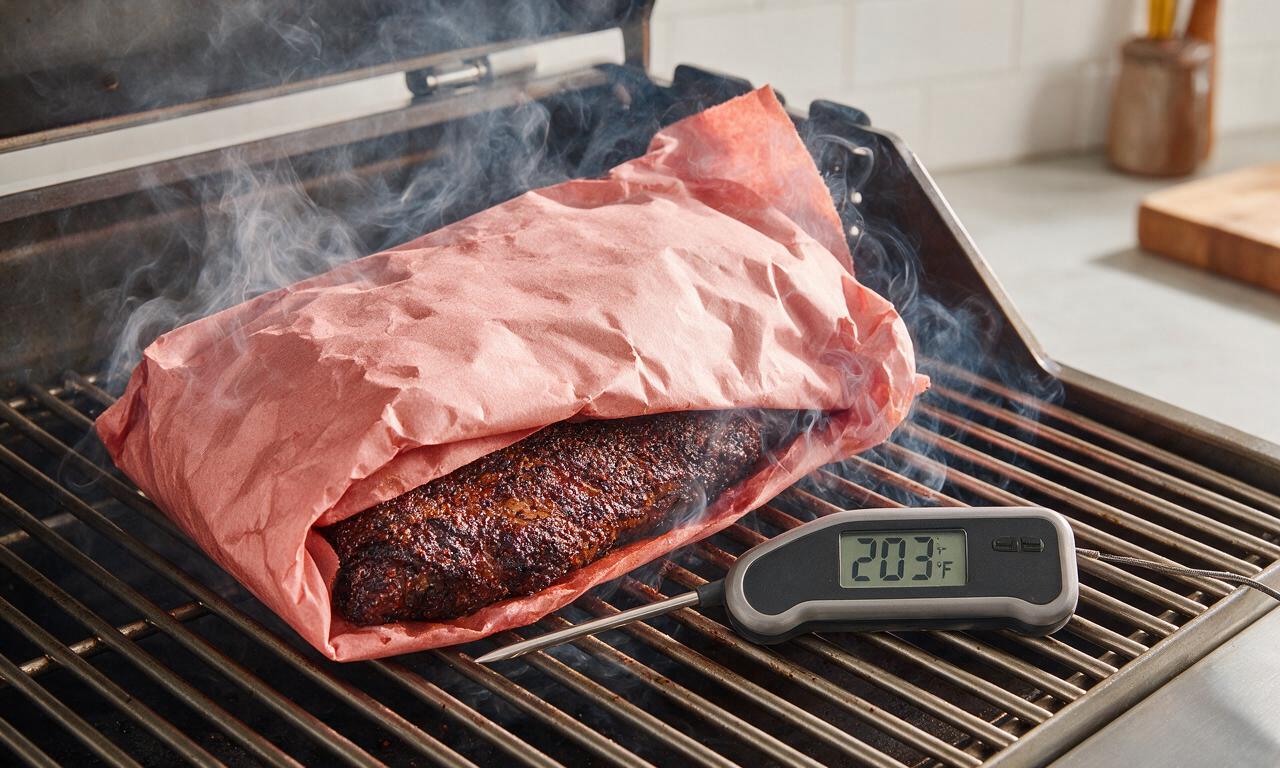
Carefully remove the brisket from the smoker once it hits 71°C (160°F) and has a deep mahogany bark, and wrap it tightly in the 1-meter sheet of pink butcher paper, folding the edges over twice to seal in steam without making the wrapping too loose. Return the wrapped brisket to the smoker, maintaining the same 107–121°C (225–250°F) indirect heat, and cook for an additional 4–5 hours until the brisket's internal temperature reaches 93–96°C (200–205°F), and a meat probe slides into the point end with zero resistance, like pushing a knife into soft room-temperature butter.
Step 5
step5:Wrap and finish cooking
6

Rest the cooked brisket

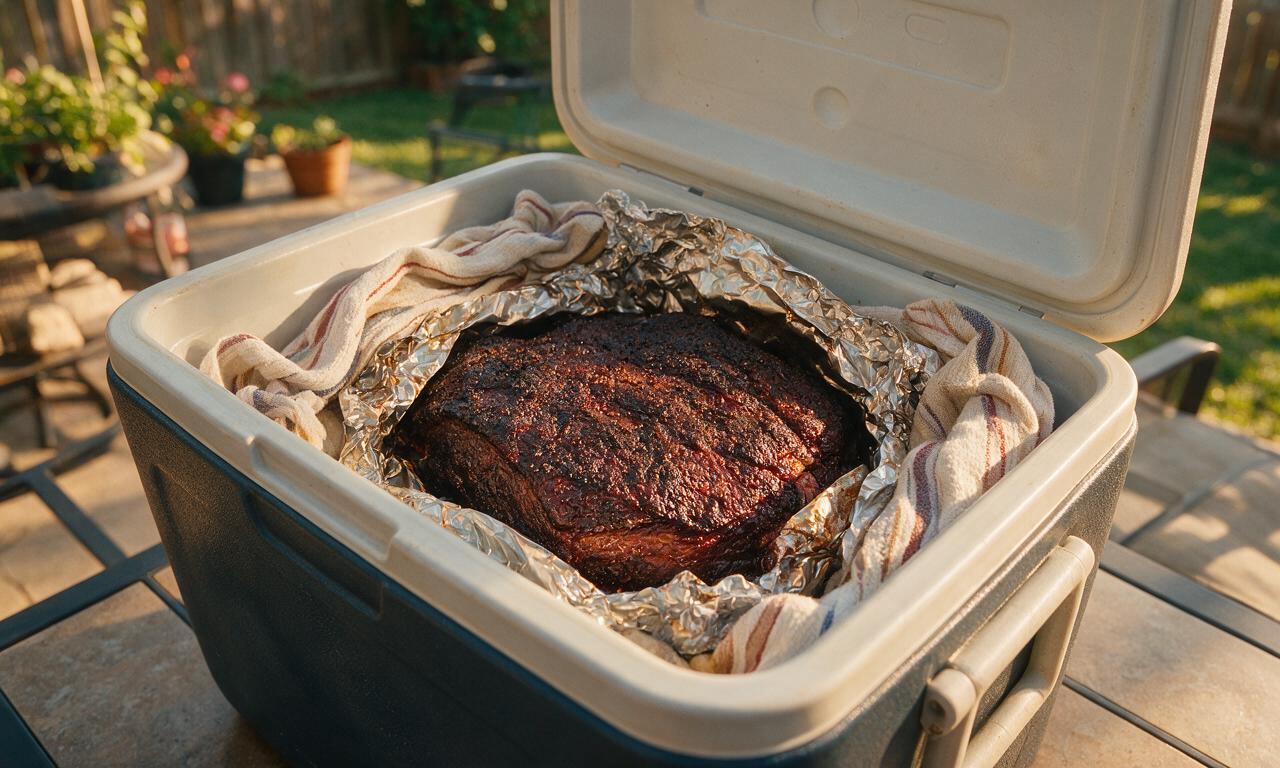
Remove the wrapped brisket from the smoker once it passes the soft butter probe test and reaches target internal temperature. Wrap the butcher paper-wrapped brisket in an additional layer of heavy-duty aluminum foil to hold heat, then place it in an insulated cooler (no ice required) with a folded kitchen towel tucked around it to retain warmth. Let the brisket rest for 1 full hour, allowing muscle fibers to relax and reabsorb juices to prevent runoff when slicing; do not skip this critical step.
Step 6
step6:Rest the cooked brisket
7

Slice against the grain

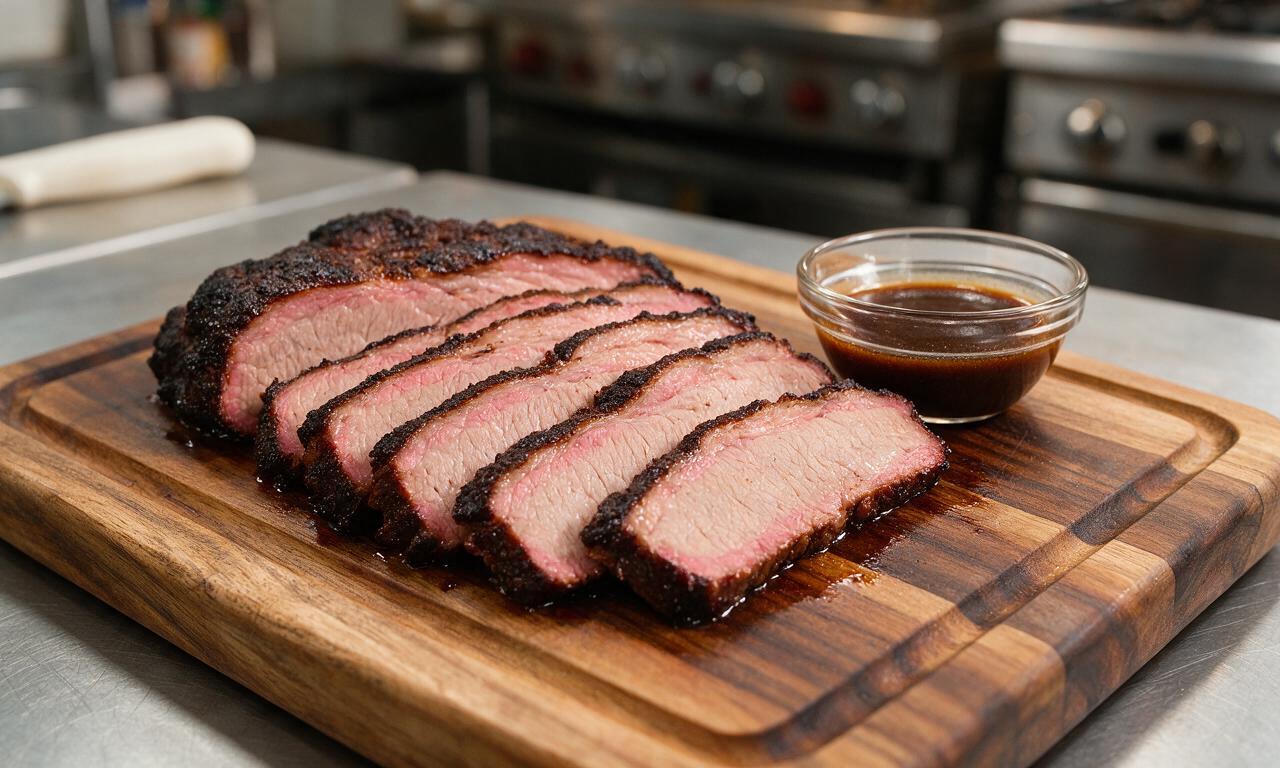
After the 1-hour rest period, unwrap the brisket, pouring any collected rendered juices into a small bowl to reserve for serving. Separate the point and flat muscle sections, noting that the grain runs in different directions on each cut. Slice the flat section across the grain into uniform 6mm (1/4 inch) thick slices, and either pull the tender point section into burnt end chunks or slice it across the grain as well. Drizzle reserved juices over the sliced meat and serve immediately.
Step 7
step7:Slice against the grain

Tips

1.Invest in a reliable leave-in digital meat thermometer to track both smoker chamber temperature and brisket internal temperature, as outdoor wind, rain, or cool air can cause unexpected heat fluctuations that ruin a long cook.
2.Trim the brisket fat cap to a uniform 6mm (1/4 inch) thickness, only removing hard, waxy fat chunks that will not render during cooking. Leaving too much fat leads to rubbery bark, while trimming too close leads to dry, tough meat.
3.Wait to wrap the brisket until it develops a deep mahogany, almost dark brown bark at 71°C (160°F). Wrapping too early will steam the delicate bark and prevent the crisp, flavorful crust that defines great Texas smoked brisket.
✨ You May Also Like

BBQ & Grilling
🍜 United States

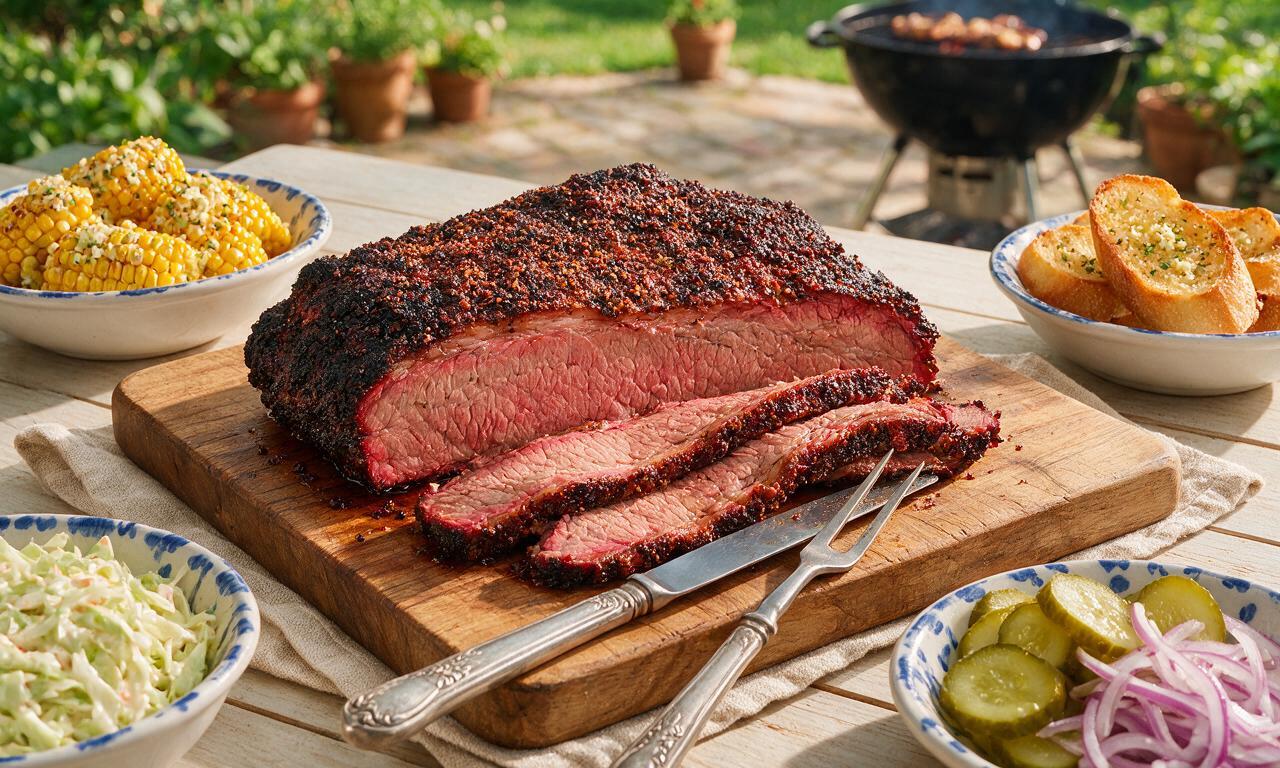
Tender, melt-in-your-mouth beef brisket with a crisp, spiced bark, slow-smoked to deep smoky perfection, the iconic centerpiece of Texas backyard barbecue.

⏱️ 12 hours BBQ & Grilling ★ 4.7
BBQ & Grilling
🍜 Korea

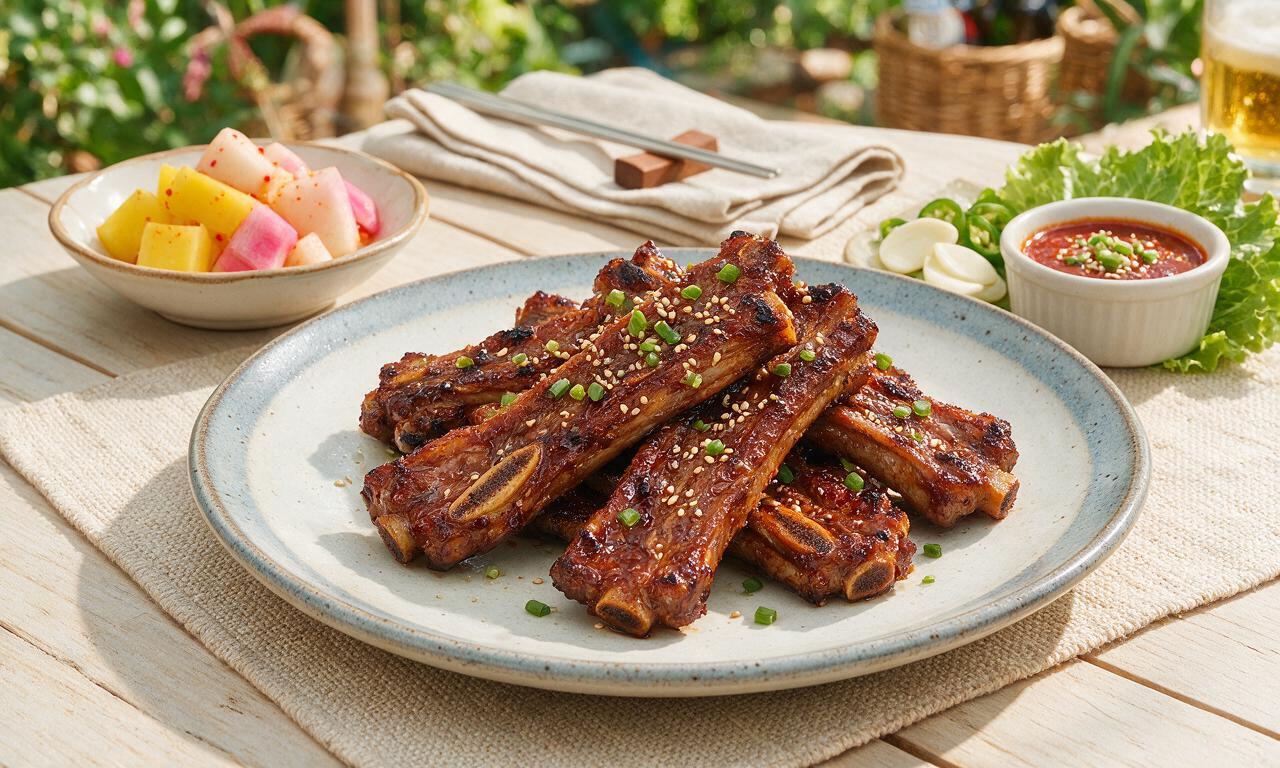
Tender, sweet-savory marinated beef short ribs, a beloved Korean BBQ staple with caramelized, slightly charred edges and deep umami flavor, perfect for outdoor summer gatherings.

⏱️ 4 hours 2BBQ & Grilling ★ 4.7
BBQ & Grilling
🍜 United States

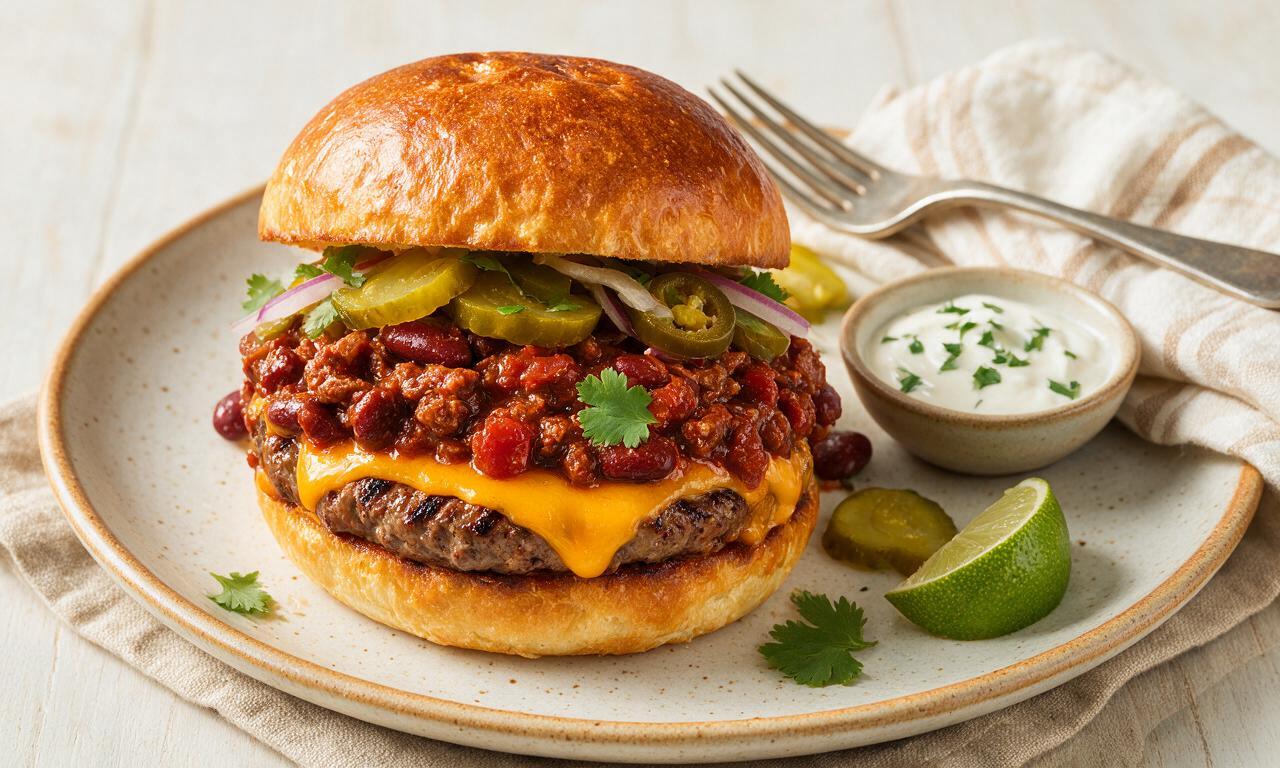
Juicy grilled beef patties topped with smoky homemade chili, melted cheddar, and tangy pickles on toasted brioche buns for a hearty, flavor-packed handheld meal.

⏱️ 40 minuteBBQ & Grilling ★ 4.9
BBQ & Grilling
🍜 United States

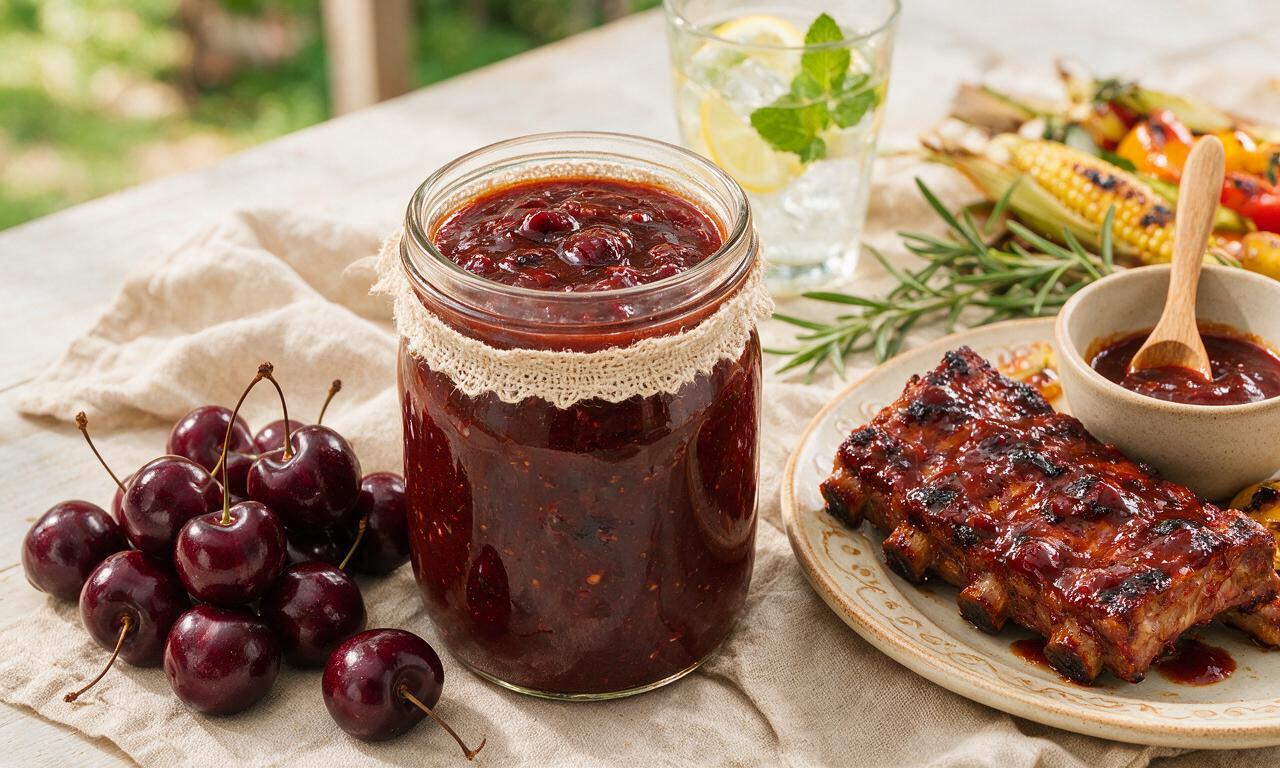
A sweet, smoky, tangy BBQ sauce brightened with peak-season dark cherries, ideal for glazing grilled ribs, chicken, pork, or summer roasted veggies.

⏱️ 35 minuteBBQ & Grilling ★ 5
BBQ & Grilling
🍜 United States

Rich, smoky, slightly sweet homemade bourbon BBQ sauce with deep caramel notes, ideal for glazing grilled ribs, chicken, and burgers at cookouts.

⏱️ 25 minuteBBQ & Grilling ★ 4.8
BBQ & Grilling
🍜 United States

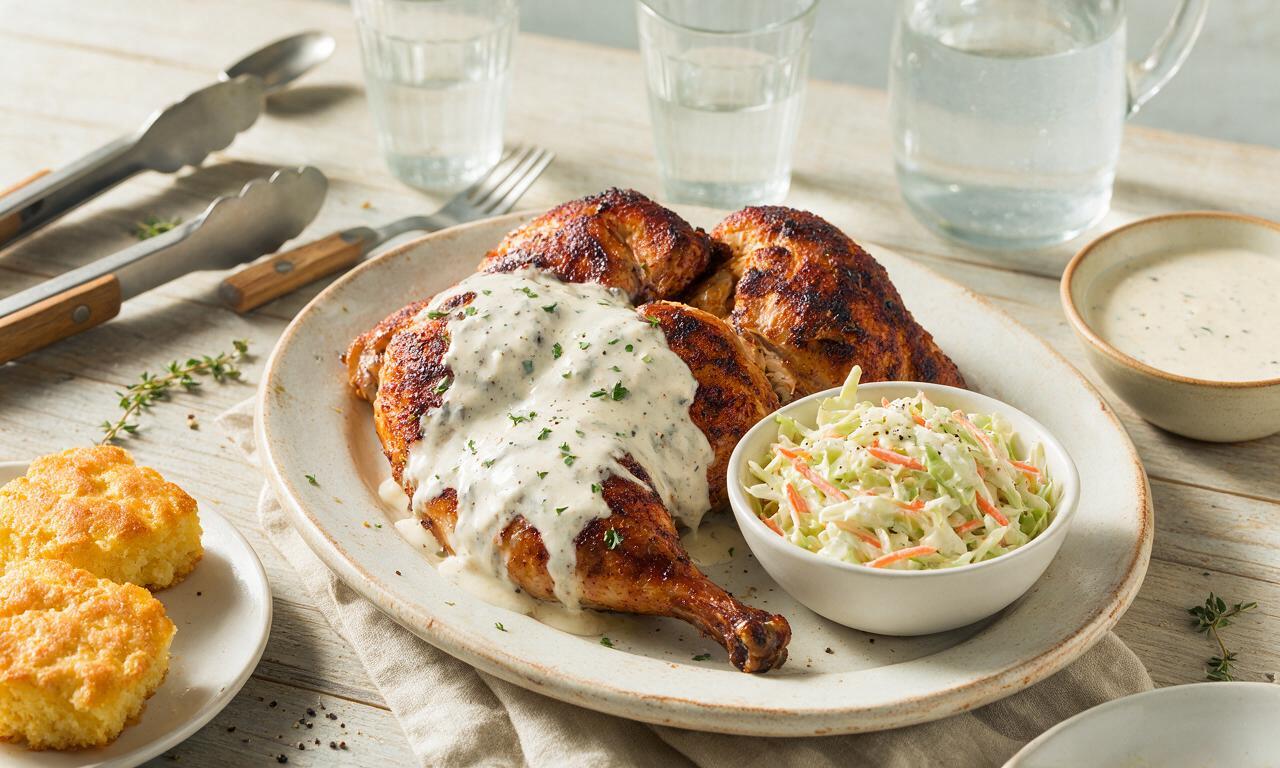
Iconic Alabama-style BBQ featuring tender hickory-smoked chicken slathered in tangy creamy white sauce, a beloved regional Southern cookout staple.

⏱️ 3 hoursBBQ & Grilling ★ 4.6

Packer Brisket:Frequently Asked Questions

1.What exactly is a packer brisket, and how is it different from a pre-trimmed brisket flat?
A packer brisket is the whole, untrimmed beef brisket cut, including both the thick, heavily marbled point muscle and the leaner, wider flat muscle, with its natural fat cap intact (usually 12–18 lbs). Unlike pre-trimmed flats that easily dry out during long smokes, the intact fat and dual muscles deliver the classic tender, juicy Texas brisket texture.
2.Why does this recipe only use salt, pepper, garlic powder, and onion powder for seasoning?
That simple blend is classic Central Texas brisket rub, no fancy sugary mixes required. The coarse black pepper and kosher salt build that iconic crisp, peppery bark, while light doses of garlic and onion powder add subtle savoriness without overpowering the deep, smoky beef flavor that makes Texas brisket famous.
3.What size packer brisket should I buy to feed a summer crowd?
Plan for ½ pound of raw brisket per guest, since the cut loses roughly 40% of its weight from fat render and moisture loss during the long smoke. A 12–14 lb untrimmed packer feeds 12–15 people, while a 16–18 lb packer works for groups of 18–22, with a little extra for leftover sandwiches.
4.How much fat should I trim off the brisket before applying seasoning?
Trim the thick, hard outer fat cap down to a uniform ¼-inch thickness across the flat—this lets smoke and seasoning penetrate while leaving enough fat to baste the meat as it renders. Remove any loose, waxy fat chunks from the point and underside of the flat, since those won’t render and leave chewy, unappetizing spots.
5.What type of wood gives the most authentic Texas-style brisket flavor?
Post oak is the traditional Central Texas choice, with a mellow, earthy smoke that complements beef without overpowering it. If post oak is hard to source, a mix of 75% oak and 25% hickory works beautifully; skip sweet, fruity woods like apple or cherry here, as they’re too mild for that bold, classic Texas profile.
6.What smoker temperature should I maintain for the entire cook?
Hold a consistent smoker temperature between 225°F and 250°F for the full cook. This low, steady heat slowly breaks down the brisket’s tough connective tissue without drying out the meat. Resist the urge to crank the heat to speed things up; higher temps lead to tight, dry brisket even if it hits a target internal temp early.
7.When is the brisket actually done, and why shouldn’t I only rely on a 195°F temperature target?
While 195°F to 205°F is the general internal temp range, never pull your brisket based on temperature alone. Poke the thickest part of the point and flat with a meat probe—if it slides in like soft butter with zero resistance, it’s done. Probe tenderness is far more reliable than a fixed number for perfect pull-apart texture.
8.What is the brisket “stall,” and how should I handle it?
The stall happens when the brisket hits 150°F to 170°F internal, when evaporating moisture cools the meat so its temperature plateaus for 3–6 hours. You can either hold steady and let it push through naturally, or wrap it tight in uncoated butcher paper at 160°F to cut stall time faster without soggy bark.
9.Do I need to spritz my brisket while it smokes?
Spritzing is totally optional for this recipe. If you prefer, spritz with a 50/50 mix of apple cider vinegar and water every 90 minutes once the brisket hits 160°F to help build bark, but don’t overdo it. Too much spritz washes off seasoning and turns that crisp peppery bark soft, so feel free to skip it for a low-effort cook.
10.Why do pitmasters use butcher paper instead of aluminum foil to wrap brisket?
Uncoated pink butcher paper is breathable, so it lets a small amount of smoke reach the meat while trapping enough moisture to push through the stall, keeping your bark crisp. Foil creates a fully sealed, steamy environment that cuts stall time faster, but it softens bark and gives the meat a pot-roast-like texture instead of smoky brisket.
11.How long should I expect a whole packer brisket to take to smoke at 225°F?
Plan for roughly 1 to 1.5 hours per pound of raw brisket at 225°F, so a 14 lb packer will take 14 to 21 hours total, including stall time. Don’t schedule your cook rigidly by the clock, though—brisket is done when it’s probe-tender, and wind, smoker consistency, and marbling can shift total cook time significantly.
12.Do I really need to rest the brisket after smoking, and how long is long enough?
Resting is non-negotiable for juicy brisket. Once it’s done, wrap it in a clean layer of butcher paper (if it’s not already wrapped) and tuck it into an insulated cooler for a minimum of 1 hour, up to 4 hours. This lets muscle fibers relax and reabsorb rendered moisture instead of it running out onto your cutting board when you slice.
13.What’s the correct way to slice brisket to keep every bite tender?
First, separate the point from the flat by following the natural fat seam between the two muscles. Slice the flat against the grain into uniform ¼-inch thick slices—this cuts through long, tough muscle fibers for tender bites. The point can be sliced a little thicker, or chopped for burnt ends, always cut against the grain for best texture.
14.My last brisket came out really dry—what common mistakes cause that?
Dry brisket usually traces back to one of three missteps: cooking at too high a temperature, pulling it before connective tissue fully broke down, or skipping the long rest. Next time, hold a steady 225–250°F, wait for that butter-like probe tenderness instead of pulling at a set temp, and rest for a full hour in a cooler to lock in juice.
15.Why was my brisket bark soft and rubbery instead of crisp, and how do I fix that?
Soft bark usually comes from too much moisture during the cook, whether that’s over-spritzing, wrapping too early in foil, or overfilling your smoker’s water pan. Next time, wait to wrap until bark is fully set (dark, firm to the touch at 160°F), use butcher paper instead of foil, and go light on spritzes to keep that peppery crust crisp.
16.Can I make this brisket on a regular charcoal grill if I don’t have a dedicated smoker?
Absolutely! Set your charcoal grill up for indirect heat by piling lit coals on one side, and place the brisket on the opposite cool side. Add wood chunks to the coals for smoke, hold temps at 225–250°F by adjusting the vents, and follow all the same seasoning, wrap, rest, and slicing steps for great Texas-style results.
17.Do I need to use a water pan in my smoker for this brisket recipe?
A water pan is optional, but it can help stabilize smoker temperature and add a small amount of ambient moisture to prevent the brisket’s outer edges from drying out during the long cook. If you use one, fill it with plain hot water—skip adding juice, beer, or aromatics, as those add unwanted flavor that competes with the rub and smoke.
18.How should I store leftover brisket, and how long will it stay good?
Let leftover brisket cool completely, then wrap it tightly in plastic wrap or vacuum seal it, and store it in the fridge for up to 4 days, or in the freezer for up to 3 months. When reheating, wrap it in foil with a tiny splash of beef broth and warm it low in a 275°F oven to 145°F internal to keep it juicy.
19.Can I turn the brisket point into burnt ends with this simple seasoning blend?
Definitely! Once the whole brisket hits 195°F, pull it out, separate the point, cut it into 1-inch cubes, toss with a light extra sprinkle of the salt-pepper-garlic-onion rub (no sugary sauce needed for Texas style), and put the cubes back on the smoker for 45–60 minutes until crispy-edged and jammy-tender for perfect burnt ends.

Comments (3)

2 days ago

OMG y’all, I was SO nervous to tackle my first packer brisket after ruining two smaller ones last summer, but this recipe was an absolute game changer! 13 hours on my offset smoker holding steady at 225°F, wrapped in uncoated butcher paper when it hit the stall around 165°, and it came out juicier than any brisket I’ve paid $25 a pound for at my local BBQ joint. Served it for my husband’s birthday cookout, and even my super picky teen nephew went back for thirds. 10/10 will be making this for every family potluck from now on!

yesterday

Quick question—did you trim the hard fat cap all the way down to 1/4 inch like the recipe says? I always leave too much fat on and mine comes out rubbery and chewy, trying to decide if I should commit to this cook for my college football tailgate next month.

2 hours ago

That’s such a great question! Trimming to that uniform 1/4 inch fat cap is key for even fat rendering as it smokes—don’t skip that step, and be sure to let the brisket rest a full hour wrapped in towels in a cooler after pulling it off the heat to lock in every last drop of juice. You’ve totally got this for the tailgate!

1 week ago

This brisket is SO good, but holy cow that 13 hour cook time is no joke! I had to set my alarm twice overnight to check the smoker temp, which was brutal after a long work week, but the end result was totally worth it. I sliced up half for our Sunday family dinner—my two kids devoured three slices each, no complaints!—and chopped the rest to portion out and freeze for quick weeknight sandwiches and loaded brisket nachos. Only reason I’m not giving a full 5 stars is I wish the guide had a little more troubleshooting for when your smoker runs 25-30 degrees hot for the first hour, I totally panicked thinking I ruined the whole thing!

5 days ago

Thanks so much for the honest feedback, Jess! We’re actually updating the recipe next week to add a whole section on common smoker temperature swing troubleshooting, so that note is super helpful. So glad your kids loved it—that’s the best win we can ask for! That chopped brisket frozen for quick nachos and sandwiches is exactly the kind of smart meal prep we love to hear about, hope it makes your busy weeknights a little easier.

30 minutes ago

First time ever nailing a Texas-style brisket without it turning into dry, tough shoe leather! I followed the simple rub ratio exactly—no sugary fancy sauce, just coarse salt, black pepper, and a little garlic powder like the recipe says—and let the post oak smoke do all the work. My roommates are already begging me to make this again for our next Seahawks watch party this weekend. Can’t believe I waited this long to try a full packer cut, I thought it was way too advanced for a casual backyard griller like me but the step-by-step instructions made it totally approachable. SO good.