
pepper corn sauce
intro
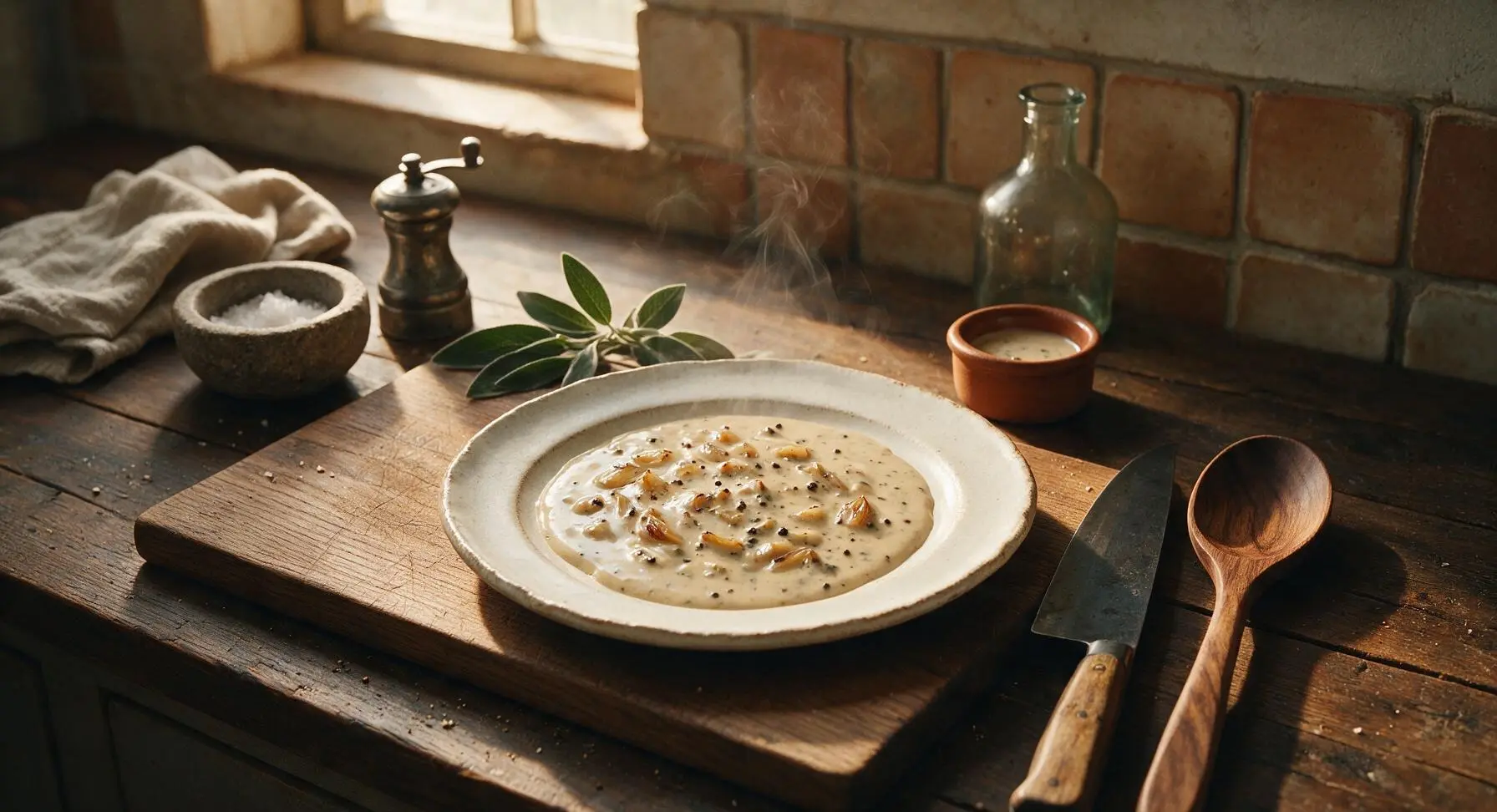
Velvety, aromatic peppercorn sauce with bright cracked pepper heat, warm shallot depth, and a glossy cream finish—perfect for draping over seared steak, roasted chicken, or crispy roasted potatoes.
Ingredients
Steps
Crack Whole Peppercorns
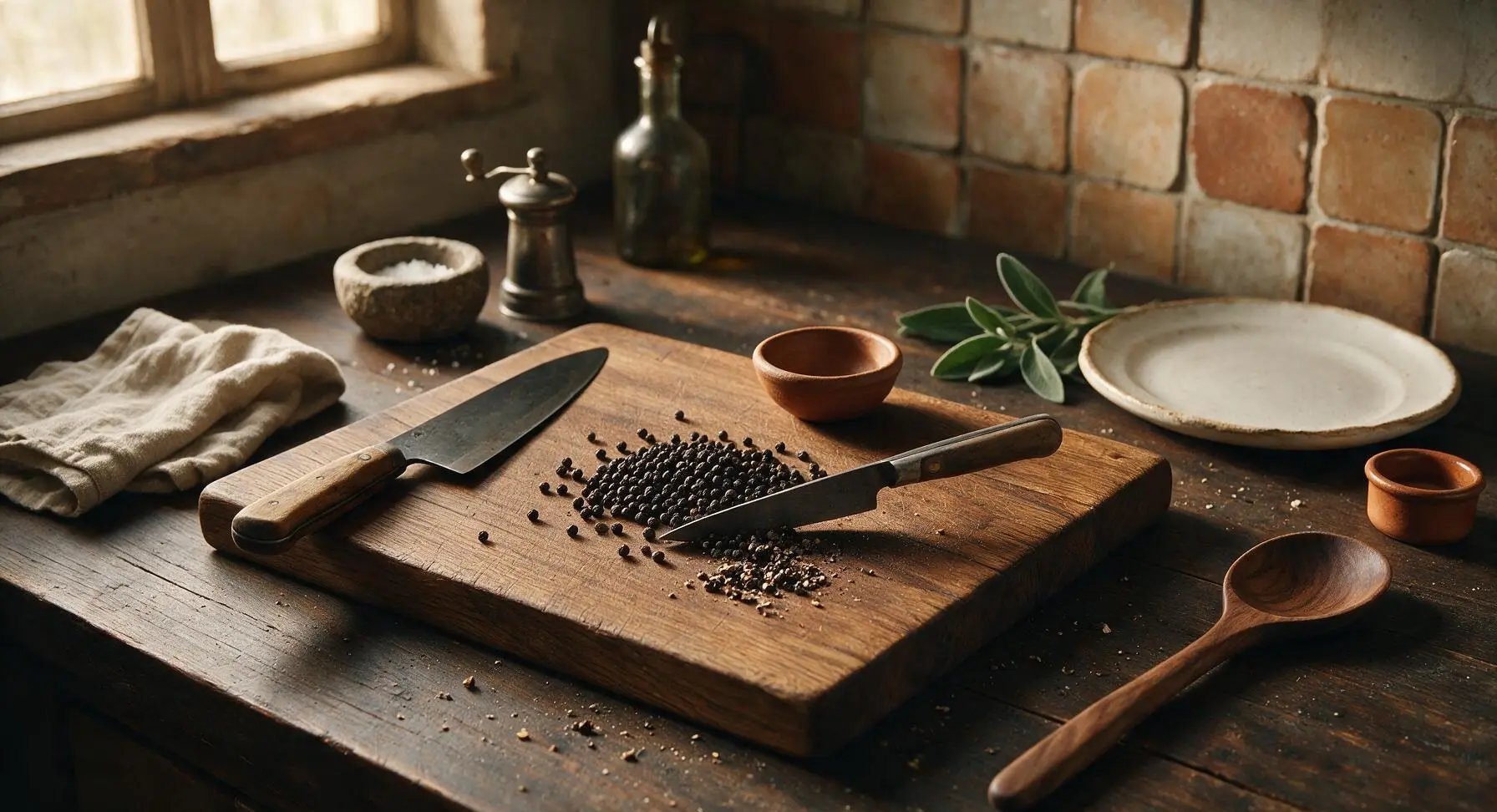
Place 2 tablespoons whole black peppercorns on the center of the maple cutting board. Using the flat side of the paring knife, press firmly to crack the peppercorns into coarse, uneven pieces—do not grind them to a fine powder, as varied texture is key to the sauce. Set cracked peppercorns aside in one terracotta prep bowl. This takes about 2 minutes, and you should end up with a mix of fine pepper dust and larger 2-3mm cracked pieces.
Prep Aromatic Ingredients
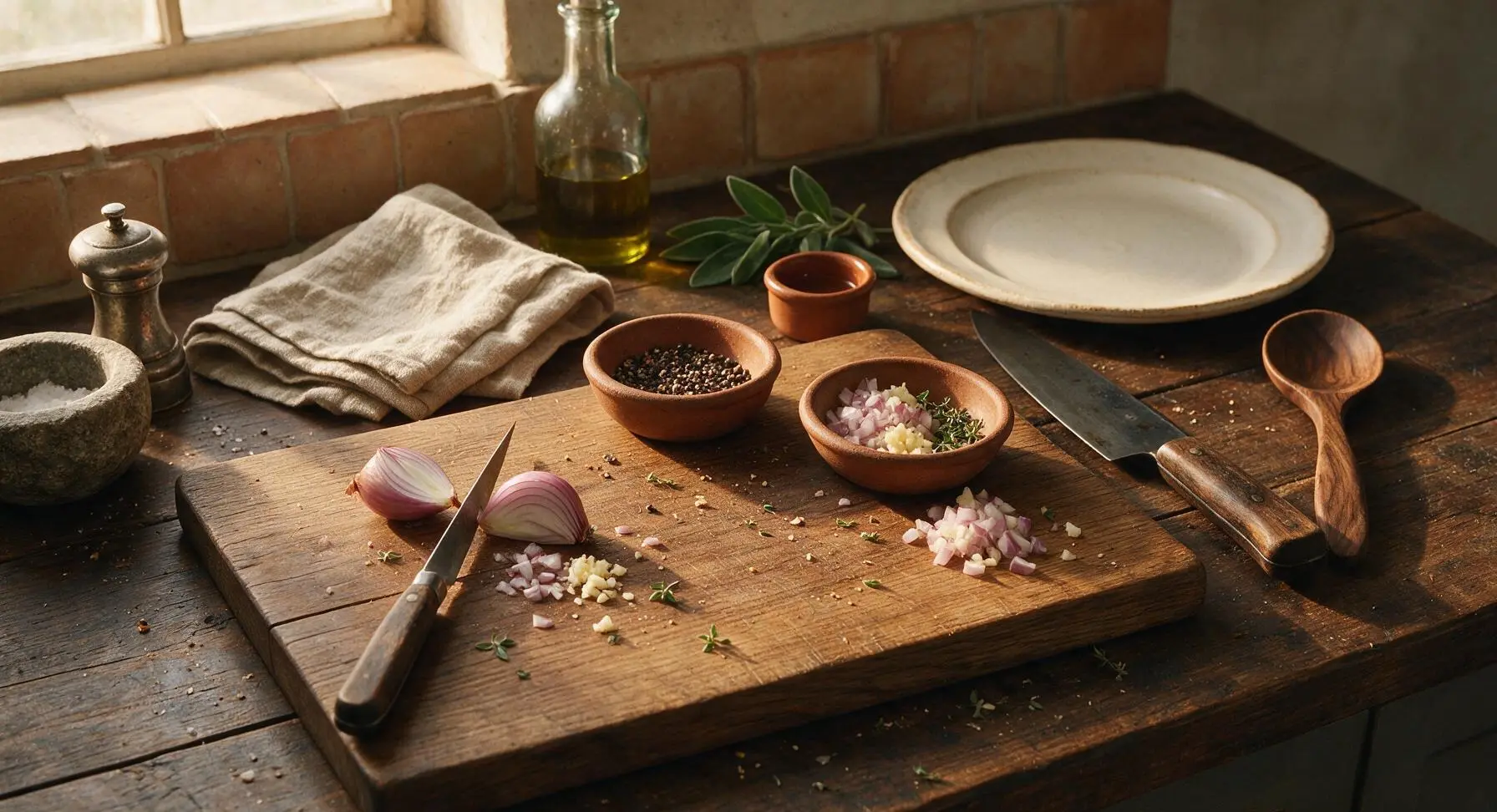
Use the paring knife to finely dice the large shallot into 3mm pieces, and mince the single garlic clove. Pick leaves from 1 sprig of fresh thyme, leaving the second sprig whole. Place diced shallot, minced garlic, and picked thyme leaves in the second terracotta prep bowl. Brush any stray peppercorn pieces from the cutting board into the cracked pepper bowl as you work, taking 3-4 minutes total.
Sauté Aromatic Base
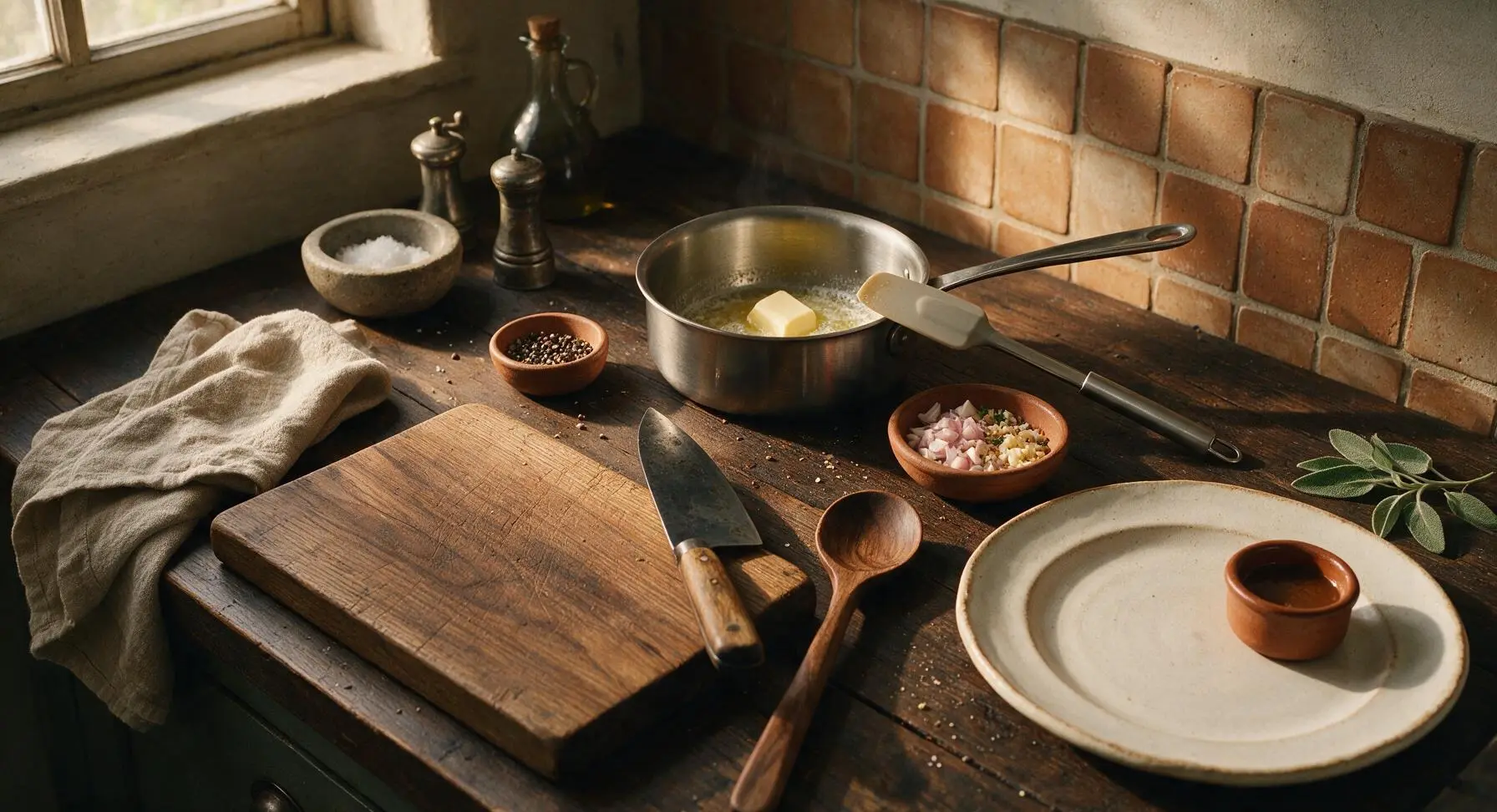
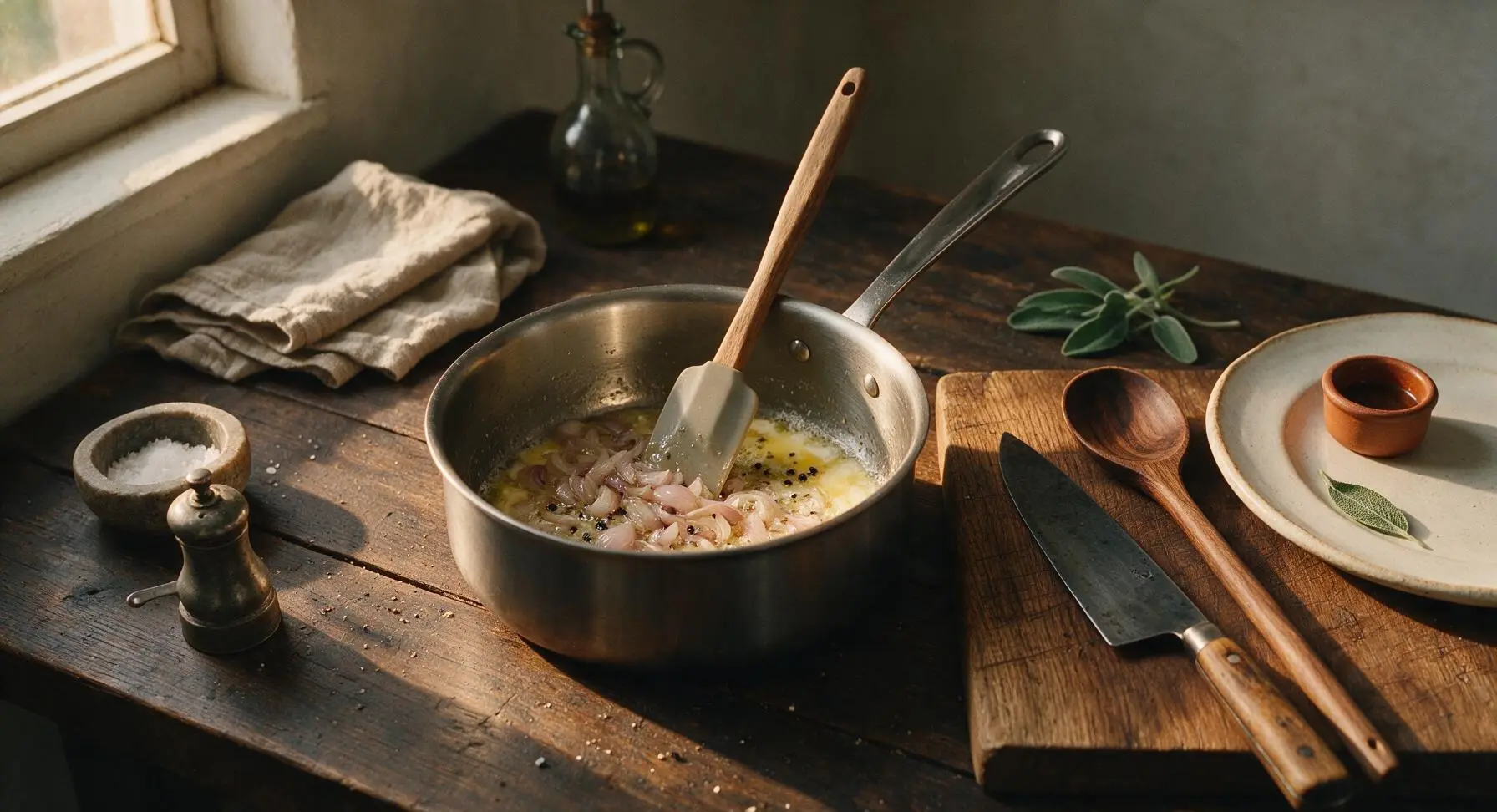
Place the heavy-bottomed stainless steel saucepan in its fixed center-back counter position, and heat over medium heat. Add 1 tablespoon unsalted butter. Once butter is fully melted and foaming subsides (about 1 minute, 350°F pan temperature), add the diced shallot, minced garlic, and cracked peppercorns. Sauté for 2 minutes, stirring occasionally with the silicone spatula, until shallots are soft and translucent, with no golden browning. The peppercorns will release a warm, spicy, woody aroma as they toast gently in the butter.
Deglaze with Cognac
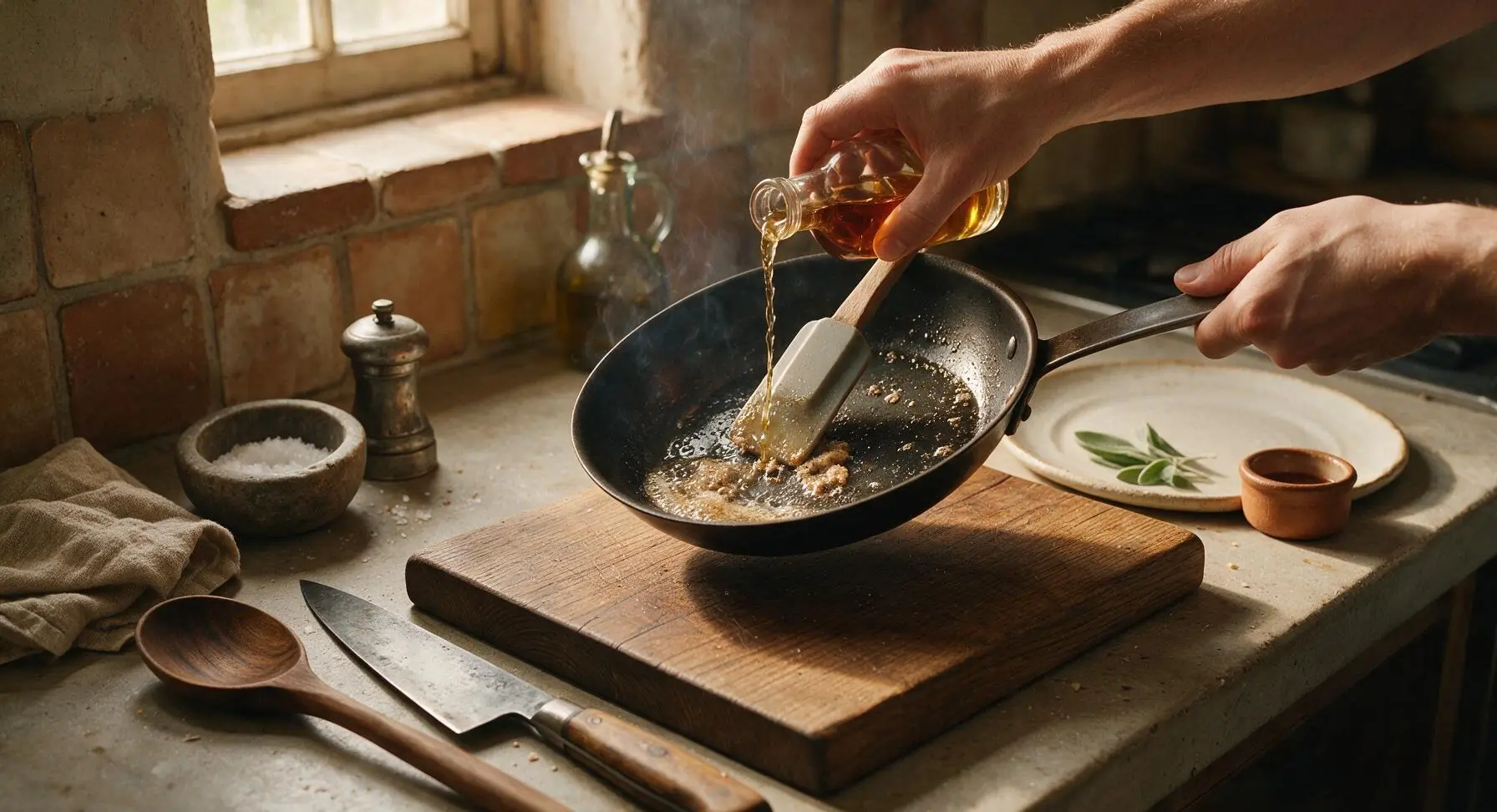
Turn heat up slightly to medium-high. Carefully pour 3 tablespoons cognac into the pan, standing back slightly as the alcohol may flambé briefly. Use the silicone spatula to scrape up any light browned bits (fond) from the bottom of the pan. Simmer for 2 minutes, until the cognac is reduced by about two-thirds, leaving only a thin, syrupy coating on the pan bottom. The sharp alcohol smell will mellow into a warm, fruity aroma as it reduces.
Simmer Sauce Base
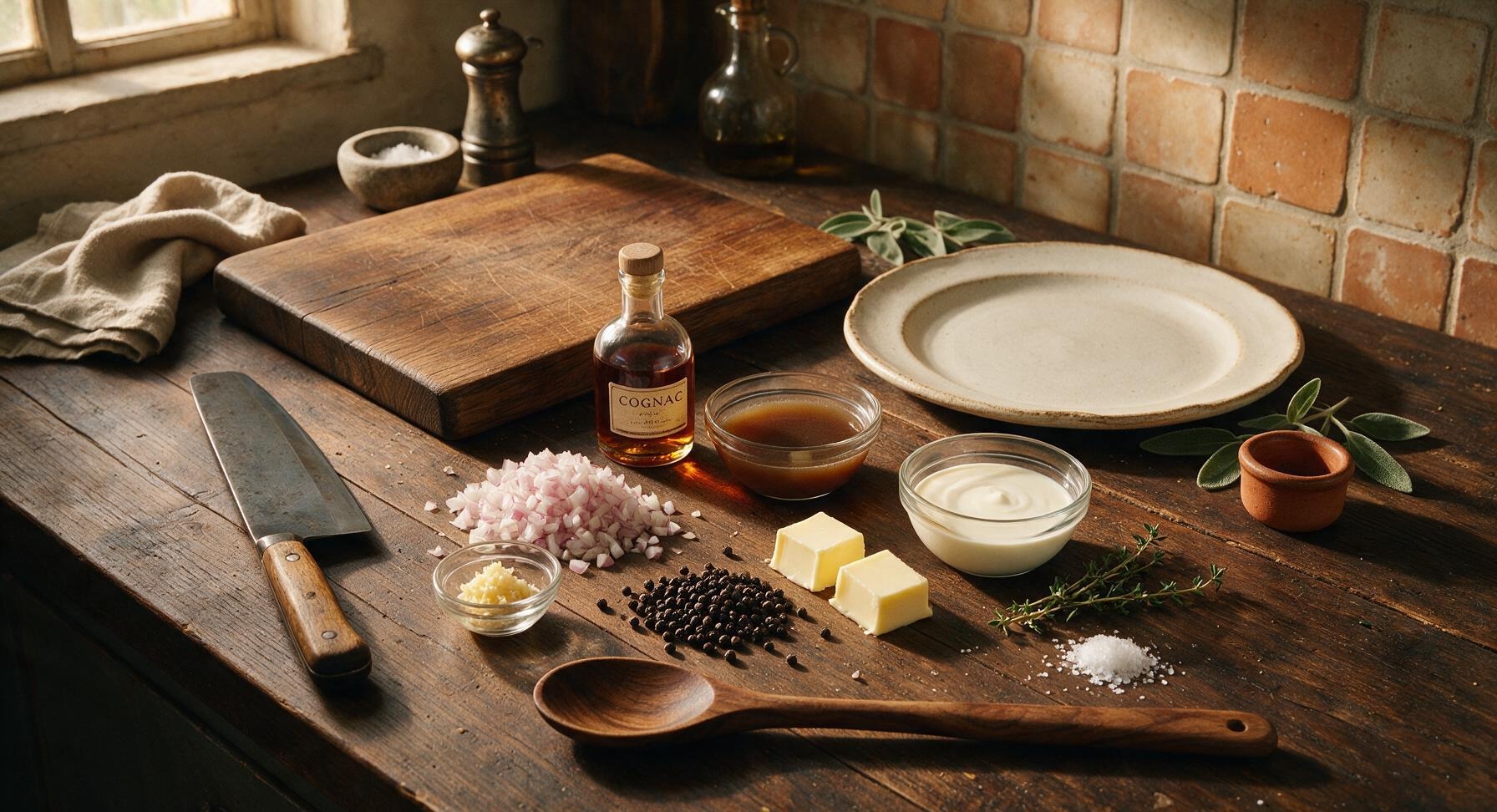
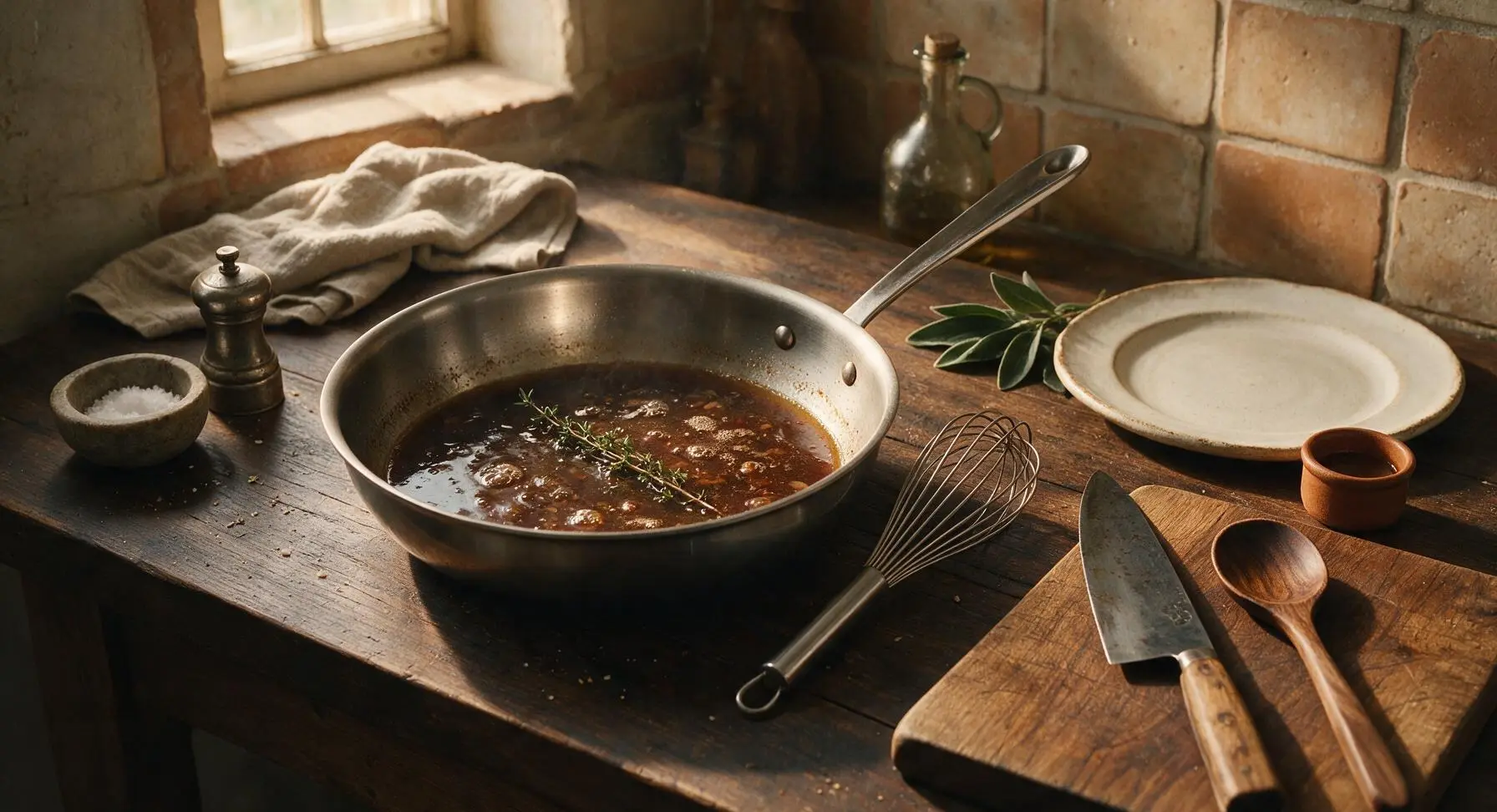
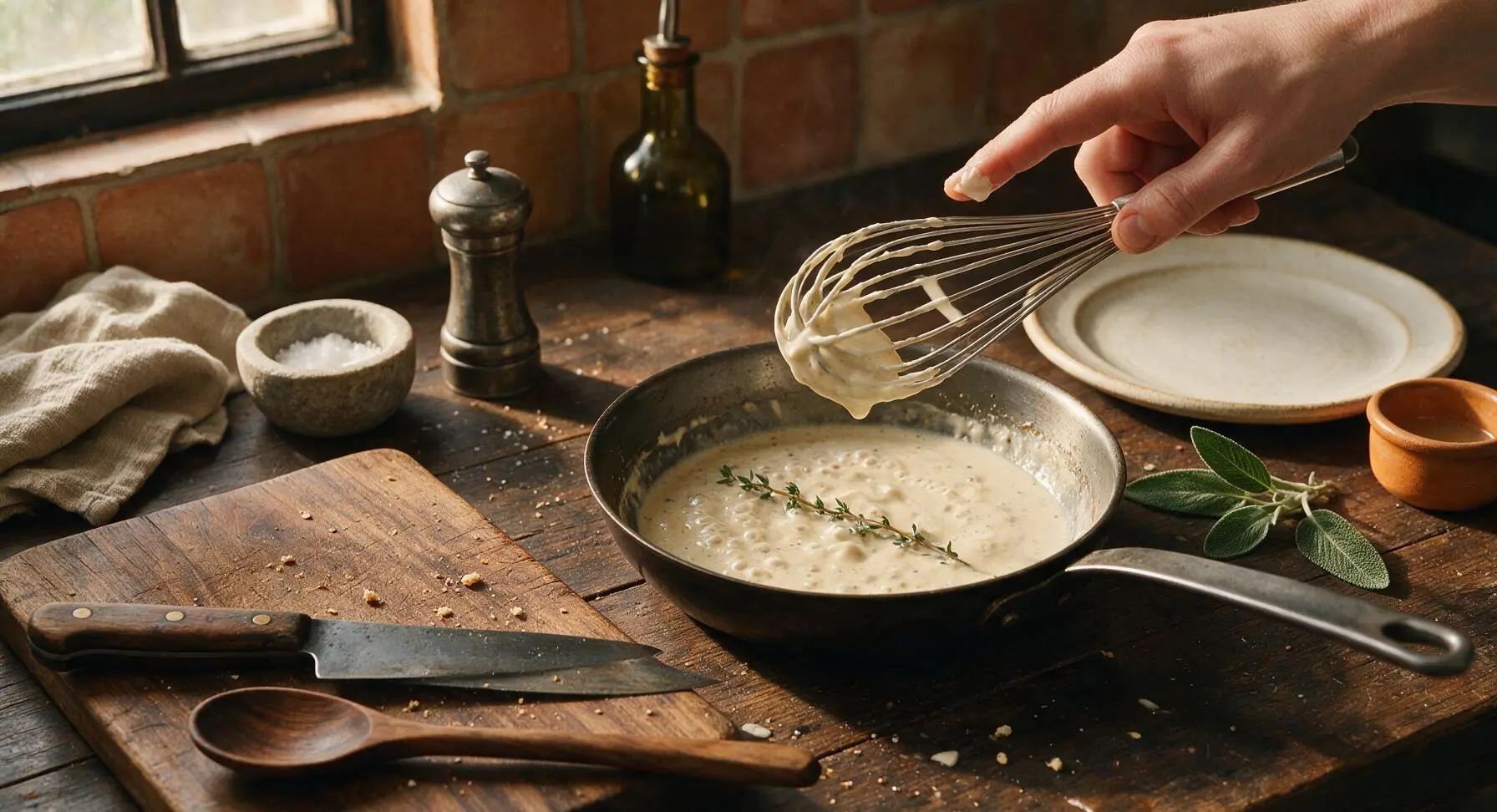
Pour 1/2 cup low-sodium beef broth and the whole sprig of thyme into the pan. Bring to a gentle simmer, then reduce heat to medium-low to maintain a slow, rolling bubble for 5 minutes, allowing the broth to reduce by half. Stir in 3/4 cup heavy whipping cream, return to a gentle simmer, and cook for 4-5 minutes more, stirring occasionally with the stainless steel whisk, until the sauce thickens enough to coat the back of the whisk (when you run your finger across the coated whisk, the line should hold cleanly without sauce running to fill the gap).
Strain and Season Sauce
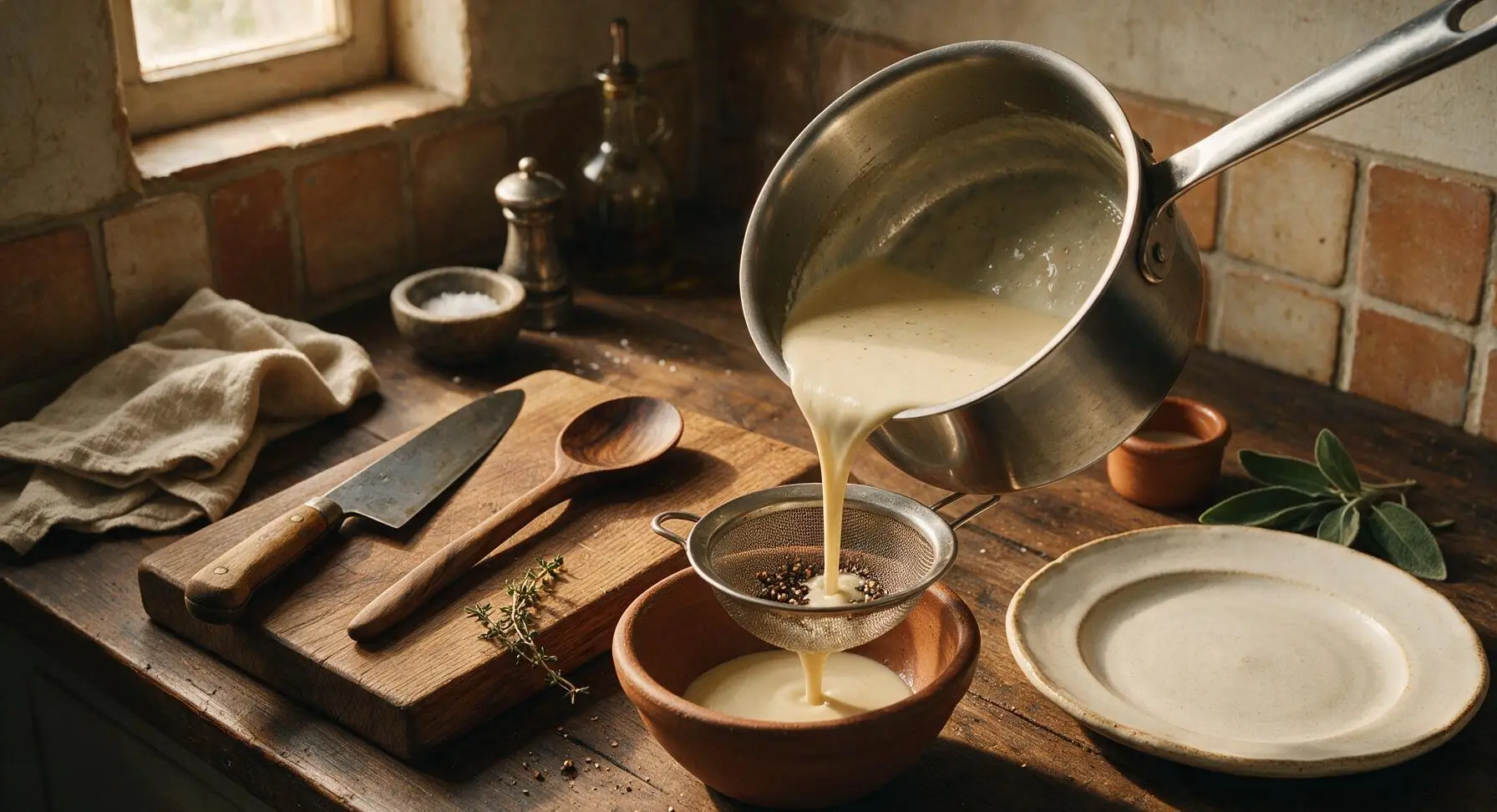
Remove the pan from heat. Fish out the whole thyme sprig with the silicone spatula and discard. For a silky texture, pour the sauce through the fine-mesh stainless steel strainer into the third clean terracotta prep bowl, pressing gently on the solids to extract all peppery flavor. For a more rustic, textured sauce, skip straining entirely. Stir 1/2 teaspoon flaky sea salt into the strained sauce, taste, and add a pinch more salt if needed. If the sauce is too thick, stir in 1 tablespoon extra beef broth to thin; if too thin, return to low heat for 1 minute to reduce further.
Mount with Cold Butter
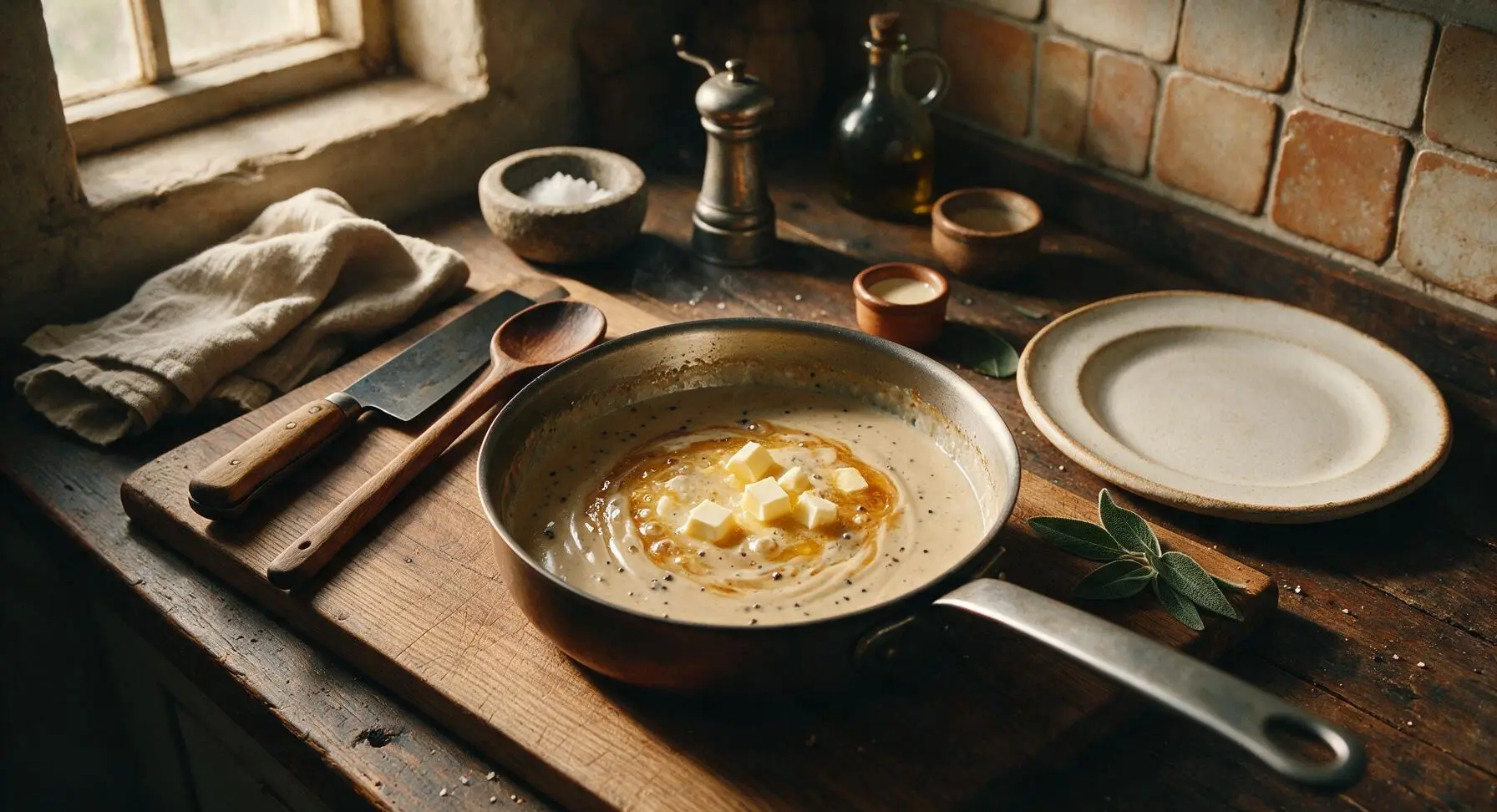
Return the strained sauce to the warm, off-heat saucepan. Add the remaining 1 tablespoon of cold unsalted butter, cut into small 1cm cubes, swirling the pan gently as the butter melts to create a glossy, emulsified finish. Do not return the pan to high heat or boil the sauce after adding butter, as this can cause the emulsion to break and leave a greasy, separated surface. Once butter is fully incorporated, pour the finished sauce into the ivory ceramic sauce boat for serving.
Tips
2.For a non-alcoholic version, replace cognac with 3 tablespoons extra beef broth plus 1 teaspoon aged balsamic vinegar: this replicates the deep, fruity, slightly tangy depth cognac adds, without any alcohol content. Skip any flambé step if using this substitution.
3.Always add the final butter off heat, using cold butter cut into small cubes: adding cold butter to a boiling sauce will cause milk solids to separate from the fat, leaving a greasy, broken sauce instead of the silky, glossy emulsion that makes this sauce feel luxurious.


OMG this peppercorn sauce is a total game changer for our weeknight steak dinners! I threw it together in 15 minutes flat after work yesterday, no fancy hard-to-find ingredients needed, and even my super picky 10 year old asked for extra to pour over his mashed potatoes. 10/10 will be making this every time we do steak night from now on.
Super easy recipe, but I had a quick question — can I make this ahead of time for meal prep and reheat it later in the week? I tried a different peppercorn sauce last month that got all grainy when I microwaved it, don't wanna waste ingredients lol.
Made this for our neighborhood potluck last weekend to go with sliced tri-tip, and people were literally hovering around the platter asking who made the sauce! SO good, I added just a tiny extra splash of heavy cream because I like mine a little richer, and it turned out perfect.
Wait, I've never made a pan sauce before — is this supposed to be thick like gravy, or thinner? I think I might have cooked mine a little too long because it got super thick and pasty when I added the peppercorns 😅