Pork Belly Burnt Ends

title 1
Pork Belly Burnt Ends
⏱️ cook time 3 hours 30 minutes
🍽️ servings 4
⚡ Difficulty medium

intro

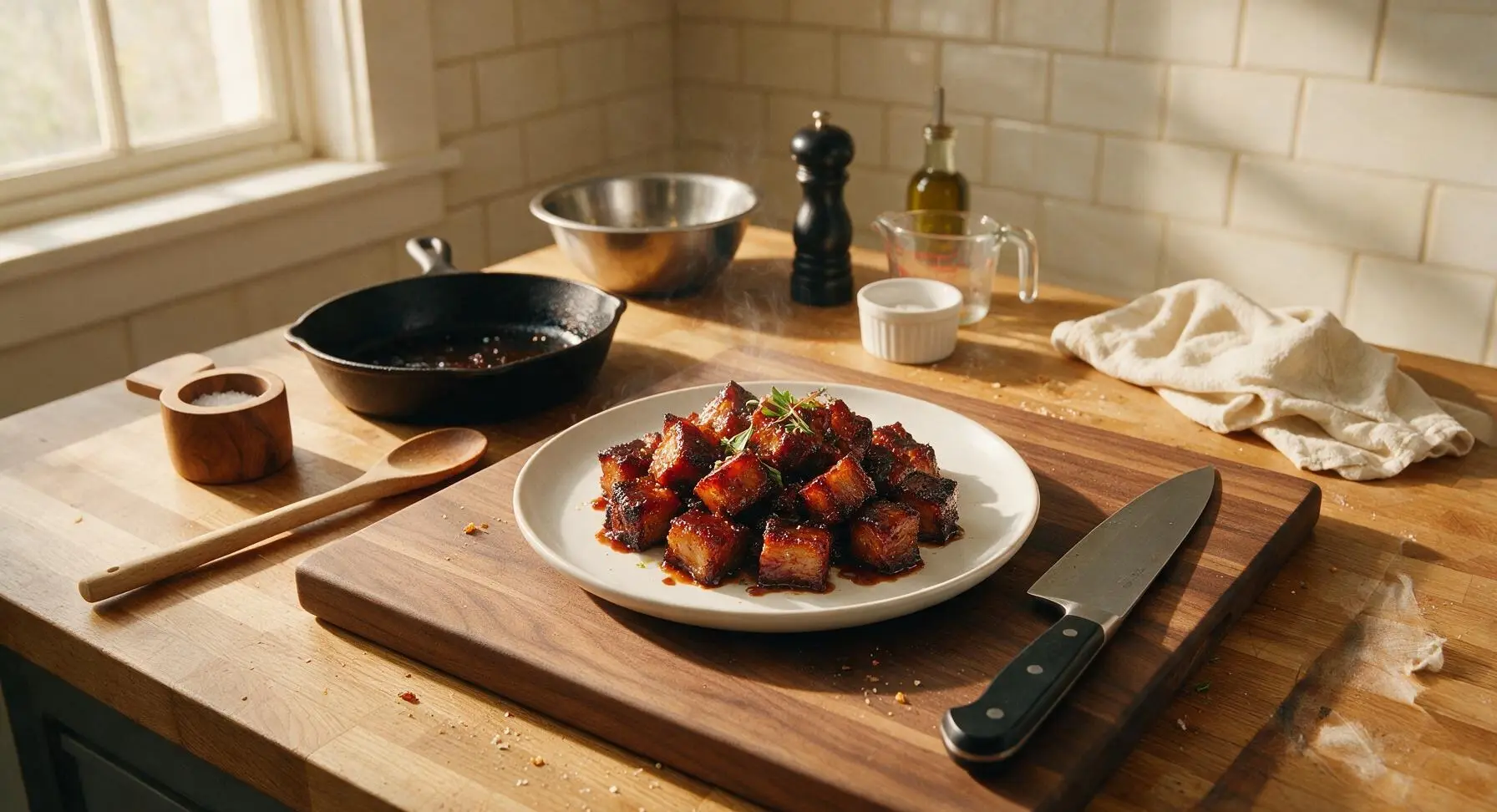
Sticky, caramelized cubes of smoked pork belly coated in sweet-savory BBQ sauce, with crisp bark and melt-in-your-mouth tender center: iconic Kansas City BBQ comfort food.

Ingredients
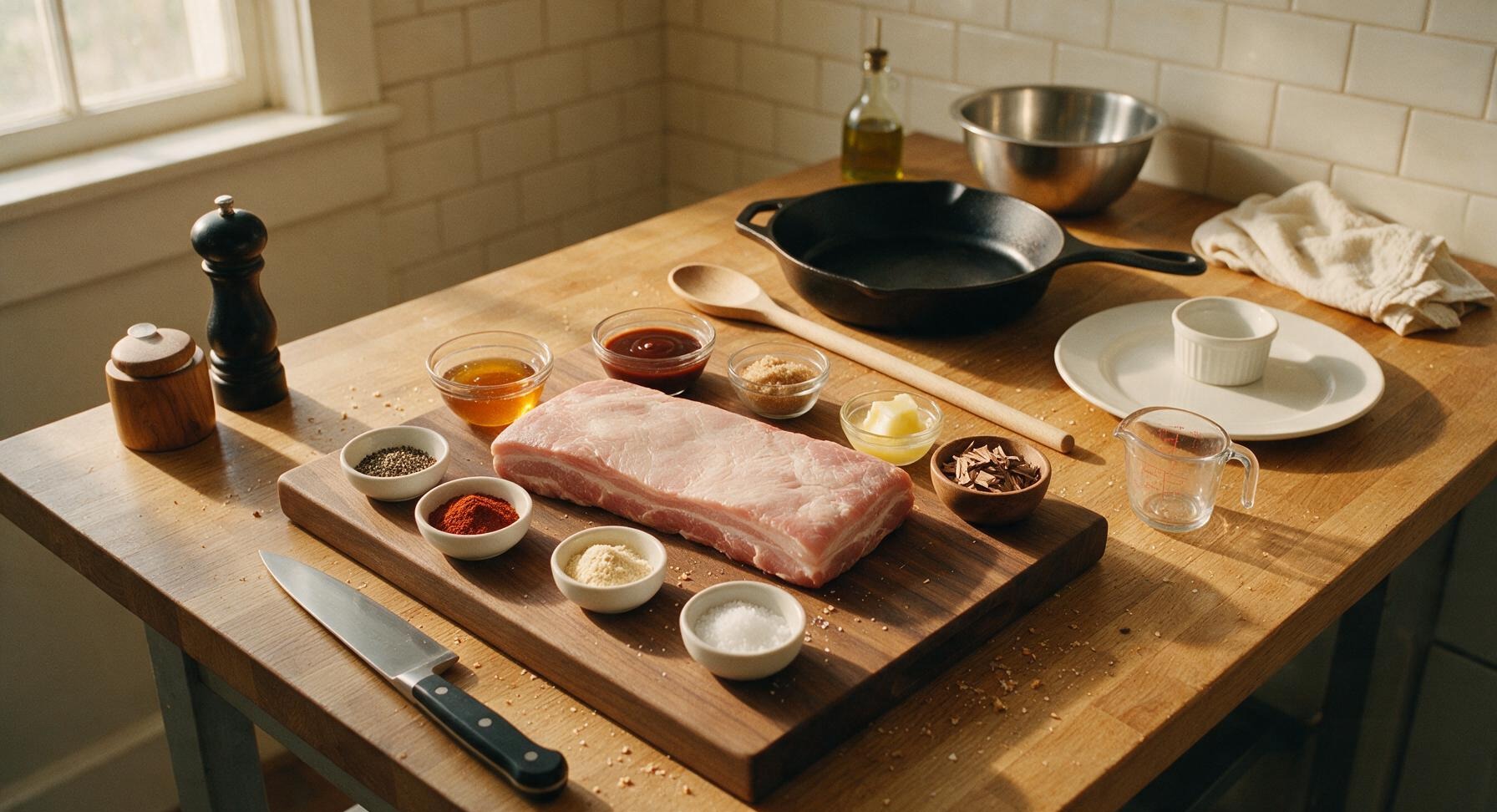
Skinless pork belly 1kg (2.2 lbs)
Kosher salt 1.5 tbsp
Coarse ground black pepper 1 tbsp
Smoked paprika 1 tbsp
Garlic powder 1 tsp
Light brown sugar 2 tbsp
Unsalted butter 56g (4 tbsp / 1 stick)
Raw honey 2 tbsp
Kansas City-style BBQ sauce 180ml (3/4 cup)
Hickory wood chips (for smoking) 2 cups

Steps

1

Trim Pork Belly

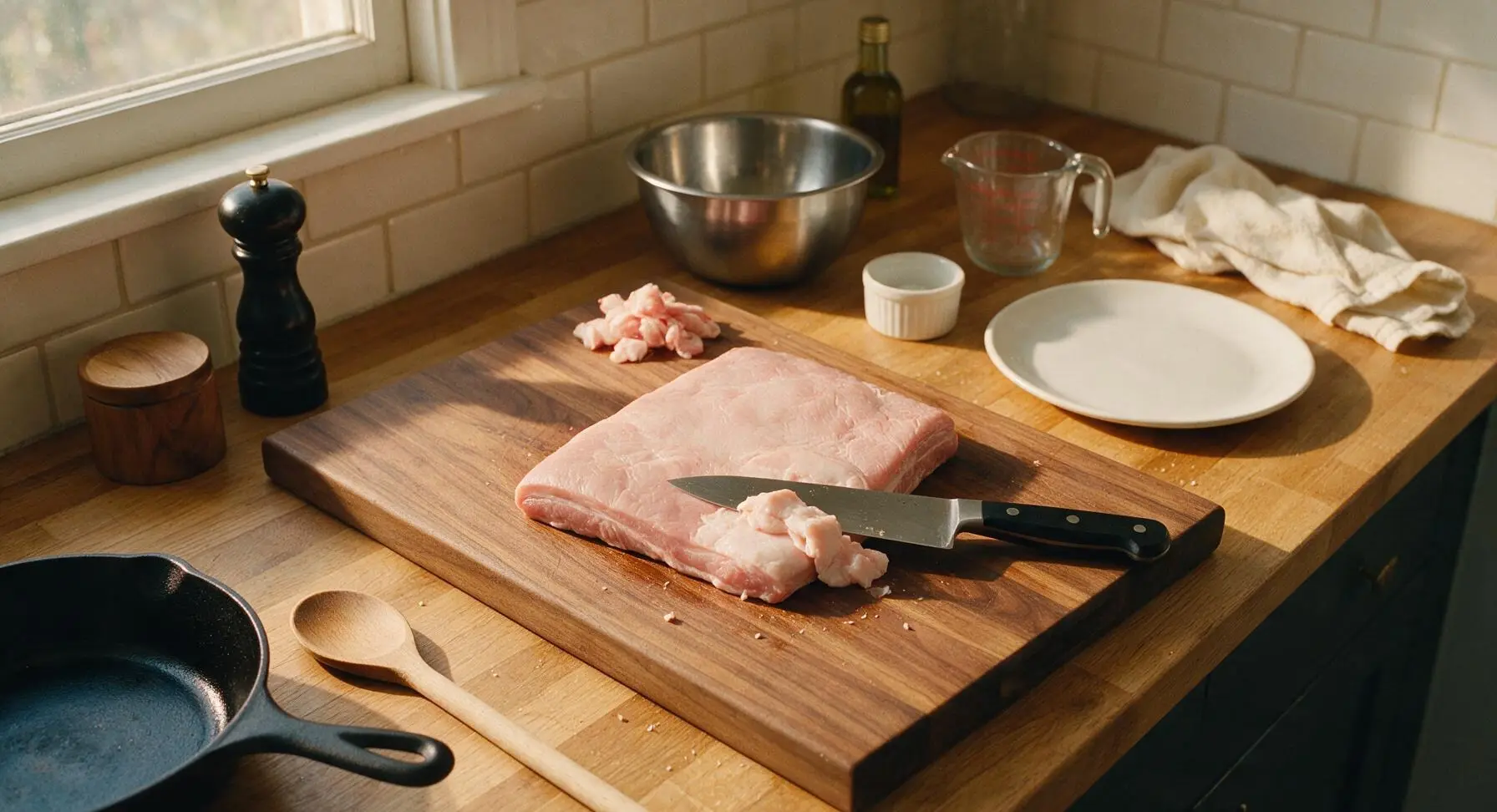
Place the 1kg skinless pork belly on the teak cutting board. Use the 8-inch chef’s knife to trim any loose excess fat and silver skin from the surface, leaving a uniform 1/4-inch fat cap across the top. Square off the edges slightly so the slab will cook evenly; reserve trimmed fat scraps for other uses if desired. The surface should feel smooth, with no ragged edges or tough connective tissue visible.
Step 1
step1:Trim Pork Belly
2

Mix Dry Rub

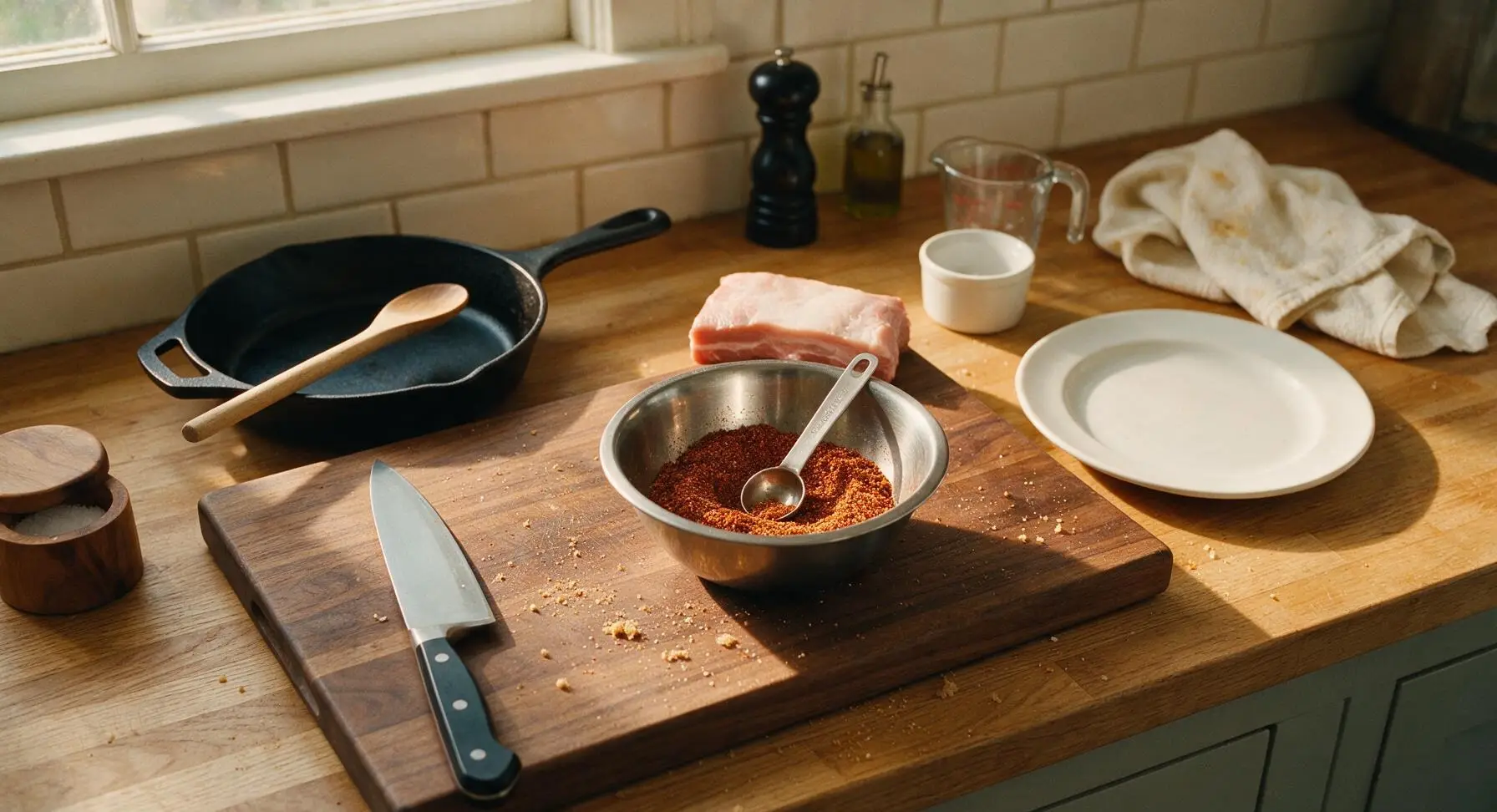
In the medium stainless steel mixing bowl, combine 1.5 tbsp kosher salt, 1 tbsp coarse black pepper, 1 tbsp smoked paprika, 1 tsp garlic powder, and 2 tbsp light brown sugar. Stir with the 1 tbsp measuring spoon until fully combined, breaking up any clumps of brown sugar with the back of the spoon. The finished rub will be a deep, rusty brown color with an even, granular texture.
Step 2
step2:Mix Dry Rub
3

Season Pork Slab

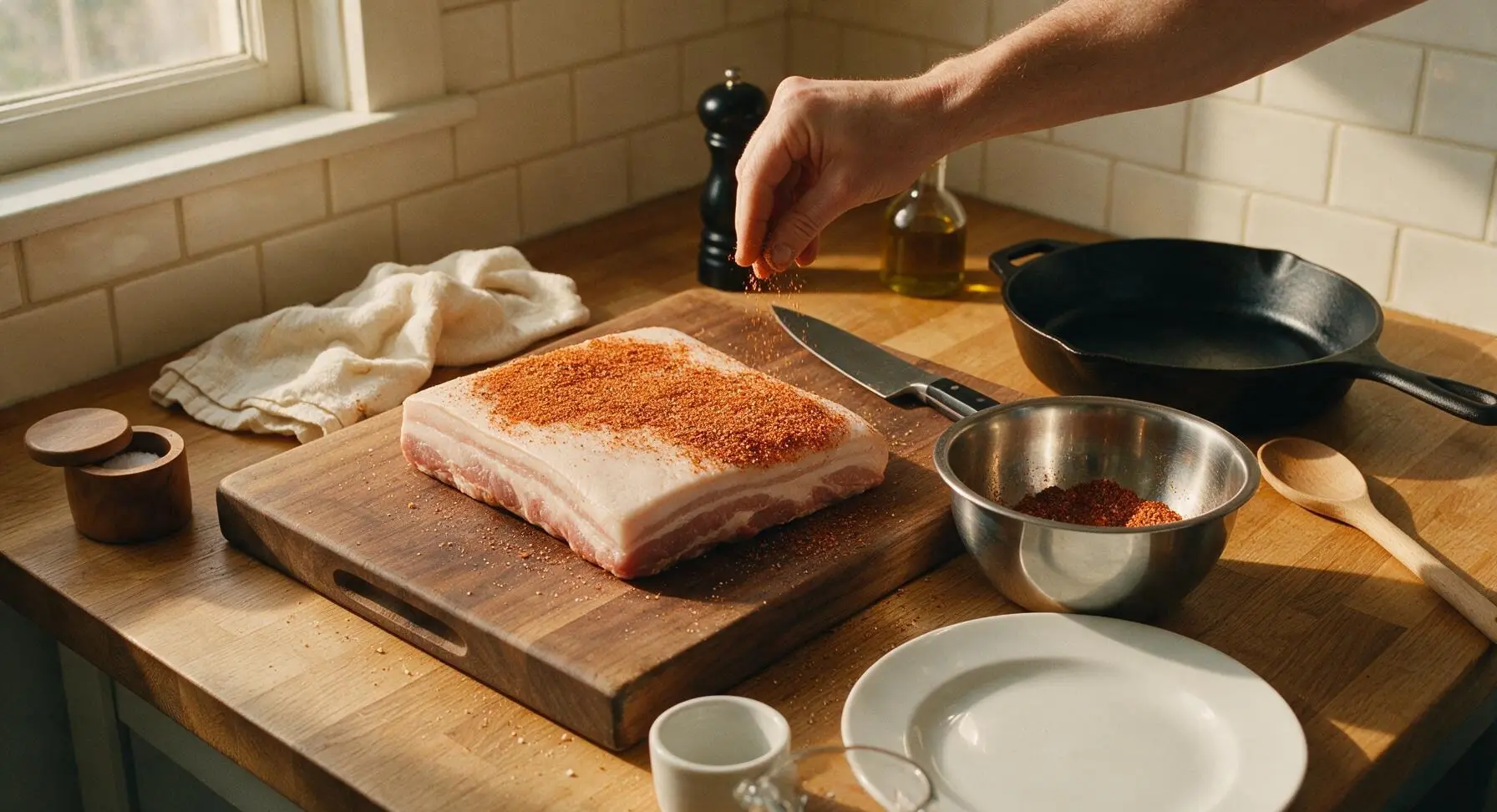
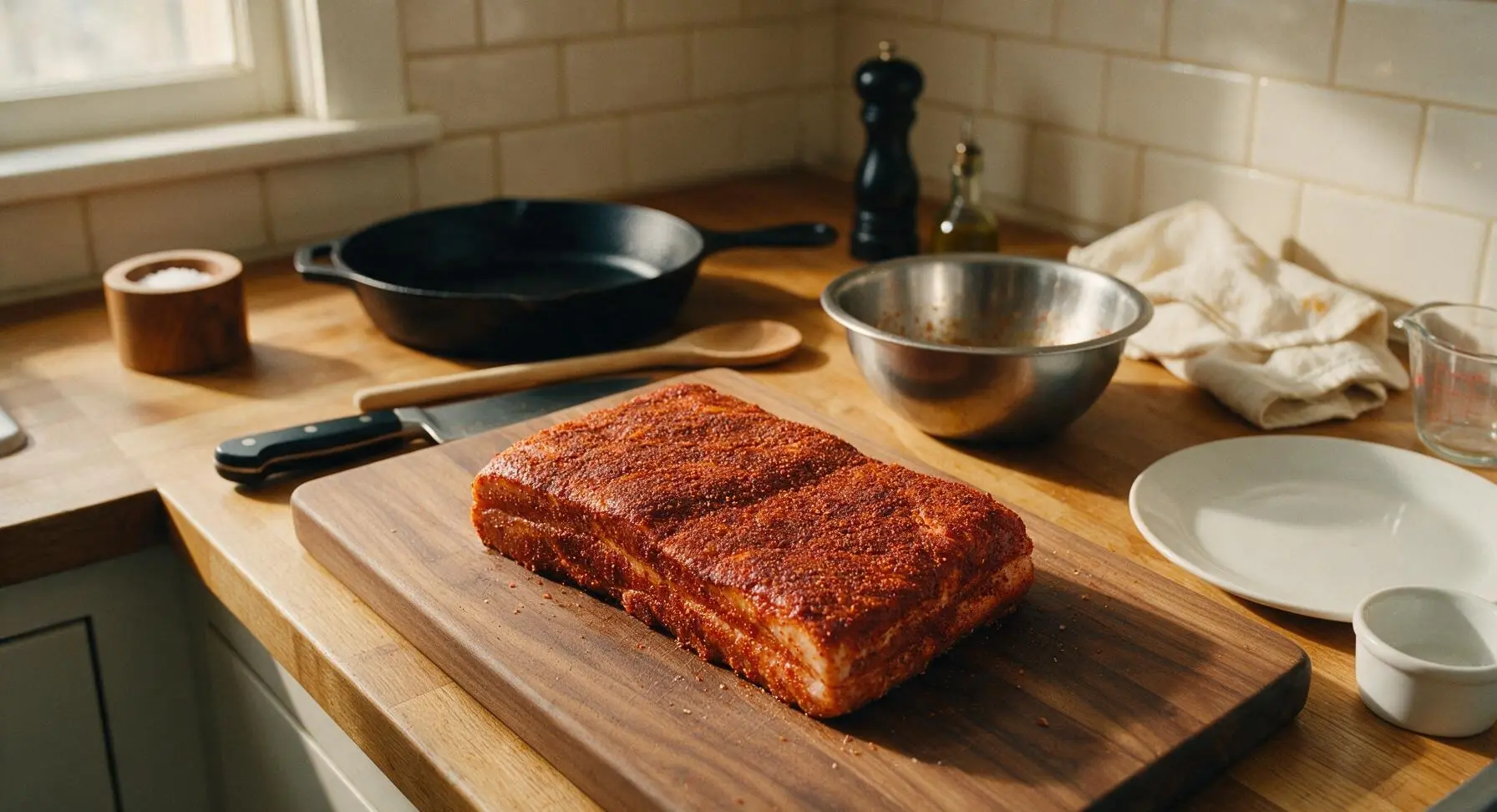
Pat the entire surface of the trimmed pork belly dry with the corner of the linen towel to help the rub adhere. Sprinkle the dry rub evenly across all sides of the pork slab, pressing gently with your palm to help the spice mix stick to the meat and fat. You should see no bare patches of pink pork visible once seasoned; the entire slab will be coated in a thin, even layer of rust-colored rub.
Step 3
step3:Season Pork Slab
Step 3
step3:Season Pork Slab
4

Smoke Whole Slab

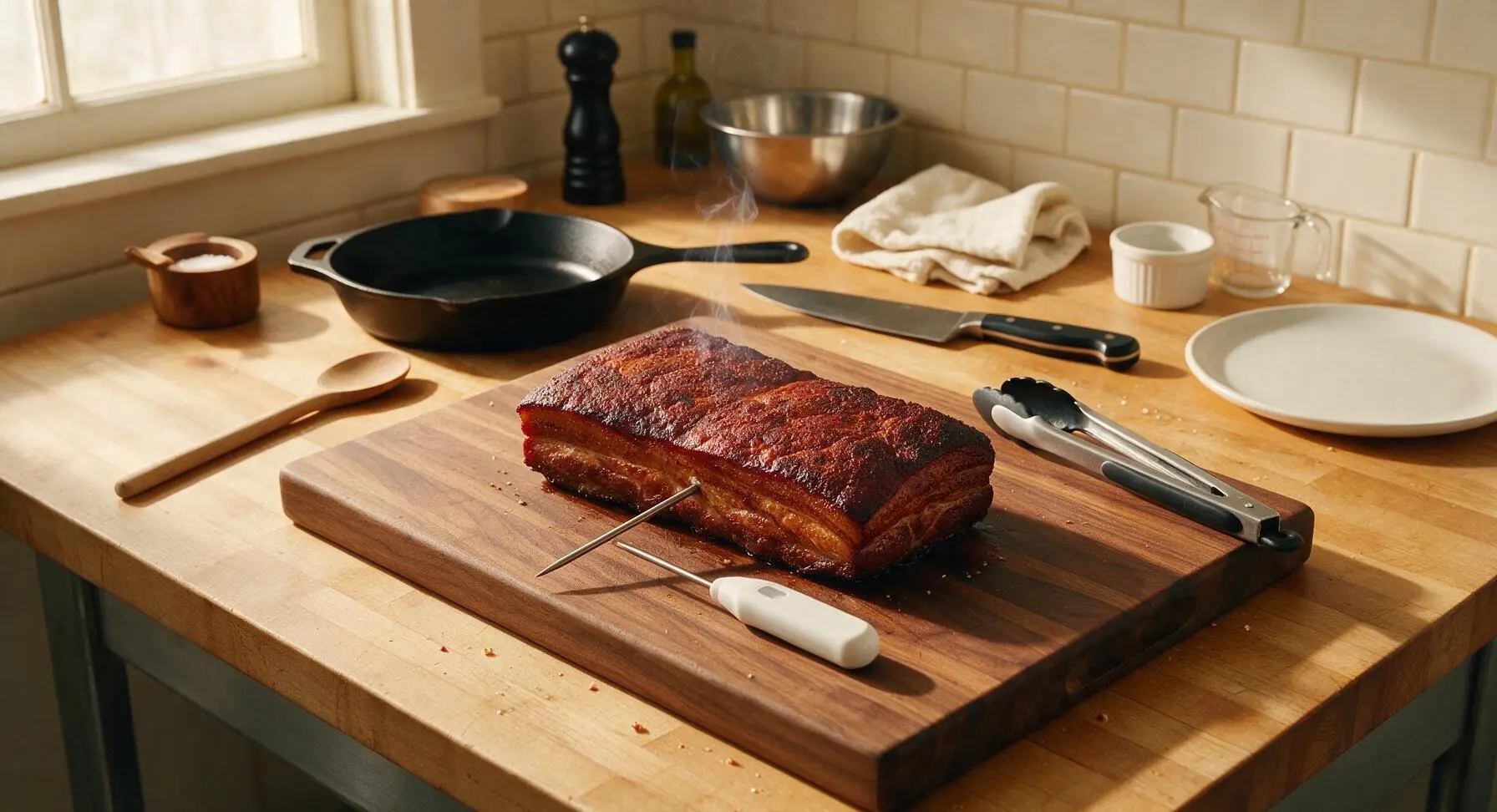
Preheat your smoker to 225°F (107°C), adding the 2 cups of hickory wood chips once preheated. Place the seasoned pork belly fat-side up directly on the smoker grates. Close the lid and smoke for 2 hours, until the exterior forms a dry, dark reddish-brown bark and the internal temperature reads 160°F (71°C) when checked with the digital meat thermometer. Avoid opening the smoker lid unnecessarily to maintain consistent temperature.
Step 4
step4:Smoke Whole Slab
5

Cube Smoked Pork

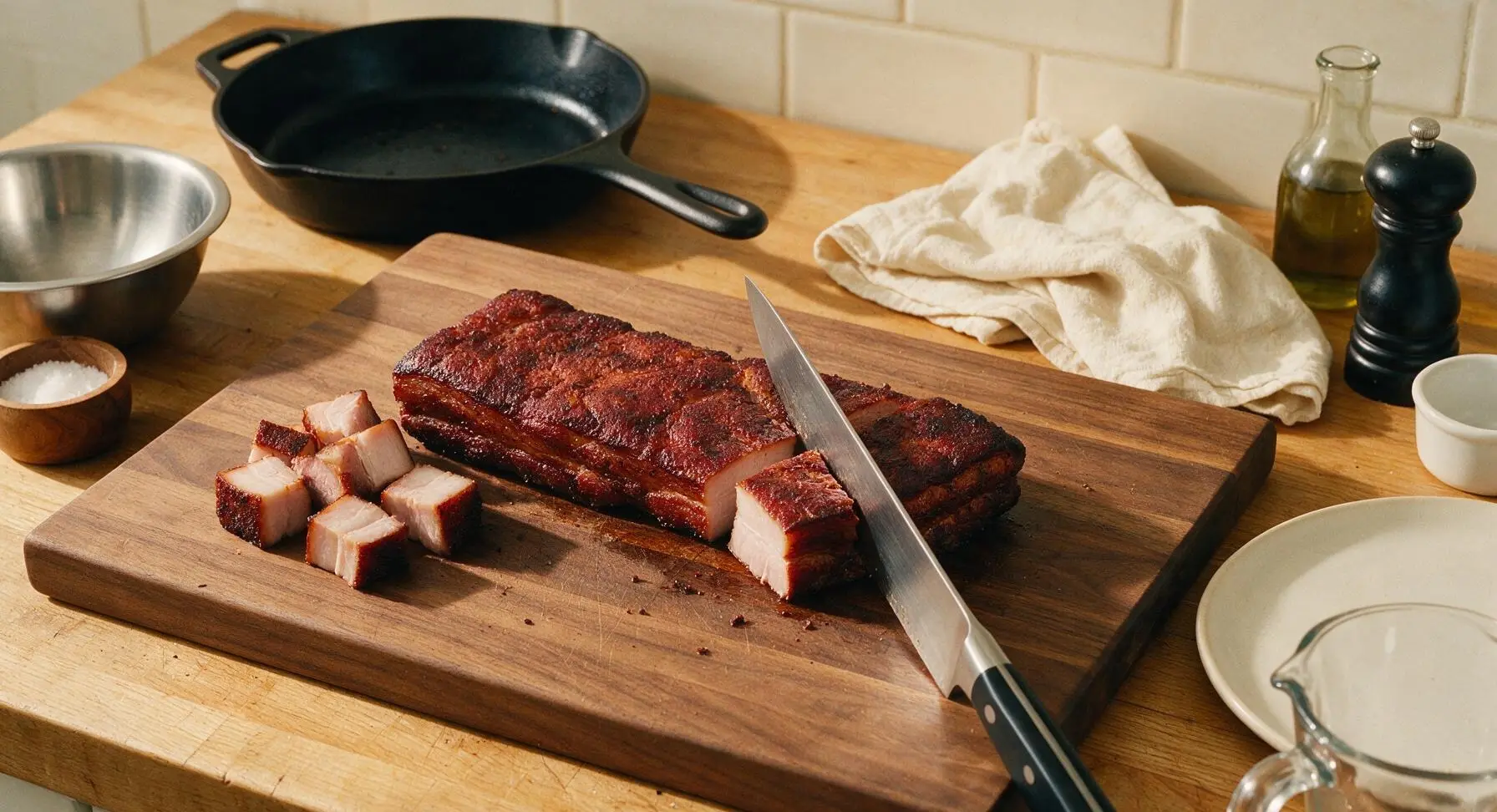
Once the pork reaches 160°F, leave it on the teak cutting board. Use the chef’s knife to cut the slab into uniform 1.5-inch cubes, cutting cleanly through the firm bark and tender cooked meat. Try to keep cubes as even in size as possible to ensure consistent cooking in the next stage; you will have approximately 30-35 cubes total.
Step 5
step5:Cube Smoked Pork
6

Toss with Sauce Mix

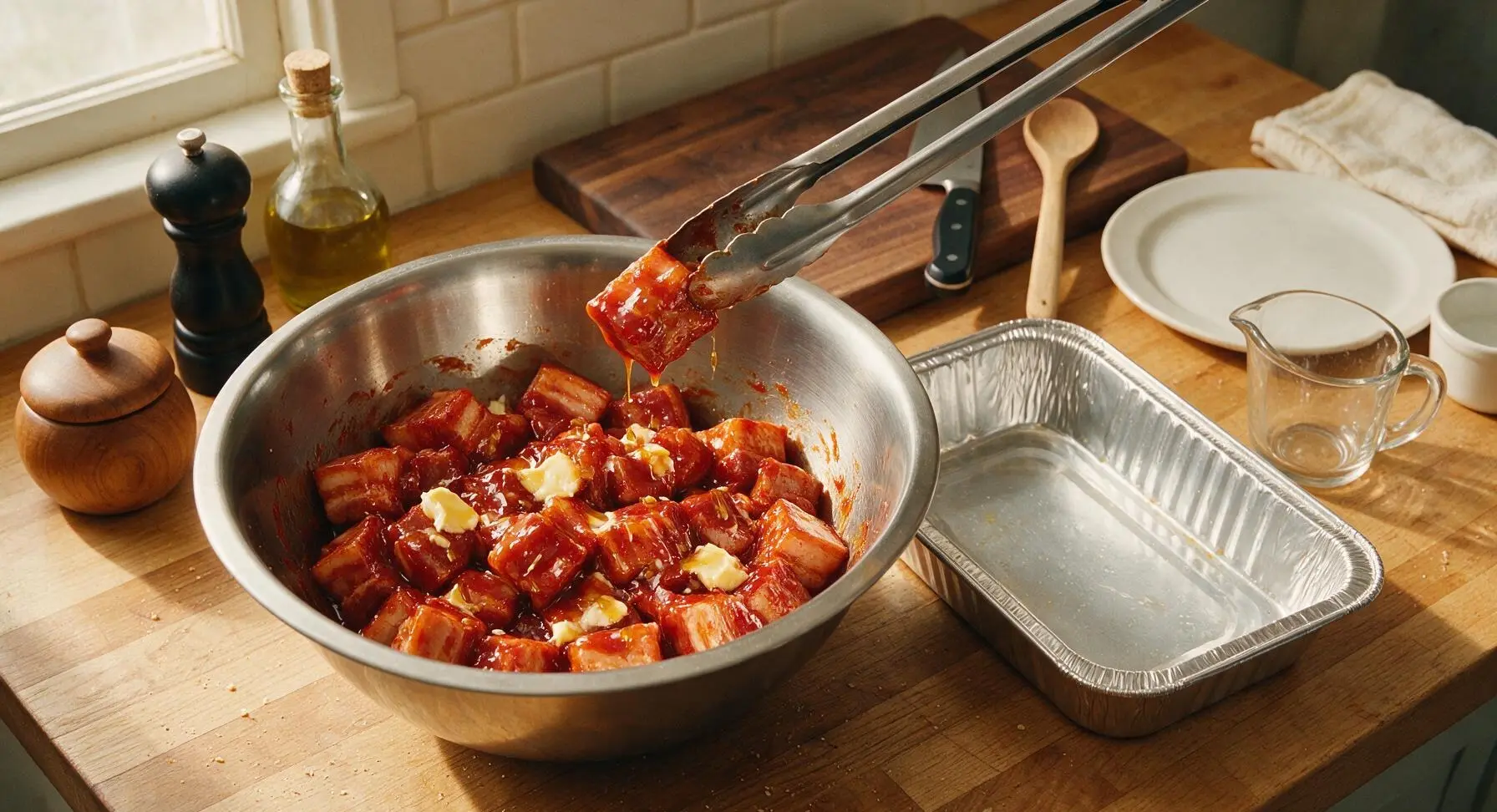
Place all the cut pork cubes into the clean stainless steel mixing bowl. Add 3/4 cup Kansas City-style BBQ sauce, 4 tbsp cut unsalted butter pats, and 2 tbsp raw honey to the bowl. Use the tongs to toss the cubes thoroughly until every piece is evenly coated in the sauce, butter, and honey mixture; the butter will start to melt slightly from the residual heat of the pork.
Step 6
step6:Toss with Sauce Mix
7

Braise Cubes Covered

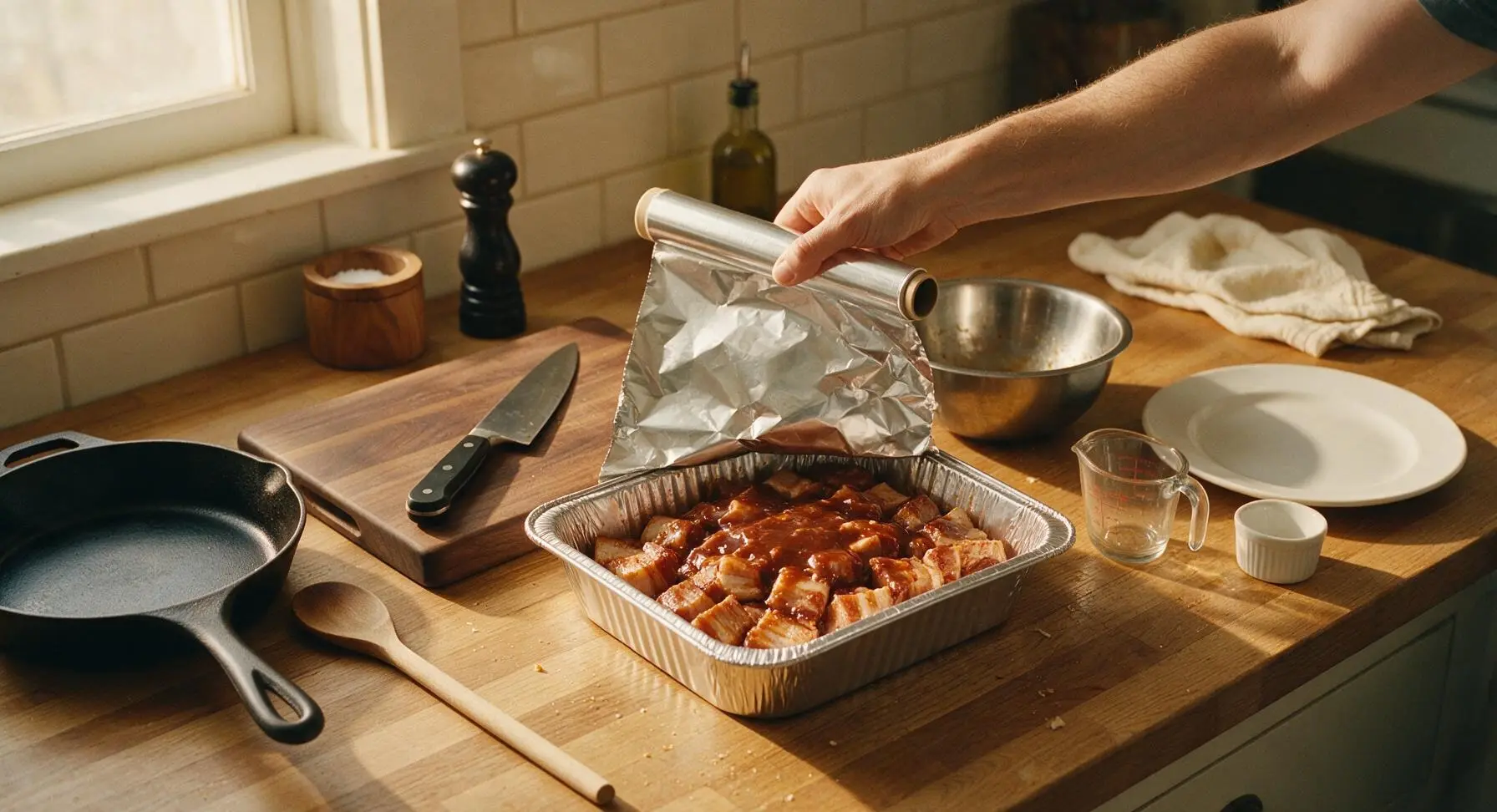
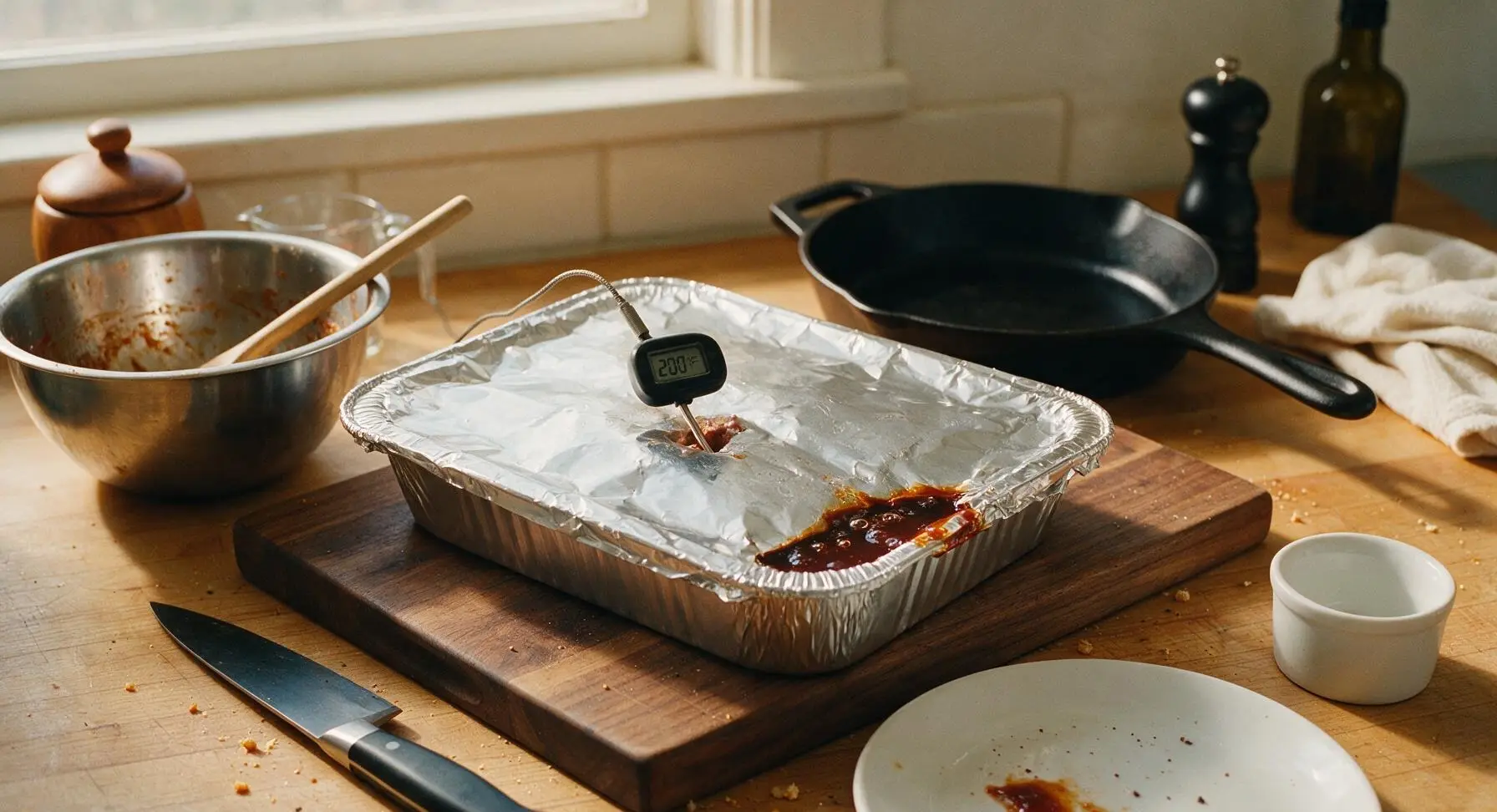
Transfer all the sauce-coated pork cubes into the heavy-gauge aluminum foil pan, pouring any remaining sauce from the bowl over the top of the cubes. Tear a sheet of heavy-duty aluminum foil from the roll and crimp it tightly over the top of the pan to create a fully sealed pocket. Return the covered pan to the smoker (still held at 225°F/107°C) and cook for 1 hour, until the cubes are probe-tender when pierced with the meat thermometer (internal temperature around 200°F/93°C).
Step 7
step7:Braise Cubes Covered
Step 7
step7:Braise Cubes Covered
8

Caramelize to Finish

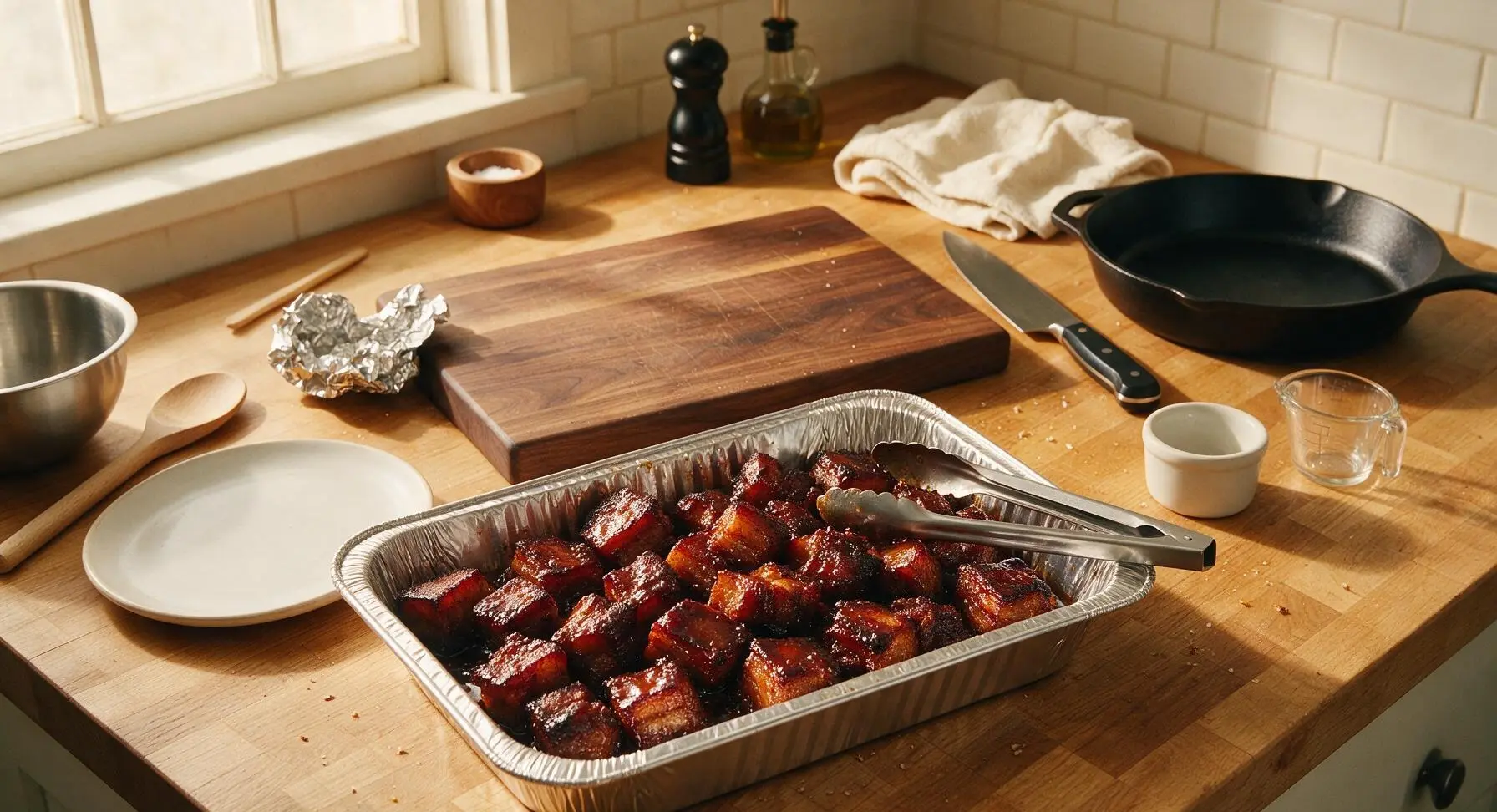
Remove the foil cover from the pan, discarding the used foil. Use the tongs to turn the cubes gently in the accumulated sauce in the pan. Return the uncovered pan to the smoker for a final 30 minutes at 225°F (107°C), until the sauce thickens to a sticky glaze and the edges of the cubes turn a deep, caramelized mahogany color. Remove from the smoker and let rest 10 minutes before piling onto the serving platter.
Step 8
step8:Caramelize to Finish

Tips

1.Always trim all silver skin from the pork belly before seasoning: this tough connective tissue will not break down during low-and-slow cooking, leaving unpleasantly chewy bits in your finished burnt ends. Leave a 1/4-inch fat cap to render slowly for juicy results.
2.Keep smoker temperature steady at 225°F (107°C) and avoid frequent lid checks: higher heat will render pork fat too quickly leading to dry, tough cubes, while temperature fluctuations extend cook time and prevent even smoke penetration.
3.Crimp the foil seal tightly around the pan during the braising stage: a loose seal lets steam escape, which stops the pork from tenderizing fully and prevents the butter, honey, and sauce from infusing into the meat for that signature sticky texture.
✨ You May Also Like

BBQ & Grilling
🍜 United States

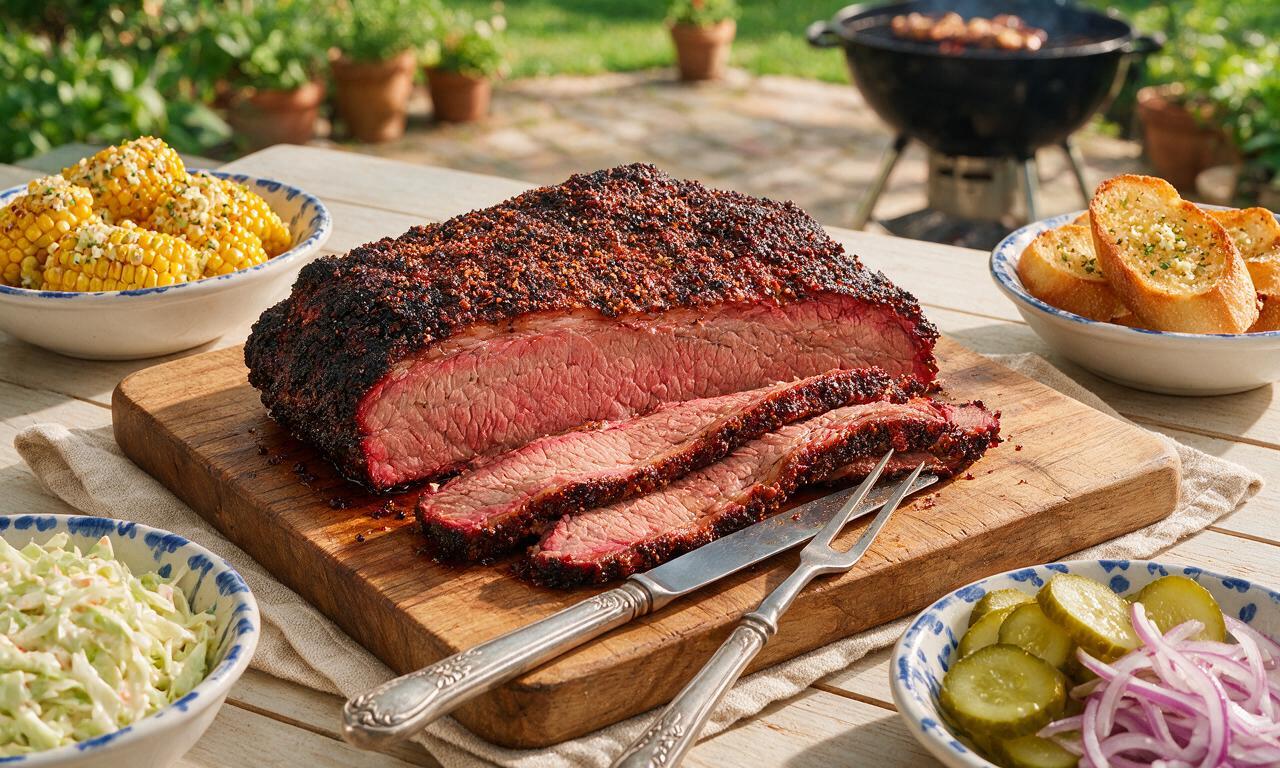
Tender, melt-in-your-mouth beef brisket with a crisp, spiced bark, slow-smoked to deep smoky perfection, the iconic centerpiece of Texas backyard barbecue.

⏱️ 12 hours BBQ & Grilling ★ 4.4
BBQ & Grilling
🍜 Korea

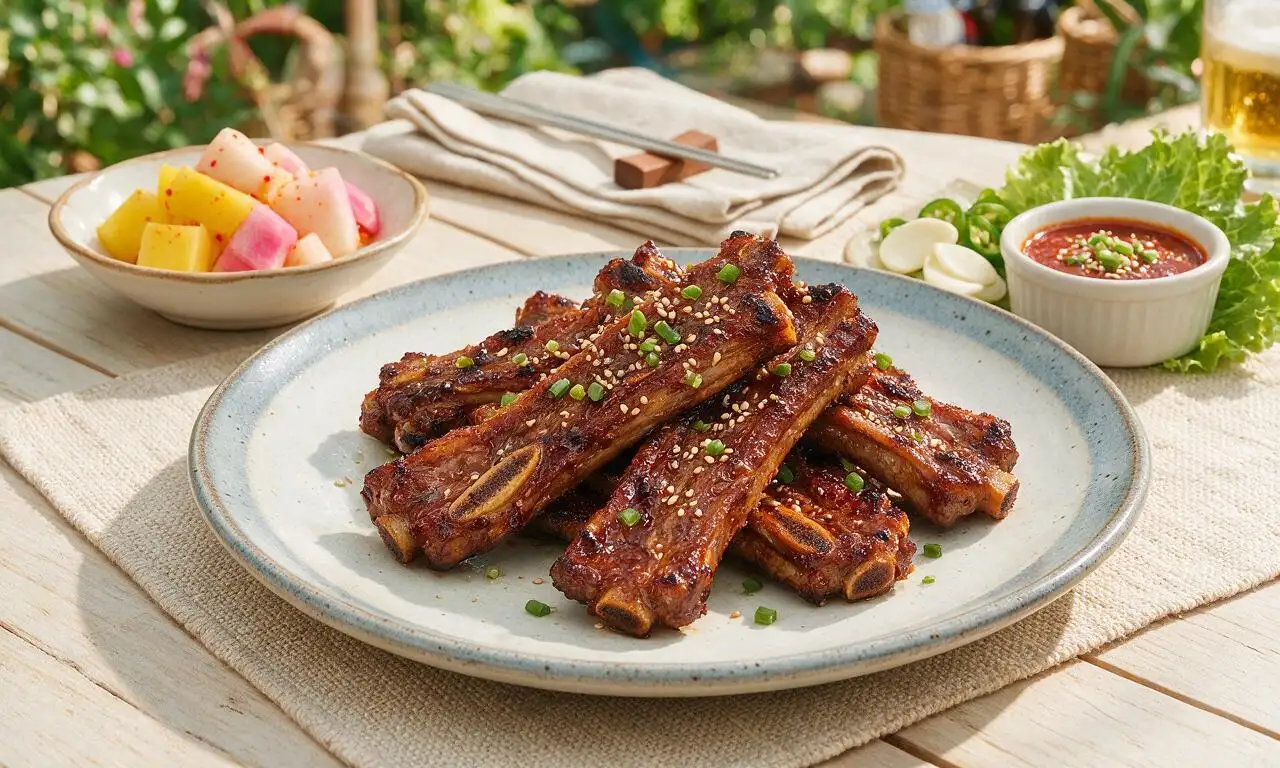
Tender, sweet-savory marinated beef short ribs, a beloved Korean BBQ staple with caramelized, slightly charred edges and deep umami flavor, perfect for outdoor summer gatherings.

⏱️ 4 hours 2BBQ & Grilling ★ 4.8
BBQ & Grilling
🍜 United States

Juicy grilled beef patties topped with smoky homemade chili, melted cheddar, and tangy pickles on toasted brioche buns for a hearty, flavor-packed handheld meal.

⏱️ 40 minuteBBQ & Grilling ★ 4.7
BBQ & Grilling
🍜 United States

A sweet, smoky, tangy BBQ sauce brightened with peak-season dark cherries, ideal for glazing grilled ribs, chicken, pork, or summer roasted veggies.

⏱️ 35 minuteBBQ & Grilling ★ 4.7
BBQ & Grilling
🍜 United States

Rich, smoky, slightly sweet homemade bourbon BBQ sauce with deep caramel notes, ideal for glazing grilled ribs, chicken, and burgers at cookouts.

⏱️ 25 minuteBBQ & Grilling ★ 4.7
BBQ & Grilling
🍜 United States

Iconic Alabama-style BBQ featuring tender hickory-smoked chicken slathered in tangy creamy white sauce, a beloved regional Southern cookout staple.

⏱️ 3 hoursBBQ & Grilling ★ 5

Pork Belly Burnt Ends:Frequently Asked Questions

1.Do I have to use skinless pork belly for this recipe, or can I leave the skin on? ▾
Stick to skinless pork belly for authentic burnt ends. Pork skin won’t render to a pleasant texture during low-and-slow smoking; it turns tough, chewy, and rubbery instead of forming that signature crisp bark. If your pork belly comes with skin attached, carefully slice it off in one flat sheet before seasoning, and save it to make chicharrones if you’d like.
2.What smoker temperature works best for perfect pork belly burnt ends? ▾
Hold your smoker steady at 225°F for the first phase of cooking. This low, consistent temperature lets fat render slowly without making the meat greasy, builds deep, smoky bark, and keeps the interior melt-in-your-mouth tender. Avoid cranking heat above 250°F early on, as that can cause fat to seep out too fast and leave dry, tough cubes.
3.How big should I cut my pork belly cubes for even cooking? ▾
Cut your seasoned pork belly into uniform 1.5-inch cubes. This size is ideal: large enough that cubes won’t dry out during hours of smoking, but small enough that every piece gets a full coating of caramelized BBQ sauce and crisp bark on every side. Oddly sized cubes will cook unevenly, leaving some overdone and some under-rendered.
4.Can I make these burnt ends if I don’t have a dedicated smoker? ▾
Absolutely! You can replicate great smoky flavor on a regular charcoal or gas grill set up for indirect heat, with a small pouch of soaked wood chips placed near the heat source. Aim for the same 225°F cooking temperature, and keep the grill vented just enough to hold in light smoke without making the meat taste bitter.
5.Do I need to wrap the pork belly cubes during the cooking process? ▾
You don’t need to wrap them for the first 2 to 2.5 hours of smoking while the bark sets. Once cubes develop a dark, firm exterior and hit an internal temp of 165°F, transfer them to a foil pan with sauce, cover tightly, and cook for another 1 to 1.5 hours until they are perfectly probe-tender.
6.How do I know when the burnt ends are fully done and ready to eat? ▾
Your burnt ends are done when they reach an internal temperature of 195°F to 203°F, and a meat probe slides into the center of a cube with no resistance, like sticking a knife into soft butter. The sauce should be thick, sticky, and caramelized around the edges, with no chewy raw fat left in the center.
7.What type of smoking wood pairs best with pork belly burnt ends? ▾
Stick to mild, sweet hardwoods that complement rich pork, like hickory, apple, cherry, or oak. Avoid heavy, pungent woods like mesquite for the full cook, as it can overpower the sweet-savory pork and sauce flavor and leave a bitter aftertaste. Two to three hours of light, thin smoke is all you need for great depth.
8.Can I prep these burnt ends ahead of time for a backyard cookout? ▾
You can prep the pork belly a day ahead by cutting it into cubes, coating it in the kosher salt, coarse black pepper, smoked paprika, and garlic powder rub, and storing it covered in the fridge. This dry brine step helps seasoning penetrate deeper and creates a better bark; just let the meat rest at room temp for 30 minutes before smoking.
9.Why did my burnt ends turn out dry instead of melt-in-your-mouth tender? ▾
Dry burnt ends almost always come from cooking at too high a temperature, cutting cubes too small, or skipping the covered sauce phase. High heat causes fat to render out too quickly instead of melting slowly into the meat, leaving tough, dry cubes. Hold a steady 225°F for the initial smoke, and don’t cut cubes smaller than 1.5 inches.
10.What kind of BBQ sauce works best for coating these burnt ends? ▾
A classic Kansas City-style sweet-savory BBQ sauce is the traditional match, with a balance of tomato, brown sugar, vinegar, and mild spice. Avoid thin, vinegar-heavy Carolina-style sauces, as they won’t caramelize into that sticky, glossy coating. Warm the sauce slightly before tossing with smoked cubes for more even coverage.
11.How should I store leftover burnt ends, and how long do they stay good? ▾
Let leftover burnt ends cool completely, then store them in an airtight container in the fridge for up to 4 days. Reheat them in a 325°F oven or air fryer for 8 to 10 minutes until the sauce is bubbly and the exterior crisps back up—skip the microwave, as that will make the bark soggy and the meat rubbery.

Comments (4)

3 days ago

OMG these pork belly burnt ends were a total game changer for our weekend cookout! I brought a whole tray to our neighborhood potluck and people were hovering over the platter asking for the recipe before they even finished their first bite. My kids begged me to make another batch before the week is out — even my super picky 7 year old ate three helpings! Only thing I messed up a little was the rub ratio first go around, I think I added a touch too much cayenne for my family’s taste but it was still SO good. Cook time was totally manageable too, I was worried it’d be an all day smoke session but 3.5 hours was perfect.

2 days ago

Totally feel you on the cayenne! I cut it in half last time I made these and my toddler was able to eat them no problem, still had that perfect little kick without being overwhelming. Great call bringing these to a potluck, I did the same for my fantasy football draft last month and they were gone in 10 minutes flat.

2 days ago

So glad these were a hit at your potluck! If you’re sensitive to heat, you can swap the cayenne for smoked paprika for that deep, smoky flavor without the spice — works like a charm every time. Hope your 7 year old loves the next batch just as much!

1 week ago

Wow, this recipe is way more approachable than I thought it’d be for a medium difficulty cook! I prepped a big batch on Sunday for meal prep and these held up perfectly all week for lunches. The bark gets so crispy and caramelized, I paired it with roasted broccoli and rice and it felt like a restaurant quality meal every single day. Only note is I wish I’d cut the pork belly into slightly bigger cubes, they shrank way more than I expected while cooking!

5 days ago

Great tip about the cube size! We recommend cutting them into 1.5 inch cubes specifically because of that shrinkage — anything smaller and you’ll end up with tiny, overcooked bits. So stoked these worked out for your weekly meal prep, that’s such a smart use for them!

yesterday

Tried these last night for my wife’s birthday dinner and she said they’re better than the ones we got at that fancy BBQ spot in Austin last month! I used hickory wood for the first two hours of smoking and the flavor was unreal. Crispy on the outside, melt-in-your-mouth tender on the inside, absolutely zero leftovers. 10/10 will be making these at least once a month going forward.

5 days ago

First time making pork belly anything and I was so nervous I’d mess it up, but the step by step instructions were so easy to follow! I made these for our extended family dinner on Sunday and even my dad who swears by his own award-winning burnt end recipe said mine were better. Quick question for the group: has anyone tried tossing these in a little honey garlic sauce instead of the traditional BBQ glaze at the end? Wondering if that would work for a fun little twist next time I make them.

3 days ago

Oh my gosh yes! I did honey garlic last time I made these and it was chef’s kiss. Just add a splash of low-sodium soy sauce and a pinch of red pepper flakes to the honey garlic mix, toss them in for the last 20 minutes of cook time, and you’ve got the perfect sweet-savory sticky bite. My whole family went crazy for that version!