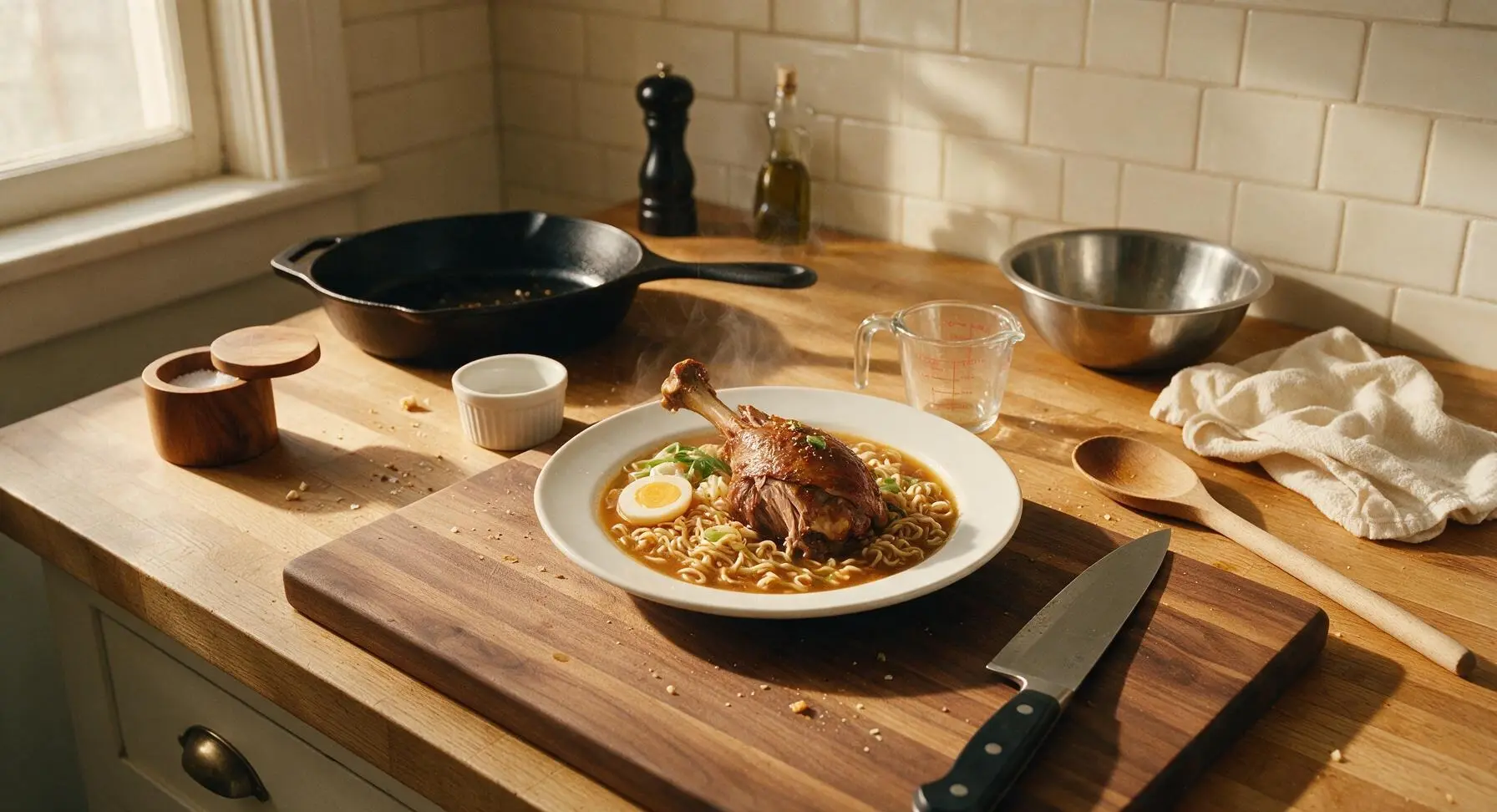
Ramen Turkey Leg

title 1
Ramen Turkey Leg
⏱️ cook time 1 hour 30 minutes
🍽️ servings 4
⚡ Difficulty medium

intro

Fall-off-the-bone turkey leg braised in umami-rich ramen broth, served over springy noodles with classic toppings—cozy, bold, and perfect for cool autumn days.

Ingredients
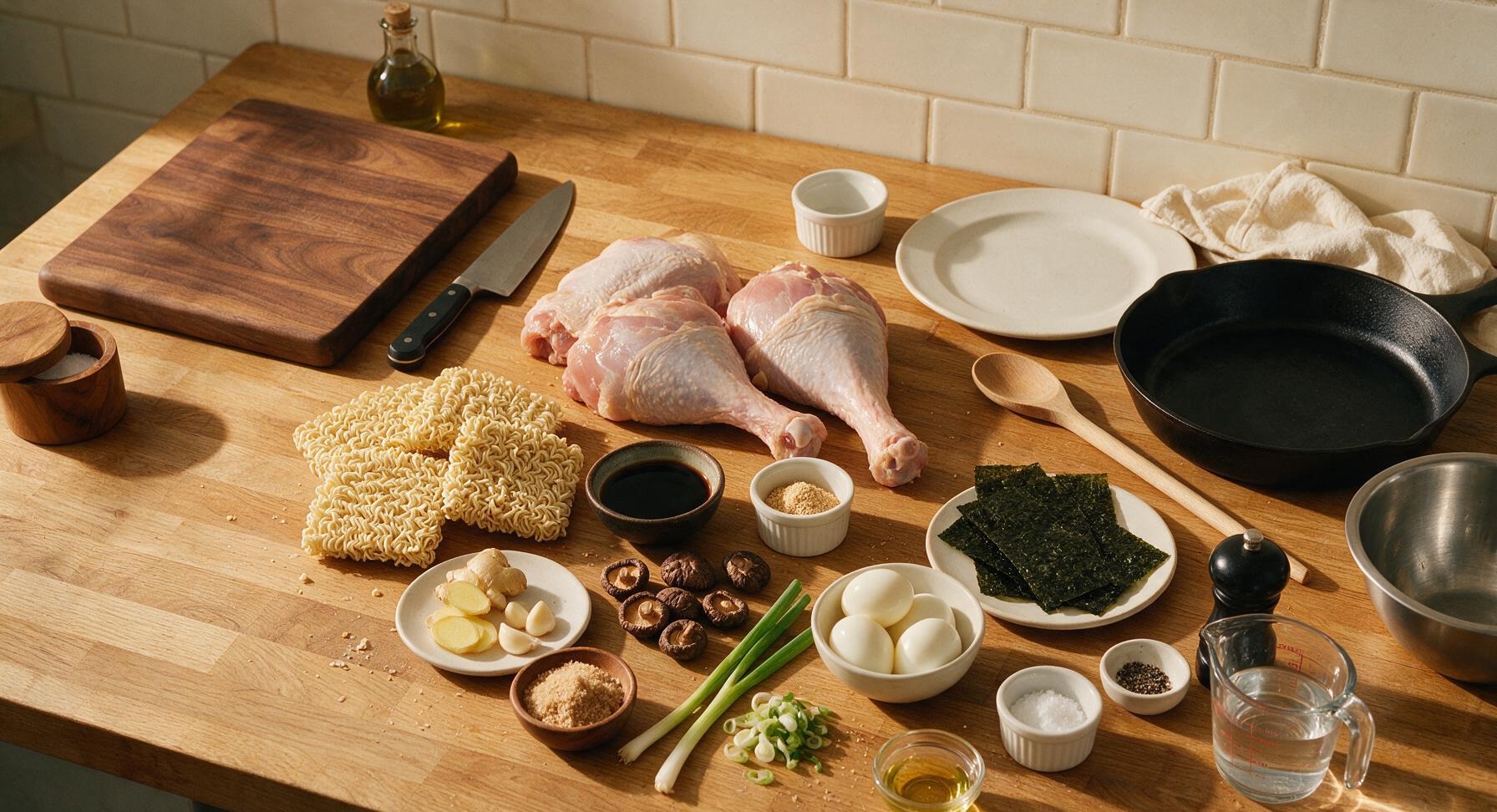
Bone-in skin-on turkey legs 2 large (1.2kg total)
Dried ramen noodle cakes 4 portions (400g total)
Low-sodium soy sauce 180ml
Dashi powder 2 tablespoons
Dried shiitake mushrooms 6 pieces (15g)
Fresh ginger 5cm knob, thinly sliced
Garlic cloves 4, lightly crushed
Light brown sugar 2 tablespoons
Scallions 4 stalks (2 whole for braising, 2 thinly sliced for garnish)
Soft-boiled eggs 4, peeled
Toasted nori sheets 4, cut into 5cm strips
Kosher salt 1 tablespoon
Freshly ground black pepper 1 teaspoon
Neutral cooking oil 1 tablespoon
Water 1.5L

Steps

1

Season Turkey Legs

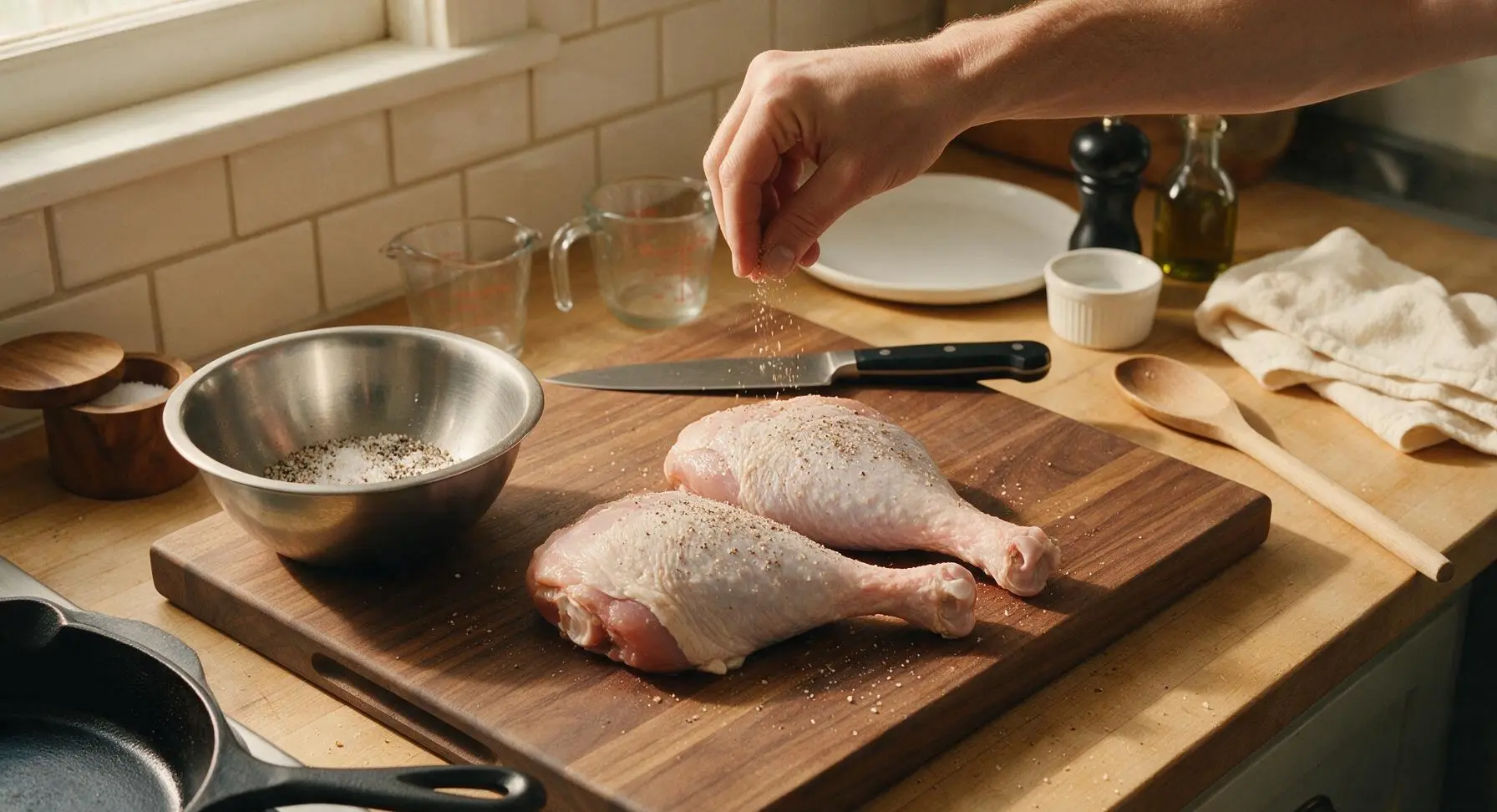
Combine 1 teaspoon kosher salt and ½ teaspoon black pepper in the medium stainless steel mixing bowl. Pat the two turkey legs completely dry with a corner of the linen towel, then rub the salt and pepper mixture evenly over all sides of the legs. Let the legs rest at room temperature for 15 minutes to allow the salt to penetrate, which helps the skin crisp when seared. Visual cue: Skin feels dry to the touch, no visible surface moisture, seasoning evenly distributed.
Step 1
step1:Season Turkey Legs
2

Sear Turkey Skin

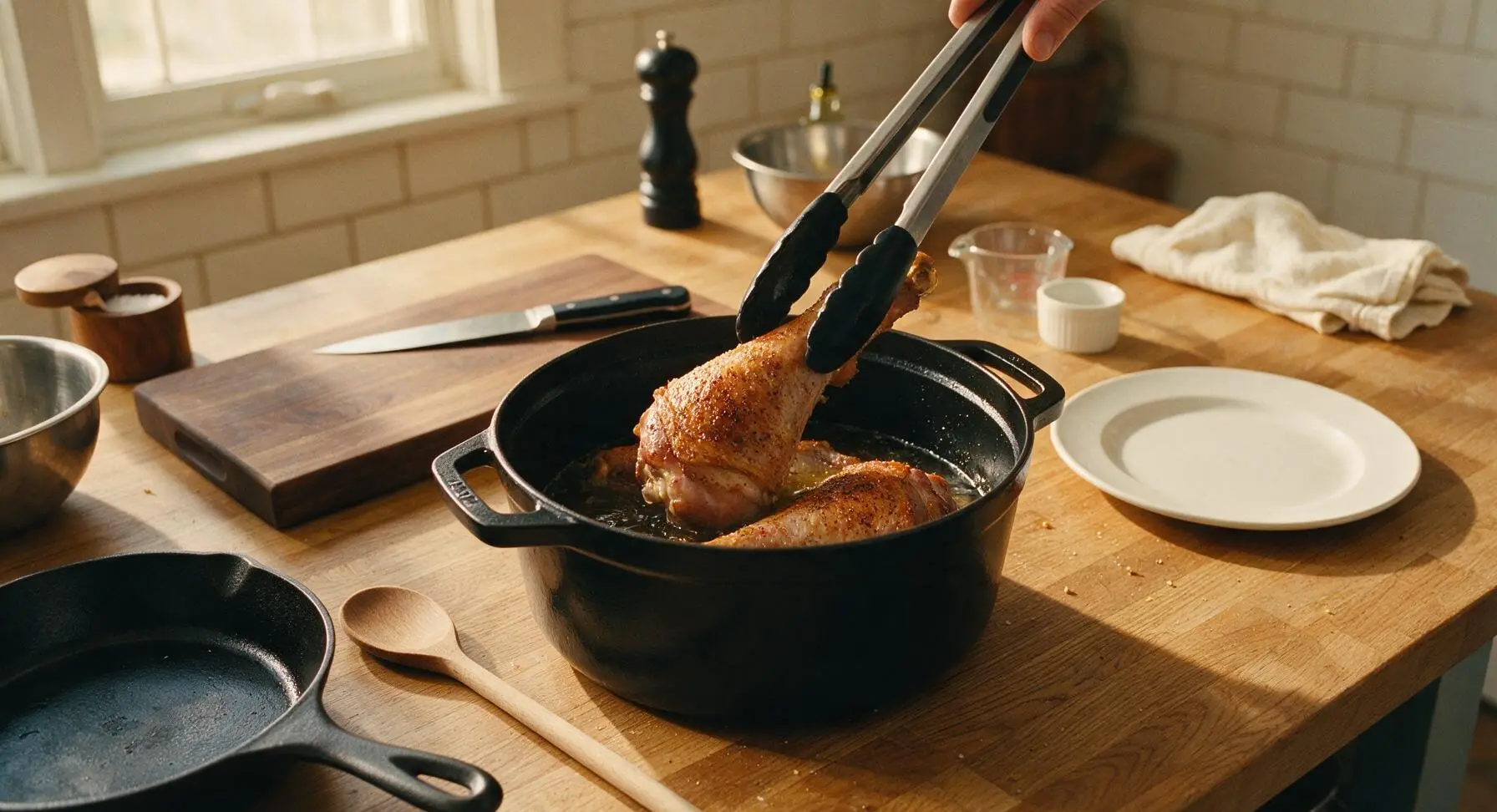
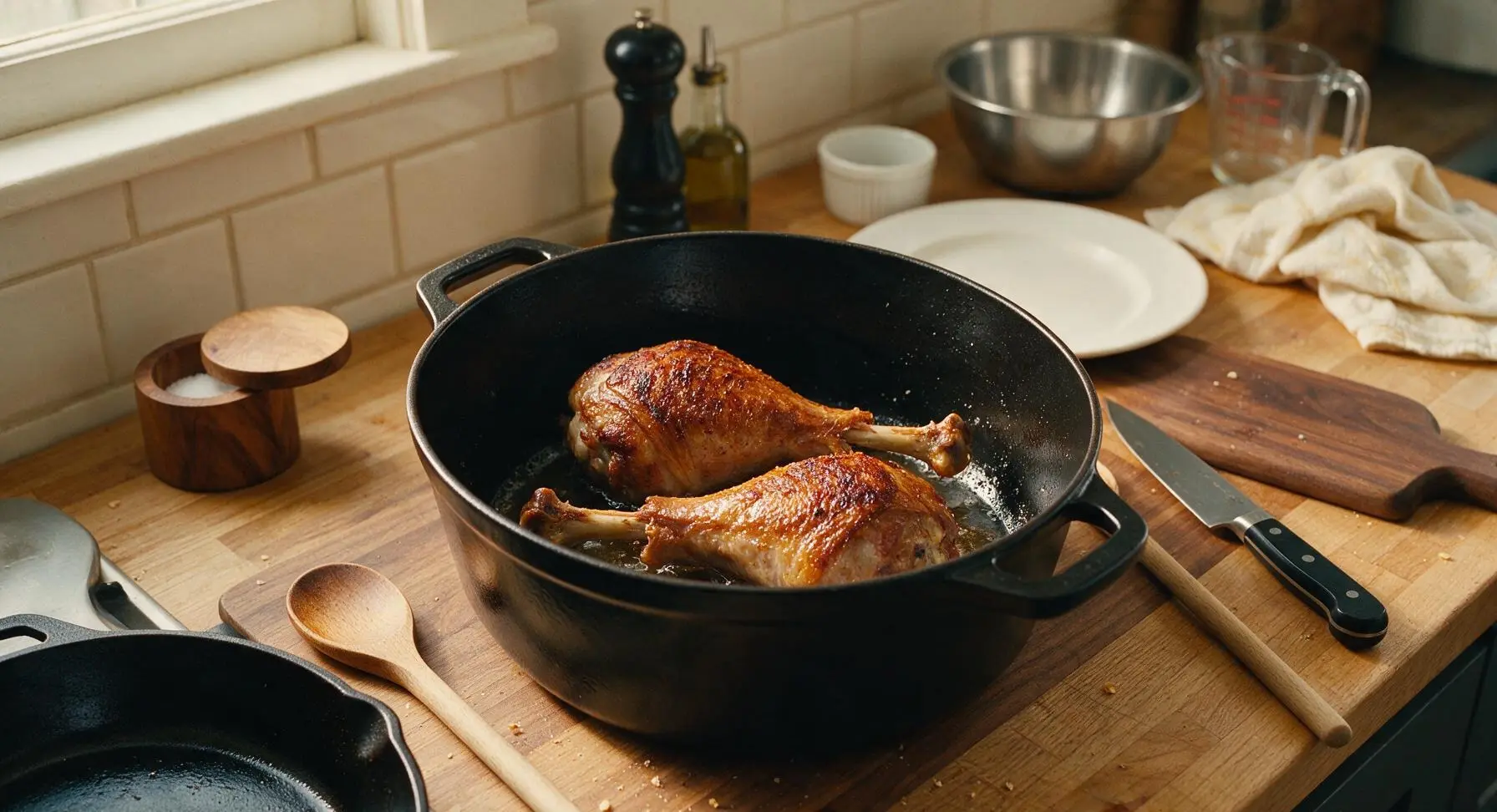
Heat 1 tablespoon neutral oil in the matte black enameled Dutch oven over medium-high heat (180C/350F). Once oil shimmers, place turkey legs skin-side down in the pot using the black silicone-tipped tongs. Sear for 6-7 minutes per side, until skin is deep golden brown and crisp, rendering excess fat. Flip legs carefully to avoid splattering hot oil. Visual cue: Skin is evenly mahogany-gold, no pale raw patches, clear rendered fat pools slightly at the bottom of the pot.
Step 2
step2:Sear Turkey Skin
Step 2
step2:Sear Turkey Skin
3

Sauté Broth Aromatics

Transfer seared turkey legs temporarily to the edge of the maple cutting board using tongs. Lower heat to medium, add sliced ginger, crushed garlic, and 2 whole scallions to the rendered turkey fat in the Dutch oven. Sauté for 2 minutes, stirring occasionally with the light beech wood spoon, until fragrant, taking care not to burn the garlic. Visual cue: Garlic turns pale golden, ginger releases a warm sharp aroma, scallions wilt slightly.
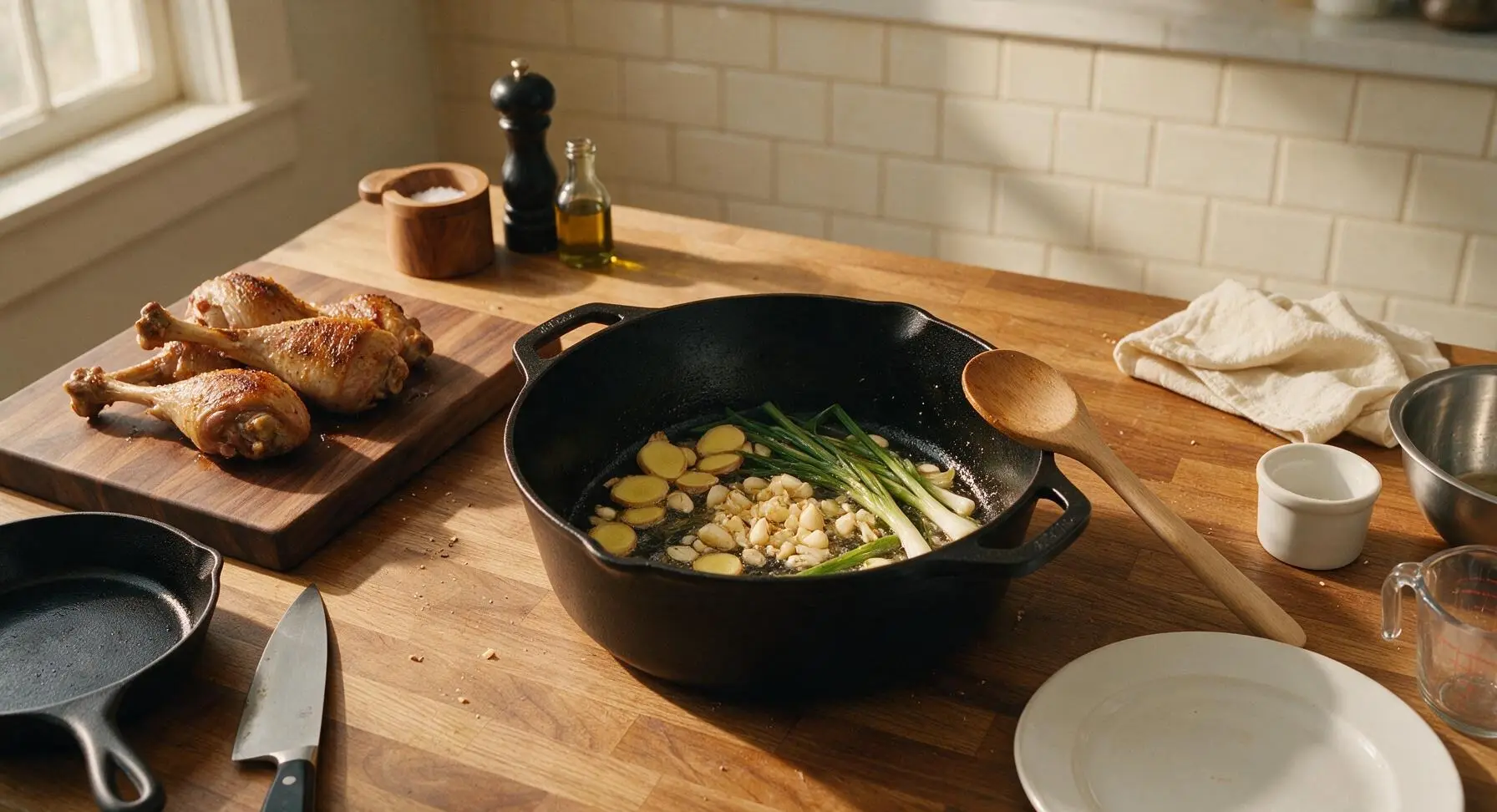
Step 3
step3:Sauté Broth Aromatics
4

Braise Turkey Low Slow

Return turkey legs to the Dutch oven. Measure 1.5L water, 180ml soy sauce, 2 tablespoons dashi powder, 2 tablespoons brown sugar, and dried shiitake mushrooms into the pot using the clear glass measuring cup. Bring liquid to a gentle simmer, then reduce heat to low (120C/250F), cover with the Dutch oven lid, and braise for 1 hour 15 minutes. Avoid rapid boiling, as this will toughen the turkey meat. Visual cue: Liquid bubbles very gently around the turkey legs, meat begins to pull away from the knuckle bone when fully tender.
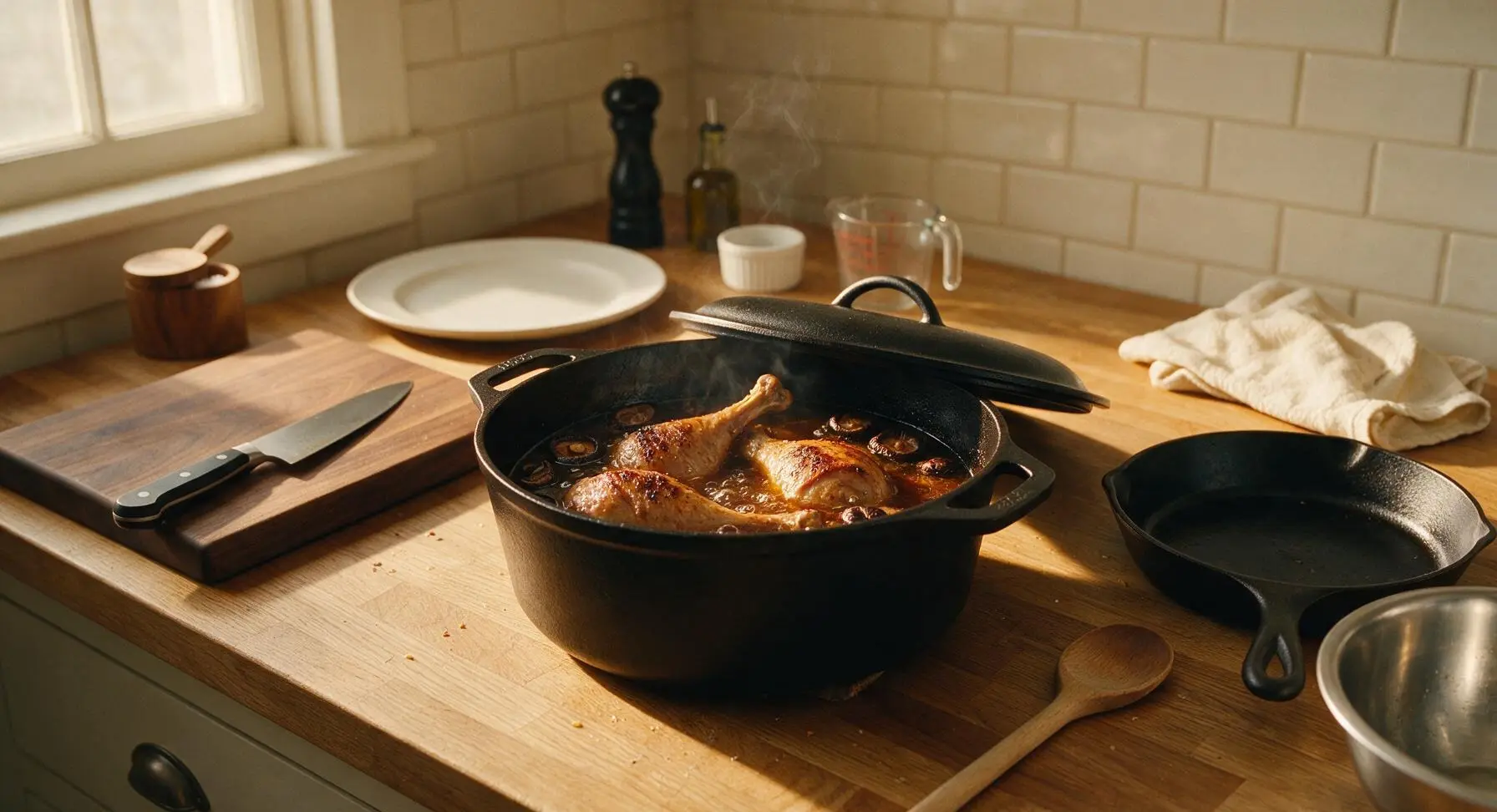
Step 4
step4:Braise Turkey Low Slow
5

Cook Ramen Noodles

Ten minutes before the turkey finishes braising, fill the 4L stainless steel stock pot with water and bring to a rolling boil. Add dried ramen noodle cakes, stir gently with the black metal chopsticks to prevent sticking, and cook for 3-4 minutes until al dente (springy, not mushy). Drain noodles using the fine-mesh stainless steel strainer, rinse briefly with warm water to remove excess starch, then divide evenly between the four matte cream ramen bowls. Visual cue: Noodles are tender but have a slight firm bite at the center, with no chalky raw core.
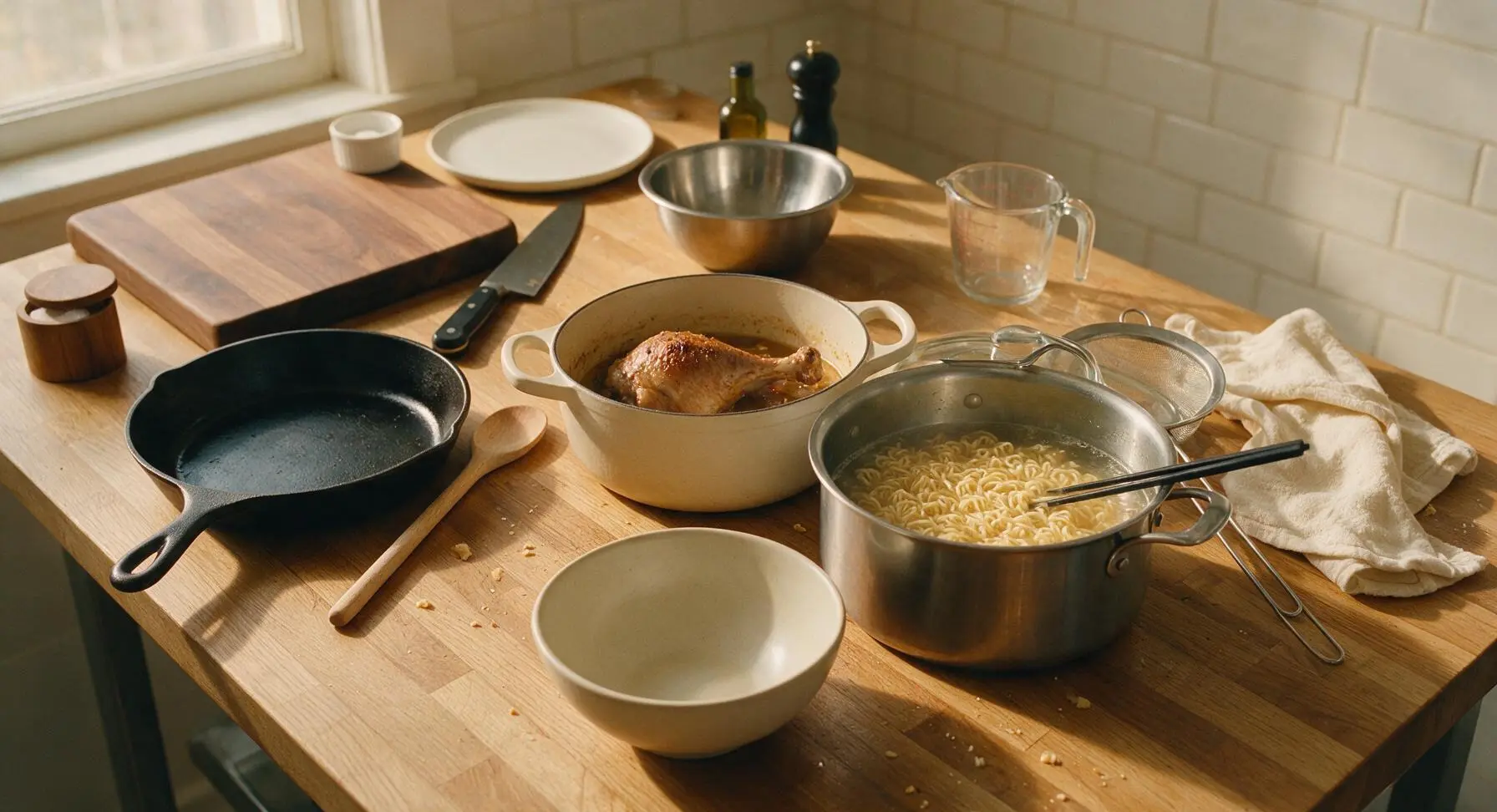
Step 5
step5:Cook Ramen Noodles
6

Strain Braising Broth

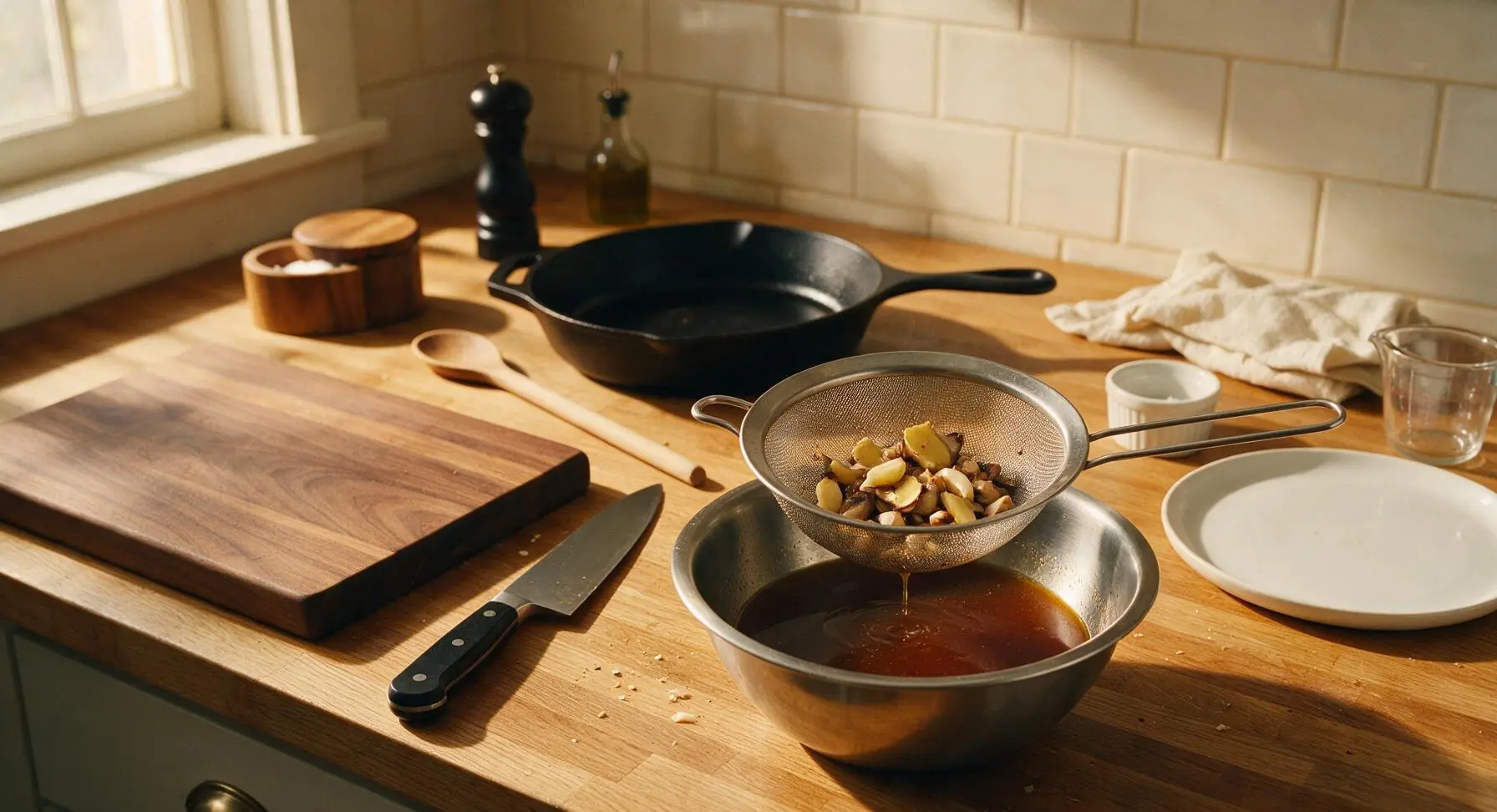
Once turkey is fully braised, carefully lift legs from the Dutch oven with tongs and transfer to the maple cutting board. Pull turkey meat from the bone in large tender chunks, discarding excess fat and sinew. Divide turkey meat evenly between the four ramen bowls atop the cooked noodles. Strain the braising broth through the fine-mesh strainer to remove ginger, garlic, scallions, and mushroom stems, then pour hot strained broth over noodles and turkey in each bowl. Visual cue: Turkey meat shreds easily with gentle pressure, broth is smooth and deep amber, free of solid aromatic bits.
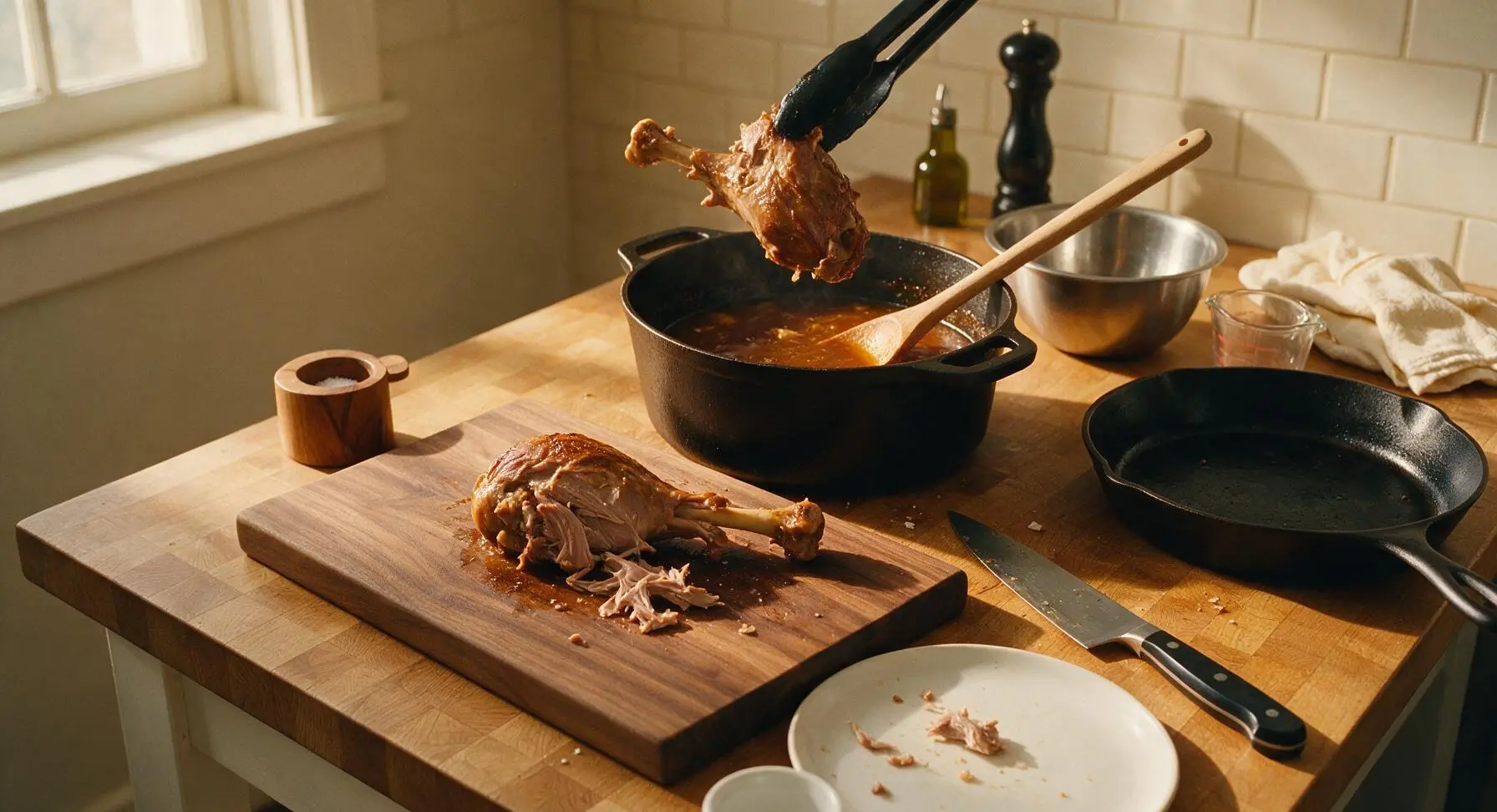
Step 6
step6:Strain Braising Broth
Step 6
step6:Strain Braising Broth
7

Top and Serve Hot

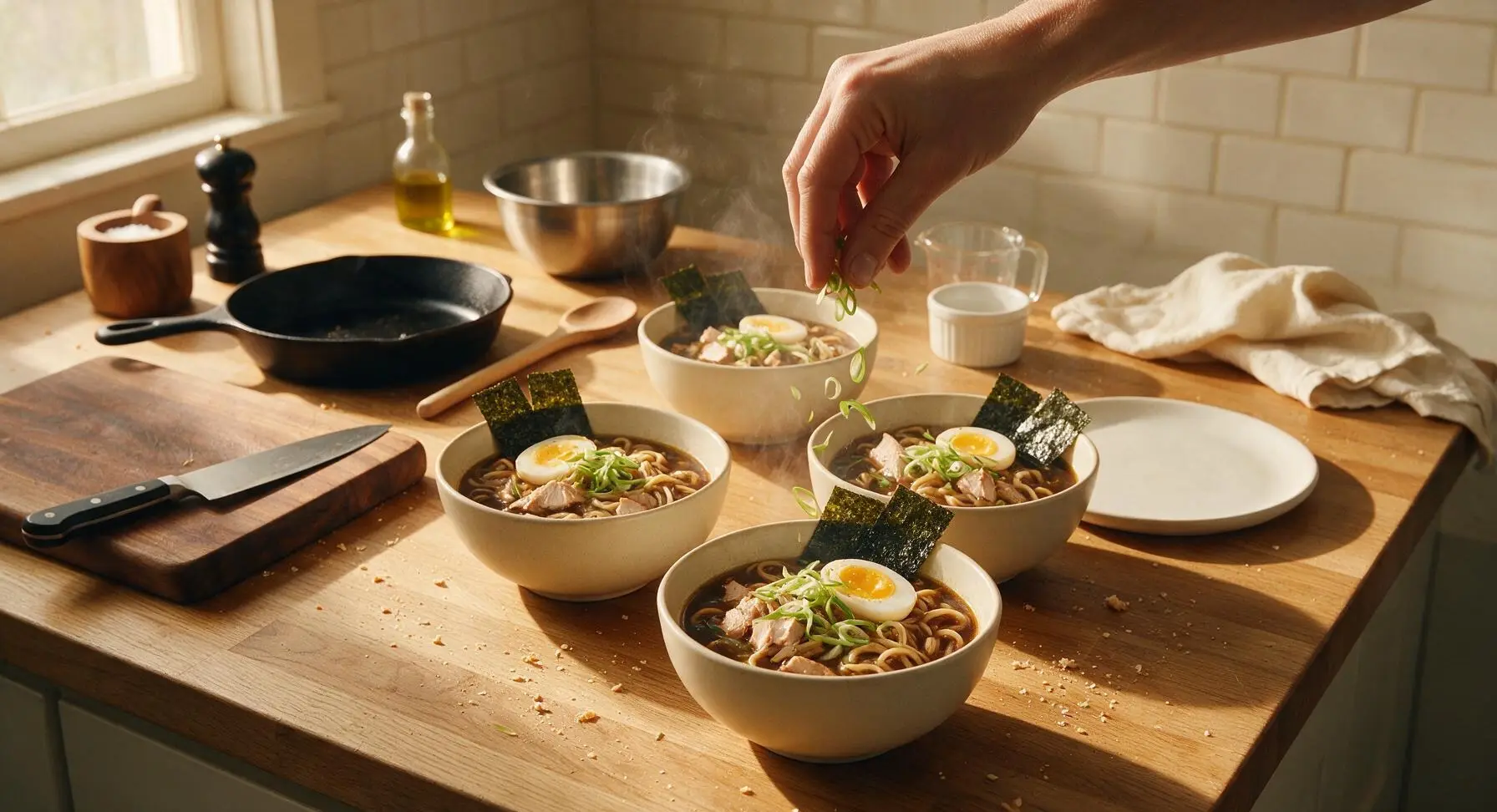
Arrange one halved soft-boiled egg, two strips of toasted nori, and a pinch of thinly sliced scallions in each bowl. Add a light grind of fresh black pepper, then serve immediately while hot. Visual cue: Bright green scallions contrast with the dark broth, soft steam rises from the bowl surface, egg yolk is slightly runny when broken.
Step 7
step7:Top and Serve Hot

Tips

1.Pat turkey skin completely dry with the linen towel before seasoning and searing: any residual surface moisture will cause the skin to steam instead of crisp in the hot oil, leading to flabby, rubbery skin that doesn’t add the rich, roasted depth the braise needs.
2.Keep the braising liquid at a very gentle simmer (not a rolling boil) for the full cook time: high heat causes turkey muscle fibers to seize and tighten, resulting in tough, stringy meat instead of the tender, fall-off-the-bone texture this recipe is designed for.
3.Rinse cooked ramen noodles with warm (not cold) water after draining: this washes away excess surface starch that would otherwise make the broth thick and gummy, while keeping the noodles warm so they don’t drop the serving temperature of the hot broth.
✨ You May Also Like

Main Course
🍜 United Kingdom

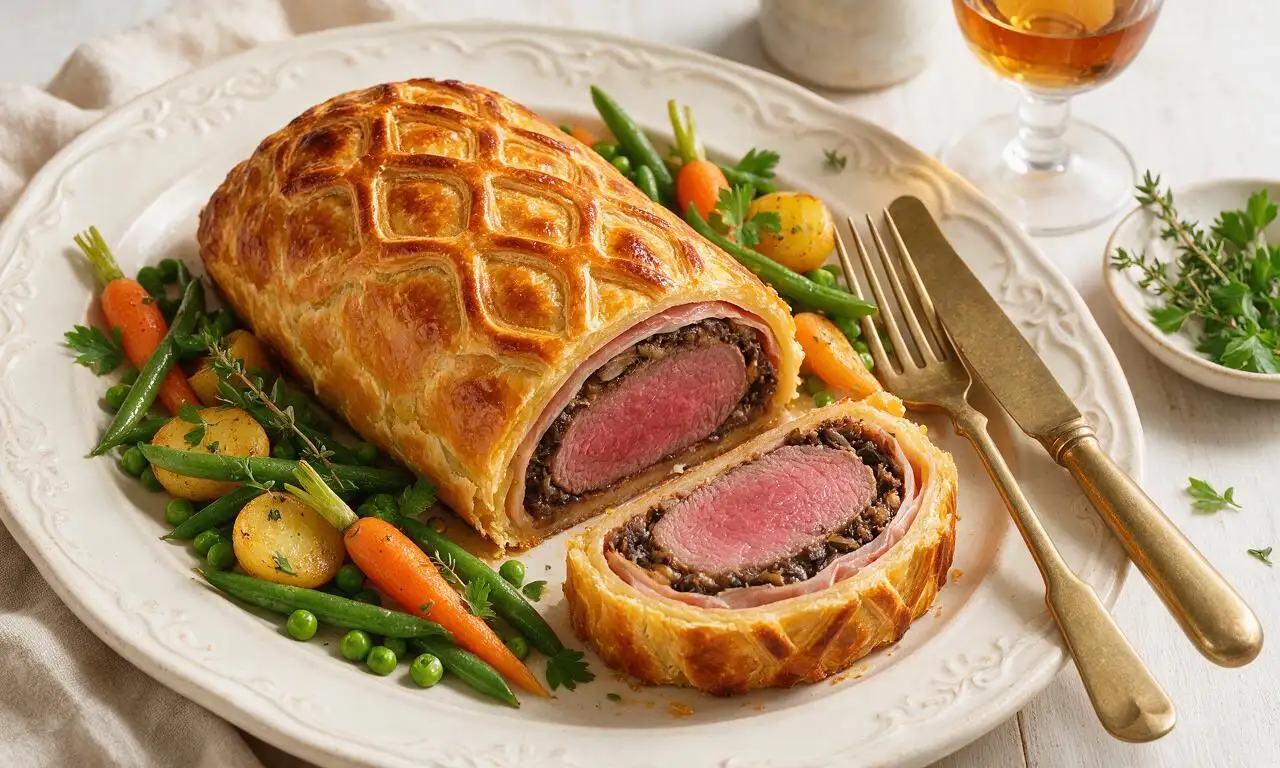
A showstopping classic of tender seared beef, savory mushroom duxelles, and crisp prosciutto wrapped in flaky golden puff pastry, baked to juicy perfection.

⏱️ 2 hours 1Main Course ★ 4.7
Main Course
🍜 India

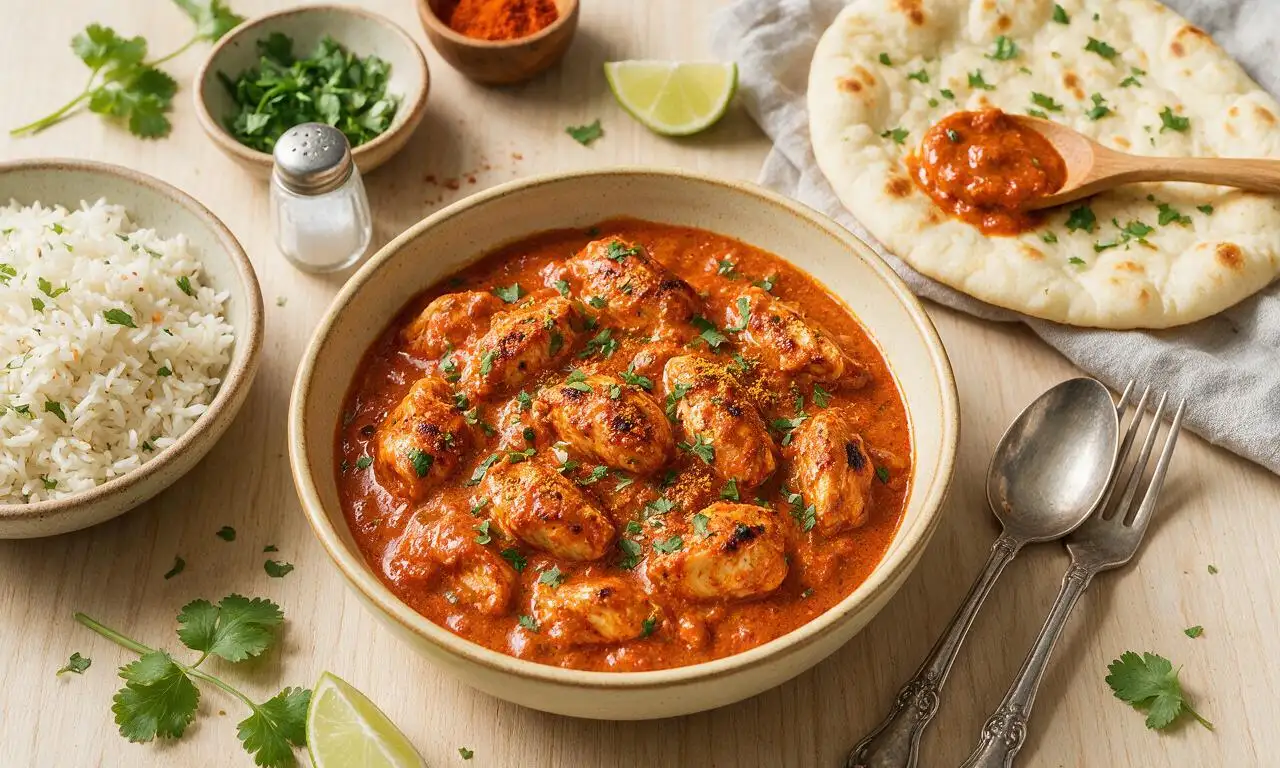
Tender charred marinated chicken simmered in a rich, spiced creamy tomato sauce, this iconic Anglo-Indian curry pairs perfectly with basmati rice or warm naan.

⏱️ 50 minuteMain Course ★ 4.6
Main Course
🍜 Thailand

Classic tangy, sweet, and savory Thai stir-fried rice noodles with shrimp, tofu, and crunchy garnishes, balancing all five core Thai flavor profiles.

⏱️ 30 minuteMain Course ★ 4.5
Main Course
🍜 United Kingdom

Crispy golden beer-battered cod and fluffy double-fried chips, served with tangy tartar sauce and malt vinegar: the timeless, beloved British pub comfort classic.

⏱️ 45 minuteMain Course ★ 4.7
Main Course
🍜 Mexico

Smoky, chile-marinated pork tacos with caramelized pineapple, fresh cilantro, and lime: a beloved classic Mexican street food perfect for casual summer gatherings.

⏱️ 1 hour 45Main Course ★ 4.8
Main Course
🍜 United States

Crunchy Fritos corn chips layered with savory beef chili and melted cheddar, topped with cool, zesty fixings for a beloved, cozy Tex-Mex comfort food.

⏱️ 35 minuteMain Course ★ 4.8

Ramen Turkey Leg:Frequently Asked Questions

1.Can I use boneless, skinless turkey legs instead of bone-in, skin-on for this recipe? ▾
I strongly recommend sticking to bone-in, skin-on legs if you can. The bone adds deep, savory depth to the ramen braising broth, and rendered skin fat gives the base a rich, silky mouthfeel boneless, skinless cuts can’t match. If you only have skinless legs, add 1 tablespoon of neutral oil to the braise to make up for missing fat.
2.How do I get the turkey leg to be fall-off-the-bone tender without it turning tough and chewy? ▾
Low, slow braising is non-negotiable here. After searing the leg to crisp the skin, simmer it covered in the dashi, soy, and shiitake broth at a gentle bubble (not a rolling boil) for 75 to 90 minutes. Boiling too fast makes turkey muscle seize up and turn chewy, so keep the heat low once you add the braising liquid.
3.Do I have to use low-sodium soy sauce, or can I swap in regular full-sodium soy? ▾
You can use regular soy sauce, but cut the total amount by about ⅓ and add a splash more water to the braising base to avoid overly salty broth. Low-sodium soy lets you control salt levels better, since dashi powder and dried shiitakes already have natural savoriness that amps up perceived saltiness.
4.Do I need to rehydrate dried shiitake mushrooms ahead of time, or can they go straight into the braise? ▾
You don’t need to pre-rehydrate them at all! Toss dried shiitakes straight into the braising liquid with the turkey leg, and they’ll plump up perfectly as the leg cooks, infusing the broth with deep, earthy umami. Once braised, slice them up to use as a topping right before serving, no extra prep needed.
5.What kind of dashi powder works best? Do I need a fancy specialty brand for good flavor? ▾
Standard instant dashi powder from your local grocery store’s Asian aisle works perfectly—no need for pricey artisanal dashi. Look for one made with bonito and kelp for the most classic, balanced umami flavor, and skip mixes with added MSG if you’re sensitive, though it won’t ruin the final dish.
6.My dried ramen noodle cakes always turn mushy in broth—how do I keep them springy? ▾
Never boil dried ramen cakes directly in the turkey braising broth! Cook them separately in rapidly boiling, unsalted water for 1 to 2 minutes less than the package directions, drain well, and rinse briefly with cool water to stop cooking. Toss with a tiny drizzle of sesame oil before serving to prevent sticking and keep the texture springy.
7.Can I make this recipe with turkey thighs instead of whole turkey legs? ▾
Absolutely! Bone-in, skin-on turkey thighs are a great swap if you can’t find whole turkey legs. They have a similar rich, dark meat texture and cook in roughly the same amount of time—just confirm they reach an internal temp of 180°F at the thickest part, away from bone, for perfect pull-apart tenderness.
8.How long should I let the turkey leg rest after braising before serving? ▾
Let the braised turkey leg rest for 10 full minutes after pulling it out of the broth, just like you would with a roasted cut of meat. This lets muscle fibers reabsorb all that juicy, umami-packed braising liquid so every bite is moist, instead of having flavorful juice run out the second you cut into it.
9.What classic ramen toppings pair best with this turkey leg version? ▾
Stick to simple, classic toppings that don’t overpower the rich turkey and shiitake broth: soft-boiled marinated ramen eggs, thinly sliced green onions, a pinch of togarashi, toasted sesame seeds, crisp nori strips, and a tiny dollop of spicy chili oil work beautifully. Skip heavy toppings like thick chashu pork, since the turkey leg is already the hearty star.
10.Can I make the braised turkey leg a day ahead to save time on weeknights? ▾
This recipe actually gets better when made a day ahead! Let the turkey leg cool completely in its braising broth, then store covered in the fridge for up to 3 days. Flavors will meld and deepen overnight; just skim any solidified fat off the top, reheat gently, and cook fresh ramen noodles right before serving.
11.My braising broth tastes a little flat—what can I do to boost umami before serving? ▾
Start by tasting and adjusting salt first, since low salt reads as flat flavor. If it still needs a lift, stir in a tiny ¼ teaspoon extra dashi powder, a splash of mirin for subtle sweetness, or 1 teaspoon of oyster sauce to amp up savoriness. Avoid adding too much extra soy, which can make broth overly salty without adding depth.
12.Do I need to sear the turkey leg before braising, or can I skip that step to save time? ▾
Don’t skip the sear! Searing the skin-on turkey leg over medium-high heat for 3 to 4 minutes per side before adding the braising liquid caramelizes the skin and creates Maillard browning on the meat, adding layers of nutty, deep flavor you can’t get from raw braised meat. It also renders excess skin fat so the broth doesn’t taste greasy.
13.What swaps do I need to make this recipe gluten-free for guests with dietary restrictions? ▾
It’s easy to adapt! Swap regular dried ramen cakes for certified gluten-free brown rice ramen noodles, use gluten-free low-sodium tamari instead of soy sauce, and double-check that your dashi powder doesn’t contain hidden wheat-based additives. Dried shiitakes and turkey legs are naturally gluten-free, so those need no adjustments.
14.How do I keep the turkey skin from getting rubbery during the long braise? ▾
After searing the skin until it’s deeply golden and crisp, set the turkey leg on top of the rehydrating shiitakes in the braising pot instead of submerging it fully under liquid. Keep the skin side above the broth line for the entire braise, so skin stays firm instead of getting soggy and rubbery from sitting in hot liquid the whole time.
15.Can I freeze leftover braised turkey leg and broth for later quick meals? ▾
Yes, this freezes beautifully! Let the turkey and broth cool completely, then store them together in an airtight, freezer-safe container for up to 3 months. Thaw in the fridge overnight, reheat gently on the stovetop at a low simmer, and pair with freshly cooked ramen noodles for a fast, cozy meal on busy days.
16.What’s the best pot to use for braising the turkey leg? ▾
A heavy-bottomed Dutch oven works best here, since it distributes heat evenly and holds a steady low temperature perfectly for long braises. Pick one with a tight-fitting lid to trap steam, which helps the turkey leg cook evenly and stay moist. If you don’t have a Dutch oven, any deep, lidded stovetop-safe pot works, just monitor the braise temp more closely.
17.Can I make this in a slow cooker instead of on the stovetop? ▾
Definitely! Sear the turkey leg first as directed, then add it to the slow cooker with the dashi, soy, water, and dried shiitakes. Cook on LOW for 4 to 5 hours, until the turkey is pull-apart tender, then finish by cooking your ramen noodles separately on the stovetop right before serving. Avoid cooking on HIGH, as that can make the turkey tough.
18.How much broth should I plan for per serving when assembling the ramen bowls? ▾
Aim for 1 ½ to 2 cups of strained, heated braising broth per standard ramen bowl. That’s enough to fully cover the cooked noodles and come halfway up the turkey leg, without making the bowl so full that toppings slide off or slosh over the edge when you carry it to the table. Ladle hot broth over noodles right before adding turkey and toppings.
19.I don’t eat pork—does this recipe have any hidden pork ingredients I need to watch for? ▾
The core recipe is pork-free, but always double-check your dashi powder and ramen noodle labels! Most standard dashi uses dried bonito (a fish, not pork), but some pre-packaged noodle cakes or seasoned dashi mixes add hidden pork flavoring, so opt for plain, unseasoned ingredients to keep the dish fully pork-free.
20.Why does the recipe call for cooking dried shiitakes in the braise instead of sautéing them first? ▾
Dried shiitakes hold tons of concentrated, earthy umami that leaches out into the broth as they rehydrate during the slow braise, making the ramen base far more flavorful than if you sautéed fresh or pre-rehydrated mushrooms first. Once plump and tender, they make a perfect ready-to-use topping with zero extra work, so it’s a double win for flavor and ease.

Comments (6)

1 week ago

OMG this Ramen Turkey Leg was such a game changer for our Sunday family dinner! I was worried the medium difficulty would be too much after a long work week, but the steps were so straightforward even my 12 year old helped prep. The meat was fall-off-the-bone tender and the ramen seasoning infused every bite perfectly. SO good, my kids loved it – they went back for seconds before I even finished my first plate! I already have the ingredients on the list to make this again for next week’s meal prep.

2 hours ago

Tried this last night in my tiny dorm kitchen, and honestly it came out way better than I expected! The only swap I made was using low-sodium ramen packets because that’s all I had at the corner store, but it still slapped. The only issue I had was getting the temp right on my tiny countertop oven so the skin crisped up, but the meat was juicy regardless.

30 minutes ago

So glad you gave this a shot in your dorm kitchen, Kels! For crispier skin next time, try patting the turkey leg completely dry with paper towels before seasoning, and crank the oven up to 425°F for the last 10 minutes of cook time — that trick works even on smaller countertop ovens! The low-sodium ramen swap is a great call too.

3 days ago

Brought this to our neighborhood potluck last weekend and it was the first dish gone! People were hovering over the platter asking what was in the glaze. I will say, make sure you give yourself enough time — I cut the cook time short by 10 minutes because I was running late, and the meat near the bone was a little less tender than I wanted, but the flavor was still chef’s kiss. 10/10 would make again, just with better time management on my end lol.

2 days ago

Oh no, I did the exact same thing the first time I made it! I was rushing to get to my sister’s birthday dinner and pulled it out too early. Second time around I set a timer and let it rest for 10 minutes after pulling it out of the oven, game changer. That glaze is insane, right?!

yesterday

So happy this was a potluck hit! That rest time Liz mentioned is such an important step — it lets all those ramen-infused juices redistribute back into the meat so every bite is juicy and flavorful. If you’re short on time, you can even brine the turkey legs in the ramen seasoning blend overnight to cut down on active prep day of!

2 weeks ago

Made this for my weekend cookout with the guys last Saturday, and everyone was asking for the recipe nonstop! I was skeptical that turkey leg and ramen flavors would mesh, but that savory umami kick is unreal. As someone who loves kicking every recipe up a notch, I added a pinch of gochugaru and a drizzle of chili oil to the ramen glaze, and WOW. The heat cuts through the richness of the turkey leg so perfectly. 90 minute cook time was totally worth the wait, no regrets. Will absolutely be making this again for our next tailgate.

yesterday

Made this for my family last night and I gotta say, I was a little intimidated by the medium difficulty rating at first — I’m usually a frozen pizza and boxed mac and cheese guy, y’know? But the instructions were super clear, and even with my mediocre cooking skills, the turkey legs turned out amazing. My kids raved about it, and my wife said it’s better than the ramen turkey we got at that fancy food festival last summer! Only thing I messed up was I forgot to save a little extra ramen seasoning to top it with at the end, oops.

30 minutes ago

Dude I did the exact same thing my first time! I ended up sprinkling a little toasted sesame seed and nori flake on top instead, and it still hit. So stoked it turned out for you — my wife still asks for this once a week at this point, it’s become our standard Friday night meal.

5 minutes ago

Has anyone tried making this with gluten-free ramen? I have celiac so I can’t do regular wheat ramen seasoning packets, but this recipe looks so good I’ve been staring at it for three days trying to figure out how to adapt it. Would the cook time change at all if I use GF seasoning? Would love to make this for my roommate and I this weekend!

just now

I made this last week with GF ramen seasoning (I used the Mike’s Mighty Good GF miso ramen packets) and it worked perfectly! No changes to cook time needed at all, the flavor was just as rich as the regular version. I did make sure to double check that my soy sauce was GF too, just a heads up!

just now

Great question! As GFBakingMama mentioned, gluten-free ramen seasoning works perfectly here with no cook time adjustments needed. Just be sure to swap any regular soy sauce for tamari if you’re strictly gluten free, and you’re good to go. Hope you and your roommate love it!