
Sake Braised Ribs
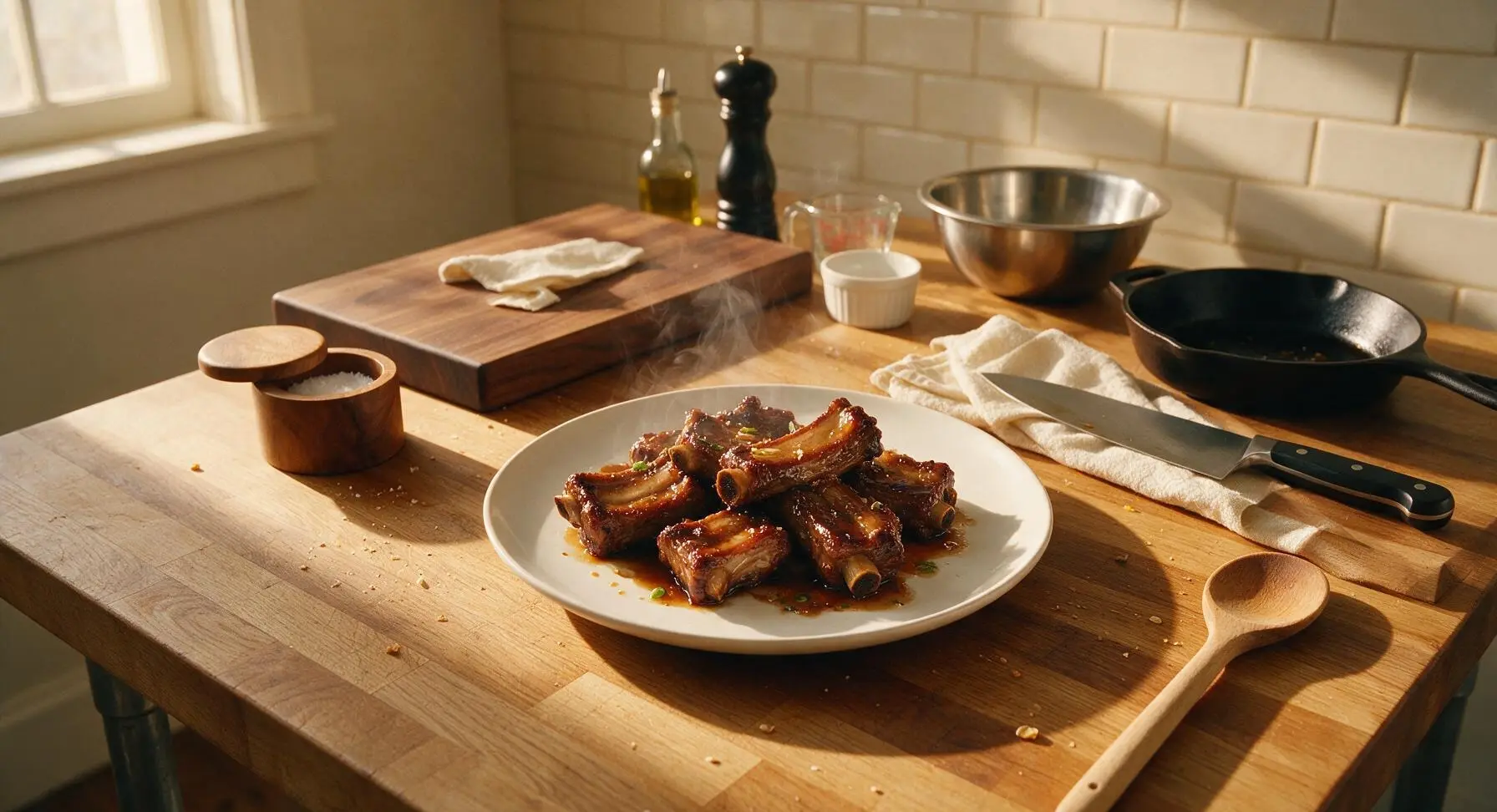
intro
Fall-off-the-bone pork ribs slow-simmered in umami-rich sake, soy, and ginger, finished with a glossy sweet-savory glaze perfect for pairing with steamed rice.
Ingredients
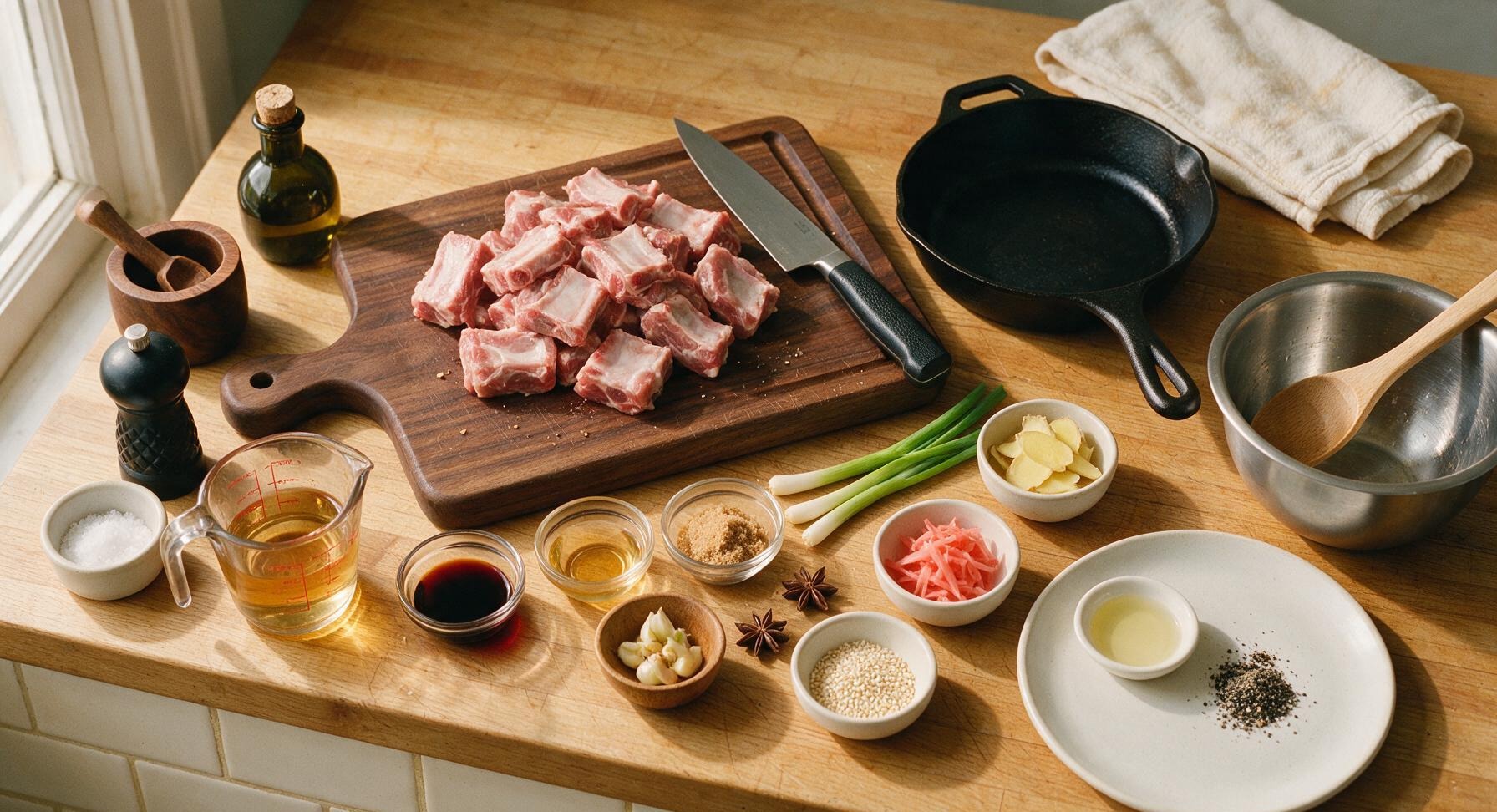
Steps
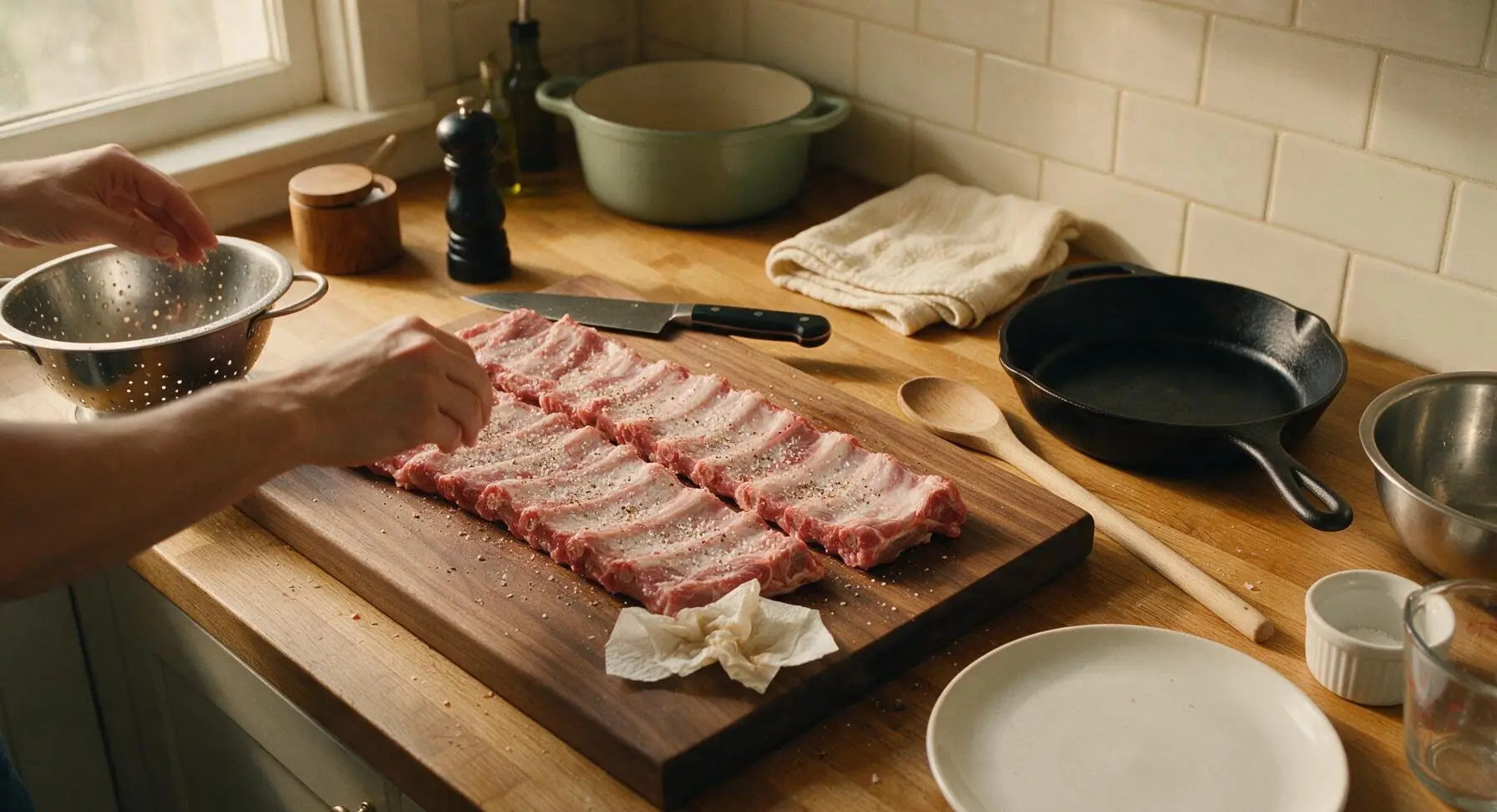
Prep and Pat Ribs Dry
Place cut spare ribs in the stainless steel colander, rinse under cold running water for 2 minutes to wash away loose bone fragments. Transfer rinsed ribs to the maple cutting board, pat completely dry on all sides with paper towels, then season evenly with 1 tsp coarse sea salt and 1/2 tsp freshly ground black pepper. Let ribs rest 10 minutes at room temperature to allow seasoning to adhere and penetrate the meat surface.
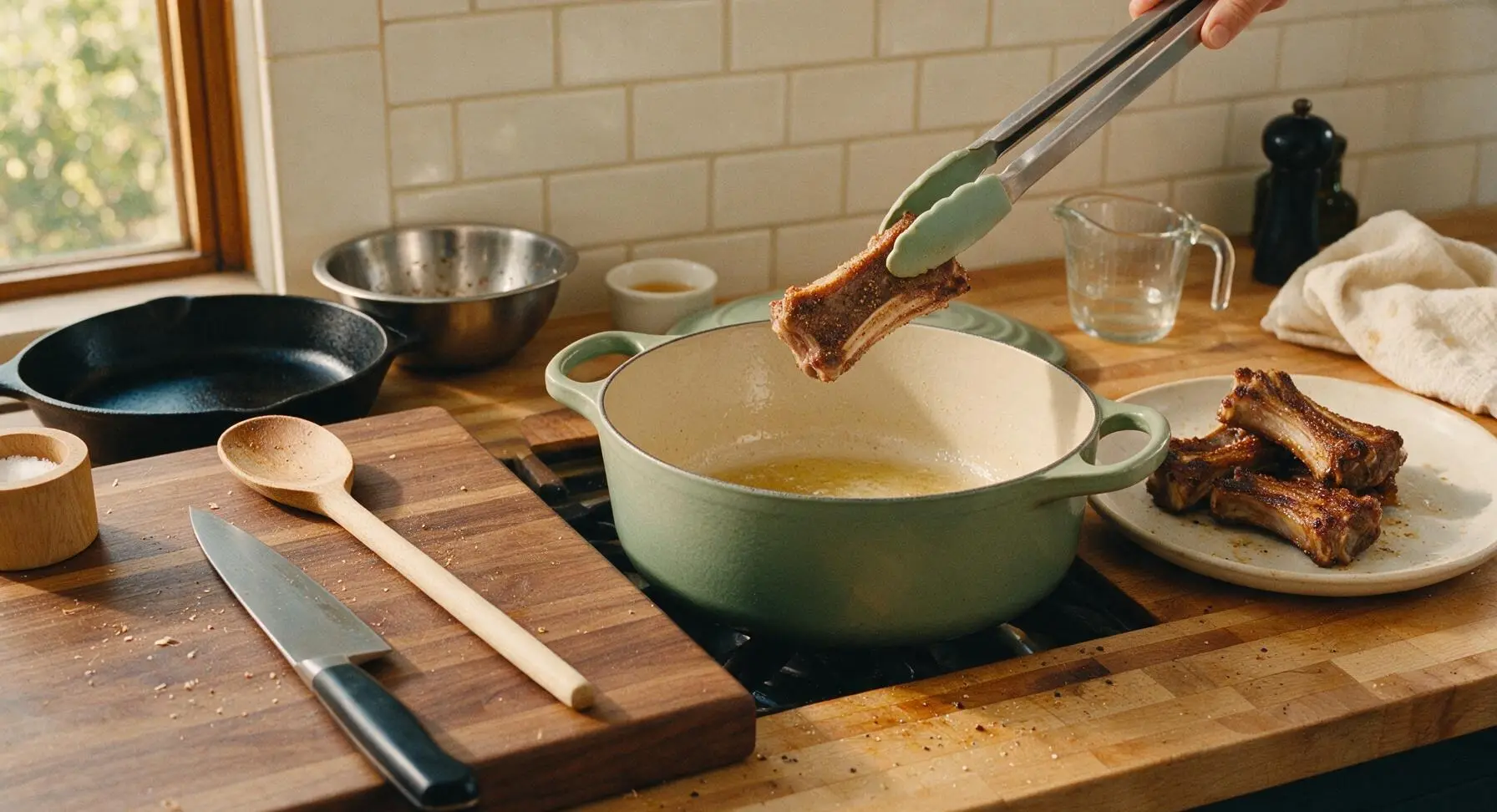
Sear Ribs Until Golden
Heat 1 tbsp neutral canola oil in the sage green enameled Dutch oven over medium-high heat (180C/350F) until oil shimmers but does not smoke. Working in 2 separate batches to avoid crowding the pan, use the silicone-tipped stainless steel tongs to place ribs in a single layer, searing 2-3 minutes per side until a deep golden brown crust forms on all surfaces. Transfer seared ribs to a clean matte off-white dinner plate used as a temporary resting spot and set aside while you sear the remaining batch.
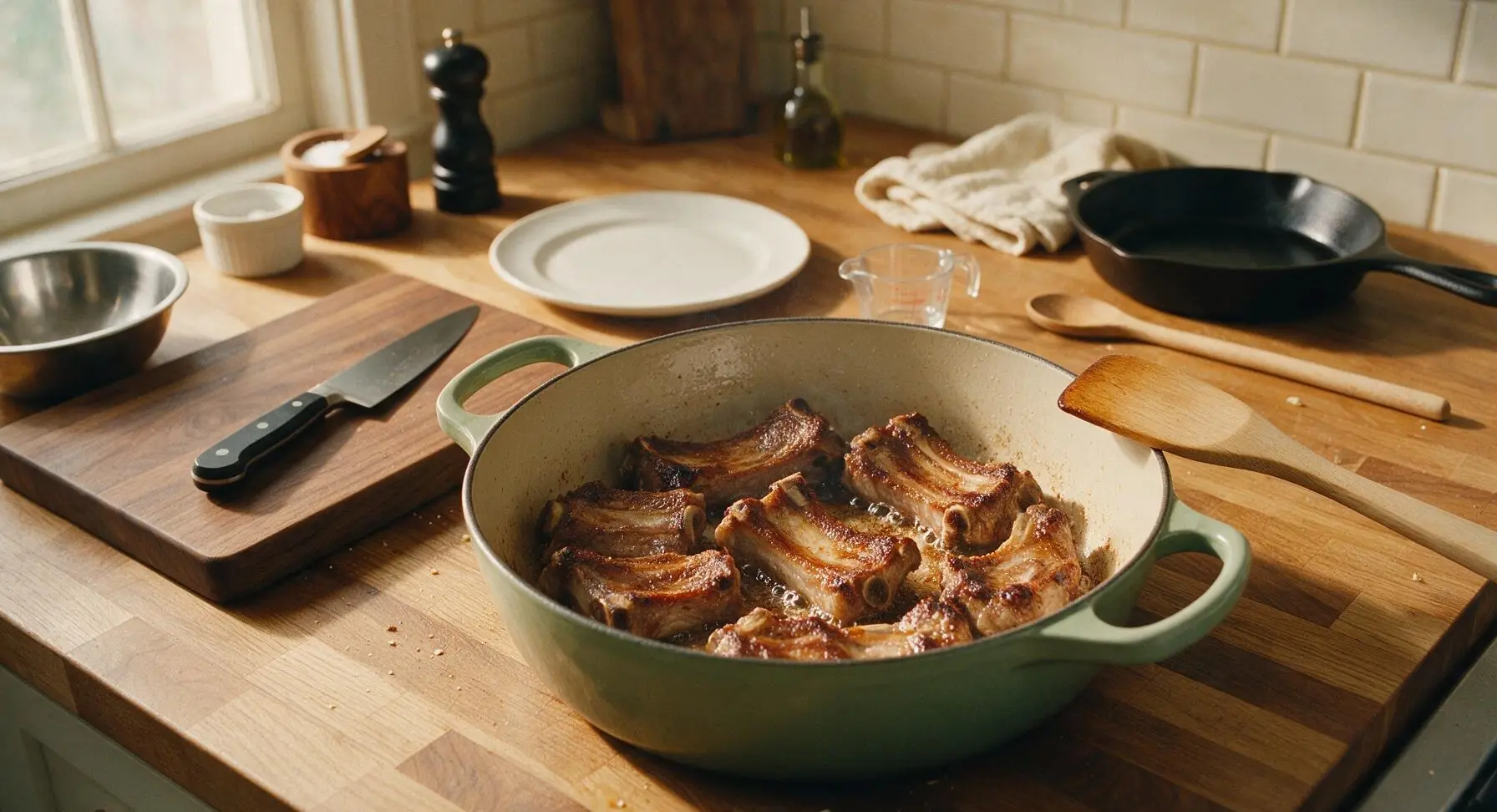
Sauté Fragrant Aromatics
Reduce heat to medium (150C/300F), leaving 1 tbsp of rendered pork fat in the Dutch oven and discarding any excess. Add thinly sliced ginger, crushed garlic, and whole star anise to the pan, sautéing for 30-45 seconds while stirring constantly with the beech wood spatula, until the aromatics release a warm, fragrant scent. Stop cooking before garlic or ginger turns dark brown, as burnt aromatics will make the braise taste bitter.
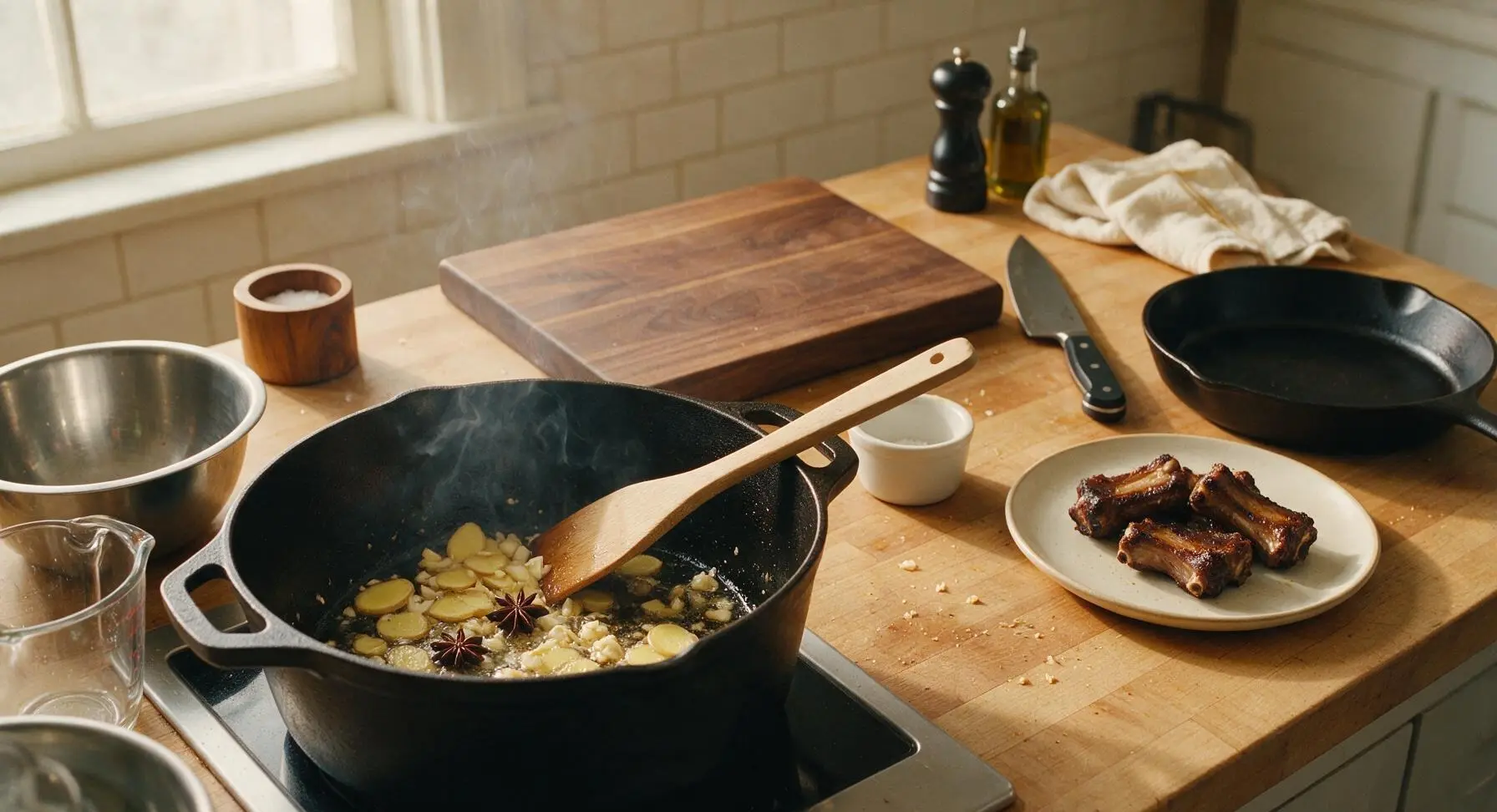
Add Sake Braising Liquid
Pour 200ml junmai sake into the Dutch oven, using the wooden spatula to scrape all browned fond bits from the bottom of the pan as the liquid simmers. Once sake comes to a gentle bubble, add 80ml low-sodium soy sauce, 3 tbsp mirin, 2 tbsp brown sugar, and 2 scallions tied in a loose knot. Stir for 1 minute until the brown sugar fully dissolves into the liquid.
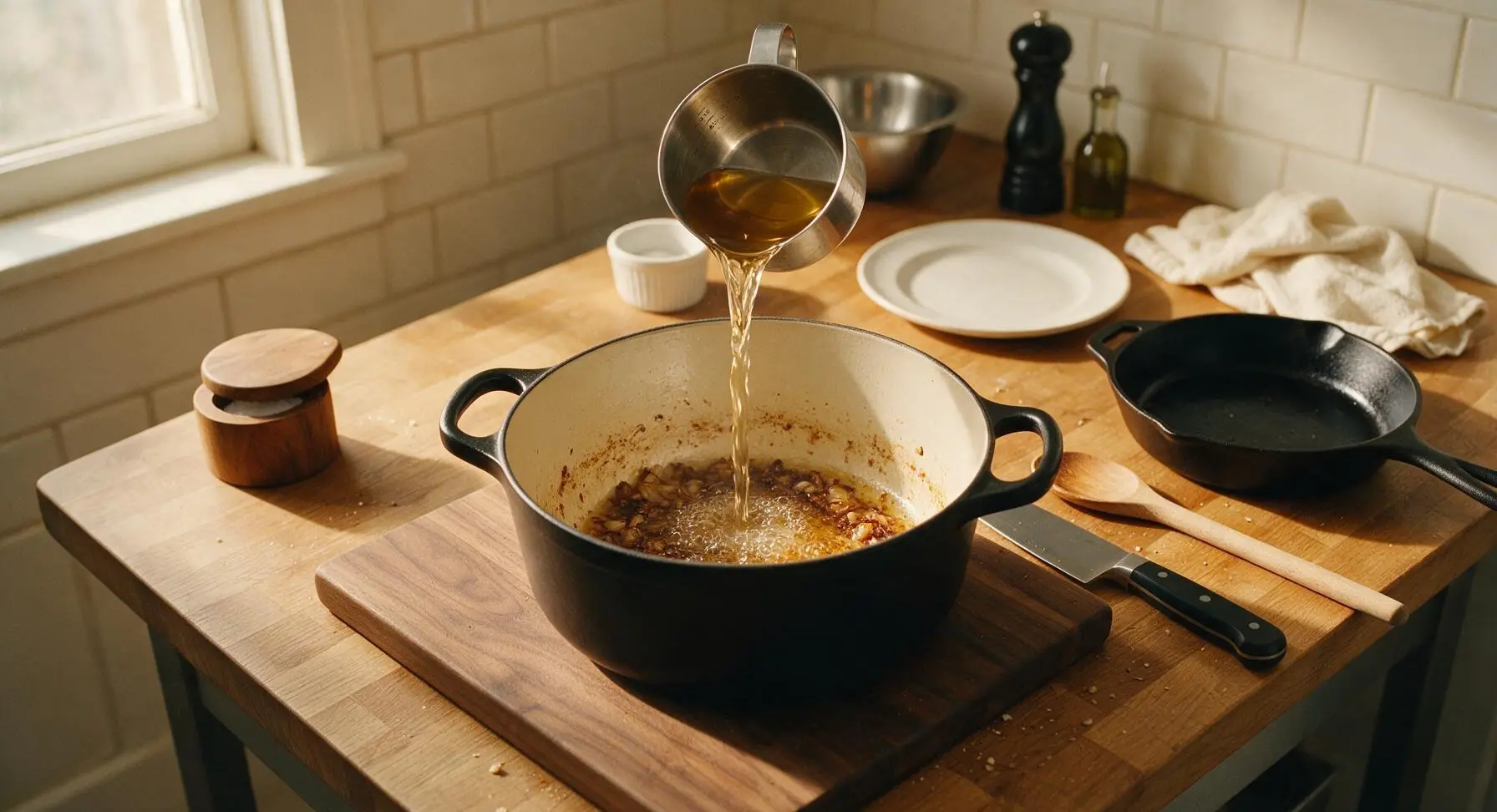
Slow Simmer the Ribs
Return all seared ribs to the Dutch oven, arranging them in a loose single layer so they are roughly 3/4 submerged in the amber braising liquid. Bring liquid to a very low gentle simmer (small bubbles breaking the surface every 2-3 seconds, no rolling boil), then place the tight-fitting lid on the Dutch oven. Reduce heat to low (120C/250F) and simmer for 1 hour, using tongs to turn the ribs once at the 30-minute mark to ensure even cooking. Ribs will be tender but not fully falling off the bone at this stage.
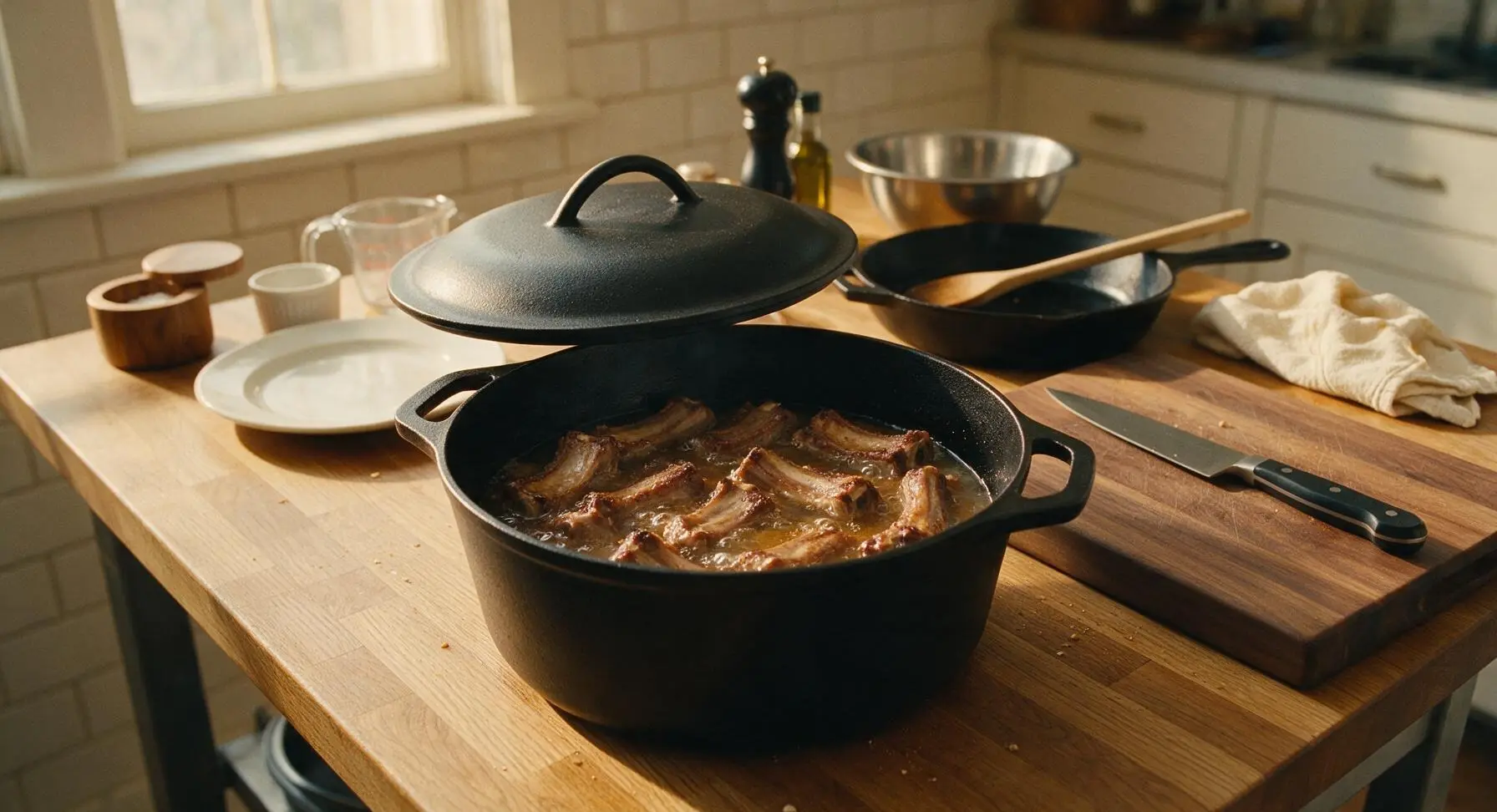
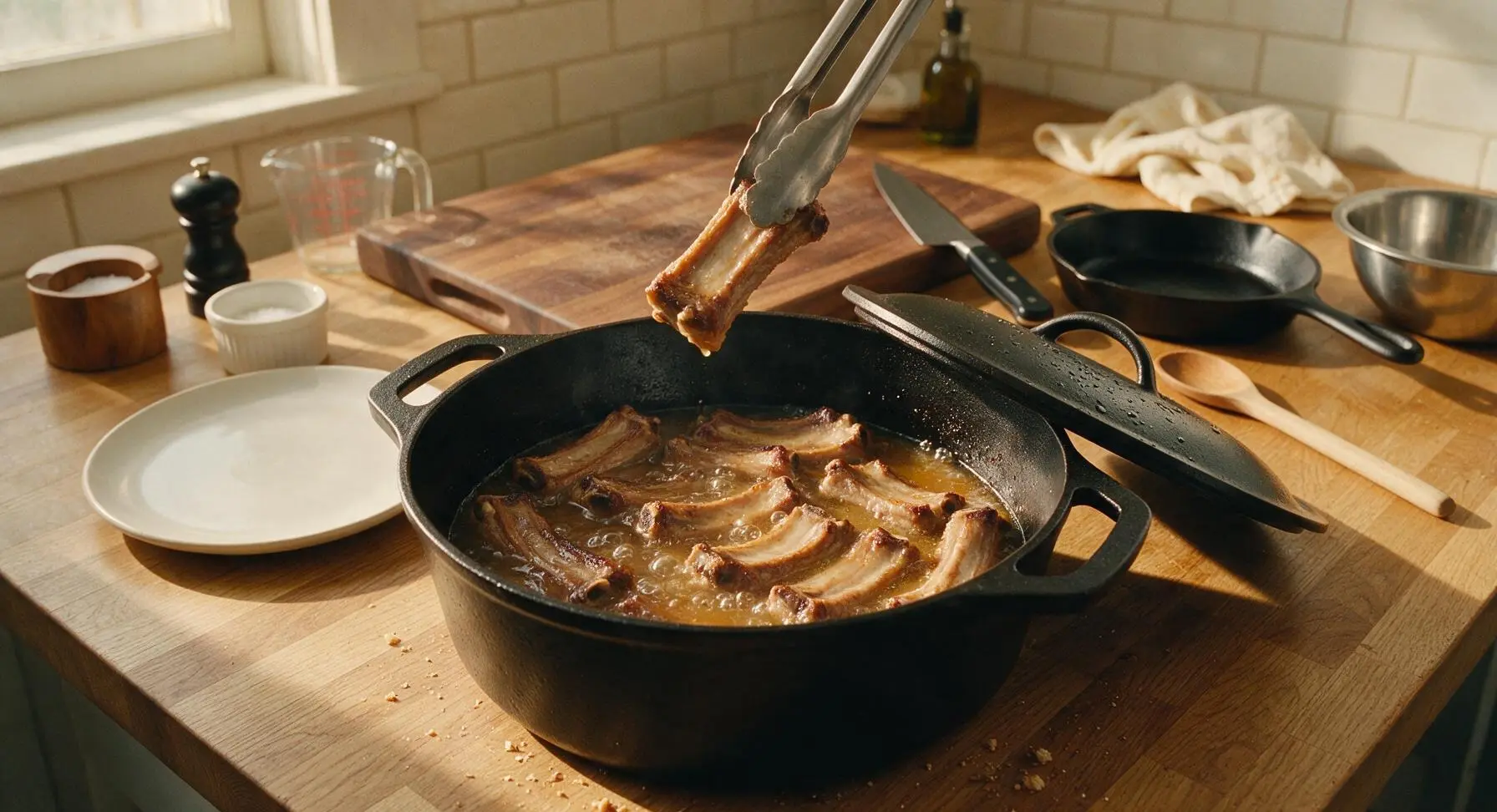
Reduce to Glossy Glaze
After 1 hour of covered simmering, remove the Dutch oven lid and set it aside. Increase heat to medium-low (140C/285F) and simmer uncovered for 15-20 minutes, turning ribs occasionally with tongs, until the braising liquid reduces by two-thirds to a thick, syrupy consistency that coats the back of a spoon. Watch closely during the final 5 minutes of reduction, as the high sugar content can cause the glaze to burn quickly and turn bitter.
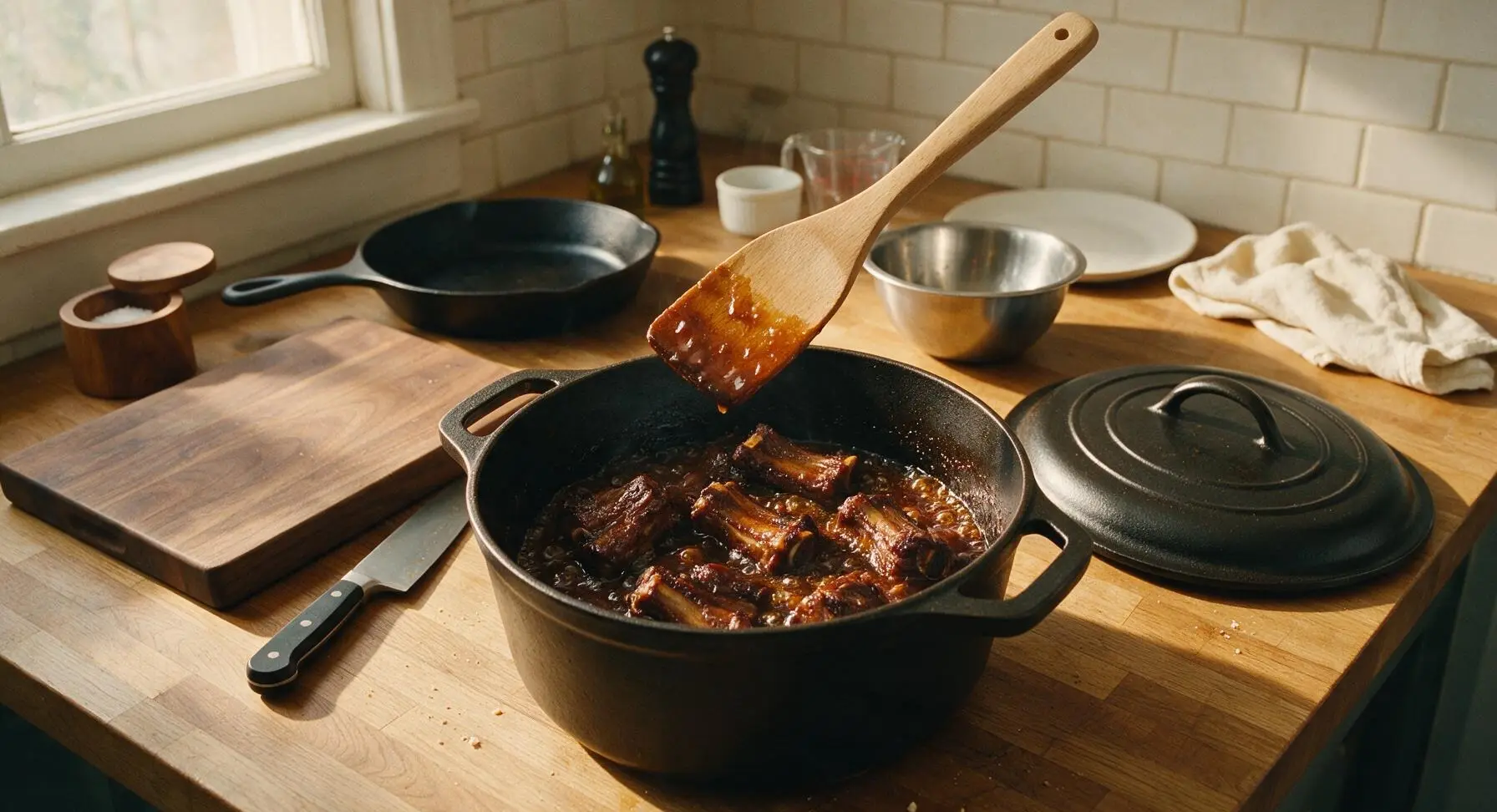
Plate and Garnish Ribs
Use the silicone-tipped tongs to transfer glazed ribs to a clean matte off-white ceramic dinner plate, stacking them slightly for height. Drizzle 1 tbsp of remaining thick glaze over the top of the ribs, then garnish with thinly sliced scallion greens and 1 tsp toasted white sesame seeds. Serve immediately with pickled ginger in the small ceramic ramekin on the side and steamed rice in the clear glass bowl, if desired.
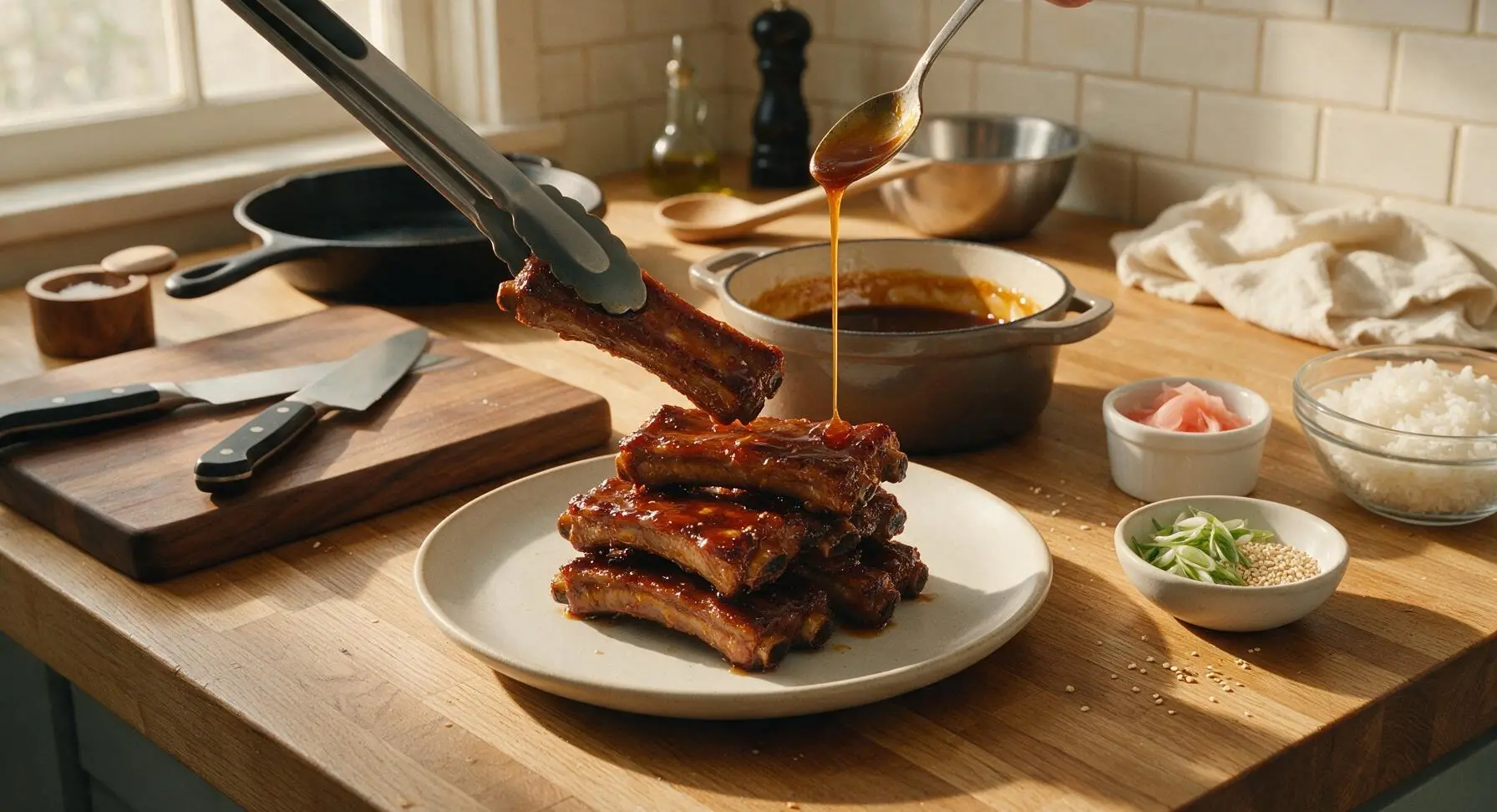
Tips
2.Choose junmai drinking sake over cooking-grade ‘ryorishu’ for the best flavor: cooking sake often contains added salt, preservatives, and artificial flavorings that make the glaze taste harsh and overly salty. If junmai is unavailable, dry fino sherry makes a well-balanced substitute.
3.Keep heat low during the covered braise and final glaze reduction: a rolling boil will tighten meat proteins and make ribs tough, while high heat during reduction will quickly burn the sugar in mirin and brown sugar, creating a bitter, acrid glaze. Stop reduction when the glaze coats the back of a spoon in a thick, even layer.

Brought these to my office potluck a couple weeks back and the entire pan was gone in 10 minutes. Multiple people asked for the recipe, I sent them all straight here! Only heads up: make a double batch if you’re serving more than 4 people, the serving size is no joke small if you have rib lovers in the crowd.
Wait y’all, I’m a broke college student and I was able to pull this off in my tiny apartment kitchen? Who knew fancy restaurant ribs were this doable? I used cheap grocery store ribs, a $5 bottle of cooking sake, and followed the recipe exactly. My roommates are still raving about it two days later.
Made these last night for date night and my partner literally asked if I ordered takeout from a fancy Japanese fusion restaurant! The glaze is so glossy and flavorful, I couldn’t stop licking my fingers. Worth every minute of the 90 minute cook time, no shortcuts needed.
SO good! I prepped these on Sunday for my weekly meal prep, and they reheated beautifully all week for lunches. The only tweak I made was adding a tiny extra splash of soy sauce because I love that salty umami kick. 10/10, way easier than I thought it would be for a medium difficulty recipe!
OMG these sake braised ribs were the star of our Sunday family dinner! I was worried the sake taste would be too strong for my picky 7 year old, but he ate three ribs and asked for seconds. The meat was fall-off-the-bone tender after the full 90 minute cook time, total game changer for my usual rib recipe. Will absolutely be making these for our next neighborhood potluck!
First time making ribs that didn’t turn out tough! My 10 month old even gnawed on a rib (no sauce, obviously) and loved it. Only thing is I didn’t have a Dutch oven so I used my slow cooker on high for 4 hours instead, turned out great.
These were really good, but I added a tablespoon of gochugaru to the braising liquid for a little heat kick and it took them to the next level. If you love spicy food, I highly recommend that tweak! The sweet-savory-spicy balance was chef’s kiss.
Made this with tamari instead of regular soy sauce to keep it gluten free for my celiac daughter, and it worked perfectly! The depth of flavor from the sake is unreal, I’ll be adding this to our monthly rotation for sure. No weird gluten cross-contamination issues as long as you check your sake label, folks!
Solid recipe, though I wish it had a note about what sake brand works best on a budget. I grabbed the cheapest bottle I could find at my local Asian market and it turned out a little more bitter than I expected. Still edible, just not as perfect as the photos look. Next time I’ll spring for a better bottle.
I was a little skeptical about pairing sake with ribs at first, since I usually do a Southern-style barbecue rub, but this recipe converted me! The umami from the sake and soy pairs so well with the rich pork, I even made a little extra glaze to drizzle over my mac and cheese on the side. Don’t knock it till you try it!