1.What makes Santa Maria BBQ tri-tip different from other grilled tri-tip recipes?
▾
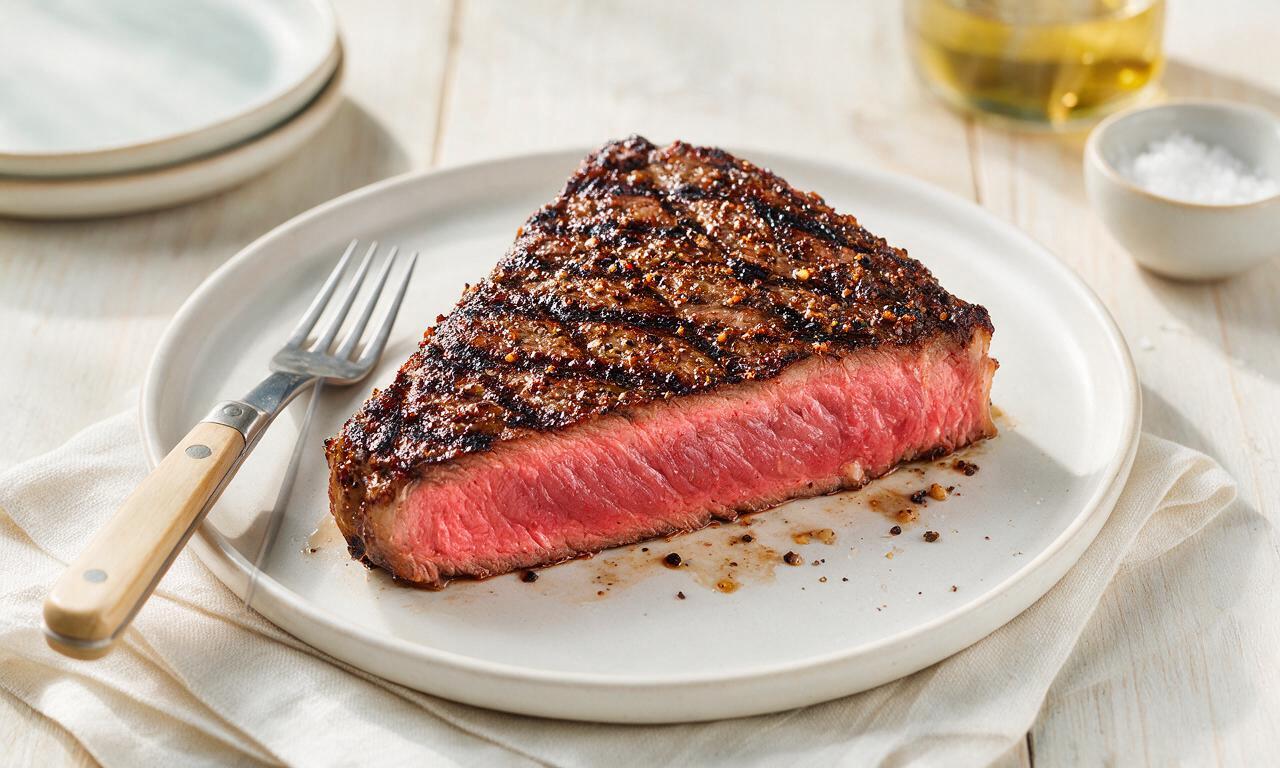
The signature differences are rooted in Central Coast tradition: it’s seared over native red oak for mild, earthy smokiness, uses a simple salt-pepper-garlic-paprika dry rub with no sugary binders or heavy mop sauces, and cooks hot and fast to juicy medium-rare, rather than low-and-slow like most Southern-style BBQ. It’s always sliced against the grain for maximum tenderness.
2.How much silver skin should I trim off the tri-tip before cooking?
▾
Trim off all thick, papery silver skin on the roast’s surface, as it never softens during cooking and will leave chewy, unpleasantly tough bites. You don’t need to strip away every tiny bit of surface fat—leave a thin 1/8-inch fat cap if present to baste the meat as it renders and boost the final crust’s savoriness.
3.Can I use a different wood if I don’t have red oak for grilling?
▾
Red oak is traditional for its mild, slightly sweet smoke that doesn’t overpower beef, but if you can’t source it, use post oak or white oak as the closest substitutes. Avoid heavy, resinous woods like pine, mesquite, or hickory—their strong, bitter smoke will clash with the simple, clean flavor profile this regional BBQ is known for.
4.How far in advance should I apply the dry rub to the tri-tip?
▾
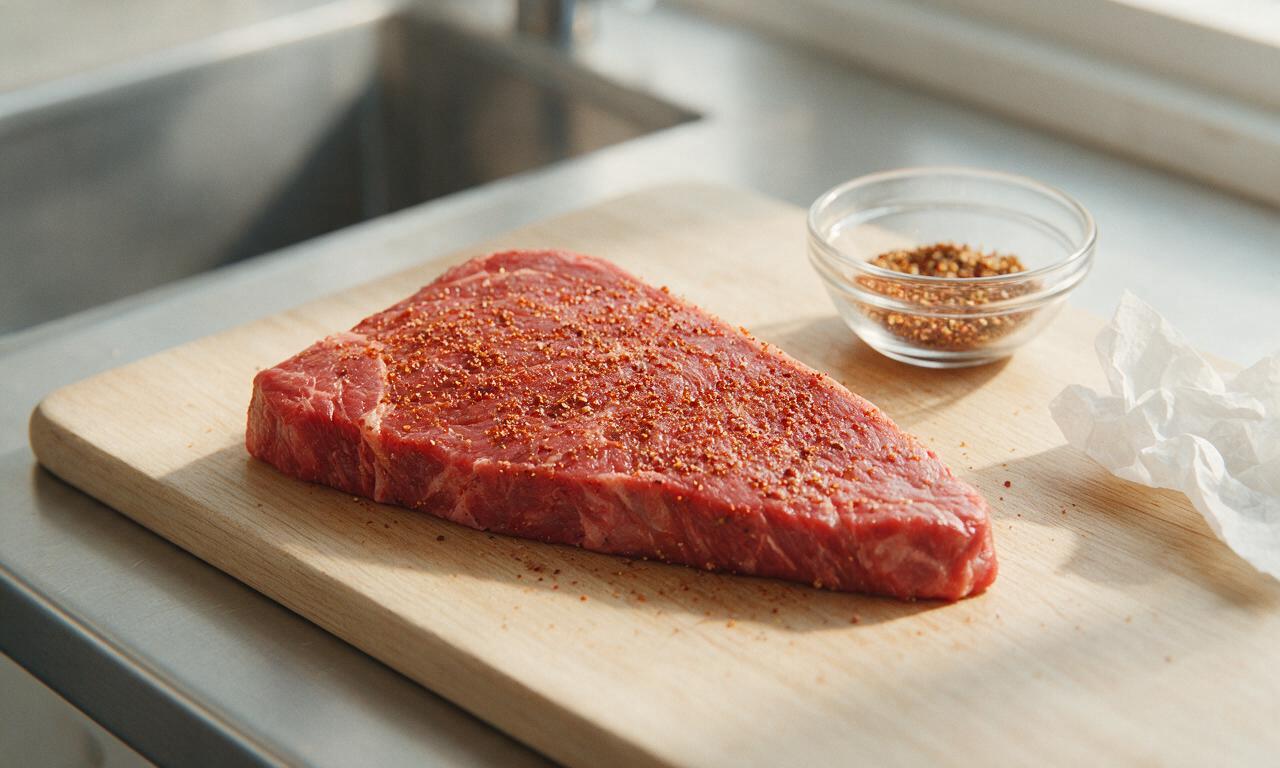
For the best set garlic-pepper crust, apply the rub 45 to 60 minutes before you plan to cook. Letting the seasoned roast rest at room temperature lets salt draw out moisture that dissolves the spices, which then reabsorbs into the meat to build flavor and help the rub stick, rather than falling off when you flip it on the grill.
5.What grill temperature do I need for authentic Santa Maria tri-tip?
▾
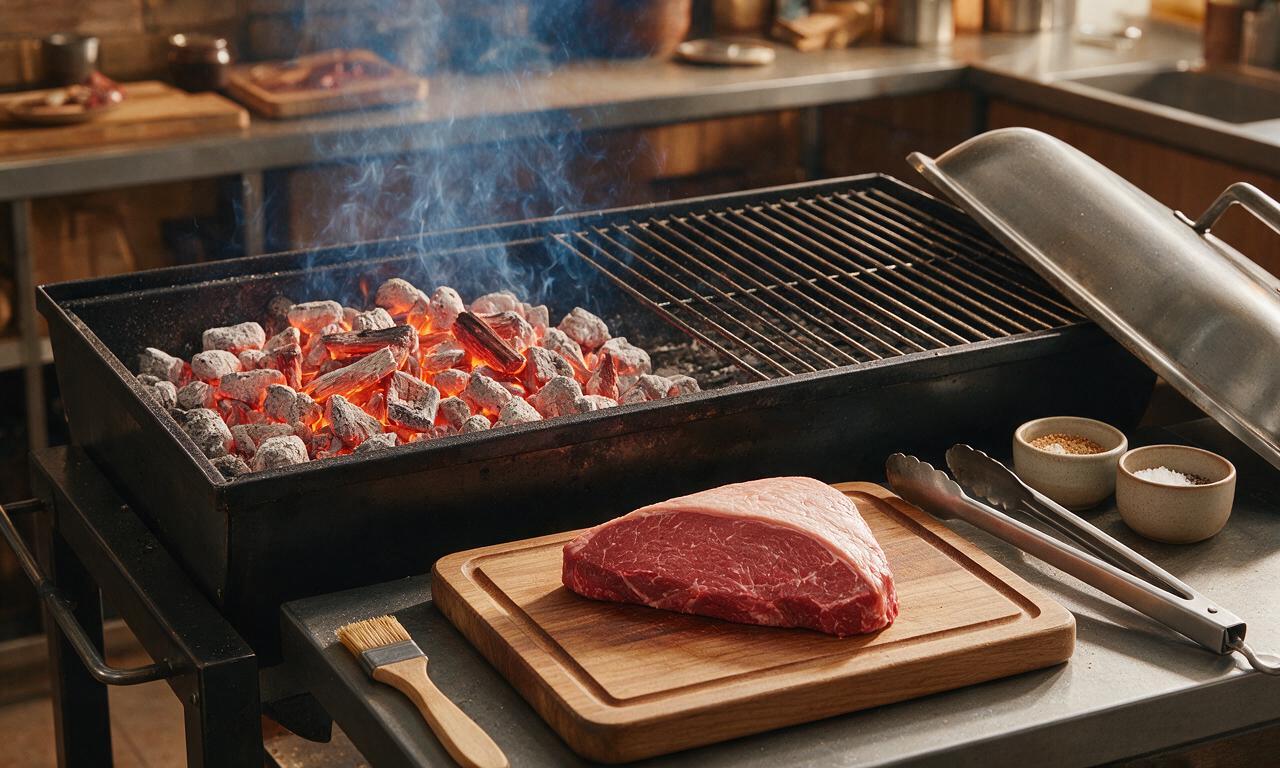
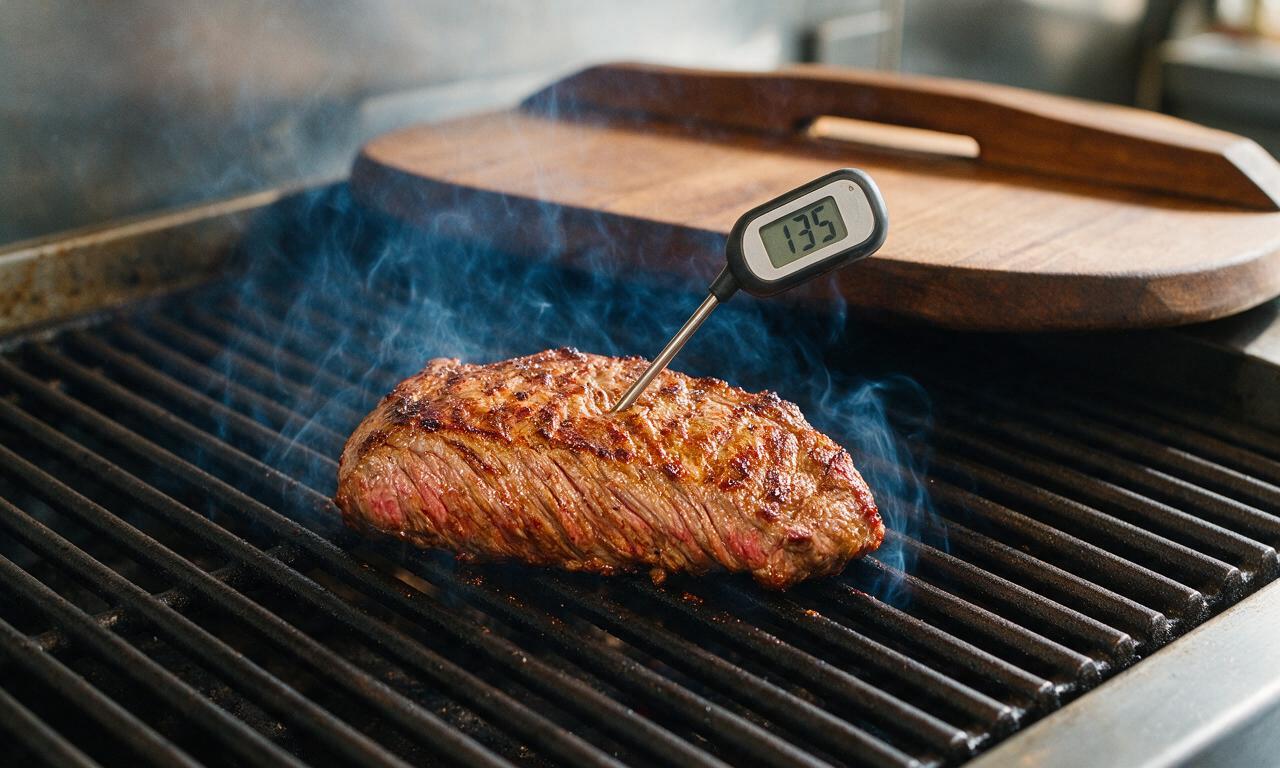
Aim for a two-zone fire with a hot direct-heat zone sitting at 450 to 500°F, and a cooler indirect zone around 325°F. You’ll start by searing the roast directly over red oak coals to build that dark, crispy crust, then move it to indirect heat to finish gently so the center stays juicy without burning the spice rub.
6.What internal temperature should I pull the tri-tip at for perfect medium-rare?
▾
Pull the roast off the grill when the thickest part hits 125 to 128°F on an instant-read thermometer. It will carry over cook 5 to 7°F as it rests, landing you at a perfect 130 to 135°F medium-rare with a warm, juicy, pink center, which is the traditional doneness for this regional style.
7.How long do I need to let the tri-tip rest after grilling?
▾
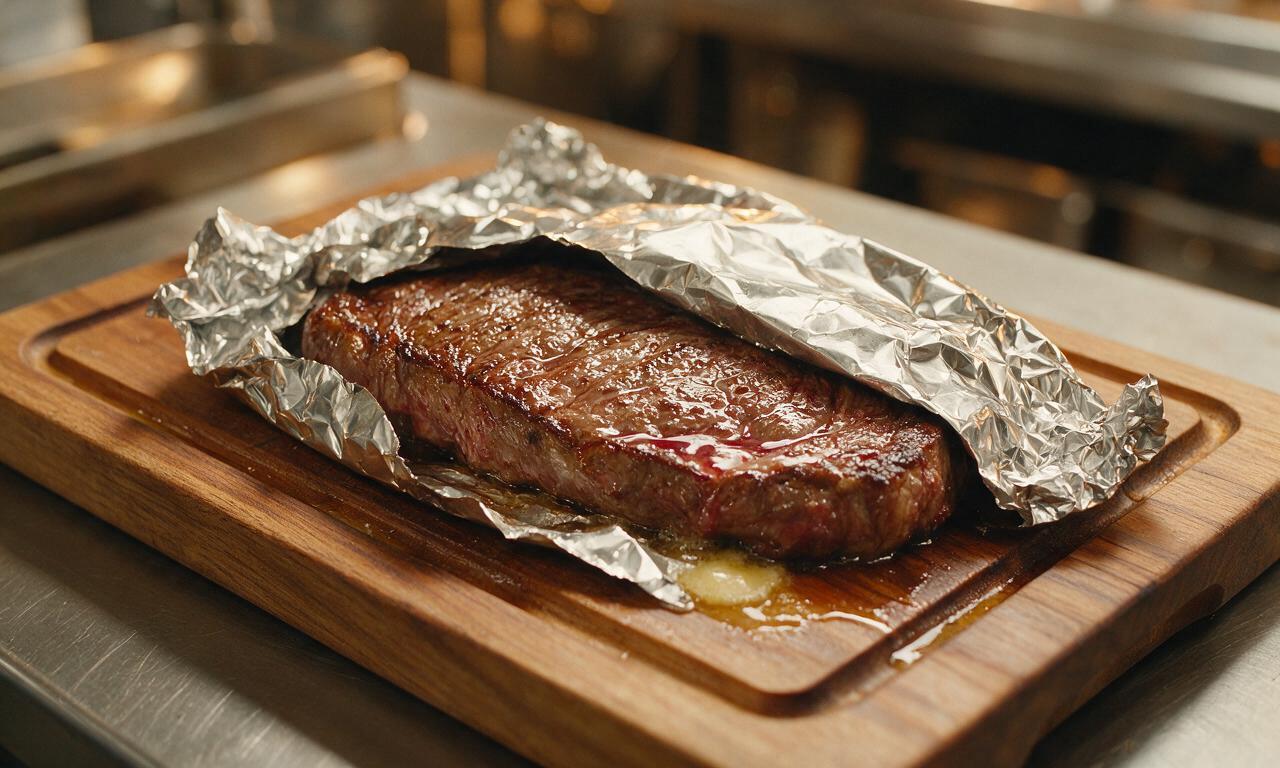
Let the cooked tri-tip rest for 15 to 20 minutes, tented loosely with a piece of aluminum foil to hold in heat. Resting lets the muscle fibers relax and reabsorb all the juicy, flavorful moisture that would otherwise run out all over your cutting board the second you slice, leaving you with dry, bland meat.
8.Why do I see people slicing tri-tip in two different directions?
▾
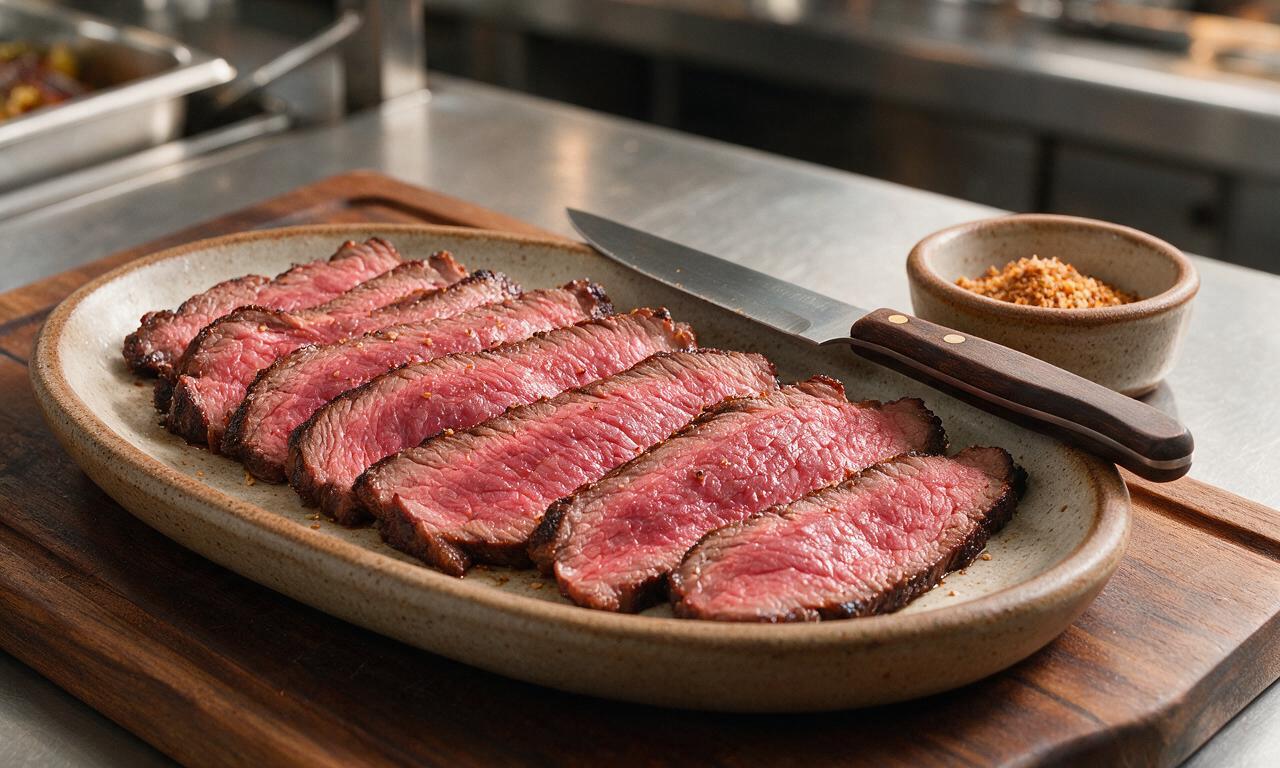
Tri-tip has an irregular grain that shifts direction about halfway through the roast, so you can’t slice it all in one pass. After resting, identify where the grain changes, cut the roast into two sections at that point, then slice each section 1/4-inch thick against the grain to guarantee every bite is tender, not chewy.
9.Can I cook this tri-tip on a gas grill if I don’t have a wood or charcoal grill?
▾
Absolutely—you can still get great results on a gas grill. Preheat it to the same two-zone temperature range, and add a small smoker box filled with red oak chips placed directly on the hottest burner to generate that signature mild smoke. Keep the lid closed as much as possible to trap smoky flavor while the roast cooks.
10.Is there a traditional sauce to serve with Santa Maria tri-tip?
▾
Traditional Santa Maria BBQ doesn’t use thick, sweet tomato-based BBQ sauce. Most purists serve it with a simple side of fresh pico de gallo, pinquito beans, and garlic bread, with an optional small ramekin of mild red salsa for dipping. The focus stays on smoky beef and bold garlic-pepper crust, not heavy sauce.
11.How big of a tri-tip do I need to feed a group?
▾
Plan for 1/2 pound of raw tri-tip per person, which works out to roughly 6 to 8 ounces of cooked meat per guest after trimming and resting shrinkage. A standard whole tri-tip weighs 2 to 3 pounds, which will comfortably feed 4 to 6 people, making it ideal for small backyard cookouts.
12.Can I add sugar to the dry rub for a caramelized crust?
▾
Traditional Santa Maria rub doesn’t include sugar, because the high direct grill heat will burn sugar quickly, leaving a bitter, charred crust instead of the bold, savory garlic-pepper crust the recipe is known for. If you prefer a hint of sweetness, stick to the small amount of sweet paprika in the base rub.
13.My tri-tip came out tough—what did I do wrong?
▾
Tough tri-tip almost always traces back to one of three common mistakes: you didn’t trim the thick silver skin before cooking, you cooked it past medium-rare so muscle fibers seized up and dried out, or you sliced it with the grain instead of against it, leaving long, chewy muscle strands in every bite.
14.Do I need to oil the tri-tip before applying the dry rub?
▾
You don’t need oil if you apply the rub 45 minutes ahead, as the salt will draw out natural meat moisture that helps the spices adhere. If you’re in a hurry and applying rub right before grilling, a very light coat of neutral canola or avocado oil will help rub stick, but don’t overdo it—excess oil causes grill flare-ups.
15.Can I cook this tri-tip in the oven if I can’t grill outdoors?
▾
Yes, you can make a solid version in the oven. Preheat a cast iron skillet over high heat, sear the rubbed tri-tip on all sides to build a dark crust, then move it to a 375°F oven to finish until it hits 125°F internally. For smoke flavor, add a tiny pinch of high-quality liquid smoke to the rub before cooking.
16.How do I avoid burning the garlic powder in the rub over high heat?
▾
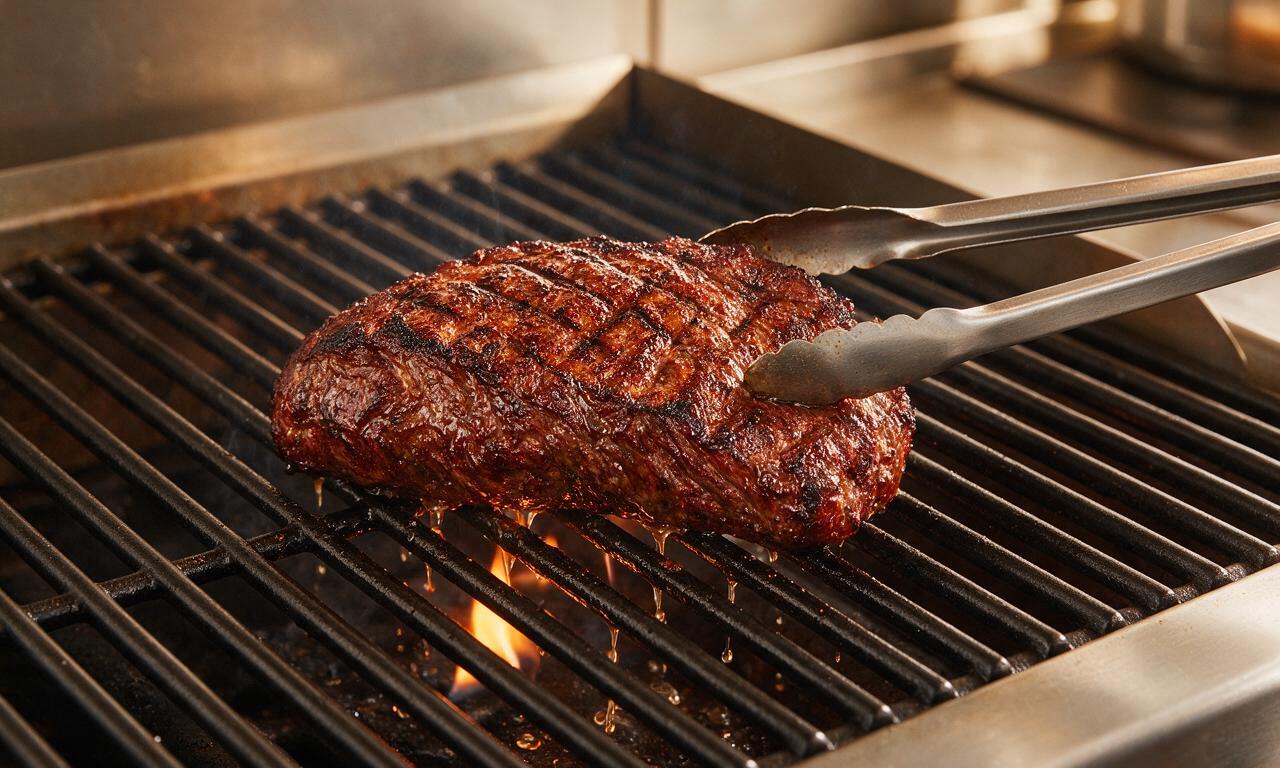
Stick to the two-zone cooking method to prevent burnt rub: sear the roast for 3 to 4 minutes per side over direct heat to build crust, then move it to indirect heat to finish cooking. Don’t press the rub into the meat so hard that it forms a thick paste, and keep direct heat under 500°F to avoid scorching garlic and paprika.
17.Should I flip the tri-tip multiple times while it cooks?
▾
Flip the tri-tip only once during the searing phase, and once more halfway through the indirect cooking phase for even doneness. Flipping it constantly will prevent a crisp, even crust from forming properly, and can cause rub to fall off the meat’s surface. Use tongs instead of a fork to flip, so you don’t poke holes that leak juice.
18.What are the classic side dishes to serve with this tri-tip?
▾
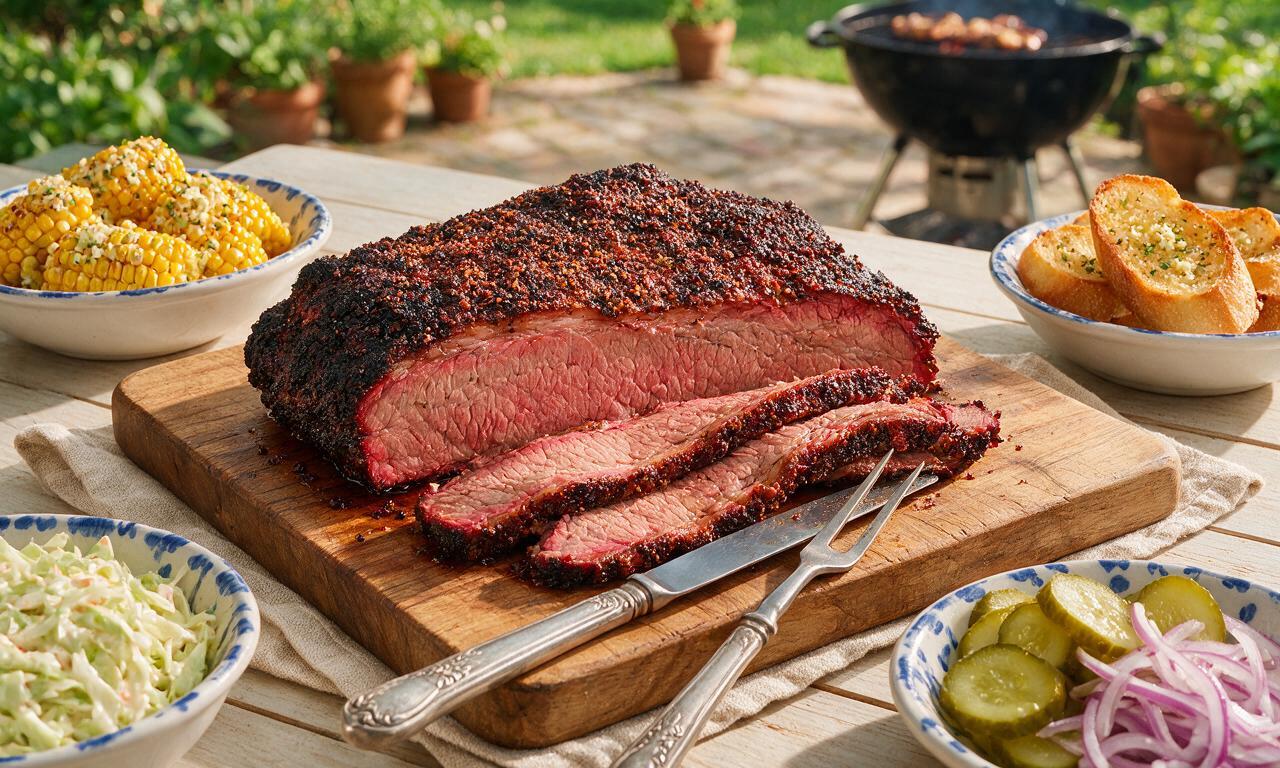
The traditional Central Coast spread includes savory pinquito beans (small pink beans native to the Santa Maria Valley), buttered grilled garlic bread, fresh tossed green salad with red wine vinaigrette, and bright fresh pico de gallo. Skip heavy, sweet sides like molasses baked beans, as they clash with the BBQ’s savory profile.
19.Can I freeze leftover cooked Santa Maria tri-tip?
▾
Yes, leftover tri-tip freezes well for up to 3 months. Let it cool completely, wrap it tightly in plastic wrap then a layer of aluminum foil to prevent freezer burn, and only slice it when you’re ready to reheat. Reheat gently in a 250°F oven until just warmed through to avoid overcooking it past medium-rare.
20.Is it normal for tri-tip to have a slightly uneven shape for cooking?
▾
Tri-tip is a naturally irregular, triangular roast cut from the bottom sirloin, so it’s totally normal for the thin, pointed end to cook a little faster than the thick center. When you move it to indirect heat, angle the roast so the thickest end is closest to the heat source and the thin tip is angled away for even doneness.

OMG this is the real deal! I grew up going to Santa Maria family cookouts and I’ve been chasing that tri-tip flavor for years since I moved out of the Central Coast. The rub ratio is perfect, no weird added spices that don’t belong. Made this for my husband’s birthday cookout and all our neighbors were asking for the recipe. SO good, even my picky 10 year old asked for seconds!
First time ever cooking tri-tip and this turned out way better than I expected! Only thing is I overcooked the end a little because my grill temp ran hotter than the recipe said. Medium difficulty felt fair though, I just need to get a better grill thermometer. Would make again for sure!
Game changer for my weekly meal prep! I usually make chicken or pulled pork for lunches but this tri-tip slices up perfect for bowls, tacos, and even breakfast hash the next day. Cook time was exactly as stated, no surprises. Tossed the leftover slices with a little salsa and pinquito beans for a full Santa Maria style bowl all week. 10/10
Flavor was great but I was confused about the indirect heat part? I usually cook all my BBQ low and slow so I left this on too low for the first 20 minutes and had to crank the heat to finish it, ended up with a little char on the outside that was a bit too bitter for my taste. Might be my mistake but wish the heat instructions were a little more spelled out for people who don’t do Santa Maria style often.
Took this to a neighborhood potluck last weekend and people were lined up for seconds! I used red oak chips on my gas grill like the recipe suggested and it gave that exact smoky Santa Maria flavor I remember from a work trip to Central California years ago. Served it with pinquito beans and garlic bread, total hit.
Made this on my tiny apartment balcony charcoal grill and it worked shockingly well! I was worried the smoke would annoy my neighbors but it was totally manageable, the tri-tip came out juicy and flavorful. Only knock is I couldn’t find pinquito beans at my local grocery store so I used small red beans as a substitute, still tasted great. Will make again!
Just pulled this off the grill and had to pop in to leave a review — crust is perfect, inside is that perfect medium rare, my wife said it’s better than the tri-tip we got at that fancy steakhouse for our anniversary. Game. Changer.
My kids loved it! I was worried the rub would be too peppery for them but it was perfectly balanced, they ate every bite on their plates. Cook time was right at an hour 15 like the recipe said, no guesswork. Served it with roasted veggies and mashed potatoes for our Sunday family dinner, will be adding this to our regular rotation.
So happy this recipe is naturally gluten free! I’ve been looking for a good BBQ recipe that doesn’t require weird modified sauces or rubs to fit my dietary needs, and this delivers so much flavor without any fillers. Made it for my sister’s graduation party and even the non-gluten free guests were raving about it.