saveloy

title 1
saveloy
⏱️ cook time 25 minutes
🍽️ servings 4
⚡ Difficulty medium

intro

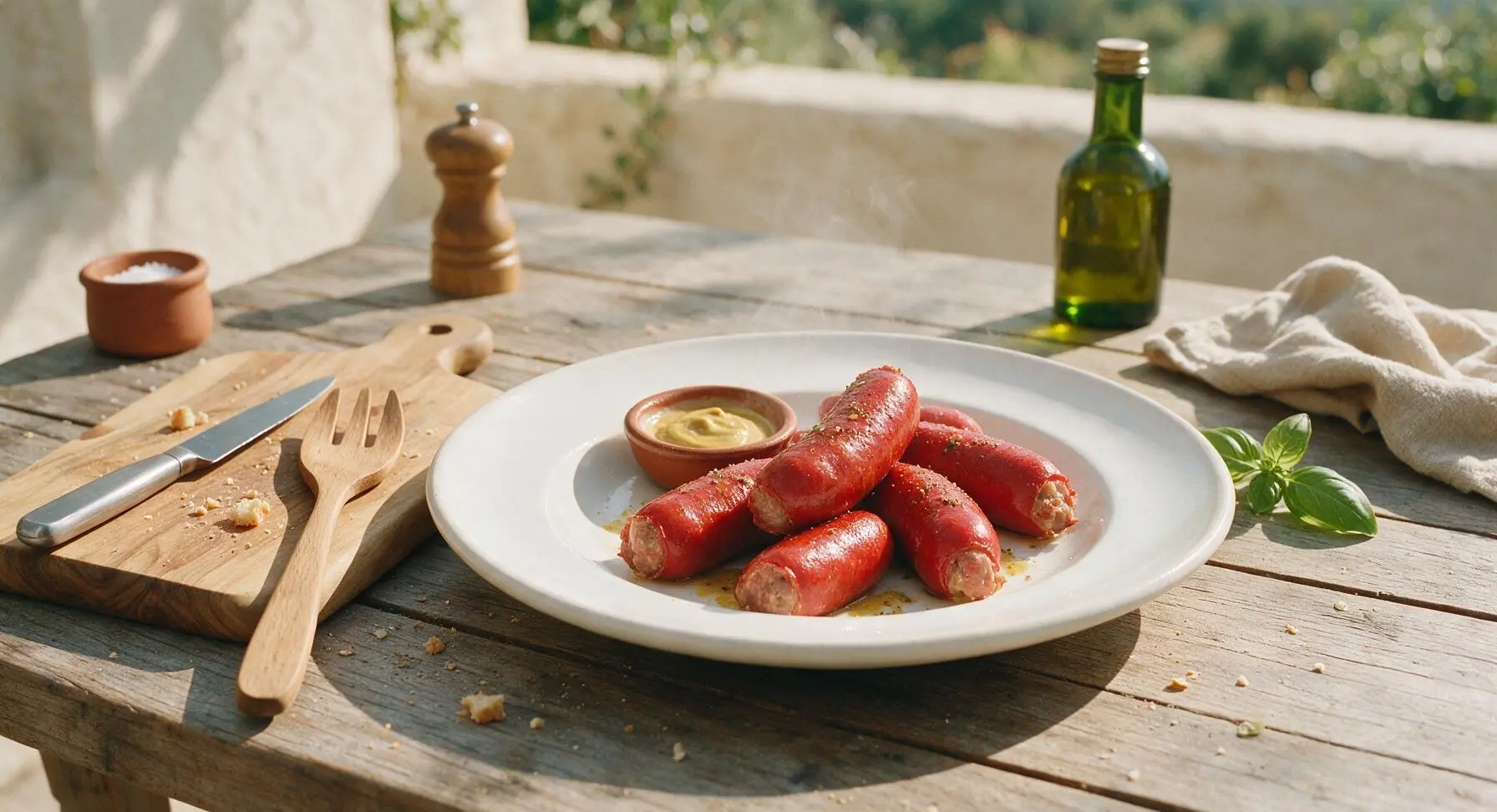
Snappy, juicy bright red British saveloy sausages, seasoned with warm mace and sage, gently poached for tender meat and crisp casing. A nostalgic chippy and picnic classic served with tangy mustard.

Ingredients
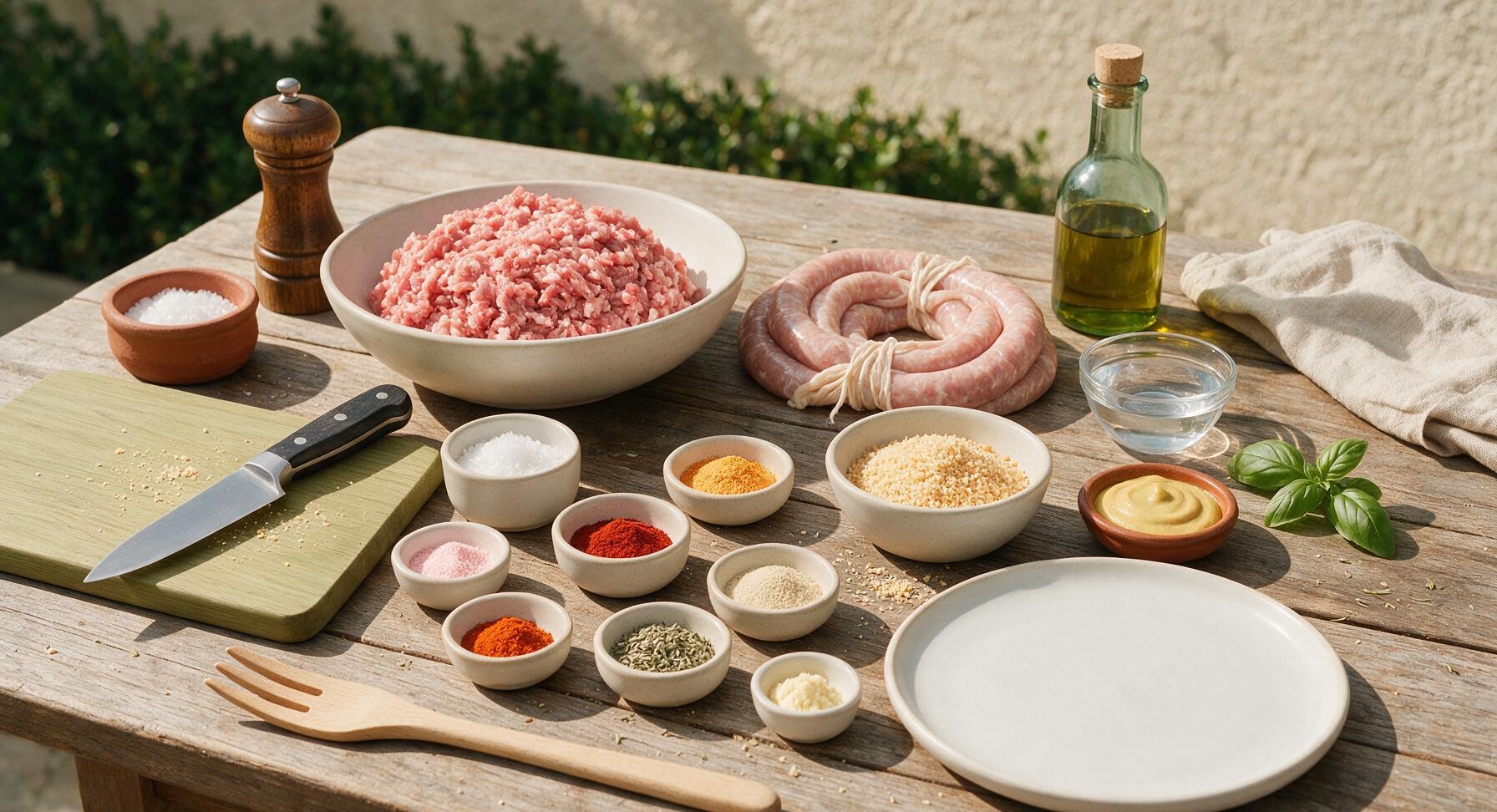
Coarse ground pork shoulder (80/20 lean/fat) 800g
Natural sheep casings (24-26mm diameter) 2 meters
Fine sea salt 1.5 tbsp
Curing salt #1 (Prague powder) 1 tsp
Sweet paprika 2 tsp
Ground mace 1 tsp
Ground white pepper 1 tsp
Cayenne pepper 1/4 tsp
Dried rubbed sage 1 tsp
Garlic powder 1/2 tsp
Fine dried breadcrumbs (rusk) 30g
Ice cold water 60ml
English mustard (for serving) 4 tbsp

Steps

1

Rinse and soak casings

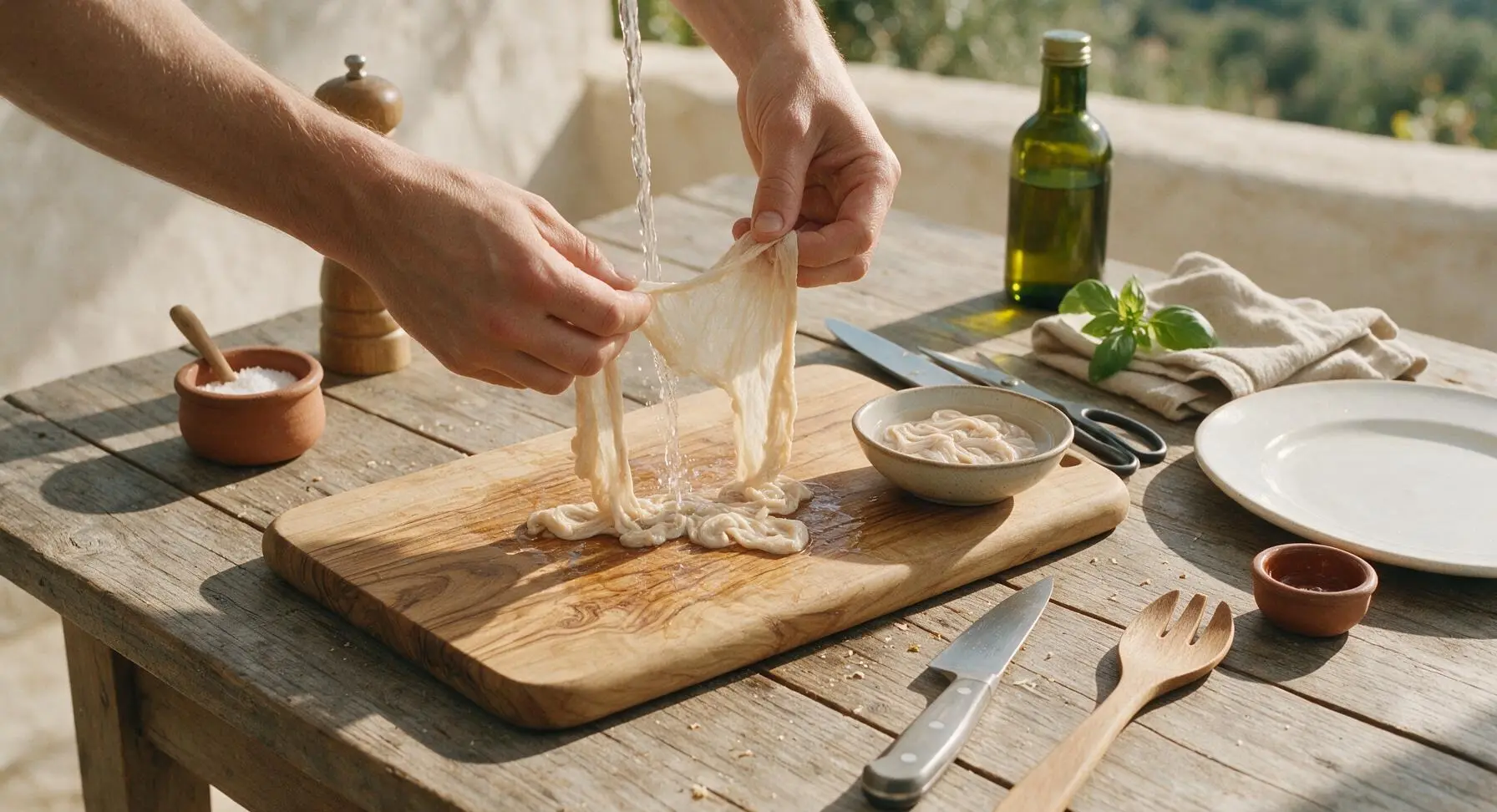
Take the 2 meters of sheep casings, rinse away any packed preservation salt from the exterior under cool running water, then submerge them in a small bowl of cool tap water to soak for 20 minutes. After soaking, run a thin stream of water through the interior of each casing to check for small tears, then set aside in fresh cool water until ready to stuff.
Step 1
step1:Rinse and soak casings
2

Combine spice blend

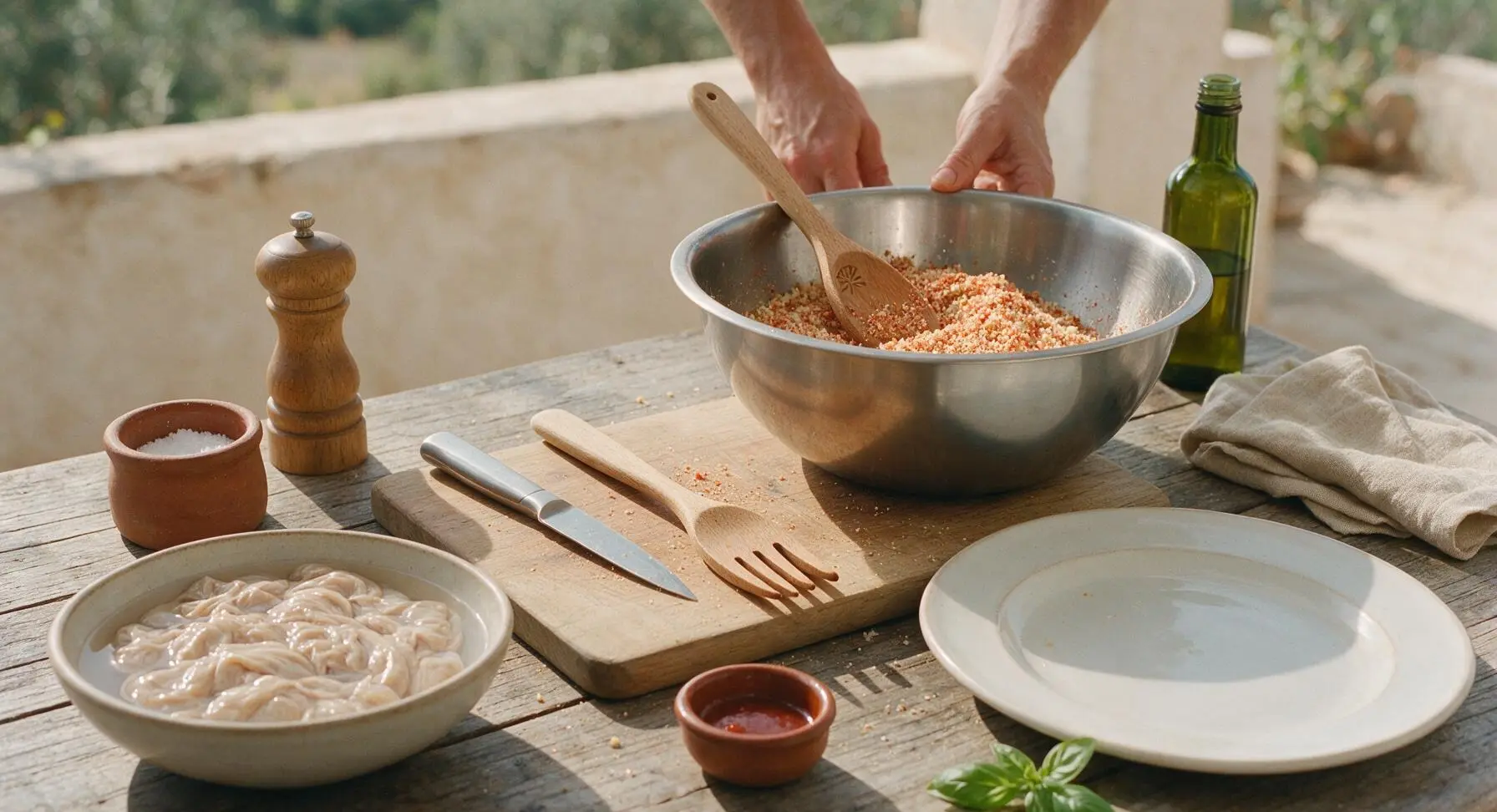
In the large stainless steel mixing bowl, combine 1.5 tbsp fine sea salt, 1 tsp curing salt #1, 2 tsp sweet paprika, 1 tsp ground mace, 1 tsp ground white pepper, 1/4 tsp cayenne pepper, 1 tsp dried rubbed sage, 1/2 tsp garlic powder, and 30g fine dried breadcrumbs. Stir thoroughly with the carved beech wooden spoon until all spices and breadcrumbs are evenly distributed, with no clumps of curing salt visible.
Step 2
step2:Combine spice blend
3

Mix forcemeat thoroughly

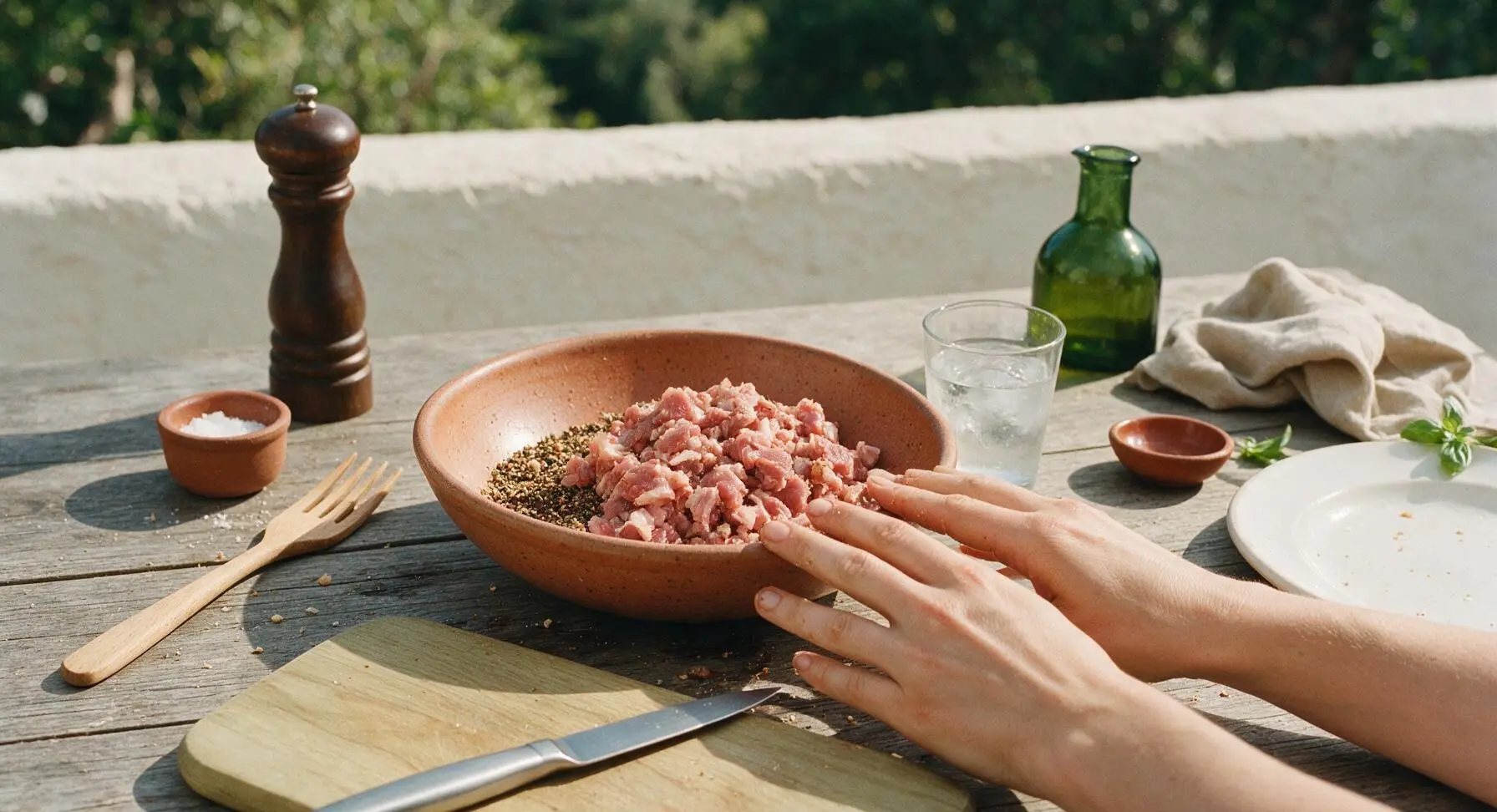
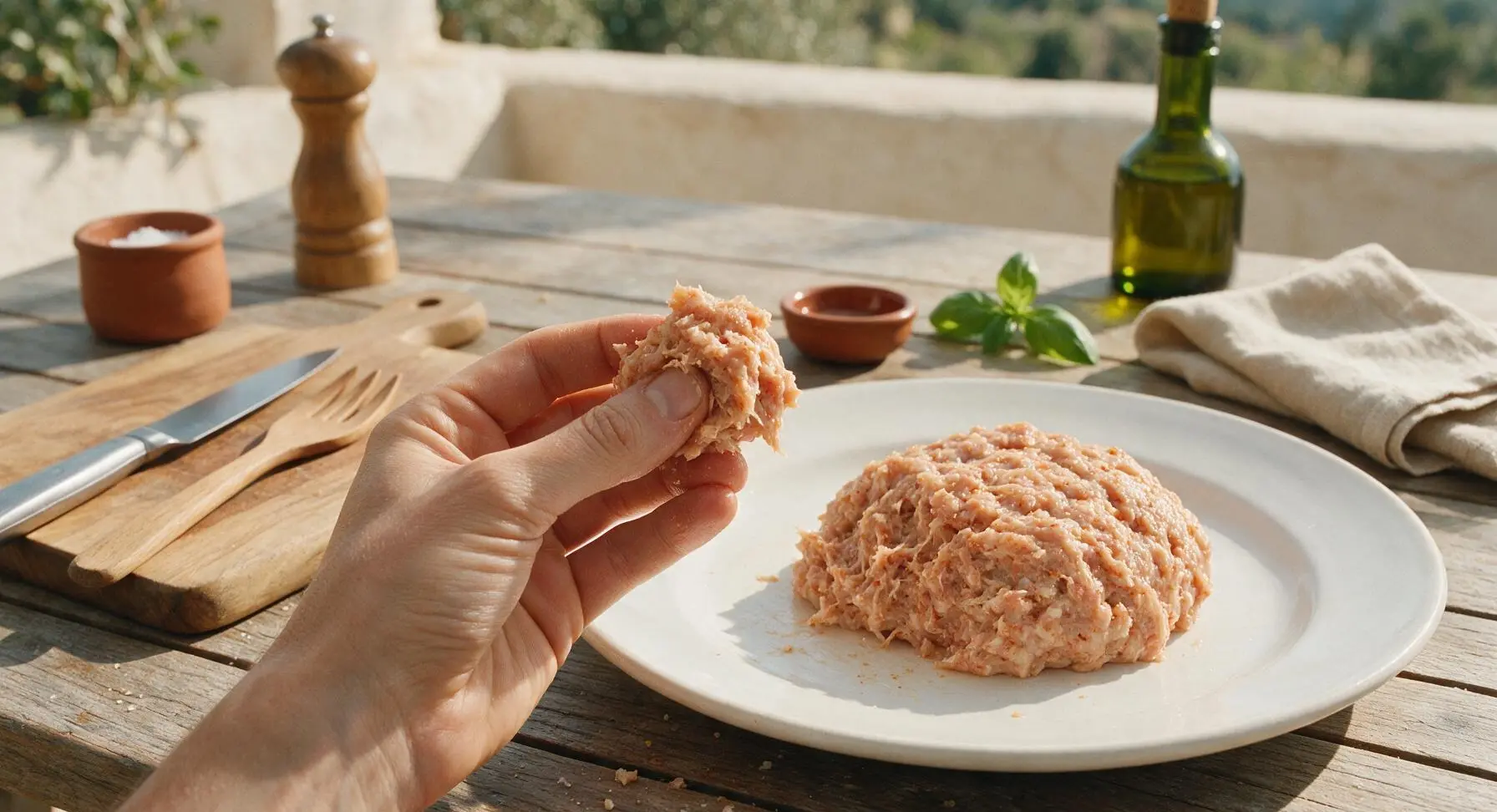
Add the 800g coarse ground pork shoulder to the mixing bowl with the spice blend. Pour in 60ml ice cold water, then use clean hands to mix the meat and seasonings thoroughly for 3-4 minutes, until the mixture becomes slightly tacky and sticks together firmly when squeezed into a ball. Avoid overmixing, as this will create tough, dense sausages.
Step 3
step3:Mix forcemeat thoroughly
Step 3
step3:Mix forcemeat thoroughly
4

Prepare sausage stuffer

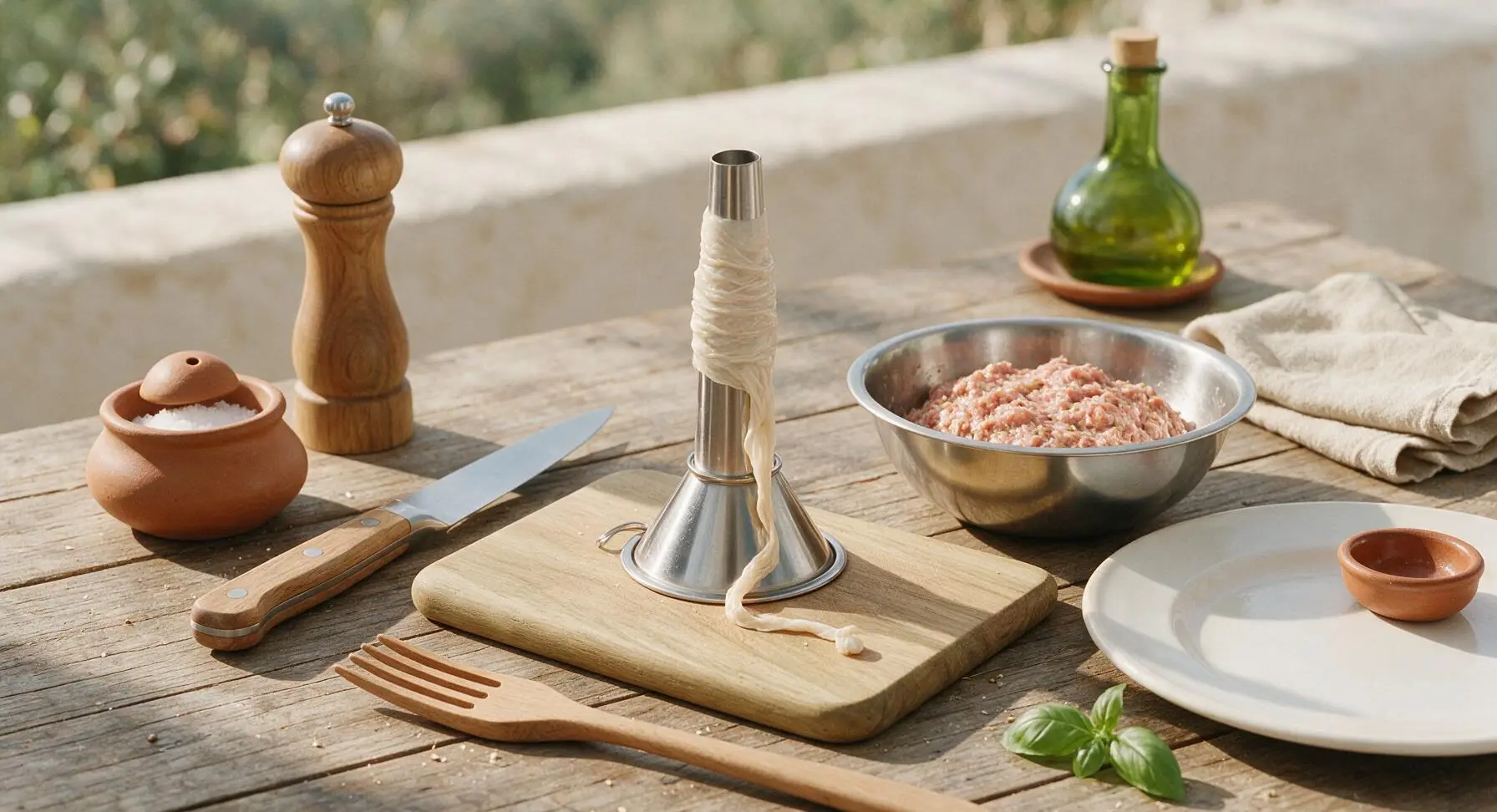
Retrieve the stainless steel sausage stuffer funnel from its stored position at back left. Slide the entire length of soaked sheep casing onto the narrow end of the funnel, leaving a 5cm tail hanging off the end, and tie a tight overhand knot in the tail to prevent filling from leaking out. Load the mixed forcemeat into the stuffer barrel, pressing firmly to remove any trapped air pockets.
Step 4
step4:Prepare sausage stuffer
5

Stuff and link sausages

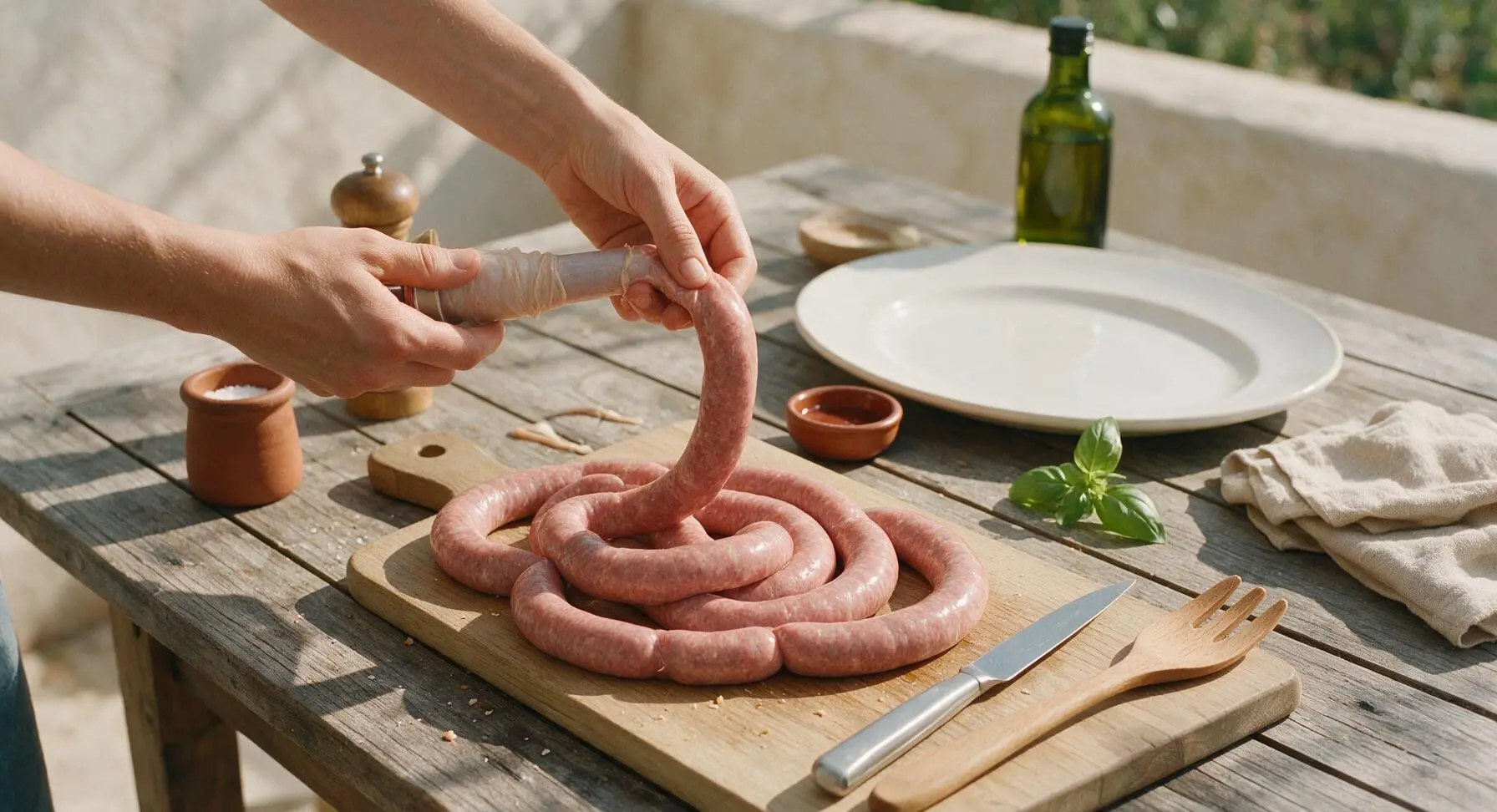
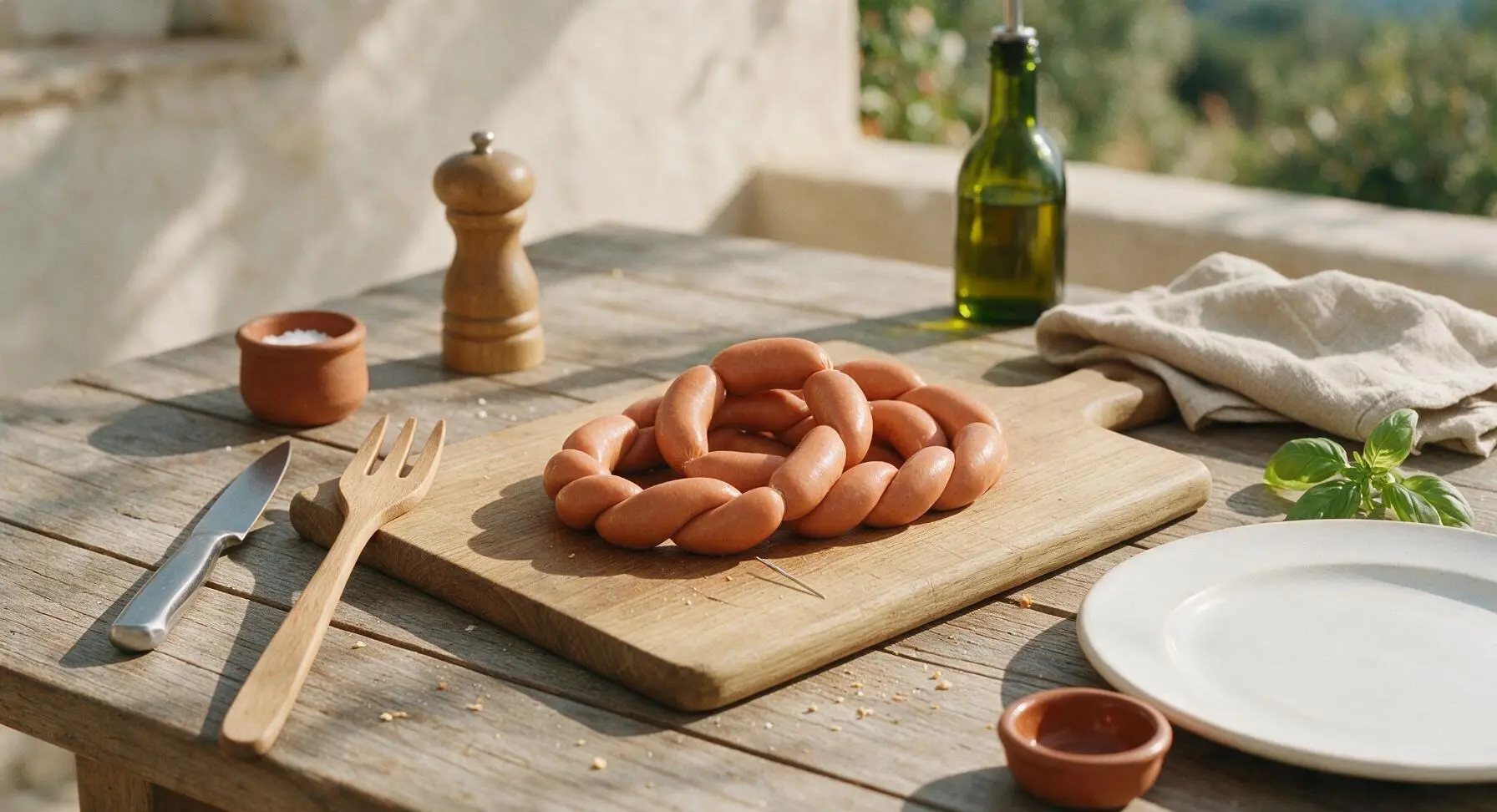
Slowly push the forcemeat through the stuffer to fill the casing evenly, guiding the filled casing off the end of the funnel with one hand to maintain a consistent, firm (but not tight) diameter of roughly 2.5cm. Once all filling is used, twist the filled casing into 15cm long individual links, pinching and twisting each link 3 times in alternating directions to create a tight seal. Poke any visible air bubbles with a sterile pin to prevent bursting during cooking.
Step 5
step5:Stuff and link sausages
Step 5
step5:Stuff and link sausages
6

Heat poaching water

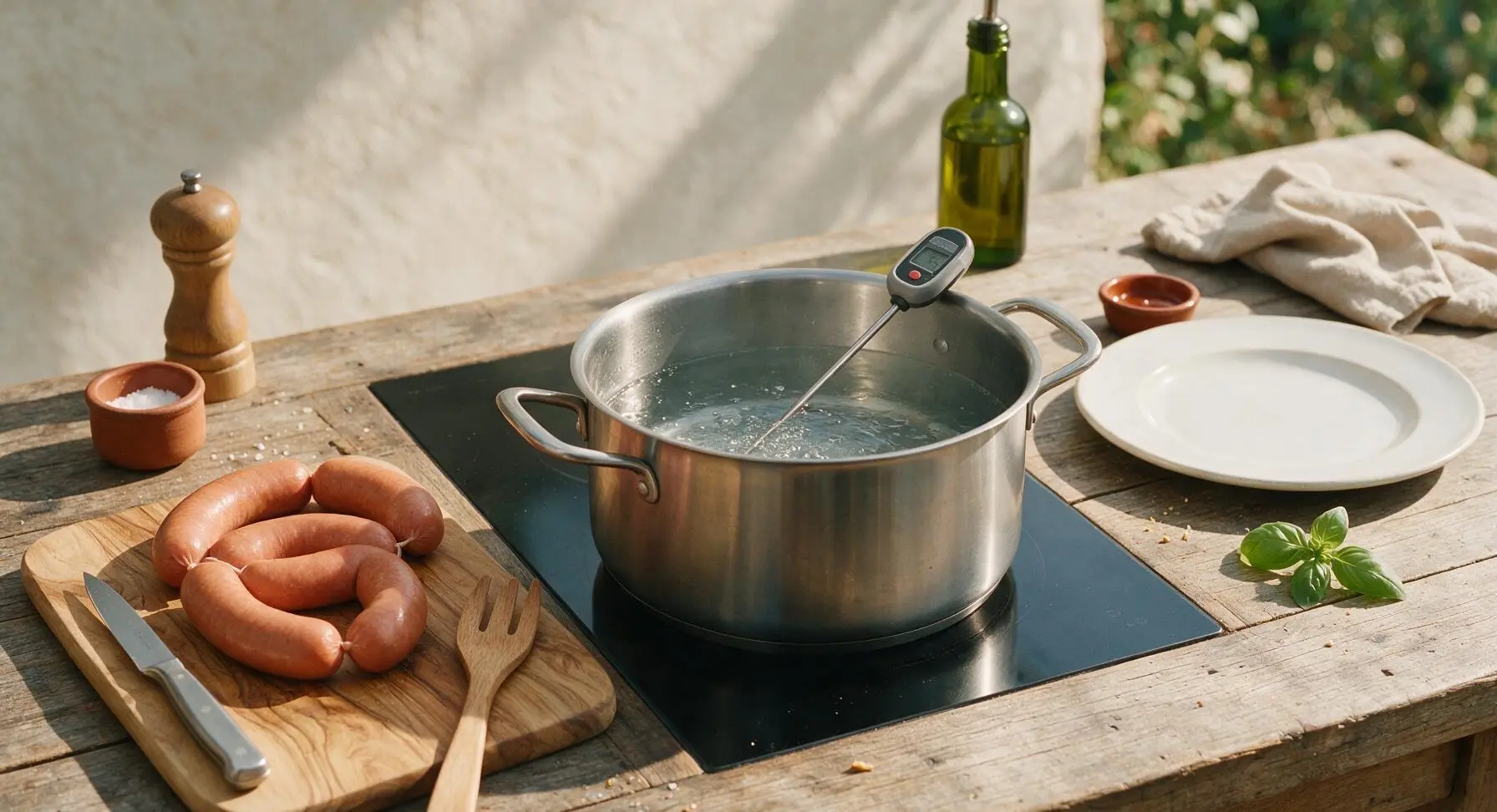
Retrieve the 24cm stainless steel stock pot from its stored position at back right, fill it 2/3 full with cool water, and set it on the flush-mount induction cooktop. Heat the water to a steady 80C (175F) — do not let it reach a rolling boil, as boiling water will burst sausage casings and create tough meat.
Step 6
step6:Heat poaching water
7

Poach saveloys gently

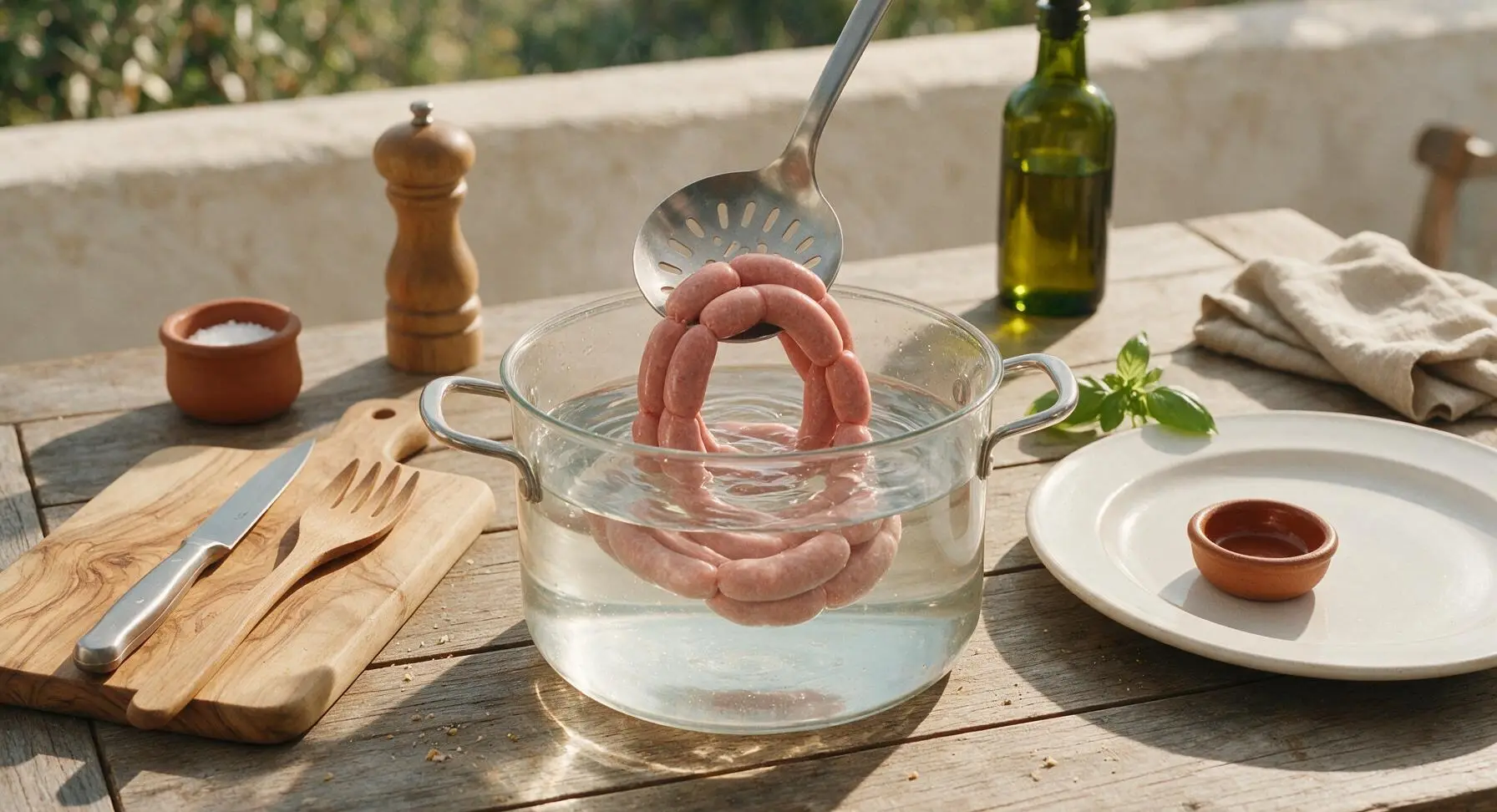
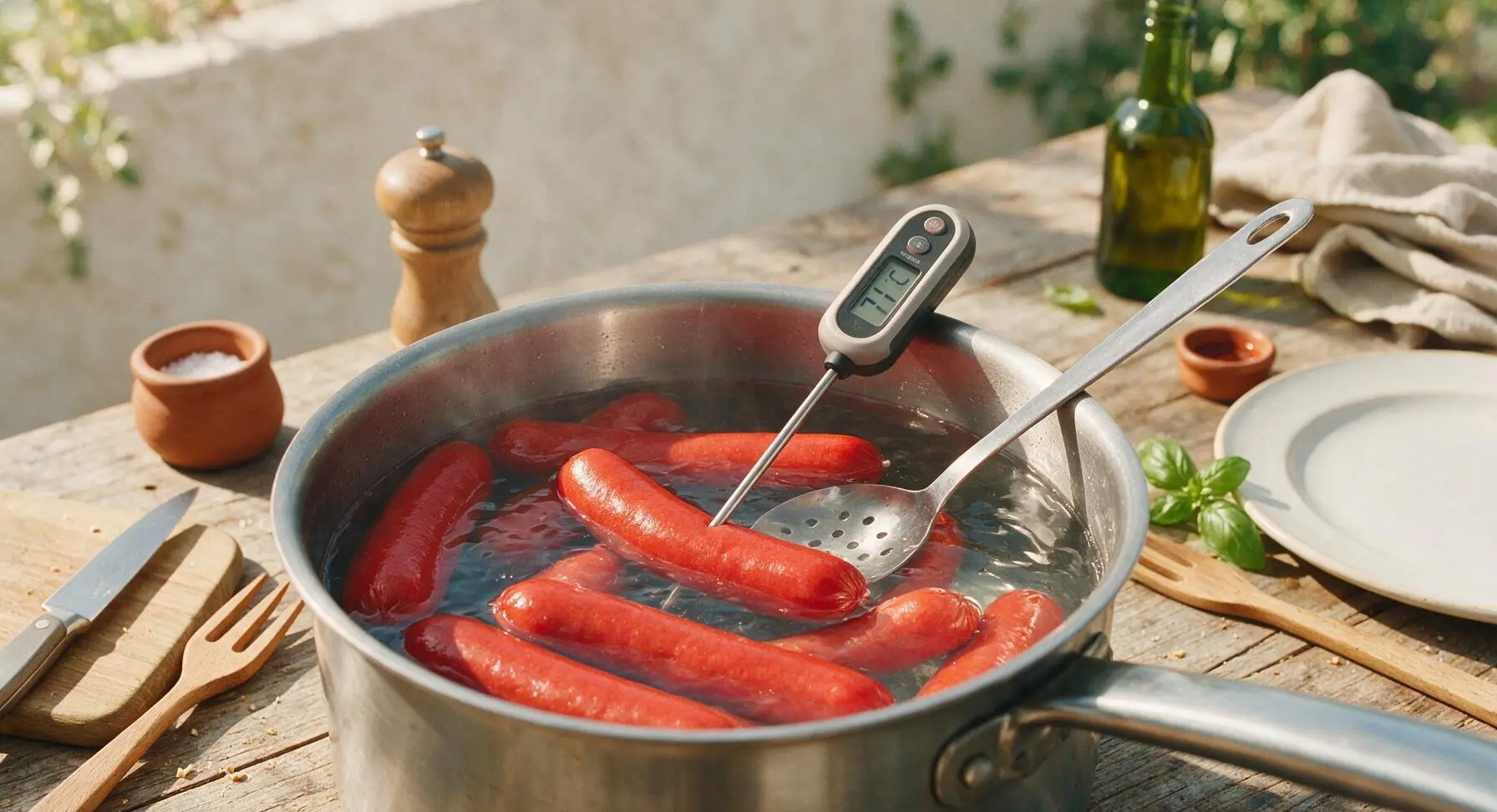
Use the slotted stainless steel spoon to gently lower the linked saveloys into the 80C water. Maintain a steady water temperature of 75-80C for 20 minutes, until the internal temperature of the sausages reaches 71C (160F) on the instant-read thermometer. Adjust the cooktop heat as needed to prevent the water from boiling at any point.
Step 7
step7:Poach saveloys gently
Step 7
step7:Poach saveloys gently
8

Rest and plate sausages

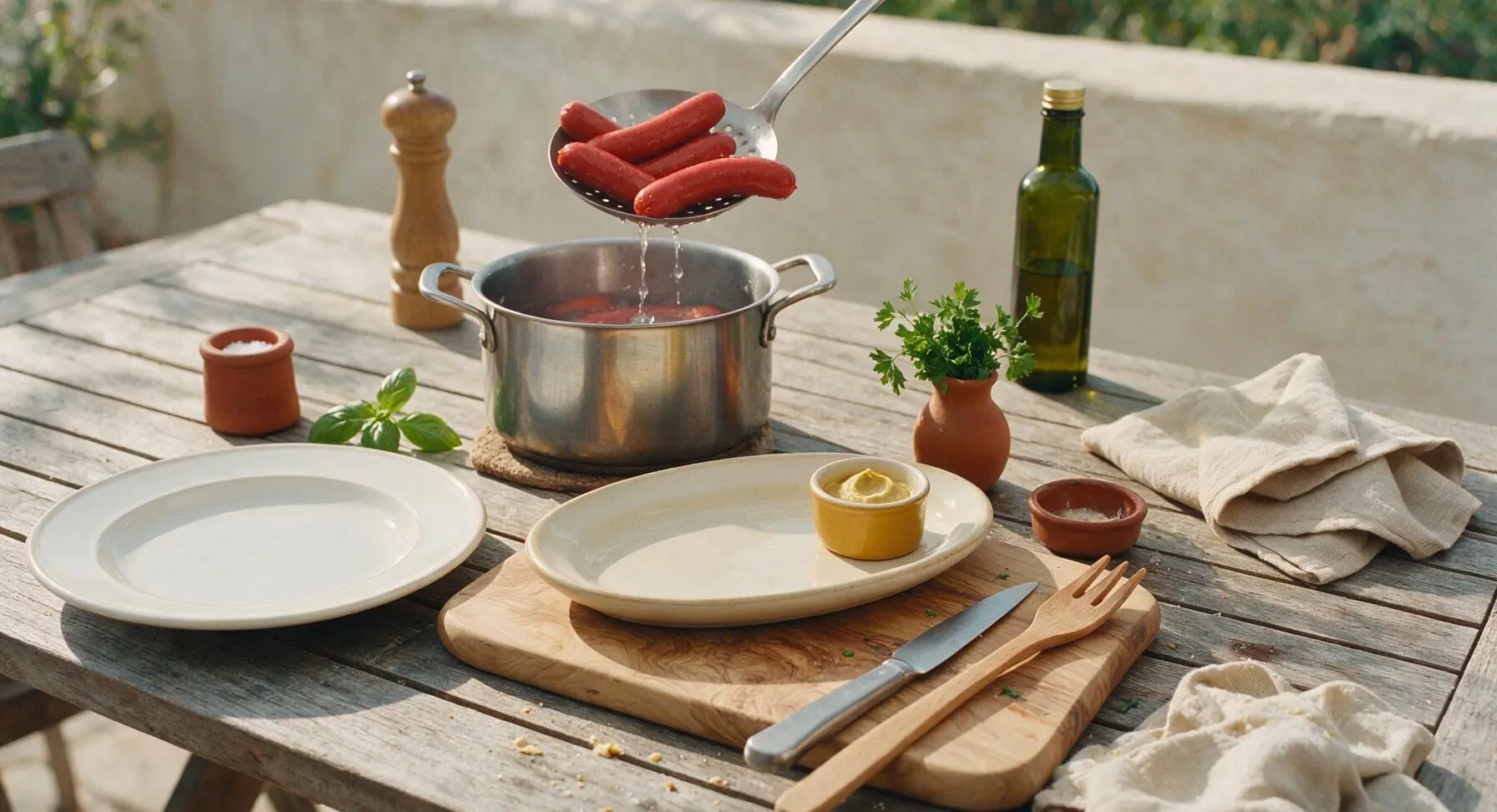
Use the slotted spoon to lift the cooked saveloys from the water, letting excess water drain off for 30 seconds, then transfer them to the oval cream ceramic serving platter. Let the sausages rest for 3 minutes to allow juices to redistribute, then use the kitchen shears to snip the links apart. Place the mustard yellow ramekin of English mustard on the platter, and garnish with a light sprinkle of chopped fresh parsley from the terracotta bud vase.
Step 8
step8:Rest and plate sausages

Tips

1.Never allow poaching water to reach a rolling boil: boiling shocks the sausage casings, causing them to split and leak flavorful juices, and creates tough, grainy meat instead of the signature juicy, snappy texture.
2.Use ice cold water when mixing the forcemeat: cold water helps fat and protein bind evenly, preventing crumbly, dry sausages, and reduces friction during stuffing to minimize casing tears.
3.For authentic fish and chip shop style crisp saveloys, give poached sausages a quick 30-second pan-fry in a little hot lard or oil after resting, just long enough to crisp the outer casing without overcooking the tender interior.

✨ You May Also Like

Snacks & Appetizers
🍜 Mexico

Crispy thick-cut tortilla chips piled high with seasoned beef, melted cheese, and bright fresh toppings for a shareable, crowd-favorite bite.

⏱️ 25 minuteSnacks & Appetizers ★ 4.8
Snacks & Appetizers
🍜 United States

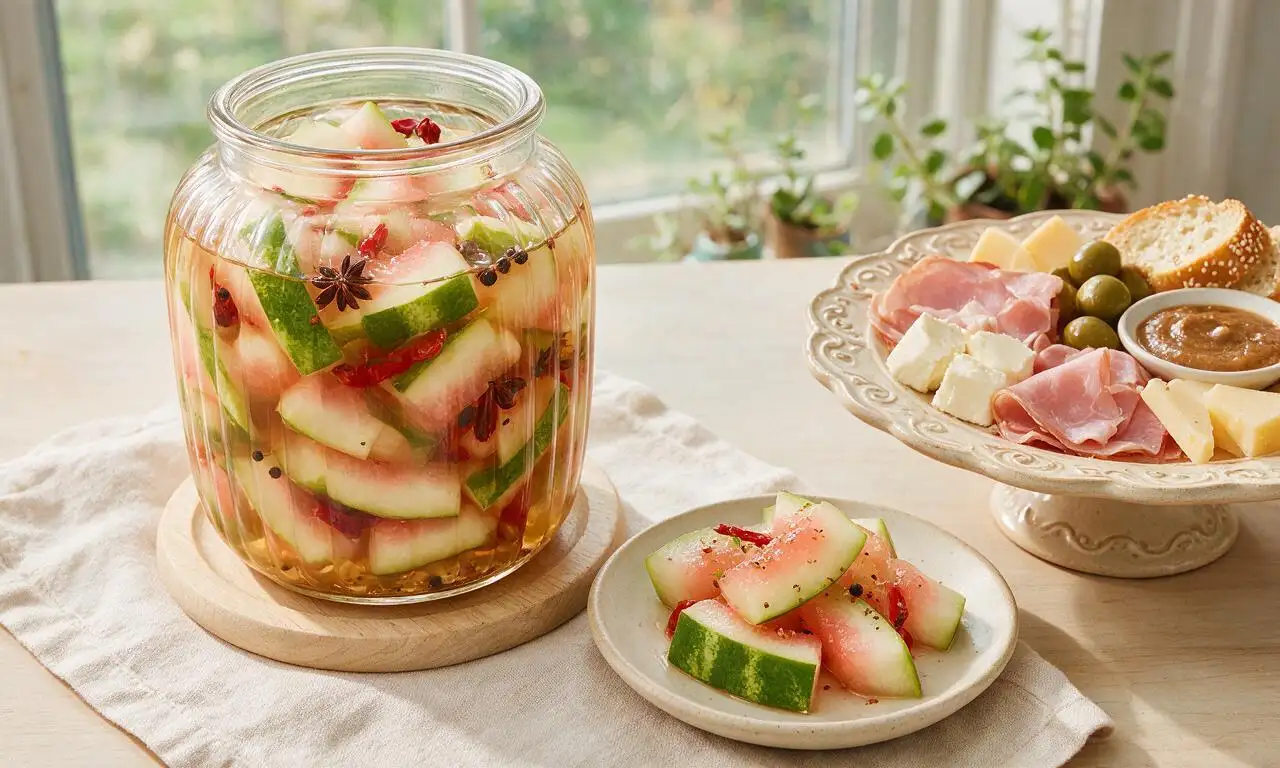
Crisp, sweet-tangy spiced pickled watermelon rind is a zero-waste summer staple, perfect with grilled meats, charcuterie, or eaten straight from the jar as a bright snack.

⏱️ 30 minuteSnacks & Appetizers ★ 4.6
Snacks & Appetizers
🍜 Germany

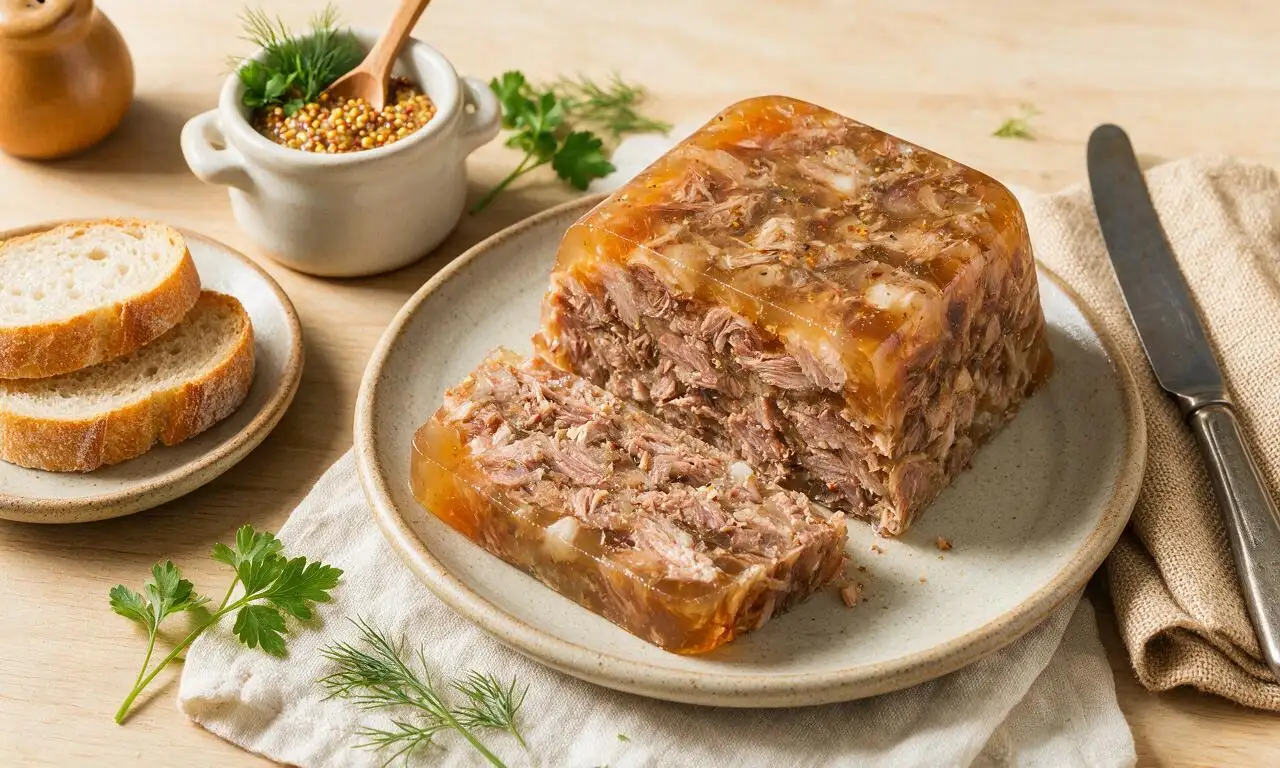
A tangy, jellied pork cold cut slow-simmered with aromatic spices, set into a firm sliceable loaf, served cold with mustard and crusty bread.

⏱️ 3 hours 4Snacks & Appetizers ★ 4.8
Snacks & Appetizers
🍜 United States

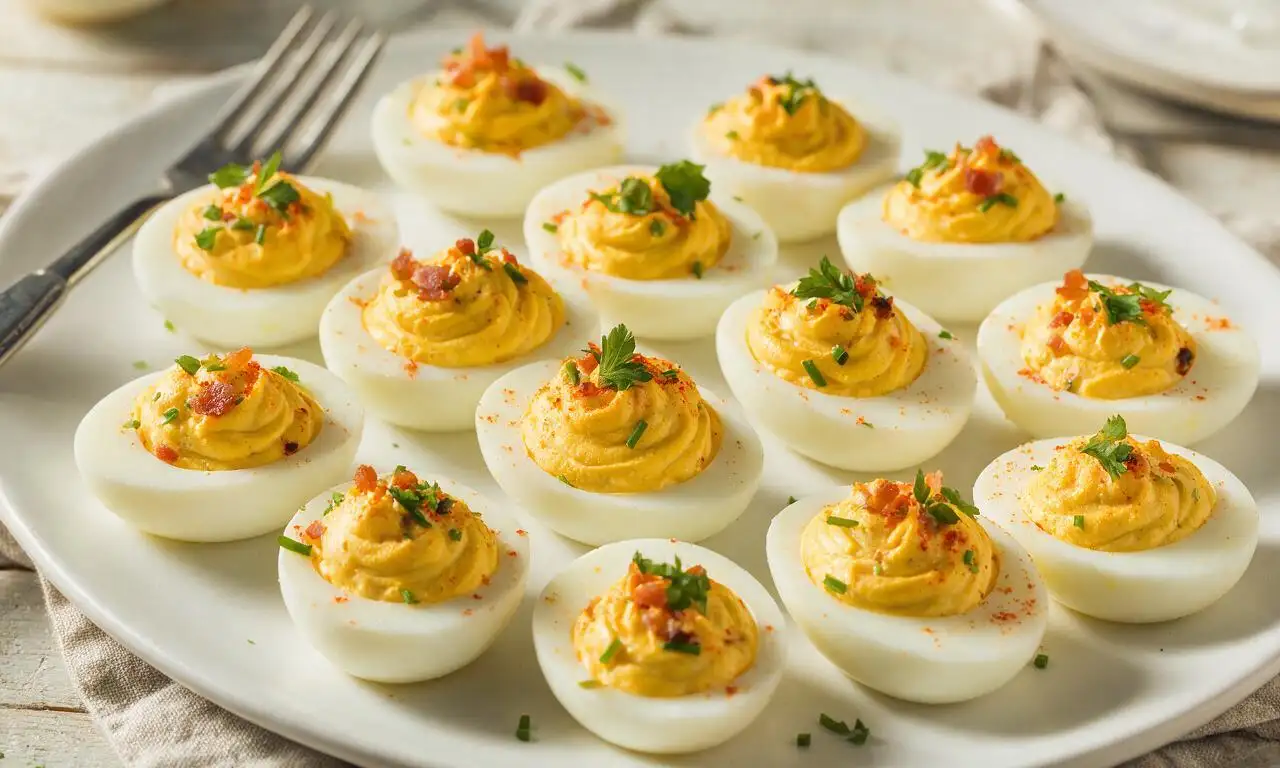
Creamy, tangy, perfectly seasoned hard-boiled egg halves filled with a rich, smooth yolk mixture, a timeless, crowd-pleasing bite for holiday and casual gatherings alike.

⏱️ 40 minuteSnacks & Appetizers ★ 4.8
Snacks & Appetizers
🍜 Russia

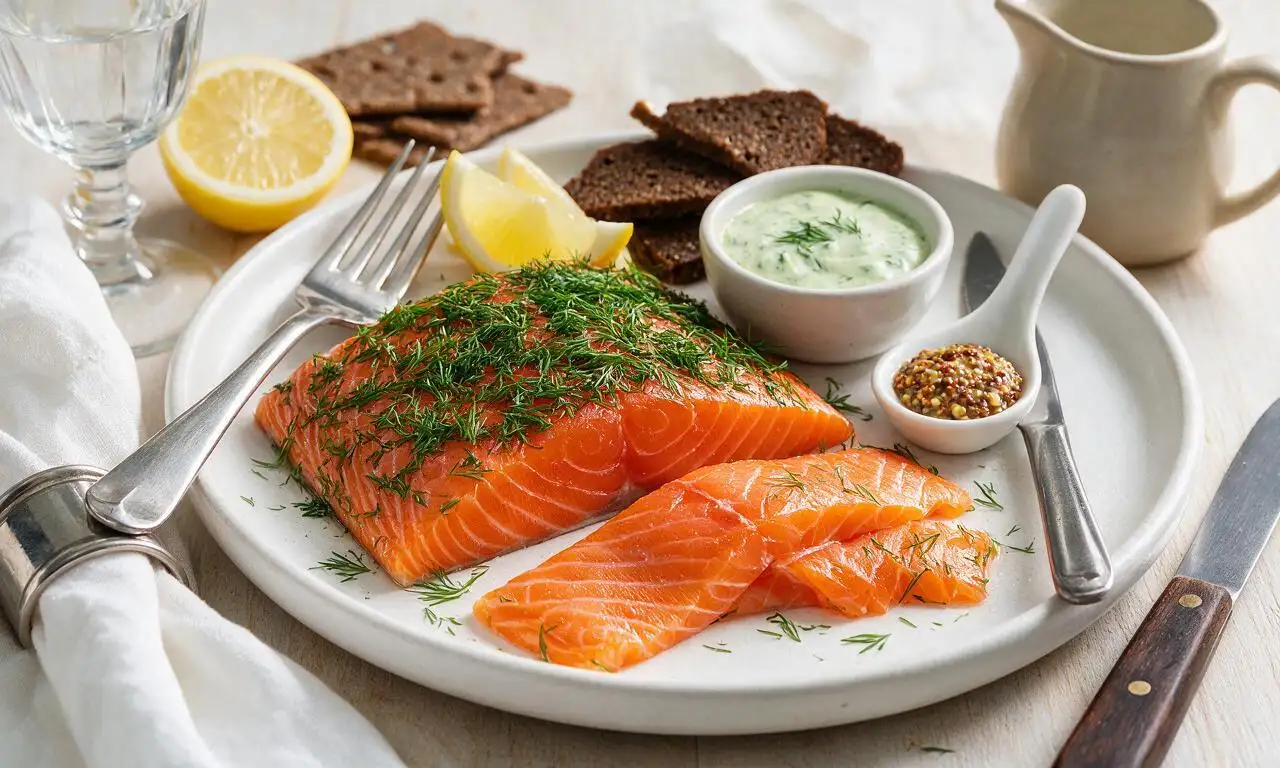
Silky, dill-forward no-smoke cured salmon, a Scandinavian classic with bright salty-sweet flavor, ideal for holiday starter platters and open-faced rye sandwiches.

⏱️ 48 hours Snacks & Appetizers ★ 4.7
Snacks & Appetizers
🍜 Japan

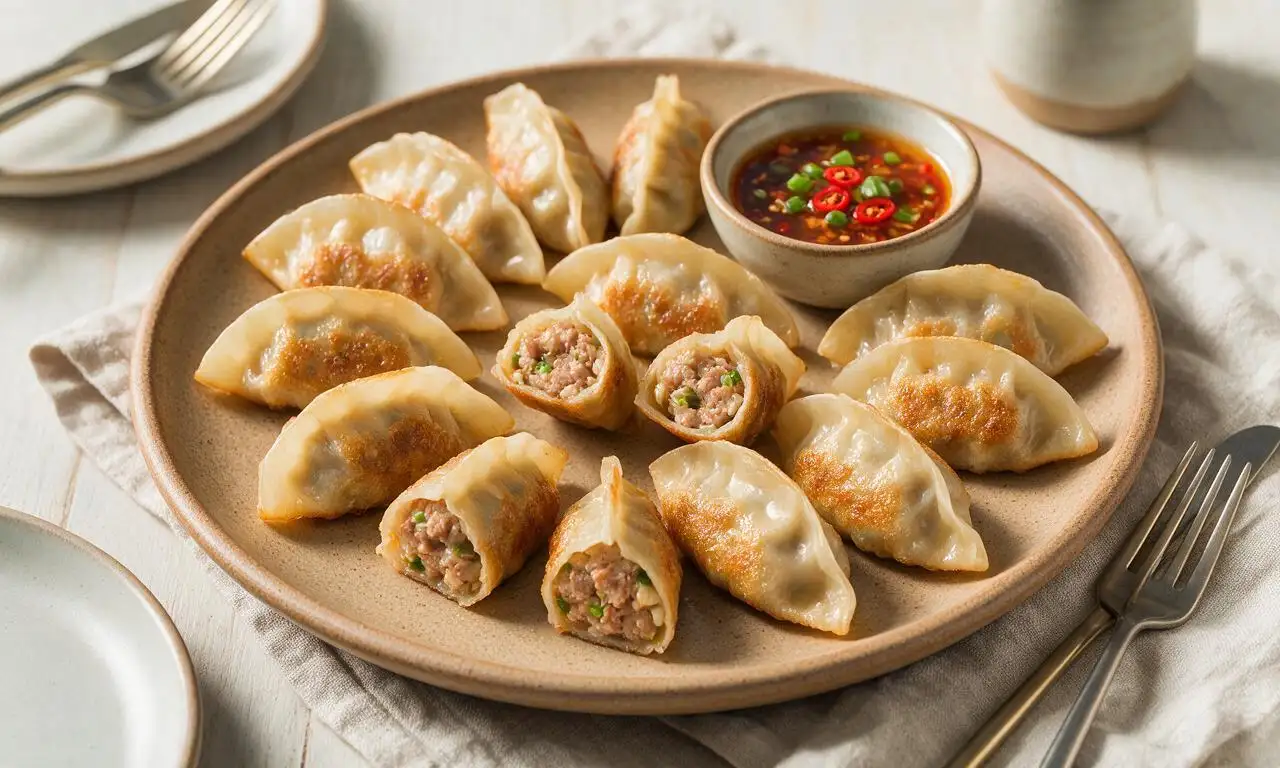
Crisp golden bottoms, juicy savory pork and vegetable filling, and tangy dipping sauce make these pan-fried gyoza a beloved shareable bite.

⏱️ 45 minuteSnacks & Appetizers ★ 4.8

saveloy:Frequently Asked Questions

1.Why are traditional saveloys bright red, and is curing salt #1 really necessary for this recipe? ▾
That iconic bright red comes from a mix of curing salt #1 (Prague powder) and sweet paprika. Curing salt #1 is non-negotiable: it prevents harmful bacteria growth during low-temperature poaching, locks in that juicy red interior, and adds the classic cured savor you can’t get from regular sea salt alone. Never skip or overmeasure it.
2.Can I use pre-ground grocery store pork instead of coarse-grinding my own pork shoulder? ▾
Pre-ground pork works in a pinch, but you’ll get far better texture if you coarse-grind your own 80/20 pork shoulder right before mixing. Store-bought pre-ground pork is often milled too fine, leading to dense, mushy sausage instead of the snappy, tender, coarse bite saveloys are known for. If you use pre-ground, pick the coarsest option available.
3.What size casings do I need, and can I use collagen casings if I can’t find natural sheep casings? ▾
Stick to 24–26mm diameter natural sheep casings for the most authentic snappy, chip-shop style saveloy bite. If sheep casings are hard to find, edible 24–26mm collagen casings work as a substitute, but they won’t have the same tender crisp snap, and they’re slightly more prone to splitting during poaching even with careful prep.
4.How do I prep natural sheep casings so they don’t taste bitter or tough? ▾
First, rinse all packing salt off casings under cool running water, then soak them in lukewarm water for 30 minutes before flushing water through the entire length of each casing. This removes the briny, bitter cured coating on packed casings, softens them for easy stuffing, and prevents tough, chewy bites in finished sausages.
5.Why do my sausage casings split while I’m stuffing them? ▾
Split casings usually stem from one of three issues: you’re overstuffing the casings, you didn’t leave space to account for meat expansion during cooking, or your casings were too dry when you started stuffing. Leave a ½-inch gap between linked sausages, prick visible air bubbles with a sterilized pin, and don’t pack meat so tight the casing feels taut.
6.Do I have to poach saveloys, or can I grill or fry them straight from raw? ▾
The traditional gentle poach is key to that tender, juicy, evenly cooked saveloy texture, and it sets the cure properly. You can absolutely crisp poached saveloys on the grill or in a hot pan for extra char, but cooking raw saveloys over direct high heat will split casings, render fat too fast, and leave you with dry, crumbly meat.
7.What temperature should I poach saveloys at to keep them as juicy as possible? ▾
Keep your poaching water at a steady 160°F (71°C) — never let it hit a rolling boil, which shocks casings into splitting and cooks meat too fast for a dry, grainy result. Poach sausages for 12–15 minutes until they reach an internal temperature of 155°F (68°C), then pull them immediately to rest for 5 minutes.
8.I don’t have mace for the seasoning — what’s the best substitute? ▾
Mace has a warm, delicate, slightly sweet peppery note that’s classic for saveloys, but if you don’t have it, use a 1:1 ratio of freshly grated nutmeg plus a tiny pinch of ground allspice. Skip heavy spices like cumin or clove here, as they’ll overpower the subtle sage and paprika notes that define traditional saveloy flavor.
9.How long do stuffed sausages need to rest before I cook them? ▾
Let your stuffed, linked sausages rest uncovered on a wire rack in the fridge for at least 4 hours, and ideally overnight, before poaching. This rest lets seasoning meld, allows casings to dry slightly for a better snap, and lets trapped air bubbles rise so you can prick them before cooking to prevent splits.
10.Why is 80/20 lean-to-fat pork shoulder recommended, and can I use a leaner cut? ▾
That 20% fat ratio is critical for juicy, flavorful saveloys that don’t turn dry or crumbly after poaching. Leaner cuts like pork loin produce tough, bland sausages, since fat carries most seasoning flavor and creates that signature tender bite. If your pork is too lean, mix in ground pork back fat to hit the 80/20 ratio.
11.Are saveloys the same as regular hot dogs, and what makes them different? ▾
Saveloys are often confused with hot dogs, but they have a coarser grind, brighter red color from paprika and curing salt, and distinct warm seasoning from mace and sage. They also have a firmer, snappier bite than most smooth, emulsified American hot dogs, and are traditionally served cold at picnics or with crispy fries and tangy mustard from classic British chip shops.
12.How should I store leftover cooked saveloys, and how long do they keep? ▾
Let fully cooked, cooled saveloys dry completely, then store them in an airtight container in the fridge for up to 5 days. You can also freeze them wrapped tightly in freezer paper for up to 3 months. To reheat, drop them in 160°F water for 3–4 minutes until warmed through, or crisp them quickly in a pan or on the grill.
13.My sausages had a mushy texture after cooking — what did I do wrong? ▾
Mushy saveloys usually come from one of two missteps: you ground the pork too fine, or you mixed the meat too long after adding seasoning, which broke down meat proteins excessively. Next time, use a coarse grinding plate, keep your meat ice cold while mixing and grinding, and only mix just long enough to evenly distribute salt and spices.
14.Can I make these without casings for a casing-free version? ▾
You can form the seasoned meat into logs and poach them wrapped tightly in food-safe plastic wrap for a casing-free take, but you won’t get that signature snappy outer texture that makes saveloys iconic. If you go this route, twist the wrap ends to seal, poach at 160°F to 155°F internal temp, then unwrap to serve.
15.What are the classic serving suggestions for homemade saveloys? ▾
The most traditional way to serve saveloys is with a dollop of sharp, tangy yellow or brown mustard, alongside crispy fried fish and fries for a full chip shop meal, or cold as part of a summer picnic spread with pickles, crusty bread, and potato chips. You can also tuck them into soft white buns with fried onions for a quick, nostalgic sandwich.
16.How do I avoid air pockets that cause gaps between the meat and casing? ▾
Air pockets happen when you don’t pack meat evenly into the stuffer tube, or when you rush the stuffing process. Pack meat firmly into your stuffer to eliminate gaps before cranking, prick any visible bubbles under the casing with a sterile pin right after stuffing, and let sausages rest in the fridge overnight to let small bubbles rise before cooking.
17.Can I add extra herbs or seasonings to customize my saveloys? ▾
You can absolutely add small tweaks, like a pinch of garlic powder, a bit of ground white pepper, or a sprinkle of dried thyme, but keep additions minimal to stay true to the classic mild, warm saveloy flavor. Skip large chunks of cheese, veggies, or strong spices, as these will break up texture and overpower the traditional mace and sage notes.
18.Do I need a fancy meat grinder and sausage stuffer to make these at home? ▾
You don’t need professional equipment! A stand mixer with an affordable meat grinder and sausage stuffing attachment works perfectly, and you can even use a hand-crank grinder or budget tabletop sausage stuffer for small batches. The only non-negotiable is a coarse 6–8mm grinding plate to get that signature non-mushy texture.
19.Why did my saveloys turn gray instead of bright red after cooking? ▾
Gray saveloys almost always mean you either skipped curing salt #1, used old curing salt that had lost its potency, or didn’t let the seasoned meat rest long enough for the cure to work before cooking. Make sure your Prague powder is fresh, measure it accurately, and let stuffed sausages rest at least 4 hours in the fridge so the cure develops that signature red hue.
20.Can I smoke these saveloys for extra flavor instead of just poaching them? ▾
You can add a light cold smoke to rested sausages for 30–45 minutes before poaching for a subtle, deep smoky note that pairs beautifully with mace and sage. Don’t hot smoke them at temperatures above 170°F before poaching, as this will render fat too quickly and leave you with dry, less juicy finished sausages.

Comments (5)

3 days ago

OMG these saveloy sausages are such a game changer! I was nervous because the recipe said medium difficulty, but the steps were super straightforward. My kids went crazy for them — they kept asking for seconds before we even finished the first round! Served them with mashed peas and chips for our Sunday family dinner, even my picky 7 year old cleaned his plate. 10/10 will be making these for our next neighborhood potluck too!

2 days ago

Wait did you use natural hog casings or the collagen ones? I’ve been wanting to try these but always mess up casings when I make sausage at home!

yesterday

So glad your family loved them! If casings feel tricky, collagen casings work great for first-timers — they’re easier to handle and still give that classic snap when you bite into them. Just make sure to soak them per the package directions before stuffing!

1 week ago

SO good! I made a double batch on Sunday for meal prep this week, and they hold up perfectly in the fridge. I was worried the seasoning would be off since I’ve never had a proper British saveloy before, but that blend of paprika and mace is exactly what I imagined after reading British pub food blogs. Crisped them up in the air fryer for lunch today and my coworker begged for the recipe! Only note: I added a tiny extra pinch of cayenne for a little heat, and it worked great.

5 days ago

Love the cayenne tweak! So happy these worked for your meal prep — they freeze really well too if you want to make even bigger batches down the line. Great call with the air fryer, that’s one of our favorite quick ways to reheat them for a fast lunch.

2 days ago

Took these to a football watch party last weekend and they were gone in 10 minutes flat! I served them with brown mustard and little soft rolls, people thought I bought them from a fancy British import shop. My only mistake was not making a triple batch, I only had one left to take home for my husband lol. Will absolutely be adding these to my regular game day rotation.

2 hours ago

Okay full transparency, I’ve never made homemade sausage of any kind before, so I was terrified to try these. The cook time is so fast once you get the stuffing done! I did have a little trouble getting the meat mix the right texture at first, but I followed the tip about keeping everything super cold and it turned out great. The flavor is insane, way better than the random frozen sausages I grab at the grocery store.

30 minutes ago

The cold trick is non-negotiable for homemade sausage! I once tried stuffing when the meat was too warm and it turned into a total mushy mess, so glad that tip worked out for you. These are so worth the extra effort right?

yesterday

I grew up eating saveloys on trips to visit family in London, so I was super skeptical that a homemade version could live up to my childhood memories. Wow, these are spot on! That salty, slightly smoky flavor, the perfect snap — I almost cried when I took the first bite. Served them with vinegar-doused chips just like I remembered, my partner had no idea these weren’t straight from a UK chippy. 100% recommend.

2 hours ago

Oh my gosh same! I’ve been craving a proper saveloy for years since moving stateside, I can’t wait to test this recipe this weekend. Did you use the recommended rusk or did you substitute breadcrumbs?

5 minutes ago

That means the world to us — getting that classic chippy flavor right was our top priority when testing this recipe! If you don’t have rusk, plain fine dried breadcrumbs work as a solid substitute, just cut back a tiny bit on the added water to keep the texture right.