Savory Smoked Texas Beef Brisket

title 1
Savory Smoked Texas Beef Brisket
⏱️ cook time 10 hours
🍽️ servings 8
⚡ Difficulty medium

intro

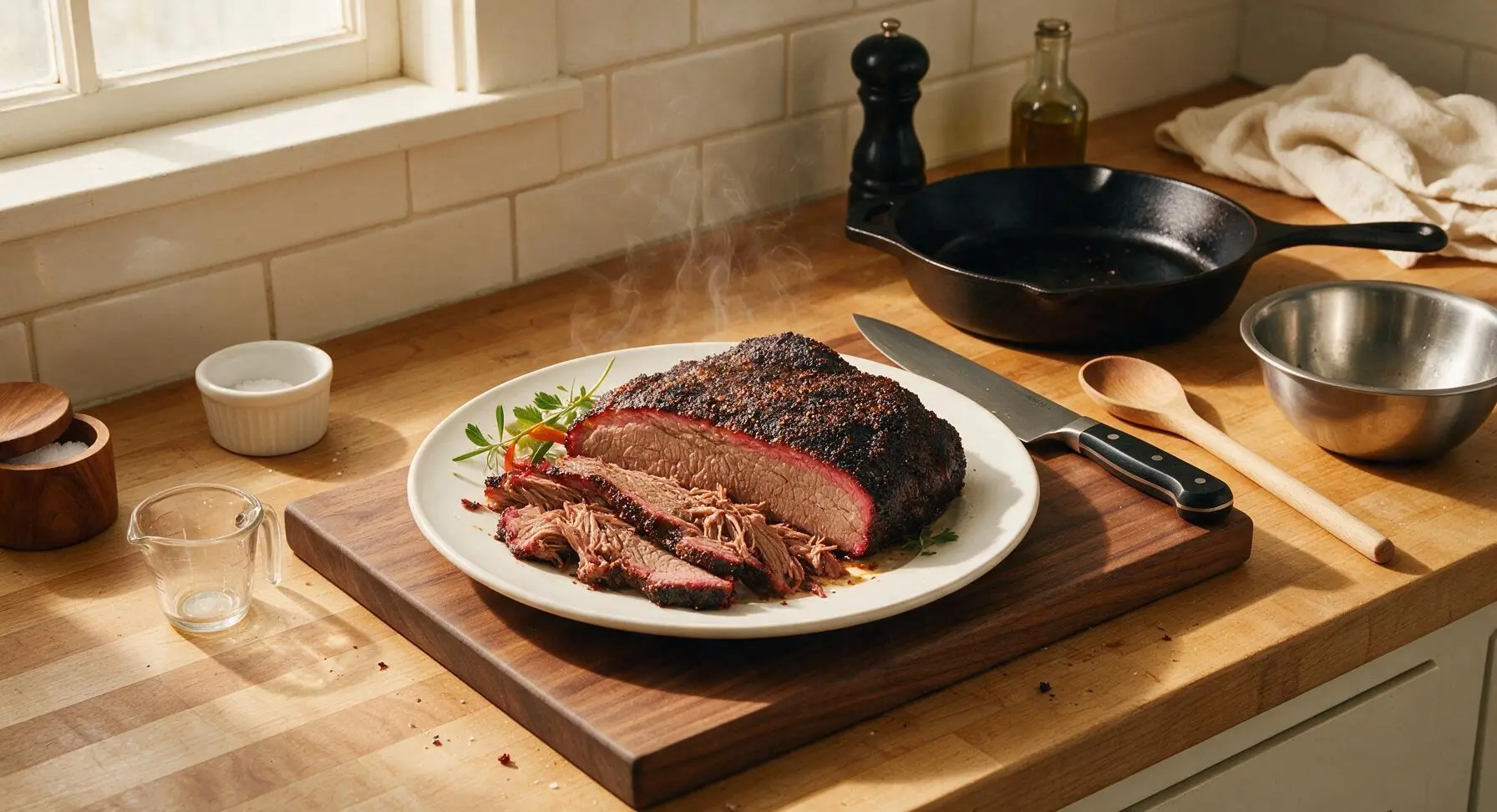
Slow-smoked over oak and hickory, this classic Texas beef brisket has a crackly peppery bark, delicate pink smoke ring, and juicy, pull-apart interior for authentic Lone Star State flavor.

Ingredients
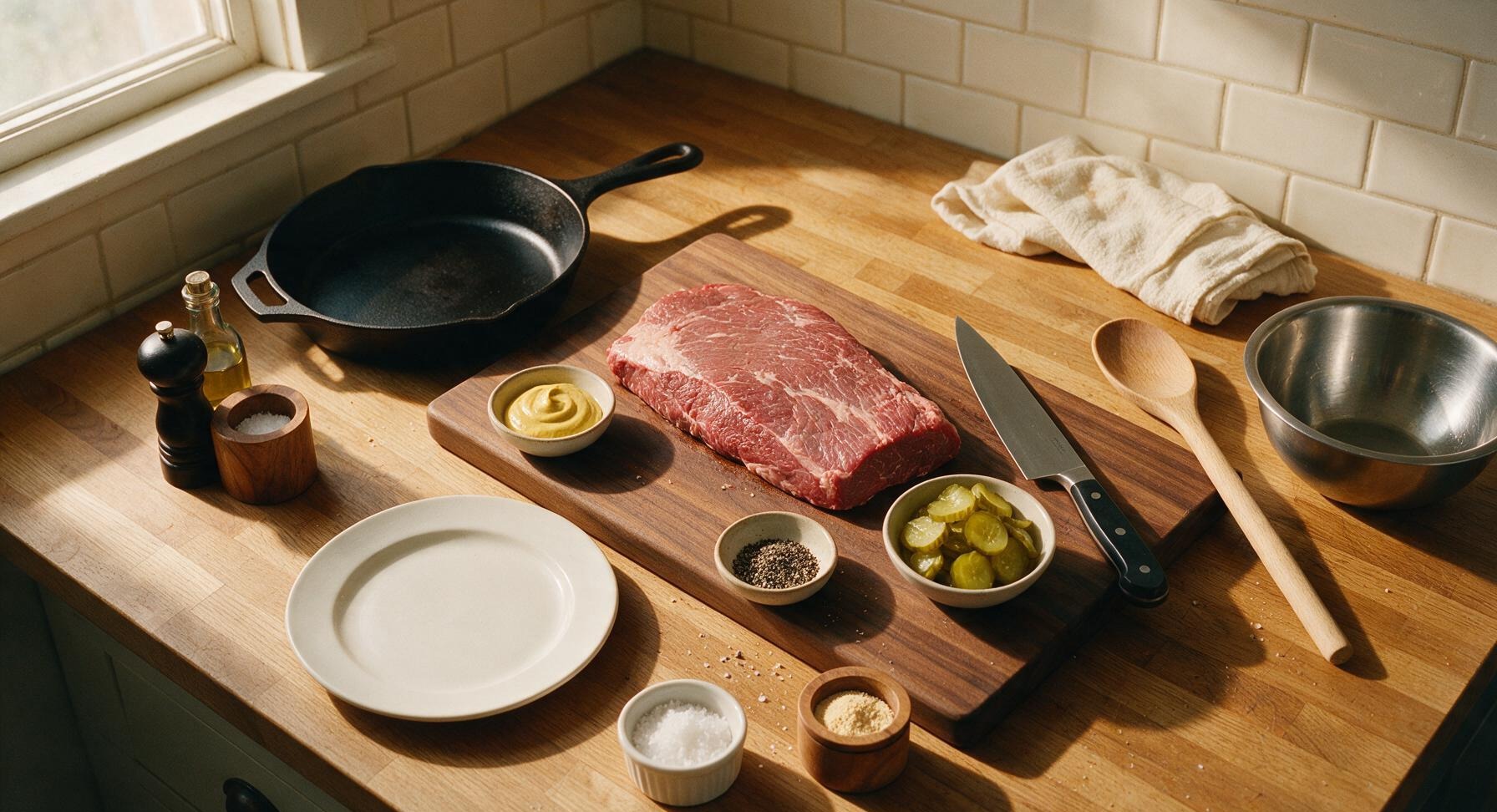
Beef brisket flat 5 lb (2.2 kg)
Coarse kosher salt 3 tbsp
Freshly cracked black pepper 3 tbsp
Garlic powder 1 tbsp
Yellow mustard 2 tbsp
Dill pickle slices 1 cup

Steps

1

Trim Brisket Fat Cap

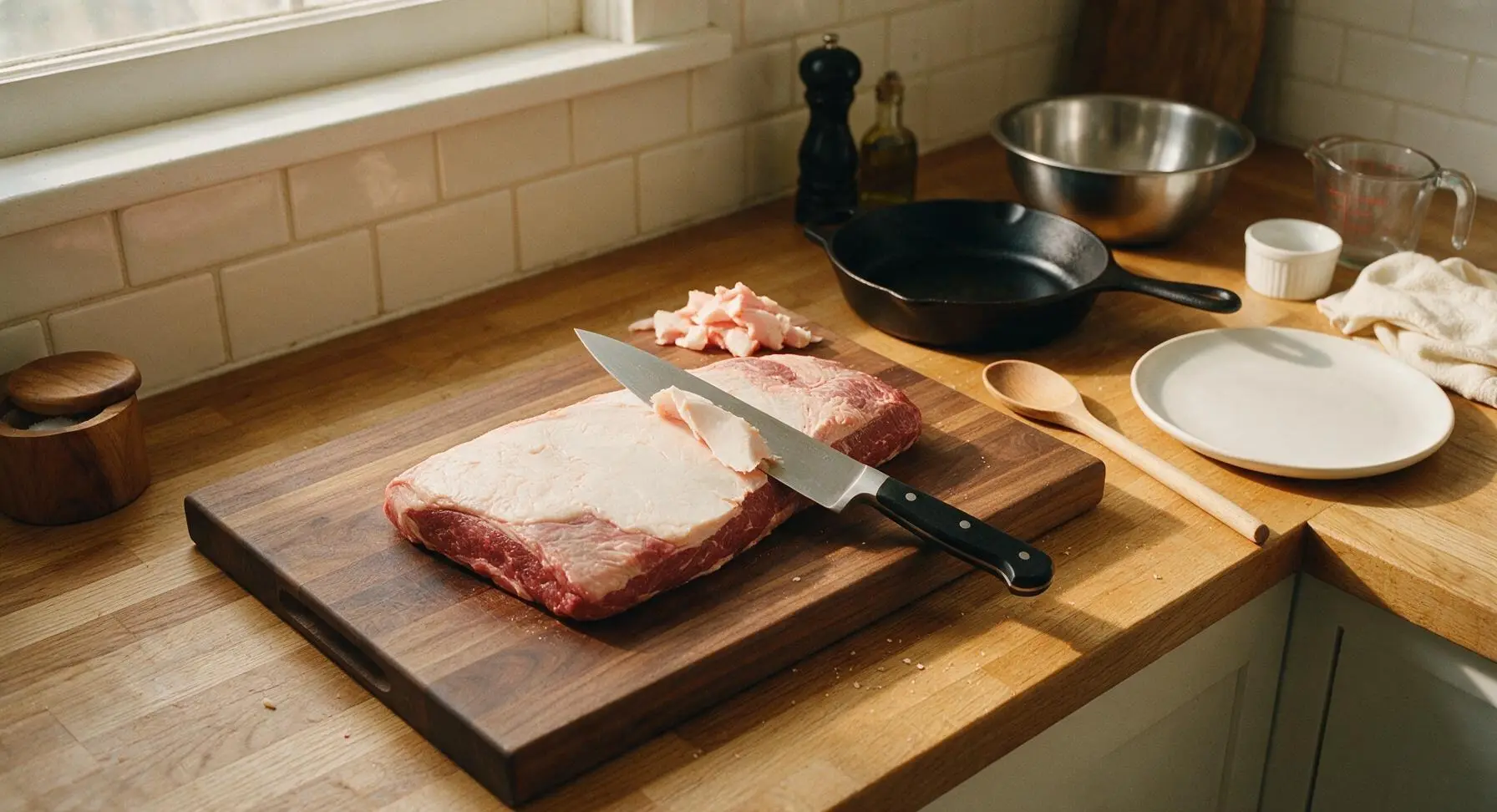
Place the raw 5lb brisket fat-side up on the walnut cutting board. Use the 8-inch chef knife to trim the thick, hard fat cap down to an even 1/4-inch thickness, removing all silvery sinew and hard fat chunks from the meat side. The trimmed surface should feel smooth to the touch, with no ragged edges that will burn during long smoking.
Step 1
step1:Trim Brisket Fat Cap
2

Apply Mustard Binder

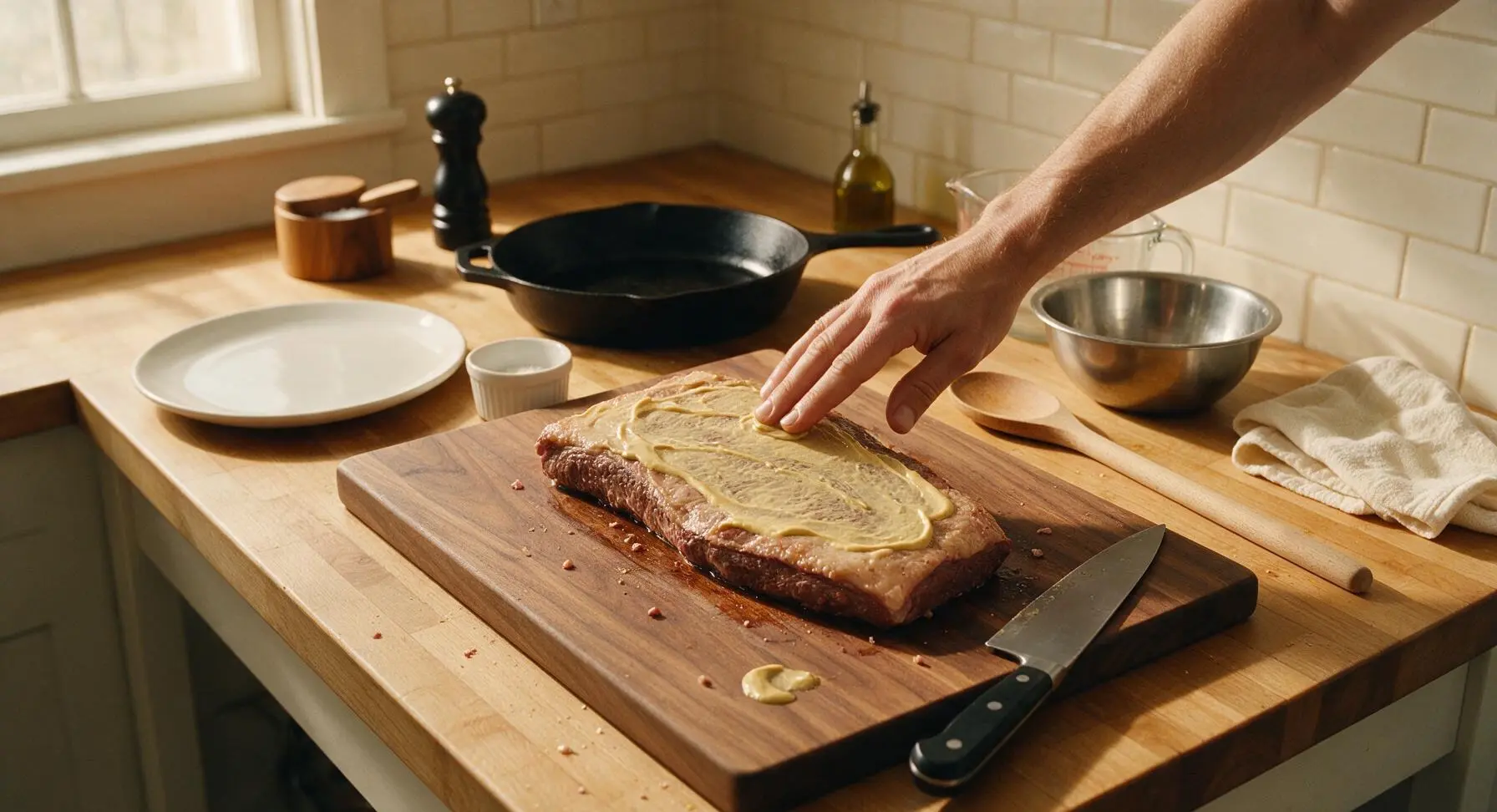
Pat the entire trimmed brisket completely dry with the oatmeal linen towel, then spread 2 tablespoons of yellow mustard in a thin, even layer across every surface of the meat. The mustard should be sheer enough that you can still see the meat color through it, with no thick globs that will prevent rub from adhering evenly.
Step 2
step2:Apply Mustard Binder
3

Coat With Dry Rub

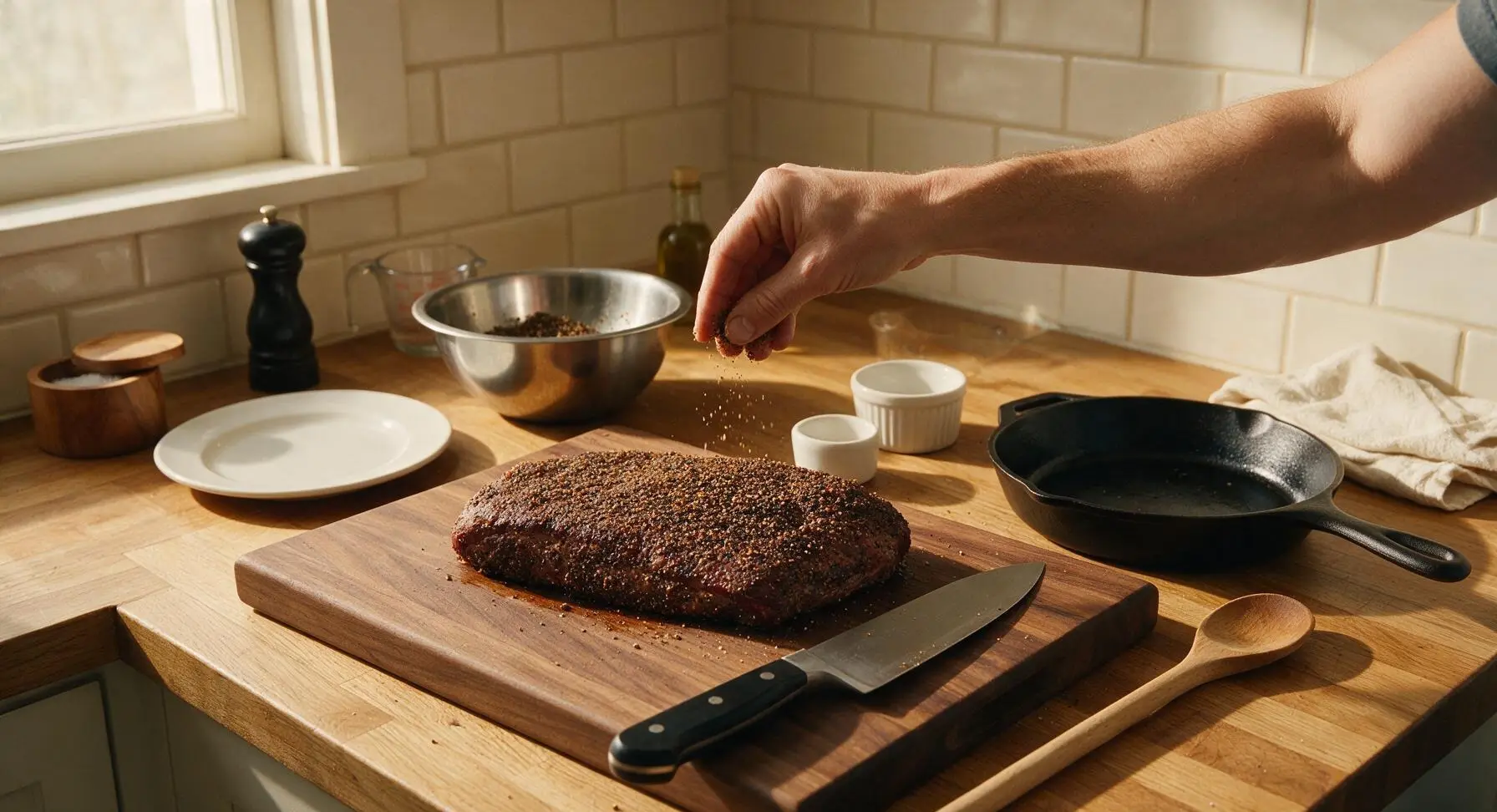
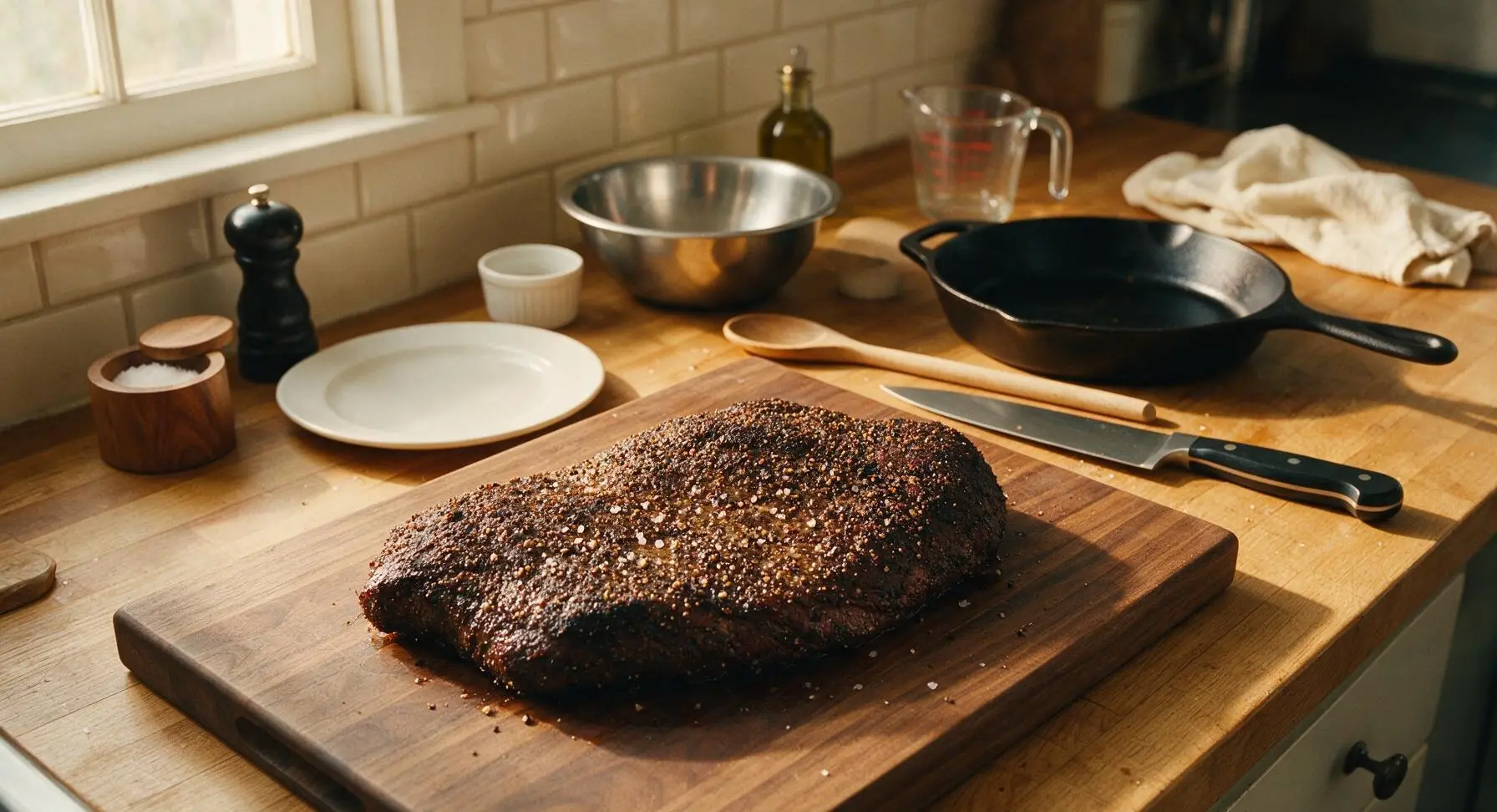
Combine 3 tablespoons coarse kosher salt, 3 tablespoons freshly cracked black pepper, and 1 tablespoon garlic powder in the medium stainless steel mixing bowl, stirring until fully blended. Generously sprinkle the rub over every surface of the mustard-coated brisket, pressing gently to help the spices adhere. The entire brisket should be evenly coated in a dark, peppery layer, with no bare meat spots visible.
Step 3
step3:Coat With Dry Rub
Step 3
step3:Coat With Dry Rub
4

Start Low-Temp Smoke

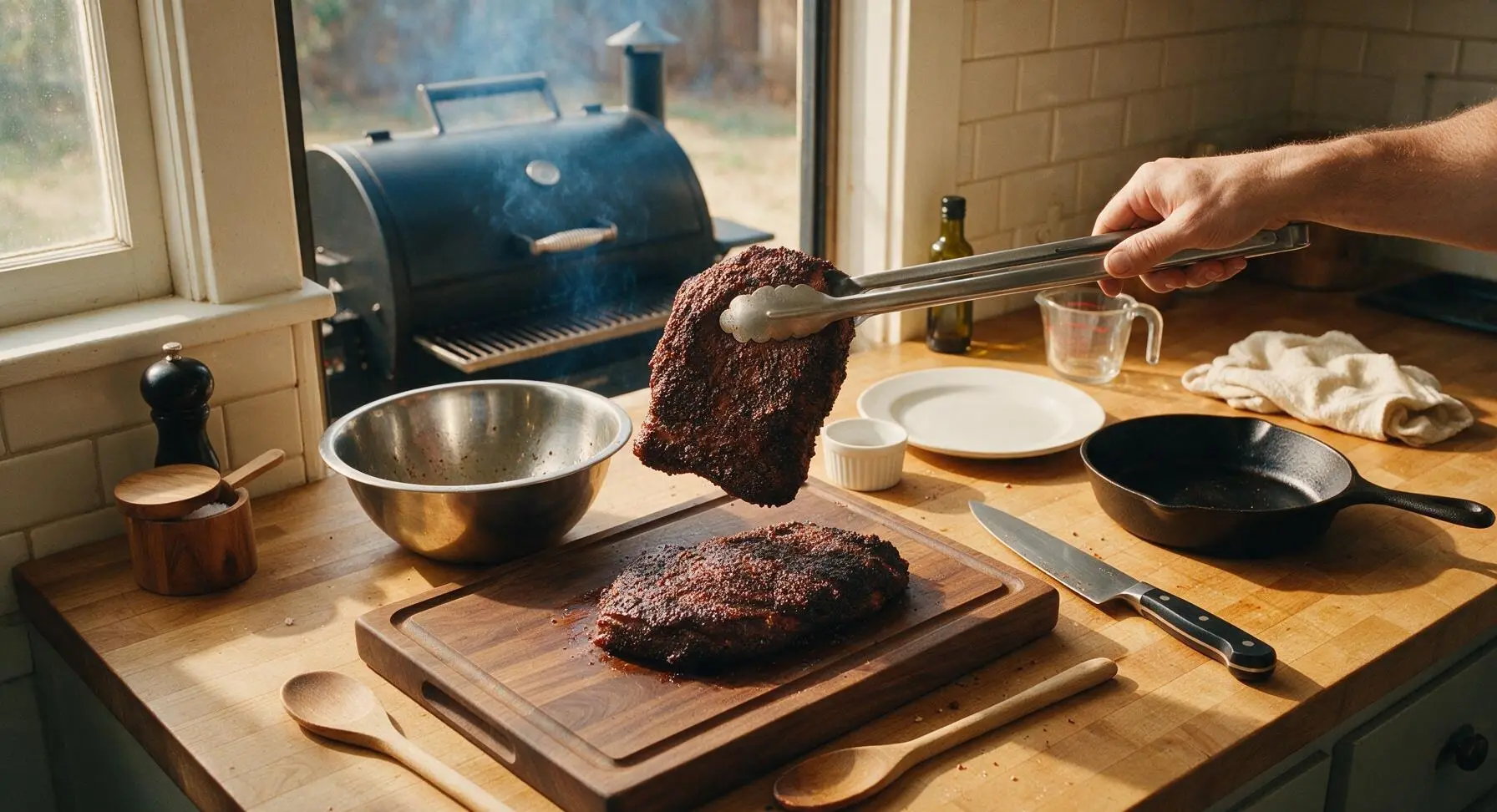
Preheat your offset charcoal smoker to a steady 225°F (107°C), using a 70/30 mix of oak and hickory lump charcoal and hardwood splits to produce thin, wispy blue smoke (thick white smoke will create a bitter, ashy flavor on the meat). Use the 16-inch stainless steel BBQ tongs to place the rubbed brisket fat-side up on the cooking grate, positioned away from direct fire. Close the smoker lid and maintain a consistent 225-250°F temperature for the first 6 hours of cooking, refueling with small wood splits as needed to keep thin smoke flowing.
Step 4
step4:Start Low-Temp Smoke
5

Check Internal Temp

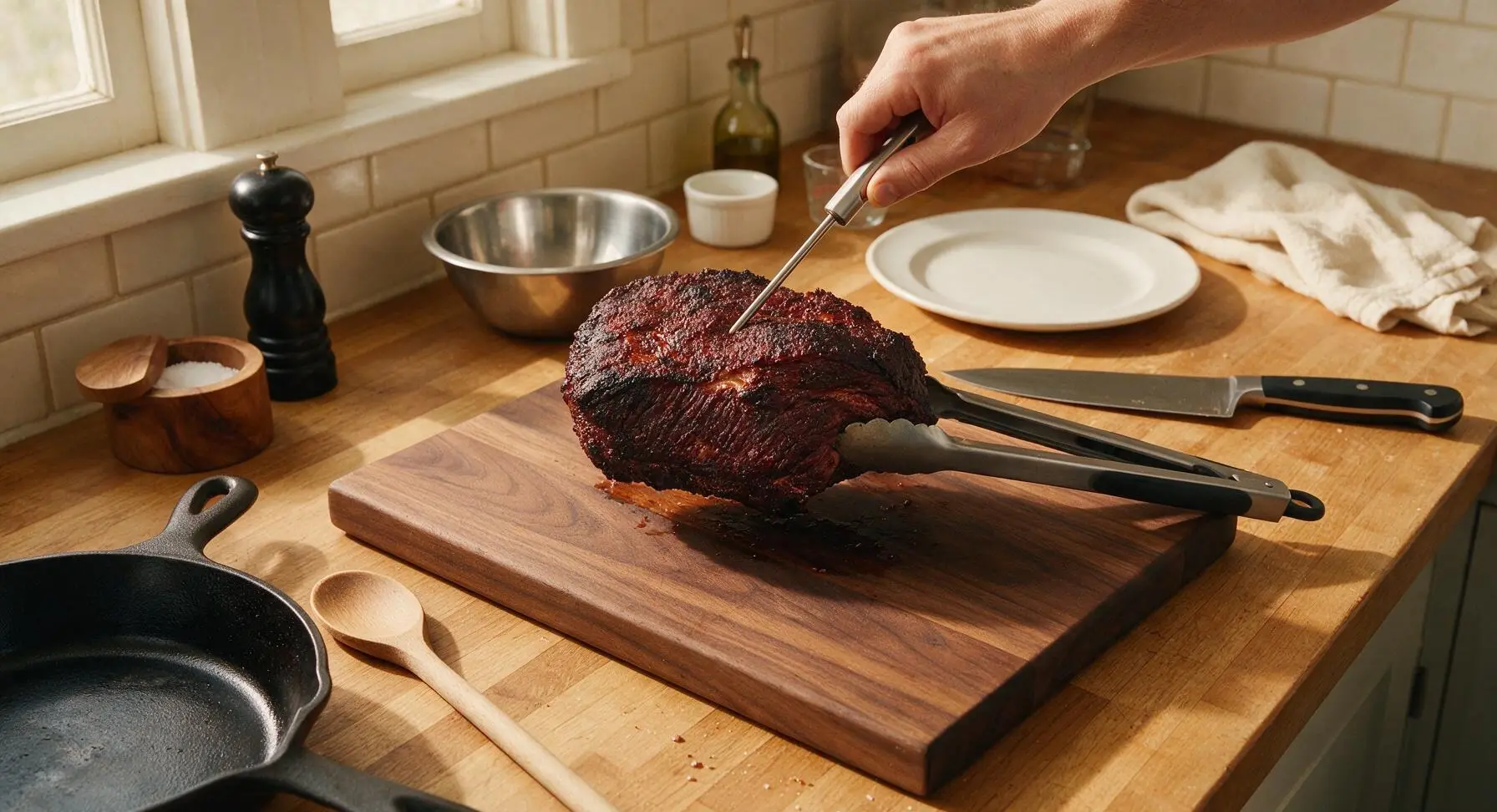
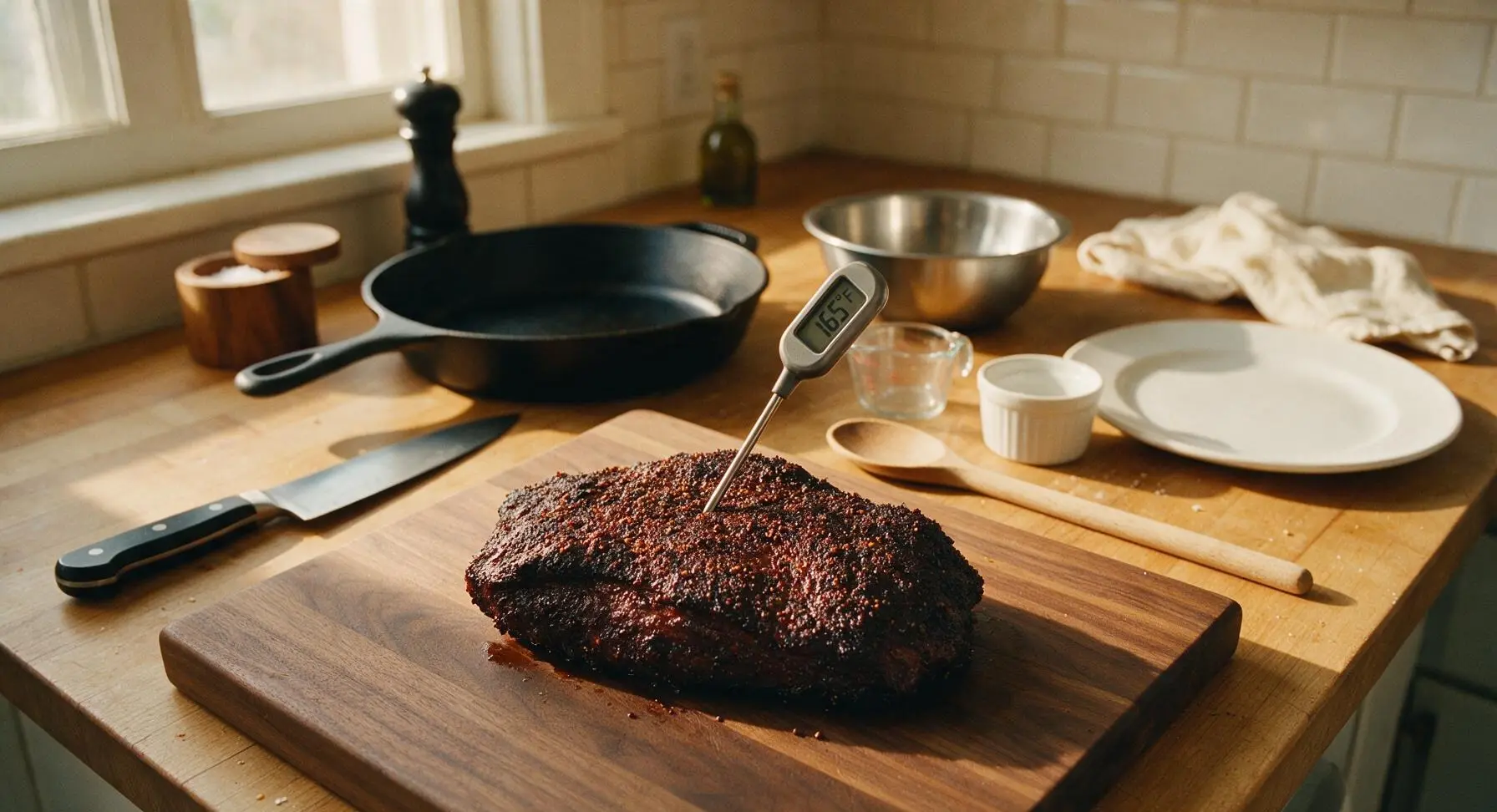
After the first 6 hours of smoking, begin checking the brisket’s internal temperature every 45 minutes using the instant-read stainless steel meat thermometer, inserting the probe into the thickest part of the meat without touching fat or the cooking grate. Cook until the brisket reaches an internal temperature of 165°F (74°C), at which point the outer bark will be a deep, dark mahogany color and firm to the touch.
Step 5
step5:Check Internal Temp
Step 5
step5:Check Internal Temp
6

Wrap In Butcher Paper

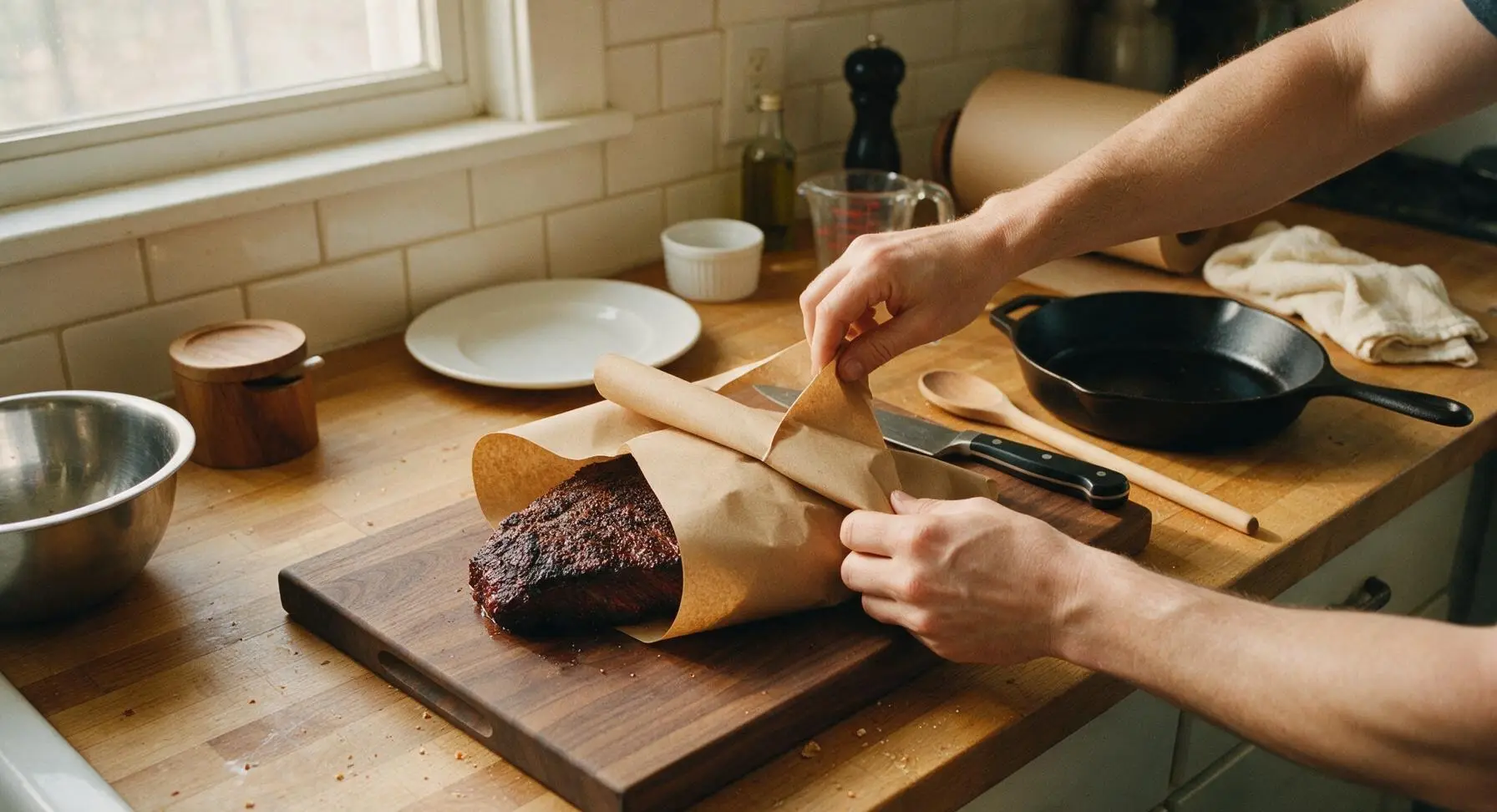
Once the brisket hits 165°F, use the BBQ tongs to transfer it back to the walnut cutting board. Tear a 3-foot section of natural kraft butcher paper, and wrap the brisket tightly in two layers of paper, making sure there are no open gaps that will let steam escape. Return the wrapped brisket to the smoker, and continue cooking at 225°F.
Step 6
step6:Wrap In Butcher Paper
7

Cook To Final Tenderness

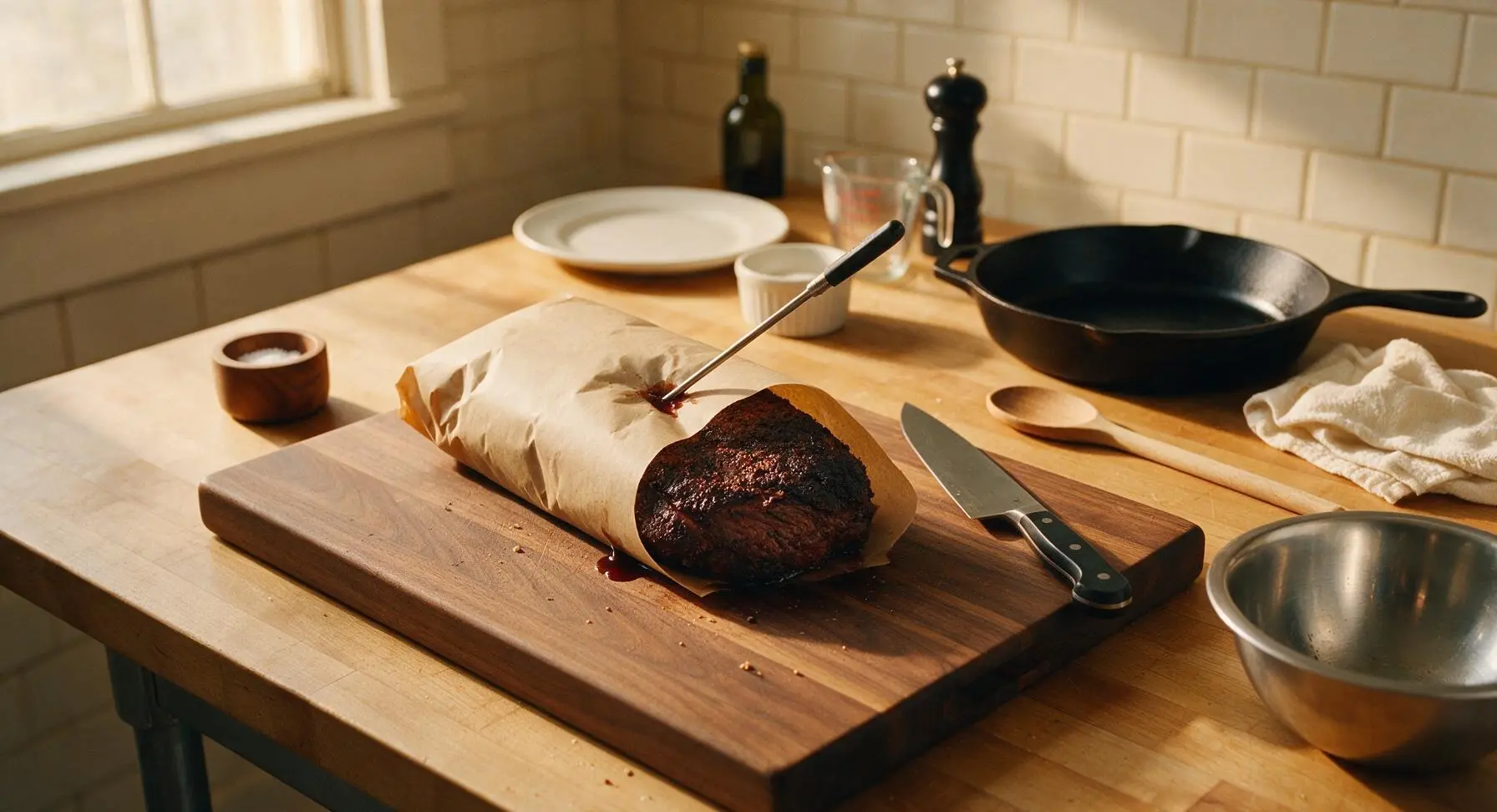
Continue cooking the wrapped brisket at 225°F until the instant-read thermometer inserted into the thickest part reads 203°F (95°C), and the probe slides into the meat with no resistance, like sticking a warm knife into soft butter. This typically takes an additional 3-4 hours after wrapping.
Step 7
step7:Cook To Final Tenderness
8

Rest Cooked Brisket

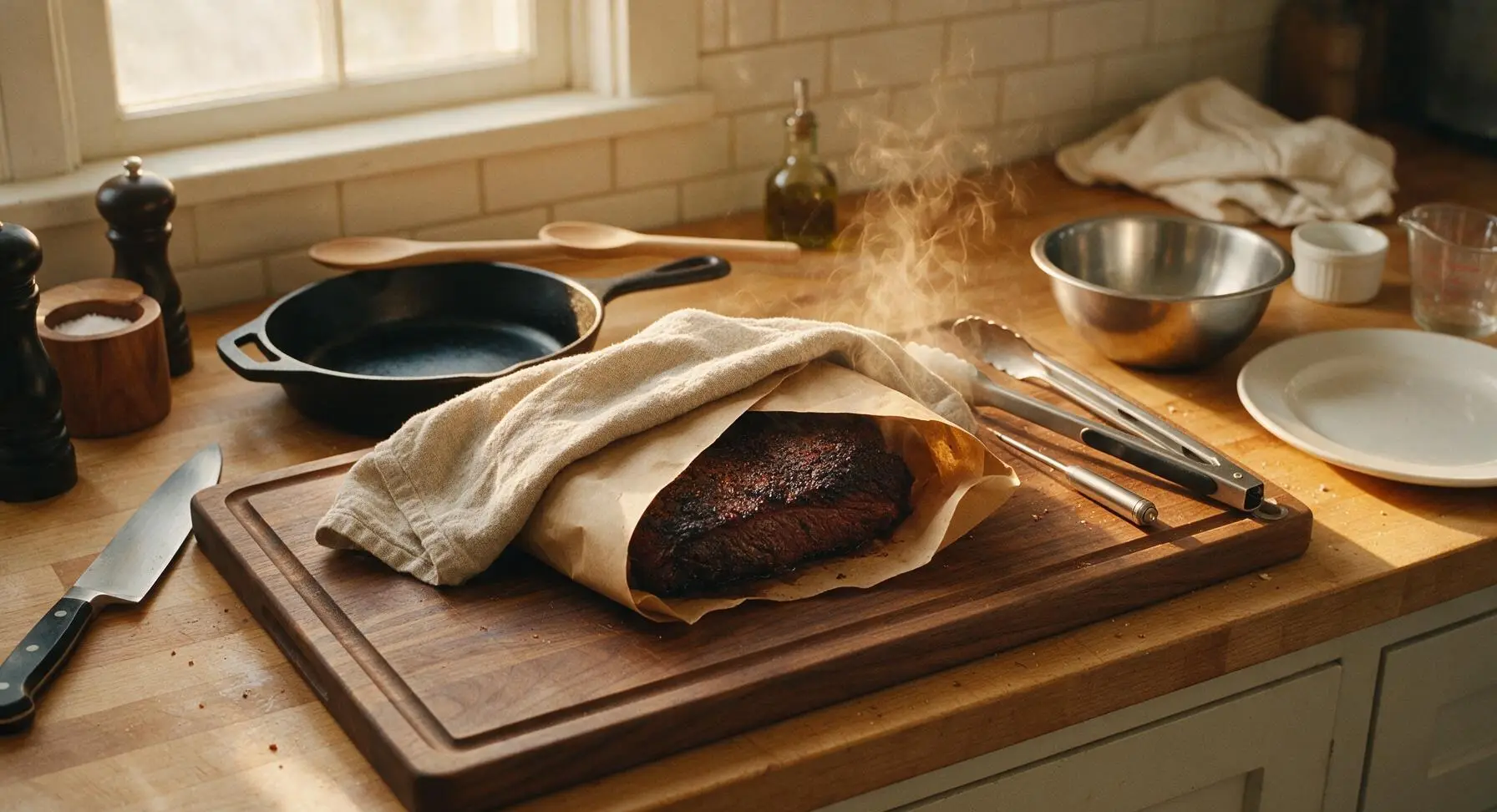
Use the BBQ tongs to transfer the wrapped, finished brisket from the smoker to the walnut cutting board. Drape the oatmeal linen towel loosely over the wrapped brisket, and let it rest for 1 full hour at room temperature. Do not unwrap during resting, as trapped steam will keep the meat warm and allow muscle fibers to reabsorb juices for a moist final result.
Step 8
step8:Rest Cooked Brisket
9

Slice And Plate

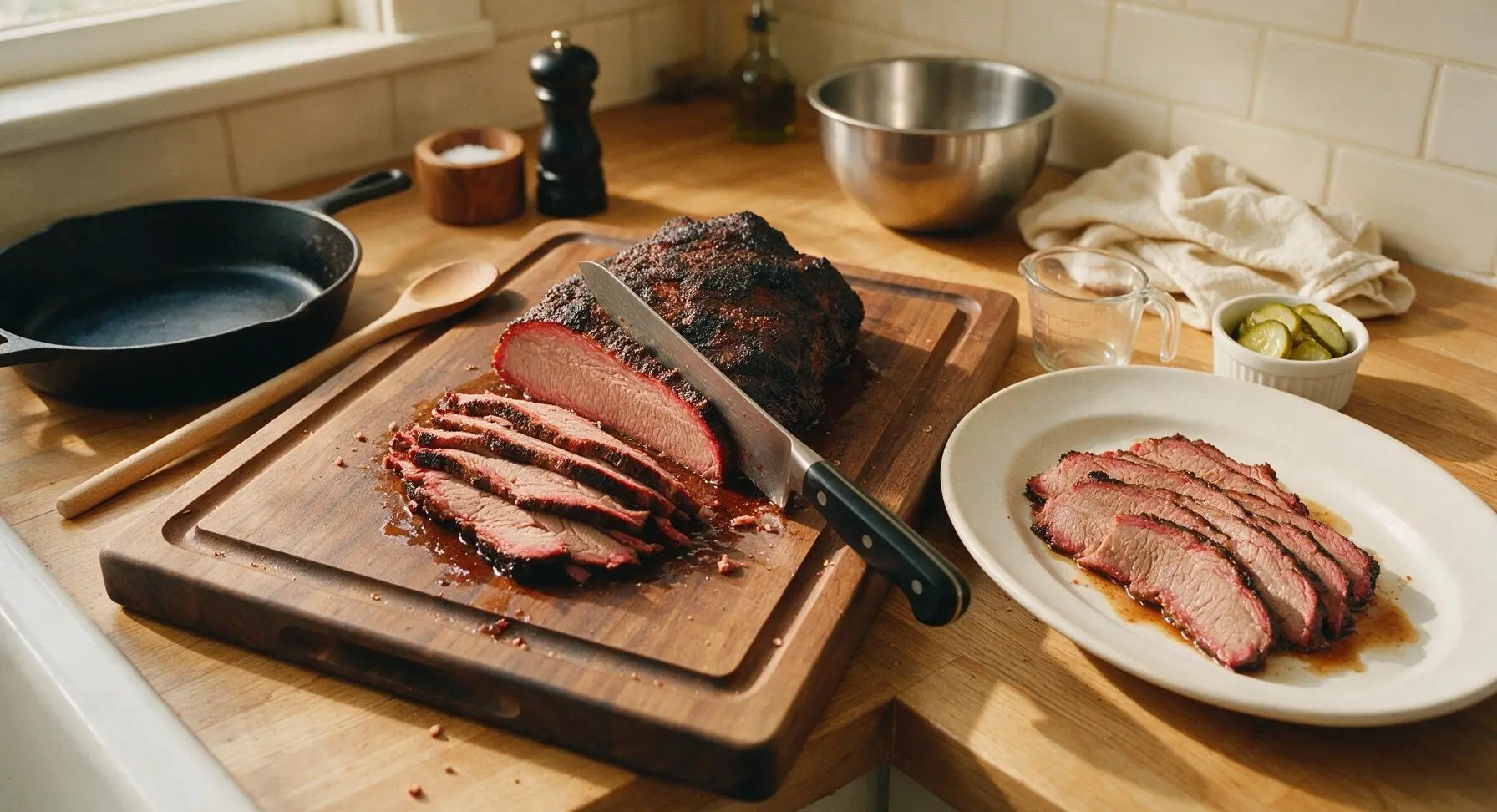
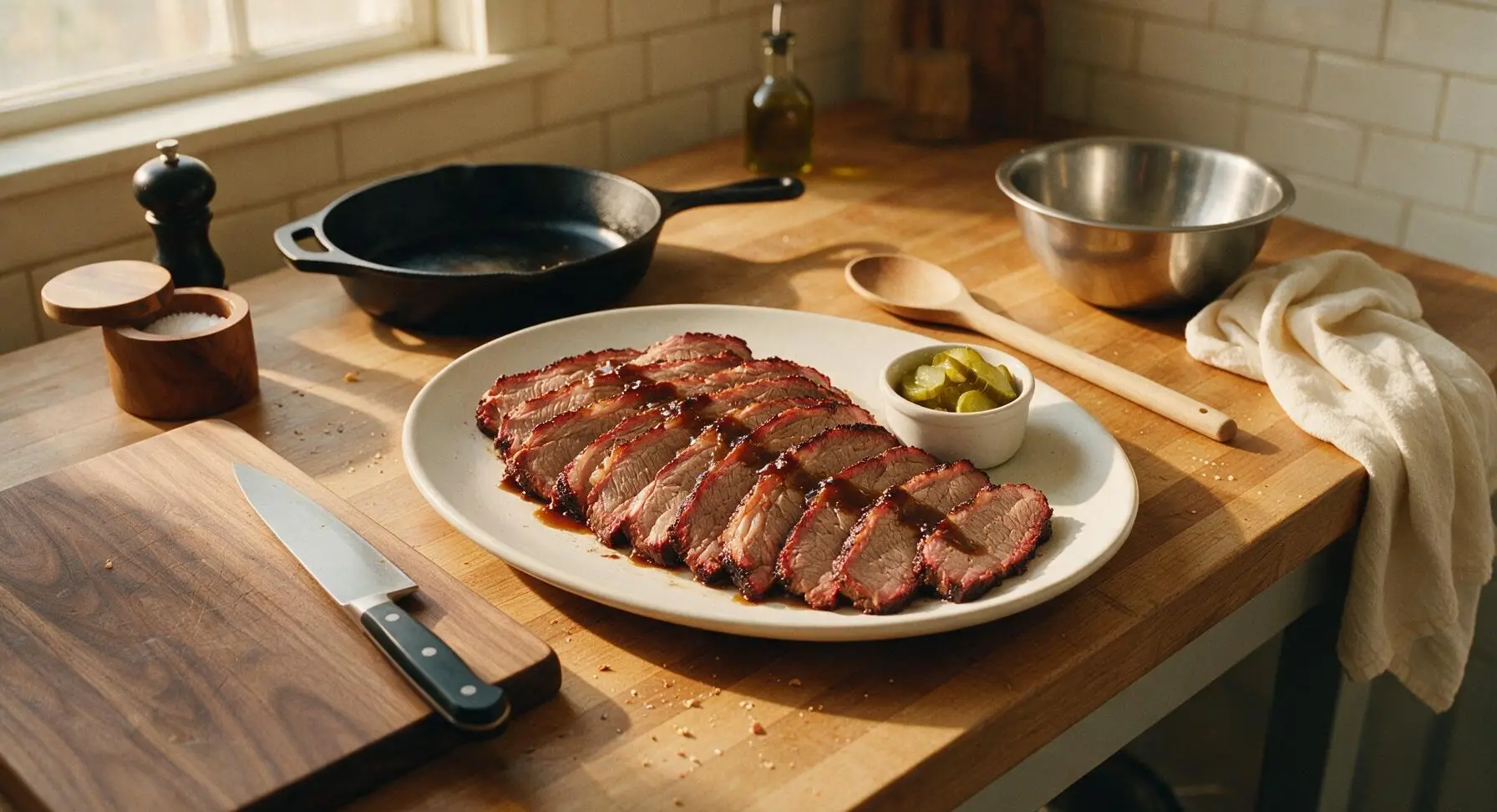
Unwrap the rested brisket, reserving any collected meat juices from the paper. Use the 8-inch chef knife to slice the meat against the grain into uniform 1/4-inch thick slices. Arrange the slices on the large matte white oval serving platter, drizzle the reserved juices over the top, and serve with dill pickle slices in the small white ramekins.
Step 9
step9:Slice And Plate
Step 9
step9:Slice And Plate

Tips

1.Trim the fat cap to an exact 1/4-inch thickness: any thicker and the fat will not fully render during the long cook, leaving a chewy, unpleasantly fatty layer; any thinner and the meat will dry out, as the fat acts as a natural self-basting layer.
2.Maintain thin, wispy blue smoke during the first 6 hours of cooking: thick, billowing white smoke is full of bitter creosote that will leave an ashy, unpleasant taste on the brisket bark. Adjust smoker vents to increase airflow if smoke turns thick and opaque.
3.Use uncoated kraft butcher paper instead of aluminum foil for the wrap stage: foil traps too much steam, which turns the crispy bark soft and mushy, while butcher paper allows just enough airflow to preserve bark texture while trapping moisture to push the meat through the temperature stall.
✨ You May Also Like

BBQ & Grilling
🍜 United States

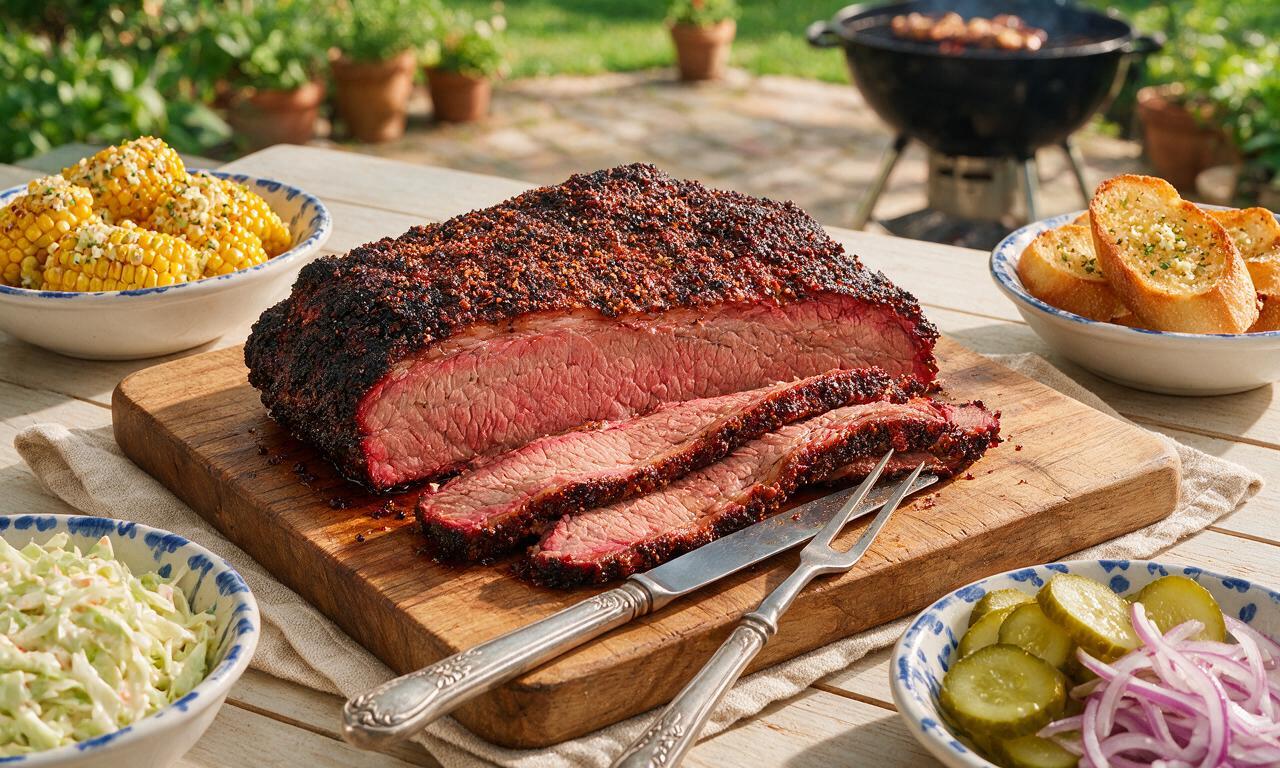
Tender, melt-in-your-mouth beef brisket with a crisp, spiced bark, slow-smoked to deep smoky perfection, the iconic centerpiece of Texas backyard barbecue.

⏱️ 12 hours BBQ & Grilling ★ 4.4
BBQ & Grilling
🍜 Korea

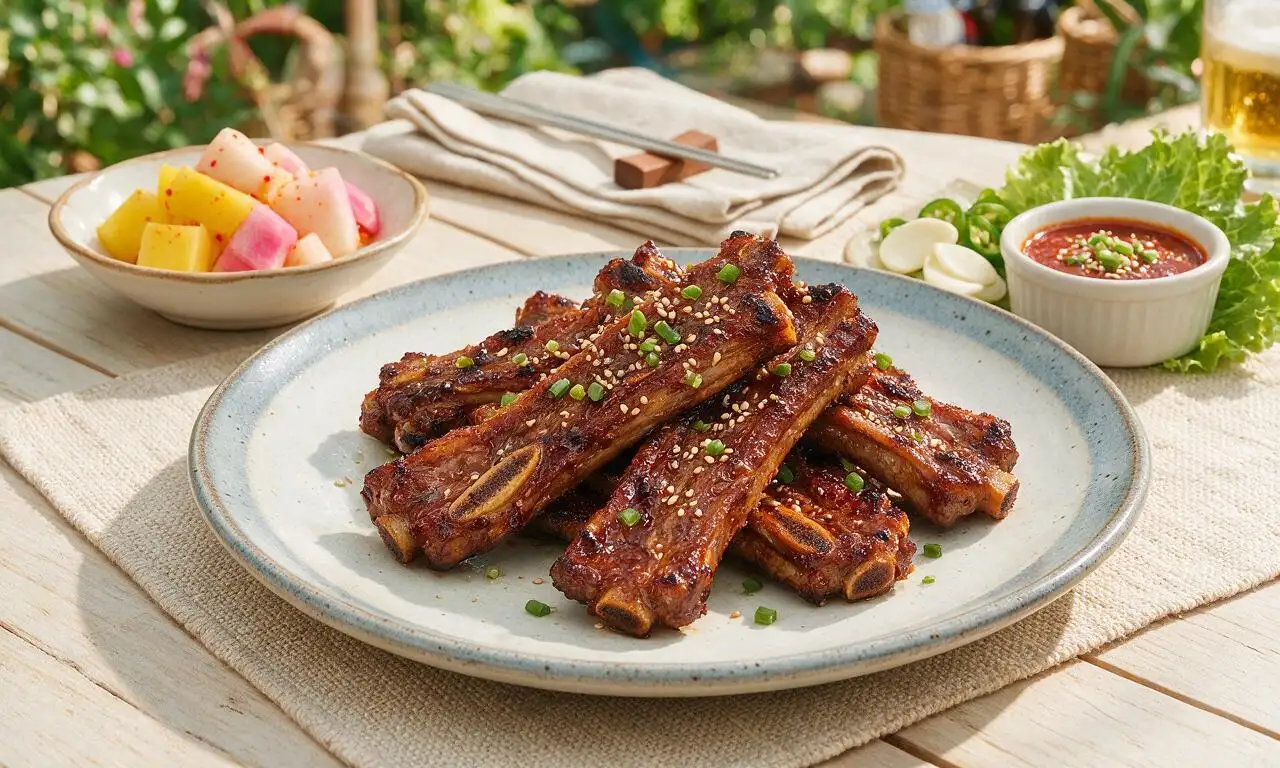
Tender, sweet-savory marinated beef short ribs, a beloved Korean BBQ staple with caramelized, slightly charred edges and deep umami flavor, perfect for outdoor summer gatherings.

⏱️ 4 hours 2BBQ & Grilling ★ 4.8
BBQ & Grilling
🍜 United States

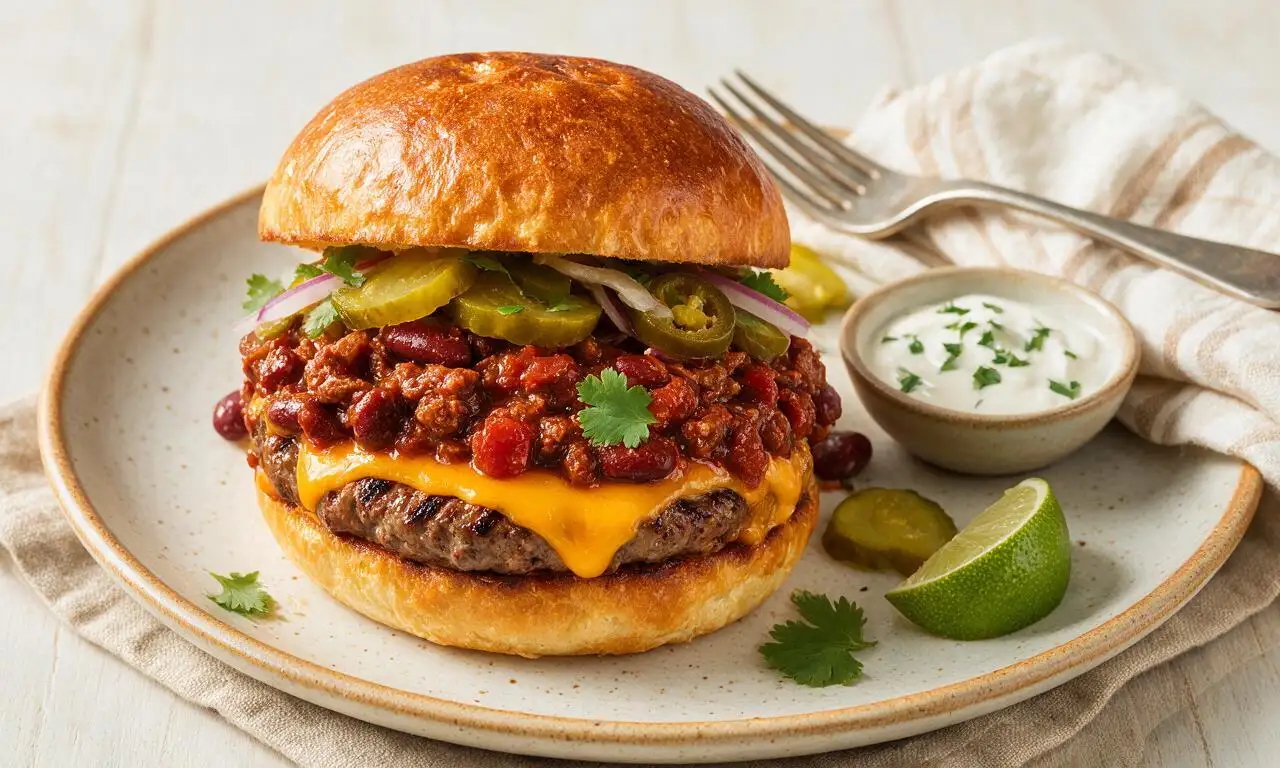
Juicy grilled beef patties topped with smoky homemade chili, melted cheddar, and tangy pickles on toasted brioche buns for a hearty, flavor-packed handheld meal.

⏱️ 40 minuteBBQ & Grilling ★ 4.7
BBQ & Grilling
🍜 United States

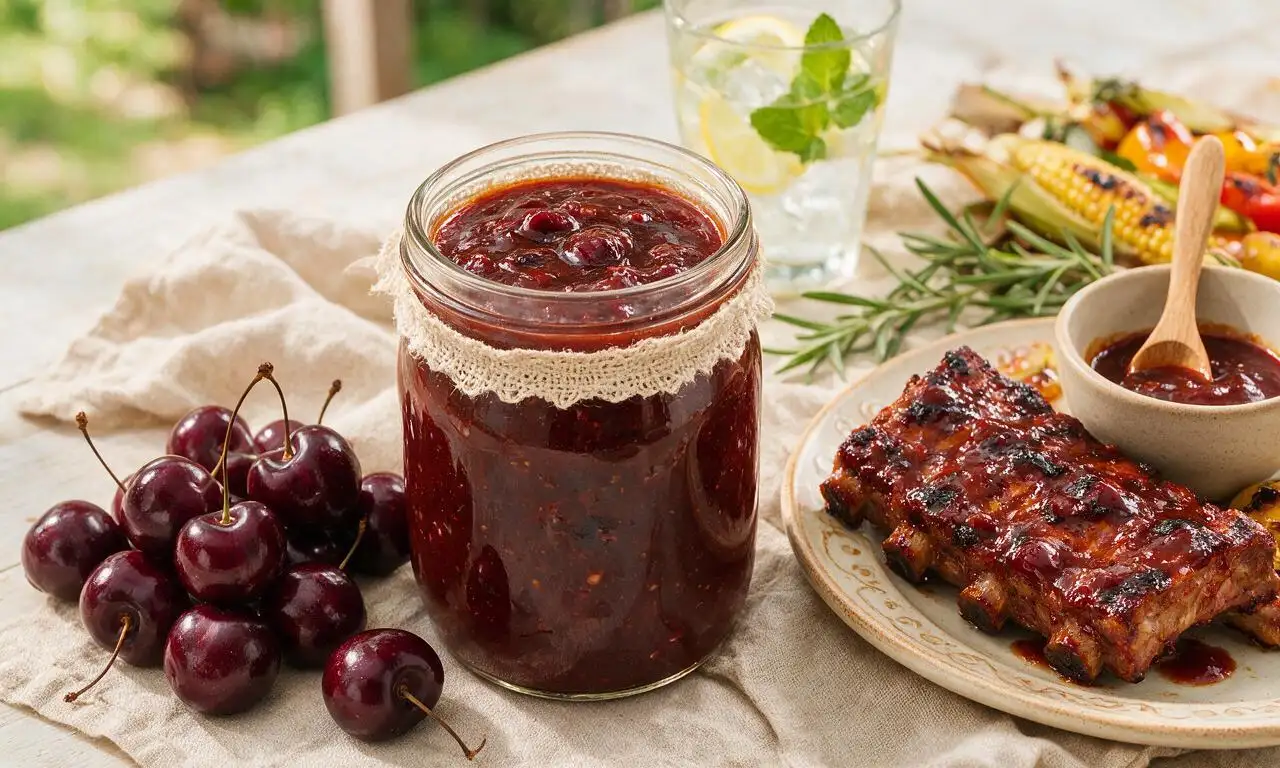
A sweet, smoky, tangy BBQ sauce brightened with peak-season dark cherries, ideal for glazing grilled ribs, chicken, pork, or summer roasted veggies.

⏱️ 35 minuteBBQ & Grilling ★ 4.7
BBQ & Grilling
🍜 United States

Rich, smoky, slightly sweet homemade bourbon BBQ sauce with deep caramel notes, ideal for glazing grilled ribs, chicken, and burgers at cookouts.

⏱️ 25 minuteBBQ & Grilling ★ 4.7
BBQ & Grilling
🍜 United States

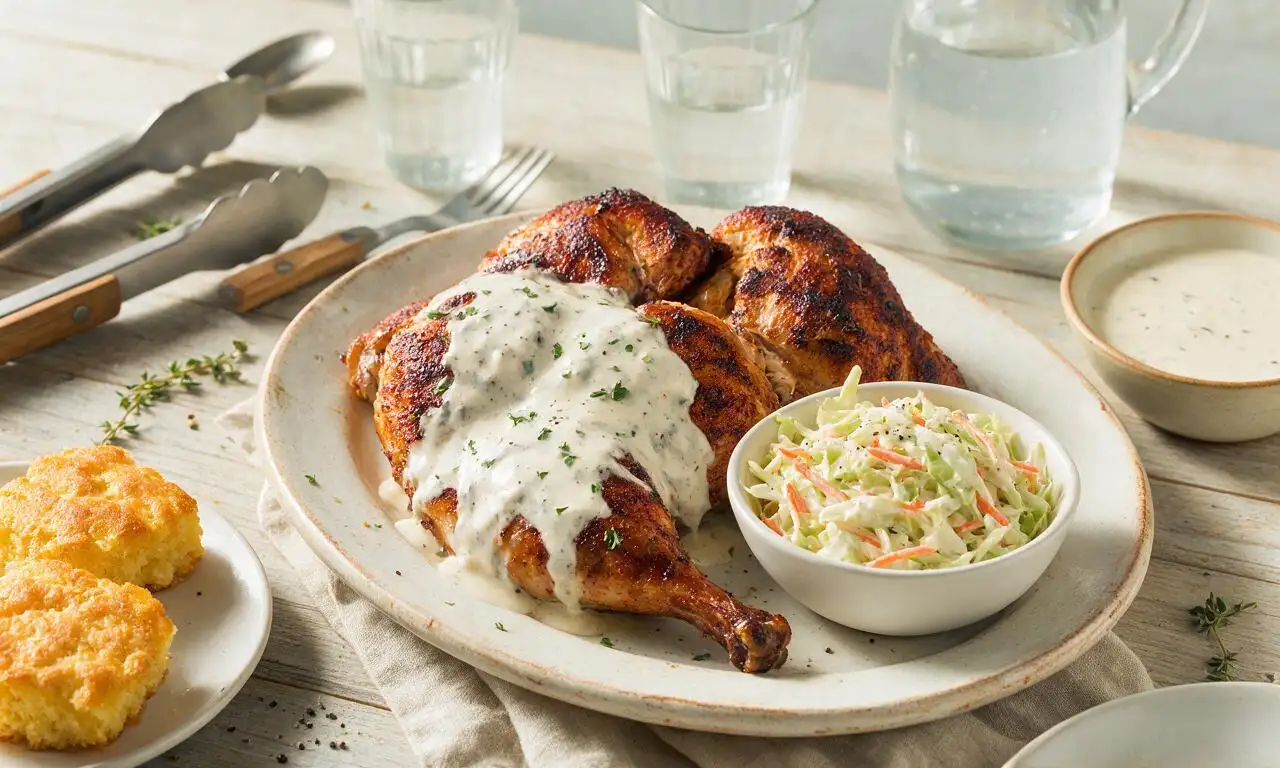
Iconic Alabama-style BBQ featuring tender hickory-smoked chicken slathered in tangy creamy white sauce, a beloved regional Southern cookout staple.

⏱️ 3 hoursBBQ & Grilling ★ 5

Savory Smoked Texas Beef Brisket:Frequently Asked Questions

1.Why is yellow mustard used in this recipe, and will it make my brisket taste like mustard? ▾
Yellow mustard acts as a low-moisture, sticky binder that helps the salt, pepper, and garlic powder rub adhere evenly to form that signature crackly bark. Its sharp tang cooks off completely during the long smoke, leaving no noticeable mustard flavor—only subtle depth that lets the beef and wood smoke take center stage, I promise.
2.What ratio of oak to hickory gives the most authentic Texas brisket flavor? ▾
Stick to a 70/30 split of post oak to hickory for classic Lone Star State taste. Post oak delivers a smooth, mild earthy base that never overpowers the beef, while the smaller hickory portion adds rich, subtle bacon-like savoriness. Skip sweet woods like apple or cherry here—traditional Texas brisket leans fully into savory, wood-forward flavor.
3.How do I get that delicate pink smoke ring under the bark without fancy tools? ▾
That iconic pink ring forms when smoke nitrogen dioxide reacts with meat myoglobin before the internal temp hits 140°F. Hold your smoker steady at 225°F for the first 3 hours, avoid unnecessary lid openings, and maintain thin, wispy blue smoke. Thick, billowy white smoke causes bitter bark and won’t produce a clean, even smoke ring.
4.Can I use pre-ground black pepper instead of freshly cracked for the rub? ▾
Skip fine pre-ground table pepper for this recipe—it won’t create that signature textured, peppery Texas bark. Use freshly cracked black pepper ground to a coarse, large-sand consistency to build that perfect crackly, spicy outer crust. Fine pre-ground pepper burns easily during the long smoke, leaving a harsh, ashy flavor instead of warm, bold pepper bite.
5.How do I tell when my brisket is done, and how do I avoid dry, tough meat? ▾
Pull the brisket when it hits 203°F in the thickest section, and a meat probe slides in with almost no resistance, like cutting into soft butter. Don’t rely on temp alone: the brisket hits a tough ‘stall’ around 160°F, so don’t crank the heat, and let it rest wrapped in butcher paper for at least 1 hour to lock in juices before slicing.
6.Do I need to wrap the brisket during the smoke, and what material works best? ▾
Wrapping isn’t mandatory, but wrapping once the bark is fully set (usually 160–170°F internal) cuts cook time and helps push through the temperature stall without drying out the meat. Use uncoated pink butcher paper for authentic Texas results—it lets a small amount of smoke through while trapping moisture, unlike foil which steams bark soft and soggy.
7.How should I slice the finished brisket flat for the most tender bites? ▾
First, locate the direction of the long, stringy muscle fibers (the grain) running across the brisket flat. Slice perpendicular, or against, the grain into uniform ¼-inch thick slices. Slicing with the grain will leave you with chewy, stringy bites even if you cooked the brisket perfectly, so take 10 seconds to confirm the grain direction before you start cutting.

Comments (5)

3 days ago

OMG, made this for our neighborhood potluck last weekend and people were literally coming back for thirds! I was nervous about nailing the Texas-style brisket since I’ve only smoked pork butt before, but the rub ratio was perfect and that 10 hour cook time gave it that chewy, flavorful bark I’ve been chasing for years. My 10 year old said it’s better than the BBQ joint we hit every Father’s Day, which is the highest possible praise tbh. Total game changer recipe, 10/10.

2 days ago

Quick question—did you use oak or hickory for the smoke? I’m heading to the hardware store later to pick up wood chips and can’t decide which tastes better with this rub!

2 days ago

So stoked this was such a hit at your potluck, Jake! To answer Mia’s question too—post oak is the traditional Texas pick for that mild, smoky flavor, but hickory works great if you like a bolder smoke profile, just don’t overdo it or it can make the brisket taste bitter. Great call sticking out the full 10 hour cook, that bark is so worth the wait!

1 week ago

SO good! I made a double batch Sunday for meal prep and it’s been perfect for quick weeknight dinners—tossed some slices on sandwiches, mixed chunks into breakfast hash, even made brisket tacos one night. The only heads up is I’d budget extra time if your smoker runs a little cool like mine, mine took almost 11 hours total to hit the right temp. Definitely going into my regular rotation!

5 days ago

Great tip about accounting for smoker temperature variation, Molly! So glad this works for meal prep—brisket leftovers are honestly half the fun, those brisket tacos sound incredible. Next time you can wrap it in butcher paper at the 165F mark if you want to speed up the cook a little without ruining that perfect bark.

2 days ago

Tried this for my husband’s birthday dinner since he’s a born and raised Texan and has been super picky about brisket since we moved up north. I was so stressed I’d mess it up, but following the instructions step by step worked! He said it tasted exactly like the brisket his grandpa used to smoke at family cookouts. Cried a little, ngl. Only reason I’m not giving 5 stars is I wish there was a note on what internal temp to pull it at, I had to Google it mid-cook.

yesterday

Happy belated birthday to your husband! That high praise from a Texas native means the world. So sorry the internal temp note was missing—we recommend pulling it when the thickest part hits 203F and probes like room temperature butter, we’ll update the recipe card to add that note this week! Thanks for the helpful feedback :)

5 days ago

Made this on my new offset smoker for a post-hike cookout with friends last weekend. The bark was perfectly crispy, the fat rendered all the way down so every bite was juicy, zero dry spots even on the flat end! Even saved the rendered brisket fat to fry up breakfast potatoes the next morning, 10/10 would recommend that hack. Will be making this for every backyard hang from now on.

yesterday

I’ve been intimidated to try brisket forever because everyone makes it sound so fussy and complicated, but this recipe broke it down so simply even a total BBQ newbie like me could pull it off! My kids loved it, even my super picky 7 year old who turns his nose up at almost everything ate two full slices slathered in BBQ sauce. We served it with coleslaw and cornbread for our Sunday family dinner and there were barely any leftovers. SO good!

30 minutes ago

Wait quick question—did you wrap yours in butcher paper or foil? I’m making this next weekend for my first ever brisket and can’t decide which to grab from the store!

5 minutes ago

Hi there! Butcher paper is our go-to for that classic Texas brisket because it lets just enough smoke through while locking in moisture, but aluminum foil works totally fine in a pinch if you don’t have butcher paper on hand. Good luck with your first brisket—you’ve got this!