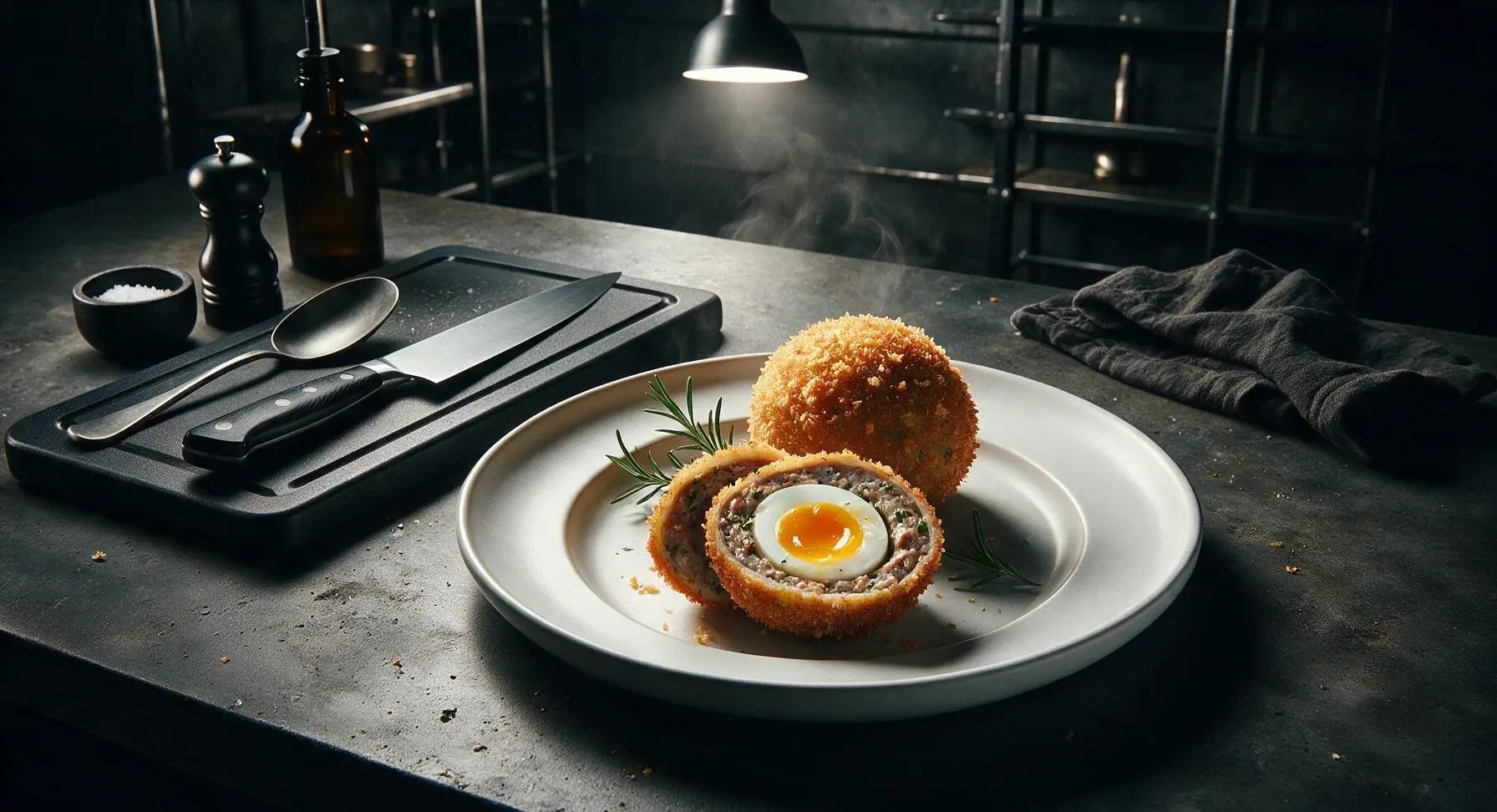
scotch eggs

title 1
scotch eggs
⏱️ cook time 12 minutes
🍽️ servings 4
⚡ Difficulty medium

intro

Crisp golden panko crust wrapping savory herbed sausage, encasing a perfectly soft-boiled runny yolk egg—this portable, hearty British classic is made for picnic spreads.

Ingredients
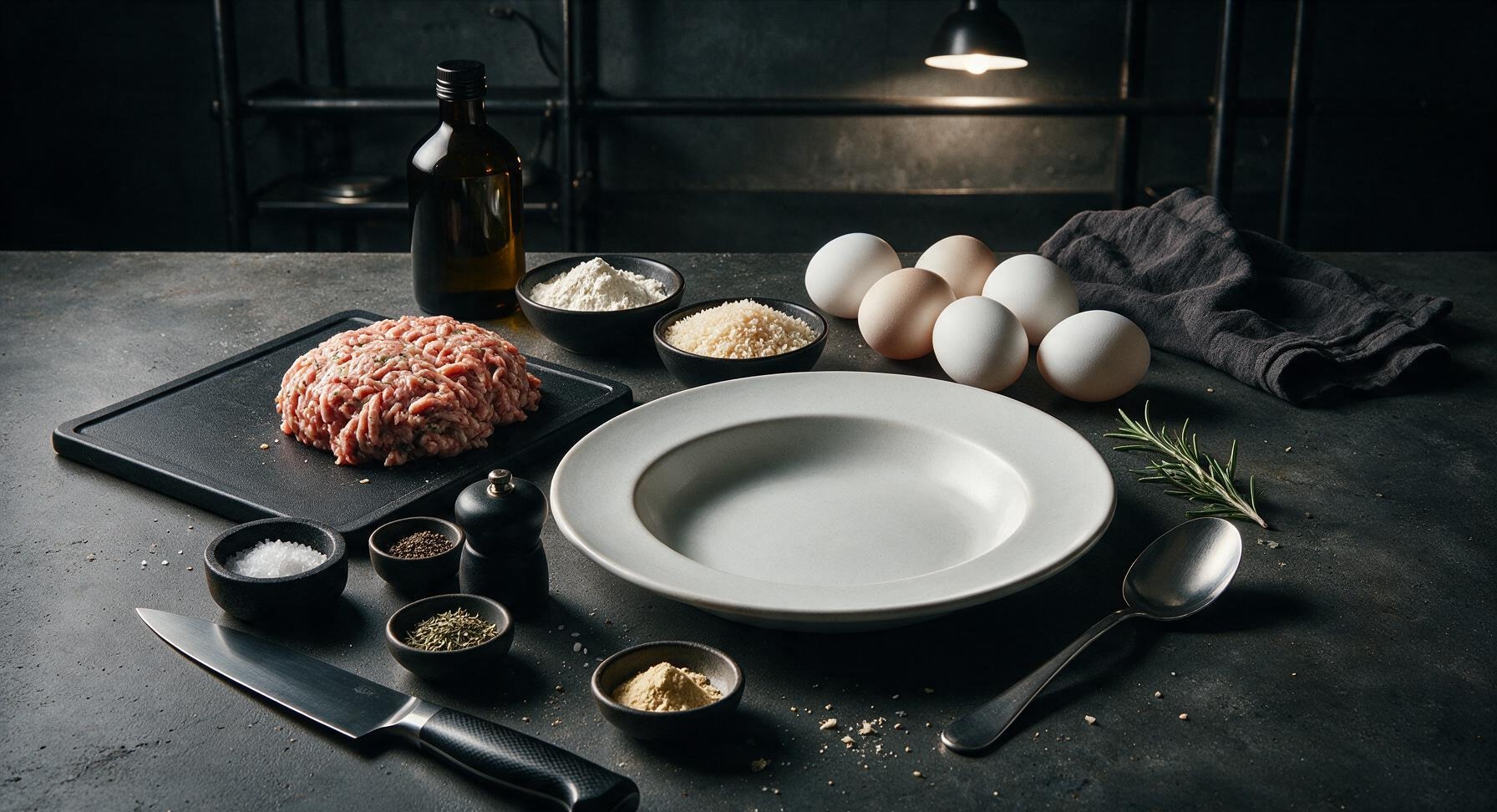
Large eggs 5 (4 for centers, 1 for breading)
Ground herbed pork sausage 450g
All-purpose flour 60g
Panko breadcrumbs 120g
Neutral frying oil (canola/vegetable) 1L
Flaky sea salt 1 tsp
Freshly ground black pepper 1/2 tsp
Dried sage 1/2 tsp
English mustard powder 1/4 tsp

Steps

1

Soft-Boil the Eggs

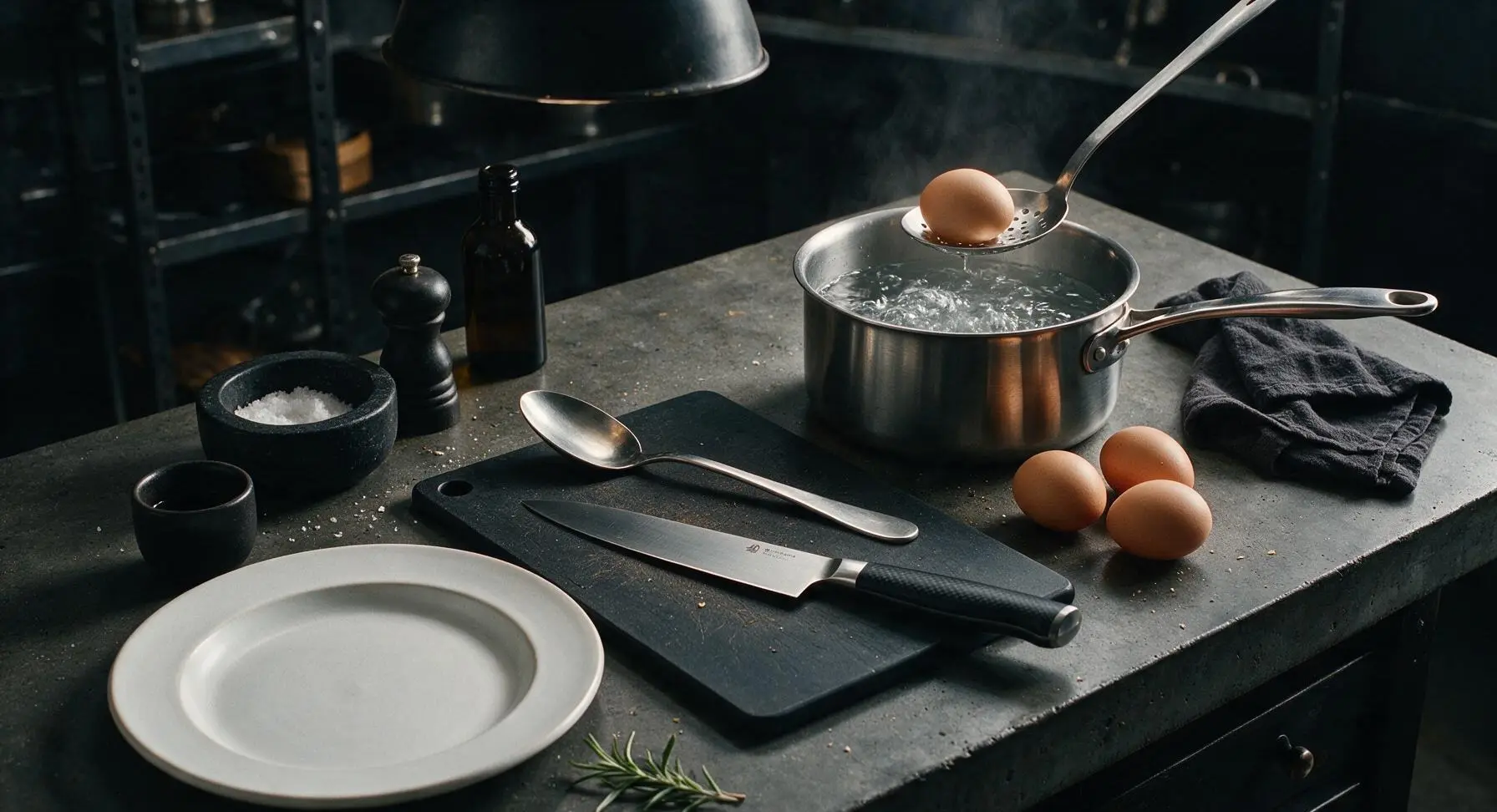
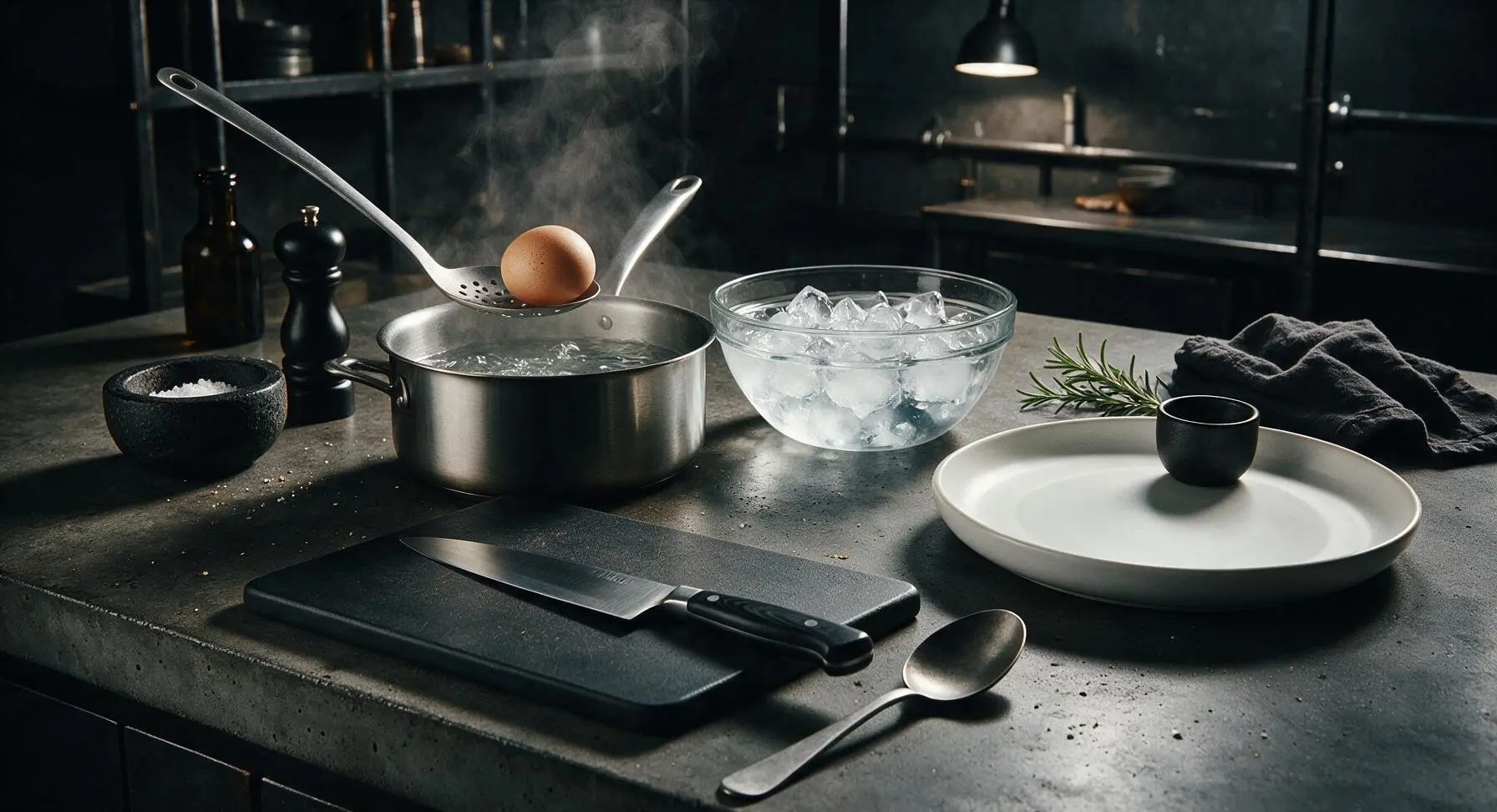
Fill the 2L stainless steel saucepan three-quarters full with cold water, bring to a rolling boil over high heat. Gently lower 4 of the large eggs into the boiling water using the slotted stainless steel spoon, then set a timer for exactly 6 minutes for a runny golden yolk (cook 7 minutes for a thicker, jammy yolk). While eggs cook, fill the 2L clear glass mixing bowl with equal parts ice and cold water to create an ice bath for shocking the eggs and stopping the cooking process immediately.
Step 1
step1:Soft-Boil the Eggs
Step 1
step1:Soft-Boil the Eggs
2

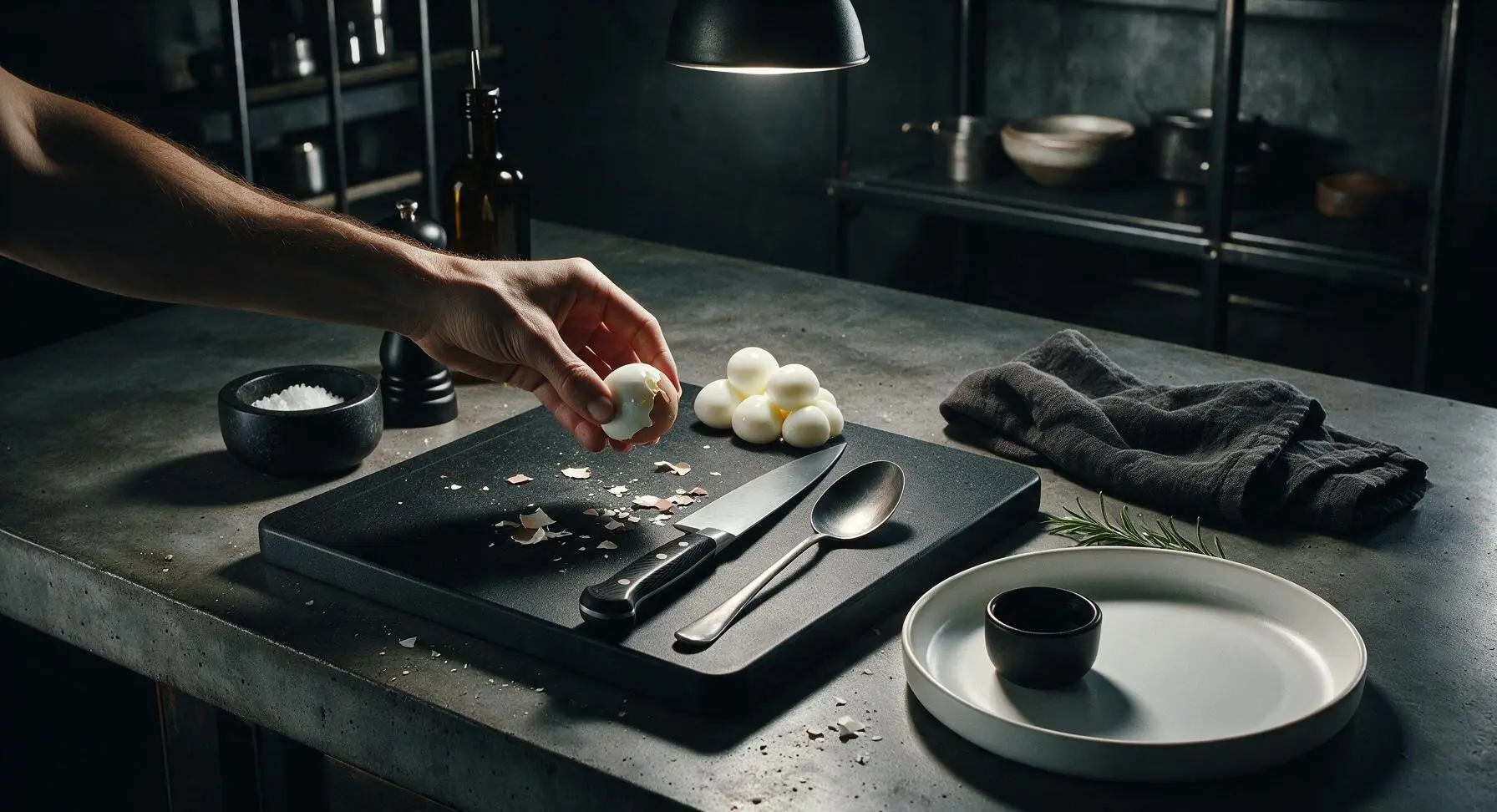
Peel Cooled Eggs

When the 6 minute timer goes off, immediately use the slotted spoon to transfer all eggs to the ice water bath, let cool completely for 10 minutes (this prevents the unappetizing grey ring around the yolk and loosens the shell for easy peeling). Gently tap each egg on the counter to crack the shell all over, then peel under cool running water, removing all tiny shell fragments. Pat peeled eggs completely dry with paper towel, set aside on the cutting board.
Step 2
step2:Peel Cooled Eggs
3

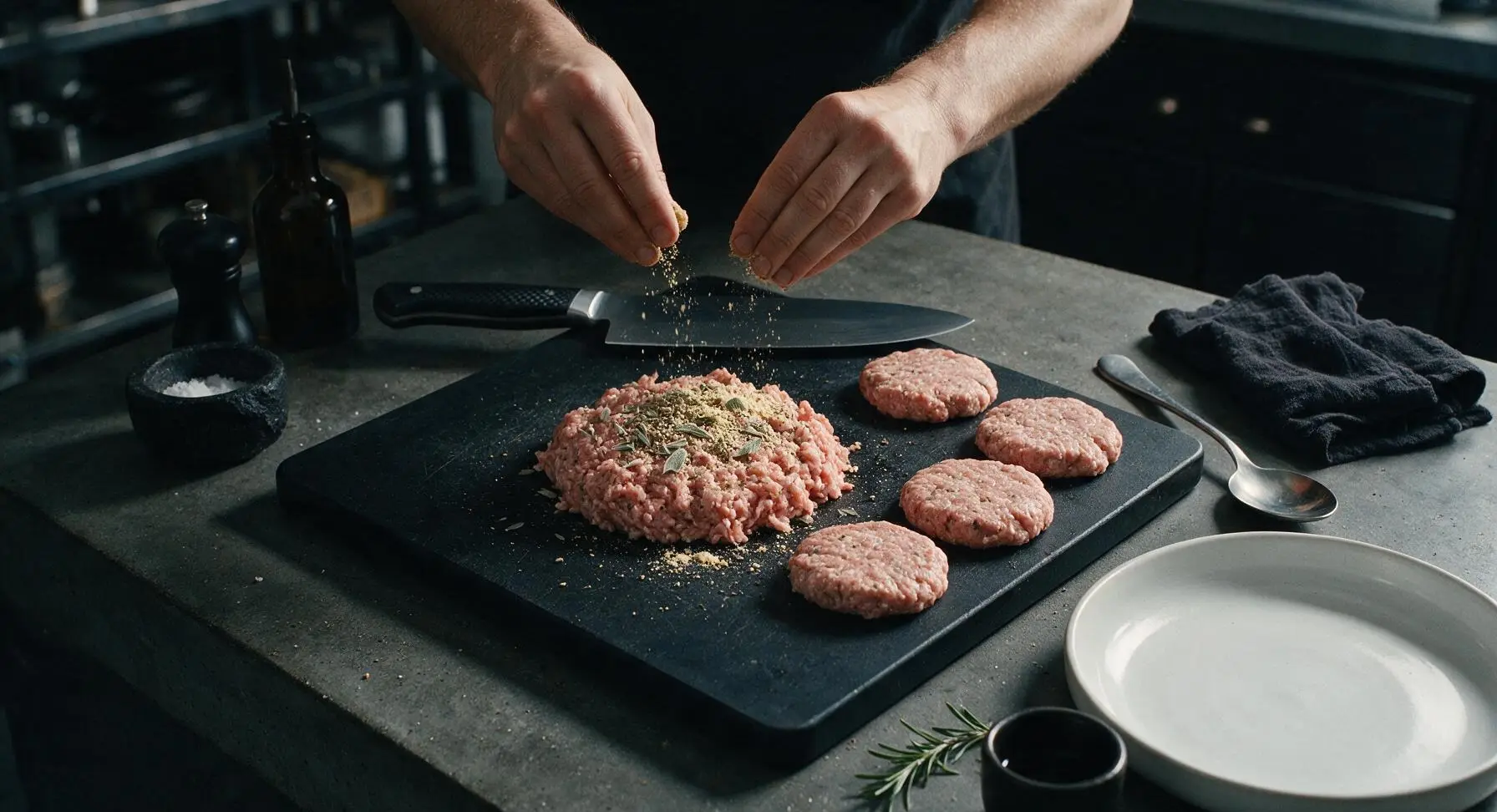
Season Sausage Mixture

Place the 450g ground herbed pork sausage on the light oak cutting board. Sprinkle with 1/2 tsp freshly ground black pepper, 1/2 tsp dried sage, and 1/4 tsp English mustard powder. Use clean hands to mix the seasonings evenly into the sausage, being careful not to overwork the meat (overmixing compacts the sausage and creates a tough texture). Divide the seasoned sausage into 4 equal 110g portions, flatten each into a 10cm wide thin patty.
Step 3
step3:Season Sausage Mixture
4

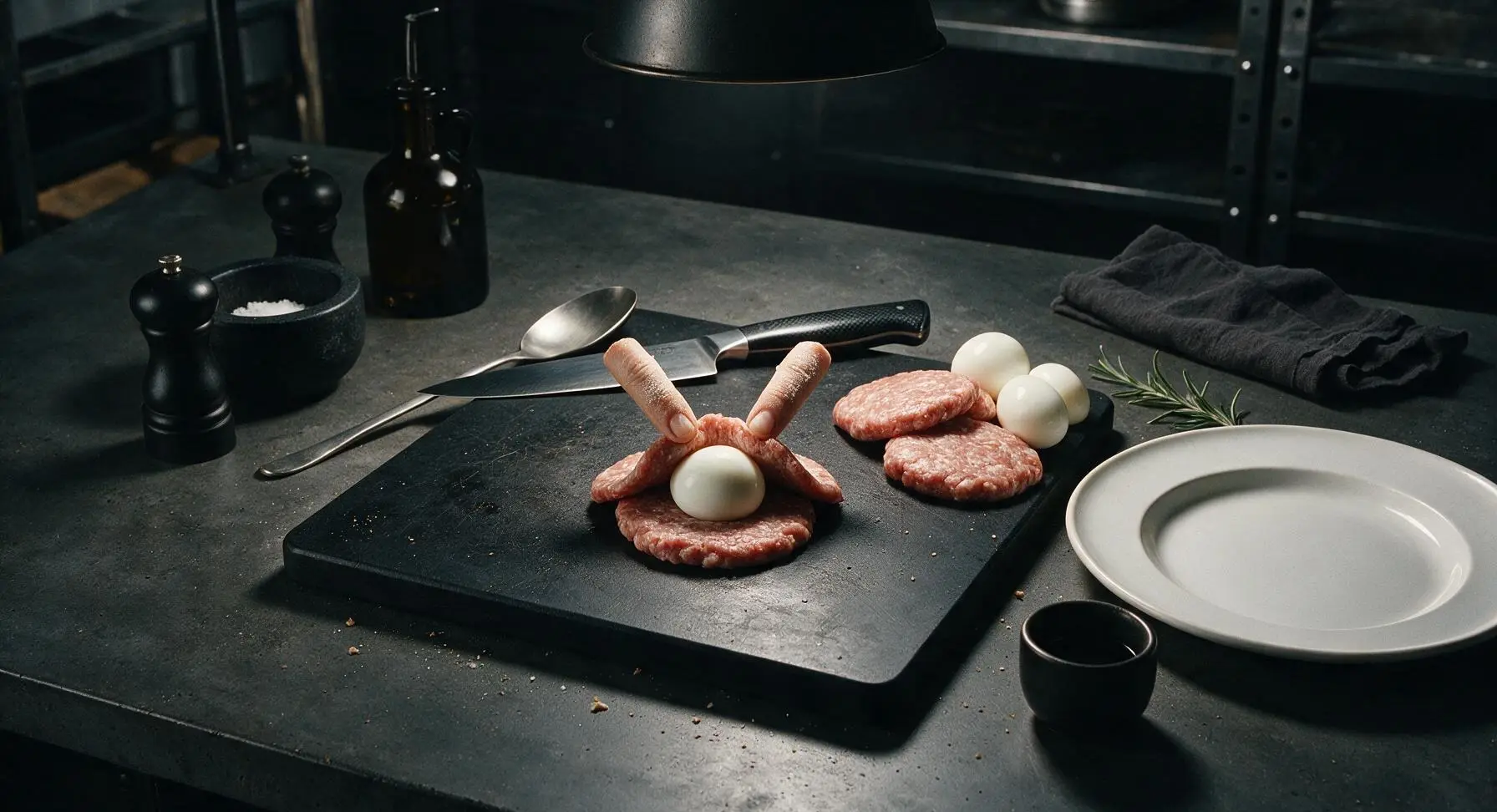
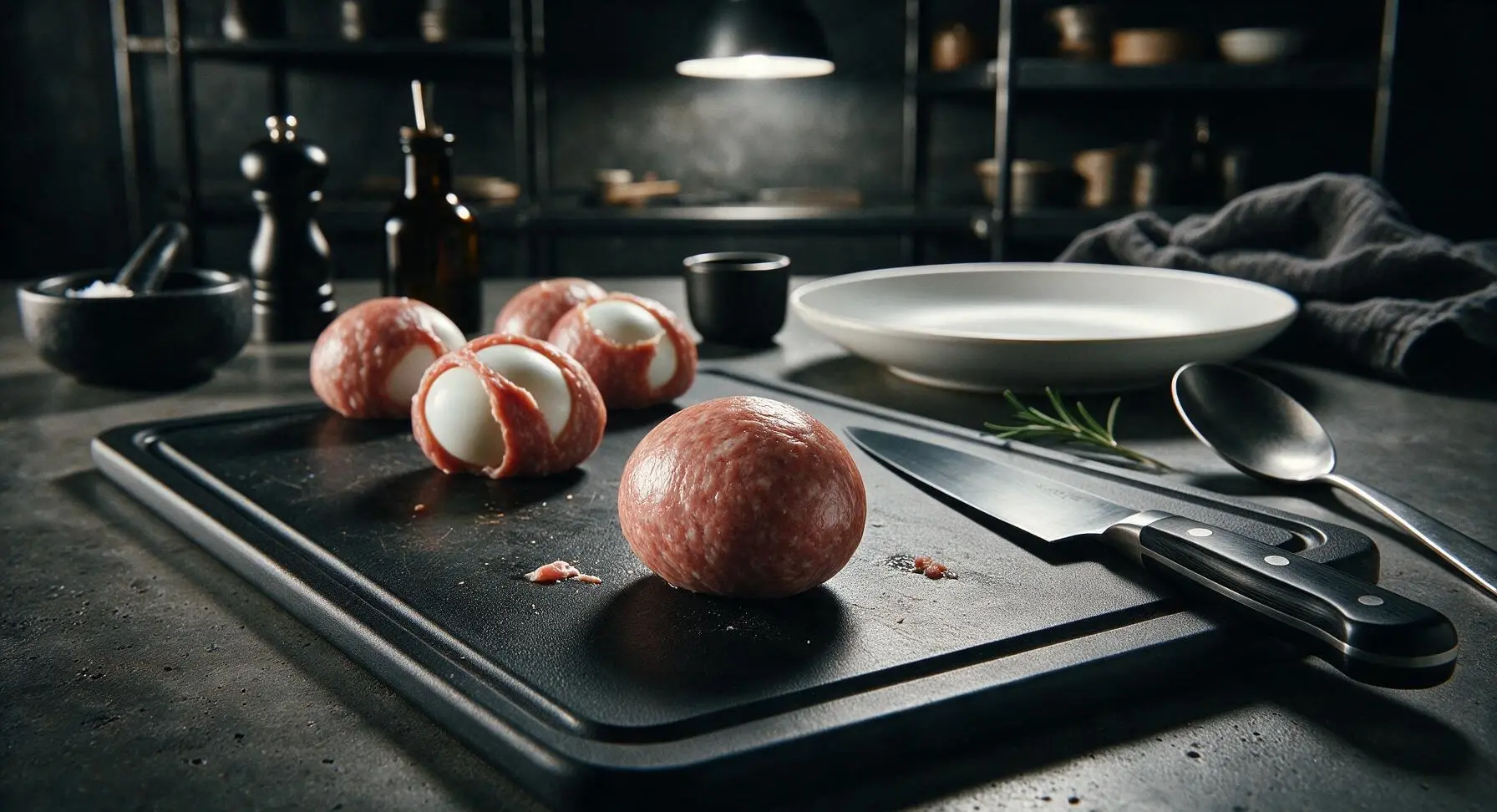
Wrap Eggs in Sausage

Lightly flour your hands to prevent sticking. Take one flattened sausage patty, place one dry peeled egg in the center. Gently press the sausage up and around the egg, sealing all seams completely so no egg is visible, ensuring the sausage layer is an even 1cm thickness all around. Repeat with all 4 eggs, setting wrapped eggs aside on the cutting board. If any seams crack as you work, simply pinch the sausage closed to form a tight seal.
Step 4
step4:Wrap Eggs in Sausage
Step 4
step4:Wrap Eggs in Sausage
5

Set Up Breading Station

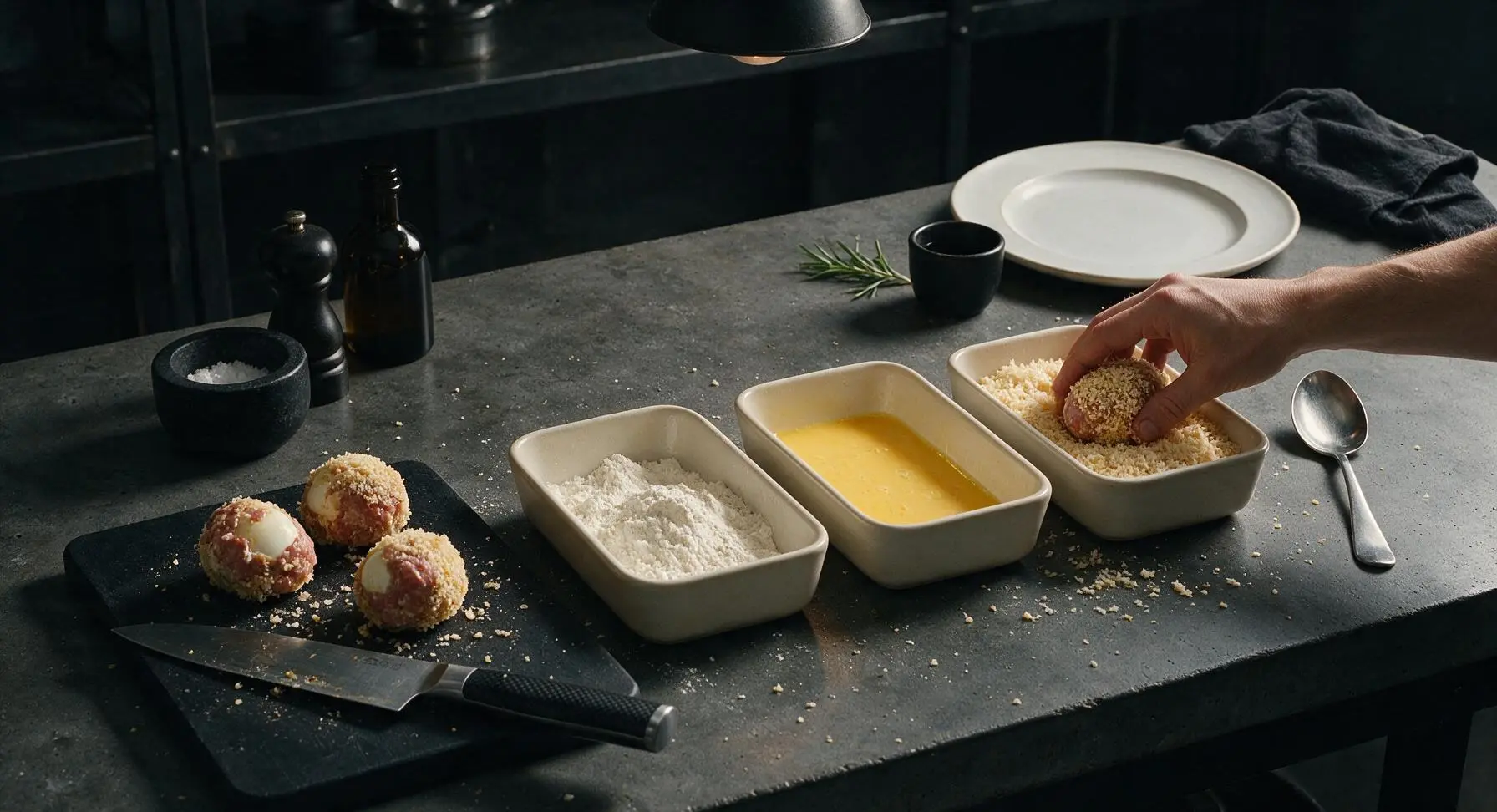
Arrange the three matte cream rectangular ceramic dishes in a line on the counter. Place the 60g all-purpose flour in the first dish, season with a small pinch of salt and pepper. Crack the remaining 1 large egg into the middle dish, whisk with a fork until completely smooth with no streaks of egg white. Place the 120g panko breadcrumbs in the third dish. Working one at a time, roll each sausage-wrapped egg in the flour to coat completely (shake off excess flour), dip in the beaten egg to cover fully, then press firmly into the panko breadcrumbs, ensuring every surface is coated in an even, thick layer of crumbs. Return breaded eggs to the cutting board for 5 minutes to let the coating set before frying.
Step 5
step5:Set Up Breading Station
6

Heat Frying Oil

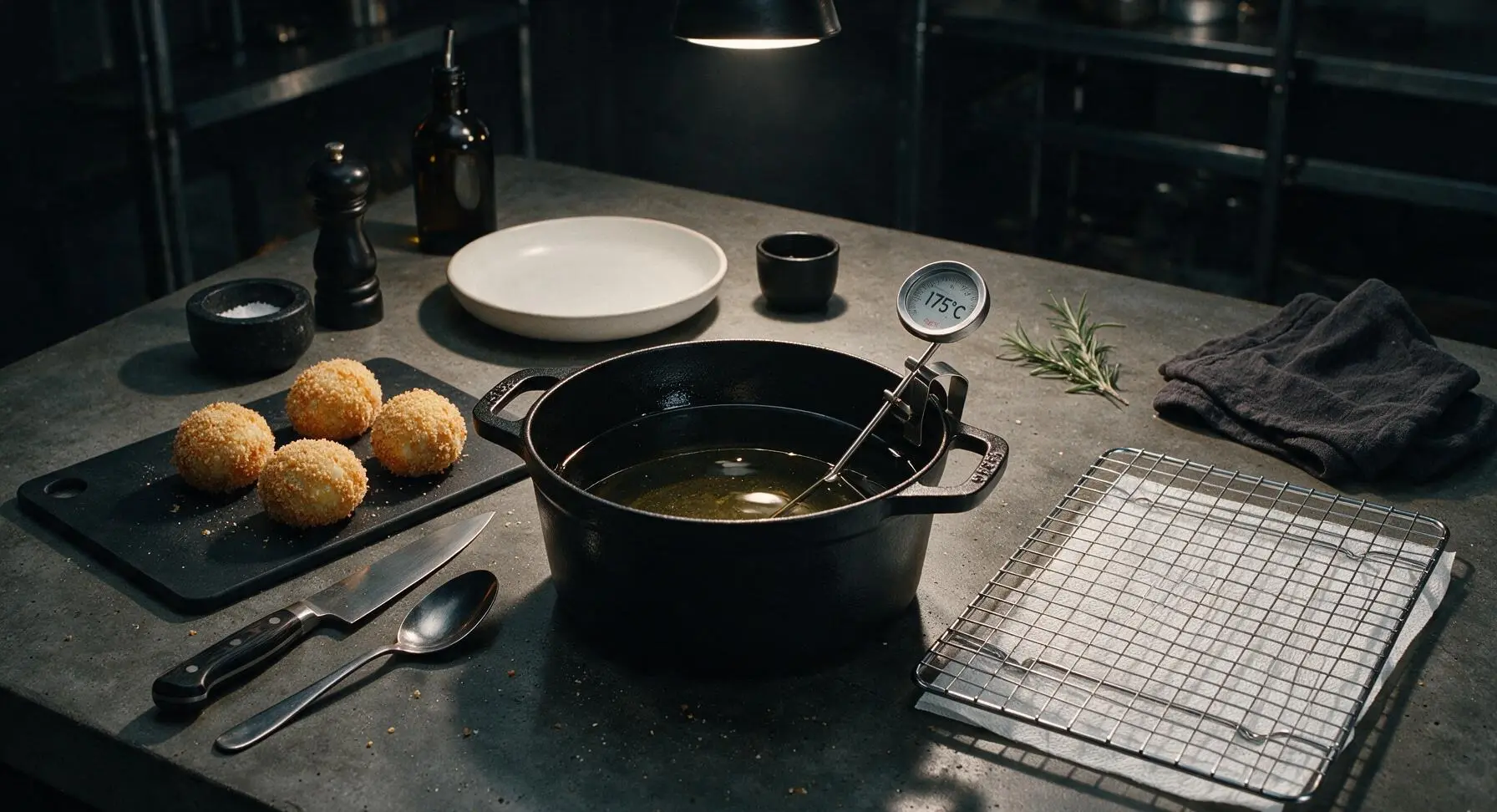
Pour 1L of neutral frying oil into the 3L matte black enameled cast iron Dutch oven, set over medium heat. Clip the stainless steel probe candy thermometer to the edge of the pot, monitoring temperature until the oil reaches a steady 175°C (350°F). Adjust heat as needed to maintain this temperature throughout frying: oil that is too hot will burn the breadcrumb crust before the sausage cooks fully, while oil that is too cool will create a greasy, soggy crust.
Step 6
step6:Heat Frying Oil
7

Fry Scotch Eggs Evenly

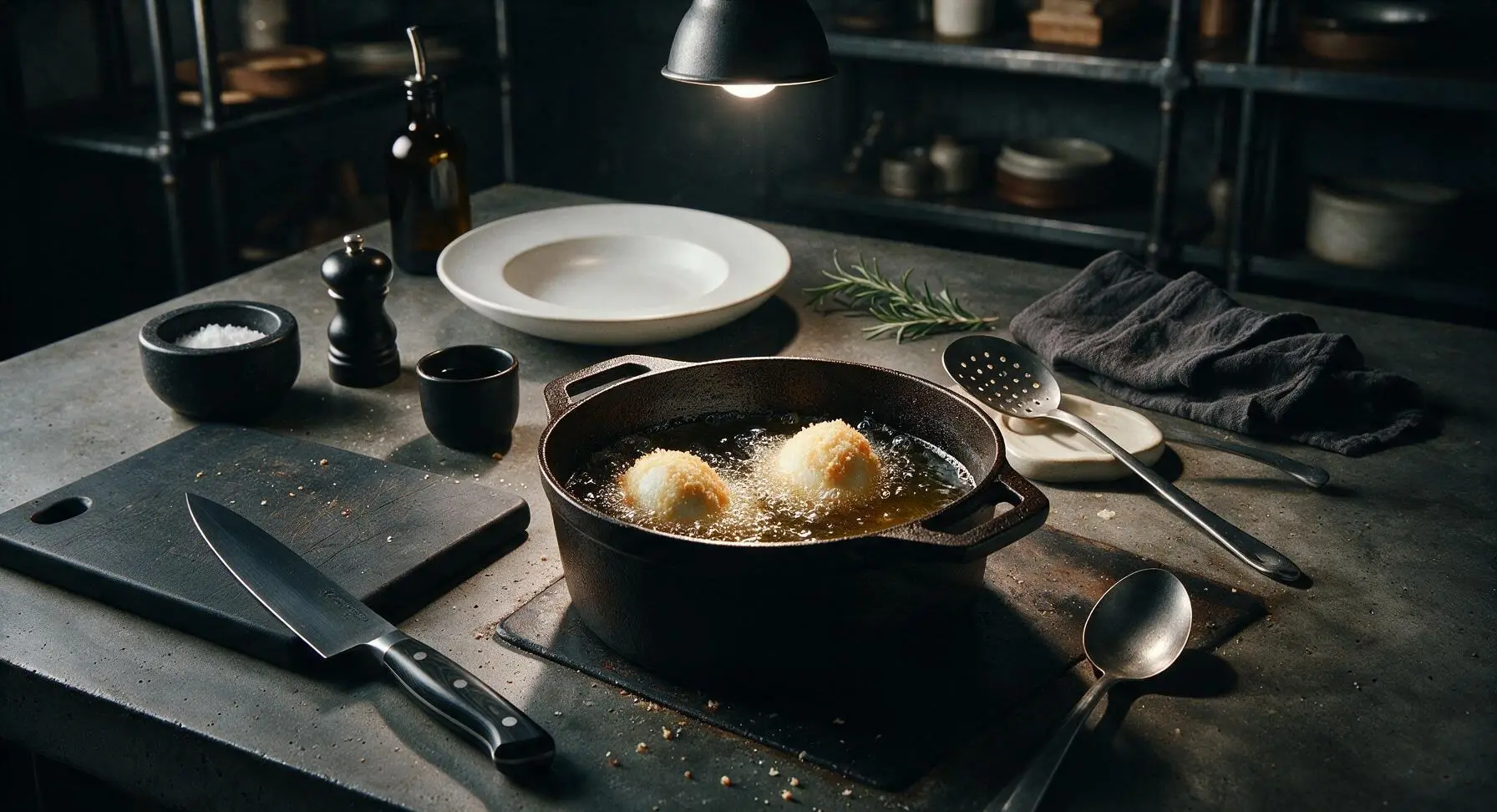
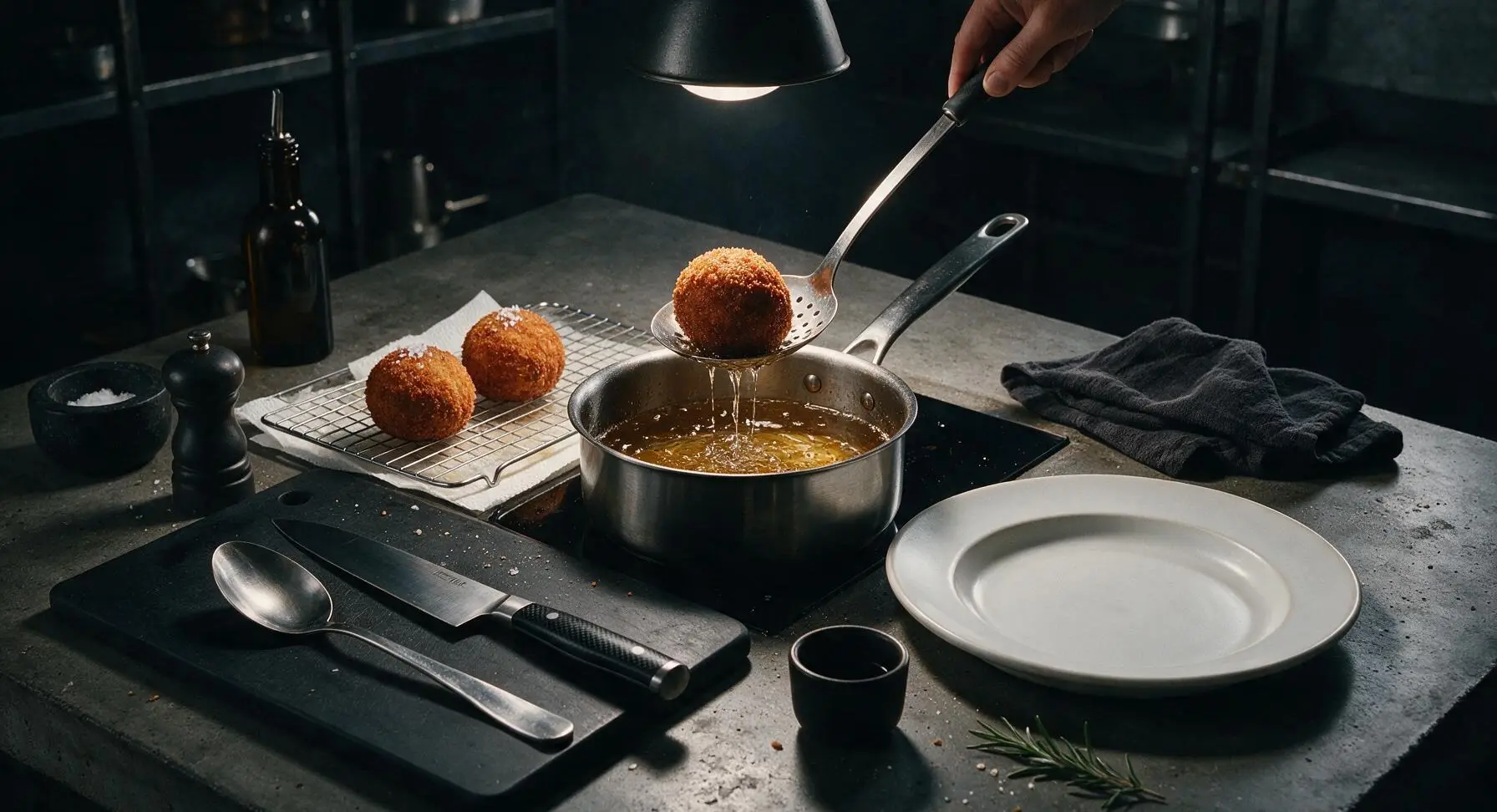
Carefully lower 2 breaded eggs into the hot oil using the slotted spoon, do not overcrowd the pot. Fry for 6-7 minutes total, turning gently every 90 seconds with the slotted spoon, until the entire crust is a deep, even golden brown and the internal temperature of the sausage reaches 75°C (165°F). Use the slotted spoon to lift cooked eggs out of the oil, letting excess oil drip back into the pot, then transfer to the paper-towel lined chrome cooling rack. Sprinkle immediately with a pinch of flaky sea salt while the crust is hot and porous, so the salt sticks. Repeat with the remaining 2 eggs.
Step 7
step7:Fry Scotch Eggs Evenly
Step 7
step7:Fry Scotch Eggs Evenly
8

Rest and Serve

Let the fried Scotch eggs rest on the cooling rack for 3 minutes to let excess oil drain and the sausage set. If serving warm, slice eggs in half with the chef knife (wipe the knife between cuts for clean, even slices) to reveal the soft yolk center. Arrange on the matte off-white ceramic serving plate, garnish with a small sprig of fresh curly parsley. Serve warm or at room temperature, as the eggs hold their shape and texture exceptionally well for picnic transport.
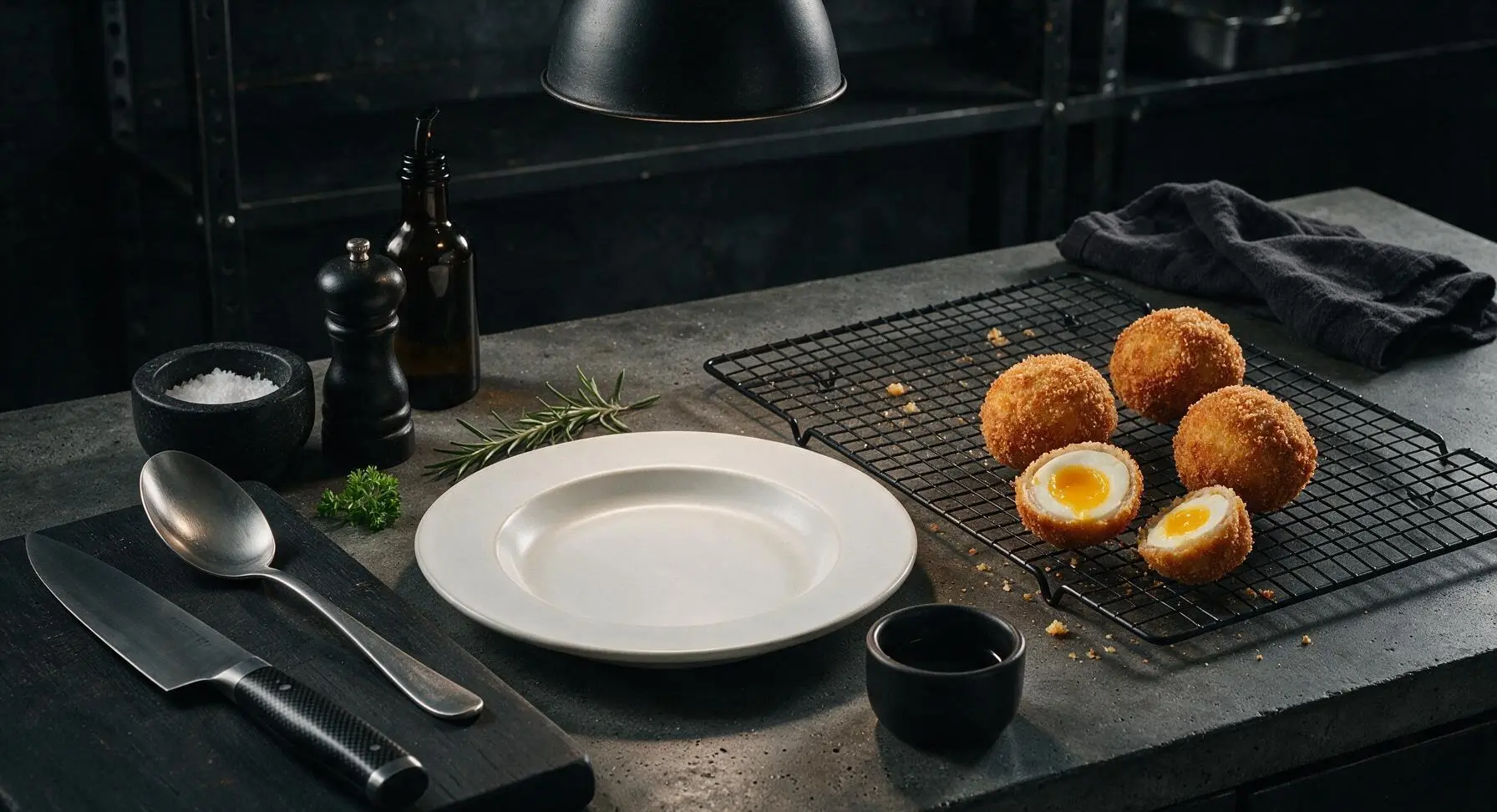
Step 8
step8:Rest and Serve

Tips

1.Always pat peeled eggs completely dry before wrapping in sausage: any residual moisture on the egg white will prevent the sausage from adhering tightly, leading to gaps between the egg and sausage, or cracked crusts that leak during frying.
2.Let breaded eggs rest for 5 minutes at room temperature before frying: this allows the panko crumbs to set and stick firmly to the egg wash, preventing crumbs from falling off into the oil, burning, and leaving bare patches on the finished crust.
3.Maintain a steady 175°C (350°F) oil temperature throughout frying, and never cook more than 2 eggs at a time: overcrowding the pot drops oil temperature rapidly, leading to a greasy, soggy crust instead of the light, crisp exterior that defines a great Scotch egg.
✨ You May Also Like

Snacks & Appetizers
🍜 Mexico

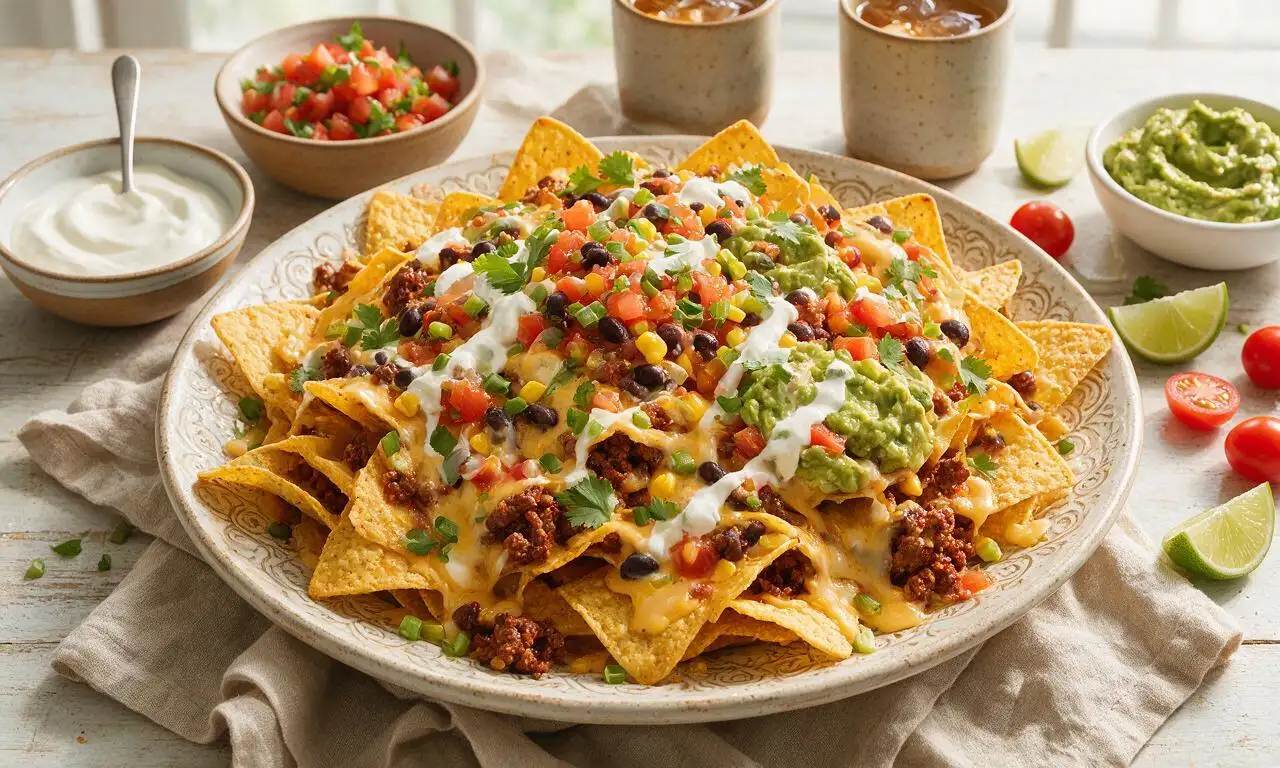
Crispy thick-cut tortilla chips piled high with seasoned beef, melted cheese, and bright fresh toppings for a shareable, crowd-favorite bite.

⏱️ 25 minuteSnacks & Appetizers ★ 4.8
Snacks & Appetizers
🍜 United States

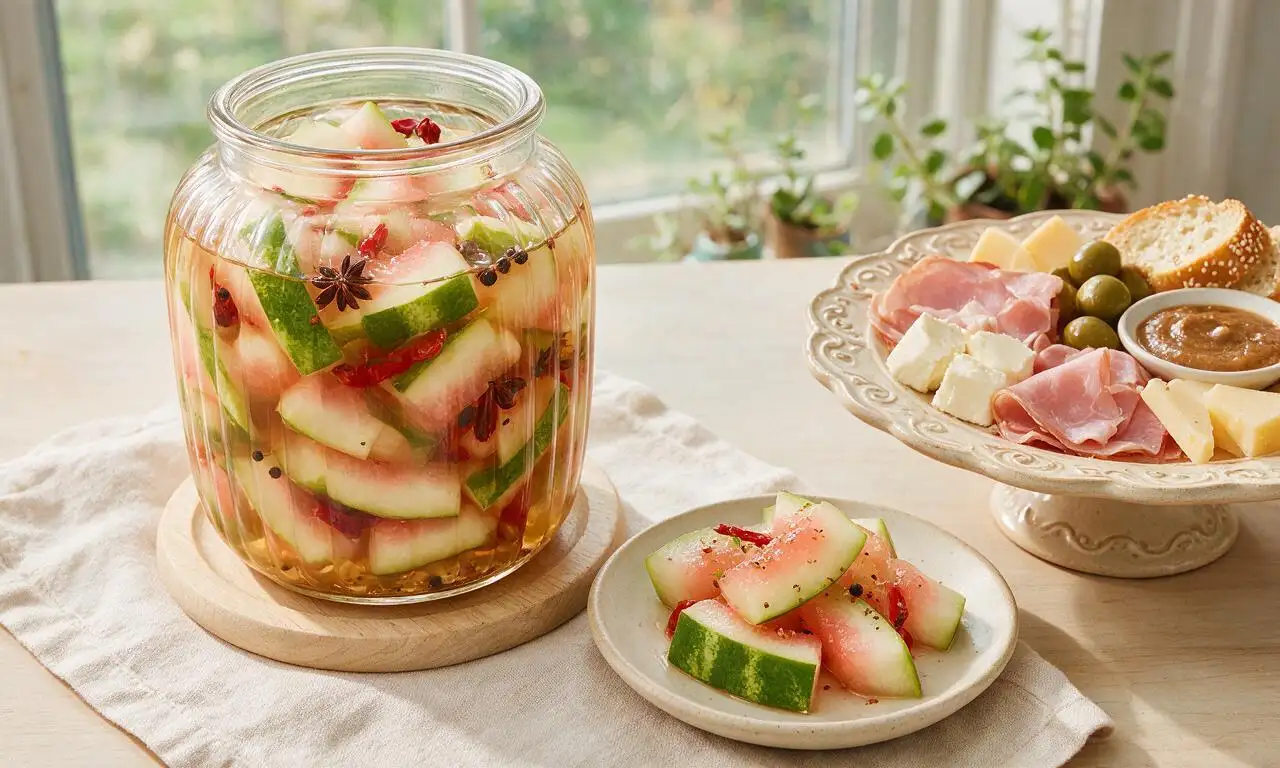
Crisp, sweet-tangy spiced pickled watermelon rind is a zero-waste summer staple, perfect with grilled meats, charcuterie, or eaten straight from the jar as a bright snack.

⏱️ 30 minuteSnacks & Appetizers ★ 4.6
Snacks & Appetizers
🍜 Germany

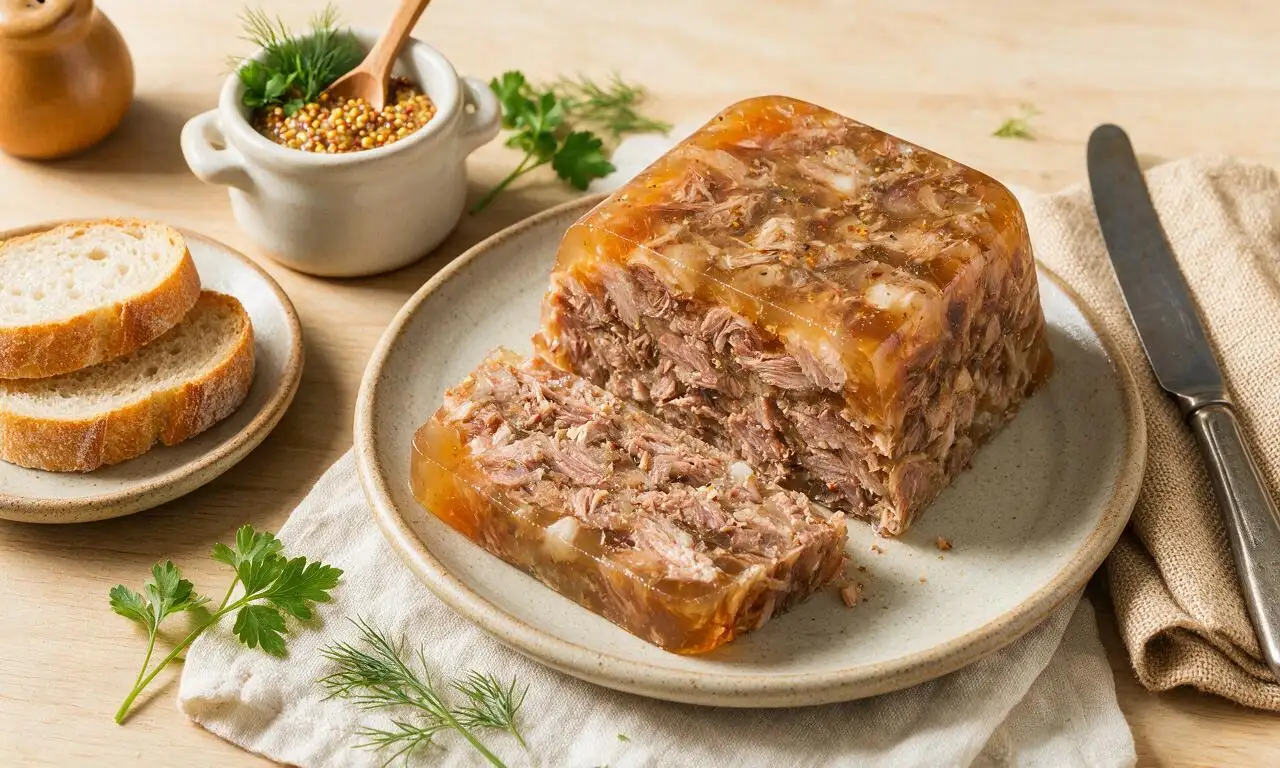
A tangy, jellied pork cold cut slow-simmered with aromatic spices, set into a firm sliceable loaf, served cold with mustard and crusty bread.

⏱️ 3 hours 4Snacks & Appetizers ★ 4.8
Snacks & Appetizers
🍜 United States

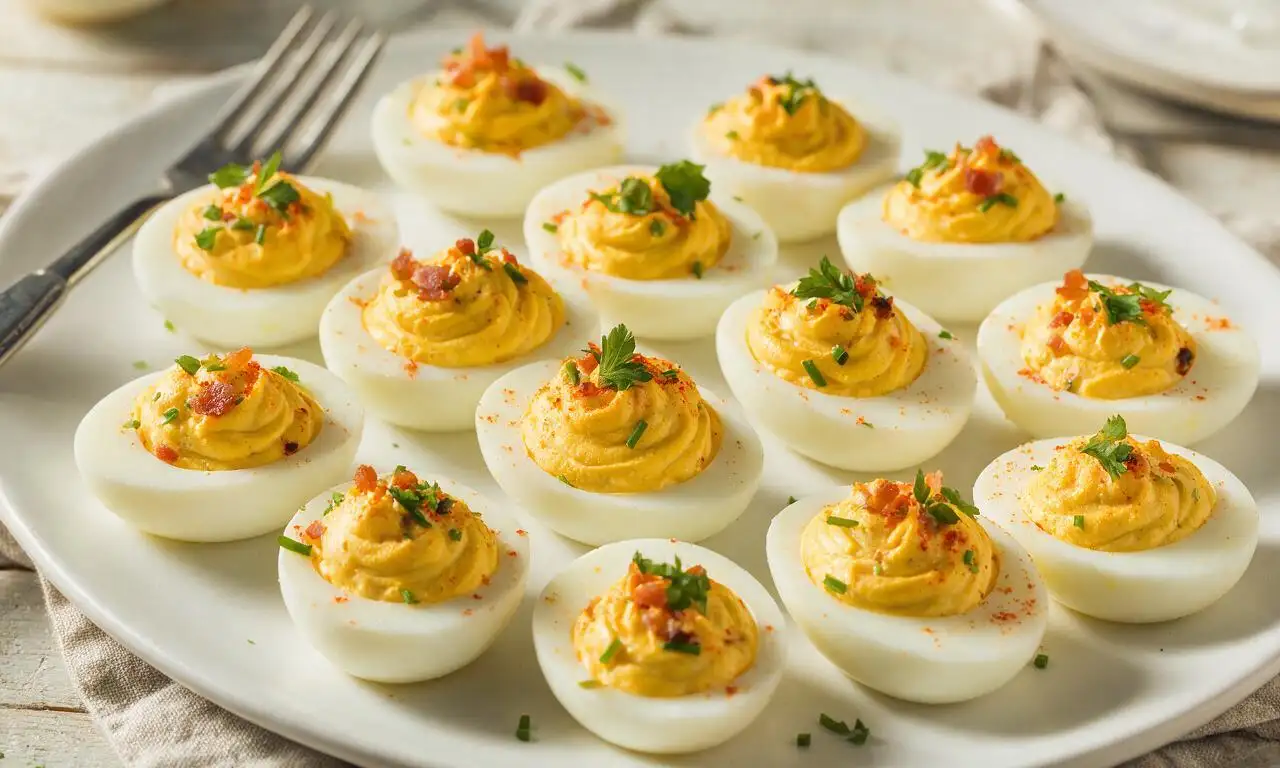
Creamy, tangy, perfectly seasoned hard-boiled egg halves filled with a rich, smooth yolk mixture, a timeless, crowd-pleasing bite for holiday and casual gatherings alike.

⏱️ 40 minuteSnacks & Appetizers ★ 4.8
Snacks & Appetizers
🍜 Russia

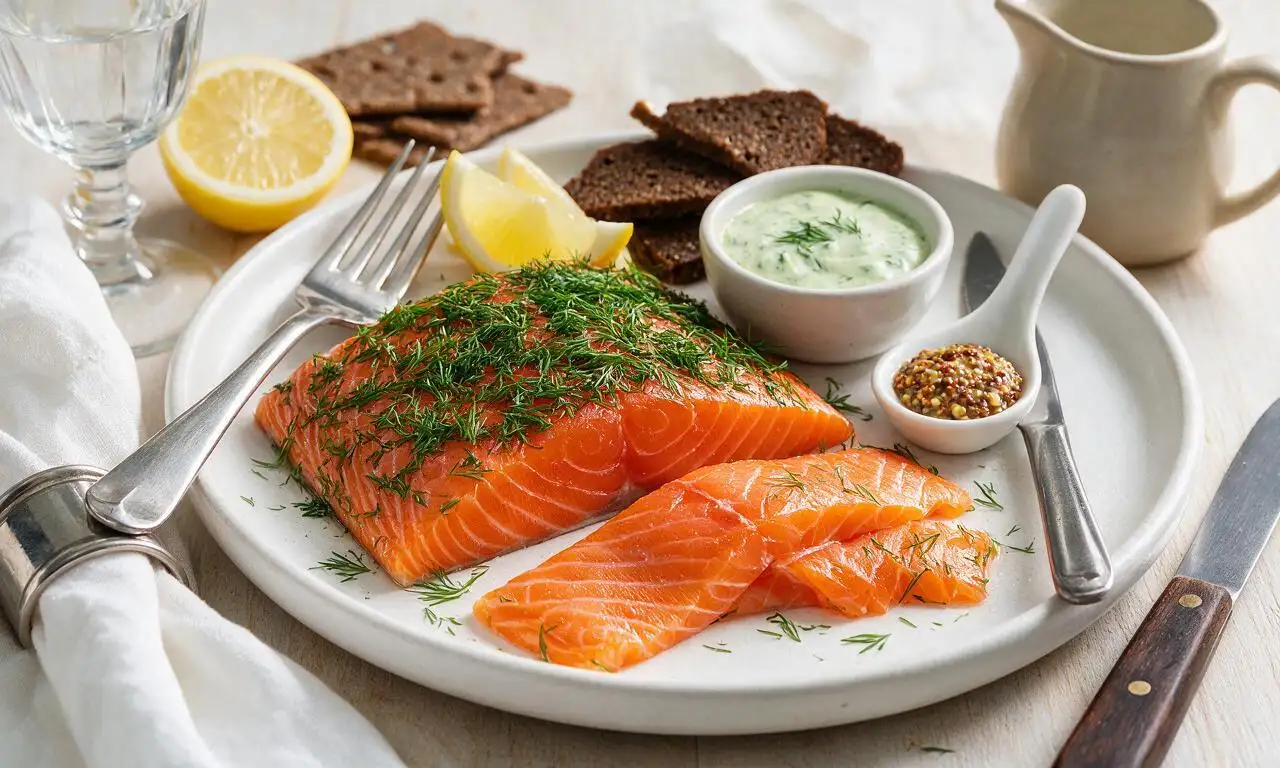
Silky, dill-forward no-smoke cured salmon, a Scandinavian classic with bright salty-sweet flavor, ideal for holiday starter platters and open-faced rye sandwiches.

⏱️ 48 hours Snacks & Appetizers ★ 4.7
Snacks & Appetizers
🍜 Japan

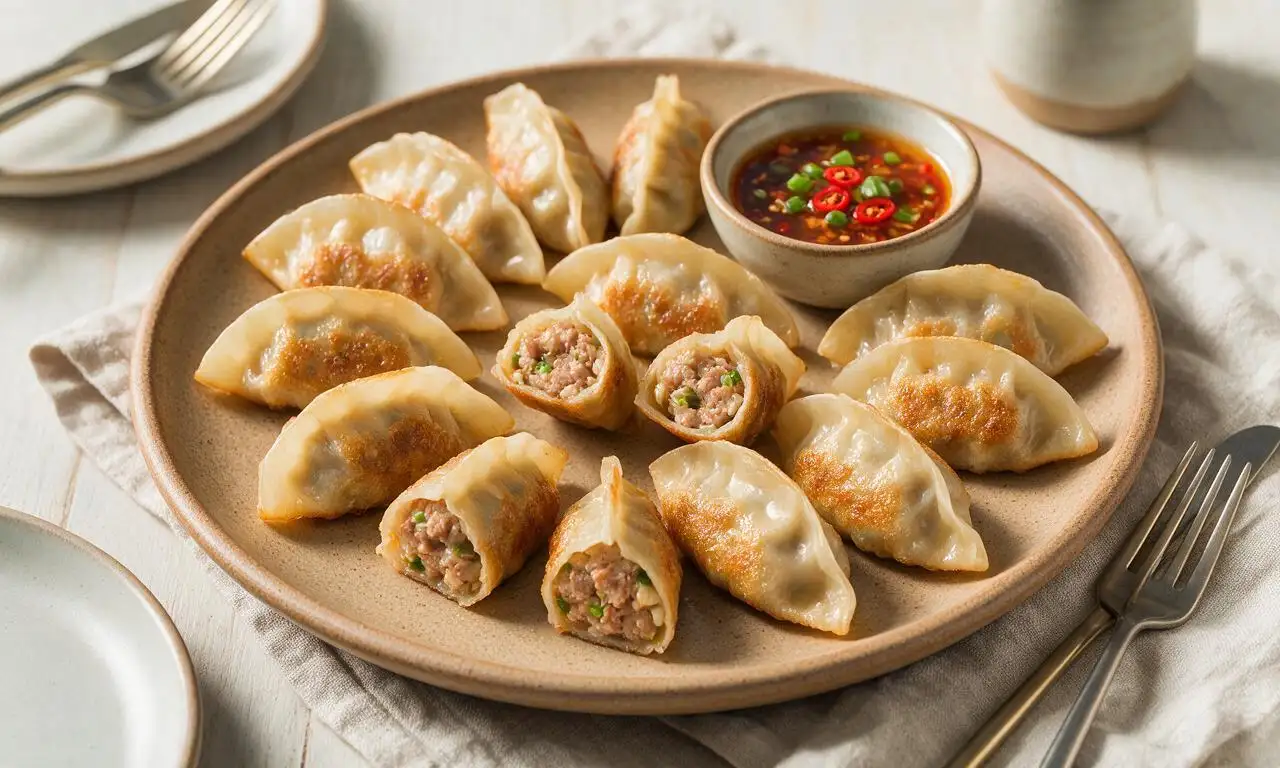
Crisp golden bottoms, juicy savory pork and vegetable filling, and tangy dipping sauce make these pan-fried gyoza a beloved shareable bite.

⏱️ 45 minuteSnacks & Appetizers ★ 4.8

scotch eggs:Frequently Asked Questions

1.How do I get a perfectly runny soft-boiled yolk that doesn’t overcook during frying? ▾
Start with room-temperature large eggs, lower them gently into rapidly boiling salted water, and cook for exactly 6 minutes. Plunge straight into an ice water bath for 5 full minutes to halt carryover cooking and loosen shells—this keeps the yolk runny even through the final frying step, no chalky overcooked centers.
2.Why does my sausage layer split or fall off the egg when I’m shaping it? ▾
This almost always happens if your eggs are damp when you wrap them. Pat peeled soft-boiled eggs completely dry with paper towels first, then dust lightly with flour before wrapping. Divide the sausage into equal portions, flatten into thin even discs, and wrap tightly, sealing any gaps so there are no weak spots that split while cooking.
3.Can I use regular breadcrumbs instead of panko for the crust? ▾
You can, but you won’t get that signature light, shatteringly crisp crust traditional Scotch eggs are known for. Panko’s coarser, flakier texture creates air gaps when fried that stay crisp longer, even as the eggs cool for picnics. If you only have regular breadcrumbs, toast them first to add extra crunch and reduce sogginess.
4.What’s the best oil temperature for frying Scotch eggs so the crust is crispy, not greasy? ▾
Heat your neutral canola or vegetable oil to 350°F, and hold that steady temperature while frying. If the oil is too cool, the crust will soak up excess oil and turn soggy; if it’s too hot, the panko will burn before the sausage cooks through. Use a clip-on candy thermometer to track temp for consistent results every time.
5.Do I have to deep fry these, or can I bake them for a lighter version? ▾
You can bake them, though the crust won’t be quite as evenly crisp as deep-fried versions. Spray the breaded eggs generously with oil, arrange on a wire rack set over a baking sheet, and bake at 400°F for 25–30 minutes, flipping halfway, until the sausage reaches 160°F internal temp and the crust is golden.
6.How thin should I press the sausage layer around the egg? ▾
Aim for a uniform ¼-inch thick layer of ground herbed pork sausage around each egg. If it’s too thick, the sausage won’t cook through before the crust burns, and you’ll end up with raw spots near the egg. If it’s too thin, the sausage will split during frying, letting oil seep in and make a mess.
7.Why does my breading slide off when I fry the eggs? ▾
Breading slides off when you skip the proper three-step breading station or don’t press the crumbs to adhere. Dredge the sausage-wrapped egg first in all-purpose flour, shake off excess, dip fully in beaten egg wash, then press firmly into panko so every surface is coated. Let breaded eggs rest 10 minutes before frying to help the coating set.
8.Can I make these ahead of time for a picnic, like the recipe intro mentions? ▾
Absolutely—Scotch eggs are designed to be portable picnic fare! Let fried eggs cool completely to room temp, then store in an airtight container in the fridge for up to 3 days. You can serve them cold, or crisp them up for 5 minutes in a 375°F oven if you prefer warm. Don’t leave them out at room temp for more than 2 hours for food safety.
9.What kind of herbed pork sausage works best here? ▾
Go for mild, bulk herbed pork sausage (not in casings) with about 20% fat content for the juiciest results. Avoid overly spicy or heavily seasoned sausage that will overpower the egg, and skip ultra-lean breakfast sausage—it will turn dry and crumbly during frying instead of staying moist and savory around the soft yolk.
10.How do I peel soft-boiled eggs without tearing the egg white or breaking the yolk? ▾
The ice water bath step is non-negotiable here—it creates a small gap between the egg white and shell to make peeling easy. Tap the egg gently all over to crack the shell fully, then peel under cool running water, starting at the wider air pocket end. Don’t rush this step; nicked egg whites cause gaps when you wrap the sausage.
11.Do I need extra eggs for the breading station, beyond the ones used for the soft-boiled centers? ▾
Yes, you’ll want 1–2 extra large eggs beaten to make a simple egg wash for the breading step, even though the core recipe highlights eggs for the filling. The wash acts as the “glue” between the flour-dusted sausage layer and the panko crumbs, so your coating stays intact through frying instead of flaking off in the oil.
12.How long do I fry the Scotch eggs to make sure the sausage is fully cooked? ▾
At a steady 350°F, fry the eggs for 6–7 minutes total, turning occasionally with a slotted spoon so every side browns evenly. The crust will be deep golden, the sausage will reach an internal temp of 160°F when checked with a quick-read thermometer, and the yolk will stay perfectly runny inside if you prepped your soft-boiled eggs correctly.
13.Can I use a different type of ground meat instead of pork sausage? ▾
You can swap in ground herbed turkey or chicken sausage if you prefer, but note that leaner poultry will be drier than pork, so look for options with added fat or mix in a tablespoon of olive oil per pound of meat. Avoid very lean ground beef, which doesn’t have the right savory, herbed profile to match the classic Scotch egg flavor.
14.Why is my panko crust turning dark brown before the sausage is done cooking? ▾
That almost always means your oil temperature is too high, or you’re frying too close to the heating element if using a small pot. Turn the heat down slightly to bring oil back to 350°F, and don’t overcrowd the pot—fry 2 eggs at a time max, since adding too many cold eggs drops oil temp fast and leads to uneven cooking.
15.Should I season the flour or panko for extra flavor? ▾
Definitely! A pinch of salt, black pepper, garlic powder, and smoked paprika in both the flour and panko adds subtle depth that plain breading lacks. Don’t overdo it, though—your herbed sausage already has plenty of seasoning, so you just want a light boost to the crust, not a spice blend that overwhelms the classic flavor profile.
16.Can I freeze uncooked or cooked Scotch eggs for later? ▾
You can freeze fully cooked, cooled Scotch eggs for up to 1 month, wrapped tightly in plastic wrap and stored in a freezer bag. Reheat straight from frozen in a 375°F oven for 15–18 minutes until heated through. I don’t recommend freezing uncooked breaded eggs, as the panko will get soggy and the sausage texture will turn grainy when thawed.
17.What’s the best way to serve Scotch eggs for a party or picnic? ▾
Slice them in half right before serving to show off that runny yolk center, and pair with simple sides like whole grain mustard, pickled onions, or a light arugula salad. They’re perfect finger food, so you don’t need utensils—just set out small napkins, since the runny yolk can drip a little when you take a bite.
18.My sausage came out dry even though I fried it at the right temp—what went wrong? ▾
Dry sausage usually means you used too lean of a ground pork blend, or you overcooked the soft-boiled egg initially, leading you to fry the egg longer to compensate. Stick to bulk sausage with 15–20% fat for juiciness, and double-check your soft boil and fry times so you don’t expose the sausage to excess heat that renders out all its moisture.
19.Do I need to rest the Scotch eggs after frying before I cut into them? ▾
Let them rest on a wire rack lined with paper towels for 3–4 minutes after frying to let excess oil drain off and the internal temperature even out. If you cut into them immediately, the runny yolk will gush out all at once, and the crust might crumble. That short rest helps the layers set so you get a clean slice showing crust, sausage, and yolk.

Comments (4)

5 days ago

Tried these for our Sunday family dinner last night and everyone raved! I was a little intimidated because I thought scotch eggs were super fancy restaurant food, but the medium difficulty rating was totally accurate — even as someone who burns boiled eggs half the time I pulled these off. The crunch on the breading is unreal, way better than the ones I’ve had at our local pub. My two picky toddlers devoured theirs, which never happens! Only note: I added a little paprika to the sausage mix for an extra kick and it slapped. 10/10 will make again!

3 days ago

Wait how did you get your boiled eggs to come out right? Mine always have that weird gray ring around the yolk and I’m nervous to mess these up for my book club potluck next week!

2 days ago

Great question! For perfect soft (or hard) boiled eggs without the gray ring, make sure to ice bath them for 5 full minutes right after boiling — that stops the cooking process instantly and makes them way easier to peel too. The paprika addition sounds delicious, I’ll have to try that myself next batch!

1 week ago

Game changer for my weekly meal prep! I make a batch of these every Sunday to eat for quick breakfasts during the work week and they keep really well in the fridge for 4-5 days. I was worried 12 minutes of cook time would leave the sausage underdone but I used a meat thermometer to check and it hit 165 right at 12 minutes, no guesswork needed. Pro tip: use panko instead of regular breadcrumbs for extra crunch, trust me.

5 days ago

Love the panko tip! That’s such an easy swap to take the crispiness to the next level. So glad these are working out for your meal prep rotation — perfect high-protein grab-and-go breakfast for sure!

3 days ago

Made these for my apartment potluck last night and my roommates thought I ordered them from a gastropub lmao. Only mess up I made was I didn’t pat the sausage dry enough before breading so a little bit of the coating fell off while frying, but they still tasted insane. Way easier than I thought it would be even for a college kid with a tiny apartment kitchen.

2 days ago

Oh thanks for the heads up about patting the sausage dry! I’m making these for my boyfriend’s birthday this weekend and I definitely would’ve skipped that step and messed it up lol

yesterday

OMG these are SO good! I’ve been making scotch eggs for over 40 years after trying them on a trip to Scotland, and this recipe’s crispy breading method is way better than my old tattered recipe card. Brought a batch to my neighborhood block party earlier this week and every single person asked for the link, even the neighbor who swears she doesn’t like “fancy pub food.” The 12 minute cook time is spot on — no burnt crust, no undercooked sausage, just perfectly crisp, flavorful bites every time. My granddaughter even asked for seconds, which is saying something because she only eats chicken nuggets 90% of the time.