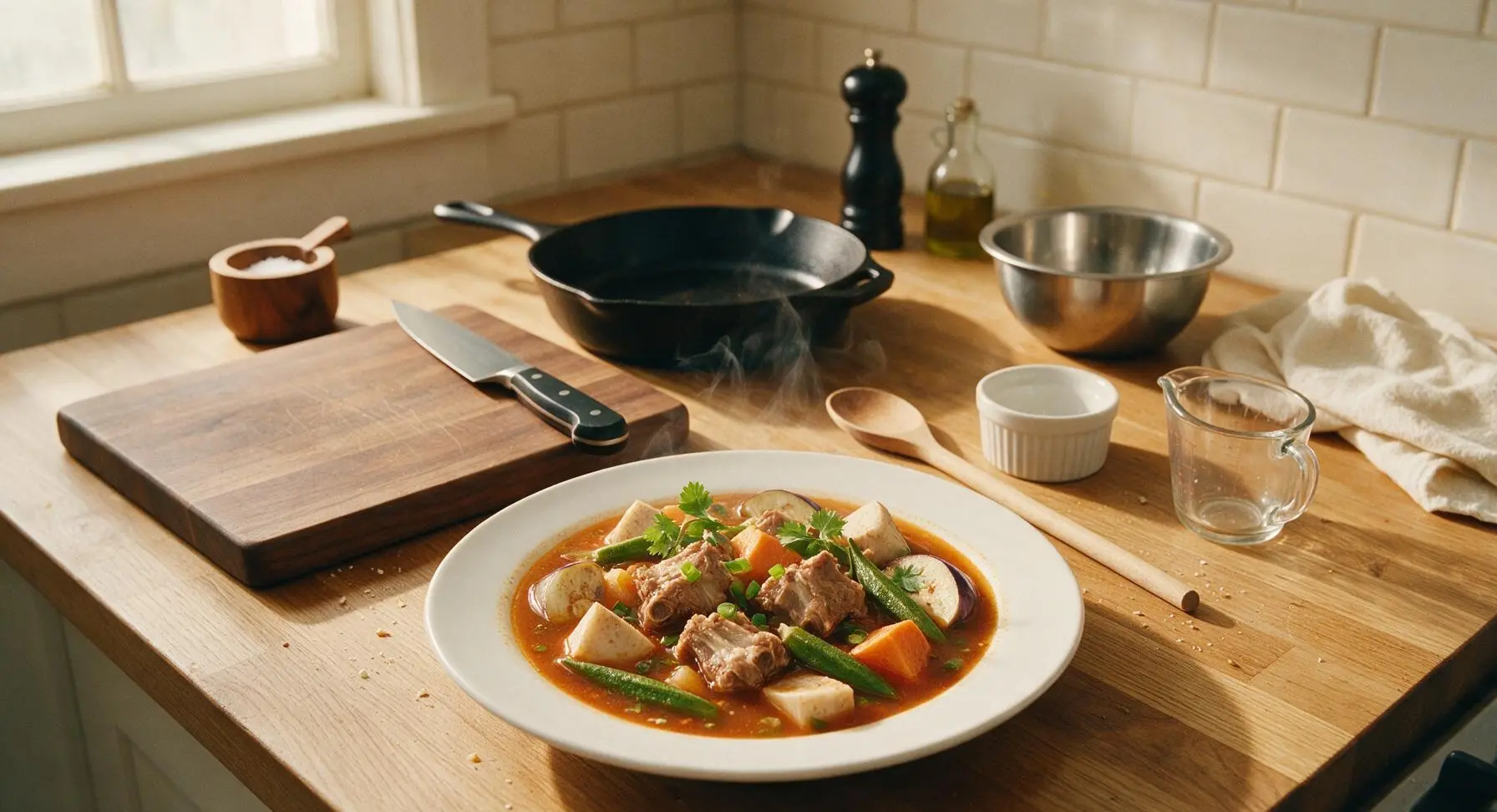
Sinigang

title 1
Sinigang
⏱️ cook time 45 minutes
🍽️ servings 4
⚡ Difficulty easy

intro

Bright, tangy tamarind soup loaded with tender pork and crisp-tender vegetables, Sinigang is the iconic Filipino comfort food made for cozy, shared family meals.

Ingredients
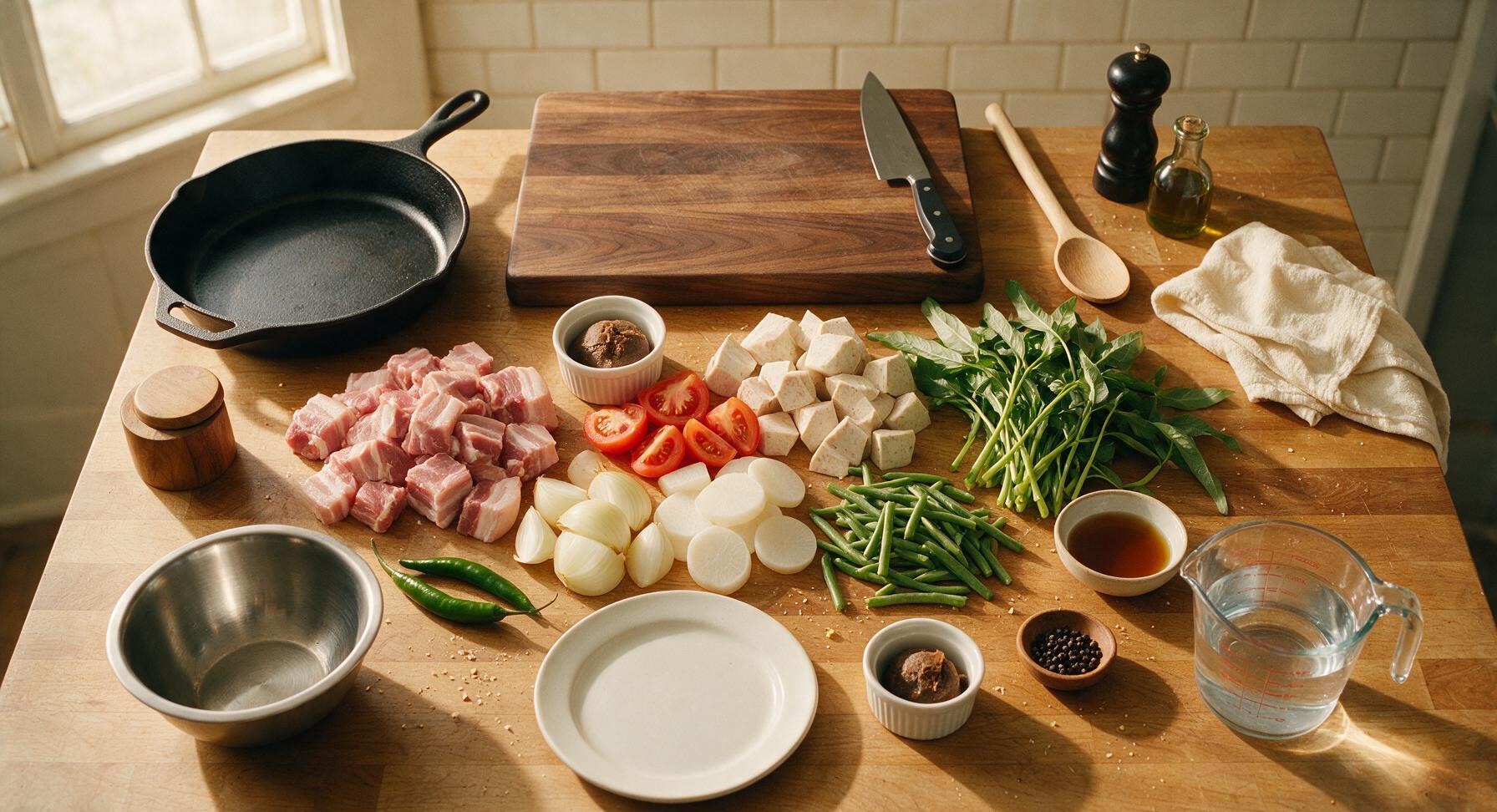
Pork belly, cut into 5cm cubes 500g
Tamarind soup base 40g
Taro (gabi), peeled and cubed 200g
Ripe tomatoes, quartered 2 medium (200g total)
Yellow onion, quartered 1 medium (150g)
Daikon radish, peeled and sliced 1cm thick 150g
Long green beans (sitaw), cut into 5cm lengths 100g
Water spinach (kangkong), tough stems trimmed 200g
Long green chili 2 pieces
Fish sauce (patis) 3 tablespoons
Whole black peppercorns 1 teaspoon
Cold water 1.5 liters

Steps

1

Prep Core Ingredients

Set the acacia wood cutting board on the counter. Using the 8-inch chef knife, cut 500g pork belly into uniform 5cm cubes, trimming any excessively tough, hard fat deposits. Quarter 1 medium yellow onion and 2 ripe tomatoes, gathering them in a small pile on the edge of the board. Pat pork cubes lightly with the corner of the striped cotton towel to remove excess surface moisture, which helps prevent excessive foaming during the initial boil.

Step 1
step1:Prep Core Ingredients
2

Simmer Pork Base

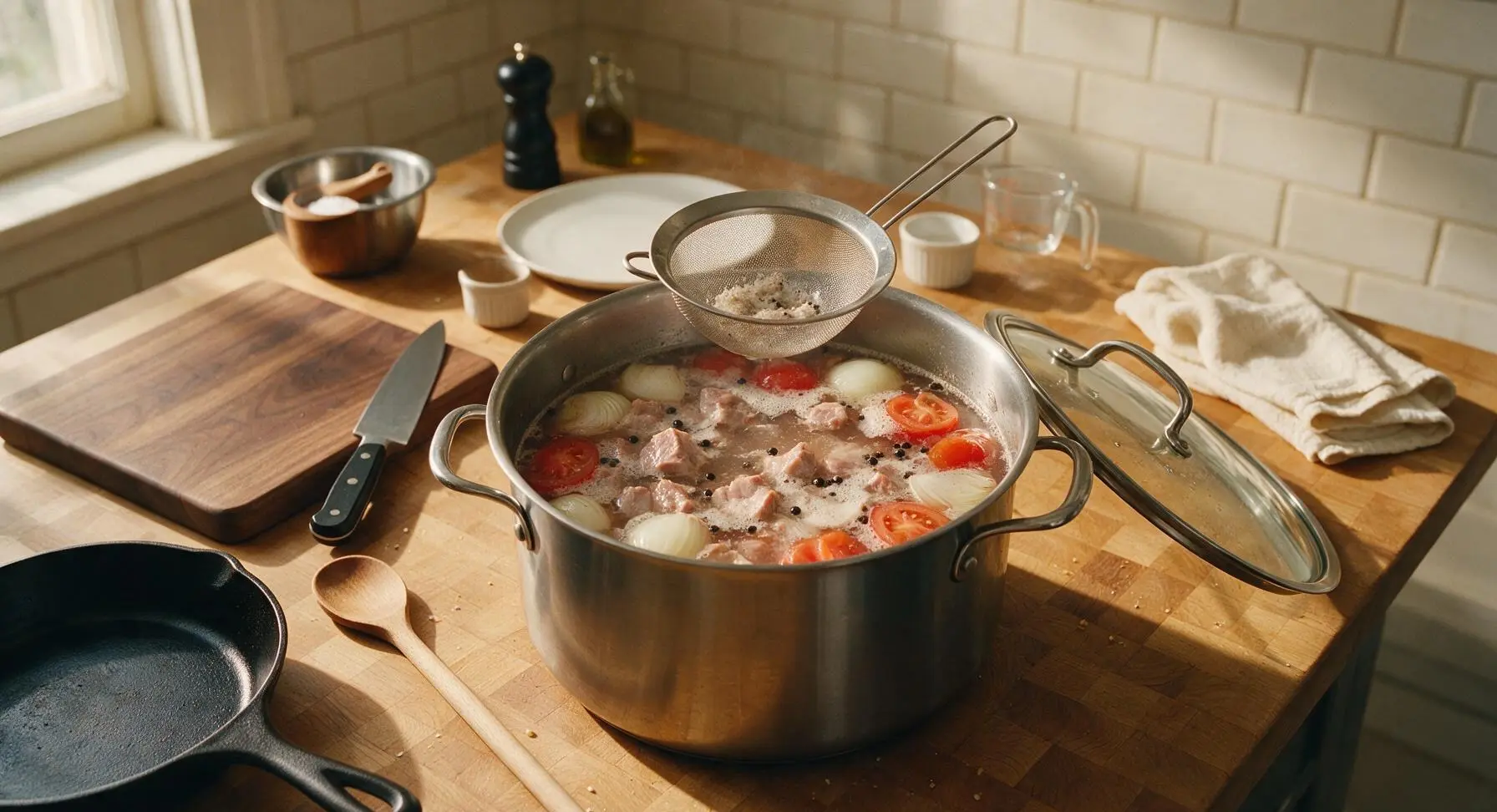
Set the 5-liter stainless steel stock pot on the center of the work area, add 1.5 liters cold water, cubed pork, quartered onion, quartered tomatoes, and 1 teaspoon whole black peppercorns. Bring to a rolling boil over medium-high heat, then reduce heat to medium-low. Use the fine-mesh strainer to skim all gray, foamy residue that rises to the surface, then cover and simmer for 25 minutes until the pork is partially tender when pierced with a fork (it will continue cooking with the vegetables).

Step 2
step2:Simmer Pork Base
Step 2
step2:Simmer Pork Base
3

Add Hearty Vegetables

After the pork has simmered for 25 minutes, add 200g peeled, cubed taro and 150g sliced daikon radish to the pot. Stir gently with the beech wood spoon to fully submerge the vegetables, return the glass lid, and simmer for 10 minutes. Test doneness by piercing a taro chunk with a fork: it should give easily but not break apart, as mushy taro will break down and cloud the broth.

Step 3
step3:Add Hearty Vegetables
4

Season Tamarind Broth

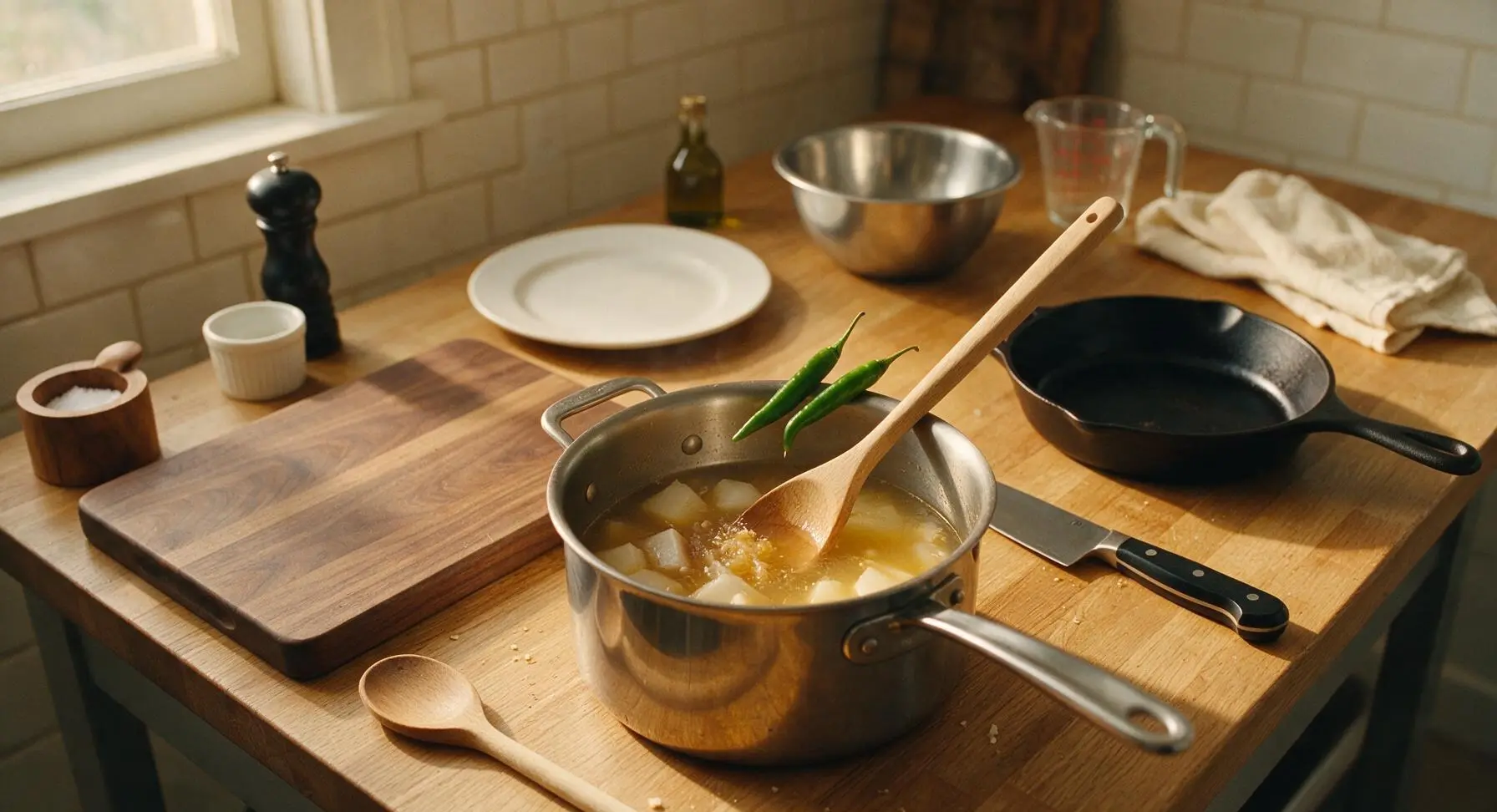
Stir in 40g tamarind soup base and 2 tablespoons fish sauce, mixing gently with the beech wood spoon until the powder fully dissolves, turning the broth a pale golden color. Taste the broth, adding up to 1 extra tablespoon fish sauce if needed to balance bright sour tamarind notes with savory saltiness. Drop the 2 whole long green chilies into the pot for subtle, mild background heat that does not overpower the soup.
Step 4
step4:Season Tamarind Broth
5

Add Tender Vegetables

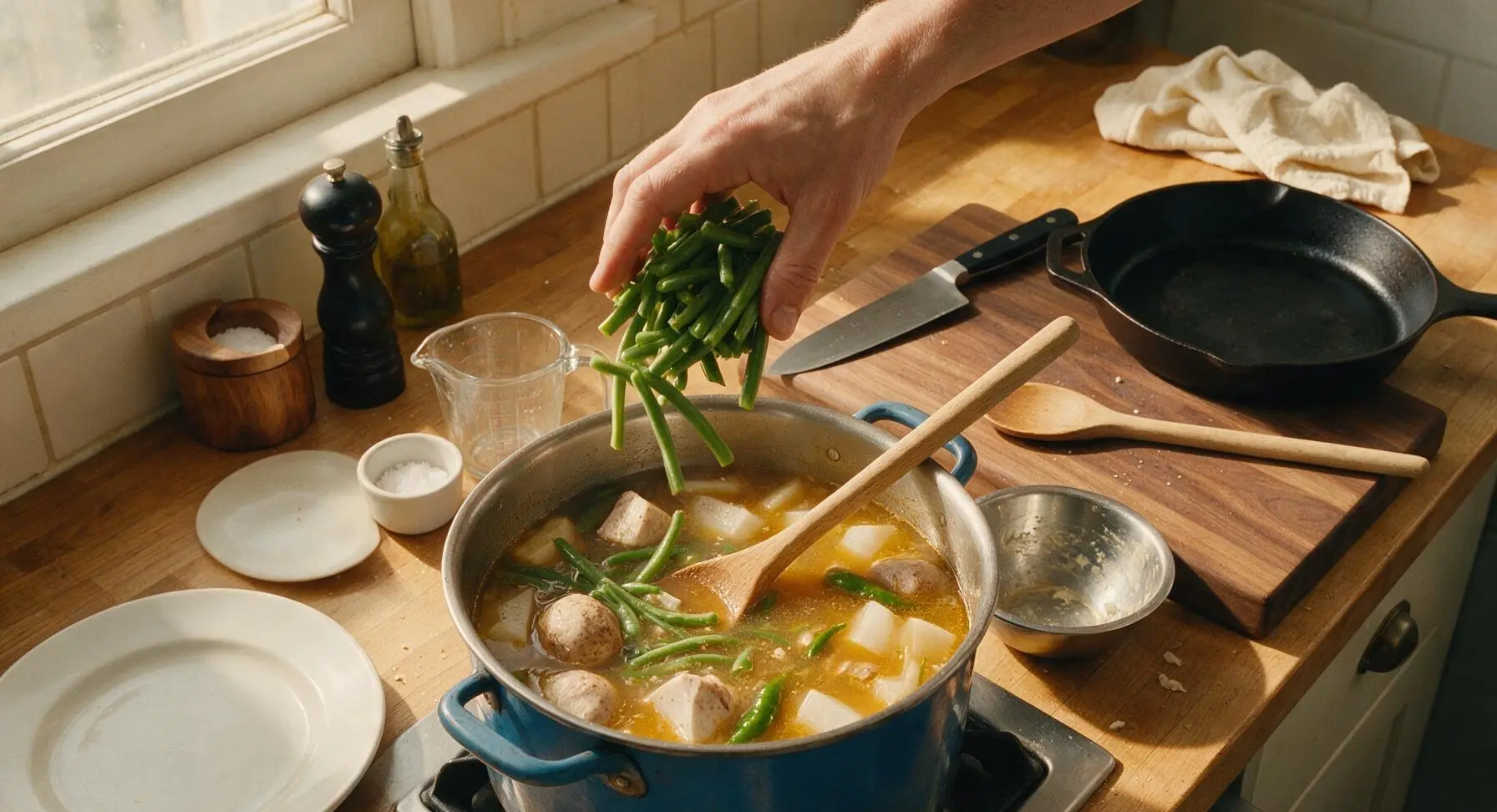
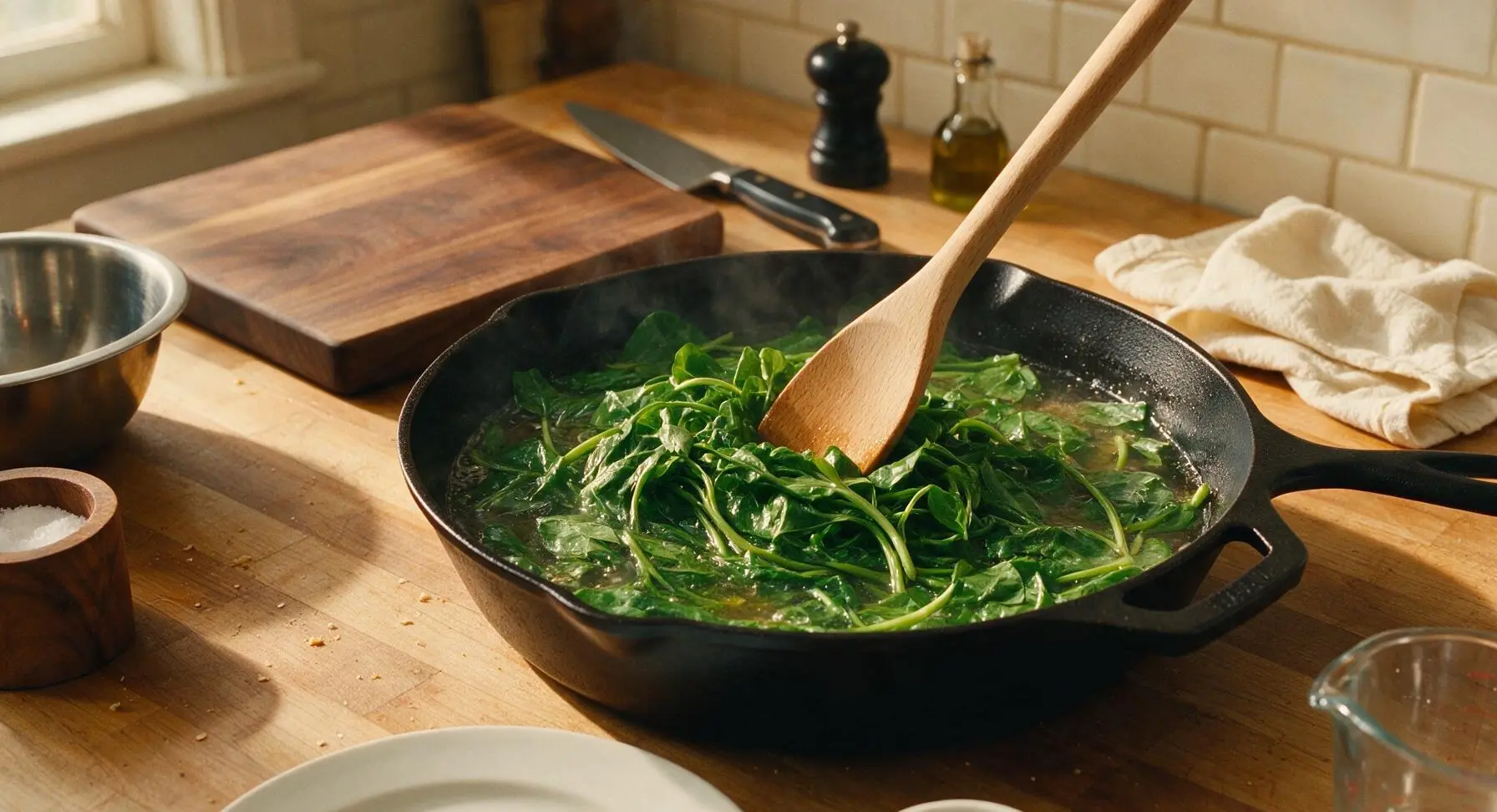
Once taro is fully tender, add 100g cut long green beans to the pot, simmering uncovered for 3 minutes. Finally, add 200g trimmed water spinach, pressing the leaves gently into the broth with the spoon to wilt, and cook for a final 2 minutes. Do not overcook the greens: they should retain their bright emerald color and crisp-tender texture, not turn dull olive green and mushy.
Step 5
step5:Add Tender Vegetables
Step 5
step5:Add Tender Vegetables
6

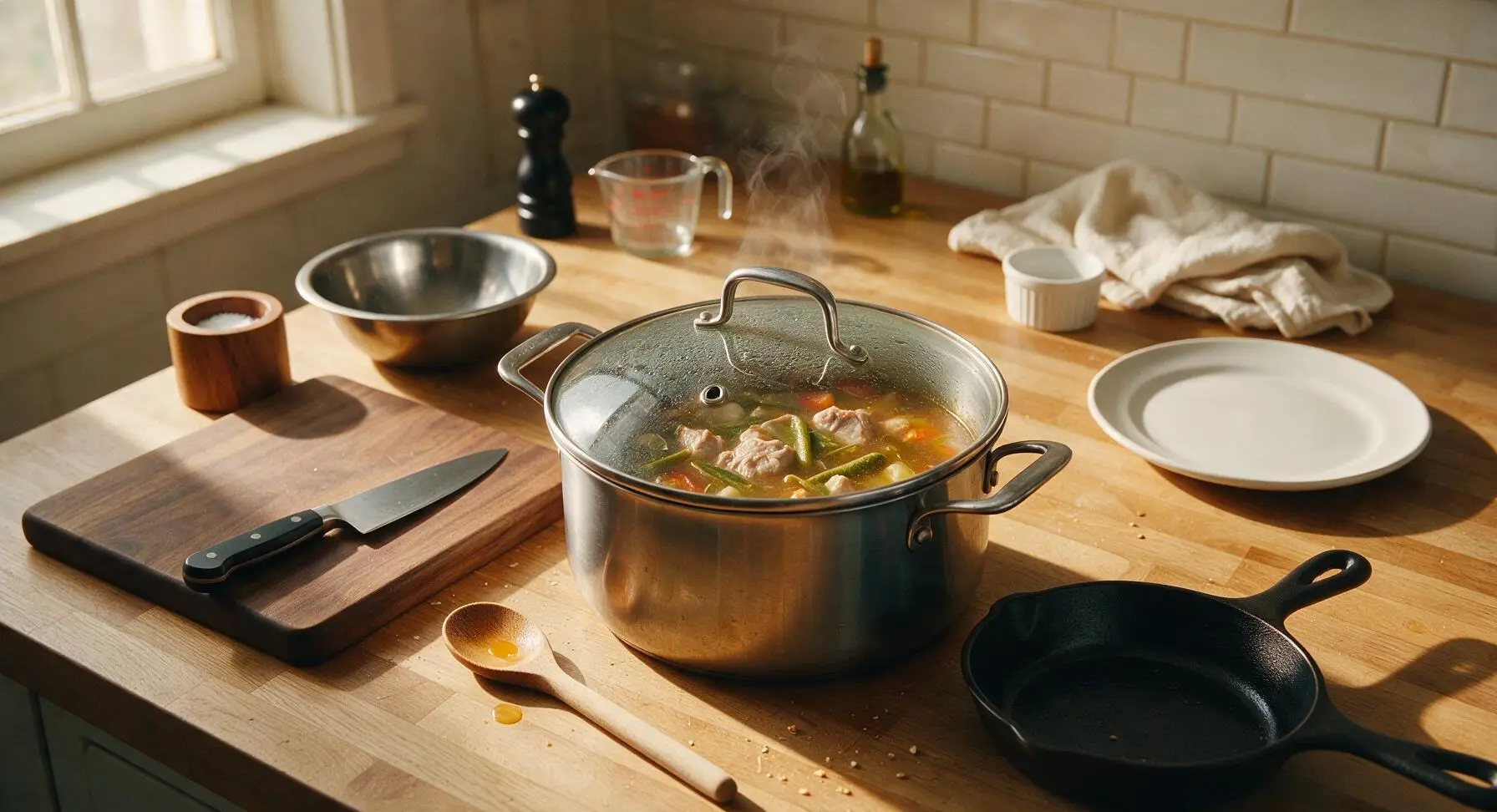
Rest and Adjust Flavor

Turn off the heat, cover the pot with the glass lid, and let the sinigang rest for 5 minutes to allow flavors to meld fully. Taste the broth one final time, adding a small pinch of salt or extra pinch of tamarind base if needed to hit the signature bright, tangy, savory balance the dish is known for.
Step 6
step6:Rest and Adjust Flavor
7

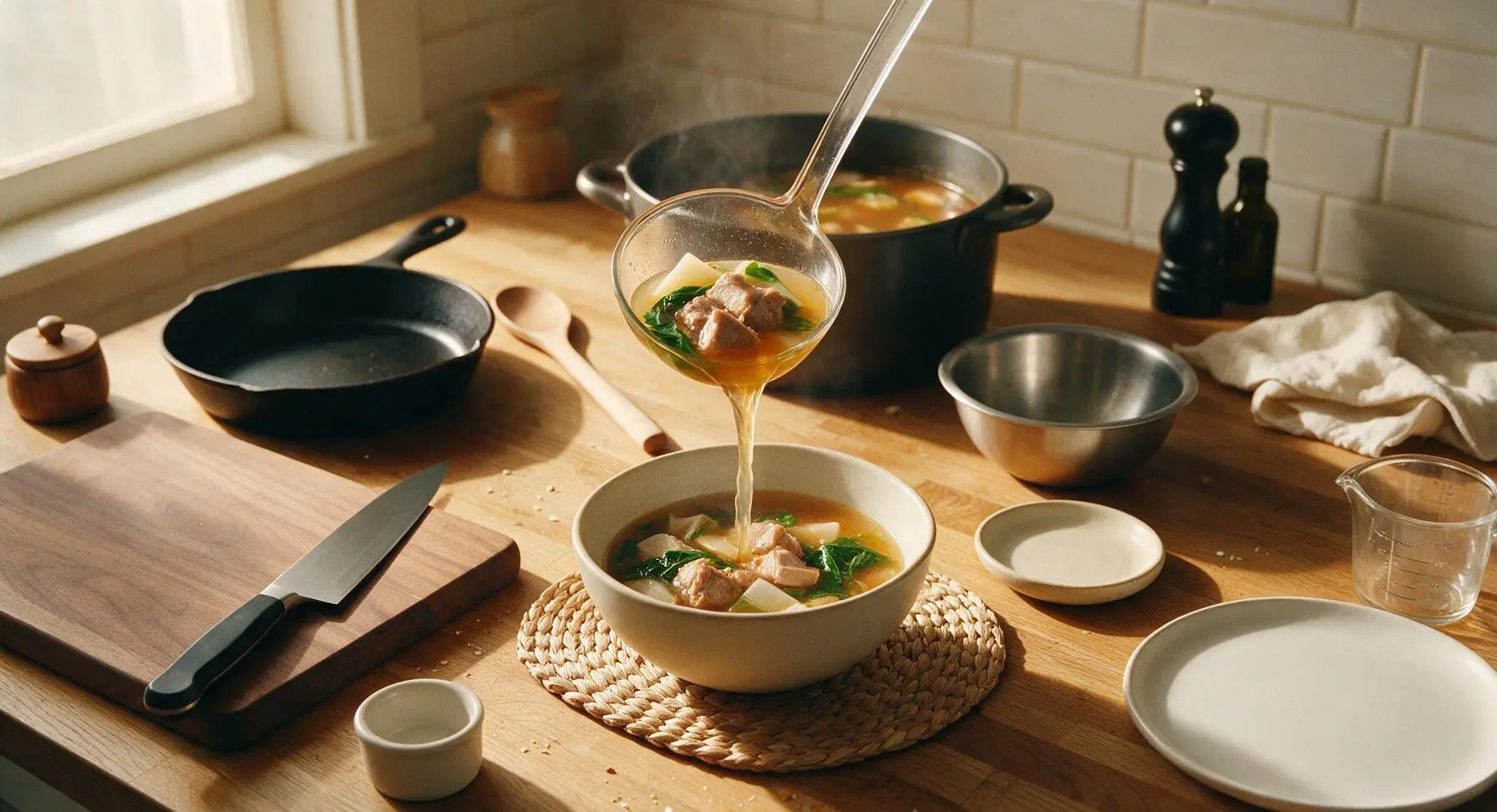
Ladle and Serve

Using the clear glass ladle, scoop equal portions of broth, pork, and mixed vegetables into each deep cream ceramic soup bowl set on rattan placemats, ensuring each serving gets a mix of pork, taro, radish, and greens. Serve with small matching cream saucers of fish sauce and calamansi or lime wedges on the side for dipping, if desired.
Step 7
step7:Ladle and Serve

Tips

1.Skim all gray foamy residue from the broth during the first 10 minutes of simmering for a clear, clean-tasting soup; leaving the foam will make the broth cloudy and impart a slightly bitter, metallic off-flavor from rendered blood and protein impurities.
2.Add vegetables in order of density and cook time: starchy taro and firm daikon first, quick-cooking beans and delicate leafy greens last, to avoid mushy, overcooked produce that loses its bright color and fresh texture.
3.For the brightest, most authentic sour flavor, substitute powdered tamarind base with 100g fresh tamarind pods: boil pods in 1 cup water for 5 minutes, mash to release soft pulp, then strain through the fine-mesh sieve to remove seeds and fibrous strings before adding to the broth.

✨ You May Also Like

Soups & Stews
🍜 Japan

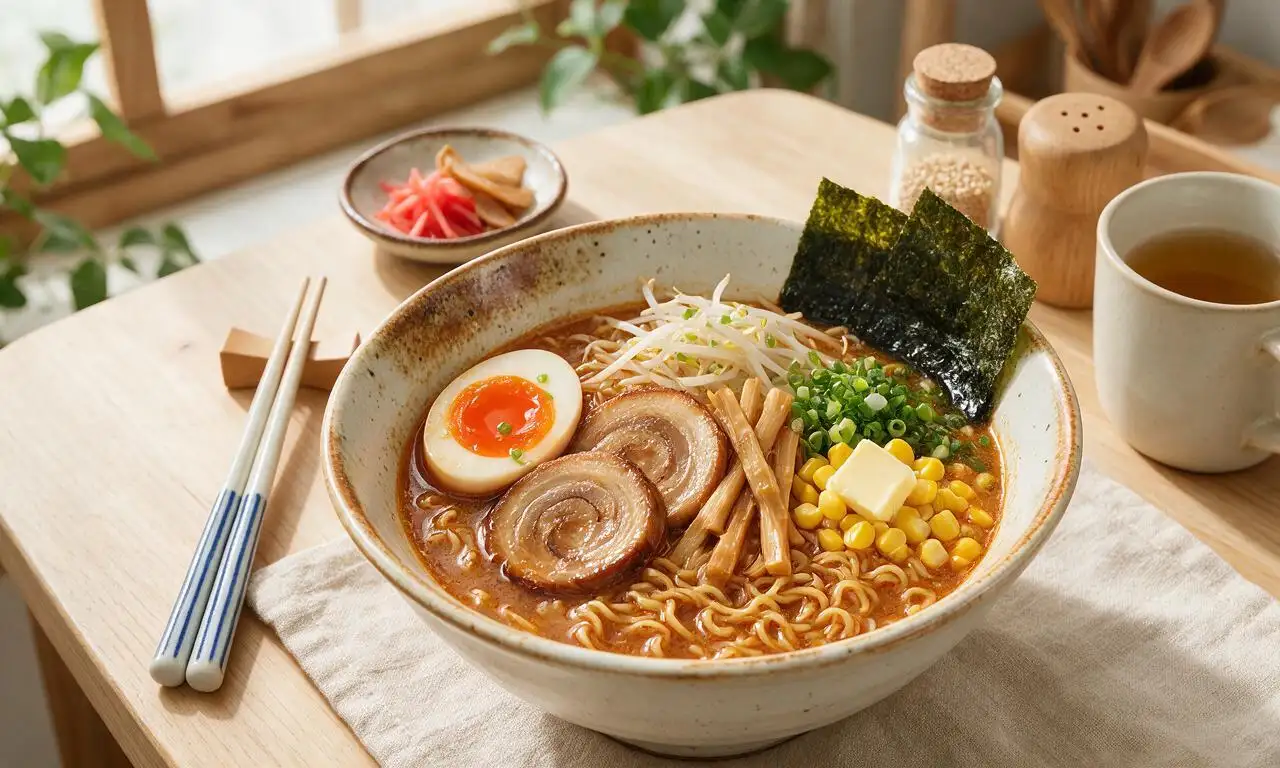
Rich, umami-dense Hokkaido-style miso ramen with chewy noodles, savory fermented broth, and classic toppings, a cozy, deeply satisfying warm meal.

⏱️ 45 minuteSoups & Stews ★ 4.5
Soups & Stews
🍜 United States

A hearty, peppery tripe and root vegetable stew with colonial Philadelphia roots, thick, warming, and packed with bold savory flavor for cold winter days.

⏱️ 2 hours 3Soups & Stews ★ 4.6
Soups & Stews
🍜 Mexico

Hearty, warming red pork posole loaded with tender hominy, slow-simmered in a rich smoky chile broth, served with zesty fresh garnishes for a deeply comforting, satisfying meal.

⏱️ 2 hours 3Soups & Stews ★ 4.7
Soups & Stews
🍜 United States

Warm, soothing classic chicken noodle soup loaded with tender chicken, soft egg noodles, and savory veggies, perfect for chasing chills and feeding the whole family.

⏱️ 40 minuteSoups & Stews ★ 4.9
Soups & Stews
🍜 France

Deeply savory caramelized onion broth topped with crusty bread and bubbly melted Gruyère, a timeless French bistro comfort food ideal for cold days.

⏱️ 1 hour 25Soups & Stews ★ 4.8
Soups & Stews
🍜 United States

Hearty, briny Maryland crab soup loaded with sweet blue crab, tender summer vegetables, and zesty Old Bay, a beloved Chesapeake Bay coastal comfort staple.

⏱️ 55 minuteSoups & Stews ★ 4.9

Sinigang:Frequently Asked Questions

1.What’s the best pork cut to use if I don’t have pork belly on hand for sinigang? ▾
Bone-in pork spare ribs or pork shoulder (Boston butt) are fantastic swaps, as they stay tender through slow simmering and add deep, meaty flavor to the broth. Skip extra-lean cuts like pork loin, which turn dry and tough after long simmering; stick to cuts with light marbling for that classic rich, comforting mouthfeel.
2.Can I use fresh tamarind instead of a packaged tamarind soup base? ▾
Absolutely! For fresh tamarind, simmer 1 cup of peeled ripe tamarind pods in 2 cups of water for 10 minutes, mash thoroughly, then strain out seeds and fibrous strings to get smooth tart pulp. Add this pulp 10 minutes before finishing, adjusting the amount to hit your preferred tang level just like you would with packaged base.
3.Why do my taro (gabi) cubes turn mushy and disintegrate in the soup? ▾
Mushy taro usually comes from adding it too early, cutting pieces too small, or using overripe, soft taro. Add firm, unblemished taro cut into 2.5cm cubes to simmering broth 20 minutes before you plan to finish the soup, and avoid over-stirring once it’s tender to keep pieces creamy and intact.
4.Do I need to sear the pork belly first before simmering it for sinigang? ▾
Searing is not traditional, but it adds a lovely deep, caramelized meaty note if you have 5 extra minutes. If you skip searing (the classic approach), blanch pork cubes in boiling water for 3 minutes first, then rinse to remove scum, so your final broth stays clear and bright instead of cloudy with gray foam.
5.What other vegetables can I add to my pork sinigang besides taro, tomatoes, and onions? ▾
Classic complementary add-ins include long green beans, sliced eggplant, bok choy, thin slices of daikon radish, and whole mild long green peppers for subtle heat. Add heartier veggies like green beans and eggplant 10 minutes before finishing, and delicate leafy greens in the last 2 minutes to keep them crisp-tender, not soggy.
6.How tangy should sinigang broth be, and how do I adjust sourness if it’s too strong or too weak? ▾
Great sinigang has a bright, lip-puckering sourness balanced by subtle savoriness and natural sweetness from tomatoes and onions. If it’s too sour, stir in a pinch of brown sugar or extra fish sauce to round it out; if too mild, add extra tamarind, a squeeze of lime, or calamansi juice a teaspoon at a time.
7.What’s the best way to season sinigang to get that authentic, balanced flavor? ▾
Start with 2 tablespoons of fish sauce (patis) early in the simmer to build deep savoriness, then taste and adjust right before serving. Most home cooks finish with a pinch of freshly ground black pepper, and skip heavy spices or soy sauce, which muddies the bright, clear broth and overpowers fresh tamarind flavor.
8.Can I make pork sinigang ahead of time, and how well does it reheat? ▾
Sinigang actually tastes better the next day, as the sour tamarind and savory pork flavors meld together as it chills. Store it in an airtight container in the fridge for up to 3 days, and reheat gently on the stovetop over medium-low heat. Wait to add delicate leafy greens until after reheating to avoid sogginess.
9.Why do my tomatoes stay tough and not break down in the sinigang broth? ▾
Tough, unbroken tomatoes usually mean you added them too late in the cooking process, or used underripe, firm grocery store tomatoes. Add quartered ripe tomatoes at the very start of the simmer, right after you add the pork and onions, so they have 30–40 minutes to soften, release sweet juice, and melt slightly into the broth.
10.Is there a way to make this sinigang less fatty if I find pork belly too rich? ▾
You have two easy, effective options: first, trim off the thick, hard outer fat layer from the pork belly before cubing it, leaving just a thin strip of fat for flavor. Second, after simmering the pork for 30 minutes, skim the thick layer of rendered fat off the top of the broth with a ladle before adding veggies for a lighter, cleaner taste.
11.Can I make pork sinigang in a pressure cooker or Instant Pot to save time? ▾
Absolutely! For an Instant Pot, add blanched or seared pork, onions, tomatoes, and broth, then cook on high pressure for 12 minutes and quick release the pressure. Add taro and cook on high for 2 more minutes, then finish with tamarind base, seasonings, and quick-cooking veggies on the sauté function for a total cook time under 30 minutes.
12.What do people usually serve with pork sinigang for a traditional Filipino meal? ▾
Sinigang is almost always served family-style alongside mounds of steaming hot white jasmine rice, which balances the bright, tangy broth perfectly. Many people set out small side dishes of extra fish sauce with sliced chilies, so diners can adjust the seasoning of their own individual bowls to match their taste preferences.
13.My taro sometimes makes the soup feel slimy—what am I doing wrong? ▾
Slimy taro comes from not peeling it fully, or using young, very wet taro that hasn’t fully matured. Make sure you peel off all the thin brown outer skin and any faint pinkish slippery layer just under the skin before cubing. If you notice slime while simmering, skim the thin slippery film off the top of the broth before adding tamarind base.
14.Can I freeze leftover pork sinigang for later meals? ▾
Yes, it freezes beautifully for up to 3 months. Let the soup cool completely first, then transfer it to freezer-safe airtight containers, leaving an inch of headspace for expansion as it freezes. Thaw in the fridge overnight, reheat gently on the stovetop, and add fresh leafy greens right before serving to replace any that turned soggy during storage.

Comments (18)

2 hours ago

OMG this pork sinigang is SO good!!! I grew up eating my lola’s version but never could get the sour level right until I tried this recipe. 45 minutes total cook time is no joke, perfect for weeknight family dinners. My kids begged for seconds, even the picky one who hates veggies! Used daikon and bok choy like the recipe suggested, chef’s kiss.

30 minutes ago

Wait do you use fresh tamarind or the packet mix? I’ve only ever used the packets and wondered if fresh is worth the extra work!

5 minutes ago

Great question! Both work beautifully here — fresh tamarind gives a brighter, fruitier sour note, but the tamarind soup packets are a super convenient swap for busy nights that still taste amazing.

yesterday

Really solid sinigang recipe! I added a handful of long beans and some Thai chilis for a little heat, which kicked it up a notch. Only note is I’d recommend parboiling the pork first to cut down on the scum, otherwise the broth gets a little cloudy. Still turned out delicious, brought it to a work potluck and everyone asked for the recipe.

yesterday

Thanks for the awesome tip about parboiling the pork! We love that you added Thai chilis for heat — that’s such a tasty customization, we might have to add that as a variation note on the recipe!

3 days ago

Total game changer! I’ve been intimidated to make Filipino food at home because I thought it would be super complicated, but this was so easy even a beginner like me nailed it on the first try. The tamarind flavor is perfectly balanced, not too mouth-puckering, not too mild. Already added this to my weekly meal prep rotation!

1 week ago

This tastes exactly like my grandpa’s sinigang he used to make when we visited him in Manila!!! I was so worried I’d never be able to replicate that nostalgic sour, savory broth, but this recipe hit every single note. Served it with jasmine rice like he always did, and my whole roommates devoured the whole pot in 10 minutes.

5 days ago

Wait how many servings does this make? I’m having 8 people over for a dinner party next weekend and want to make sure I make enough!

3 days ago

This recipe makes about 6 hearty servings as written! If you’re serving 8, we recommend doubling the broth and veggie amounts, and adding an extra pound of pork so no one leaves hungry. It reheats great too if you end up with leftovers!

5 days ago

My three boys are SO picky, I swear they turn their nose up at anything that isn’t chicken nuggets or pizza, but they went back for THREE bowls of this last night! I didn’t have daikon so I subbed in extra radishes from my garden, and it worked perfectly. The broth is so cozy, perfect for the random cold snap we had this week.

3 days ago

Oh I never thought to use regular radishes as a daikon swap! I have a ton growing in my raised beds right now, I’m definitely going to try that this weekend. Thanks for the tip!

2 weeks ago

Tried this for a Sunday family dinner and it was a massive hit. I used pork belly instead of pork shoulder because that’s what I had in the freezer, and the rendered fat made the broth so rich and flavorful. 10/10, will be making this all fall and winter long when I need something warm and comforting.

2 days ago

Good flavor base, but I felt like it was missing a little something for my taste. I ended up squeezing in extra lime and adding a splash of fish sauce at the end to bump up the umami, and that helped a lot. Easy to follow directions at least, just wish the seasoning was a little more dialed in out the gate.

yesterday

Thanks so much for your honest feedback! We totally get that sour and salt preferences vary a ton from person to person, so we always recommend adjusting the fish sauce and tamarind to taste as you cook. We’ll add a note about extra lime and fish sauce adjustments to the recipe to help other cooks too!

3 days ago

Made this for my husband who is Filipino, and he said it’s better than the sinigang his mom makes (don’t tell her I said that!!!). We used fresh tamarind pods from our local Asian market and let me tell you, that bright sour flavor is unbeatable. Served with a side of patis for dipping, just like his family does.

2 days ago

Girl your secret is safe with me 😂 Fresh tamarind really does hit different, right? I need to stop being lazy and use it instead of the packets more often.

2 days ago

This is the highest compliment! We’re so glad it got your husband’s stamp of approval — the patis dip is such a classic touch that makes every bite even better.

1 week ago

Obsessed with how well this holds up for meal prep! I made a big batch on Sunday, portioned it out into containers for lunch all week, and the flavors actually got better as it sat in the fridge. The veggies didn’t get mushy, the pork stayed tender, 10/10 for anyone who needs easy make-ahead lunches.

5 days ago

Wait do you store the broth separate from the rice? I tried meal prepping soup once and the rice soaked up all the liquid by day 2, total disaster.

30 minutes ago

First time making sinigang ever, and it turned out way better than I expected! I only had pork chops on hand so I cut those up into chunks instead of using shoulder, and it worked fine. Next time I’ll grab some bok choy to add, I only had spinach this go around. Super easy recipe, no fancy skills needed.

2 weeks ago

Brought this to our neighborhood block party potluck last weekend and it was the first dish gone! People were coming up to me all night asking for the recipe, I felt like a celebrity. I added some eggplant like my tita always does, and it soaked up all that delicious sour broth so well. Can’t recommend this enough.

1 week ago

Wow, that’s such a win for the block party! Eggplant is such a fantastic add-in, we love how it soaks up every bit of that tangy broth — we’ll make sure to list it as a recommended veggie option!

1 week ago

Wait which neighborhood in IL? I’m in Logan Square and I would’ve crashed that block party for a bowl of this, no cap 😂

5 minutes ago

Just finished making this in my tiny dorm kitchen and it’s insane!!! I used the tamarind packet because I couldn’t find fresh pods near campus, and it still tastes like restaurant quality. Way cheaper than ordering takeout from the Filipino spot downtown, I’m gonna make this every other week for sure.

just now

We love that you made this work in a dorm kitchen! That’s exactly what this easy recipe is for — no fancy equipment or hard-to-find ingredients required for a delicious, cozy meal. Great call using the tamarind packets, they work like a charm!

yesterday

Made this on our camp stove last weekend on a fall camping trip, and it was the perfect warm meal after a long day of hiking. The smell drew over the campers from the site next to us, and we ended up sharing bowls with them. So easy to prep all the ingredients ahead of time and throw in the pot over the fire.

2 days ago

I’ve been making sinigang for years but always overcomplicated it with 100 extra ingredients. This stripped-down, easy version is my new go-to! It lets the tamarind and pork flavor shine without all the extra stuff I used to add. My mom even asked for the recipe, which is the ultimate seal of approval.

yesterday

Wait what extra ingredients were you adding before? I feel like I always throw in every veggie I have and maybe it’s overcrowding the pot?

yesterday

That mom stamp of approval means everything, we’re so flattered! We designed this recipe to be straightforward so the classic flavors come through, but it’s totally flexible if you want to add extra favorite veggies too — just don’t overcrowd the pot so everything cooks evenly!

5 days ago

Made this on a gross, rainy Seattle day and it was the ultimate comfort food. The sour broth hits different when you’re cozied up inside watching the rain. I added a couple extra tomatoes because I love how sweet they get against the tangy tamarind, 10/10 no notes.

3 days ago

Fellow Seattleite here!!! I never thought to add extra tomatoes, that sounds so good. I’m making a pot tomorrow now that the rain is coming back for the week, thanks for the idea!

2 hours ago

Great high-protein meal option! I used lean pork tenderloin to cut down on a little fat, loaded up on extra veggies, and it was still super flavorful without being heavy. Perfect post-workout dinner when I want something filling but not greasy. Will definitely make again.

1 week ago

My granddaughter has been begging me to make Filipino food after she tried sinigang at a friend’s house, and this recipe was so easy to follow even with my old eyes! We made it together last Sunday, and she had so much fun dumping the veggies in the pot. It turned out delicious, we’re already planning to make it again for Thanksgiving as a fun side dish.

5 days ago

This is our favorite comment all week! Cooking with grandkids is the best, and we’re so honored you chose our recipe to make together. Serving sinigang at Thanksgiving sounds like an amazing, delicious twist — we bet it’ll be a new family favorite!

3 days ago

I’ve only ever eaten sinigang at my Filipino coworker’s house, so I was nervous to make it myself, but this was foolproof! I was worried I’d mess up the sour balance but the recipe gives such clear notes on when to add the tamarind and how to taste as you go. My roommate who swore he hated sour food ate two big bowls, total convert.

2 days ago

Wait did you use pork ribs or shoulder? I have a pack of spare ribs in my freezer I need to use up and I’m wondering if they’d work here!

yesterday

We love that you converted your roommate! Spare ribs work absolutely beautifully in this recipe — they add an extra rich, meaty flavor to the broth as they cook. Just give them a little extra simmer time if they’re extra meaty to make sure they’re fall-off-the-bone tender!