Sinigang na Baboy Ribs

title 1
Sinigang na Baboy Ribs
⏱️ cook time 1 hour 15 minutes
🍽️ servings 4
⚡ Difficulty easy

intro

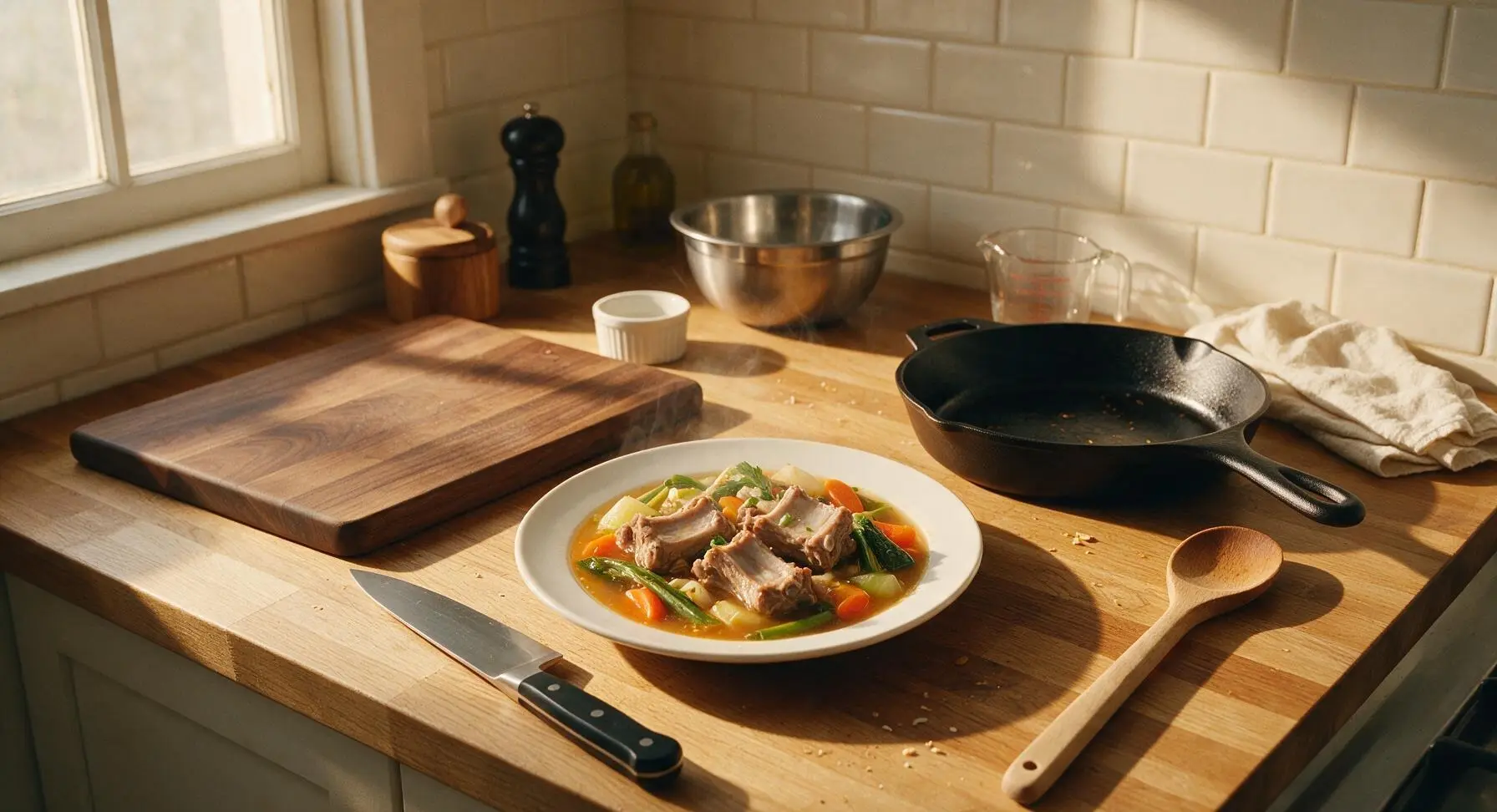
Tart, savory Filipino sour soup with tender pork ribs, fresh vegetables, and bright tamarind broth, served hot for a comforting, nostalgic family meal.

Ingredients
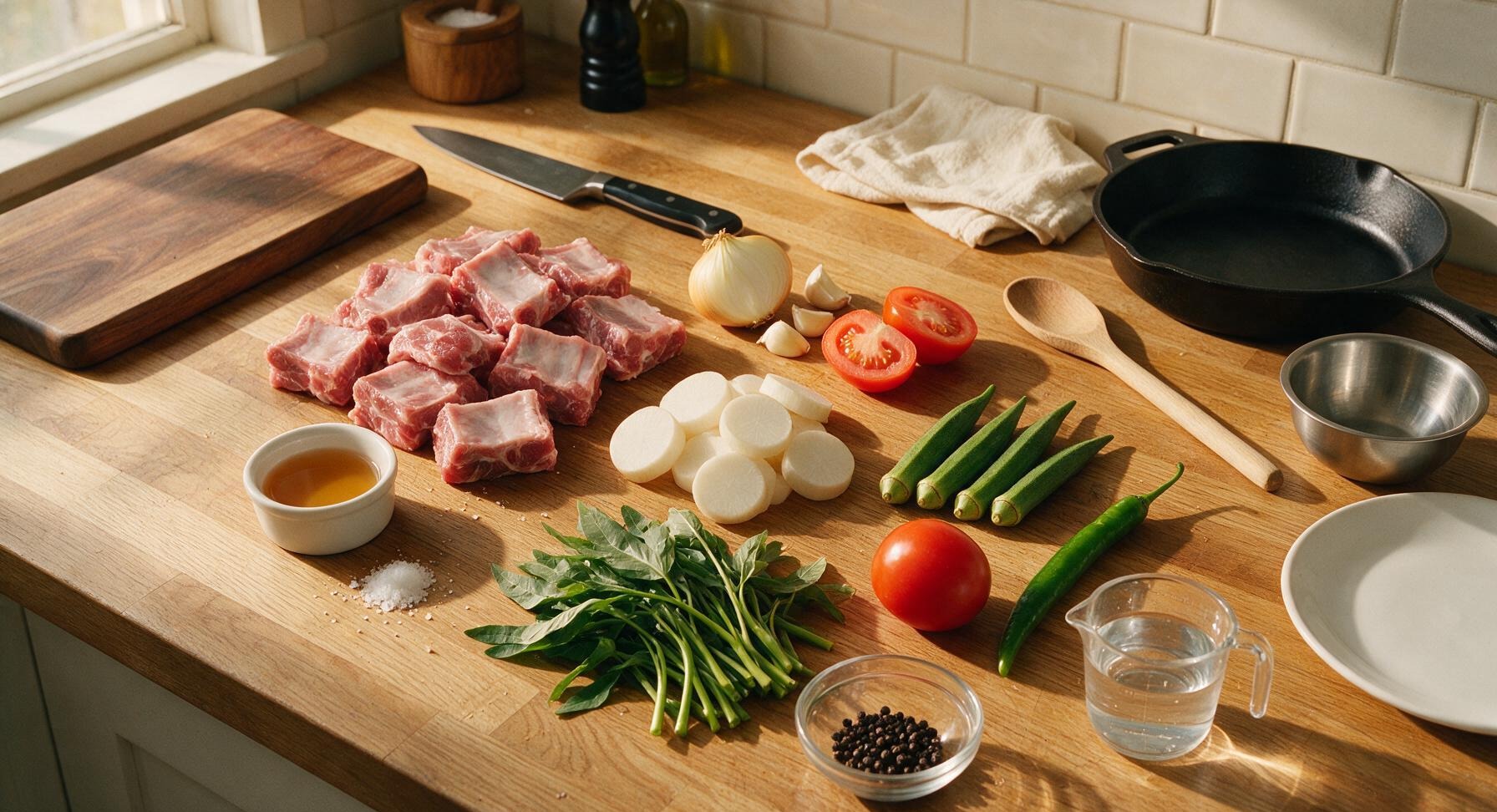
Meaty pork spare ribs 800g, cut into 5cm individual pieces
Ripe fresh tamarind pods 100g (shelled)
Medium yellow onion 1 piece (150g), quartered
Garlic cloves 3 pieces, lightly crushed
Ripe red tomatoes 2 medium (200g total), quartered
Daikon radish (labanos) 1 small (200g), peeled, sliced 1cm thick rounds
Fresh okra 6 pieces (100g), stems trimmed
Kangkong (water spinach) 1 bunch (150g), tough lower stems removed, cut into 5cm lengths
Long green finger chili (siling haba) 1 piece, slit lengthwise
Filipino fish sauce (patis) 2 tablespoons
Whole black peppercorns 1 teaspoon, lightly cracked
Rock salt 1 teaspoon (to taste)
Water 1.5 liters

Steps

1

Wash and Prep Ingredients

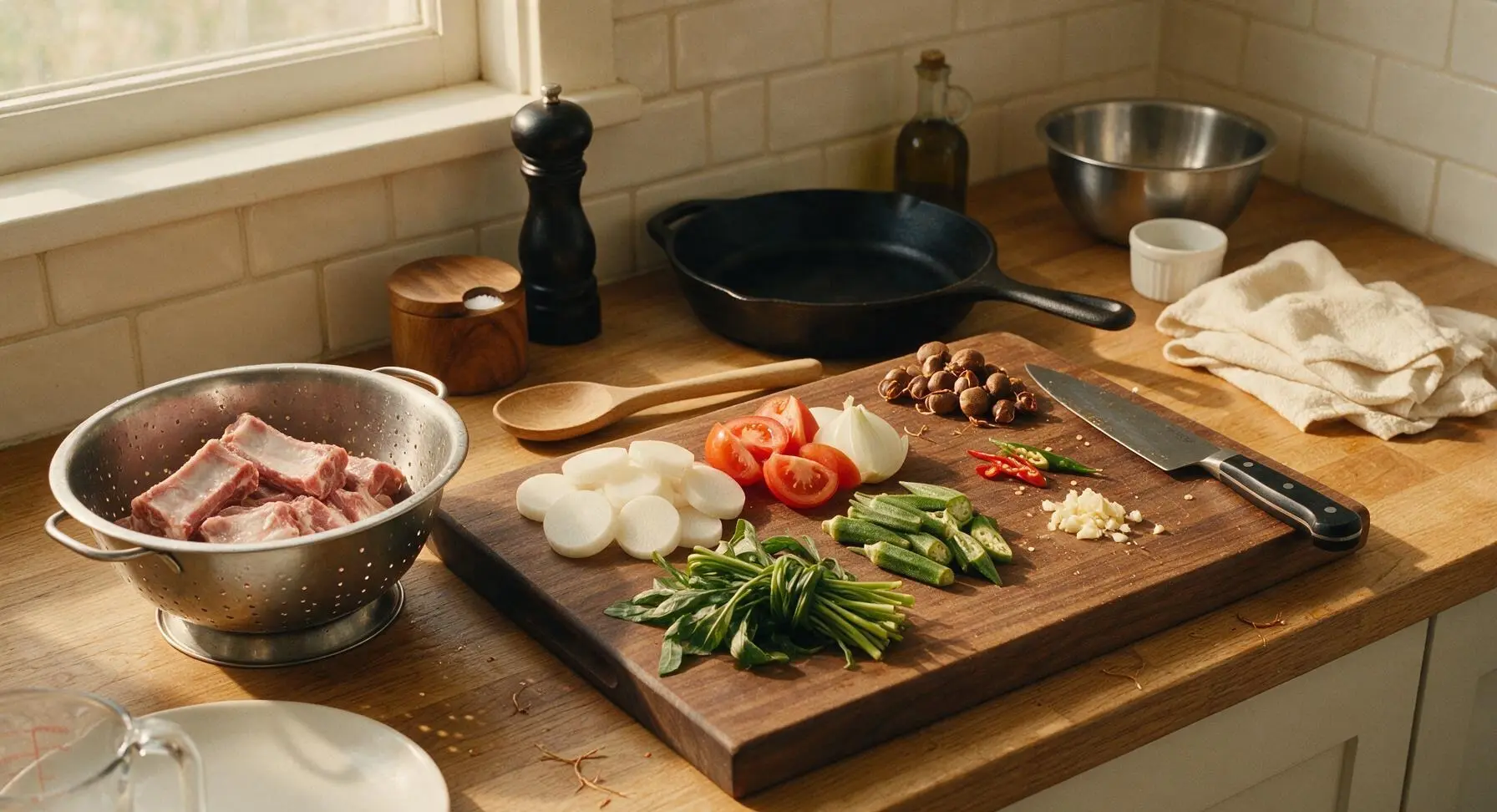
Place pork rib pieces in the medium stainless steel colander, rinse under cold running water for 2 minutes to wash away loose bone fragments and excess blood, then pat lightly dry. Rinse all produce: peel the daikon and slice into 1cm thick rounds, trim okra stems, quarter the onion and tomatoes, lightly crush garlic cloves, make a lengthwise slit in the long green chili, and separate kangkong leaves from tough lower stems, cutting leaves and tender stems into 5cm lengths. Shell the fresh tamarind pods, discarding hard outer shells and fibrous inner strings.
Step 1
step1:Wash and Prep Ingredients
2

Simmer Ribs and Aromatics

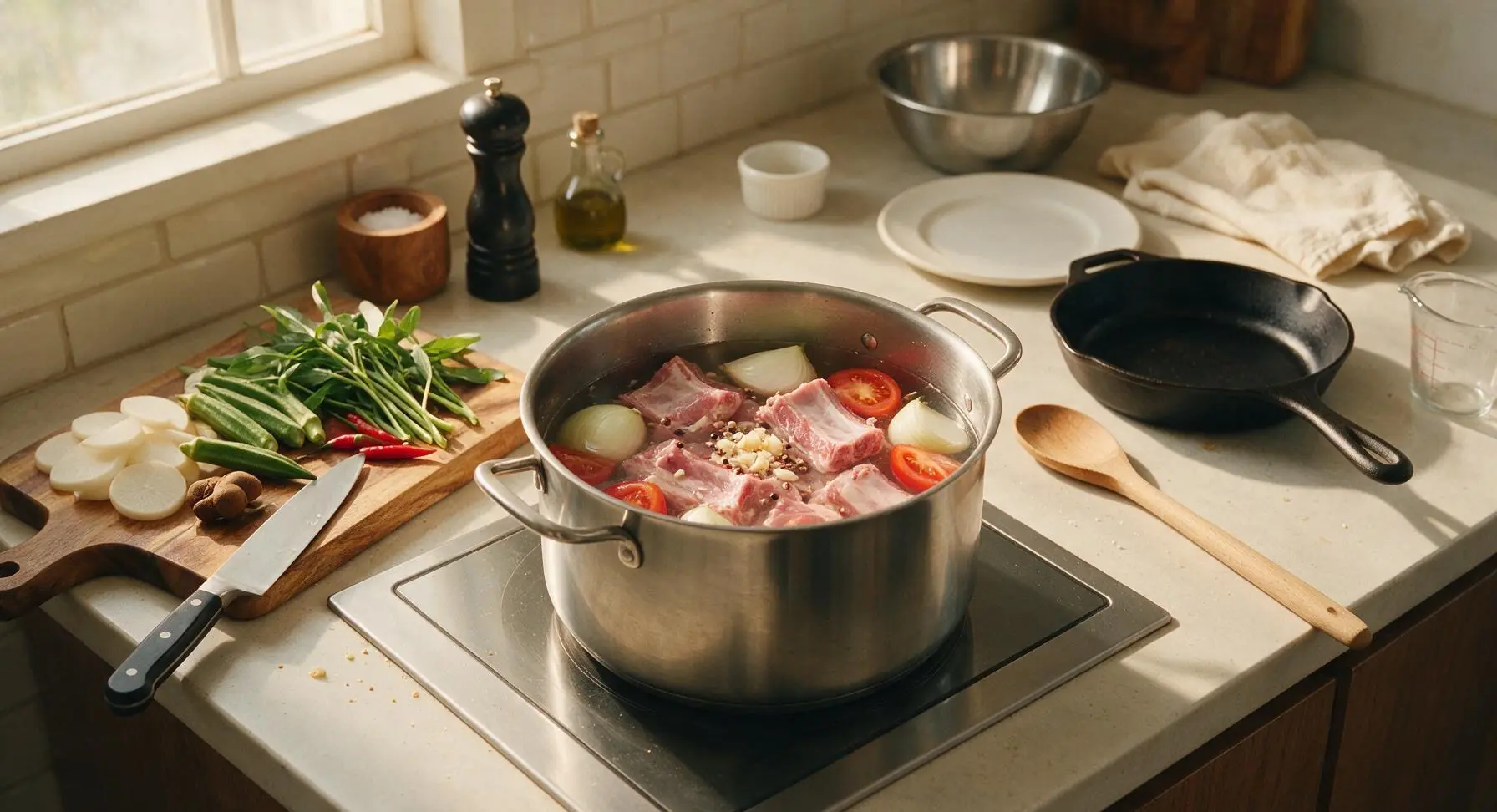
Pour 1.5 liters of water into the 5-liter stainless steel stock pot, then add the rinsed pork ribs, quartered onion, crushed garlic, lightly cracked black peppercorns, and quartered tomatoes. Place the pot on the center flush-mounted induction burner, set heat to medium-high, and bring to a rolling boil (approximately 8 minutes), then reduce heat to medium-low to maintain a soft, steady simmer.
Step 2
step2:Simmer Ribs and Aromatics
3

Skim Surface Scum

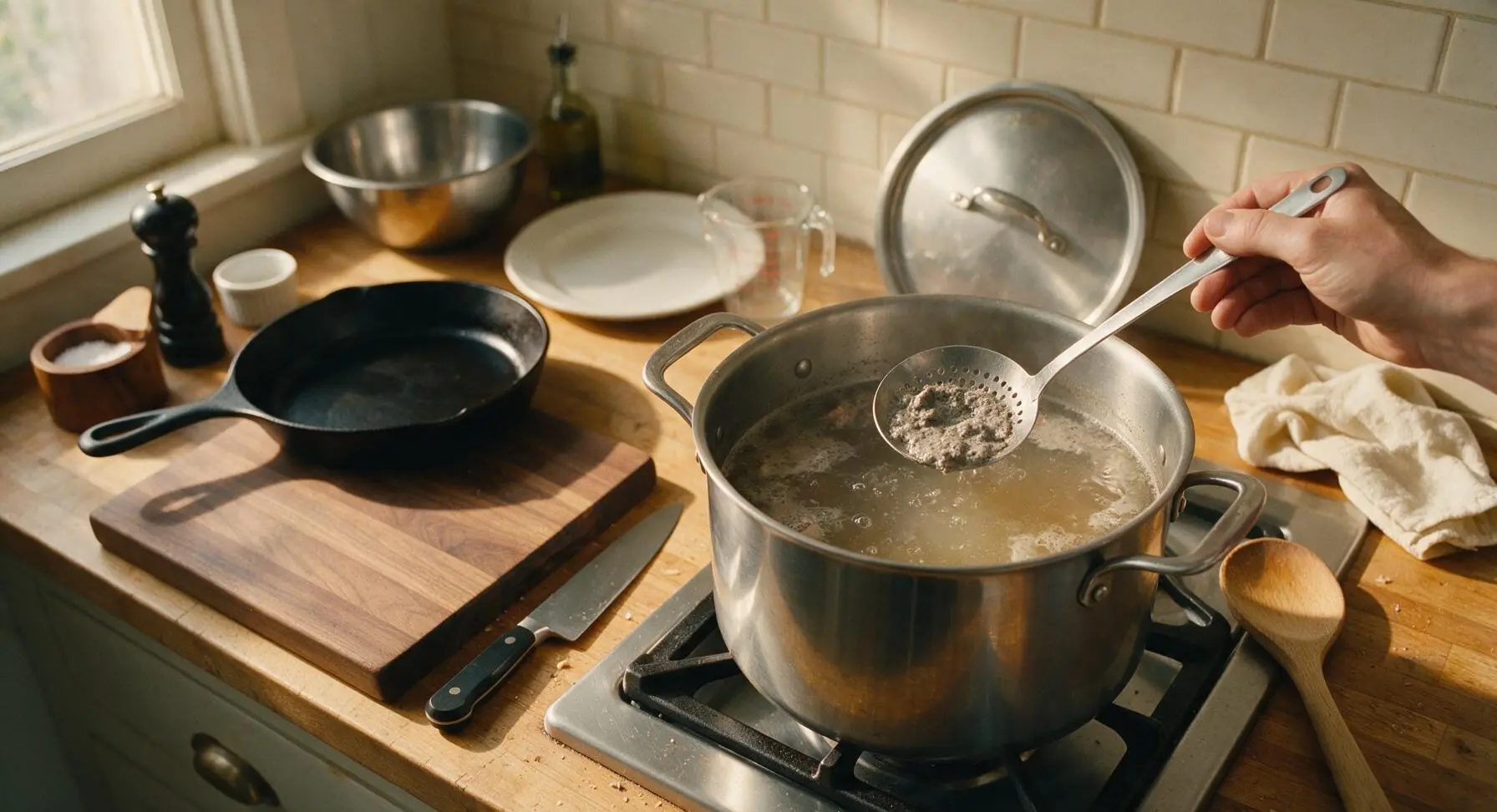
As the broth reaches a rolling boil, use the small stainless steel skimmer ladle to carefully remove all gray, foamy scum that rises to the surface over the first 10 minutes of simmering. Skimming ensures the broth stays clear and clean-tasting, with no murky, bitter, or gamey notes. After skimming, partially cover the pot with its lid and let the ribs simmer for 45 minutes, until the meat is fork-tender and pulls easily from the bone but does not fall off completely.
Step 3
step3:Skim Surface Scum
4

Make Tamarind Extract

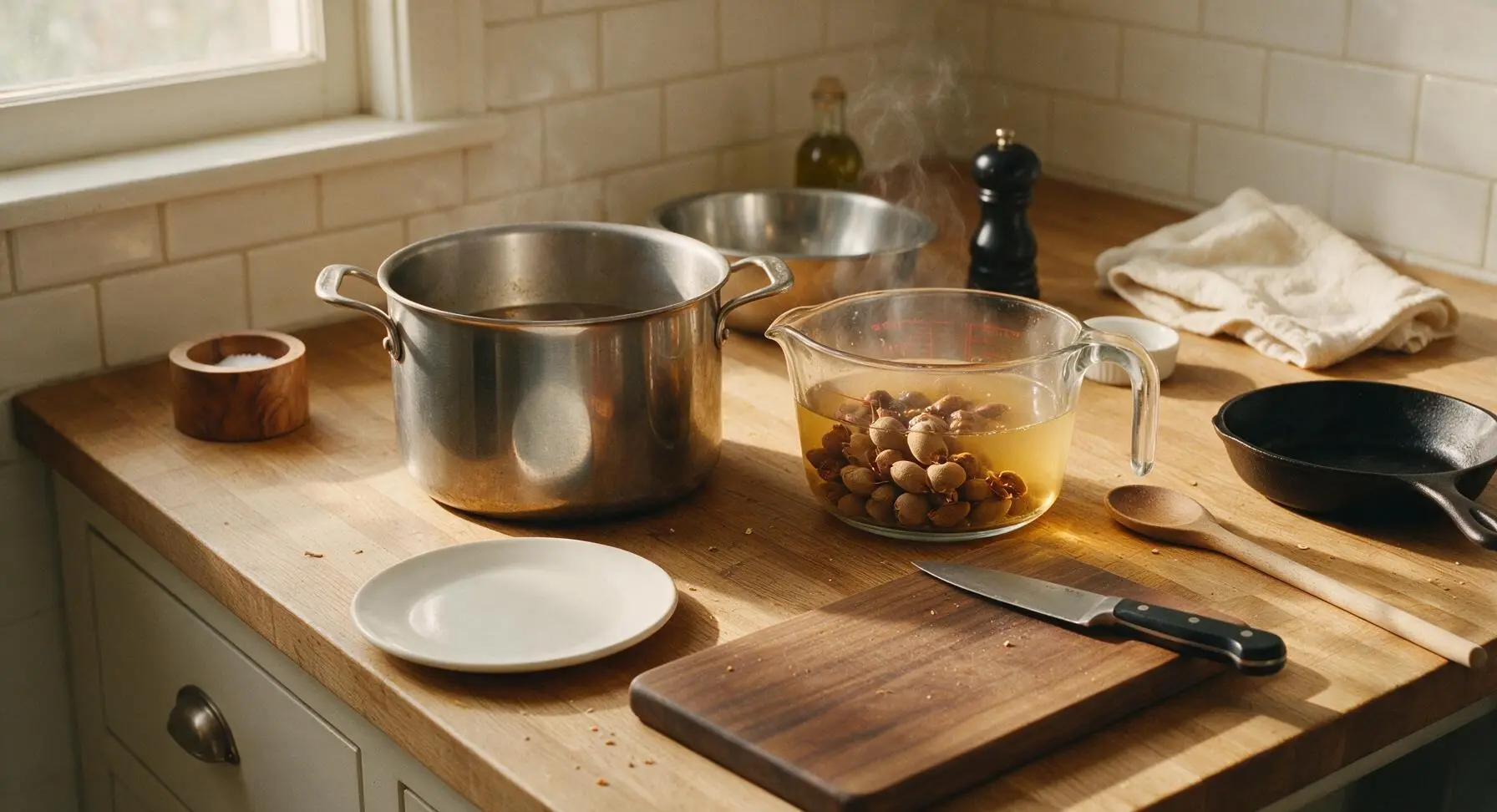
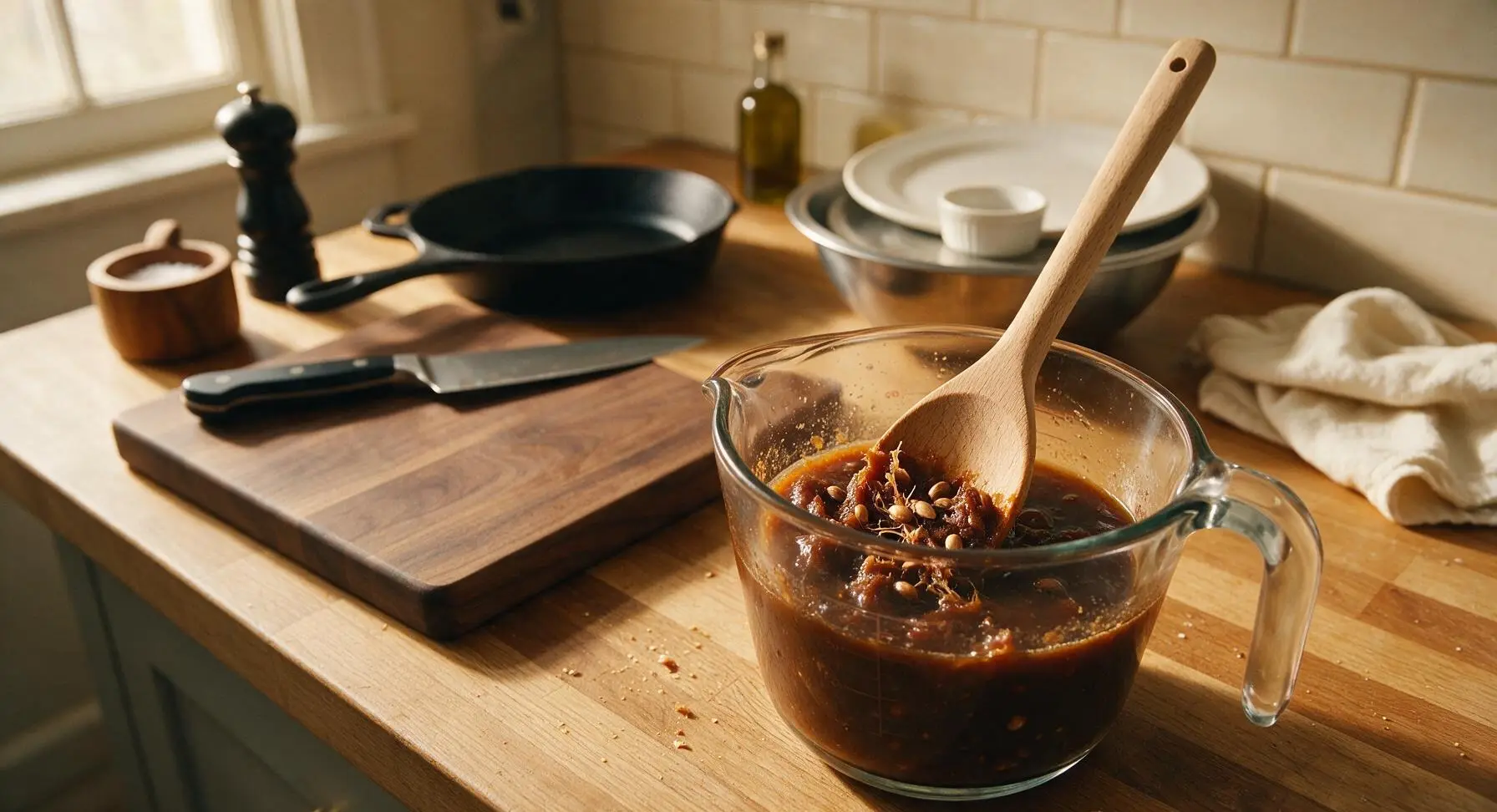
While the ribs simmer, place the shelled tamarind in the clear glass measuring cup, ladle 1/2 cup of hot broth from the pot over the tamarind, and let it soak for 5 minutes to soften fully. Mash the softened tamarind with the back of the beech wood cooking spoon to release all tangy pulp, then strain the mixture through the stainless steel colander to remove hard seeds and fibrous strings, collecting the smooth, thick tamarind extract; discard the leftover seed and fiber pulp.
Step 4
step4:Make Tamarind Extract
Step 4
step4:Make Tamarind Extract
5

Add Firm Vegetables

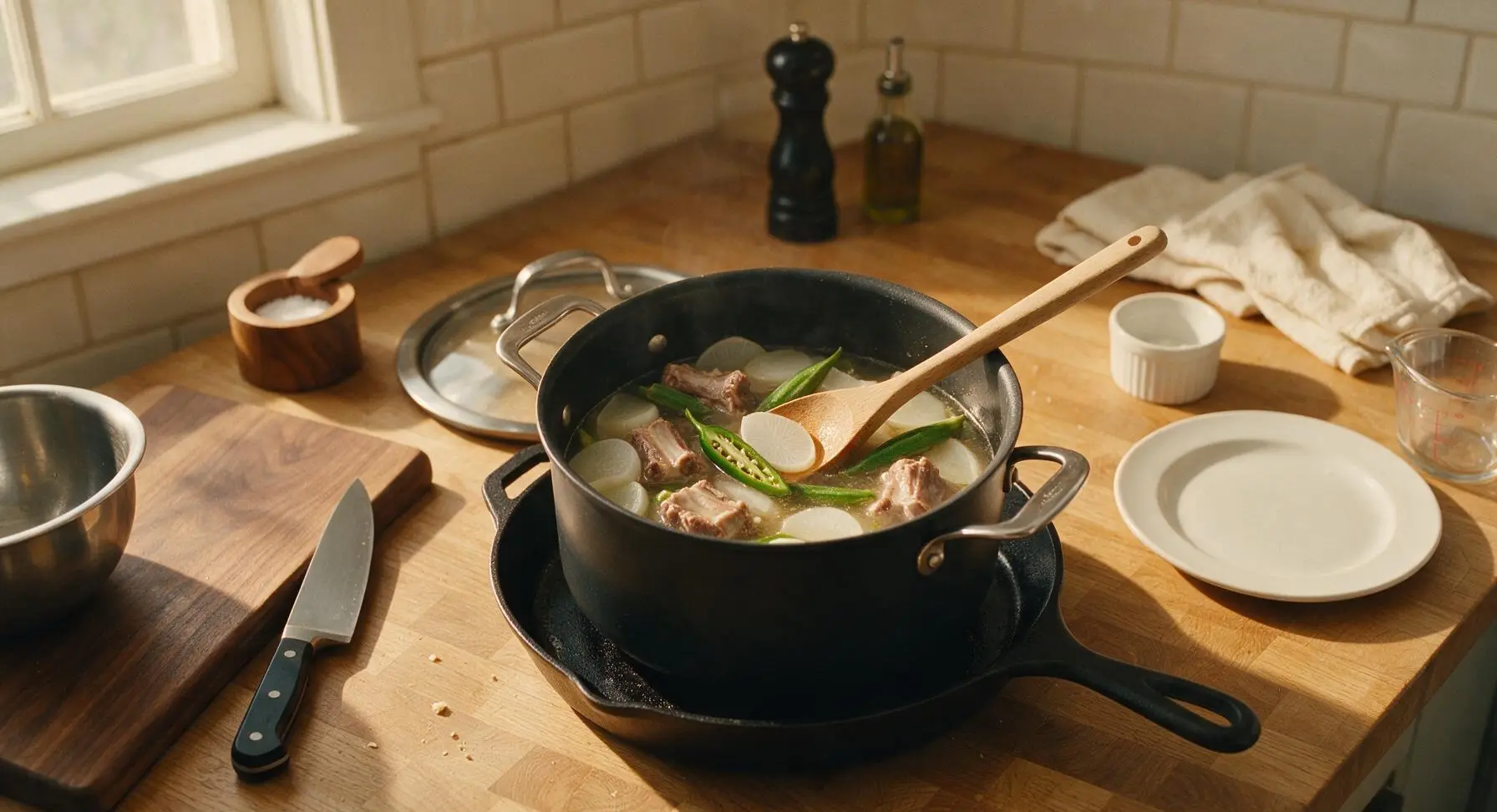
After the ribs have simmered for 45 minutes and test as fork-tender, add the sliced daikon radish, trimmed okra, and slit long green chili to the pot. Stir gently with the beech wood cooking spoon to submerge the vegetables, then let them simmer uncovered for 7 minutes, until the daikon is translucent and tender when pierced with a fork but not soft or mushy.
Step 5
step5:Add Firm Vegetables
6

Season Broth to Taste

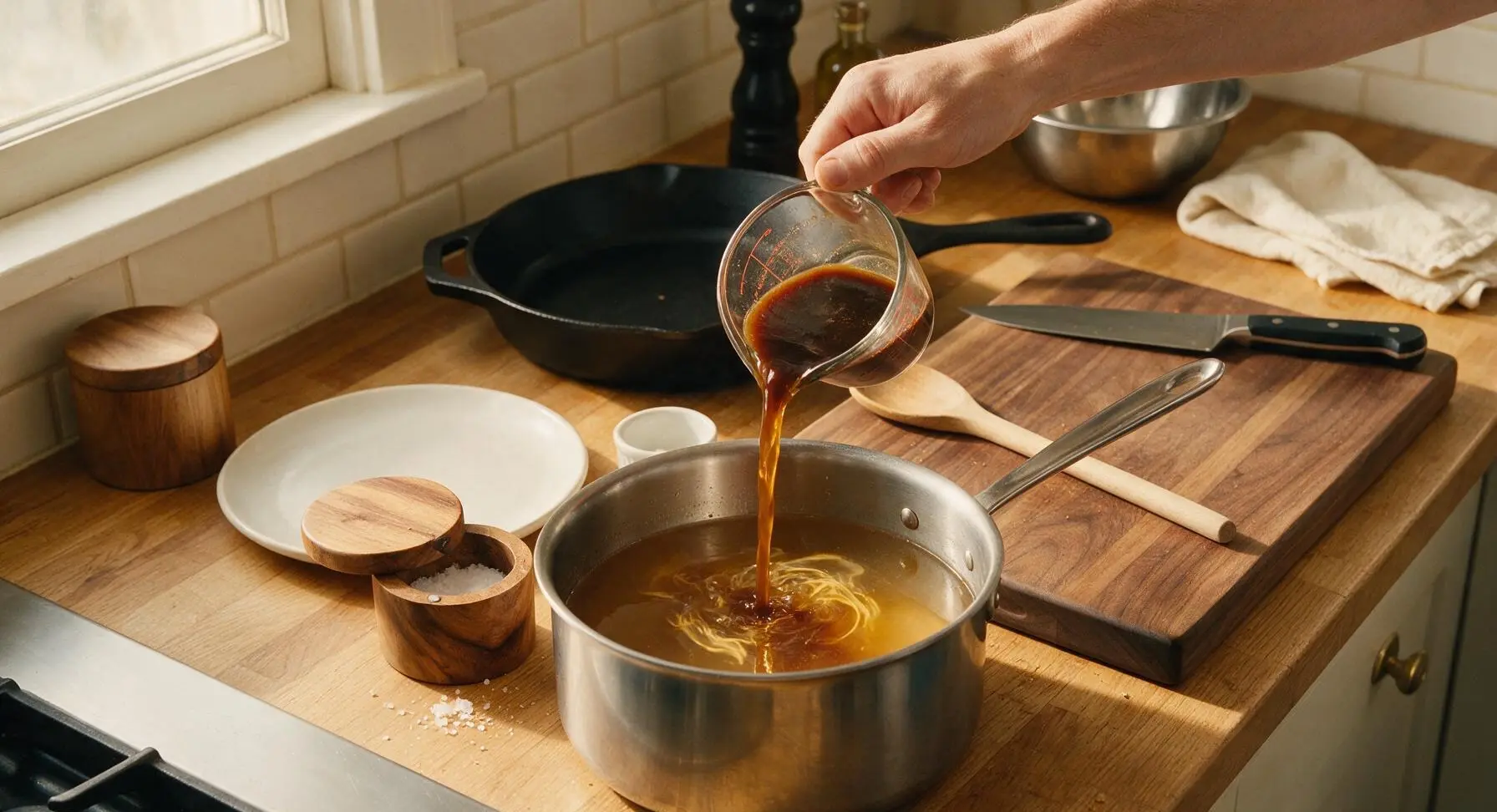
Pour the strained tamarind extract into the simmering pot, add 2 tablespoons of fish sauce, then stir gently to combine. Taste the broth, adjusting with extra fish sauce for saltiness or a small pinch of rock salt as needed; the finished broth should taste brightly tart, savory, and well-balanced, not sharp or overly sour. Let the broth simmer for 3 more minutes to let the flavors meld fully.
Step 6
step6:Season Broth to Taste
7

Add Leafy Greens

Turn off the heat under the induction burner, add the cut kangkong (water spinach) to the top of the broth, pressing it down gently with the beech wood cooking spoon to submerge the leaves. Let the residual heat of the broth cook the kangkong for exactly 2 minutes, until leaves are just wilted and bright vivid green — do not cook over active heat, as this will turn the greens mushy and dull.
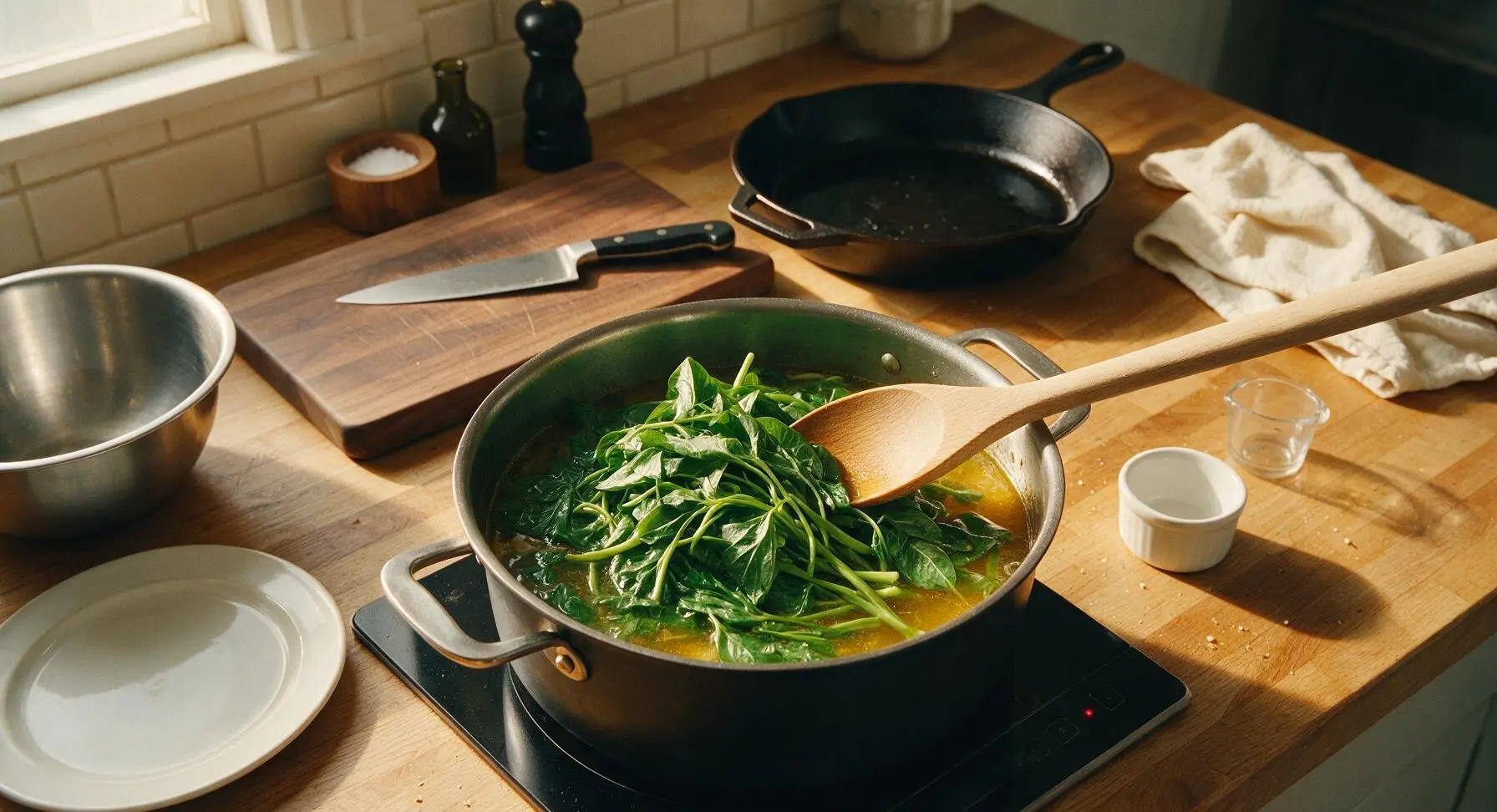
Step 7
step7:Add Leafy Greens

Tips

1.Never overcook the kangkong: adding it after turning off the heat lets residual pot warmth wilt the leaves in 2 minutes, preserving their bright green color and crisp-tender texture. Boiling kangkong for even 1 extra minute will turn it mushy, dull olive, and leach bitter flavor into the broth.
2.Take time to skim all gray foam from the broth in the first 10 minutes of simmering: this foam is coagulated blood and protein from the ribs, and leaving it in will result in a murky, bitter-tasting broth with a subtle gamey aftertaste, rather than the clean, bright tang sinigang is known for.
3.Adjust sourness gradually: add tamarind extract 1 teaspoon at a time if you prefer a tarter soup, and balance extra sourness with a tiny pinch of rock salt rather than more fish sauce, to keep the flavor bright and rounded instead of overly salty or sharp.
✨ You May Also Like

Soups & Stews
🍜 Japan

Rich, umami-dense Hokkaido-style miso ramen with chewy noodles, savory fermented broth, and classic toppings, a cozy, deeply satisfying warm meal.

⏱️ 45 minuteSoups & Stews ★ 4.5
Soups & Stews
🍜 United States

A hearty, peppery tripe and root vegetable stew with colonial Philadelphia roots, thick, warming, and packed with bold savory flavor for cold winter days.

⏱️ 2 hours 3Soups & Stews ★ 4.6
Soups & Stews
🍜 Mexico

Hearty, warming red pork posole loaded with tender hominy, slow-simmered in a rich smoky chile broth, served with zesty fresh garnishes for a deeply comforting, satisfying meal.

⏱️ 2 hours 3Soups & Stews ★ 4.7
Soups & Stews
🍜 United States

Warm, soothing classic chicken noodle soup loaded with tender chicken, soft egg noodles, and savory veggies, perfect for chasing chills and feeding the whole family.

⏱️ 40 minuteSoups & Stews ★ 4.9
Soups & Stews
🍜 France

Deeply savory caramelized onion broth topped with crusty bread and bubbly melted Gruyère, a timeless French bistro comfort food ideal for cold days.

⏱️ 1 hour 25Soups & Stews ★ 4.8
Soups & Stews
🍜 United States

Hearty, briny Maryland crab soup loaded with sweet blue crab, tender summer vegetables, and zesty Old Bay, a beloved Chesapeake Bay coastal comfort staple.

⏱️ 55 minuteSoups & Stews ★ 4.9

Sinigang na Baboy Ribs:Frequently Asked Questions

1.What cut of pork works best for Sinigang na Baboy Ribs, and are there acceptable substitutes if I don’t have spare ribs? ▾
Meaty pork spare ribs are ideal here, as their marbling and connective tissue break down into tender, juicy bites and add rich, savory depth to the tamarind broth. If you don’t have spare ribs, use bone-in pork shoulder chops or pork belly—skip lean, boneless cuts, as they turn dry and won’t give the broth that satisfying, robust backbone.
2.I can’t find fresh ripe tamarind pods—what’s a good replacement to get that signature tart flavor? ▾
If fresh tamarind is unavailable, use unsweetened block tamarind paste reconstituted in warm water and strained to remove seeds and fibers. For a last-minute swap, 1/4 cup fresh calamansi juice or a mix of lime juice with a tiny splash of unsweetened pineapple juice works, though it will have a brighter, less fruity tartness than fresh tamarind.
3.How do I prep fresh tamarind pods correctly to get smooth, seed-free broth? ▾
Start by shelling the ripe pods and peeling off the thin, stringy veins, then simmer the exposed pulp in 1 cup of water for 10 minutes until soft. Mash the softened pulp gently, then pour it through a fine-mesh sieve, pressing to extract every bit of flavorful pulp. Discard the hard seeds and fibrous bits before adding the strained liquid to your soup.
4.How long should I simmer the pork ribs to get them perfectly tender without them falling apart? ▾
Simmer the ribs at a gentle low bubble (skip a hard rolling boil, which makes meat tough and broth cloudy) for 45 to 55 minutes. You’ll know they’re done when you can pierce the meat easily with a fork, but it stays firmly attached to the bone. Don’t rush this step—slow simmering is key to building deep, savory broth flavor too.
5.What order should I add ingredients so the vegetables don’t turn mushy? ▾
Start by sautéing garlic, onion, and tomatoes first to build your flavor base before adding broth and ribs. Add dense, hearty veggies like daikon or green beans 10 minutes before the ribs finish cooking, and toss in delicate greens like bok choy or water spinach in the last 2 minutes so they stay bright and crisp-tender, not soggy.
6.My sinigang broth is too sour for my taste—how do I balance it out without ruining the flavor? ▾
If your broth is overly lip-puckering, don’t panic. Stir in a tiny pinch of brown sugar or a small spoonful of fish sauce, tasting as you go, to round out the sharp tartness. You can also add an extra quartered ripe tomato to simmer for 5 minutes, as its natural sweetness mellows tamarind without making the soup taste cloyingly sweet.
7.Do I really need to sauté the aromatics first, or can I just throw everything in the pot to boil? ▾
Taking 5 minutes to sauté garlic, onion, and chopped tomatoes in a little oil before adding liquid makes a massive difference in flavor depth. Sautéing softens tomatoes to release their sweet umami, toasts garlic for nuttiness, and softens onion so it doesn’t taste harsh and raw in the finished broth, so don’t skip this quick step.
8.How long do leftovers last in the fridge, and does sinigang reheat well? ▾
Sinigang actually tastes even better the next day, as the tart broth melds with the pork and vegetable flavors as it rests. Store cooled leftovers in an airtight container in the fridge for up to 4 days, and reheat gently on the stovetop over low heat, adding a splash of water if the broth has thickened too much in storage.
9.What’s the traditional way to serve Sinigang na Baboy Ribs for a family meal? ▾
Serve it piping hot in large deep bowls, with plenty of broth ladled over the ribs and veggies, alongside a big platter of steamed jasmine rice. Most Filipino families set out small ramekins of fish sauce mixed with sliced chili for dipping the pork, so everyone can adjust salt and heat levels to their own taste at the table.
10.My pork ribs are making the broth really greasy—how do I fix that? ▾
A small amount of rib fat adds great flavor, but if your broth is overly greasy, use one of two easy fixes. First, skim the top of the simmering broth with a spoon every 15 minutes as the ribs cook to remove excess rendered fat. If making ahead, chill the cooked soup overnight, then scrape off solidified fat from the top before reheating.
11.Can I make this sinigang in a pressure cooker to cut down on cook time? ▾
Absolutely! To make it in an electric pressure cooker, sauté your aromatics right in the pot first, add ribs, tamarind liquid, and tomatoes, then cook on high pressure for 18 minutes with a quick pressure release. Add your veggies after releasing pressure, simmer on the sauté setting for 5 to 7 minutes, and you’ll have tender ribs in a fraction of the time.
12.Why does the recipe call for ripe red tomatoes instead of firm, unripe ones? ▾
Ripe red tomatoes have a soft, juicy texture and bright, sweet-umami flavor that melts beautifully into the broth as it simmers, balancing the sharp tartness of the tamarind. Firm, unripe tomatoes are too tart and crisp, and won’t break down to add that subtle, rounded sweetness that keeps the broth from tasting one-note sour.
13.I don’t eat pork—can I adapt this sinigang recipe for other proteins? ▾
Definitely! Swap the pork ribs for bone-in chicken thighs, large tail-on shrimp, or even cubed firm tofu for a vegetarian version. Just adjust simmer times: chicken takes 25 minutes, shrimp takes 3 minutes, and tofu only needs 10 minutes to absorb broth flavor, so you keep that classic tamarind tang without overcooking your protein.

Comments (11)

2 days ago

OMG this sinigang is SO good!!! I’ve been intimidated to make Filipino food at home since my lola’s recipes always feel like they have a million steps, but this was so easy even for a weeknight? My kids went back for seconds and thirds, they kept talking about the tangy broth. 10/10 will be adding this to our regular family dinner rotation!

yesterday

So glad your family loved it, Mia! The key to that bright tangy broth is not skimping on the fresh tamarind, but if you’re in a pinch the tamarind paste packets work great too for busy weeknights :)

yesterday

Second the tamarind paste hack! I keep a jar in my fridge for quick sinigang nights, saves so much time. My picky toddler even slurps the broth straight from the bowl every time I make this recipe!

3 days ago

Made this for our neighborhood potluck last weekend and it was a total hit! Only reason I’m not giving 5 stars is I felt like the cook time was a little longer than 1hr15 for me? My ribs were still a bit tough at the 1 hour mark so I let them simmer another 20 mins. Flavor was chef’s kiss though, everyone was asking for the recipe!

2 days ago

Thanks so much for the feedback! Rib thickness can totally change the simmer time—if you’re using extra meaty bone-in ribs, adding that extra 15-20 mins low and slow makes them fall-off-the-bone perfect, great call adjusting it for your cut!

1 week ago

Game changer. I’ve been ordering sinigang from our local Filipino spot for years and never thought I could make it taste this close at home. The ribs were so tender, the veggies were perfectly crisp-tender, and that sour punch is exactly what I crave on cold rainy days. Already made it twice in the last week, no regrets!

5 days ago

Question! I can’t find fresh daikon at my grocery store right now—would turnips work as a swap? I’ve got everything else ready to go for dinner tonight and don’t want to run to a third store!

5 days ago

Great question! Turnips are a perfect swap for daikon here—they have that same mild, peppery crunch that pairs so well with the tangy broth. Just cut them into the same size chunks as you would the daikon and they’ll cook in the same amount of time. Enjoy dinner!

3 days ago

I used radishes last time I couldn’t find daikon and it worked great too! A little sharper flavor but it mellowed out super nicely when simmered in the broth.

2 weeks ago

This recipe is meal prep approved! I made a big batch on Sunday, portioned it out with rice, and it held up perfectly all week for lunches. The broth actually gets better the longer it sits in the fridge, I swear. Will be making this monthly for my work lunch prep!

1 week ago

Wait does the okra get slimy when you reheat it? I’ve been scared to meal prep sinigang for that reason lol

yesterday

Made this when my boyfriend was sick last week and he said it cured his cold faster than any medicine lmao. The hot sour broth is so soothing when you’re stuffed up, and the tender ribs are hearty enough to fill you up when you have no appetite. We’re both obsessed now, I’m making it again tonight even though he’s all better!

2 hours ago

Just finished making this for dinner, the flavor is insane! My only note is I wish there was a little more guidance on how much fish sauce to add— I added 3 tbsp first and it was a little too salty for my taste, so I had to water the broth down a bit. Otherwise it’s chef’s kiss, will definitely make again.

30 minutes ago

Thanks for the honest feedback! Fish sauce salt levels vary so much by brand, so I always recommend starting with 2 tbsp and adding more to taste at the end of cooking, just like you would salt. I’ll add that note to the recipe to make it clearer for future cooks!

3 days ago

First time ever making sinigang and I’m shocked how well this turned out! I added some extra jalapeños for a little heat because my family loves spicy food, and it was the perfect addition. Served it with garlic fried rice and we all ate way too much lmao.

2 days ago

Jalapeños in sinigang?! That’s genius, I’ve never thought to add that. I’m definitely throwing a couple sliced ones in my next batch, I love a little kick with the sour broth.

yesterday

Love that customization! A little heat balances the sour tamarind so beautifully, I’m going to have to try that jalapeño add-in myself next time I make it. Garlic fried rice on the side is the perfect call too!

5 minutes ago

Paired this with a local citrusy IPA last night and it was the best dinner combo I’ve had in months. The sour broth cut through the hoppy beer perfectly, and the rich ribs paired so well with the bright, crisp drink. If you’re a beer fan, do yourself a favor and try this pairing—trust me.

1 week ago

My 7 year old asked if we can have this for his birthday dinner next month!!! That’s the highest possible praise in our house, he only ever requests chicken nuggets and mac and cheese for special meals. I was worried the sour flavor would be too much for the kids but they all devoured it, even my 3 year old who hates everything green (he even ate the spinach!)

5 days ago

That’s so cute! My 6 year old is the exact same way, he turns his nose up at every vegetable but when I make this sinigang he eats all the bok choy and long beans like they’re candy. Something about that broth makes everything taste better!

just now

Wait a second, I used pork ribs like the recipe says but I had a pack of pork belly in the fridge too—has anyone mixed cuts in this? I feel like the fatty belly would be insane in this broth.

just now

I did half ribs half pork belly last time I made this and it was UNREAL. The belly gets so tender and soaks up all that tamarind flavor, it’s so good. Just make sure you skim the extra fat off the top if you do that or the broth gets a little too rich.

just now

Great question! Mixing ribs and pork belly is a classic take on sinigang, it adds such amazing depth of flavor from that rendered pork fat. Just like the comment above says, a quick skim of the top after simmering keeps the broth light and bright even with the richer cut!