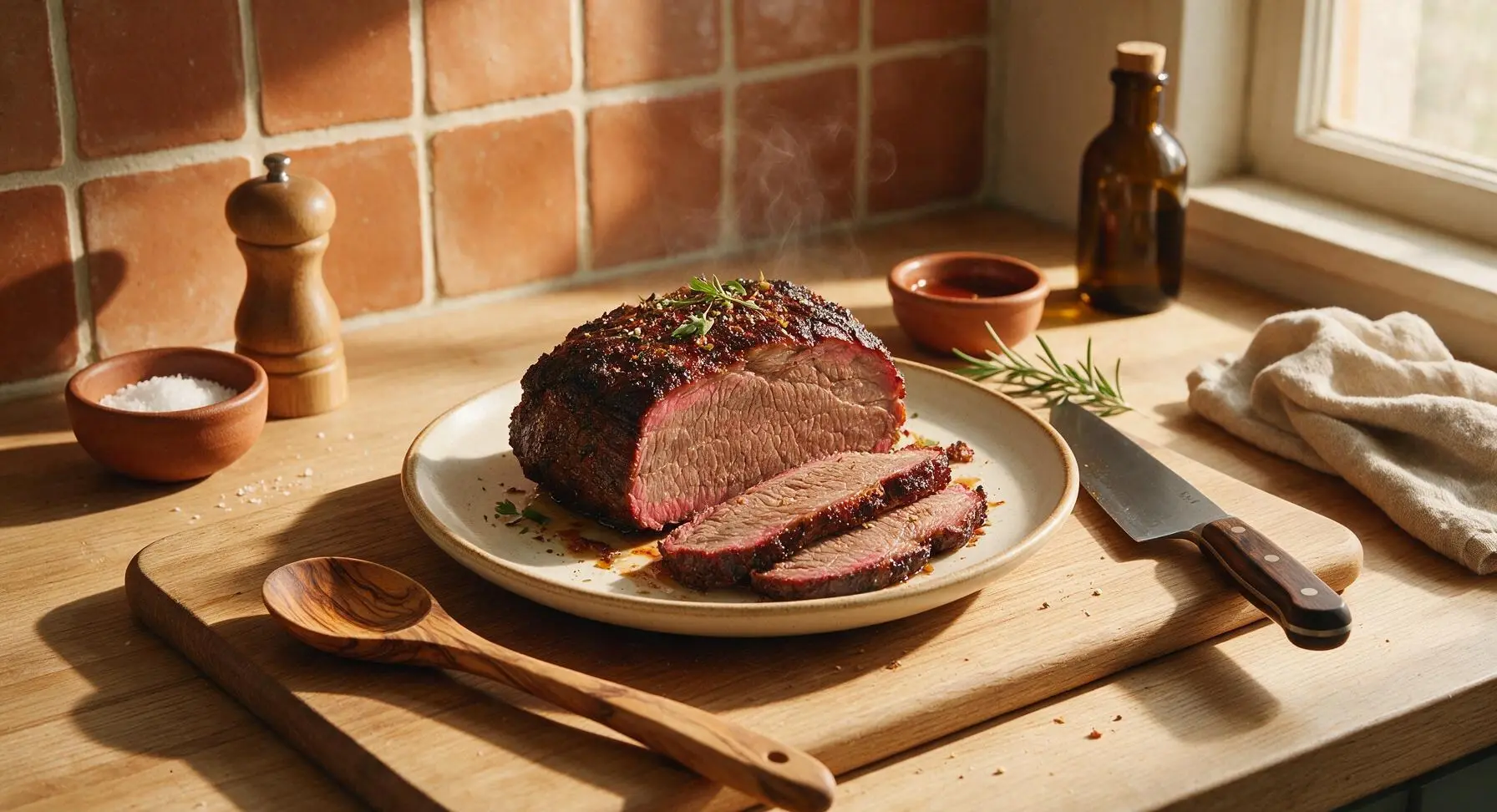
smoked beef roast

title 1
smoked beef roast
⏱️ cook time 4 hours
🍽️ servings 6
⚡ Difficulty medium

intro

Tender, juicy smoked beef roast with a crisp mahogany bark, subtle pink smoke ring, and rich wood-fired flavor, perfect for casual summer backyard gatherings.

Ingredients
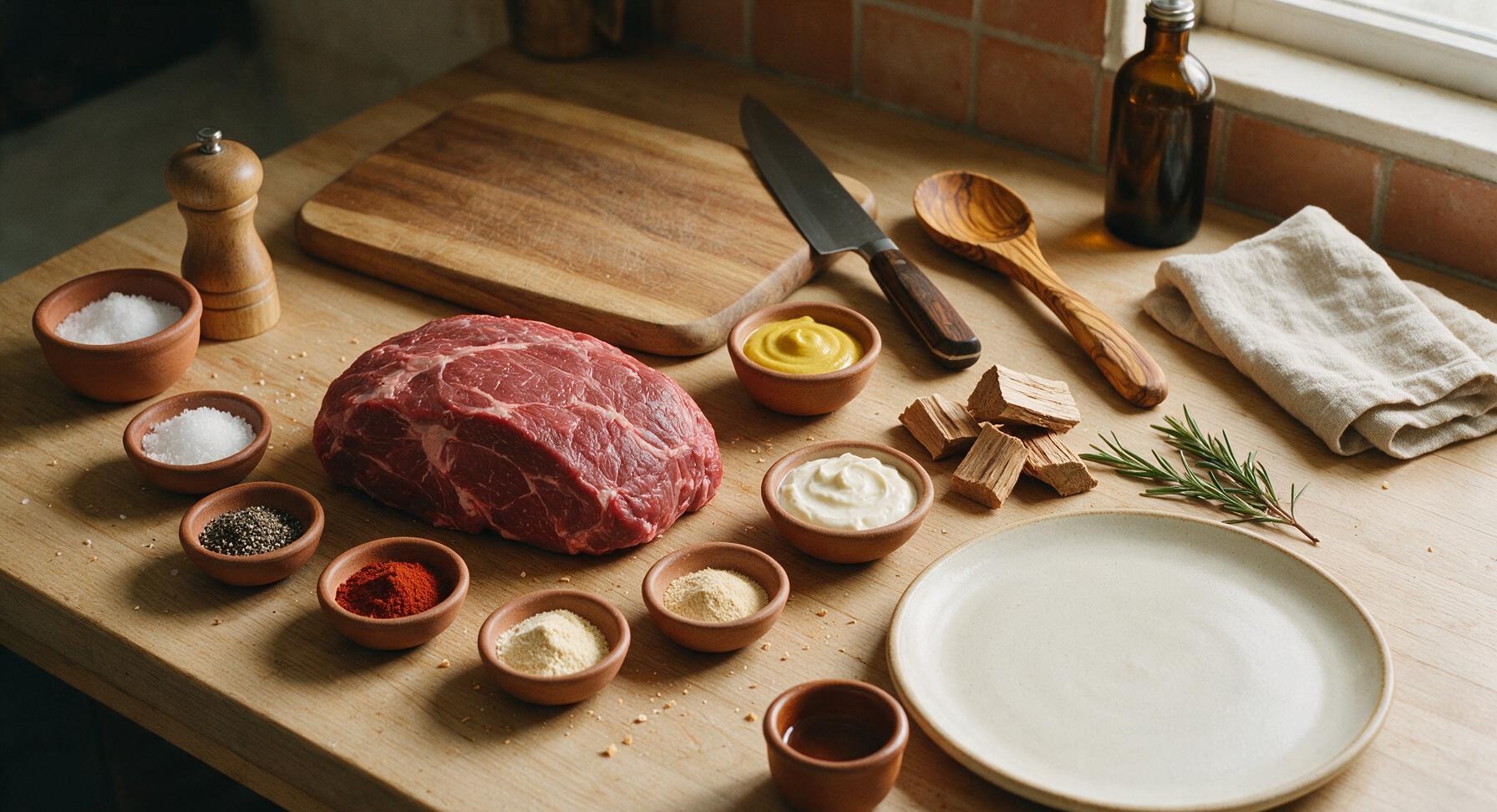
Boneless beef chuck roast 3 lb (1.36 kg)
Coarse kosher salt 2 tbsp
Freshly cracked black pepper 1 tbsp
Smoked paprika 1 tbsp
Garlic powder 1 tsp
Onion powder 1 tsp
Yellow mustard 2 tbsp
Apple wood smoking chunks 4 (3-inch pieces)
Prepared horseradish cream 1/4 cup
Fresh rosemary sprigs 2

Steps

1

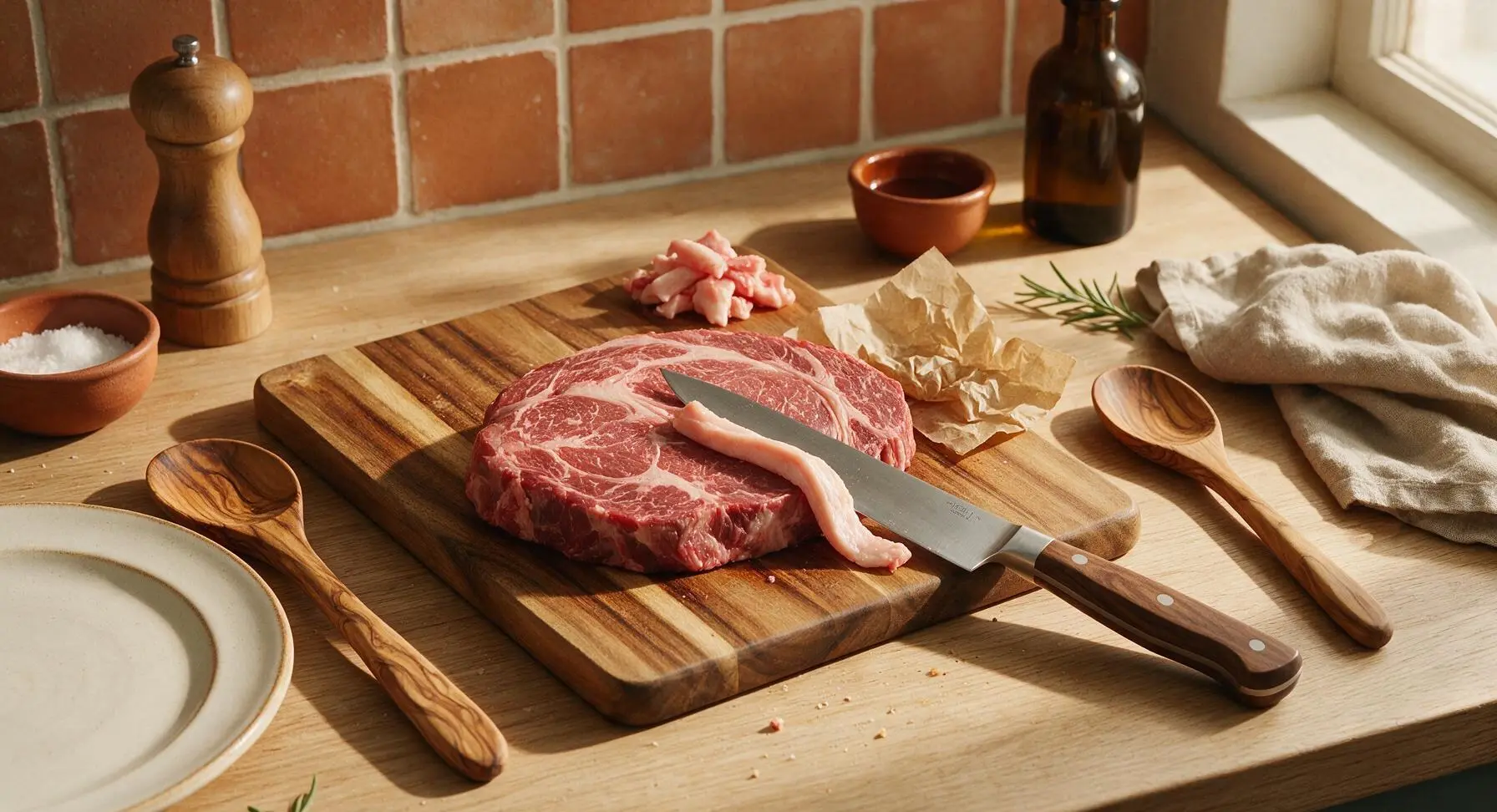
Trim Excess Fat

Place the 3lb boneless beef chuck roast on the acacia wood cutting board. Use the 8-inch walnut-handled slicing knife to trim the thick outer fat cap down to a uniform 1/4-inch thickness, removing any hard, waxy fat chunks and thin silverskin from the meat surface. Pat the entire roast completely dry with sheets of brown paper towel, until the surface feels dry and slightly tacky to the touch.
Step 1
step1:Trim Excess Fat
2

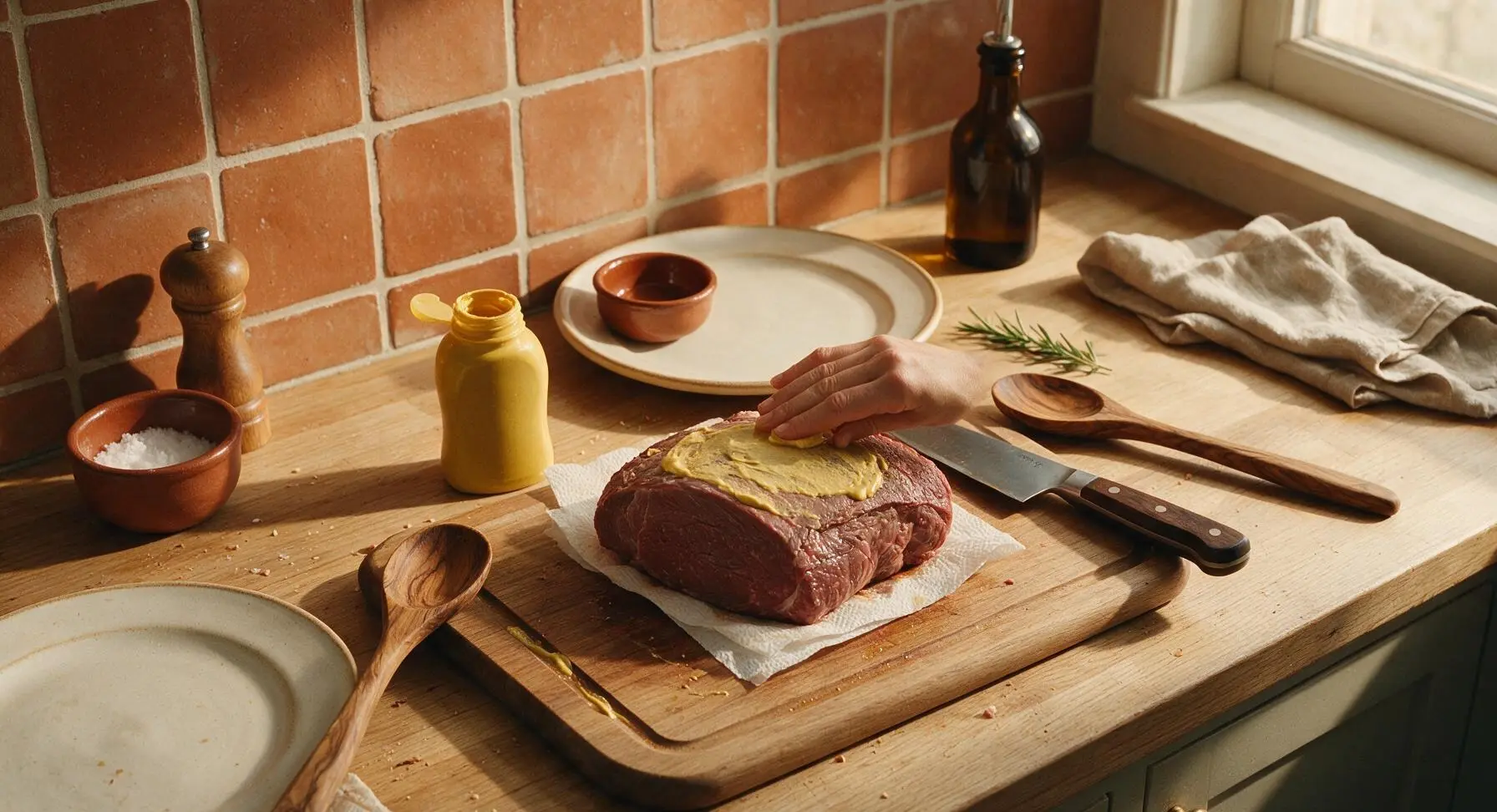
Coat with Mustard Binder

Squeeze 2 tablespoons of plain yellow mustard directly onto the dried roast surface. Use clean hands to spread the mustard into a thin, even layer across every side of the roast, including the cut ends. The mustard will not impart a strong tangy flavor once cooked, but acts as a natural adhesive to help the dry rub adhere tightly and form a crisp, uniform bark.
Step 2
step2:Coat with Mustard Binder
3

Season with Dry Rub

In the small matte stainless steel mixing bowl, combine 2 tablespoons coarse kosher salt, 1 tablespoon freshly cracked black pepper, 1 tablespoon smoked paprika, 1 teaspoon garlic powder, and 1 teaspoon onion powder, stirring to mix evenly. Sprinkle the rub generously over every surface of the mustard-coated roast, pressing gently with your fingers to help the spices adhere fully. No bare patches of mustard should be visible once coated. Let the seasoned roast rest at room temperature for 45 minutes to take the chill off, as the rub mixes with meat moisture to form a sticky, spiced paste on the surface.
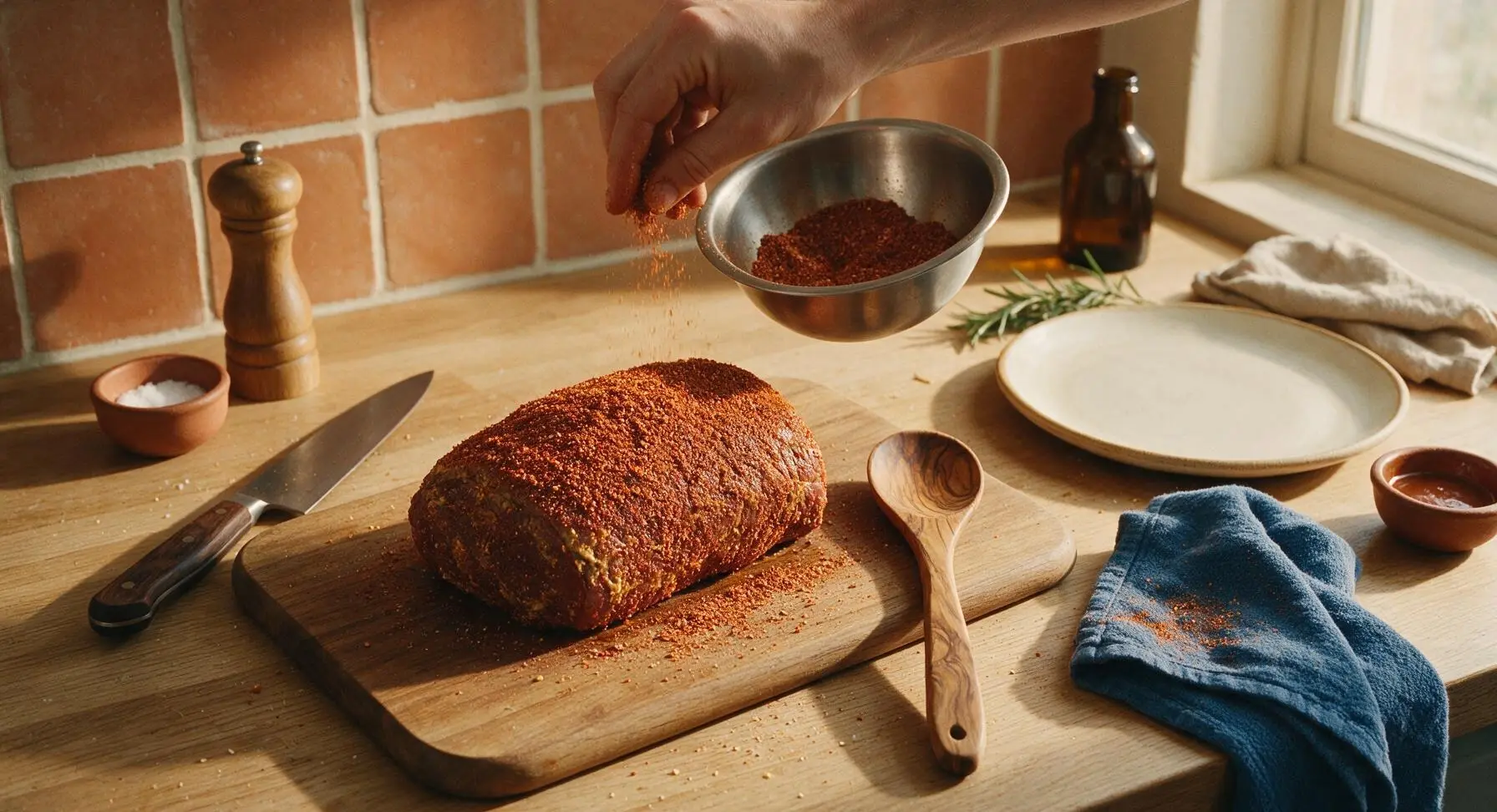
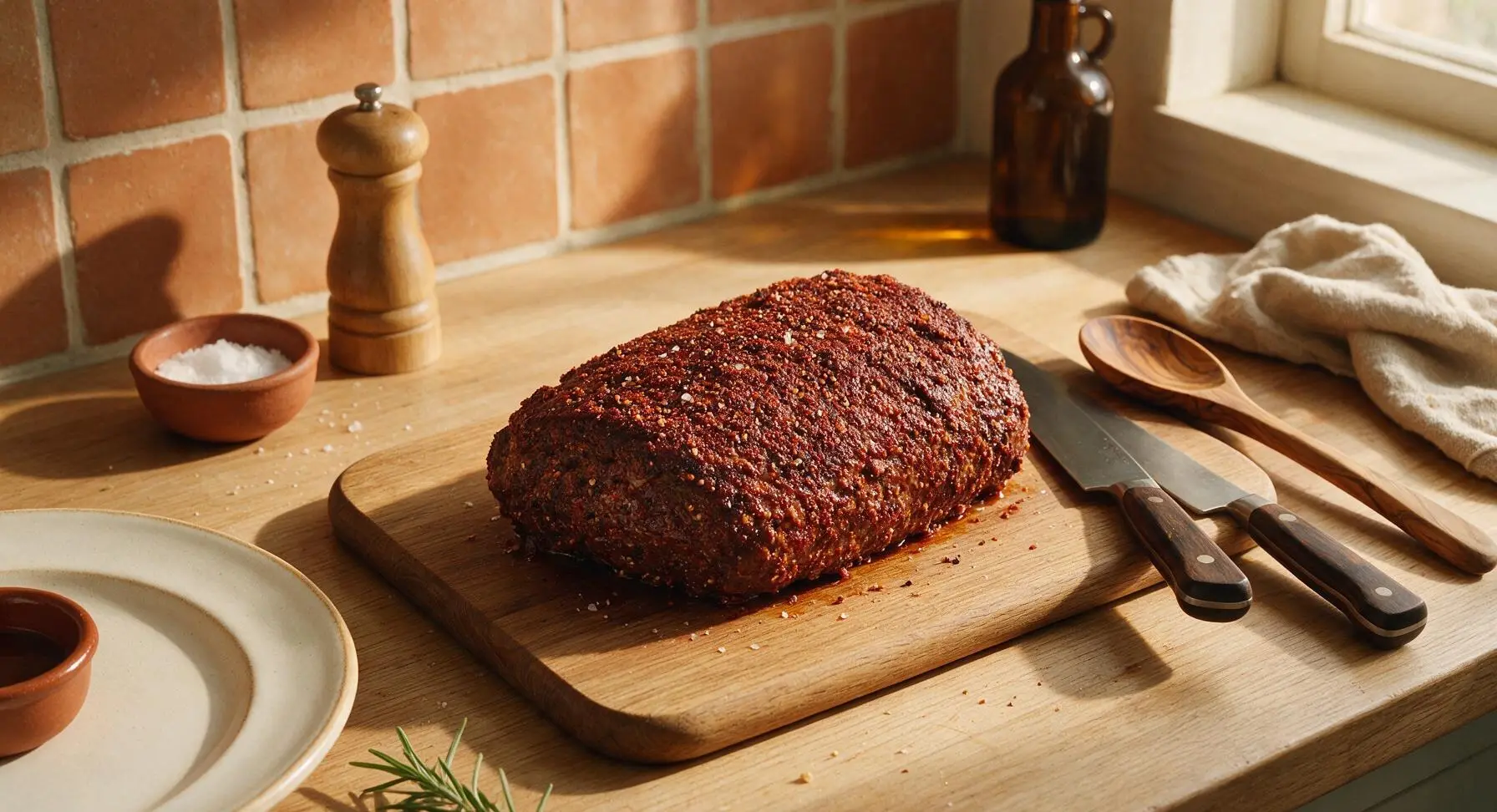
Step 3
step3:Season with Dry Rub
Step 3
step3:Season with Dry Rub
4

Preheat Smoker

Preheat your offset or pellet smoker to 225°F (107°C), set up for indirect heat cooking. Add the four apple wood chunks to the fire box once the smoker reaches target temperature, waiting until thin, pale blue smoke begins to wisp from the top vent (thick, billowing white smoke indicates incomplete combustion and will leave bitter, ashy flavor on the beef). Place a full water pan in the smoker chamber to maintain a moist cooking environment and stabilize temperature.
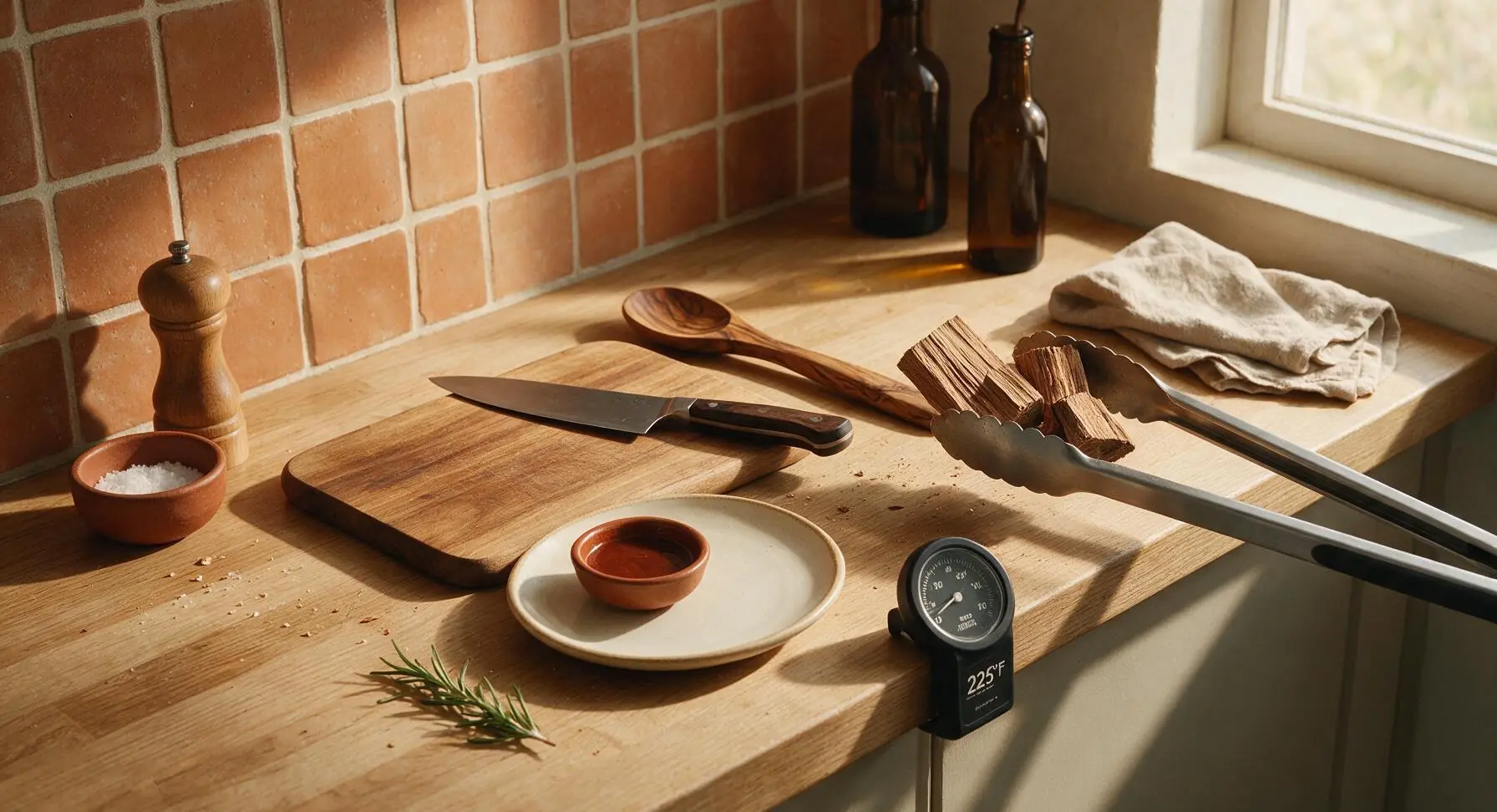
Step 4
step4:Preheat Smoker
5

Smoke to Set Bark

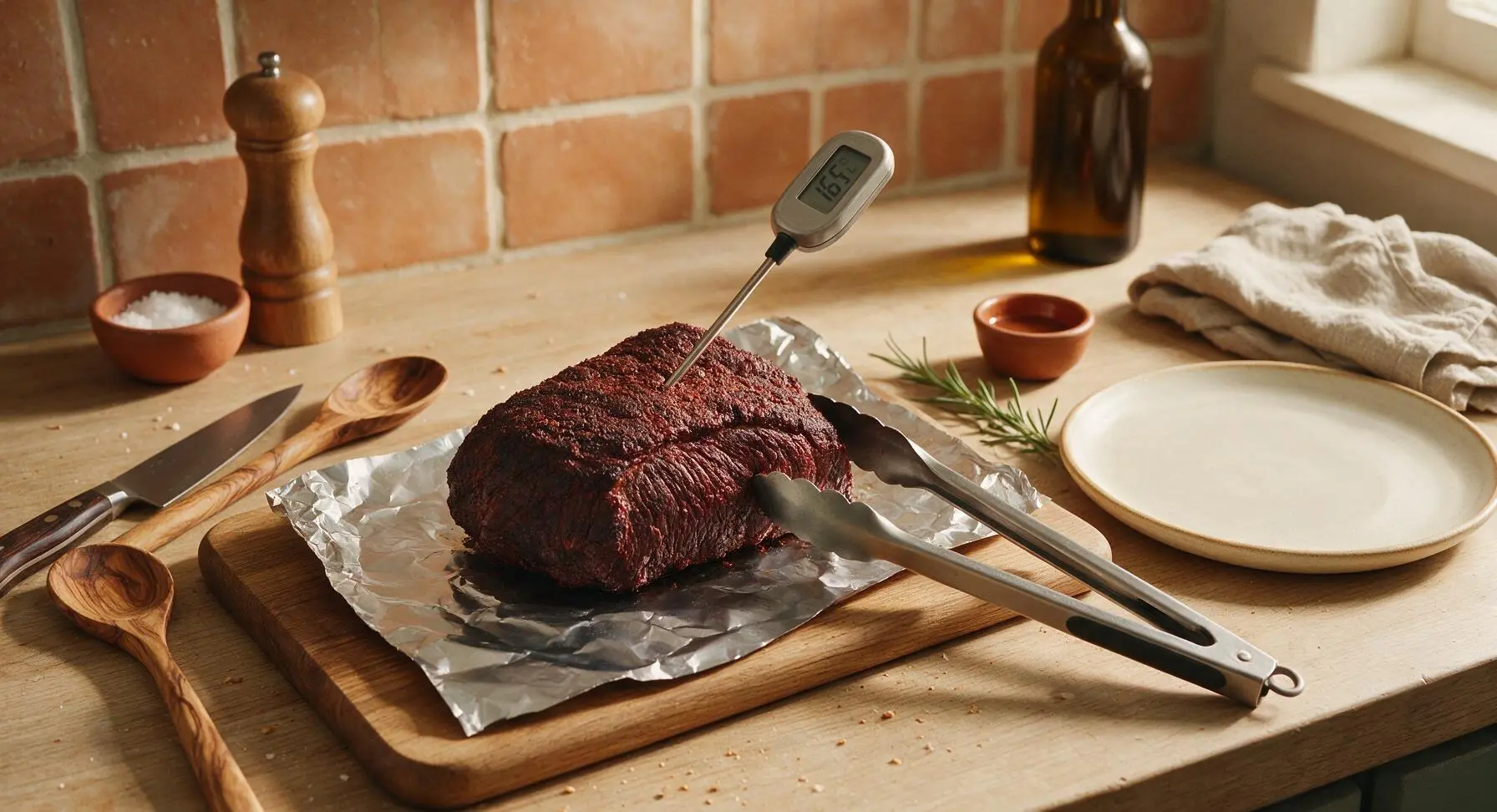
Place the seasoned roast directly on the smoker grate, fat side up, positioned away from direct heat. Close the smoker lid and maintain a steady 225°F temperature, adding small additional wood chunks as needed to keep thin blue smoke flowing. Smoke the roast until the digital instant-read thermometer inserted into the thickest part (avoiding fat pockets) reads 165°F (74°C), approximately 2.5 to 3 hours, when the outer bark is firm and deep mahogany.
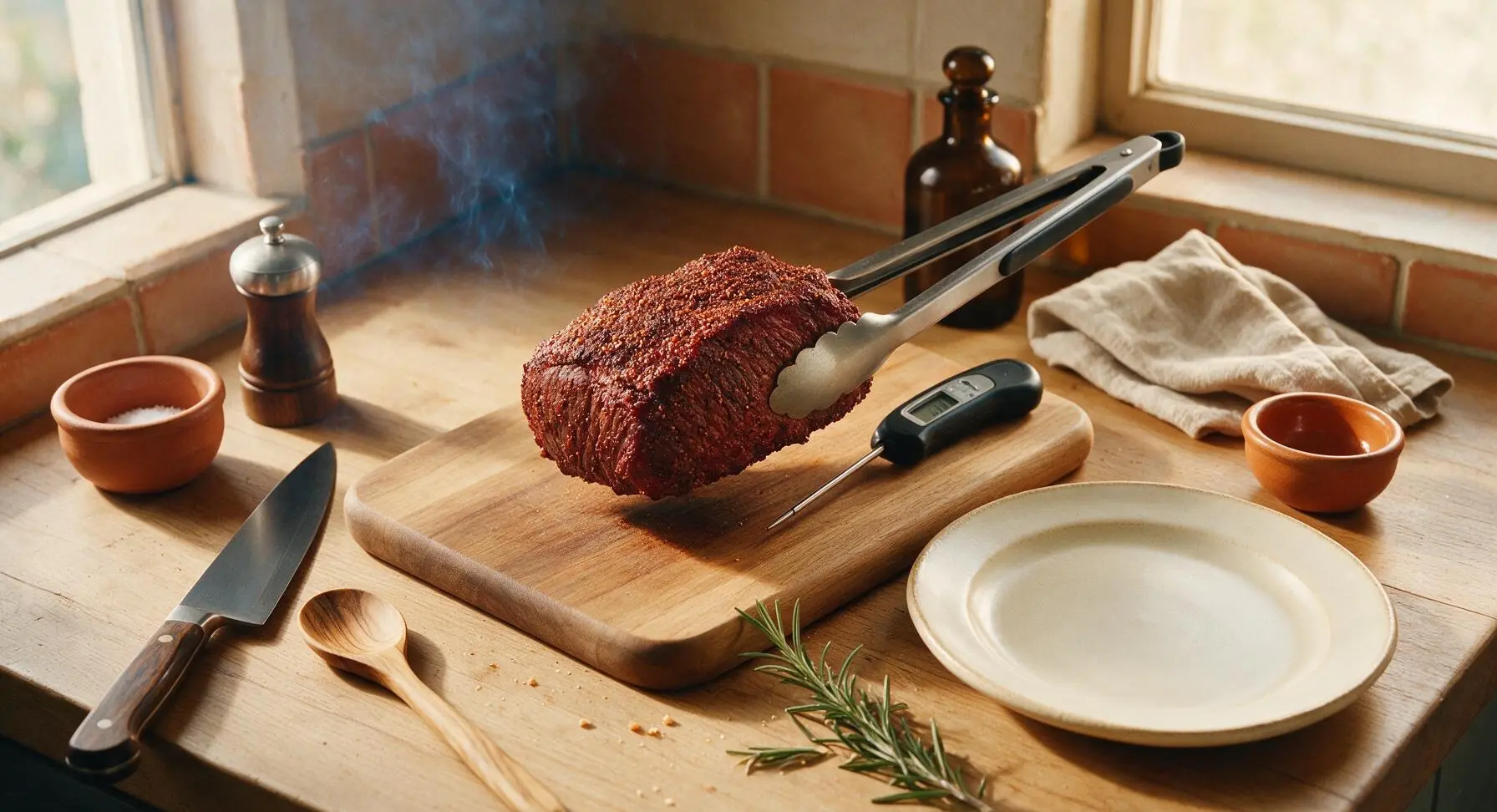
Step 5
step5:Smoke to Set Bark
6

Wrap for Tender Finish

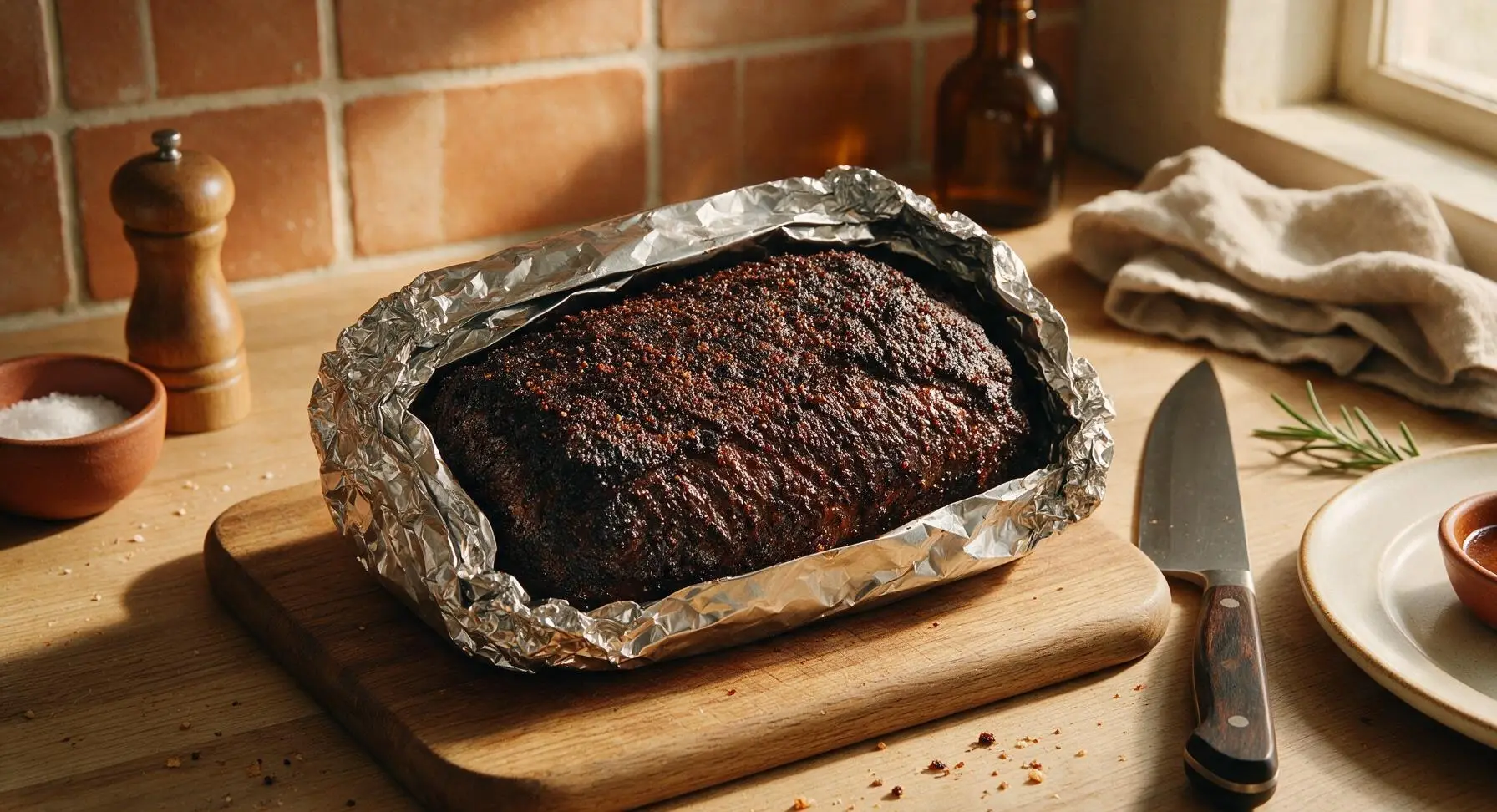
Once the roast reaches 165°F internal temperature and has a firm, dark mahogany bark on all surfaces, use the BBQ tongs to remove it from the smoker and place it on a double layer of heavy-duty aluminum foil on the cutting board. Wrap the roast tightly in the foil, crimping the edges fully to seal in steam, then return it to the smoker. Continue cooking at 225°F until the internal temperature reaches 200°F (93°C), when the thermometer probe slides into the meat with no resistance, like sliding into soft butter, about 1 to 1.5 additional hours.
Step 6
step6:Wrap for Tender Finish
Step 6
step6:Wrap for Tender Finish
7

Rest Before Slicing

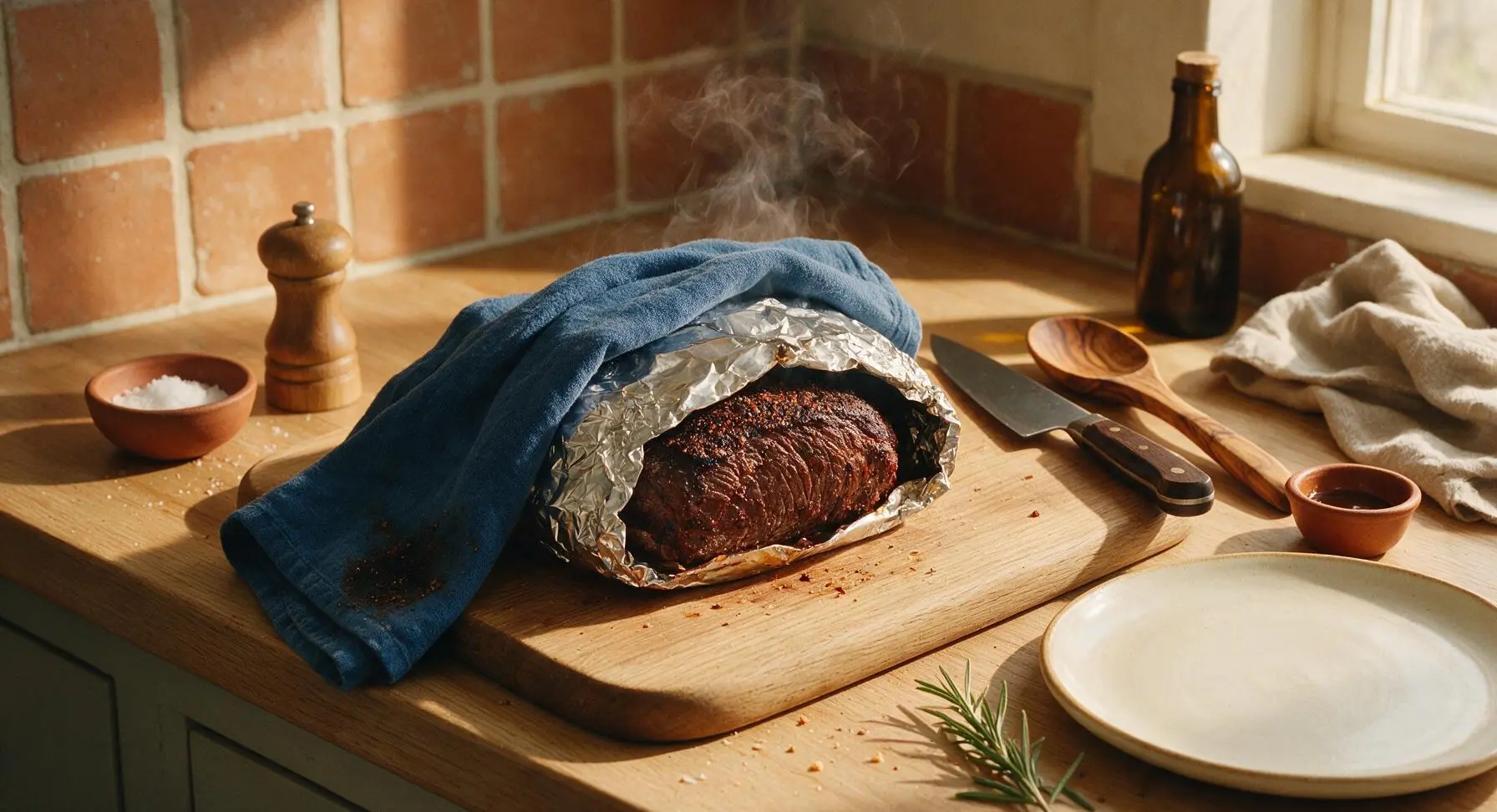
Once the roast hits 200°F internal temperature and the probe slides in easily, use tongs to remove the foil-wrapped roast from the smoker and place it back on the acacia cutting board. Loosen the foil seal slightly to let a small burst of steam escape, then drape the indigo cotton towel over the foil packet to hold gentle heat. Let the roast rest for a full 45 minutes: this allows muscle fibers to relax and reabsorb juices, ensuring every slice is moist instead of leaking juice onto the plate.
Step 7
step7:Rest Before Slicing
8

Slice and Serve

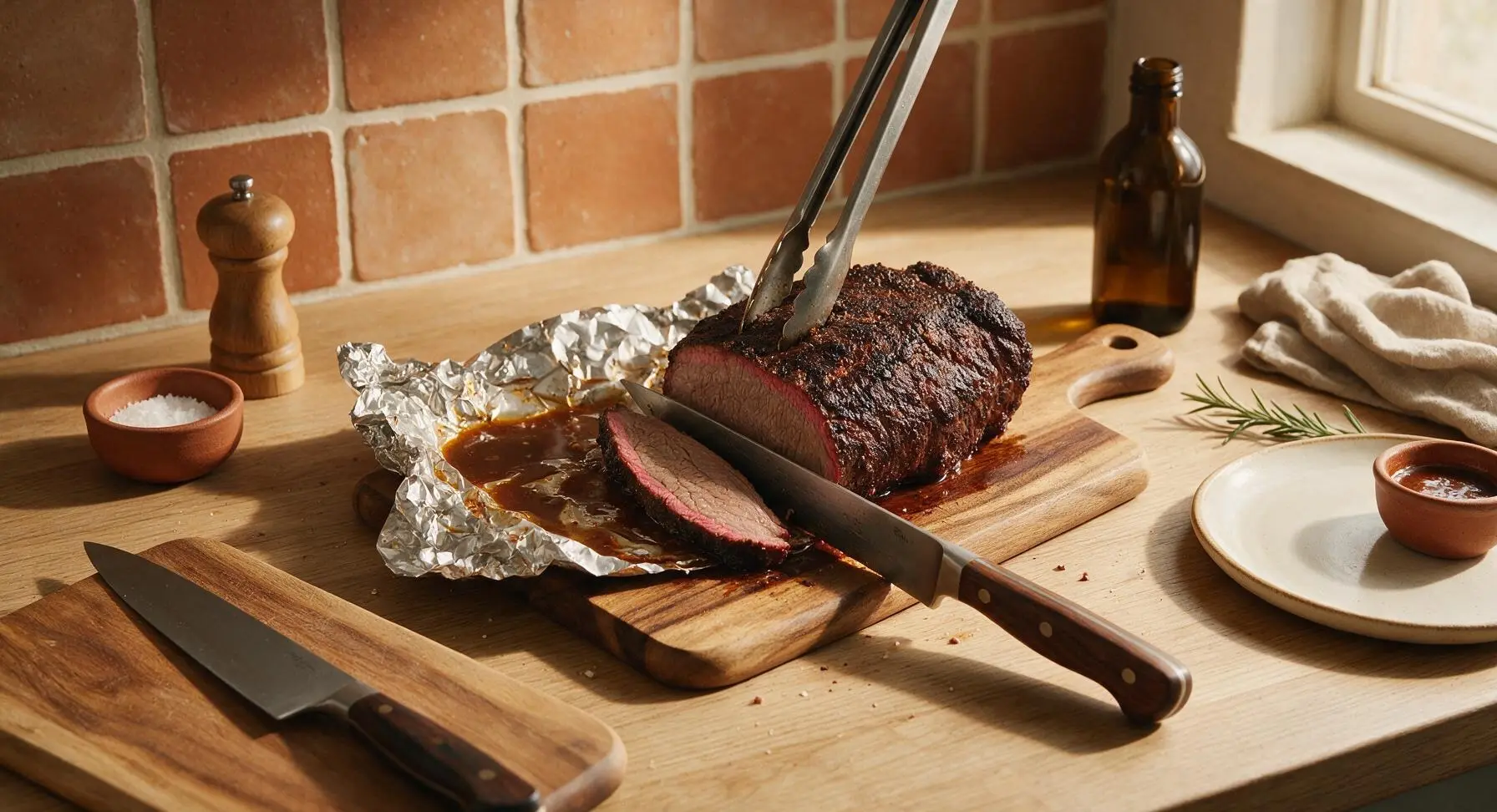
Unwrap the rested roast, pouring the rich, beefy collected au jus from the foil into a shallow pool on the matte warm white ceramic oval serving platter. Hold the roast steady with the BBQ tongs, then use the walnut-handled slicing knife to cut the beef against the grain into uniform 1/4-inch thick slices. Arrange the slices in a gentle fanned pattern across the platter, tuck fresh rosemary sprigs at the left edge, and set the small terracotta ramekin of horseradish cream at the right edge for serving.
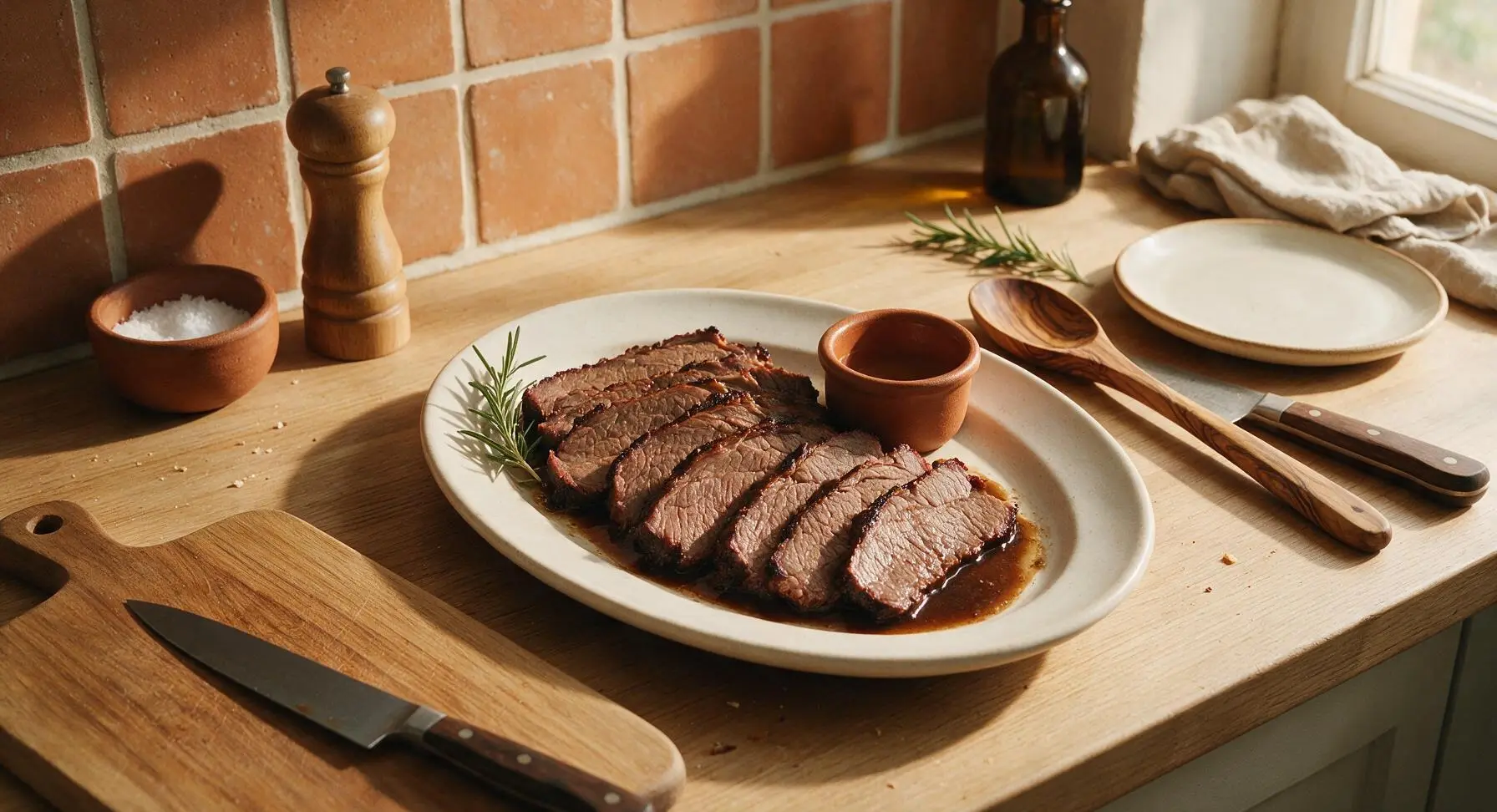
Step 8
step8:Slice and Serve
Step 8
step8:Slice and Serve

Tips

1.Always pat the beef completely dry before applying the mustard binder: any remaining surface moisture will prevent the rub from forming a crisp, firm bark, leading to a soft, mushy outer layer instead of the signature textured smoked crust.
2.Wait for thin, pale blue smoke before placing the beef in the smoker: thick, billowing white smoke comes from incompletely burned wood, and will leave a bitter, ashy aftertaste on the meat that cannot be fixed once absorbed.
3.Never skip the full 45-minute rest period: cutting into the roast immediately after cooking will cause all the hot, flavorful juices to run out onto the cutting board, leaving you with dry, bland beef even if you hit the perfect internal temperature.
✨ You May Also Like

BBQ & Grilling
🍜 United States

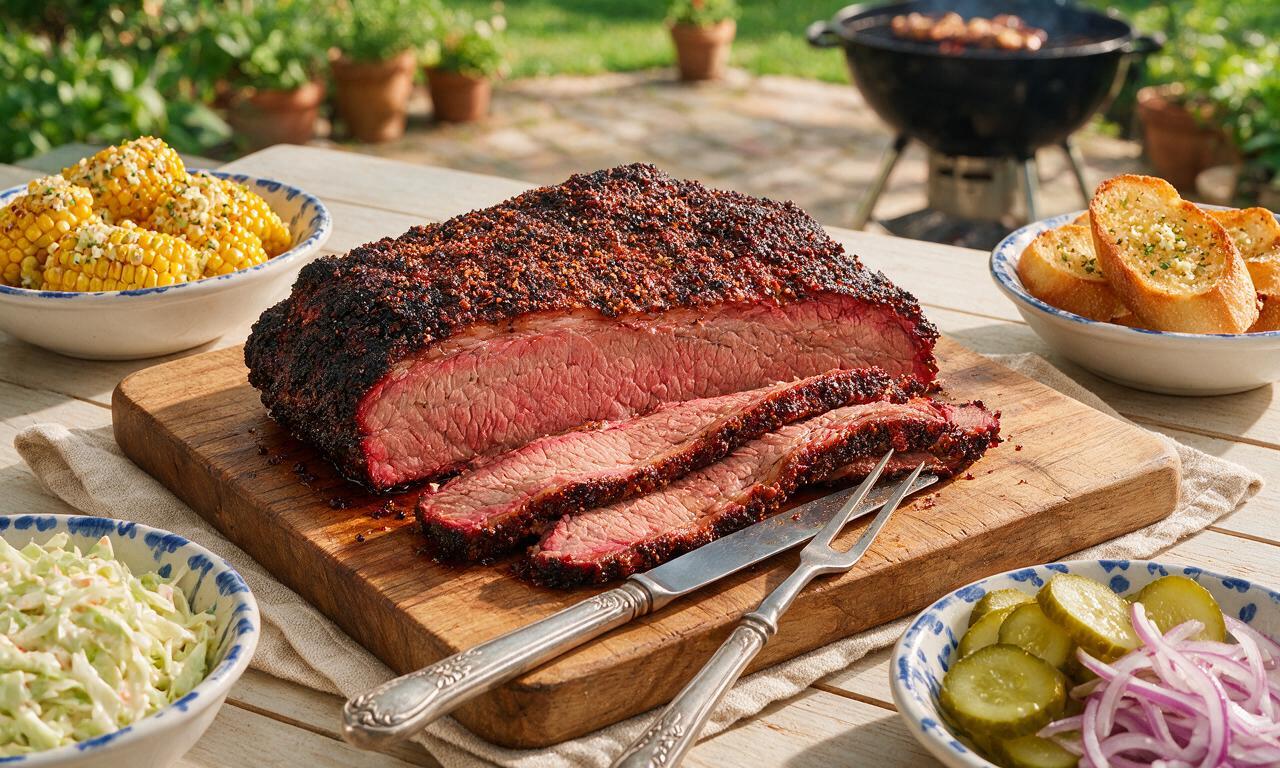
Tender, melt-in-your-mouth beef brisket with a crisp, spiced bark, slow-smoked to deep smoky perfection, the iconic centerpiece of Texas backyard barbecue.

⏱️ 12 hours BBQ & Grilling ★ 4.4
BBQ & Grilling
🍜 Korea

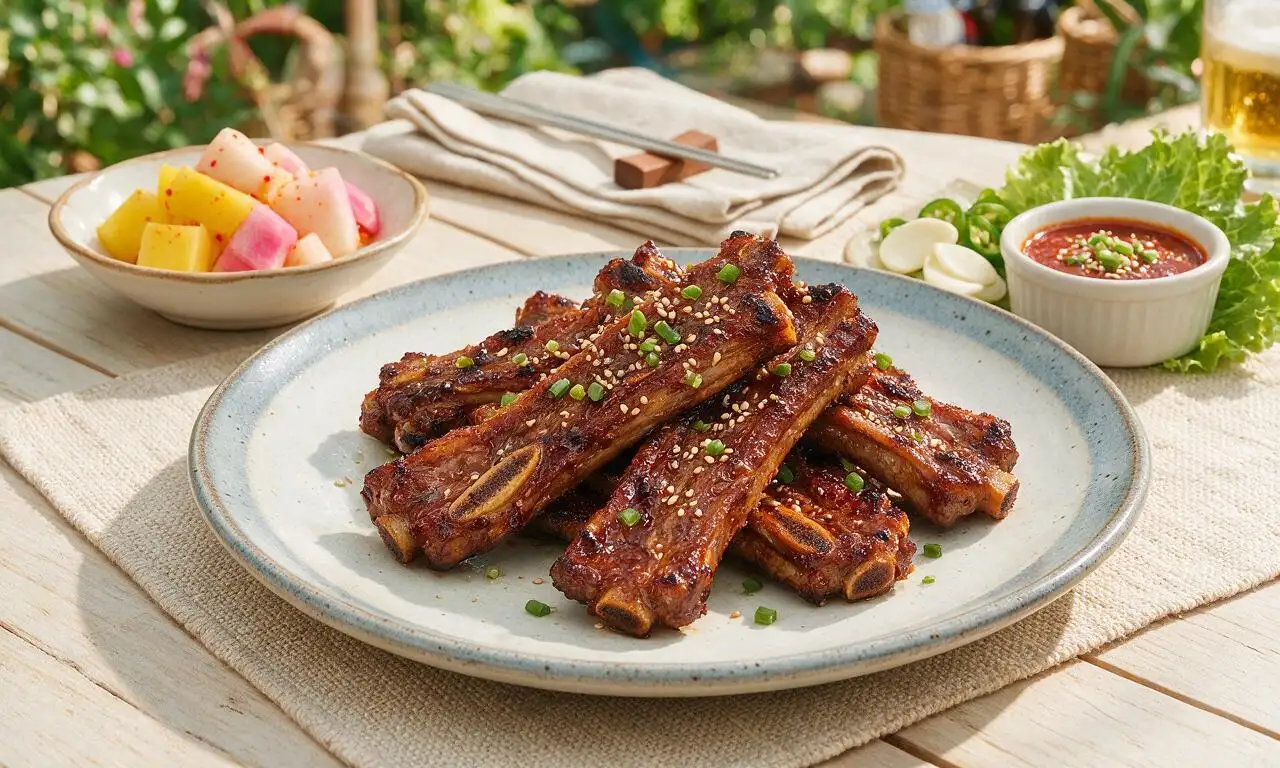
Tender, sweet-savory marinated beef short ribs, a beloved Korean BBQ staple with caramelized, slightly charred edges and deep umami flavor, perfect for outdoor summer gatherings.

⏱️ 4 hours 2BBQ & Grilling ★ 4.8
BBQ & Grilling
🍜 United States

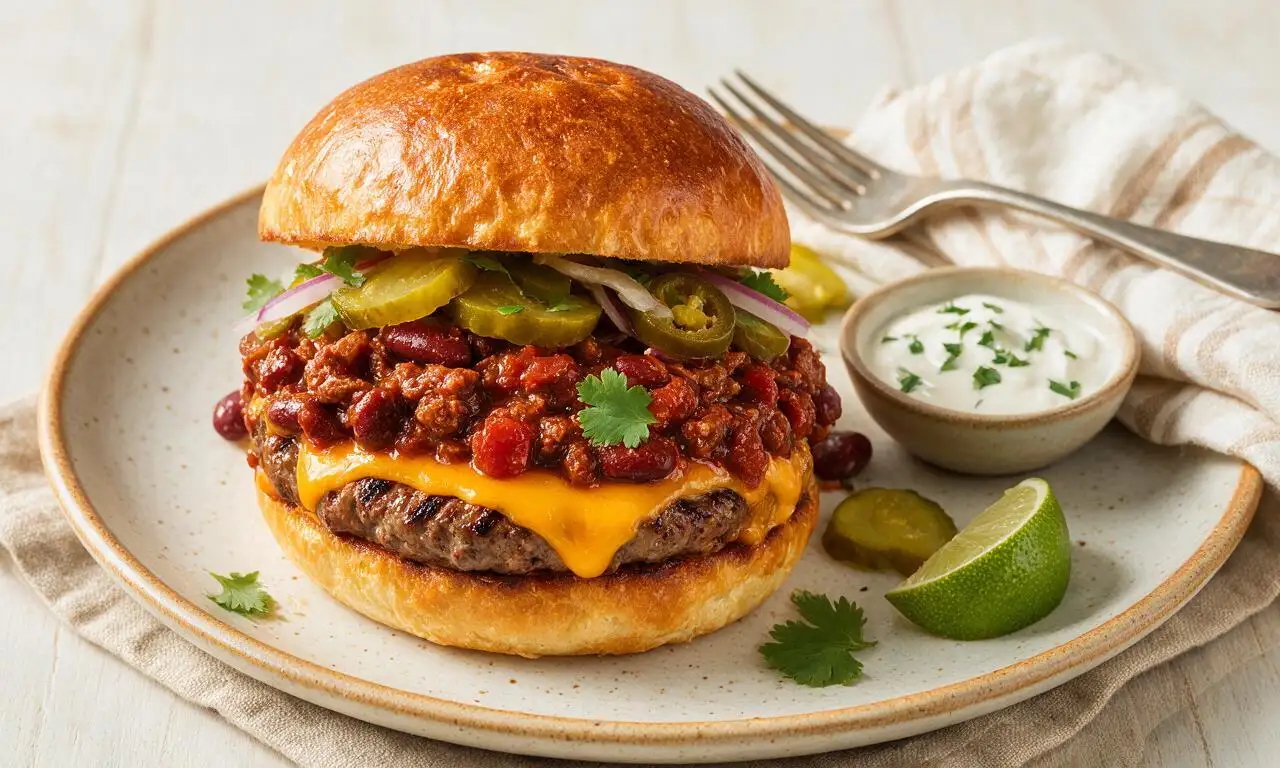
Juicy grilled beef patties topped with smoky homemade chili, melted cheddar, and tangy pickles on toasted brioche buns for a hearty, flavor-packed handheld meal.

⏱️ 40 minuteBBQ & Grilling ★ 4.7
BBQ & Grilling
🍜 United States

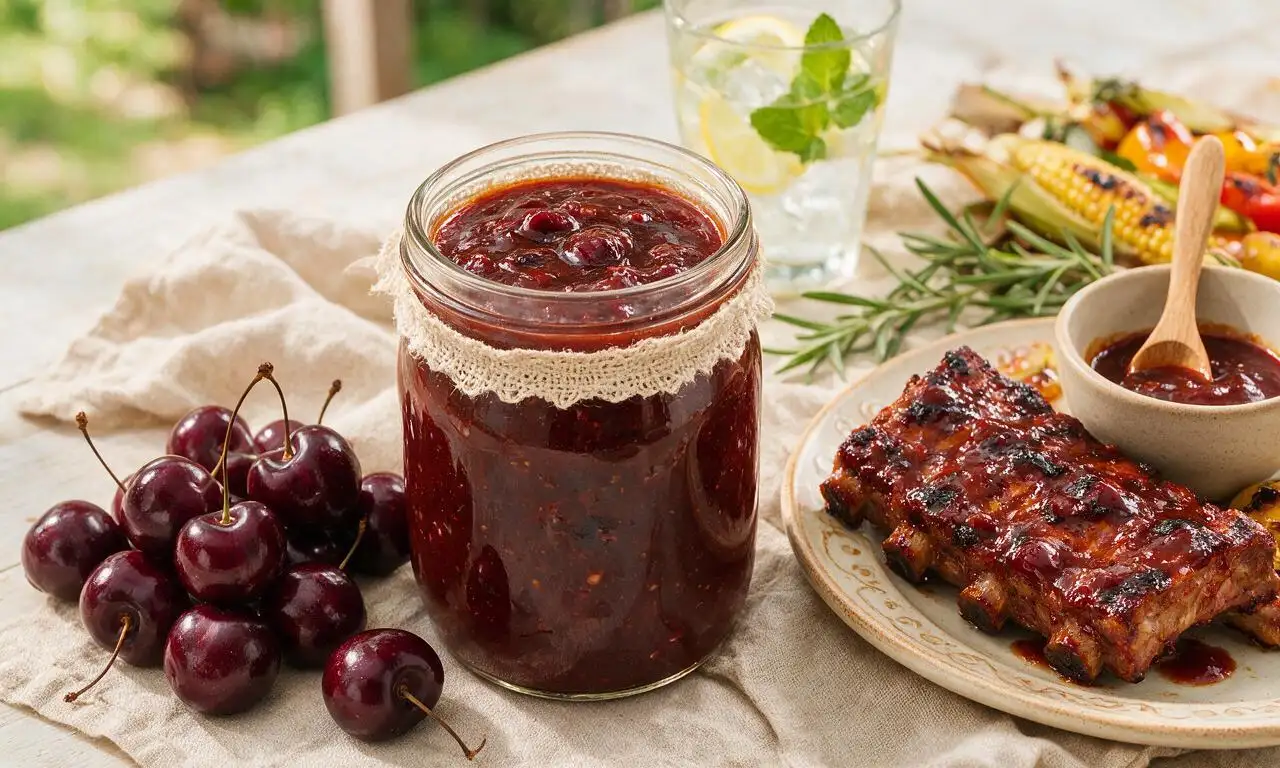
A sweet, smoky, tangy BBQ sauce brightened with peak-season dark cherries, ideal for glazing grilled ribs, chicken, pork, or summer roasted veggies.

⏱️ 35 minuteBBQ & Grilling ★ 4.7
BBQ & Grilling
🍜 United States

Rich, smoky, slightly sweet homemade bourbon BBQ sauce with deep caramel notes, ideal for glazing grilled ribs, chicken, and burgers at cookouts.

⏱️ 25 minuteBBQ & Grilling ★ 4.7
BBQ & Grilling
🍜 United States

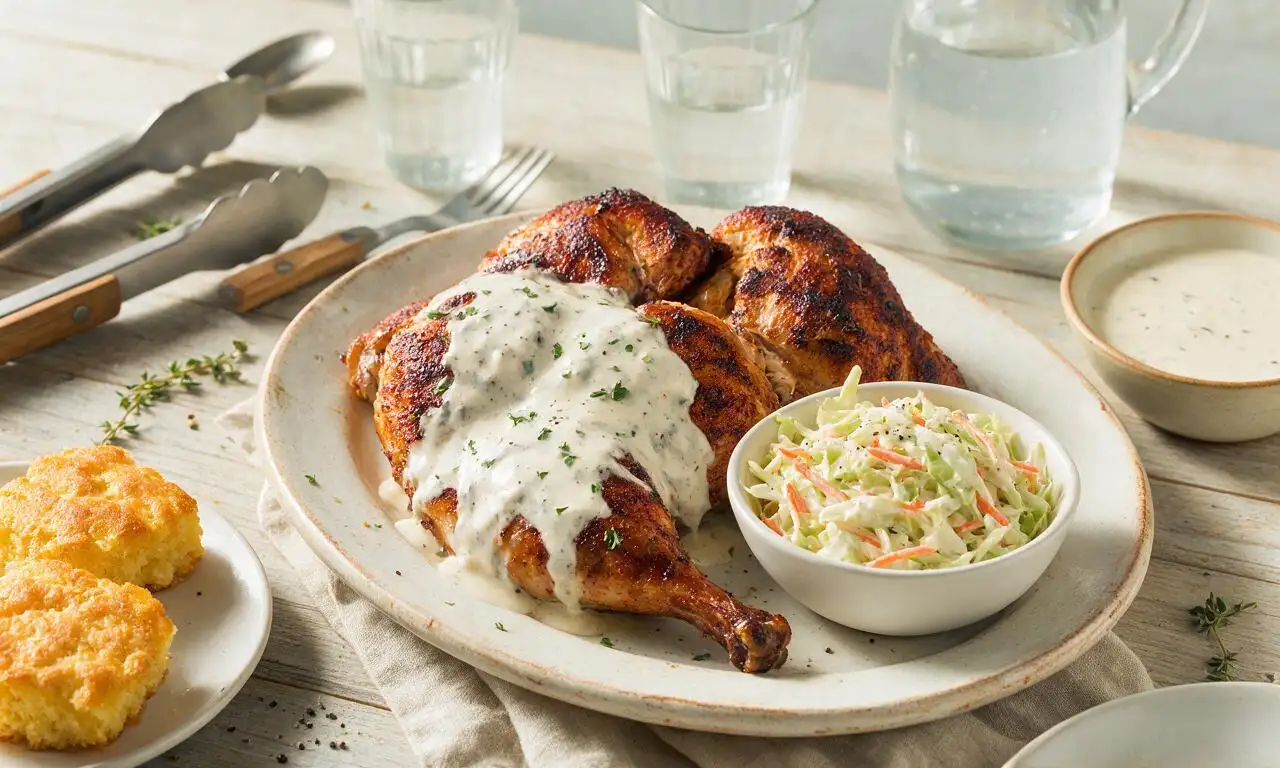
Iconic Alabama-style BBQ featuring tender hickory-smoked chicken slathered in tangy creamy white sauce, a beloved regional Southern cookout staple.

⏱️ 3 hoursBBQ & Grilling ★ 5

smoked beef roast:Frequently Asked Questions

1.What cut of beef works best for Texan-style smoked beef roast, and why? ▾
Boneless beef chuck roast is the ideal pick for this recipe. Its even marbling and abundant tough connective tissue break down slowly during low-and-slow smoking to create juicy, pull-apart tender texture without drying out. Aim for a 3–4 pound roast with thin, evenly distributed fat streaks rather than thick, hard fat caps that won’t render properly.
2.How much fat should I trim off the chuck roast before smoking? ▾
Trim any thick, hard fat patches thicker than 1/4 inch, as these won’t fully render during long smoking and will leave a chewy, unpleasantly greasy texture on your finished bark. Leave thin, evenly distributed fat layers intact, as these melt slowly to baste the meat as it cooks and help your dry rub adhere for a crisp, flavorful crust.
3.What’s the authentic dry rub ratio for this Texan smoked roast? ▾
Stick to the classic no-fuss Texas rub ratio for true regional flavor: 3 parts coarse kosher salt, 3 parts freshly cracked black pepper, 1 part smoked paprika, 1 part garlic powder. Skip sugary additives, as sugar burns easily over long smoke times and distracts from the rich, savory beef and natural wood smoke flavor at the core of this dish.
4.How far in advance should I apply the dry rub to the roast? ▾
If you’re short on time, apply the rub 1–2 hours before smoking, letting the roast rest at room temperature so salt draws out surface moisture that dissolves the rub to form a sticky base for bark. For deeper, more even seasoning, apply the rub the night before, wrap the roast, and let it rest in the refrigerator until you’re ready to cook.
5.What type of wood gives the most authentic Texas smoke flavor? ▾
Post oak is the traditional Texas gold standard for smoked beef, with a mild, earthy, well-balanced smoke that doesn’t overpower the natural flavor of the meat. If you can’t source post oak, hickory works as a reliable close substitute. Avoid strong, resinous woods like pine, or overly sweet fruit woods that clash with this savory, beef-forward profile.
6.What smoker temperature should I maintain for the best results? ▾
Hold your smoker at a steady 225°F to 250°F for the entire cook for low-and-slow perfection. This temperature range is hot enough to slowly break down tough connective tissue in the chuck roast without cooking the meat too quickly, which leads to dry, tough roast, plus a weak, underdeveloped smoke ring and thin, pale bark.
7.Do I need to spritz or mop the roast while it smokes? ▾
Spritzing is totally optional for this recipe, unlike more delicate smoked cuts. If you notice your bark getting overly dark or dry after the first 3 hours of open smoking, you can spritz lightly with equal parts apple cider vinegar and water every 45 minutes. Avoid over-spritzing, though, as too much moisture will soften the crisp bark you’re working to build.
8.When and how should I wrap the roast during the cook? ▾
Wrap the roast once it hits an internal temperature of 165°F, after it has developed a deep mahogany bark and moved past the cooking “stall” — the point where evaporative cooling temporarily stops temperature rise. Use uncoated butcher paper for best results, as it lets a small amount of smoke through while trapping moisture, unlike foil which can make bark soggy.
9.What internal temperature means the roast is perfectly done? ▾
Pull the roast when it hits an internal temperature of 203°F to 205°F, measured with an instant-read thermometer in the thickest part of the meat, away from any fat pockets. At this temperature, all tough connective tissue has melted into rich, juicy gelatin, but the meat hasn’t cooked so long that it dries out and becomes stringy.
10.How do I get that iconic pink smoke ring under the bark? ▾
That subtle pink ring just under the bark forms when wood smoke reacts with surface moisture on the meat to create nitric oxide, which locks in that pink hue before the meat cooks through. To encourage a strong, even ring, put the roast on the smoker cold, use clean-burning hardwood, and avoid wrapping the meat too early in the cook.
11.How long should I expect a 3–4 pound roast to take to smoke? ▾
Plan for roughly 1.5 hours of total cook time per pound of roast when holding a steady 225°F, so a 3–4 pound roast will take 4.5 to 6 hours total, including the wrapped portion of the cook. Keep in mind that cook times vary based on smoker consistency, outdoor weather, and individual roast shape, so always prioritize internal temperature over the clock.
12.Is resting the roast after smoking really necessary, and how long should I rest it? ▾
Resting is non-negotiable for juicy, evenly textured roast! Once you pull it from the smoker, keep it wrapped in butcher paper, tuck it into a clean towel, and let it rest in an insulated dry cooler for 45 minutes to 1 full hour. This rest lets hot, melted juices redistribute back into meat fibers instead of running out when you slice.
13.Can I make this recipe if I don’t own a dedicated smoker? ▾
Absolutely! You can replicate this smoke flavor on a standard charcoal grill by setting it up for indirect heat, placing a water pan under the cool side of the grill, and adding a small handful of wood chips to the coals every 45 minutes. Hold the grill temperature steady at 225–250°F and follow all the same rub, wrap, temperature, and rest steps.
14.Why did my roast turn out tough and dry even after hours of smoking? ▾
Tough, dry roast almost always traces back to one of two common mistakes: either you pulled it too early, before tough connective tissue had time to fully break down at the 203–205°F mark, or you cooked it at too high a temperature, which squeezed moisture out of meat fibers before collagen could melt into rich, juicy gelatin. Don’t rush the low-and-slow process.
15.Why didn’t my roast form that crisp, dark mahogany bark? ▾
Soft, pale bark usually happens if you wrapped the roast too early, before the rub had time to set into that sticky, dark crust; over-spritzed the meat during the open-smoke phase, leaving too much surface moisture; or used too much sugar in your rub that melted instead of crisping. Let the roast cook unwrapped until it hits 165°F for best bark results.
16.What’s the best way to store leftover smoked beef roast? ▾
Let leftover roast cool completely within 2 hours of cooking, then wrap it tightly in plastic wrap or place it in an airtight container to store in the fridge for up to 4 days. For longer storage, wrap individual portions tightly in freezer paper and freeze for up to 3 months, reheating gently in foil in a 250°F oven to keep meat juicy.
17.What are classic Texan sides to serve with this smoked roast? ▾
Stick to simple, no-fuss traditional backyard sides to let the smoked beef be the star: creamy tangy coleslaw, dill pickle slices, thin-sliced white onion, soft buttered white bread, sweet and savory baked beans, and creamy potato salad are all iconic pairings. Skip heavy, overly sauced sides that compete with the deep wood-fired beef flavor.
18.Do I need a binder like mustard to help the rub stick to the roast? ▾
True Texas-style smoked beef doesn’t rely on mustard, mayo, or oil binders to hold rub. The moisture drawn out of the roast by the coarse salt in the rub is enough to create a sticky surface that holds seasoning perfectly through the long cook. Binders add unnecessary extra flavor that distracts from the pure beef and wood smoke profile of this dish.

Comments (8)

3 days ago

OMG, this turned out so juicy! I’ve been messing up smoked roasts for years because I’d always overcook them, but following this 4 hour cook time at the temp you recommended? Game changer. Brought it to my neighborhood potluck last weekend and people were asking for the recipe before they even finished their first bite. My picky 10 year old even went back for seconds! SO good.

2 days ago

Wait what wood did you use? I usually go with mesquite for Texan stuff but I was worried it’d be too strong for a roast this size.

2 days ago

So glad it was a hit at the potluck! Mesquite works great if you like that bold smoky flavor, but a post oak mix is a little milder if you’re serving folks who prefer less intense smoke. Just be sure to let it rest the full 30 minutes after pulling it off the smoker!

1 week ago

I made this on Sunday for my weekly meal prep, and it held up perfectly all week long! Sliced it thin for sandwiches, tossed chunks into salads, even heated a few slices up for quick breakfast tacos with eggs. The rub ratio is spot on, not too salty, just enough paprika and garlic kick. Will absolutely be adding this to my monthly rotation.

yesterday

First time ever smoking any kind of roast, I was so nervous! Mine came out a little darker than the photos but the flavor was incredible. My whole family raved about it at Sunday dinner, even my mother in law who’s super hard to impress. Only question – should I wrap it in butcher paper halfway through like I do with brisket?

30 minutes ago

Great job on your first smoked roast! That dark bark is totally normal and part of what makes it so delicious, don’t stress about it. Wrapping in butcher paper at the 2 hour mark is totally fine if you want to soften the bark a little and speed up cook time, just make sure your internal temp hits 203°F before pulling it.

2 weeks ago

Made this for my husband’s birthday dinner and he swears it’s better than the BBQ joint we drive 45 minutes to! I used a chuck roast like the recipe said, let it sit in the dry rub overnight, and smoked it over hickory. The only thing I changed was adding a little extra brown sugar to the rub because we love that sweet-savory vibe. 10/10, would recommend!

1 week ago

Ooh adding extra brown sugar is genius! I’m making this for my dad’s retirement party next weekend, I’m definitely stealing that tip.

5 days ago

How big of a roast did you use? I’ve got a 5lb one in the freezer I’m planning to use this weekend, just trying to figure out if I need to adjust cook time.

5 days ago

Took this up to our mountain cabin last weekend and smoked it on our little portable smoker. It was so easy to prep ahead of time, and we ate like kings after a long day of hiking. Even my roommate who swears she ‘doesn’t like red meat’ had two helpings. Will be making this on every camping trip from now on!

3 days ago

Portable smoker recipe win! I’ve been looking for something that doesn’t require a ton of fancy ingredients to make on our trips, this is perfect. Thanks for sharing how it turned out at altitude!

2 hours ago

My kids loved it! I was worried the smoky flavor would be too much for them but they devoured it with roasted veggies and mashed potatoes. Leftovers made amazing sliders for their school lunches the next day. The recipe was easy to follow even with all three kids running around the house while I prepped. Total win!

1 week ago

Taste was out of this world, but my roast came out a little tougher than I expected. I think I pulled it too early because I was in a rush to get to my kid’s soccer game. Definitely going to give it another go next weekend when I’ve got time to let it cook low and slow the whole way.

5 days ago

Sorry to hear it was a little tougher this time around! The biggest trick is making sure you get that 203°F internal temp in the thickest part, and don’t skip the rest period – that’s when all the juices redistribute and the meat gets that fall-apart texture. You’ve got this next time!

2 weeks ago

Made this for our annual Memorial Day potluck and it was the first dish gone! People were hovering by the platter waiting for me to set it down. I paired it with the coleslaw recipe from your site and it was the perfect combo. Only heads up – make more than you think you need, because everyone will want seconds!

1 week ago

The coleslaw pairing is chef’s kiss! I did that too last time I made this, the tang of the slaw cuts through the rich smoky beef so well.

5 days ago

Love hearing it was the star of the potluck! You’re so right about making extra – we always cook at least a half pound per person when we serve this at gatherings because people keep coming back for more.