1.Why use bone-in ribeye for this smoked recipe instead of boneless?
▾
Bone-in ribeye is ideal here because the attached bone insulates the meat as it smokes, promoting even, gentle cooking and adding rich, deep beefy flavor you won’t get from a boneless cut. The abundant marbling common to bone-in ribeyes renders slowly during the smoke to keep the steak ultra juicy, and the bone prevents edge overcooking during the final hot sear.
2.What kind of wood works best for smoking ribeye, and can I use something other than apple wood?
▾
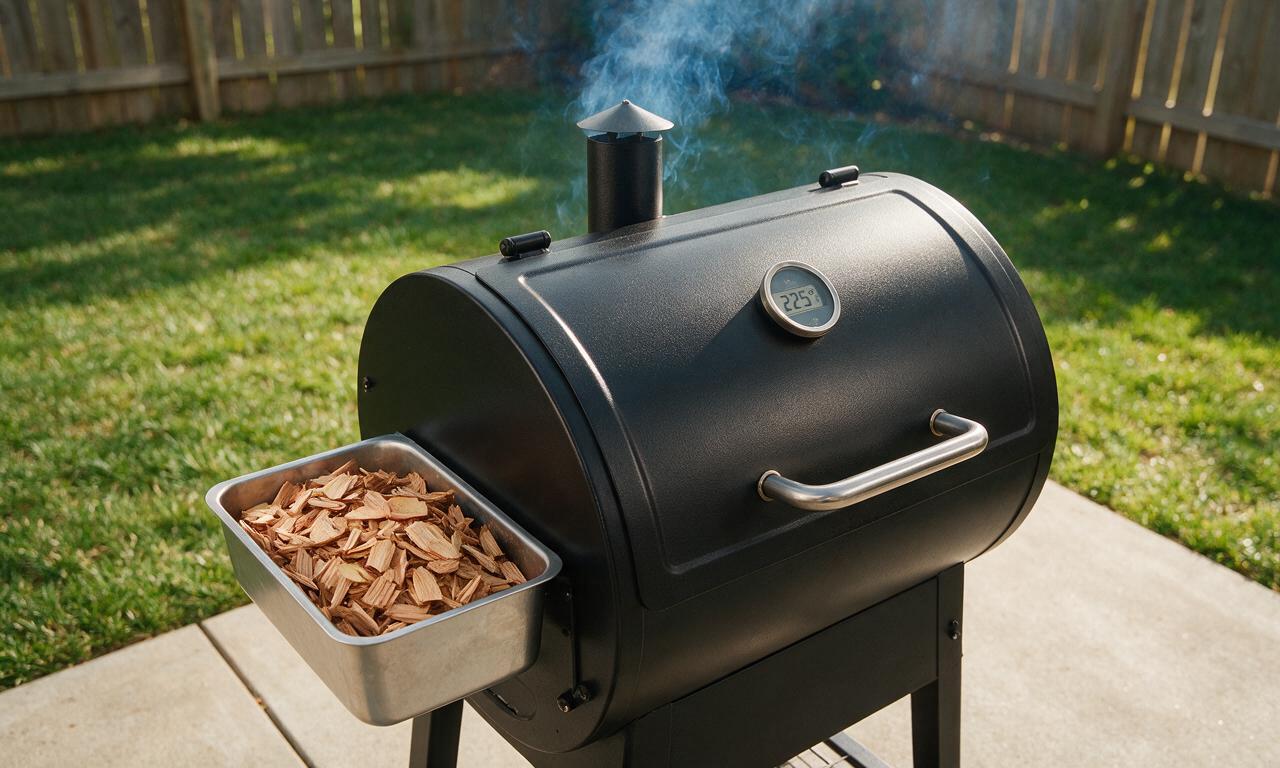
Apple wood is my top pick because it burns clean and imparts a mild, sweet, fruity smoke that doesn’t overpower ribeye’s rich beefy flavor. If you don’t have apple wood, cherry, pecan, or a light oak and fruit wood mix works great. Skip heavy, pungent woods like mesquite or straight hickory—they’ll make the steak taste bitter and drown out the subtle smoky notes we want.
3.How far in advance should I season the ribeye before smoking?
▾
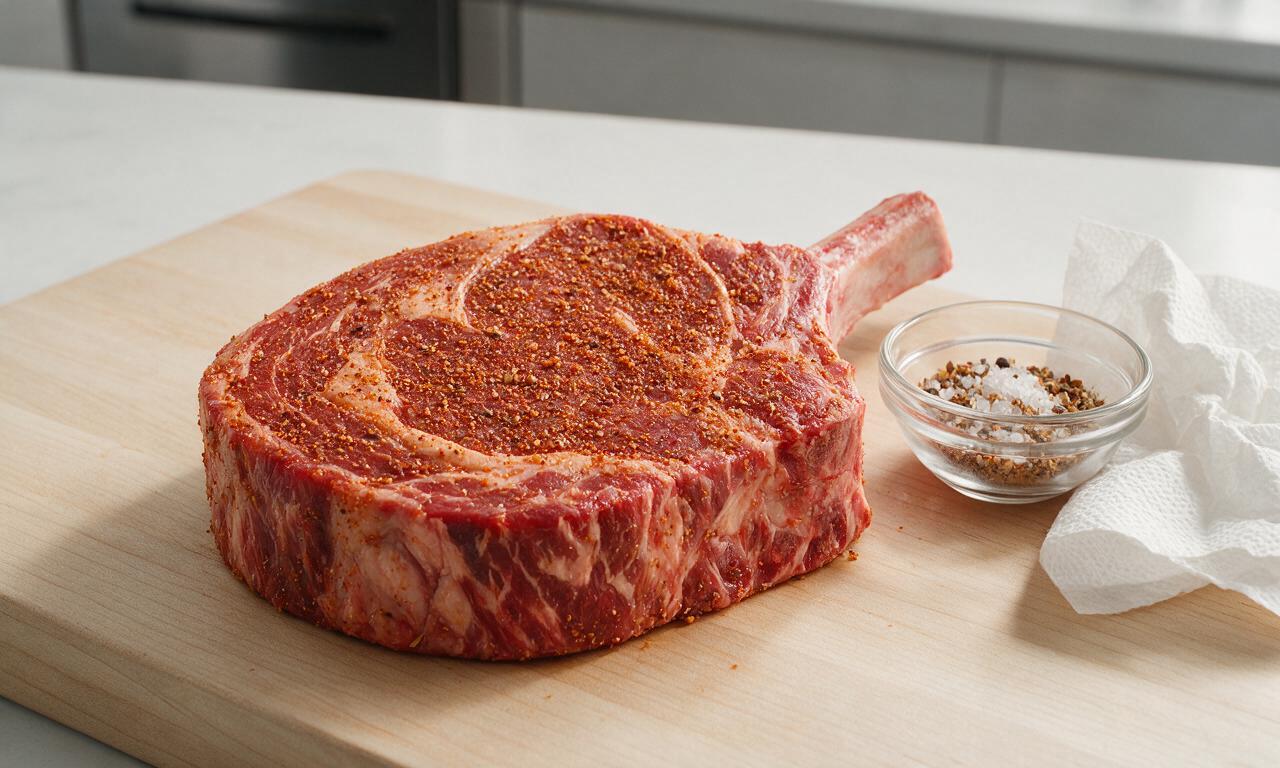
For the juiciest, most flavorful result, season your ribeye with the kosher salt, pepper, garlic powder, and smoked paprika blend at least 45 minutes before smoking, ideally 12 to 24 hours ahead, stored uncovered in the fridge. This gives salt time to draw out moisture that dissolves seasonings, then reabsorb into the meat for deep, even flavor, not just a surface coating.
4.What temperature should I set my smoker to for the slow smoke portion of this recipe?
▾
Hold your smoker at a steady 225°F for the slow smoke phase. That low, consistent temperature lets apple wood smoke penetrate the meat gently without rendering out too much of the precious intramuscular fat that makes ribeye so juicy. Resist the urge to crank the smoker higher—faster cooking here leads to uneven doneness and a less tender final bite.
5.What internal temperature should I pull the steak at during the smoke phase, before searing?
▾
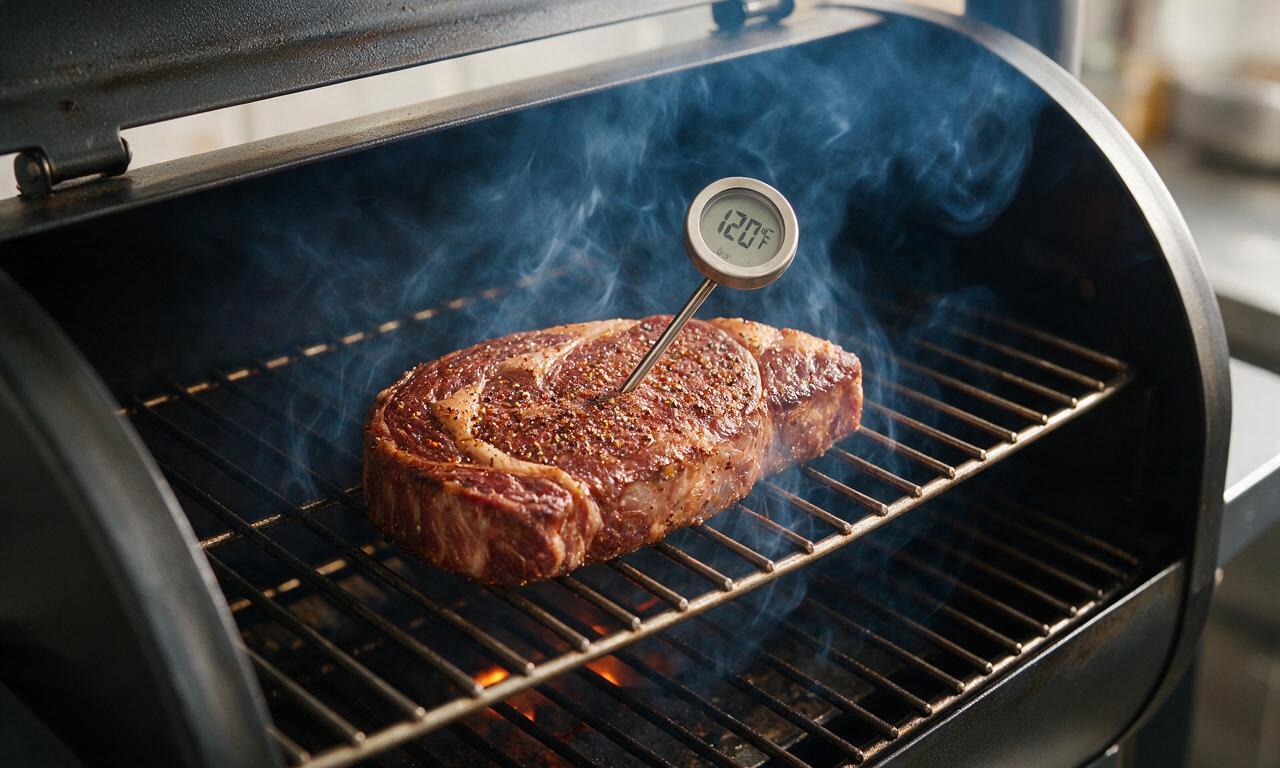
Pull the ribeye off the smoker when it hits 115°F in the thickest part (away from the bone) for medium-rare, measured with a reliable instant-read thermometer. It will climb another 10 to 15°F during the final sear and rest period, so this pull temp ensures you won’t overcook the steak and end up with dry, tough meat instead of that signature juicy texture.
6.Why do I need to sear the ribeye after smoking, instead of smoking it the whole time?
▾
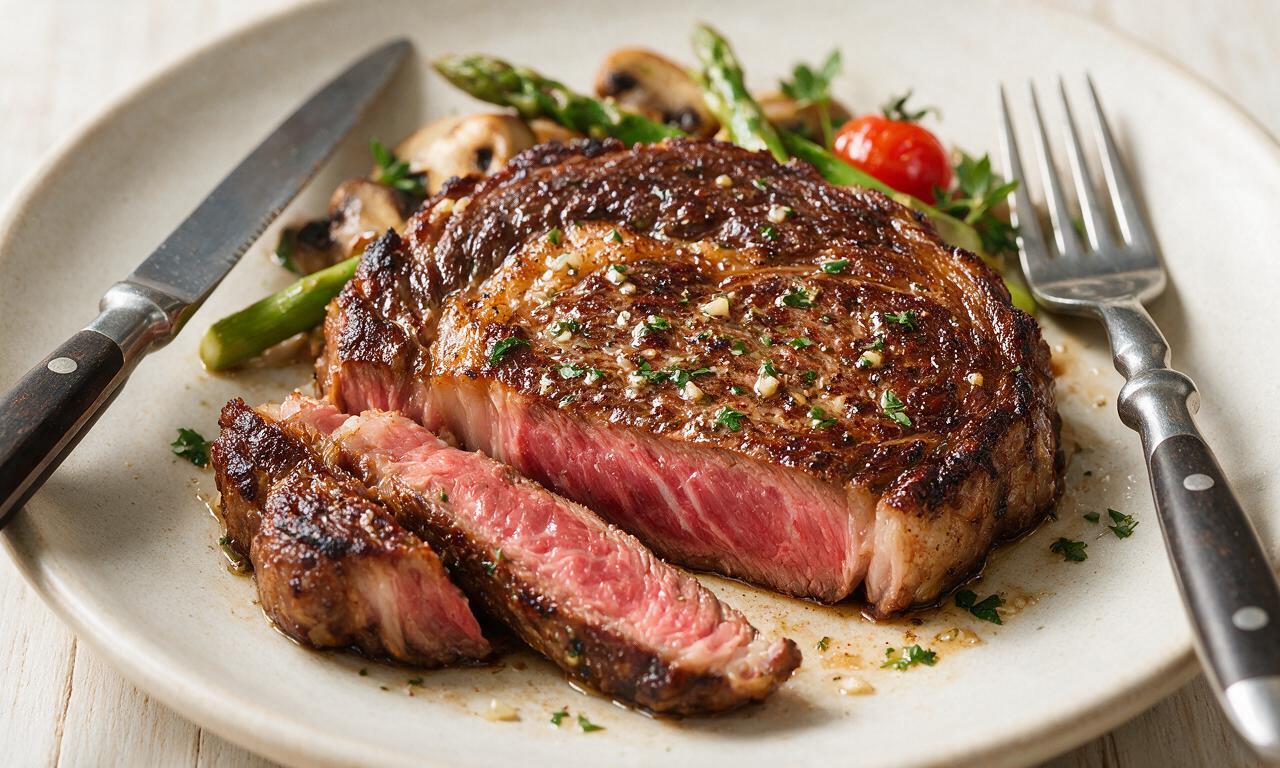
Low-and-slow smoking delivers that amazing deep apple wood smoke flavor, but it can’t produce that crisp, savory, garlic herb butter crust that makes this steak feel restaurant-worthy. The quick, high-heat sear caramelizes the seasoned surface, locks in smoky flavor, and melts the garlic herb butter to coat every bite, without overcooking the tender smoked interior.
7.Can I use regular table salt instead of kosher salt for the seasoning blend?
▾
I strongly recommend sticking with kosher salt for this recipe. Table salt is much finer and denser than kosher salt, so a 1:1 substitution will leave you with an overly salty, unpleasantly briny steak. If you only have table salt on hand, cut the salt amount by half to match the intended seasoning intensity, and spread it evenly across the entire steak surface.
8.How hot should my pan or grill be for the final garlic herb butter sear?
▾
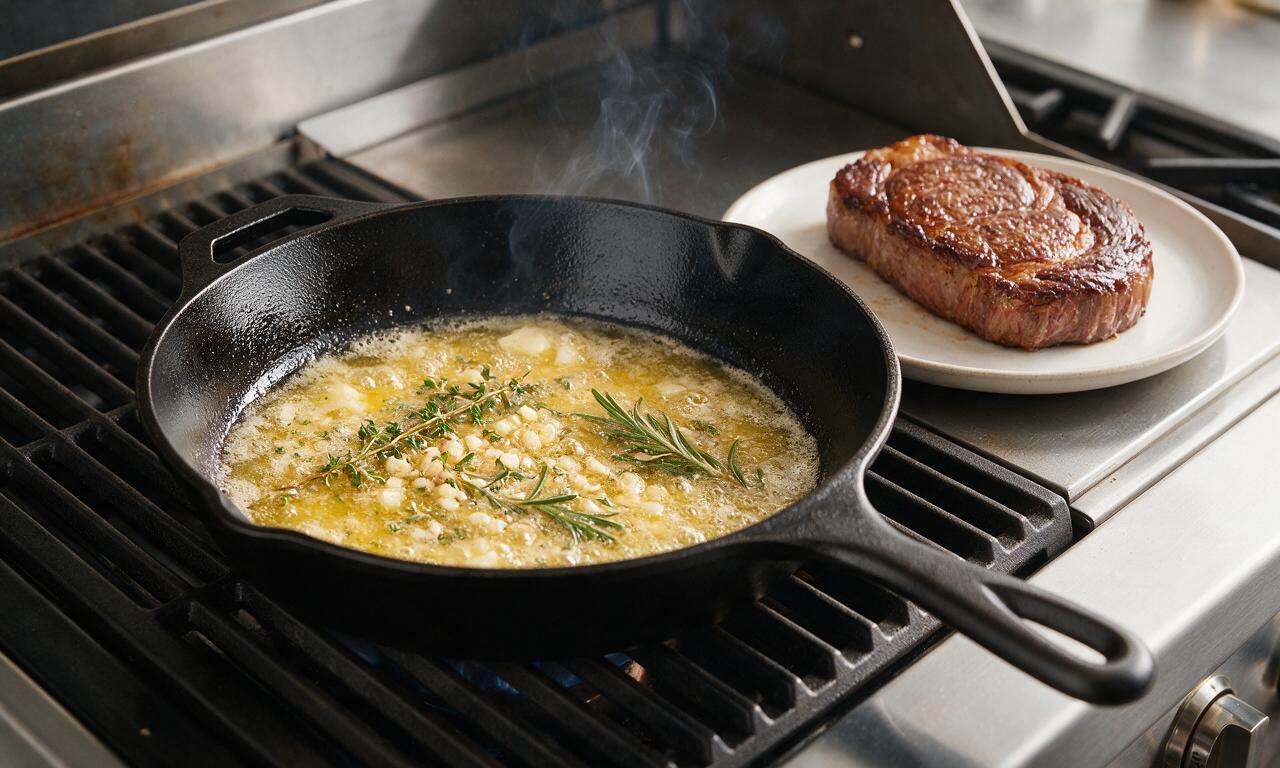
Get your cast iron skillet or grill grates screaming hot—around 500 to 550°F—before adding the smoked ribeye and garlic herb butter. You only need a quick 1 to 2 minute sear per side, just enough to build that crisp golden crust without overcooking the interior. If your pan isn’t hot enough, the butter will burn before the crust forms, leaving a soggy, gray exterior.
9.How long do I need to let the ribeye rest after searing, and why is that step important?
▾
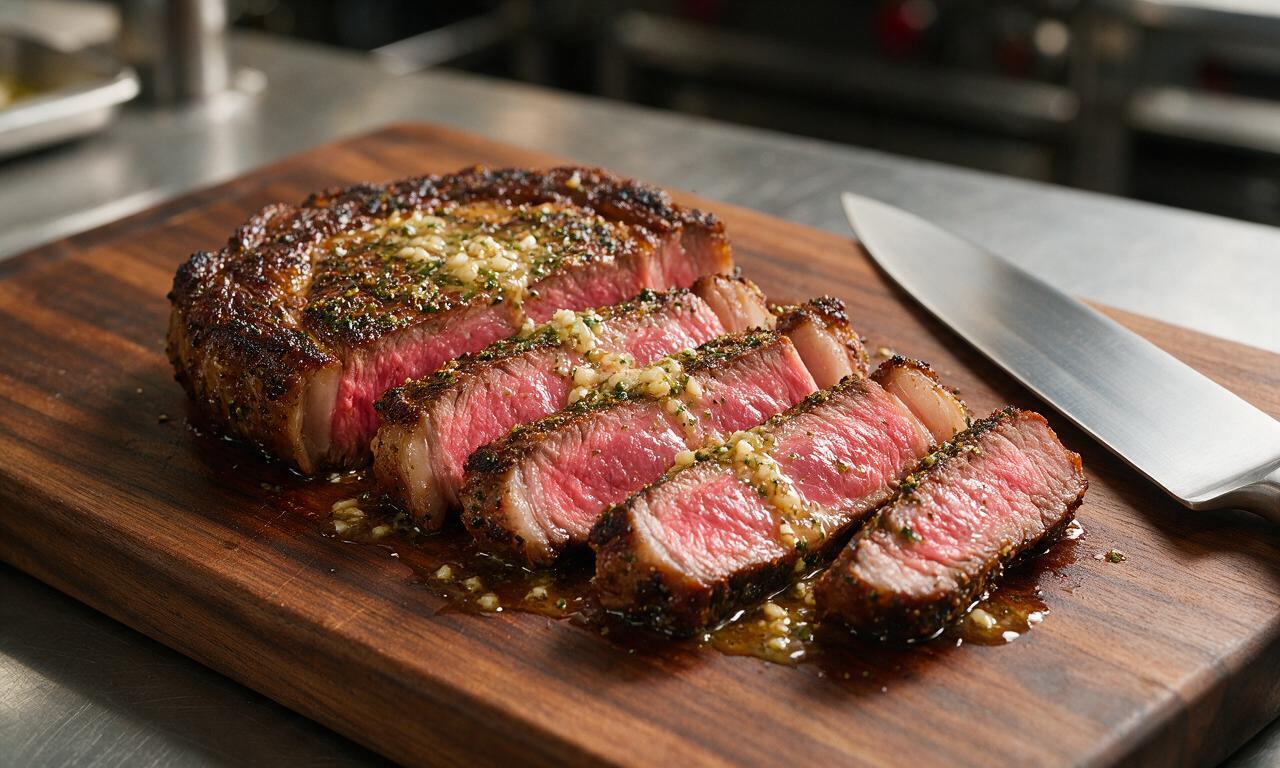
Let the seared ribeye rest on a cutting board, tented loosely with foil, for 10 full minutes before slicing. As the steak cooks, muscle fibers tighten and push moisture toward the center; resting lets those fibers relax and reabsorb that moisture, so every bite is juicy instead of having all those flavorful juices run out onto your cutting board the second you slice in.
10.Will the smoked paprika in the rub burn during the high-heat sear and make the steak bitter?
▾
Smoked paprika is used as a light, even coating in this seasoning rub, so it won’t burn as long as you keep the final sear quick—just 1 to 2 minutes per side at high heat. It adds subtle extra smoky depth and a beautiful rich, reddish-brown color to the crust. Just don’t cake the rub on thick, and avoid over-searing to prevent bitter burnt spice notes.
11.Can I make this recipe if I don’t have a dedicated standalone smoker?
▾
Absolutely! You can replicate the smoked ribeye effect on a regular charcoal or gas grill by setting it up for indirect heat: place coals or lit burners on one side, set the steak on the cool side, add a small foil pouch of soaked apple wood chips on the heat source, hold the grill at 225°F until you hit 115°F internal, then sear directly over high heat with garlic herb butter to finish.
12.How thick should my bone-in ribeye be for this recipe to turn out juicy?
▾
Aim for a bone-in ribeye that’s 1.5 to 2 inches thick for the best results. That thickness is substantial enough to hold up to slow smoking without drying out, and it gives you enough room to build a perfect crisp crust during the final sear without overcooking the tender pink interior. Steaks under 1 inch thick cook too fast in the smoker, leading to weak smoke flavor and easy overcooking.
13.Do I need to trim the fat cap on the ribeye before smoking it?
▾
You don’t need to trim the fat cap completely—leave about 1/4 inch of fat on the outside of the ribeye. That fat renders slowly as the steak smokes, basting the meat naturally to keep it juicy, and it crisps up beautifully during the final sear for an extra savory, rich bite. Trim off any thick, hard, waxy fat chunks that won’t render down, as those leave an unpleasant chewy texture.
14.What’s the best way to get an evenly crisp crust all around the steak during the sear?
▾
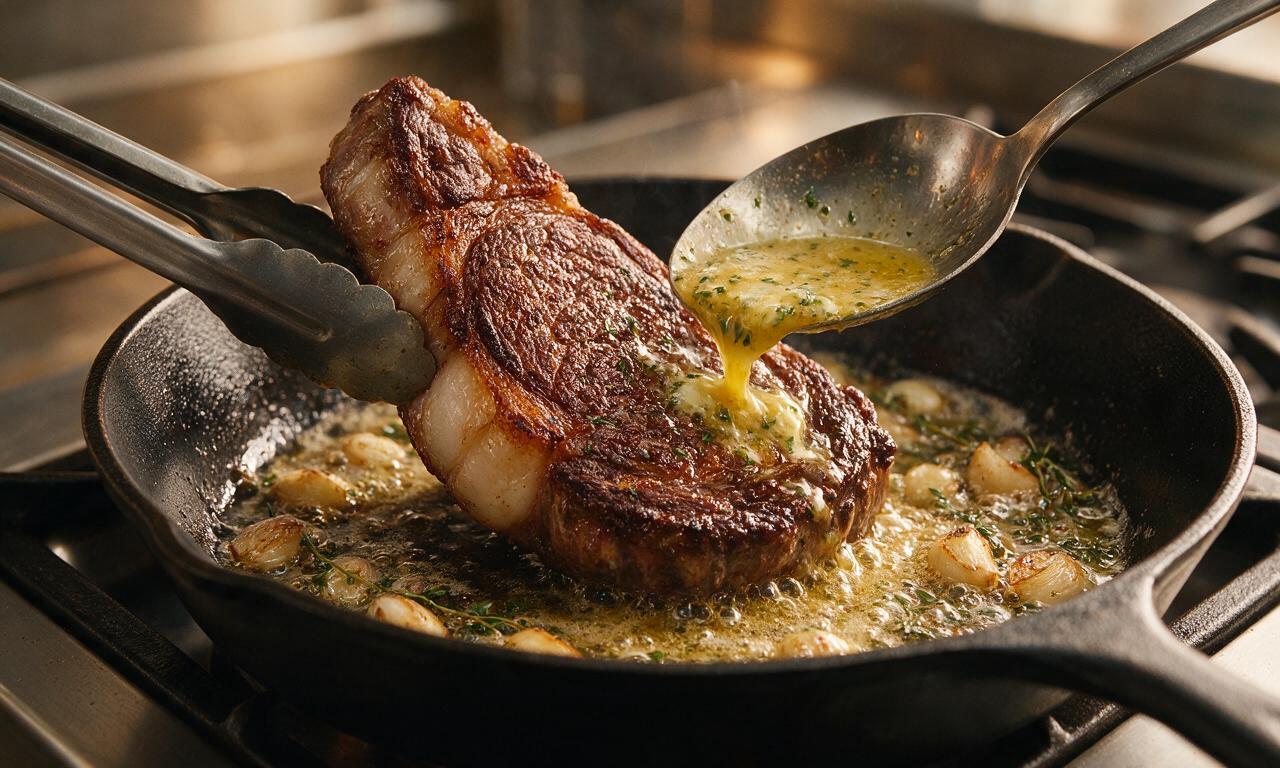
First, pat the smoked ribeye dry with paper towels right before placing it on the hot sear surface—excess surface moisture will steam the steak instead of searing it. As you sear, tilt the cast iron pan to spoon melted garlic herb butter over the top continuously, and hold the steak on its edges for 30 seconds each to crisp the fat cap and sides for an even, perfect crust.
15.Can I add other seasonings to the rub without ruining the steak’s flavor?
▾
The simple base rub of kosher salt, coarse black pepper, garlic powder, and smoked paprika is designed to let the apple wood smoke and beef flavor shine, but you can add small amounts of complementary seasonings if you’d like. A pinch of onion powder, dry mustard, or light dusting of brown sugar works well; skip heavy, overpowering spices like large amounts of cumin or cayenne that clash with the mild smoke and butter finish.
16.How do I avoid getting a harsh, bitter smoke flavor on my ribeye?
▾
Bitter smoke comes from two common mistakes: using too much wood, or using wood that isn’t fully combusting to produce clean, thin blue smoke. For this ribeye, use just 2 to 3 small chunks of apple wood (not a whole pile) and wait until your smoker is producing thin, wispy, almost invisible smoke before adding the steak. Thick, white, billowing smoke leaves a harsh, bitter coating you can’t fix.
17.What internal temperature should the finished steak be for my preferred doneness level?
▾
After resting, aim for 125°F internal for medium-rare (my recommended pick for juicy, tender ribeye), 135°F for medium, and 145°F for medium-well. I don’t recommend cooking this cut past medium-well, as the high fat content will render out too much, leaving dry, tough meat without that signature rich, buttery ribeye texture. Always use an instant-read thermometer for accuracy, don’t guess by touch.
18.What sides pair best with this juicy smoked ribeye for a full meal?
▾
This rich, smoky steak pairs perfectly with simple, classic sides that don’t compete with its bold, beefy flavor. Go for creamy loaded baked potatoes, grilled asparagus tossed in olive oil and salt, a crisp tangy arugula salad with lemon vinaigrette, or buttery cast iron cornbread. Skip heavy, overly sauced sides that will overpower the delicate apple wood smoke and garlic herb butter notes.
19.How should I store leftover smoked ribeye, and what’s the best way to reheat it without drying it out?
▾
Store leftover sliced or whole ribeye in an airtight container in the fridge for up to 3 days. To reheat without drying it out, wrap the steak in foil with a small pat of butter, warm it in a 250°F oven until it hits 110°F internal, then give it a 30-second sear in a hot pan to crisp the crust back up. Skip the microwave—it turns tender, juicy meat rubbery and unevenly hot.

OMG, this smoked ribeye was an absolute game changer for our Sunday family dinner! I was a little nervous because I’d only smoked brisket before, never a thick ribeye, but the timing was spot on even for my beat-up old offset smoker. My husband and two kids devoured every single bite, my 10-year-old even asked for seconds before he finished his first serving. It was SO good, so juicy, no dry spots at all, totally worth the 1 hour 45 minute cook time. Will be making this for our neighborhood potluck next month for sure!
Solid recipe, but I ran into a little trouble keeping my charcoal smoker temp steady at the recommended 225 for the first 20 minutes thanks to random wind gusts, so my ribeye ended up taking almost 20 minutes extra to hit that perfect medium rare. Flavor was unreal though, that smoky crust was chef’s kiss. Wondering if anyone has tried this with a pellet smoker vs a traditional charcoal setup?
Wait, difficulty says medium? I’m a total newbie to smoking, I got a cheap electric smoker for my birthday last month and I was shocked how easy this was to follow! I prepped the steak the night before with the dry rub as suggested, let it sit in the fridge, and it came out so juicy I didn’t even need to add extra steak sauce. I was planning to save half for meal prep for the week but my roommate and I ate almost the whole thing in one sitting. Only thing is I wish there was a note about how long to let it rest, I only waited 5 minutes and a bunch of the juices ran out when I sliced it.