
softened cream cheese
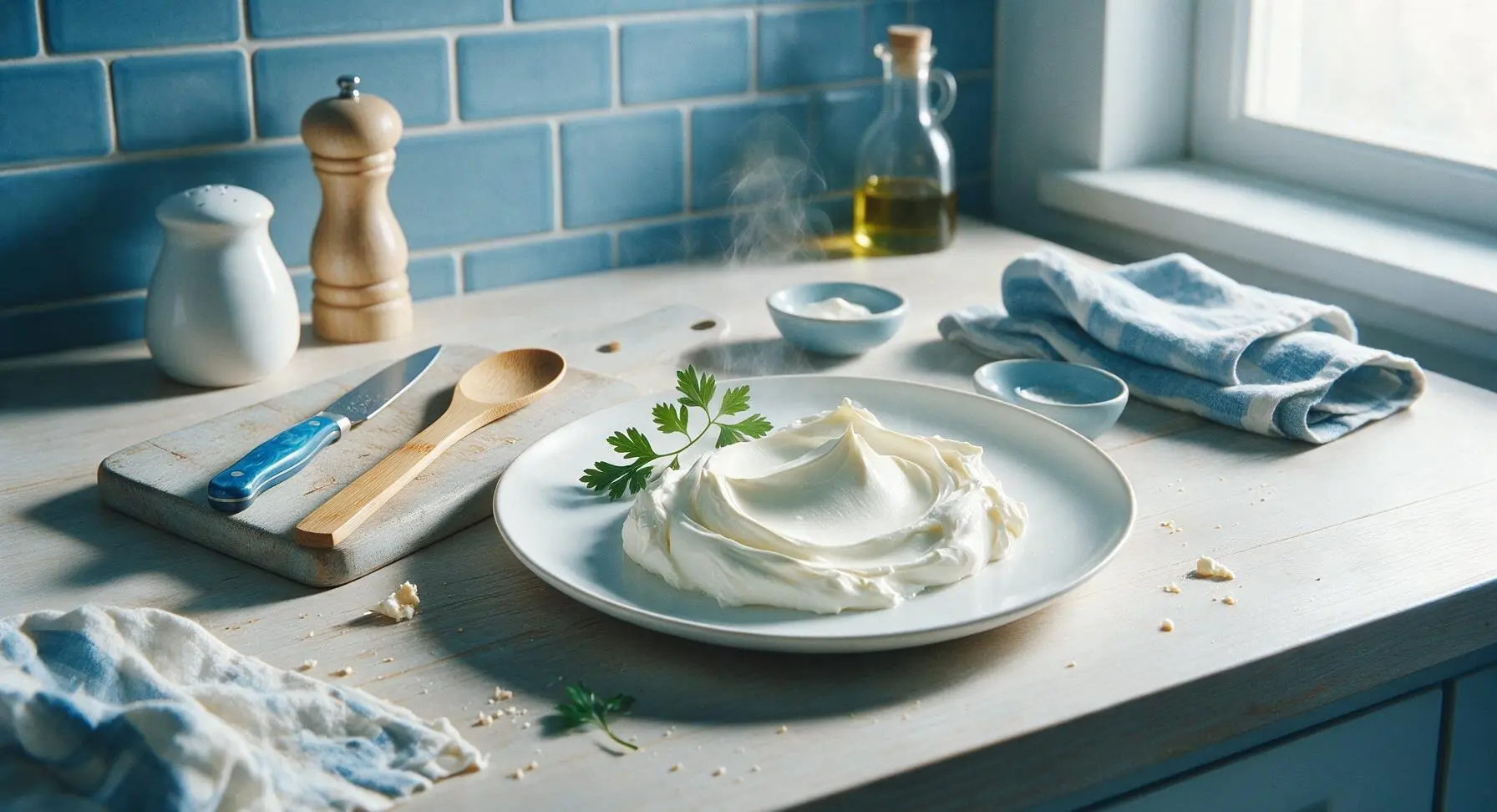
intro
Perfectly softened cream cheese is the silky, lump-free foundation for flawless cheesecakes, rich frostings, creamy dips, and no-bake treats, free of grainy lumps or greasy melted spots.
Ingredients
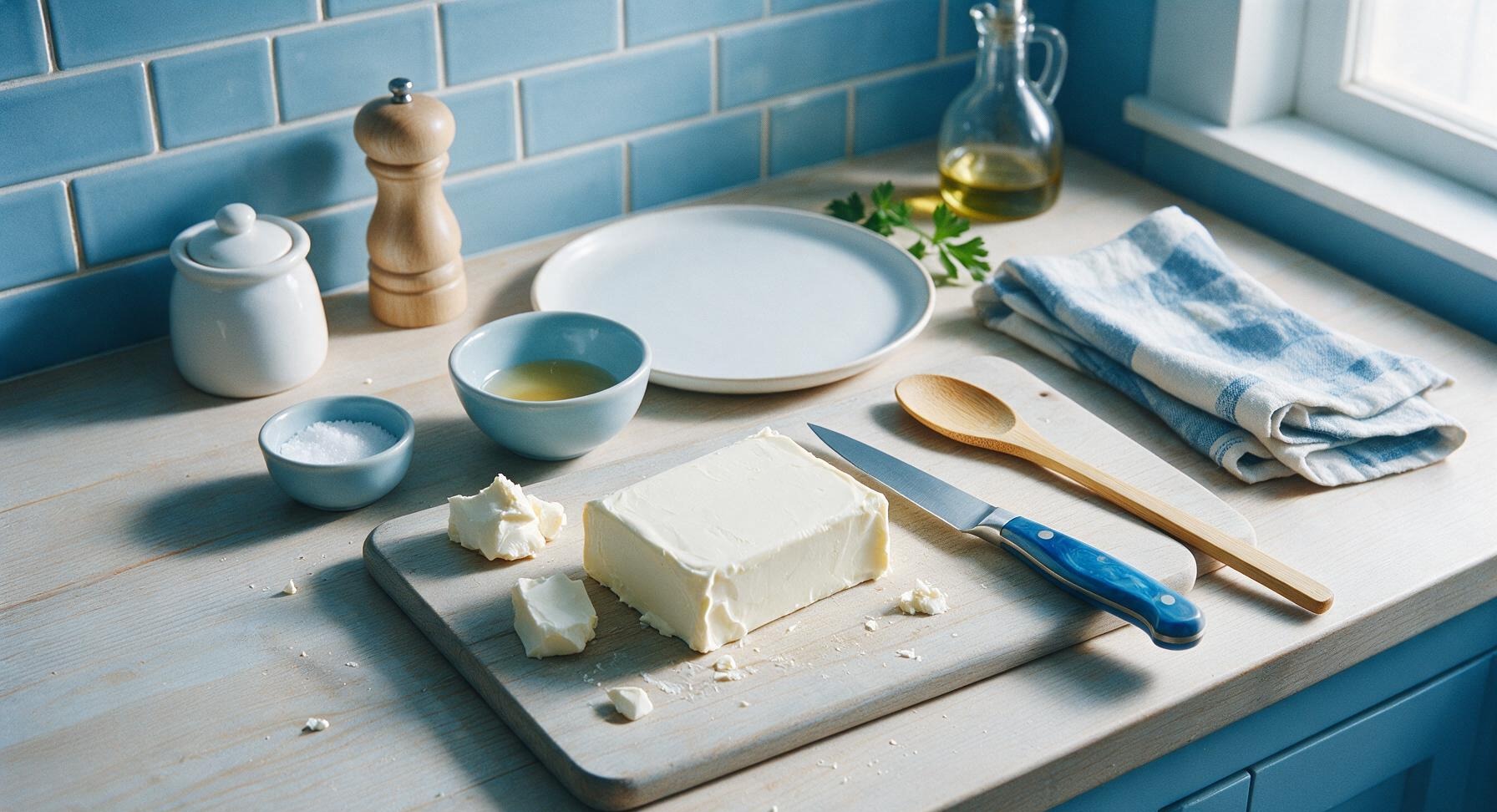
Steps
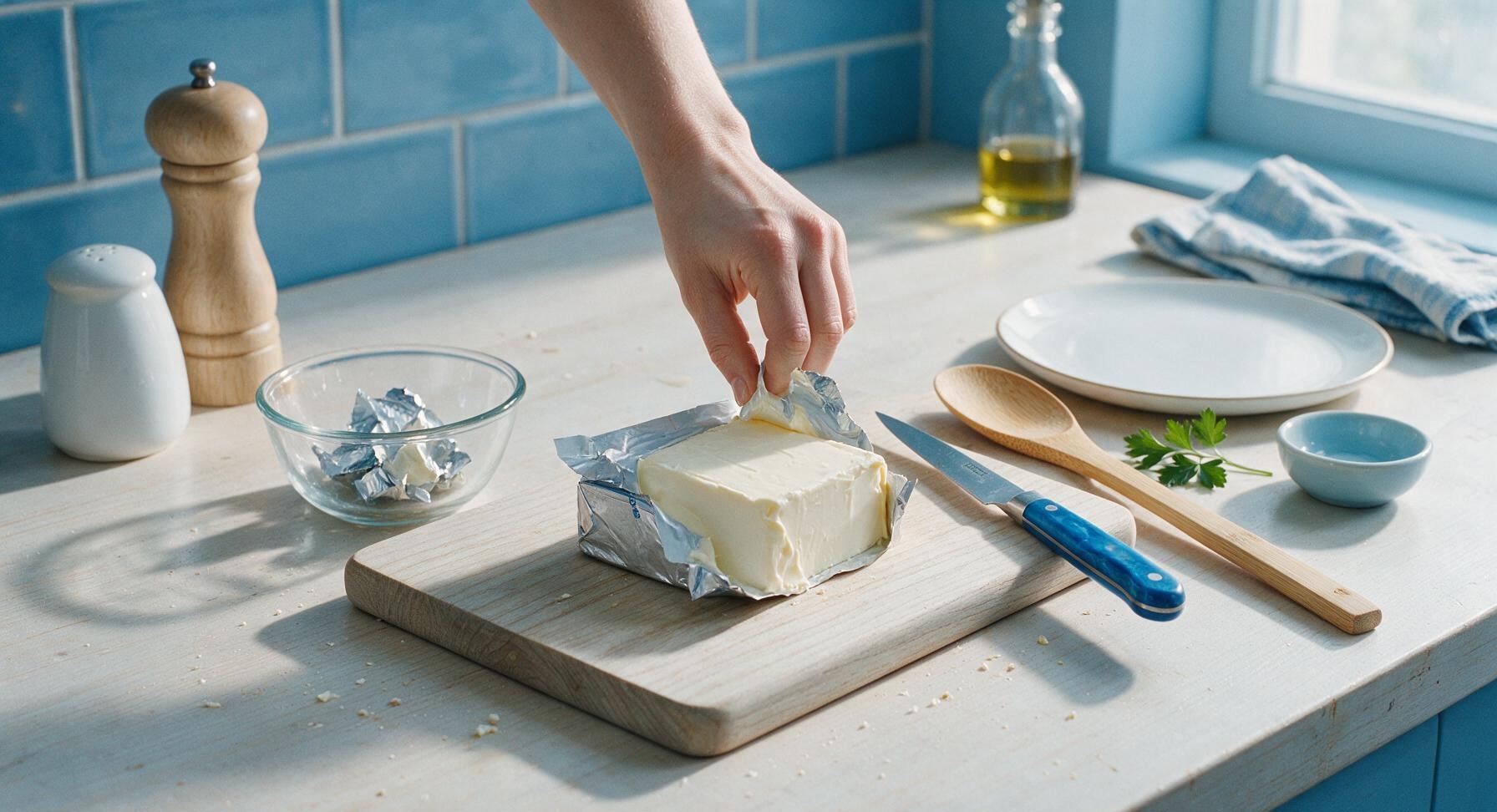
Unwrap Cream Cheese Block
Take the 8oz (226g) full-fat block cream cheese straight from the refrigerator. Peel away all silver foil wrapping completely, making sure to remove any small foil bits stuck to the cheese surface. Discard the removed foil wrappers into the clear glass bowl to the left of the cutting board. Do not leave the cheese in its wrapper, as this traps cold air and slows even softening.
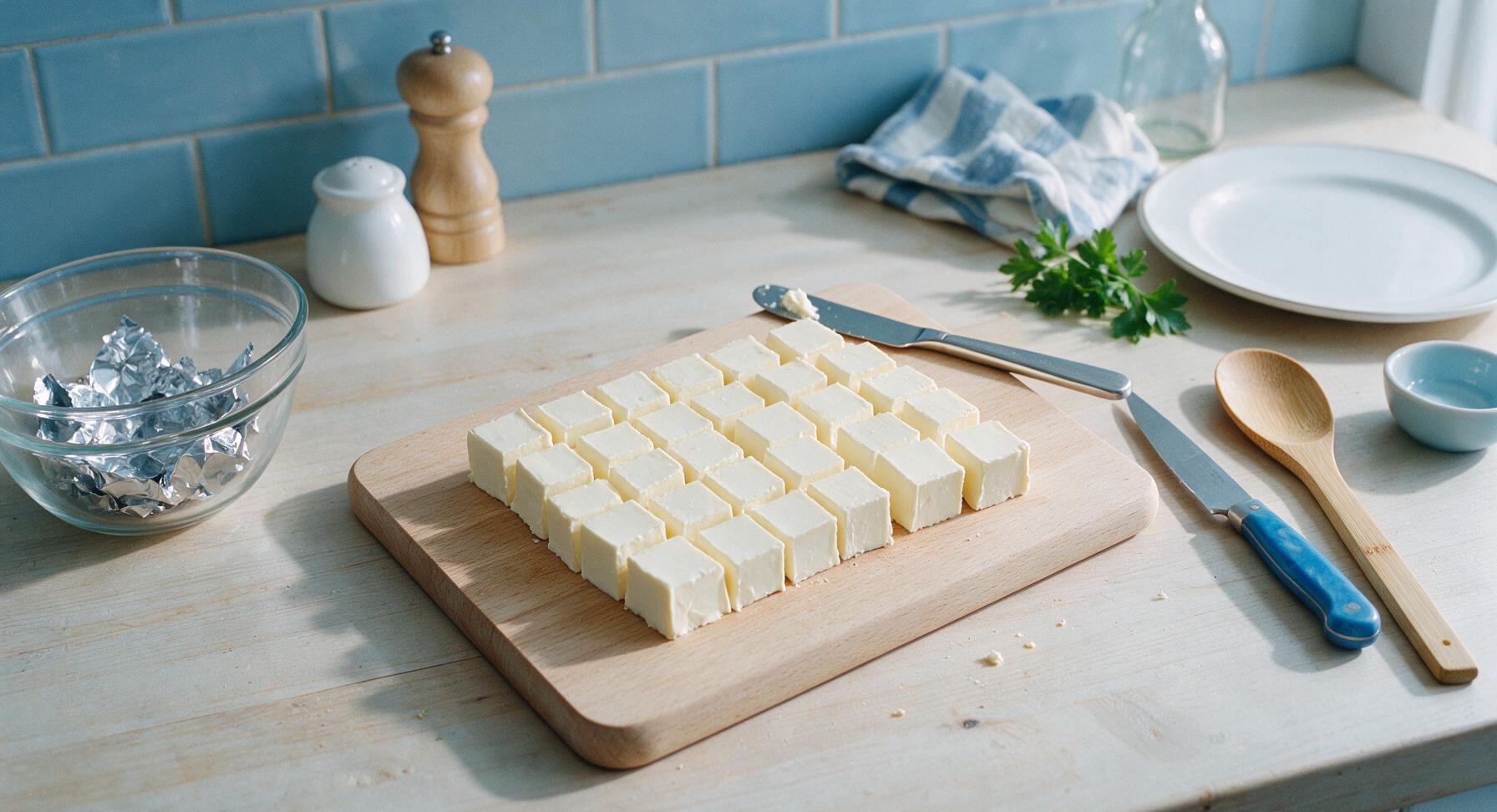
Cut Into Even Cubes
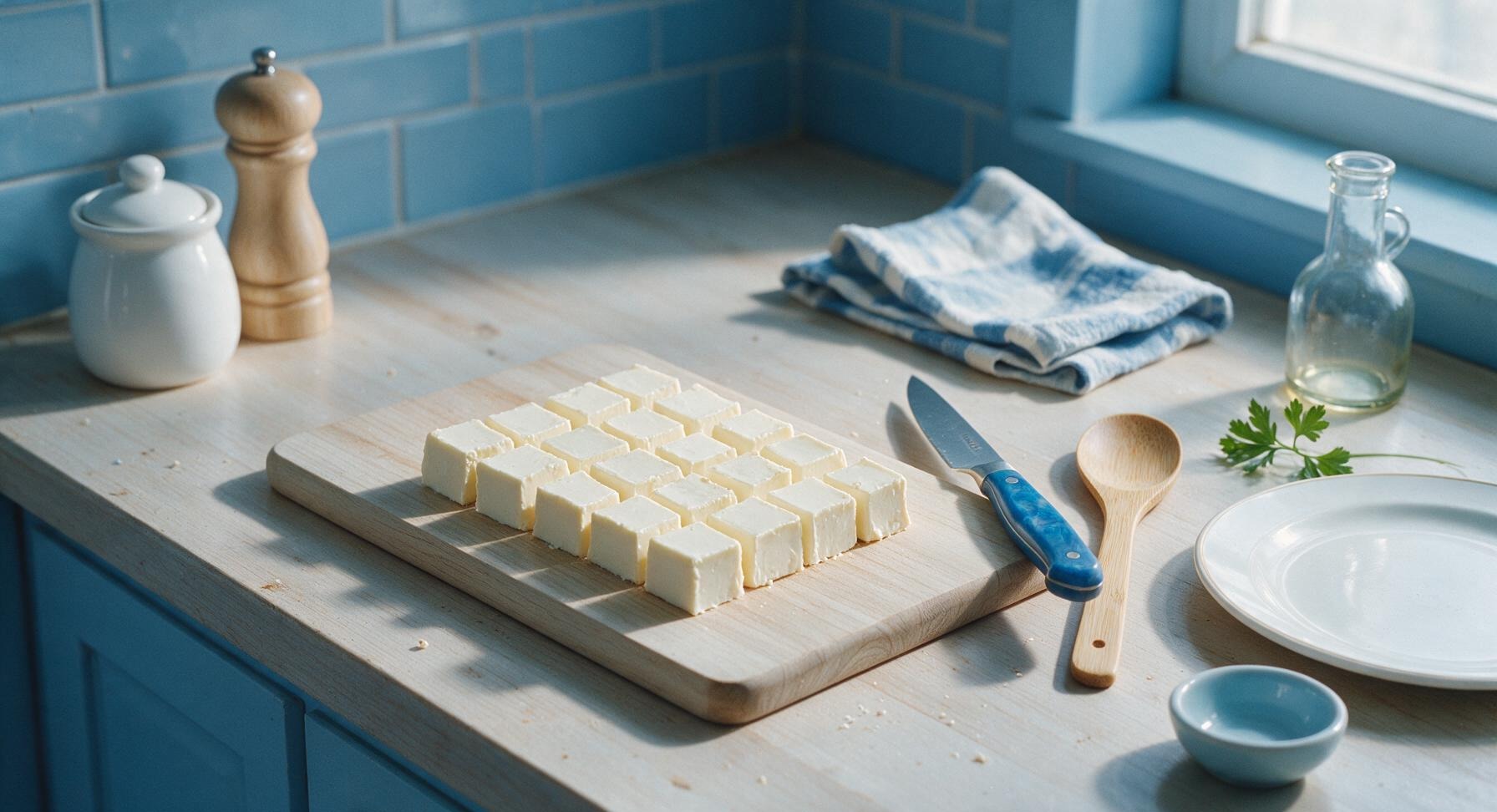
Use the stainless steel butter knife to cut the cold cream cheese block into 2.5cm (1 inch) uniform cubes. Cutting the block into small, equal pieces cuts softening time in half and ensures even temperature throughout, eliminating cold lumps in the center. Spread the cubes in a single layer across the center of the beech cutting board, leaving small gaps between each piece for air circulation.
Rest At Room Temperature
Leave the cut cream cheese cubes undisturbed on the cutting board in a cool part of the kitchen (65-70°F / 18-21°C, away from direct stovetop heat or sunlight that could melt the fat). Let rest for 25-30 minutes. Do not cover the cubes, as trapped condensation will create watery spots on the cheese surface.
Test For Proper Softness
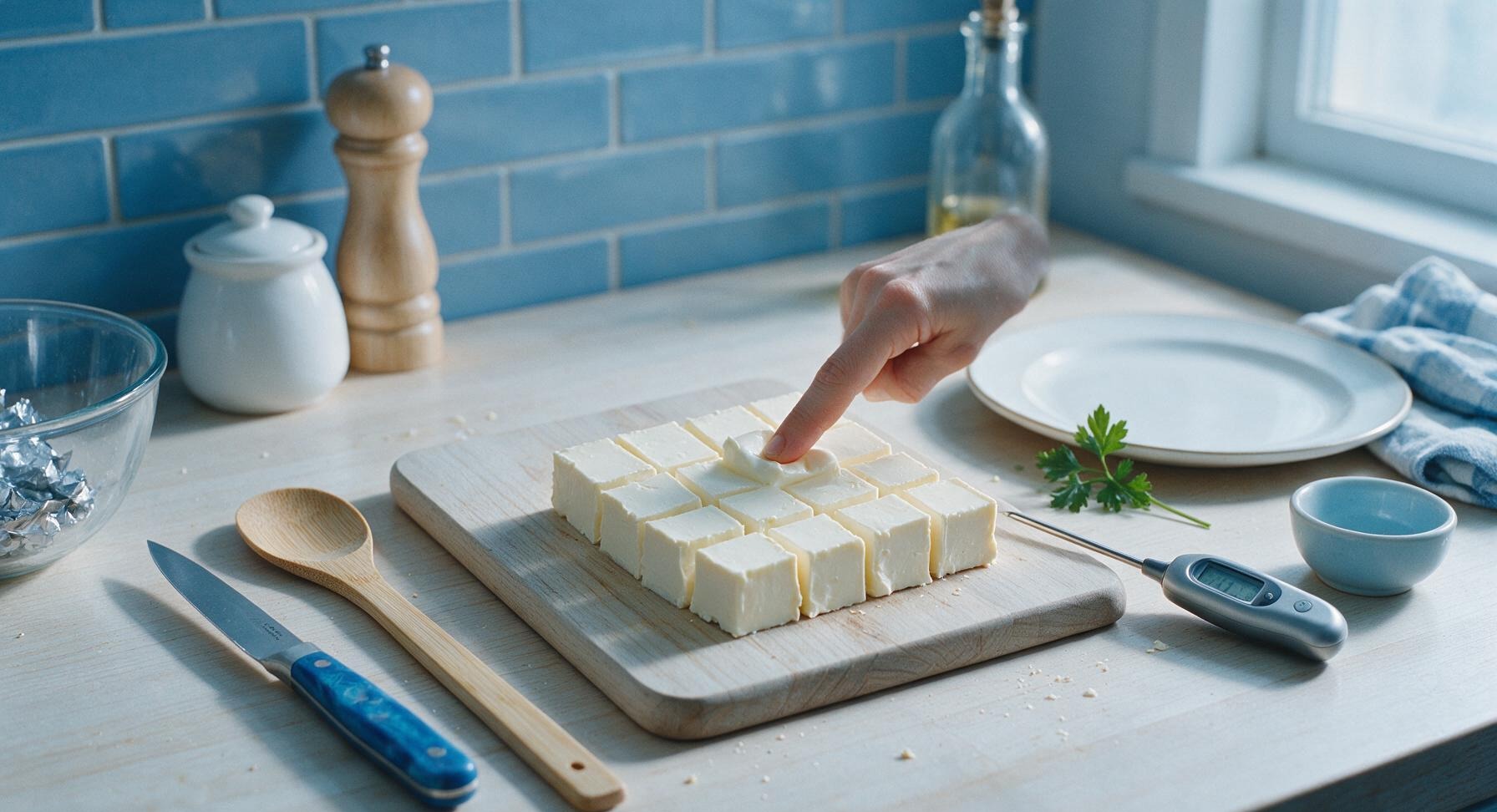
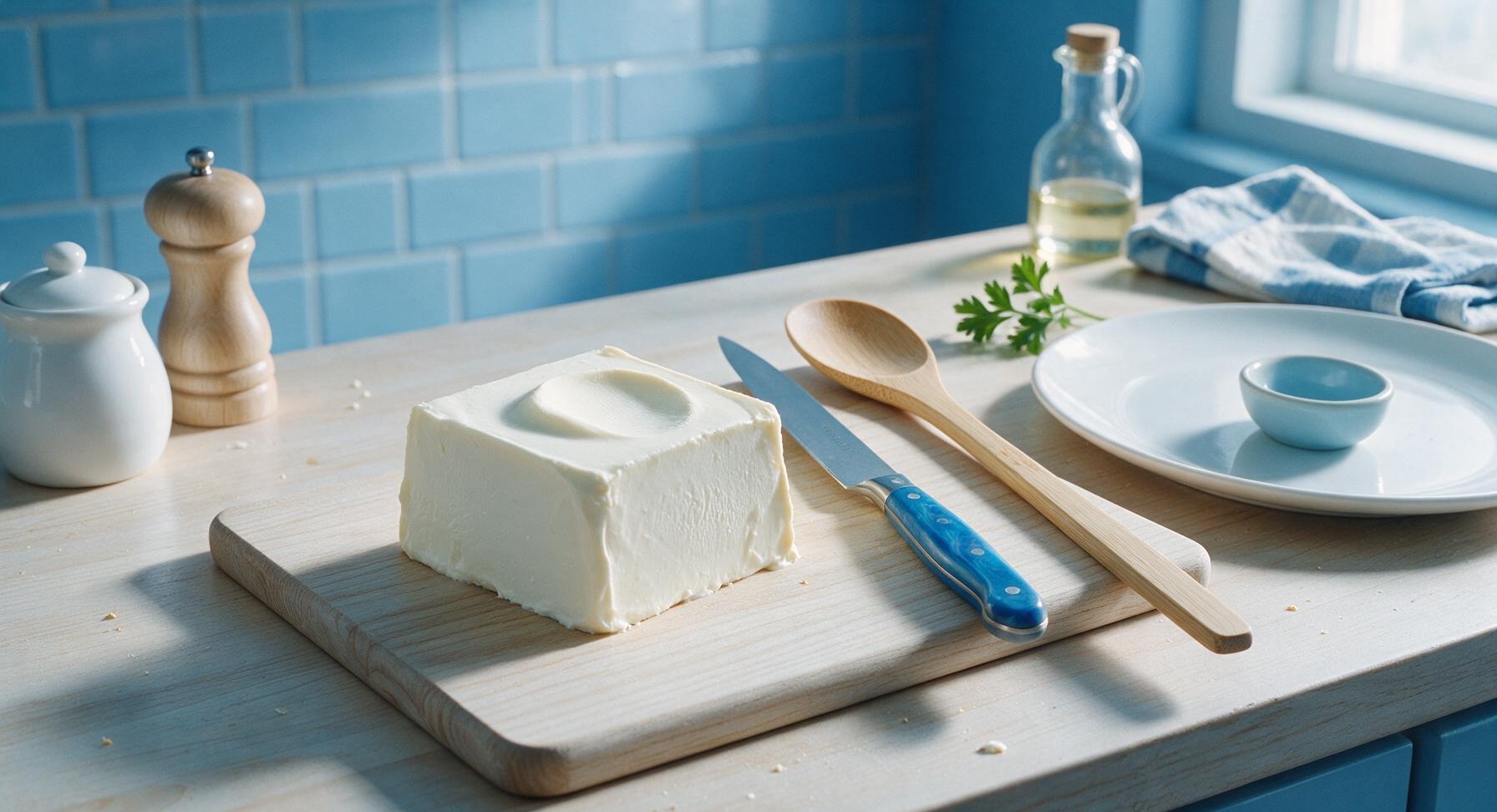
After 25 minutes, test the softness by gently pressing a cube with the pad of your clean finger or the flat of the butter knife. Properly softened cream cheese will give easily under light pressure, leaving a shallow indent, with no hard, cold solid core in the center of the cube. It should feel cool to the touch, not warm or greasy to the touch.
Check Internal Temperature
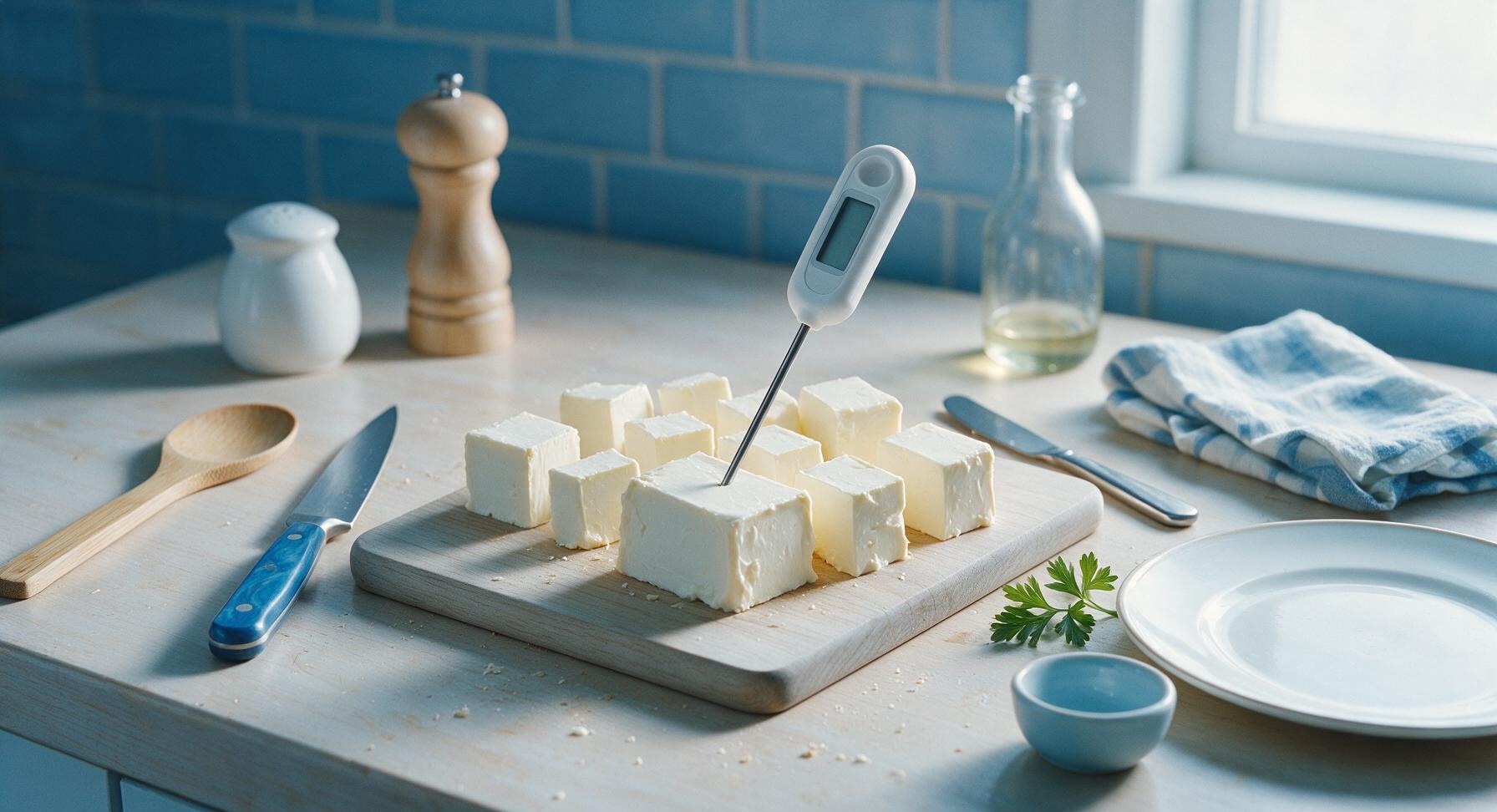
Use the instant-read thermometer to test the internal temperature of the largest cube. The ideal temperature for perfectly softened cream cheese is 65-70°F (18-21°C). If the temperature reads below 60°F (15°C), let the cubes rest for 5 more minutes before retesting. If the temperature is above 75°F (24°C), the cheese is too soft and greasy, and will create a grainy texture in baked goods.
Smooth To Remove Lumps
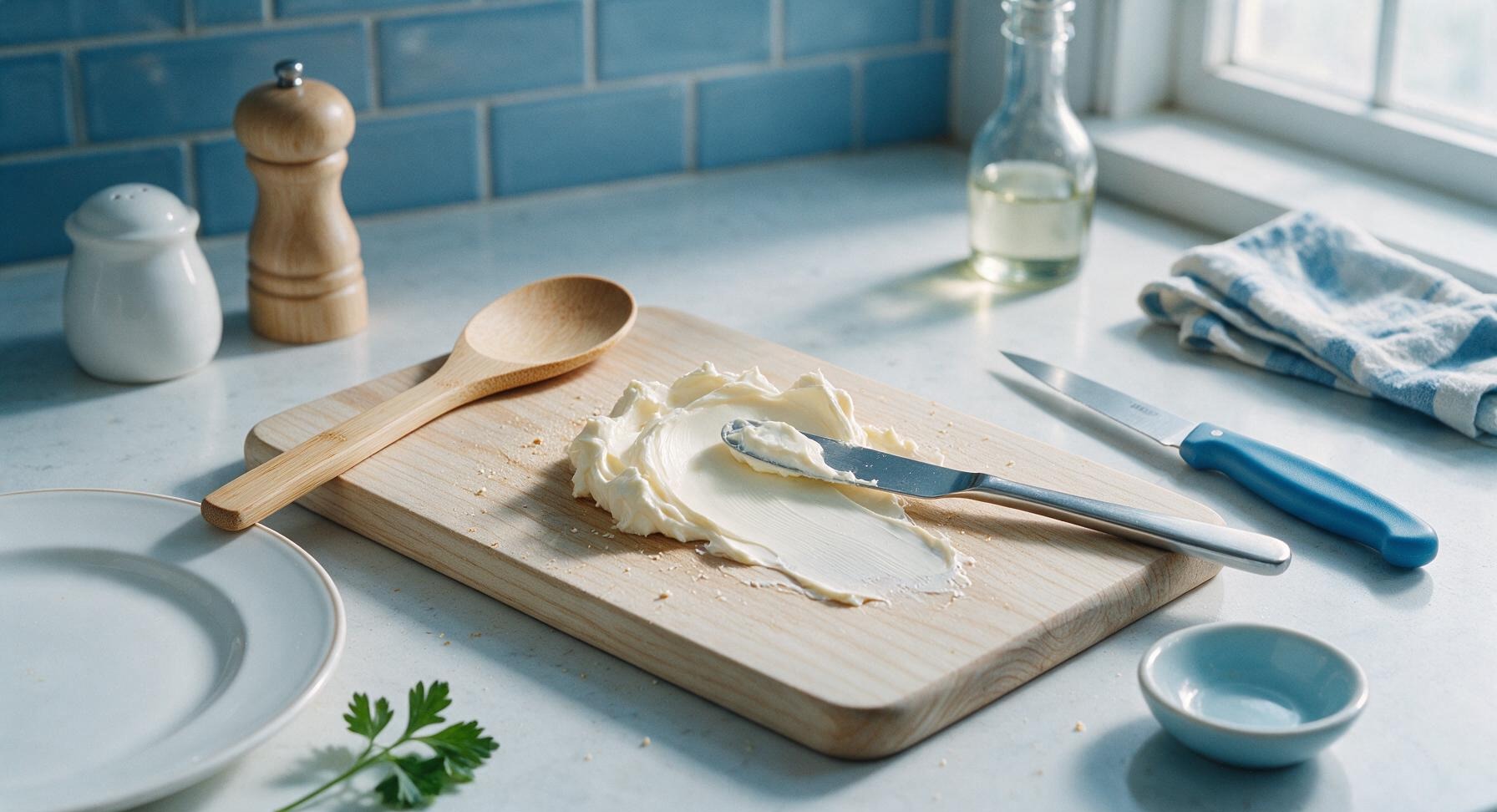
Once properly softened, gather all cream cheese cubes into the center of the cutting board. Use the flat side of the stainless steel butter knife to press and smear the cubes in a thin layer across the board, then scrape them back together, repeating 2-3 times until the cheese is completely smooth, silky, and free of any remaining small cold lumps.
Transfer To Serving Plate
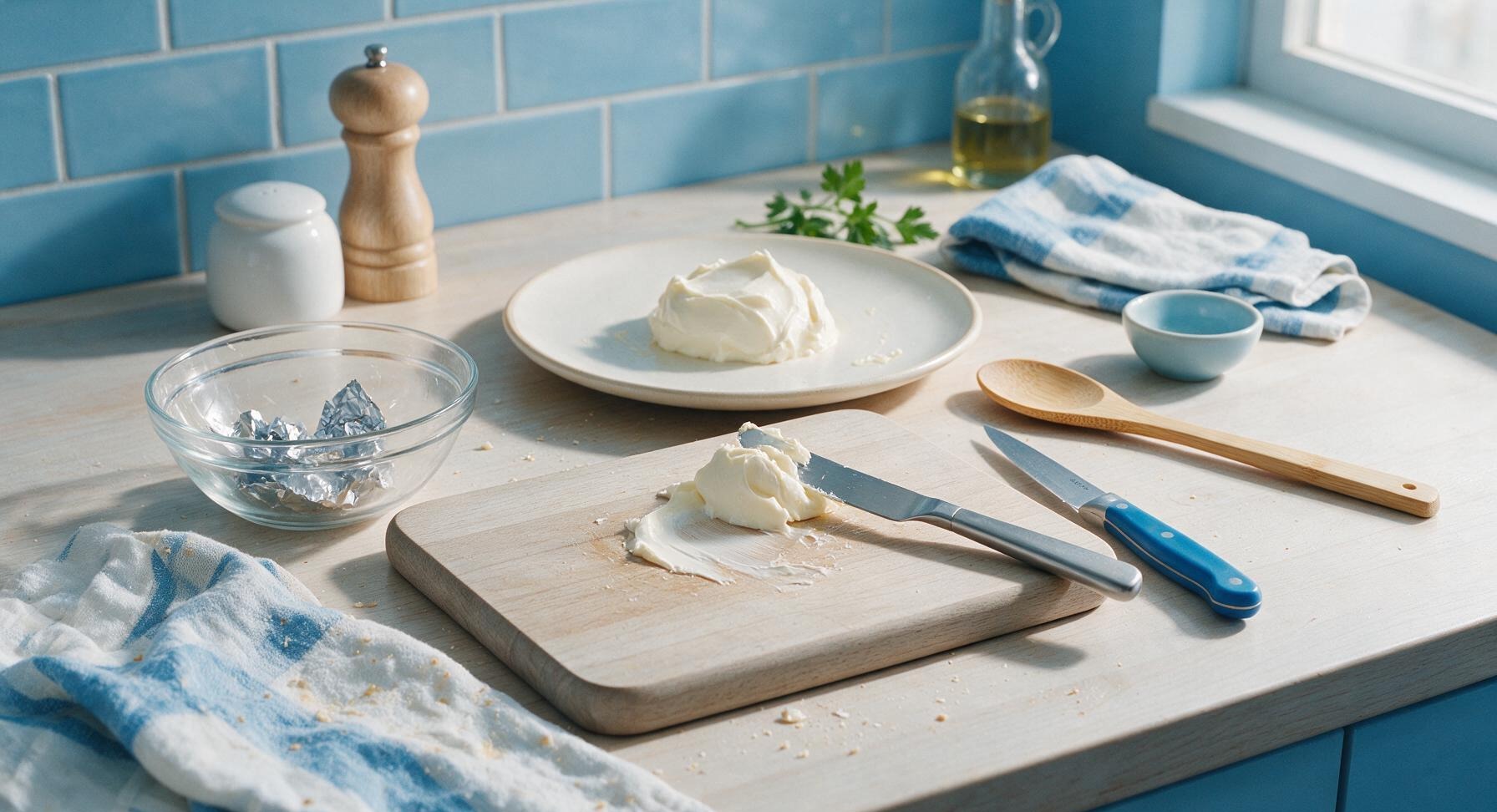
Once the cream cheese is completely smooth and free of lumps, hold the stainless steel butter knife at a 45-degree angle to scrape all the softened cheese from the beech cutting board, gathering it into a neat soft mound in the center of the matte cream white ceramic plate. A faint, natural smudge of cream cheese on the plate rim adds a realistic, home-baked feel. If not using immediately, cover loosely with plastic wrap and hold at cool room temperature for up to 1 hour before incorporating into recipes.
Tips
2.Never soften cream cheese in direct sunlight or near a hot stovetop: Exposure to high, uneven heat causes milk fats to separate, leaving an oily film on the cheese that will not emulsify properly with sugar or eggs, resulting in a lumpy, broken final bake.
3.Use only block-style cream cheese for this method: Whipped spreadable cream cheese contains added air and stabilizers that alter recipe texture, and it softens too quickly to an overly loose consistency that throws off baking ratios.





OMG, I used to always microwave my cream cheese and end up with weird half-melted globs for my cheesecake bars! This method got it perfectly soft in no time, no weird melted spots. My kids devoured the strawberry cheesecake bars I made for their soccer team snack, everyone asked for the recipe!
Game changer! I brought a smoked salmon cream cheese dip to our neighborhood block party last weekend and used this tip to get the cream cheese ready so fast. No more waiting an hour for it to sit on the counter! SO good, people were scraping the bowl clean.
Wait, hold on — does this work for the low-fat neufchatel cream cheese too? I usually buy that to save a few calories for my morning bagel spreads, and I hate when it’s rock hard straight from the fridge.
Meal prep win! I make a week’s worth of cream cheese frosting for my kid’s morning cinnamon rolls on Sundays, and this tip cut my prep time so much. No more forgetting to set the cream cheese out the night before!
Tried this last night when I was making a last-minute jalapeno popper dip for movie night with my partner. Worked like a charm! The cream cheese mixed so smoothly with the cheddar and jalapenos, no lumps at all. Will 100% use this every time from now on.
Wait, I tried this yesterday and my cream cheese still had a little firm core in the middle? Did I do something wrong? I was making no-bake cheesecake cups for my sister’s birthday and had to wait extra time anyway.
I can’t believe I’m just seeing this! I make 6+ cheesecakes every Christmas for the family dinner, and I’ve always just planned 2 hours of wait time for the cream cheese to soften. This is going to save me so much time this holiday season!
As someone who only has a mini fridge in my dorm and forgets to take cream cheese out for my bagels every single morning, this is a lifesaver. No more trying to spread rock hard cream cheese that rips my bagel apart. 10/10.
I’ve been cooking professionally for 30 years and I still picked up a great tip here! I used to default to the counter wait method, but this is so much faster for last-minute recipe prep. Shared this with my whole old crew from the restaurant.
Made the most amazing whipped feta and cream cheese dip for my girls’ brunch last Sunday using this tip! The cream cheese was so soft it blended in 30 seconds flat, no lumps. We ate the whole bowl with pita chips in 10 minutes.
Solid tip. I used to get so frustrated when I’d make cream cheese frosting and have little lumps of hard cream cheese no matter how much I mixed it. Tried this for my son’s birthday cake frosting last week, came out perfectly smooth, my kids loved it!
I use cream cheese in my weekly stuffed chicken breast meal prep, and this trick is such a game changer. No more waiting around for it to soften after I get home from the gym, I can get dinner on the table so much faster now.
I learned the hard way that microwaving cream cheese for too long turns it into a soupy mess that ruins frosting. This method is foolproof! I’ve used it three times in the last two weeks for cookie sandwiches, dip, and bagel spreads, zero fails.
Used this for my spinach and artichoke dip for game night last weekend! The cream cheese mixed so evenly with the spinach and parmesan, no weird clumps, and it was a total hit with my roommates. Even my super picky roommate went back for thirds.
Quick question — if I’m using softened cream cheese for a sourdough discard cream cheese swirl, do I need to let it sit longer than if I’m just using it for dip? I don’t want it to be too firm when I swirl it into the batter.