sotanghon soup

title 1
sotanghon soup
⏱️ cook time 25 minutes
🍽️ servings 4
⚡ Difficulty easy

intro

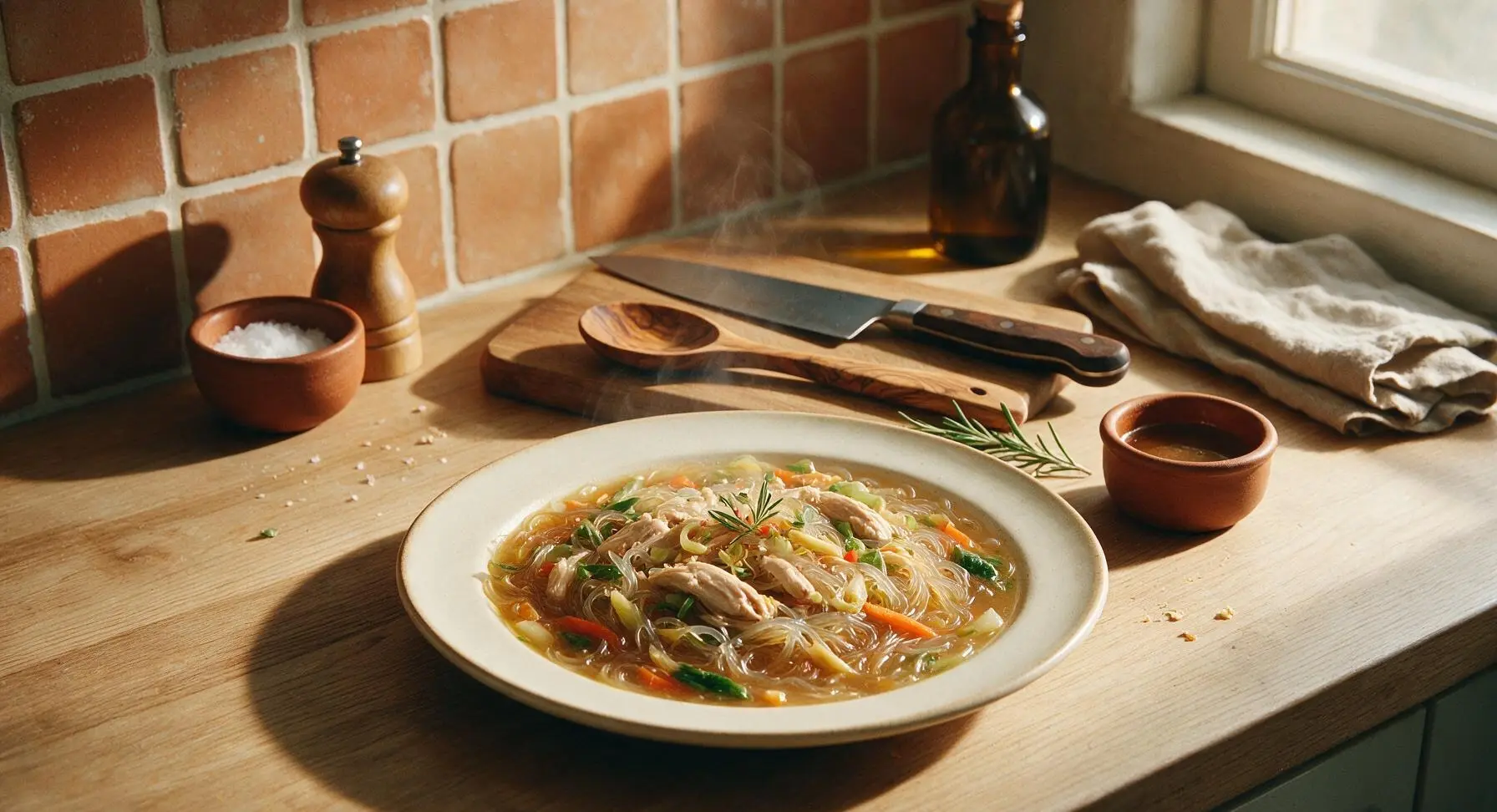
Silky bean thread noodles swim in savory garlic-ginger chicken broth, loaded with tender chicken and crisp veggies—warm, comforting Filipino home-style soul food perfect for cold days.

Ingredients
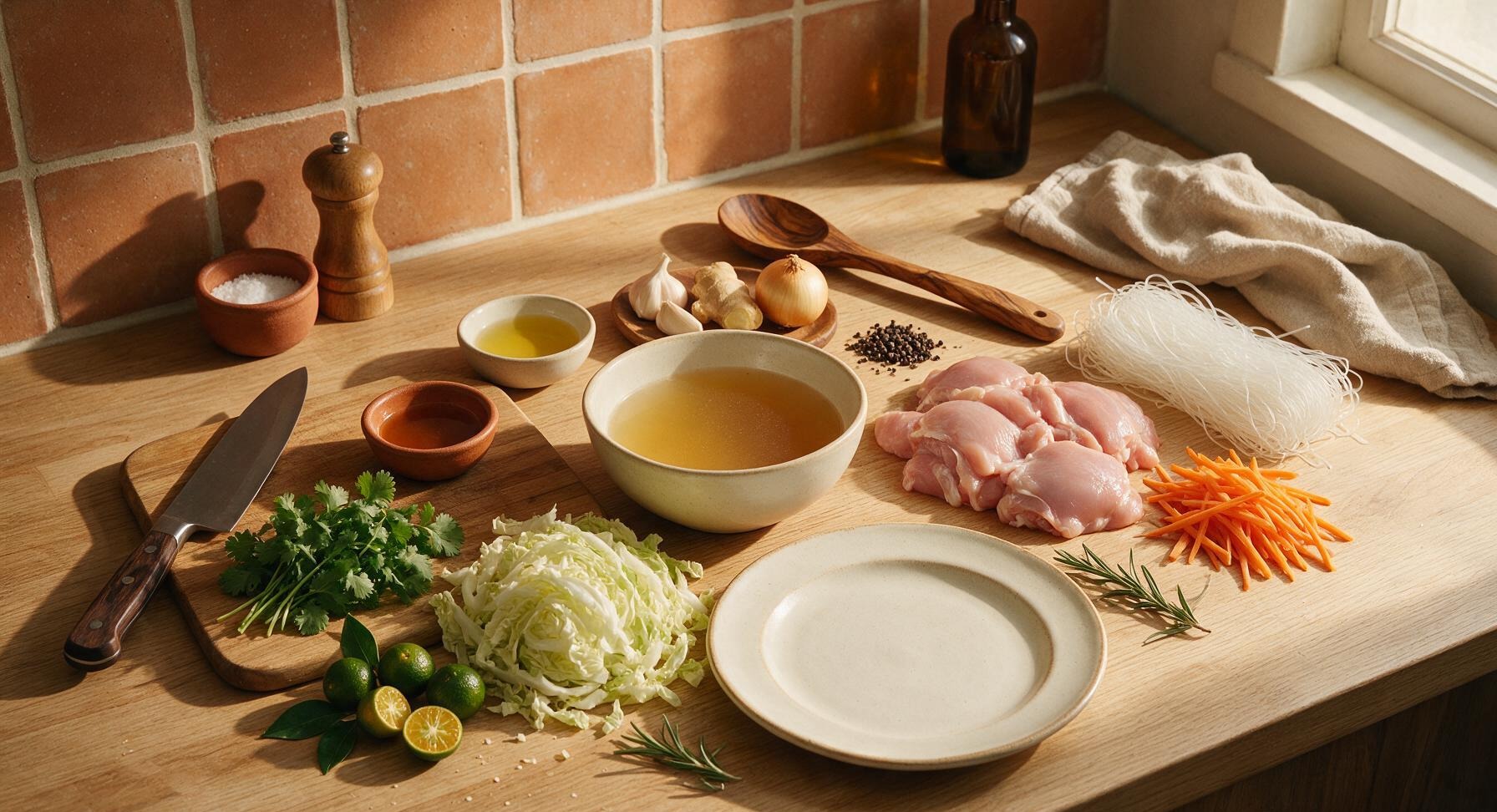
Sotanghon (bean thread glass noodles) 120g
Boneless skinless chicken thighs 300g
Low-sodium chicken broth 6 cups (1.4L)
Garlic cloves 3 cloves (15g)
Fresh ginger 1-inch knob (10g)
Yellow onion 1 small (100g)
Carrot 1 small (75g)
Napa cabbage 2 cups (150g)
Neutral canola oil 1.5 tbsp
Fish sauce 2 tbsp
Black peppercorns 1 tsp, crushed
Fresh cilantro 1/4 cup, chopped
Calamansi limes 4 pieces

Steps

1

Soak Glass Noodles

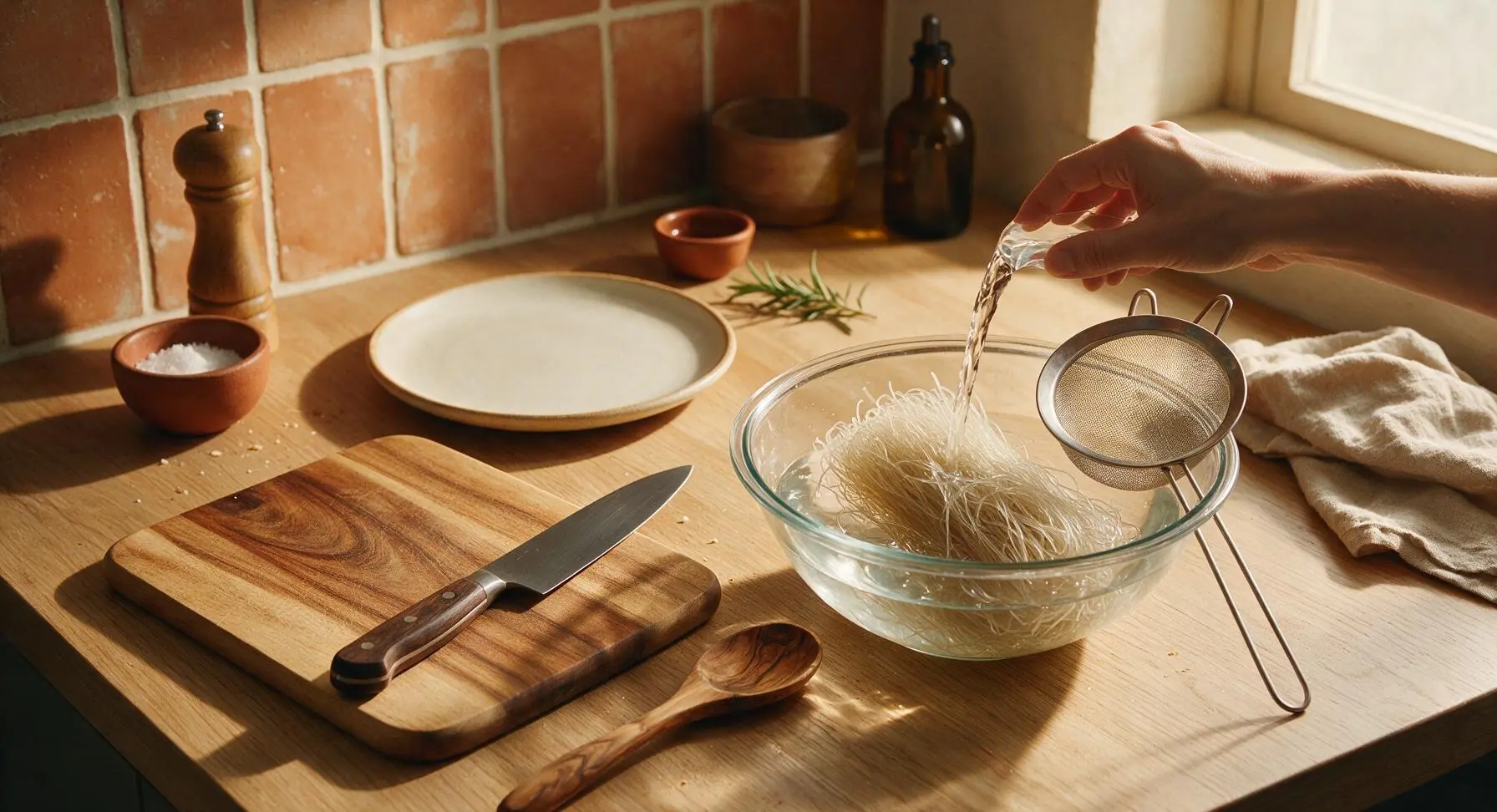
Place 120g dry sotanghon (bean thread glass noodles) into the 20cm clear tempered glass mixing bowl. Pour enough room-temperature tap water over the noodles to fully submerge them. Set aside to soak for 10 minutes, until noodles are flexible but retain a slight firmness (they will finish cooking in the hot soup). Once soaked, drain noodles completely using the 12cm fine-mesh stainless steel strainer, and return to the bowl to set aside. Avoid using hot water for soaking, as this will cause noodles to turn mushy during cooking.
Step 1
step1:Soak Glass Noodles
2

Prep Aromatics and Veggies

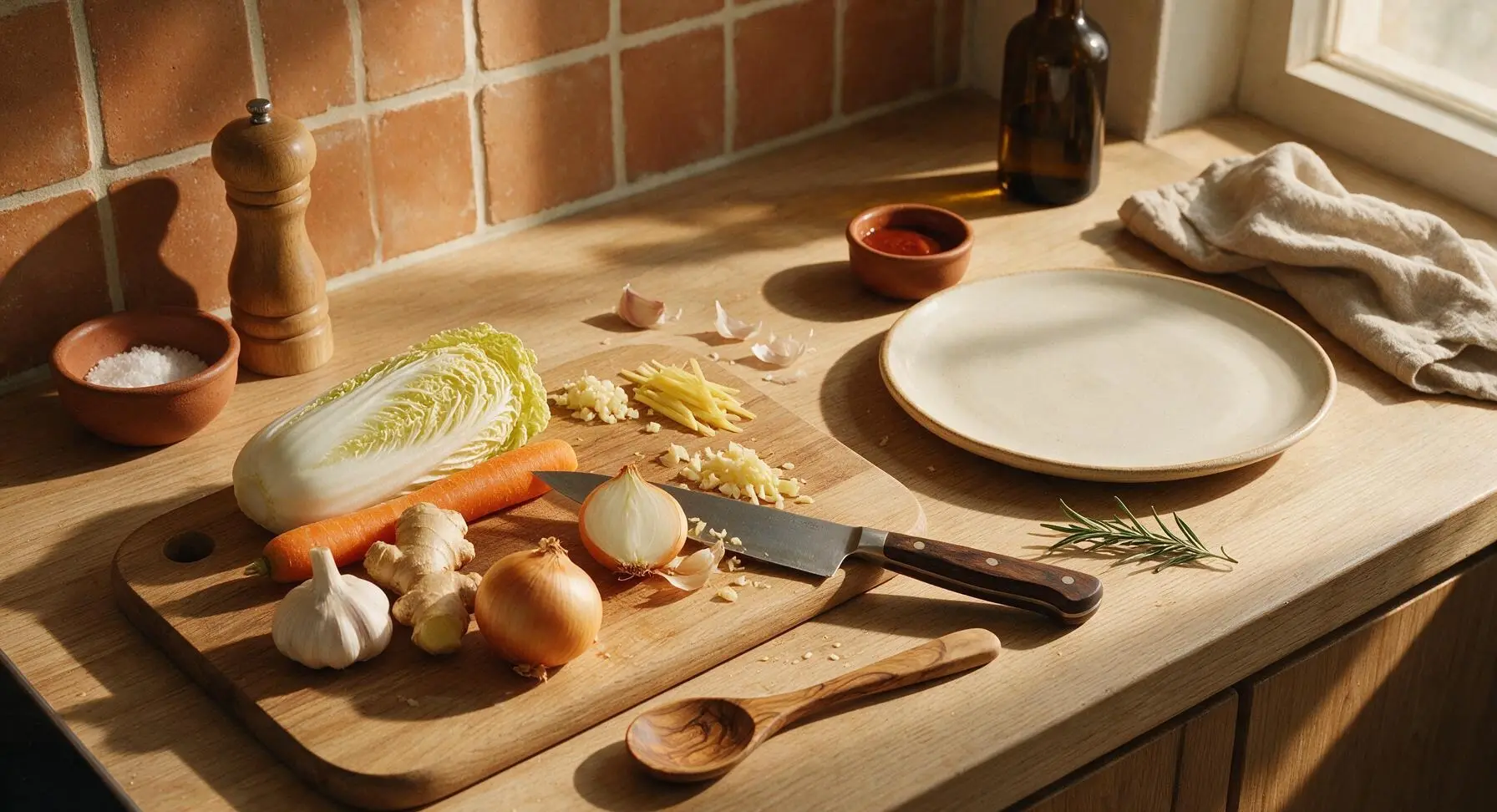
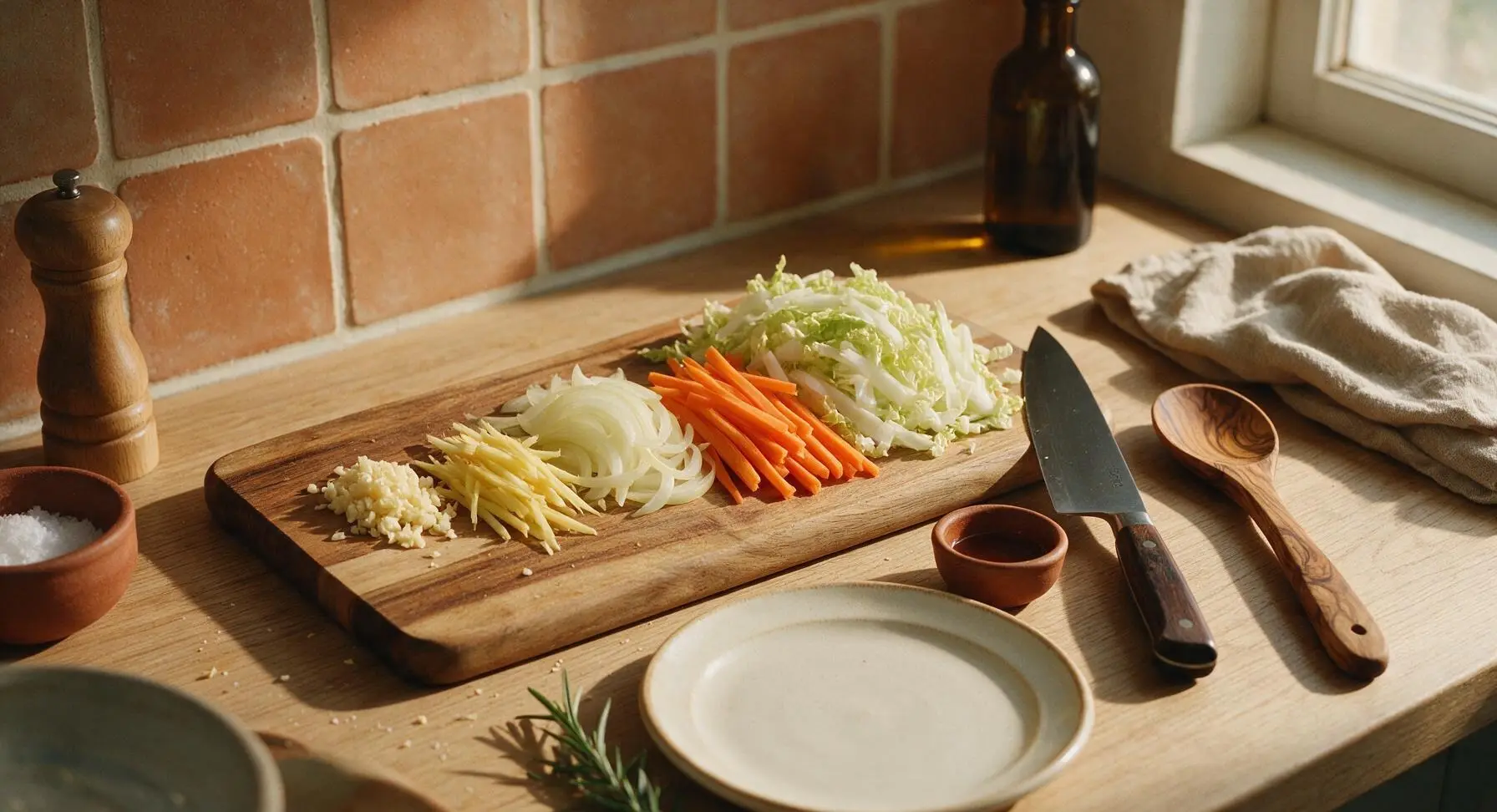
Place the acacia wood cutting board at center-left of the counter. Using the 8-inch chef knife, peel and mince the 3 garlic cloves, peel and julienne the 1-inch ginger knob, thinly slice the 1 small yellow onion, julienne the small carrot into 2-inch matchsticks, and shred the napa cabbage into 1-inch wide strips. Keep each prepped ingredient in separate small piles on the cutting board for easy access. Chop the 1/4 cup cilantro and set aside on a terracotta saucer with the 4 calamansi limes for garnish.
Step 2
step2:Prep Aromatics and Veggies
Step 2
step2:Prep Aromatics and Veggies
3

Sauté Aromatic Base

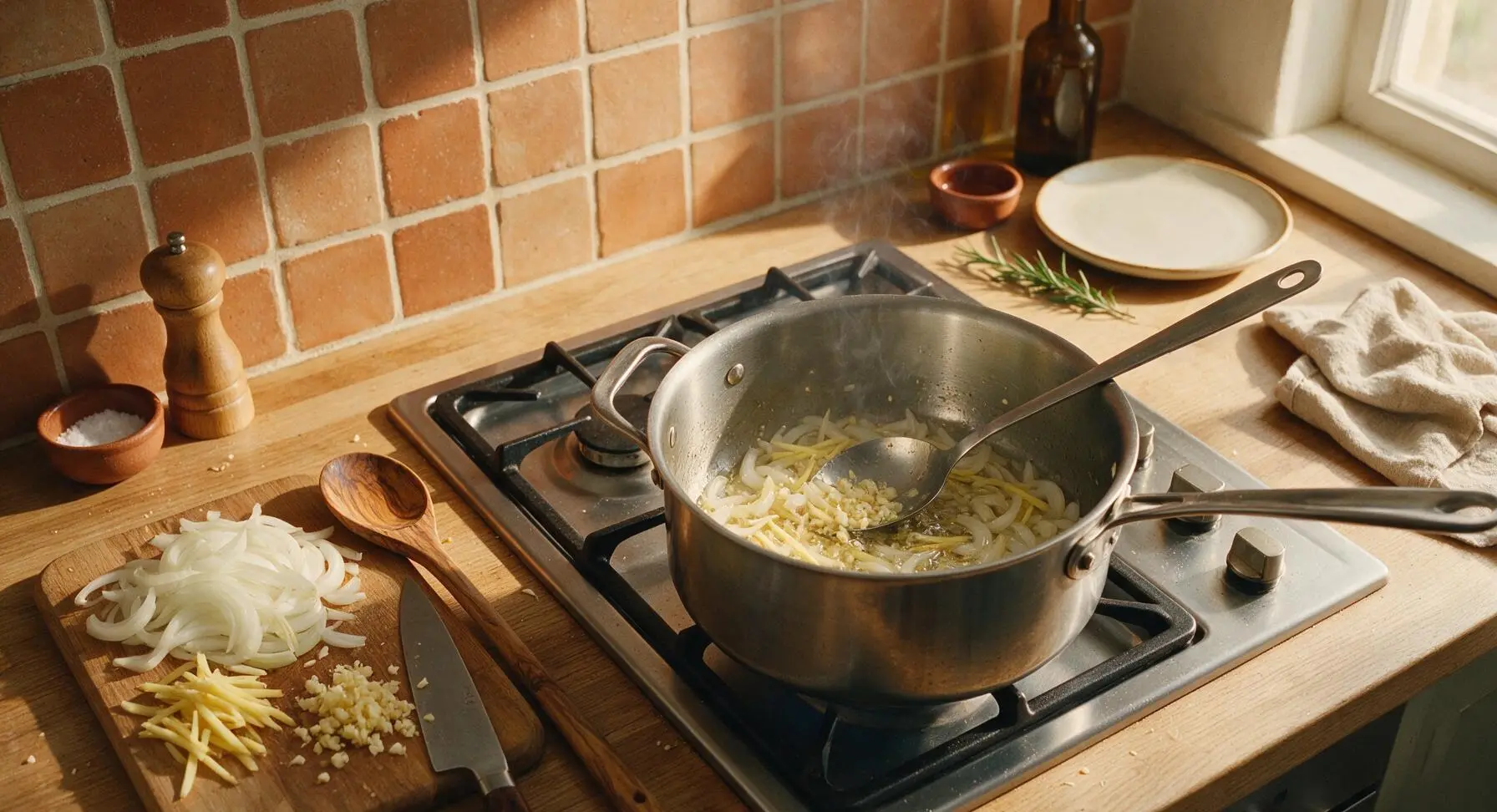
Place the 4-quart brushed stainless steel stock pot on the right burner of the gas cooktop, turn heat to medium. Add 1.5 tablespoons neutral canola oil, and heat for 30 seconds until oil shimmers. Add the minced garlic, julienned ginger, and sliced onion to the pot. Sauté for 2-3 minutes, stirring occasionally with the long-handled stainless steel ladle, until onions turn soft and translucent, and garlic is fragrant but not browned (burnt garlic will make the broth bitter).
Step 3
step3:Sauté Aromatic Base
4

Poach Chicken in Broth

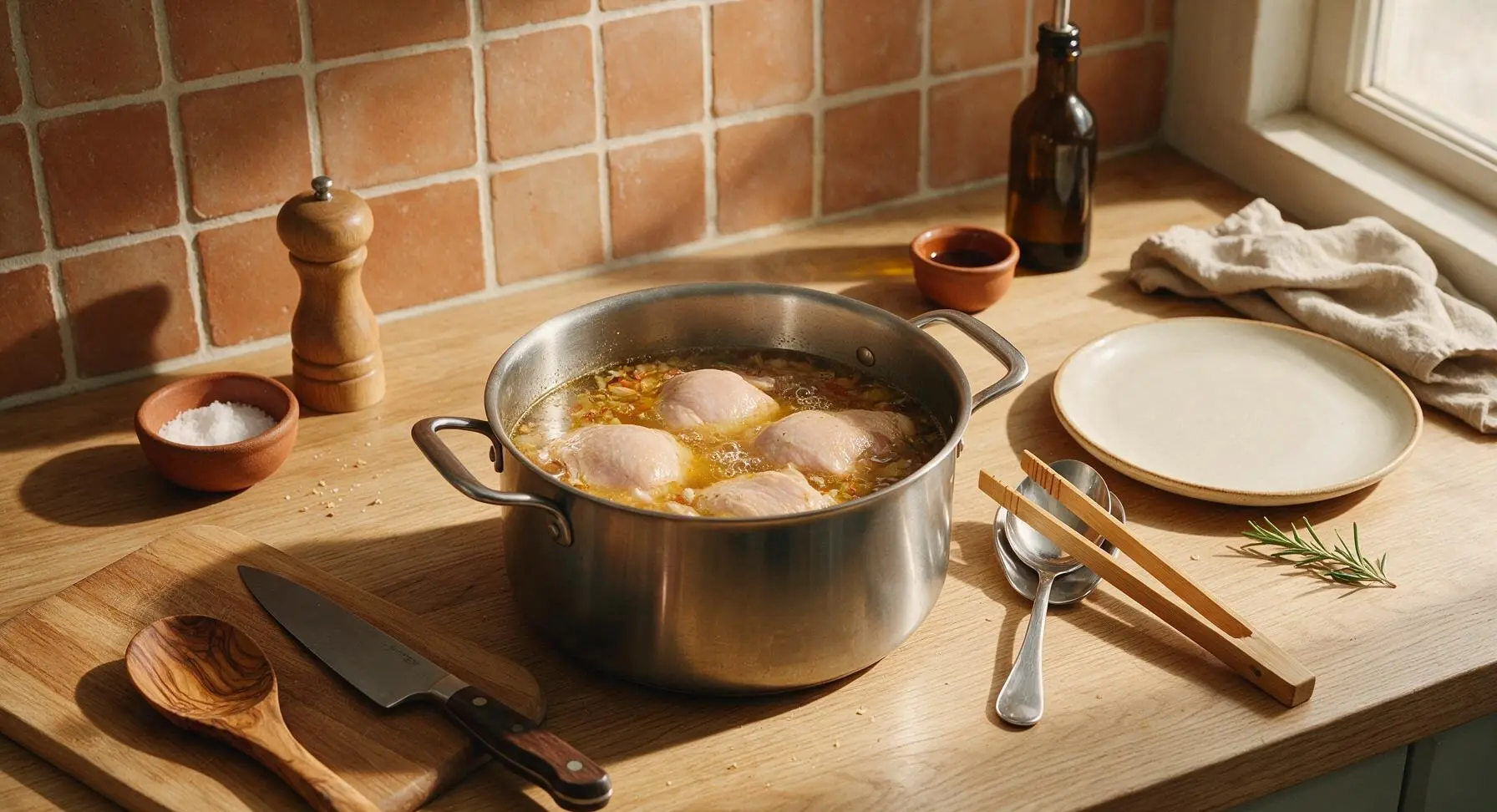
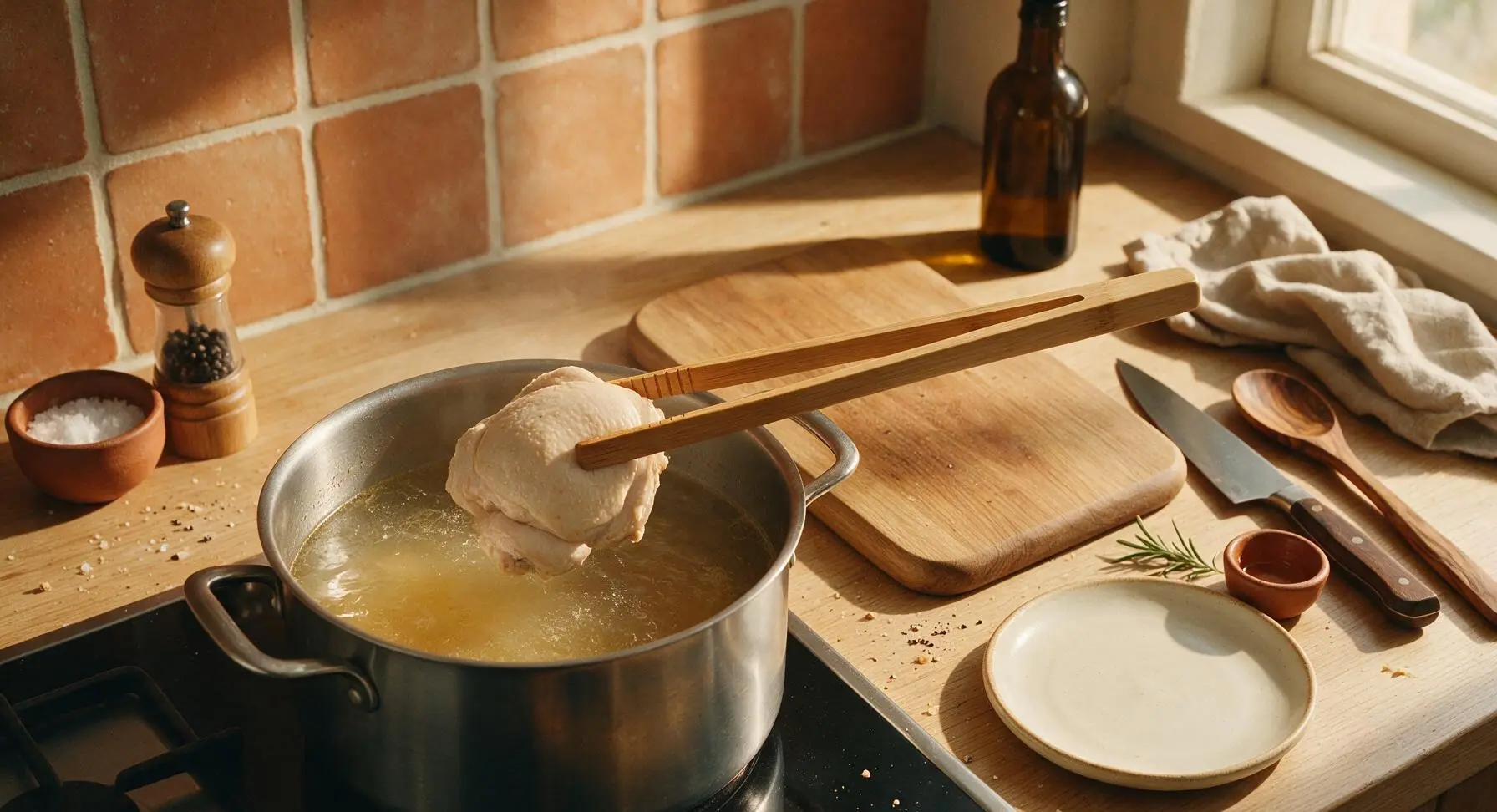
Pour the 6 cups low-sodium chicken broth into the stock pot with the sautéed aromatics. Add the 300g whole boneless skinless chicken thighs and 1 teaspoon crushed black peppercorns. Bring the broth to a gentle rolling boil, then reduce heat to medium-low, cover, and simmer for 8 minutes until chicken is fully cooked (internal temperature 75C/165F, no pink remaining when cut into). Use the bamboo tongs to lift chicken out of the broth and transfer to the clean cutting board to cool for 5 minutes.
Step 4
step4:Poach Chicken in Broth
Step 4
step4:Poach Chicken in Broth
5

Shred Poached Chicken

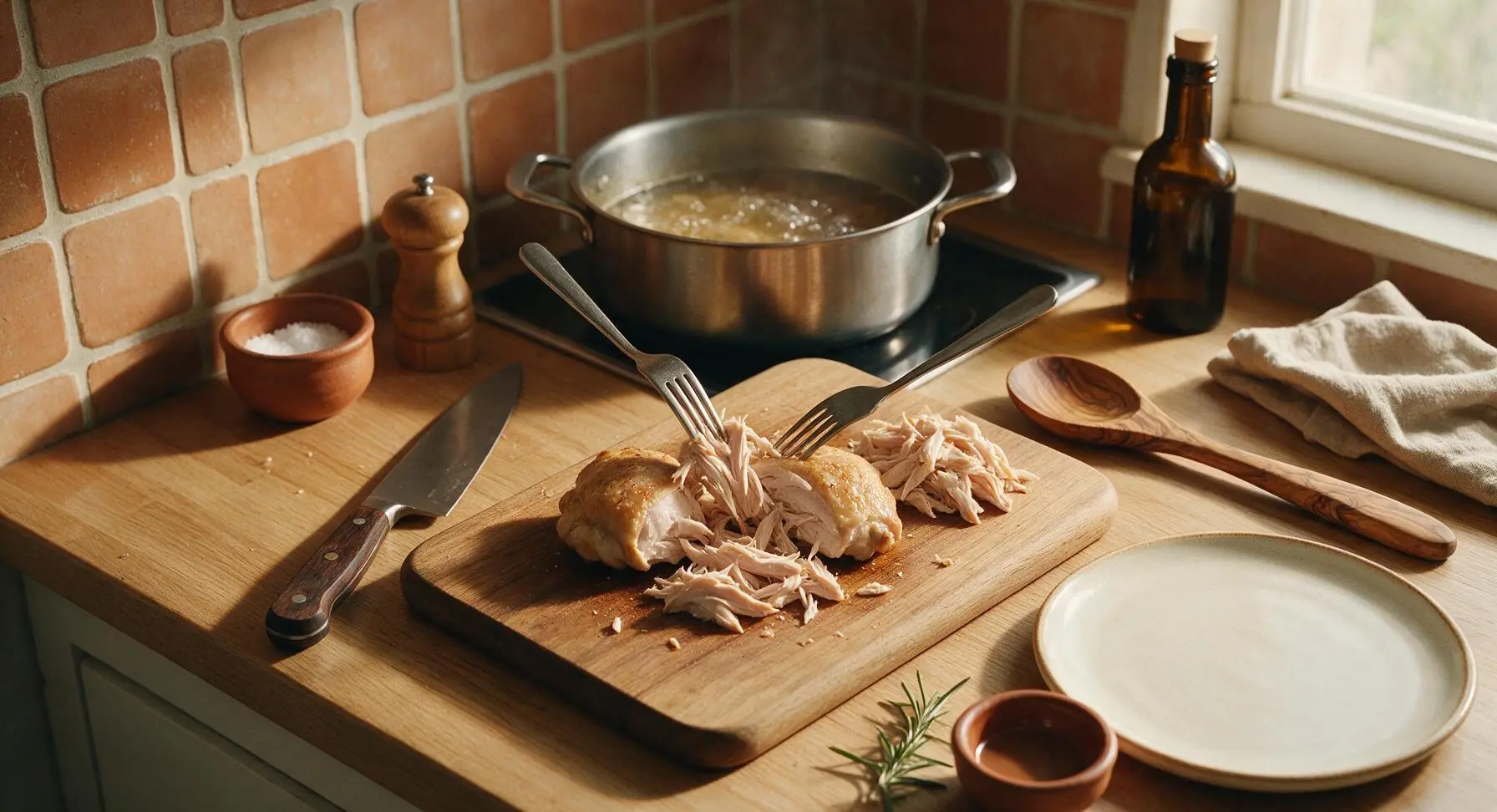
Once the cooked chicken thighs are cool enough to handle, use two forks to shred the meat into thin, 1/2-inch bite-sized strips, discarding any tough connective tissue. Do not shred the chicken too finely, as wider strips hold up well in the soup and provide satisfying texture. Return the shredded chicken to a small pile on the cutting board, ready to add back to the soup.
Step 5
step5:Shred Poached Chicken
6

Simmer Veggies and Noodles

Bring the broth back up to a gentle simmer over medium heat. Add the julienned carrot and shredded napa cabbage to the pot, cook for 2 minutes until vegetables are crisp-tender. Add the drained soaked sotanghon noodles and shredded chicken back to the pot, stir gently with the ladle to combine. Stir in 2 tablespoons fish sauce, then taste and adjust seasoning if needed (add an extra splash of fish sauce for saltiness if desired). Simmer for 1 final minute, until noodles are fully translucent and tender—do not overcook, as noodles will continue to absorb broth after serving.
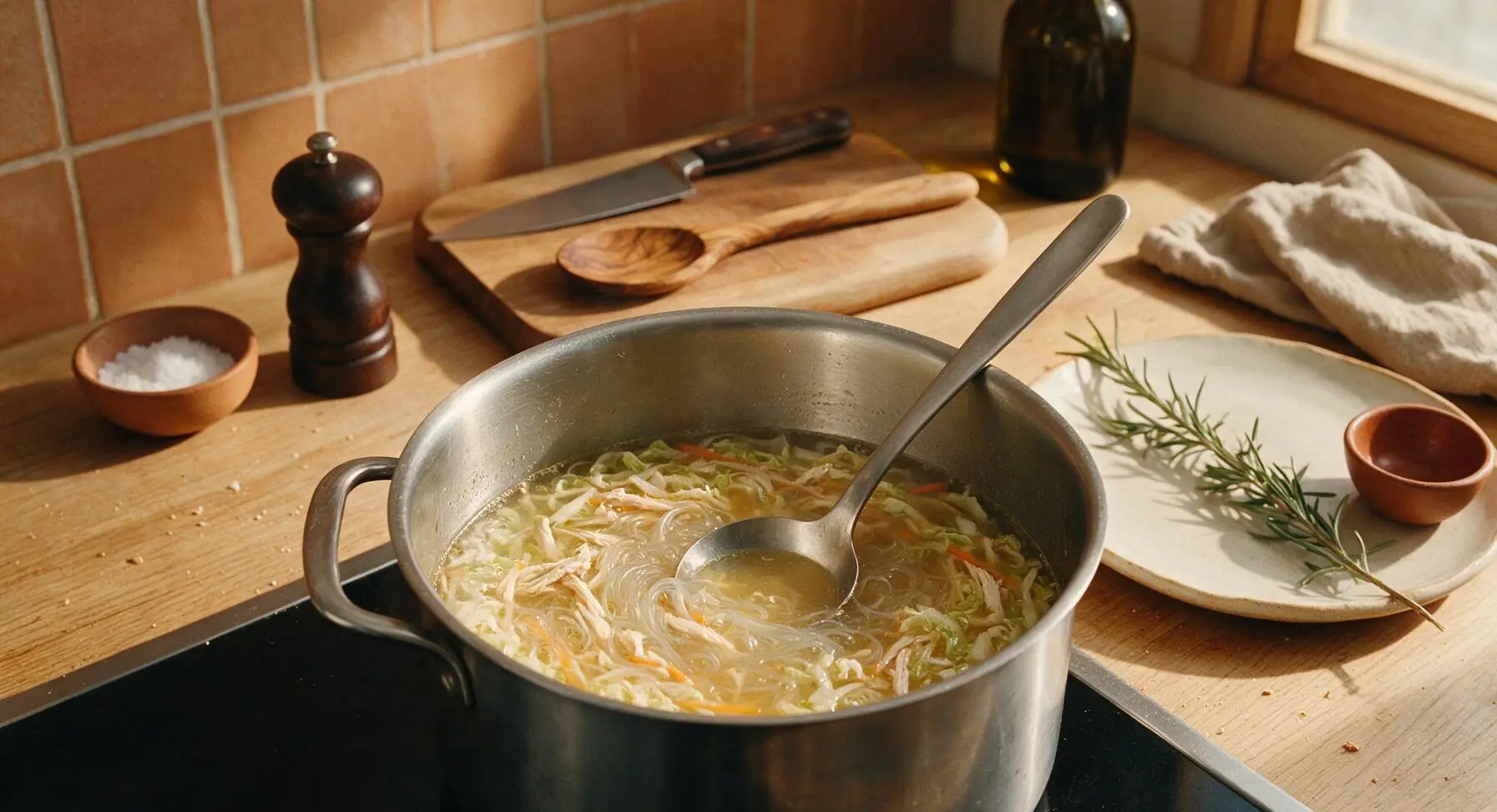
Step 6
step6:Simmer Veggies and Noodles
7

Ladle and Garnish Soup

Turn off the heat under the stock pot. Ladle the hot soup, noodles, chicken, and vegetables evenly into the matte cream white ceramic soup bowls. Top each bowl with a sprinkle of chopped fresh cilantro, and serve with a halved calamansi lime on the rim (squeeze calamansi over the soup right before eating for a bright, tart kick). Serve immediately, with extra fish sauce on the side for guests to adjust to taste.
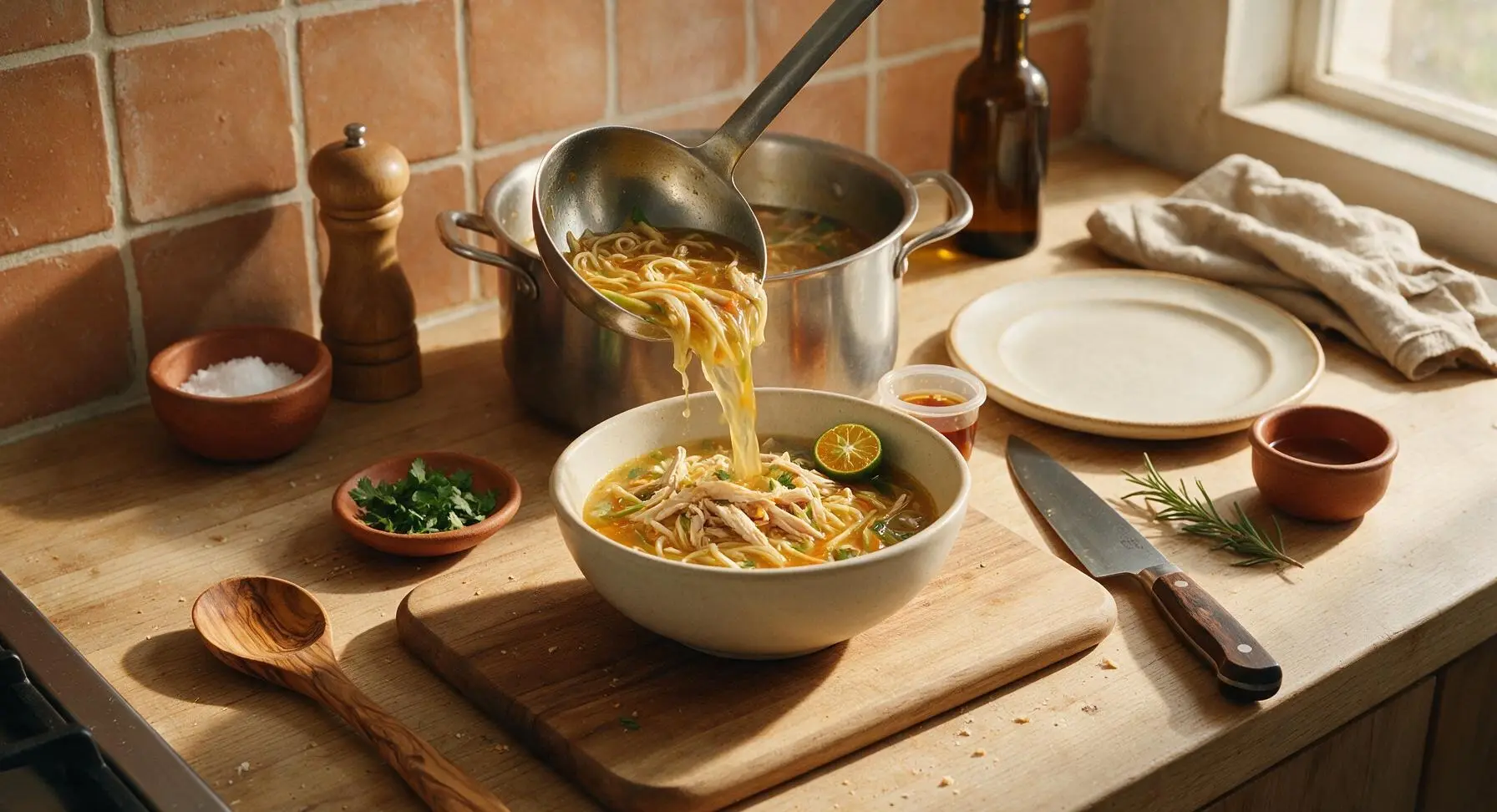
Step 7
step7:Ladle and Garnish Soup

Tips

1.Always soak sotanghon noodles in cold (not hot) water for 10 minutes: Hot water breaks down the noodle starch too quickly, leading to mushy, broken noodles that disintegrate in broth, while cold soaking keeps them springy and chewy through the final short simmer.
2.Use boneless chicken thighs instead of breast meat: Thighs stay tender and juicy even if slightly over-simmered, and add rich, savory depth to the broth, whereas lean chicken breast easily turns dry and stringy in hot soup.
3.Add noodles during the final 60 seconds of cooking: Bean thread noodles absorb liquid extremely quickly; overcooking them will cause them to soak up most of your broth and turn gummy, leaving you with a dense, noodle-heavy dish instead of a light, balanced soup.

✨ You May Also Like

Soups & Stews
🍜 Japan

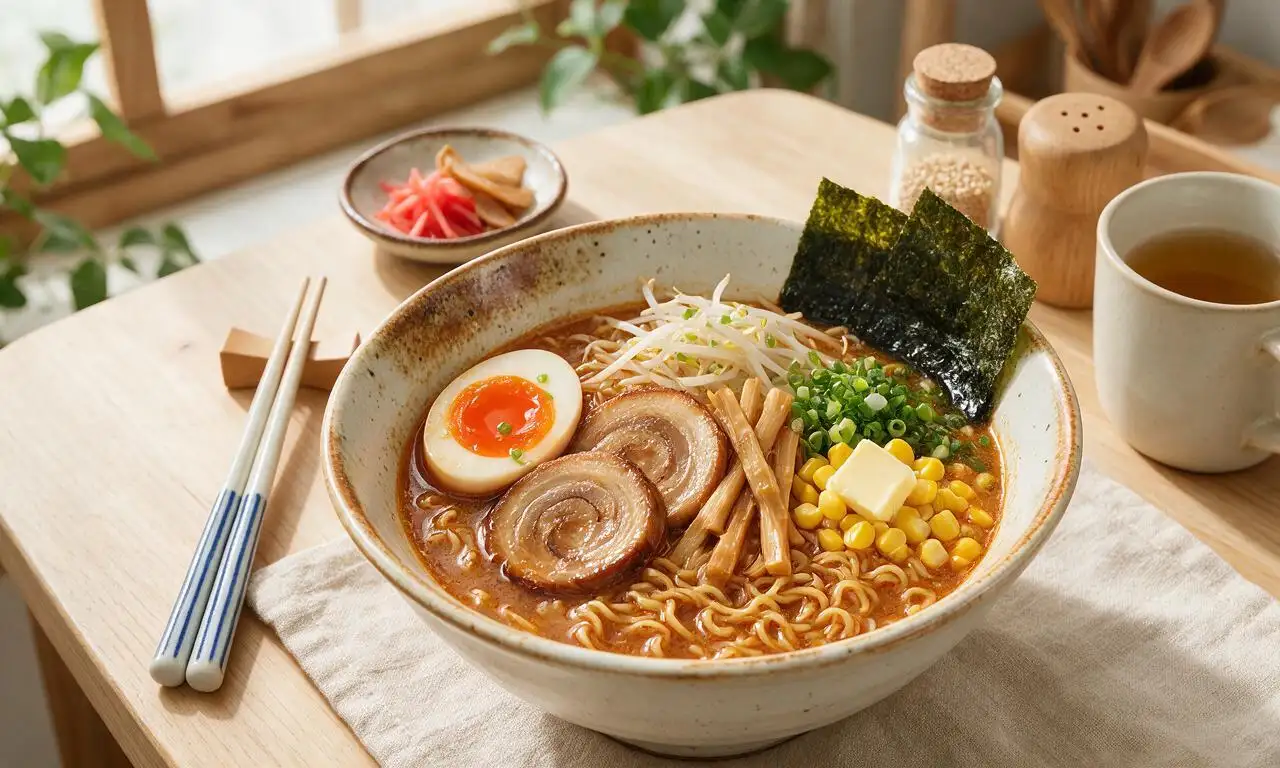
Rich, umami-dense Hokkaido-style miso ramen with chewy noodles, savory fermented broth, and classic toppings, a cozy, deeply satisfying warm meal.

⏱️ 45 minuteSoups & Stews ★ 4.5
Soups & Stews
🍜 United States

A hearty, peppery tripe and root vegetable stew with colonial Philadelphia roots, thick, warming, and packed with bold savory flavor for cold winter days.

⏱️ 2 hours 3Soups & Stews ★ 4.6
Soups & Stews
🍜 Mexico

Hearty, warming red pork posole loaded with tender hominy, slow-simmered in a rich smoky chile broth, served with zesty fresh garnishes for a deeply comforting, satisfying meal.

⏱️ 2 hours 3Soups & Stews ★ 4.7
Soups & Stews
🍜 United States

Warm, soothing classic chicken noodle soup loaded with tender chicken, soft egg noodles, and savory veggies, perfect for chasing chills and feeding the whole family.

⏱️ 40 minuteSoups & Stews ★ 4.9
Soups & Stews
🍜 France

Deeply savory caramelized onion broth topped with crusty bread and bubbly melted Gruyère, a timeless French bistro comfort food ideal for cold days.

⏱️ 1 hour 25Soups & Stews ★ 4.8
Soups & Stews
🍜 United States

Hearty, briny Maryland crab soup loaded with sweet blue crab, tender summer vegetables, and zesty Old Bay, a beloved Chesapeake Bay coastal comfort staple.

⏱️ 55 minuteSoups & Stews ★ 4.9

sotanghon soup:Frequently Asked Questions

1.What exactly is sotanghon, and can I substitute it if I can’t find it locally? ▾
Sotanghon is thin, translucent bean thread noodles made from mung bean starch, prized for its silky, slurpable texture that soaks up broth flavor beautifully. If you can’t find it, the closest substitute is potato starch cellophane noodles, but skip rice vermicelli—it has a chewier, firmer bite that doesn’t match the classic soup profile.
2.Why does this recipe call for boneless, skinless chicken thighs instead of chicken breast? ▾
Boneless, skinless chicken thighs stay juicy and tender even when simmered in broth, unlike lean chicken breast which easily turns dry and rubbery with just a minute too much cooking. They also add a subtle, rich savoriness to the broth that lean white meat can’t match, core to the soup’s home-style comfort.
3.Do I need to soak sotanghon noodles before adding them to the soup? ▾
Yes, give dry sotanghon noodles a 10 to 15 minute soak in room-temperature water first to soften them just enough so they cook evenly without turning mushy or absorbing too much broth too fast. Never soak them in hot water—that makes the outer layer gummy before the center softens, leading to uneven texture.
4.Can I make this soup ahead for weekly meal prep? ▾
You can prep the garlic-ginger chicken broth, cooked chicken, and chopped veggies up to 3 days ahead in airtight fridge containers, but hold off on adding sotanghon noodles until right before serving. The noodles soak up broth extremely quickly and will turn bloated, mushy, and unappetizing if left sitting in soup overnight.
5.Why use low-sodium chicken broth instead of regular store-bought broth? ▾
Using low-sodium chicken broth gives you full control over the final salt level, since regular store-bought broth often has wildly high sodium content that can overpower the delicate garlic and ginger notes. You can always add a pinch of fish sauce or extra salt to taste at the end, but you can’t fix an overly salty broth.
6.How do I keep garlic and ginger from burning when sautéing the aromatics? ▾
Heat your oil over medium-low heat first, then add minced garlic and thinly sliced ginger, stirring constantly for 30 to 45 seconds until you smell their warm, fragrant aroma. Don’t walk away once they hit the pan—garlic burns in seconds, and burnt garlic will give your entire soup a bitter, unfixable off-flavor.
7.What veggies are traditional to add to Filipino sotanghon soup? ▾
Classic home-style add-ins include thinly sliced carrots, shredded napa cabbage, chopped green beans, and sliced shiitake mushrooms, all added in the last few minutes of cooking to stay crisp-tender. You can swap in other crisp veggies you have on hand, just avoid soft veggies like overcooked squash that make broth cloudy.
8.Can I adjust this recipe to make a vegetarian version of sotanghon soup? ▾
Absolutely. Swap chicken thighs for pan-fried cubed extra-firm tofu or extra shiitake mushrooms, replace chicken broth with low-sodium vegetable broth, and swap any fish sauce seasoning for low-sodium soy sauce or tamari to keep that deep umami flavor. Keep the garlic-ginger base to retain the soup’s warm, comforting core.
9.Why do my sotanghon noodles always turn out mushy when I make this soup? ▾
Mushy noodles almost always stem from two common mistakes: soaking noodles in hot water before adding them, or boiling them in broth for too long. Remember to soak noodles in cool water first, and only add them to gently simmering broth for the last 2 to 3 minutes of cooking, just until fully translucent and tender.
10.Can I freeze leftover sotanghon soup for later? ▾
I don’t recommend freezing fully assembled soup, because bean thread noodles break down and turn mushy when thawed and reheated, and crisp veggies will lose their bright texture. If you want to freeze portions, freeze the plain garlic-ginger broth and cooked chicken for up to 3 months, then add fresh noodles and veggies when reheating.
11.What seasonings do you recommend to finish this soup traditionally? ▾
Most Filipino home cooks finish sotanghon soup with a light splash of fish sauce for umami, a tiny pinch of freshly ground black pepper, a squeeze of fresh calamansi or lime juice for brightness, and a sprinkle of chopped scallions on top. Taste and adjust right before serving, since broth flavor concentrates as it simmers.
12.Can I use bone-in chicken instead of boneless thighs for this recipe? ▾
Absolutely—bone-in, skin-on chicken thighs will actually add even richer, deeper flavor to the broth if you have them on hand. Simmer bone-in thighs in the broth for 15 to 20 minutes until cooked through, then pull them out, shred the meat, discard bones and skin, and add the chicken back to the soup.
13.How do I keep the soup broth from turning starchy and cloudy? ▾
Don’t overcook the noodles, and give soaked sotanghon a quick rinse in cool water before adding it to broth to wash off excess surface starch. Add crisp veggies in the last few minutes of cooking instead of boiling them for long periods, and skim any small foam bits off the top of simmering broth to keep it clear and light.
14.Is traditional sotanghon soup spicy? Can I add heat if I prefer it? ▾
Traditional home-style sotanghon is not spicy—it’s focused on the warm, mellow savoriness of garlic, ginger, and chicken broth. If you want a kick, stir in a pinch of red pepper flakes, a spoonful of chili garlic sauce, or a few slices of fresh Thai chili when sautéing aromatics to build heat without overpowering the core flavor.
15.What’s the best way to reheat leftover sotanghon without ruining the texture? ▾
If you have leftover assembled soup, reheat individual portions gently on the stovetop over low heat just until warmed through, avoiding a hard boil that will turn remaining noodles mushy fast. For the best texture long-term, store broth and noodles separately, then add fresh noodles to simmering broth when you reheat.
16.Can I add other proteins to this soup besides chicken? ▾
Definitely! While chicken is the most classic protein for home-style sotanghon, you can add peeled shrimp, thin slices of pork tenderloin, or even small cooked chicken meatballs for extra heartiness. Just adjust cook times accordingly: shrimp only need 2 to 3 minutes to cook through, while thin pork slices will turn tender in 3 to 4 minutes in simmering broth.

Comments (14)

2 hours ago

OMG this sotanghon soup is a total weeknight game changer! I got home late from my kid’s soccer practice, threw this together in 25 minutes exactly like the recipe said, and the whole family devoured it. I added a little extra garlic because we’re garlic fiends, and it was chef’s kiss. Already added this to our regular meal prep rotation!

30 minutes ago

Wait did you use chicken breast or thigh? I’m making this for our neighborhood potluck this weekend and want it extra juicy!

5 minutes ago

Great question! Boneless chicken thighs work perfectly for extra juicy, flavorful shreds, but breast works great too if that’s what you have on hand! Hope the potluck loves it :)

yesterday

My kids are SO picky about soups, usually they only want chicken noodle from the can, but they went back for SECONDS of this! I loved how easy it was, no fancy ingredients, I already had most of this stuff in my pantry. The glass noodles are such a fun texture, way better than regular egg noodles in my opinion.

2 hours ago

That makes us so happy to hear! It’s always a win when the picky eaters approve, right? So glad it worked out for your family dinner!

3 days ago

Made this on my camp stove last weekend when we were up in the mountains and it hit so different on a cold evening. Pre-chopped all the veggies at home so it came together in literally no time. 10/10, will be making this for all our future fall camping trips.

1 week ago

I grew up eating my lola’s sotanghon and I was skeptical a random online recipe would hit the same, but this is so close! I added a squeeze of calamansi on top like I do at home and it was perfect. Super easy to follow even for someone who barely cooks like me.

5 days ago

Oh the calamansi squeeze is non-negotiable for me too! I also add a tiny dash of fish sauce on top for extra savoriness, you should try it next time!

5 days ago

Made a big batch of this on Sunday for my work lunches this week and it’s holding up so well! The noodles don’t get mushy like I was worried they would, and the broth is so flavorful I don’t even get bored eating it three days in a row. Such a great easy recipe.

3 days ago

Wait how do you store it? I tried making glass noodle soup for meal prep once and the noodles soaked up all the broth by day two, total bummer!

2 days ago

I store the noodles and broth separate! Just heat the broth up and pour it over the noodles when you’re ready to eat, game changer for no mushy noodles.

1 week ago

Brought this to my office potluck last week and people were asking me for the recipe before we even got to dessert! I topped it with some fried garlic and green onions for a little extra crunch, it looked so fancy no one believed it only took me 25 minutes to make.

2 days ago

Made this for my husband last night when he was feeling under the weather, and he said it’s better than the chicken noodle soup his mom makes (don’t tell her!). It was so warm and comforting, exactly what we needed on a rainy night. Only note is I added a little extra ginger because we love that zing.

yesterday

Aww, that’s such a sweet review! Extra ginger is such a good call, especially when someone’s feeling sick – it adds such a nice warm kick. Hope your husband is feeling better now!

3 days ago

Made this fully vegetarian by swapping the chicken broth for vegetable broth and adding tofu instead of chicken, and it was still SO good! The flavor base is so solid you can really swap in whatever protein or veggies you have lying around. Love flexible recipes like this.

2 days ago

Love that modification! We’re big fans of swapping in tofu and extra veggies too – the shiitake mushrooms in the recipe pair so nicely with crispy tofu, right?

yesterday

Ooh I did the same thing! Added some bok choy too for extra greens, it was so hearty I didn’t even miss the chicken!

30 minutes ago

I’m literally the worst cook ever, I burn toast half the time, but even I could pull this off! The instructions are so straightforward, no weird steps, and it tastes like something you’d order at a Filipino restaurant. 10/10, no notes.

5 minutes ago

Same here! I was intimidated to try making any kind of Asian soup at home but this was so easy, I felt like a real chef when my roommate asked if I ordered takeout lmao

2 weeks ago

Made this last night when it was 30 degrees outside and it warmed me right down to my bones. I added some hard boiled eggs on top like I saw in some other sotanghon recipes and that was a chef’s touch. Perfect cozy soup, can’t wait to make it all winter long.

5 minutes ago

25 minute cook time is NOT a lie! I timed it, from walking in the door to serving it up for me and my daughter was exactly 24 minutes. I used shredded rotisserie chicken from the grocery store to cut down even more on time, and it worked perfectly. Great recipe for busy parents.

just now

The rotisserie chicken hack is one of our all-time faves for busy weeknights! So smart, saves so much time without skipping on flavor. So glad you and your daughter enjoyed it!

2 days ago

I added a big spoonful of chili garlic oil to my bowl and wow, that heat paired so well with the savory broth! This is such a good base recipe, you can really customize it to whatever your taste preferences are. My only complaint is I wish I made a bigger batch, it was gone in 10 minutes.

yesterday

Chili garlic oil on this is LIFE CHANGING. I did the same thing, plus a sprinkle of white pepper, and I ate two full bowls in one sitting no shame.

2 hours ago

We love the chili oil addition! It adds such a perfect little kick – we’ll definitely be trying that next time we make a batch ourselves, thanks for the tip!

1 week ago

I’ve been making sotanghon for family gatherings for 30 years, and I tried this recipe last weekend for my grandson’s birthday party. Even my own sister asked me for the recipe! The little bit of annatto powder gives it the perfect color and depth, I never thought to add that before. Great job on this recipe.

2 hours ago

Made this in my dorm room with my little electric hot pot and it was so much better than the dining hall food! All the ingredients were cheap and easy to find at the regular grocery store, no special Asian market trip needed. Saved my wallet and my taste buds this week.

30 minutes ago

Wait this is such a good idea! I have a hot pot in my dorm too, I’m making this tomorrow instead of wasting money on takeout. Thanks for the inspo!