Swiss Cheese Scrambled Eggs

title 1
Swiss Cheese Scrambled Eggs
⏱️ cook time 5 minutes
🍽️ servings 2
⚡ Difficulty easy

intro

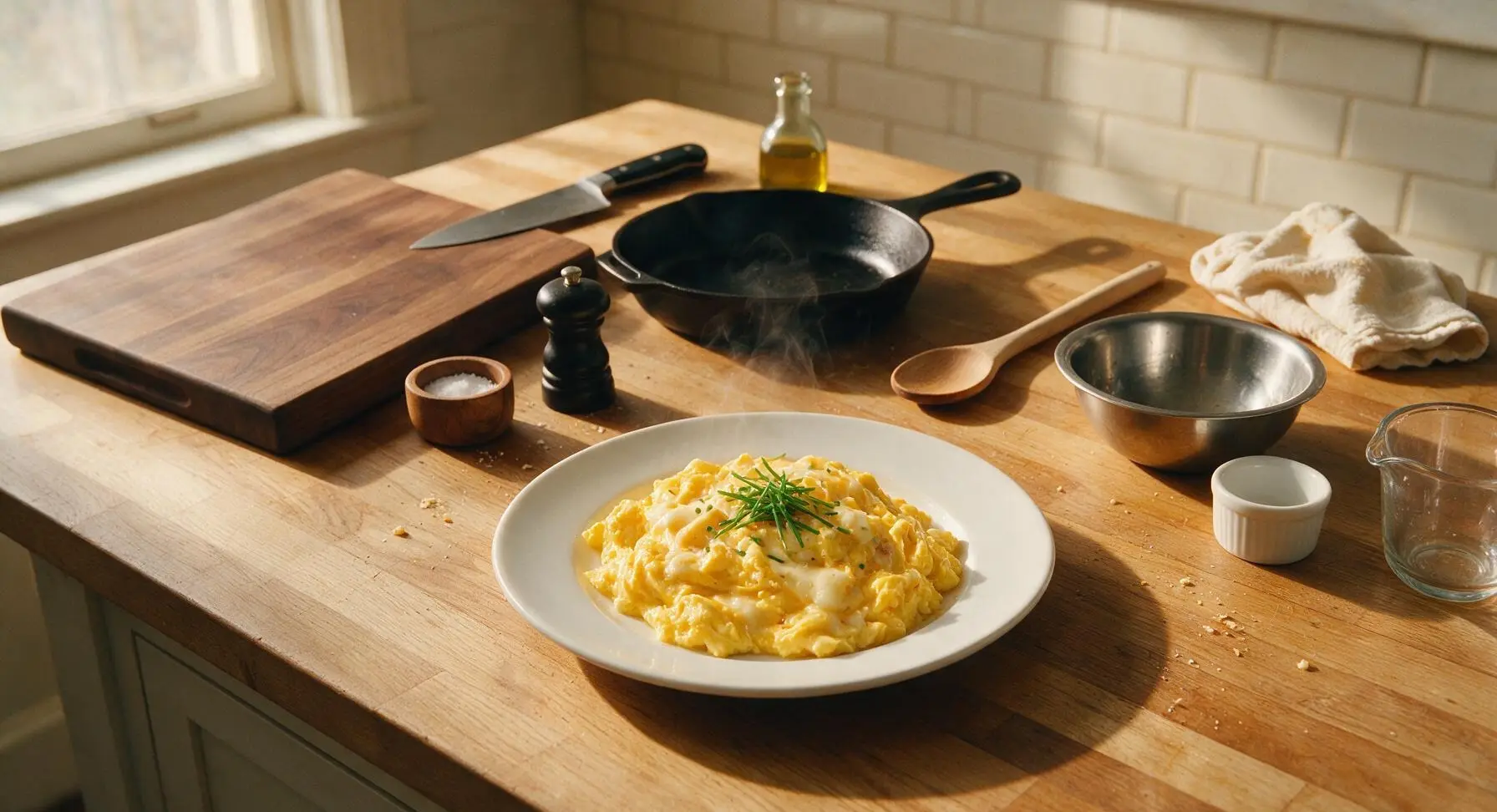
Silky, soft-curd scrambled eggs folded with nutty melted Swiss cheese, finished with bright fresh chives. Rich, velvety, and ready in 10 minutes for a satisfying, fuss-free meal.

Ingredients
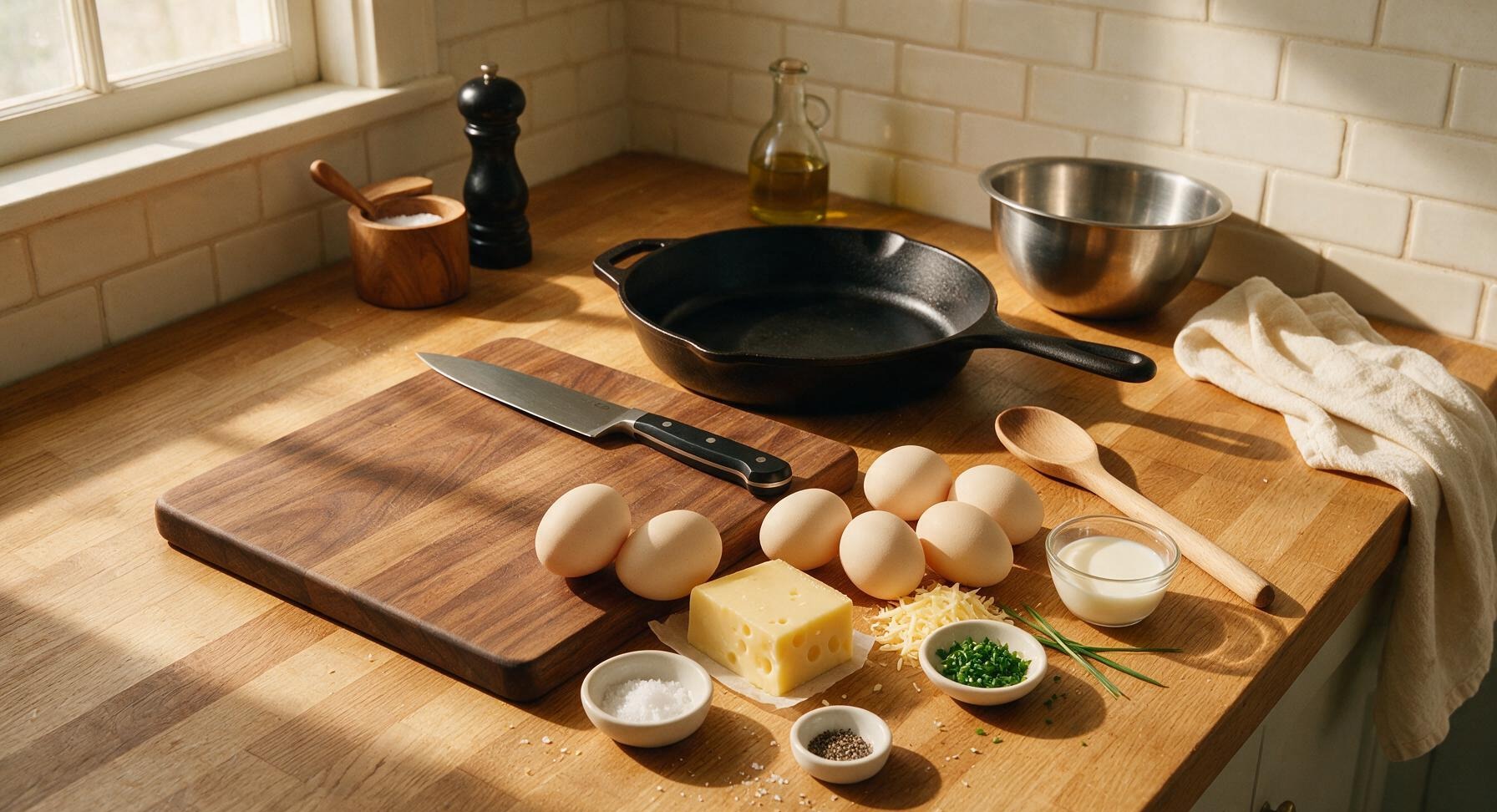
Large eggs 6 (about 300g)
Swiss cheese (Emmental, block) 115g (1 cup shredded)
Unsalted butter 1 tbsp (14g)
Whole milk 2 tbsp (30ml)
Fresh chives 1 tbsp (5g, chopped)
Flaky sea salt 1/4 tsp
Freshly ground black pepper 1/8 tsp

Steps

1

Prep Cheese and Chives

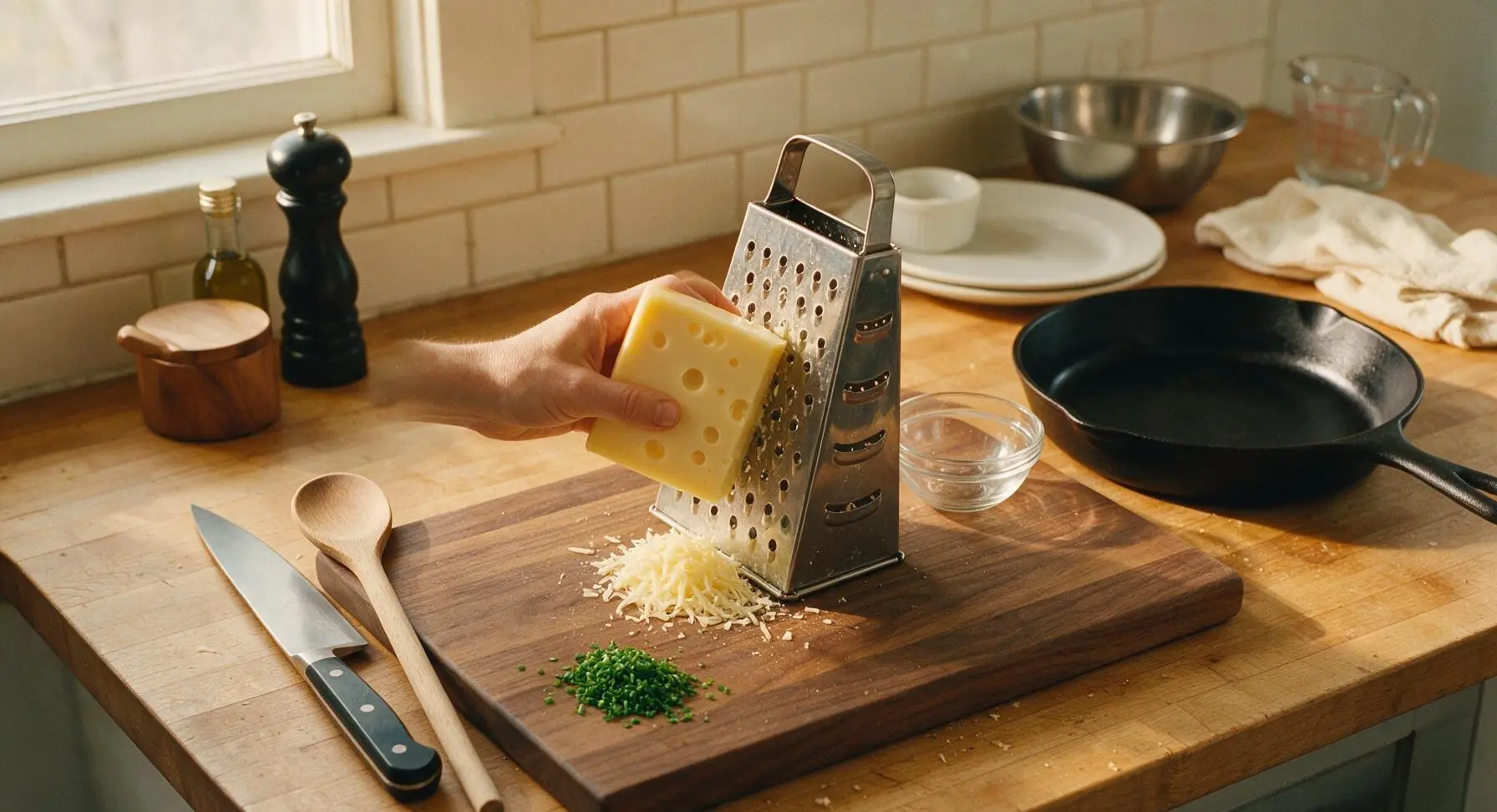
Place the block of Swiss cheese on the beech wood cutting board. Hold the stainless steel box grater at a 45-degree angle, and shred the cheese on the medium-sized holes to yield 1 loosely packed cup (115g). Transfer shredded cheese to the small clear glass prep bowl. Next, finely chop the fresh chives into 1/4-inch pieces, and set aside in a small pile on the edge of the cutting board. Do not use pre-shredded cheese, as anti-caking coatings prevent smooth melting.
Step 1
step1:Prep Cheese and Chives
2

Whisk Egg Mixture

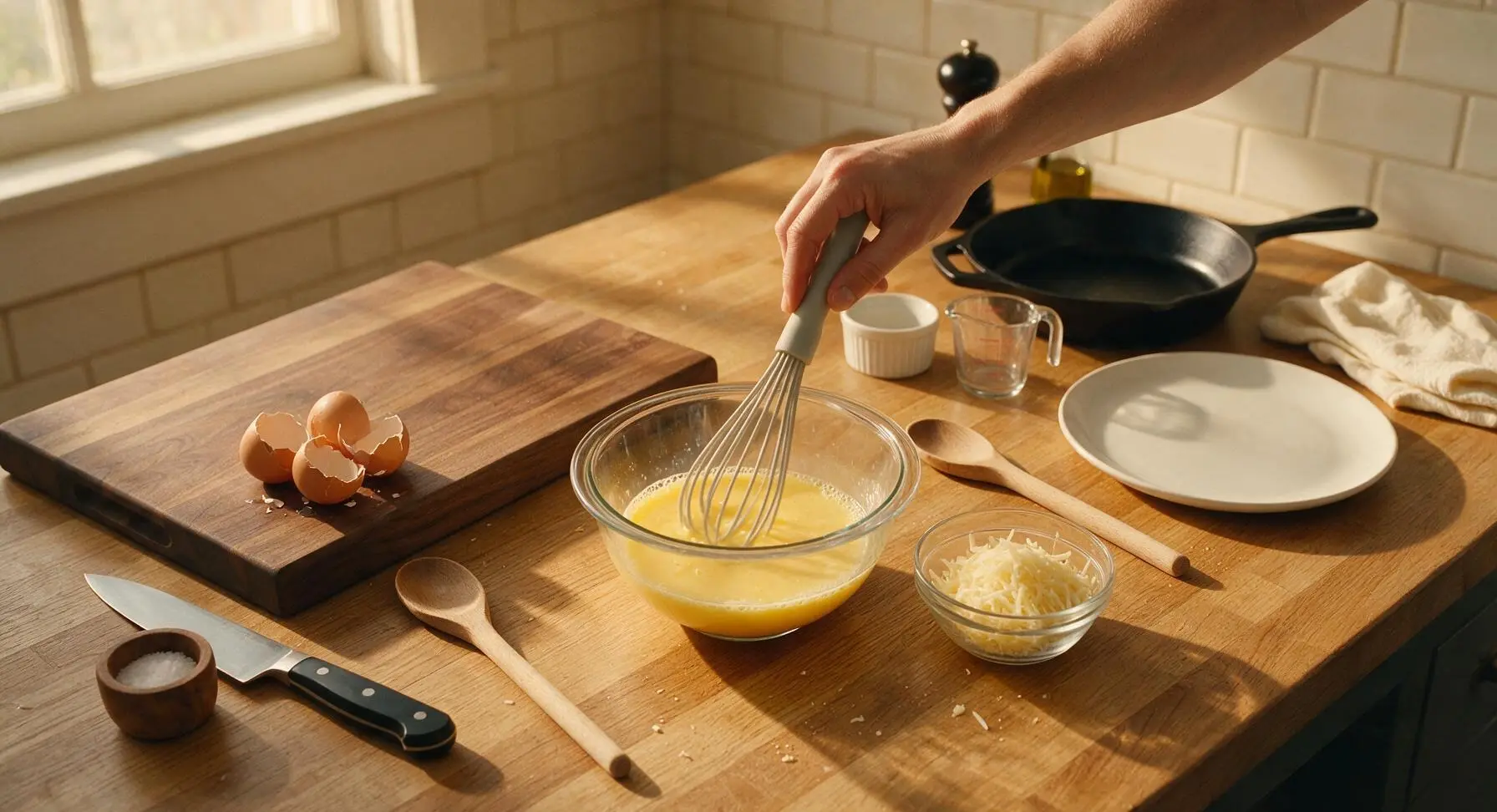
Crack all 6 large eggs into the medium clear glass mixing bowl. Add 2 tablespoons whole milk, 1/4 tsp flaky sea salt, and 1/8 tsp freshly ground black pepper. Use the light gray silicone whisk to beat the mixture for 30-45 seconds until yolks and whites are fully combined, with a pale uniform yellow color and a thin layer of small bubbles on the surface. Do not over-whisk, as this can incorporate too much air and make eggs tough and watery.
Step 2
step2:Whisk Egg Mixture
3

Melt Butter in Pan

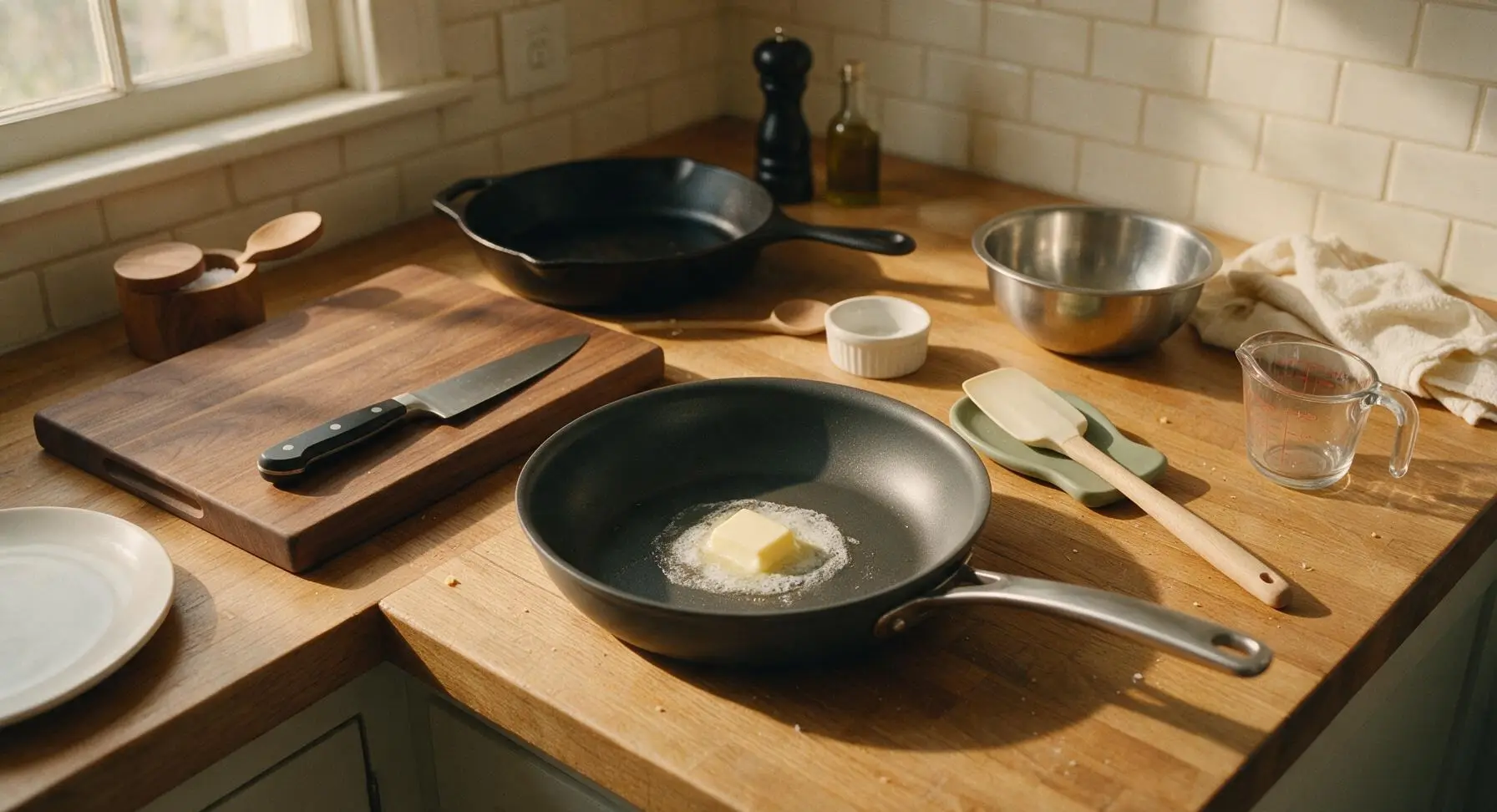
Pull the 8-inch matte charcoal nonstick skillet forward from the stovetop ledge to the central cooking zone, set heat to medium-low (stovetop setting 3 out of 10). Add 1 tablespoon unsalted butter to the pan, and allow it to melt fully over 1-2 minutes, swirling occasionally, until it foams slightly but does not turn golden brown. If butter starts to brown, reduce heat immediately to avoid a burnt, bitter flavor.
Step 3
step3:Melt Butter in Pan
4

Pour Eggs Into Skillet

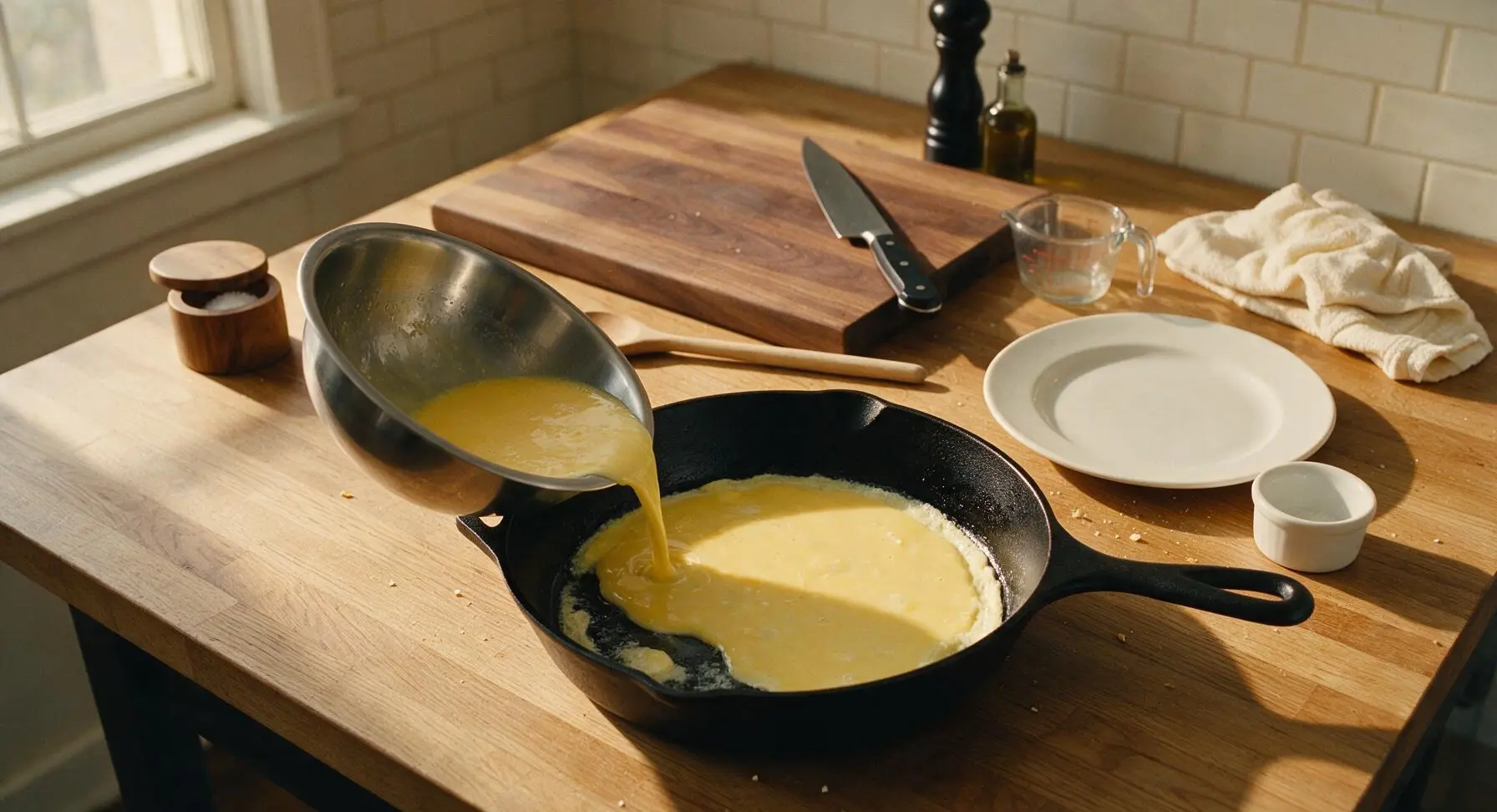
Once butter is fully melted and foaming has subsided, pour the entire whisked egg mixture into the center of the skillet. Let the eggs sit undisturbed for 15-20 seconds, until you see a thin layer of soft set egg form around the edges of the pan. Do not stir immediately, as constant early stirring prevents large, tender curds from forming.
Step 4
step4:Pour Eggs Into Skillet
5

Gently Stir Curds

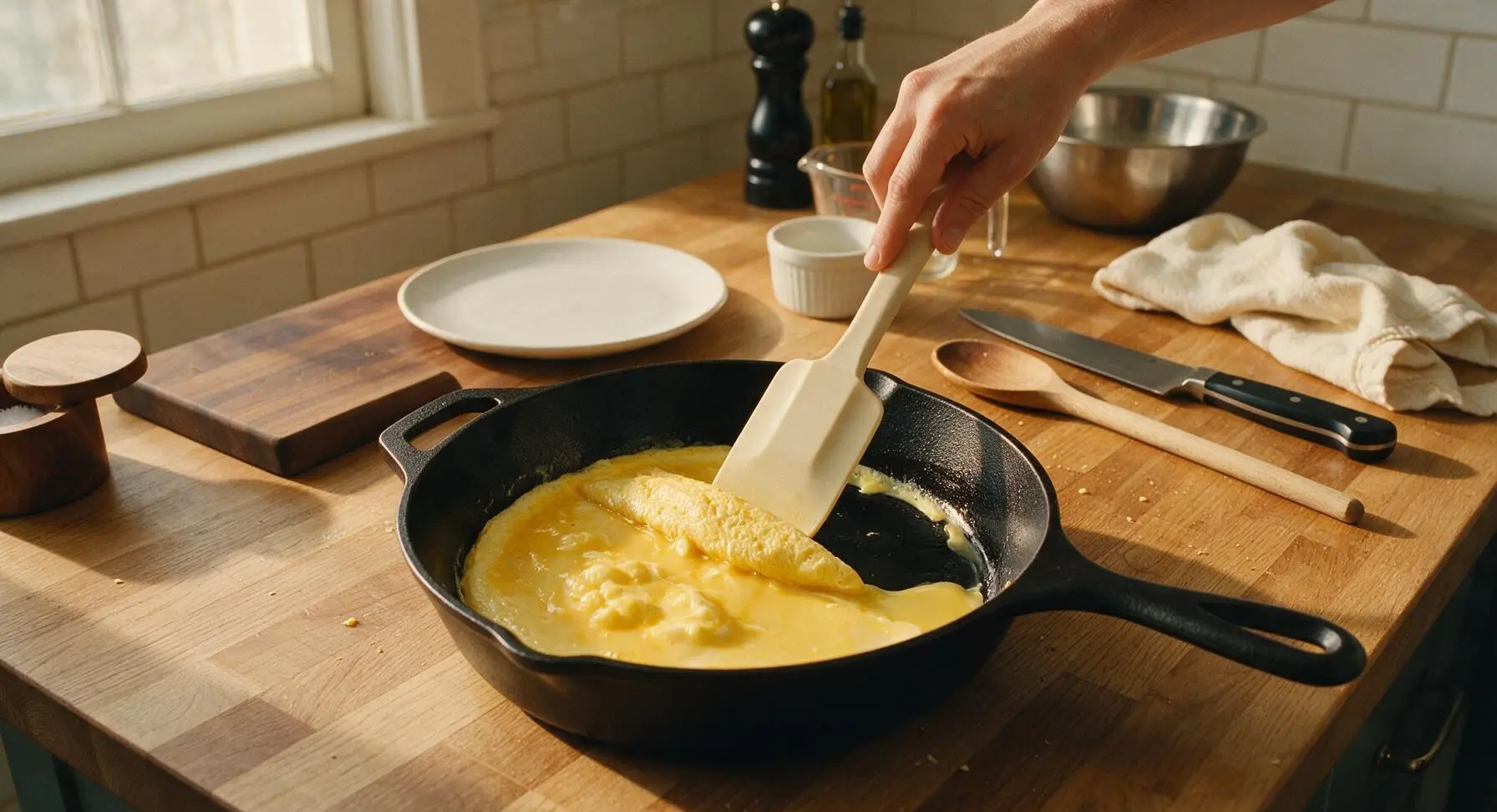
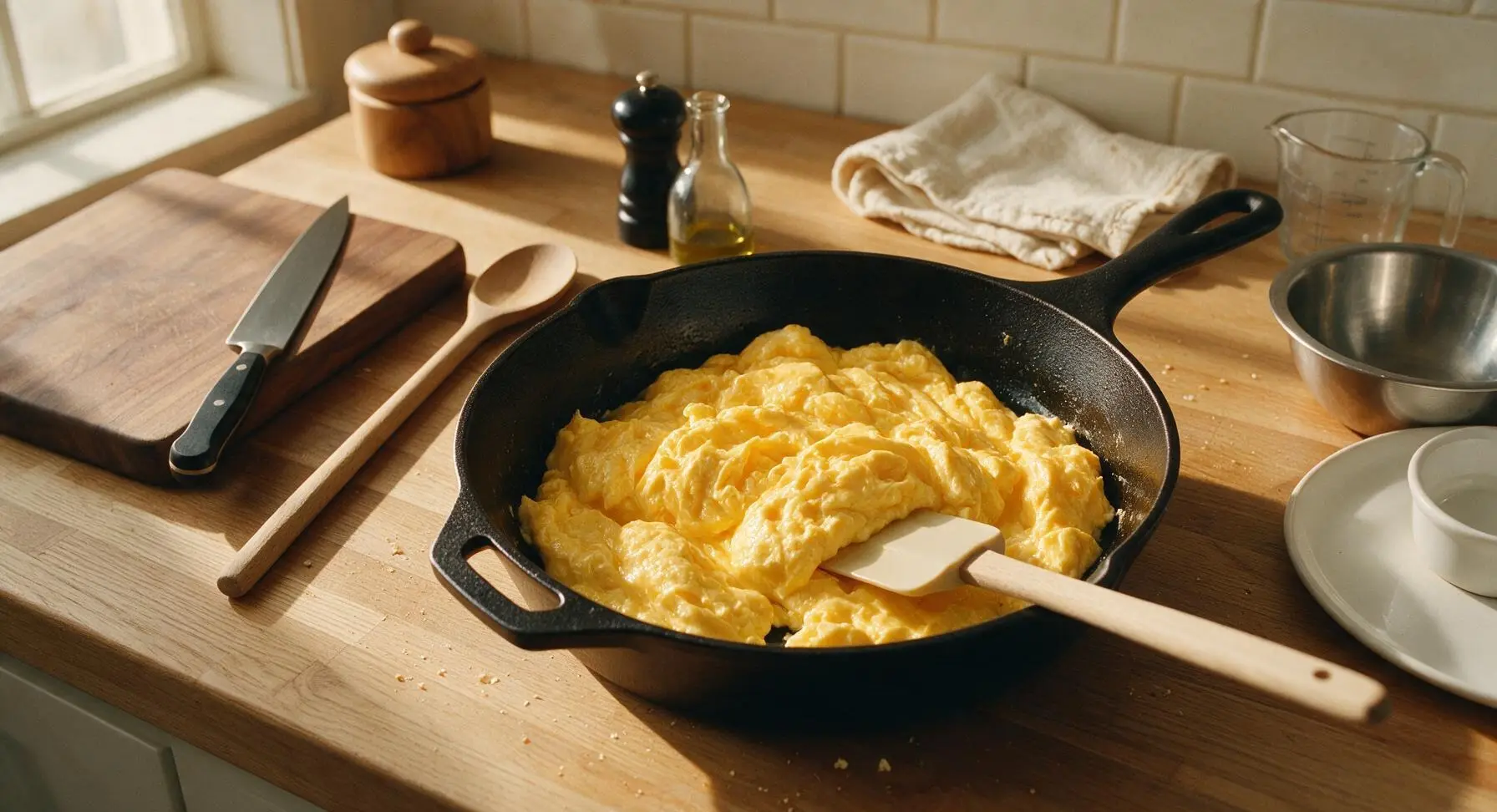
Use the off-white silicone spatula to push the set edges of the egg toward the center of the pan, tilting the skillet to let uncooked runny egg flow into the empty spaces left on the pan surface. Repeat this slow push-and-tilt motion every 10-15 seconds over 3 minutes total cooking time, keeping heat at medium-low, until eggs form large, soft, moist curds that are slightly runny on top (they will continue to cook after being removed from heat). Do not scrape the pan aggressively or stir constantly, as this creates small, tough, rubbery curds.
Step 5
step5:Gently Stir Curds
Step 5
step5:Gently Stir Curds
6

Fold in Swiss Cheese

When eggs are 80% set (still slightly wet in spots, no fully dry or crumbly areas), sprinkle the shredded Swiss cheese evenly over the top of the egg curds. Turn off the stovetop heat, and use the silicone spatula to gently fold the cheese into the eggs 2-3 times, letting residual pan heat melt the cheese fully over 30 seconds. The cheese should form stringy, melted pockets throughout the curds, not fully mixed into a uniform paste.
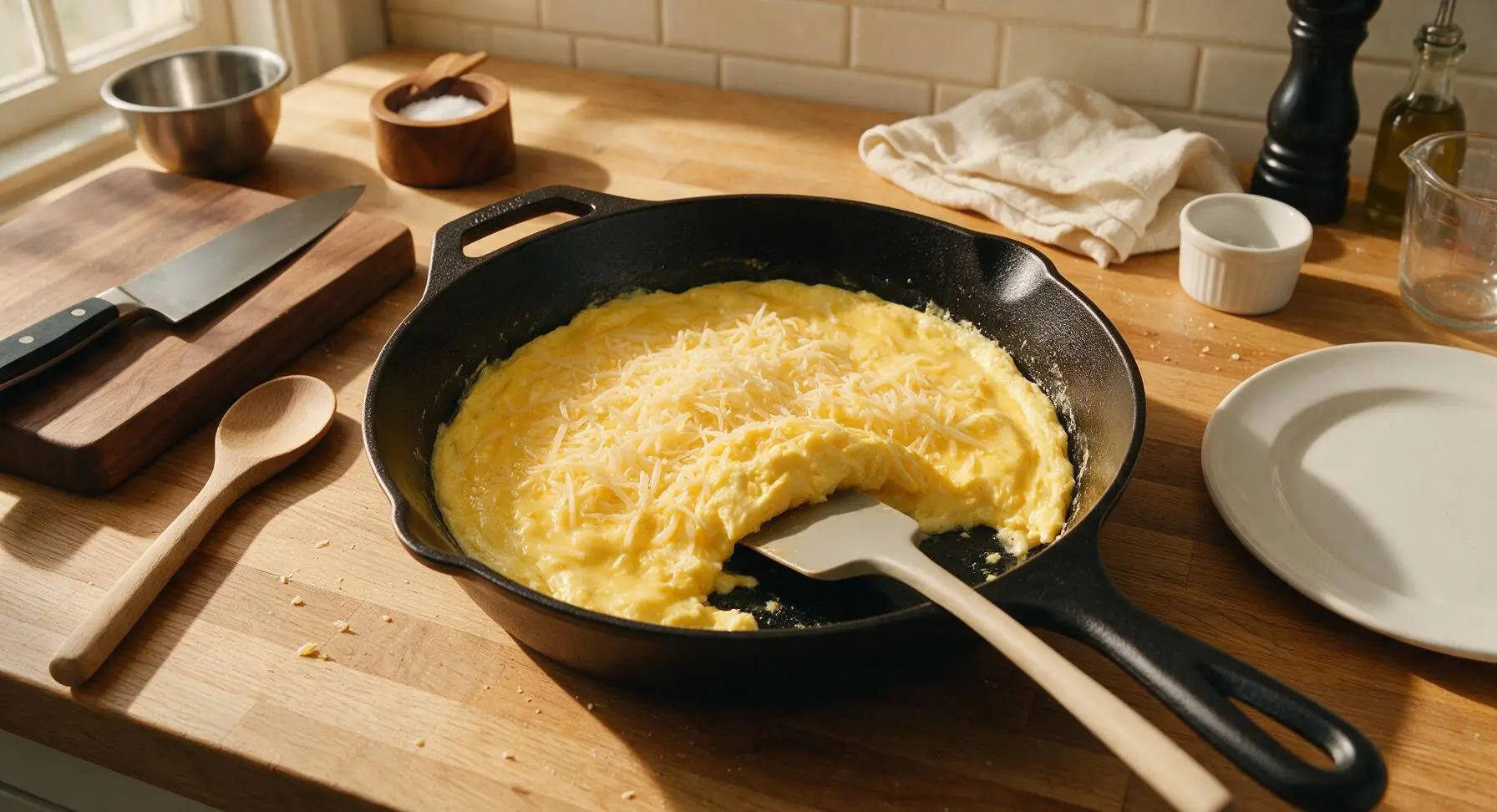
Step 6
step6:Fold in Swiss Cheese
7

Plate and Garnish Eggs

Slide the finished cheesy scrambled eggs gently from the skillet onto the center of the matte cream ceramic breakfast plate. Sprinkle the top evenly with the reserved finely chopped fresh chives, and add an extra light pinch of flaky sea salt if desired. Serve immediately, as eggs will continue to firm up as they sit and are best eaten hot and velvety.
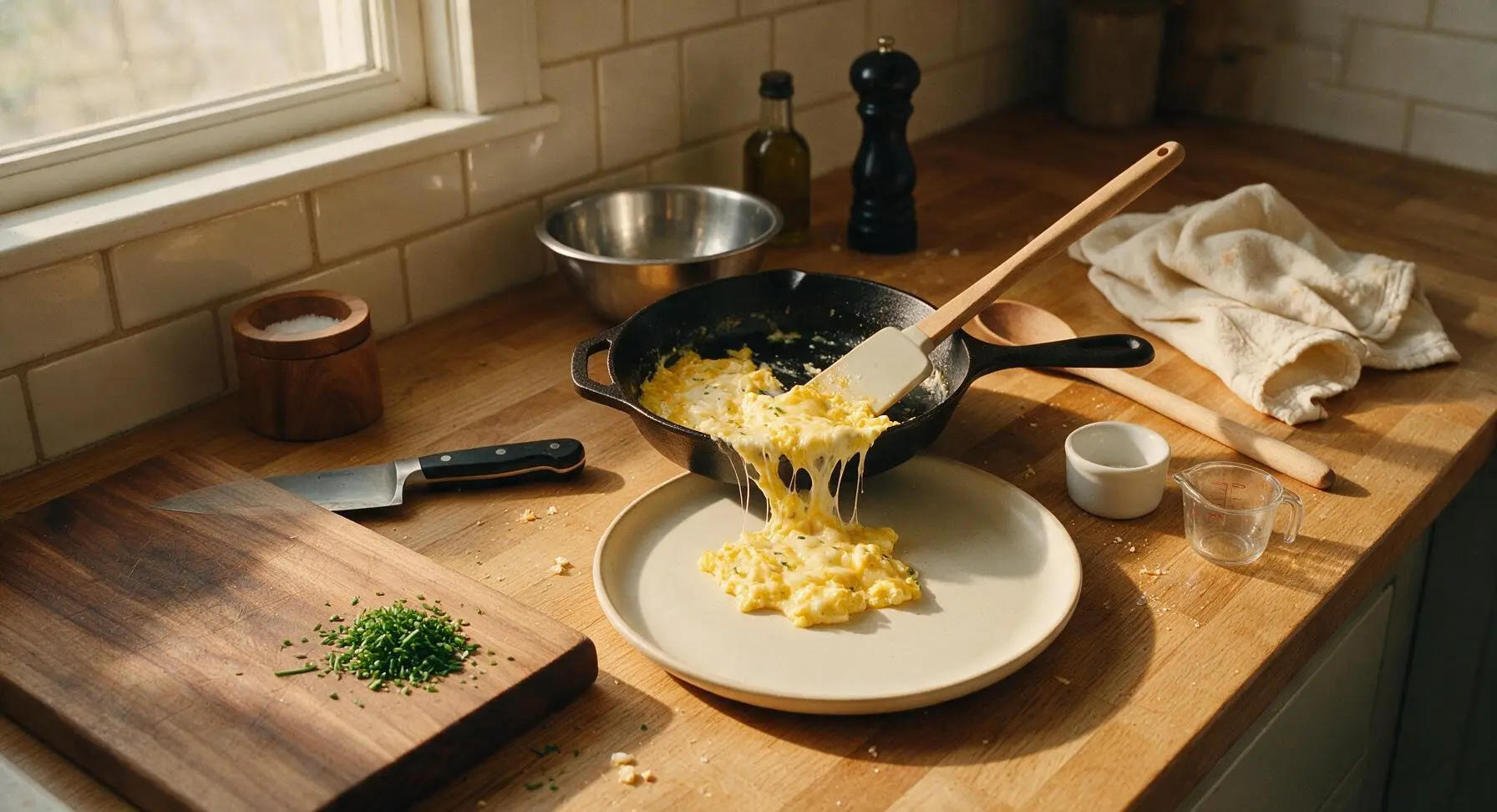
Step 7
step7:Plate and Garnish Eggs

Tips

1.Keep heat consistently medium-low: High heat causes egg proteins to seize up quickly, resulting in rubbery, dry curds. Low, slow cooking creates the velvety, tender texture that makes these eggs feel luxurious.
2.Pull eggs off the heat when they look slightly underdone: Residual heat from the pan and warm plate will continue cooking the eggs for 1 to 2 minutes after plating, so removing them early prevents overcooked, crumbly results.
3.Grate your own Swiss cheese fresh: Pre-shredded packaged cheese is coated in potato starch and anti-caking agents that prevent smooth melting, leading to grainy cheese instead of the signature stringy, oozing pockets in the finished eggs.
✨ You May Also Like

Breakfast
🍜 United States

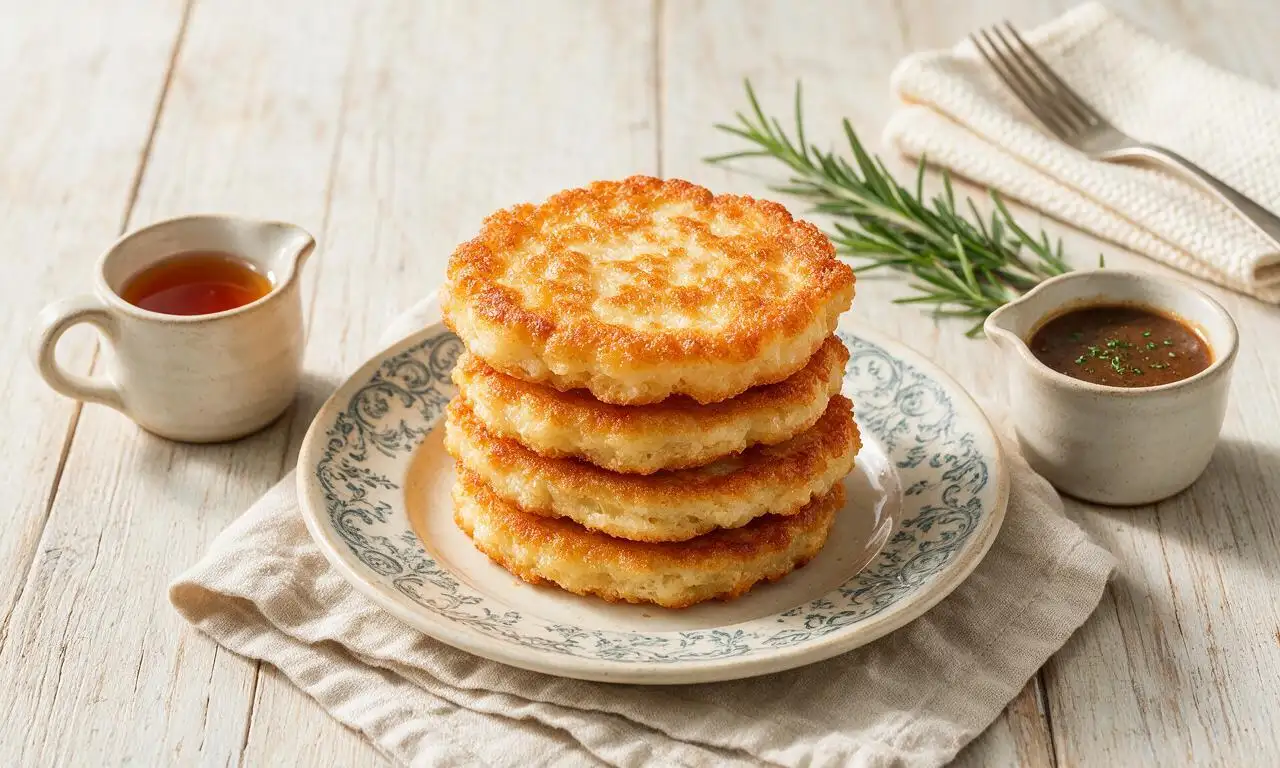
Crisp-edged, fluffy lard griddle cakes are a nostalgic homestyle staple, with rich savoriness from rendered lard, perfect topped with maple syrup or savory gravy.

⏱️ 25 minuteBreakfast ★ 4.8
Breakfast
🍜 United States

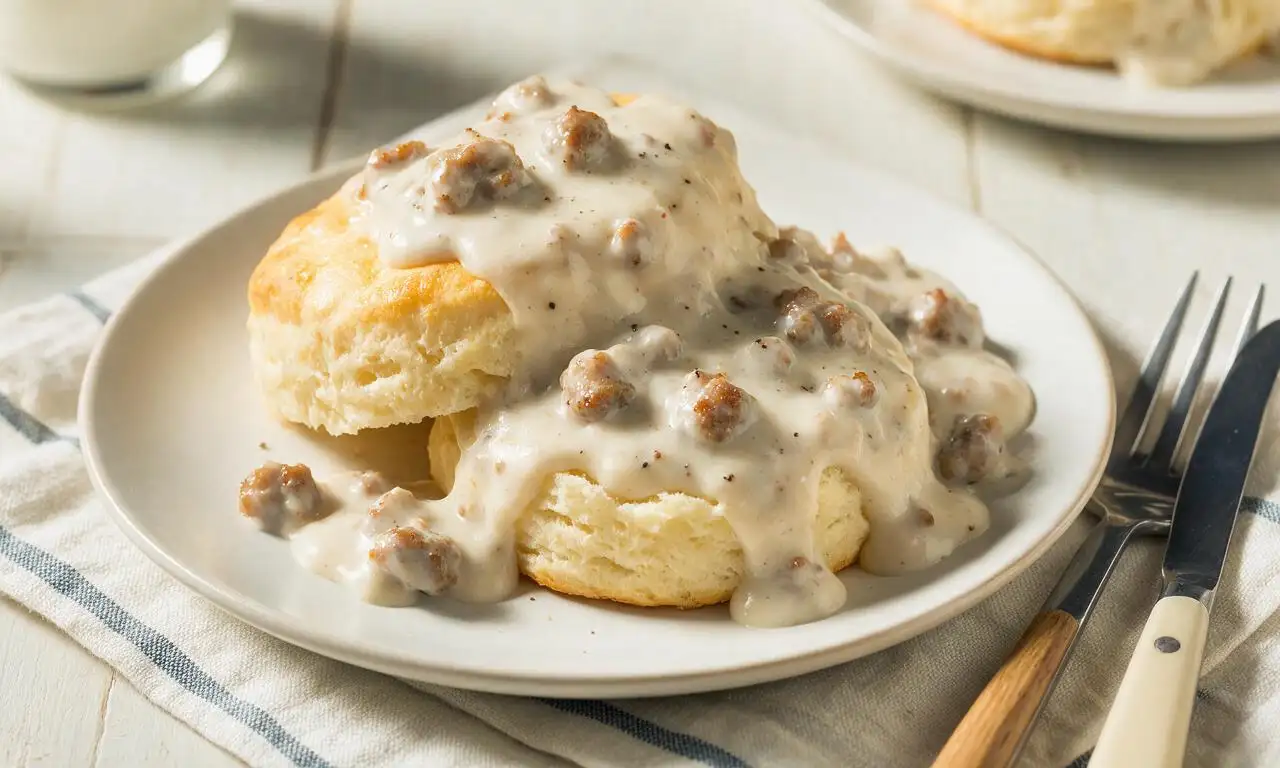
Flaky, buttery homemade buttermilk biscuits smothered in creamy, peppery pork sausage gravy: a beloved, hearty Southern American comfort food classic.

⏱️ 35 minuteBreakfast ★ 4.8
Breakfast
🍜 United States

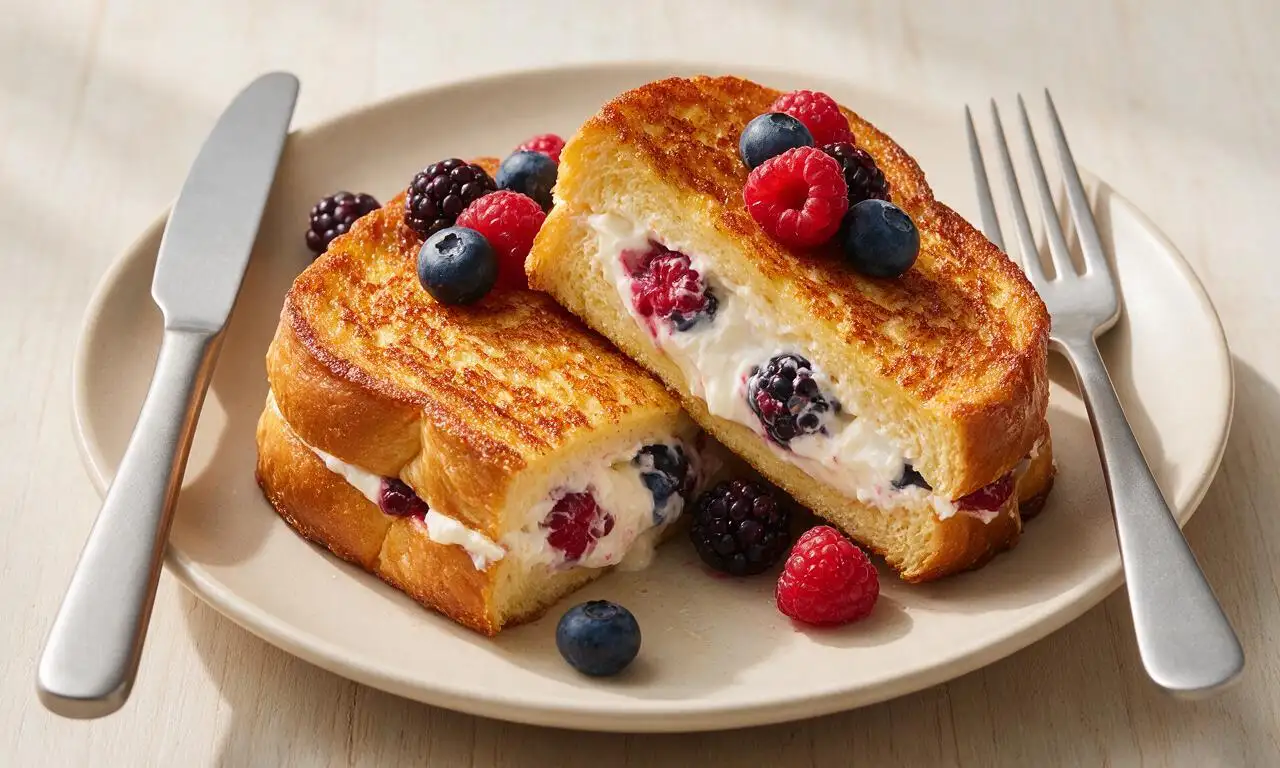
Golden, custardy brioche stuffed with sweet cream cheese and fresh berries, pan-fried to crisp perfection. An indulgent, cozy breakfast perfect for slow weekend mornings.

⏱️ 30 minuteBreakfast ★ 4.7
Breakfast
🍜 United States

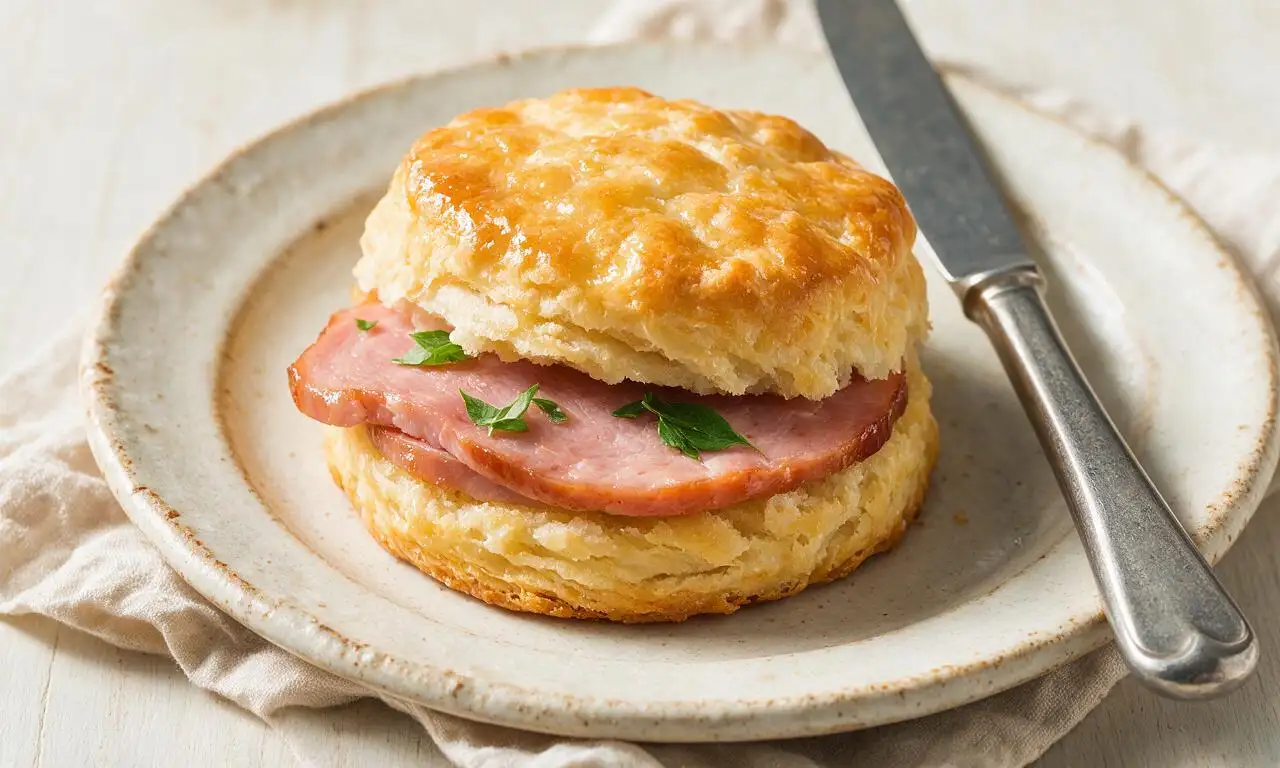
Flaky, buttery Southern-style biscuits stuffed with savory salty country ham, a portable, satisfying classic perfect for casual on-the-go meals.

⏱️ 25 minuteBreakfast ★ 4.8
Breakfast
🍜 United States

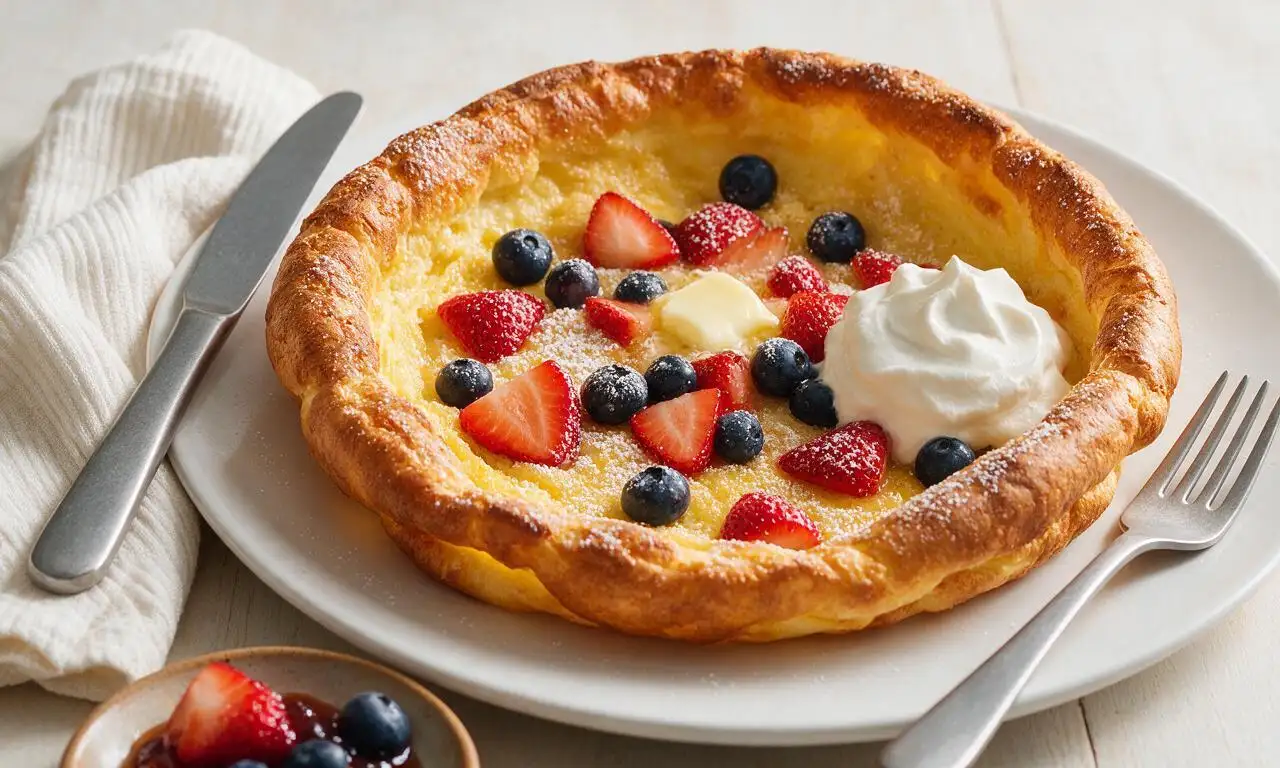
Iconic puffy baked pancake popularized in Seattle, with crisp golden edges and soft custardy center, served warm with classic sweet toppings.

⏱️ 35 minuteBreakfast ★ 4.6
Breakfast
🍜 United States

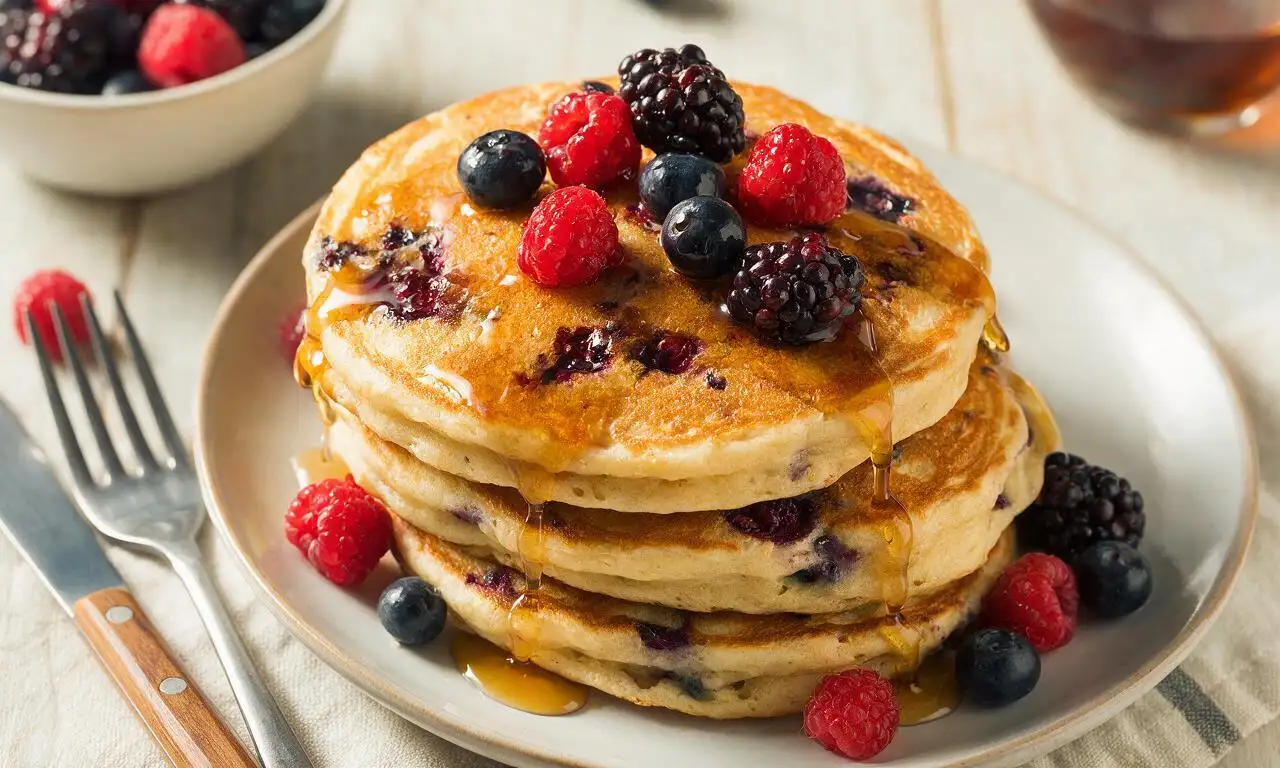
Fluffy, golden pancakes studded with juicy peak-summer mixed berries, drizzled with maple syrup for a bright, comforting, crowd-pleasing family breakfast.

⏱️ 25 minuteBreakfast ★ 4.7

Swiss Cheese Scrambled Eggs:Frequently Asked Questions

1.Can I use pre-shredded Swiss cheese instead of a block of Emmental for this recipe? ▾
Pre-shredded Swiss is coated in potato starch or natamycin to prevent clumping, which keeps it from melting into that smooth, velvety texture we want. Grate your block Emmental fresh right before cooking for the creamiest, nuttiest melt that evenly coats every soft egg curd, with no weird grainy or clumpy bits.
2.Why do you use whole milk instead of heavy cream or water for these eggs? ▾
Whole milk strikes the perfect balance of richness without making eggs heavy or watery. Heavy cream can over-dilute egg flavor and leave a greasy aftertaste, while water makes curds tough and bland. The mild fat content in whole milk supports soft, tender curds that let nutty Swiss shine without weighing the dish down.
3.How do I get that super soft, silky curd texture instead of rubbery eggs? ▾
The trick is low, slow heat and constant gentle stirring. Melt butter over medium-low, pour in whisked eggs, and use a silicone spatula to push soft, set curds from the pan edge to the center every 10 to 15 seconds. Pull the pan off heat right when curds are barely set—residual heat will finish cooking them without turning them rubbery.
4.Can I make these scrambled eggs ahead of time for meal prep? ▾
Scrambled eggs are best fresh right off the stove, but if you need to prep ahead, cook them to just under your preferred doneness, cool quickly, and store in an airtight container for up to 2 days. Reheat gently in 15-second microwave bursts, stirring between each, and note the texture will be slightly firmer than fresh-cooked.
5.What’s the best pan to use for these Swiss cheese scrambled eggs? ▾
A heavy-bottomed nonstick skillet is your best bet here. Its even heat distribution prevents hot spots that burn egg curds, and the nonstick surface means you won’t need extra butter to keep eggs from sticking, so you can easily fold in melted Swiss without leaving half the egg stuck to the pan bottom.
6.When should I add the Swiss cheese to the eggs for the best melt? ▾
Add your freshly grated Emmental the second you take the pan off the heat, right as the eggs hit that barely-set soft curd stage. The residual heat from the pan and eggs will melt the cheese into a smooth, nutty layer without making it separate or turn greasy, which happens with direct high heat.
7.I don’t have fresh chives—can I use dried chives or another herb instead? ▾
Dried chives work in a pinch, but use 1/3 the amount called for, since dried herbs are more concentrated, and rehydrate them in a tiny splash of milk for 5 minutes first. For a similar bright, fresh finish, swap in finely chopped fresh tarragon, flat-leaf parsley, or thinly sliced green onion tops.
8.How many eggs per person makes a filling serving of this recipe? ▾
For a satisfying light breakfast or brunch serving, plan on 2 large eggs per person, which pairs perfectly with a slice of toast or side of fruit. If you’re serving these as part of a bigger brunch spread with bacon, hash browns, or pastries, scale back to 1.5 eggs per guest to cut down on food waste.
9.Can I add mix-ins like ham, mushrooms, or spinach to these eggs? ▾
Absolutely, just cook any dense, wet mix-ins first before adding your eggs. Sauté sliced mushrooms, wilted and drained spinach, or diced ham in the pan butter for 2 to 3 minutes before pouring in whisked eggs, so excess moisture cooks off and doesn’t make soft curds watery or dilute the Swiss flavor.
10.Why does my Swiss cheese sometimes get stringy or greasy when I add it to eggs? ▾
That almost always happens for two reasons: either you used pre-shredded cheese coated in anti-caking additives, or you added the cheese over too-high heat. Grate fresh Emmental off the block, add it off-heat to melt gently, and you’ll get a smooth, even coating instead of stringy clumps or separated greasy pools.
11.Is it necessary to whisk the eggs with milk before adding them to the pan? ▾
Whisking eggs and whole milk together until just combined (no streaks of separate egg white left) ensures an even, consistent texture across every curd. Don’t over-whisk to the point of lots of frothy bubbles, though—those bubbles pop while cooking and leave tiny, dry, uneven curds instead of velvety smooth ones.
12.Can I use a different type of Swiss cheese if I can’t find Emmental? ▾
Absolutely—Gruyère is a fantastic swap, with a slightly deeper, earthier nutty flavor that melts just as smoothly as Emmental. Avoid very mild, high-moisture domestic Swiss with extra-large holes, as it can release extra water while melting and make your eggs watery instead of rich and velvety.
13.How do I keep these eggs from turning brown while cooking? ▾
Browned eggs mean your pan heat is too high, which cooks egg proteins too fast and creates that bitter, browned crust. Keep your stovetop set to medium-low the entire cook time, and don’t leave the eggs unattended—constant gentle stirring ensures curds set evenly without browning against the hot pan.
14.Can I make this recipe dairy-free for someone with a milk allergy? ▾
You can swap the whole milk for unsweetened plain oat milk (it has the closest creamy consistency to dairy milk), use a plant-based Swiss-style melting cheese, and swap unsalted butter for vegan butter. Note the texture will be slightly less rich, and the nutty Swiss flavor will be milder, but it still makes a tasty dish.
15.What are the best serving pairings for these Swiss cheese scrambled eggs? ▾
These rich, velvety eggs pair beautifully with buttery sourdough toast, crispy roasted breakfast potatoes, smoky bacon or turkey sausage, and a side of bright fresh fruit like sliced strawberries or cantaloupe to cut through the richness. A light sprinkle of flaky sea salt right before serving elevates every flavor.
16.Do I need to add extra salt to these eggs if Swiss cheese is already salty? ▾
Hold off on adding extra salt until right at the end, after you fold in the melted cheese. Emmental has a mild, slightly salty flavor, so salting early can lead to over-seasoned eggs. Taste a small bite once the cheese is fully melted, and add a tiny pinch of flaky sea salt only if needed, plus black pepper to taste.
17.The recipe says it’s ready in 10 minutes—am I rushing the cook process? ▾
The 10-minute timeline covers both prep and cook time! It takes about 3 minutes to grate cheese, snip chives, and whisk eggs with milk, and the eggs only need 4 to 5 minutes of low, slow cooking to hit that perfect soft curd stage. There’s no need to rush—just keep heat low for flawless results.
18.Can I use egg substitutes or just egg whites instead of whole large eggs? ▾
You can use liquid egg substitute, but note the texture will be slightly less velvety than whole eggs, since egg yolks add that rich, creamy mouthfeel. If using only egg whites, add an extra tablespoon of whole milk to keep curds tender, and add the cheese a bit earlier to boost richness, since plain whites taste bland without yolk fat.

Comments (5)

2 hours ago

OMG these are the BEST scrambled eggs I’ve ever made! The Swiss cheese gets all melty and nutty, no weird rubbery texture at all. Cooked in literally 5 minutes like the recipe says, perfect for busy weekday mornings before work. My partner ate two servings and asked when I’m making them again. Total game changer for quick breakfasts!

30 minutes ago

Wait do you use low heat the whole time? I always burn my scrambled eggs when I try to add cheese 😅

5 minutes ago

Great question! We recommend cooking over low-medium heat and stirring constantly to keep the eggs soft and prevent the cheese from burning. A tiny splash of whole milk or heavy cream in the egg mix helps keep them fluffy too!

3 days ago

SO good! I added a tiny pinch of nutmeg like my grandma used to do with egg dishes, and it paired so perfectly with the Swiss. Used Gruyère once when I was out of regular Swiss and it slapped just as hard. Super easy, no fancy skills needed even if you’re a total beginner like me.

2 days ago

Love that nutmeg tip! That warm, cozy spice pairs beautifully with the nutty notes of Swiss and Gruyère, thanks so much for sharing the awesome hack!

1 week ago

Added this to my weekly meal prep rotation! I make a big batch on Sunday, portion them out with whole grain toast and some cherry tomatoes, and they reheat way better than I thought scrambled eggs would. The Swiss adds so much flavor I don’t even need to add extra salt most days. Perfect for when I’m running out the door to spin class. Only tiny knock is I wish there were quick notes on best storage for meal prep, but otherwise these are chef’s kiss!

2 weeks ago

Made these for my friend’s potluck brunch last weekend and everyone was begging for the recipe! I topped them with a little chopped chives from my windowsill planter and they looked so fancy, no one believed they only took 5 minutes to throw together. My kids loved them and asked for seconds, which is a miracle because they turn their nose up at most egg dishes.

1 week ago

The chive topping is such a good call! I did the same last time I made these and the mild onion flavor cuts through the richness of the cheese so well.

30 minutes ago

Wait y’all — I’m a total disaster in the kitchen, like I burn toast half the time, and these came out perfect first try? No fancy ingredients, just eggs, Swiss, a little butter, salt and pepper. Way cheaper than buying breakfast at the campus diner every day, I’m gonna be eating these nonstop this semester.

5 minutes ago

Pro tip if you’re in a dorm: you can make these in the microwave in a mug too! Just stir every 30 seconds so they don’t get rubbery, add the cheese right at the end.

just now

So stoked these worked out for you even as a beginner cook! The microwave mug method is such a fantastic dorm-friendly hack — just make sure to use a microwave-safe dish and keep a close eye on them so they don’t overcook.