Texas BBQ

title 1
Texas BBQ
⏱️ cook time 12 hours 45 minutes
🍽️ servings 8
⚡ Difficulty hard

intro

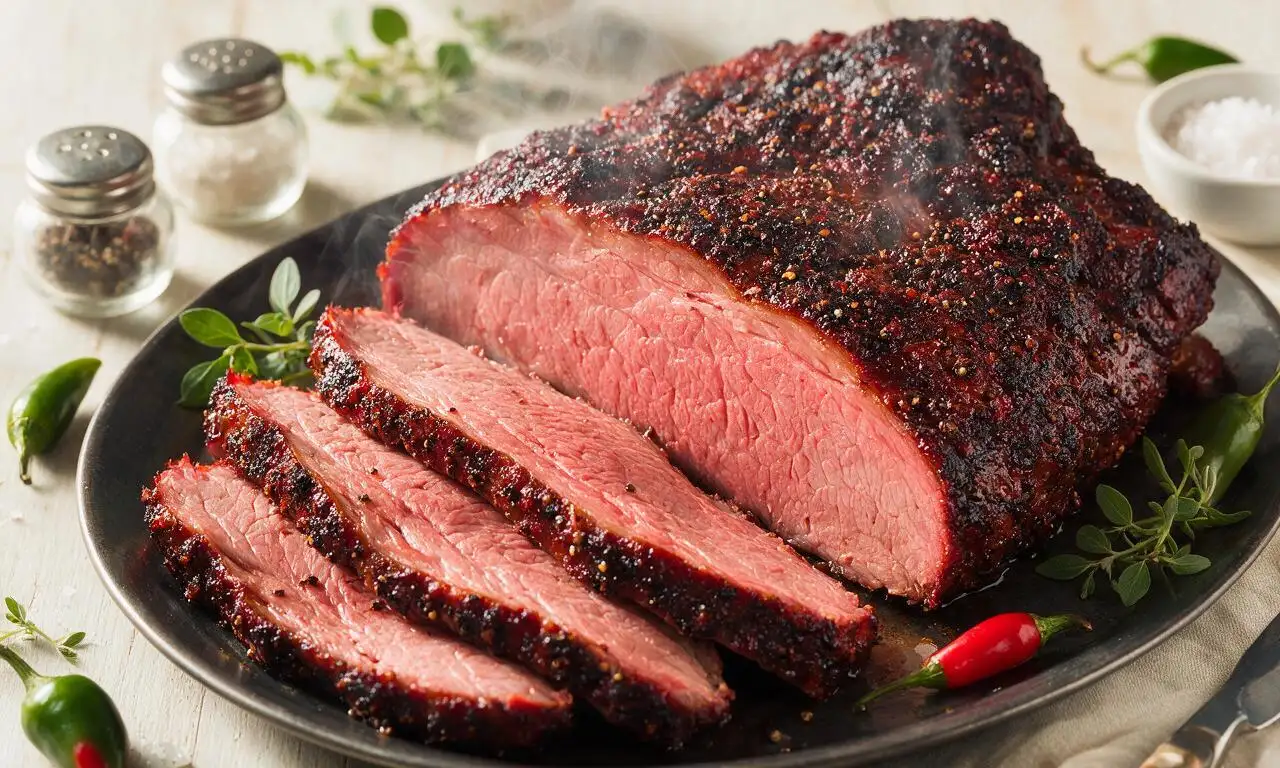
Slow-smoked, spice-rubbed beef brisket with a peppery dark bark and tender juicy interior, the iconic centerpiece of traditional Texas backyard BBQ.

Ingredients

Packer-cut beef brisket (trimmed to 6mm fat cap) 2.2 kg (5 lb)
Kosher salt 3 tablespoons
Coarsely ground black pepper 2 tablespoons
Garlic powder 1 tablespoon
Onion powder 1 tablespoon
Smoked paprika 1 teaspoon
Cayenne pepper 1/2 teaspoon
Apple cider vinegar 240 ml (1 cup)
Low-sodium beef broth 120 ml (1/2 cup)
Worcestershire sauce 2 tablespoons
Unsalted butter 57 g (4 tablespoons)
Post oak smoking chunks 4 large chunks

Steps

1

Prep and season brisket

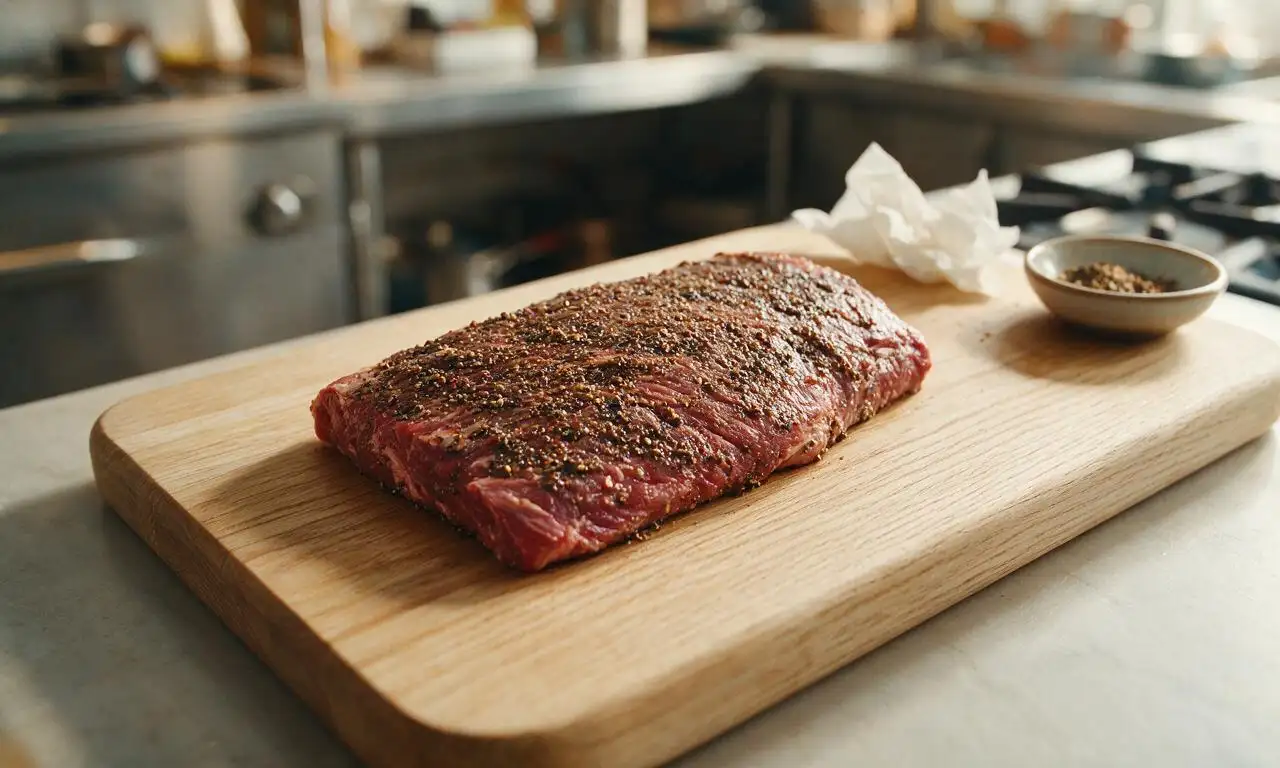
Pat the 2.2kg brisket completely dry with paper towels, trim the fat cap to an even 6mm (1/4 inch) thickness, and remove any hard, waxy fat from the meat side. Mix all dry spices (kosher salt, black pepper, garlic powder, onion powder, smoked paprika, cayenne) in a small bowl, then rub the entire brisket surface evenly with the spice mix, pressing gently to help the rub adhere. Let the seasoned brisket rest at room temperature for 45 minutes while you preheat the smoker.
Step 1
step1:Prep and season brisket
2

Preheat smoker to low heat

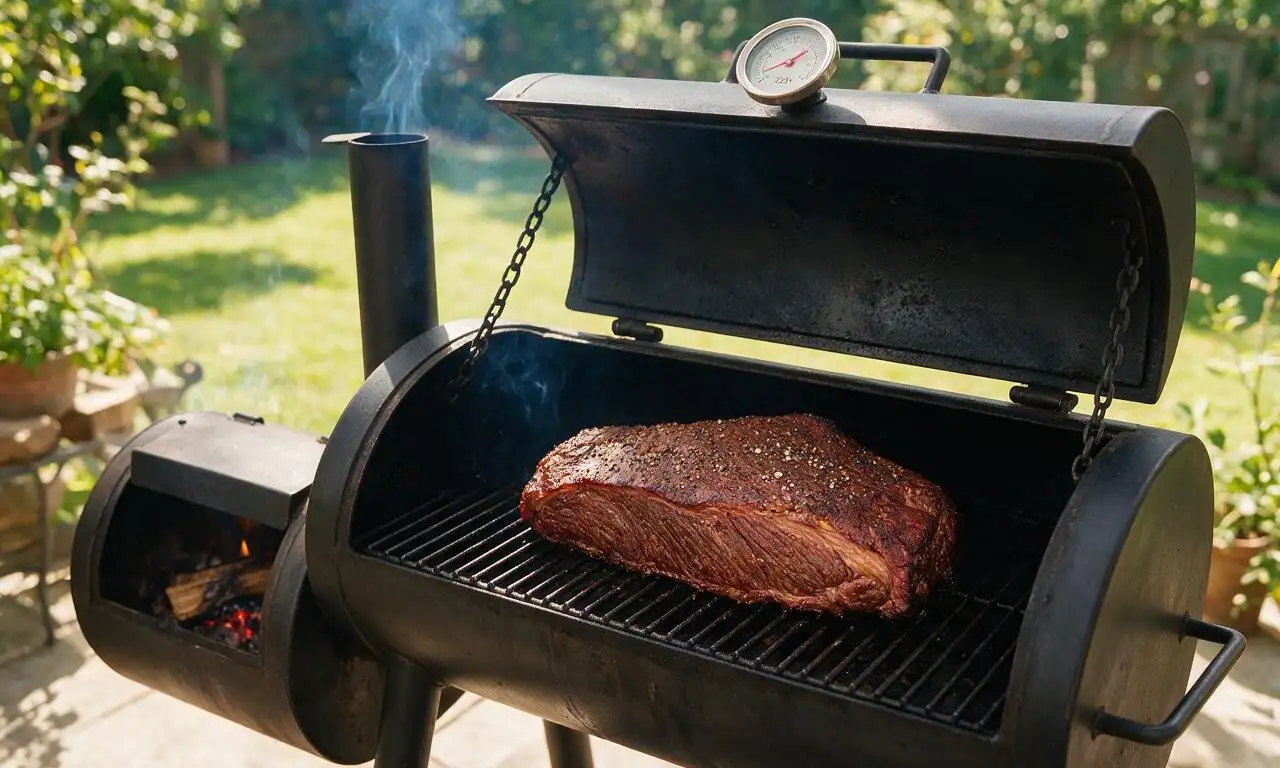
Fill your offset or charcoal smoker firebox with hardwood charcoal, light the coals, and wait until they are covered in light gray ash. Add 2 post oak wood chunks, then adjust the top and bottom vents to stabilize the internal smoker temperature to a steady 110°C (225°F), ensuring only thin, wispy blue smoke (no thick acrid white smoke) flows from the chimney.
Step 2
step2:Preheat smoker to low heat
3

Start slow smoking process

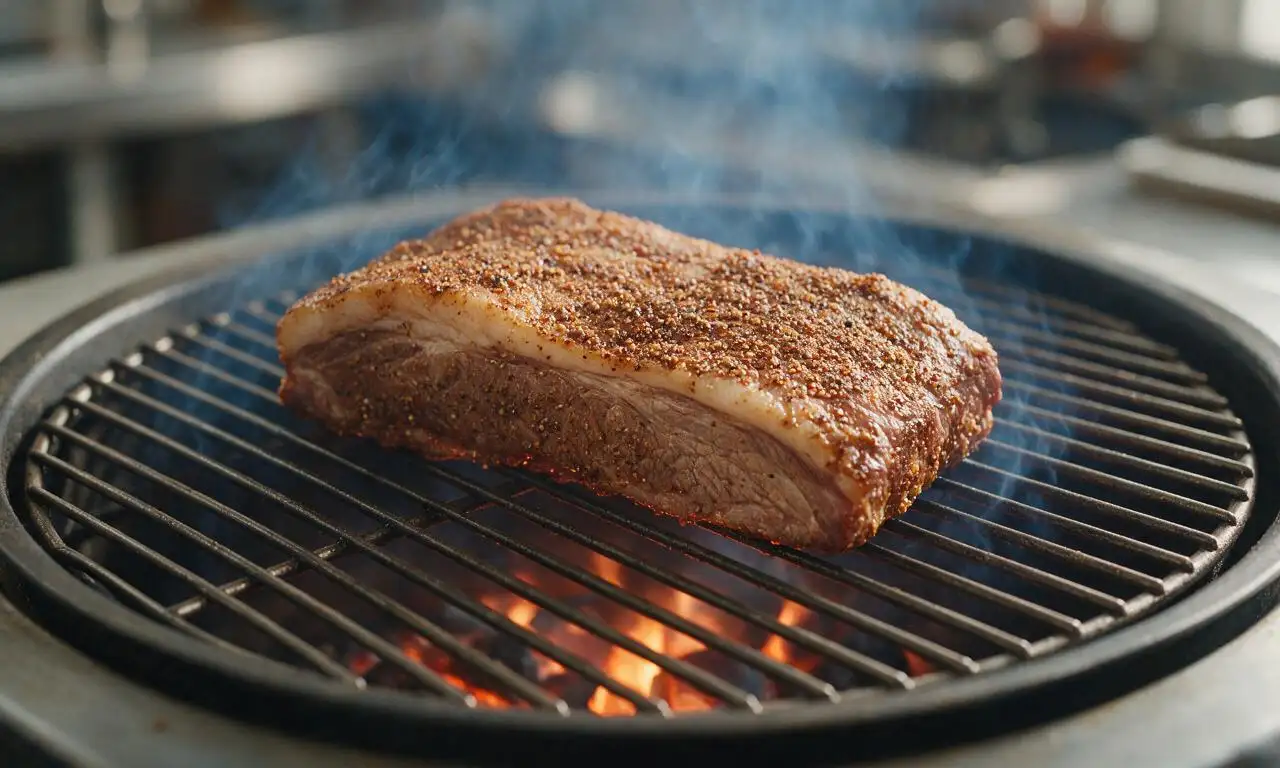
Place the seasoned brisket on the smoker cooking grate fat-side up, positioned away from direct heat to avoid burning. Close the smoker lid and maintain a consistent 110°C (225°F) temperature, adding 1 additional post oak chunk every 2 hours for the first 4 hours of cooking. Avoid frequent lid lifts, which can drop internal smoker temperature by 10-15°C each time.
Step 3
step3:Start slow smoking process
4

Mop brisket regularly

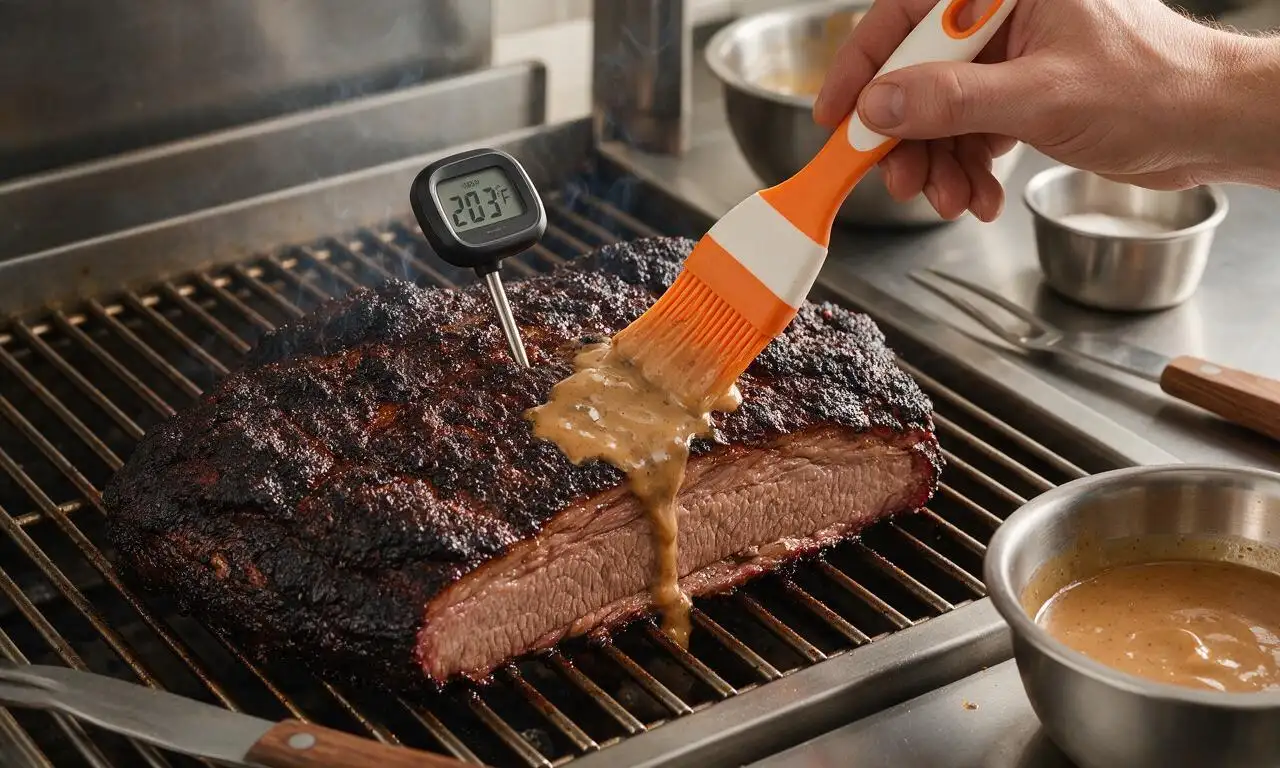
After the first 3 hours of smoking, mix apple cider vinegar, beef broth, Worcestershire sauce, and melted unsalted butter in a spray bottle or basting bucket to make the tangy mop sauce. Spritz or mop the brisket surface with the sauce every 90 minutes, continuing to cook until the brisket reaches an internal temperature of 79°C (175°F) when probed with an instant-read thermometer in the thickest section, roughly 6-7 hours into cooking.
Step 4
step4:Mop brisket regularly
5

Wrap and finish cooking

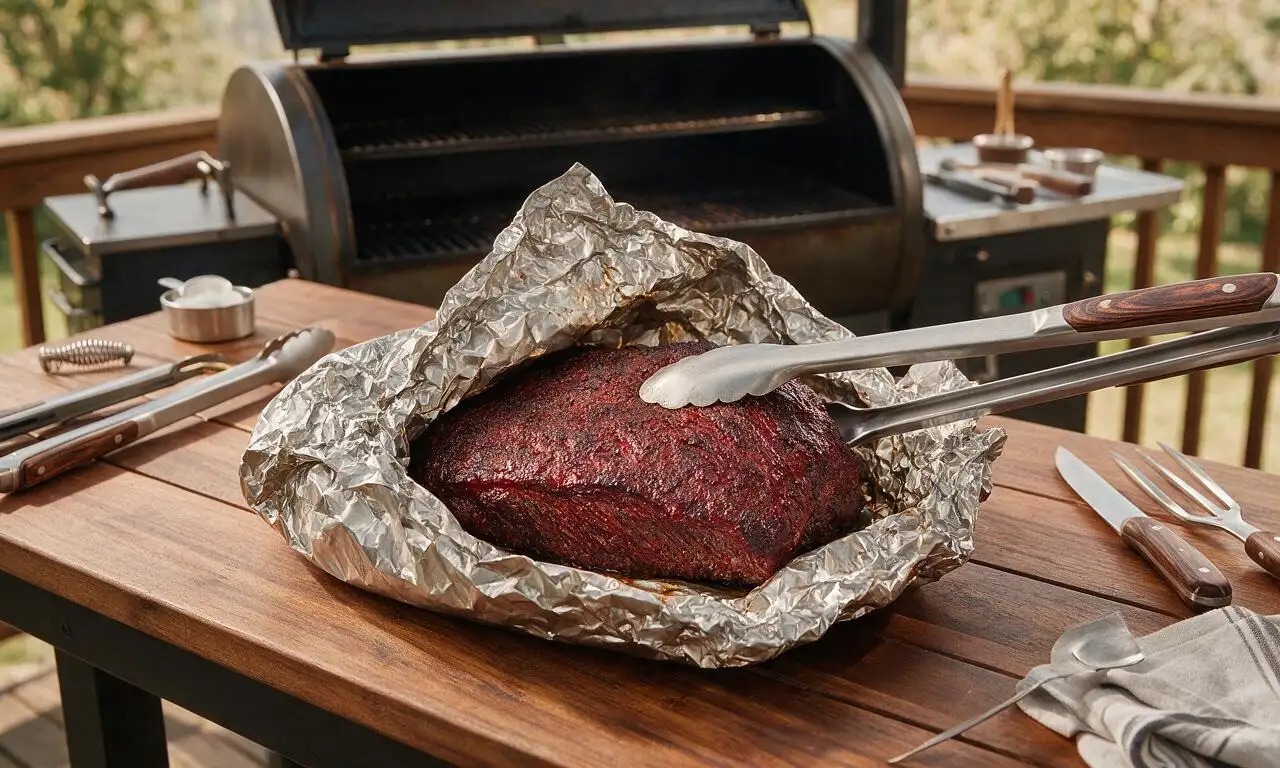
Once the brisket hits 79°C (175°F) and has developed a deep, dark mahogany outer bark, remove it from the grate and wrap it tightly in two layers of heavy-duty aluminum foil. Return the wrapped brisket to the smoker, maintain the steady 110°C (225°F) cooking temperature, and cook until the internal temperature reaches 96°C (205°F) and a meat probe slides into the brisket with no resistance, like cutting soft butter, approximately 4-5 additional hours.
Step 5
step5:Wrap and finish cooking
6

Rest and slice brisket

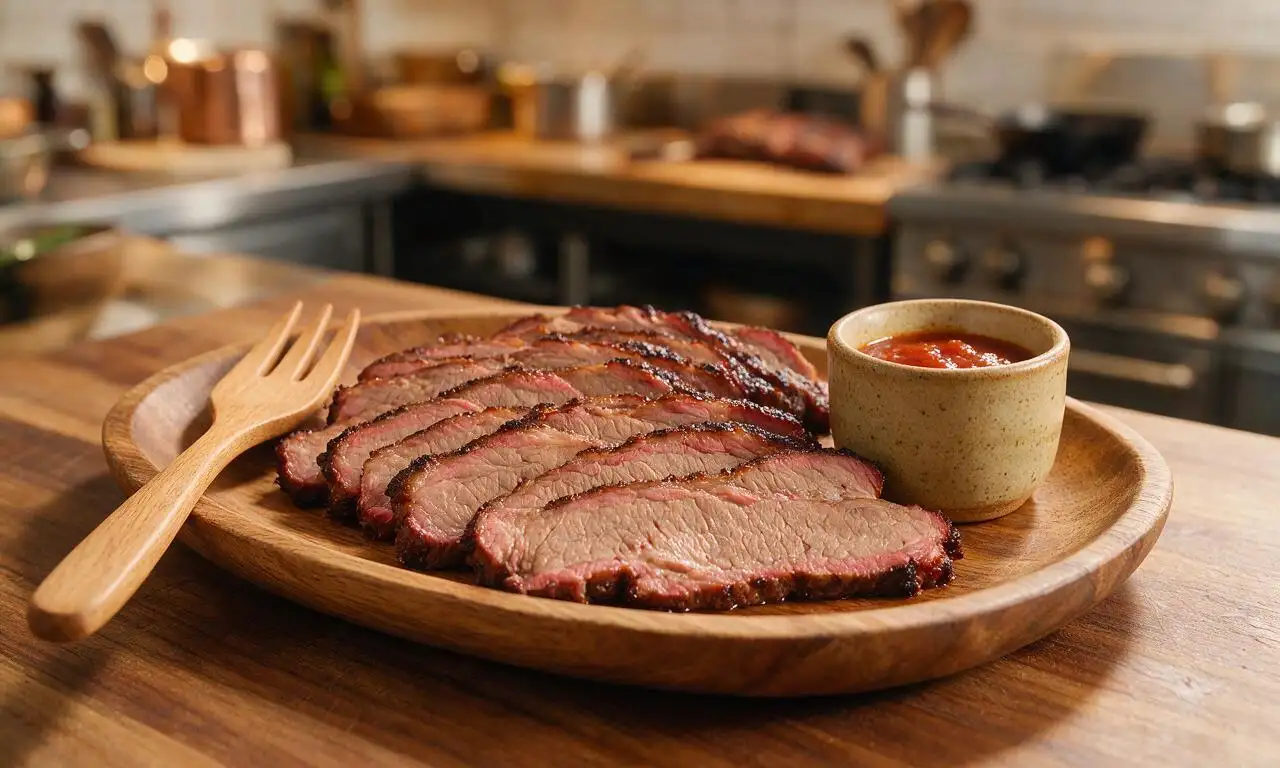
Remove the fully cooked brisket from the smoker, keep it tightly wrapped in foil, and place it in a dry insulated cooler to rest for 1 full hour to allow juices to redistribute through the meat. Unwrap the brisket, slice the flat section against the grain into 6mm (1/4 inch) thick slices, and separate the point section to chop for burnt ends if desired, serving with extra mop sauce on the side.
Step 6
step6:Rest and slice brisket

Tips

1.Never let smoker temperature climb above 120°C (250°F) during cooking; high heat will toughen brisket muscle fibers and prevent fat from rendering into juicy, tender meat.
2.The 1-hour wrapped rest in an insulated cooler is critical: slicing immediately after cooking will cause flavorful juices to leak out onto the cutting board, leaving dry, bland meat.
3.Stick to dense hardwoods like post oak or hickory for smoking; avoid resinous softwoods like pine or fir, which will impart a bitter, chemical-like taste to the finished brisket.
✨ You May Also Like

BBQ & Grilling
🍜 United States

Tender, melt-in-your-mouth beef brisket with a crisp, spiced bark, slow-smoked to deep smoky perfection, the iconic centerpiece of Texas backyard barbecue.

⏱️ 12 hours BBQ & Grilling ★ 4.4
BBQ & Grilling
🍜 Korea

Tender, sweet-savory marinated beef short ribs, a beloved Korean BBQ staple with caramelized, slightly charred edges and deep umami flavor, perfect for outdoor summer gatherings.

⏱️ 4 hours 2BBQ & Grilling ★ 4.8
BBQ & Grilling
🍜 United States

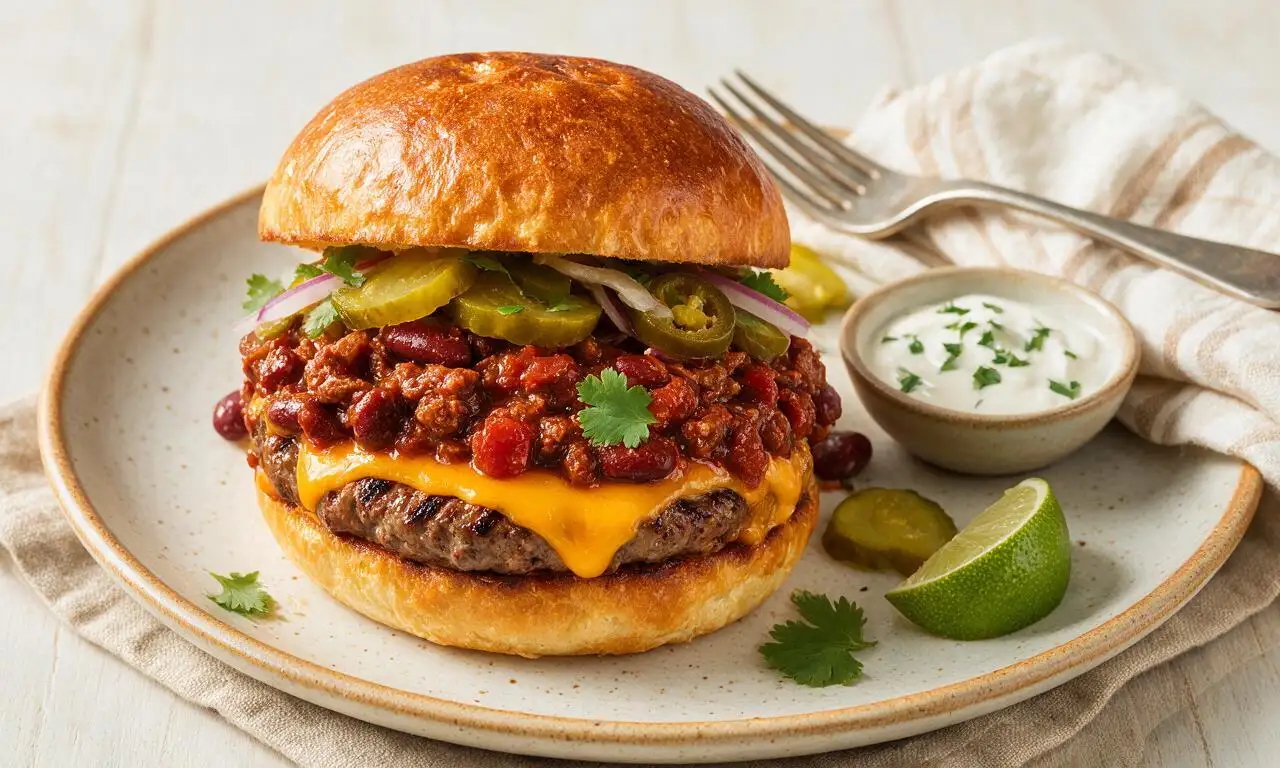
Juicy grilled beef patties topped with smoky homemade chili, melted cheddar, and tangy pickles on toasted brioche buns for a hearty, flavor-packed handheld meal.

⏱️ 40 minuteBBQ & Grilling ★ 4.7
BBQ & Grilling
🍜 United States

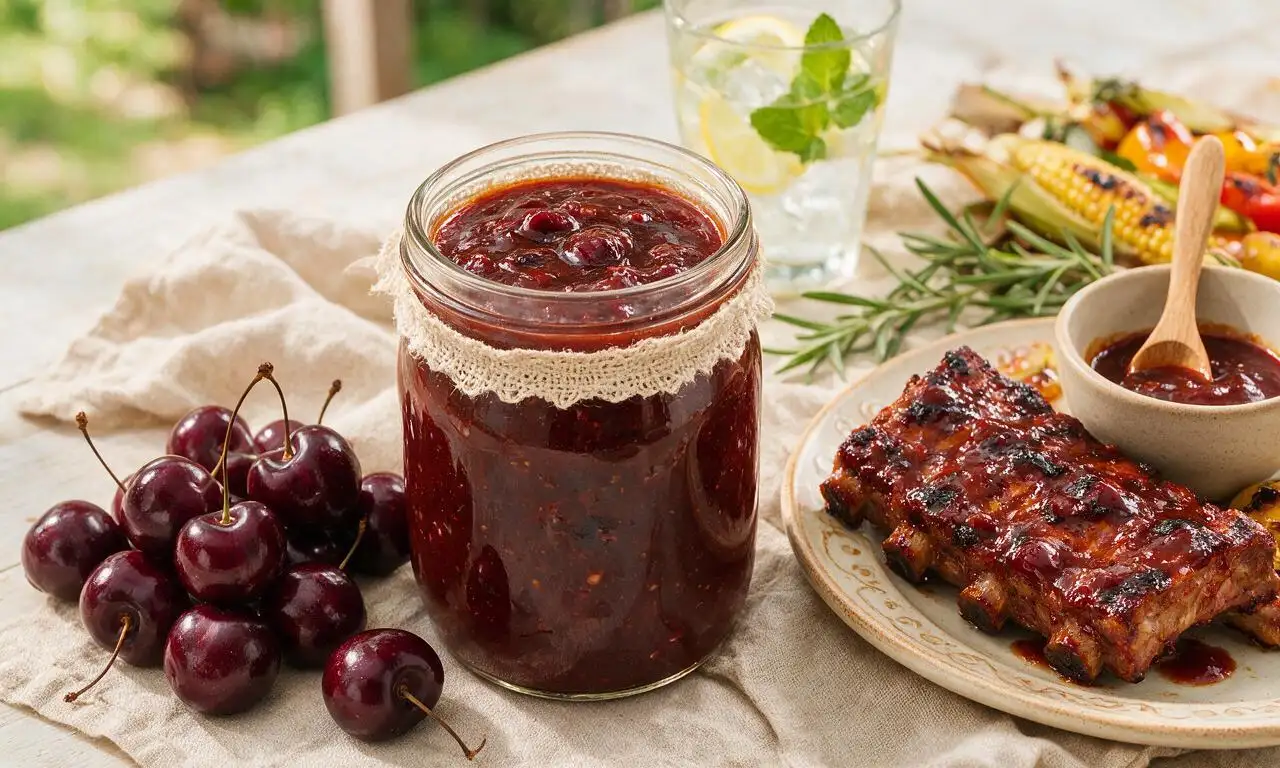
A sweet, smoky, tangy BBQ sauce brightened with peak-season dark cherries, ideal for glazing grilled ribs, chicken, pork, or summer roasted veggies.

⏱️ 35 minuteBBQ & Grilling ★ 4.7
BBQ & Grilling
🍜 United States

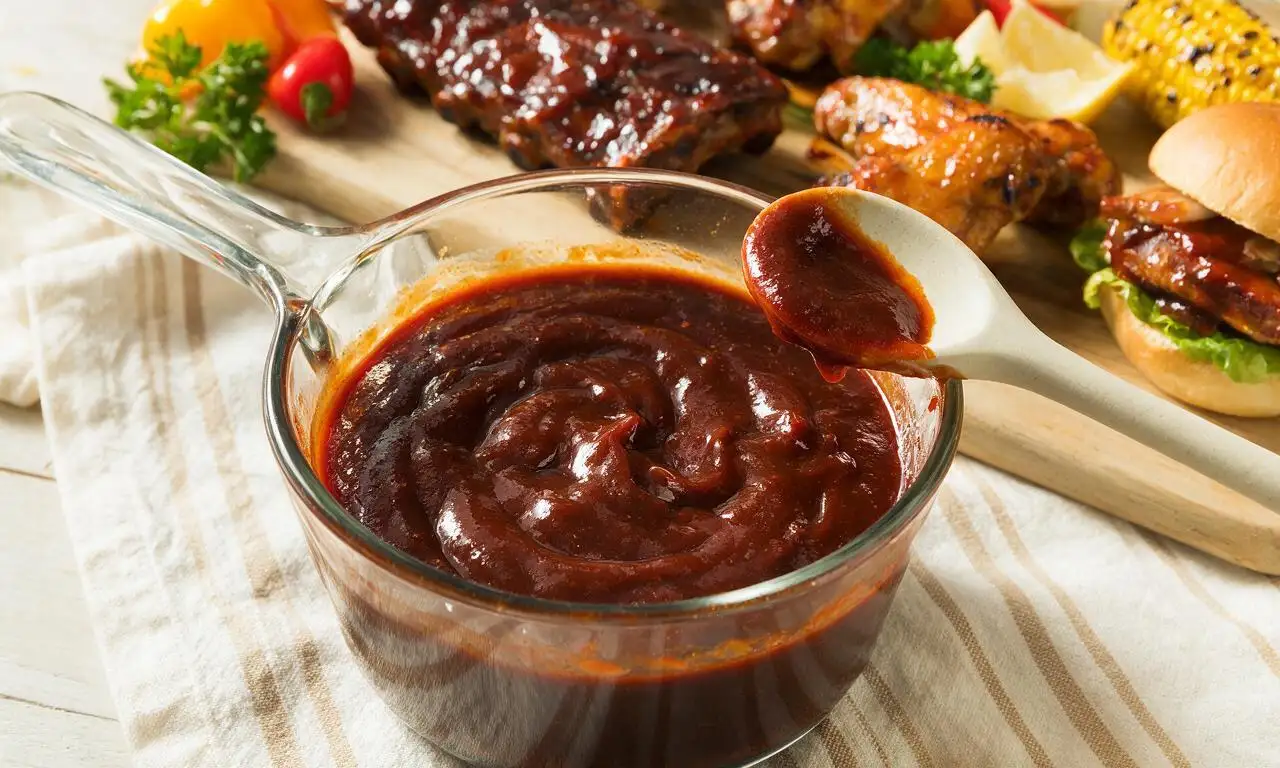
Rich, smoky, slightly sweet homemade bourbon BBQ sauce with deep caramel notes, ideal for glazing grilled ribs, chicken, and burgers at cookouts.

⏱️ 25 minuteBBQ & Grilling ★ 4.7
BBQ & Grilling
🍜 United States

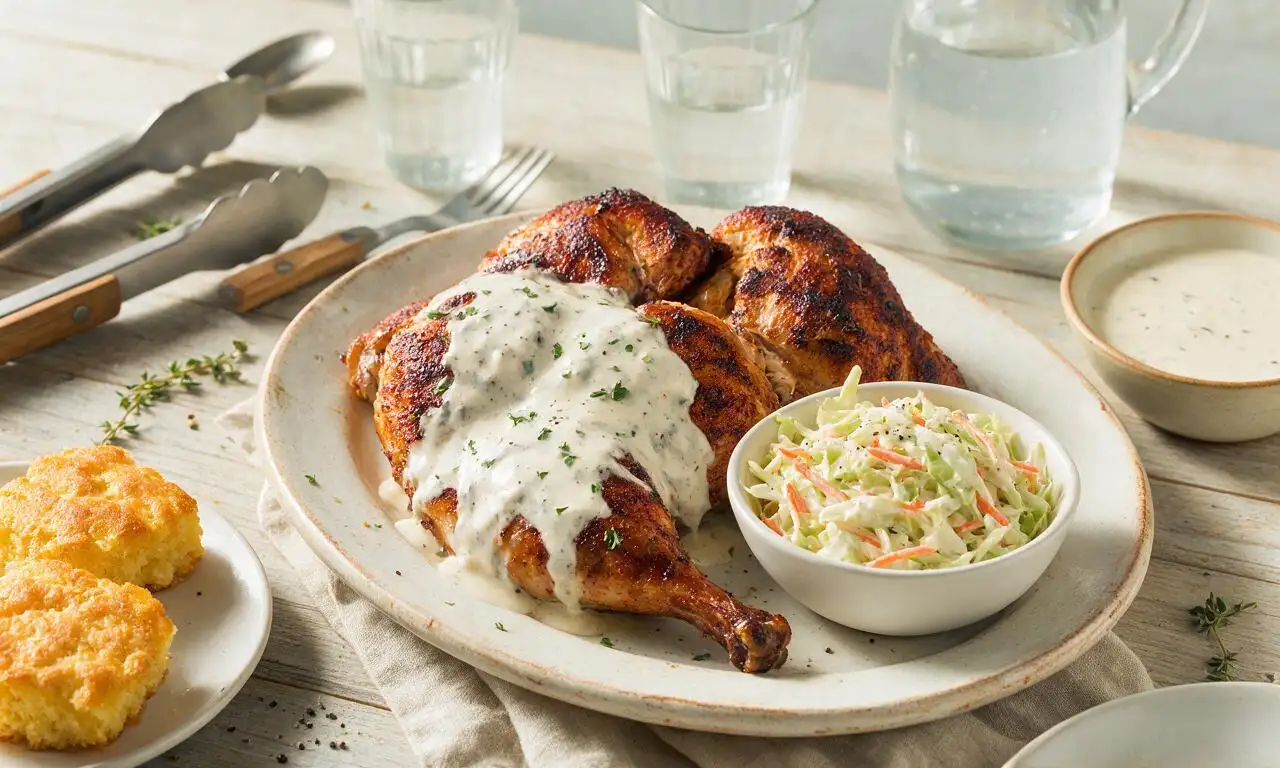
Iconic Alabama-style BBQ featuring tender hickory-smoked chicken slathered in tangy creamy white sauce, a beloved regional Southern cookout staple.

⏱️ 3 hoursBBQ & Grilling ★ 5

Texas BBQ:Frequently Asked Questions

1.What type of wood gives the most authentic Central Texas brisket flavor? ▾
Stick to post oak if you can source it—it’s the mild, earthy traditional hardwood that defines classic Central Texas BBQ, with no need for strong mesquite or sweet fruit woods. If post oak is hard to find, use a 70/30 mix of white oak and a small amount of hickory to avoid bitter, overpowering smoke that masks the brisket’s natural beefy, peppery profile.
2.Why do I need a full packer-cut brisket instead of a pre-trimmed flat cut? ▾
A full packer cut includes both the lean flat and thicker, marbled point, which self-bastes the meat during the long smoke to lock in juice, just like Texas BBQ joints make. Pre-trimmed flat cuts lack the layered fat and connective tissue needed to develop tender texture and rich bark, and will almost always turn out dry even with perfect temperature control.
3.How thick should I leave the fat cap when trimming my brisket? ▾
Trim the fat cap to an even 1/4 inch (roughly 6mm) across the entire brisket surface, per classic Central Texas prep. This thickness lets rendered fat slowly baste the meat as it smokes, builds a crisp, peppery bark without chewy unrendered fat chunks, and prevents the simple spice rub from sliding off during the 10+ hour cook.
4.Should I wrap my brisket while smoking, or cook it completely unwrapped? ▾
Most traditional pitmasters cook brisket unwrapped for the first 5–6 hours to build dark bark, then wrap it in uncoated butcher paper (not foil!) once it hits 160–165°F to push through the temperature stall. Foil steams bark soft, while cooking fully unwrapped often leads to excess moisture loss and dry, tough meat.
5.How do I know when my brisket is actually done, instead of just following cook time? ▾
Never rely solely on clock time—pull your brisket when a temperature probe slides into the thickest part of the point with zero resistance, like sticking a knife into soft butter. This usually happens between 203–207°F, but the exact temp varies per cut, so that tenderness test is far more reliable for juicy, perfectly rendered results.
6.How long do I need to rest brisket before slicing, and why is this step so important? ▾
Hold your wrapped brisket in an empty, insulated dry cooler (no ice!) for a minimum of 1 hour, and up to 4 hours, before slicing. This rest lets hot, rendered juices that get pushed to the meat’s surface during smoking redistribute back through every fiber, so you don’t lose all that flavorful moisture onto your cutting board when you slice.
7.Why is the classic Central Texas brisket rub so simple, with no sugar or fancy spices? ▾
Central Texas BBQ centers high-quality beef and clean smoke, rather than masking those flavors with heavy, sweet rubs. The simple mix of coarse pepper, kosher salt, and light garlic and onion powder builds that signature peppery dark bark without burning (sugar scorches easily at low smoker temps) or competing with the brisket’s rich, smoky beef flavor.

Comments (5)

2 days ago

Y’all, I’ve been chasing that perfect Central Texas brisket flavor for YEARS after moving from Austin to Chicago, and this recipe is the real deal. No fancy sugary rub, just that classic salt and pepper base, perfect bark, rendered fat that melts like butter. Smoked this for my buddy’s birthday cookout last weekend and people were going back for thirds. The only tweak I made was using post oak instead of mesquite because that’s what I had on hand, and it still slapped. 12+ hours is a commitment but 100% worth every minute.

yesterday

Wait, post oak vs mesquite—did you notice a big difference? I only have mesquite chunks at home right now and I’m prepping to make this this weekend, don’t wanna mess it up!

yesterday

Great question! Mesquite is a much stronger, earthier smoke than post oak, so if that’s all you have, use it sparingly—mix in a little mild fruit wood like apple if you can to cut the intensity, and don’t over-smoke the first 6 hours or you’ll end up with bitter bark. So glad the recipe worked out for you, even with the wood swap!

5 days ago

Okay, full transparency: I was intimidated as hell by the 12+ hour cook time, but I decided to tackle this for our Sunday family dinner. It turned out SO good, even though I accidentally let the temp spike 50 degrees for about an hour halfway through. My husband, who grew up outside San Antonio, said it tasted exactly like the brisket he got at the small town BBQ joints as a kid. Only reason I’m not giving 5 stars is because I wish there was a little more guidance on how to adjust cook time for smaller briskets—mine was 11 lbs instead of 14 and it was done a whole hour early.

3 days ago

Thanks so much for the honest feedback! For smaller briskets (10-12 lbs), plan on roughly 1 hour to 1 hour 15 minutes per pound at 225°F, and always go by internal temp (203°F in the thickest part of the flat) instead of strict cook time to avoid overcooking. So glad your husband approved—that’s the highest praise we can get!

1 week ago

Made this for our neighborhood block party potluck last weekend and I’m still getting texts asking for the recipe! I was worried the brisket would be too dry because my offset smoker is a little finicky with temperature, but I followed the Texas crutch wrap tip exactly and it came out juicy all the way through, even the lean flat. The bark was perfectly crispy, no weird overly sweet sauce needed—just a little side of dill pickles and white bread like they do in Central Texas, and it was a total hit. Total game changer for my summer cookout rotation, for real.

3 days ago

First time ever smoking any kind of meat, so I knew this was gonna be a learning curve. Flavor was great, don’t get me wrong, but I messed up the fat cap trim and ended up with a big chunk of unrendered rubbery fat on one side that nobody wanted to eat. Also, my brisket took way longer than the recipe said, almost 15 hours total, even though I kept my smoker temp steady at 225 the whole time? Not sure if I did something wrong there. Probably gonna try again once I pick up a better instant-read meat thermometer, my old dial one was acting all kinds of wonky.

2 days ago

Don’t beat yourself up, rookie! Brisket is famously the hardest BBQ cut to nail, first time out you’re already winning if the flavor is good. Pro tip: trim the fat cap down to a uniform 1/4 inch thick before you put it on the smoker, and remember that every brisket is different—some just take longer, no matter what the recipe clock says. I’ve been smoking meat for 20 years and I still never plan my meal time strictly off estimated cook time!

2 days ago

OMG, I was so skeptical I could pull this off on my tiny 22 inch Weber kettle, but it worked! Used the charcoal snake method to hold steady temp, added hickory wood chunks, followed every step of the rub and wrap instructions, and wow. I portioned out sliced brisket for weekday meal prep, made loaded brisket tacos for dinner last night, and my 8 year old asked if we can have brisket every night for the rest of the summer. SO good, honestly better than the fancy BBQ place we go to down the street that charges $28 a pound.

yesterday

Wait how big of a brisket did you fit on that 22 inch? I have the same kettle and I’ve been nervous to try a full packer brisket on it, thought it’d be way too cramped to get good airflow!

2 hours ago

This makes us so happy to hear—pulling off a perfect brisket on a basic Weber kettle is peak Texas BBQ energy! For 22 inch kettles, stick to a 12-13 lb packer brisket, and position it fat side up on the indirect heat side away from the coals to avoid hot spots. Those leftover brisket tacos sound absolutely chef’s kiss, by the way!