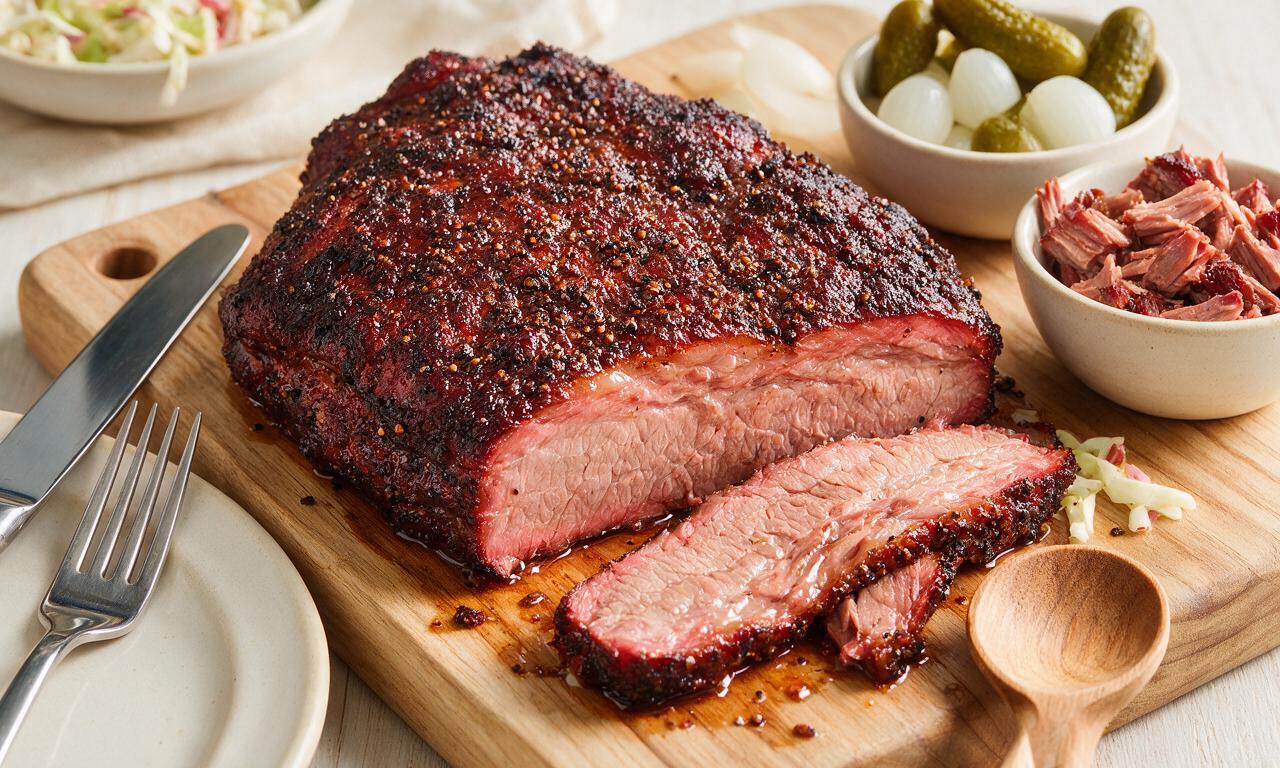
Texas Crutch

Texas Crutch
⏱️ cook time 9 hours
🍽️ servings 6
⚡ Difficulty medium

intro

The Texas Crutch is a legendary Texan BBQ method for ultra-moist, fall-apart smoked brisket, wrapping the meat mid-cook to beat the temperature stall and lock in deep smoky flavor.

Ingredients

Beef brisket (flat cut, trimmed to leave 6mm/¼in fat cap, hard excess fat removed) 2 kg (4.4 lbs)
Kosher salt 3 tablespoons (45g)
Coarsely ground black pepper 3 tablespoons (24g)
Garlic powder 1 tablespoon (9g)
Smoked paprika 1 tablespoon (7g)
Low-sodium beef broth 120 ml (½ cup)
Apple cider vinegar 2 tablespoons (30 ml)
Heavy-duty aluminum foil 2 large sheets (60cm / 24in each)
Hickory wood chips (for smoking) 4 cups (200g, soaked in water 30 minutes before use)

Steps

1

Prep brisket and apply rub

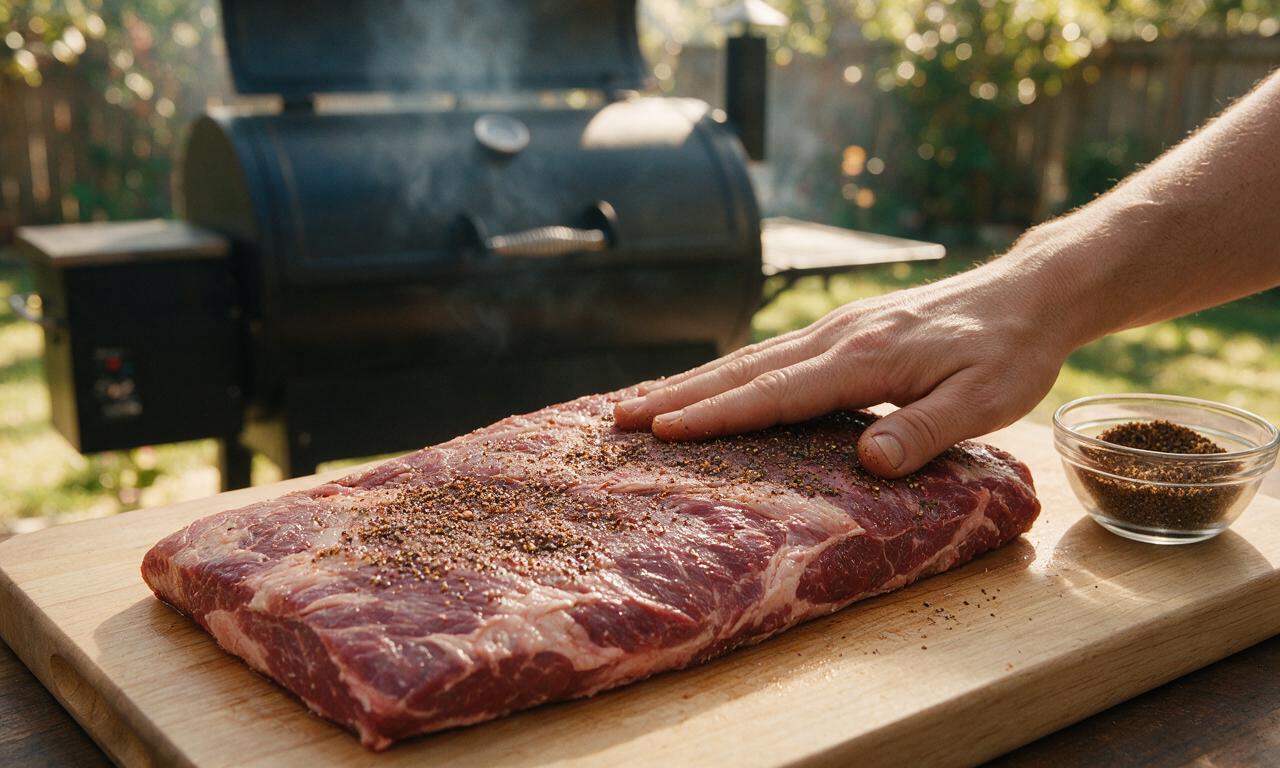
Pat the 2kg trimmed brisket completely dry with paper towels. Mix 3 tablespoons (45g) kosher salt, 3 tablespoons (24g) coarse black pepper, 1 tablespoon (9g) garlic powder, and 1 tablespoon (7g) smoked paprika in a small bowl until evenly combined. Coat every surface of the brisket (top, bottom, sides) with the rub, pressing gently to adhere, then let it rest at room temperature for 45 minutes. While the brisket rests, preheat your offset smoker or pellet grill to 120°C (250°F) using indirect heat, and drain pre-soaked hickory wood chips for smoking.
Step 1
step1:Prep brisket and apply rub
2

Start initial low-and-slow smoke

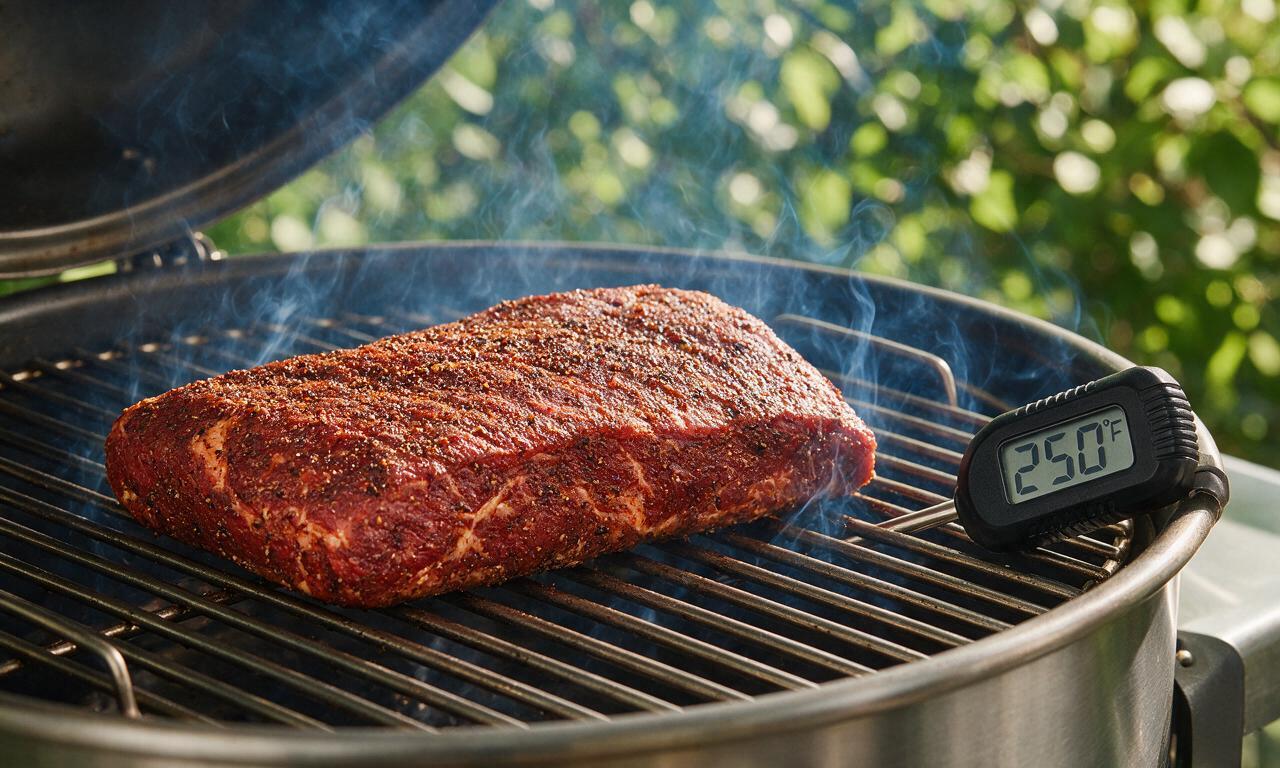
Place the seasoned brisket on the smoker grate fat side up, positioned away from direct heat. Add drained hickory wood chips to the smoker’s fire box or chip tray to produce thin, wispy blue smoke. Close the smoker lid and maintain a consistent internal cooking temperature of 120°C (250°F) for 5 full hours, refilling wood chips as needed to sustain steady smoke, and avoid unnecessary lid openings to prevent heat loss.
Step 2
step2:Start initial low-and-slow smoke
3

Prep foil crutch wrap

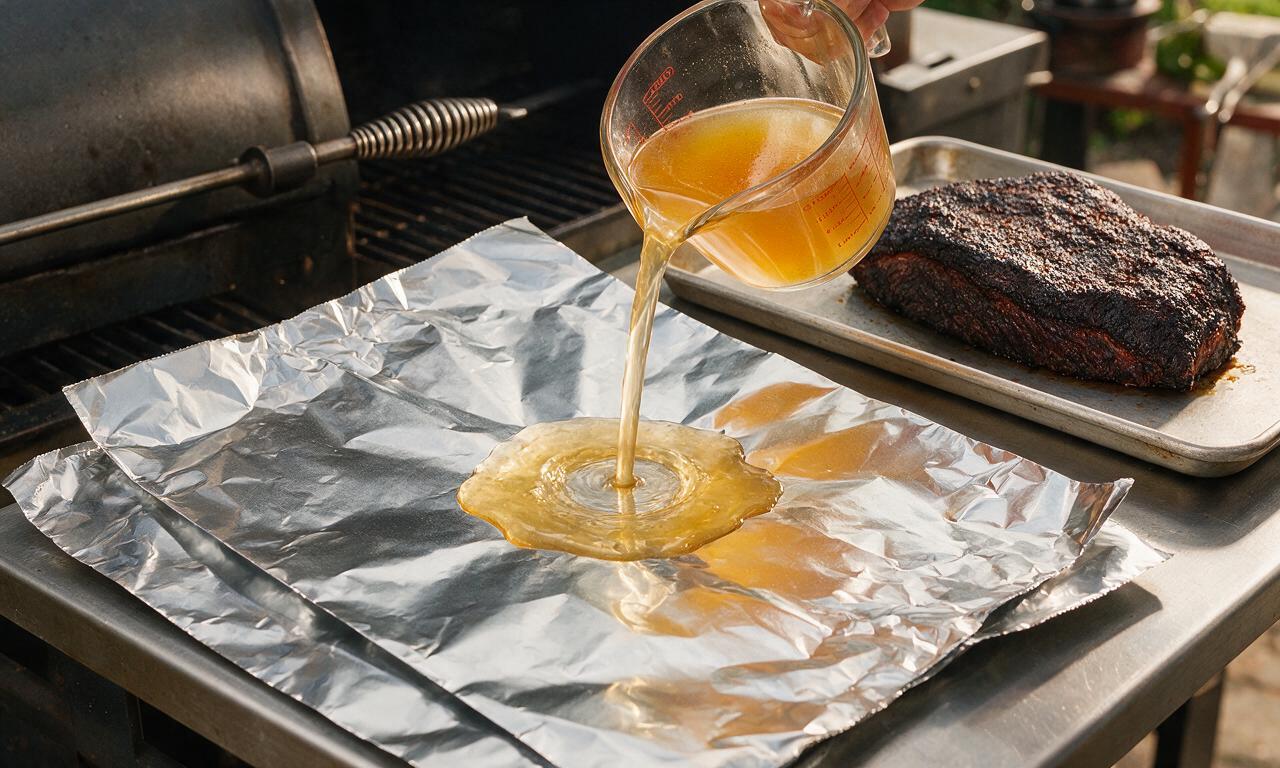
After 5 hours of smoking, check the brisket’s internal temperature with an instant-read thermometer; when it reaches 70°C (160°F) — the common temperature 'stall' where cooking slows dramatically — carefully remove it from the smoker. Lay two overlapping 60cm (24in) sheets of heavy-duty aluminum foil on a heat-safe work surface, then pour 120ml (½ cup) low-sodium beef broth and 2 tablespoons (30ml) apple cider vinegar into the center of the foil.
Step 3
step3:Prep foil crutch wrap
4

Wrap and finish cooking

Set the partially smoked brisket fat side up in the center of the prepared foil, then fold the foil tightly around the meat to create a fully sealed, airtight packet that traps steam to push through the temperature stall. Return the wrapped brisket to the smoker, maintain a steady 120°C (250°F) cooking temperature, and cook for 3 additional hours, until the brisket’s internal temperature reaches 95°C (203°F) when probed through the foil, and the thermometer slides into the meat with no resistance, like soft butter.
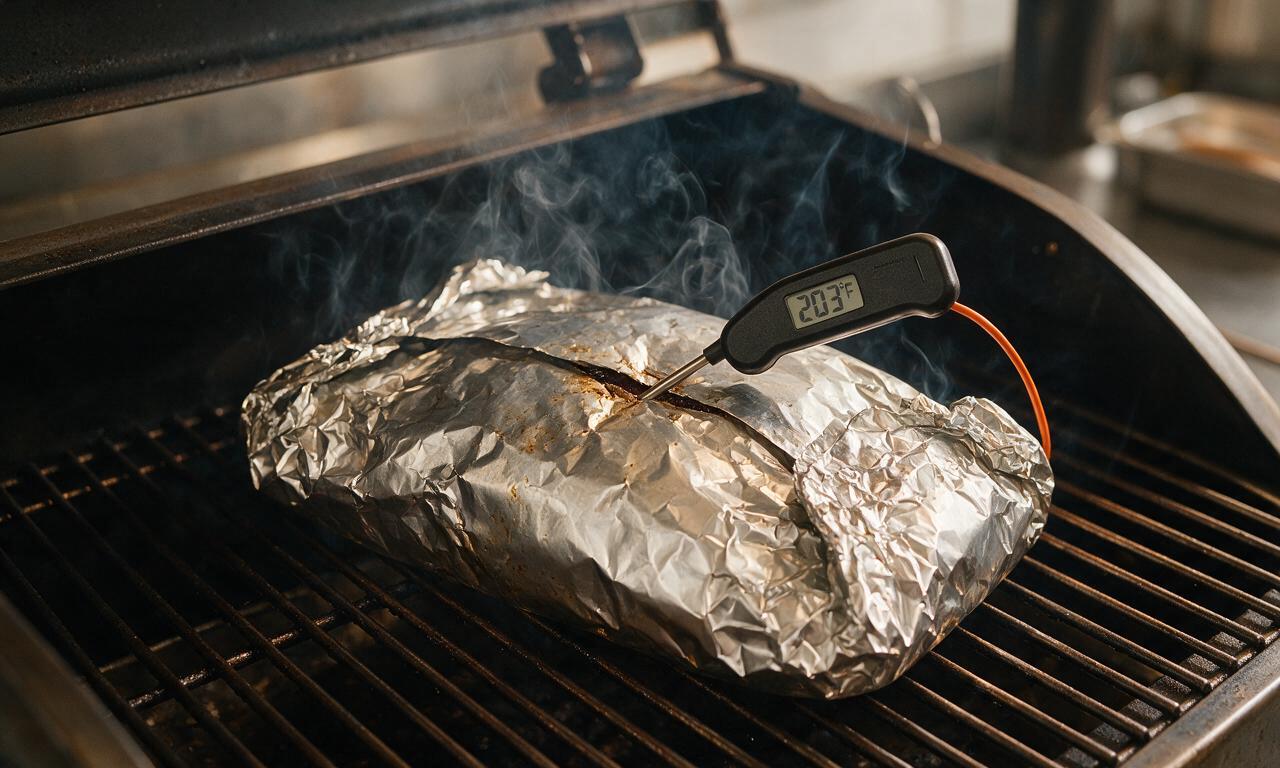
Step 4
step4:Wrap and finish cooking
5

Rest brisket to retain juices

Once the brisket hits the 95°C (203°F) target temperature, carefully remove the hot foil packet from the smoker (keep hands and face clear, as trapped steam will burn when the packet is disturbed). Do not unwrap the brisket; instead, wrap the foil packet in a thick cotton bath towel and place it inside an insulated cooler to rest for 1 full hour, allowing muscle fibers to relax and reabsorb flavorful cooking juices.
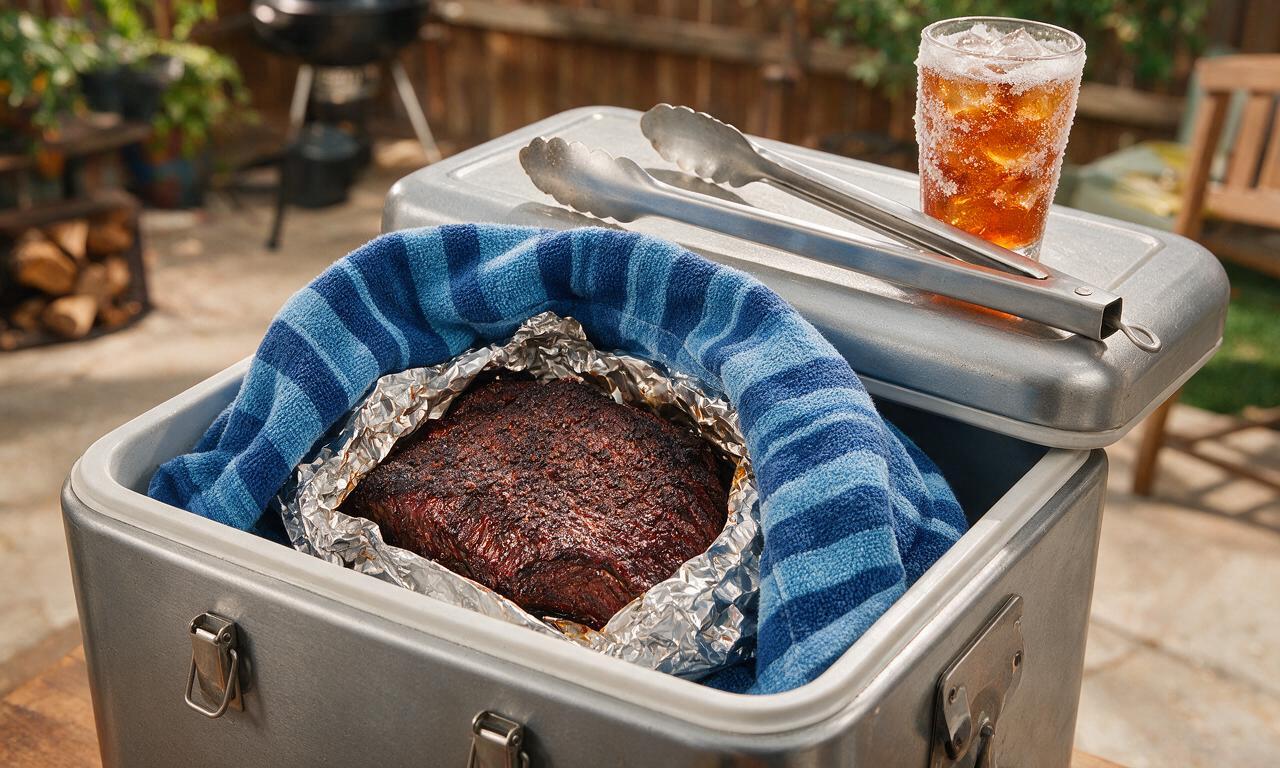
Step 5
step5:Rest brisket to retain juices
6

Slice against grain and serve

After the 1-hour rest, unwrap the brisket, reserving all collected savory juices from the foil to drizzle over finished slices. Transfer the brisket to a cutting board, and slice against the direction of the meat grain into 6mm (¼-inch) thick slices. Arrange slices on a serving platter, drizzle with reserved juices, and serve immediately.
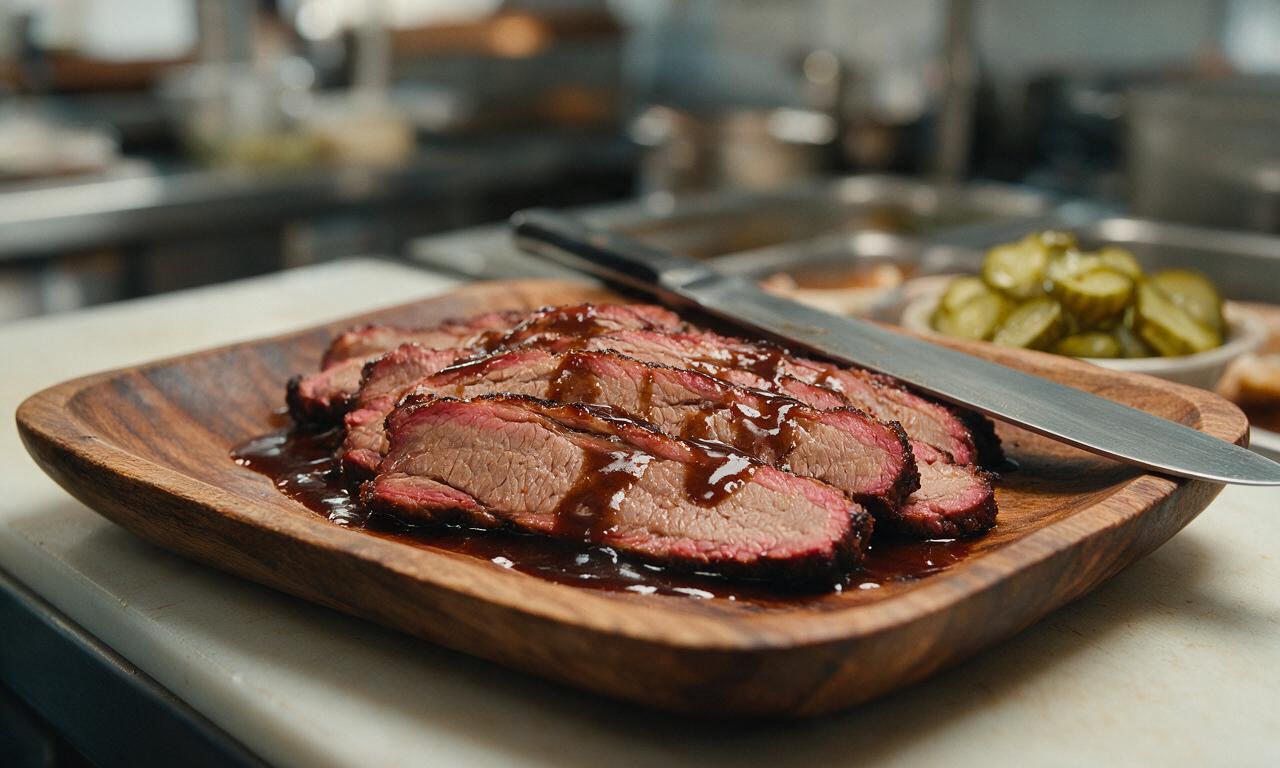
Step 6
step6:Slice against grain and serve

Tips

1.Never wrap the brisket before its internal temperature hits 70°C (160°F); wrapping too early will soften the crispy, flavorful spice bark and reduce the depth of smoky flavor in the finished meat.
2.Avoid opening the smoker lid unnecessarily during the initial 5-hour smoke; every lid opening can drop the smoker’s internal temperature by 10-15°C (20-30°F), extending total cook time and reducing consistent smoke exposure.
3.For a firmer, chewier bark instead of the soft, ultra-moist bark produced by foil, swap aluminum foil for uncoated peach butcher paper for the crutch wrap; it allows small amounts of steam to escape while still speeding cook time through the stall.
✨ You May Also Like

BBQ & Grilling
🍜 United States

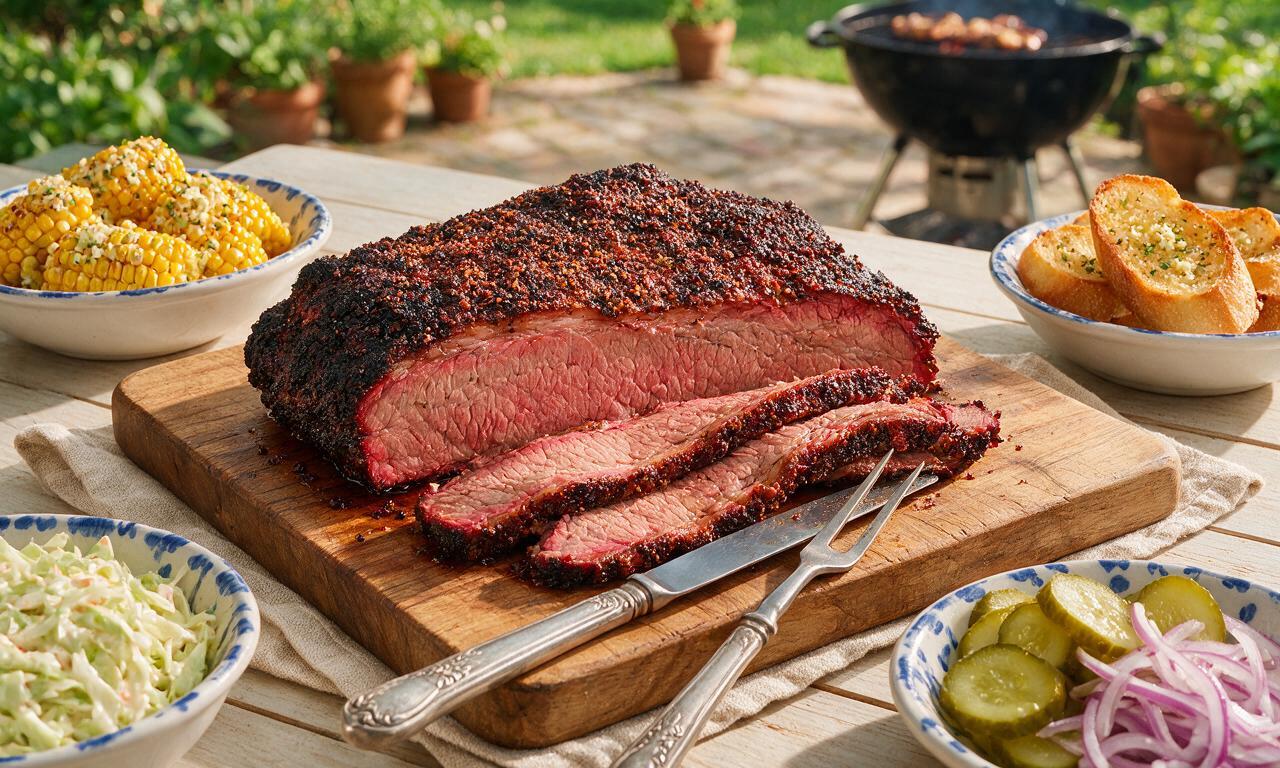
Tender, melt-in-your-mouth beef brisket with a crisp, spiced bark, slow-smoked to deep smoky perfection, the iconic centerpiece of Texas backyard barbecue.

⏱️ 12 hours BBQ & Grilling ★ 4.7
BBQ & Grilling
🍜 Korea

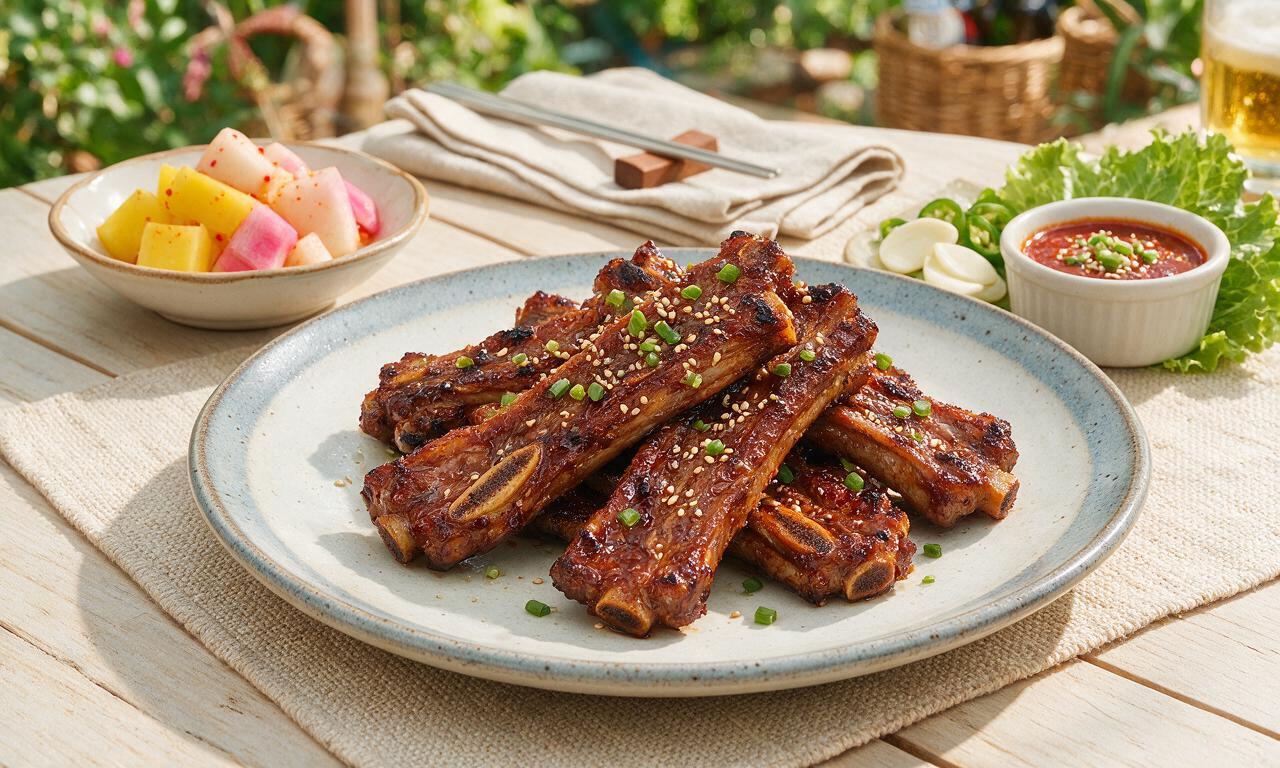
Tender, sweet-savory marinated beef short ribs, a beloved Korean BBQ staple with caramelized, slightly charred edges and deep umami flavor, perfect for outdoor summer gatherings.

⏱️ 4 hours 2BBQ & Grilling ★ 4.7
BBQ & Grilling
🍜 United States

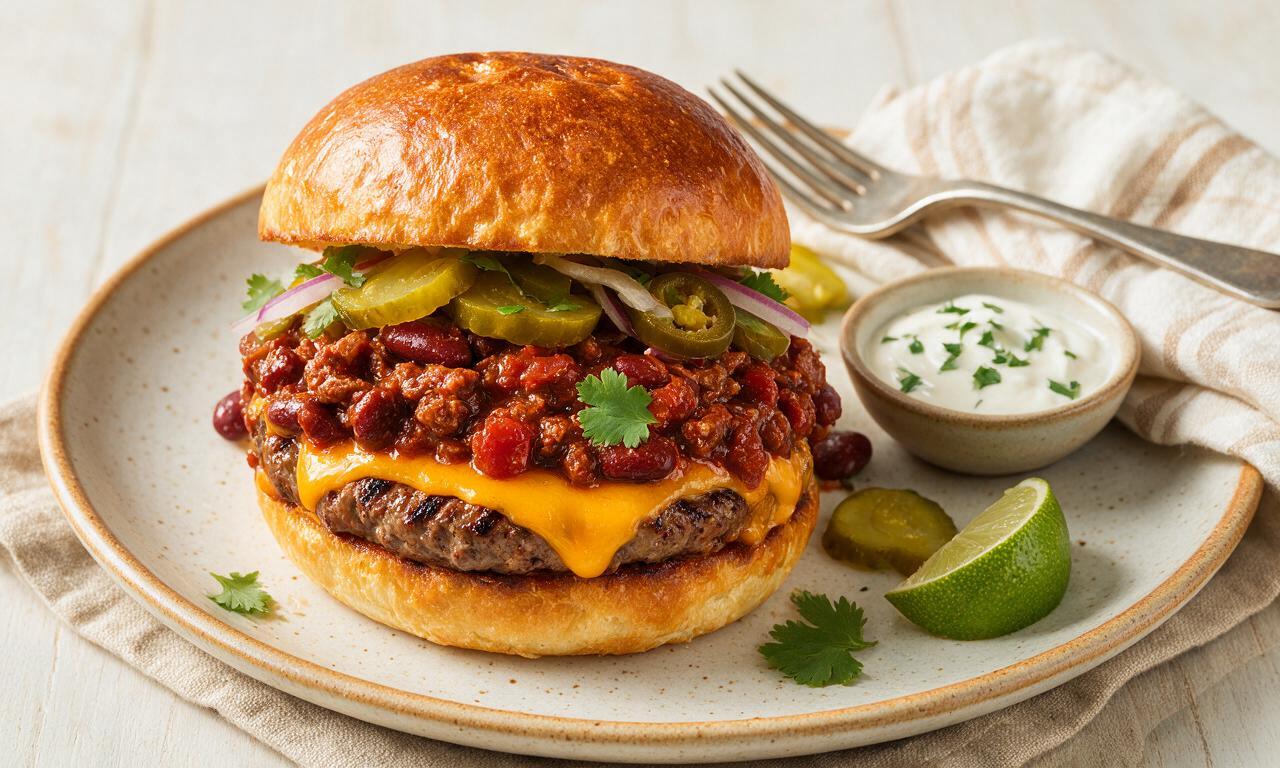
Juicy grilled beef patties topped with smoky homemade chili, melted cheddar, and tangy pickles on toasted brioche buns for a hearty, flavor-packed handheld meal.

⏱️ 40 minuteBBQ & Grilling ★ 4.9
BBQ & Grilling
🍜 United States

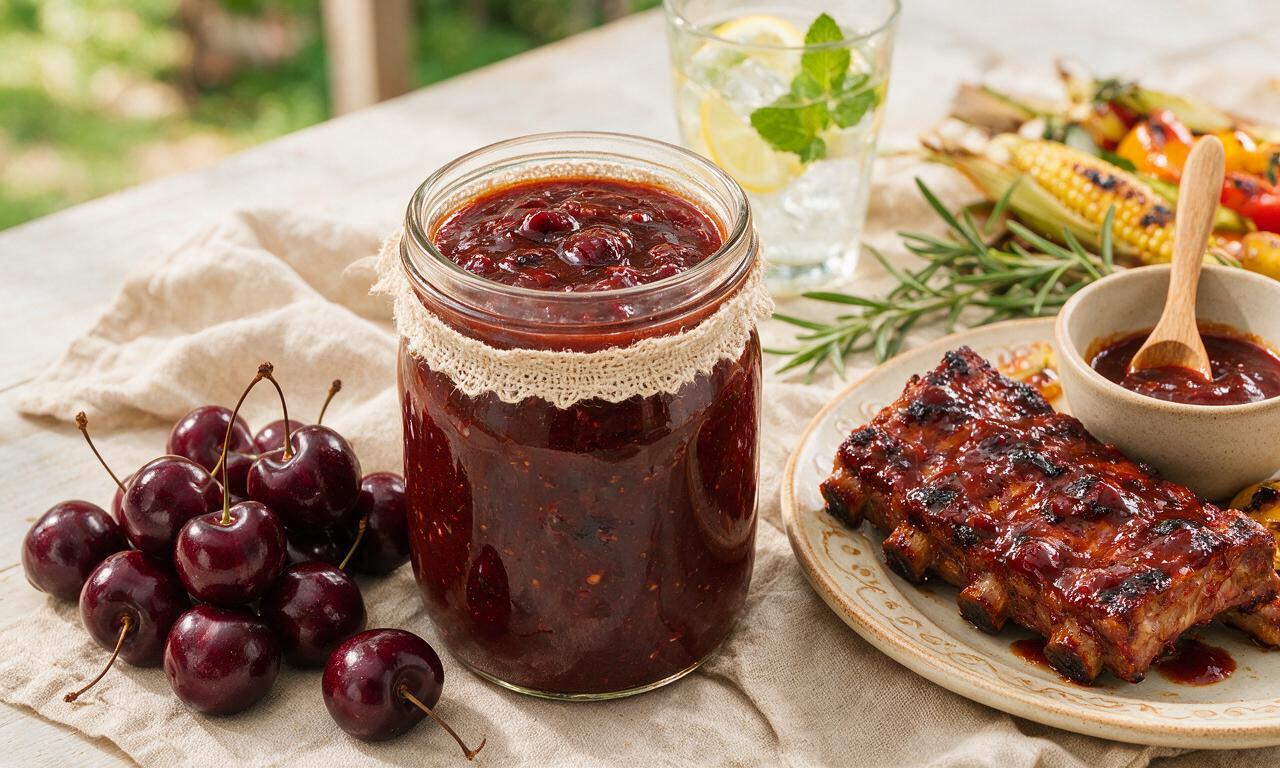
A sweet, smoky, tangy BBQ sauce brightened with peak-season dark cherries, ideal for glazing grilled ribs, chicken, pork, or summer roasted veggies.

⏱️ 35 minuteBBQ & Grilling ★ 5
BBQ & Grilling
🍜 United States

Rich, smoky, slightly sweet homemade bourbon BBQ sauce with deep caramel notes, ideal for glazing grilled ribs, chicken, and burgers at cookouts.

⏱️ 25 minuteBBQ & Grilling ★ 4.8
BBQ & Grilling
🍜 United States

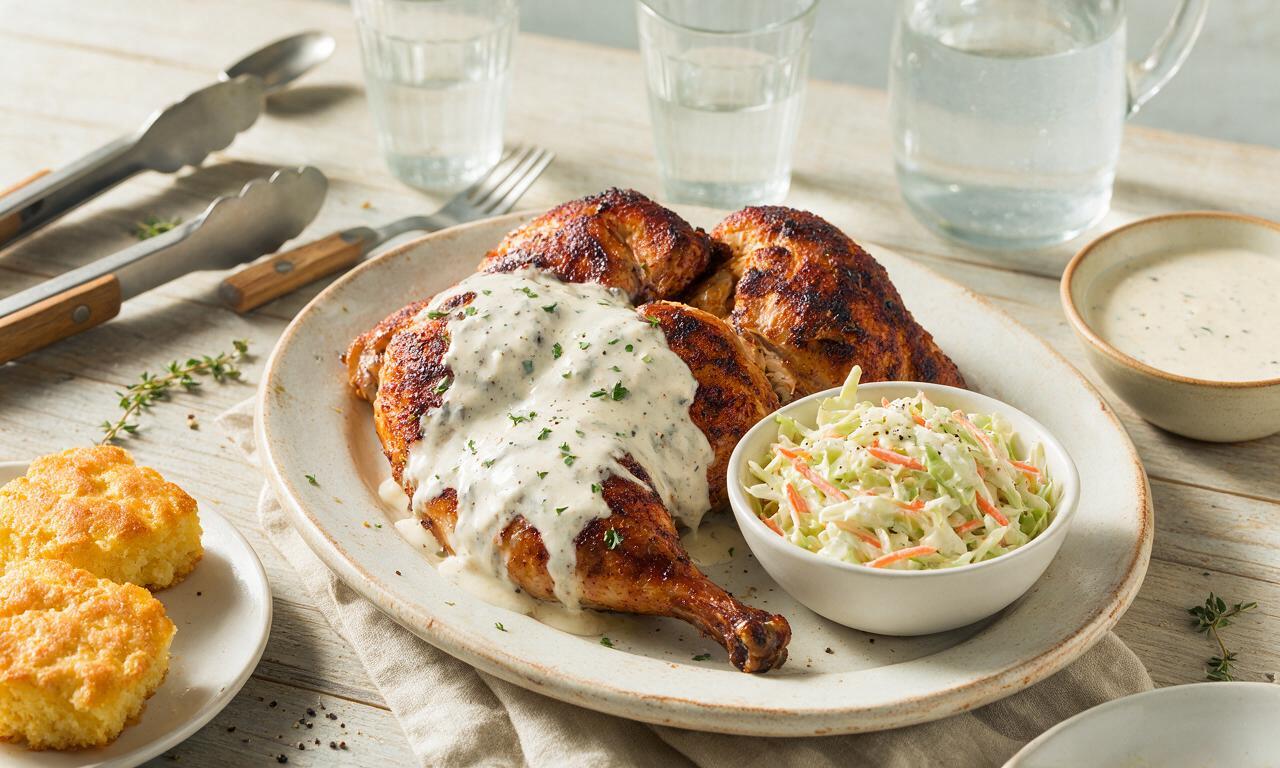
Iconic Alabama-style BBQ featuring tender hickory-smoked chicken slathered in tangy creamy white sauce, a beloved regional Southern cookout staple.

⏱️ 3 hoursBBQ & Grilling ★ 4.6

Texas Crutch:Frequently Asked Questions

1.What cut of brisket works best for this Texas Crutch recipe?
The recipe calls for a flat cut brisket, which is ideal for home cooks because it cooks more evenly than a full packer for smaller groups. Just be sure to select one that you can trim to leave an even ¼-inch fat cap, with all hard, waxy excess fat removed, as that fat layer naturally bastes the meat as it renders.
2.At what internal temperature should I wrap the brisket for the crutch?
Wrap your brisket when it hits the infamous temperature stall, almost always between 150°F and 165°F internal. This is when evaporative cooling from the meat’s surface moisture stops the temperature from rising for hours. Wait to wrap until it holds the same temp for 45+ minutes and has a deep, mahogany, firm bark for best results.
3.Should I use aluminum foil or pink butcher paper for the wrap?
Both work, but they deliver slightly different results. Foil creates a tighter, steamier seal that cuts through the stall fastest for extra-moist meat, while uncoated pink butcher paper lets a tiny bit of smoke circulate and keeps the bark firmer, less soft. For classic Texas results, most pitmasters lean toward butcher paper for home cooks.
4.How much fat cap should I leave on the brisket before smoking?
Trim the fat cap down to an even ¼ inch (6mm) across the entire surface, and cut away all hard, crumbly chunks of excess fat that won’t render during cooking. Leaving more than ¼ inch leads to chewy, unrendered fat on the finished brisket, while trimming it all off removes the natural basting layer that keeps meat moist.
5.What’s the right rub ratio for this authentic Texas brisket?
For a 12–14 pound brisket flat, mix ½ cup kosher salt, ½ cup coarsely ground black pepper, 2 tablespoons garlic powder, and 1 tablespoon smoked paprika. Skip heavy, sugary rubs for authentic Texas flavor—sugar burns easily during long smokes and muddles the clean, beefy, smoky profile this method is famous for.
6.What smoker temperature should I maintain before wrapping the brisket?
Keep your smoker steady at 225°F to 250°F for the pre-wrap portion of the cook, using a mild hardwood like post oak or hickory for smoke. Avoid temps above 275°F early on, as that will burn the rub and cause the outer edges of the brisket to dry out before it hits the temperature stall.
7.Do I need to add liquid to the wrap when I crutch the brisket?
You don’t have to, but adding 2–3 tablespoons of beef broth, plain water, or unsweetened apple juice to the wrap before sealing helps create extra steam to power through the stall fast. Skip sugary sauces or soda in the wrap, as those will make the bark mushy and leave an odd burnt-sweet aftertaste on the meat.
8.How long does the brisket stay wrapped during the crutch step?
Once wrapped, the brisket will usually take another 3–5 hours to reach target doneness, depending on its size and your smoker’s consistency. Don’t rush this step—keep the smoker temp steady, and resist the urge to unwrap repeatedly to check, as that lets precious steam and heat escape and extends cook time.
9.How do I tell when the wrapped brisket is fully done?
Don’t rely solely on temperature—once the thickest part of the brisket hits 200–205°F, probe it with a meat thermometer or plain toothpick. It should slide in with no resistance, like sticking a knife into soft butter, with no tough tug. If it feels firm even at temp, cook 20–30 minutes longer before checking again.
10.Do I still need to rest the brisket when using the Texas Crutch method?
Absolutely—resting is non-negotiable for juicy brisket, even with the crutch. Once it hits that perfect probe-tender doneness, wrap it in an extra layer of foil (if you used paper), tuck it into an empty insulated cooler, and let it rest for a minimum of 1 hour to let muscle fibers reabsorb all their juicy moisture.
11.Why is my brisket bark soft and mushy when I use the crutch?
Mushy bark almost always comes from wrapping too early, before the bark has set into that firm, dark mahogany crust, or from adding too much liquid to the wrap. Wait until the brisket has a dry, firm outer surface before wrapping, and stick to 2–3 tablespoons of liquid max if you add any, to keep bark crisp.
12.Can I use this crutch method on a small brisket flat for a shorter cook?
You sure can—smaller 3–4 pound brisket flats work great with the crutch, you’ll just hit the stall a bit earlier, usually around the 2.5–3 hour mark instead of 4–5 hours for a large cut. Plan for a total cook time of 5–7 hours for a small flat, plus the mandatory 1-hour rest, for tender, juicy results.
13.What type of wood gives the most authentic Texas brisket flavor?
Traditional Texas brisket relies on post oak for its mild, earthy, not-overpowering smoky flavor, but hickory is a great accessible swap for home cooks. Avoid heavy use of sweet fruit woods like apple or cherry for classic flavor, and skip long cooks with mesquite, as its strong, bitter smoke can easily overpower the beef.
14.Will the Texas Crutch make my brisket taste steamed instead of smoky?
It won’t, as long as you wait to wrap until the brisket has absorbed 3–4 hours of good, clean smoke and developed a solid bark before sealing it up. Nearly all smoke penetration happens in the first half of the cook, before the stall, so wrapping after that point locks in existing smoke instead of blocking it out.
15.How thick should I slice the finished smoked brisket?
Slice the brisket against the grain into ¼-inch thick slices for the perfect tender bite. If you’re working with a cut that includes both the lean flat and fattier point, separate the two muscles after resting, slice the flat against the grain, and cut the point into thicker chunks for burnt ends if you’d like.
16.Can I use the Texas Crutch method on a regular grill if I don’t have a smoker?
Absolutely—set your gas or charcoal grill up for indirect heat, keep the temp steady between 225–250°F, and add a soaked wood chip packet on the hot side to generate clean smoke. The crutch works exactly the same on a grill as it does on a dedicated smoker, as long as you don’t let the brisket sit directly over open flame.
17.How long can I hold a crutched brisket before serving?
A properly wrapped brisket, tucked into a well-insulated cooler with no added ice, will hold at a safe, warm serving temperature for up to 4 hours after coming off the smoker. This makes the method perfect for BBQ parties, since you can finish the brisket hours before guests arrive without it drying out or getting cold.
18.What’s the most common mistake new pitmasters make with the Texas Crutch?
The most common misstep is wrapping the brisket far too early, before the bark has set and the meat has taken on enough smoke, leading to pale, mushy, under-smoked results. The second big mistake is slicing immediately after cooking instead of resting, which lets all the precious juice run out onto the cutting board.
19.Can I use the drippings from the wrap for serving?
Definitely—those dark, beefy drippings that collect in the foil or butcher paper are liquid gold. Skim off any excess pooled surface fat, then drizzle the drippings over sliced brisket right before serving to add extra moisture and deep, smoky beef flavor. You can also stir a splash into BBQ sauce for a quick, meaty topper.

Comments (5)

3 days ago

OMGGGG this Texas crutch method is an absolute game changer! I’ve been messing up brisket for YEARS on my offset smoker, always getting that dry, tough flat no matter how long I babied it. Followed this recipe exactly for my neighborhood potluck last weekend, and people were coming back for thirds. My picky 10 year old even asked for seconds, which never happens! The bark was perfect, the pull was tender enough to cut with a plastic fork, zero dry spots. SO good, I’m never going back to my old method.

2 days ago

Wait how much wood did you use for the smoke? I’m using a pellet smoker and don’t want to oversmoke it, last brisket tasted like a campfire lol

yesterday

Great question! For pellet smokers, stick to 100% post oak pellets if you can find them, and run the smoker at 225F for the first 3 hours before wrapping. Avoid mesquite for long smokes—it gets harsh fast! Thin, wispy blue smoke is what you’re aiming for, no thick white billowing smoke.

1 week ago

This turned out really tasty overall, but I’m knocking a star because 9 hours cook time was way longer than I planned for on a weeknight! I prepped it Sunday instead, and it was perfect for meal prep all week—sliced thin for sandwiches, chopped for tacos, even mixed a bit into my mac and cheese. The crutch kept all the moisture in, which I was super worried about since my last brisket was so chewy I had to turn it into chili. Would absolutely make again, just don’t make my mistake of starting it at 2pm on a work night lmao

5 days ago

So glad it worked out for your meal prep! Quick heads up for everyone: that 9 hour cook time is an average, and can vary a bit based on your brisket size and how consistent your smoker holds temp. Always plan for an extra 1-2 hours of buffer time if you’re on a schedule! Don’t forget to let it rest wrapped for a full hour after pulling it too, that locks in so much juice.

2 hours ago

First brisket I’ve ever made that made my Texas-born father-in-law go quiet for 3 bites before saying ‘damn, that’s real brisket.’ That’s the highest compliment you can get in my book, y’all. Used butcher paper instead of foil for the crutch like my FIL taught me, but followed the temp guides and rub ratio exactly, and it came out perfect. Already sent this recipe to every guy in my fantasy football league for our draft day cookout next month.

yesterday

Game. Changer. I was always scared to try brisket because everyone makes it sound like you need 20 years of pitmaster experience to not ruin a $50 cut of meat. This recipe broke every step down so clearly, even a newbie like me pulled it off! Made it for my wife’s birthday dinner with her family, and everyone thought I ordered it from a fancy BBQ joint. The Texas crutch cut down the stall time so much, I thought I was doing something wrong when it flew past 165F after wrapping. 10/10, no notes.

2 hours ago

So glad to see another newbie pull this off! I’ve been too nervous to drop that much cash on a whole packer brisket, but your review is making me pull the trigger this weekend. Did you use the rub recipe listed, or a store-bought rub?

5 days ago

Made this for our family Sunday dinner last week, and it was a huge hit! The only issue I ran into was my brisket hit the stall a little earlier than the recipe said, so I ended up wrapping it at 150F instead of 160F, and it still turned out juicy and delicious. My husband is already begging me to make it again for our Fourth of July cookout, even though that’s months away. Only reason it’s not 5 stars is I wish the recipe had a suggested rub recipe for people who don’t have a go-to BBQ rub on hand!

3 days ago

FWIW, I used 3 parts coarse black pepper, 2 parts kosher salt, 1 part garlic powder, 1 part onion powder, and a half part paprika for the rub and it was chef’s kiss. Tastes just like the brisket I get at the little mom-and-pop BBQ spot down the road from me in Denver!

2 days ago

Thanks so much for the honest feedback Pam! We just updated the recipe card to include our go-to simple Texas brisket rub (it’s almost exactly what Joe shared!): ¼ cup kosher salt, ¼ cup coarse black pepper, 2 tbsp garlic powder, 2 tbsp onion powder, 1 tbsp smoked paprika. No fancy ingredients needed for that classic authentic flavor!