
Texas Style Smoked Beef Brisket
intro
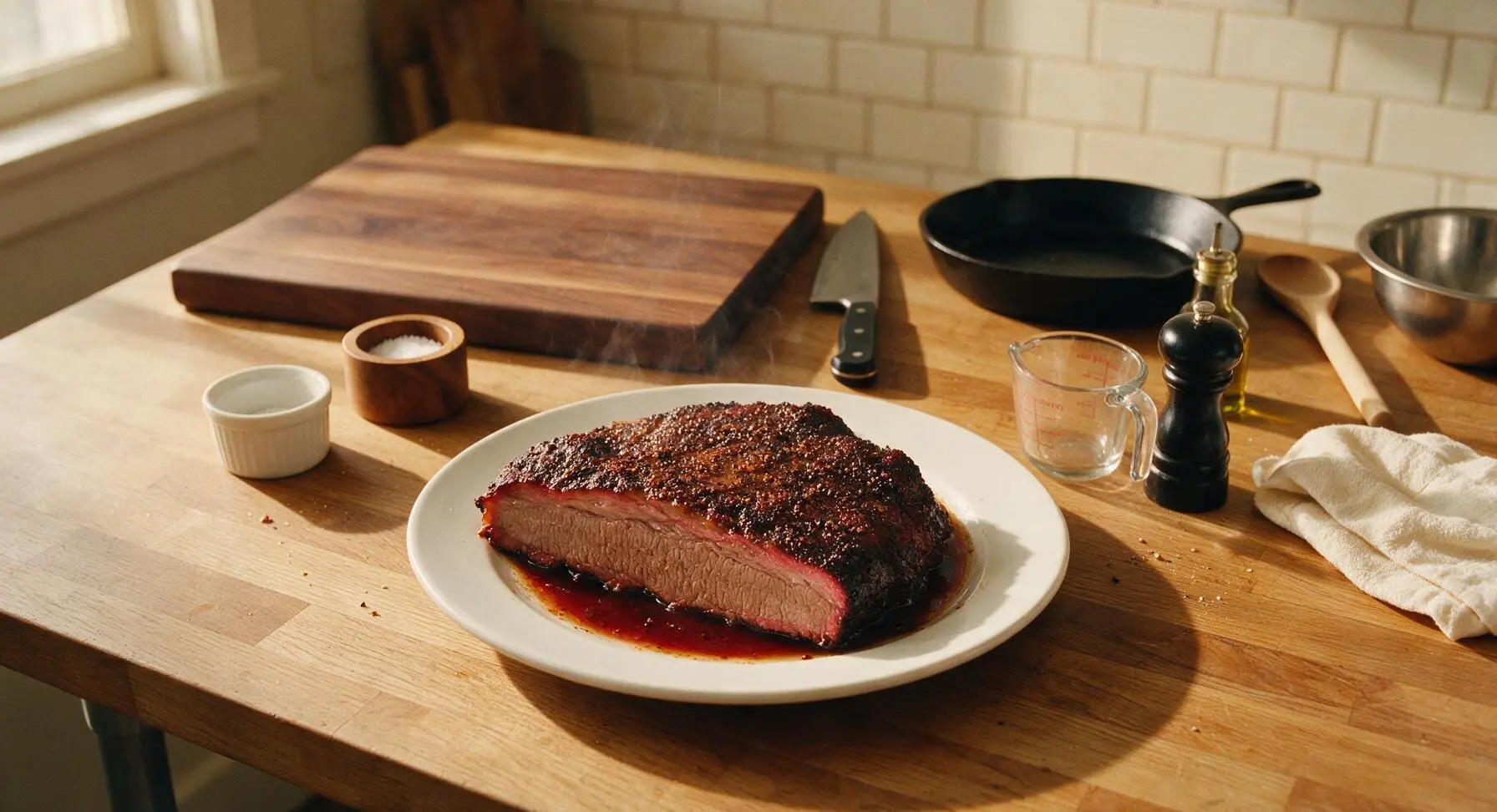
Tender, melt-in-your-mouth beef brisket with a crackly peppery mahogany bark, distinct pink smoke ring, and rich deep beef flavor— the iconic, no-fuss centerpiece of classic Texas backyard cookouts.
Ingredients
Steps
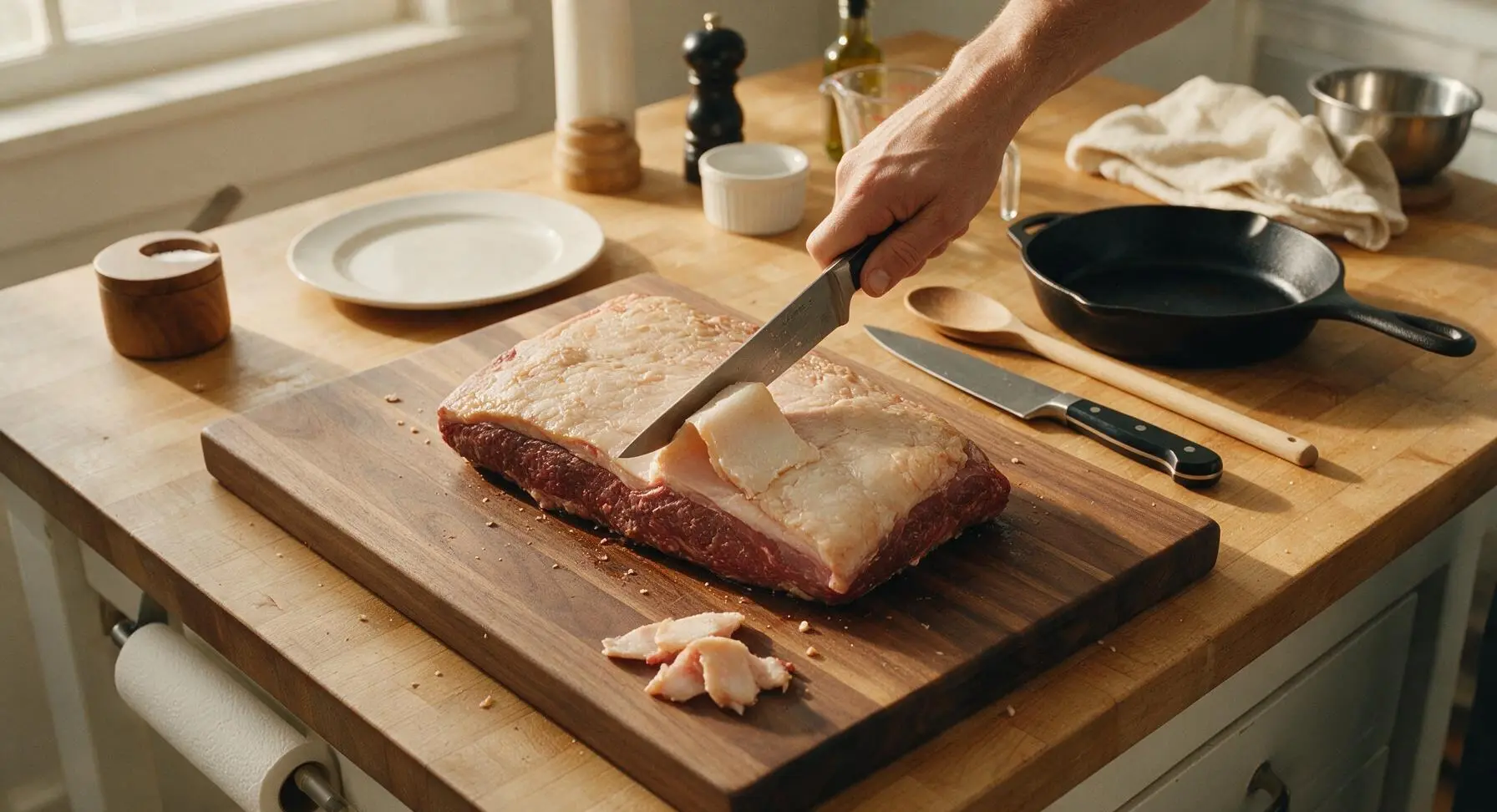
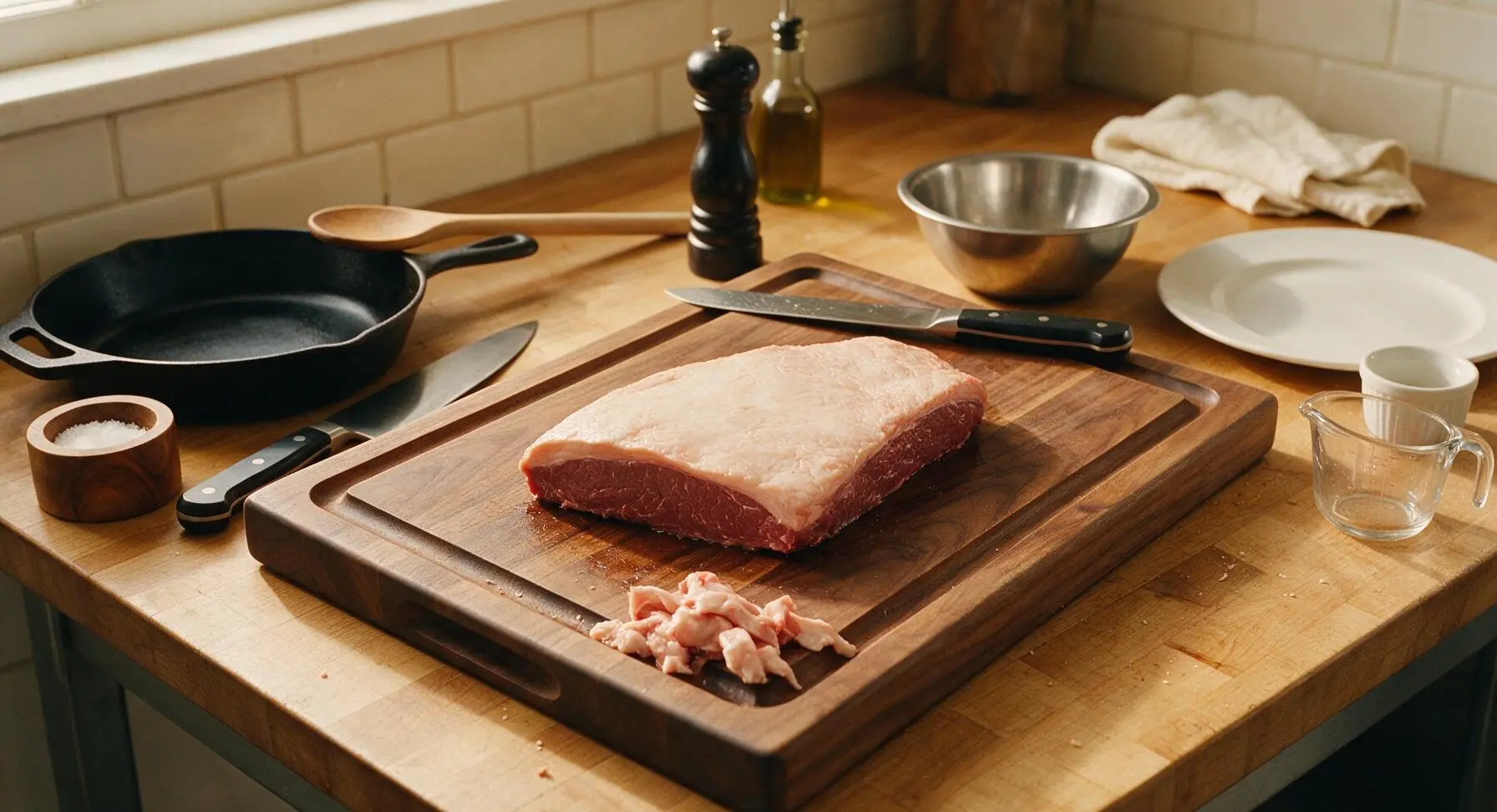
Trim Excess Brisket Fat
Place the raw whole packer brisket fat-side up on the teak cutting board. Use the 10-inch stiff boning knife to trim the hard, waxy fat cap to a uniform 1/4-inch thickness, removing all thick fat chunks and tough silver skin from the meat side. Round off any sharp, thin edges of the brisket flat and point that would burn during long smoking. The finished trimmed brisket should have a smooth, even fat layer with no ragged exposed meat edges.
Apply Even Dry Rub
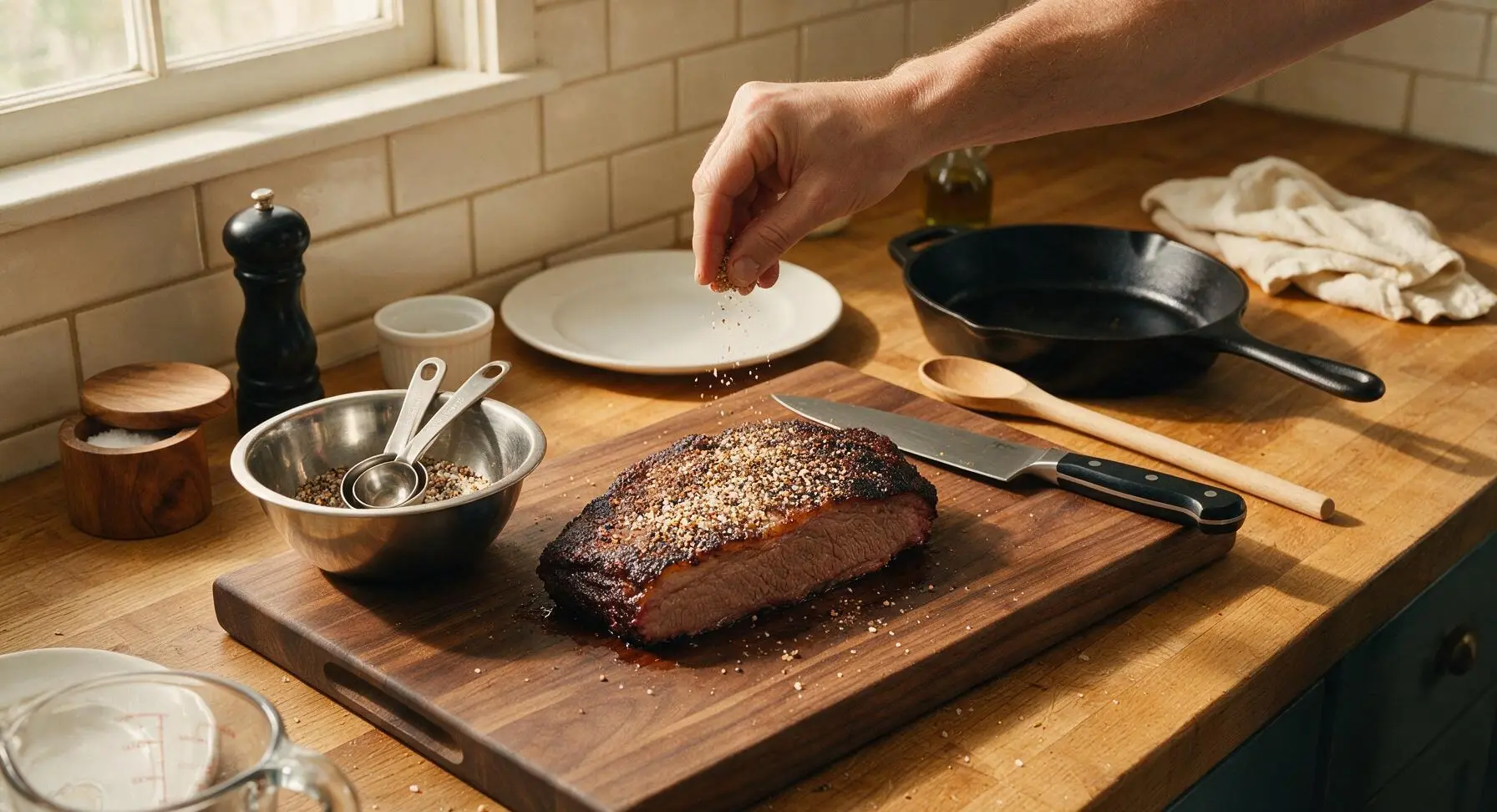
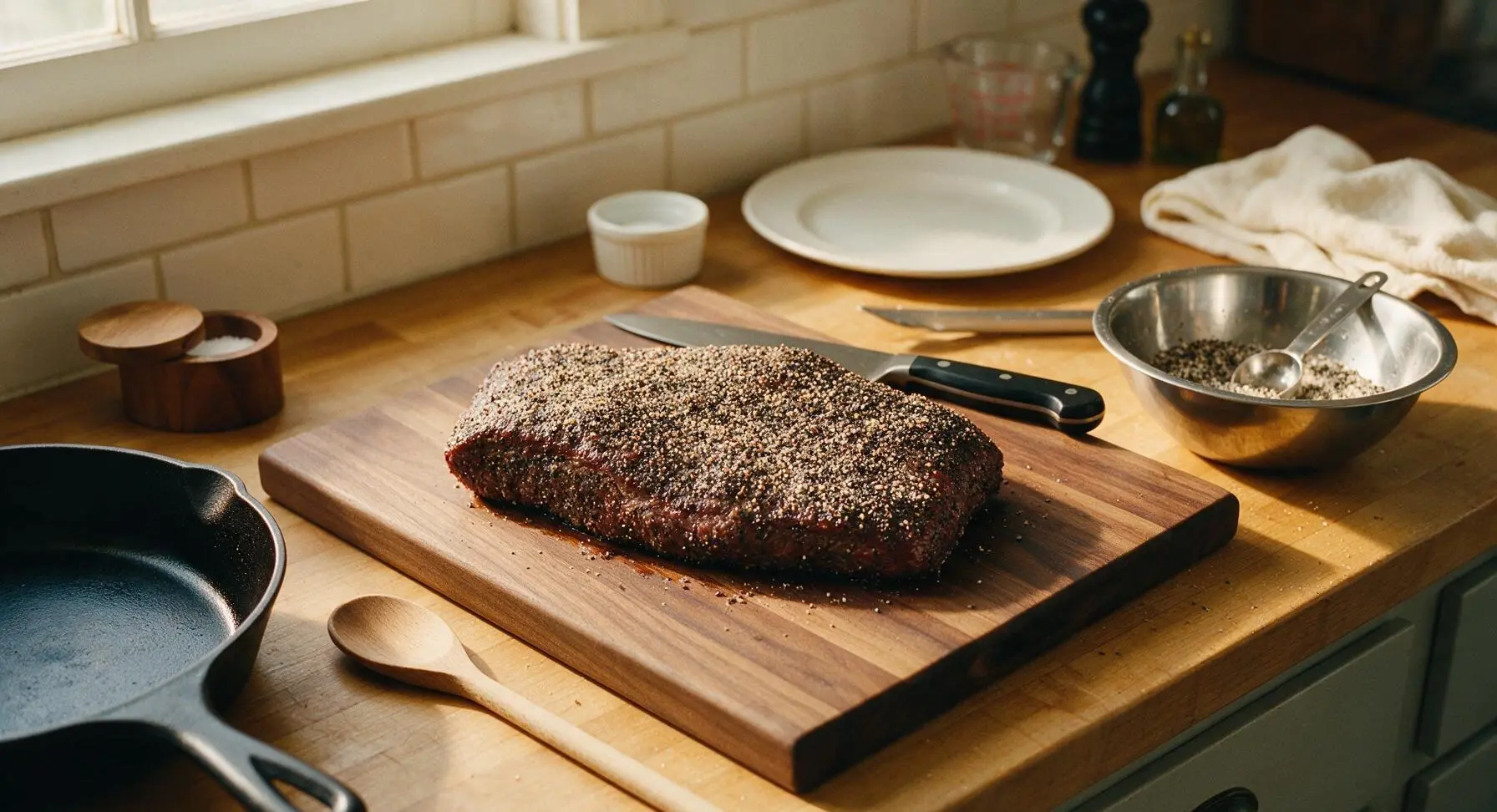
Combine 3 tablespoons coarse kosher salt, 3 tablespoons coarsely ground black pepper, and 1 tablespoon garlic powder in the medium stainless steel mixing bowl, stirring with a stainless steel measuring spoon to fully combine. Pat the entire surface of the trimmed brisket completely dry with paper towels, then sprinkle the rub evenly over every surface (fat side, meat side, edges), pressing gently so the spice adheres. Do not rub the spice into the meat— a light, even coating is ideal, with no thick clumps of spice.
Preheat Smoker to 225°F
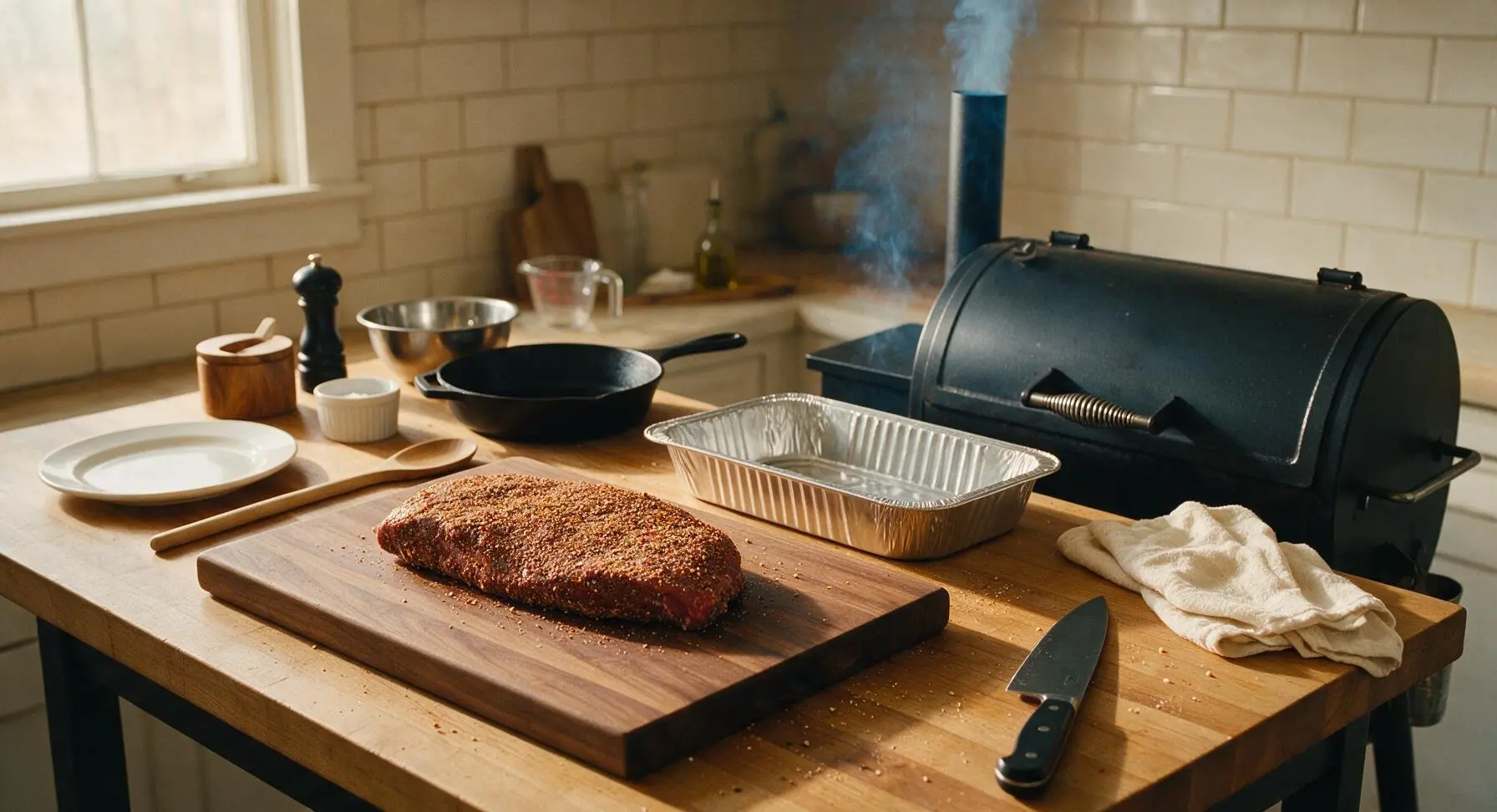
Preheat the offset wood smoker to a steady 225°F (107°C), using post oak wood for traditional Texas smoke flavor. Wait until the smoke runs thin, pale blue, and clean— thick white smoke will give the brisket a bitter, ashy taste. Place the heavy-duty aluminum foil drip pan on the counter, ready to be set on the lower smoker rack to catch drippings during cooking.
Smoke to Stall Temperature
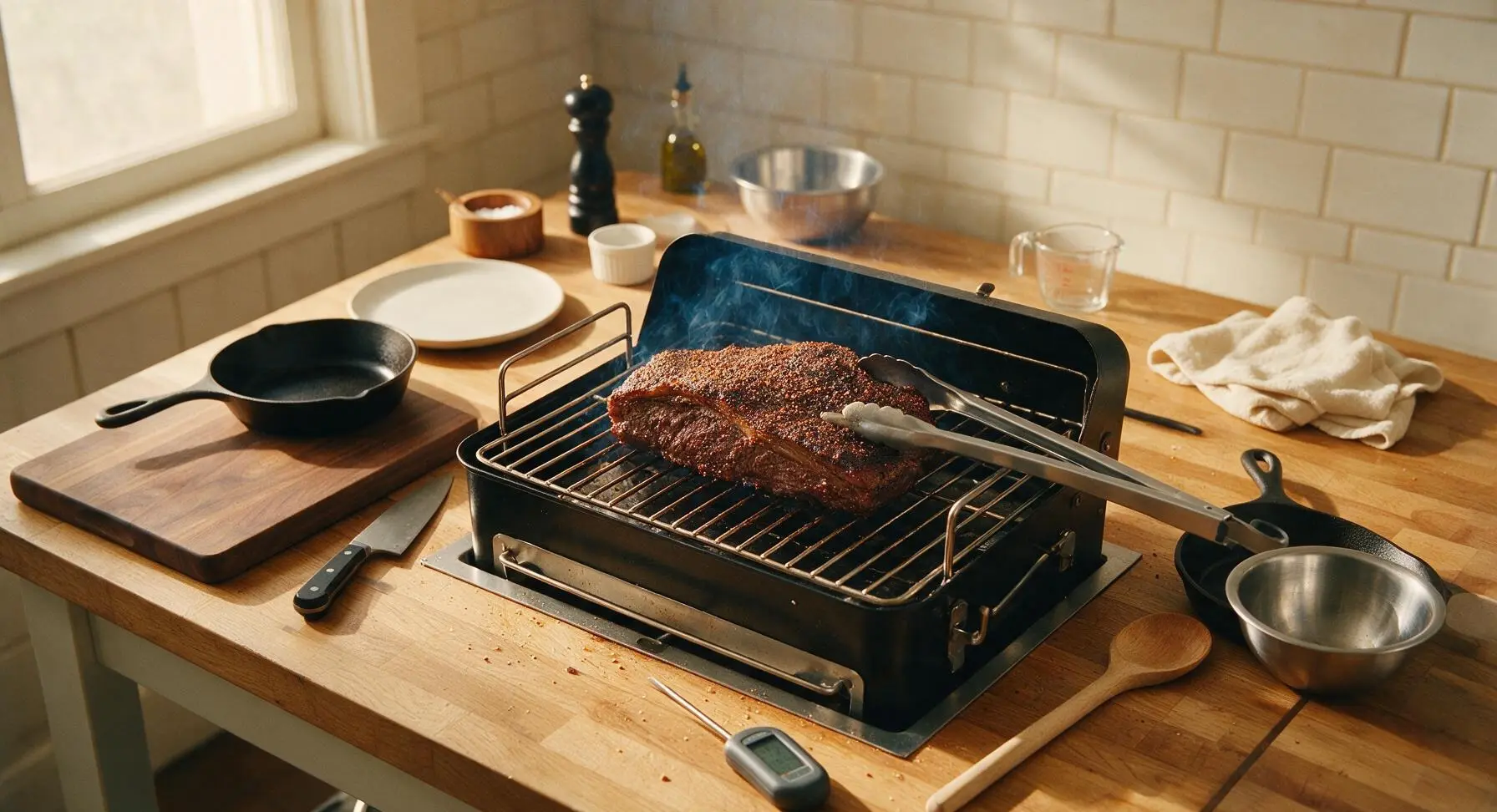
Use the long-handled stainless steel tongs to place the seasoned brisket fat-side up directly on the middle smoker rack, positioned above the drip pan. Close the smoker lid and maintain a steady 225°F temperature, avoiding frequent lid openings that drop heat. Smoke the brisket until the internal temperature reaches 165°F (74°C), measured with the digital instant-read thermometer inserted into the thickest part of the flat (avoid touching fat). This takes 5-6 hours, at which point the brisket will have a deep, dark mahogany bark and the internal temperature will plateau (known as 'the stall').
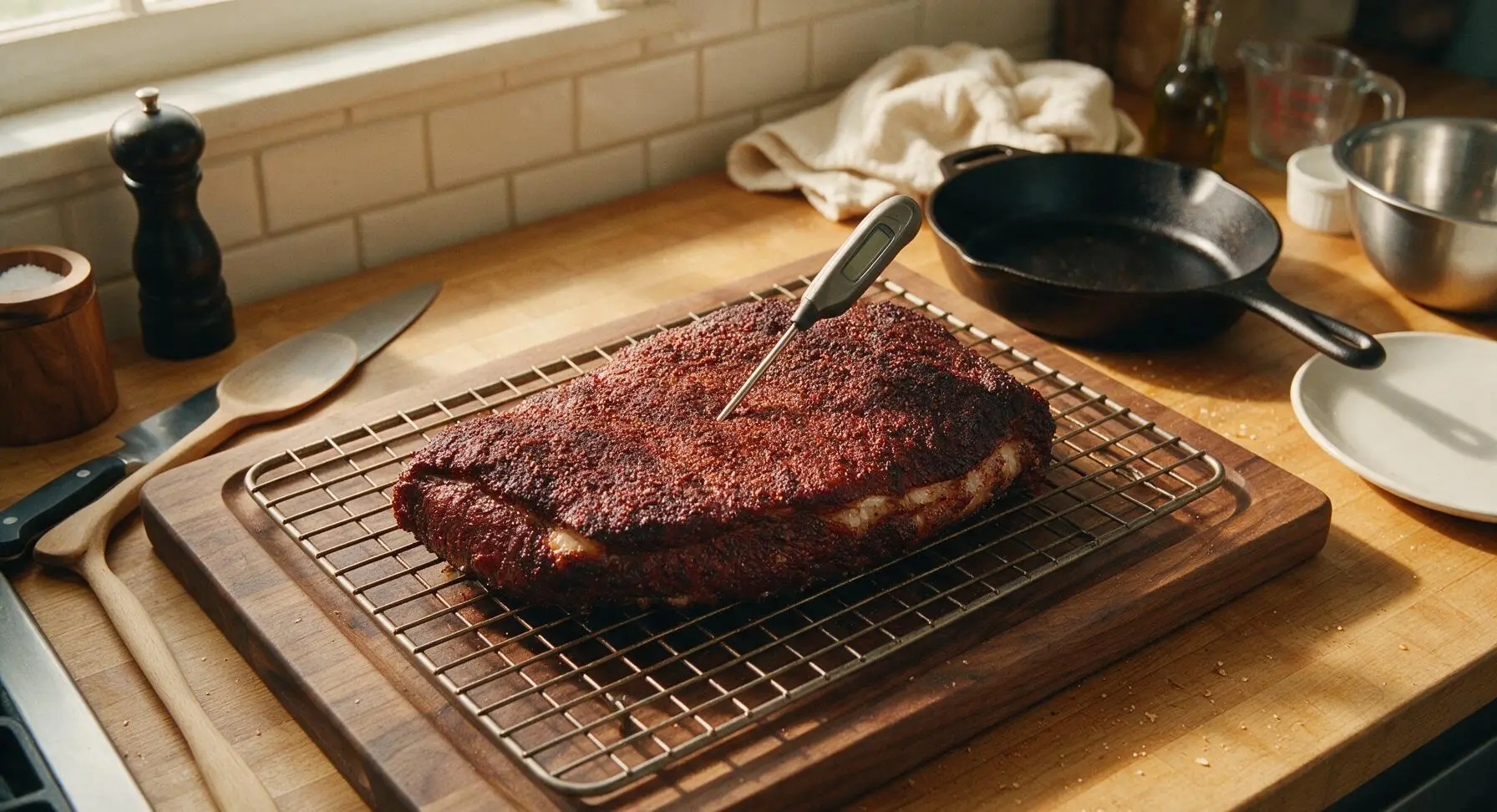
Wrap in Pink Butcher Paper
Carefully remove the 165°F brisket from the smoker using the long tongs, and place it on a double layer of uncoated pink butcher paper pulled from the roll on the counter. Wrap the brisket tightly, folding the paper edges to seal completely with no gaps, to power through the temperature stall without steaming and softening the bark (do not use aluminum foil, which will make the bark soggy).
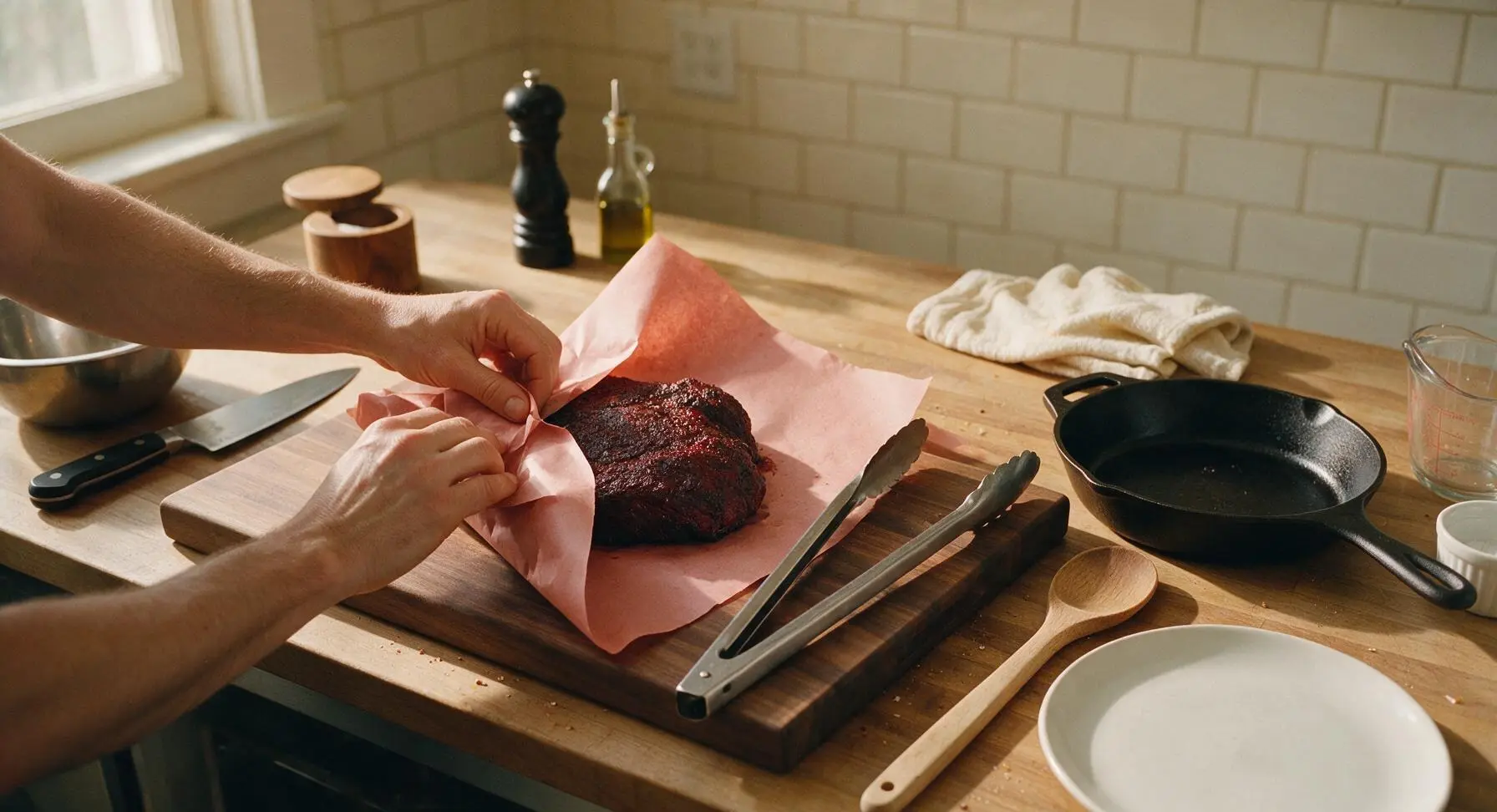
Cook to Probe Tender
Return the wrapped brisket to the 225°F smoker, and continue cooking until the instant-read thermometer inserted into the thickest part of the brisket point reads 203°F (95°C). The probe should slide into the meat with no resistance, like sticking a warm knife into soft butter, which indicates the connective tissue has fully broken down. This typically takes an additional 3-4 hours.
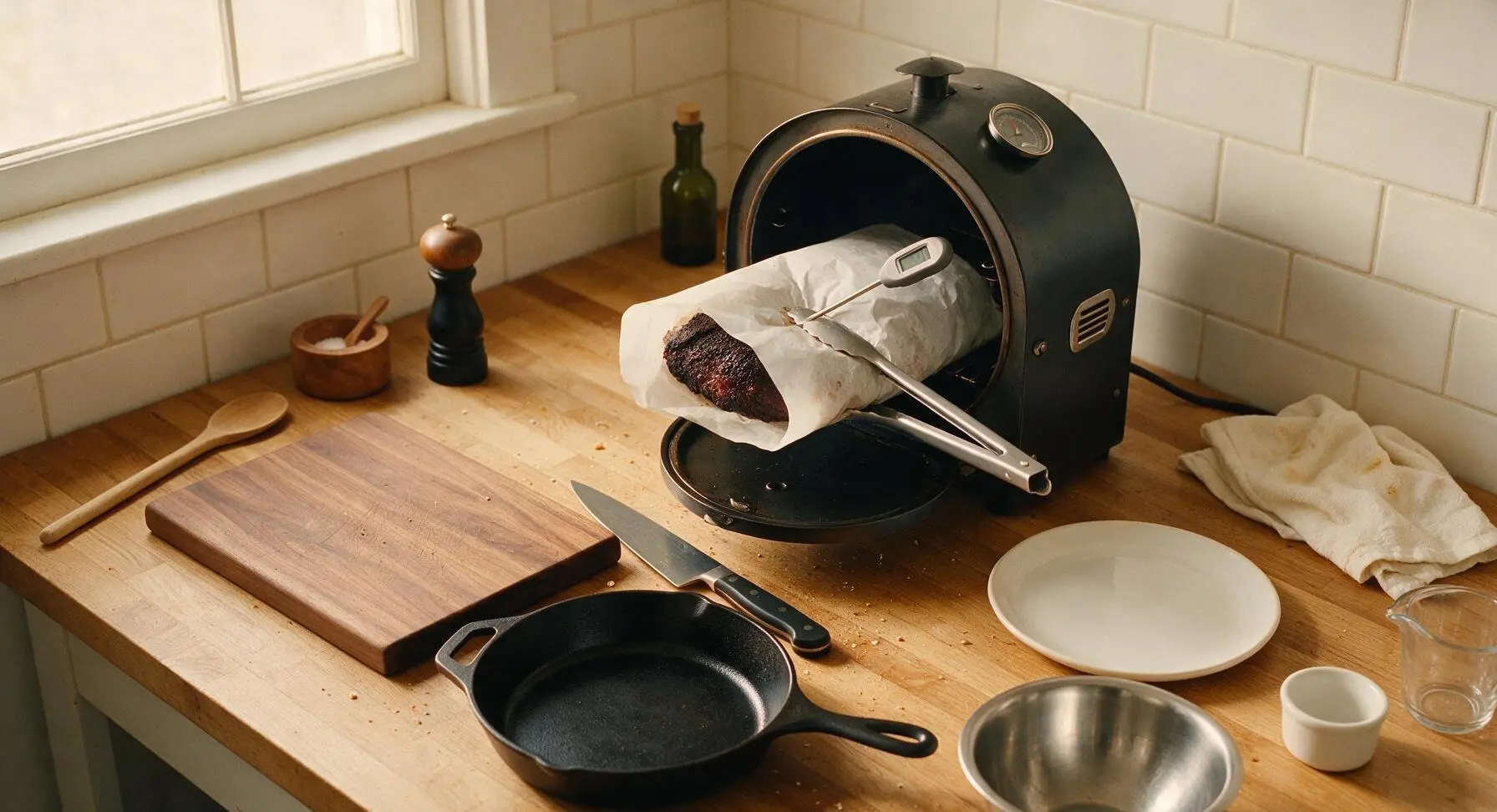
Rest Brisket for Juiciness
Remove the finished brisket from the smoker, keeping it tightly wrapped in the pink butcher paper. Wrap the bundled brisket in the folded gingham towel from the counter, then place it in an insulated cooler to rest for a minimum of 1 hour (up to 4 hours) to allow the muscle fibers to relax and reabsorb juices. Skipping this step will cause all the meat juices to run out when slicing, resulting in dry brisket.
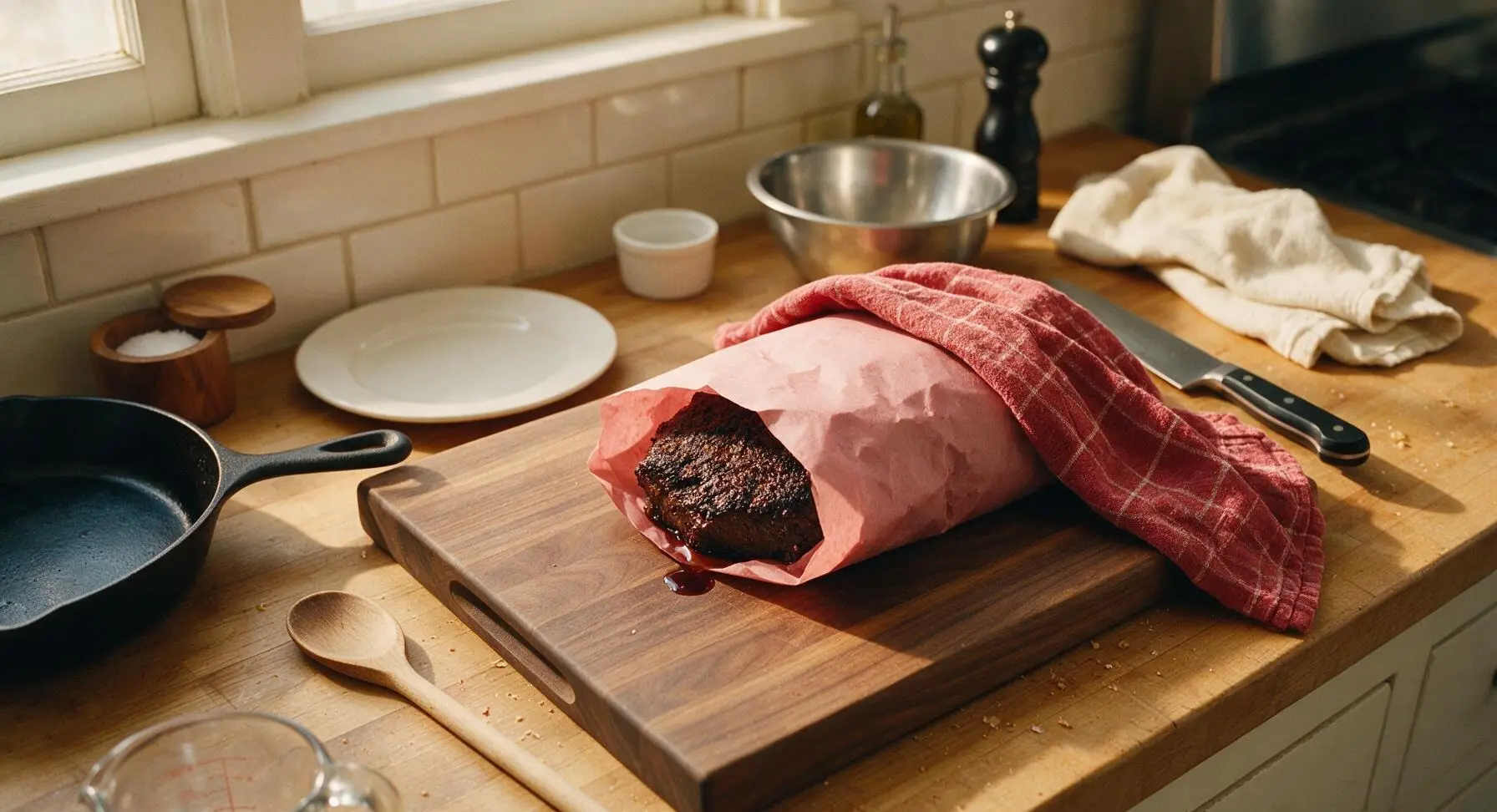
Slice Against the Grain
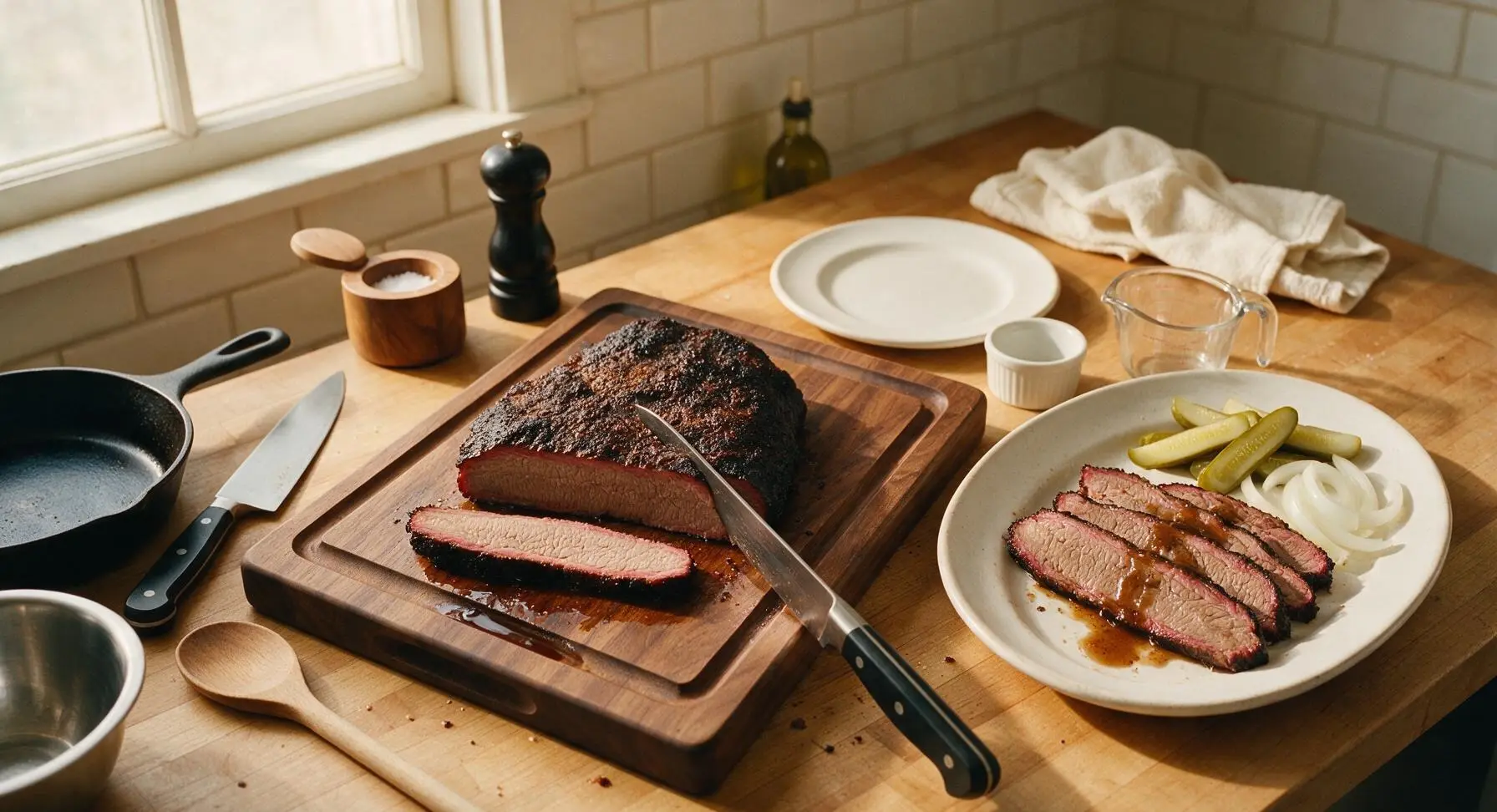
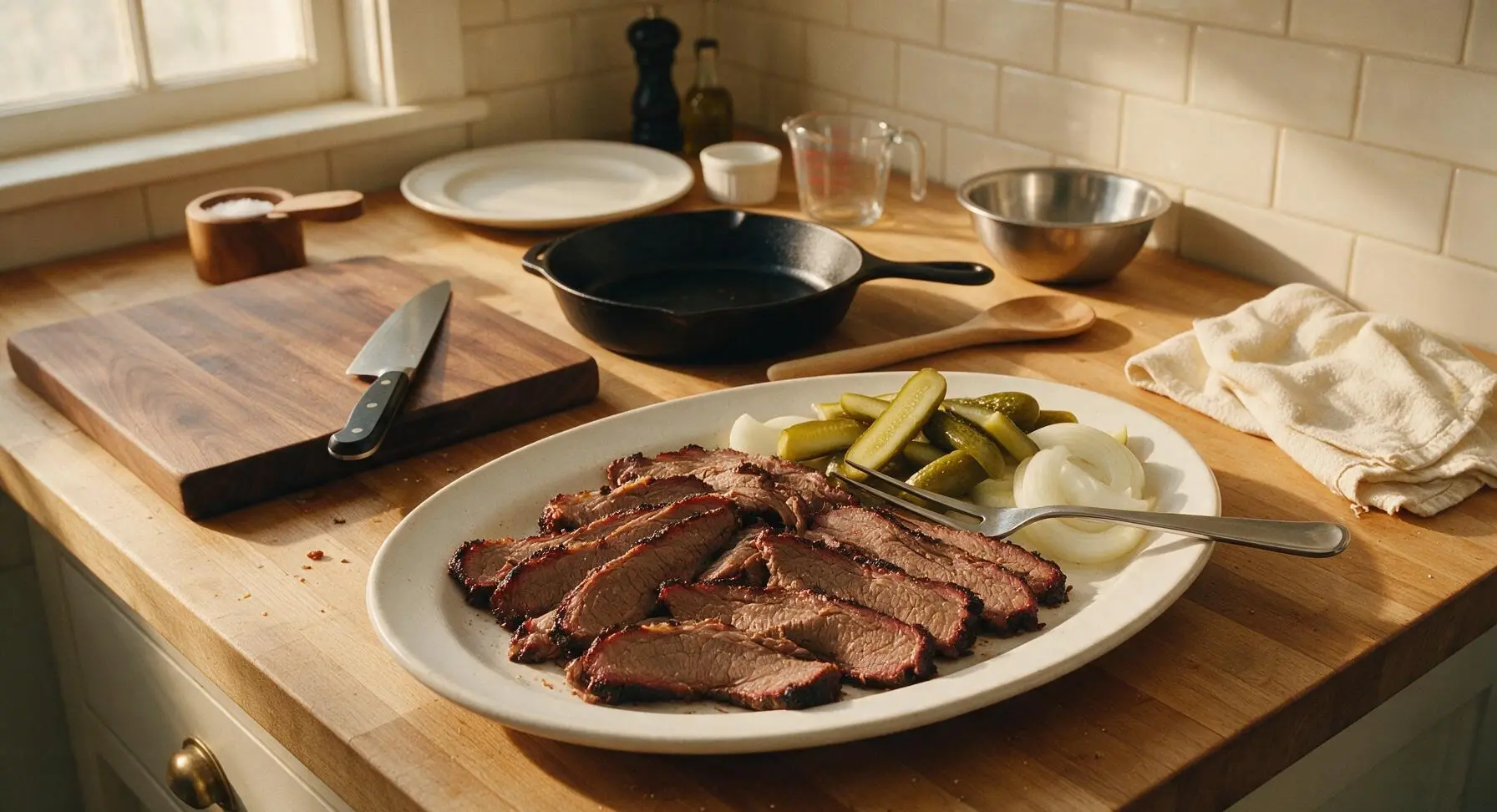
Unwrap the rested brisket, reserving any collected juices to drizzle over slices. Use the stiff boning knife to separate the point muscle from the flat muscle, then slice the flat into uniform 1/2-inch thick slices, cutting directly against the direction of the long muscle fibers. Slice the point into thicker 3/4-inch pieces. Arrange the slices on the large oval matte white ceramic serving platter, drizzle with reserved juices, and serve alongside dill pickle spears and sliced white onion.
Tips
2.Use only post oak or hickory wood for smoke, and wait for thin pale blue smoke before adding the brisket: thick white smoke leaves a bitter, ashy coating on the bark that ruins the flavor.
3.Rest the brisket for a minimum of 1 hour wrapped in paper and a towel: tight muscle fibers relax during rest, reabsorbing juices so every bite is moist instead of having juice run all over your plate when sliced.
4.Always slice brisket against the grain: long, tough muscle fibers run lengthwise along the brisket, so cutting across the fibers shortens them for a tender bite, even if you cooked the brisket perfectly.
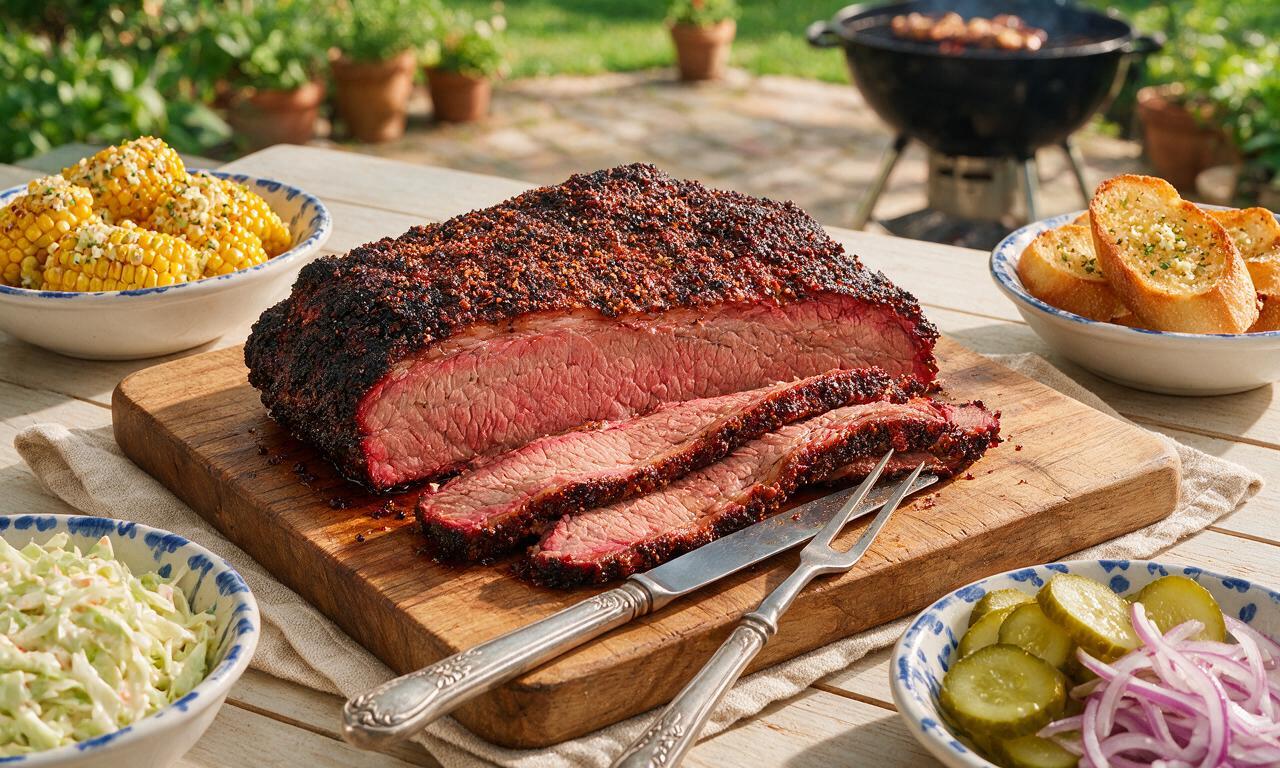
OMG, I’ve been chasing that perfect Texas brisket for 3 years now and this recipe finally delivered! I was so nervous because 9 hours feels like forever and I’ve dried out so many briskets before, but the temp guide here was a total game changer. Brought this to my neighborhood potluck last weekend and people were going back for thirds, even my picky teen who says he ‘hates smoked meat’ ate two slices. The bark was perfectly crispy, the fat rendered just right, no weird bitter smoke taste at all. 10/10, making this again for our July 4th cookout for sure!
Okay full transparency, I almost bailed halfway through because I thought I messed up the stall! My brisket sat at 160°F for what felt like 2 whole hours and I was panicking, but I trusted the recipe notes and wrapped it in peach paper like it said, and wow. It turned out SO good! I sliced half up for Sunday meal prep for work lunches and chopped the other half for brisket tacos this week, it’s been chef’s kiss. My only note is that this is definitely not a weeknight recipe—block off a whole Saturday for this, it’s so worth the time investment though!
Tried this last weekend for my first ever brisket and honestly? I was shocked how well it came out! I’ve only ever done ribs and chicken on my offset smoker before, so I was intimidated by the 9 hour cook time and how finicky everyone says brisket is. The bark was perfect, the flat was juicy even though I was convinced I overcooked it, and my dad (who’s a born and raised Texan) said it tasted just like the stuff he got at small town BBQ joints growing up. Only mistake I made was not buying a bigger brisket—everyone ate almost all of it before I could save any for sandwiches the next day lmao.