Tonkotsu Ramen

Tonkotsu Ramen
⏱️ cook time 12 hours 30 minutes
🍽️ servings 4
⚡ Difficulty hard

intro

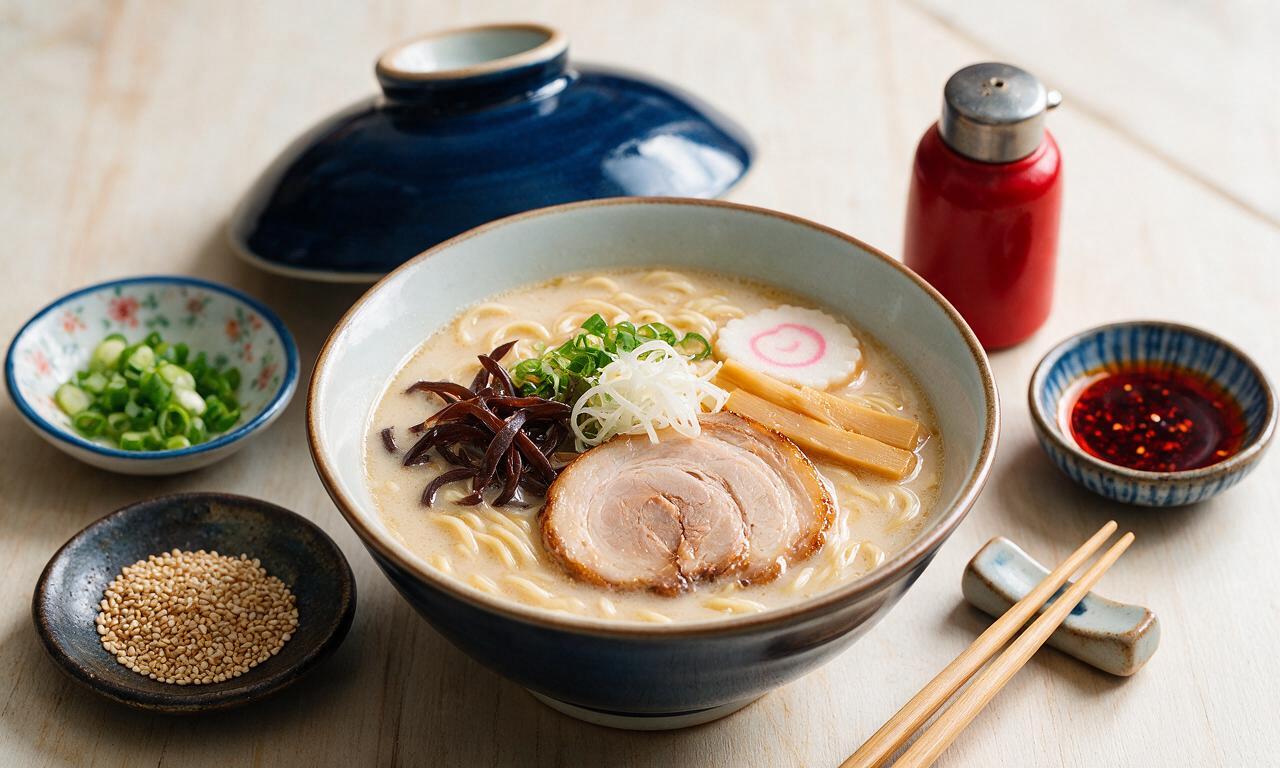
Rich, creamy emulsified pork bone broth paired with springy noodles, tender chashu, and savory toppings for a classic restaurant-quality Japanese ramen.

Ingredients

Split pork trotters 2000 g
Pork neck bones 1000 g
Fresh tonkotsu ramen noodles 800 g
Boneless pork belly (for chashu) 500 g, rolled and tied
Cold water 8000 ml
Yellow onion 200 g, halved
Garlic 60 g (1 head for broth, 2 cloves for tare)
Fresh ginger 60 g (50g for broth, 10g for tare), sliced 1cm thick
Leek (white portion only) 100 g, cut into 5cm lengths
Soy sauce 120 ml
Mirin 60 ml
Cooking sake 60 ml
Light brown sugar 2 tablespoons
Soft-boiled marinated eggs (ajitsuke tamago) 4, halved
Fermented bamboo shoots (menma) 120 g
Sliced scallions 4 tablespoons
Narutomaki fish cake 8 thin slices
Dried nori sheets 4, 10cm x 5cm pieces
Ground white pepper 1 teaspoon
Toasted sesame oil 1 teaspoon

Steps

1

Blanch pork bones

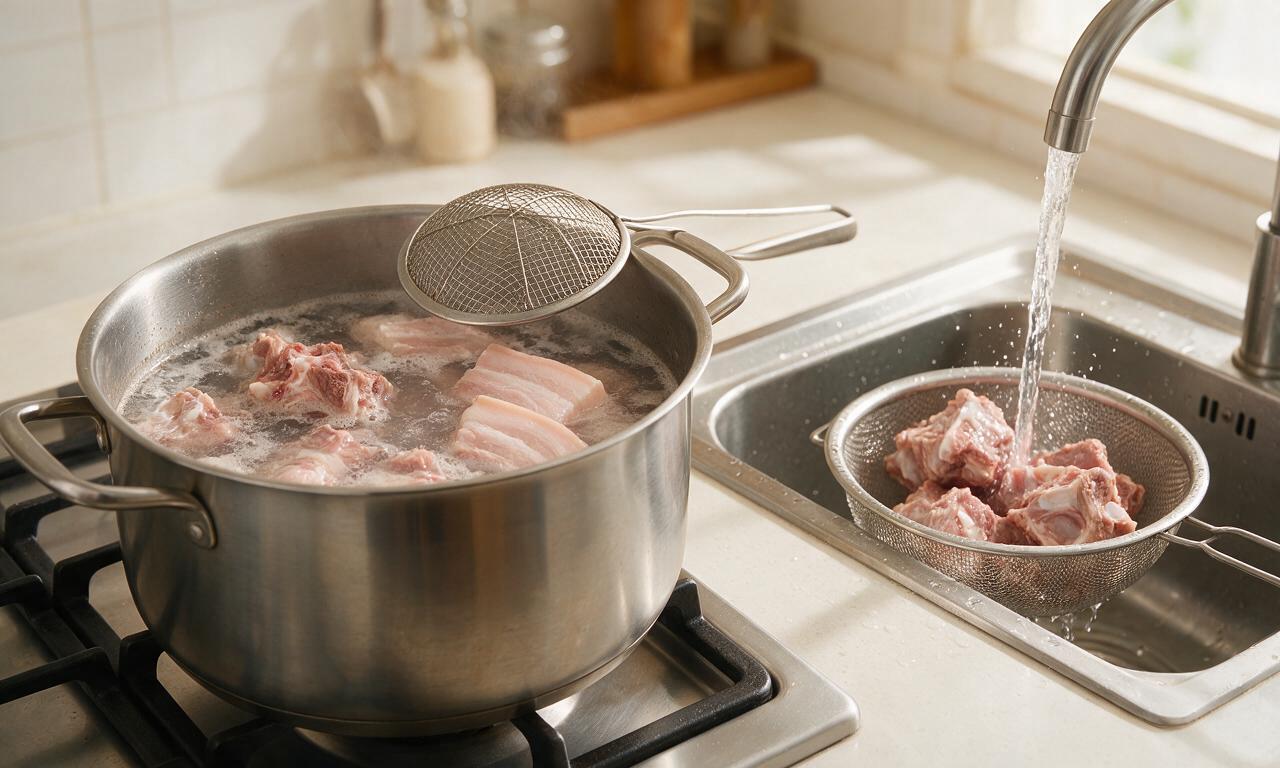
Place 2000g split pork trotters, 1000g pork neck bones, and 500g rolled tied pork belly in a large 10L stock pot, cover with cold water by 5cm, and bring to a rolling boil over high heat (approximately 10 minutes). Boil for 10 full minutes, skimming all grey, foamy scum that rises to the surface with a mesh skimmer. Drain all bones and pork belly, rinsing thoroughly under cold running water to remove any remaining residue, then scrub the pot completely clean of stuck-on particles.
Step 1
step1:Blanch pork bones
2

Simmer creamy broth

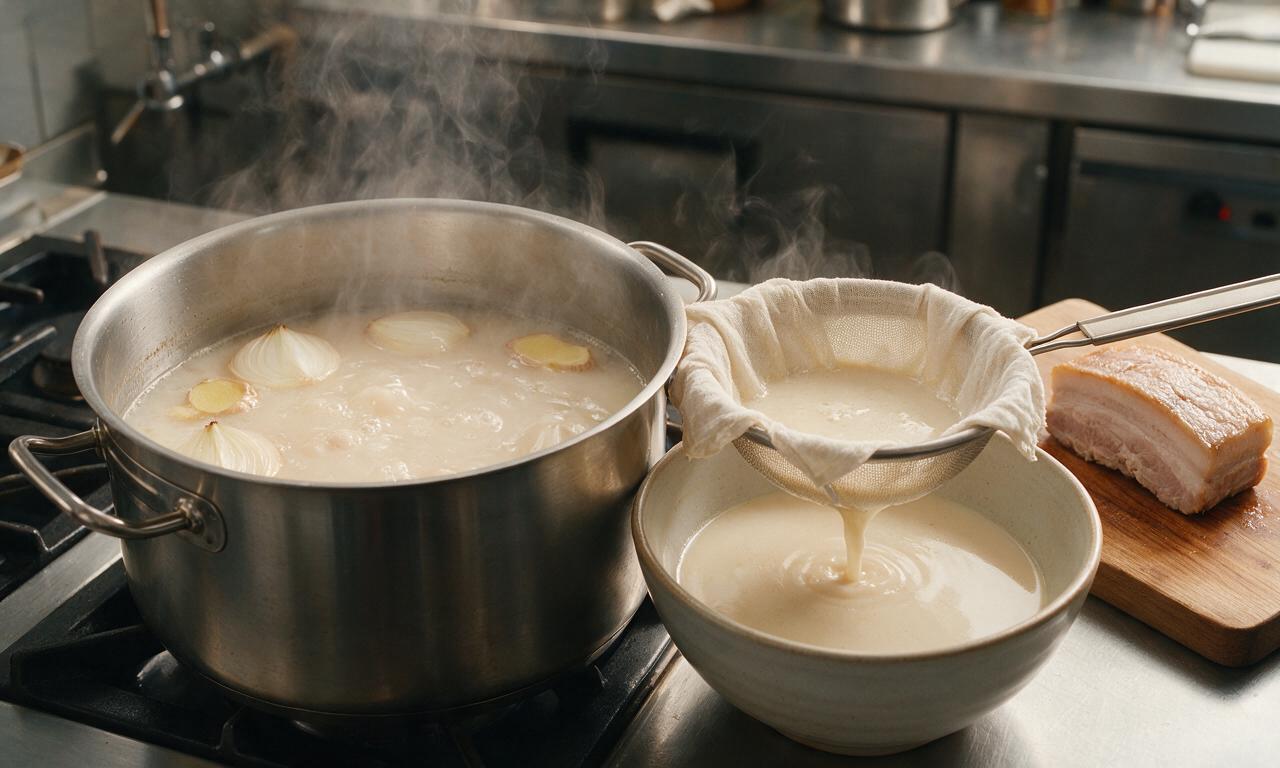
Return the clean, blanched bones and pork belly to the scrubbed stock pot, pour in 8000ml cold water, and bring to a gentle boil over medium-high heat. Reduce heat to medium-low to maintain a constant, low rolling boil (avoid violent, turbulent bubbling) for 12 total hours. Check the pot every 1 hour, topping up with boiling water as needed to keep bones fully submerged; never add cold water, as this will disrupt the emulsification process. After 10 hours of simmering, add 200g halved yellow onion, 50g halved garlic head, 50g sliced ginger, and 100g cut leek to the pot, simmering for the remaining 2 hours. Once done, the broth will be opaque, milky pale white, and thick enough to lightly coat a spoon. Use tongs to remove the cooked pork belly and set aside to cool for chashu, then strain the broth through a cheesecloth-lined fine-mesh sieve, discarding all solids. Keep strained broth warm over the lowest heat setting.
Step 2
step2:Simmer creamy broth
3

Make shoyu tare base

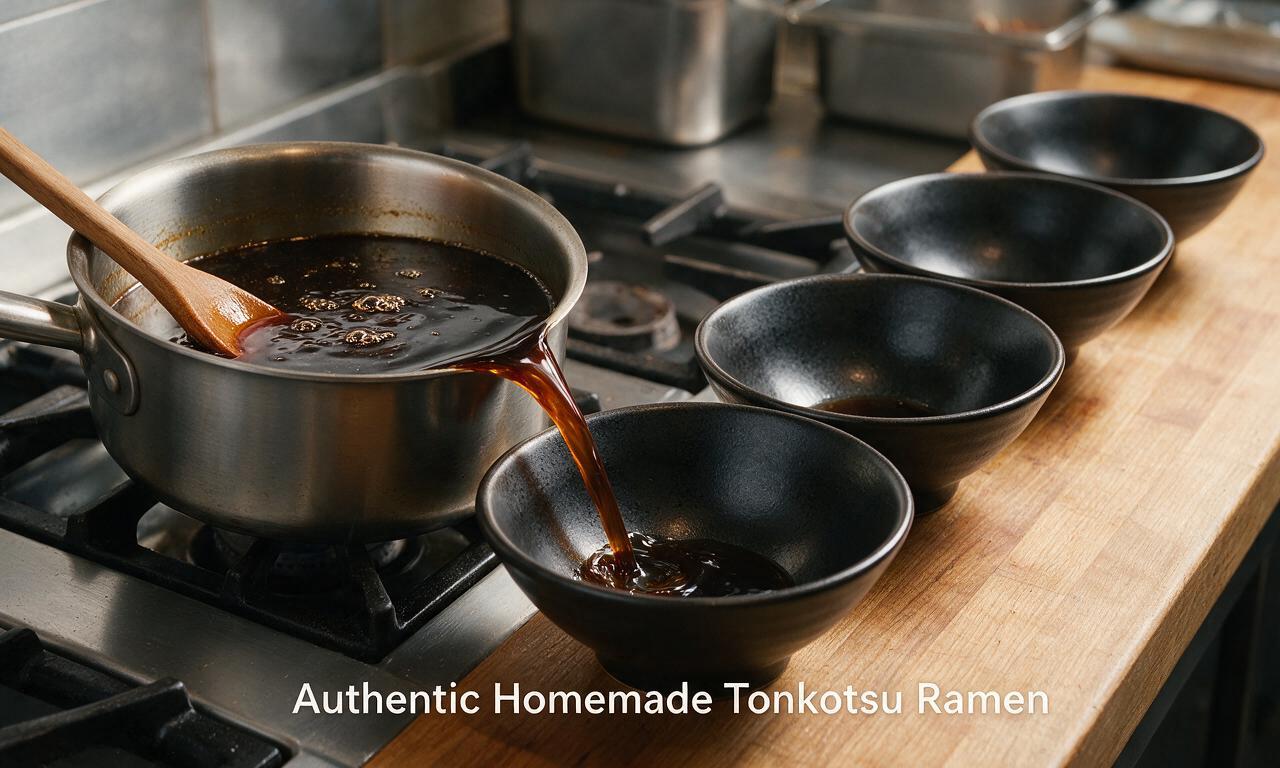
During the final 2 hours of broth simmering, combine 120ml soy sauce, 60ml mirin, 60ml cooking sake, 2 tablespoons light brown sugar, 10g sliced ginger, and 2 crushed garlic cloves in a small saucepan over medium heat. Bring to a gentle simmer, stirring occasionally to dissolve the sugar, then reduce heat to low and cook for 8 minutes until the liquid is reduced by one-quarter and deeply fragrant. Strain out all solid bits, then divide the tare evenly between 4 large deep ramen bowls (approximately 3 tablespoons per bowl).
Step 3
step3:Make shoyu tare base
4

Cook fresh noodles

Bring a separate large pot of unsalted water to a rolling boil over high heat. Add 800g fresh tonkotsu ramen noodles, stirring immediately with long chopsticks to prevent clumping. Cook for exactly 2 minutes (do not overcook—noodles should be springy with a slight firm bite), then drain thoroughly, shaking off all excess water. Do not rinse the noodles, as the surface starch helps the broth cling evenly to each strand.
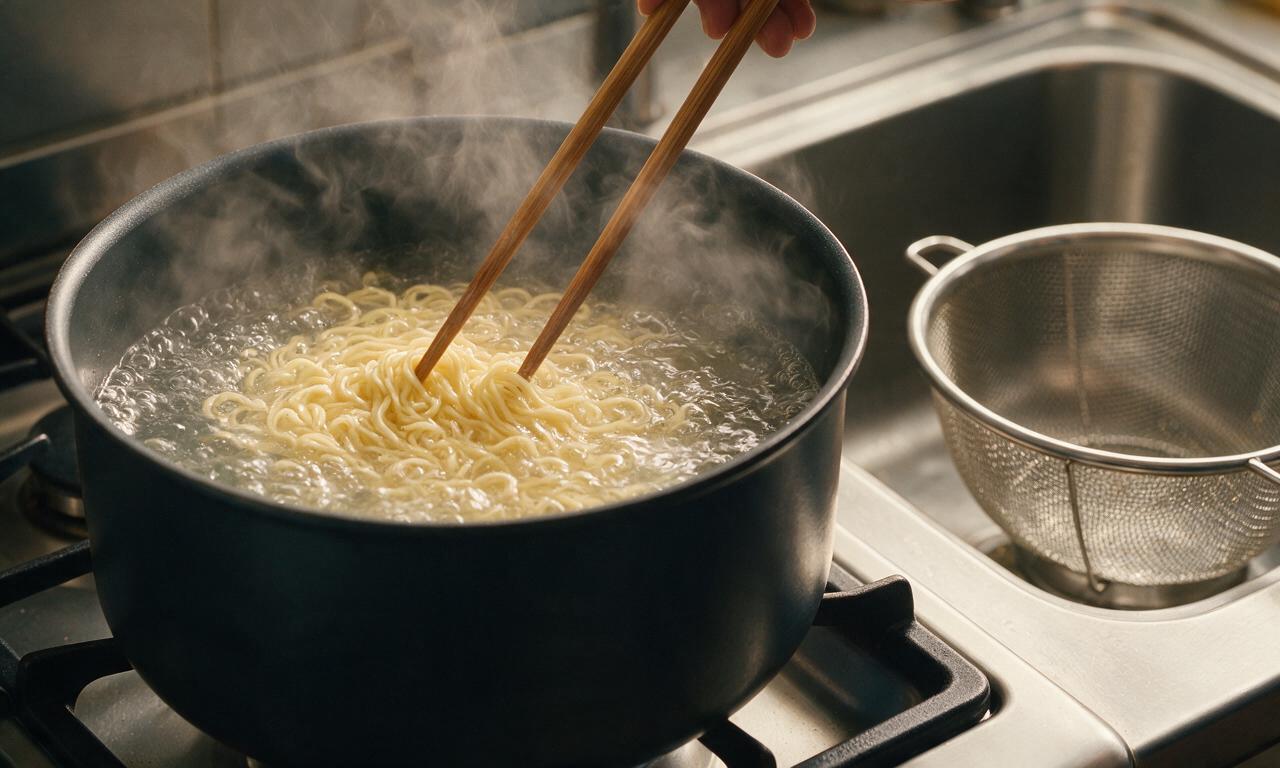
Step 4
step4:Cook fresh noodles
5

Assemble ramen bowls

Ladle 400ml of hot, strained tonkotsu broth into each prepared bowl with tare, stirring gently with a spoon to fully combine the tare with the creamy broth. Divide the drained hot noodles evenly between the 4 bowls, twisting the noodles with kitchen tongs to create a neat, elevated mound in the center of each bowl. Thinly slice the cooled chashu pork belly into 5mm thick pieces, and arrange 3-4 slices per bowl, fanned slightly, on top of the noodles.
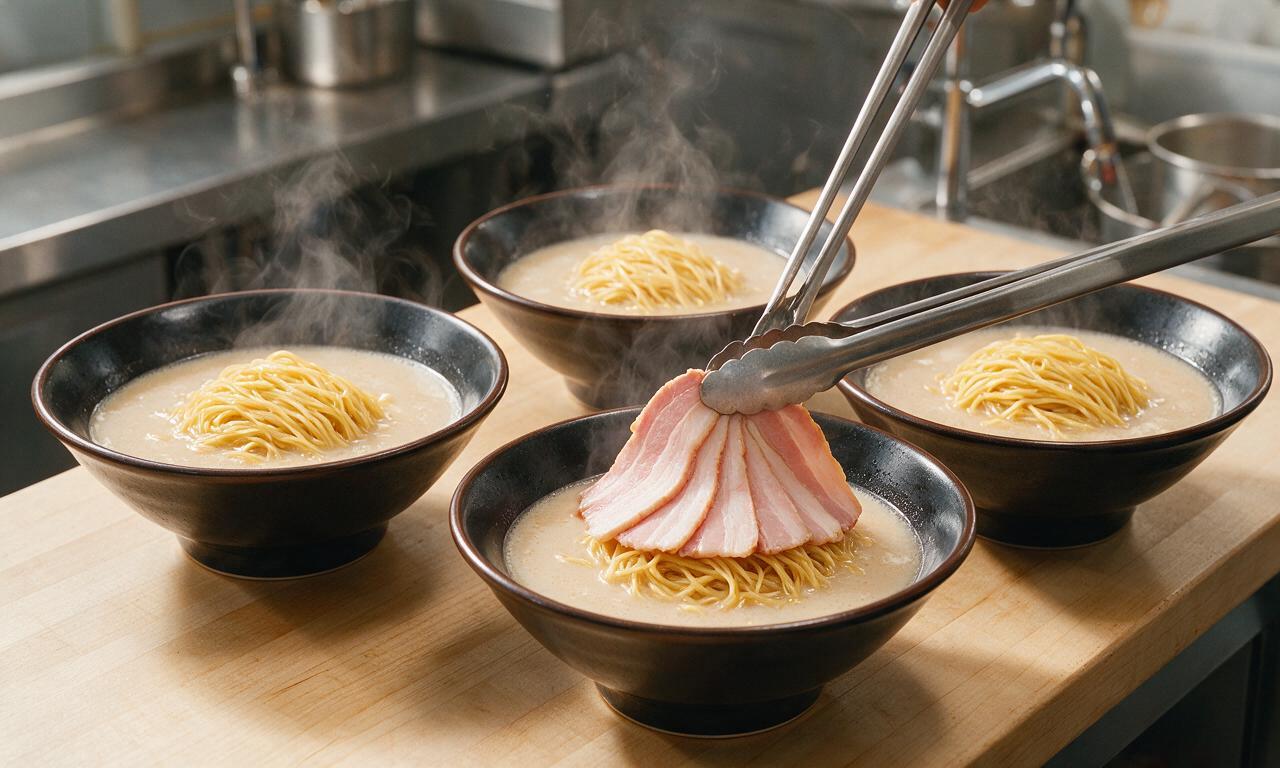
Step 5
step5:Assemble ramen bowls
6

Top and serve hot

Finish each bowl with 30g menma, 2 slices narutomaki, 1 halved soft-boiled marinated egg, 1 tablespoon sliced scallions, 1 nori sheet propped against the noodle mound, a pinch of ground white pepper, and a 1/4 teaspoon drizzle of toasted sesame oil. Serve immediately while the broth is piping hot, paired with long chopsticks and a wide-brimmed ramen spoon.
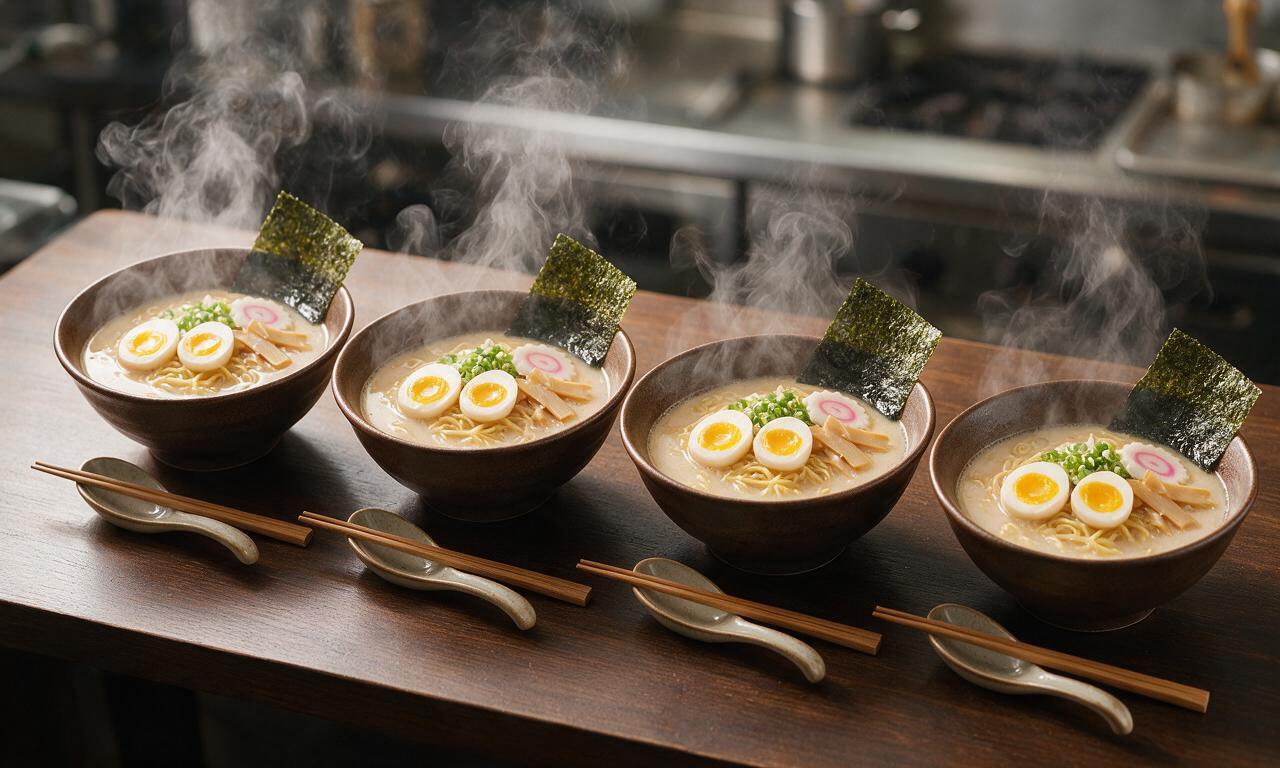
Step 6
step6:Top and serve hot

Tips

1.Maintain a consistent low rolling boil for the broth, not a slow gentle simmer: turbulent water breaks down pork bone marrow, collagen, and fat to create the signature creamy, opaque tonkotsu texture; too-low heat will result in thin, clear broth.
2.Add broth aromatics (onion, garlic, ginger, leek) only in the final 2 hours of simmering: adding them earlier will cause them to break down completely over the long cook time, lending a bitter, off-flavor to the broth.
3.Never rinse cooked ramen noodles: the starchy coating on fresh noodles helps the thick broth cling to every strand, and rinsing will wash away this starch and drop the temperature of the finished bowl too quickly.
✨ You May Also Like

Soups & Stews
🍜 Japan

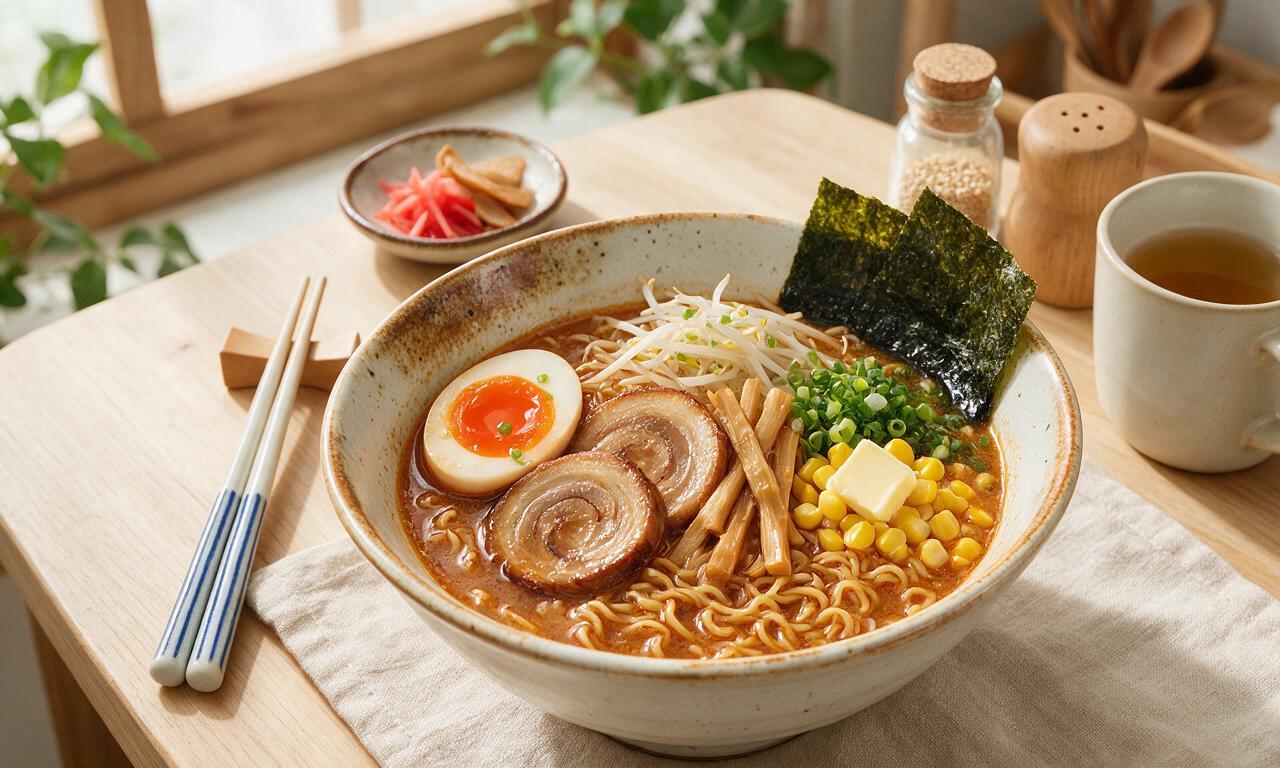
Rich, umami-dense Hokkaido-style miso ramen with chewy noodles, savory fermented broth, and classic toppings, a cozy, deeply satisfying warm meal.

⏱️ 45 minuteSoups & Stews ★ 4.8
Soups & Stews
🍜 United States

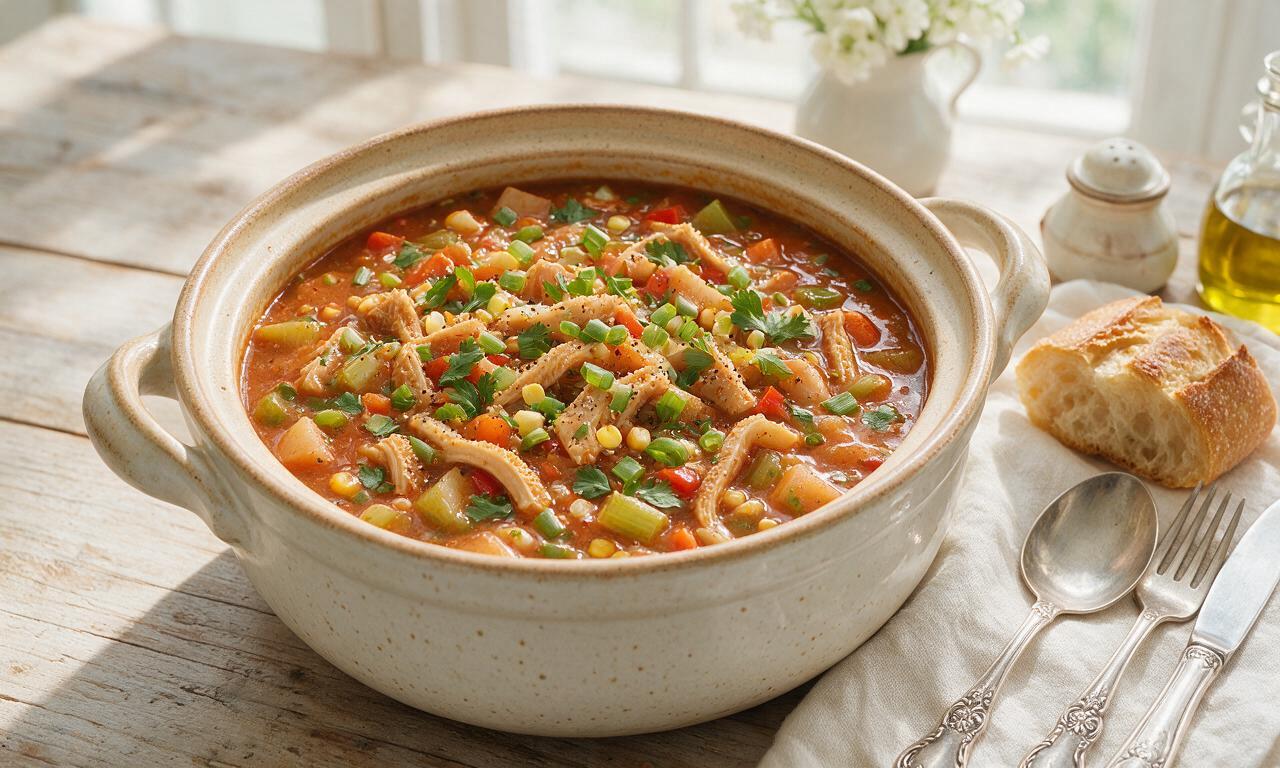
A hearty, peppery tripe and root vegetable stew with colonial Philadelphia roots, thick, warming, and packed with bold savory flavor for cold winter days.

⏱️ 2 hours 3Soups & Stews ★ 4.6
Soups & Stews
🍜 Mexico

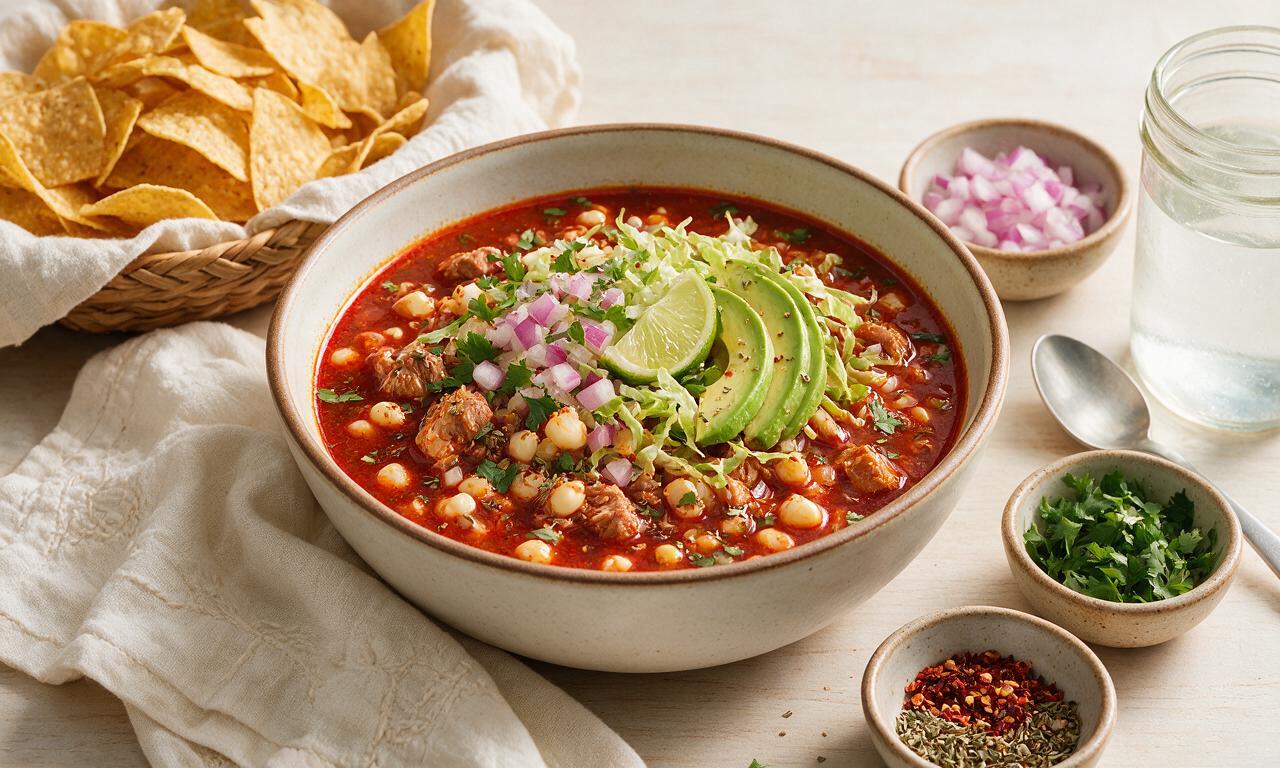
Hearty, warming red pork posole loaded with tender hominy, slow-simmered in a rich smoky chile broth, served with zesty fresh garnishes for a deeply comforting, satisfying meal.

⏱️ 2 hours 3Soups & Stews ★ 4.8
Soups & Stews
🍜 United States

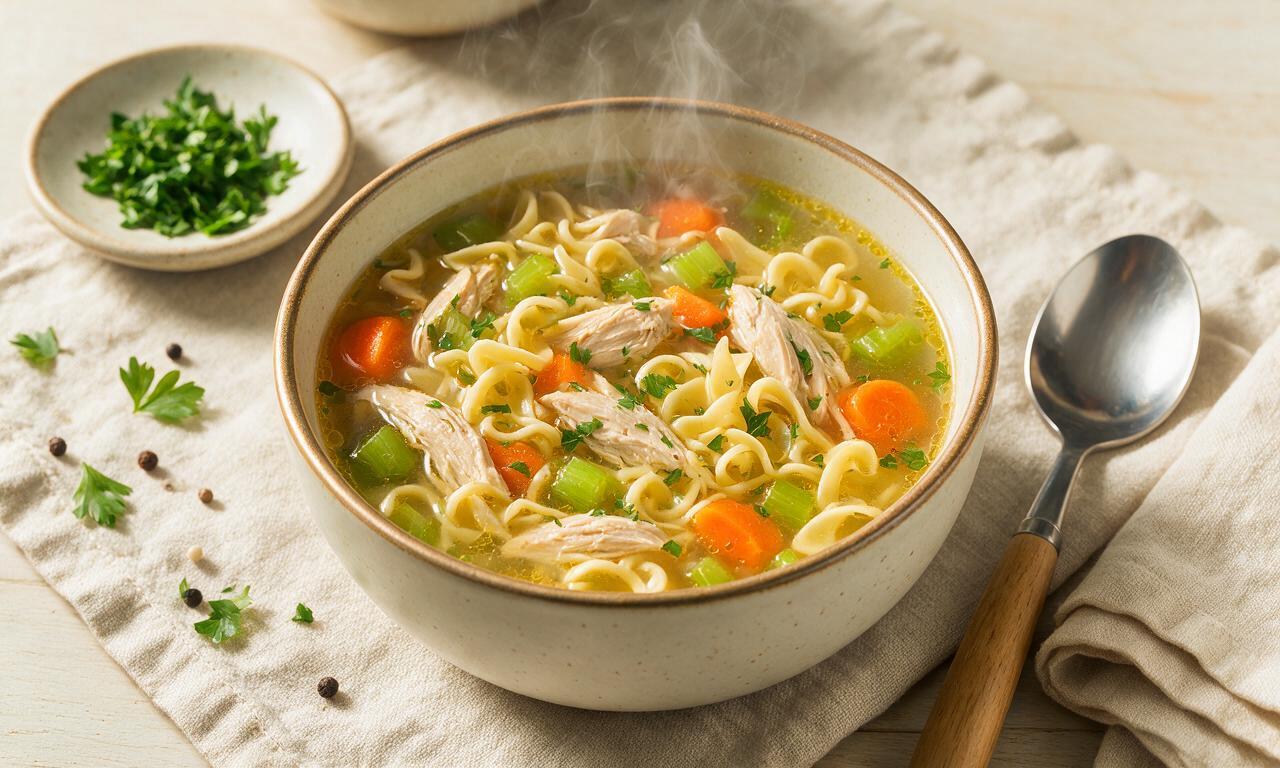
Warm, soothing classic chicken noodle soup loaded with tender chicken, soft egg noodles, and savory veggies, perfect for chasing chills and feeding the whole family.

⏱️ 40 minuteSoups & Stews ★ 4.7
Soups & Stews
🍜 France

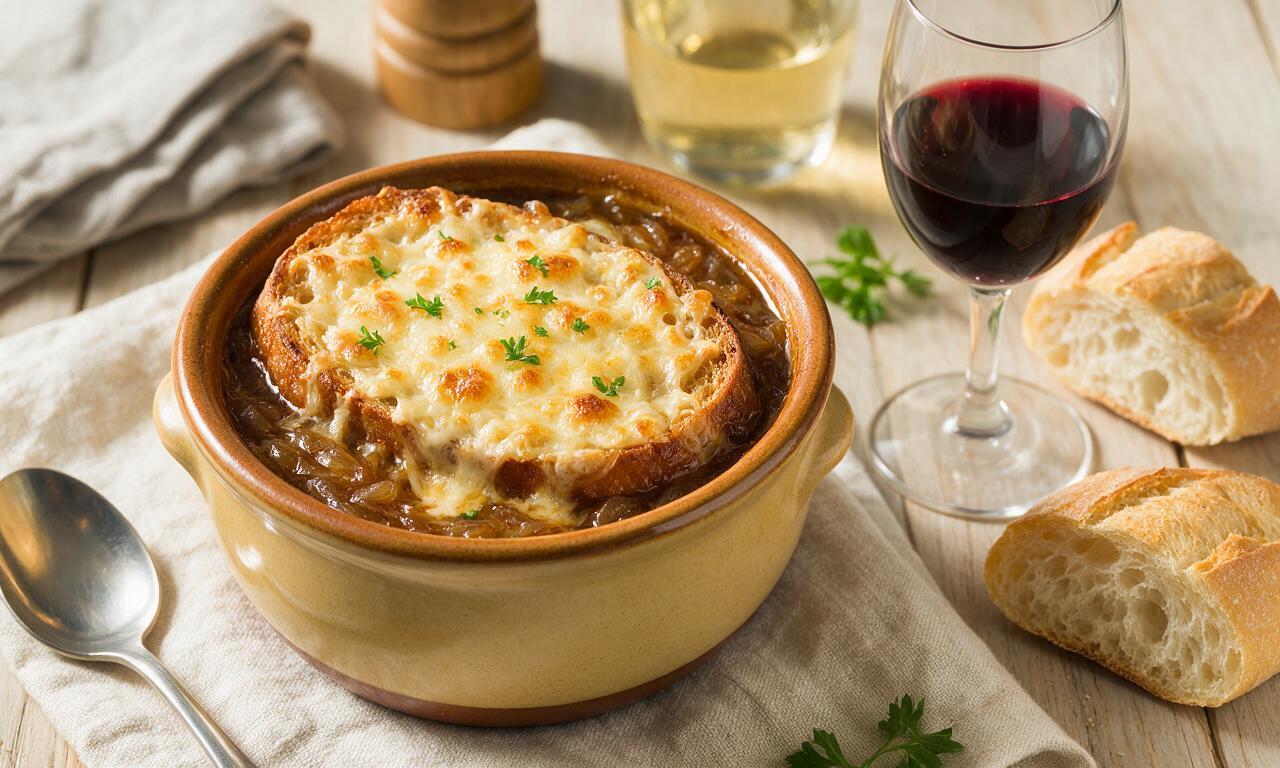
Deeply savory caramelized onion broth topped with crusty bread and bubbly melted Gruyère, a timeless French bistro comfort food ideal for cold days.

⏱️ 1 hour 25Soups & Stews ★ 4.6
Soups & Stews
🍜 United States

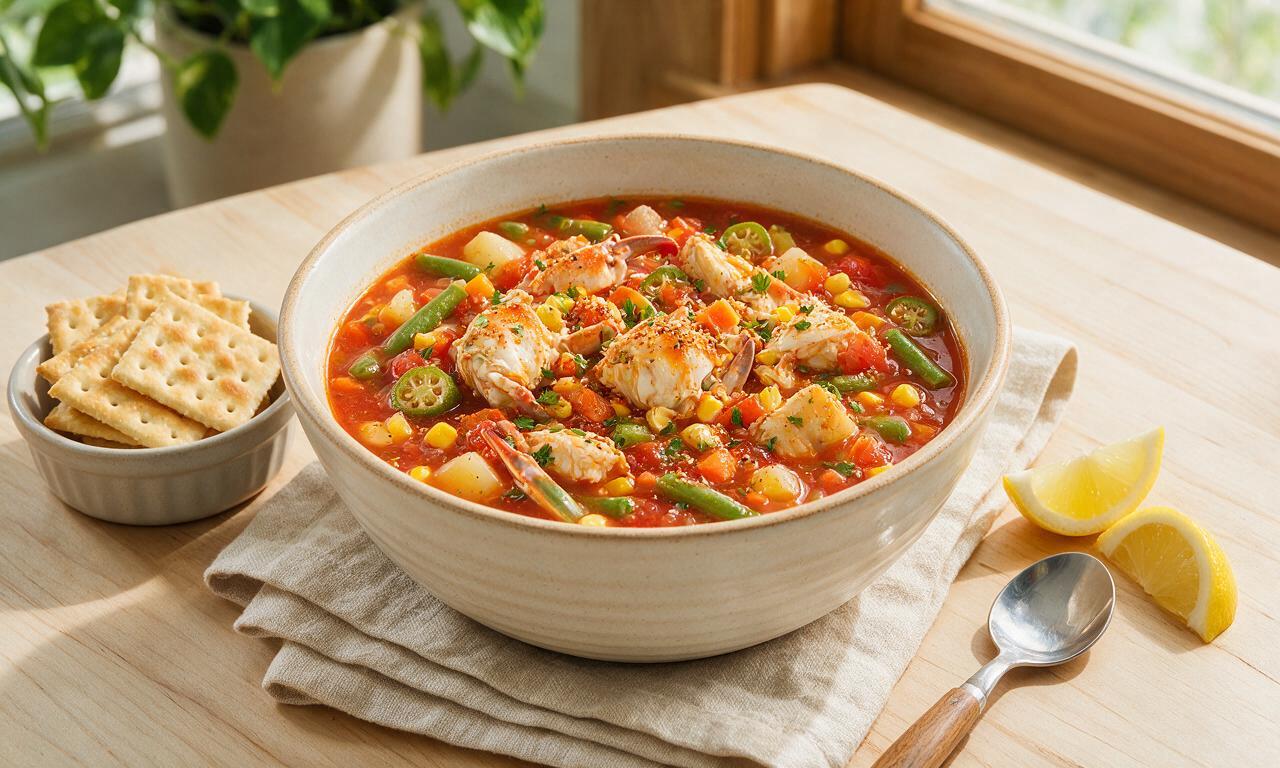
Hearty, briny Maryland crab soup loaded with sweet blue crab, tender summer vegetables, and zesty Old Bay, a beloved Chesapeake Bay coastal comfort staple.

⏱️ 55 minuteSoups & Stews ★ 4.8

Tonkotsu Ramen:Frequently Asked Questions

1.Why isn’t my tonkotsu broth that signature creamy, milky white color?
That almost always comes from not maintaining a steady, rolling (not gentle) boil for the bulk of the cook time. Vigorous agitation emulsifies rendered fat, marrow, and collagen from the bones into the water to create that opaque texture. Be sure to blanch bones first to remove surface scum that would make broth gray, and use enough split trotters for ample collagen.
2.Do I really need split pork trotters, or can I use only neck bones for broth?
Split trotters are non-negotiable for authentic tonkotsu texture—they’re packed with collagen, connective tissue, and marrow that creates that rich, mouth-coating broth you can’t get from neck bones alone. Neck bones add deep, savory pork flavor, but without trotter collagen, your broth will be thin and watery instead of luxuriously creamy, even after hours of boiling.
3.Why do authentic tonkotsu recipes call for starting broth with cold water instead of hot?
Starting with cold water slowly draws out soluble proteins, flavor compounds, and small bits of marrow from the bones as the water heats up, rather than searing bone surfaces immediately with hot water. That slow extraction builds deeper, more layered savory flavor, and helps the emulsification process go more smoothly for that perfectly creamy final broth texture.
4.How long do I actually need to boil the bones for restaurant-quality tonkotsu?
For classic shop-level depth and creaminess, plan for 12 to 18 hours of steady rolling boil, topping up with boiling water as needed to keep bones fully submerged. You’ll know it’s done when bones are slightly porous, crumble a little when prodded with a spoon, and the broth thickly coats the back of a spoon without separating. Don’t cut cook time shorter than 10 hours.
5.Can I make tonkotsu broth in a pressure cooker to save time?
Absolutely! A pressure cooker cuts cook time down to about 2 hours on high pressure, since the higher temperature breaks down collagen and marrow much faster. Just note you’ll still need to blanch bones first to remove scum, and after releasing pressure, boil uncovered for 10 minutes to help emulsify the broth into that classic milky texture.
6.What’s the difference between fresh tonkotsu ramen noodles and dried grocery store ramen?
Fresh tonkotsu noodles are made with high-gluten flour and kansui, an alkaline agent that gives them that springy, chewy, bouncy texture that holds up to thick, heavy tonkotsu broth without getting soggy. Dried grocery store ramen is lower in gluten, has no kansui, and turns mushy fast in rich broth, so it’s a poor substitute for authentic bite.
7.How do I keep fresh ramen noodles from getting mushy in hot broth?
First, cook fresh noodles in a separate pot of rapidly boiling, heavily salted water for only 1.5 to 2 minutes—they cook extremely fast, so don’t walk away. Drain them really well right before adding to your bowl, and never rinse them, since the starchy coating helps broth cling to noodles. Ladle hot broth over them immediately after draining to serve.
8.Do I have to roll pork belly for chashu, or can I cook it flat?
Rolling pork belly tight and tying it before braising gives you that classic round, evenly cooked chashu slice with layered fat and lean that feels restaurant-style, but it’s not strictly required. If you cook it flat, keep the braise at a very gentle simmer so fat doesn’t render out too quickly, and slice against the grain after chilling for tender bites.
9.Why is my homemade chashu tough and dry instead of melt-in-your-mouth tender?
Tough, dry chashu almost always comes from cooking pork belly at too high a temperature, which makes lean meat seize up and push out moisture. Keep your braise at a bare, gentle simmer (no rolling boil) the whole cook time, and let pork chill fully in braising liquid for at least 8 hours before slicing to let it reabsorb moisture and fat.
10.Should I skim all the fat off my finished tonkotsu broth?
Don’t skim all the fat! A good portion of tonkotsu’s signature richness and silky mouthfeel comes from rendered pork fat emulsified into the broth. If you have a thick, separate layer of pure fat on top after resting, you can skim 1 to 2 tablespoons per serving for a lighter broth, but leave most of it in for that authentic, luxe texture.
11.Can I freeze leftover tonkotsu broth for later use?
Definitely! Let strained broth cool completely first, then portion it into airtight freezer-safe containers or heavy-duty freezer bags, leaving a little headspace for expansion. It will keep for up to 3 months in the freezer. When ready to use, reheat to a rolling boil for 2 to 3 minutes to re-emulsify separated fat for that creamy texture.
12.Do I need to add garlic, ginger, or other aromatics to the tonkotsu broth base?
Traditional tonkotsu broth base is intentionally simple, made only with pork bones and water to let that deep, rich pork flavor shine. Most aromatic, savory punch comes from the concentrated tare added to each serving bowl and toppings, but you can add a small knob of ginger and a couple garlic cloves in the last 2 hours of boiling for subtle extra depth.
13.Why does my broth taste bland even after boiling it for 12+ hours?
Bland broth usually happens for two reasons: you used too much water relative to bones, diluting flavor, or you forgot to add tare to your serving bowl! Plain tonkotsu broth is rich but unseasoned—you need 2 to 3 tablespoons of concentrated shio, shoyu, or miso tare per bowl for salt and savoriness, just like ramen shops use.
14.What are the classic toppings to serve with homemade tonkotsu ramen?
The most traditional toppings are thin-sliced braised chashu, soft-boiled marinated ajitsuke tamago (ramen egg), thinly sliced green onion, menma (fermented bamboo shoots), narutomaki fish cake, toasted sesame seeds, and a dollop of spicy garlic oil if you like heat. Keep toppings prepped and warm so they don’t cool down hot broth too fast.
15.How do I prevent my broth from having a bitter, off flavor?
Bitter, off-flavors come from leftover blood and bone impurities that aren’t removed before the long boil. Always blanch your bones first: cover with cold water, boil for 10 minutes, then scrub bones and the pot completely to remove all gray, foamy scum before starting the long cook. Avoid burning any added aromatics, too, which adds acrid notes.
16.Can I make this recipe if I don’t have an extra-large stock pot?
You can split bones and water between two smaller regular stock pots if needed, as long as you can maintain a rolling boil in each and keep bones fully submerged as they cook. If you only have one small pot, cut the recipe in half using a 2:3 ratio of bones to water by weight, and reduce total boil time slightly for the smaller volume.

Comments (4)

2 days ago

OMG, I was so intimidated by the 12+ hour cook time but this tonkotsu was SO worth every minute! Made it for my family dinner last Sunday and my kids loved it — even my super picky 10 year old asked for seconds. The broth came out so rich and creamy, exactly like the stuff we get at our local ramen shop back in Brooklyn. Game changer for weekend meal projects! 10/10 will make again, next time I’m prepping the chashu a day ahead to save some time.

3 days ago

Took a whole weekend to pull this off, and honestly the flavor is insane — but I ran into an issue where my broth didn’t turn that opaque milky white even after boiling for 10 hours? Did I not keep the heat high enough? Tasted great anyway, my roommates devoured it when we had our potluck, but I want that perfect look next time.

2 days ago

Great question, Jake! That milky opacity comes from keeping the broth at a hard, rolling boil the entire time you’re simmering the bones — if it’s only at a gentle simmer, the fat and marrow won’t emulsify into the water to get that classic tonkotsu look. Next time, make sure you top off the water regularly so it doesn’t boil down too far, and you’ll get that perfect creamy broth! So glad you and your roommates enjoyed the flavor even so.

yesterday

SO good! I was nervous because this is marked hard difficulty, but the step-by-step instructions made it way less scary than I thought. I did the soft boiled eggs a little extra jammy per my partner’s preference, and we had this for our date night in last night. Already sent the recipe to my whole friend group! Wait quick question — can I freeze leftover broth for meal prep later?

2 hours ago

I froze half my broth last time I made this! It lasted 3 months in the freezer and tasted just as fresh when I thawed it out for a quick weeknight ramen night, no weird texture at all. Just make sure you leave a little room at the top of the container for expansion!

1 hour ago

Love that you made this for date night, Lizzie! Tara is totally right — the broth freezes beautifully for up to 3 months, which makes it perfect for quick meal prep. We recommend portioning it into 2-serving containers so you can thaw exactly what you need when a ramen craving hits. So glad you loved the recipe!

1 week ago

Y’all, I’ve tried like 5 different tonkotsu recipes online and this is the only one that actually tastes authentic. The chashu pork came out melt-in-your-mouth tender, and the tare added that perfect deep umami kick I was missing from other versions. Made a big batch for my game day watch party and everyone was begging for the recipe. Only note: clear your whole stove top for this, it takes up a lot of burner space! Worth every second though.

5 days ago

Totally agree about the stove space! I had to move my coffee maker to the counter to make room for the big stock pot last time I made this. Also pro tip: save the leftover pork fat from the chashu to stir-fry veggies for the toppings, it’s chef’s kiss.