
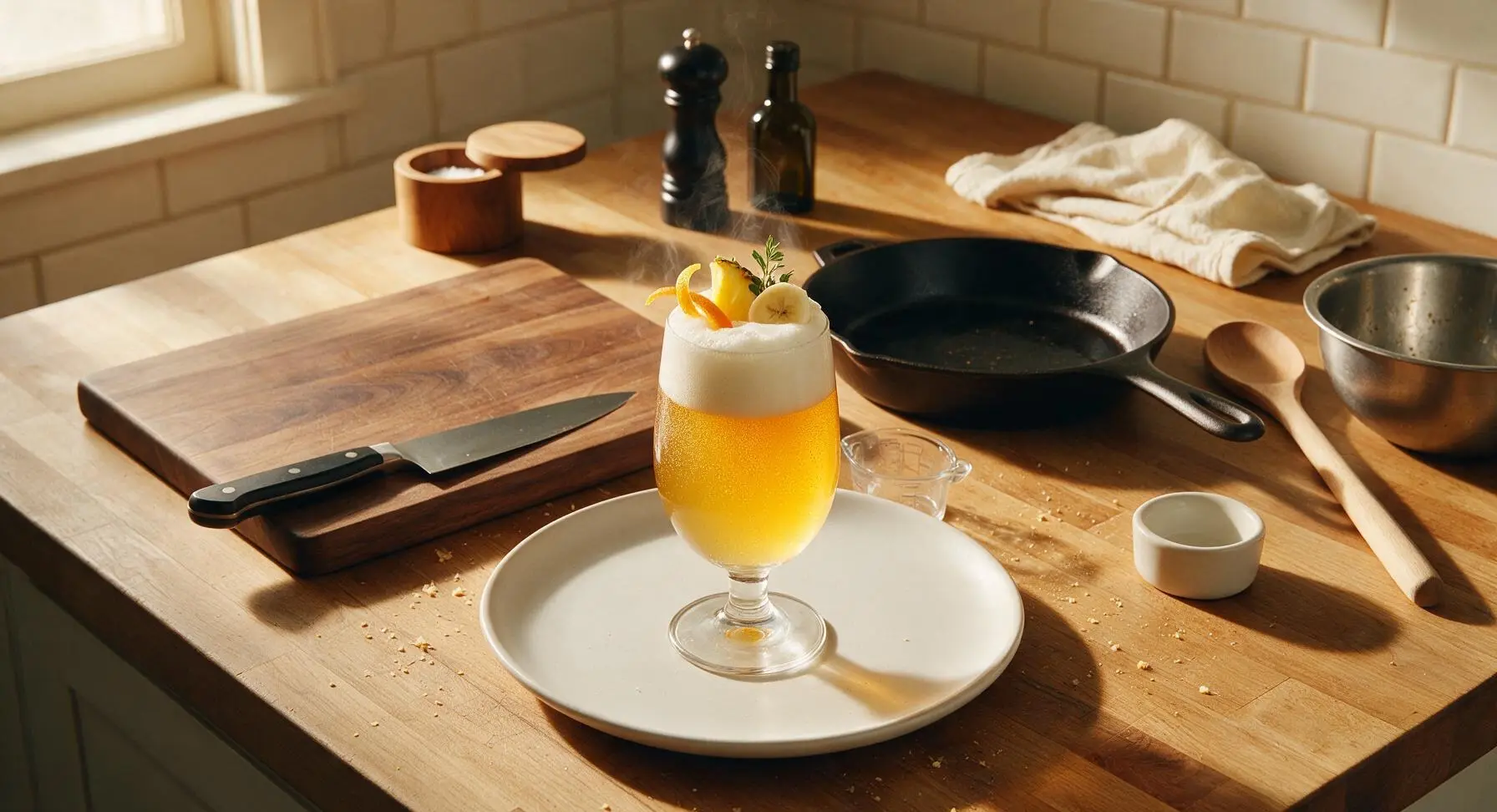
Tripel

title 1
Tripel
⏱️ cook time 1 hour 15 minutes (plus 4 weeks passive fermentation and conditioning)
🍽️ servings 8
⚡ Difficulty medium

intro

This golden, effervescent homebrewed Tripel carries bright notes of banana, clove, spicy hops, and honey, with a dry, crisp finish perfect for summer gatherings.

Ingredients
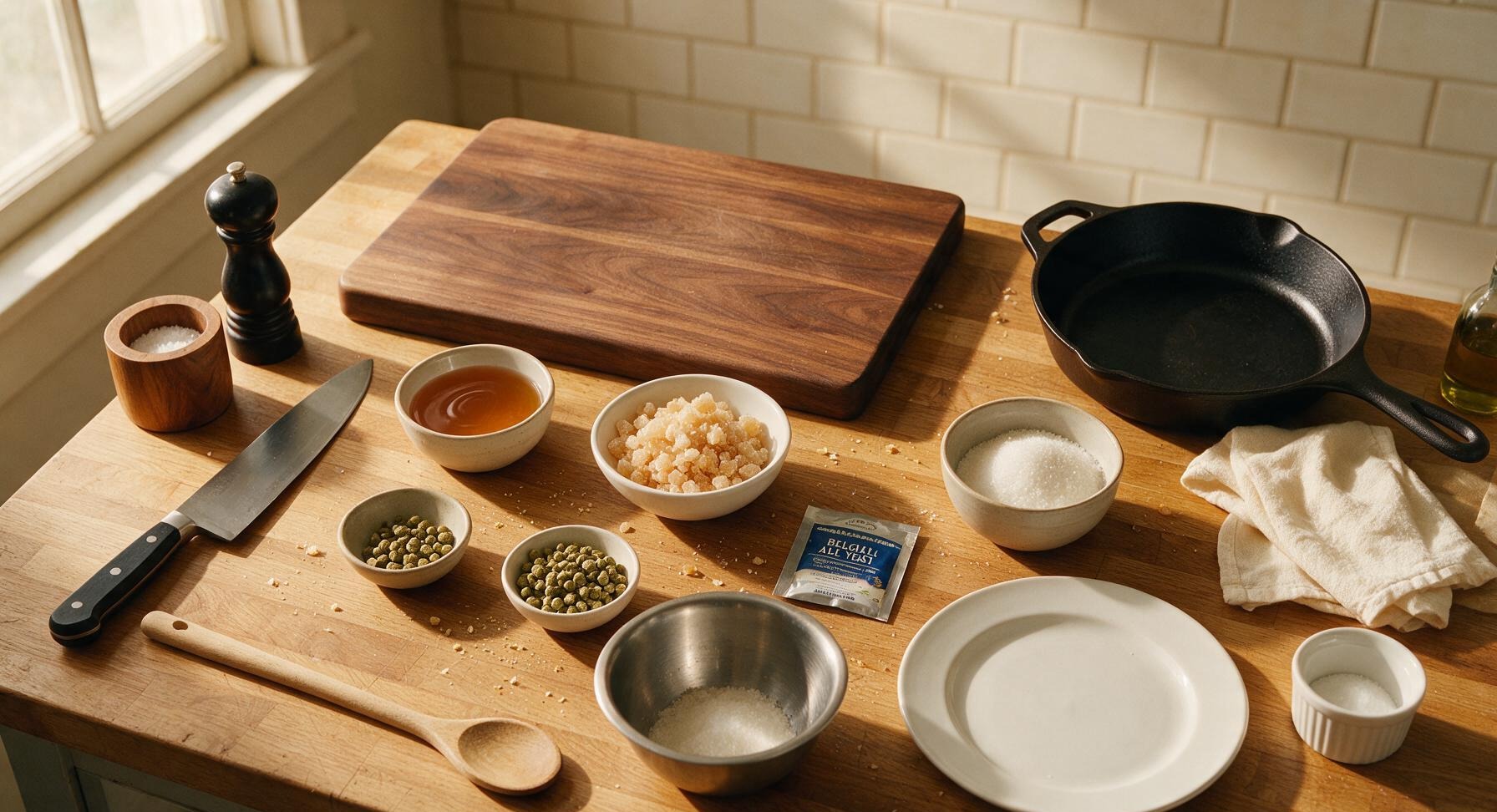
Filtered water 5 quarts (4.7L)
Light pale liquid malt extract 1.8 lbs (816g)
Pale Belgian candi sugar 8 oz (227g)
Saaz hop pellets 0.75 oz (21g), divided
Belgian Abbey ale yeast 1 packet (11g)
Corn priming sugar 2 oz (57g)

Steps

1

Sanitize Brewing Equipment

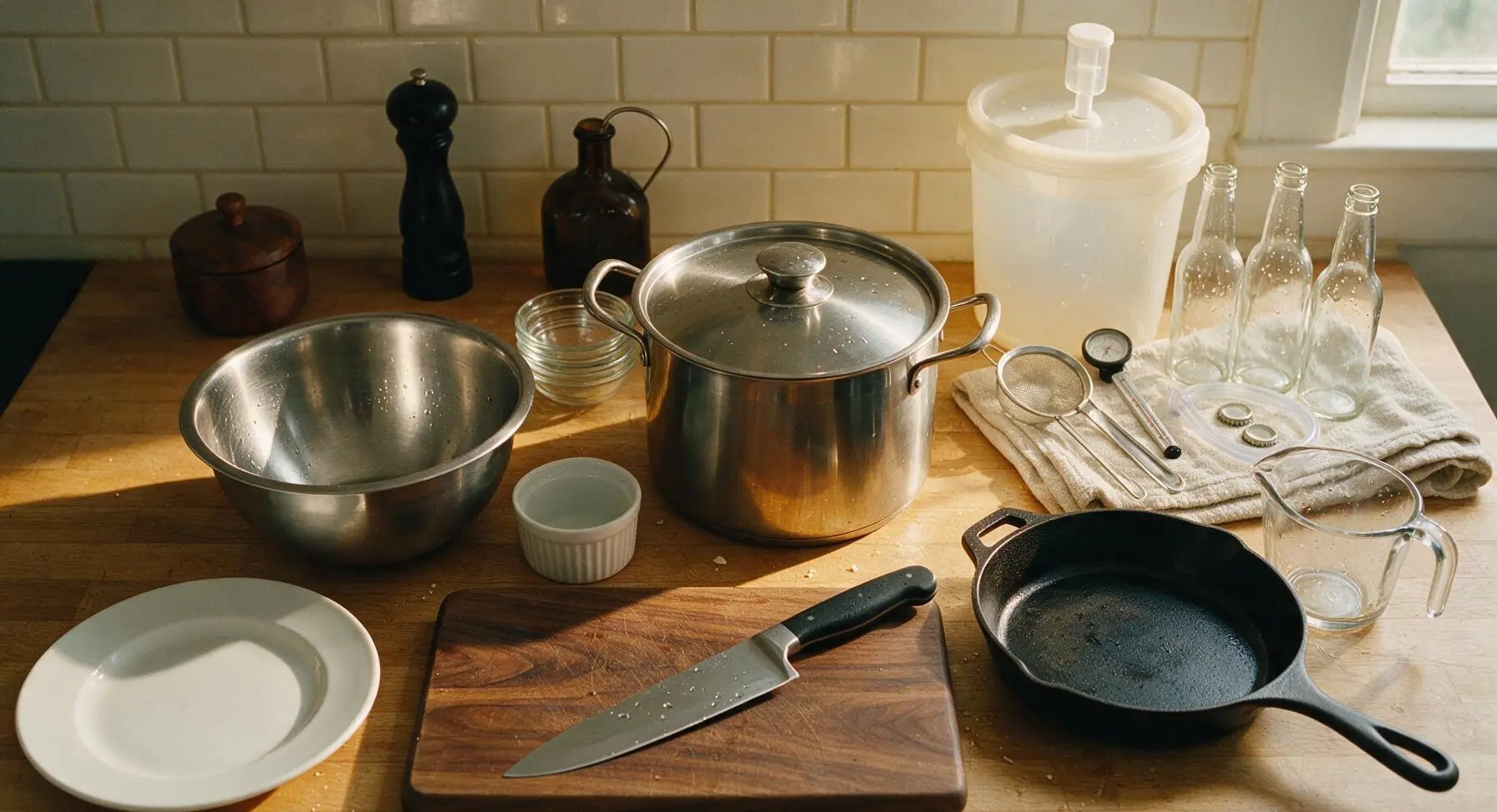
First, wash all tools that will contact cooled wort (fermentation bucket, lid, airlock, stirring spoon, strainer, thermometer, auto-siphon, bottles, caps) with warm soapy water, then soak in food-grade no-rinse brewer's sanitizer for 2 minutes per manufacturer instructions. Drain tools on the clean linen towel, ensuring no residual sanitizer pools. This step prevents off-flavors from bacterial contamination, the most common homebrewing mistake.
Step 1
step1:Sanitize Brewing Equipment
2

Heat Wort Base

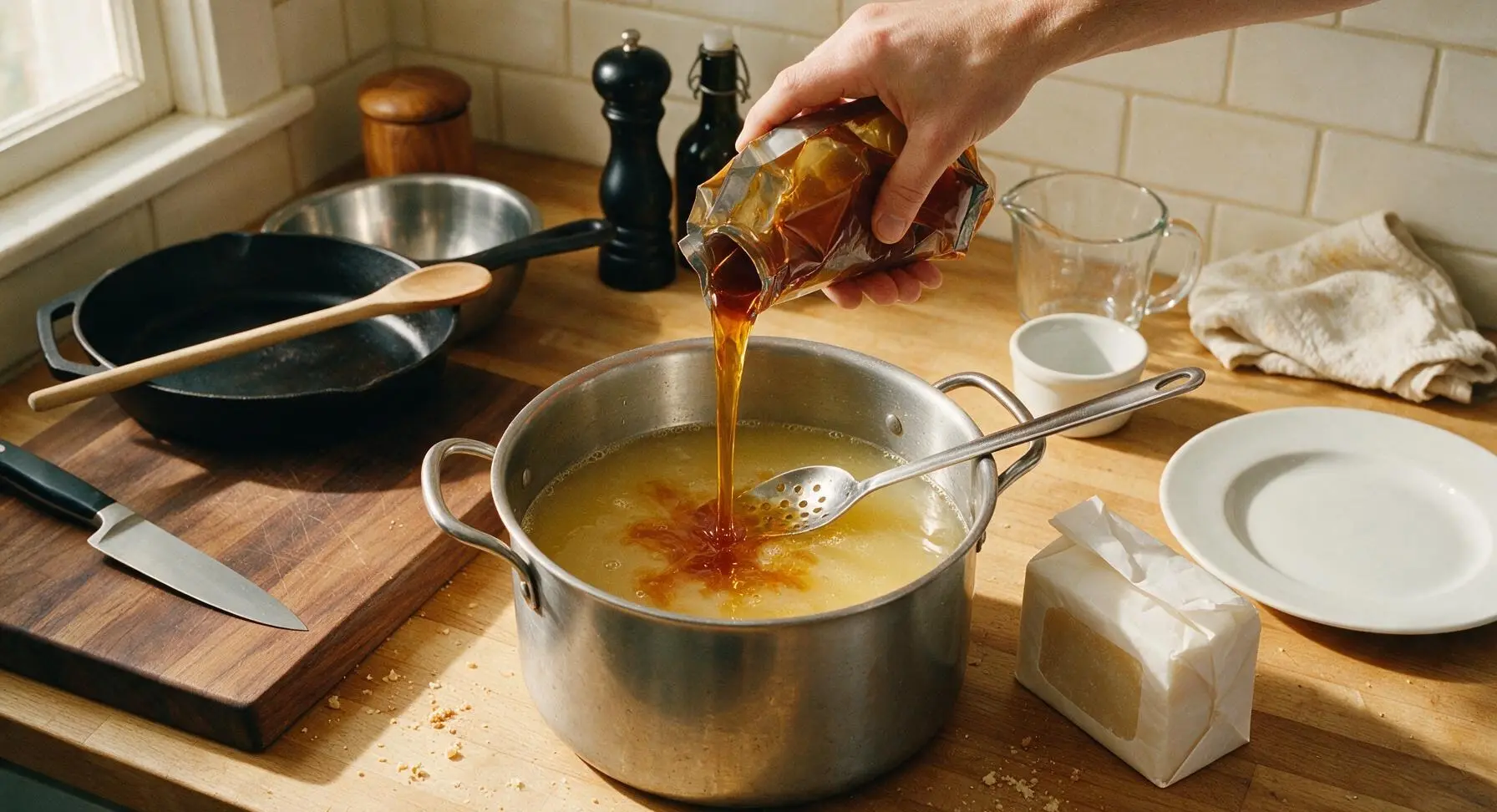
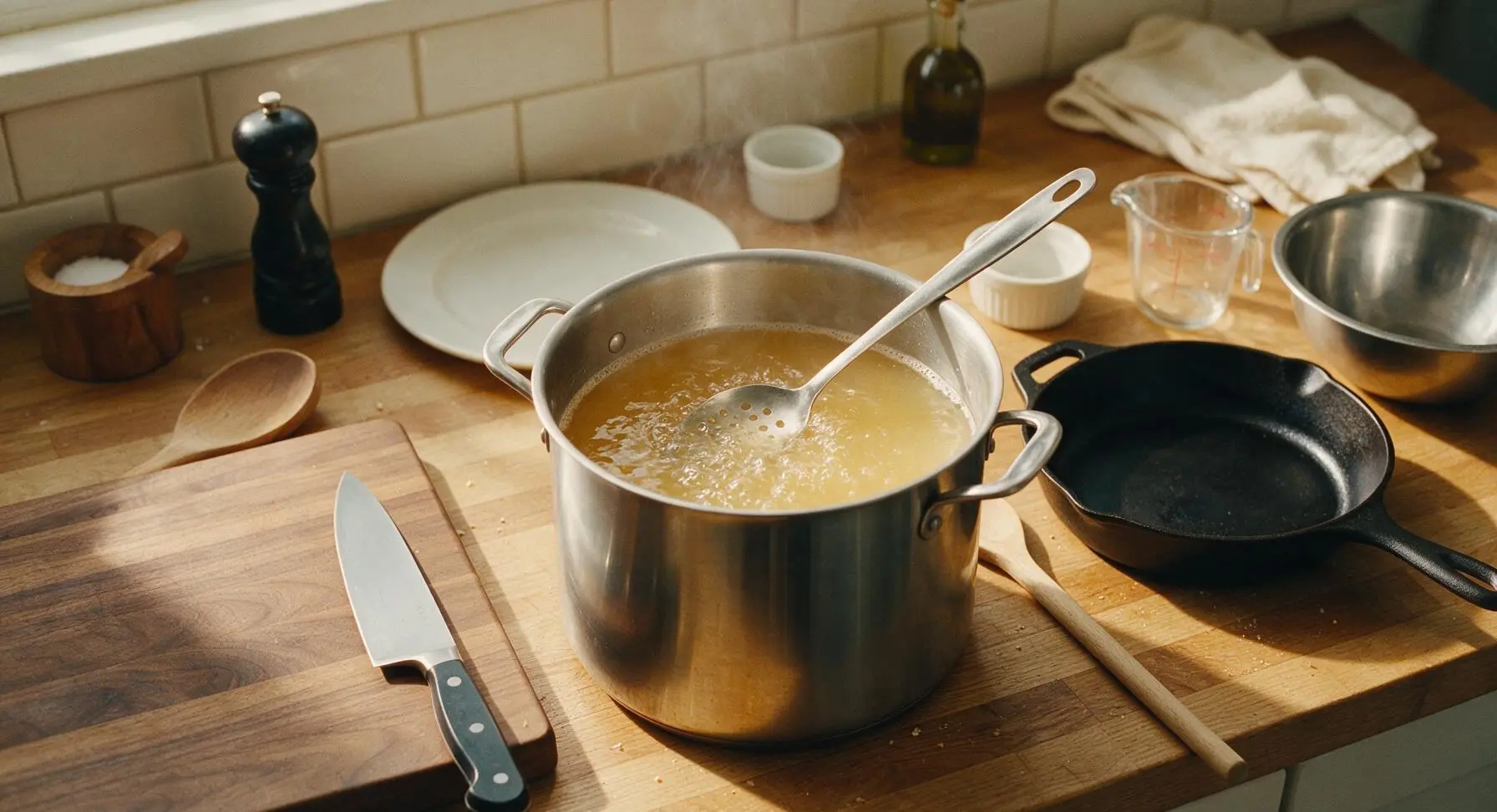
Pour 4 quarts of filtered water into the 1-gallon stainless steel stock pot, set over medium-high heat to reach 160°F (71°C). Remove the pot from heat temporarily, stir in the full amount of light pale liquid malt extract and pale Belgian candi sugar with the slotted stainless steel spoon, stirring constantly until fully dissolved with no clumps stuck to the pot bottom. Return the pot to heat, and bring to a gentle, rolling boil, watching carefully to avoid boil-overs.
Step 2
step2:Heat Wort Base
Step 2
step2:Heat Wort Base
3

Add Bittering Hops

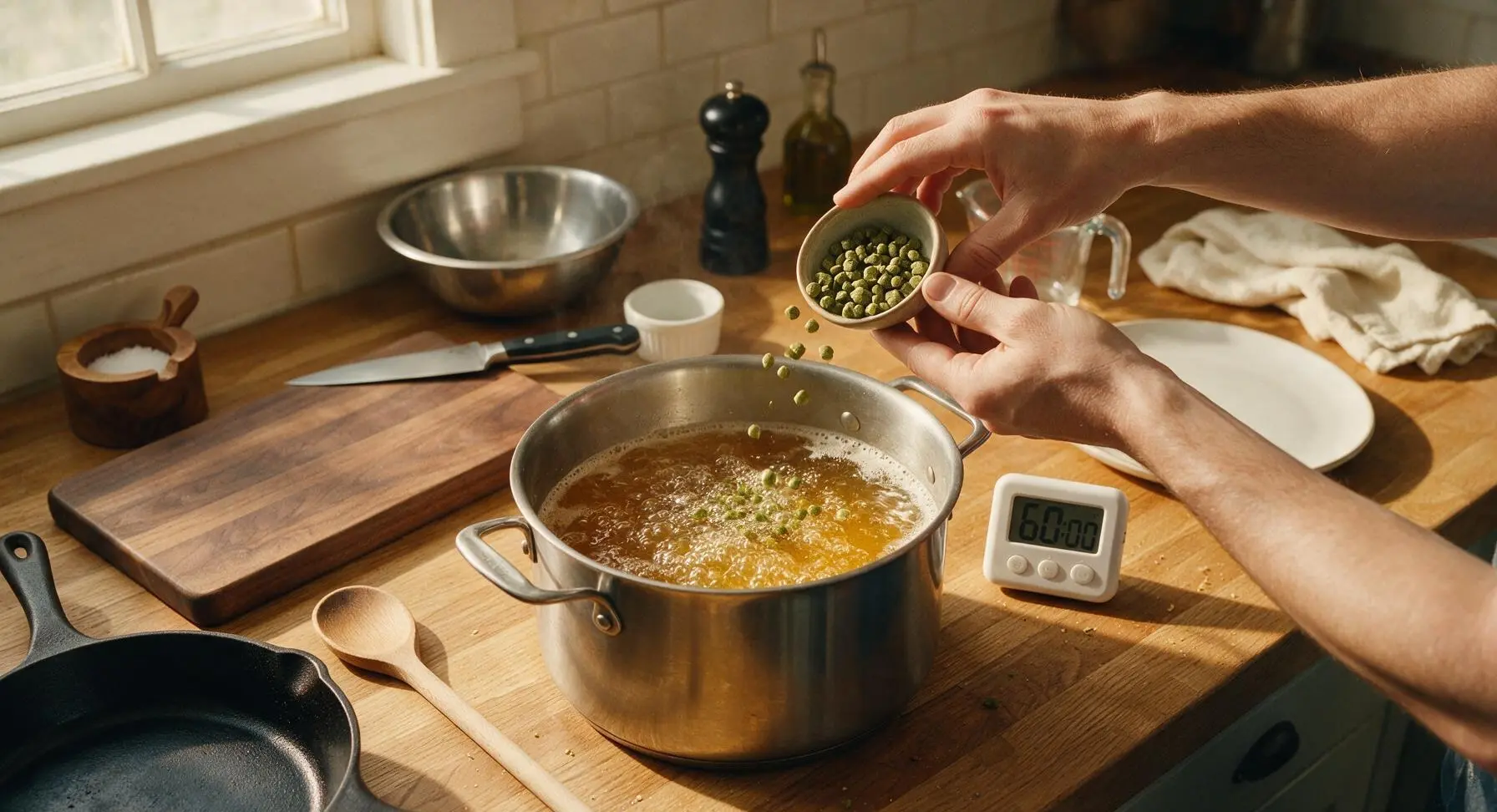
Once the wort reaches a steady rolling boil, set the digital kitchen timer for 60 minutes. Add 0.5 oz of the Saaz hop pellets (the larger measured portion) to the boiling wort, stirring gently to submerge. Maintain a gentle rolling boil for the full 60 minutes, adjusting heat as needed to prevent boil-overs, and do not cover the pot—this allows unwanted volatile compounds to escape for a cleaner, smoother flavor.
Step 3
step3:Add Bittering Hops
4

Finish Boil and Cool

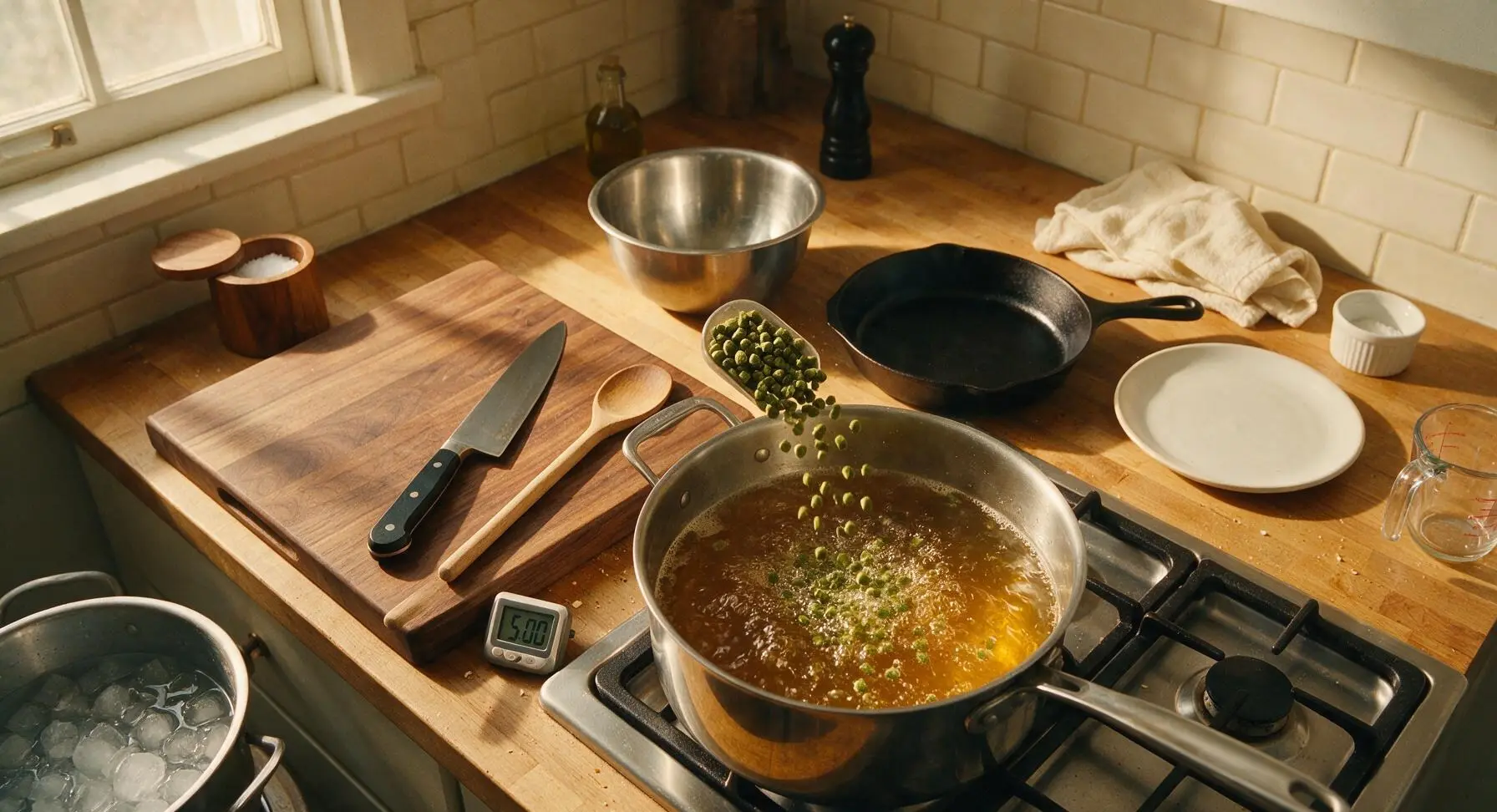
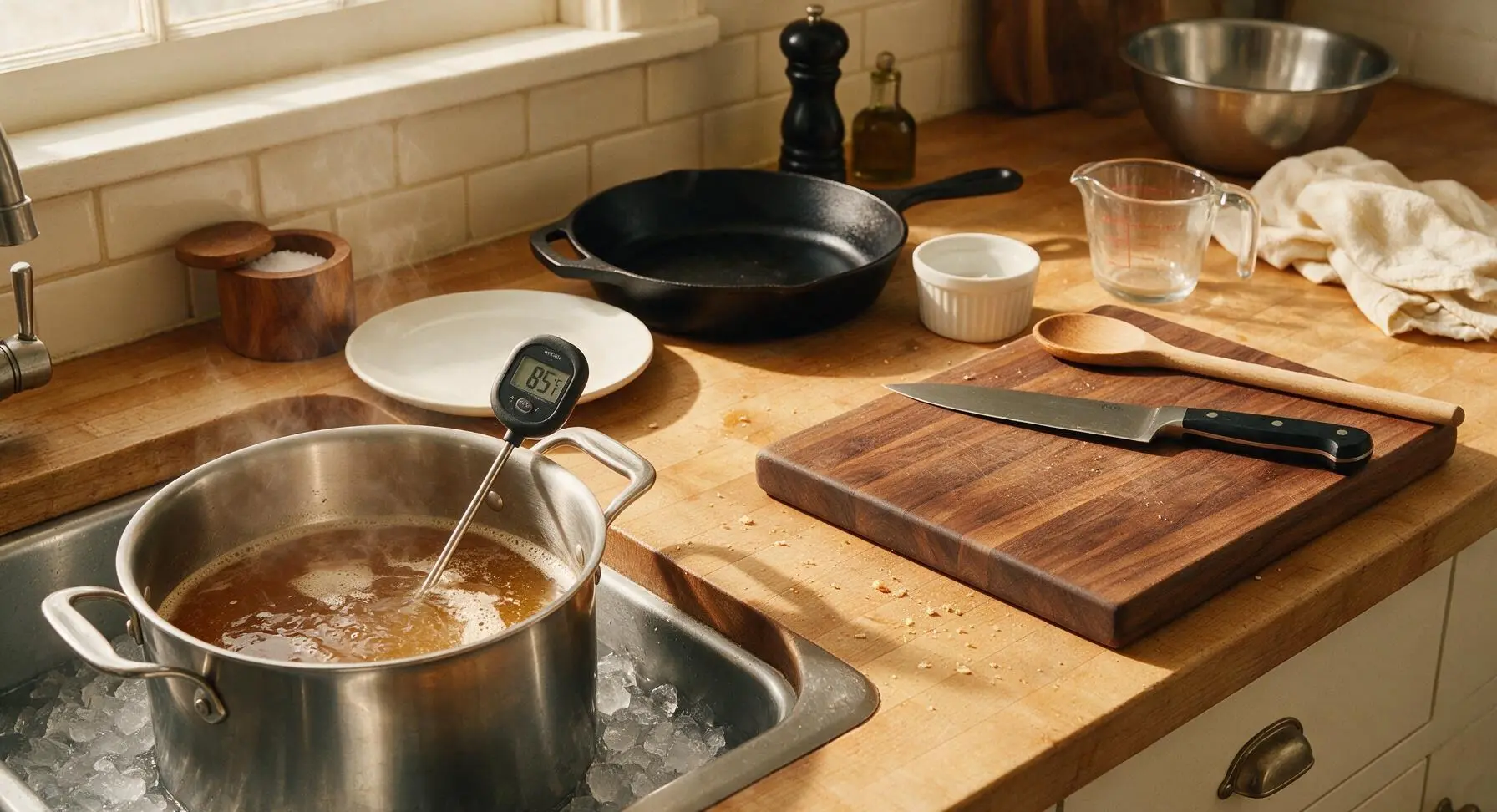
When the 60-minute timer shows 5 minutes remaining, add the remaining 0.25 oz of Saaz hop pellets for bright, spicy, floral aroma. At the end of the full 60-minute boil, turn off the heat immediately. Place the lid on the pot, then set the pot into a sink filled with ice water (positioned just off the left edge of the counter) to cool the wort quickly to 70°F (21°C), which takes roughly 15 minutes. Stir gently every 5 minutes to speed cooling, and use the instant-read thermometer to confirm temperature before proceeding, as hot wort will kill yeast.
Step 4
step4:Finish Boil and Cool
Step 4
step4:Finish Boil and Cool
5

Transfer to Fermenter

Once the wort reaches exactly 70°F (21°C), place the fine-mesh stainless steel strainer over the opening of the sanitized 1.5-gallon fermentation bucket. Pour the cooled wort through the strainer to catch all hop particles, then top up the bucket with the remaining 1 quart of cool filtered water to reach the 1-gallon volume mark marked on the bucket side. Seal the bucket with the sanitized lid, and shake vigorously for 30 seconds to aerate the wort, which provides oxygen for healthy yeast growth at the start of fermentation.
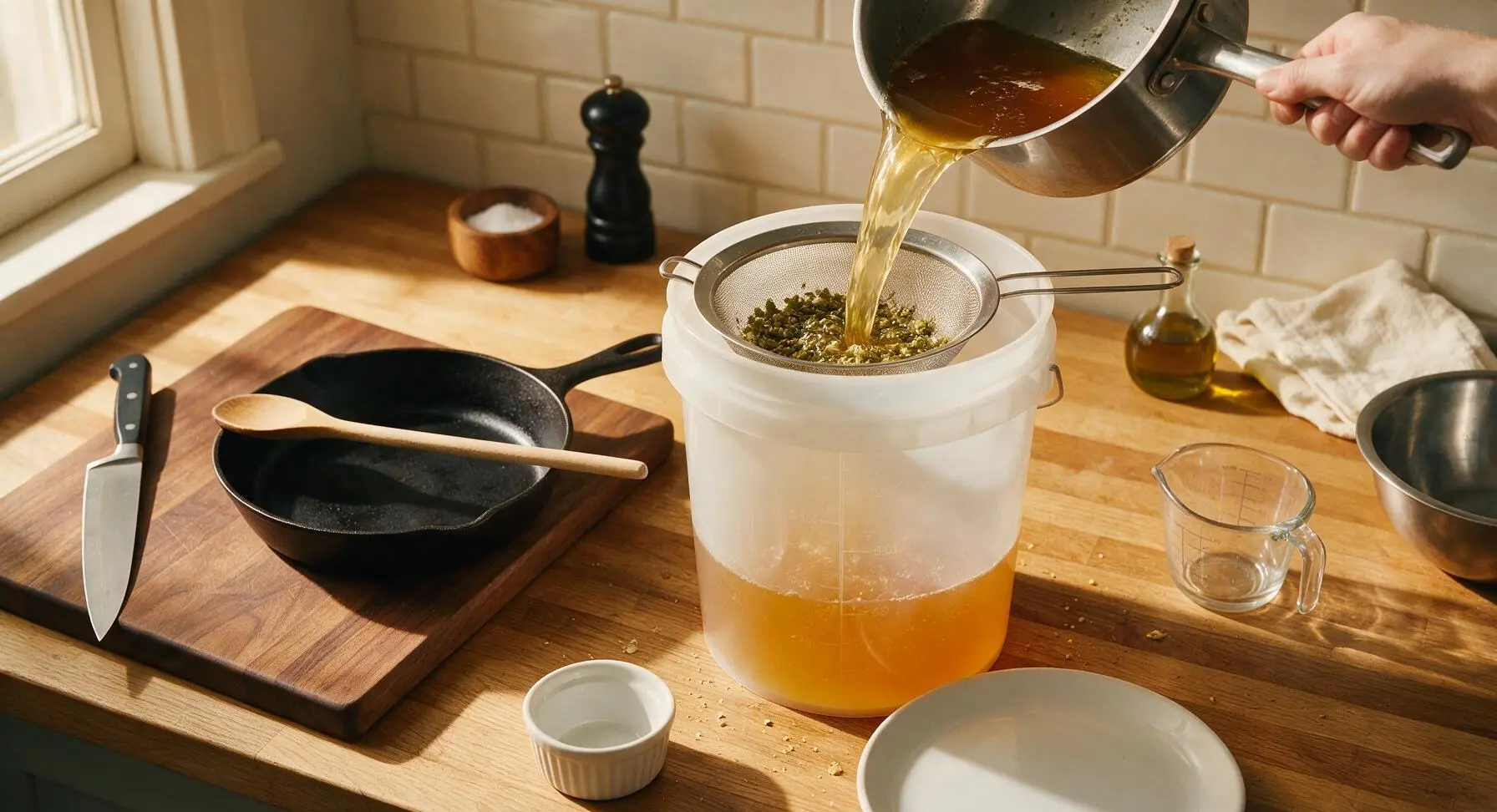
Step 5
step5:Transfer to Fermenter
6

Pitch Brewing Yeast

Open the sanitized lid of the fermentation bucket, sprinkle the full packet of Belgian Abbey ale yeast evenly across the surface of the aerated wort. Do not stir the yeast in—it will rehydrate and activate on its own within a few hours. Refasten the lid tightly, fill the airlock halfway with sanitizer solution, and press it into the lid’s rubber grommet. Move the bucket to a dark, temperature-stable spot held at 68–72°F (20–22°C) to ferment for 2 weeks, until bubbling in the airlock stops completely, signaling fermentation is complete.
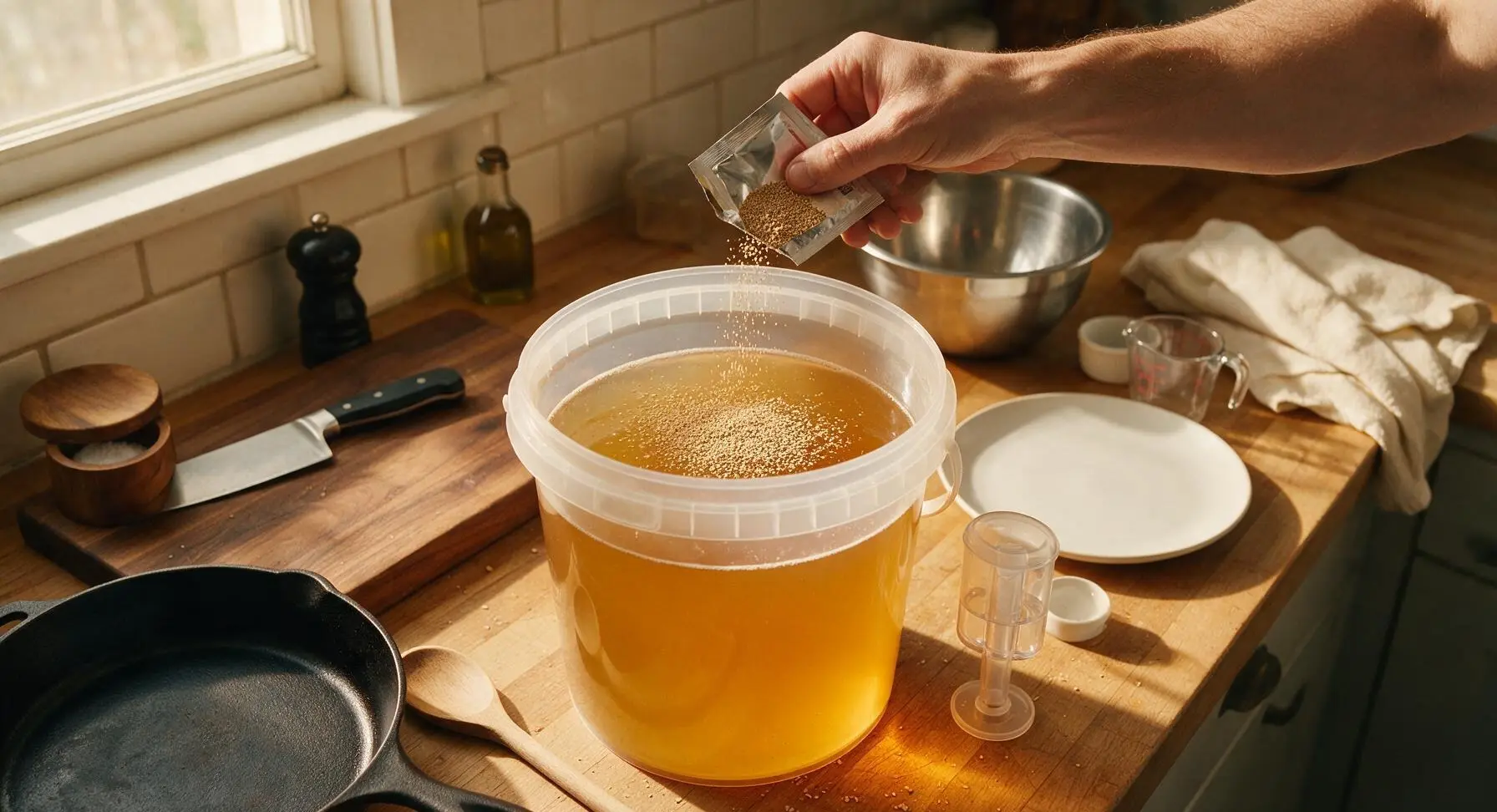
Step 6
step6:Pitch Brewing Yeast
7

Bottle for Carbonation

After 2 weeks of primary fermentation, when no bubbles rise through the airlock for 48 consecutive hours, sanitize 8 (12-oz) glass beer bottles, metal crown caps, and the auto-siphon. Dissolve the 2 oz of corn priming sugar in 1/4 cup boiling water, cool to room temperature, and add to the bottom of the sanitized bottling vessel. Siphon the fully fermented beer into the vessel, mixing gently with the priming sugar solution, then siphon the beer into individual bottles, leaving 1 inch of headspace at the top of each bottle. Cap bottles tightly with the red bench capper.
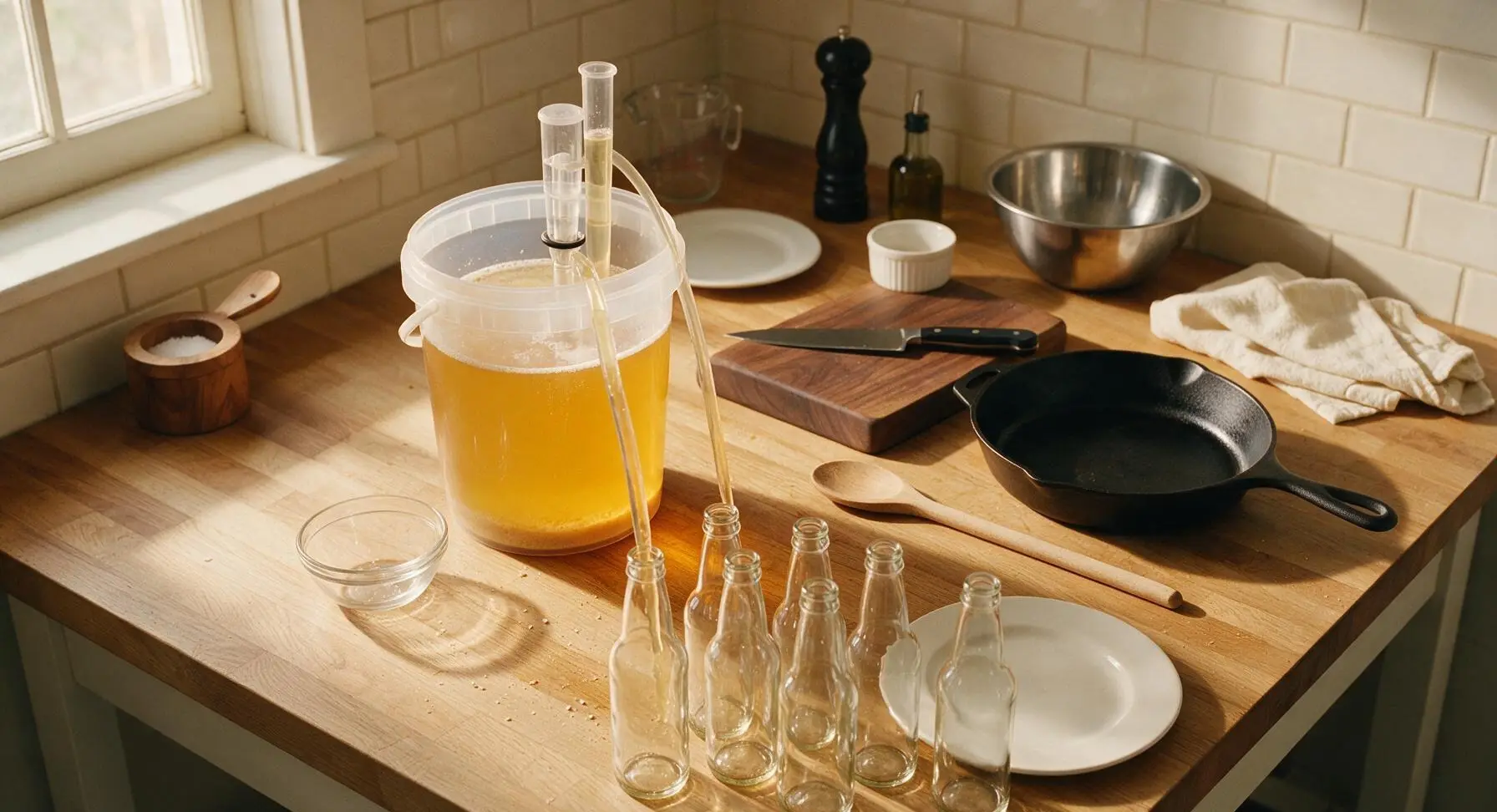
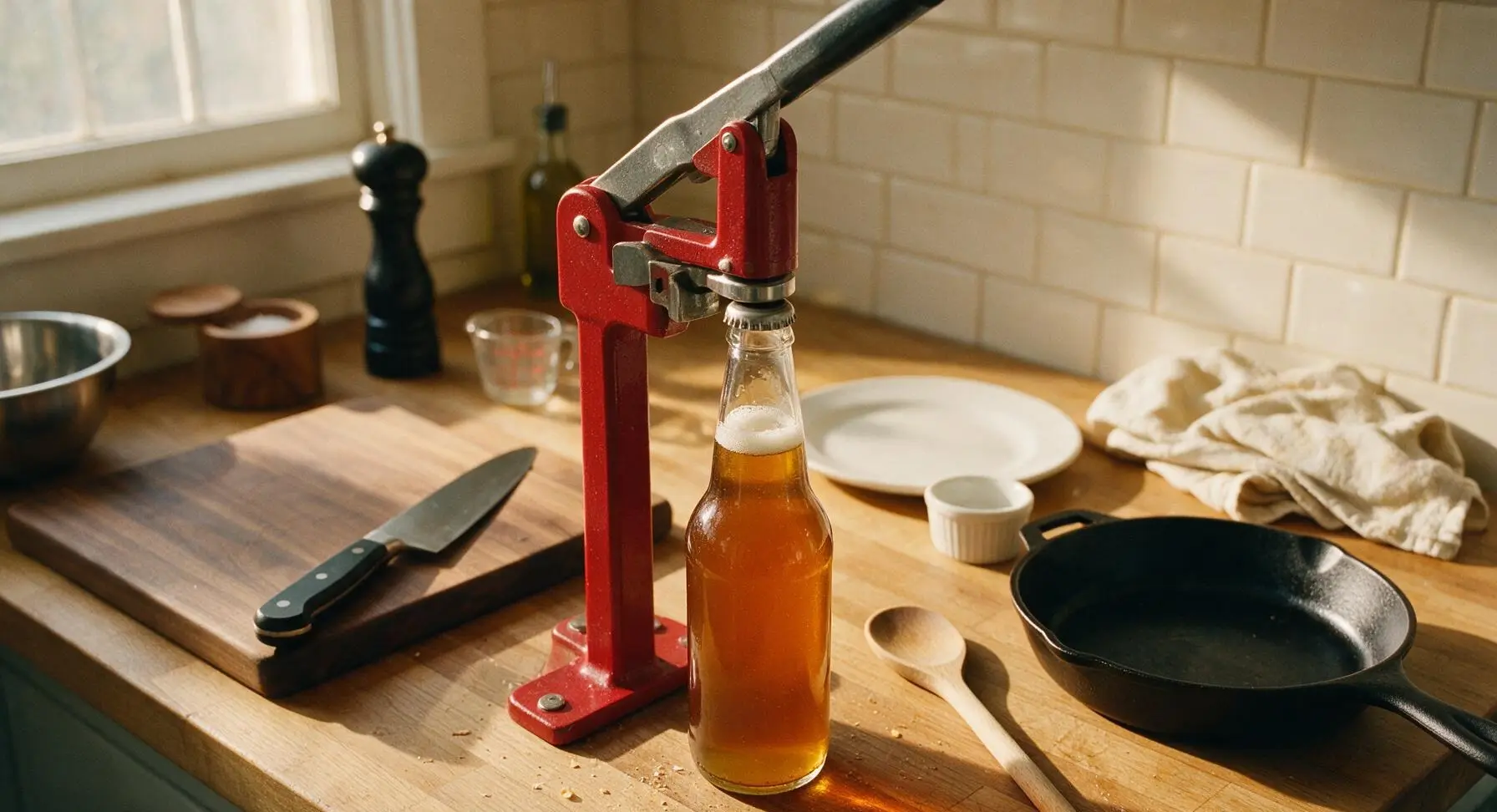
Step 7
step7:Bottle for Carbonation
Step 7
step7:Bottle for Carbonation
8

Condition and Serve

Store the capped bottles in the same dark, 68–72°F spot for 2 additional weeks to allow natural carbonation to build and harsh young flavors to mellow. After conditioning, chill one bottle in the refrigerator for 4 hours before serving. Pour slowly into the tulip-shaped beer glass, tilting the glass at 45 degrees to pour smoothly down the inner side, then straighten the glass as it fills to build a thick, fluffy white head.
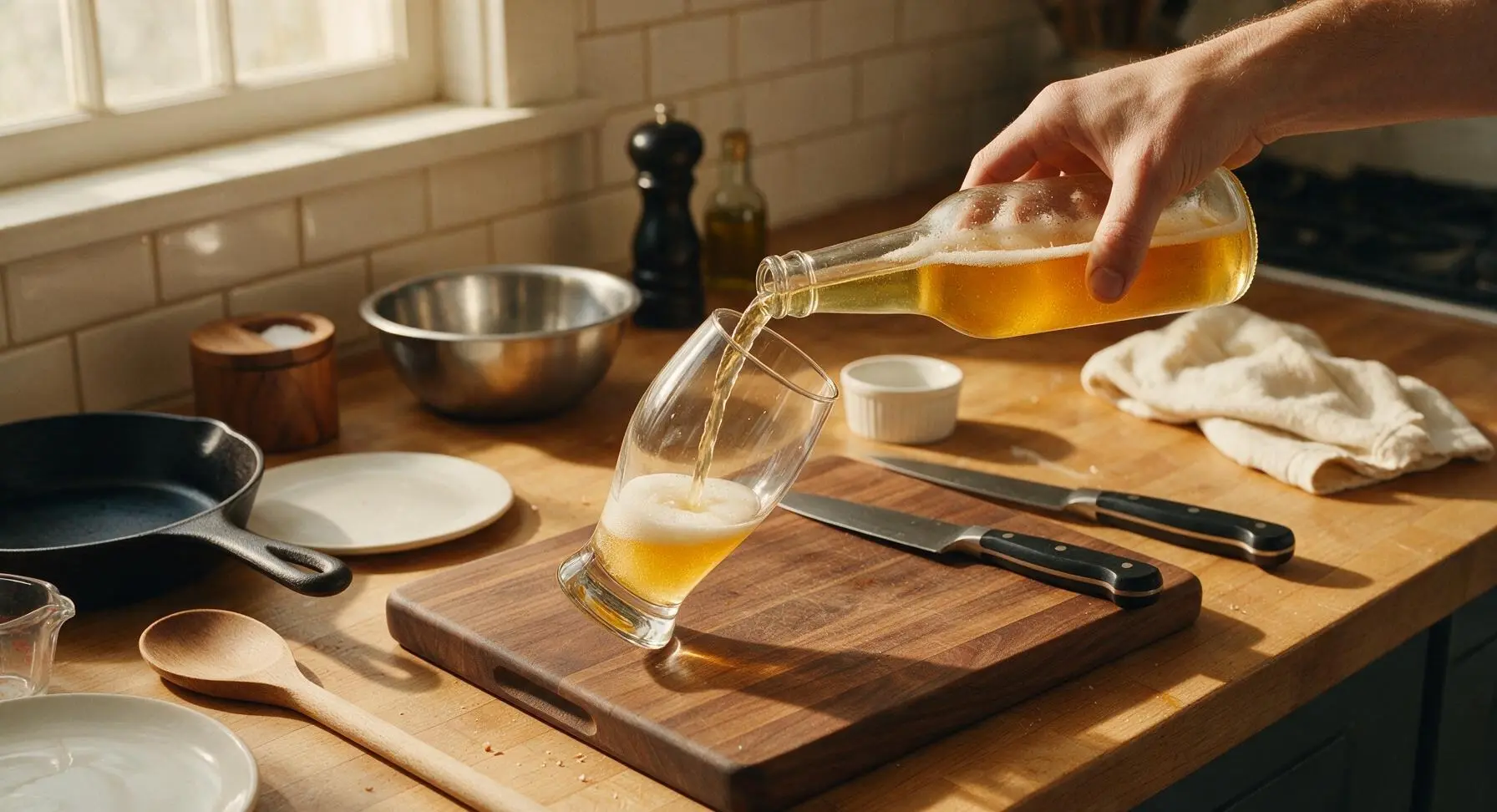
Step 8
step8:Condition and Serve

Tips

1.Never skip full sanitization of all equipment that touches cooled wort: even a tiny amount of residual bacteria can create sour, off-flavors that ruin an entire batch. No-rinse brewer's sanitizer is affordable and far more reliable than boiling small, heat-sensitive parts like airlocks.
2.Maintain a steady 68–72°F fermentation temperature for the first 3 days of active fermentation: temperatures above 75°F will cause the yeast to produce harsh, solvent-like fusel alcohols, while temperatures below 65°F will stall fermentation entirely and leave unpleasantly sweet, unfermented wort.
3.When pouring your finished Tripel, leave the last 1/4 inch of beer in the bottle: this small amount contains settled yeast sediment that will make the beer appear murky and add unwanted bready, yeasty flavor if poured into the glass.


✨ You May Also Like

Drinks & Beverages
🍜 Mexico

A bright, balanced tequila-based cocktail with zesty fresh lime, smooth orange liqueur, and a signature salt rim, perfect for warm summer sipping.

⏱️ 5 minutesDrinks & Beverages ★ 4.9
Drinks & Beverages
🍜 United States

Thick, creamy, nostalgic classic vanilla milkshake with a rich, smooth texture, topped with whipped cream and a cherry for cool, sweet refreshment.

⏱️ 5 minutesDrinks & Beverages ★ 4.7
Drinks & Beverages
🍜 United States

A bright, golden strong ale with fruity banana-clove notes, subtle hop spice, and soft carbonation, brewed in classic Trappist Tripel tradition.

⏱️ 2 hours aDrinks & Beverages ★ 4.5
Drinks & Beverages
🍜 United States

A frothy, nostalgic American soda fountain treat pairing bubbly cold root beer with creamy vanilla ice cream, perfect for cooling down at warm weather gatherings.

⏱️ 20 minuteDrinks & Beverages ★ 4.8
Drinks & Beverages
🍜 United States

Tart, funky, effervescent American Wild Ale is a complex fruity craft beer brewed with wild yeast, delivering bright, zesty notes perfect for warm-weather sipping.

⏱️ 2 hours aDrinks & Beverages ★ 4.4
Drinks & Beverages
🍜 United States

Bright, bubbly copycat of the iconic American caramel cola, balanced with citrus and warm spice, perfect for sipping ice-cold on hot days.

⏱️ 15 minuteDrinks & Beverages ★ 4.8

Tripel:Frequently Asked Questions

1.What sets this homebrewed Belgian-style Tripel apart from standard homebrewed pale ale? ▾
This Tripel leans into classic Belgian character instead of the bold citrus hop punch of most pale ales. The Belgian Abbey ale yeast produces signature banana and clove notes, pale Belgian candi sugar creates a dry, light body, and Saaz hops add soft, earthy spice for that crisp, effervescent, honey-kissed summer-friendly finish.
2.Can I use regular tap water instead of filtered water for this recipe? ▾
I strongly recommend sticking to filtered water if possible. Tap water often contains chlorine or chloramine that can react with yeast to create harsh, medicinal off-flavors that mask the Tripel’s delicate banana and clove notes. If tap is your only option, pre-boil it for 15 minutes and cool it first to remove volatile chlorine.
3.Why does this recipe call for light pale liquid malt extract instead of dry malt extract? ▾
Light pale liquid malt extract delivers a softer, smoother, fresh-malt backbone that doesn’t overpower the Tripel’s delicate fruity and spicy notes, unlike some dry malt extracts that carry a faint stale or toasty edge. If you must substitute dry, use 20% less by weight than the listed liquid amount to keep final gravity balanced.
4.What does pale Belgian candi sugar do that regular table sugar can’t for this Tripel? ▾
Pale Belgian candi sugar is fully inverted, so it ferments completely to boost alcohol content without adding residual sweetness or cidery off-flavors you often get from plain white table sugar. It also lightens the body for that signature crisp, dry Tripel mouthfeel, plus a subtle honeyed undertone that matches the beer’s bright profile.
5.When should I add the Saaz hop pellets to get the best balanced spicy flavor? ▾
Add 60% of your Saaz pellets at the start of the 60-minute boil for mild, clean bittering, then the remaining 40% during the last 15 minutes of the boil to pull out their signature soft, spicy, floral notes without harsh grassy flavors. Skip dry-hopping here, as it will muddle the classic yeast character.
6.What fermentation temperature works best to get those signature banana and clove notes? ▾
Hold fermentation steady between 68°F and 72°F for the first 5 to 7 days to get that perfect balance of banana and clove from the Belgian Abbey yeast. Temperatures above 76°F create harsh, solvent-like off-flavors, while temps below 65°F lead to almost none of that signature fruity, spicy yeast character.
7.How carbonated should this Tripel be when it’s finished conditioning? ▾
This Tripel should be highly carbonated, around 3.5 to 4 volumes of CO2, to match its classic effervescent, crisp profile. When bottling, use 4 ounces of corn priming sugar per 5-gallon batch to hit that level, then let bottles condition at 70°F for 3 full weeks to build carbonation and let flavors mellow.
8.Can I add extra fruit or spices to this recipe without ruining the final beer? ▾
You can, but keep additions extremely light so they don’t overpower the natural yeast and hop character. A quarter pound of fresh diced banana or one crushed clove per 5 gallons added at bottling amplifies existing notes, but skip strong add-ins like cinnamon or heavy stone fruit that clash with the soft Saaz spice.
9.How long will this homebrewed Tripel stay fresh once it’s fully carbonated? ▾
Stored in a cool, dark place away from temperature swings, this Tripel will stay fresh and bright for up to 6 months. Its high carbonation and dry finish mean it won’t get overly sweet as it ages, but bright banana and fresh hop notes fade after 4 months, so aim to drink it within that window for peak flavor.
10.I’m a total beginner to homebrewing— is this Tripel a good first recipe for me? ▾
This is a fantastic beginner-friendly extract recipe, because it skips the complicated temperature control demands of all-grain brewing and uses predictable, forgiving ingredients. Just be sure to sanitize all equipment thoroughly, hold fermentation in the recommended temp range, and be patient during conditioning for great results.
11.What serving temperature and glassware works best for this finished Tripel? ▾
Serve this Tripel chilled to 40°F to 45°F in a tall tulip-shaped glass to trap its bright, fruity and spicy aromas and show off its fluffy white head and golden, bubbly appearance. It pairs perfectly with light summer fare like grilled chicken, fresh goat cheese, or citrus skewers for backyard gatherings.

Comments (18)

2 days ago

OMG, this Tripel turned out so much better than the extract kit I dropped $50 on last year! The subtle fruit and spice notes from the Belgian yeast paired with the candi sugar are perfect, not too cloying, and the carbonation hit exactly right after the full 4 weeks of conditioning. Brought a growler to our group campout last weekend and everyone was begging for the recipe. Total game changer for my small homebrew setup!

30 minutes ago

Super excited to try this! Quick question though— I only have a 3 gallon carboy right now, will I need to size up to 5 gallon to make this work without messy boil overs? This is only my third ever homebrew batch so I’m still figuring out equipment kinks.

5 minutes ago

Great question! A 3 gallon carboy will be too small for primary fermentation on this batch, since the high-gravity wort produces a pretty active krausen that can bubble through the airlock. If you don’t have a 5 gallon carboy handy, you can use a food-grade 5 gallon bucket with a drilled lid and airlock for primary, then rack to your 3 gallon for secondary conditioning once fermentation slows down after 7-10 days. Hope that helps!

1 week ago

Made this for my annual fall backyard potluck and it was a SLAM dunk. SO smooth, that 9% ABV is sneaky though—had two pints and was definitely feeling it before the burgers were even done. My brother in law is a diehard commercial Tripel fan and he said it tasted better than the import stuff he usually buys. 10/10 will brew again.

3 days ago

Wait did you do the full 4 weeks conditioning or cut it a little short? I’m brewing this next week and need it ready for a Halloween party, trying to figure out if I can rush it a tiny bit without ruining it.

2 days ago

So glad it was a hit at your potluck! Quick note for Liz and anyone else thinking of cutting conditioning short: you *can* drink it after 3 weeks, but the harsh alcohol notes mellow out so much with that extra week, it’s really worth the wait. If you’re crunched for time, make sure you cold crash it for 48 hours before bottling to help speed up the clarity and smoothness a little.

2 weeks ago

Used homegrown Cascade hops I had in the freezer from this summer’s harvest instead of the Saaz the recipe calls for, and it turned out insanely good. The citrusy kick from the Cascades pairs so well with the banana and clove notes from the yeast. Will absolutely be adding this to my regular brew rotation!

5 days ago

Followed the recipe exactly but my first batch came out a little darker than the Tripels I’ve had at bars, did I do something wrong? It tastes fine, just more amber than pale gold like I expected.

2 days ago

I had that happen my first time too! Turns out I let the candi sugar get a little too dark when I was melting it on the stovetop, it caramelized more than it should have. If you keep the heat low and stir constantly when melting the sugar next time, it’ll stay that nice pale golden color.

2 hours ago

Wait the cook time says 1 hour 15 minutes active, but my last all-grain brew took almost 3 hours start to finish. Is this an extract recipe or all-grain? I don’t have a mash tun set up in my tiny apartment yet so extract is way easier for me right now.

30 minutes ago

Great catch! This recipe is written for extract with steeping grains, so that 1 hour 15 minute active time includes the steep, boil, and cool down before you pitch the yeast. No mash tun required, which makes it perfect for smaller apartment setups!

5 minutes ago

Oh thank goodness! Just ordered all the supplies, can’t wait to brew this this weekend. Appreciate the quick response!

yesterday

My husband has been getting into homebrewing lately and I surprised him with all the ingredients for this recipe for our anniversary. We brewed it together last month and cracked the first bottle last night—so good! It’s become our new Friday night drink to share after the kids go to bed. Even I like it, and I’m usually not a big beer person!

3 days ago

How important is the temperature control during fermentation? My apartment stays around 72-74 degrees right now, do I need to get a heating belt or cooling wrap for the carboy to get the right yeast flavor?

yesterday

Temperature control is pretty key for Belgian Tripels! Those Belgian yeast strains produce really nice fruity notes between 68-72 degrees, but if it gets above 75 you can end up with harsh, solvent-like off flavors. If your apartment is holding steady at 72-74, try wrapping the carboy in a wet t-shirt and pointing a small fan at it to bring the temp down a couple degrees, no fancy equipment needed.

2 weeks ago

Brewed three batches of this over the last year, and it’s consistently the most requested beer I bring to friend gatherings. Pro tip: add a half ounce of fresh orange peel during the last 10 minutes of the boil for an extra bright citrus kick that pairs perfectly with the yeast esters. Trust me on this one.

1 week ago

Oh that sounds amazing! Do you use regular navel orange peel or do you go for bitter Curacao orange peel like some Belgian recipes use?

5 days ago

I’ve tried both, and regular navel works great for a brighter, less bitter citrus note! Just make sure you don’t get any of the white pith when you peel it, that’ll add a weird bitter aftertaste you don’t want.

just now

Uh oh, I bottled my batch 3 days ago and I’m seeing little clumps of yeast floating in the bottles, did I mess up? Is this safe to drink? I’m panicking a little because I bought all new bottles for this.

just now

No need to panic! That’s just normal yeast sediment that will settle to the bottom of the bottles as conditioning finishes. When you pour the beer after the full 4 weeks, pour slowly and leave that last half inch of beer with the sediment in the bottle, and you’ll have perfectly clear, delicious Tripel. It’s totally safe to drink, that’s just part of the bottle conditioning process!

1 week ago

How much does this recipe yield? I’m trying to figure out how many bottles I need to sanitize ahead of time, I don’t want to run out mid-bottling day like I did on my last batch.

5 days ago

This recipe yields right around 5 gallons of finished beer, which works out to about 48 standard 12oz bottles, or 10-11 22oz bombers if you prefer larger bottles. I always recommend sanitizing an extra 6 bottles just in case you end up with a little extra wort after trub separation!

3 days ago

Perfect, thanks! I already had 2 cases of bottles stashed from my last brew so that’s exactly enough, I’ll grab an extra six pack to sanitize just to be safe.

2 weeks ago

Took this to my local homebrew club meetup last month and won 2nd place in the strong ale category! The judges raved about the balance between the malt sweetness, hop bitterness, and yeast character. Already got three friends asking to brew this together next month. Can’t recommend this recipe enough for anyone looking to level up their homebrew game.

yesterday

Is there any animal product in this recipe? I try to stick to vegan-friendly brews and a lot of recipes use gelatin for clearing, I’d love to make this if it’s vegan!

2 hours ago

I made this last month and skipped the gelatin (used Irish moss during the boil instead for clarity) and it turned out perfectly clear! The base recipe doesn’t call for gelatin as a fining anyway, so it’s totally vegan as written as long as you don’t add gelatin yourself.

5 days ago

Wait the ABV listed on similar Tripel recipes is usually around 9-10%, does this come out that strong? I don’t want to make something too boozy that my friends who like lighter beer won’t drink it.

2 days ago

I just bottled mine last week and took a hydrometer reading, it came out to exactly 9.2% ABV. It drinks way smoother than that though, you don’t taste the alcohol at all if you let it condition the full 4 weeks. My light beer drinking sister loved it when she tried a test sip.

yesterday

That hydrometer reading is spot on! This clocks in right around 9% ABV, but the malt and yeast notes balance it out so it doesn’t taste like a strong beer. If you want to bring it down a little, you can reduce the candi sugar by 4oz to get closer to 7.5-8% without throwing off the flavor too much.

3 days ago

I was nervous about making a Tripel since I’d only done IPAs before, but this recipe was so easy to follow! The step by step instructions for pitching the yeast and monitoring fermentation made it impossible to mess up. Cracked the first bottle last night and it’s SO good, tastes just like the fancy Tripels I pay $8 a bottle for at the liquor store. Saved so much money making it at home!

2 days ago

Can I use dry Belgian yeast instead of the liquid yeast the recipe recommends? My local homebrew shop only has dry Tripel yeast in stock right now and I don’t want to wait a week for shipping to order liquid.

yesterday

Absolutely! Dry Belgian Tripel yeast works great here, just make sure you rehydrate it according to the package directions before pitching to get the best fermentation. You might get slightly less complex fruit notes than you would with liquid yeast, but it’ll still make a fantastic, authentic tasting Tripel.

1 week ago

Pro tip for anyone brewing this in a hot climate like Arizona: freeze a couple sanitized plastic water bottles and drop them in your fermenter if the temp gets too high, it works just as well as a fancy cooling jacket for a fraction of the cost. Saved my batch when our AC went out last month during that 110 degree heat wave!

5 days ago

Oh thank you for this tip! My garage brewery gets up to 80 degrees during the day here in Florida, I was stressing about how to keep the fermenter cool without dropping a ton of money on a temp control system.

3 days ago

No problem! Just make sure the bottles are sealed super tight and sanitized on the outside so you don’t contaminate your beer. I swap them out every 12 hours or so when it’s really hot and it keeps the wort right at 70 degrees perfectly.

yesterday

Brewed this to bring to my college football tailgate last weekend and it was gone before the first quarter even ended! People were coming over from the tailgates next to us asking for cups. Will definitely be making a double batch for the next home game.

2 hours ago

I’m planning the same thing for the Ohio State game next month! Did you bottle yours in regular 12oz bottles or did you use a keg to make serving easier at the tailgate?



