turkish pudding

title 1
turkish pudding
⏱️ cook time 40 minutes
🍽️ servings 4
⚡ Difficulty easy

intro

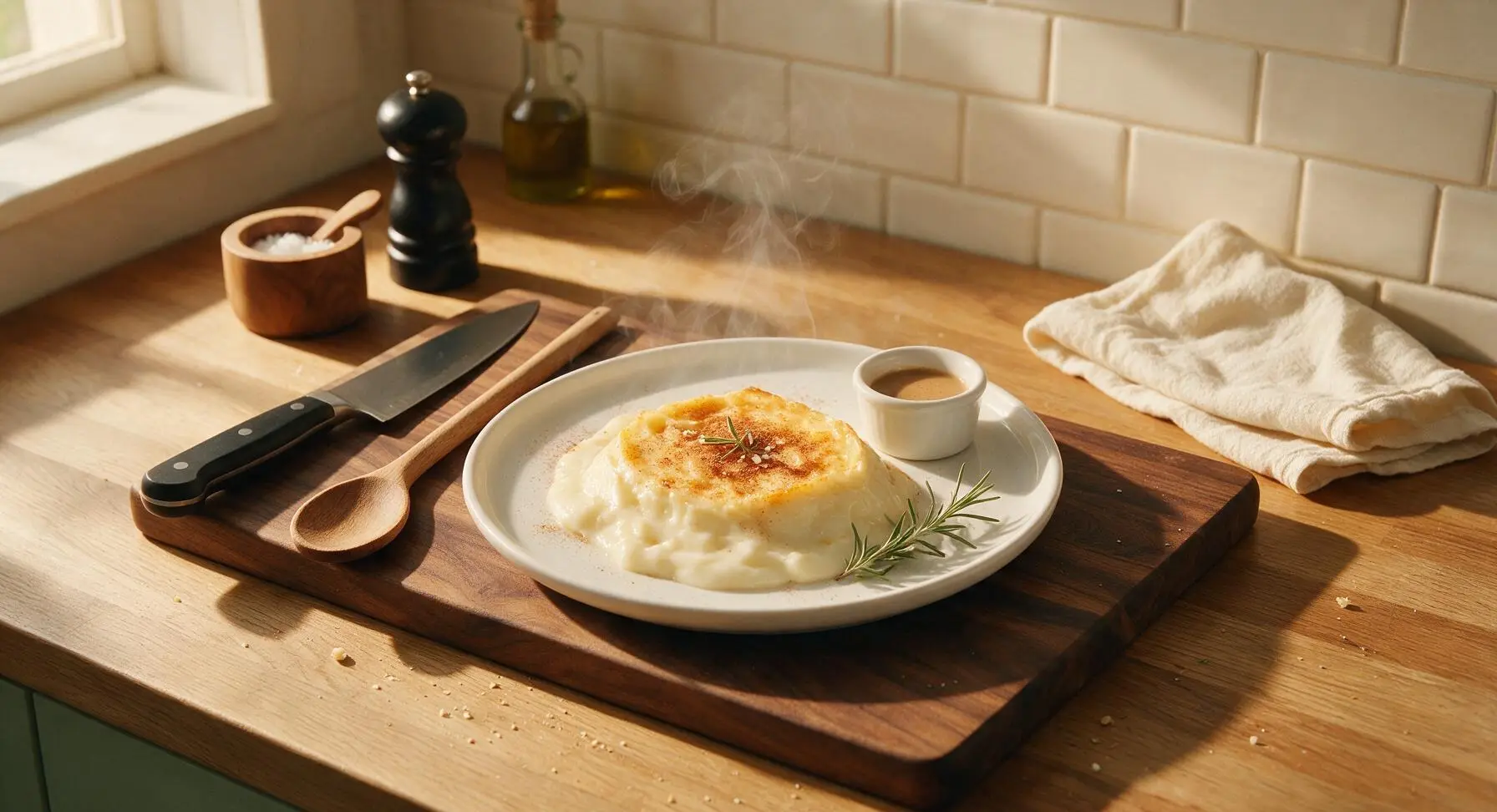
Silky, golden-topped baked Turkish rice pudding with warm vanilla notes, creamy texture, and light cinnamon dusting — Turkey’s most beloved, comforting home-style dessert.

Ingredients
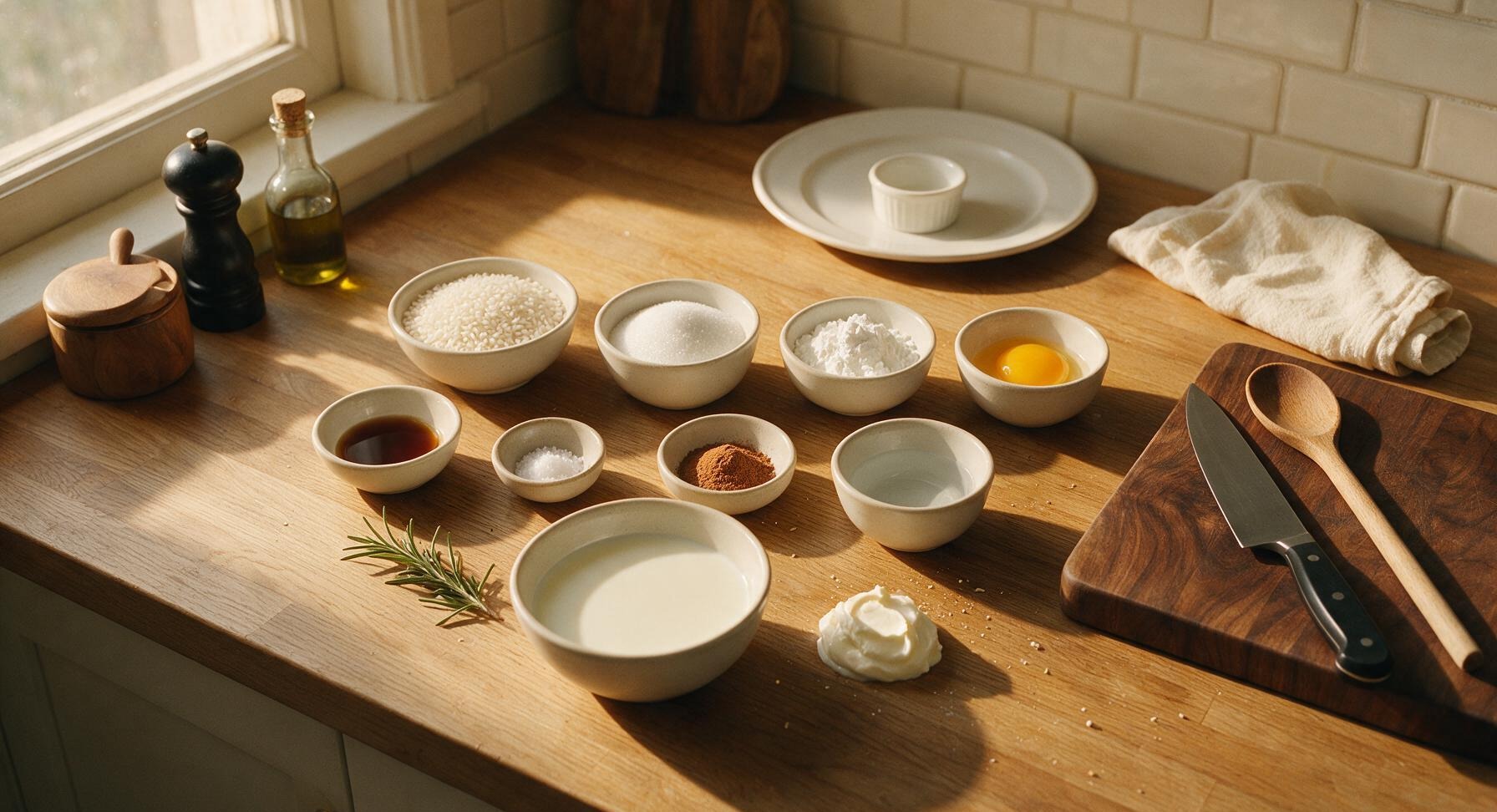
Whole milk 4 cups (960ml)
Short-grain white rice (baldo or arborio) 1/3 cup (65g)
Granulated sugar 1/2 cup (100g)
Cornstarch 2 tablespoons (16g)
Large egg yolk 1 (18g)
Vanilla extract 1 teaspoon (5ml)
Fine sea salt 1/8 teaspoon
Ground cinnamon 1 teaspoon (2g)
Cold water 1/2 cup (120ml)
Clotted cream (kaymak, for serving) 2 tablespoons (30g)

Steps

1

Rinse and Parboil Rice

Place 1/3 cup short-grain white rice in the fine-mesh stainless steel sieve, and rinse under cold running water until runoff is completely clear (about 1 minute, to remove excess starch that causes gummy pudding). Transfer rinsed rice to the 3L stainless steel saucepan, add 1/2 cup cold water and 1/8 teaspoon fine sea salt. Bring to a gentle simmer over medium-low heat, cover, and cook for 8 minutes until rice is tender and all water is fully absorbed, with no browning on the rice.
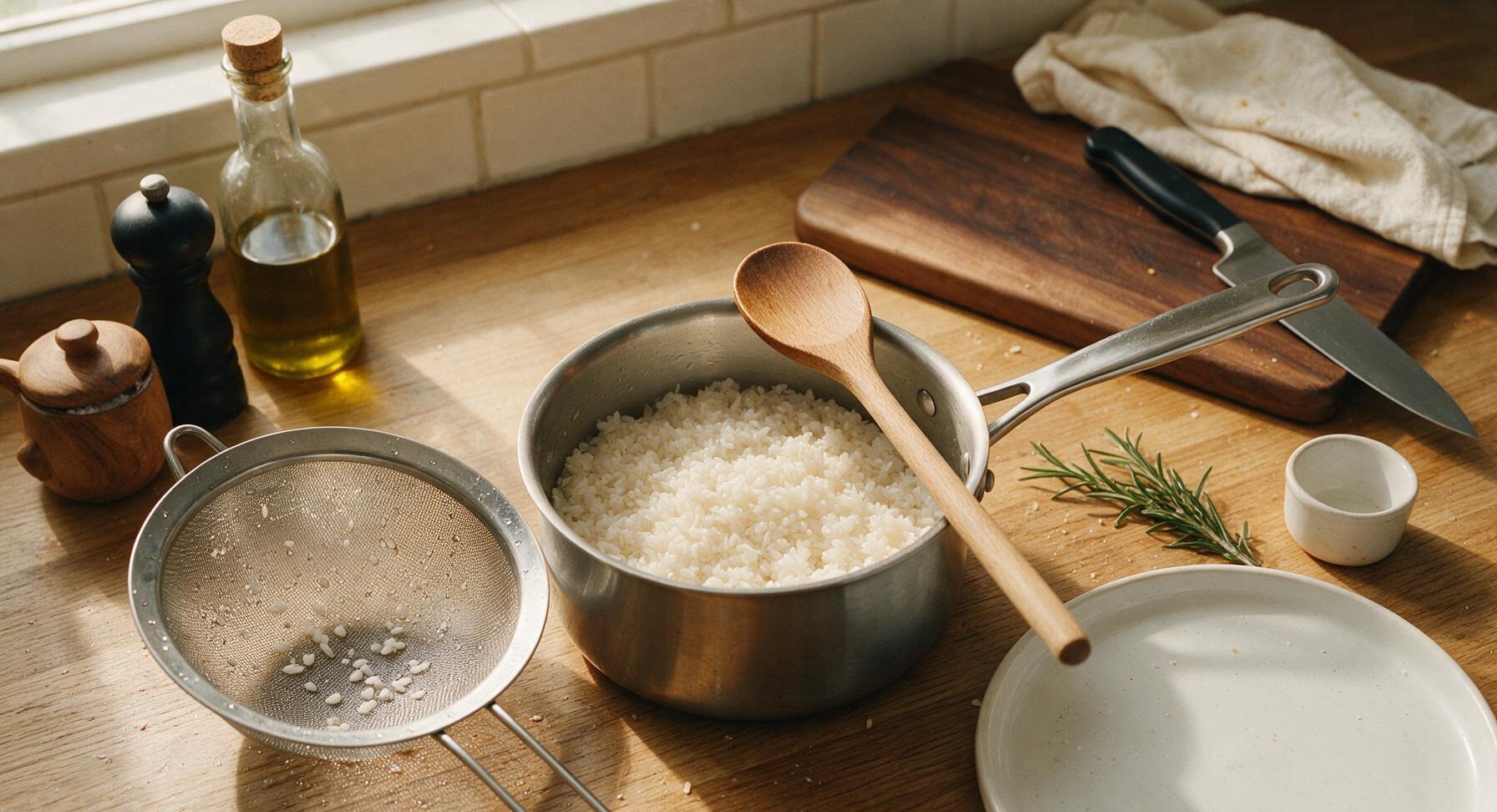
Step 1
step1:Rinse and Parboil Rice
2

Heat Milk and Sugar

Pour 3 1/2 cups of the whole milk into the saucepan with parboiled rice, add 1/2 cup granulated sugar, and stir gently with the wooden spoon over medium-low heat. Bring to a slow, gentle simmer (do not boil rapidly, as this scalds milk and creates a curdled texture) and cook for 10 minutes, stirring occasionally, until rice is very soft and the liquid is slightly thickened.
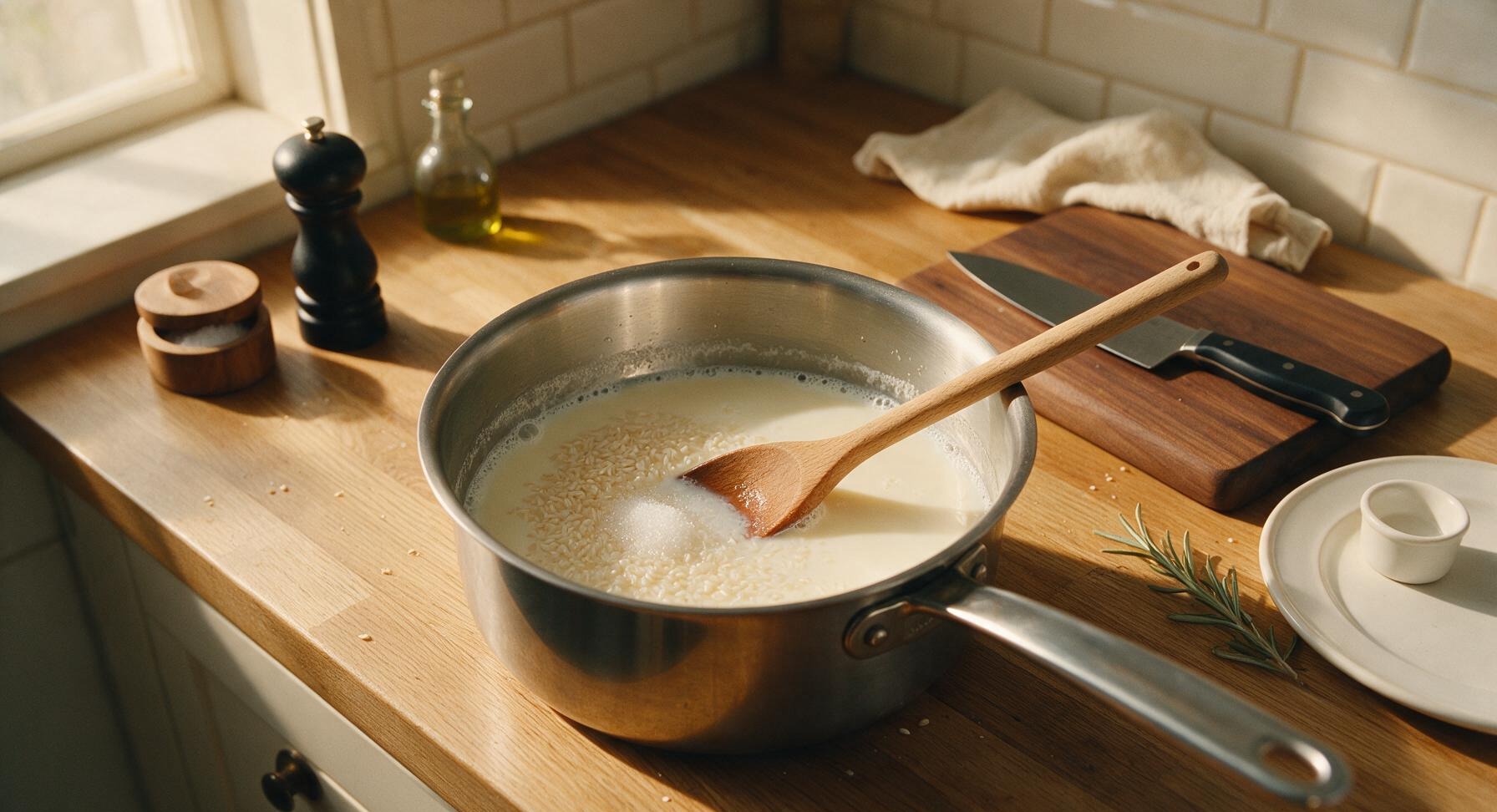
Step 2
step2:Heat Milk and Sugar
3

Mix Cornstarch Slurry

While the milk and rice simmer, combine the remaining 1/2 cup cold whole milk, 2 tablespoons cornstarch, 1 large egg yolk, and 1 teaspoon vanilla extract in the small clear glass mixing bowl. Whisk thoroughly with the stainless steel whisk until completely smooth, with no visible cornstarch lumps, to form a thin, uniform pale yellow slurry.
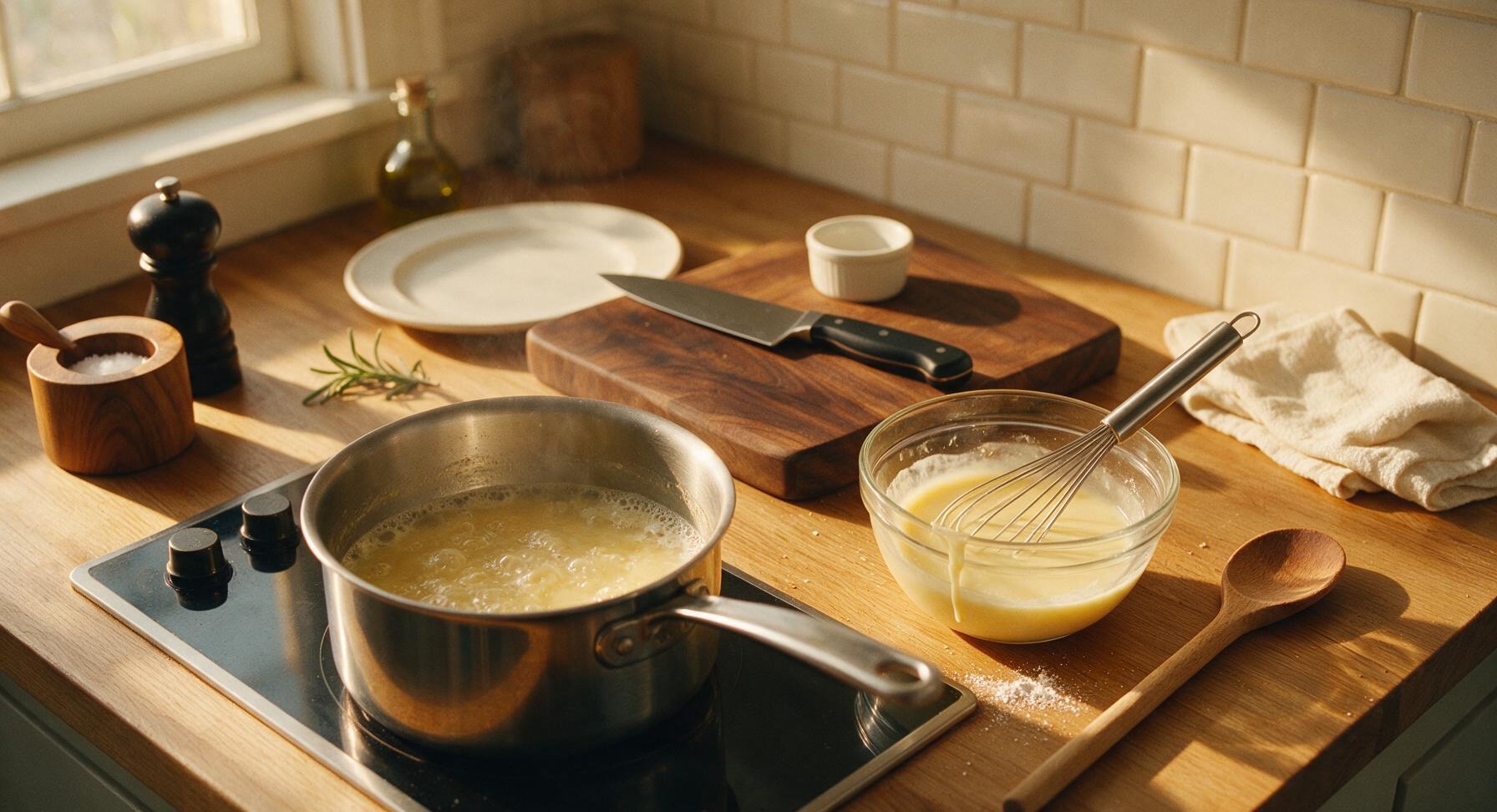
Step 3
step3:Mix Cornstarch Slurry
4

Thicken Pudding Base

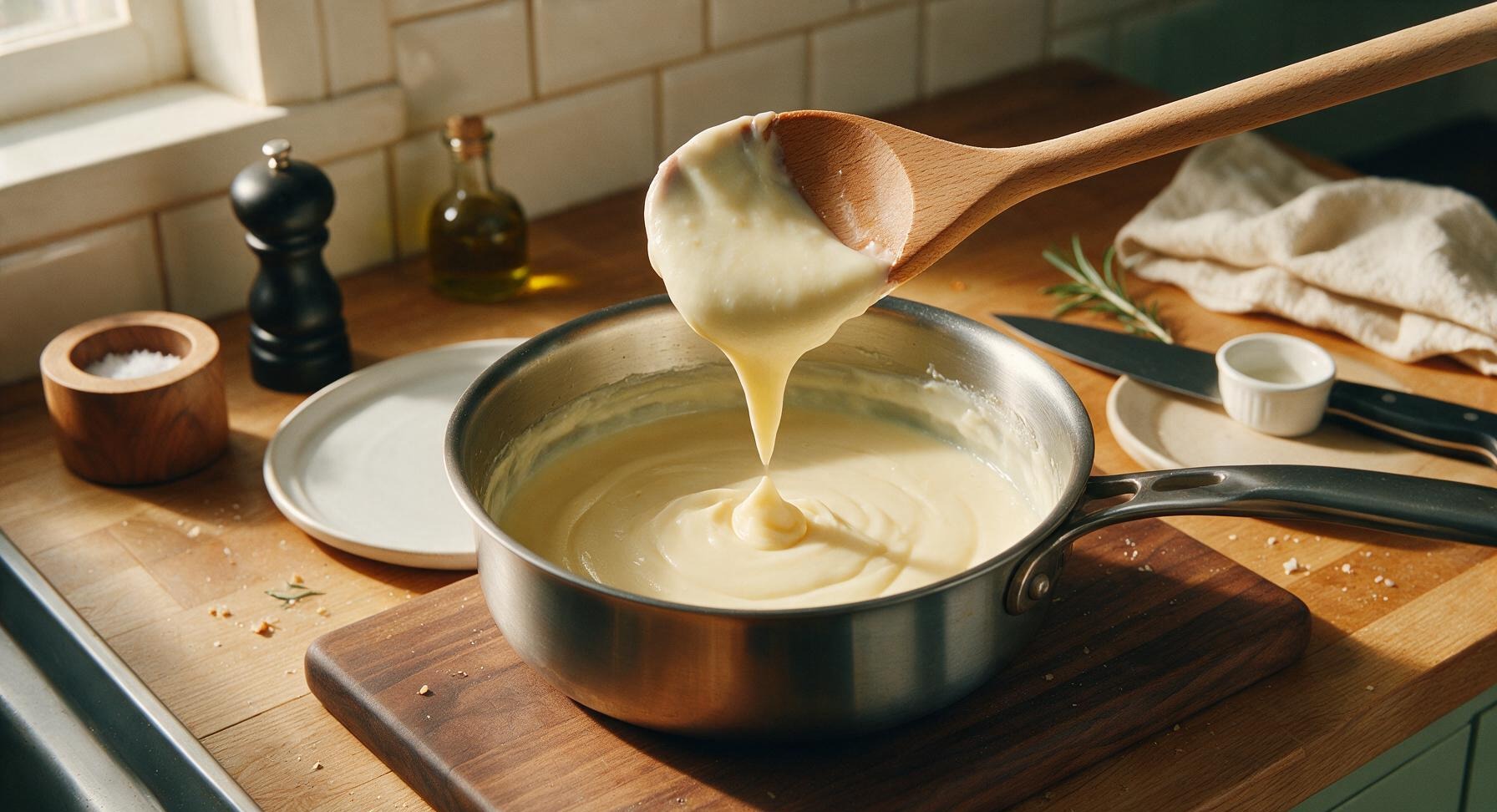
Temporarily remove the saucepan of simmering rice and milk from heat. While stirring constantly with the wooden spoon, slowly pour the cornstarch slurry into the hot milk mixture in a thin, steady stream to prevent lumps. Return the pan to low heat, and cook 3-4 minutes, stirring nonstop along the pan bottom to prevent sticking, until the pudding thickens enough to coat the back of the wooden spoon (it will thicken further during baking and cooling, so avoid overcooking).
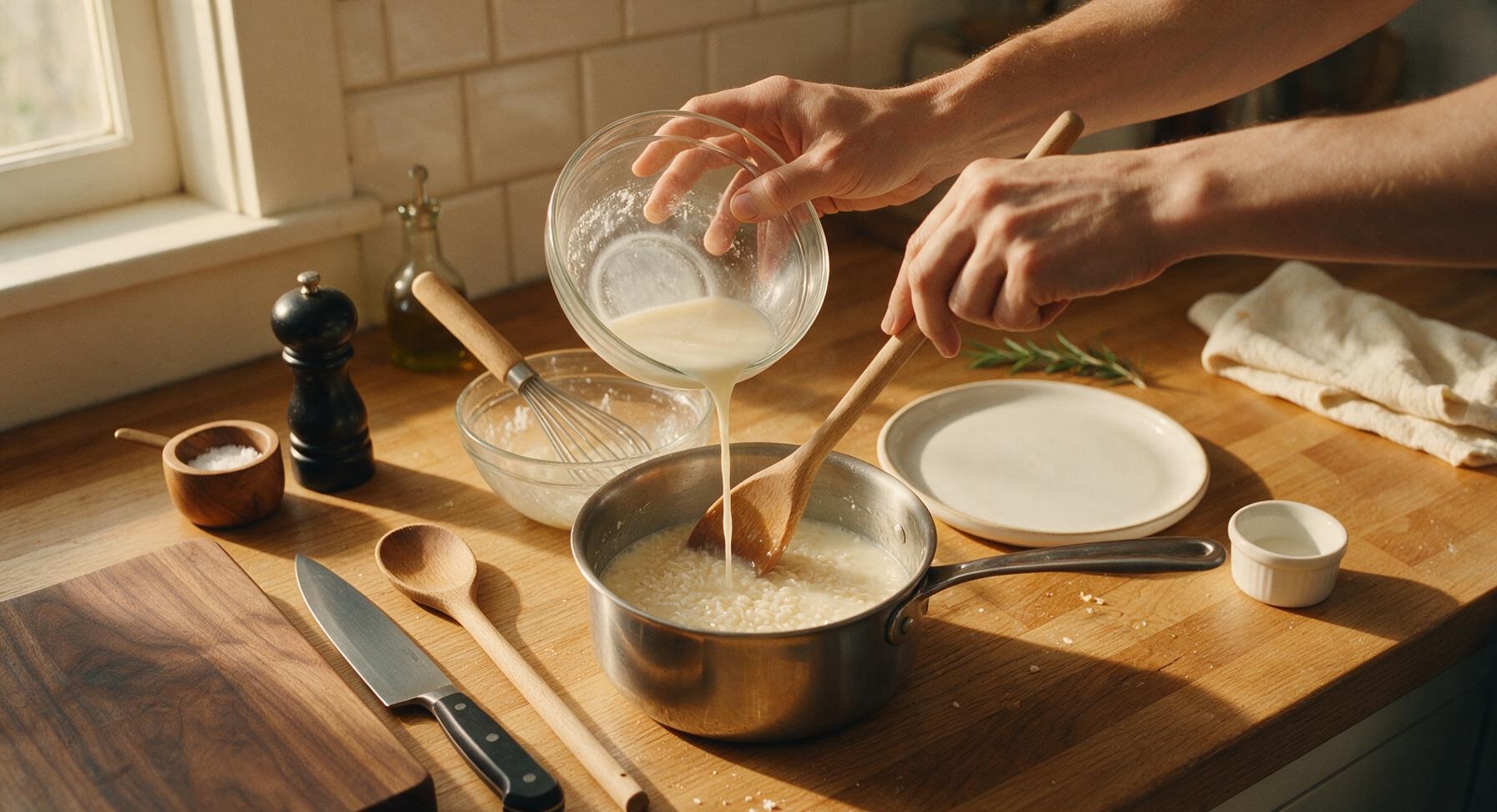
Step 4
step4:Thicken Pudding Base
Step 4
step4:Thicken Pudding Base
5

Portion into Ramekins

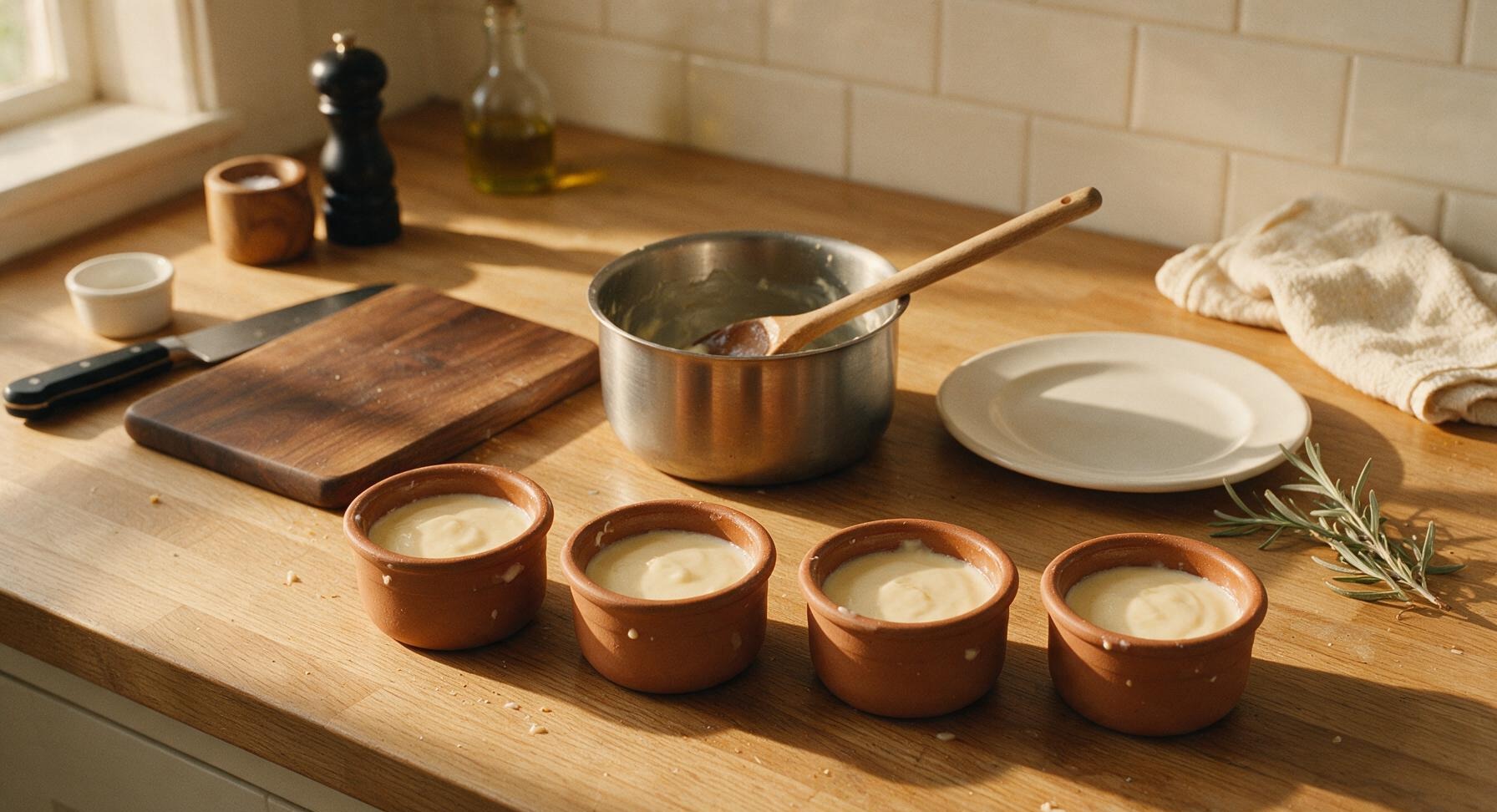
Arrange the 4 terracotta ramekins in a row on the counter near the stovetop. Carefully ladle the warm pudding base evenly between the ramekins, filling each to 1cm below the rim to leave space for bubbling during baking. Wipe any pudding drips from the ramekin exteriors with the corner of the oatmeal linen towel.
Step 5
step5:Portion into Ramekins
6

Bake Until Golden

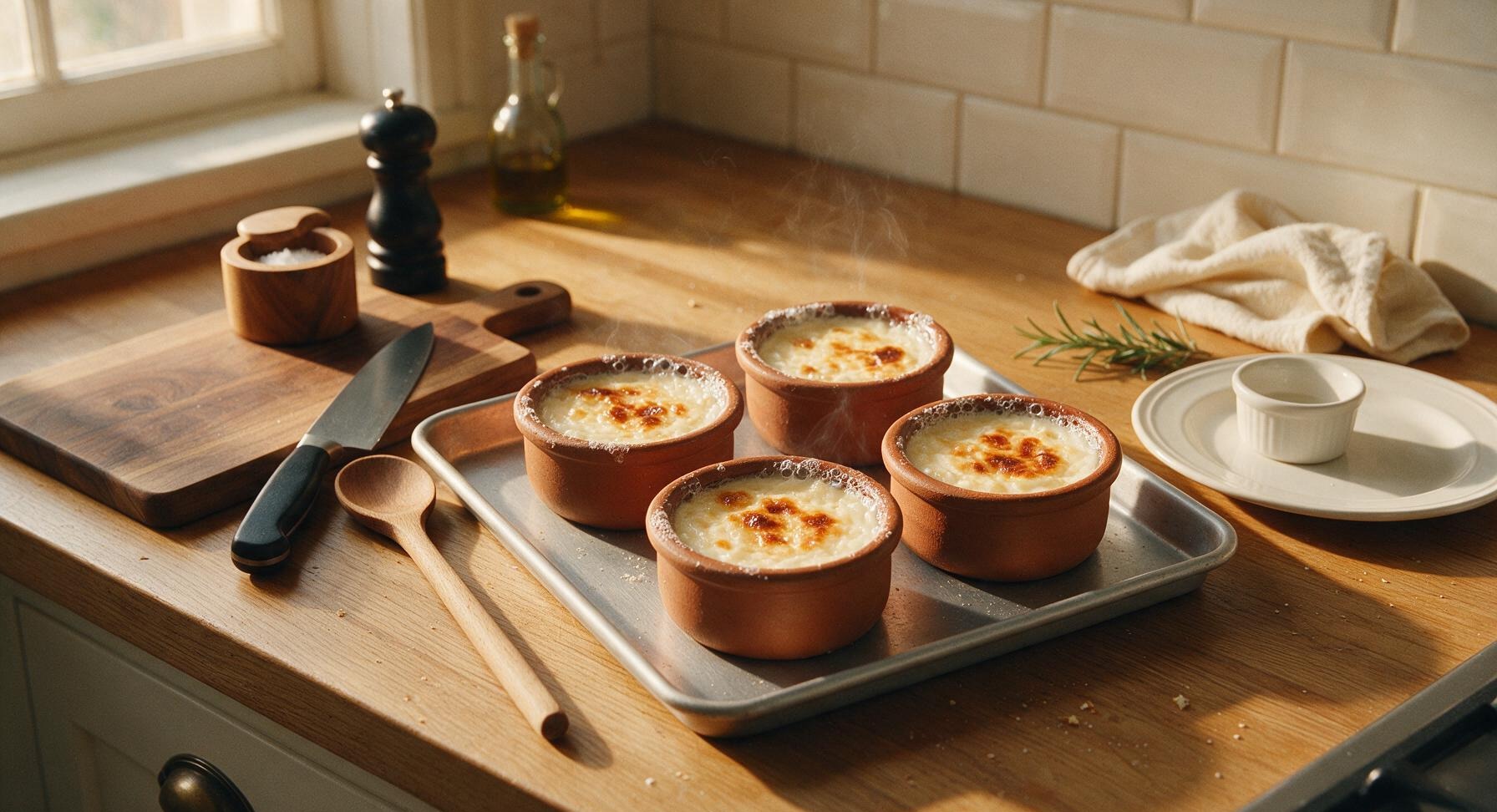
Set the filled ramekins on the matte aluminum baking sheet, then transfer to a preheated 180C (350F) oven. Bake for 15-18 minutes, until pudding tops are dappled golden brown with small bubbly cracks across the surface. No water bath is needed, as direct high heat creates the signature caramelized top.
Step 6
step6:Bake Until Golden
7

Chill to Set

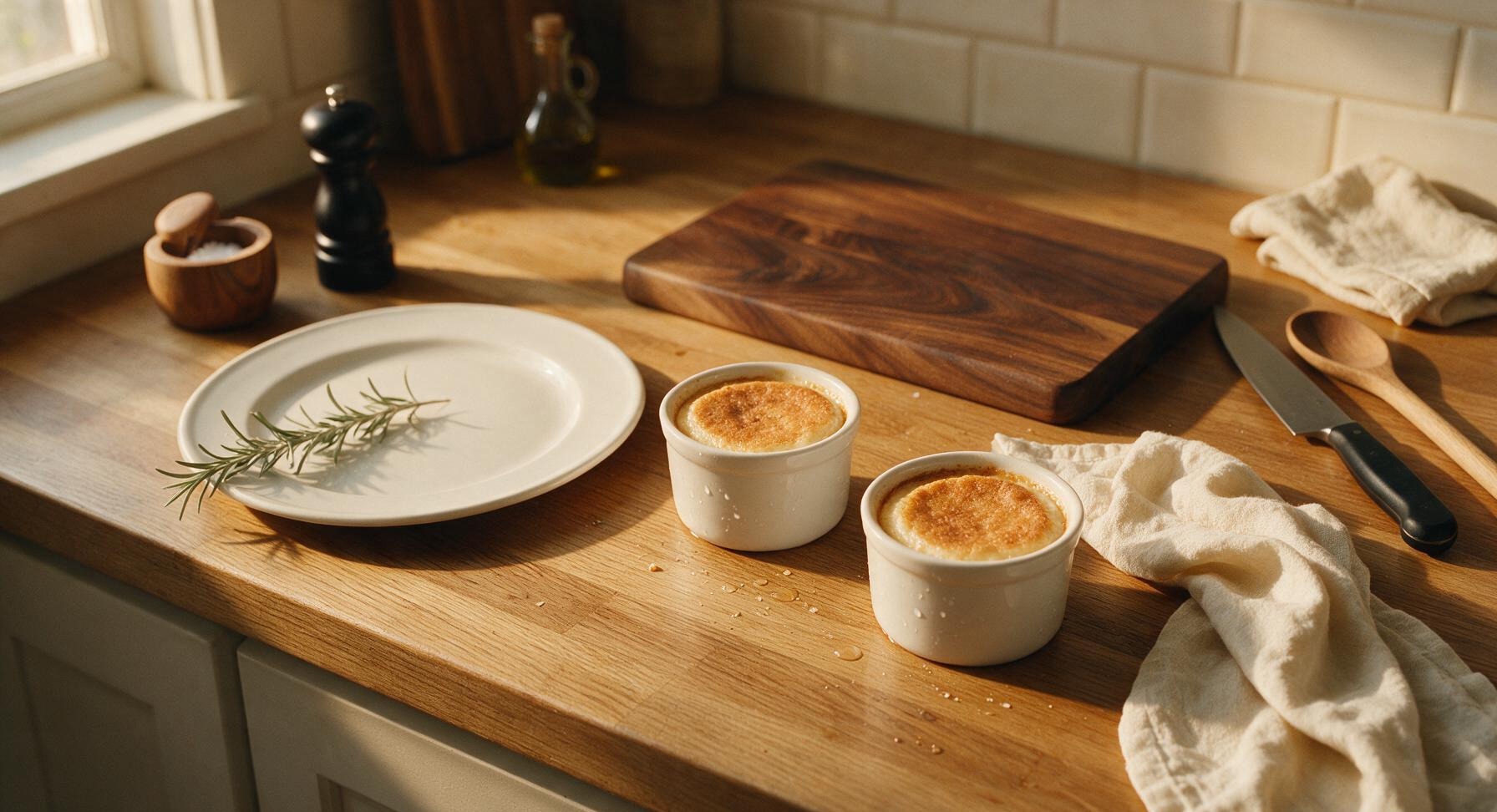
Let baked puddings cool to room temperature for 20 minutes on the counter, then transfer to the refrigerator to chill for a minimum of 2 hours (or up to 24 hours) until fully set. Leave puddings uncovered for the first hour of chilling to prevent condensation from making the crisp golden top soggy.
Step 7
step7:Chill to Set
8

Plate and Garnish

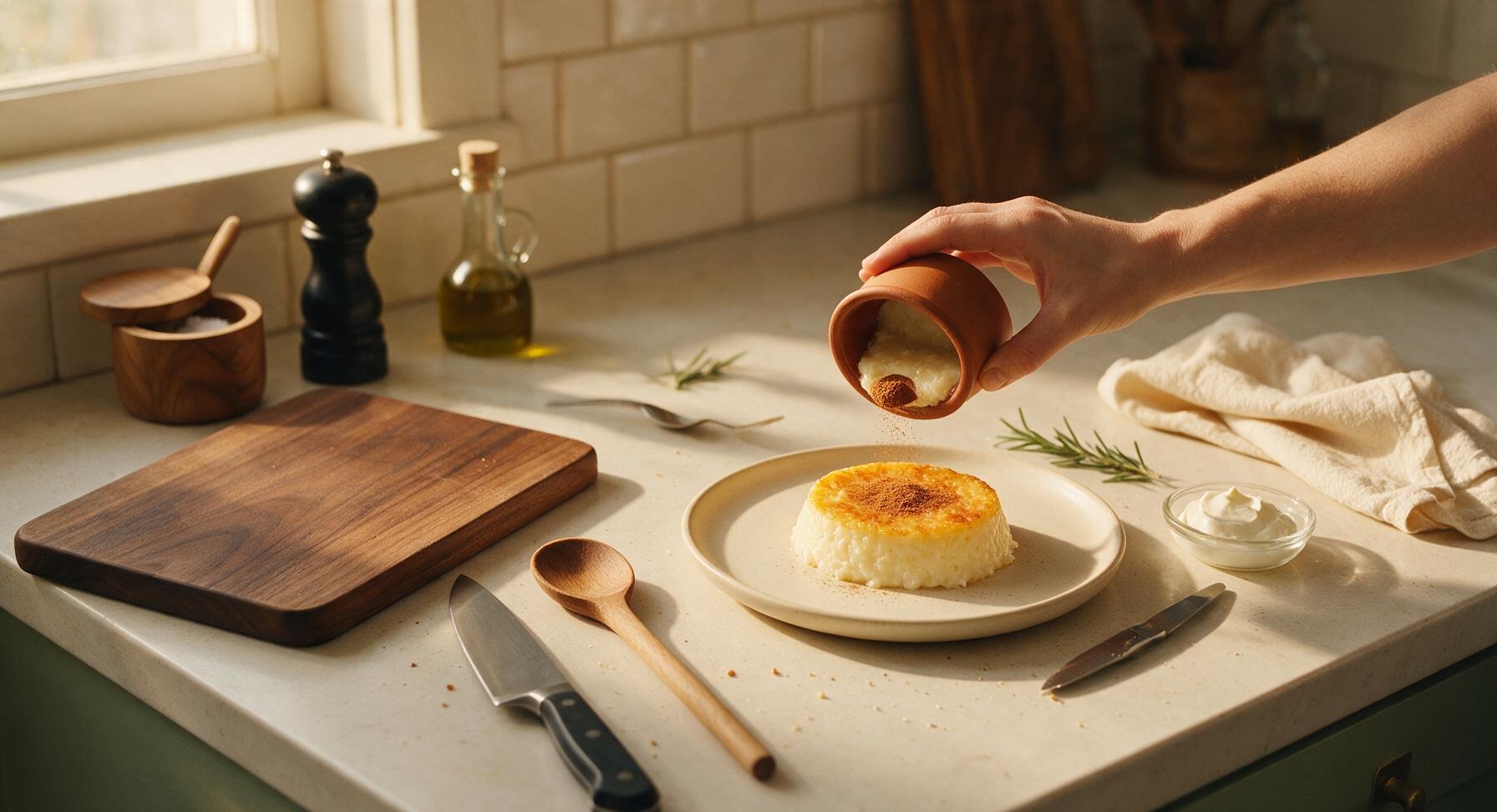
Run the small paring knife around the inner edge of one chilled ramekin to loosen the pudding, then invert it onto the center of the matte cream ceramic dessert plate. Dust the top lightly with ground cinnamon, add a small dollop of clotted cream to the side, and garnish with a tiny fresh mint leaf if desired.
Step 8
step8:Plate and Garnish

Tips

1.Use only short-grain baldo or arborio rice for this recipe: long-grain rice does not release enough starch during cooking to create the signature silky, clingy texture, and will result in a grainy, separated pudding.
2.Stir constantly once you add the cornstarch slurry: cornstarch gelatinizes quickly over low heat, and un-stirred pudding will form starchy lumps or burn onto the pan bottom, ruining the smooth, uniform texture.
3.Do not cover warm puddings immediately after baking: trapped condensation will drip onto the crisp golden top, turning it soggy. Leave them uncovered for the first hour of chilling to preserve the signature slightly crackled baked surface.

✨ You May Also Like

Desserts & Baking
🍜 Italy

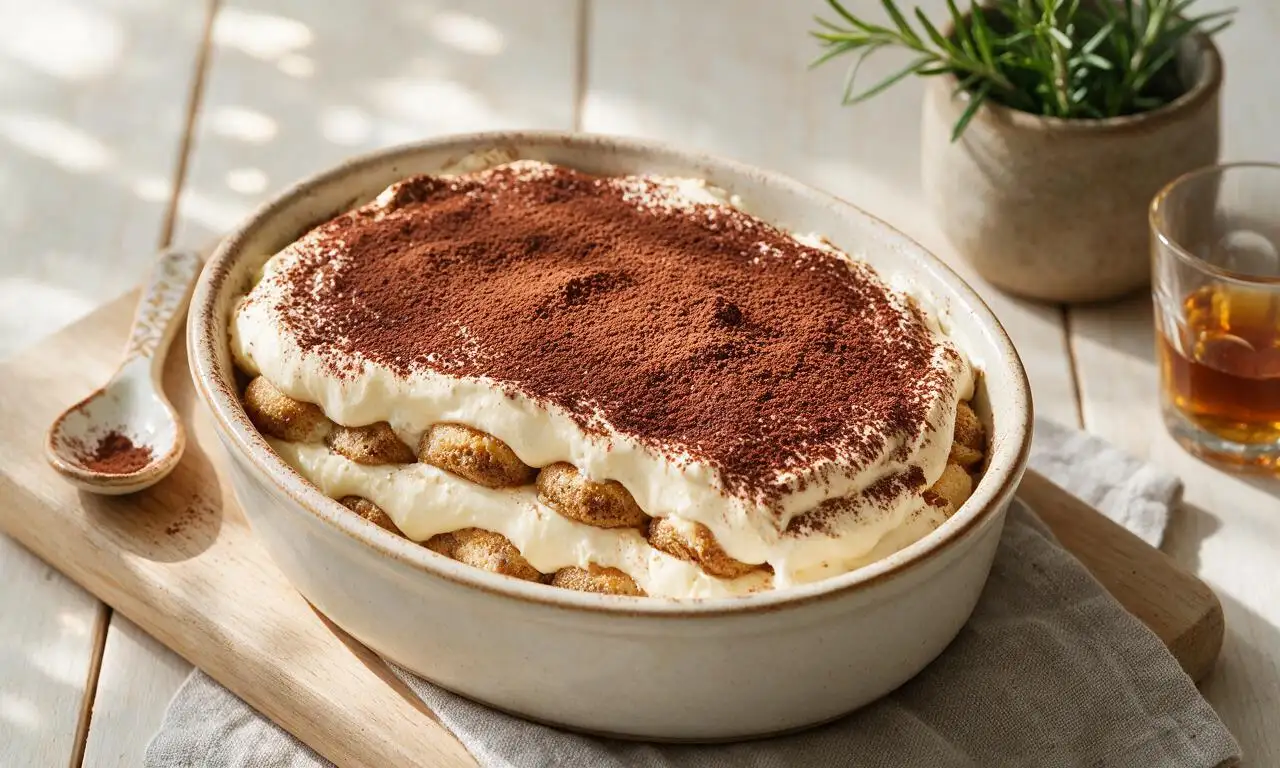
Creamy, coffee-kissed classic Northern Italian no-bake dessert, with layers of rum-spiked mascarpone cream, soft ladyfingers, and a rich cocoa dusting.

⏱️ 4 hours 3Desserts & Baking ★ 4.7
Desserts & Baking
🍜 France

Flaky, shatteringly crisp, buttery French croissants with golden exteriors and soft, airy layered interiors, perfect for pairing with coffee for a special morning treat.

⏱️ 12 hours Desserts & Baking ★ 4.5
Desserts & Baking
🍜 United States

Warm, spiced baked apples topped with a fluffy golden biscuit crust, this cozy dessert pairs perfectly with vanilla ice cream for cool-weather comfort.

⏱️ 55 minuteDesserts & Baking ★ 4.6
Desserts & Baking
🍜 United States

A star-spangled classic American blueberry pie with buttery flaky crust and bright sweet-tart filling, perfect for summer patriotic gatherings.

⏱️ 1 hour 25Desserts & Baking ★ 4.7
Desserts & Baking
🍜 United States

A beloved no-bake regional Maine candy with a chewy coconut-potato center coated in rich dark chocolate, a New England holiday staple since the 1870s.

⏱️ 2 hours 3Desserts & Baking ★ 4.8
Desserts & Baking
🍜 France

Luxuriously creamy, floral frozen custard made with aromatic Tahitian vanilla beans, boasting a smooth, rich texture that melts slowly on the tongue.

⏱️ 3 hours 3Desserts & Baking ★ 4.5

turkish pudding:Frequently Asked Questions

1.Why do I need to use short-grain rice like baldo or arborio instead of long-grain rice for sutlac? ▾
Short-grain rice has a much higher starch content that releases slowly as it simmers, creating that signature silky, thick, clingy texture long-grain simply can’t match. Long-grain rice stays firm and separate, which will make your pudding grainy and thin instead of luxuriously creamy. If you can’t find baldo, arborio (the rice used for risotto) is the perfect easy-to-find swap.
2.Can I use low-fat or skim milk instead of whole milk for this recipe? ▾
I really don’t recommend it—whole milk’s rich fat content is core to sutlac’s lush, velvety mouthfeel. Skim or low-fat milk will produce a watery, thin pudding that lacks that classic comforting richness, and won’t brown as nicely on top when baked. If you need a last-minute swap, 2% milk works in a pinch, but you’ll get the best results with full-fat whole milk.
3.Why is there an egg yolk in the recipe, and will it make the pudding taste eggy? ▾
The single egg yolk adds subtle richness and helps the pudding set to that perfect soft, scoopable consistency once baked, without adding any obvious eggy flavor. The key is to temper the yolk by stirring a small amount of warm rice-milk mixture into it before adding it back to the pot, so you don’t end up with tiny scrambled egg bits in your smooth pudding.
4.How do I get that signature golden, slightly blistered top on my baked sutlac? ▾
For that perfect caramelized golden top, pour your finished pudding mixture into individual oven-safe ramekins, set them on a middle oven rack, and broil on high for 2 to 4 minutes right after the initial bake, watching extremely closely. The top will bubble and turn deep golden in spots—pull it as soon as you see those toasty patches to avoid burning.
5.What does the cornstarch do, and can I leave it out of the recipe? ▾
Cornstarch acts as a gentle stabilizer that keeps the pudding creamy and prevents it from separating or turning watery as it bakes and chills. Leaving it out will result in a much looser, runnier pudding that won’t hold its soft, classic shape. You only need a small amount, so it won’t make the texture gummy if you whisk it fully into cold milk before adding it to the hot pot.
6.Do I have to bake sutlac, or can I serve it straight from the stovetop like regular rice pudding? ▾
Traditional sutlac gets its distinct depth and that iconic textured top from a short bake, so I don’t recommend skipping that step. Stovetop rice pudding is a similar treat, but the gentle bake thickens the texture slightly, creates a subtle toasty flavor contrast between the top and creamy center, and gives it that authentic home-style Turkish character.
7.How long should I chill sutlac before serving, and can I eat it warm? ▾
Most traditional versions are served chilled, after at least 2 hours of resting in the fridge to let warm vanilla notes meld with the creamy rice and milk, and the texture set to that perfect scoopable consistency. That said, it’s perfectly delicious eaten warm right out of the oven if you prefer cozier, softer pudding—just note the texture will be looser than the fully chilled, set version.
8.Why is my sutlac coming out grainy instead of silky smooth? ▾
Grainy sutlac almost always stems from two common mistakes: cooking the rice too fast over high heat, which makes it cook unevenly and stay firm in the center, or not stirring regularly as the pudding simmers, which causes starch to clump. Cook the rice low and slow in simmering milk, stir every couple of minutes, and confirm the rice is fully tender before adding thickeners.
9.When do I add the cinnamon, and can I use other toppings instead? ▾
The classic light cinnamon dusting goes on right after you pull the sutlac from the oven, before you chill it, so the warm spice adheres softly to the warm top. If you want to mix it up, you can add a sprinkle of crushed pistachios (a very common Turkish variation), a tiny drizzle of honey, or a pinch of ground mastic for extra authentic aroma.
10.How long does leftover sutlac last in the fridge, and can I freeze it? ▾
Stored in an airtight container (or covered tightly with plastic wrap pressed directly to the pudding surface to prevent a thick skin from forming), leftover sutlac will stay fresh and creamy for 3 to 4 days in the fridge. I don’t recommend freezing it, as the rice and dairy will separate when thawed, leaving a grainy, watery texture that doesn’t bounce back.
11.Do I need to cook the rice fully before adding the other pudding ingredients? ▾
Yes! Simmer the rice in milk over low heat for 10 to 12 minutes first, until it’s completely tender and starting to release its starchy creaminess, before you add the sugar, tempered cornstarch slurry, and egg yolk. Adding thickeners too early will prevent the rice from cooking all the way through, leaving you with hard, undercooked rice bits suspended in thick pudding.

Comments (3)

2 days ago

OMG this baked Turkish pudding was such a game changer for our weekly family dinner! I was intimidated to try making sutlac for the first time but the easy steps and 40 minute cook time made it totally doable on a busy weeknight. My two kids went crazy for it—they kept saying it tastes like the fancy rice pudding we got at that Mediterranean spot downtown last month. I even sprinkled a little extra cinnamon on top like my abuela used to do with her rice pudding and it was chef’s kiss. Will absolutely be adding this to my regular meal prep rotation!

yesterday

Wait how long does this keep in the fridge? I want to make a big batch on Sunday for meal prep to pack for work lunches all week, and I don’t want it to go bad!

30 minutes ago

So glad your family loved it! This keeps really well covered in the fridge for 3-4 days, just give it a quick stir before serving if you notice any slight separation. It’s absolutely perfect for meal prep, so that big batch idea is genius!

yesterday

Tried this last night after seeing it pop up on my feed when I was scrolling looking for easy dessert ideas! I’ve never had sutlac before so I had no clue what to expect, but that crispy browned top from baking it? Total game changer! I only had 2% milk on hand instead of whole and it still turned out so creamy and rich, no weird grainy texture at all. So glad I didn’t make a special run to the grocery store to grab whole milk before making it.

2 hours ago

Love that you made it work with what you had on hand—my favorite kind of home cook win! If you want that extra luxe, velvety texture next time, you can swap in a quarter cup of heavy cream for some of the 2% milk, but it sounds like your version turned out perfectly as is!

1 week ago

Made this as a late night sweet treat last weekend when my friends came over for our bad movie marathon, and everyone was begging for the recipe before they even finished their bowls! It’s not cloyingly sweet which I love, so it doesn’t leave you feeling gross after eating a serving right before bed. I topped mine with a handful of chopped toasted pistachios and a tiny drizzle of wildflower honey and it was SO good. 10/10, will be making this again when my parents come to visit next month—my mom is obsessed with rice pudding so I know she’ll go crazy for it.