
veloute sauce
intro
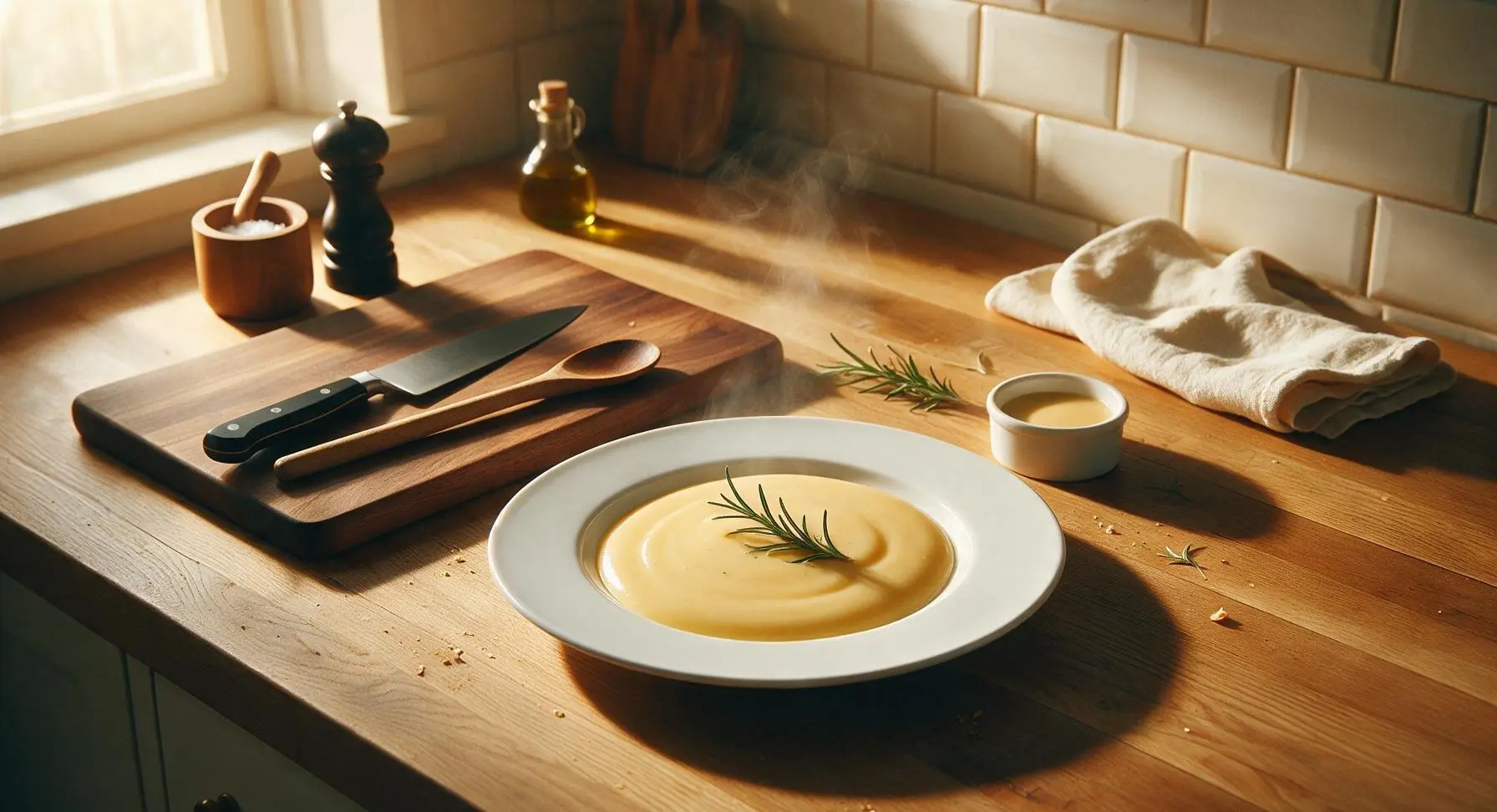
Silky pale golden velouté, one of Escoffier’s five iconic French mother sauces, delivers delicate savory depth to pair with chicken, fish, vegetables, and pasta for elegant, comforting meals.
Ingredients
Steps
Gather and Prep Ingredients
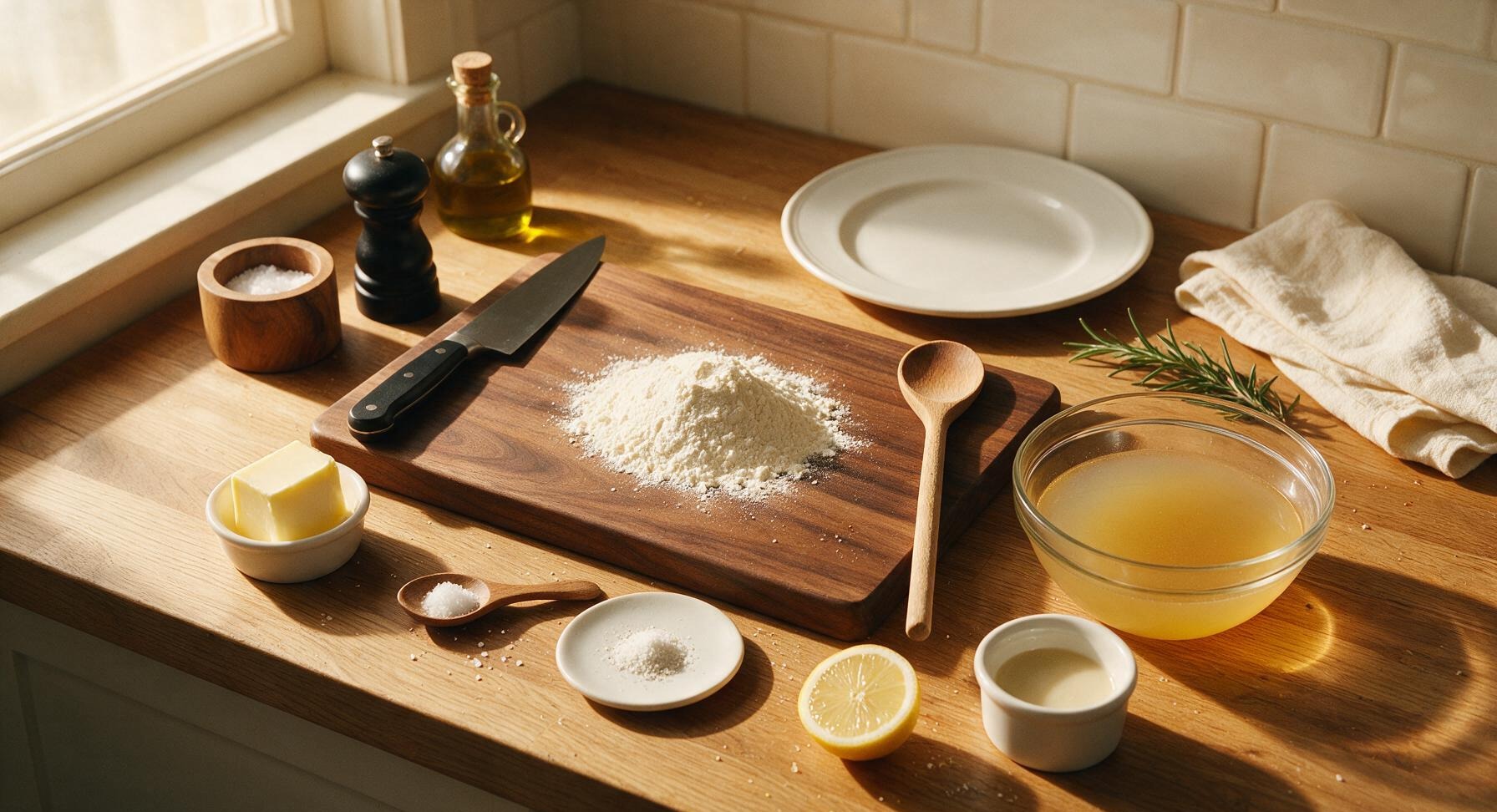
First, warm the chicken stock in a small pot over low heat to 160°F (70°C) — cold stock will cause lumps when added to the hot roux. Measure butter, flour, salt, and pepper into separate small matte white ramekins so they are ready to add without delay. Cut the butter into 1cm cubes to help it melt evenly, preventing hot browned butter spots.

Melt Butter Gently
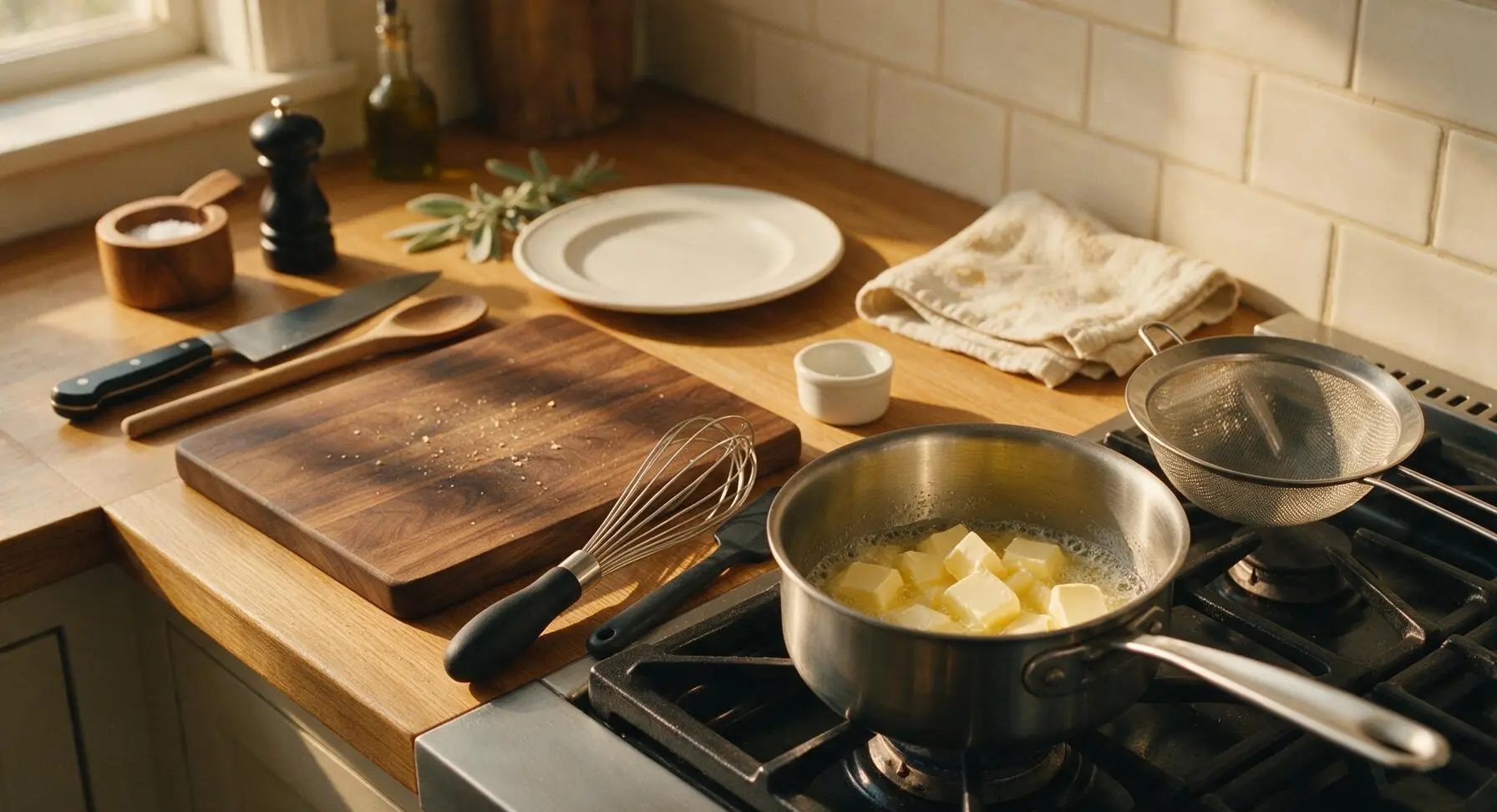
Place the 1.5L stainless steel saucepan on the front-right black cast iron gas burner over medium-low heat. Add the cubed unsalted butter, swirling the pan occasionally until fully melted and foamy but not browned, 1-2 minutes total. Do not let the butter turn golden, as this will darken the pale finished velouté.
Cook White Roux
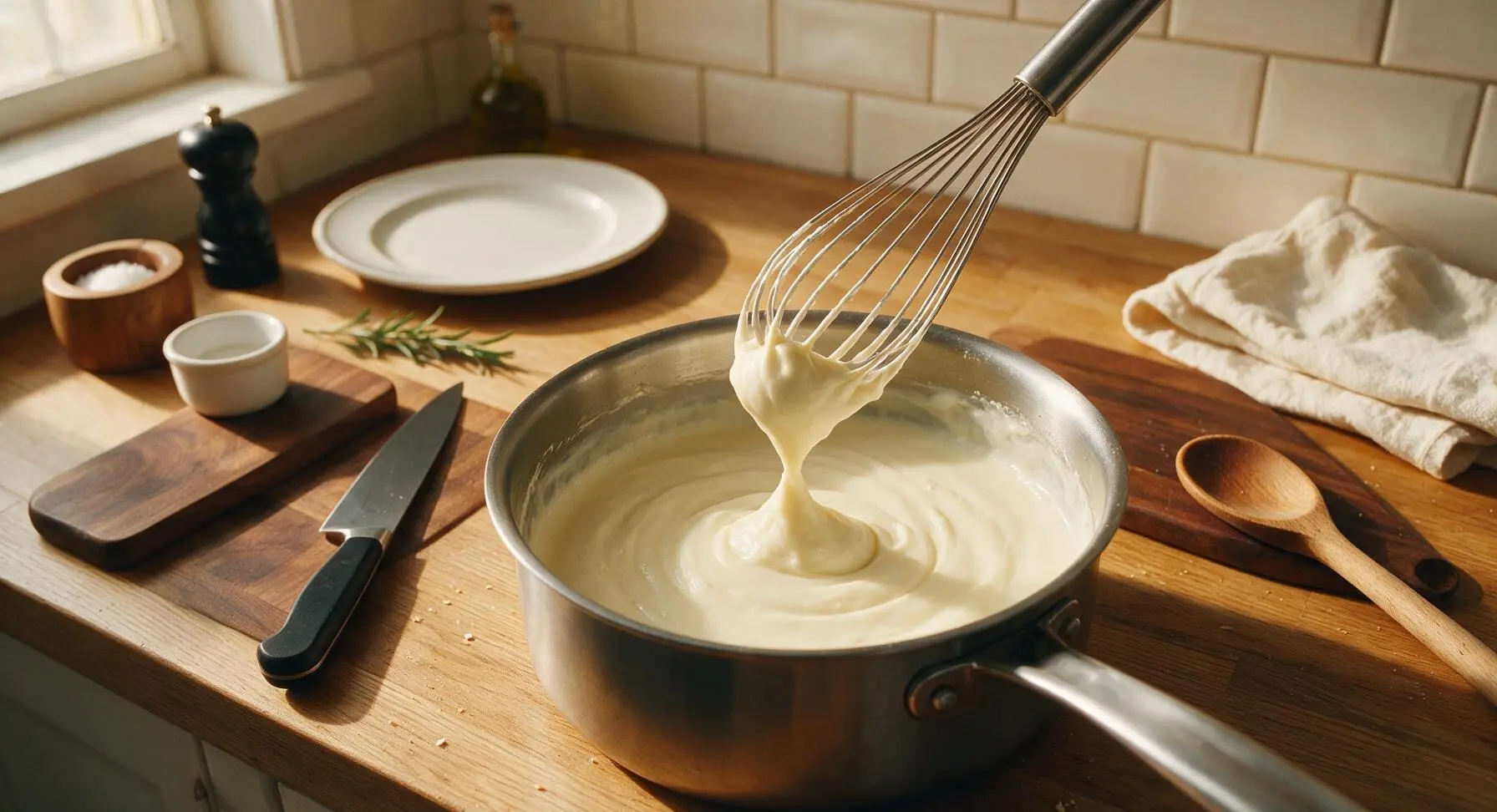
Add the measured all-purpose flour to the melted butter, whisking constantly with the stainless steel balloon whisk to form a smooth, thick paste. Cook the roux over medium-low heat for 2-3 minutes, stirring continuously, until it smells faintly nutty and turns a pale creamy off-white. Do not let it darken to blonde or brown, as this will change the sauce’s color and flavor. The roux should bubble gently but not splatter.
Whisk in Warm Stock
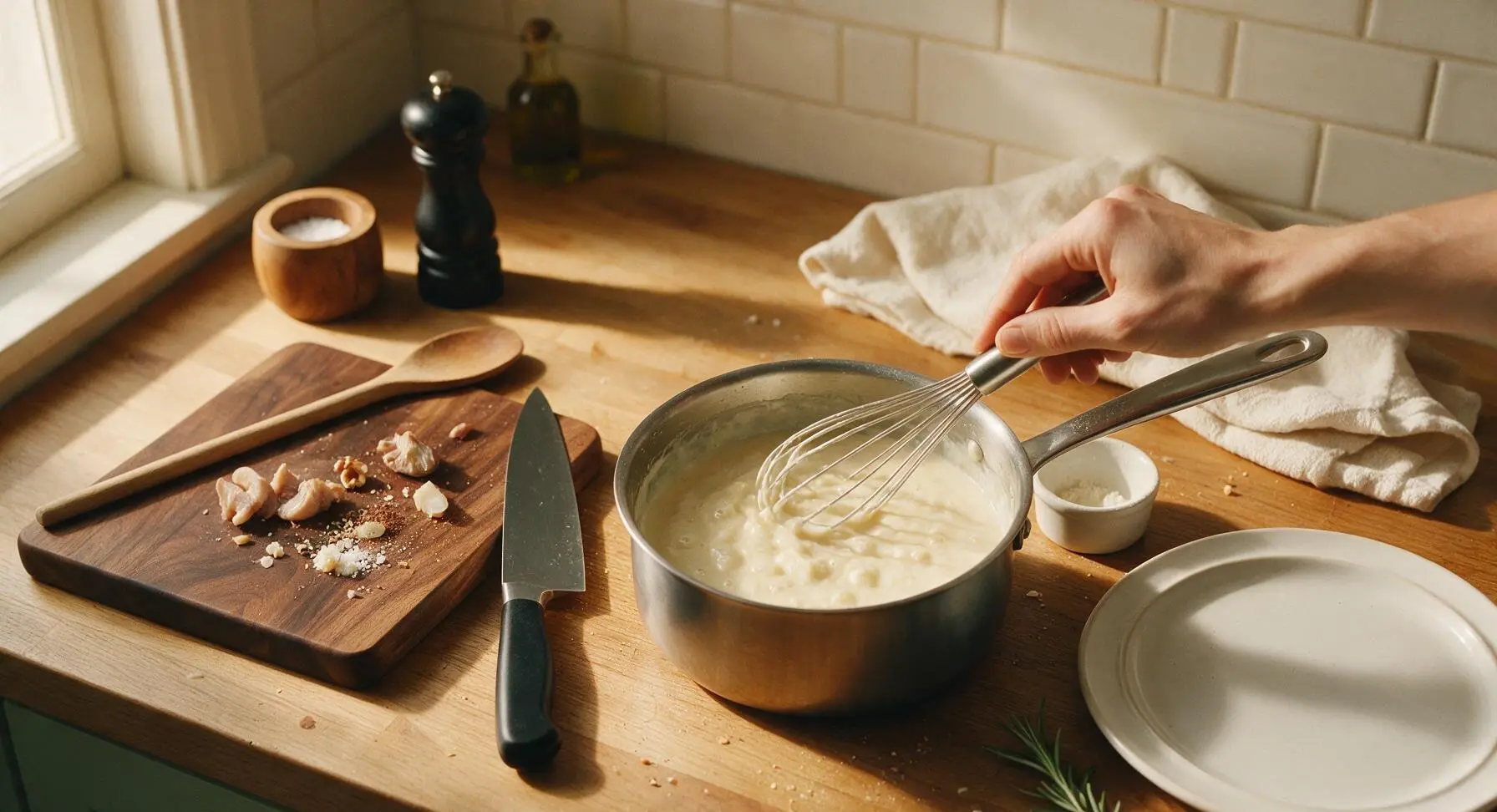
Slowly pour 1/4 cup of the warm chicken stock into the roux, whisking vigorously in small circles until the mixture forms a thick, completely smooth paste with no lumps. Continue adding stock 1/4 cup at a time, whisking constantly, until all stock is incorporated. The sauce will be very thin at first, then thicken slightly as each addition mixes in, taking 3-4 minutes total.


Simmer to Nappe Consistency
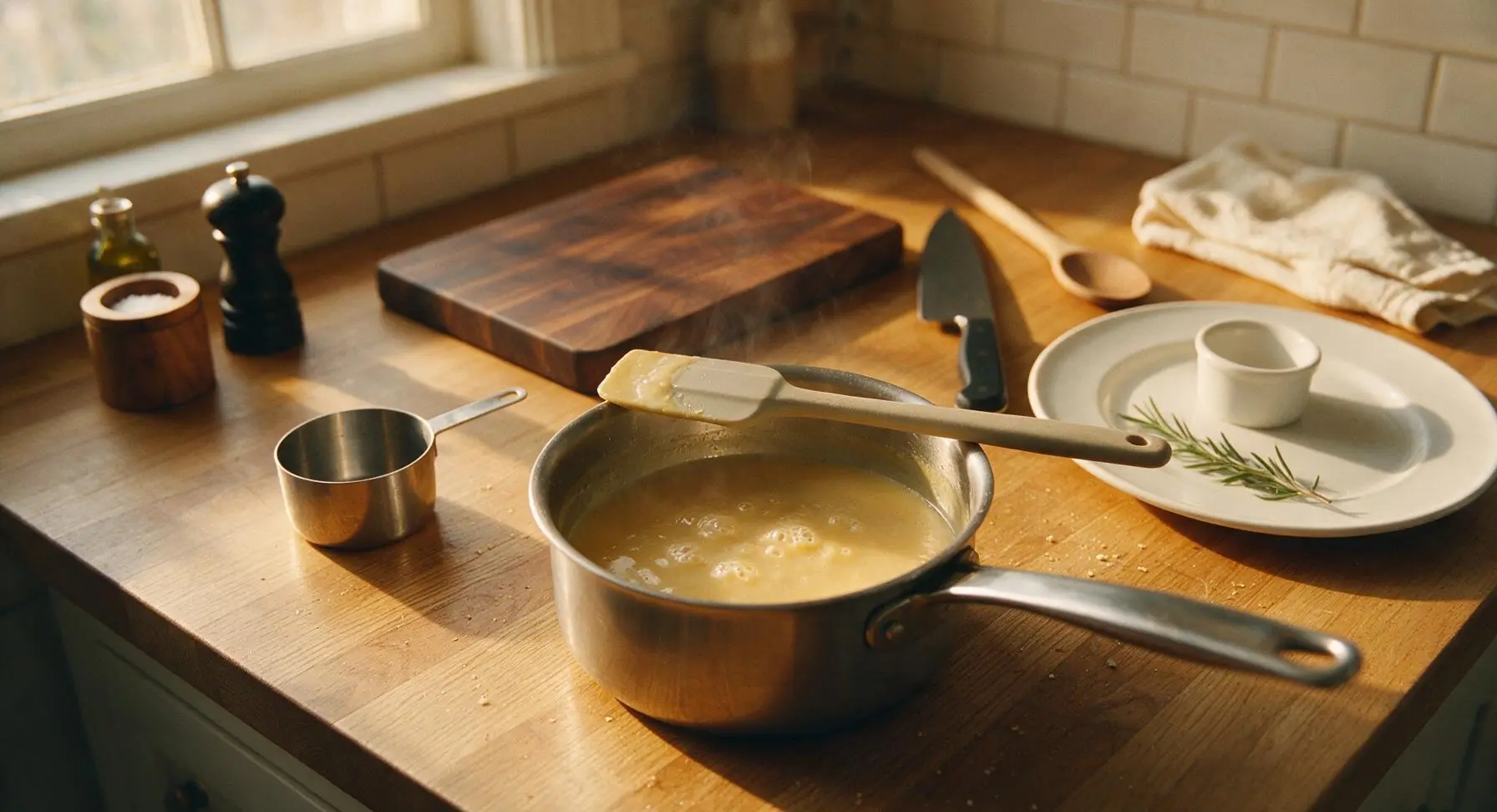
Bring the sauce to a gentle simmer (small bubbles breaking slowly at the surface, not a rolling boil) over medium-low heat, then reduce heat to low to maintain the simmer. Cook for 12-15 minutes, stirring occasionally with the silicone spatula and scraping the pan bottom and corners to prevent sticking. The sauce is done when it coats the back of a spoon thickly enough that a line drawn with a finger through the sauce on the spoon holds its shape (nappe consistency), and all raw flour taste is gone.
Season to Taste
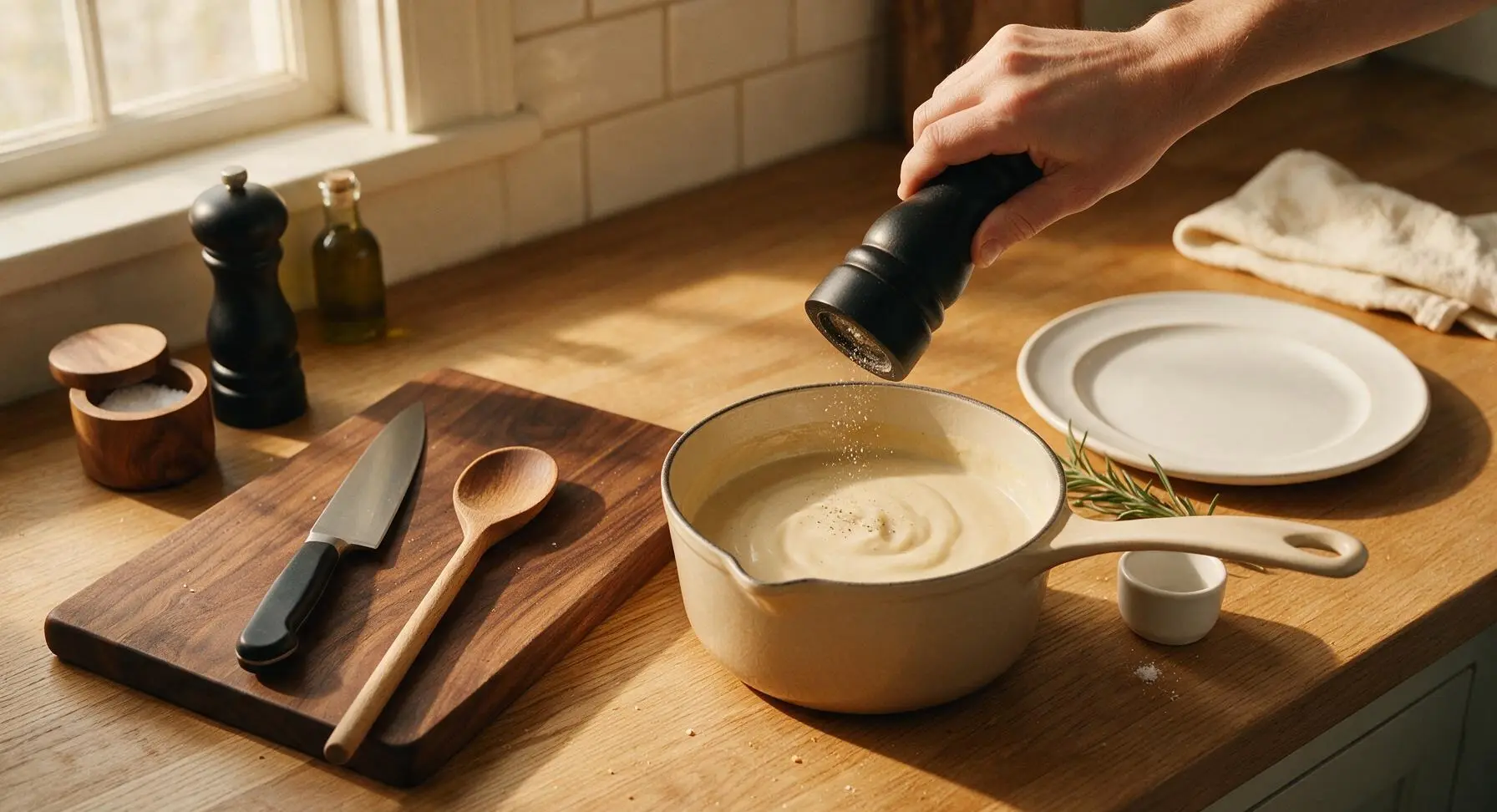
Add the measured fine sea salt and ground white pepper to the simmering sauce, stirring with the whisk to combine. If using, add 1/2 tsp fresh lemon juice to brighten the flavor, taking care not to add so much that the sauce tastes tart. Taste and adjust seasoning as needed: the sauce should taste delicately savory, not salty, with subtle warmth from the white pepper.
Strain for Silky Texture
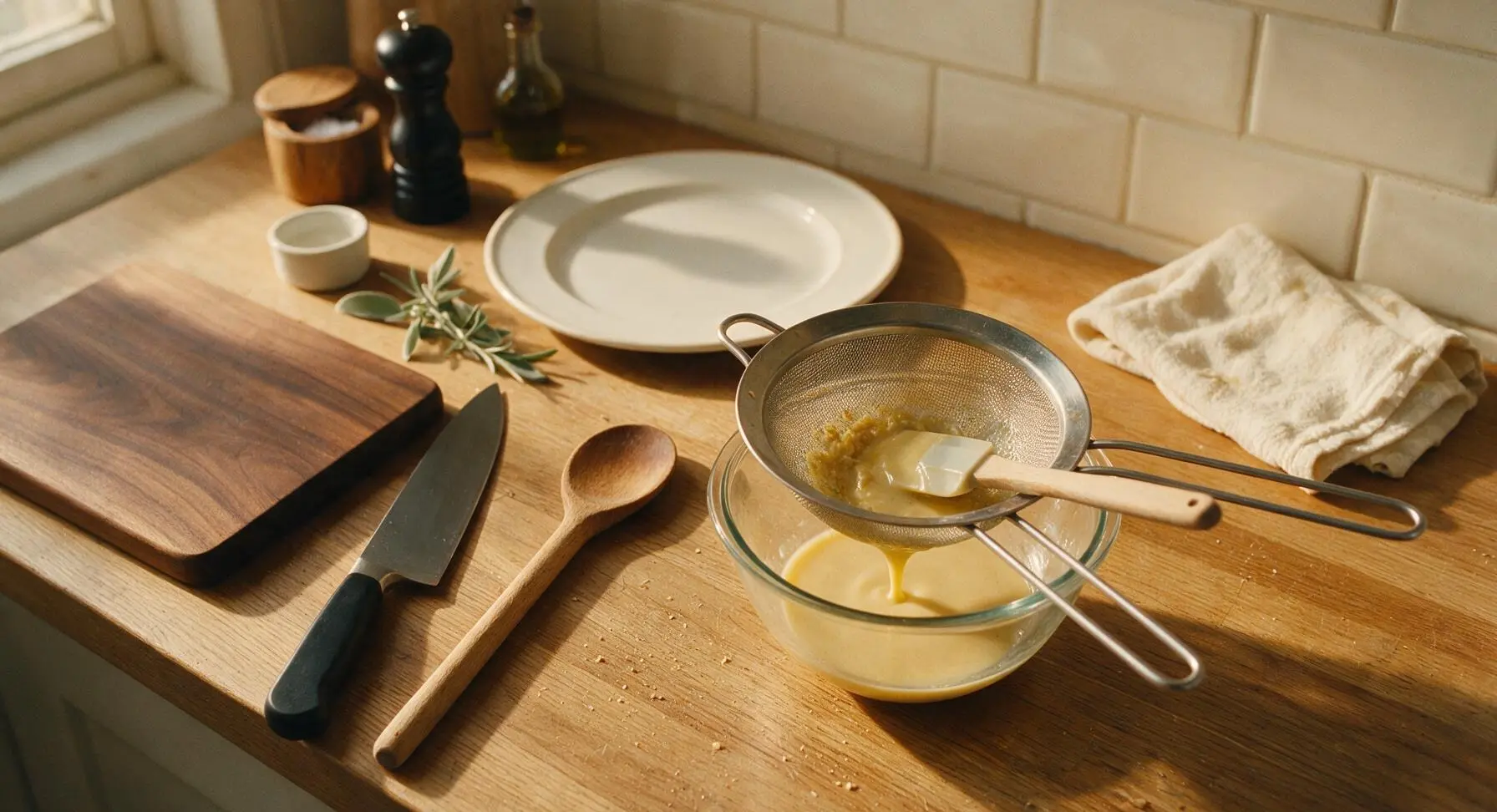
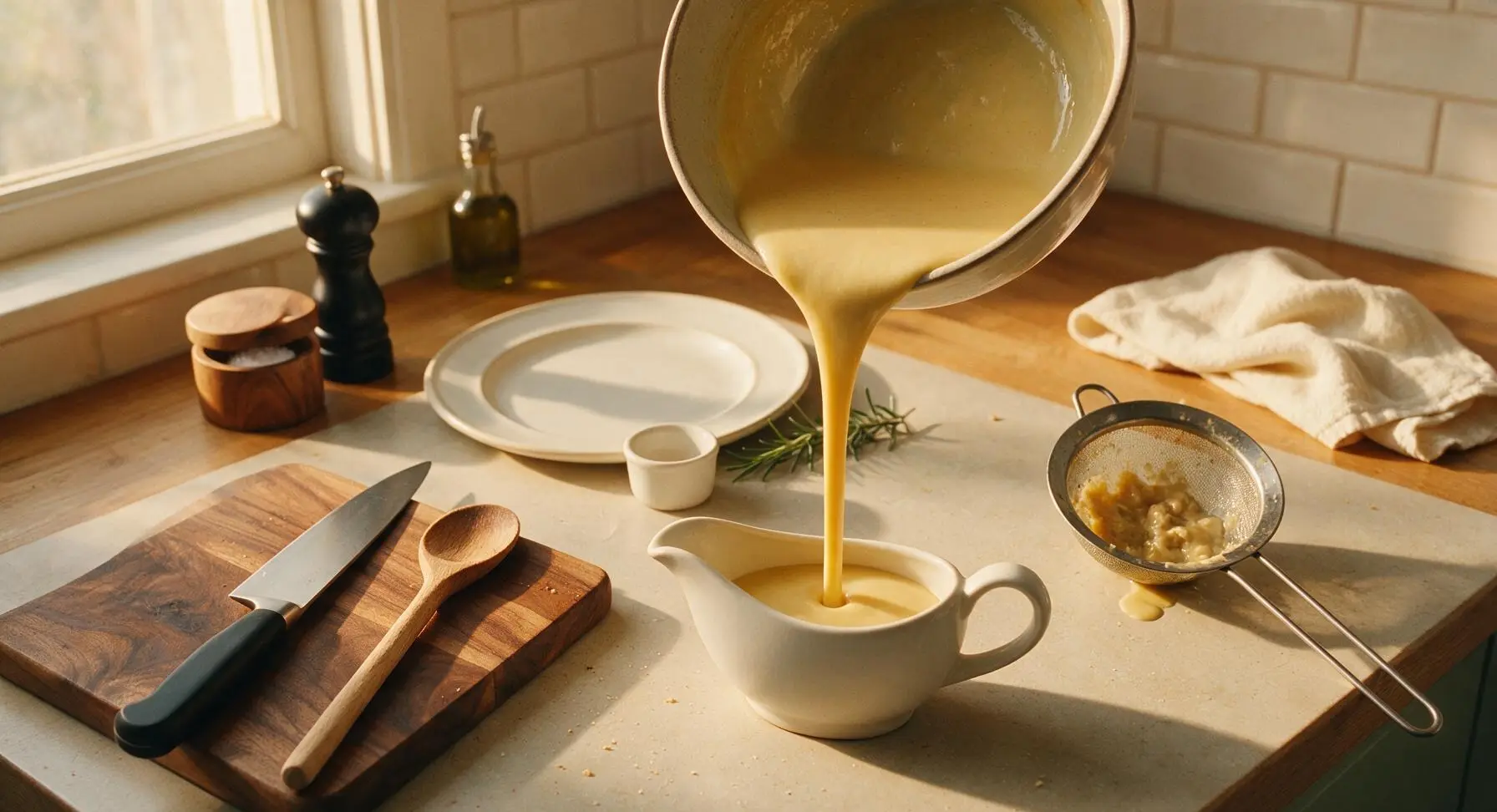
Set the fine-mesh stainless steel chinois strainer over a clean heatproof glass bowl on the counter, then pour the hot sauce through the strainer. Use the silicone spatula to gently press the sauce through the mesh, leaving any small lumps or thickened pan residue in the strainer. Do not force thick, gummy bits through the mesh, as this will create lumps in the finished sauce.
Finish and Serve
Lift the strainer from the bowl, give the strained sauce a final gentle stir with the spatula to ensure even consistency, then pour it into the matte white ceramic sauce boat for serving. If not serving immediately, press a small piece of parchment paper directly onto the sauce surface to prevent a skin from forming, and hold in a warm 140°F (60°C) place for up to 30 minutes.
Tips
2.Do not let your roux darken past a pale creamy white: darker roux has reduced thickening power and will give your velouté a tan color and deep toasted flavor that strays from the sauce’s classic delicate, light profile.
3.Use white pepper instead of black pepper for traditional velouté: black pepper leaves dark specks that disrupt the sauce’s smooth, pale golden appearance, while white pepper provides the same gentle heat without visible flecks.





OMG this velouté turned out perfectly on my first try! I used it as a base for my chicken pot pie filling for Sunday family dinner and everyone asked for seconds. Game changer to stop buying canned condensed soup, I’ll never go back! The 25 minute cook time is so doable even on a busy weeknight too.
Medium difficulty is no joke, y’all. I messed up the roux the first time because I had the heat too high and it burned, but the second batch came out SO good. Drizzled it over roasted chicken and asparagus last night and my wife said it tasted like something from a fancy French bistro. Worth the extra patience!
I made a big batch of this on Sunday to use for meal prep all week! Tossed it with roasted veggies and grilled chicken on Monday, mixed it with tuna for a creamy casserole on Tuesday, even thinned it out a little to make a soup base on Wednesday. So versatile, way better than the heavy cream-based sauces I usually make that don’t keep as well in the fridge.
Wait, is this supposed to be thinner than a béchamel? Mine came out a little thicker than I expected even after I followed the measurements exactly, did I simmer it too long? Tasted great but I want to get the texture right next time.
My kids loved this! I was worried the plain stock base would be too bland for their picky palates, so I stirred in a tiny bit of parmesan at the end and they were dipping their broccoli and chicken nuggets in it like it was fancy dip. Total win for dinner time.
Solid classic velouté recipe – I’ve been making this for 40 years and this breakdown is perfect for new cooks who get intimidated by French mother sauces. I will say, using homemade white stock instead of store bought takes this from good to unforgettable, but the store bought version works great for quick weeknight meals.
Used this to make a creamy mushroom gravy for biscuits and gravy at my weekend brunch and it was chef’s kiss. I sautéed some mushrooms and shallots first then stirred in the finished velouté, and every single guest asked for the recipe. Will absolutely be making this on repeat.
Quick question – can I use a gluten free all purpose flour blend to make the roux for this? I have celiac so regular wheat flour is a no-go, but I’ve been craving a nice creamy sauce for my baked salmon that doesn’t have that weird aftertaste a lot of GF substitutes have.
I was shocked how easy this was to pull together after work! I thought French sauces were all super fussy and required fancy equipment, but all I needed was a saucepan, whisk, and basic pantry staples. Tossed it with pasta and peas for a quick dinner that was on the table in 25 minutes flat, and it hit so hard.
I tested this recipe ahead of Thanksgiving to use for my turkey and stuffing gravy, and it’s going to be the star of the meal this year. It’s so smooth, has that deep savory flavor without being heavy, and it doesn’t get that weird lumpy texture that my old gravy recipe always gets when I reheat it. 10/10, adding this to my permanent holiday recipe rotation.