
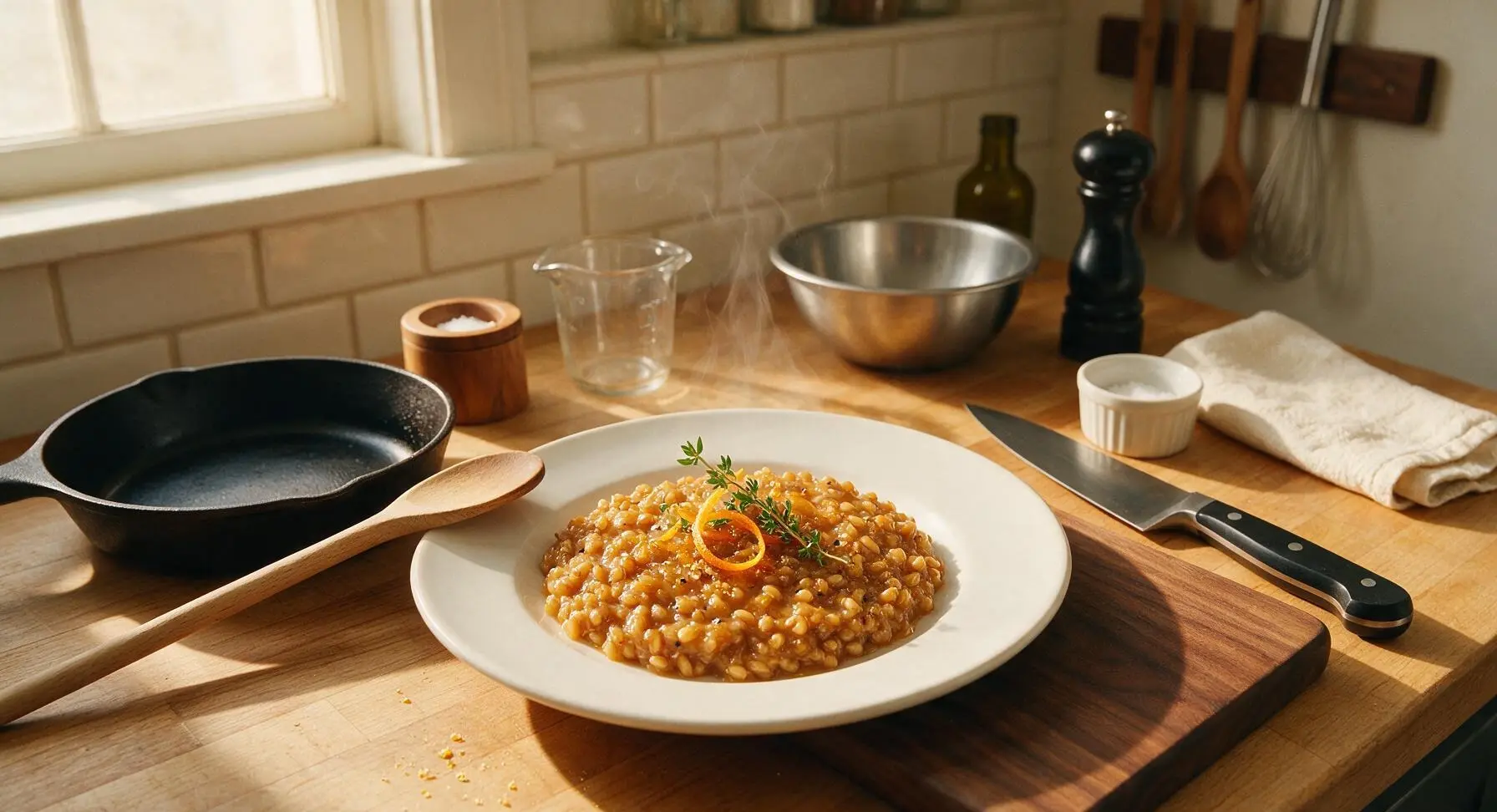
Wheat Wine

title 1
Wheat Wine
⏱️ cook time 2 hours 15 minutes
🍽️ servings 16
⚡ Difficulty medium

intro

Smooth, golden wheat wine is a rich, high-strength sipping brew with notes of toasted grain, wild honey, and subtle citrus, perfect for slow sipping on cold winter evenings.

Ingredients
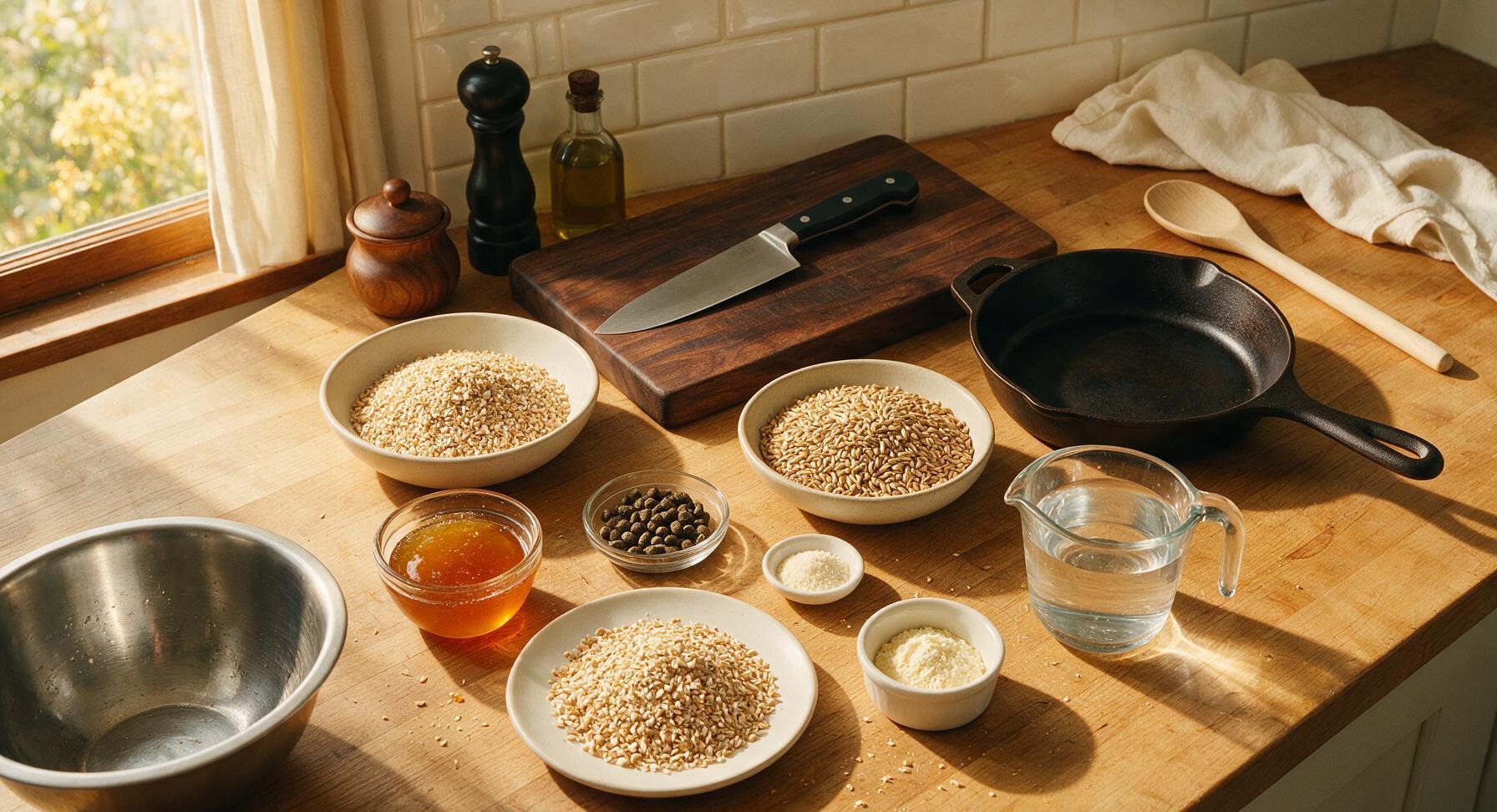
Crushed pale wheat malt 2 lbs (907g)
Crushed 2-row pale barley malt 1 lb (454g)
Raw wildflower honey 8 oz (227g)
Cascade hop pellets 0.5 oz (14g)
Dry champagne yeast 1 (5g) packet
Yeast nutrient 1 tsp (5g)
Non-chlorinated spring water 1 gallon (3.8L)

Steps

1

Sanitize Brewing Equipment

First, wash all brewing tools (brew pot, mash paddle, strainer, carboy, thermometer, auto-siphon, airlock) with warm unscented soapy water, then rinse thoroughly with cool water. Spray or soak all surfaces that will touch the brew with no-rinse food-grade sanitizer for 2 minutes, then set on the clean counter to air dry. This step is non-negotiable: wild bacteria or yeast on equipment will create off-flavors or spoil the batch entirely.
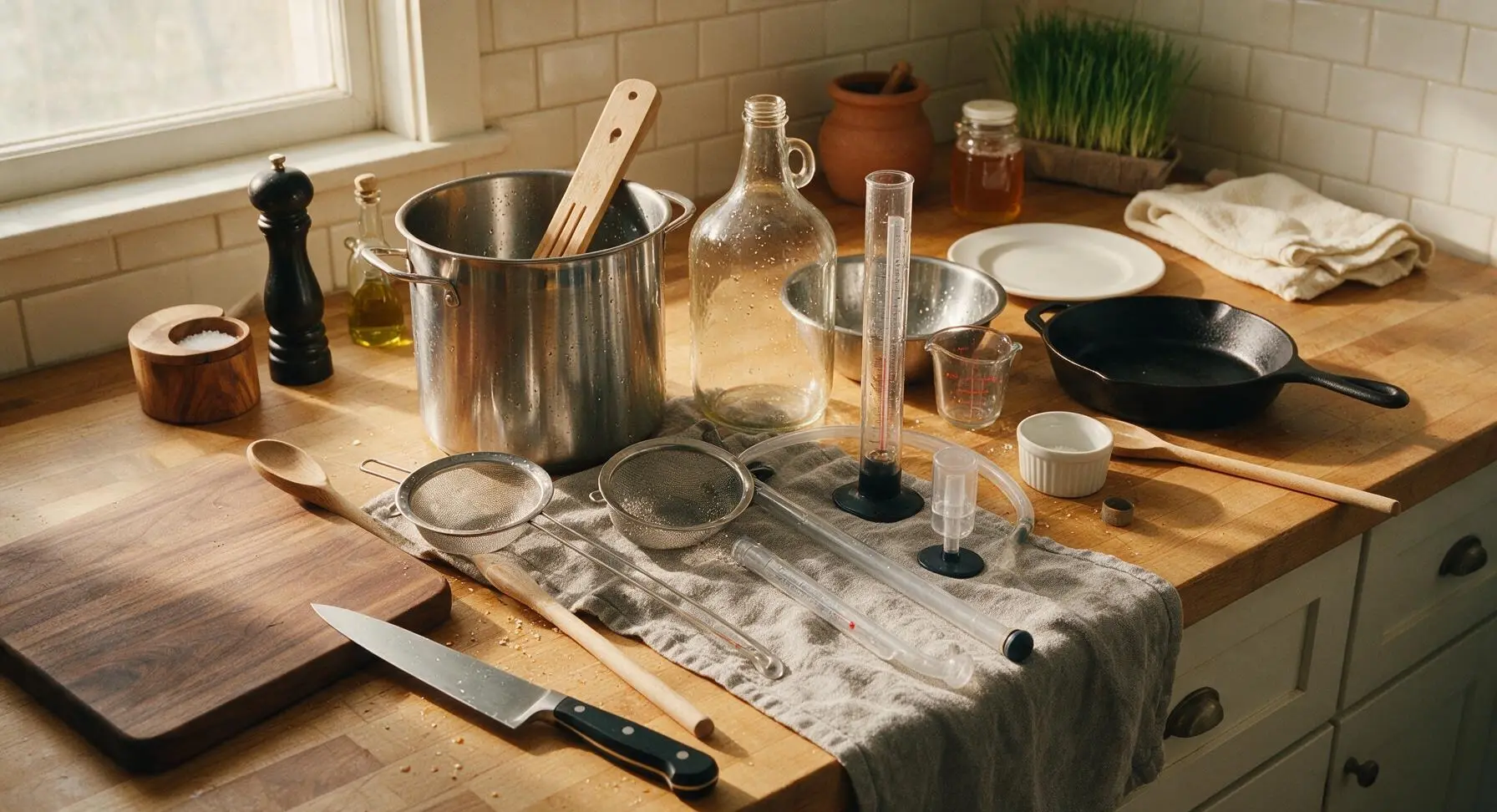
Step 1
step1:Sanitize Brewing Equipment
2

Heat Mash Water

Pour 3 quarts of non-chlorinated spring water into the 5-gallon stainless steel brew pot. Heat the water to exactly 165°F, checking temperature frequently with the digital instant-read thermometer. Do not let the water reach a rolling boil, as overly hot water will extract harsh, bitter tannins from the grain during mashing.
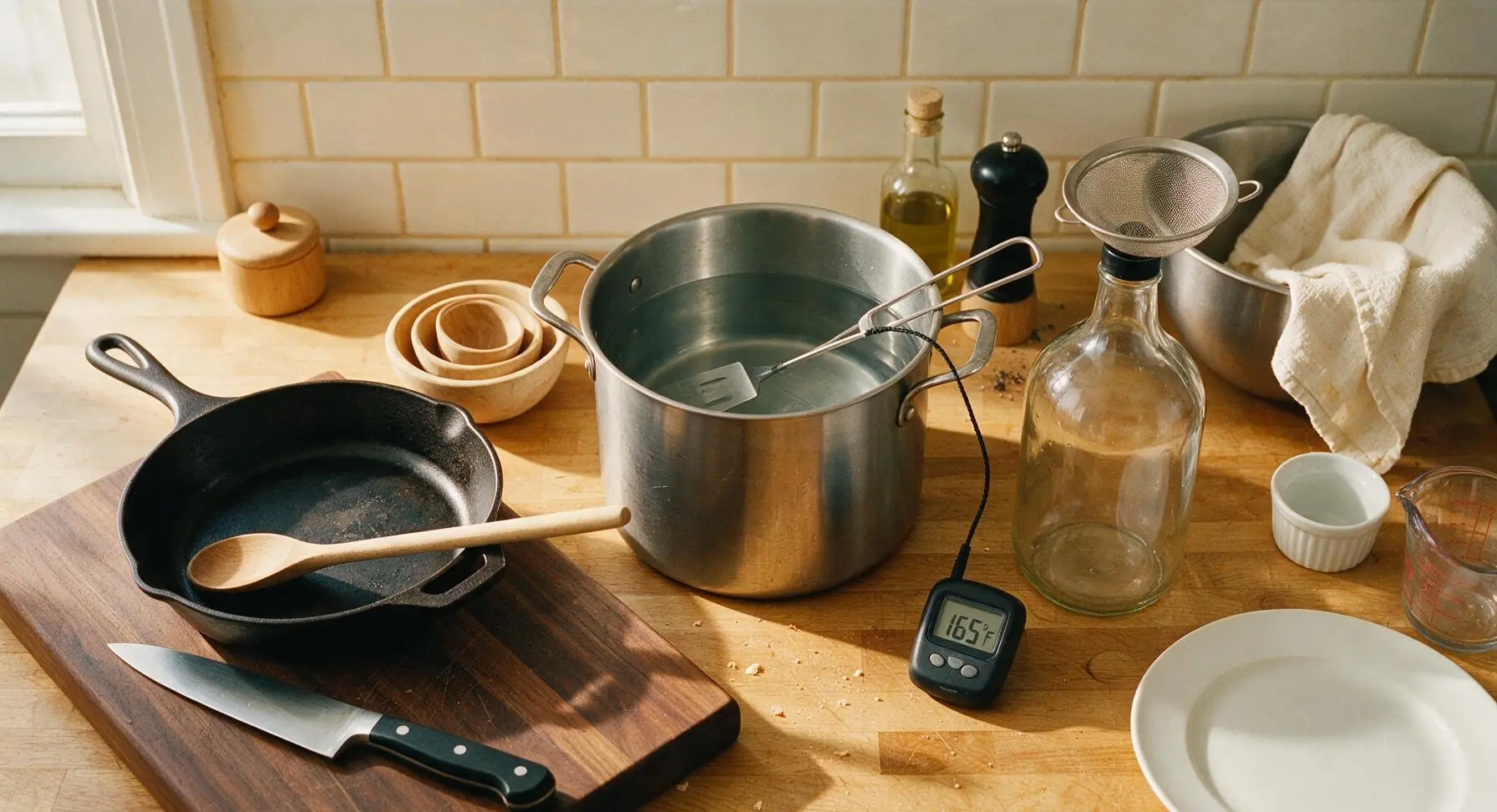
Step 2
step2:Heat Mash Water
3

Mash the Crushed Grains

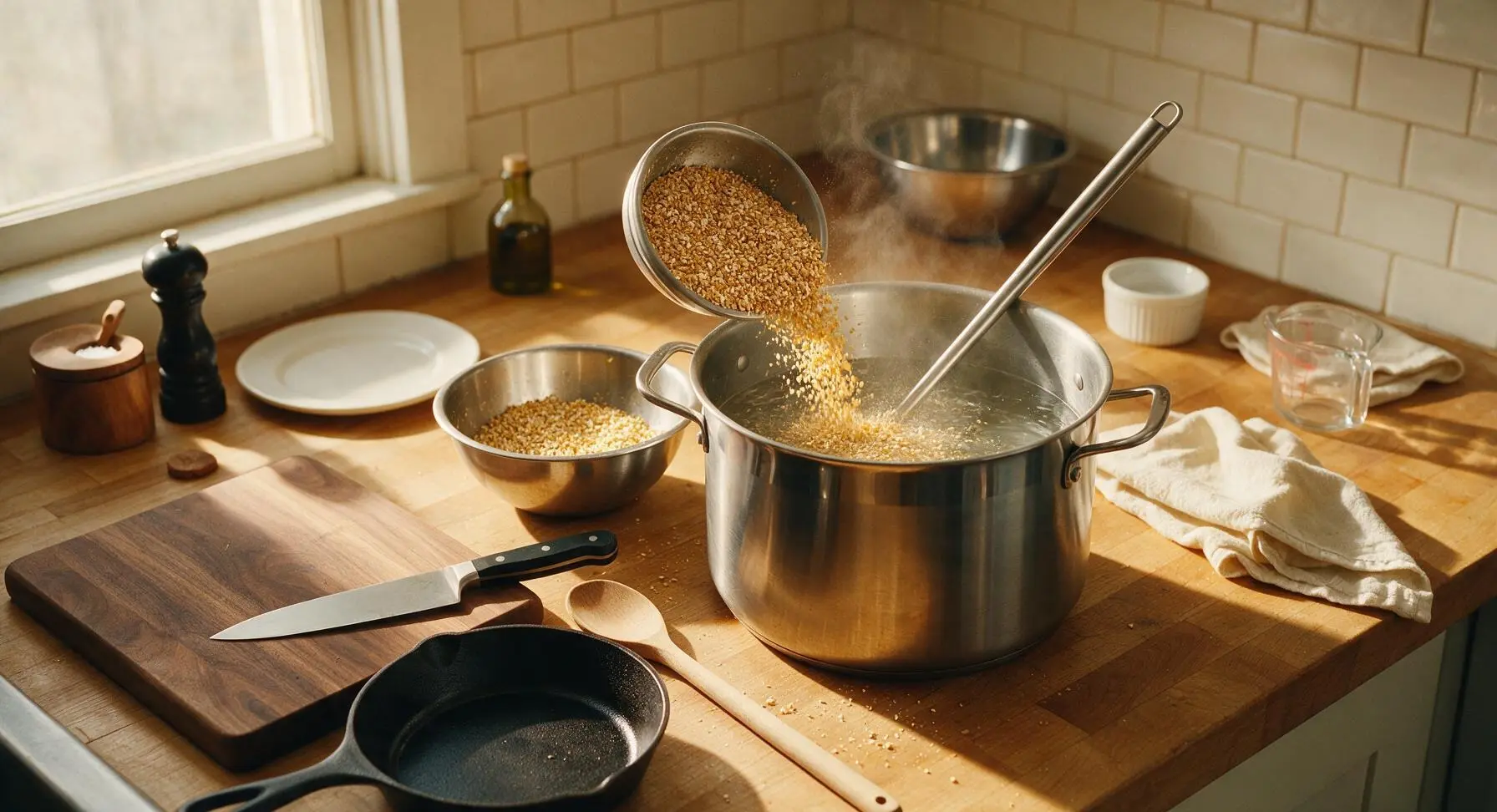
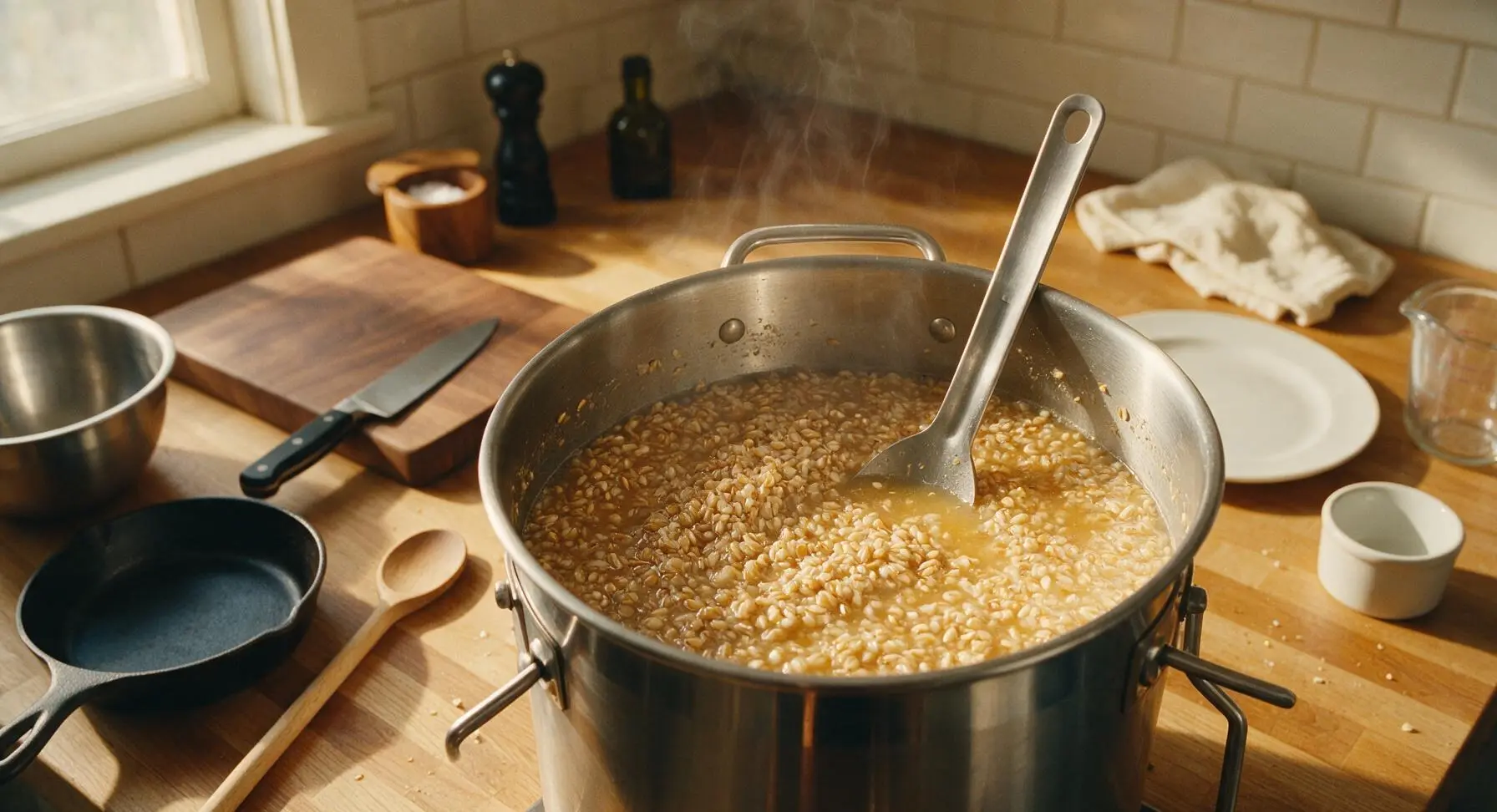
Slowly stir the crushed pale wheat malt and crushed 2-row barley malt into the heated water, using the stainless steel mash paddle to break up any dry clumps of grain. Once all grain is added, adjust the temperature to hold a steady 152°F, adding small splashes of hot or cold water as needed. Cover the pot and hold this temperature for 60 minutes, stirring every 15 minutes, until the liquid (called wort) tastes faintly sweet and smells like fresh baked bread.
Step 3
step3:Mash the Crushed Grains
Step 3
step3:Mash the Crushed Grains
4

Strain Sweet Wort

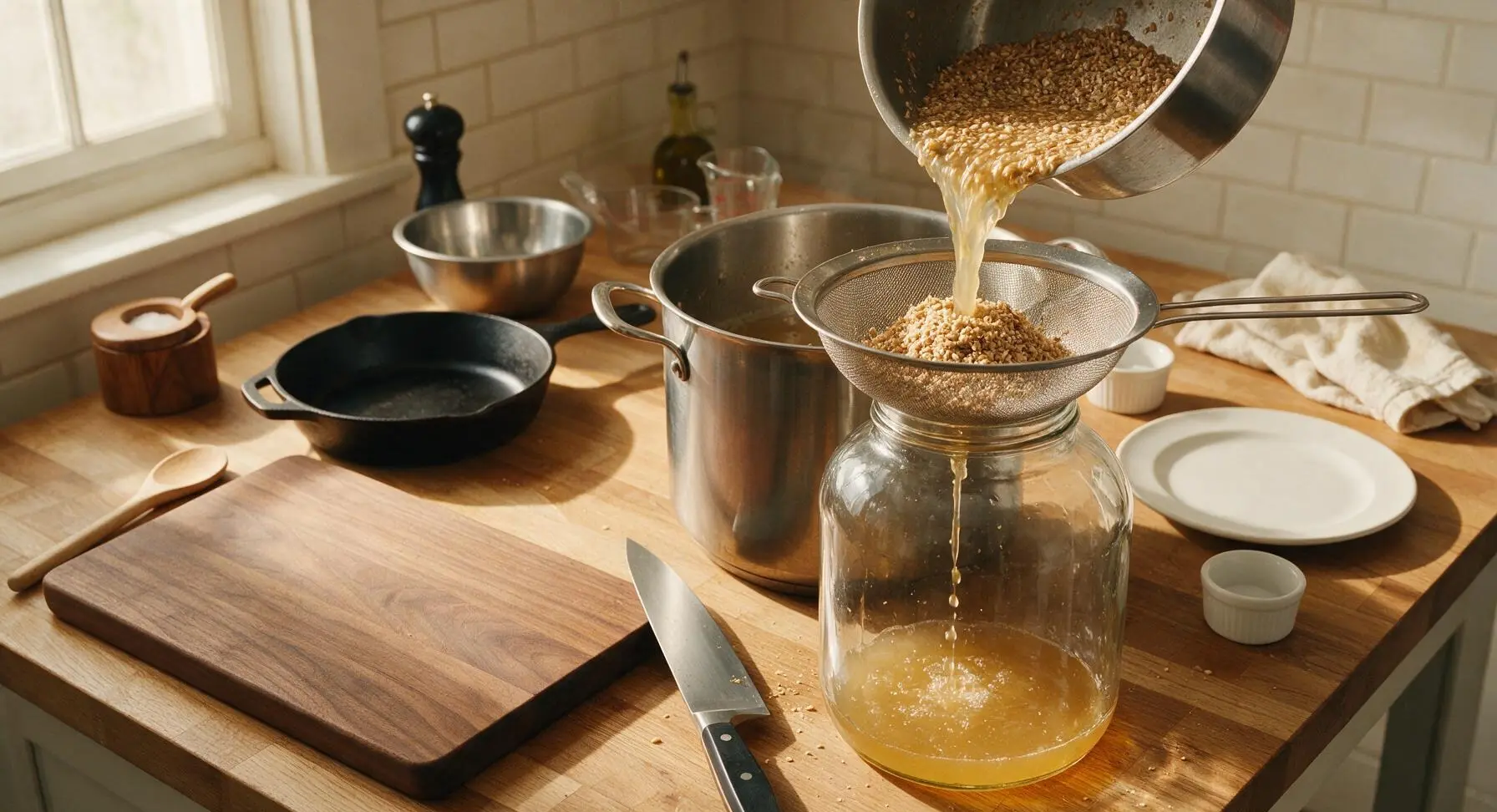
Place the fine-mesh stainless steel strainer over the neck of the glass carboy. Slowly pour the mashed grain and wort through the strainer to separate the sweet, sugary liquid from the spent grain. Pour an additional 1 quart of 170°F spring water over the grain held in the strainer to rinse off remaining trapped sugars (a process called sparging), collecting all runoff in the carboy. You should have roughly 1 gallon of pale gold, sweet-smelling wort when finished.
Step 4
step4:Strain Sweet Wort
5

Boil Wort and Add Hops

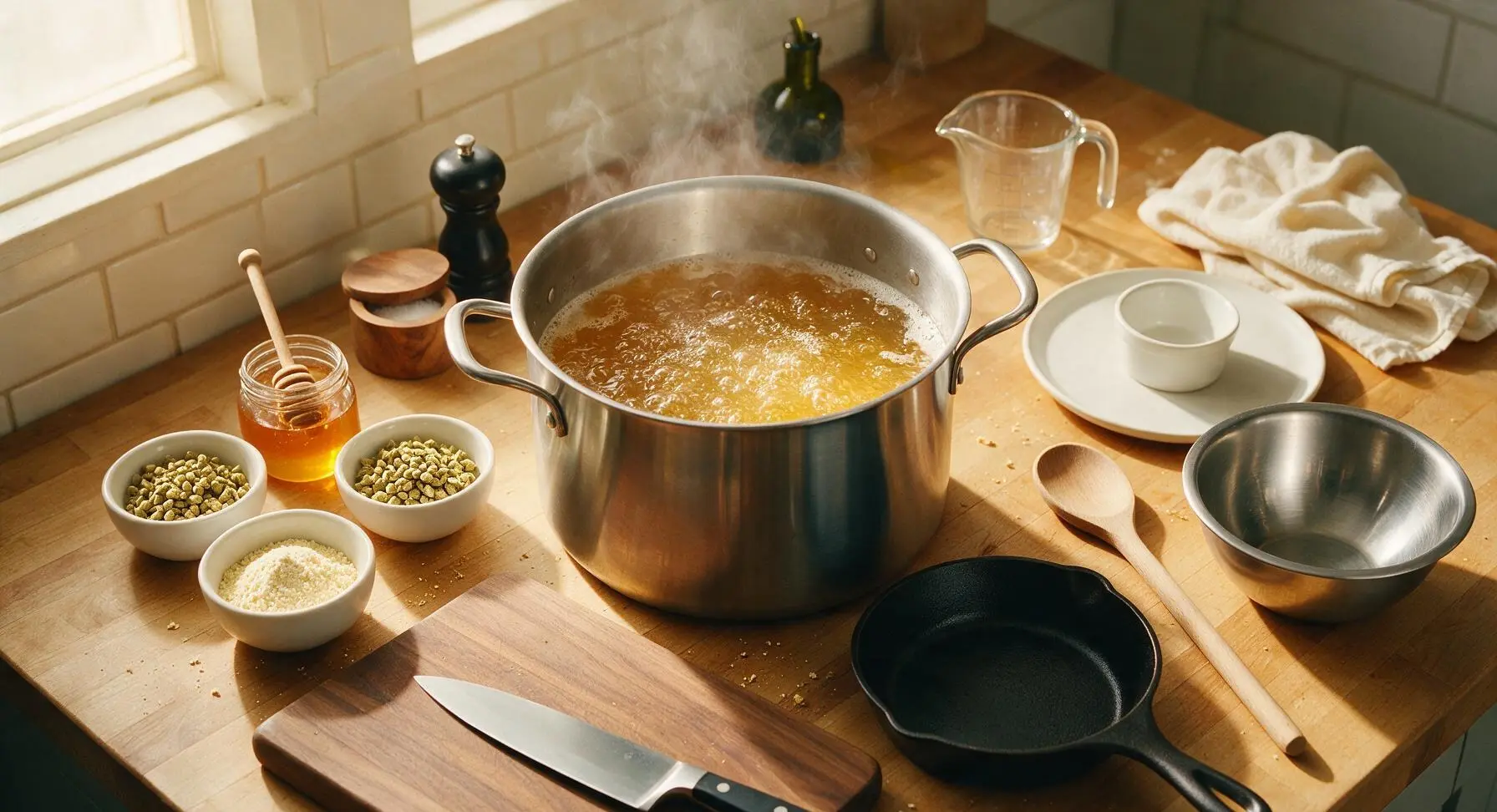
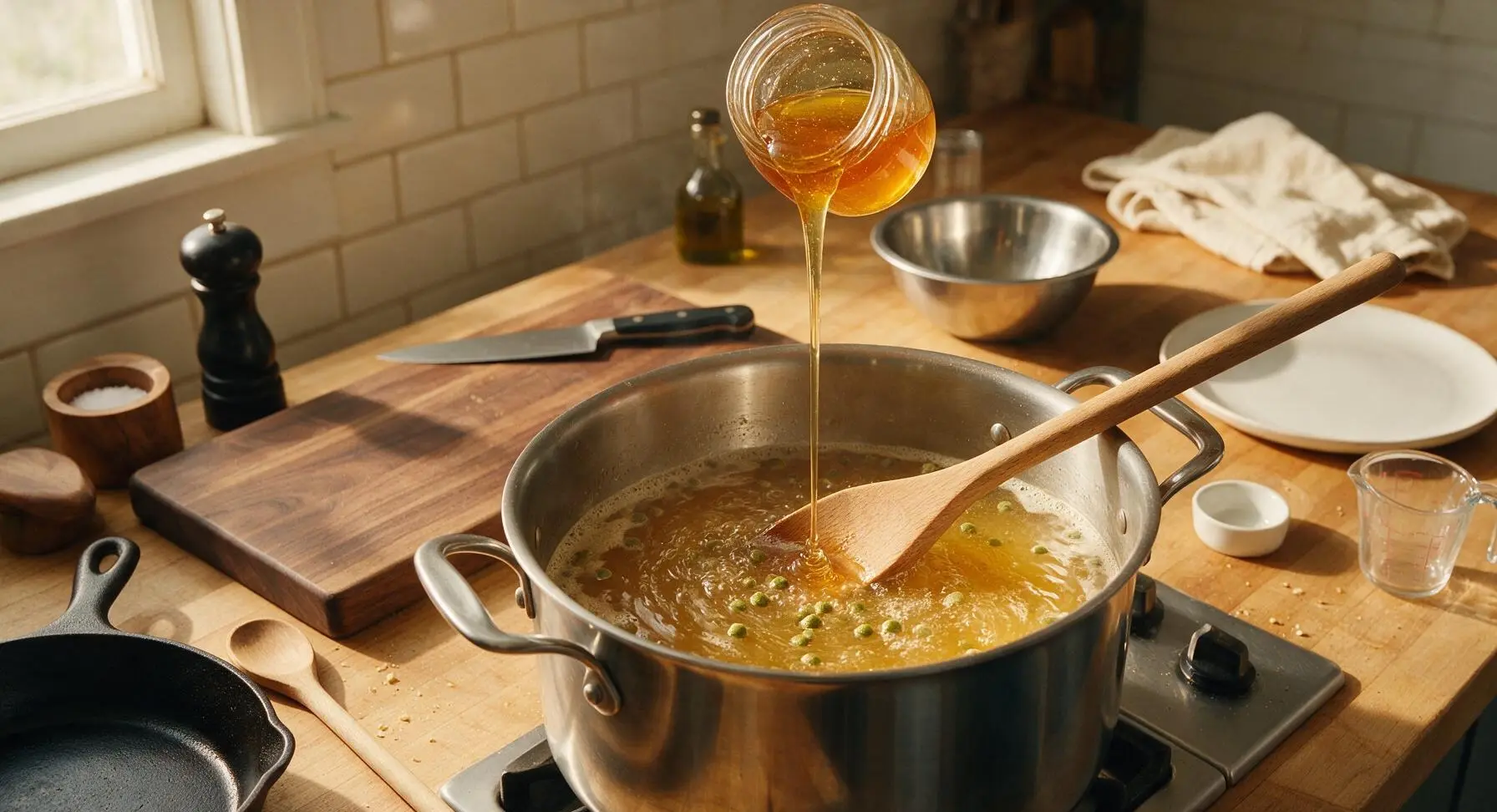
Pour the collected sweet wort back into the cleaned brew pot, and bring it to a gentle, rolling boil over medium heat. Once boiling starts, set a timer for 45 minutes. At the 30-minute mark, add 0.25 oz of Cascade hop pellets for balanced bitterness. At the 40-minute mark, stir in the wildflower honey and 1 tsp of yeast nutrient until fully dissolved. Add the remaining 0.25 oz of Cascade hops at the 44-minute mark for bright citrus aroma, then turn off the heat once the 45-minute boil is complete.
Step 5
step5:Boil Wort and Add Hops
Step 5
step5:Boil Wort and Add Hops
6

Cool Wort to Pitch Temp

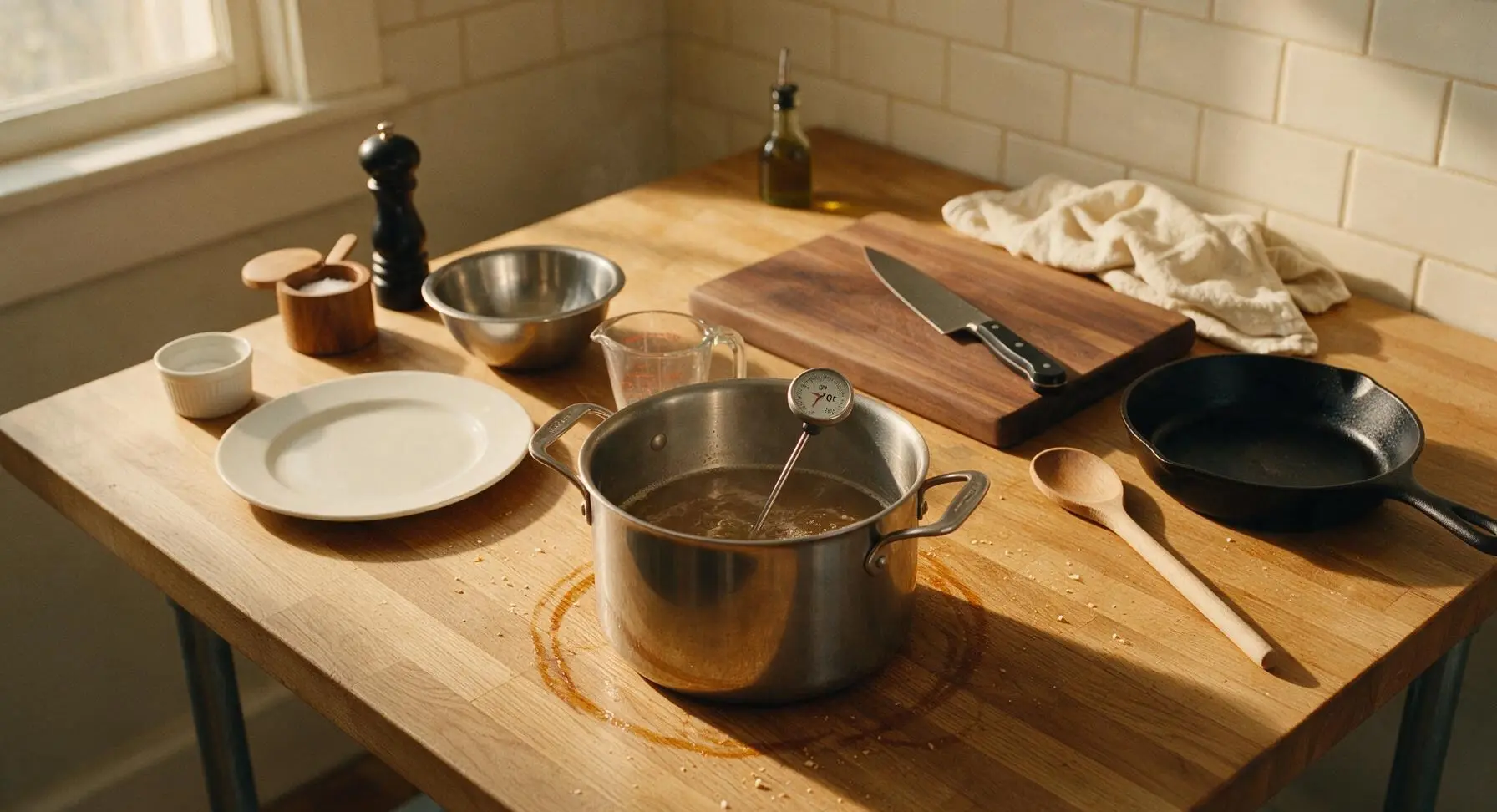
Move the covered brew pot to a clean sink filled with ice water to cool the wort quickly, until it reaches exactly 70°F as measured with the instant-read thermometer. Do not leave the pot uncovered for extended periods while the wort is between 70°F and 140°F, as this is the ideal temperature range for airborne bacteria to contaminate the brew. Rapid cooling also prevents unwanted off-flavors from developing.
Step 6
step6:Cool Wort to Pitch Temp
7

Pitch Yeast and Ferment

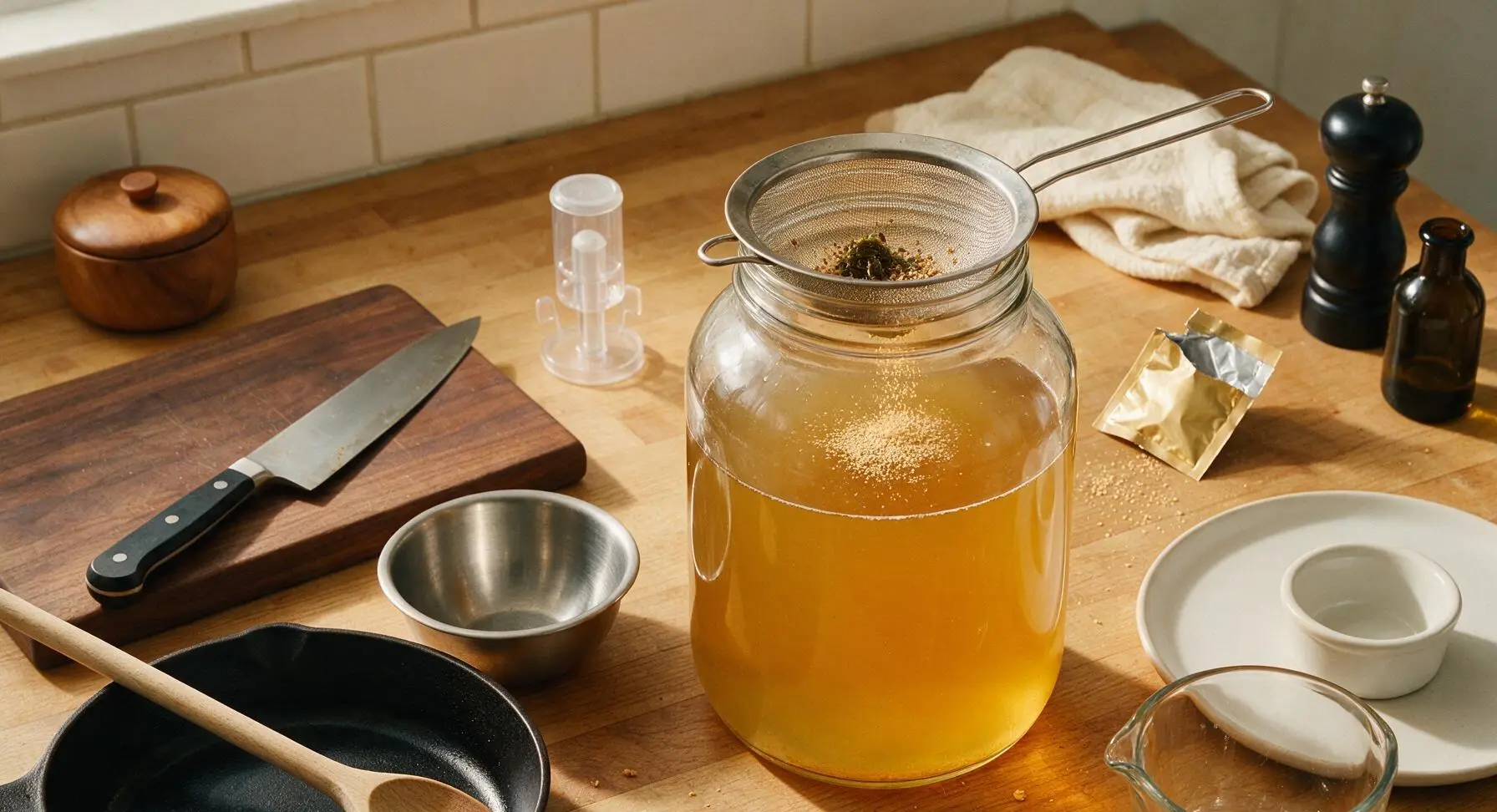
Pour the cooled wort back into the sanitized glass carboy through the fine-mesh strainer to filter out hop particles and grain debris. Sprinkle the dry champagne yeast evenly over the surface of the wort, then seal the carboy neck with the sanitized 3-piece airlock, filled halfway with sanitizer to let carbon dioxide escape while blocking outside air. Move the carboy to a dark, temperature-stable 65-70°F space for 2 weeks, until bubbling in the airlock stops completely, signaling fermentation is done.
Step 7
step7:Pitch Yeast and Ferment
8

Bottle and Age Wine

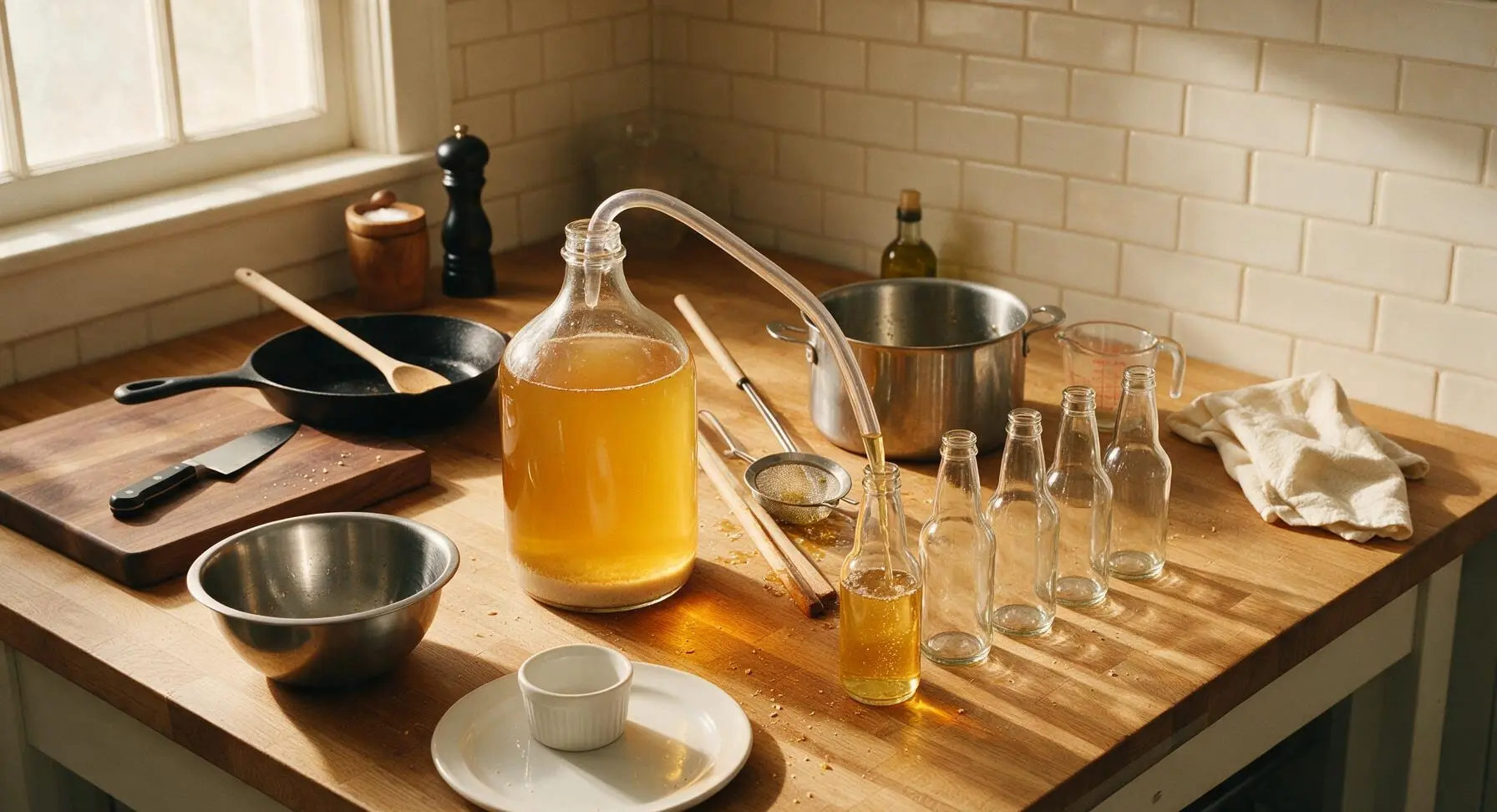
Once fermentation is complete, set up the sanitized auto-siphon to transfer the clear wheat wine off the thin layer of pale yeast sediment settled at the bottom of the carboy, into sanitized, sealable 12oz glass bottles. Cap the bottles tightly, then store them in a cool, dark place for a minimum of 4 weeks to let harsh young flavors mellow into smooth, honeyed, grainy notes. Chill to 45°F before serving for the best balance of flavor and carbonation.
Step 8
step8:Bottle and Age Wine

Tips

1.Avoid using tap water treated with chlorine or chloramine, as these compounds react with grain compounds to create harsh, medicinal, plastic-like off-flavors that cannot be removed from the finished wine; bottled spring water is the most reliable choice for home brewing.
2.Sanitize every single surface that will touch cooled wort, including siphon tubes, carboy necks, and bottle caps: even a single drop of un-sanitized water can introduce bacteria that turns the batch sour or moldy after weeks of waiting.
3.Let the bottled wheat wine age for the full 4 weeks (or up to 6 months for smoother flavor) before opening: young, freshly fermented wheat wine tastes harsh, grainy, and unbalanced, and the soft honey, toasted grain, and subtle citrus notes only develop as the brew rests.


✨ You May Also Like

Drinks & Beverages
🍜 Mexico

A bright, balanced tequila-based cocktail with zesty fresh lime, smooth orange liqueur, and a signature salt rim, perfect for warm summer sipping.

⏱️ 5 minutesDrinks & Beverages ★ 4.9
Drinks & Beverages
🍜 United States

Thick, creamy, nostalgic classic vanilla milkshake with a rich, smooth texture, topped with whipped cream and a cherry for cool, sweet refreshment.

⏱️ 5 minutesDrinks & Beverages ★ 4.7
Drinks & Beverages
🍜 United States

A bright, golden strong ale with fruity banana-clove notes, subtle hop spice, and soft carbonation, brewed in classic Trappist Tripel tradition.

⏱️ 2 hours aDrinks & Beverages ★ 4.5
Drinks & Beverages
🍜 United States

A frothy, nostalgic American soda fountain treat pairing bubbly cold root beer with creamy vanilla ice cream, perfect for cooling down at warm weather gatherings.

⏱️ 20 minuteDrinks & Beverages ★ 4.8
Drinks & Beverages
🍜 United States

Tart, funky, effervescent American Wild Ale is a complex fruity craft beer brewed with wild yeast, delivering bright, zesty notes perfect for warm-weather sipping.

⏱️ 2 hours aDrinks & Beverages ★ 4.4
Drinks & Beverages
🍜 United States

Bright, bubbly copycat of the iconic American caramel cola, balanced with citrus and warm spice, perfect for sipping ice-cold on hot days.

⏱️ 15 minuteDrinks & Beverages ★ 4.8

Wheat Wine:Frequently Asked Questions

1.What ABV can I expect from this homemade wheat wine recipe? ▾
This recipe typically lands between 10–12% ABV, thanks to the combination of fermentable grain sugars and raw wildflower honey, plus the high alcohol tolerance of dry champagne yeast. Always take a final gravity reading before bottling to confirm fermentation is complete and calculate your exact ABV for safe, consistent sipping.
2.Can I use pre-crushed malt instead of milling whole grain malt at home? ▾
Absolutely, as long as the pre-crushed pale wheat and 2-row barley malt is freshly packaged (ideally crushed within the last 2 weeks for best flavor). Pre-crushed malt loses aromatic oils and fermentable sugar content faster than whole grain, so avoid open bags that have sat on store shelves for months.
3.Why does this recipe call for dry champagne yeast instead of standard ale yeast? ▾
Dry champagne yeast has a much higher alcohol tolerance (up to 14% ABV, on average) than standard ale yeast, which usually cuts out around 7–9% ABV. It also ferments cleanly, letting toasted grain, wild honey, and subtle Cascade hop citrus shine instead of adding heavy, fruity yeast off-flavors.
4.How bitter will this wheat wine be from the Cascade hop pellets? ▾
This recipe uses Cascade pellets for subtle, bright citrus balance rather than bold bitterness, landing around 25–30 IBUs when added at the standard 60-minute boil mark. That low bitterness keeps honey and toasted wheat flavors front and center, with just enough zing to cut the rich, sweet malt profile.
5.Do I need special professional equipment to make this wheat wine at home? ▾
You don’t need fancy pro gear, but you will need a basic homebrew setup: a 5-gallon brew kettle, fermentation bucket with an airlock, auto-siphon, no-rinse sanitizer, and bottling wand. All of these items are affordable at local homebrew supply shops, and you can reuse them for every future batch you make.
6.Can I substitute regular grocery store clover honey for raw wildflower honey? ▾
You can, but you’ll lose the subtle, earthy, wild floral notes that make this wheat wine feel special. Clover honey produces a smoother, blander, more straightforward sweet flavor, so if you swap it, add 1/2 teaspoon of dried orange zest at knockout to mimic that bright, layered depth.
7.How long does fermentation take before this wheat wine is ready to bottle? ▾
Primary fermentation will take 7–10 days at a steady 65–70°F, when bubbling in the airlock slows to a stop. Wait an additional 10–14 days for secondary conditioning to let sediment settle, and confirm a stable final gravity for 3 straight days before bottling to avoid broken, gushing bottles.
8.Why is my initial fermentation moving much slower than I expected? ▾
Slow fermentation almost always traces back to one of two issues: your fermentation space is too cold (below 60°F, which makes champagne yeast go dormant), or you forgot to rehydrate dry yeast before pitching. Move the fermenter to a slightly warmer spot and give it a gentle swirl to rouse yeast if you see no activity after 48 hours.
9.Do I need to age this wheat wine after bottling, or can I drink it right away? ▾
You can technically sample it right after carbonation finishes 2 weeks post-bottling, but it will taste harsh and unbalanced. For that smooth, rich profile, age bottles in a cool, dark spot for a minimum of 3 months, and aim for 6–12 months of aging for the mellowest toasted grain and honey flavors.
10.What ratio of wheat malt to barley malt keeps this wheat wine from feeling thin? ▾
Stick to a 60/40 split of crushed pale wheat malt to 2-row pale barley malt for ideal balance. Too much wheat malt can create a thin, tart, hazy brew, while too much barley will overpower soft, bready wheat character and make the final wine taste too much like standard strong barleywine.
11.Can I add extra fruit or spice to this wheat wine without ruining the base flavor? ▾
You absolutely can, as long as you add complementary flavors in small doses. A 1/2 pound of diced dried apricot, one split vanilla bean, or a tablespoon of fresh orange zest added during secondary fermentation pairs beautifully with existing honey, citrus, and toasted grain notes without overwhelming the base.
12.Why is it so important to sanitize all my brewing equipment? ▾
Sanitizing every surface that touches your brew after the boil is non-negotiable to avoid off-flavors or spoiled batches. Wild bacteria and ambient yeast on unwashed equipment can turn your wheat wine sour, vinegary, or moldy, even if everything looks visibly clean. Use a no-rinse food-grade brewer’s sanitizer for reliable results.
13.How should I serve this homemade wheat wine for the best flavor? ▾
Serve this wheat wine slightly warmer than standard beer, around 50–55°F, in a small tulip or snifter glass to concentrate honey and toasted grain aromas. Skip the ice, which will water down the rich, high-ABV profile, and pair it with sharp aged cheddar, spiced nuts, or dark chocolate for perfect cold-weather sipping.
14.My finished wheat wine is overly sweet—what went wrong? ▾
Overly sweet wheat wine usually means your yeast stopped fermenting early before converting all available sugars, often because temperatures dropped too low mid-ferment, or you added too much extra honey late in the process. You can rouse the yeast and warm the fermenter slightly to kickstart fermentation if you catch it before bottling.
15.Can I use fresh homegrown Cascade hops instead of Cascade hop pellets? ▾
Yes, homegrown fresh Cascade hops work beautifully, but you’ll need to use 4–5 times the weight of pellet hops to get the same flavor and bitterness, since fresh hops hold lots of water and have less concentrated aromatic oils. Dry them thoroughly first to avoid introducing mold or unwanted moisture to your brew.
16.How long will properly bottled homemade wheat wine stay good in storage? ▾
When stored upright in a cool, dark spot away from direct sunlight and temperature swings, properly bottled wheat wine will stay delicious for 2–3 years. The high ABV acts as a natural preservative, and flavors will continue to mellow and develop deeper toasted honey notes for the first year before slowly fading.
17.Do I need to do a full mash for this recipe, or can I just steep the grains? ▾
You do need a proper 60-minute mash held at 152°F to convert starches in the crushed wheat and 2-row barley malt into fermentable sugar. Simple steeping (like you do for extract beer) won’t break down those grain starches fully, leading to a thin, low-alcohol brew with weak, grainy off-flavors.
18.Is it normal for this wheat wine to be slightly hazy instead of perfectly clear? ▾
A soft, golden haze is totally normal for wheat wine, even after extended aging, because wheat malt contains tiny protein particles that never fully settle out. If your brew is murky with chunky floating sediment, that means you didn’t let it condition long enough before bottling, but a light haze is no flaw at all.

Comments (18)

2 days ago

OMG I made this for our fall potluck last weekend and people were begging me for the recipe! The wheat flavor is so smooth, not bitter at all like the store-bought wheat wine I’ve tried before. I was nervous about the medium difficulty rating but the steps were way easier to follow than I expected. 10/10 will make again for Thanksgiving!

yesterday

Wait how long did you let it ferment before serving? I’m making a batch for my buddy’s birthday next month and don’t want to rush it!

2 hours ago

So glad it was a hit at your potluck! For the best smooth flavor, we recommend letting it condition for at least 2 weeks after primary fermentation finishes, but a month is even better if you can wait!

1 week ago

Tried this last night as my first ever attempt at making homemade wine, and honestly? It turned out way better than I thought it would. My wife said it tastes like the fancy stuff we paid $25 a bottle for on our anniversary trip. Only note is I wish the instructions called out how important it is to sanitize all your equipment a little more clearly upfront – I almost skipped that step!

5 days ago

That’s such a great callout, Steve! Sanitation is absolutely non-negotiable for home brewing to avoid off-flavors or spoilage – I’ll add a big highlighted note about that at the top of the recipe card. So glad your first batch turned out tasty!

3 days ago

Made a double batch for our annual tailgate and it was gone before halftime! SO good, even my teenager who turns their nose up at everything I make snuck a tiny sip to taste (don’t worry, it was just a small sample!) and said it was amazing, and my cousin who only drinks sweet cocktails loved it. Will absolutely be adding this to my regular rotation for game days.

5 days ago

Wait, has anyone tried making this with a gluten-free wheat alternative? I have celiac but miss that smooth wheat wine taste so bad, I’m curious if I can adapt this.

3 days ago

I tried it with gluten-free wheat malt last month and it turned out pretty great! Just make sure you add a little extra yeast nutrient because the GF malt doesn’t have as much nitrogen for the yeast to feed on.

2 days ago

Great question! We actually tested a GF version with sorghum and GF wheat malt for a friend with celiac and it worked beautifully – just follow Dan’s tip about extra yeast nutrient and you should be golden! We might add a GF variation note to the recipe soon.

2 weeks ago

Me and my roommates made this on a rainy Saturday and it was such a fun activity! We messed up the temperature on the mash at first but corrected it quick, and the end result was still chef’s kiss. Way cheaper than buying craft wine every weekend too.

1 week ago

Same! My roommates and I did this as a little pre-finals stress reliever and we’re already planning our second batch. Pro tip: add a little honey at the end for a subtle sweet note!

1 week ago

My grandson taught me how to use my new brew kit with this recipe, and we had the best time! The wine came out so smooth, I brought a bottle to my church potluck and all the ladies asked for the recipe. It’s nice having a fun new hobby to share with the family.

yesterday

Game changer. I’ve been making homebrew for 10 years and this wheat wine recipe is easily in my top 3 go-tos now. The balance of malt and subtle fruit notes is perfect, I don’t think I’ll ever buy commercial wheat wine again. Cook/mash time was exactly as written too, no guesswork.

2 hours ago

Wait did you add any extra hops? I love a little hoppy kick to my wheat wines and was wondering if a half ounce of cascade would mess with the balance.

30 minutes ago

Great question! A half ounce of Cascade added at the very end of the boil will give you that nice subtle citrusy hop kick without throwing off the smooth malt balance we love in this recipe. Just don’t add them too early or it’ll get too bitter!

5 days ago

Made this for our beach bonfire last weekend and it was the perfect sip for watching the sunset! It’s light enough for hot Florida weather but still has that rich wheat flavor I crave. Only thing is I wish I’d made more – we polished off 3 bottles in 2 hours!

3 days ago

Totally feel you on making more! I made a batch for a beach trip last month and had to run home to grab the backup bottles I hid from my roommates because it went so fast.

2 weeks ago

I run a small pop-up dinner spot in Logan Square and tested this recipe for our fall tasting menu. Our guests raved about it so much we’re keeping it on as a permanent menu offering! It pairs perfectly with roasted chicken and creamy pasta dishes.

30 minutes ago

Uh oh, I think I messed up my batch? I followed the steps exactly but my airlock isn’t bubbling after 24 hours. Did I kill my yeast? I’m so sad I was really looking forward to this.

5 minutes ago

Don’t panic yet! Airlocks don’t always bubble if there’s a tiny leak around the bucket lid – as long as you sanitized everything and pitched the yeast at the right temp, it’s probably fermenting just fine. Wait another 12 hours and check for bubbles on top of the wort.

just now

Bob is totally right! A lack of airlock bubbles is almost always a seal issue, not dead yeast. Make sure your lid is snapped on tight and the airlock is seated properly, and check for a foamy krausen layer on top of the liquid in a day or two – that’s the real sign fermentation is happening. You’ve got this!

1 week ago

I love making a big batch of this at the start of every month to have on hand for last minute dinner guests and girl’s nights. It stores so well in those sealed swing top bottles, and people always think I bought it from a fancy winery. Way more budget friendly than picking up a bottle every time I have people over!

5 days ago

Love that you’re prepping batches ahead! You’re totally right that it keeps beautifully in sealed swing-top bottles for up to 6 months stored in a cool, dark place – if it lasts that long, of course!

2 days ago

My husband is a huge craft beer and wine fan, so I made this for his birthday and he was blown away. He kept saying it tasted better than the $40 bottle of wheat wine he’d been saving for a special occasion. Total win for wife points, will definitely make again.

3 days ago

Wait, the cook time says 2 hours 15 minutes, but that doesn’t include fermentation time right? I almost planned to make this the day before my party and then realized there’s no way it’s done in 2 hours total. Might be good to note that upfront for new brewers like me!

2 days ago

Oh girl, I made that exact same mistake my first time making wine! I thought it was like making iced tea or something, nope, you gotta wait weeks for it to be ready. Worth the wait though!

yesterday

That’s such an important note – thank you for pointing that out! The 2 hour 15 minute time listed is for the active cooking/mashing step on brew day, but total time from start to drinking is about 4 weeks when you account for fermentation and conditioning. I’ll make that way clearer at the top of the recipe so no one else plans too tight!

yesterday

I added a handful of fresh blackberries from my garden to the secondary ferment and it is CHEF’S KISS. The sweet berry flavor pairs so well with the smooth wheat base, I’m already picking more blackberries to make another batch this weekend.

2 hours ago

Oh that sounds amazing! I’ve done peach additions before but blackberry is next on my list. Did you freeze the berries first to break down the cell walls before adding them?

1 week ago

Made this for my son’s college graduation party and it was a huge hit with all the family. Even my 82-year-old dad who only drinks his homemade dandelion wine said this was top tier. The medium difficulty rating is fair, you just have to pay attention to the mash temps and you’ll be fine.

2 weeks ago

I’ve tried 3 different homemade wheat wine recipes in the last year and this one is by far the best. The instructions are clear, the ingredient list isn’t full of weird hard-to-find stuff, and the end result is smooth, well-balanced, and doesn’t give you that cheap homemade wine headache the next day. Win win.

2 weeks ago

That’s the highest compliment, thank you! We worked really hard to test this recipe over and over to get the balance just right and avoid those harsh off-flavors that cause those post-sipping headaches. So glad it’s your new go-to!

2 hours ago

Wait, can I make this without any special brewing equipment? I don’t have a mash tun or a big brew kettle, just regular kitchen pots and some big glass jugs I got from the thrift store. Would that work or do I need to drop a bunch of money on gear first?

30 minutes ago

You can totally make it with regular kitchen pots! I did my first 3 batches with a big stock pot from Walmart and food-grade plastic buckets from the hardware store before I bought fancy gear. Just make sure everything is super sanitized and you can hold the mash temp steady, that’s all that matters.

5 minutes ago

LoneStarBrew is exactly right! You don’t need fancy equipment to make great homemade wine – a large stock pot, a fine mesh strainer, and food-safe fermenting buckets or jugs work perfectly for this recipe. We have a whole post on budget homebrew gear for beginners linked in the recipe notes if you want more tips!

just now

Brought this to my neighborhood block party last weekend and I lost count of how many people asked me for the recipe! I added a little cinnamon and orange peel during the boil like my grandma used to do with her wheat wine, and it gave it that perfect cozy fall vibe. 10/10, will be making this for every neighborhood gathering from now on.

just now

Wait I was at that party! That wine was incredible, I’ve been scrolling recipes for an hour trying to find the one you brought – so glad I stumbled on this comment. Adding cinnamon and orange peel is non-negotiable when I make my batch this weekend!



