
Wheat Wine Ale
intro
A rich, high-gravity wheat wine ale with bready wheat notes, honeyed malt sweetness, and subtle fruity depth, smooth enough to sip slowly on cold winter evenings.
Ingredients
Steps
Sanitize Brewing Gear
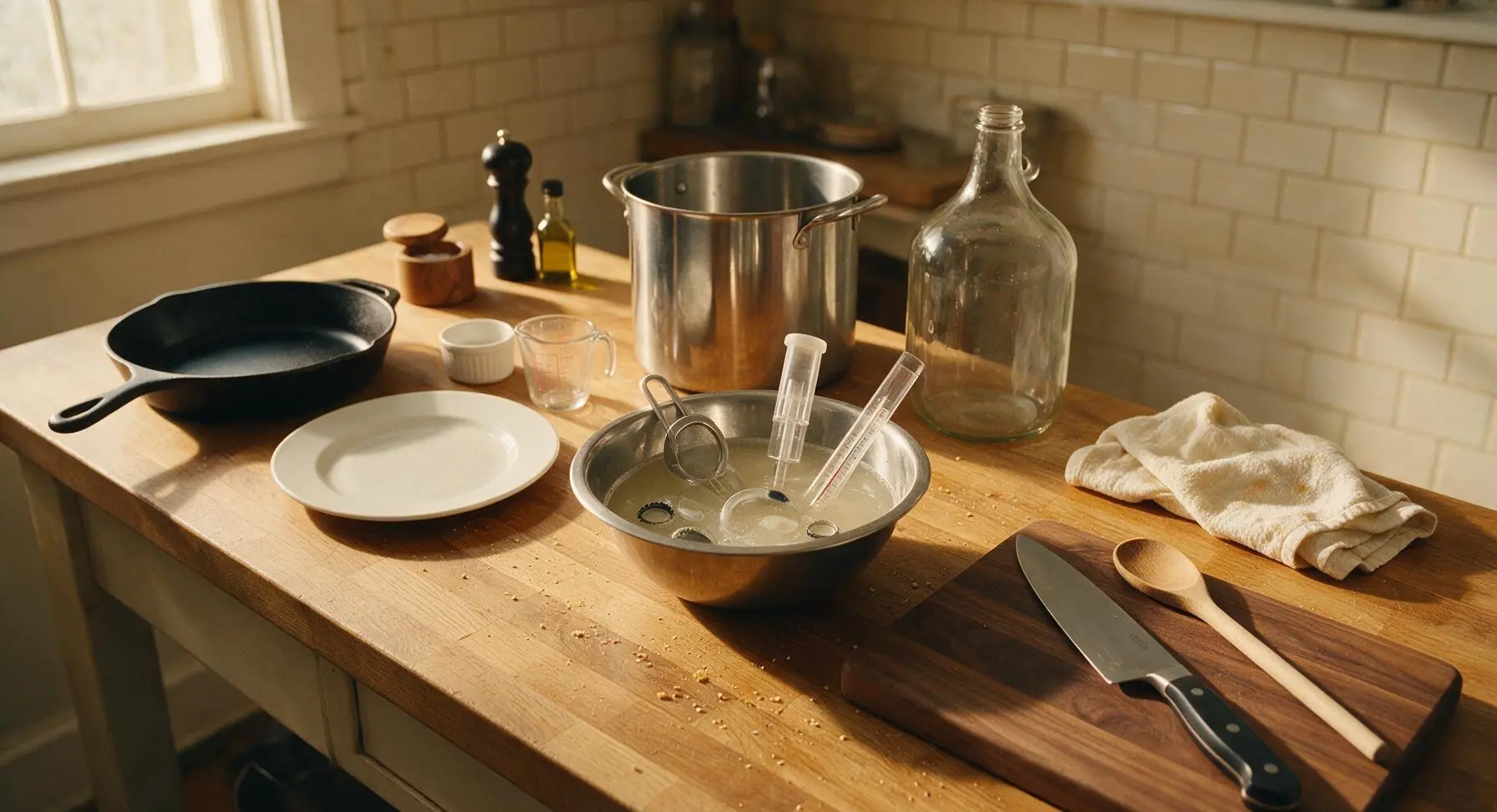
Mix no-rinse brewing sanitizer according to package directions in the large stainless steel mixing bowl. Submerge all tools that will contact cooled wort (auto-siphon, strainer, hydrometer, hydrometer jar, carboy stopper, airlock, bottle caps) for 2 full minutes. Wipe the interior of the glass carboy and the brew kettle thermometer probe with sanitizer solution. Ensure no visible dirt or residue remains on any surface, as trace bacteria will spoil the high-sugar wort.
Mash the Crushed Grains
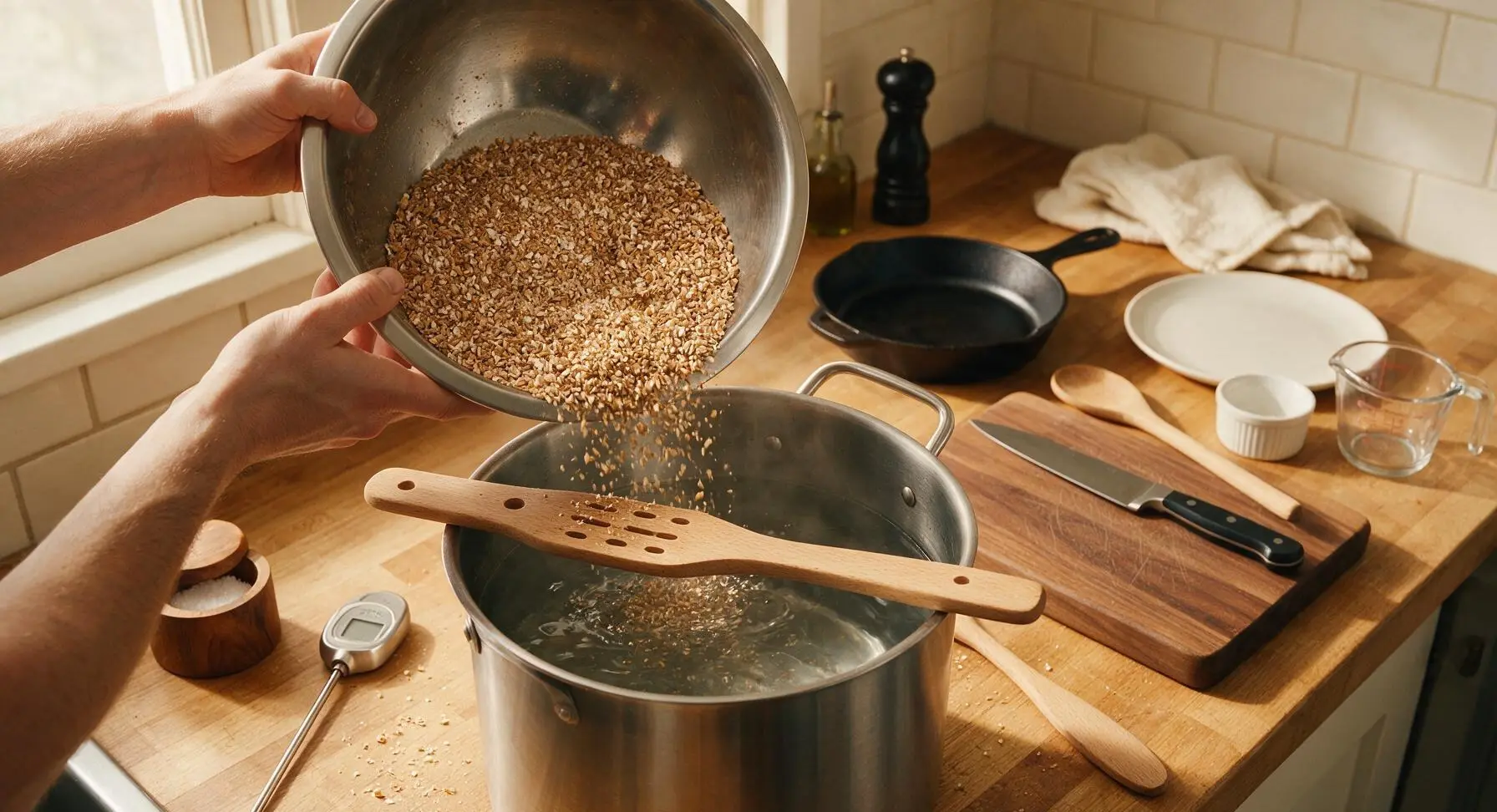
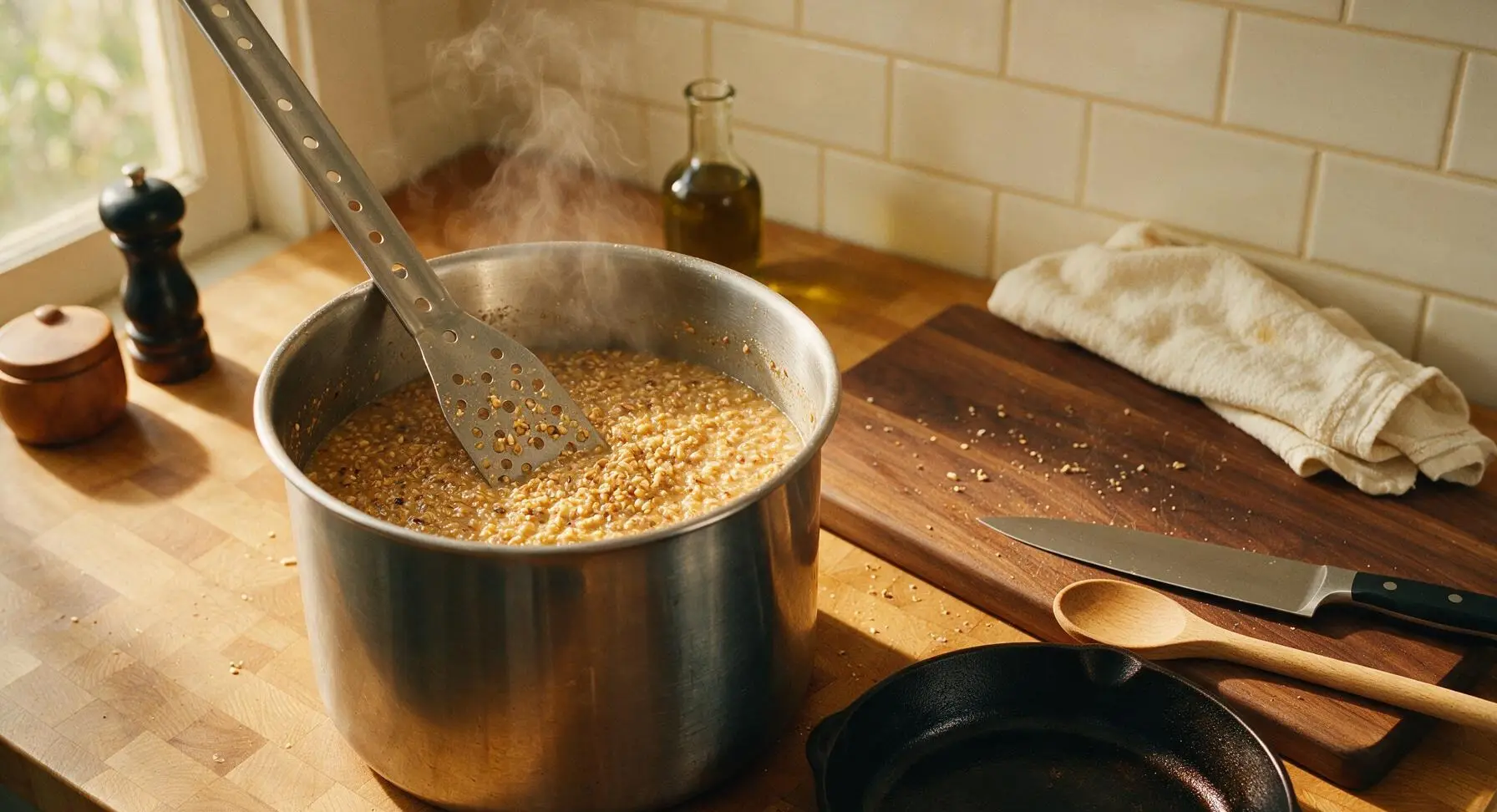
Pour 1 gallon of filtered water into the brew kettle, heat to exactly 152°F as measured with the digital thermometer. Slowly stir in all crushed pale wheat, 2-row, and crystal malts using the perforated mash paddle, mixing until no dry grain clumps remain. Cover the kettle and hold the temperature steady at 150-155°F for 60 minutes, checking temperature every 15 minutes to adjust heat as needed. The finished mash will smell like warm, freshly baked bread, with a thick, porridge-like consistency.
Strain and Sparge Grains
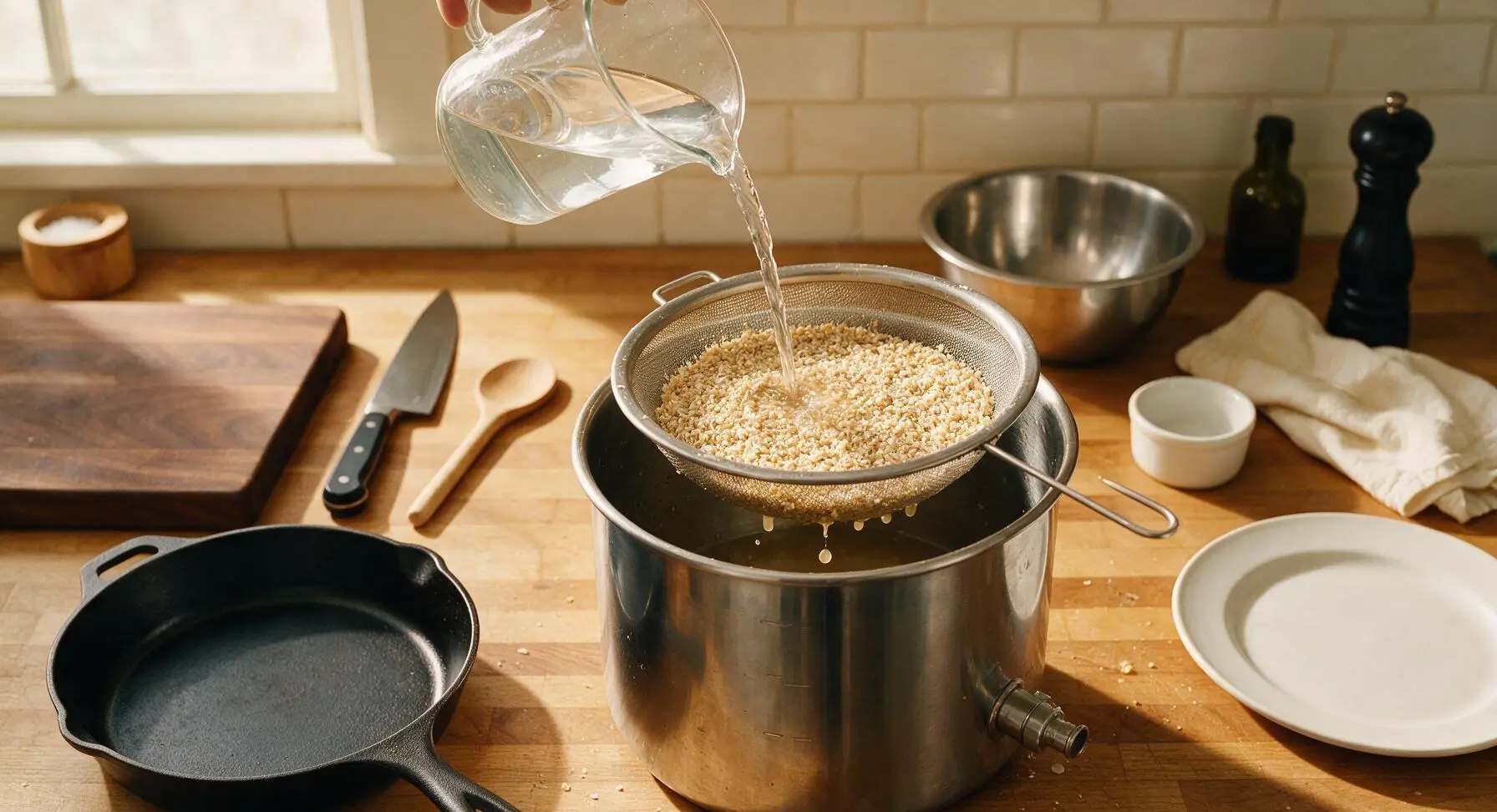
After the 60-minute mash rest, place the fine-mesh stainless steel strainer across the top of the brew kettle. Slowly pour 0.5 gallons of 170°F filtered water over the grain bed to rinse (sparge) residual sugars from the grains, collecting all sweet golden wort in the kettle below. Lift the strainer to let all liquid drain, then discard the spent grains. The collected wort should measure roughly 1.25 gallons, with a sweet, bready aroma.
Boil and Add Hops
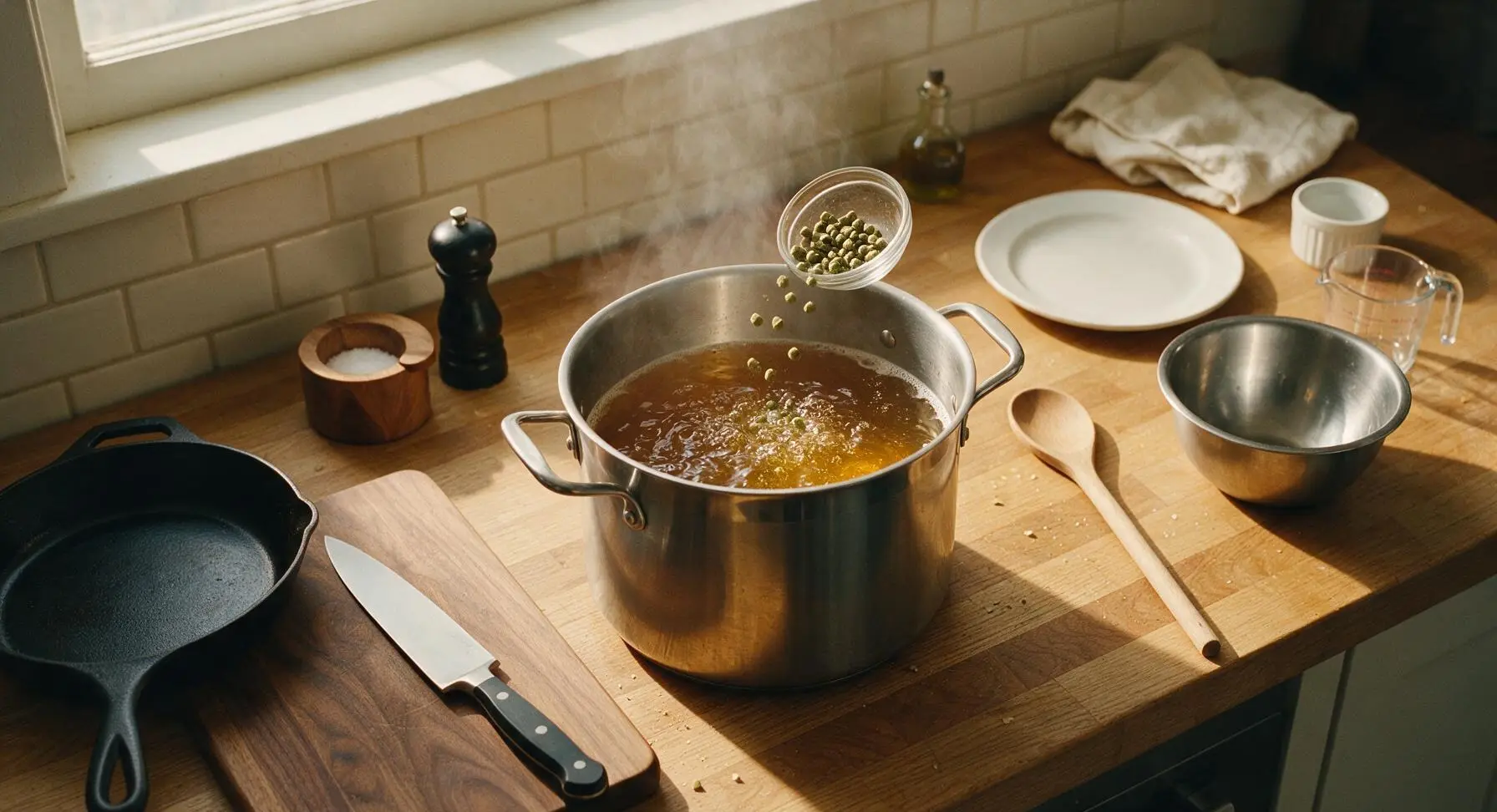
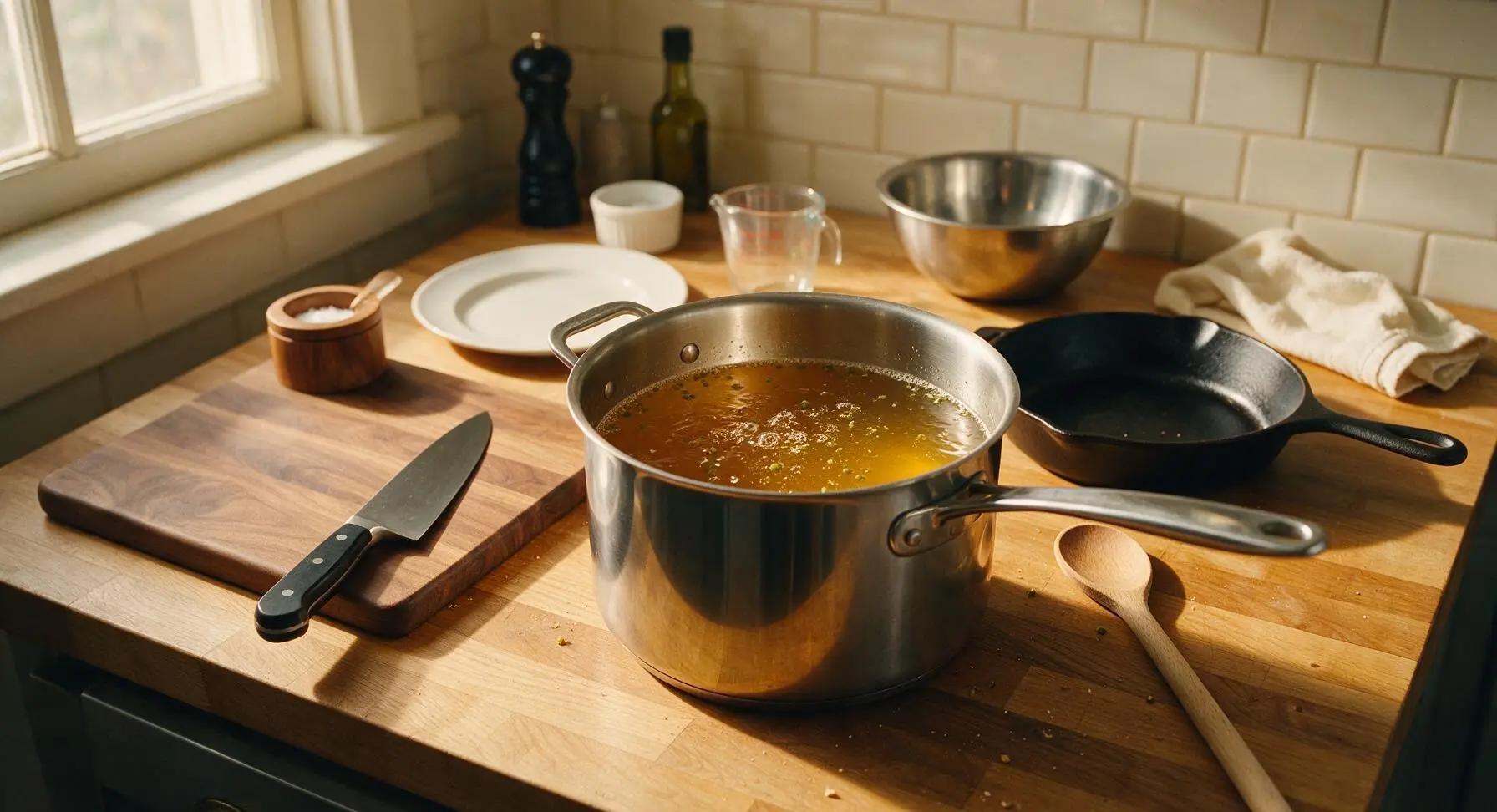
Place the kettle back over high heat and bring the wort to a gentle rolling boil, adjusting heat to prevent boilovers. Once a steady boil is reached, add the 0.5 oz Cascade hop pellets and set a timer for 60 minutes. With 15 minutes remaining in the boil, stir in the 8 oz of raw wildflower honey until fully dissolved. With 1 minute left in the boil, add the 0.25 oz Hallertau hop pellets and 1 tsp yeast nutrient, stirring to combine. The wort will darken to a clear deep gold as it boils, with a bright, hoppy, honeyed aroma.
Cool and Transfer Wort
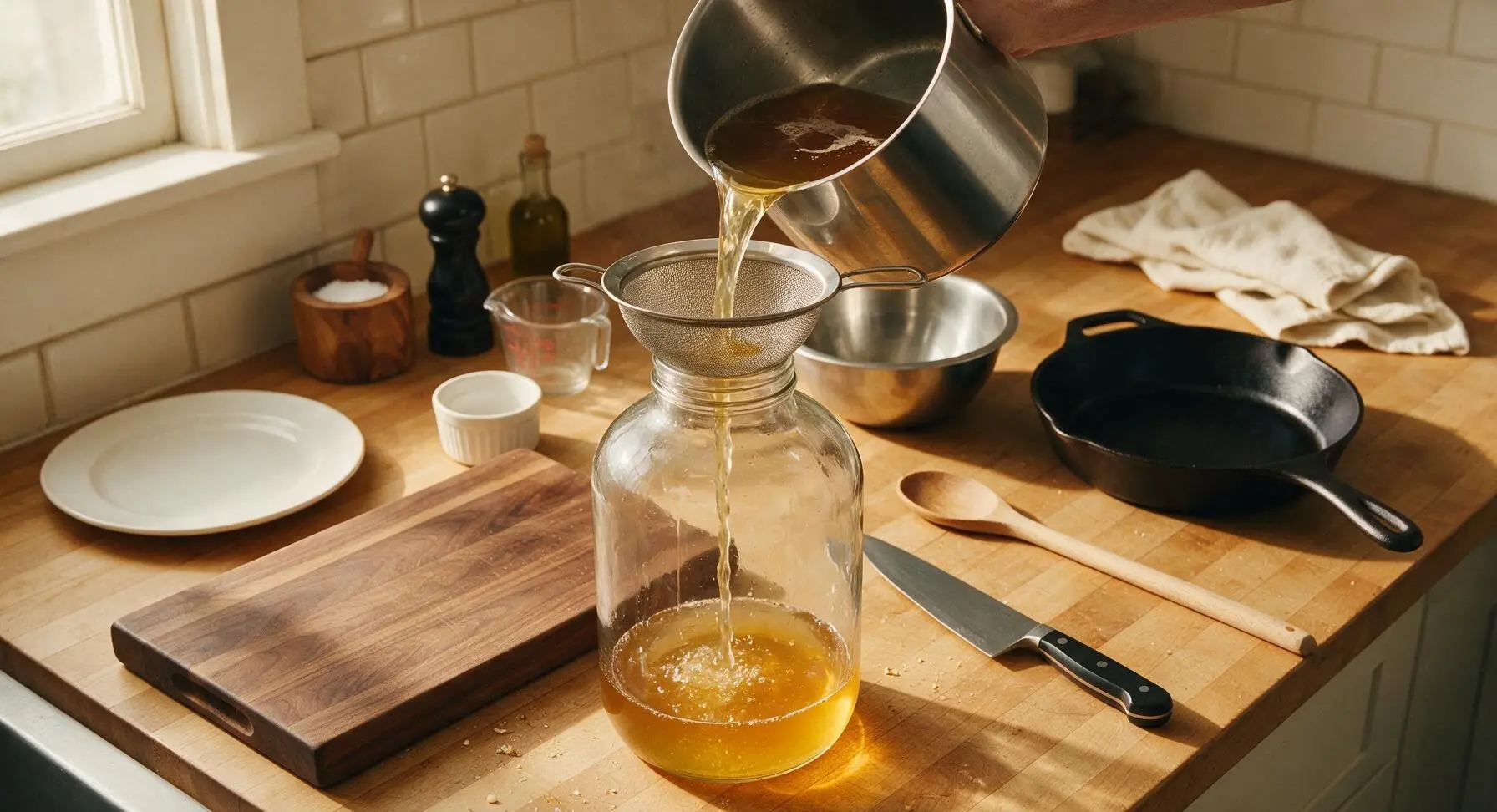
Remove the kettle from heat immediately after the boil ends. Set the kettle in an ice water bath in the adjacent sink, stirring the wort occasionally with the sanitized mash paddle, until it cools to exactly 70°F (approximately 20 minutes). Do not allow any unsanitized water or debris to touch the wort surface during cooling. Once cooled, pour the wort through the sanitized fine-mesh strainer into the sanitized glass carboy, leaving heavy hop trub (sediment) behind in the kettle.
Pitch the Yeast
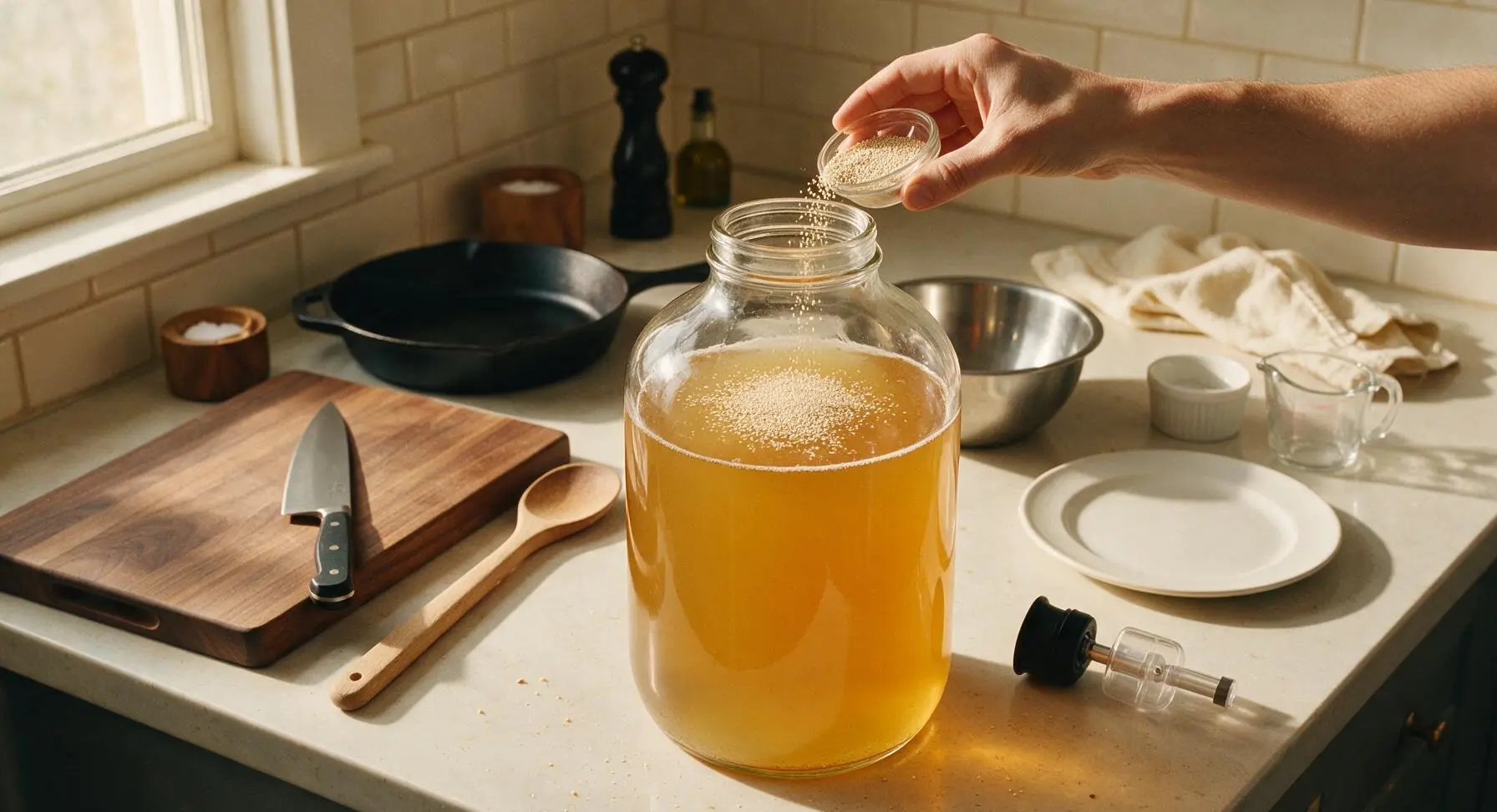
Sprinkle the entire 5g packet of dry champagne yeast evenly across the surface of the cooled wort in the carboy. Seal the carboy with the sanitized rubber stopper, insert the airlock, and fill the airlock halfway with sanitizer solution. Give the carboy a gentle 10-second swirl to distribute the yeast, taking care not to splash unsanitized air into the wort. Move the carboy to a dark, temperature-stable 68-70°F space for primary fermentation.
Monitor Fermentation
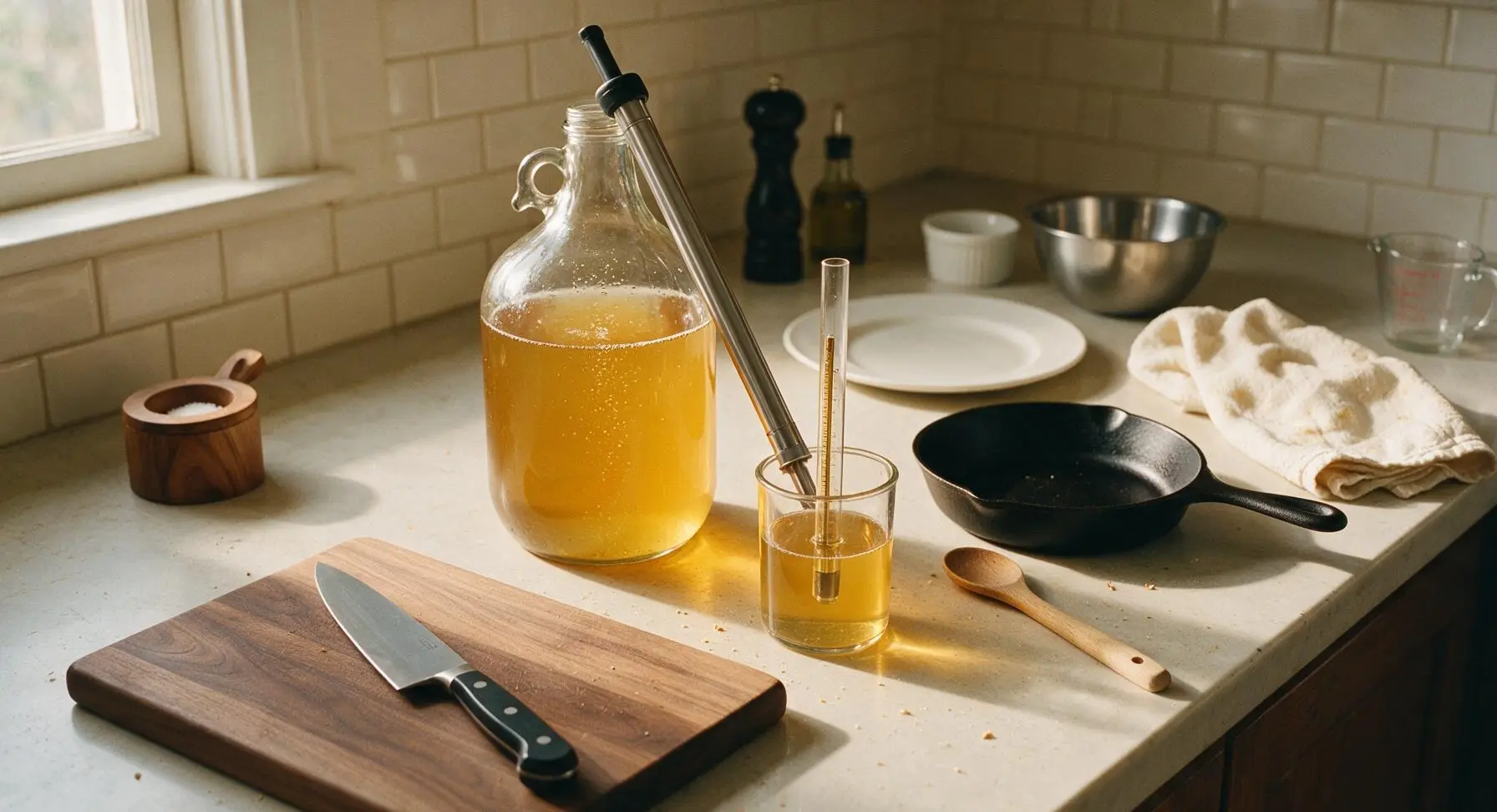
Check the airlock daily: steady bubbling will start within 24-48 hours, signaling active fermentation. Wait until all airlock bubbling stops (approximately 2 weeks), then use the sanitized auto-siphon to draw a small wort sample into the hydrometer jar. Lower the hydrometer into the sample to take a gravity reading. Wait 2 additional days and take a second reading; if the gravity is unchanged at ~1.010, fermentation is complete. Let the beer condition in the carboy for 2 more weeks at 65°F to allow sediment to settle and flavors to smooth.
Bottle and Carbonate
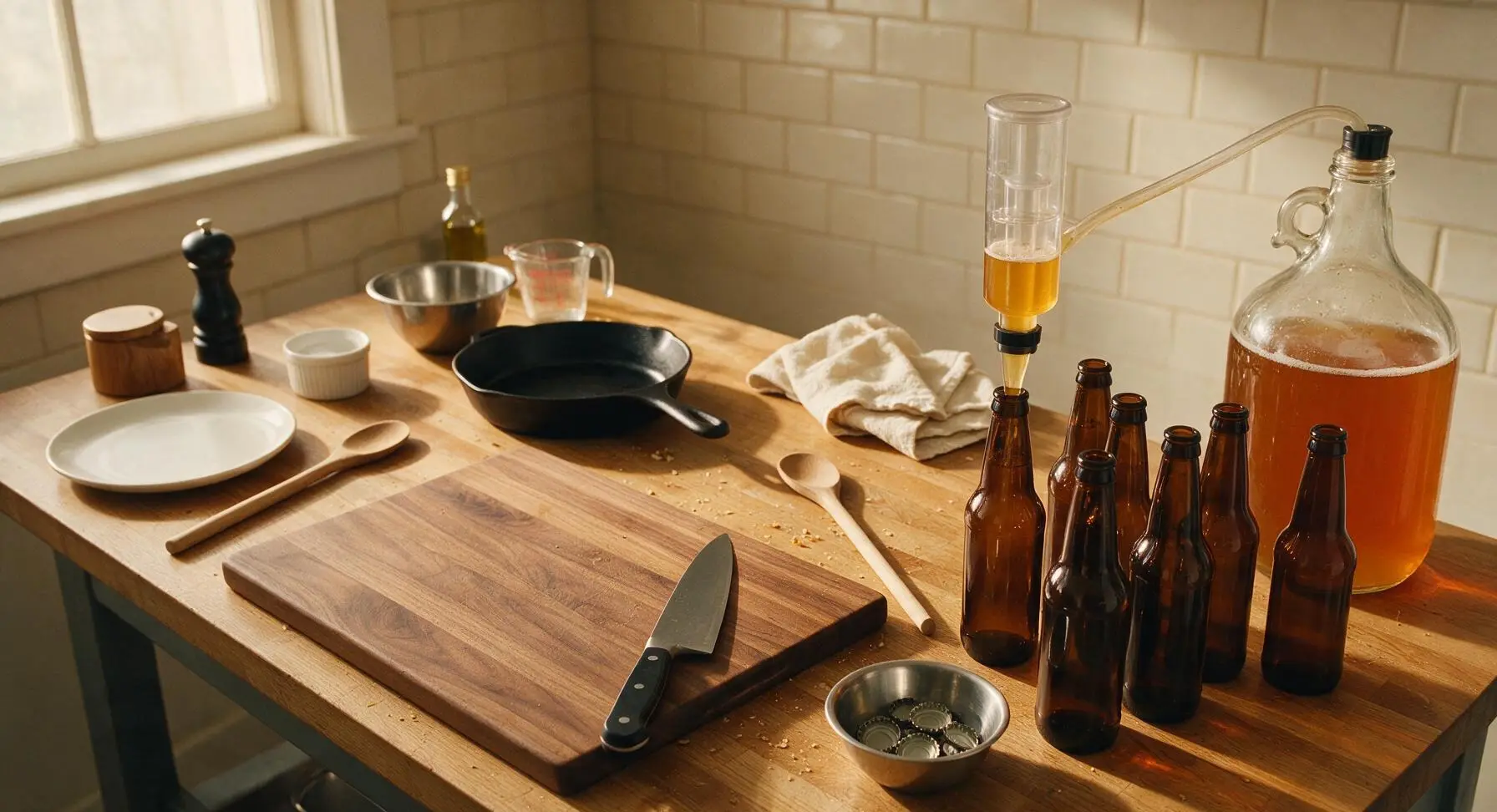
Dissolve 1 oz of corn sugar in ¼ cup of boiling water, cool to 70°F, and pour into a sanitized bottling vessel. Use the sanitized auto-siphon to transfer the fully conditioned clear beer from the carboy into the vessel, mixing gently to evenly distribute the priming sugar. Fill sanitized 12oz amber glass bottles, cap tightly with crown caps, and store at 70°F for 1 week to naturally carbonate. Chill bottles for 24 hours before serving, pouring slowly to leave yeast sediment in the bottle.
Tips
2.Avoid rapid temperature swings during fermentation: champagne yeast works best at a steady 68-70°F; temperatures above 75°F will produce harsh, solvent-like alcohol notes, while temperatures below 65°F will cause the yeast to go dormant before fermentation finishes.
3.When pouring the finished beer, leave the last ¼ inch of liquid in the bottle: this small amount holds the settled yeast sediment, which will make the beer appear hazy and add unwanted bready, yeasty flavors if poured into the glass.






OMG, I was so intimidated by the hard difficulty rating but this guide walked me through every step of the active brew day! Spent exactly 1 hour 15 minutes on the active work like the recipe said, now I’m just patiently waiting out the 4 weeks of conditioning. Brought a test sample (don’t judge, I snuck a tiny sip at week 2) to my neighborhood potluck last weekend and everyone was begging for the recipe already. SO good even before it’s fully matured, total game changer for my homebrew setup.
Quick question for folks who’ve made this—my first batch is hitting week 3 of fermentation and it’s still throwing a tiny bit of sediment in the airlock. Did I do something wrong? I followed the temp guidelines exactly during the active boil, but I’m panicking a little because I wanted to have this ready for my family dinner next weekend to pair with grilled brats. Fingers crossed it turns out!
Just bottled my second batch of this last night! The first round was such a hit at my friend’s fall tailgate that I knew I had to make a double batch this time. The 1 hour 15 minute active time is so doable even on a busy weekend, I was worried a hard difficulty recipe would eat up my whole Saturday but it was totally manageable. Already planning to bring a few bottles to our annual holiday meal prep swap next month—it’s the perfect strong, malty sipper for cool Florida evenings. 10/10, no notes!