
white wine sauce
intro
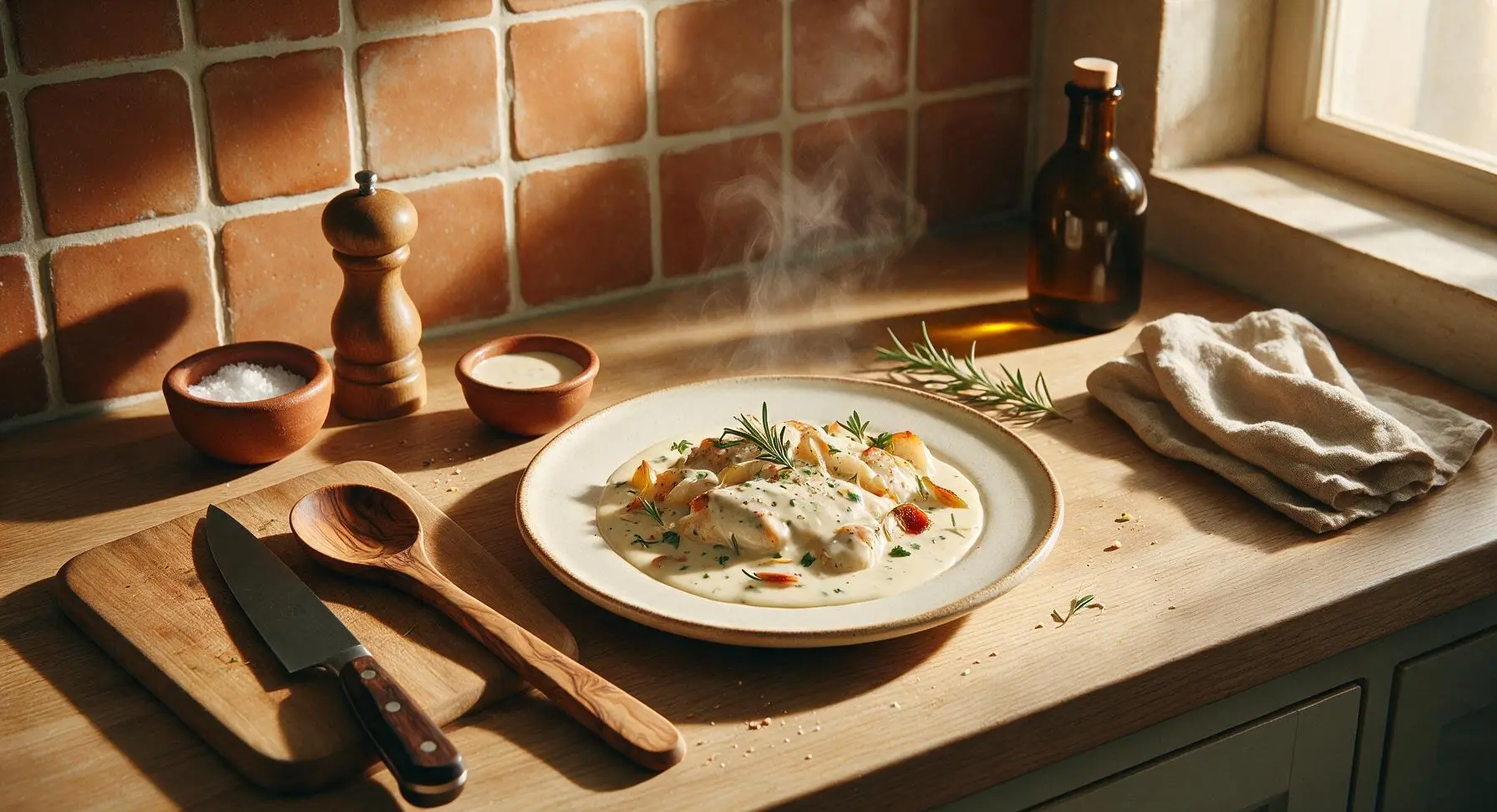
Silky, bright, and luxuriously rich, this classic white wine sauce pairs perfectly with seafood, roasted chicken, pasta, and spring vegetables for an elegant, restaurant-worthy meal at home.
Ingredients
Steps
Prep all ingredients
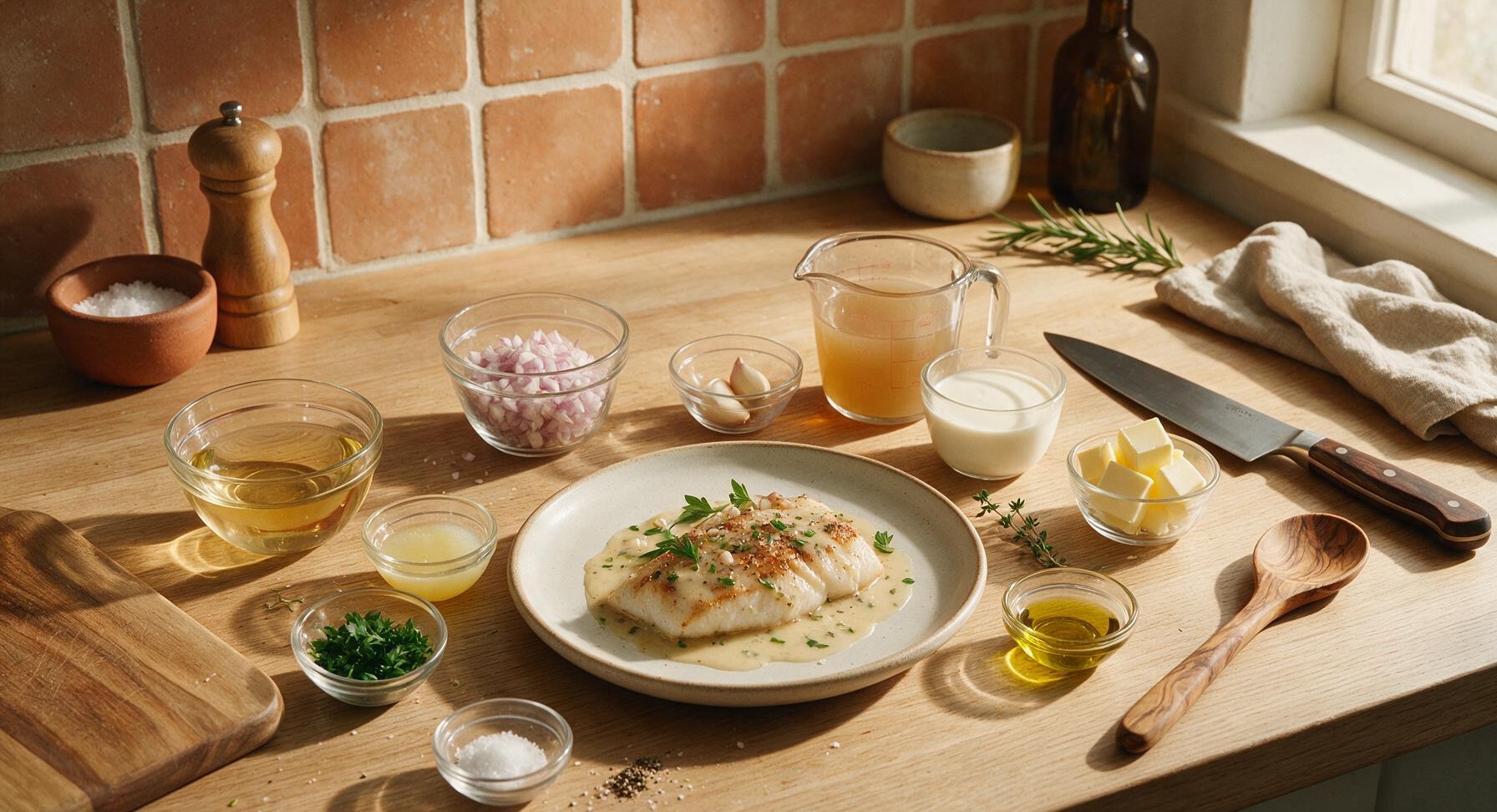
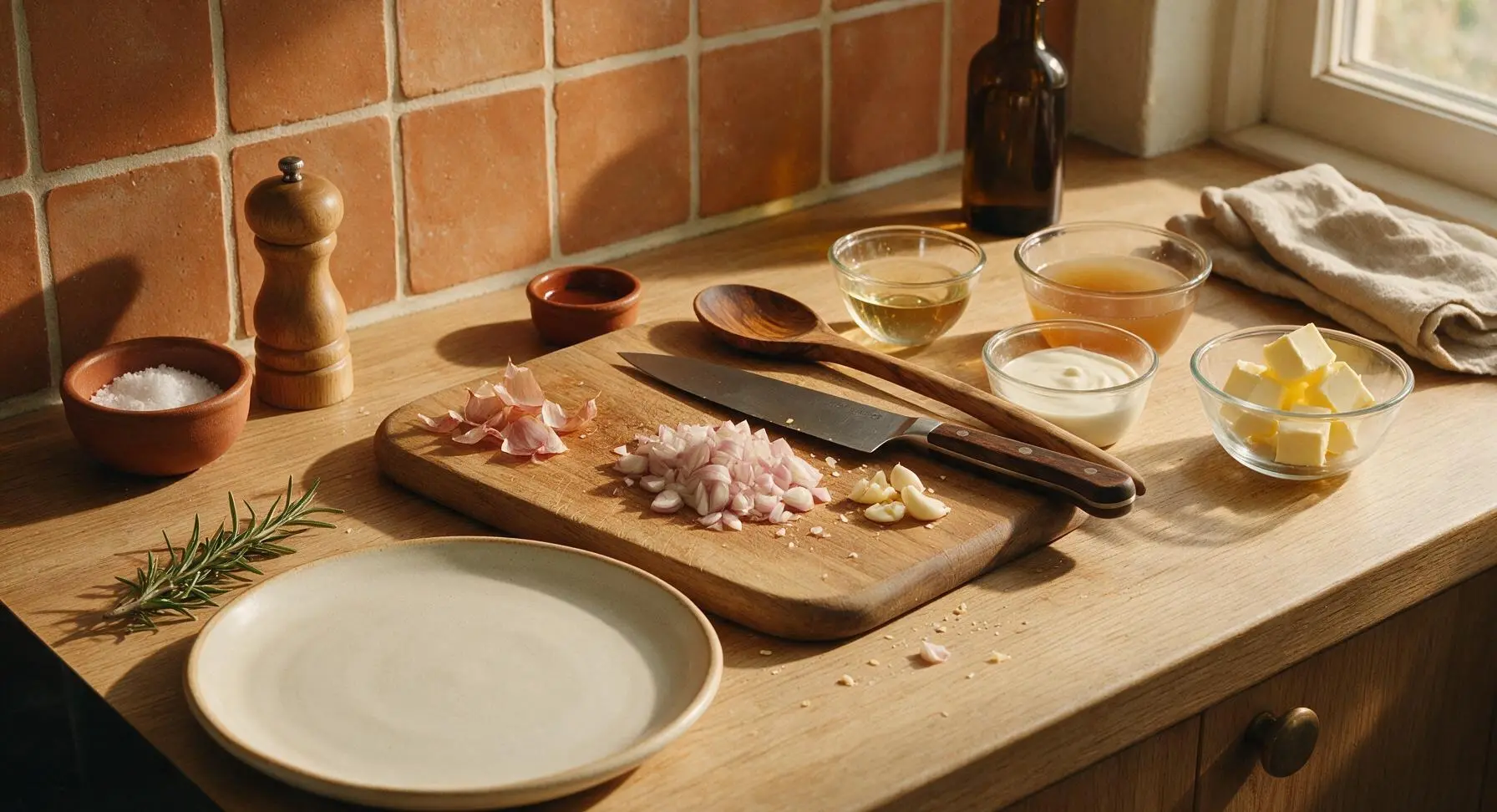
Gather and prep all components before heating the pan (mise en place is critical for this sauce, as it moves quickly once cooking starts): finely dice shallots into uniform 3mm pieces, lightly crush garlic cloves (do not mince finely, as they will be strained out later), cut cold unsalted butter into 1cm cubes and return to the refrigerator until needed to stay cold, finely chop parsley, and measure wine, stock, cream, and lemon juice into the separate clear glass prep bowls. This prevents last-minute scrambling that can lead to over-reduced or broken sauce.
Sauté aromatic base
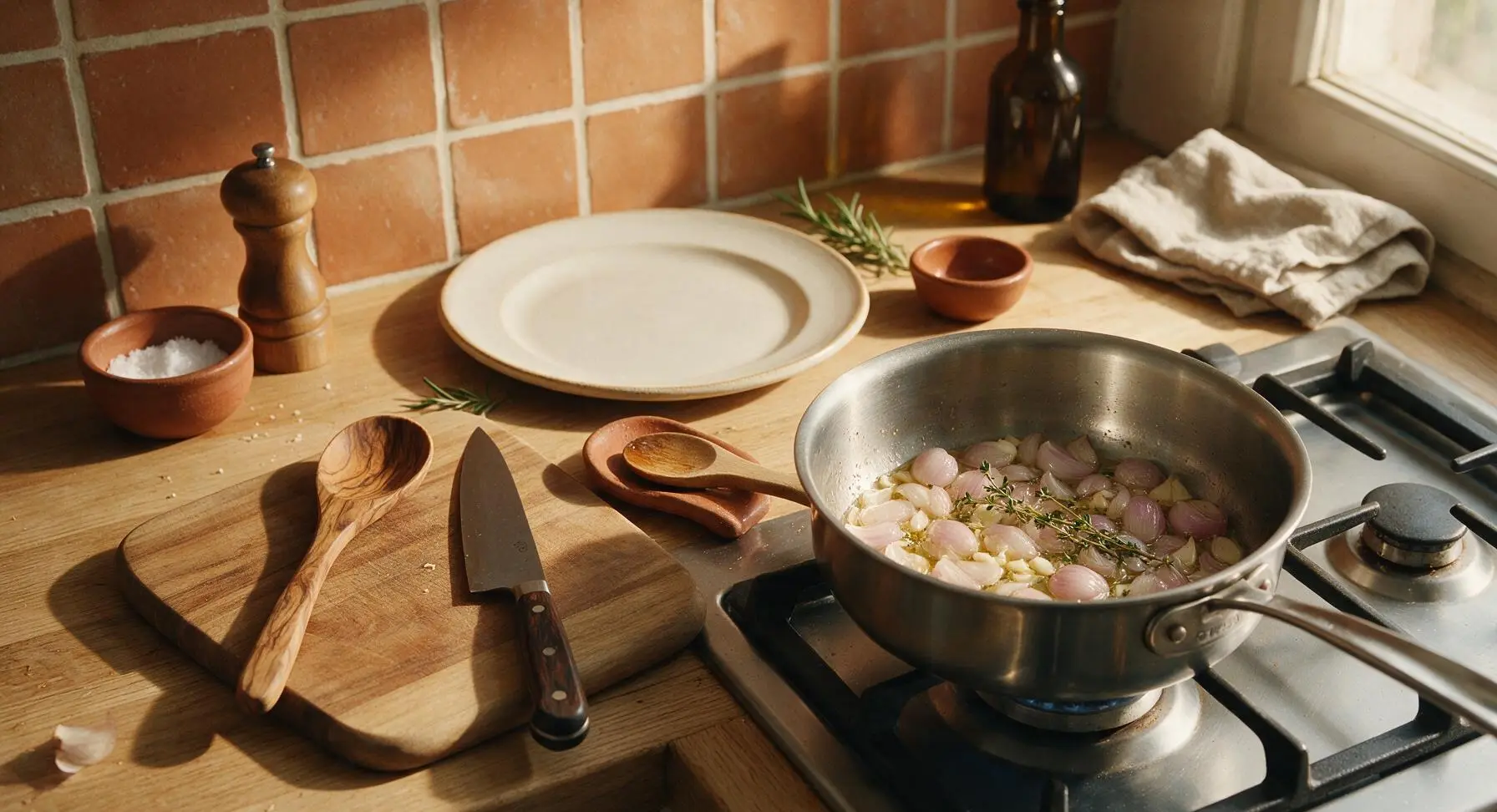
Retrieve the 2-quart stainless steel saucepan from the lower cabinet and place it on the front right gas burner over medium-low heat. Add 1 teaspoon extra-virgin olive oil. Once the oil shimmers (about 1 minute of heating), add the diced shallots and a tiny pinch of salt, sauté for 3 minutes until soft and completely translucent, with no golden or browned edges. Add the crushed garlic and thyme sprigs, cook for 30 seconds more until fragrant, taking extreme care not to burn the garlic, as burnt garlic will give the sauce a sharp, bitter flavor.
Deglaze with white wine
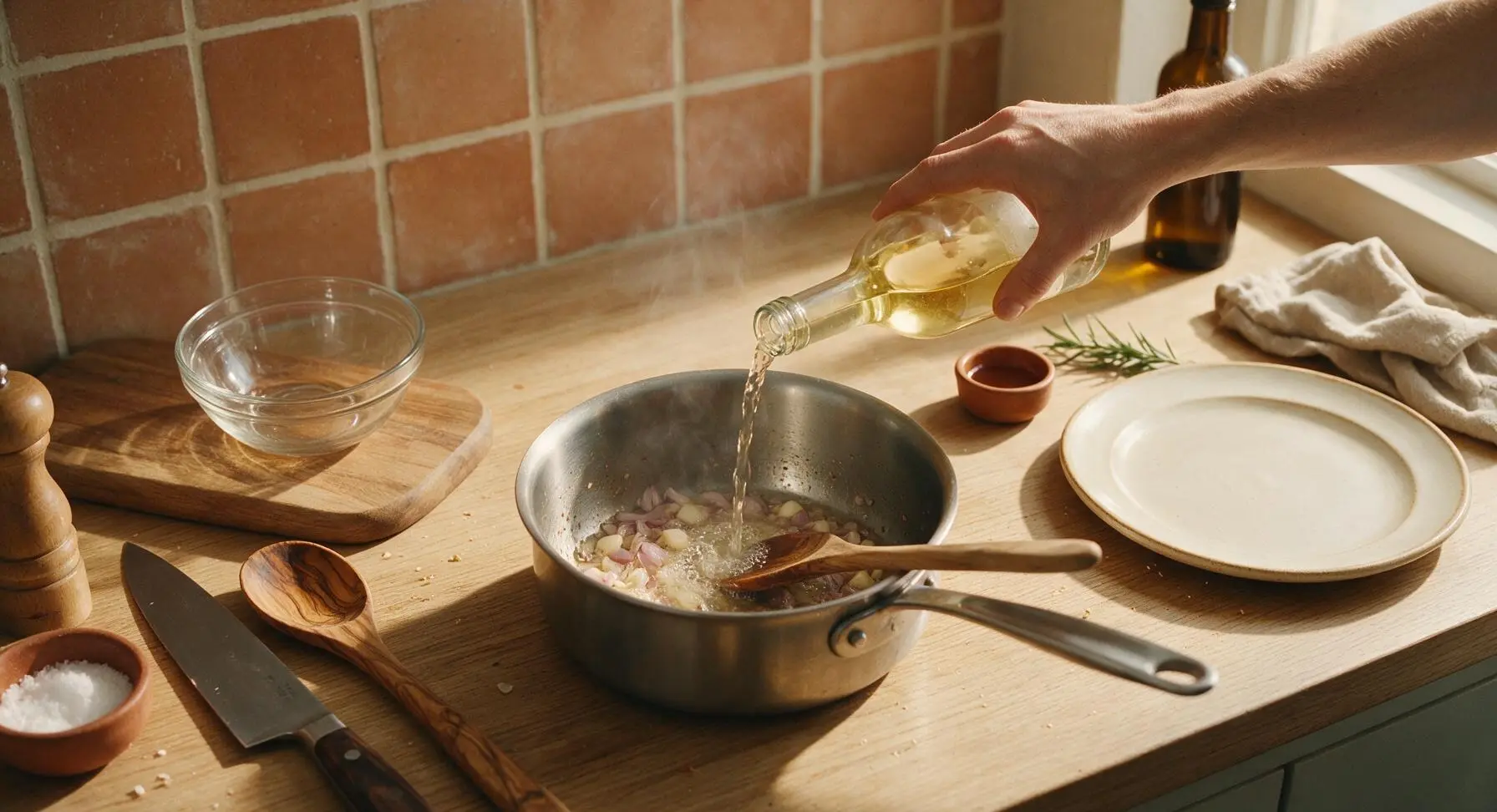
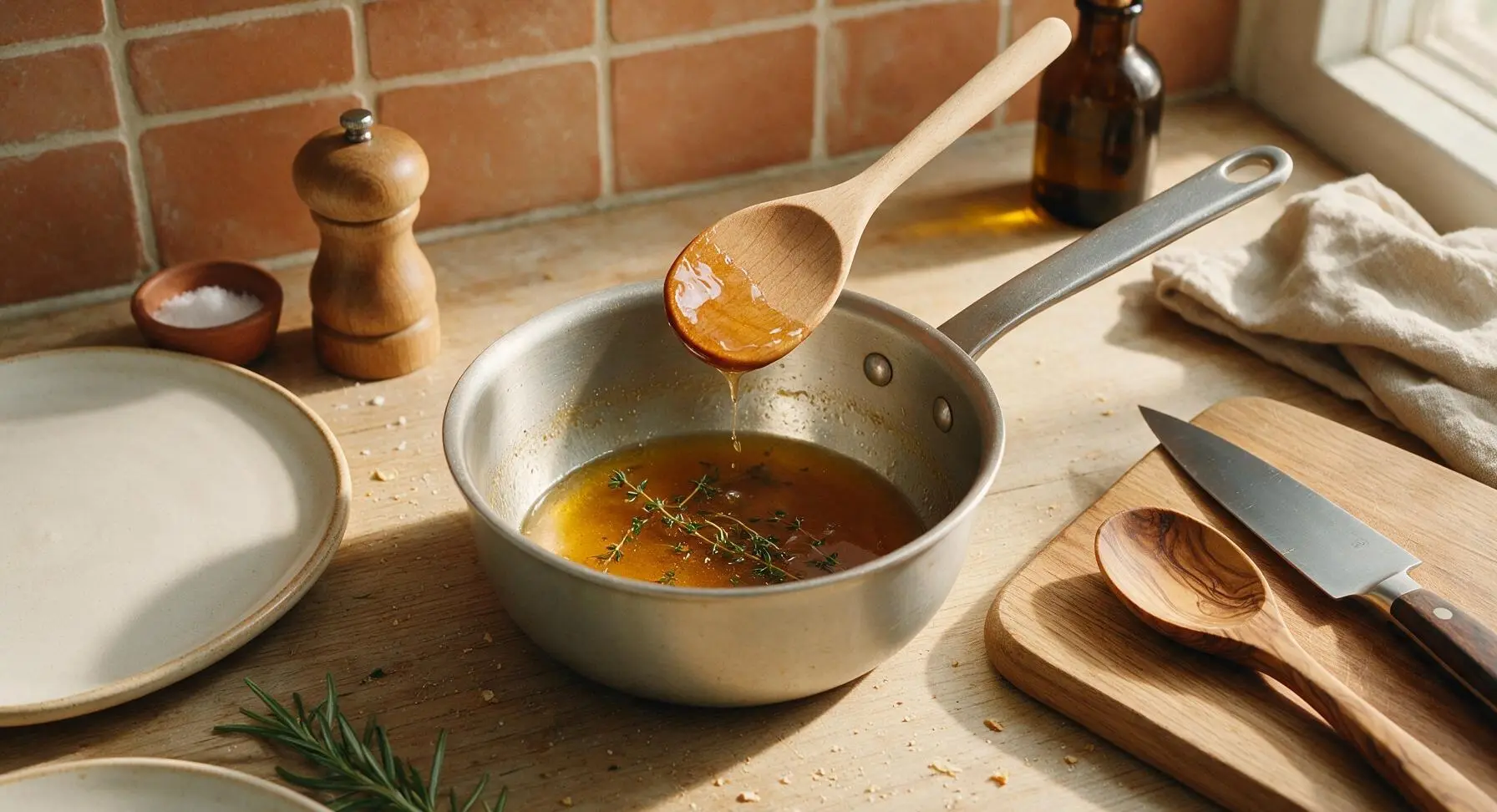
Pour the measured dry white wine into the saucepan, increase heat to medium to bring the liquid to a gentle, steady simmer. Use the maple wooden spoon to scrape up any light browned bits (fond) from the bottom of the pan – these bits hold concentrated savory flavor. Simmer for 5-7 minutes until the wine is reduced by two-thirds, leaving roughly 1/3 cup of concentrated, fragrant liquid in the pan. The reduction is ready when it coats the back of the wooden spoon in a thin, syrupy layer.
Reduce stock mixture
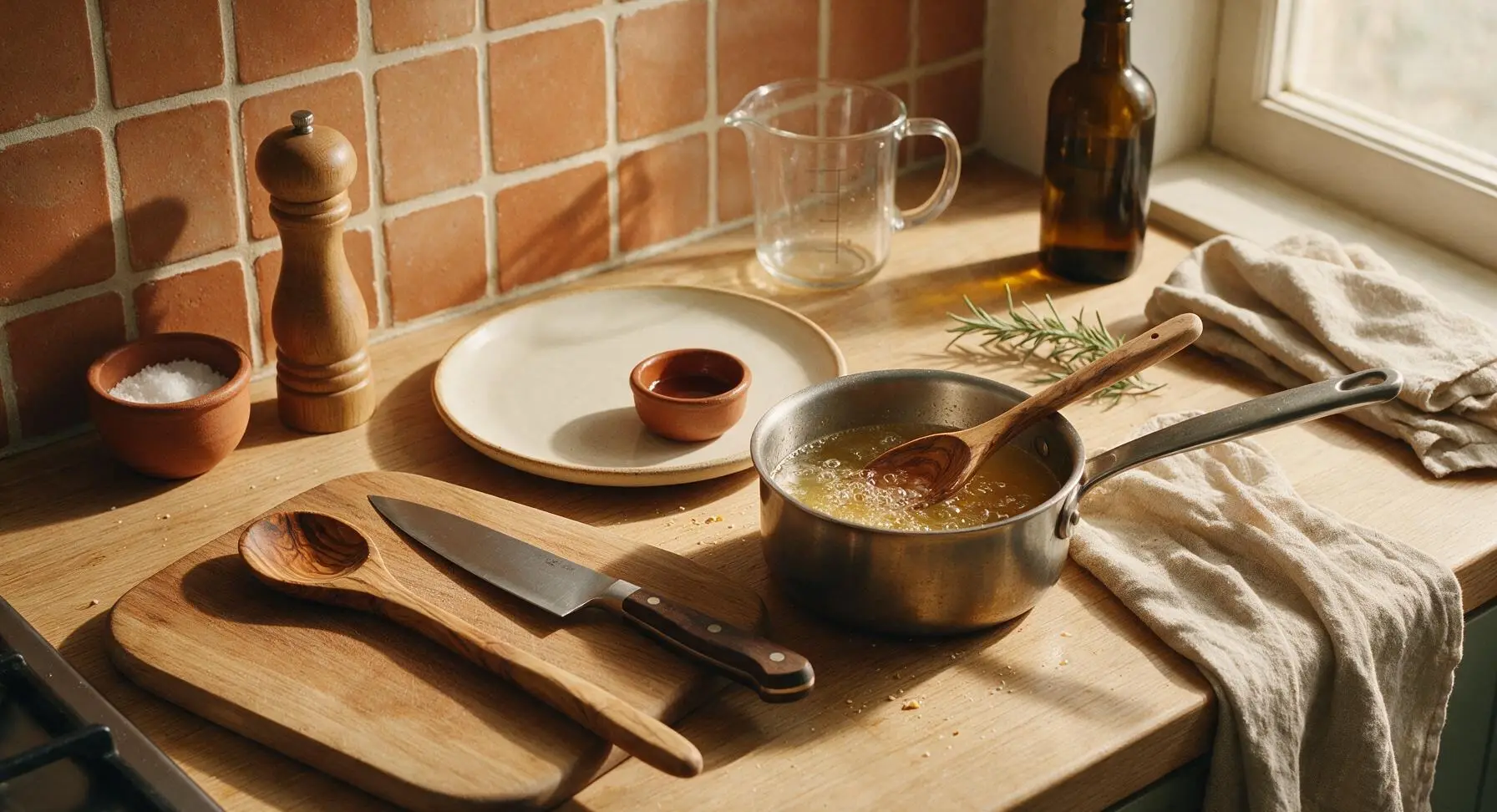
Pour the measured chicken or vegetable stock into the pan with the reduced wine, return the liquid to a gentle simmer. Cook for 4-5 minutes until the total liquid is reduced by half, leaving roughly 2/3 cup of combined wine and stock reduction in the pan. The mixture will smell deeply aromatic, with bright acidic wine notes mellowed by the savory, umami-rich stock.
Strain and add cream
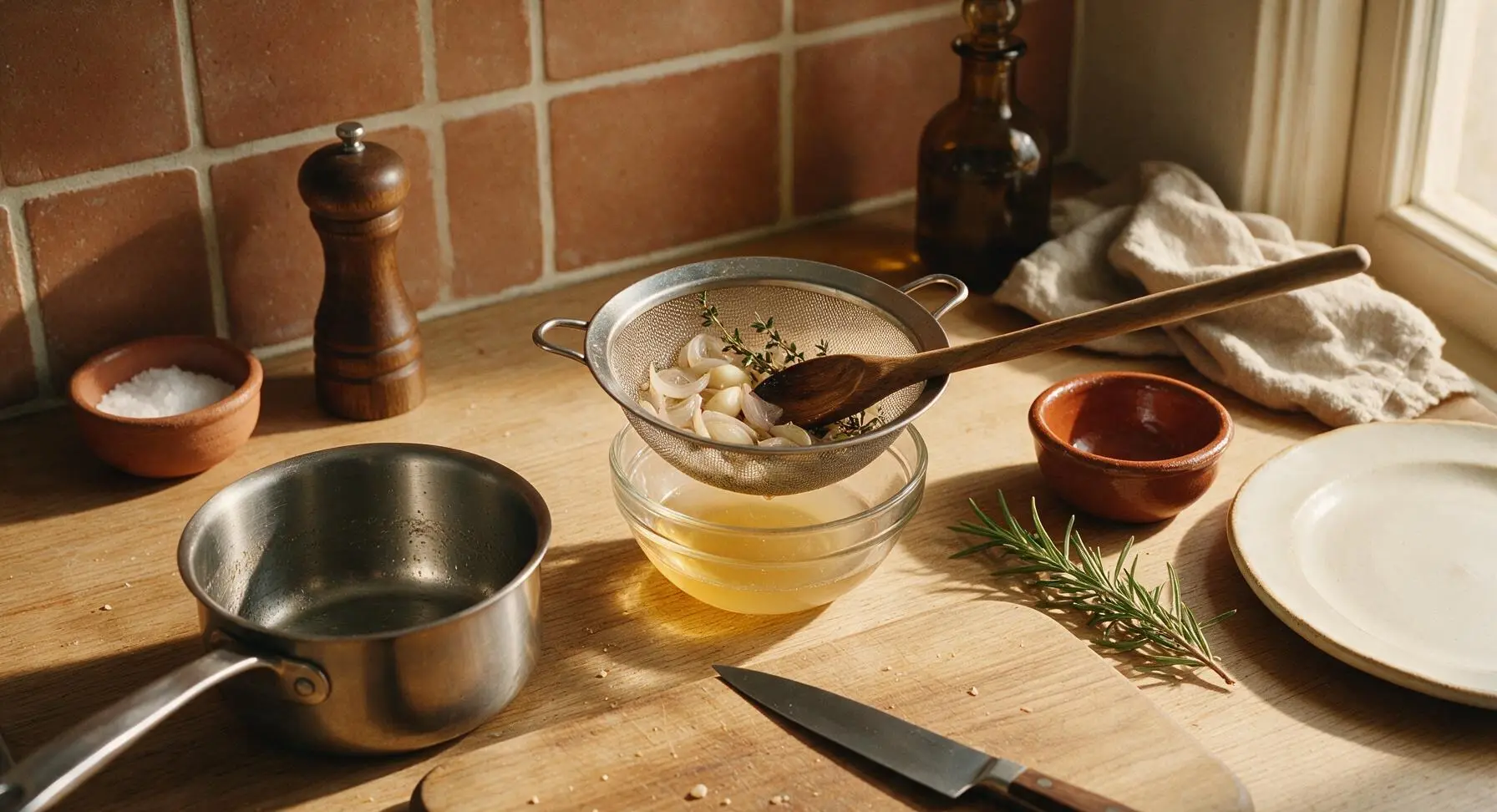
Retrieve the fine-mesh stainless steel strainer from the counter caddy and position it over a small heatproof glass bowl. Pour the hot reduced wine and stock mixture through the strainer to catch all shallots, garlic, and thyme sprigs, pressing gently on the solids with the wooden spoon to extract every drop of flavorful liquid. Discard the strained solids, then pour the smooth, clear liquid back into the saucepan and set over low heat. Stir in the measured heavy cream, bring to a very gentle simmer (do not allow to boil rapidly) for 2 minutes to warm through and combine.
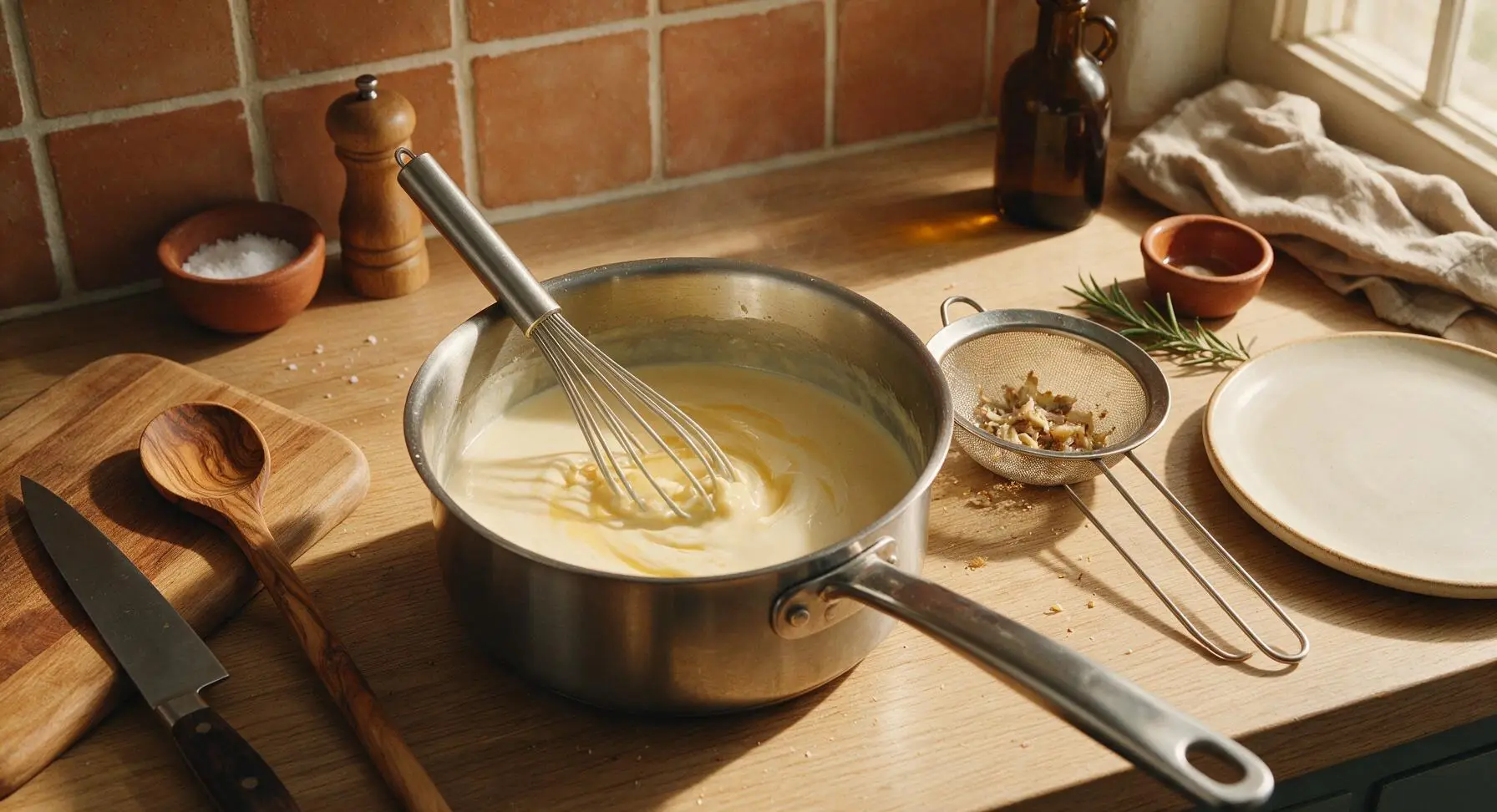
Emulsify cold butter
Remove the saucepan from direct heat (residual pan heat is enough to melt the butter without breaking the delicate emulsion). Add 2-3 cubes of ice-cold butter at a time, whisking constantly with the silicone whisk in slow, steady circular motions until each addition is fully melted and fully incorporated into the sauce before adding the next batch. This process takes 3-4 minutes total. The finished emulsified sauce will be thick, silky, and glossy, with enough body to coat the back of a spoon without running off quickly. Never add all butter at once, as this will shock the emulsion and cause the sauce to separate into greasy pools.
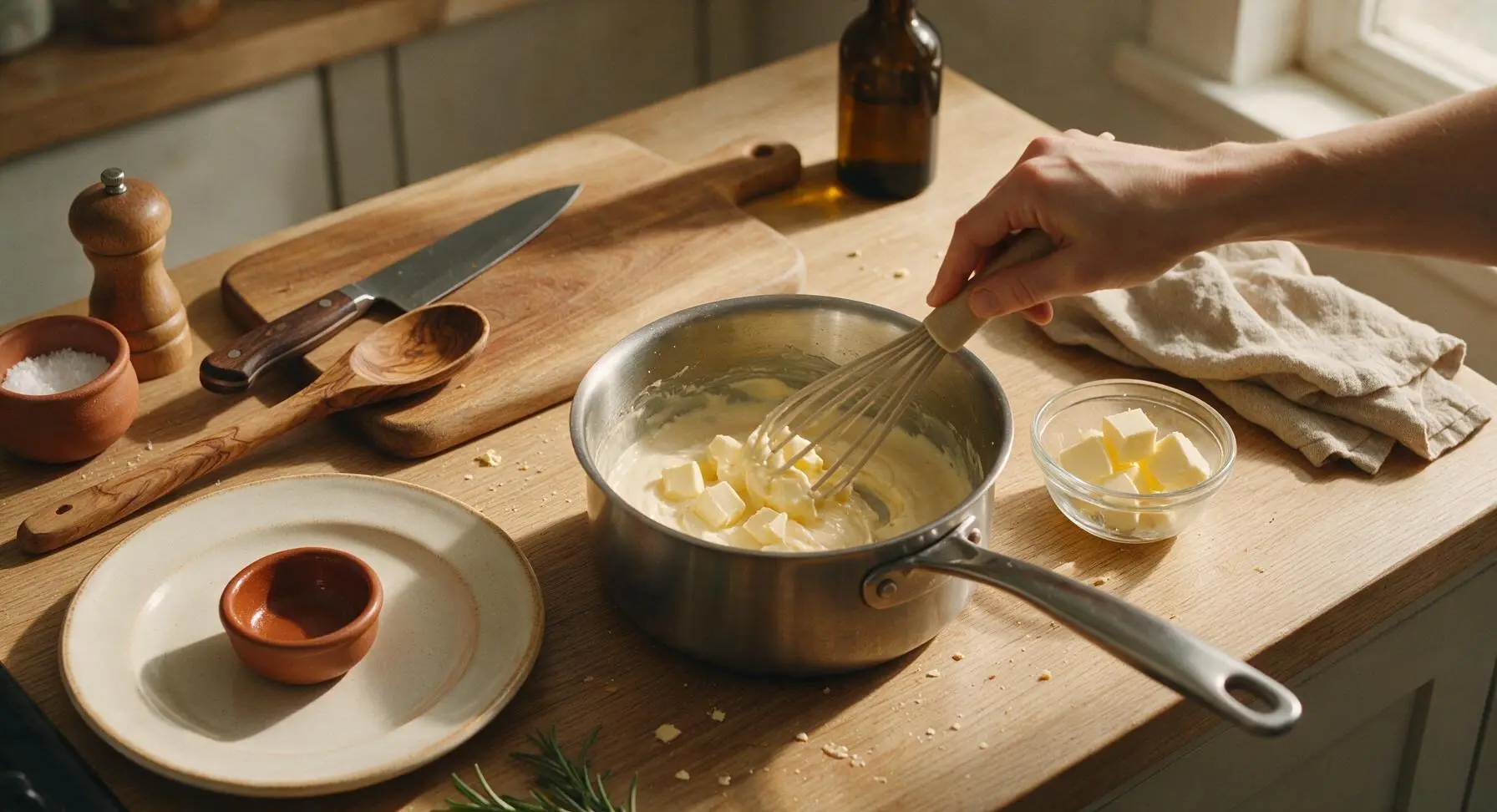
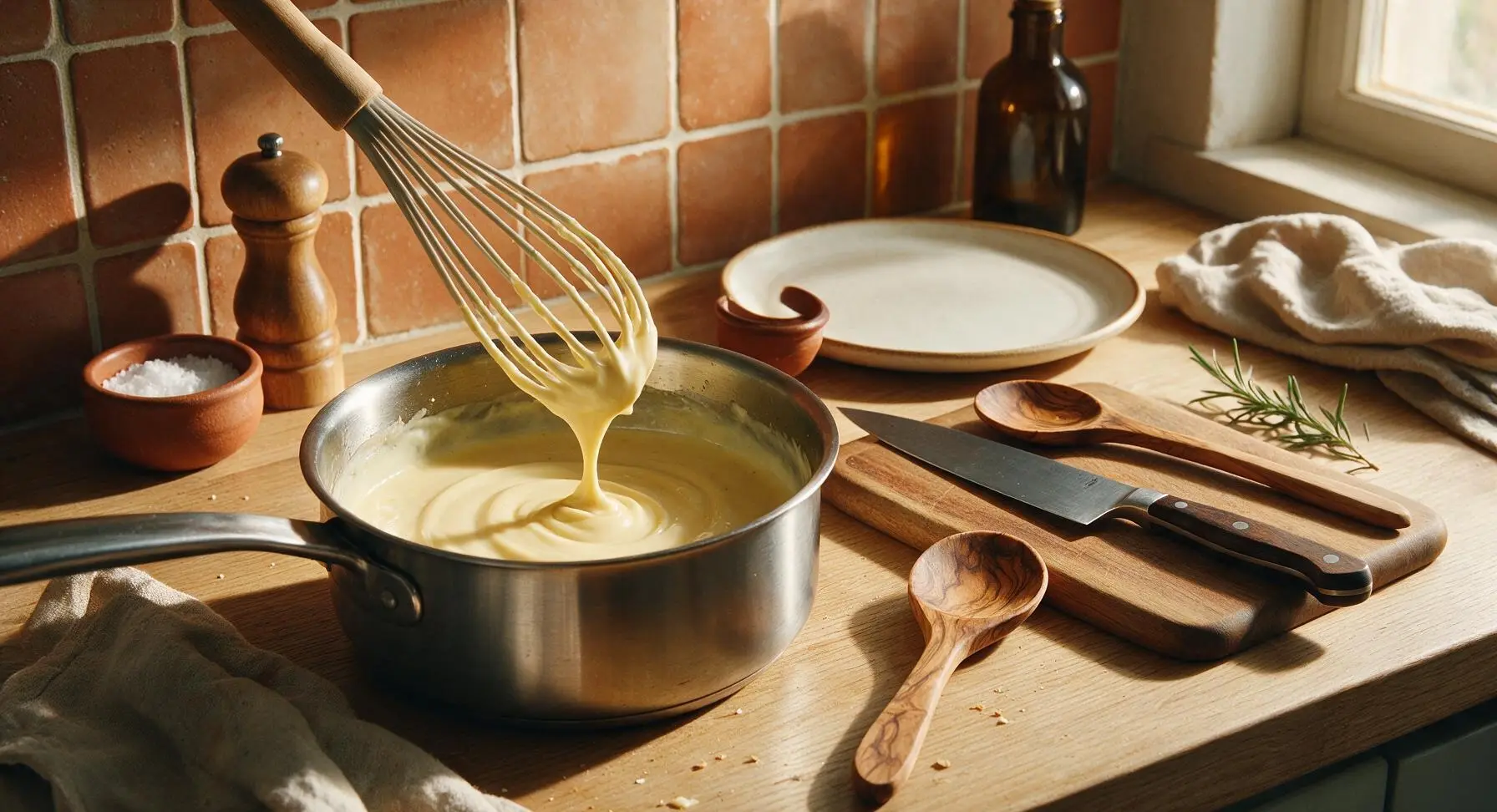
Season and finish
Stir the fresh lemon juice into the sauce, then season with 1/2 teaspoon kosher salt and 1/4 teaspoon freshly ground black pepper, tasting with a small spoon to adjust seasoning as needed. Stir in half of the chopped parsley, then pour the finished sauce into the matte cream ceramic sauce boat, garnishing the top with the remaining chopped parsley. Serve immediately, as the sauce will thicken and form a tough skin as it cools, and cannot be reheated rapidly without breaking.
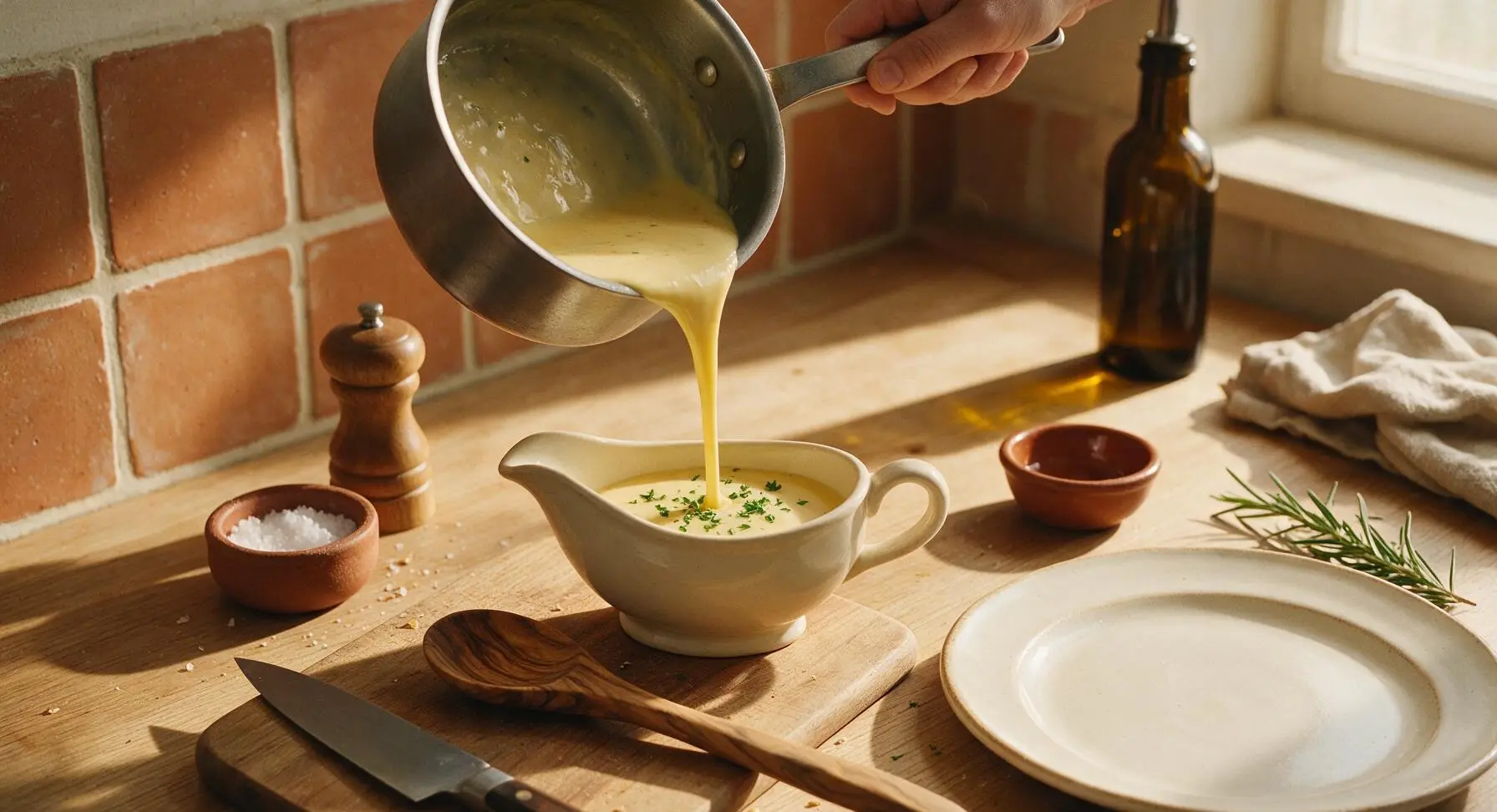
Tips
2.Keep butter ice-cold until the moment you add it to the sauce. Cold butter melts slowly, creating a stable, silky emulsion that stays smooth and glossy. Room temperature butter melts too quickly, leading to a greasy, separated sauce that cannot be fixed easily.
3.Never boil the sauce after adding cream or butter. High heat will break the butter emulsion, curdle the cream, and result in a grainy, greasy texture. If your sauce gets too hot, remove it from the burner immediately and whisk in a single ice cube to cool it down quickly and rescue the emulsion.


OMG this white wine sauce is a total game changer! I poured it over pan-seared chicken and roasted broccoli for our Sunday family dinner and even my super picky 7-year-old cleaned his plate. It came together in literally 15 minutes like the recipe says, I was shocked it tasted like something from a fancy Italian restaurant. 10/10 will be making this weekly for meal prep!
SO good! I’m a total newbie in the kitchen and was worried this would be too hard since it’s marked medium difficulty, but the steps were super straightforward. Tossed it with fettuccine and some sautéed shrimp for date night last night and my girlfriend thought I ordered takeout from that fancy spot downtown. Win!
Made this for our neighborhood potluck last weekend and people were literally lining up to ask for the recipe! I served it over baked salmon and it was the first dish empty on the table. Only note: I added a tiny extra squeeze of lemon at the end because I love that bright zing, chef’s kiss.
Quick question before I make this tonight — can I make this sauce ahead of time and reheat it for dinner after my kid’s soccer practice? Weeknights are chaotic over here and I’m trying to cut down on last minute cooking.
Tried this last night and I hate to say it but mine came out lumpy? I followed the steps exactly, whisked the whole time, but still got little flour clumps. Flavor was amazing but the texture was off, what did I do wrong?
This is my new go-to sauce for weekly meal prep! I make a big batch on Sundays and toss it with roasted veggies, grilled chicken, or pasta all week long. It freezes really well too, I was surprised! Portioned it out into ice cube trays so I can grab a single serving whenever I need it. Game changer for busy work weeks.
My kids loved it! I was nervous the wine flavor would be too strong for them, but once it simmers the alcohol cooks off and it’s just this rich, savory flavor that pairs so perfectly with tilapia and mashed potatoes. Even my toddler was dipping his potatoes in the leftover sauce off his plate!
Wait a second — is there a non-alcoholic substitute for the white wine? I don’t drink alcohol at all but I’ve been craving that classic white wine sauce flavor for pasta night. Would chicken broth work?
SO good, y’all! I added a little bit of fresh parmesan and a pinch of garlic powder to the recipe because I can never have enough garlic, and it was absolute perfection. Served it over pan-fried pork chops for my husband’s birthday dinner and he said it’s the best meal I’ve ever made. Win!
Made this for my roommate’s birthday pasta night and everyone went back for seconds. I used a pinot grigio I had leftover from a group game night the weekend before and it worked perfectly. The only thing I’ll do differently next time is double the batch — we ran out way too fast!
Quick question — can I make this gluten free? I have celiac so regular all purpose flour is a no-go for me, would a 1:1 gluten free flour work in the roux?
I cannot believe how easy this was! I’ve paid $20+ for pasta with white wine sauce at restaurants and this tastes better than any of them. Used it on ravioli last night and my whole family was raving. Pro tip: don’t skip the fresh parsley at the end, it adds such a nice pop of flavor.