
Wine Barrel Aged Stout

title 1
Wine Barrel Aged Stout
⏱️ cook time 4 hours (plus 10 weeks passive fermentation, barrel aging, and bottle conditioning)
🍽️ servings 40
⚡ Difficulty hard

intro

Rich, roasty, oak-kissed stout with subtle red wine fruit notes, smooth vanilla, and velvety mouthfeel, barrel-aged for bold, sippable cold-weather enjoyment.

Ingredients
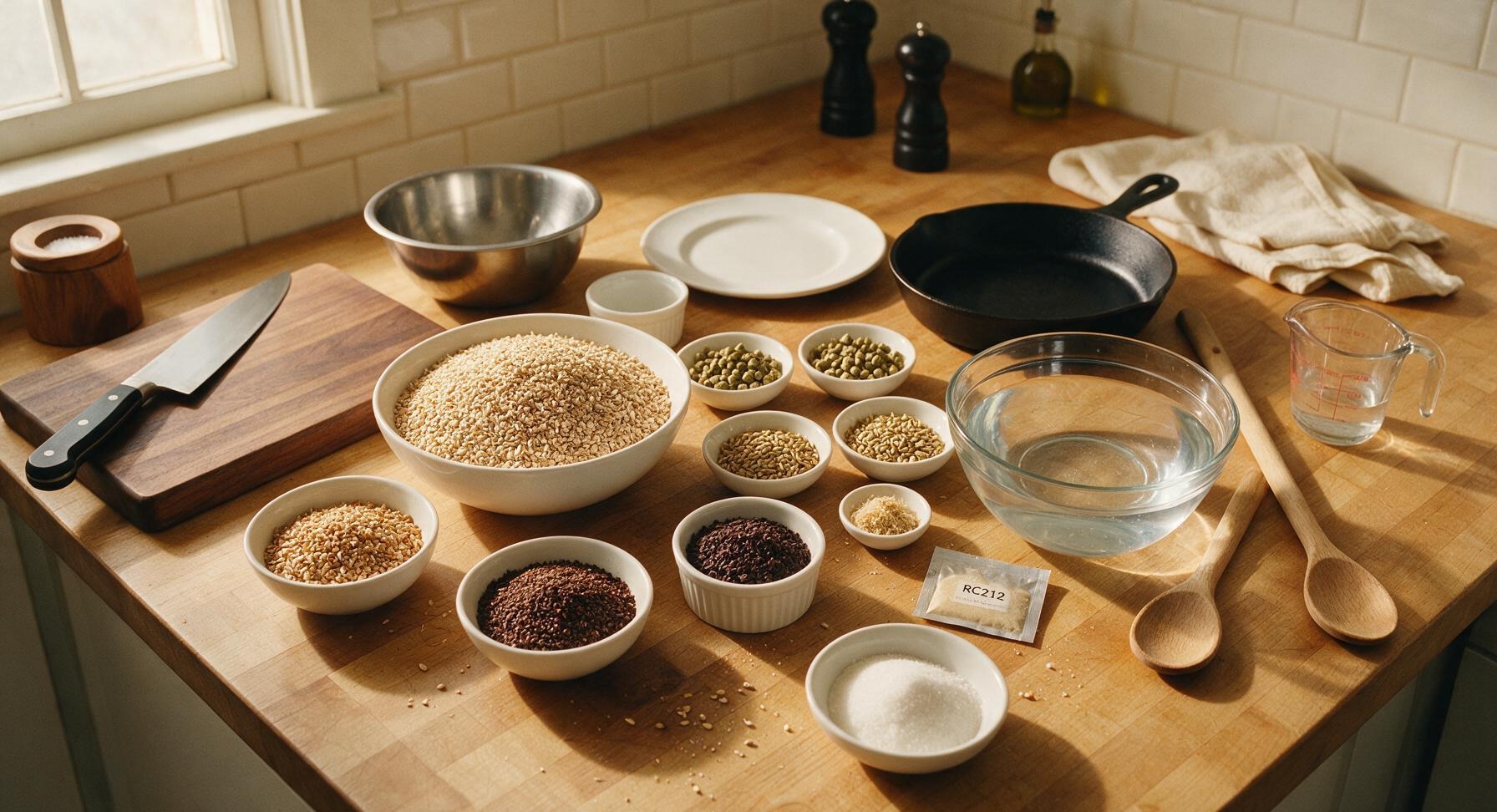
Filtered brewing water 7 gallons
2-row pale malt (crushed) 9 lbs
Roasted barley (crushed) 1 lb
Chocolate malt (crushed) 8 oz
Crystal 60L malt (crushed) 8 oz
Magnum hop pellets (15% AA) 1 oz
East Kent Goldings hop pellets 1 oz
Irish moss (clarifier) 1 tsp
RC212 red wine yeast 5g packet
Corn sugar (priming) 5 oz

Steps

1

Sanitize Brewing Gear

First, mix no-rinse brewing sanitizer per package directions in the clear spray bottle. Thoroughly coat all contact surfaces of the mash tun, brew kettle, mash paddle, strainer, glass carboy, auto-siphon, and beer bottles. Allow surfaces to air dry for 2 minutes without wiping to avoid recontamination. Rinse the interior of the wine barrel with diluted sanitizer, then drain completely to remove any residual wine or sediment before use.
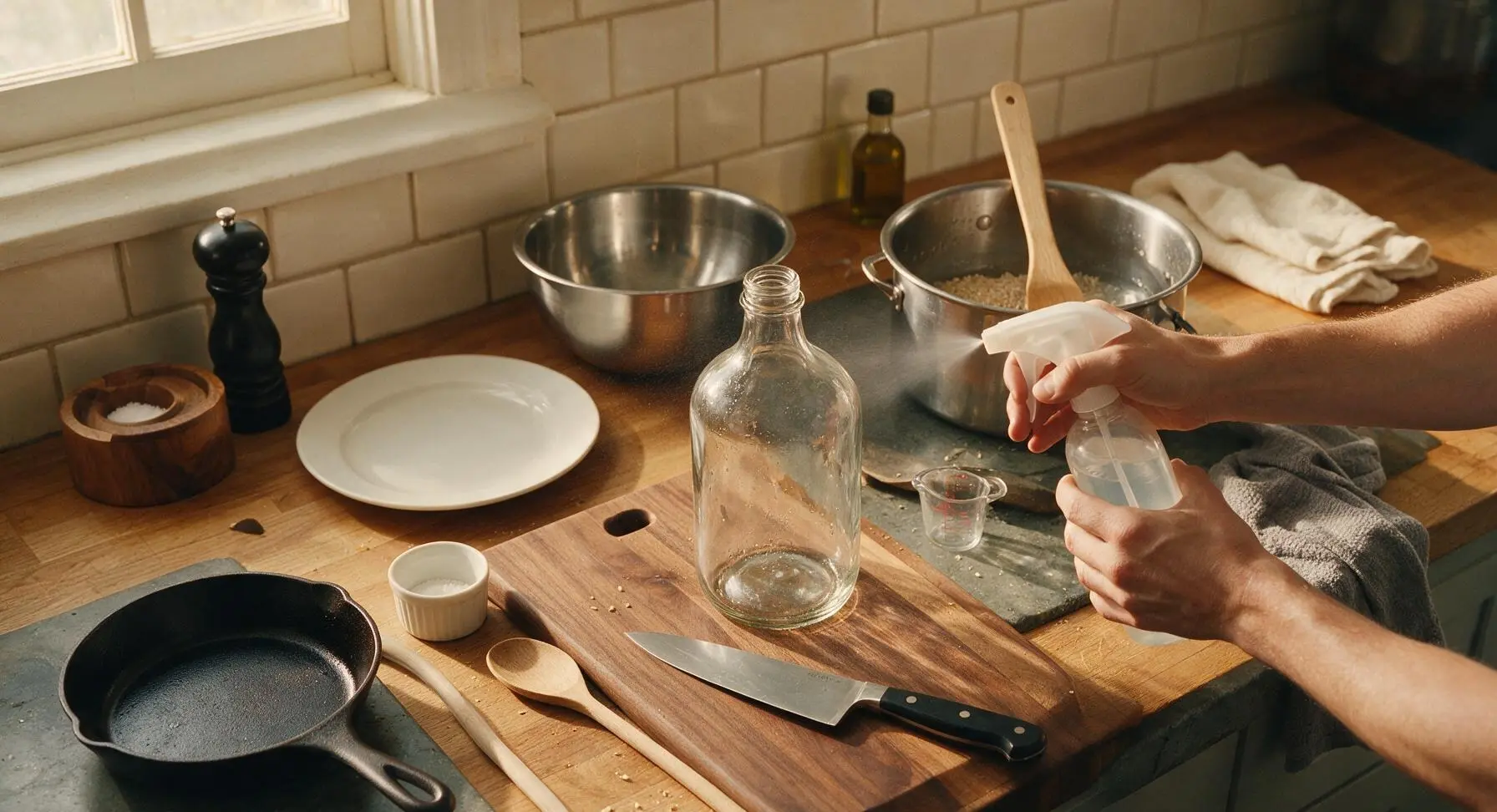
Step 1
step1:Sanitize Brewing Gear
2

Mash the Malted Grains

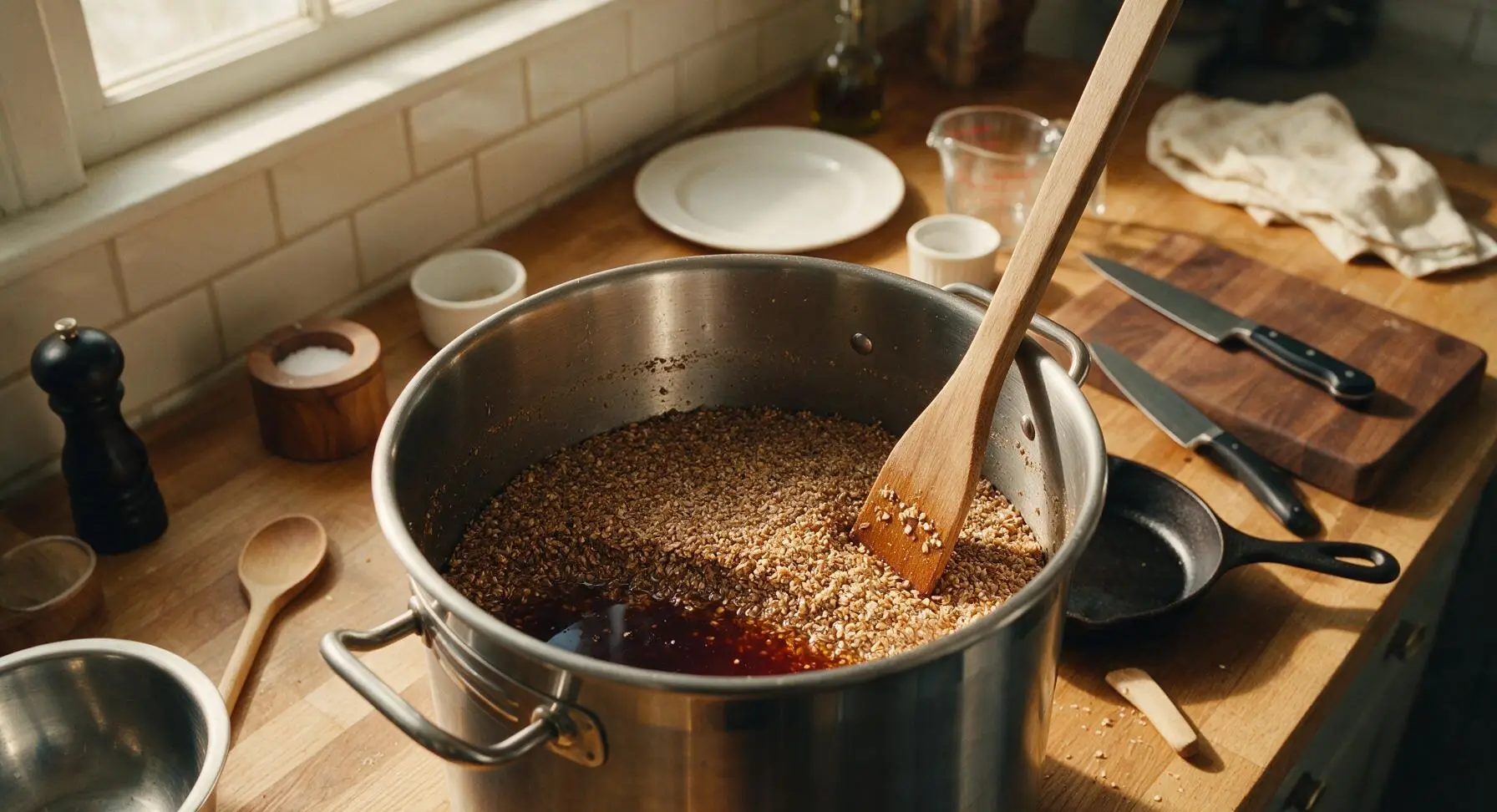
Heat 4 gallons of filtered water in the brew kettle to exactly 152°F, monitored with the digital instant-read thermometer. Slowly add all crushed malts to the mash tun, stirring continuously with the mash paddle to break up dry clumps. Pour the heated water over the grains, stir to fully saturate, then seal the mash tun lid and hold temperature steady at 150–155°F for 60 minutes. When complete, the grain bed will have settled into a firm layer, and sweet, dark wort will collect below the false bottom.
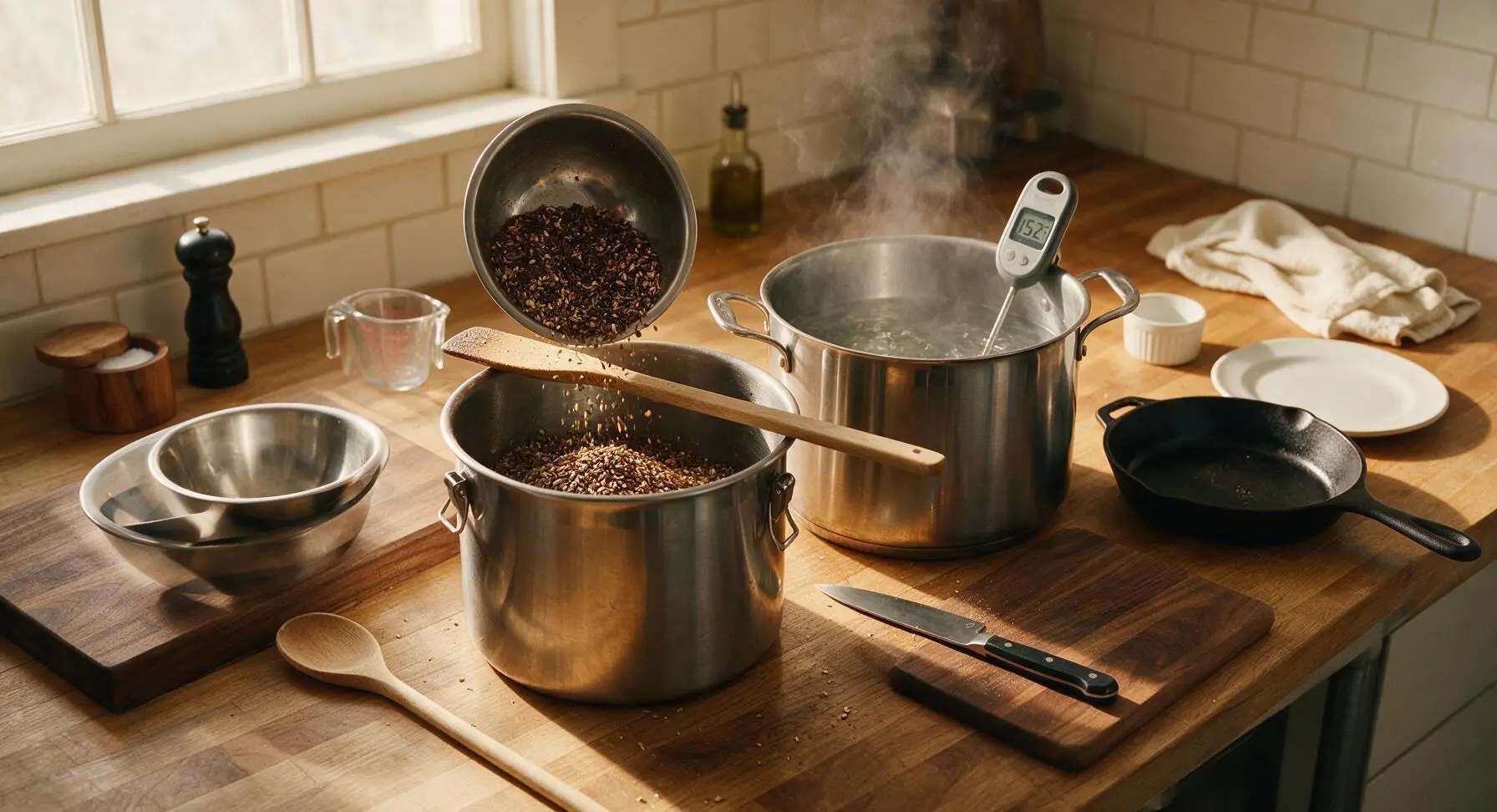
Step 2
step2:Mash the Malted Grains
Step 2
step2:Mash the Malted Grains
3

Sparge and Collect Wort

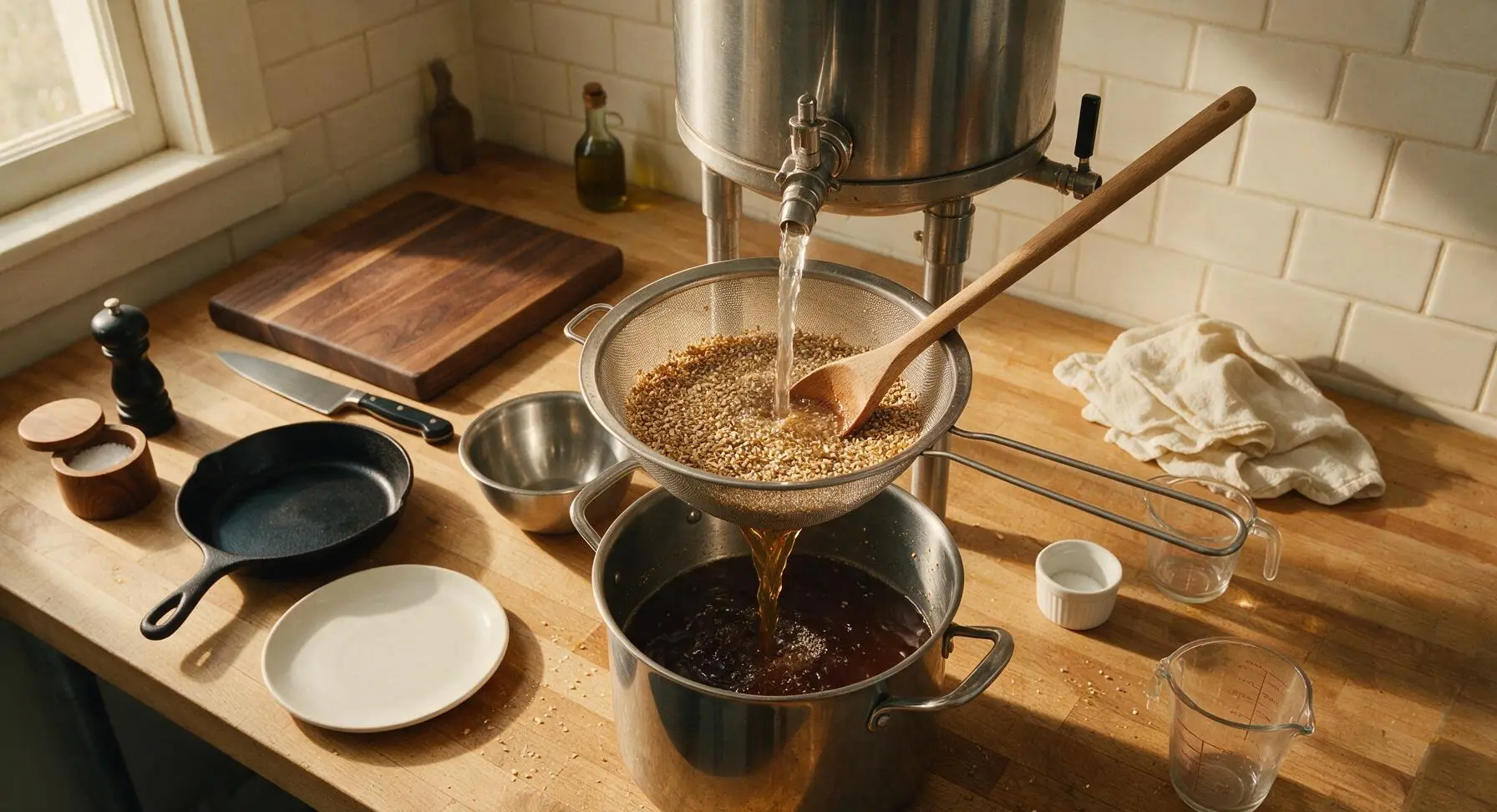
Heat the remaining 3 gallons of filtered water to 170°F for sparging. Slowly pour the hot sparge water over the top of the settled grain bed, pouring gently to avoid disturbing the compacted grain layer. Open the mash tun spigot and drain sweet wort through the fine-mesh strainer into the brew kettle until you collect 6 gallons total. The finished wort will be opaque dark brown, with a rich, toasted, coffee-like aroma.
Step 3
step3:Sparge and Collect Wort
4

Boil Wort and Add Hops

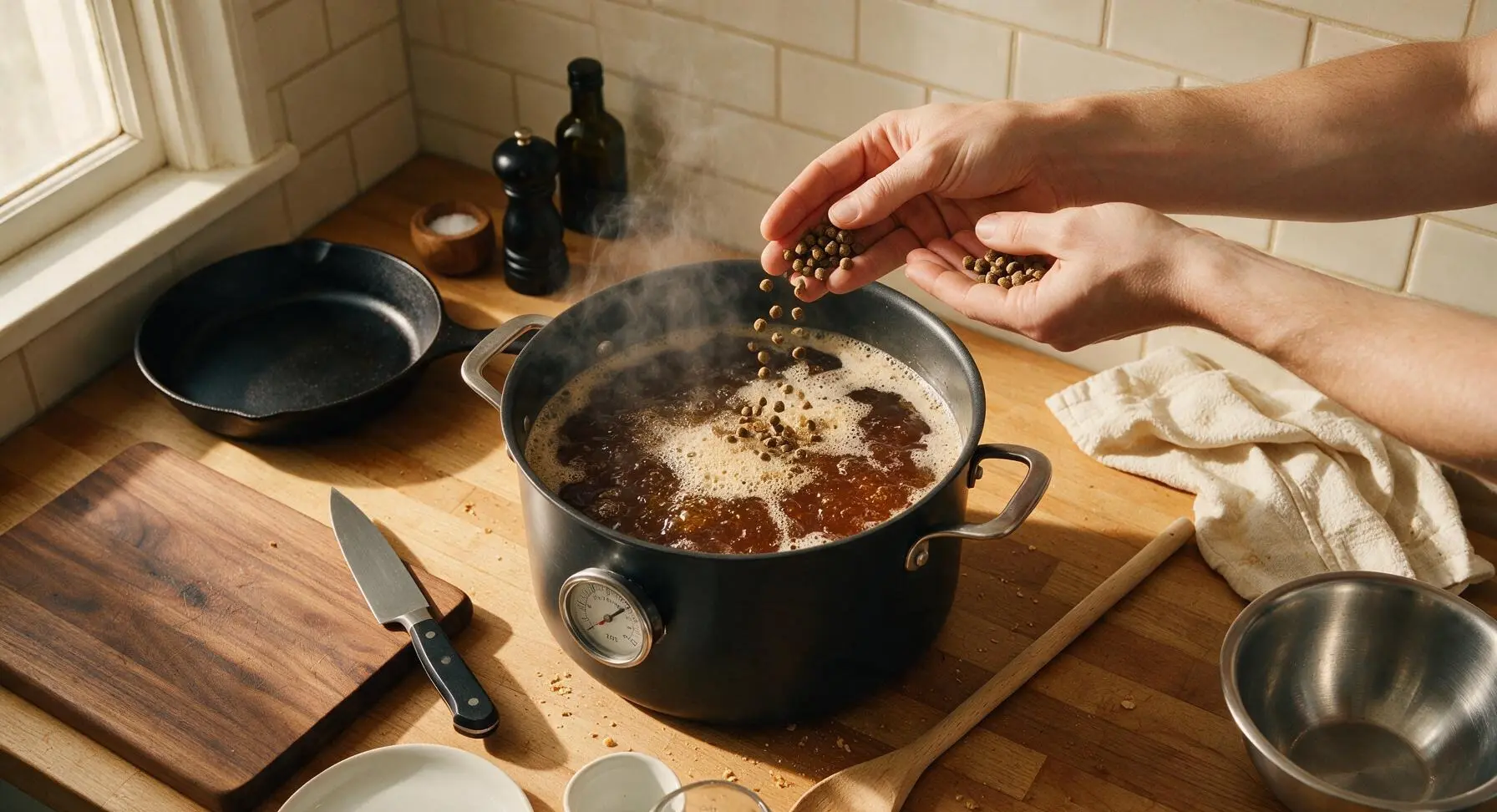
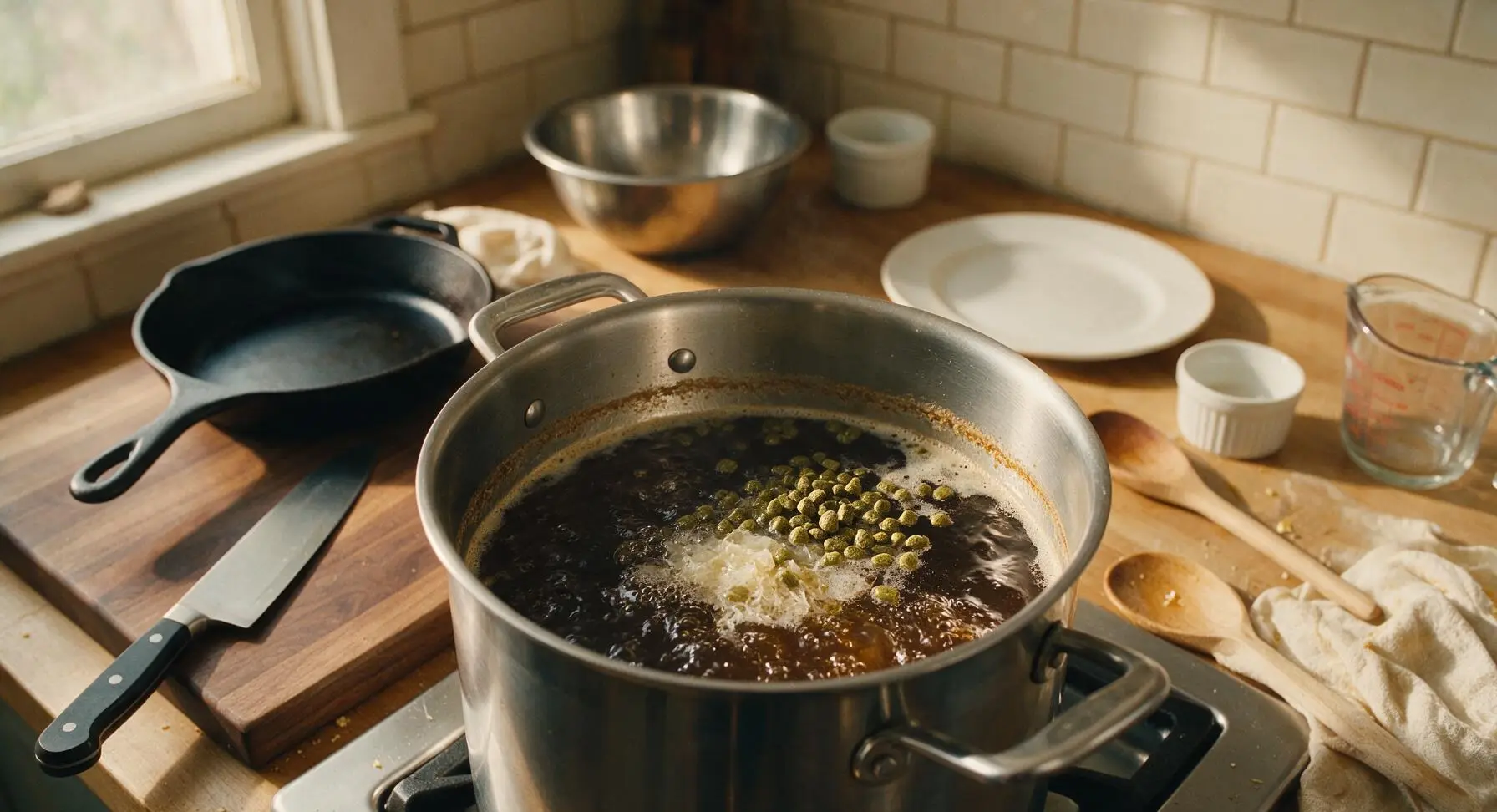
Place the brew kettle over high heat and bring the collected wort to a gentle rolling boil (212°F at sea level). Once steady boiling is achieved, add 1 oz of Magnum hop pellets and set a 60-minute timer. With 15 minutes remaining on the timer, add 1 oz of East Kent Goldings hop pellets and 1 tsp of Irish moss to help clarify the finished beer. Maintain a steady boil, stirring occasionally with the mash paddle to prevent sticky boilovers.
Step 4
step4:Boil Wort and Add Hops
Step 4
step4:Boil Wort and Add Hops
5

Chill Wort and Pitch Yeast

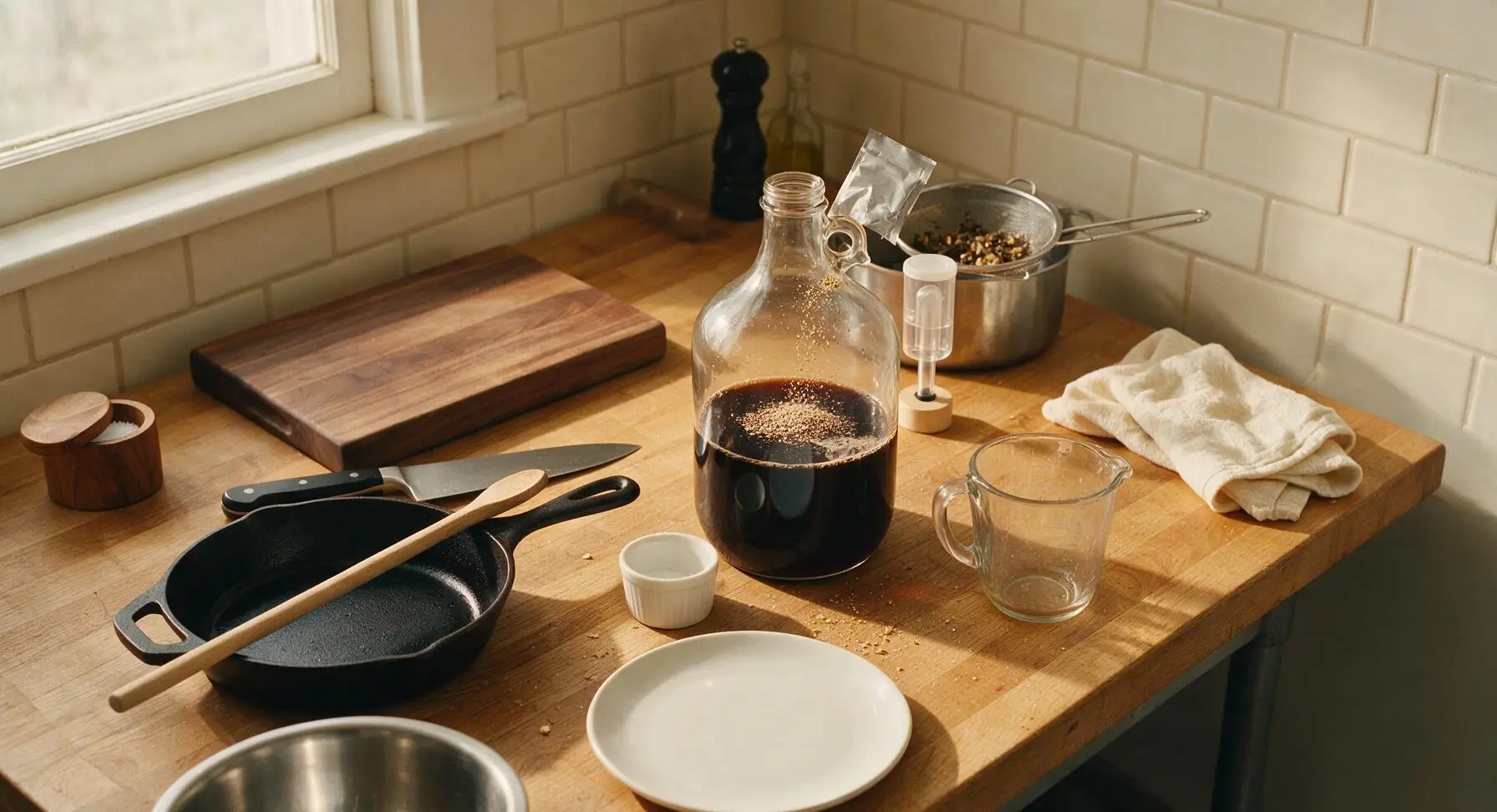
After the 60-minute boil completes, remove the kettle from heat and cool the wort as quickly as possible to 68°F using an ice bath or immersion wort chiller. Pour the cooled wort through the fine-mesh strainer into the sanitized glass carboy to remove spent hop and grain debris. Sprinkle the full packet of RC212 red wine yeast over the wort surface, seal the carboy with the drilled rubber stopper and airlock (filled halfway with sanitizer), and store in a dark, 65–68°F space for 2 weeks of primary fermentation. Steady bubbles will travel through the airlock for the first 7 days as active fermentation proceeds.
Step 5
step5:Chill Wort and Pitch Yeast
6

Transfer to Wine Barrel

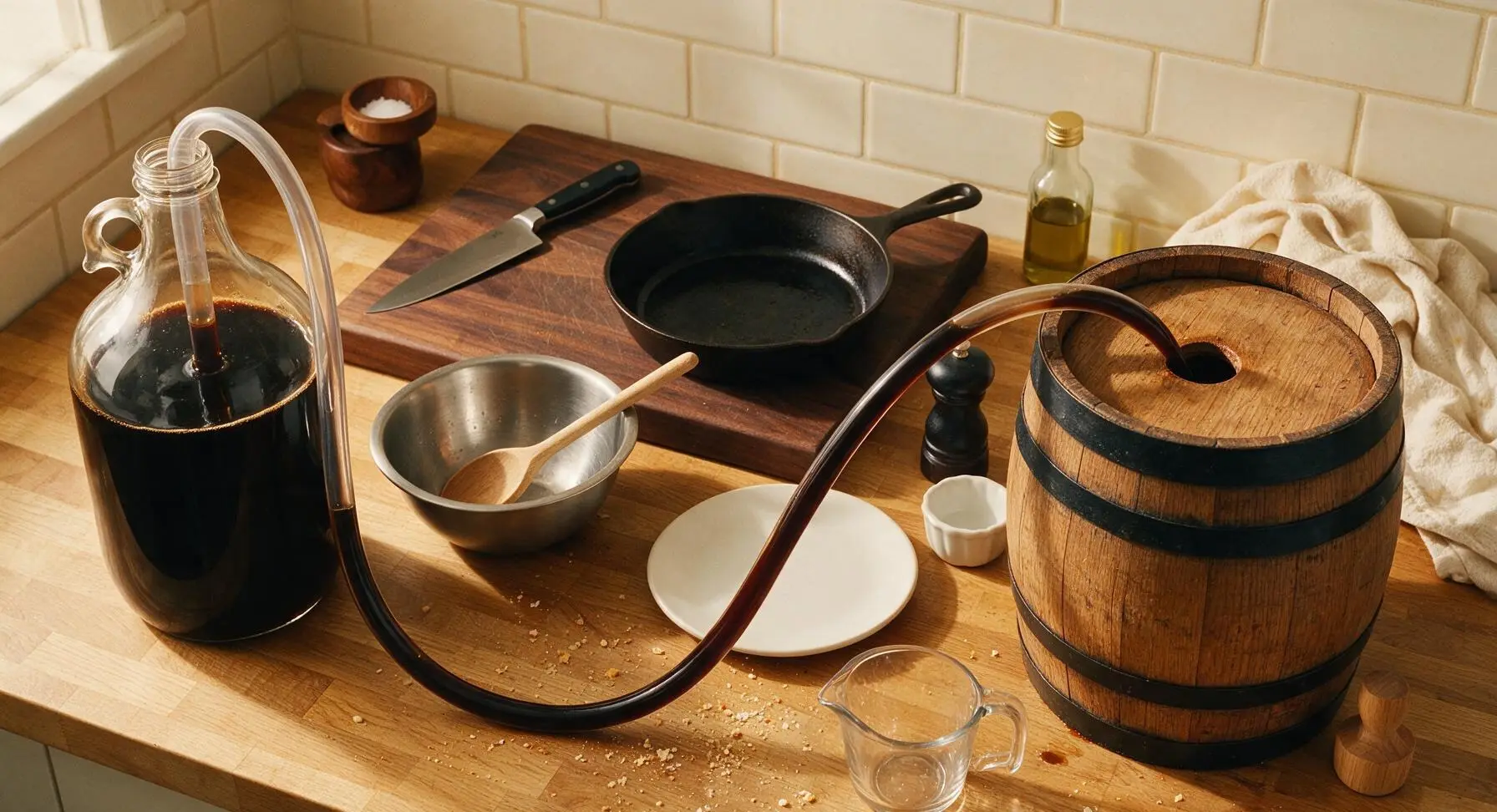
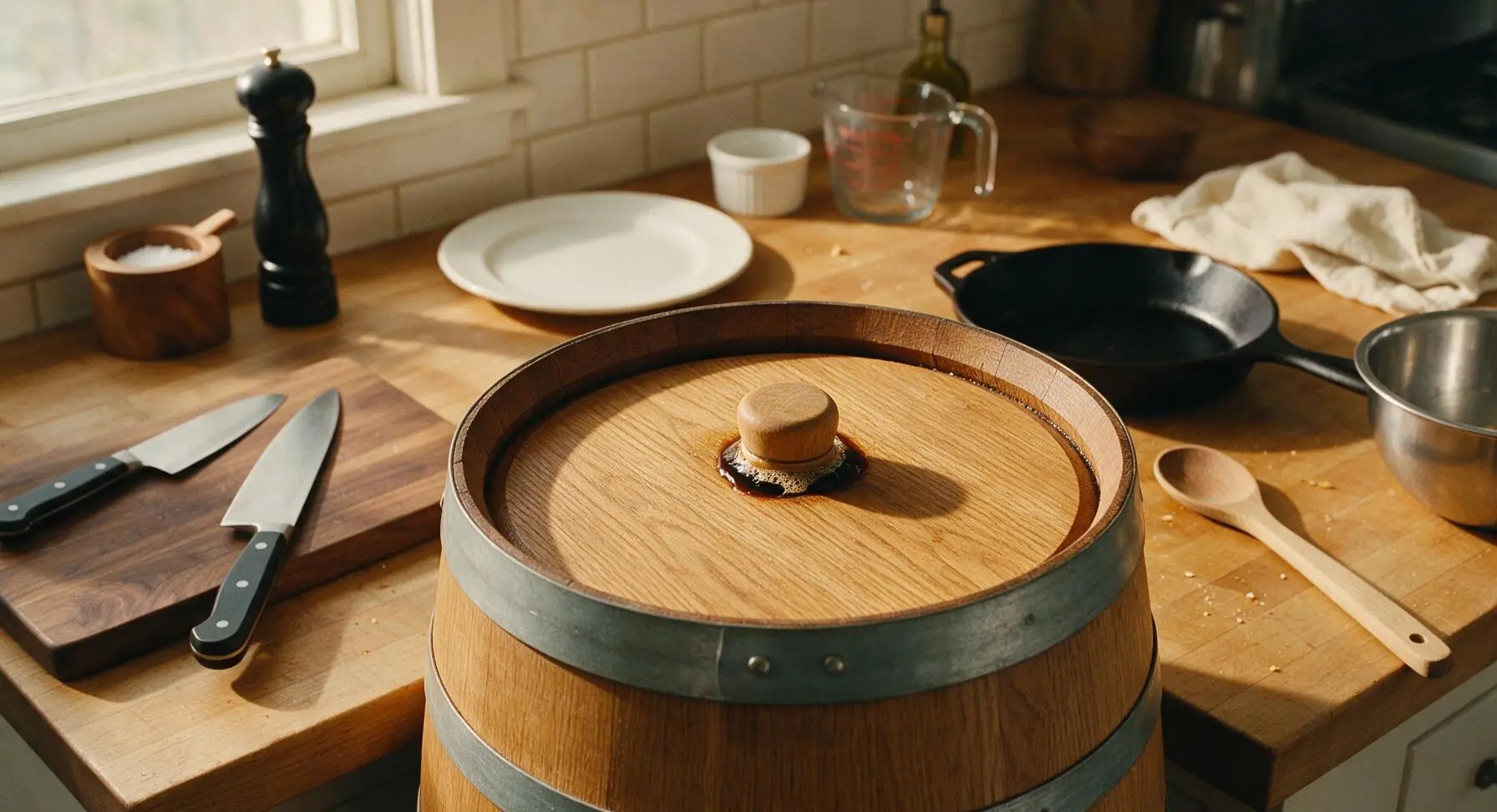
Once primary fermentation finishes (no bubbles pass through the airlock for 48 consecutive hours, specific gravity reading of ~1.018), use the sanitized auto-siphon to transfer the fully fermented stout from the carboy into the prepared wine barrel. Seal the barrel tightly with the wooden bung, and store in a cool, 60–65°F dark space for 4 weeks of barrel aging. During this time, the stout will absorb soft oak tannins, vanilla, and subtle dark red fruit notes from the used wine barrel wood.
Step 6
step6:Transfer to Wine Barrel
Step 6
step6:Transfer to Wine Barrel
7

Bottle and Condition Stout

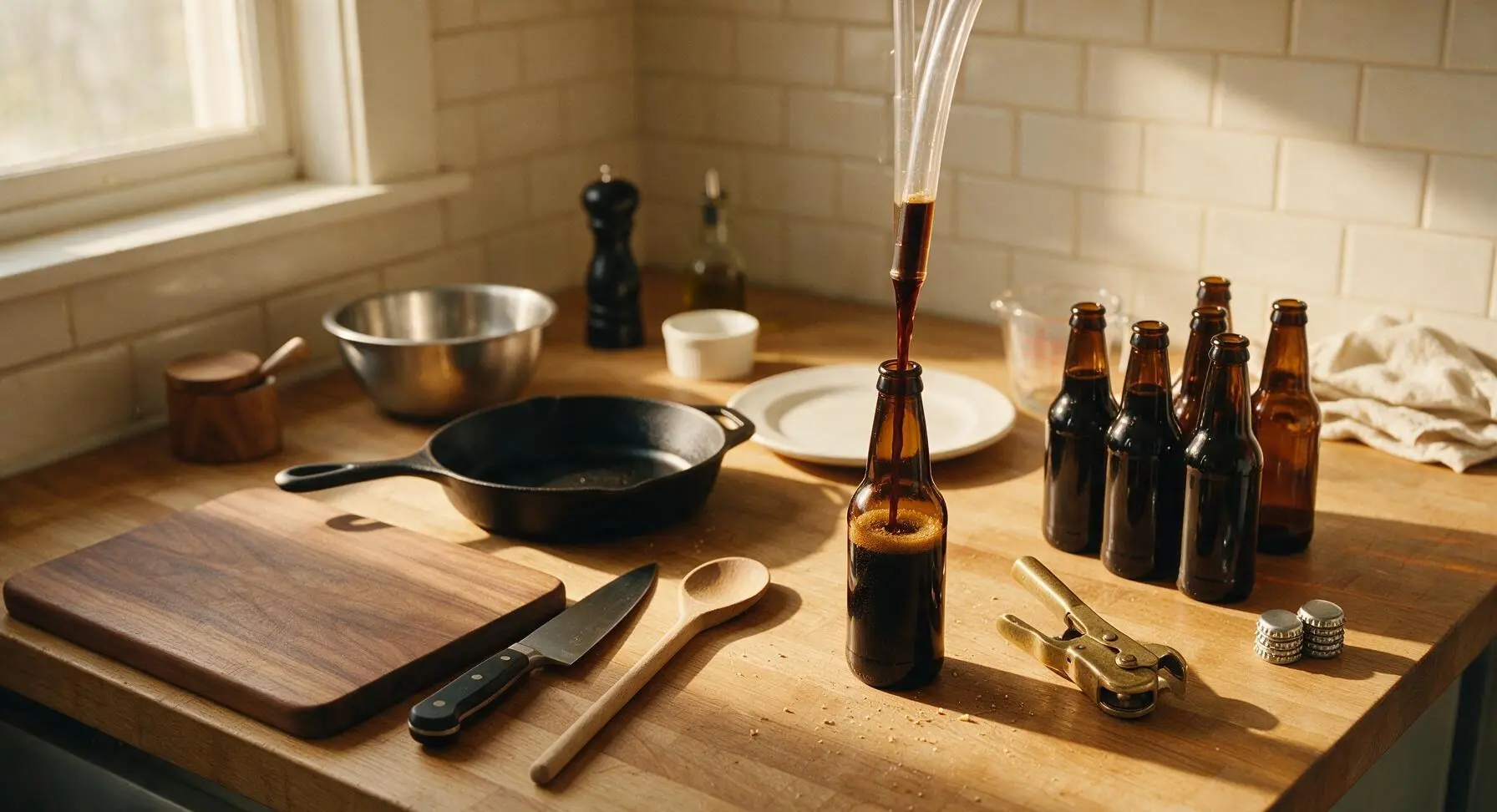
After 4 weeks of barrel aging, siphon the stout out of the barrel into a sanitized bottling bucket, gently mixing in 5 oz of dissolved corn sugar to prime for natural carbonation. Use the auto-siphon to fill sanitized 12oz amber beer bottles to 1 inch below the rim, then cap each bottle with the brass bottle capper and a silver crown cap. Store sealed bottles in a dark, 70°F space for 2 weeks to allow carbonation to develop, then move to a cool 45–50°F space to age for an additional 2 weeks before serving.
Step 7
step7:Bottle and Condition Stout

Tips

1.Use a neutral, previously used red wine barrel (Pinot Noir or Merlot is ideal) rather than a new oak barrel: new oak will impart harsh, overpowering woody tannins that mask the stout’s roasty malt character, while a used wine barrel adds subtle berry fruit and soft vanilla notes without overwhelming the beer.
2.Minimize oxygen exposure at every step after fermentation: oxygen contact at this stage creates stale, sherry-like off-flavors that ruin the stout’s smooth profile. Keep siphon tubing fully submerged during transfers, and seal the barrel and bottles immediately after filling to limit air contact.
3.Taste a 4oz sample of the stout every 7 days once barrel aging hits the 3-week mark: aging longer than 5 weeks will pull excess astringent tannins from the oak, leading to a dry, harsh mouthfeel. Stop aging when you detect a balanced mix of roast, dark fruit, and soft oak.


✨ You May Also Like

Drinks & Beverages
🍜 Mexico

A bright, balanced tequila-based cocktail with zesty fresh lime, smooth orange liqueur, and a signature salt rim, perfect for warm summer sipping.

⏱️ 5 minutesDrinks & Beverages ★ 4.9
Drinks & Beverages
🍜 United States

Thick, creamy, nostalgic classic vanilla milkshake with a rich, smooth texture, topped with whipped cream and a cherry for cool, sweet refreshment.

⏱️ 5 minutesDrinks & Beverages ★ 4.7
Drinks & Beverages
🍜 United States

A bright, golden strong ale with fruity banana-clove notes, subtle hop spice, and soft carbonation, brewed in classic Trappist Tripel tradition.

⏱️ 2 hours aDrinks & Beverages ★ 4.5
Drinks & Beverages
🍜 United States

A frothy, nostalgic American soda fountain treat pairing bubbly cold root beer with creamy vanilla ice cream, perfect for cooling down at warm weather gatherings.

⏱️ 20 minuteDrinks & Beverages ★ 4.8
Drinks & Beverages
🍜 United States

Tart, funky, effervescent American Wild Ale is a complex fruity craft beer brewed with wild yeast, delivering bright, zesty notes perfect for warm-weather sipping.

⏱️ 2 hours aDrinks & Beverages ★ 4.4
Drinks & Beverages
🍜 United States

Bright, bubbly copycat of the iconic American caramel cola, balanced with citrus and warm spice, perfect for sipping ice-cold on hot days.

⏱️ 15 minuteDrinks & Beverages ★ 4.8

Wine Barrel Aged Stout:Frequently Asked Questions

1.Do I need a full used wine barrel to make this stout at home? ▾
You absolutely don’t need a full, expensive wine barrel for home batches! For a standard 5-gallon batch, use 1–2 oz of medium-toast oak cubes or spirals soaked in dry red wine for 24 hours first. Add them to your secondary fermenter, taste every 2–3 days, and pull them out once flavors balance to avoid harsh, overpowering oak tannins.
2.How long do I need to age this stout to get that classic wine barrel character? ▾
If using oak alternatives instead of a full barrel, aim for 2–4 weeks of contact time during secondary fermentation, followed by 2–3 months of bottle conditioning at 55–60°F. If using a real used wine barrel, plan for 3–6 months of aging, tasting monthly to track when roasty malt, vanilla oak, and subtle wine notes meld smoothly.
3.What type of red wine works best to replicate authentic barrel character? ▾
Stick with dry, full-bodied reds with dark fruit notes, like Cabernet Sauvignon, Merlot, or Zinfandel. Avoid sweet, light reds like White Zinfandel or delicate Pinot Noir, as they won’t stand up to the stout’s bold roasted malt profile. You only need 4–6 oz per 5-gallon batch to soak your oak, so no need to splurge on a premium bottle.
4.Will the roasted barley and chocolate malt make this stout taste burnt or overly bitter? ▾
It won’t if you measure and steep your grains correctly! Stick to the recipe’s grain ratios, and avoid steeping crushed dark malts above 170°F, as that extracts harsh, astringent burnt flavors. When dosed properly, those dark malts add rich coffee and bittersweet cocoa notes that balance the oak’s vanilla and bright wine fruit, rather than tasting acrid.
5.What ideal ABV should I target so this stout holds up to barrel aging? ▾
Aim for a final ABV between 7–9% for the best balance. Lower ABV stouts risk taking on too much oak tannin or off-flavors from residual microbes on used oak or barrels, while stouts over 10% ABV overpower the subtle red wine and soft vanilla notes. That 7–9% range creates a velvety, sippable stout that doesn’t taste harshly boozy.
6.Can I add extra vanilla to amp up that classic oak-aged flavor? ▾
You absolutely can, but go light to avoid making it taste like vanilla candy! For a 5-gallon batch, add 1/4–1/2 of a sanitized, split vanilla bean (or 1/4 tsp of pure vanilla extract, no imitation) to secondary when you add your wine-soaked oak. Taste after a week, and add a touch more only if the vanilla note is still too subtle.
7.How should I serve this wine barrel aged stout to get the best flavor? ▾
Serve this stout slightly warmer than standard draft beer, around 50–55°F, in a wide-mouthed snifter or tulip glass to let aromas of roast, oak, and dark red fruit open up. Skip icy cold pint glasses, as frigid temperatures mute subtle vanilla and wine notes and thin out the velvety mouthfeel. It pairs beautifully with dark chocolate, aged cheddar, or spiced winter desserts.
8.How long will bottled batches of this stout stay good if I cellar them? ▾
Properly bottled and stored in a cool, dark spot at a steady 55–60°F, this stout will drink beautifully for 1–2 years. Over longer storage, bright red wine fruit notes fade first, followed by soft vanilla, leaving deeper, more muted roast and leathery oak notes. It won’t spoil after 2 years, but it will lose that signature balanced, fruit-kissed oak character.

Comments (11)

2 weeks ago

OMG this wine barrel aged stout turned out so much better than the store bought barrel aged stouts I’ve been dropping $15 a four pack on! The oak and red wine notes come through so smooth, no harsh boozy bite at all. Brought a growler to our annual fall potluck last weekend and everyone was begging for the recipe. Total game changer for my homebrew setup. Worth every minute of that 10 week wait, no cap.

1 week ago

Wait did you use a fresh wine barrel or the oak chips + wine soak method? I don’t have space for a full barrel in my apartment brew closet lol

5 days ago

So glad it was a hit at your potluck! For folks without space for a full barrel, the medium toast oak cubes soaked in a dry cabernet for 48 hours works perfectly to get that same barrel character without the footprint!

3 days ago

My husband and I brewed this for his birthday party and it was chef’s kiss. We paired it with smoked brisket sliders and it was the perfect match. The vanilla notes from the stout balance the wine tang so nicely, even my sister who swears she hates dark beer had two glasses! SO good.

5 days ago

Uh, how hard is this really for someone who’s only done extract brew kits before? I’ve never done all-grain, let alone messed with barrel aging, and I don’t want to waste a bunch of fancy malt and wine on a bad batch.

3 days ago

Great question! We recommend nailing 2-3 standard all-grain stout batches first before jumping into this one, since the long ferment time and barrel character will hide very few off-flavors. If you’re still getting the hang of temperature control during fermentation, start with our regular dry stout recipe to practice first!

1 week ago

I let mine condition an extra 2 weeks in the bottle because I got swamped with work and forgot about it, and HOLY COW the dark fruit and chocolate notes are insane. Tastes like I paid $20 a bottle for it at the fancy craft beer bar downtown. 10/10, will be brewing this every fall from now on.

5 days ago

Wait what wine did you use for the soak? I used a pinot noir last time and it came out a little too tart for my taste

3 days ago

I used a leftover zinfandel from a dinner party, super jammy, not too tart! That might be the difference, I bet a merlot would work great too if you don’t like super bright tart notes.

2 days ago

Pro tip for anyone making this in a warmer climate: keep your fermentation temp 2 degrees lower than the recipe says if you can, mine got a little too warm the first 3 days and I got a tiny bit of fruity ester that threw off the oak balance a touch. Still drinkable, just not perfect.

yesterday

Thanks for the heads up! My garage brew setup gets toasty in the Georgia fall so I was already planning to hook up my temp controller, this confirms I need to stop slacking on that

yesterday

Bottled a batch of this last month to save for New Year’s and I cracked a test bottle last night, it’s already so smooth! The red wine finish is so subtle it doesn’t overpower the roasted malt, which is exactly what I was going for. Can’t wait to share these with my crew on NYE.

2 hours ago

Is there a non-alcoholic version of this? My partner is sober but loves the taste of dark stouts, and I’d love to make a batch we can both enjoy without modifying it too much.

30 minutes ago

Great question! You can adapt this by using a non-alcoholic stout base, reducing the wine soak time for the oak cubes to 24 hours and cooking off the alcohol from the wine first before adding the cubes to the secondary ferment. We’re testing a full NA version of the recipe to post early next year!

3 days ago

I thought the 4 hour active cook time was overhyped until I brewed it, y’all weren’t kidding about how precise you have to be with the mash temp here. Rushed the sparge a little on my first try and ended up with a thinner mouthfeel than I wanted, so I’m giving it another go this weekend. First batch was still solid, just not quite as rich as I hoped.

2 days ago

I messed up my mash temp on my first stout too! I actually added a tiny bit of lactose at bottling on my thin batch and it helped bulk up the mouthfeel a ton without making it too sweet

yesterday

Great tip from HoppyHiker82! Mash temp consistency is key here for that rich, full mouthfeel. If you do end up with a thinner batch, a half pound of lactose added at bottling (dissolved in a small amount of boiled, cooled water) is a perfect easy fix.

5 minutes ago

My roommates and I split the cost of a small used wine barrel for this recipe and it’s the best purchase we’ve made all year. We’ve already got plans to brew a sour in it right after this stout kicks. Game changer for our weekend brew days.

just now

Where’d you find a used small format barrel for a decent price? All the ones I’ve seen near me are like $300 and that’s way out of my budget right now

1 week ago

Brought a six pack of this to my family’s Thanksgiving dinner and even my 72 year old dad who only drinks cheap light beer said it was “pretty darn good”. That’s the highest praise possible from that man, honestly. Will be making this a yearly tradition for sure.

30 minutes ago

Wait did anyone else get a little bit of a vinegar tang on their first few sips of the bottled batch? I followed the recipe exactly, sanitized everything like crazy, so I’m not sure if it’s just the wine notes coming through or if I got a little infection.

5 minutes ago

That went away for me after a week of bottle conditioning! The first couple test bottles I opened had that sharp tang, but once the carbonation fully set in it mellowed right out into that nice dark fruit/wine flavor

just now

Great note from OakAgedOwen! That initial sharp tang is totally normal from the wine-soaked oak, especially if you open bottles before the full 2 week conditioning period is up. If you still notice it after 3 weeks in the bottle, shoot us a message and we can help troubleshoot for possible infection!



