
American Pilsner Craft Beer
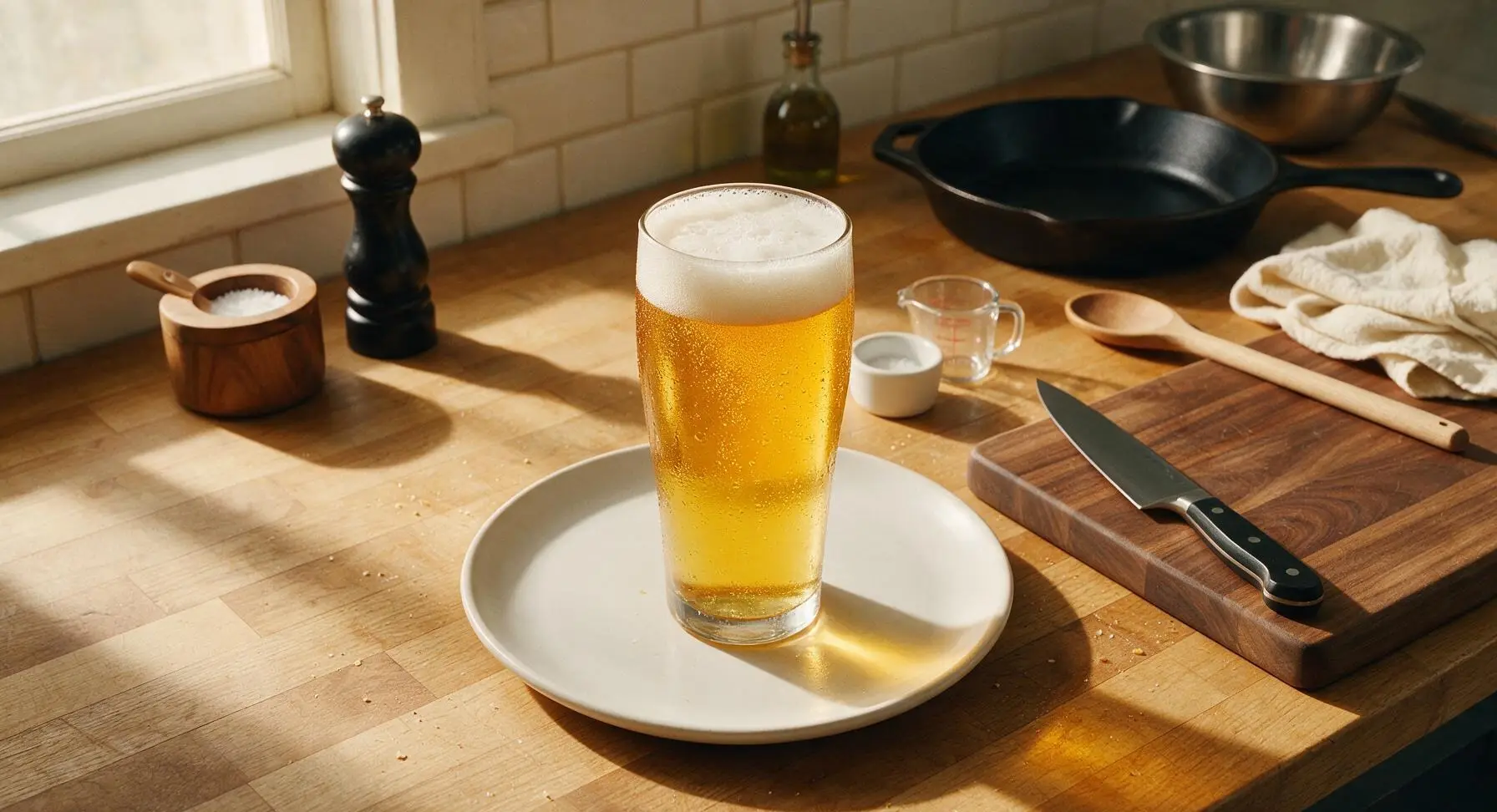
intro
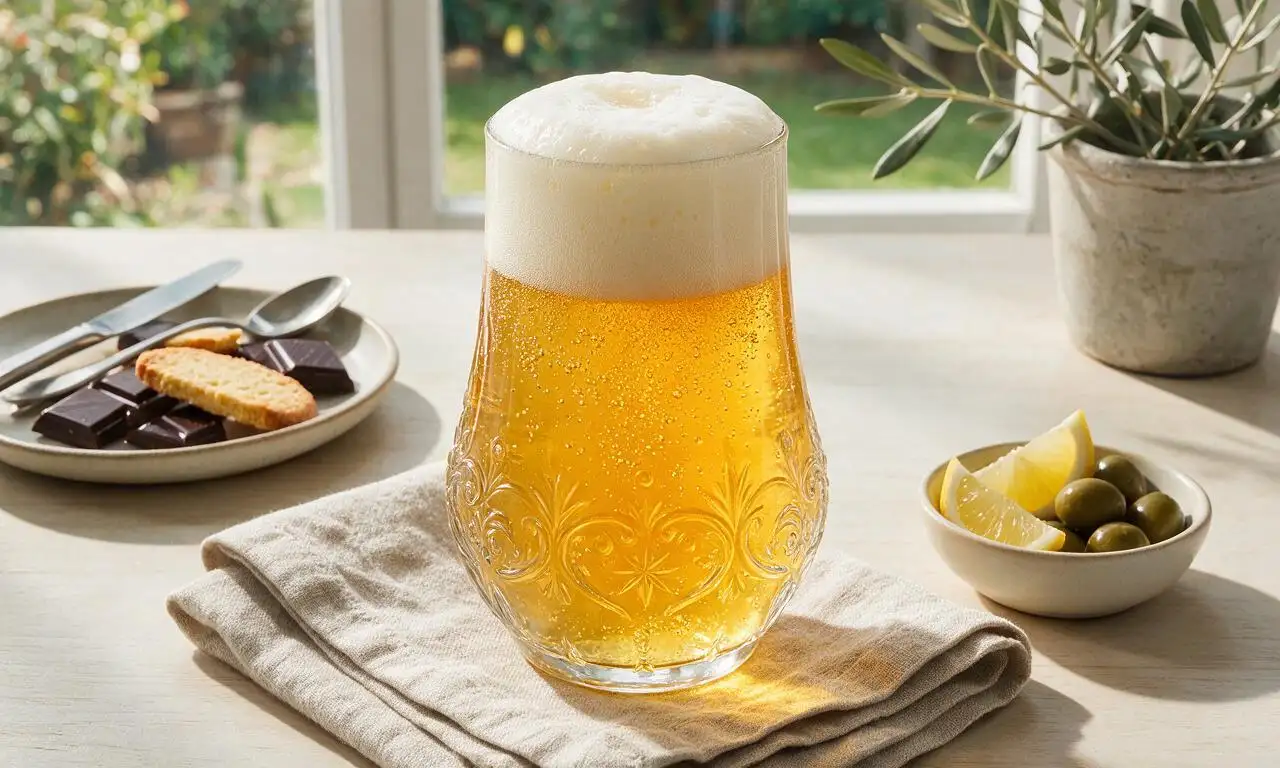
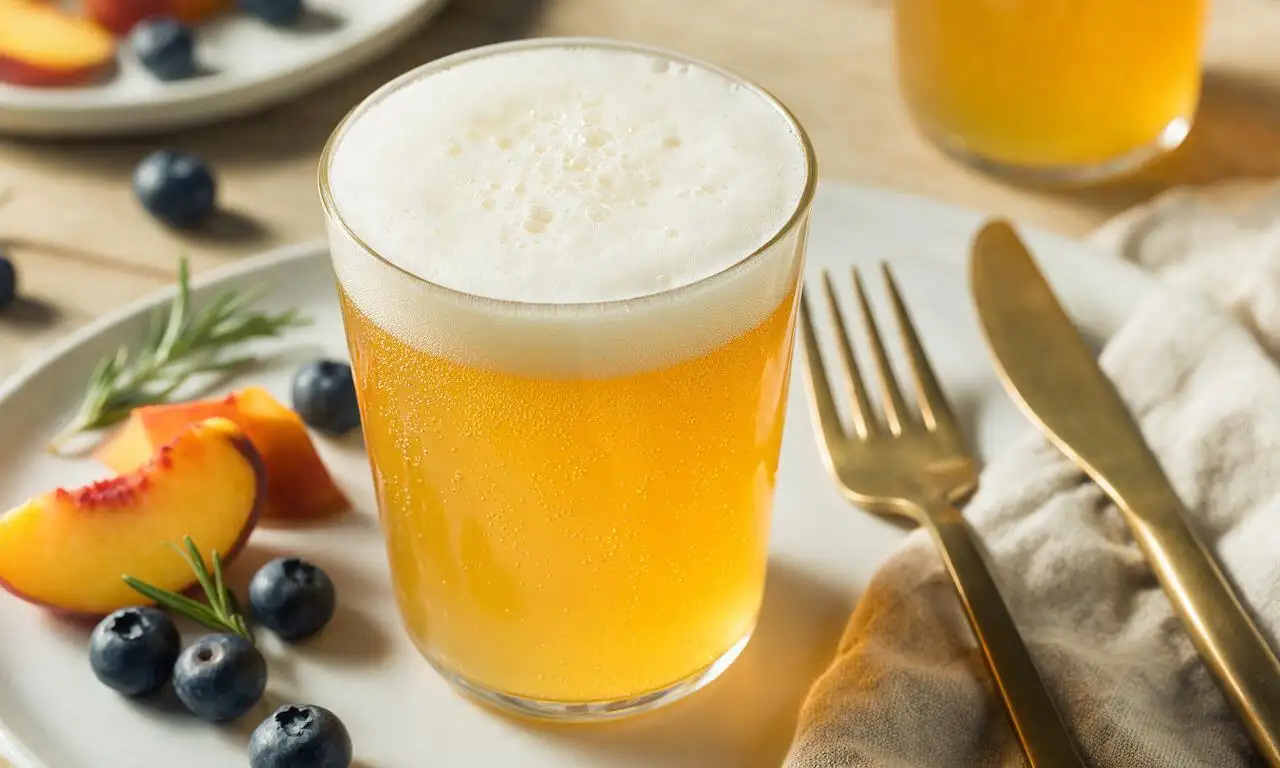
Crisp, bright golden American Pilsner with soft carbonation, clean bready malt backbone, and subtle citrus hop notes, brewed to be perfectly ice-cold for summer sipping.
Ingredients
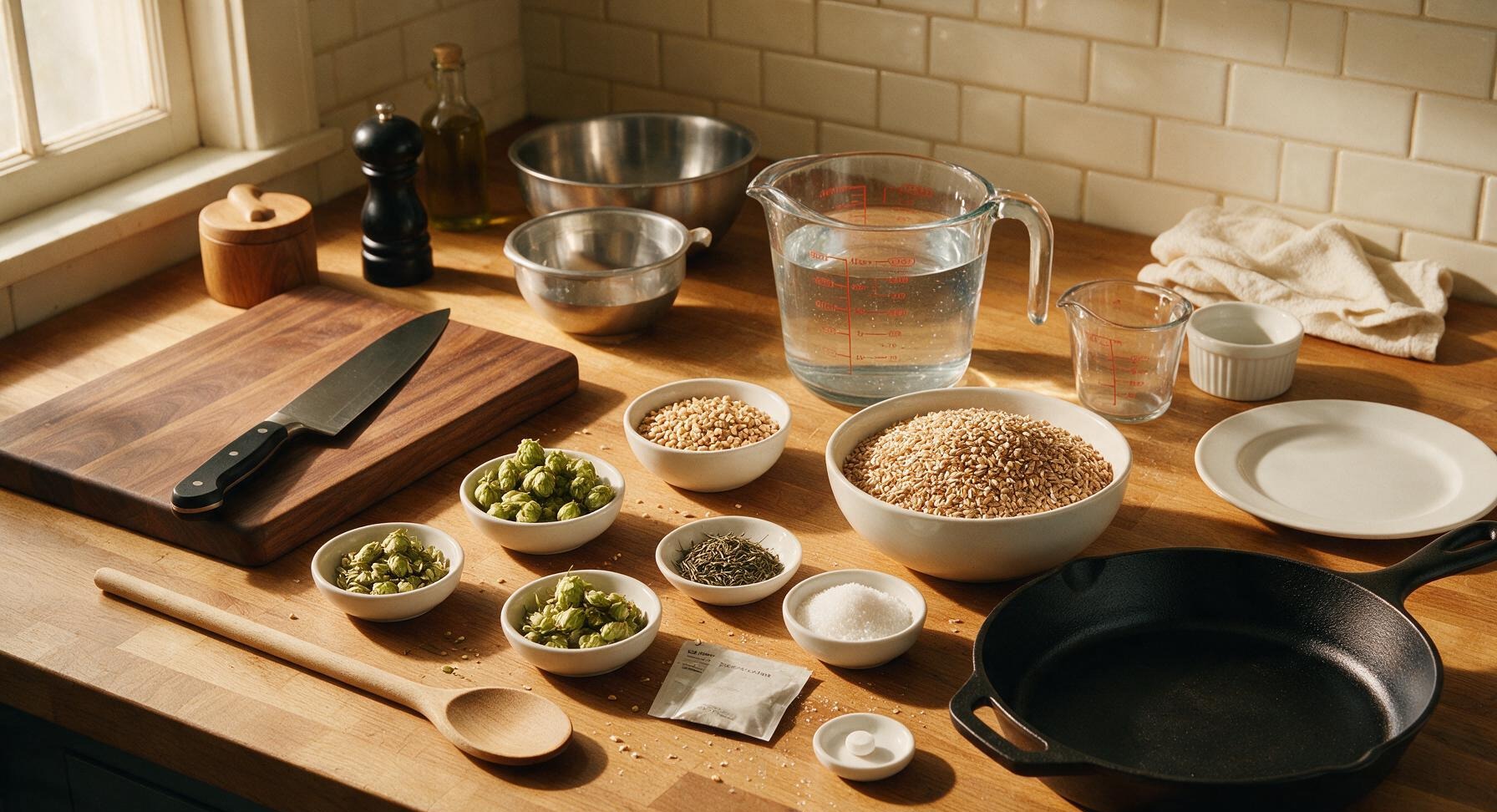
Steps
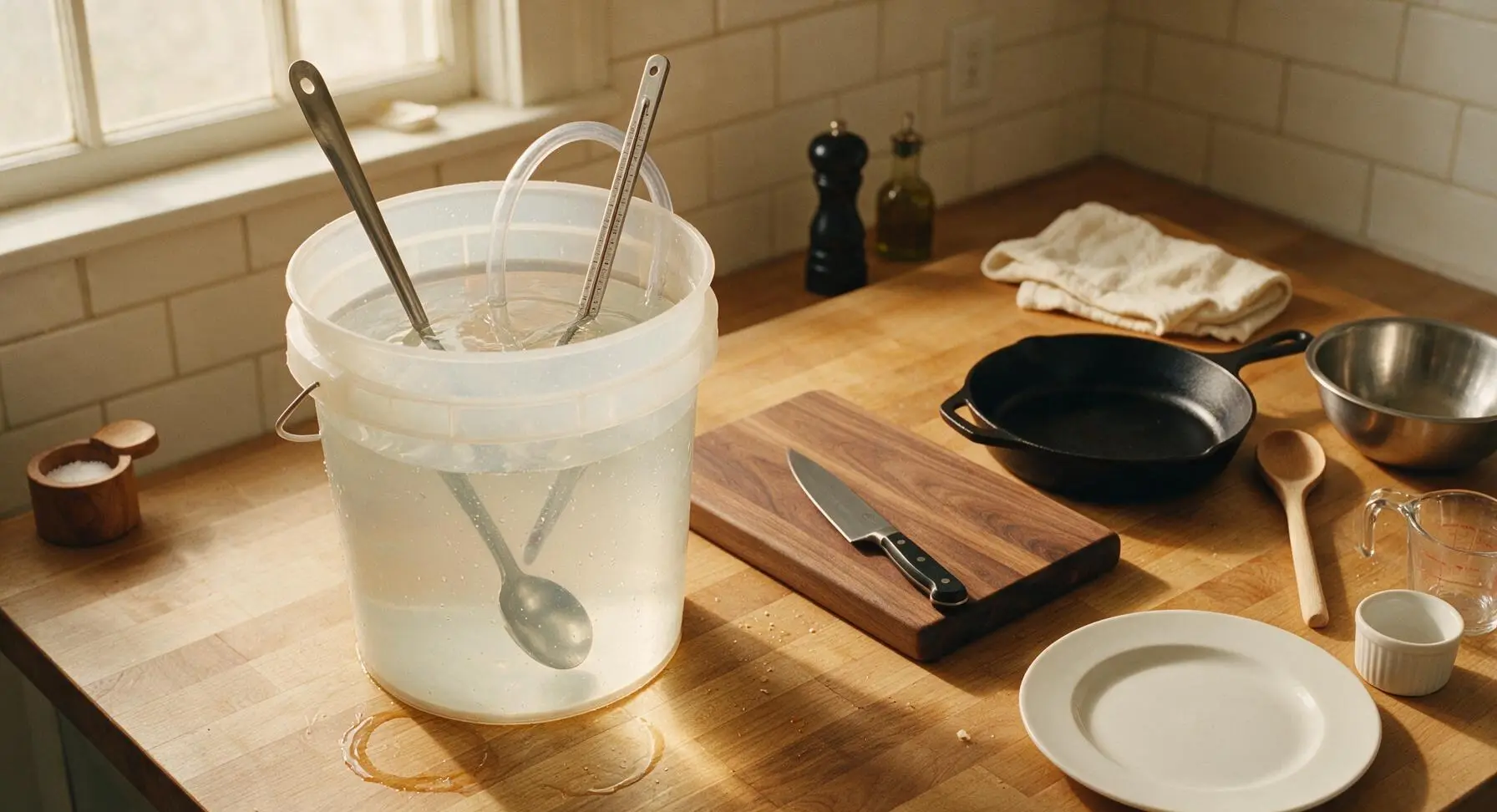
Sanitize Brewing Equipment
Fill the 6-gallon translucent sanitizer bucket with 5 gallons of cool filtered water, add 2 no-rinse sanitizer tablets from the white ceramic dish, and stir with the long stainless steel stirring spoon until tablets are fully dissolved. Submerge all tools that will contact cooled beer (spoon, thermometer, carboy neck, airlock, auto-siphon, tubing, bottle caps) for 2 full minutes, then set them on a clean section of counter to air dry. Proper sanitization eliminates wild yeast and bacteria that cause sour off-flavors.
Steep Crushed Grain Bill
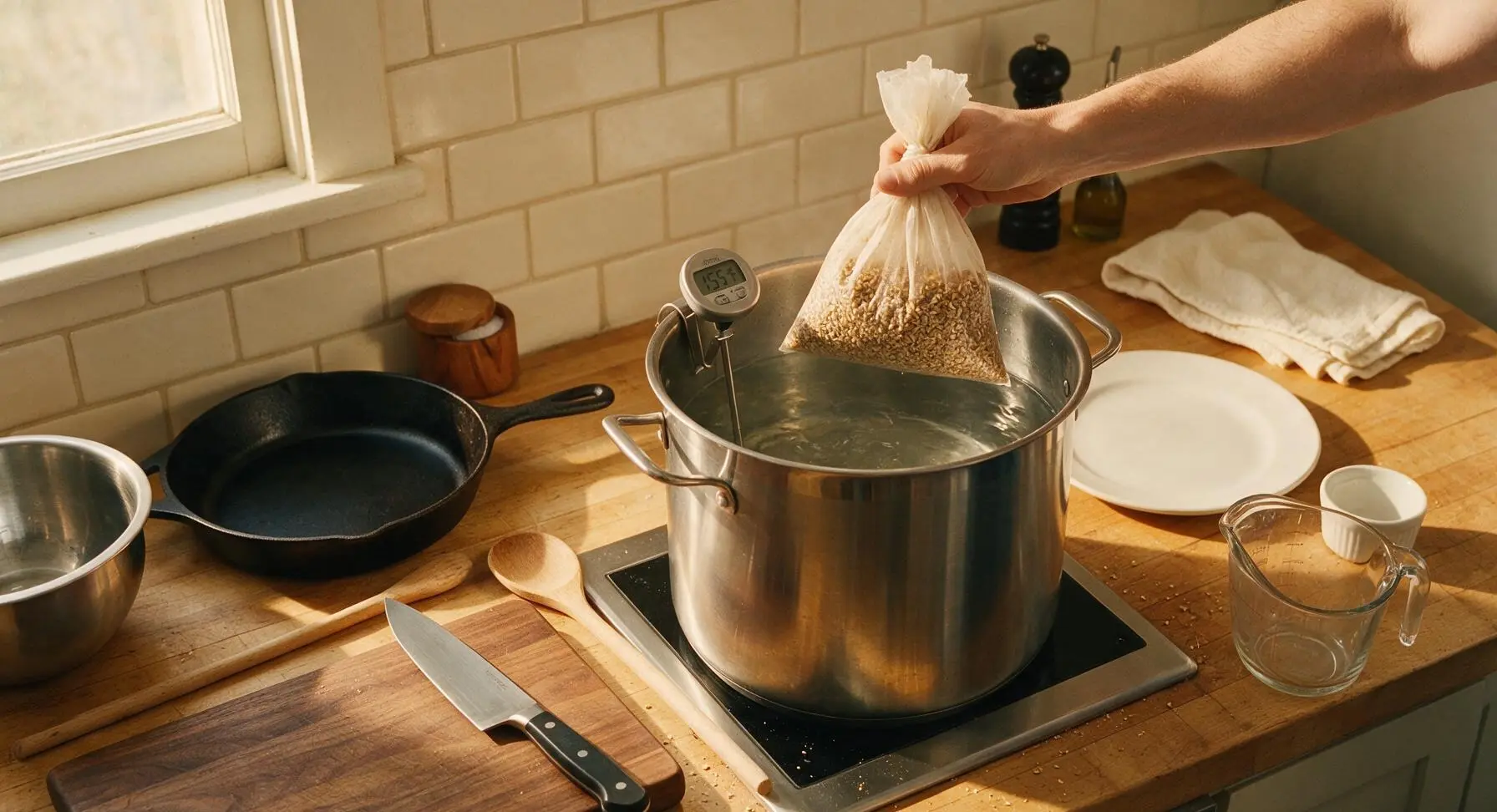
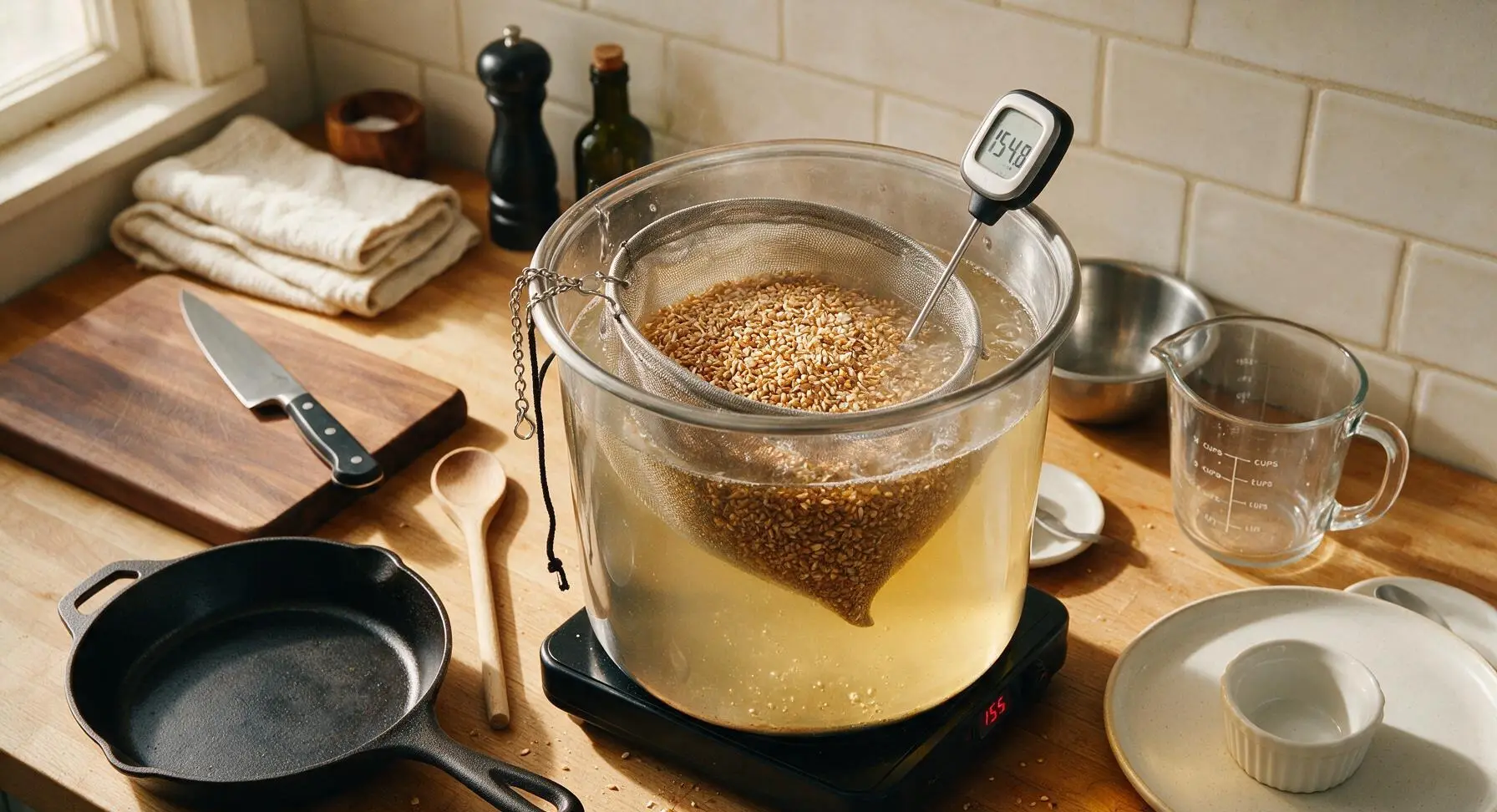
Pour 2.5 gallons of filtered cold water into the 5-gallon stainless steel brew kettle set on the center induction burner, and heat to a steady 155°F, verifying temperature with the digital instant-read thermometer clipped to the kettle rim. Fill the fine-weave stainless steel mesh grain bag with the crushed 2-row pale malt and Carapils malt, pull the cotton drawstring tight, and submerge the bag fully in the heated water. Steep for 30 minutes, holding temperature steady between 150–155°F, to extract sweet bready malt flavor without leaching harsh tannins from grain husks.
Bring Wort to Boil
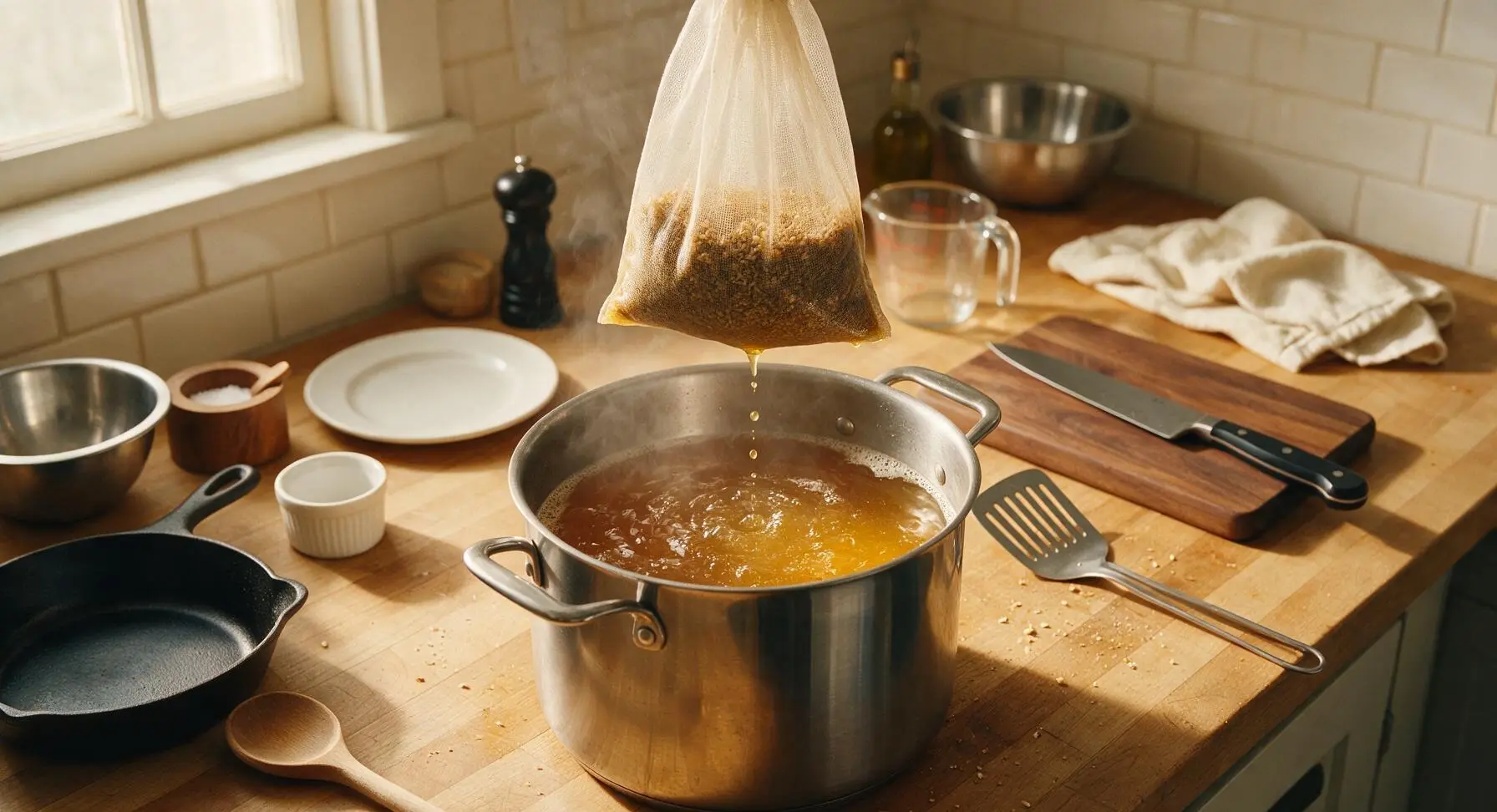
Lift the grain bag out of the kettle, hold it above the pot for 1 minute to let all sweet wort drain back into the kettle (do not squeeze the bag, as this presses harsh tannins into the wort), then set the spent grain bag aside. Turn the induction burner to high, and heat the sweet malt liquid (wort) to a steady rolling boil that cannot be stirred down, approximately 10 minutes. Keep the slotted skimmer nearby to knock down foam and prevent boil-overs.
Add Hops on Schedule
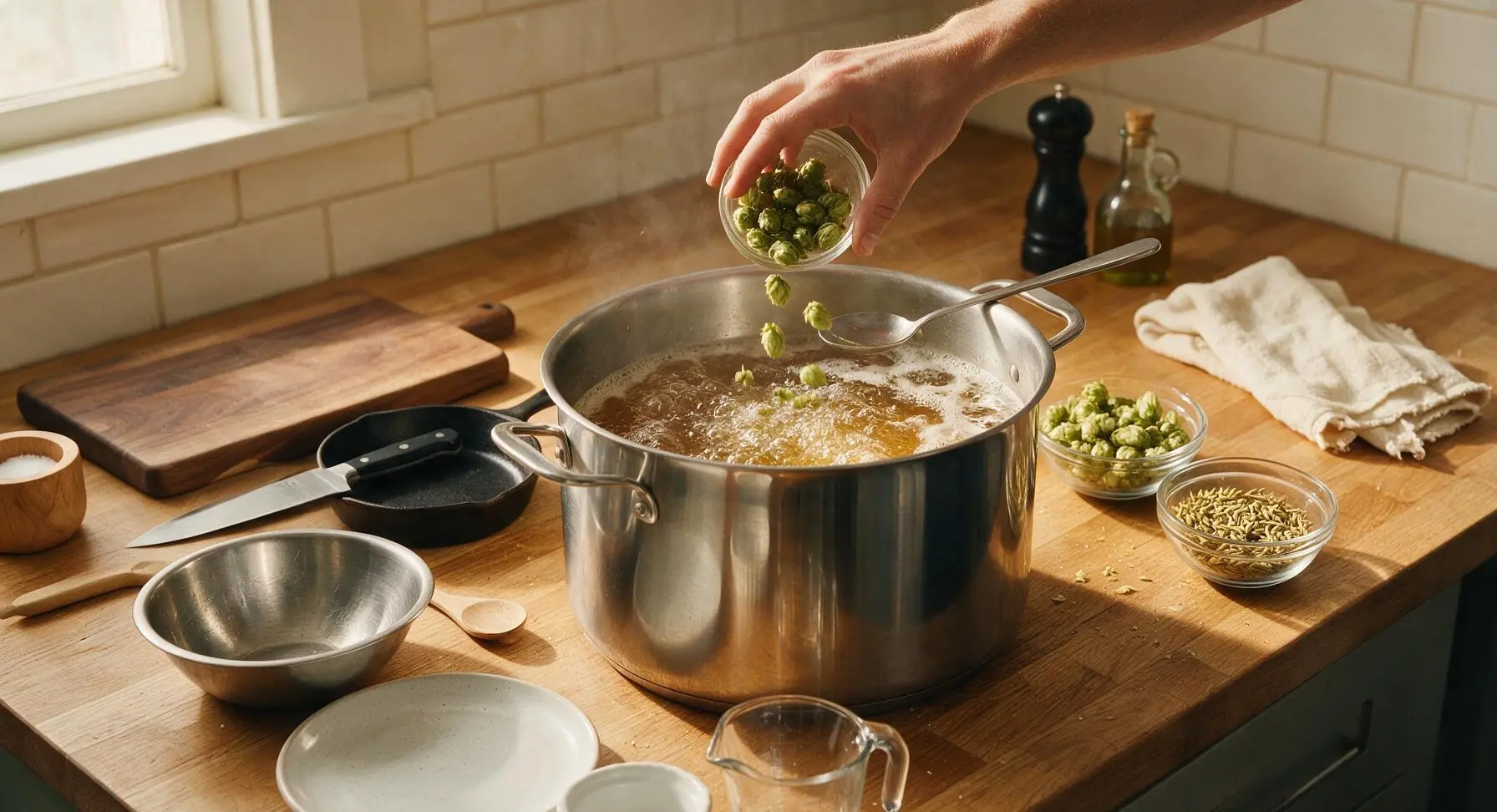
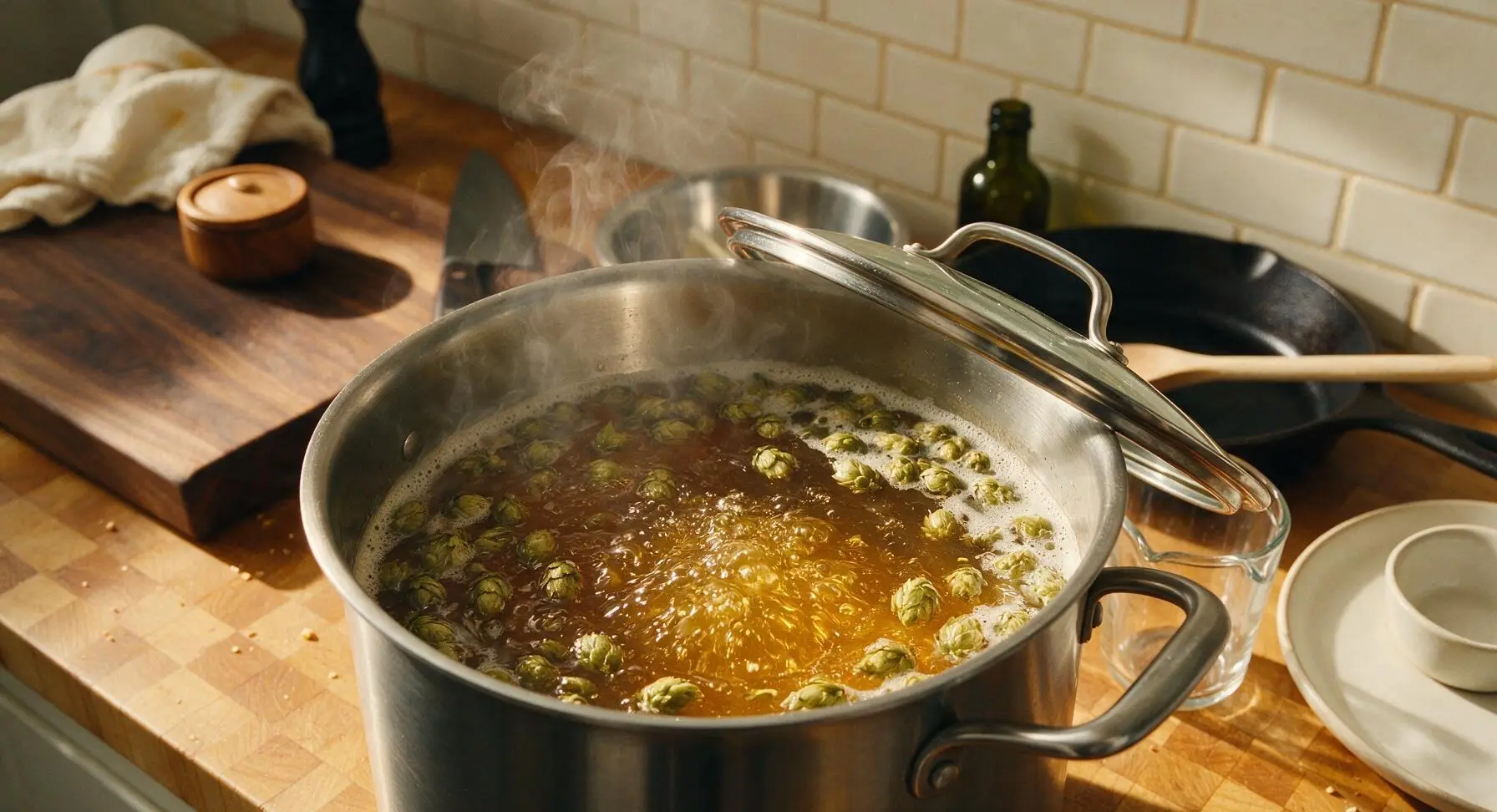
Once the wort reaches a full rolling boil, start a 60-minute timer. Add 1.5 oz of Cluster hops immediately (60-minute addition) to contribute clean, balanced bitterness. When 15 minutes remain on the timer, add 1 oz of Cascade hops for bright citrus and pine flavor. When 5 minutes remain on the timer, add 0.5 oz of Saaz hops for soft, floral aroma. Stir gently with the long stainless steel spoon after each addition to fully submerge hop cones.
Chill Wort Rapidly
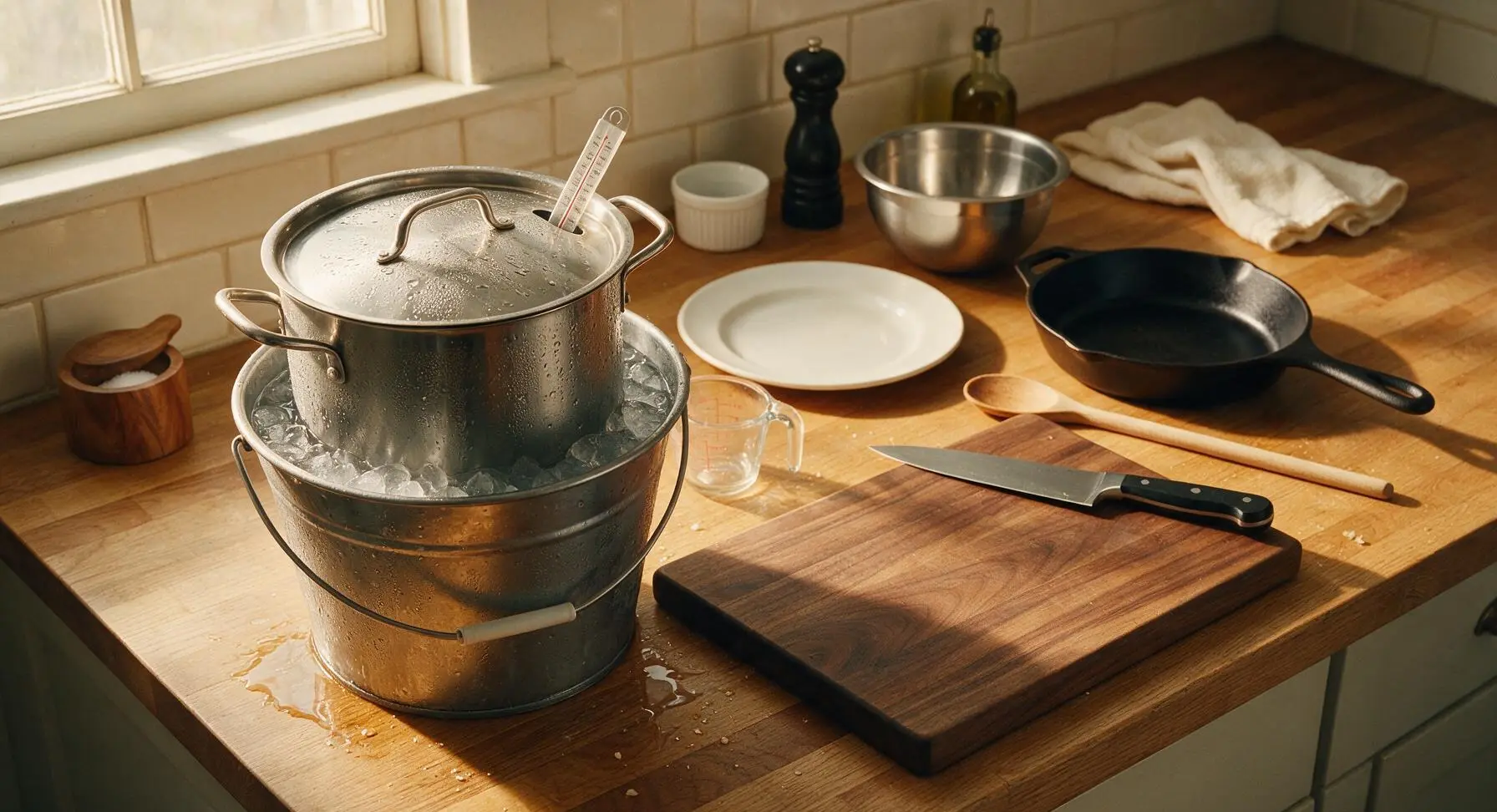
When the 60-minute boil ends, turn off the induction burner immediately. Place the stainless lid on the brew kettle, pour out the used sanitizer from the sanitizer bucket, and fill the bucket with ice water. Set the sealed kettle into the ice bath to chill the wort to 70°F as quickly as possible (approximately 20 minutes). Rapid chilling prevents off-flavor development and reduces contamination risk. Swirl the kettle gently every 5 minutes to speed cooling, verifying temperature with the sanitized thermometer.
Transfer to Fermenter
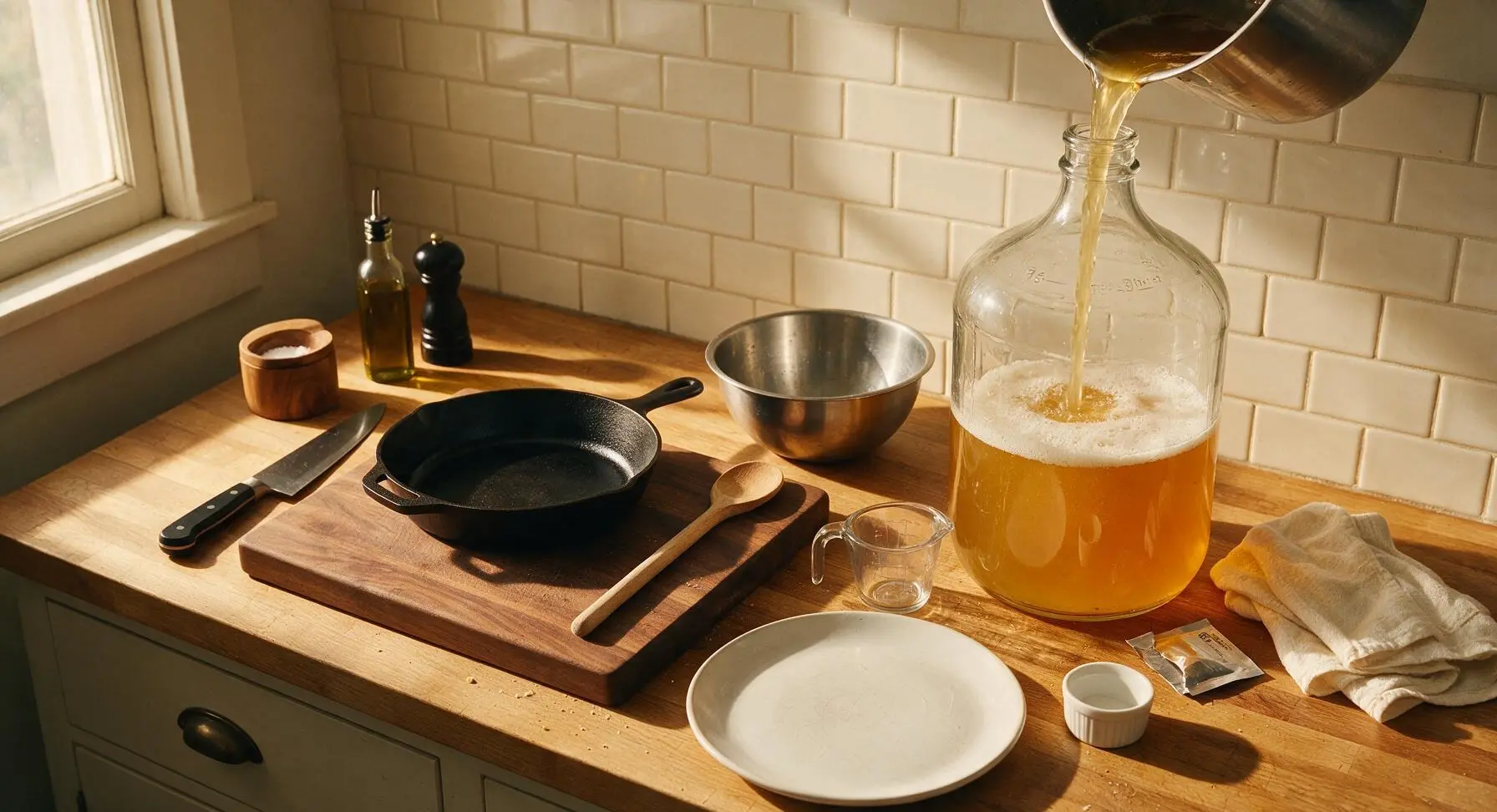
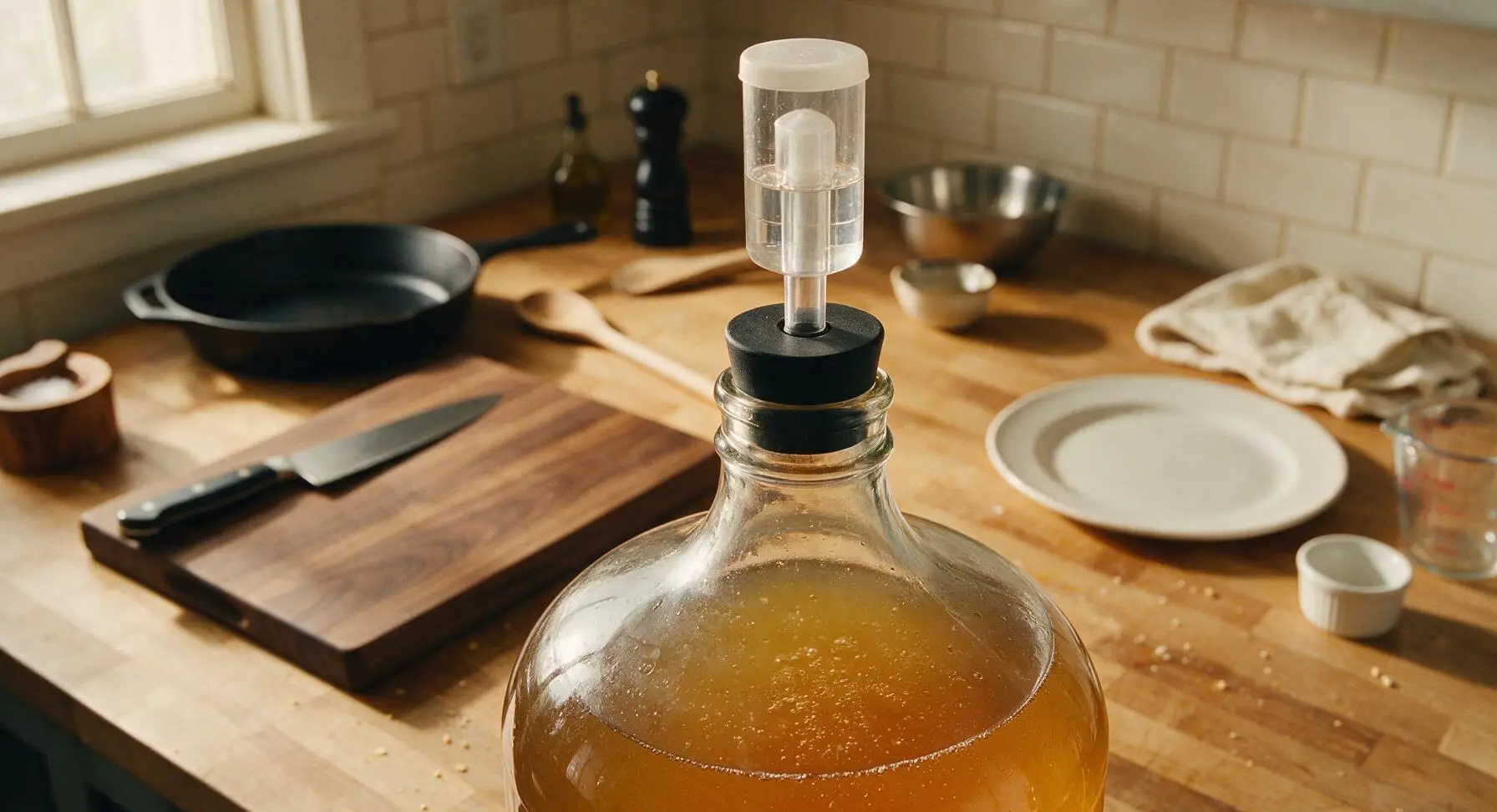
Once wort is fully chilled to 70°F, pour it carefully into the sanitized 5-gallon glass carboy. Top up with additional filtered cold water to reach the 5-gallon etched mark on the carboy neck. Sprinkle the entire packet of dry American pilsner yeast directly onto the wort surface (no stirring required, as yeast will hydrate on its own). Fit the #6 black rubber stopper into the carboy neck, fill the clear airlock halfway with leftover sanitizer solution, and press the airlock firmly into the stopper.
Ferment and Condition
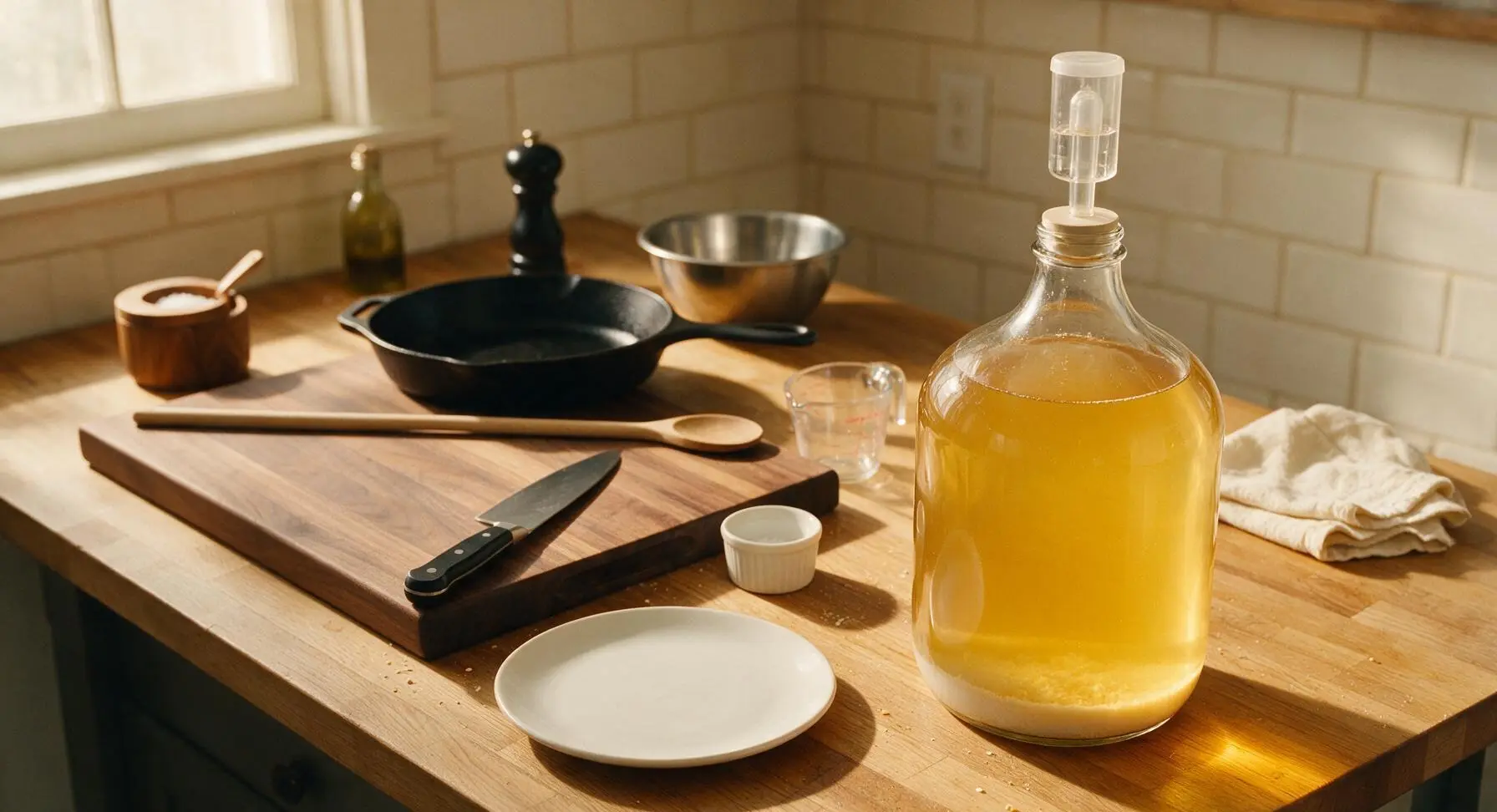
Leave the sealed carboy in a dark, temperature-stable space held at 55–60°F for 2 weeks, until active bubbling in the airlock stops completely (no bubbles for 3 consecutive days) and the previously hazy wort clears to a bright pale gold, with a thin layer of pale yeast sediment settled at the carboy bottom. After primary fermentation finishes, let the beer condition for an additional 1 week at the same temperature to smooth out green beer flavors and let remaining yeast settle.
Bottle and Carbonate
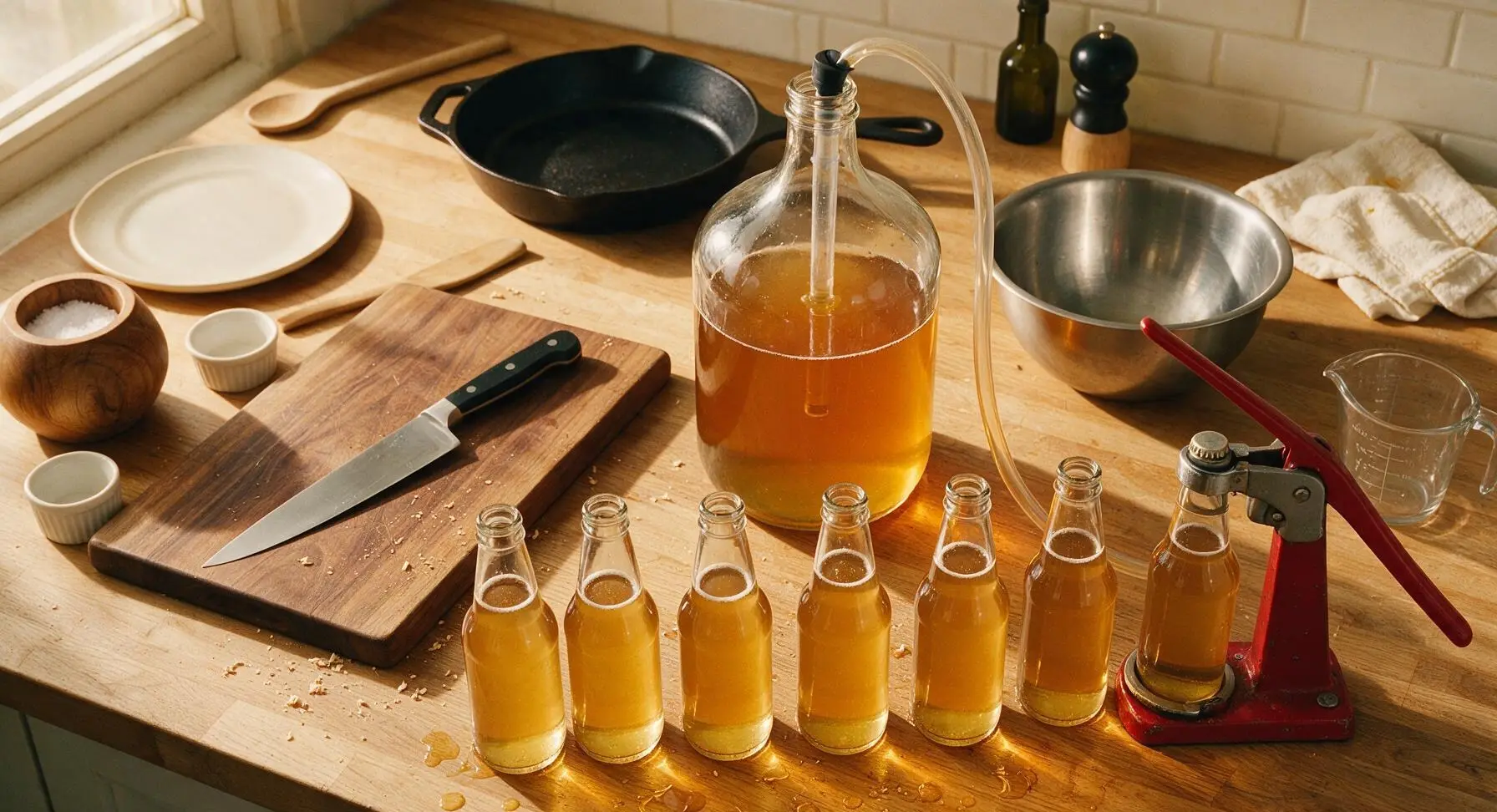
Sanitize 50 12oz glass beer bottles and metal bottle caps. Boil the 5oz of corn sugar in 1 cup of filtered water for 5 minutes, then pour the sugar solution into the bottom of a sanitized bottling bucket. Use the auto-siphon and vinyl tubing to transfer clear beer from the carboy into the bottling bucket, mixing gently with the sugar solution. Fill each bottle to 1 inch below the rim, cap tightly using the red metal bench capper, then store bottles in a dark 60°F space for 2 weeks to allow natural carbonation from the priming sugar.
Tips
2.Never squeeze the grain bag after steeping: While it may be tempting to extract every last drop of sweet wort, squeezing presses bitter, astringent tannins from the grain husks into your beer, creating a dry, puckering aftertaste that masks soft malt flavor. Let the bag drain naturally for 1 minute instead.
3.Avoid opening the fermenter early: Exposing young, actively fermenting beer to oxygen causes stale, sherry-like off-flavors, and increases risk of mold or wild bacteria contamination. Only open the carboy to bottle once you have seen zero bubbles in the airlock for 3 full consecutive days.
Just bottled my first batch following this recipe yesterday! OMG, the sample I pulled during transfer was SO crisp and clean, way better than the mass market pilsners I’ve been buying for cookouts. Can’t wait for carbonation to finish so I can bring a 6-pack to my buddy’s Memorial Day potluck. Game changer for my homebrew setup for real.
Wait, I’m a total beginner to home brewing — is this actually doable for someone who’s only ever done cheap kit beer before? The medium difficulty tag is making me nervous, I don’t wanna waste 5 weeks waiting on a skunky batch.
Brewed this for my son’s college graduation party last weekend and it was a HIT. Even my brother who swears he only drinks imported Czech pilsners was asking for the recipe. Went through 3 full gallons in 2 hours, no joke. Will absolutely be adding this to my regular brew rotation.
Has anyone tried dry hopping this with a little Saaz for extra aroma? I love a crisp pils but I’m craving that little extra floral kick, not sure if it’ll throw off the classic American pils profile too much.
Quick heads up for anyone new — don’t skip the 20 minute boil rest for the DMS! I rushed my first batch last month and ended up with that weird canned corn off flavor that ruined the whole thing. Took the extra time on this second batch and it’s perfect, tastes exactly like the craft pils I pay $18 a 6-pack for at my local bottle shop.
How long does this stay good in the keg once it’s carbed? I’m prepping for our fall tailgate season and wanna brew a big batch ahead of time if it holds up well.
My wife said this is the best beer I’ve ever brewed, y’all. She usually only drinks seltzers so that’s the highest possible praise I could get. Brought a growler to our neighborhood block party and had three neighbors ask for the recipe link. SO good, will be brewing this every other month for sure.
Does this recipe work if I do a closed pressure transfer instead of open racking to the secondary? I’m trying to cut down on oxygen exposure to get a clearer final beer.
Wait, the recipe says 5 weeks total passive time — has anyone tried cutting that to 3 weeks? I’m in a pinch because I forgot to brew for my friend’s bachelor party and need beer ready by then.
Used this recipe for my first all-grain brew instead of an extract kit and I’m blown away by how much depth of flavor it has. Perfect balance of bready malt and that soft noble hop bite, no weird bitter aftertaste. Already ordered more malt to make a double batch next weekend.
I don’t have a dedicated fermentation fridge right now — can I ferment this in my basement where the temp hovers between 58-62 degrees? I know pilsners like it cold, just don’t wanna drop $300 on a fridge before I know I like brewing this style.
Just cracked my first properly carbed bottle of this last night and OMG, it’s a dead ringer for the fancy craft pils my favorite local brewery sells for $7 a pint. Saved so much money brewing this at home, I’m never going back to store bought.
Brewed a batch of this to keep stocked for our weekly family taco nights on the patio and it pairs so perfectly with spicy carnitas and fresh salsa. My teenager even joked it smells “way fancier” than the cheap macro beer my husband usually grabs for cookouts. Total summer staple, I already know we’ll be making this nonstop through July.