
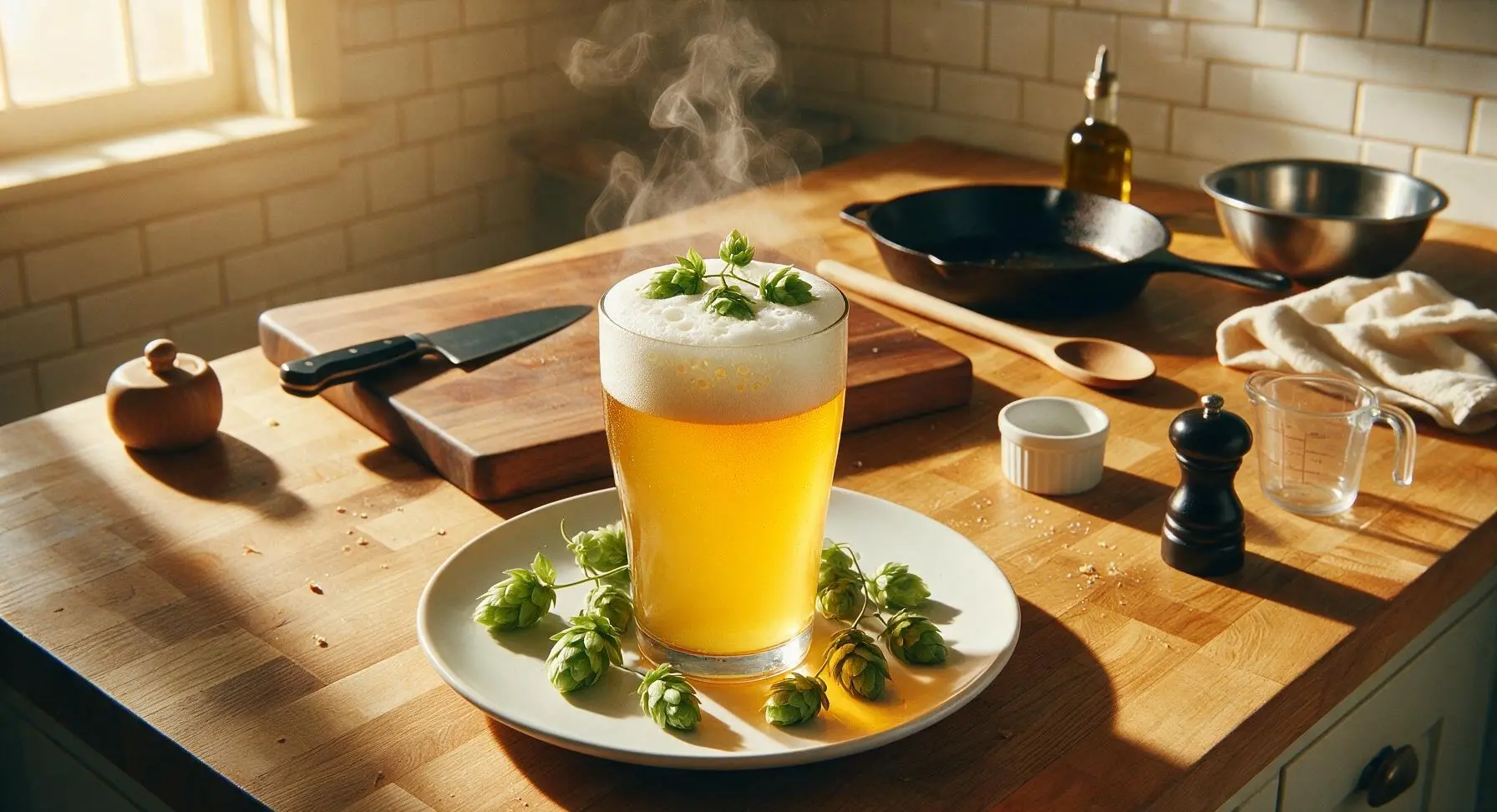
American Wheat Ale

title 1
American Wheat Ale
⏱️ cook time 2 hours 30 minutes
🍽️ servings 48
⚡ Difficulty medium

intro

Bright, hazy golden American Wheat Ale with soft citrus Cascade hop notes, a smooth bready malt backbone, and crisp, dry finish—ideal for warm-weather sipping.

Ingredients
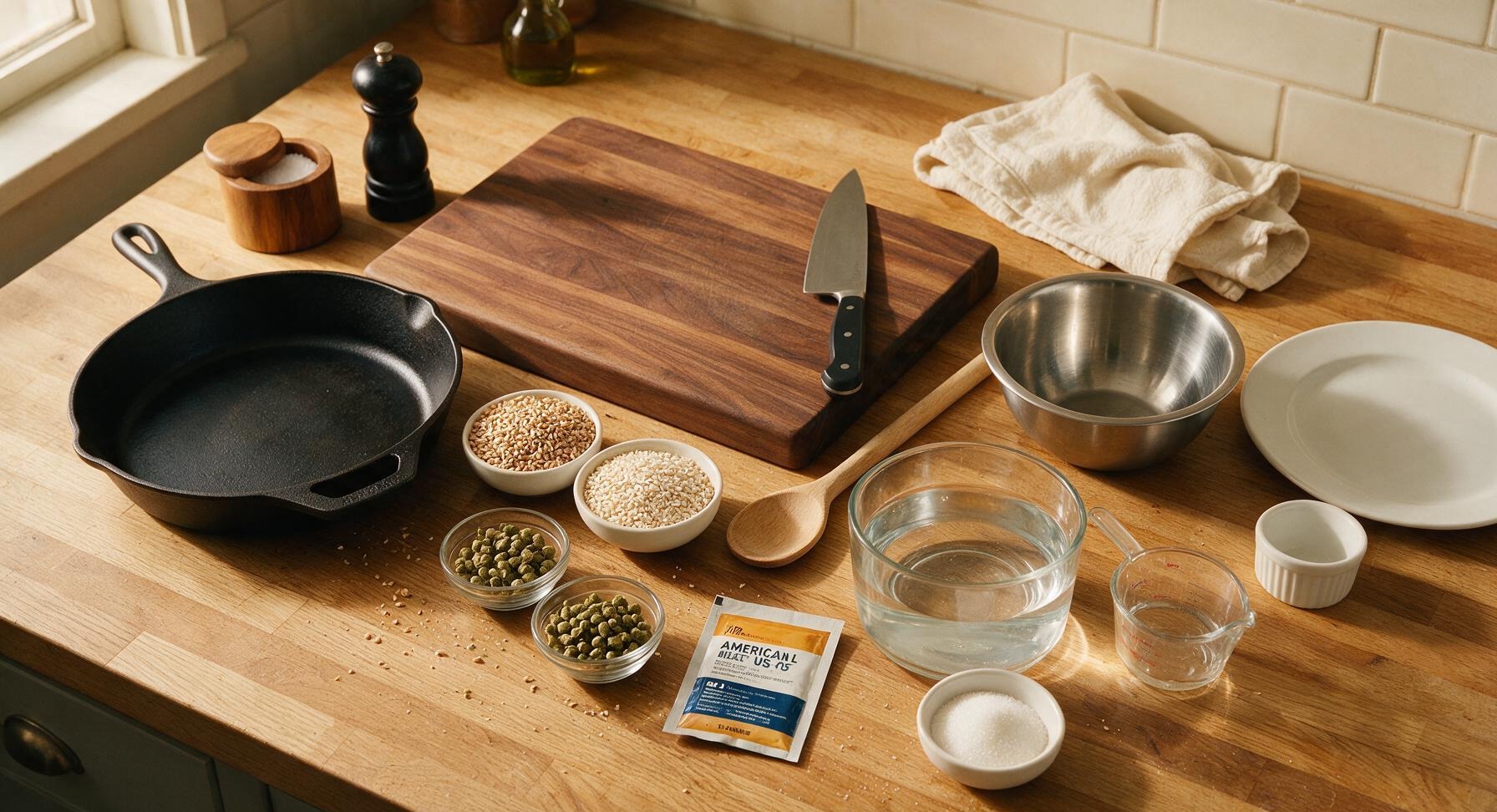
Crushed 2-row pale malt 6 lbs
Crushed white wheat malt 4 lbs
Cascade hop pellets (bittering) 1 oz
Cascade hop pellets (aroma) 1 oz
American ale yeast (US-05) 1 packet (11g)
Filtered cold water 6 gallons
Corn sugar (for priming) 5 oz

Steps

1

Sanitize Brewing Equipment

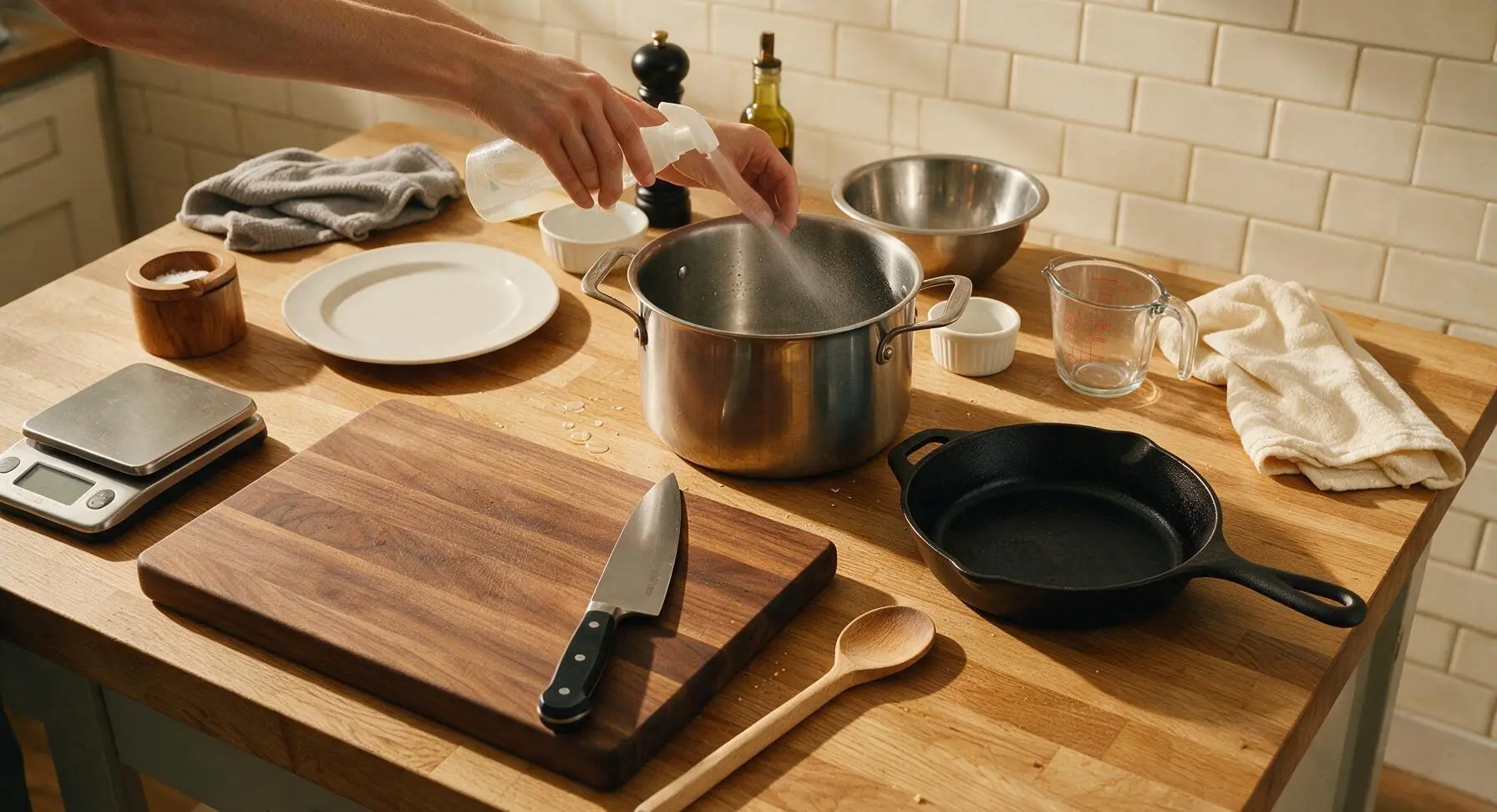
Start by spraying all food-contact surfaces of the brew kettle, stirring spoon, mesh strainer, fermentation bucket, airlock, and hydrometer test jar with no-rinse food-grade sanitizer from the spray bottle. Wipe surfaces lightly with the heather gray cotton towel, ensuring no sanitizer pools in crevices or under lid seals. Any equipment that touches cooled wort must be fully sanitized to prevent off-flavors from unwanted bacteria or wild yeast.
Step 1
step1:Sanitize Brewing Equipment
2

Heat Mash Water

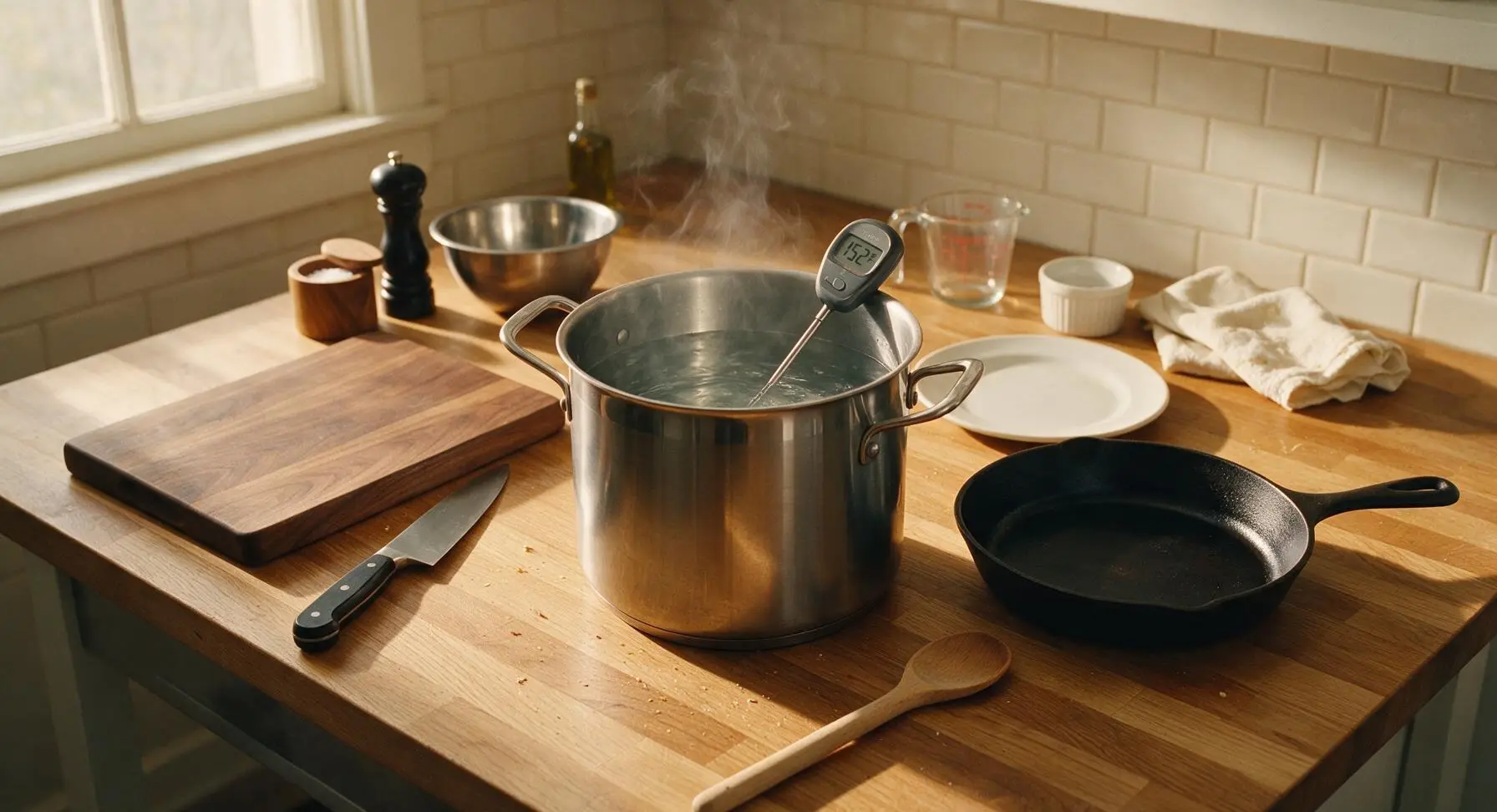
Pour 3 gallons of filtered cold water into the sanitized brew kettle. Heat the water to a steady 152°F, checking temperature with the digital instant-read thermometer, and hold the temperature for 5 minutes to stabilize before adding grain. Small wisps of steam will be visible rising from the water surface as it reaches target temperature.
Step 2
step2:Heat Mash Water
3

Mash the Grains

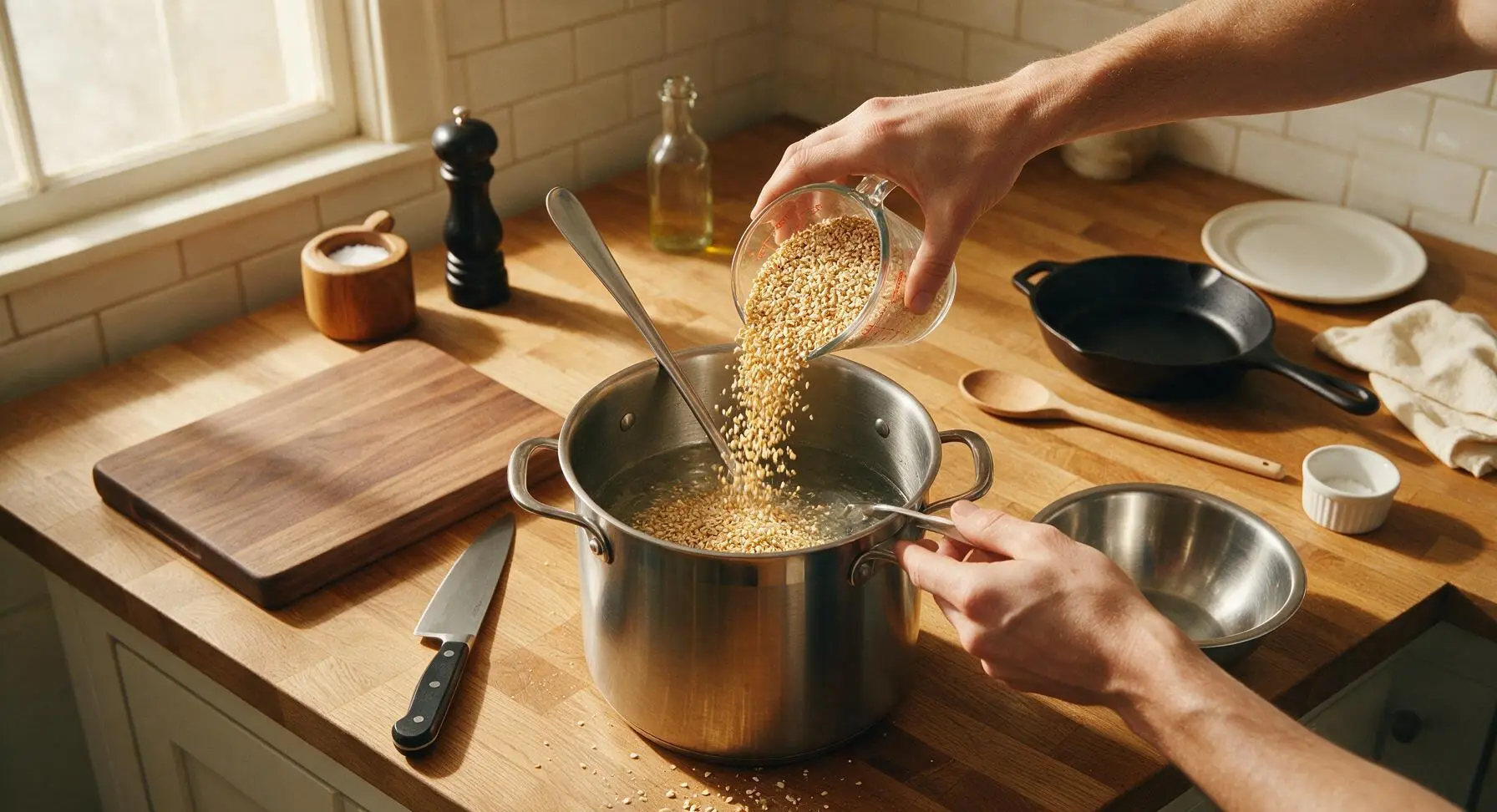
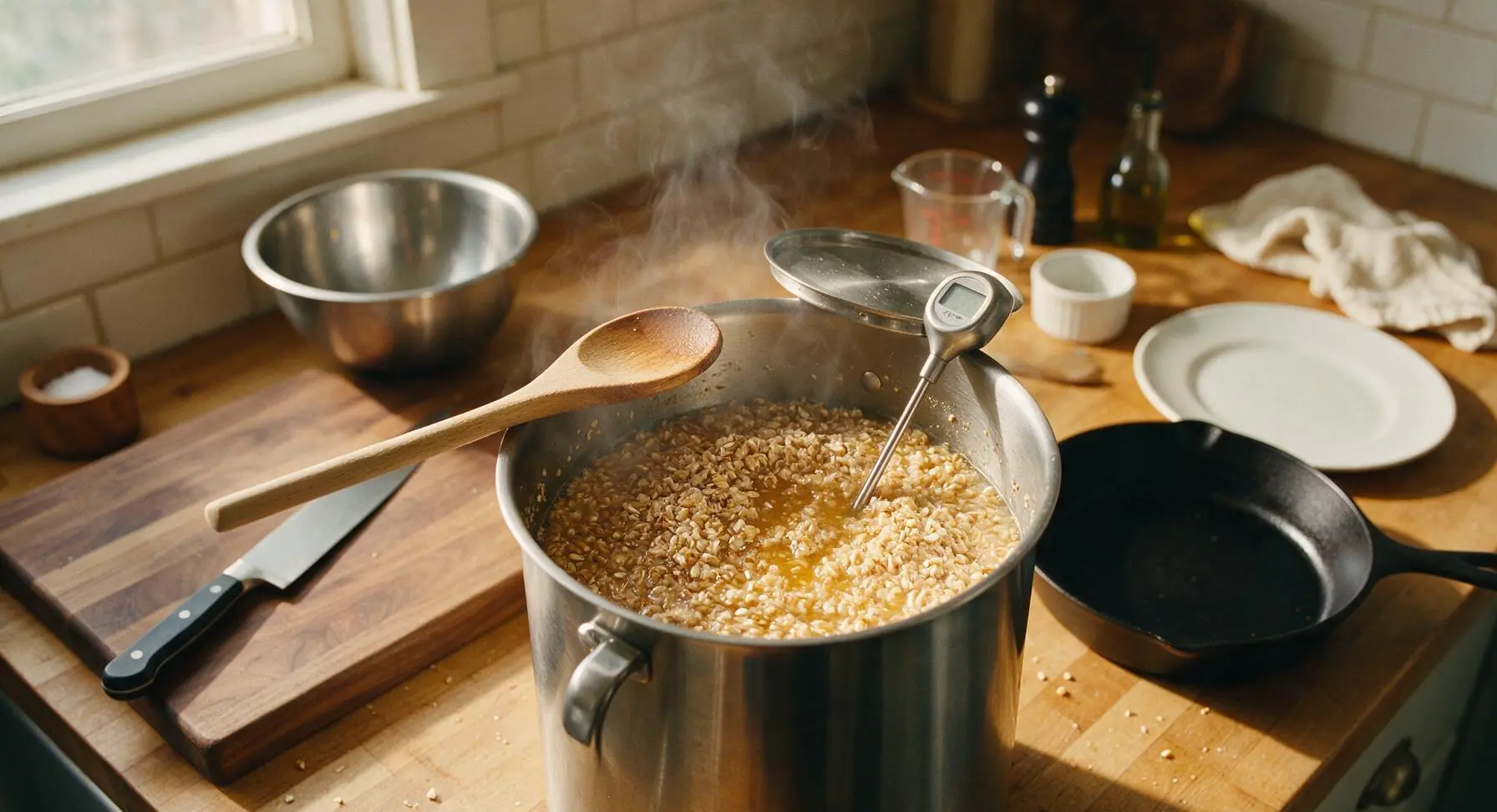
Slowly stir the crushed 2-row pale malt and white wheat malt into the heated water using the long stainless steel stirring spoon, mixing thoroughly to break up any dry clumps of grain. Cover the kettle and hold the temperature steady at 150–152°F for 60 minutes, stirring once every 15 minutes to prevent hot spots. The finished mash will have a thick, porridge-like consistency and a sweet, bready aroma.
Step 3
step3:Mash the Grains
Step 3
step3:Mash the Grains
4

Strain and Sparge Grains

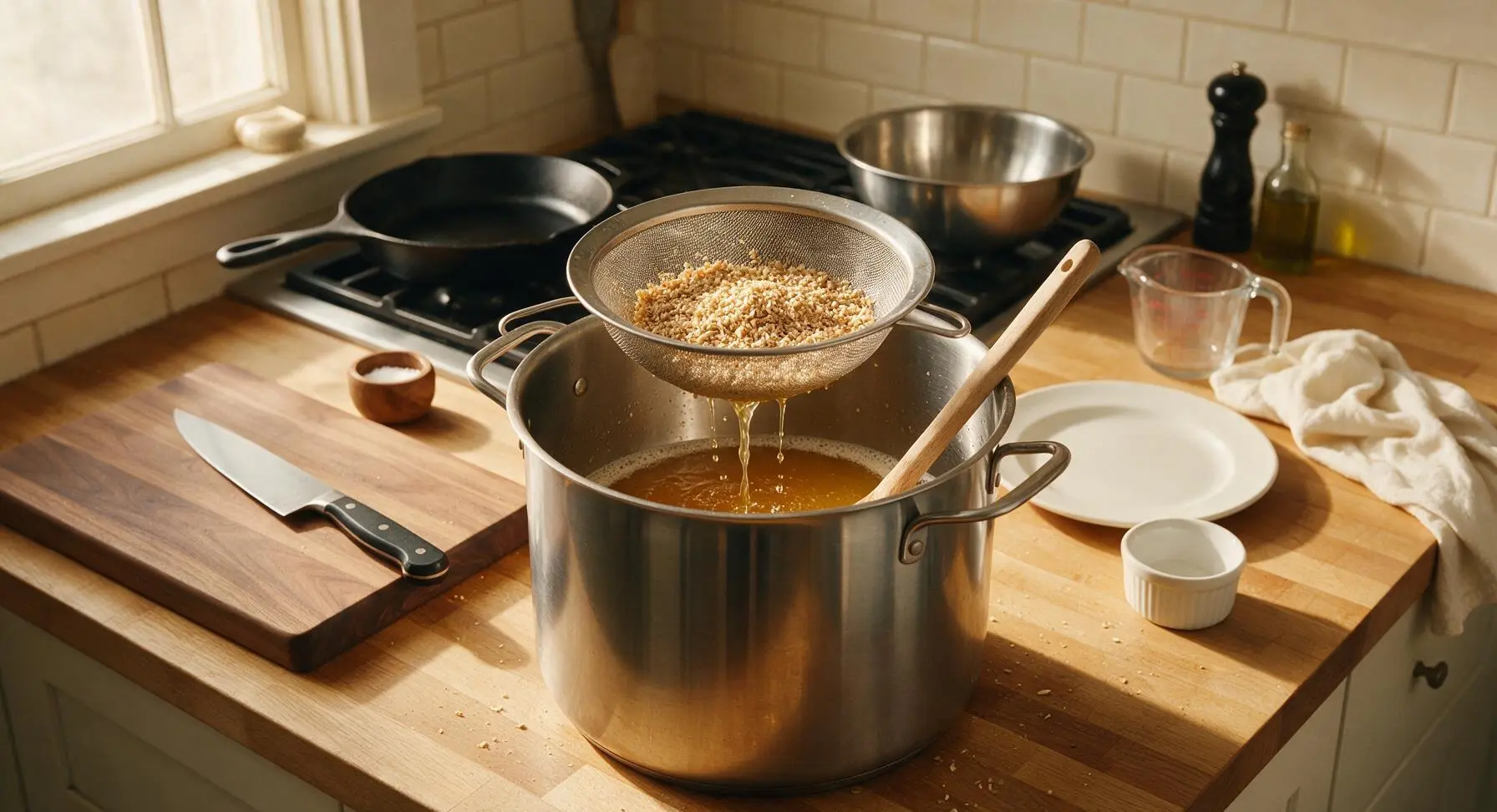
After the 60-minute mash is complete, set the fine stainless steel mesh strainer across the top of a second sanitized container, then slowly pour the mash through the strainer to separate sweet wort from spent grain. Gently pour 2 gallons of 170°F filtered water over the spent grain in the strainer to rinse residual sugars from the grain bed, then discard the spent grains. Return all collected golden wort to the brew kettle.
Step 4
step4:Strain and Sparge Grains
5

Boil Wort and Add Hops

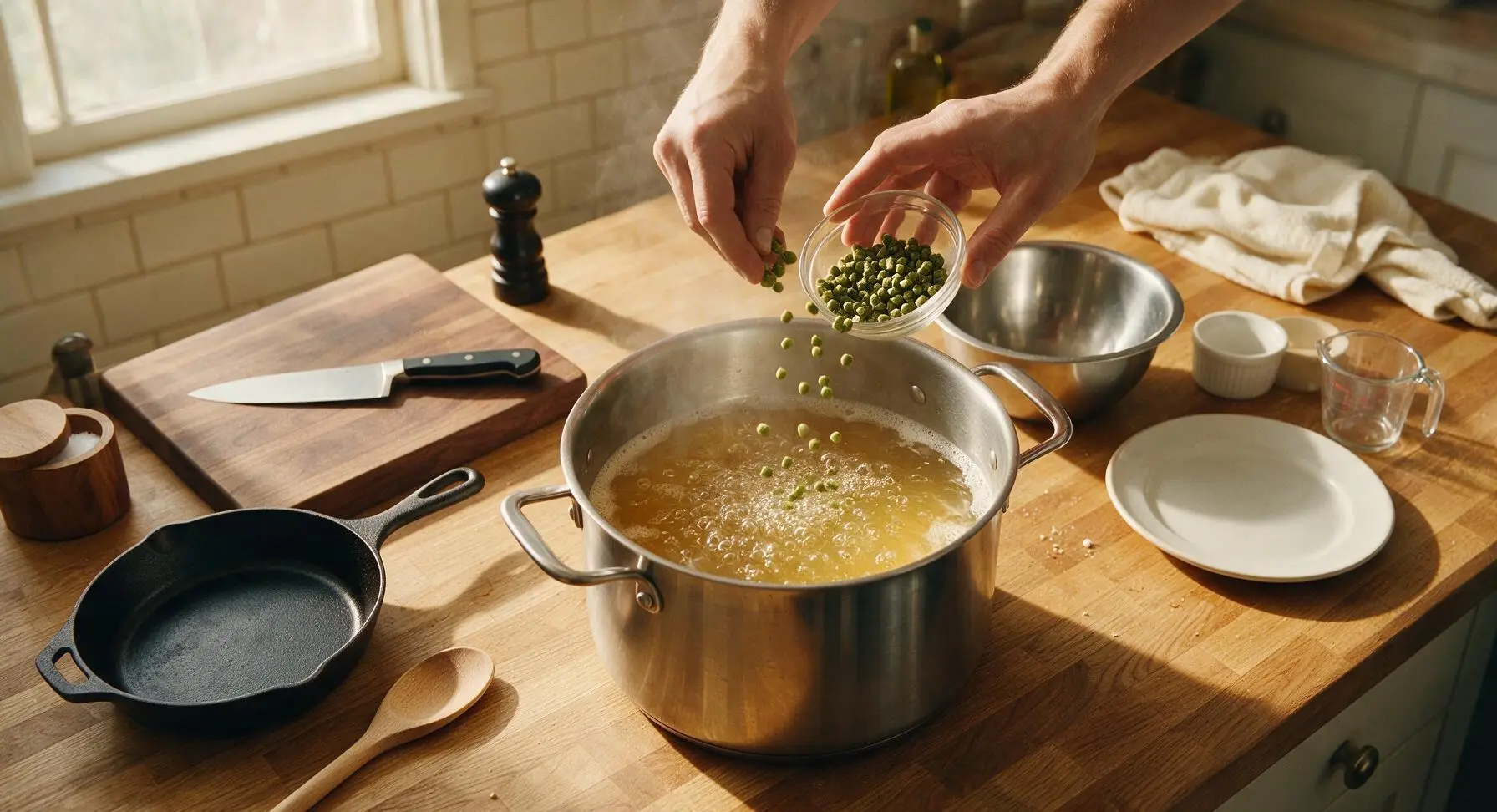
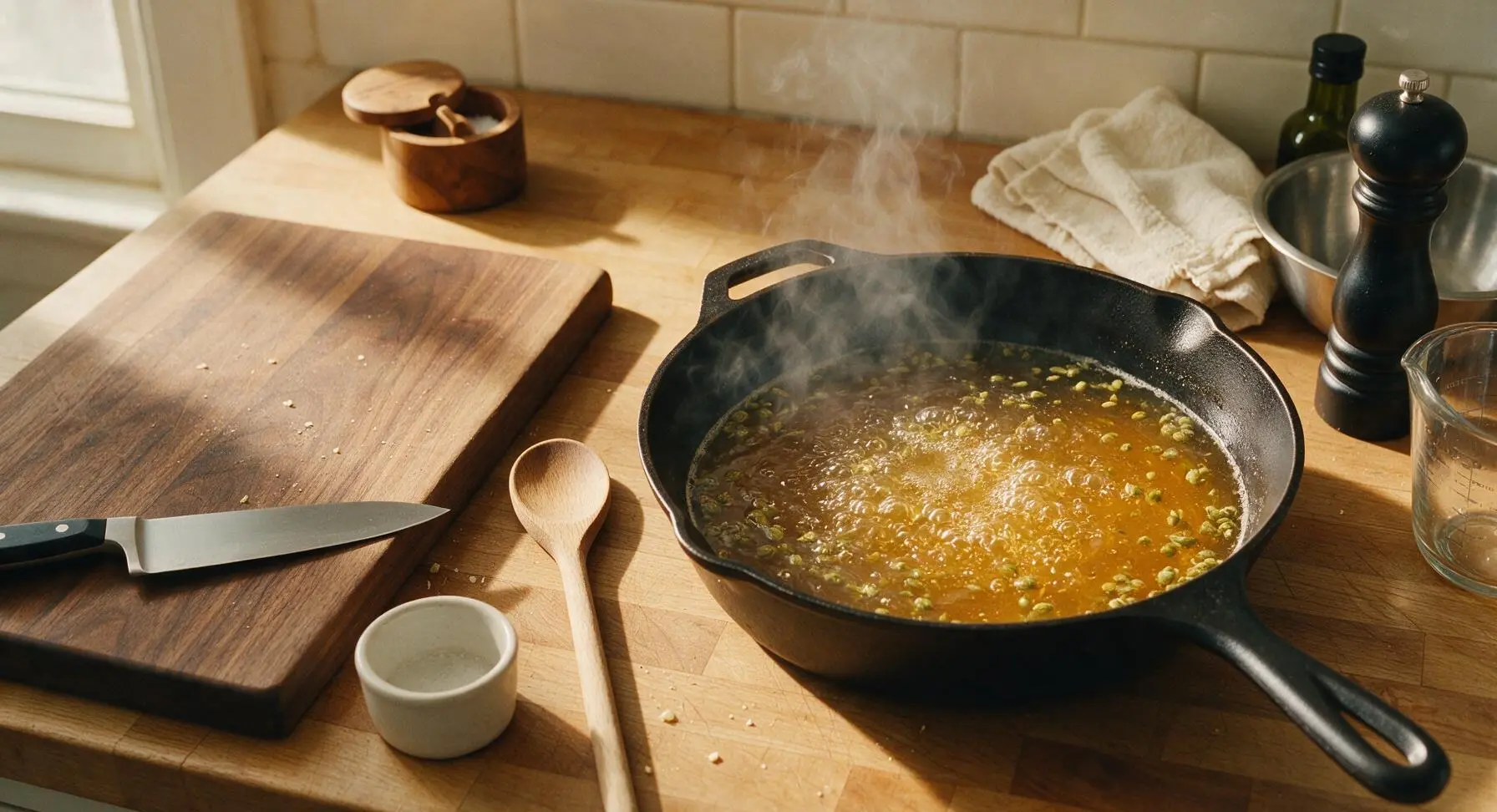
Heat the collected wort to a gentle, steady rolling boil (212°F at sea level). Once boiling, add 1 oz of Cascade bittering hops from one prep bowl, set a timer for 60 minutes, and maintain the gentle boil to avoid messy boilovers. With 5 minutes remaining on the timer, add the second 1 oz of Cascade aroma hops to preserve bright, citrusy hop notes without boiling away delicate flavors.
Step 5
step5:Boil Wort and Add Hops
Step 5
step5:Boil Wort and Add Hops
6

Cool Wort Rapidly

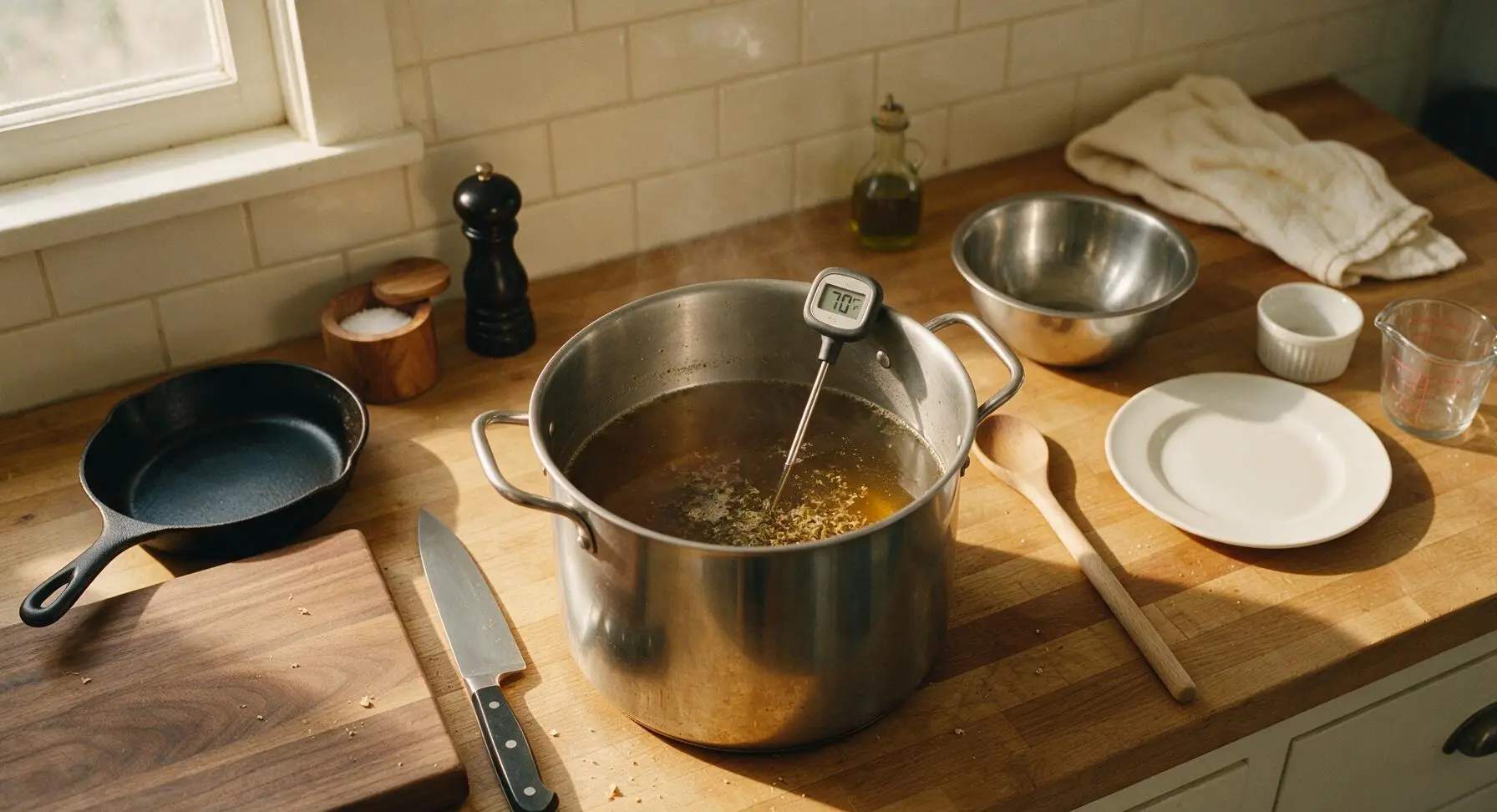
Once the 60-minute boil is complete, remove the kettle from heat and cool the wort as quickly as possible to 70°F using an ice bath in the adjacent sink. Stir the wort gently with the sanitized stirring spoon to speed cooling, checking temperature regularly with the digital thermometer. Do not allow any unsanitized objects to touch the cooled wort to prevent contamination.
Step 6
step6:Cool Wort Rapidly
7

Pitch the Yeast

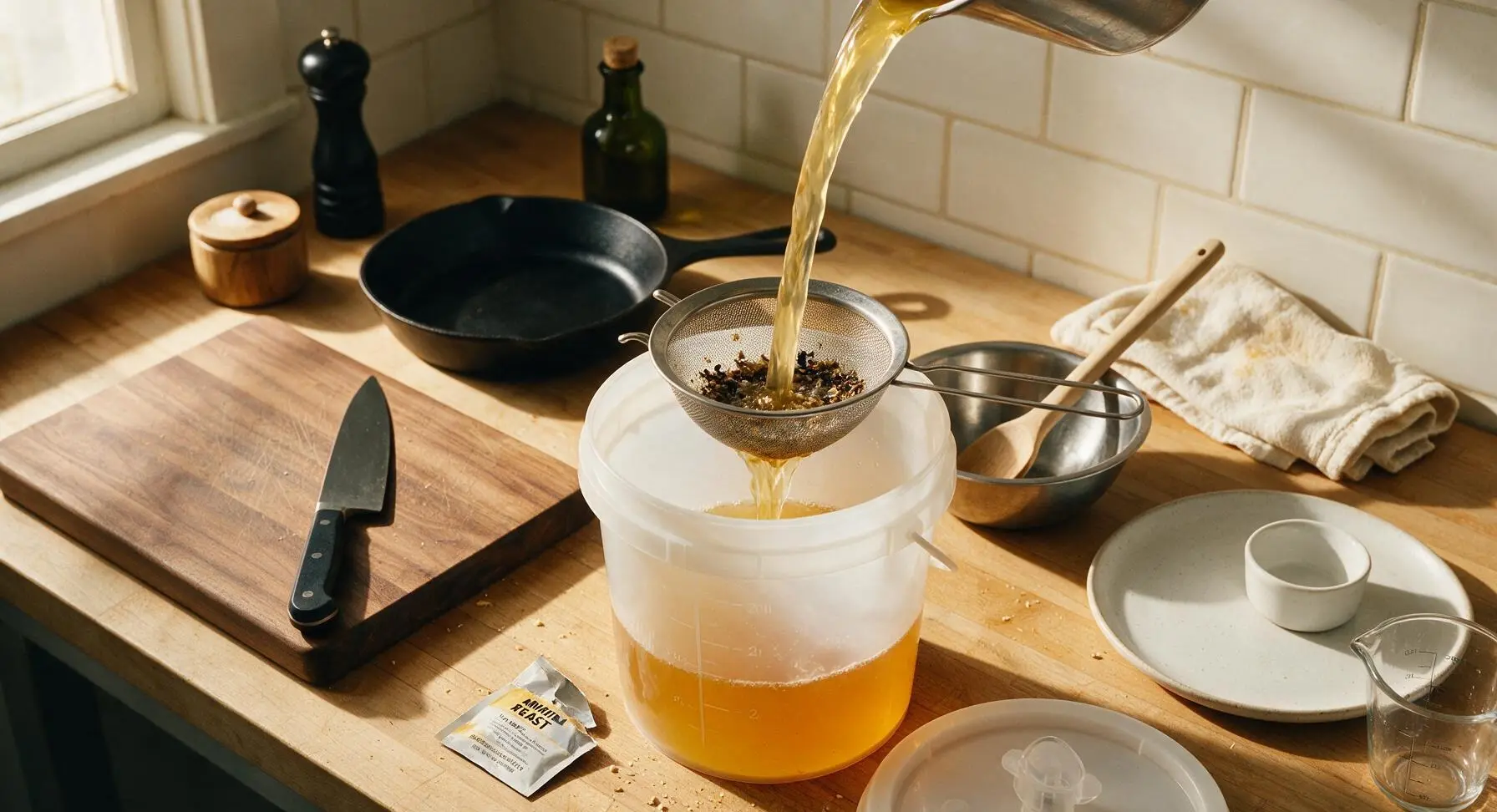
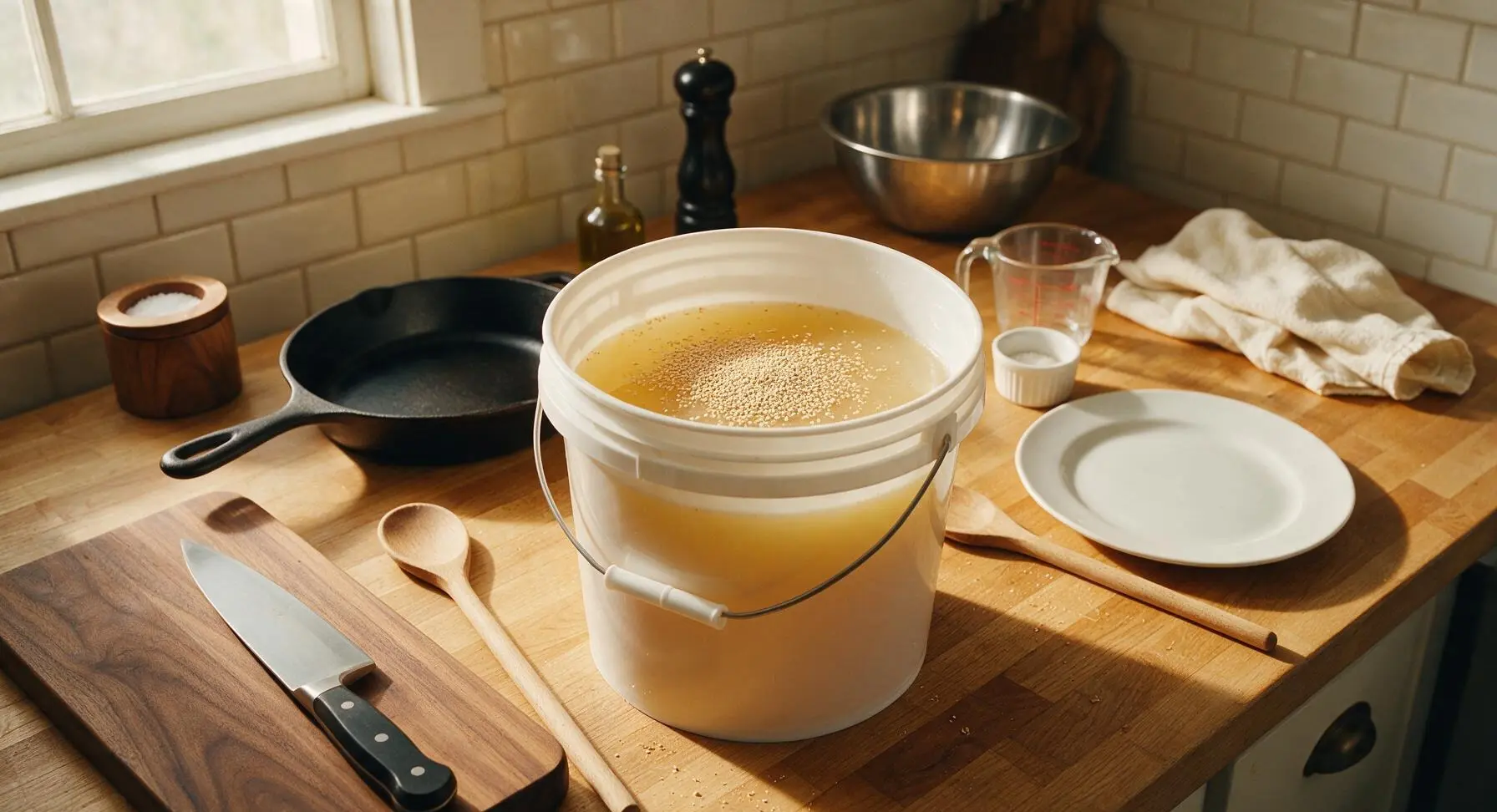
Pour the cooled wort through the sanitized mesh strainer into the waiting fermentation bucket to filter out hop and grain sediment. Sprinkle the entire 11g packet of American ale yeast evenly across the surface of the wort, then seal the bucket tightly with its lid and fill the airlock with sanitizer to seal out air and bacteria.
Step 7
step7:Pitch the Yeast
Step 7
step7:Pitch the Yeast
8

Ferment and Bottle

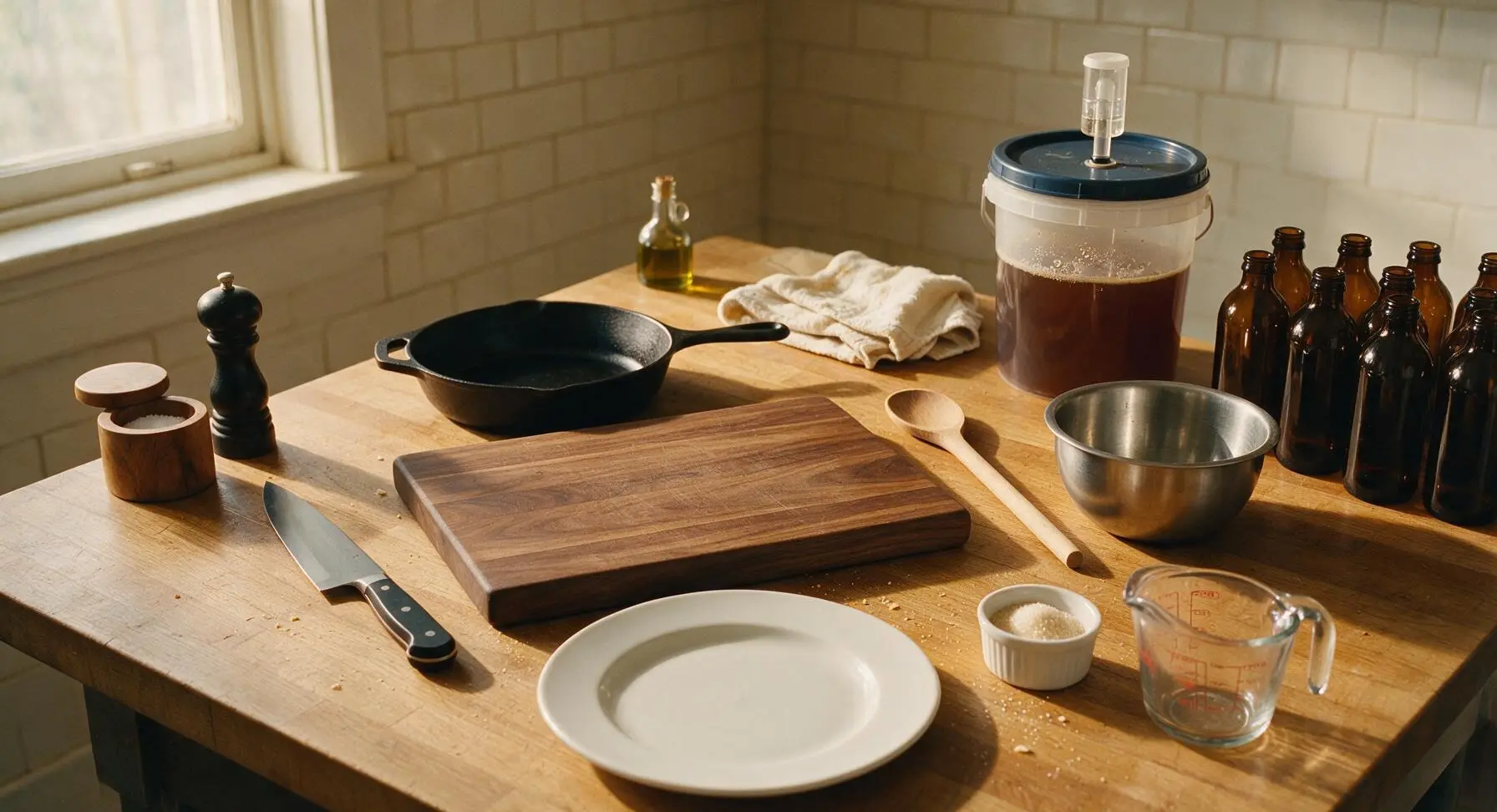
Move the sealed fermentation bucket to a dark, temperature-stable space held at 66–68°F for 14 days, until bubbling in the airlock stops completely and the beer clears to a hazy gold. Dissolve 5 oz of corn sugar in 1 cup of boiled, cooled water, mix it gently into the siphoned beer, then transfer the beer to sanitized 12-oz glass bottles and cap tightly. Condition bottles at room temperature for 14 days to build natural carbonation, then chill to 40°F before serving.
Step 8
step8:Ferment and Bottle

Tips

1.Avoid a violent rolling boil: A too-hard boil can cause starchy hot-break foam to overflow the kettle, creating a sticky mess and stripping delicate citrus hop aroma. Keep the boil steady but gentle, and keep a small cup of cold water nearby to spritz rising foam if it threatens to boil over.
2.Never cut corners on sanitization: Even a tiny amount of residual bacteria on equipment, bottle caps, or stirring tools can create sour, skunky, or canned-corn off-flavors that ruin an entire 5-gallon batch. Pay extra attention to hard-to-reach crevices in airlocks and siphon hoses.
3.Cool wort as quickly as possible after boiling: Rapid cooling to 70°F within 30 minutes reduces bacterial contamination risk, prevents unpleasant dimethyl sulfide (DMS) off-flavors, and helps create a clearer, brighter final beer. A sink filled with ice water works perfectly for home-scale batches.


✨ You May Also Like

Drinks & Beverages
🍜 Mexico

A bright, balanced tequila-based cocktail with zesty fresh lime, smooth orange liqueur, and a signature salt rim, perfect for warm summer sipping.

⏱️ 5 minutesDrinks & Beverages ★ 4.9
Drinks & Beverages
🍜 United States

Thick, creamy, nostalgic classic vanilla milkshake with a rich, smooth texture, topped with whipped cream and a cherry for cool, sweet refreshment.

⏱️ 5 minutesDrinks & Beverages ★ 4.7
Drinks & Beverages
🍜 United States

A bright, golden strong ale with fruity banana-clove notes, subtle hop spice, and soft carbonation, brewed in classic Trappist Tripel tradition.

⏱️ 2 hours aDrinks & Beverages ★ 4.5
Drinks & Beverages
🍜 United States

A frothy, nostalgic American soda fountain treat pairing bubbly cold root beer with creamy vanilla ice cream, perfect for cooling down at warm weather gatherings.

⏱️ 20 minuteDrinks & Beverages ★ 4.8
Drinks & Beverages
🍜 United States

Tart, funky, effervescent American Wild Ale is a complex fruity craft beer brewed with wild yeast, delivering bright, zesty notes perfect for warm-weather sipping.

⏱️ 2 hours aDrinks & Beverages ★ 4.4
Drinks & Beverages
🍜 United States

Bright, bubbly copycat of the iconic American caramel cola, balanced with citrus and warm spice, perfect for sipping ice-cold on hot days.

⏱️ 15 minuteDrinks & Beverages ★ 4.8

American Wheat Ale:Frequently Asked Questions

1.What’s the key difference between this American Wheat Ale and a traditional German hefeweizen? ▾
Great question! Unlike German hefeweizen, this recipe uses clean-fermenting US-05 American ale yeast instead of hefe-specific strains, so you won’t get classic banana and clove ester notes. Cascade hops add bright grapefruit and lemon citrus instead of spicy noble hops, for a crisper, more straightforward warm-weather sip.
2.Can I substitute crushed white wheat malt if I can’t find it locally? ▾
Absolutely. If white wheat malt is out of stock, swap it 1:1 for crushed pale wheat malt—you’ll get the same smooth, bready backbone and signature hazy golden color. Skip heavily roasted wheat malts here, as they add dark, toasty notes that throw off the bright, light profile we’re going for.
3.Why does the recipe split Cascade hop pellets into bittering and aroma additions? ▾
Timing is everything for balanced hop character! Bittering additions go in early in the boil to leach smooth, balancing bitterness without harshness, while aroma additions go in the last 5–10 minutes of the boil to preserve bright, zesty citrus notes that would boil off if added too early.
4.What fermentation temperature works best for US-05 yeast in this recipe? ▾
US-05 is super forgiving, but aim to hold your fermenter between 65–70°F (18–21°C) for the cleanest results. If it gets warmer than 75°F, you may get unwanted solvent-like off-flavors; too cold, and fermentation will stall before you hit that crisp, dry finish we want.
5.Why is my finished wheat ale not hazy like the recipe describes? ▾
That signature haze comes from suspended wheat protein and a small amount of leftover yeast, so don’t over-filter your beer! If you let it clear for more than 3 weeks in the fermenter, or use a fine filter when bottling, you’ll lose that haze. A gentle 2-day cold crash before bottling is all the clarification you need.
6.Can I brew this as a partial mash recipe if I don’t do full all-grain batches? ▾
Definitely! For a 5-gallon partial mash batch, use 2 lbs of crushed 2-row and 2 lbs of crushed white wheat malt for the mash, then top up with 3 lbs of light dried malt extract to hit target gravity. Keep the same hop and yeast amounts, and follow the standard boil and fermentation timeline for identical flavor.
7.How much carbonation should I aim for when bottling this ale? ▾
This style shines with moderate, crisp carbonation—aim for 2.3–2.5 volumes of CO2, which works out to roughly 4 oz of priming corn sugar per 5-gallon batch. Skip over-carbonating, which tastes sharp and gassy, and mutes that soft bready malt and bright Cascade citrus balance.
8.What ABV should I expect if I follow this recipe as written? ▾
When brewed as a standard 5-gallon batch with a 60-minute mash at 152°F, you’ll land right around 5.0–5.3% ABV, perfect for sessionable warm-weather drinking. It’s strong enough to have real malt and hop character, but light enough to enjoy a couple on hot afternoons without feeling weighed down.
9.Why does my finished beer have a weird, harsh bitter aftertaste? ▾
That almost always comes from boiling your aroma hop additions for too long, or using old, stale Cascade hop pellets that have gone rancid in storage. Always store hops in airtight, freezer-safe bags to preserve freshness, and reserve at least half your Cascade measure for late-boil additions to keep bitterness smooth.
10.Do I need to do a diacetyl rest for this ale when using US-05 yeast? ▾
US-05 is a very clean, low-diacetyl yeast strain, so a formal diacetyl rest isn’t required for most batches. If you ferment at the lower end of the 65–70°F range, simply raise the fermenter temp by 2–3°F for the last 2 days of fermentation to clean up faint butter-like off-notes before bottling.
11.What’s the best way to serve this homemade American Wheat Ale? ▾
Serve it cold, between 40–45°F, in a tall pint or weizen glass to show off that hazy golden color and hold the fluffy white head. You don’t need a fruit garnish unless you want it— the Cascade hops already bring soft citrus notes that pair great with backyard burgers and grilled chicken.
12.How long can I store bottled batches of this wheat ale before it loses flavor? ▾
This is a bright, fresh-focused ale, so it’s best drunk within 3–4 months of bottling when stored in a cool, dark place around 55–60°F. The citrus hop notes fade first after that point, leaving a flatter, more malt-heavy beer without that crisp, zippy finish the recipe is designed for.
13.Can I add fruit to this recipe to switch up the flavor? ▾
Absolutely! This clean wheat base is perfect for adding 1–2 lbs of fresh or frozen raspberry, peach, or lemon zest during the last 5 minutes of the boil or in secondary fermentation. Just skip adding too much fruit, which will overpower the soft Cascade notes and bready malt balance that makes this style work.
14.I’ve heard wheat malt causes stuck mashes—how do I avoid that when brewing? ▾
Great heads-up! Wheat malt has no husk material, so it can compact and block wort flow during mashing. To prevent this, mix your crushed wheat malt thoroughly with the crushed 2-row (which has plenty of rough husk material) before mashing, and don’t crush grains too fine to create natural gaps for smooth wort flow.

Comments (20)

2 days ago

OMG, just bottled my first batch of this last weekend and brought a six pack to my neighborhood potluck last night. People were begging for the recipe! It’s got that perfect crisp, citrusy kick I love in wheat ales, no weird harsh bitter aftertaste. 10/10 will brew again for our Fourth of July cookout.

1 week ago

Total game changer for newbie homebrewers like me! I was nervous to try my first wheat ale because I thought I’d mess up the mash temp, but the step-by-step instructions were so clear. My whole crew raved about it at our last game night. Only tiny note is I wish it had a little more guidance on dry hop timelines for extra citrus flavor.

5 days ago

So glad you enjoyed the batch, Sarah! Great call on the dry hop question – for extra citrus punch, add 1 oz of Cascade or Citra hops during the last 3 days of primary fermentation, you’ll get that bright zing you’re looking for. Cheers!

3 days ago

Wait, has anyone tried adding a little orange peel to this? I’m thinking of tweaking the batch for my summer backyard BBQ and want that extra bright, sunny flavor without making it taste like a cheap seltzer.

2 days ago

I did that last batch! Added 2 oz of fresh sweet orange peel at flameout, it was chef’s kiss. Didn’t taste artificial at all, just complemented the wheat malt perfectly. My sister who hates beer even drank two bottles!

yesterday

Love that tweak! We’ve tested orange peel additions too – just make sure you’re using untreated, organic peel (no white pith, that adds bitter off-flavors) and you’ll get that perfect bright citrus note. Let us know how your BBQ batch turns out!

2 weeks ago

SO good. I’ve been brewing for 7 years and this recipe is my new go-to house wheat ale. It’s balanced, easy to scale, and ferments super clean even in the warmer summer temps I get in my apartment. I’ve already made two batches this month.

5 days ago

Followed the recipe exactly but my final gravity was a little high, ended up a touch sweeter than I expected. Did I do something wrong with the mash? It still tastes great, just not as crisp as I hoped.

3 days ago

Hey Tyler! A high final gravity usually means your mash temp ran a little too high (over 158°F can leave more unfermentable sugars, leading to that sweeter finish). Next time, hold your mash steady between 152-154°F for that dry, crisp finish. Glad it still tasted great though!

1 week ago

Made this for my husband’s birthday party last weekend and it was a total hit! We had a bunch of craft beer snobs at the party and they were all shocked it was homemade. Who else has tried kegging this instead of bottling? Curious about carbonation levels.

5 days ago

I kegged my last batch! Carbed it at 12 PSI for 5 days at 38°F, came out perfectly carbonated, just like the commercial wheat ales you get at the brewpub. Way easier than messing with bottle priming sugar if you have the setup.

3 days ago

Great question, Jess! Joe’s carbonation tip is spot on – for that classic wheat ale fluffy mouthfeel, 2.4-2.6 volumes of CO2 is perfect, which lines up exactly with that 12 PSI setting. So glad the birthday crew loved it!

yesterday

My kids (well, adult kids, obviously!) came over for Father’s Day and went through half a case of this in one sitting. They kept asking when I’d brew another batch so they could take some home to their roommates. Total dad win.

3 days ago

Wait, how long do you usually let this condition in the bottle before drinking? I’m trying to time a batch for my friend’s wedding welcome party and don’t want to open them too early when they’re still green.

2 days ago

I let mine condition for 2 weeks at room temp after bottling, then stuck them in the fridge for 3 days before drinking – they were perfectly smooth, no off-flavors at that point. I made a batch for my sister’s wedding last summer and timed it exactly like that, everyone loved it!

5 days ago

Idk, I tried this recipe last month and got a really weird sour off-flavor. I sanitized everything so I don’t think it was an infection? Maybe my yeast was old? Total bummer because I was so excited for it.

3 days ago

Oh that happened to me once too! Turned out I left my wort sitting out too long before pitching yeast, it picked up some wild bacteria from the air. Try pitching your yeast within 30 minutes of knocking out the wort next time, fixed the issue for me!

2 days ago

Sorry to hear about the off-flavor, Ryan! Old yeast is absolutely a common culprit too – always check the expiration date on your yeast pack, and consider making a small starter to make sure it’s active before pitching. Sanitization is great, but stressed or old yeast can lead to those odd sour notes too. Hope your next batch turns out perfect!

2 hours ago

Game. Changer. I did a half batch to test it out first, and now I’m kicking myself for not doing a full 5 gallon batch. This is smoother than any store-bought American wheat ale I’ve bought, and way cheaper too. Perfect for stocking the fridge for weeknight hangs after work lol.

30 minutes ago

Right?! I calculated the cost per bottle and it’s like 75 cents a pop, compared to $12 a six pack for the craft stuff at the grocery store. Saves me so much money, especially when we have people over every weekend.

5 minutes ago

Love that you love it, Katie! Half batches are such a smart way to test new recipes before committing to a big brew day. We’re big fans of keeping a few cold ones in the fridge for impromptu weeknight hangs too – cheers!

5 minutes ago

Cook time says 2 hours 30 minutes, is that just the active brew day time, right? Because I know fermentation takes a couple weeks total, just want to make sure I’m not missing something before I block off time this Saturday.

just now

Great question, Greg! That 2 hour 30 minute cook time is just the active brew day (mashing, boiling, chilling, pitching yeast) – primary fermentation takes about 7-10 days, then bottling/kegging and 2 weeks of bottle conditioning before it’s ready to drink. Hope your brew day goes smooth this weekend!

1 week ago

Brought a growler of this to my weekly trivia night last week and my whole team kept passing it around the table. We ended up winning trivia, so I’m officially crediting this wheat ale as our good luck charm. 5 stars no notes.

2 weeks ago

Anyone else use wheat malt extract instead of all-grain for this? I don’t have a full mash tun setup yet, still working with extract brewing gear, and want to know if the ratios translate okay.

1 week ago

I did it with 6 lbs of wheat liquid malt extract and 1 lb of steeped caramel wheat malt, came out amazing! Didn’t notice any difference in flavor from the all-grain batch my friend made of the same recipe. Super doable with extract gear.

5 days ago

Hi Derrick! The extract version works beautifully – use the ratio @ExtractBrewer42 mentioned, and just make sure you’re stirring the extract really well when you add it to the boil to avoid scorching on the bottom of your pot. You’ll get the same great crisp flavor without the all-grain setup!

2 days ago

I’m a total beginner, never brewed anything in my life. Is this really medium difficulty? Am I gonna be in over my head trying this as my first ever batch?

yesterday

This was my first ever batch too! As long as you have a basic homebrew starter kit and follow the steps exactly, you’ll be fine. I was super nervous too but it turned out great, I’m already planning my next brew. You’ve got this!

1 week ago

Added a little extra late hop addition with Mosaic and it came out insane – juicy, a little tropical, still has that soft wheat backbone. Made a batch for our annual camping trip and it was the first beverage to run out, people were trading s'mores supplies for the last bottle.

5 days ago

Mosaic is such a good call! I did Citra last batch but I’m definitely trying Mosaic next. Trading s’mores for beer is the highest possible compliment tbh, that’s legendary.

3 days ago

That Mosaic tweak sounds incredible, Rob! There’s nothing better than a cold homemade beer around a campfire, and trading s’mores for it is next level. We might have to test that Mosaic addition for ourselves – cheers!

3 days ago

SO good. I don’t even usually like wheat ales, I’m more of an IPA person, but my partner brewed this and I’ve been stealing bottles out of the fridge all week. It’s light enough for hot summer afternoons but still has enough flavor that it doesn’t taste like water. Obsessed.

30 minutes ago

Wait, do you need any fancy equipment for this? I’ve got a big stock pot and some fermenting buckets from when I made hard seltzer last year, will that work or do I need to buy extra stuff?

5 minutes ago

Hi Kevin! That setup will work perfectly – you just need your stock pot (at least 5 gallons works best), food-grade fermenting bucket with an airlock, siphon, and bottling wand, which you probably already have from seltzer making. No fancy extra gear required, that’s one of our favorite parts of this recipe!

yesterday

Made this for our potluck at work last week and even my boss who only drinks expensive imported beer asked for the recipe. Win for the office reputation, tbh. 10/10, will be brewing this on repeat all summer.

2 hours ago

Dude, bringing homebrew to work potlucks is the ultimate career move. I brought a stout I made to our holiday party and I’ve been getting asked to bring beer to every work event ever since. Total power move.

2 weeks ago

My husband and I did this brew day together for our date night last weekend and it was so much fun! We turned on music, ordered pizza, and knocked out the whole recipe in the time listed. The first sample we took after conditioning was so good, we’re already planning our next brew day date. Highly recommend for a fun couple activity.

5 days ago

Pro tip: If you chill your wort extra fast (I use an immersion chiller to get it down to pitching temp in 15 minutes) you get way less of that harsh DMS off-flavor, and the wheat flavor comes through so much cleaner. This recipe is rock solid, one of my go-tos now.

3 days ago

Great pro tip, Todd! Fast wort chilling is such an underrated trick for cleaner, better-tasting beer, especially with wheat styles where that soft malt flavor is the star. Thanks for sharing that hack with other brewers!



