
Beef Brisket (Best)
intro
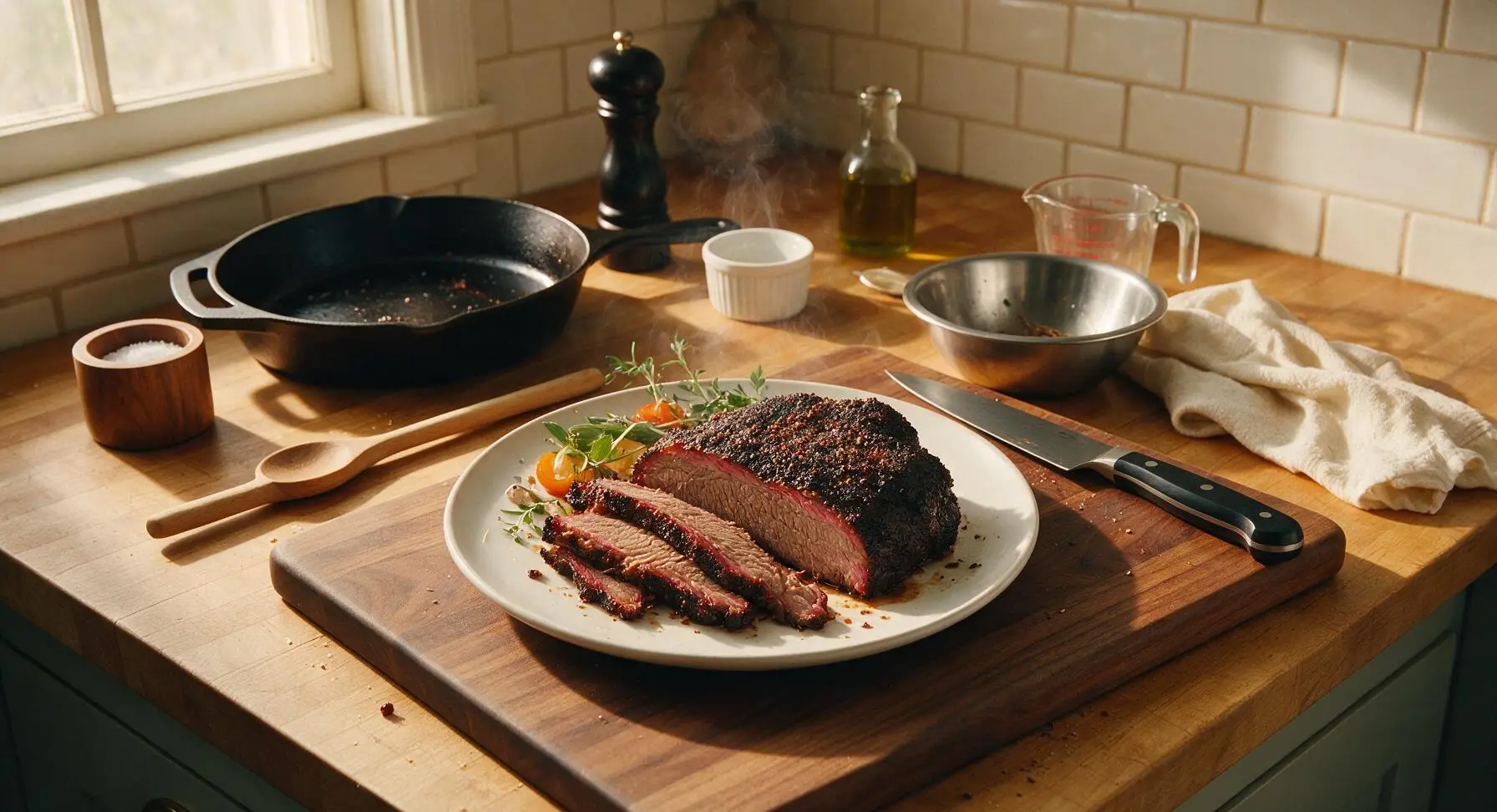
Fall-apart tender beef brisket with a crisp peppery bark, deep smoky flavor, and subtle pink smoke ring: the ultimate centerpiece for summer backyard cookouts.
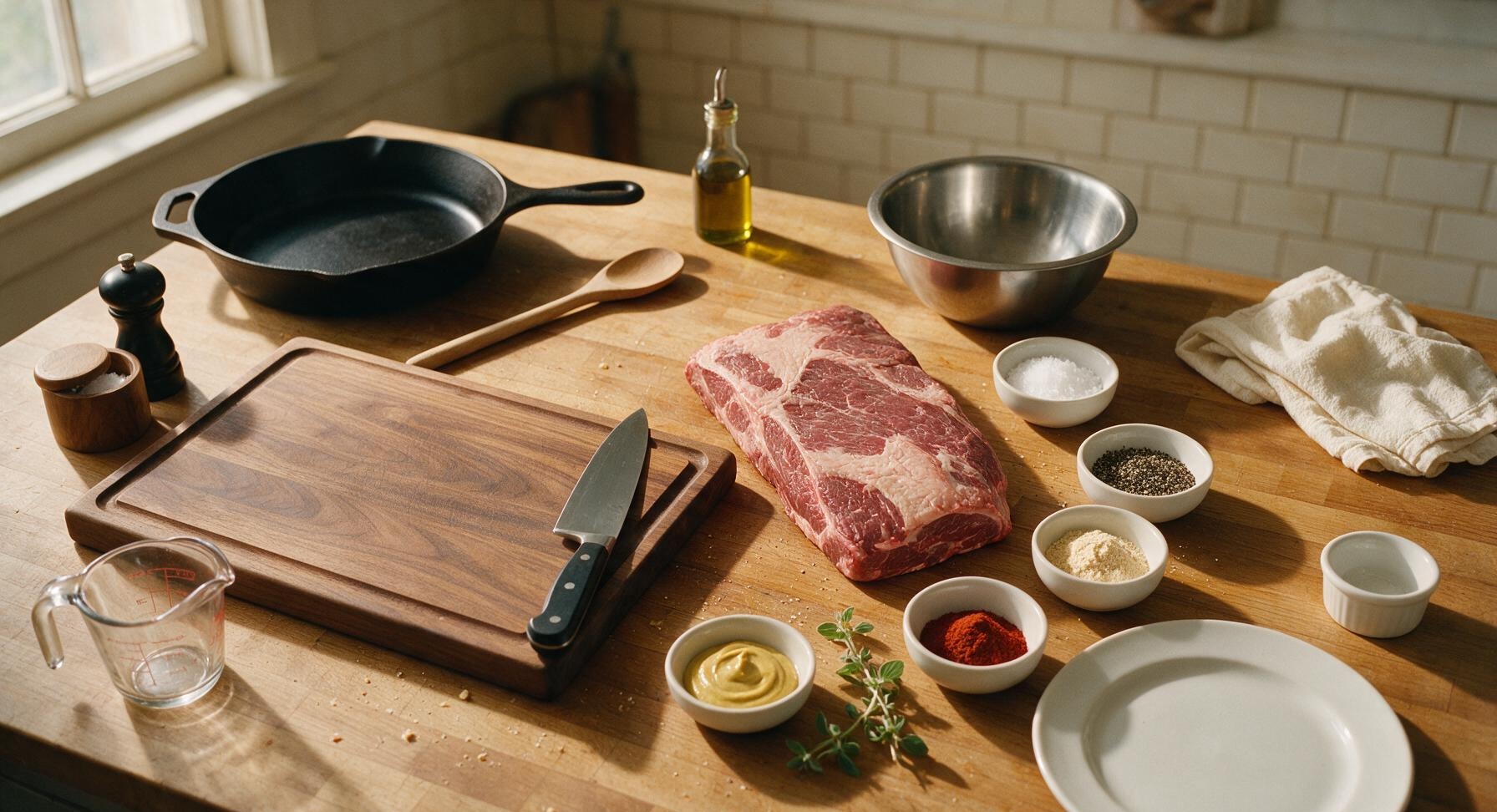
Ingredients
Steps
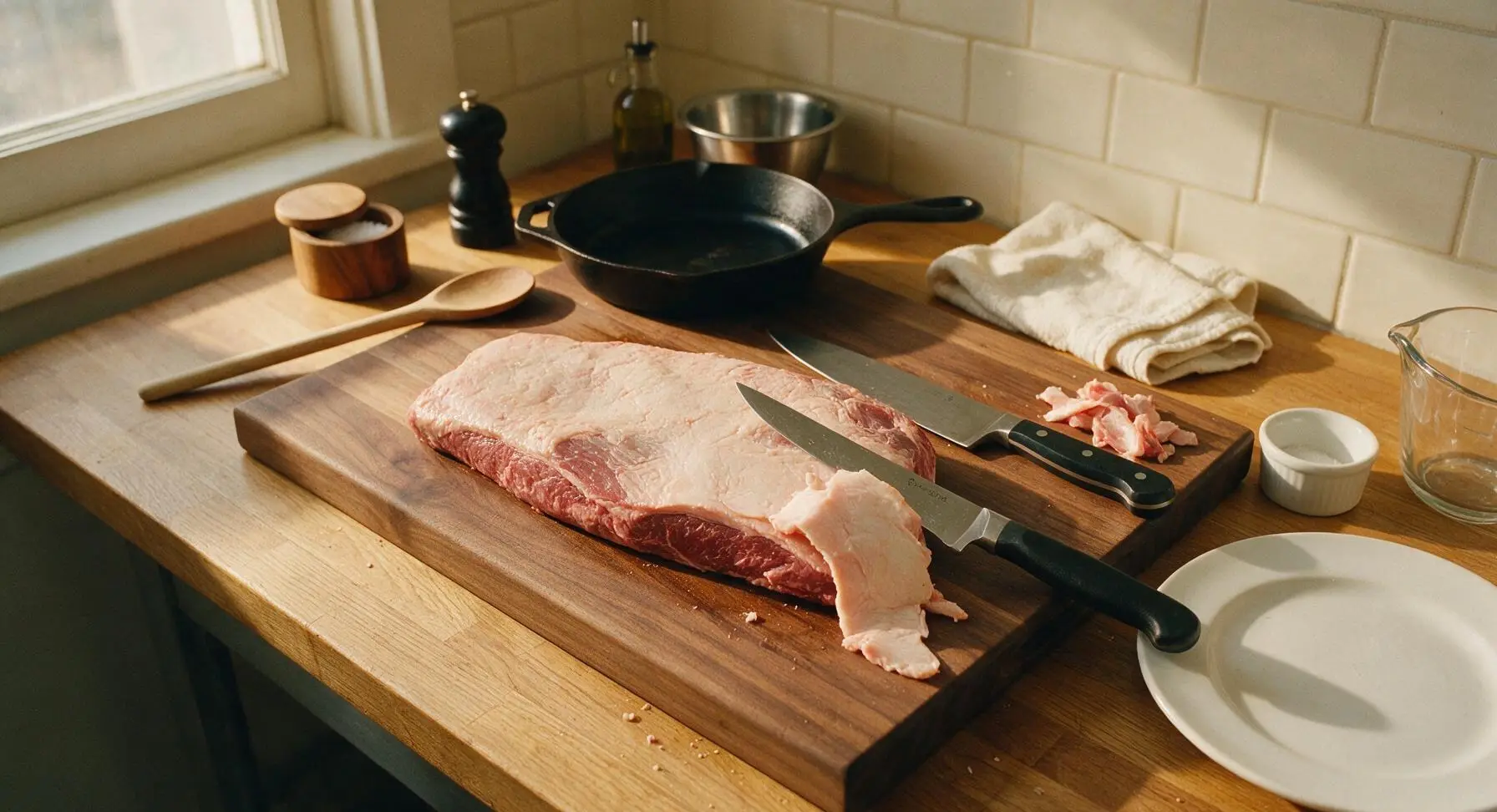
Trim the Brisket
Place the cold whole packer brisket fat-side up on the oak cutting board. Use the 6-inch boning knife to trim the thick fat cap down to an even 1/4 inch thickness, removing all hard, waxy fat chunks and shiny silver skin from the meat surface. Trim loose edges from the point end to create a uniform shape that cooks evenly. The finished trimmed brisket should feel smooth when you run a hand across fat and meat sides, with no ragged edges.
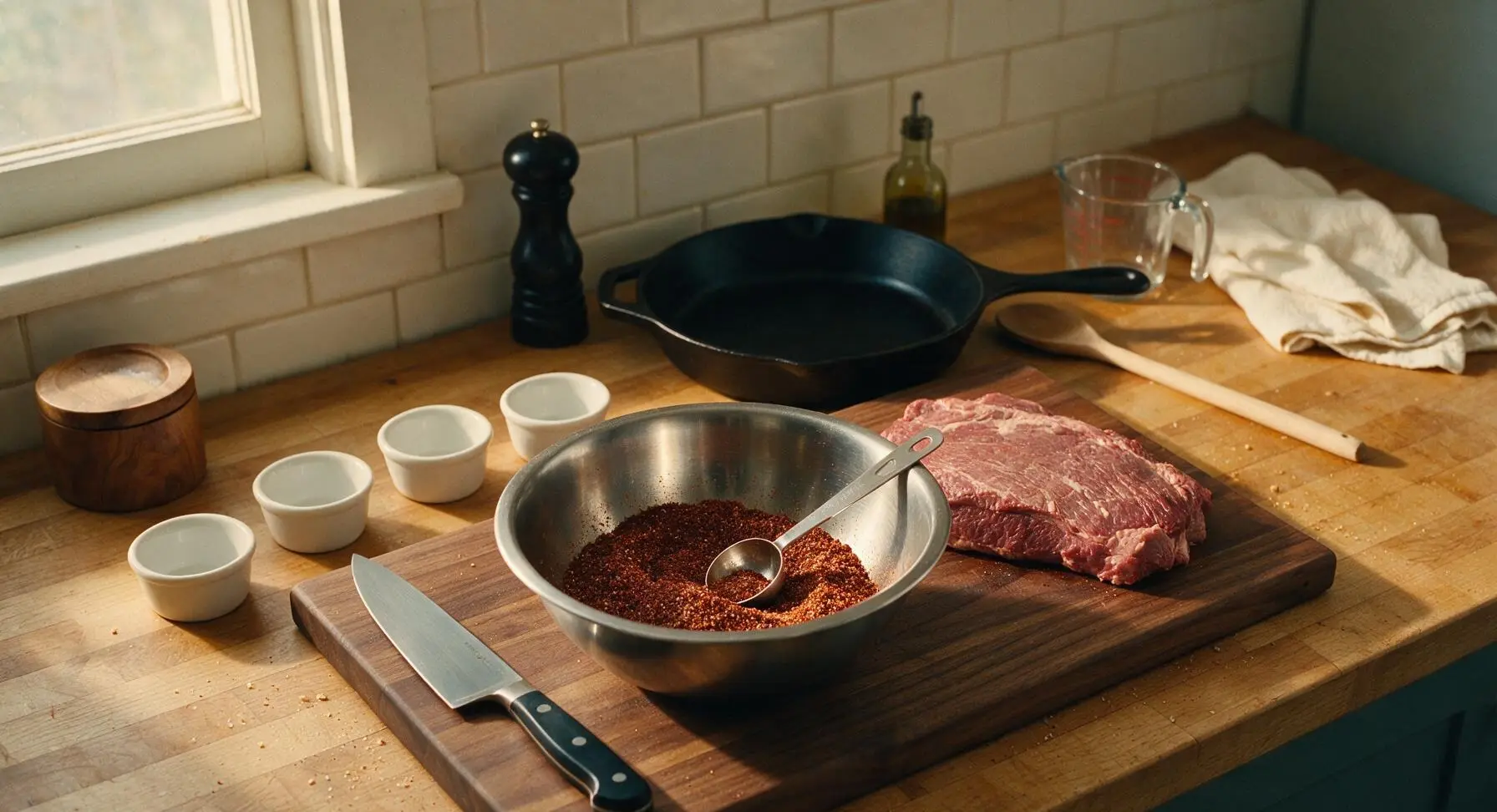
Mix the Dry Rub
Use the stainless steel measuring spoons to portion 3 tbsp coarse kosher salt, 3 tbsp freshly cracked black pepper, 1 tbsp garlic powder, and 1 tbsp smoked paprika into the medium stainless steel mixing bowl. Stir the spices thoroughly until evenly combined, with no clumps of paprika or garlic powder visible in the mixture.
Coat Brisket with Rub
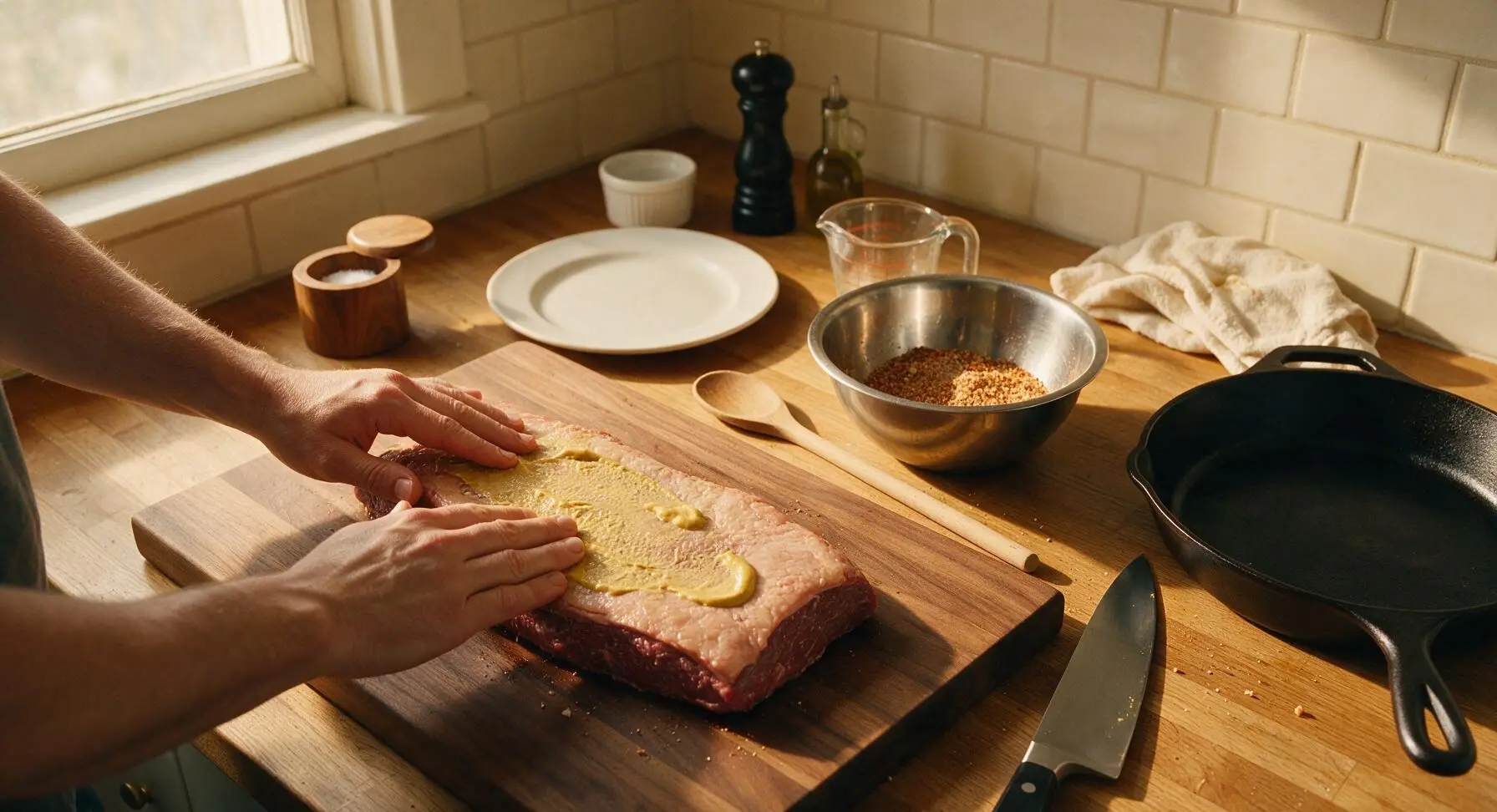
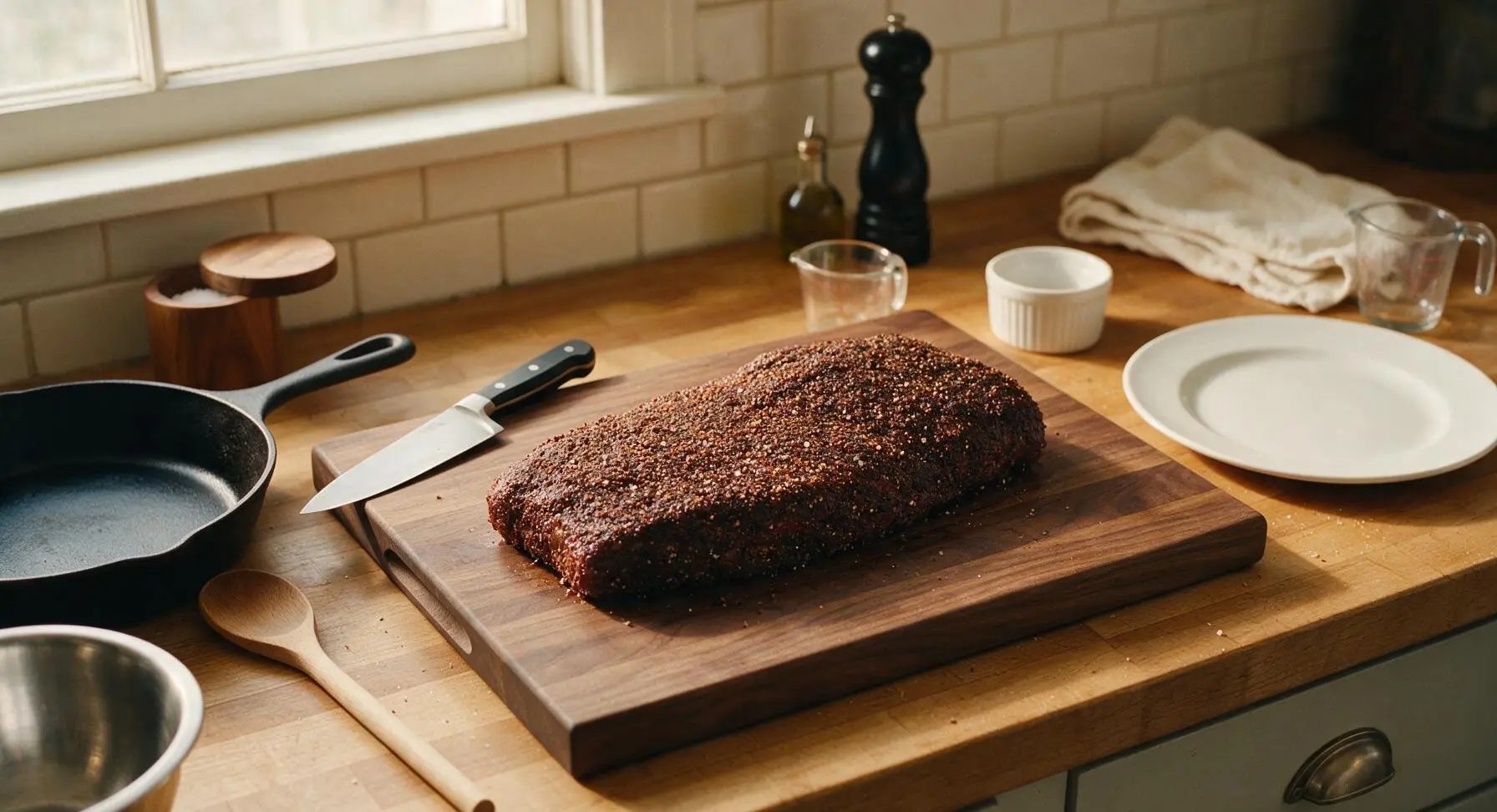
Pat the entire surface of the trimmed brisket completely dry with paper towels from the countertop roll. Spread 2 tbsp yellow mustard in a thin, even layer across every surface of the brisket (fat side, meat side, and edges); the mustard acts as a flavorless binder to help the rub adhere tightly during cooking. Sprinkle the dry rub generously over all sides, pressing lightly to stick, until every surface is covered in a thick, uniform layer of spice with no bare patches visible.
Let Rub Set, Preheat Smoker
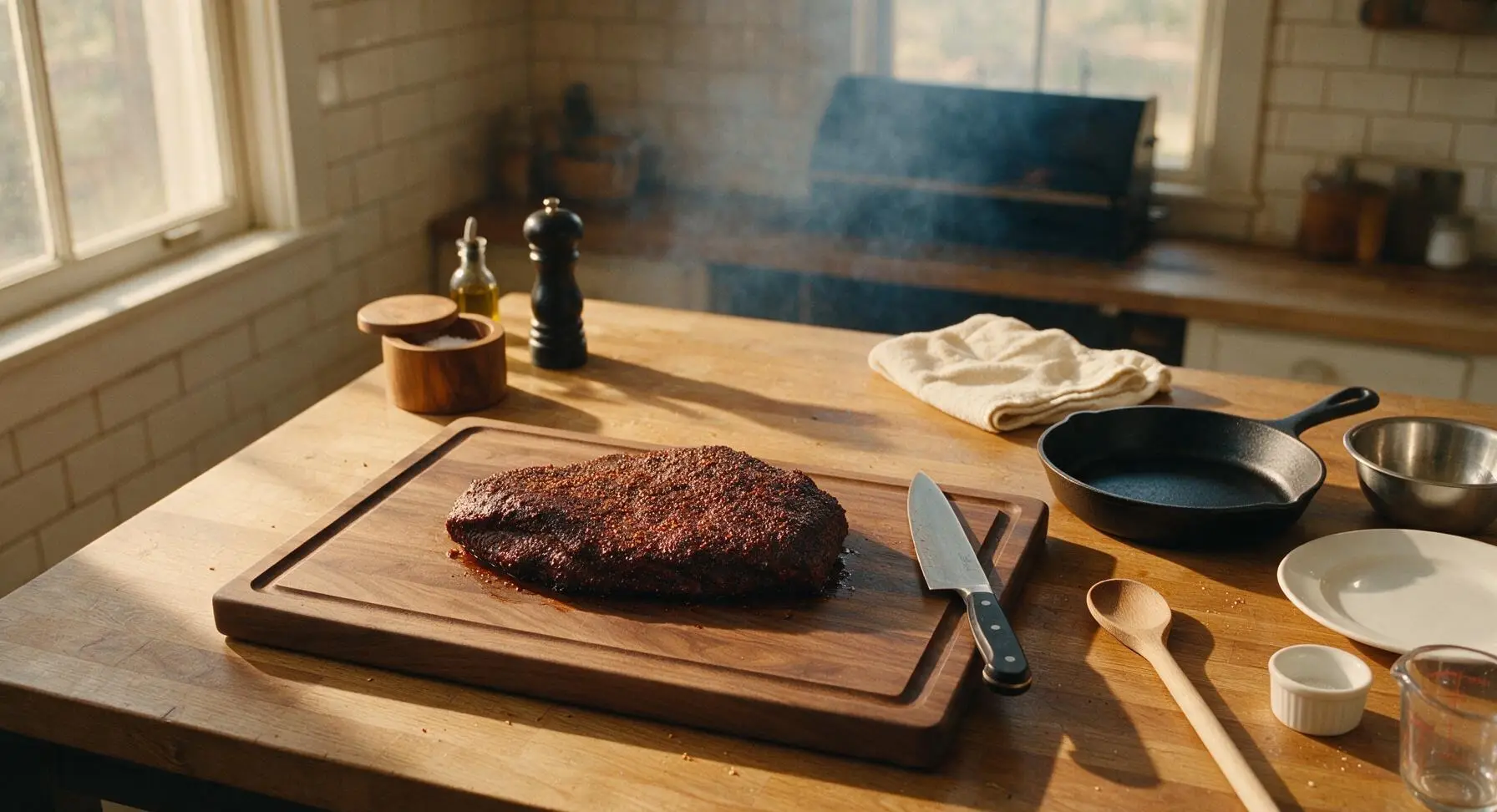
Leave the coated brisket resting on the cutting board at room temperature for 45 minutes to let the rub absorb moisture from the meat and form a slightly tacky surface that will develop into a crisp bark. While the brisket rests, preheat an offset smoker to a steady 225°F (107°C), using seasoned oak or hickory splits to produce thin, wispy blue smoke.
Smoke Low and Slow
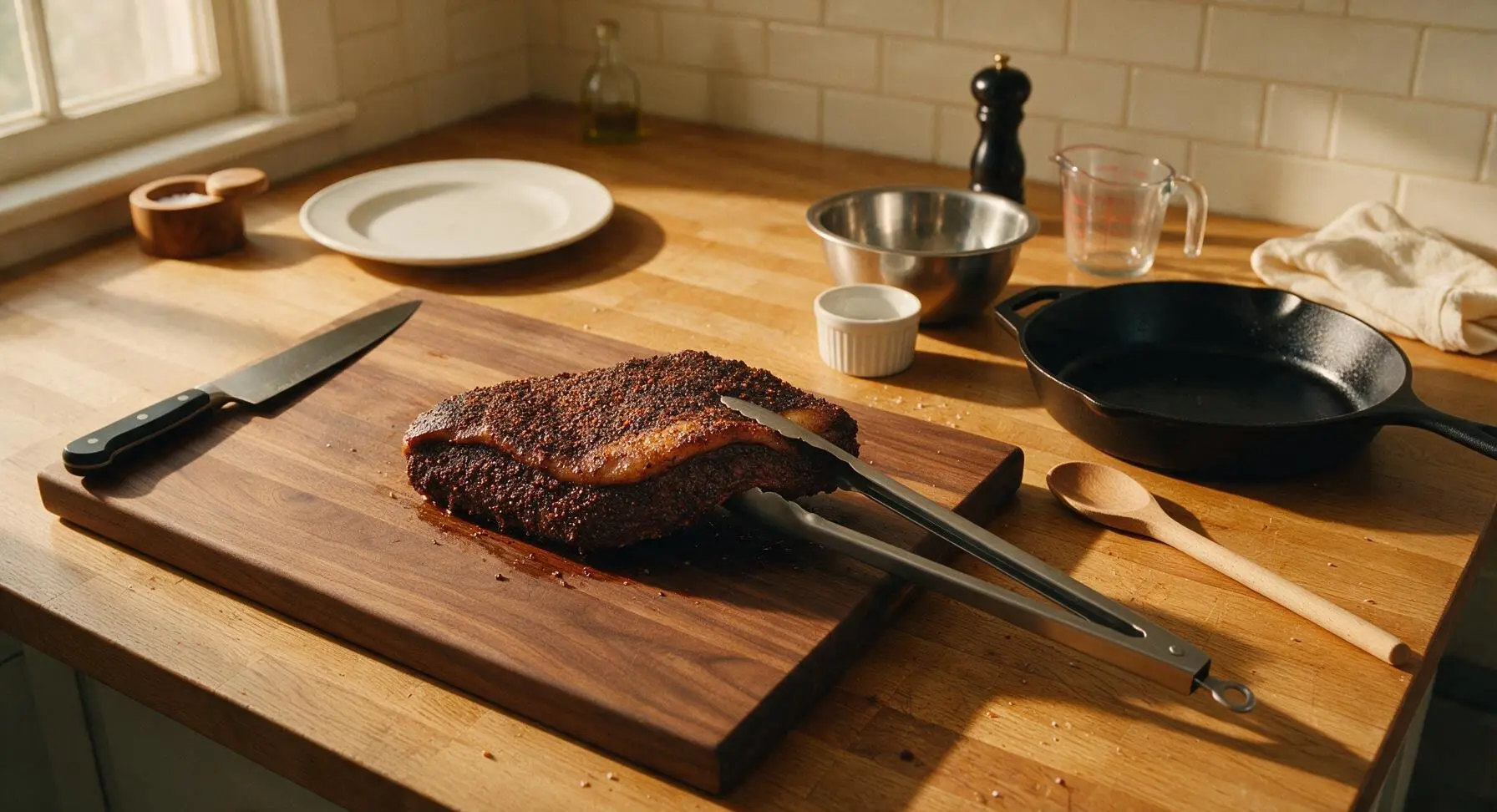
Use the long stainless steel tongs to transfer the seasoned brisket to the smoker grate, positioning it fat-side up away from direct heat. Close the smoker lid and maintain a steady 225°F temperature, adding small wood splits as needed to keep consistent thin blue smoke. Cook for approximately 6 hours, until the brisket develops a firm, dark bark and reaches an internal temperature of 165°F (74°C) when probed with the digital meat thermometer in the thickest part of the flat.
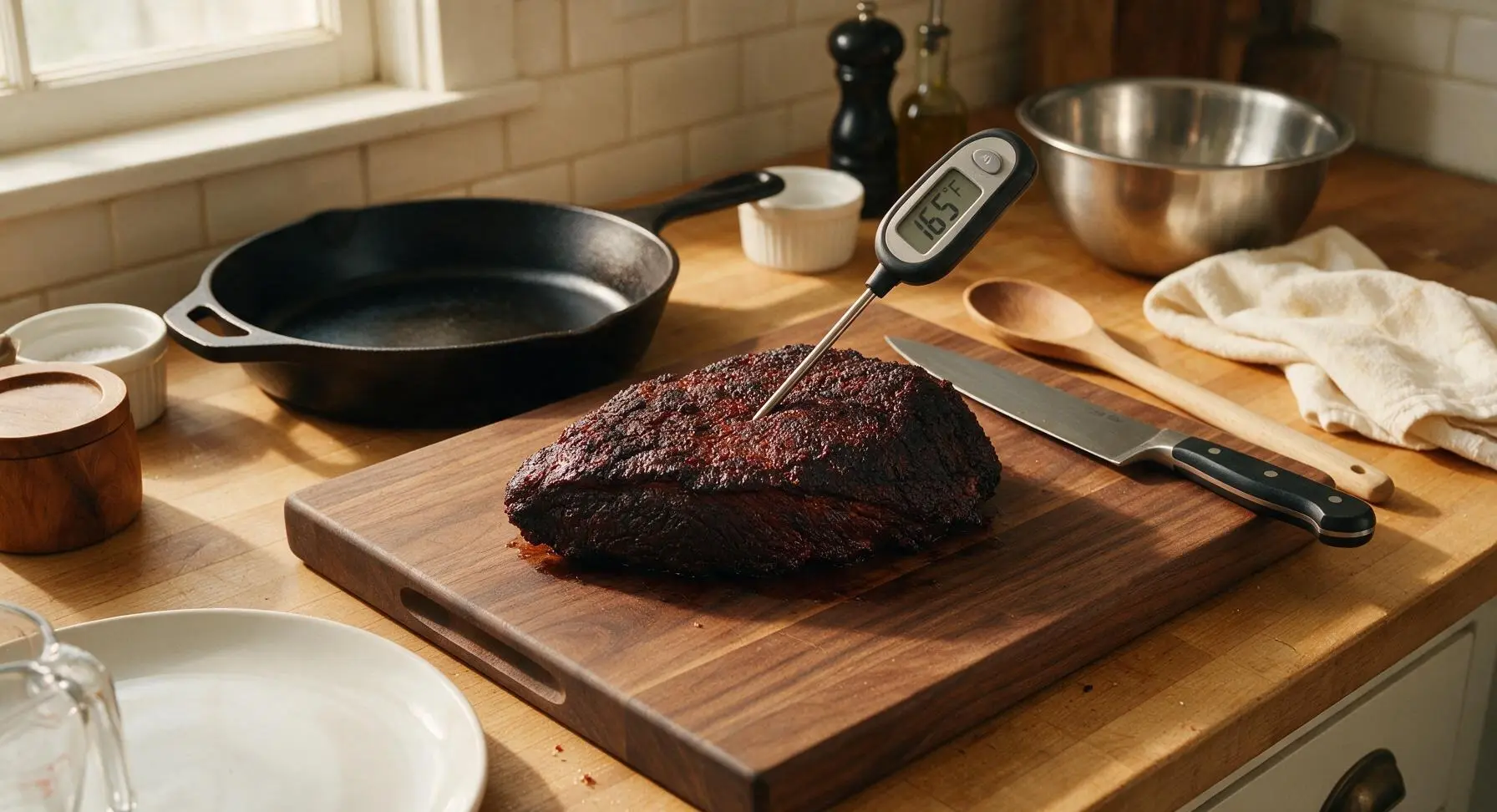
Wrap and Continue Cooking
Once the brisket hits 165°F, use the tongs to carefully move it from the smoker to the heavy-duty aluminum foil pan on the counter. Tightly cover the pan with two layers of heavy-duty aluminum foil, crimping edges to create an airtight seal that traps steam to tenderize the meat. Return the sealed pan to the smoker, maintaining 225°F, and cook for an additional 3 to 4 hours, until the thermometer slides into the thickest part of the meat with no resistance (like soft butter) at an internal temperature of 203°F (95°C).
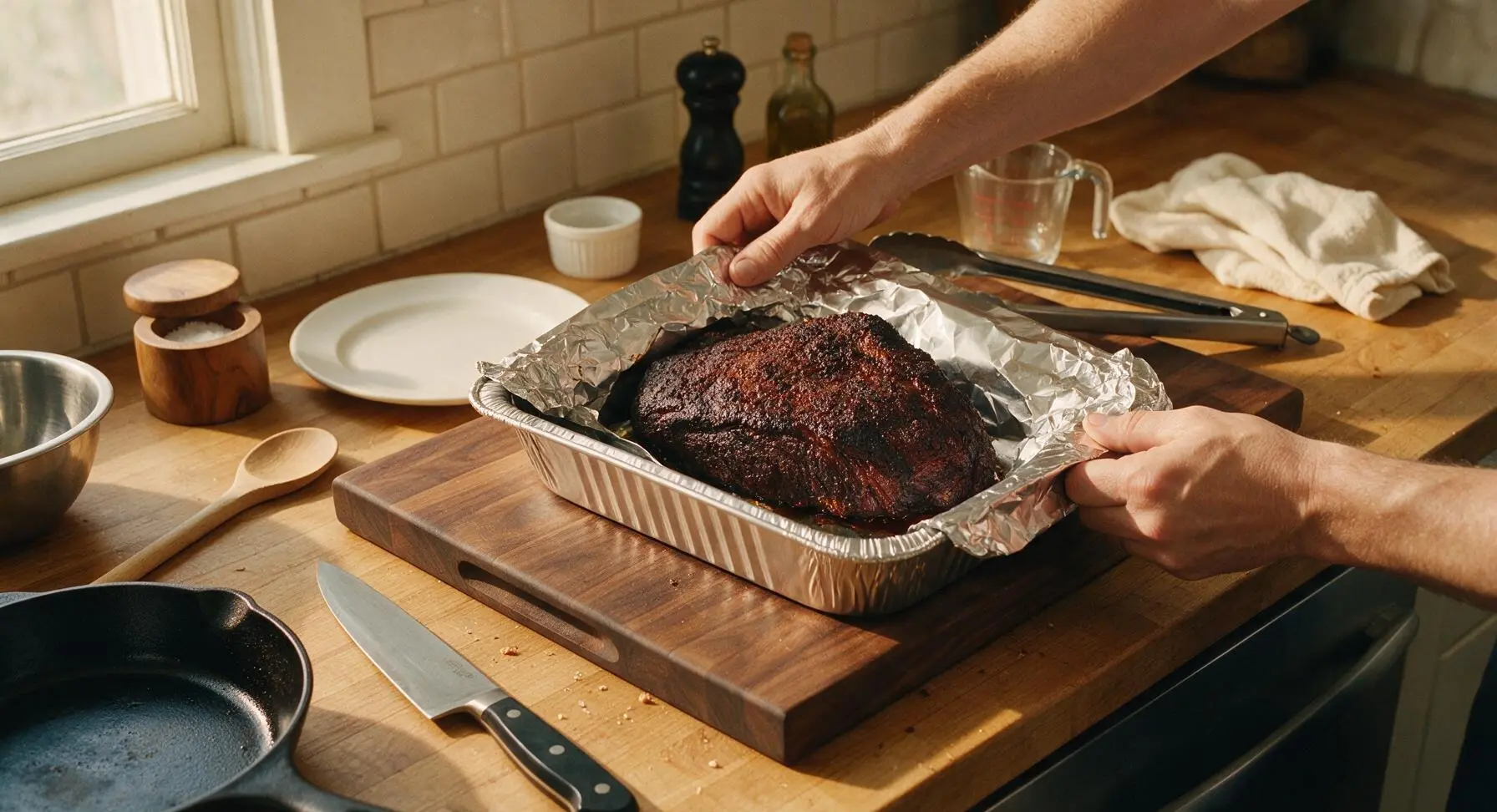
Rest Brisket Before Slicing
When the brisket reaches probe tenderness, use the tongs to transfer the sealed foil pan from the smoker back to the counter. Let the brisket rest, completely sealed in foil, for 1 full hour at room temperature. This rest allows muscle fibers to relax and reabsorb juices, preventing flavorful liquid from running out across the plate when sliced.
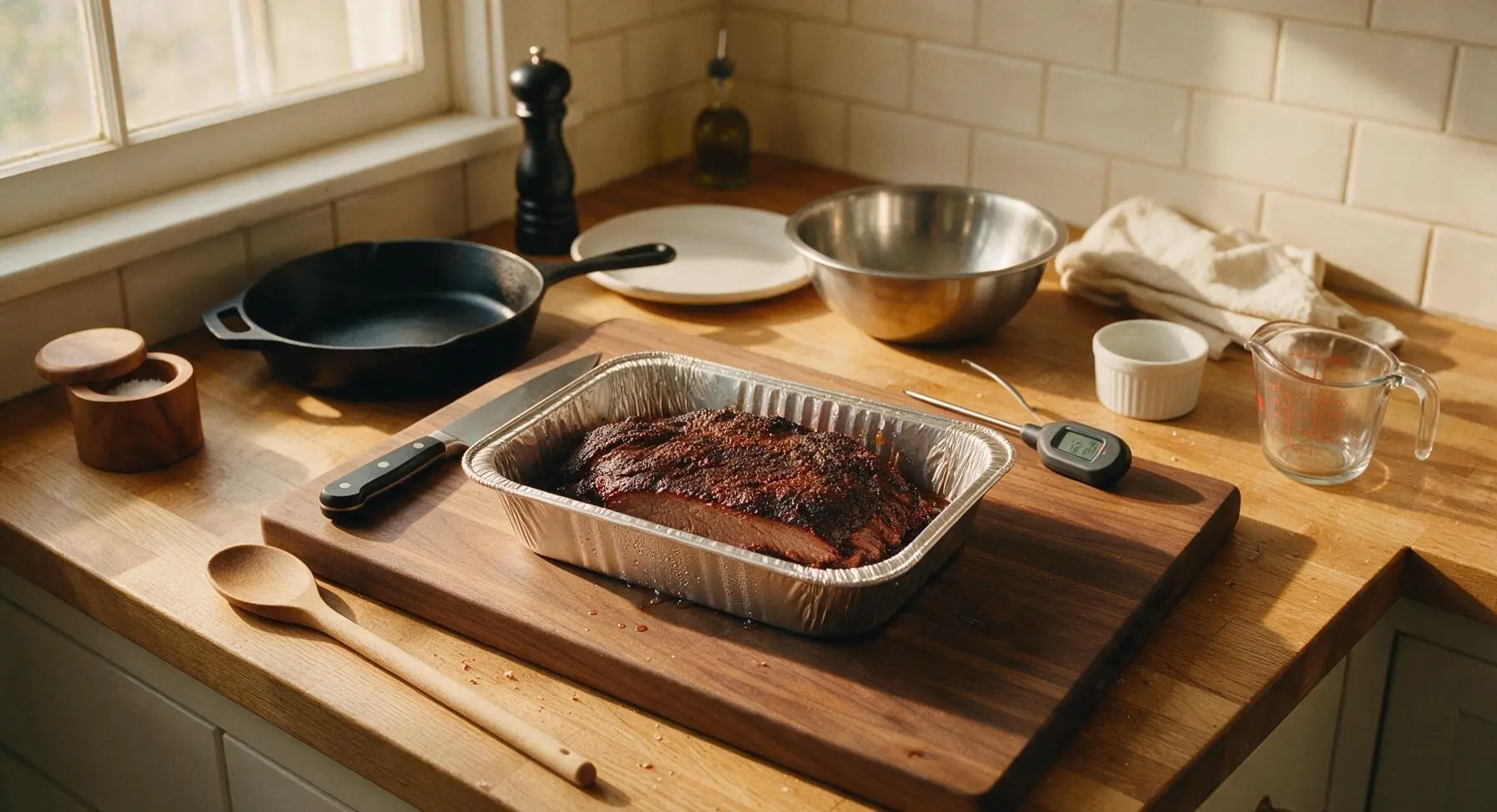
Slice and Serve Brisket
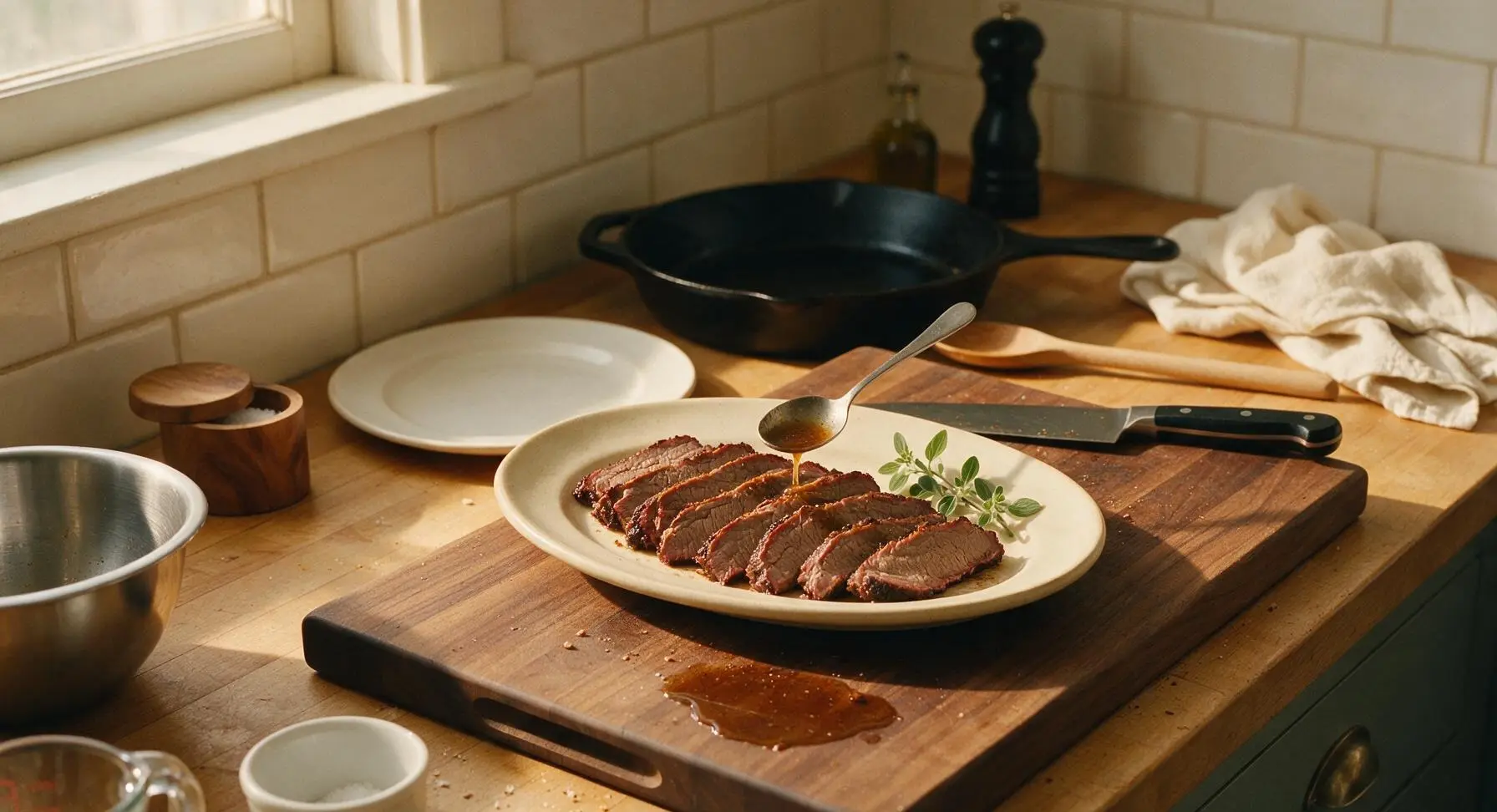
Unwrap the rested brisket, pouring all collected savory juices from the foil pan into a small pool on the corner of the cutting board. Use the 12-inch brisket slicing knife to cut the meat against the grain into uniform 1/4-inch thick slices, rotating the meat as needed to cut across muscle fibers on both the flat and point sections. Arrange slices fanned out on the matte cream ceramic oval platter, drizzle with reserved juices using the small stainless steel spoon, and garnish with a fresh sprig of oregano.
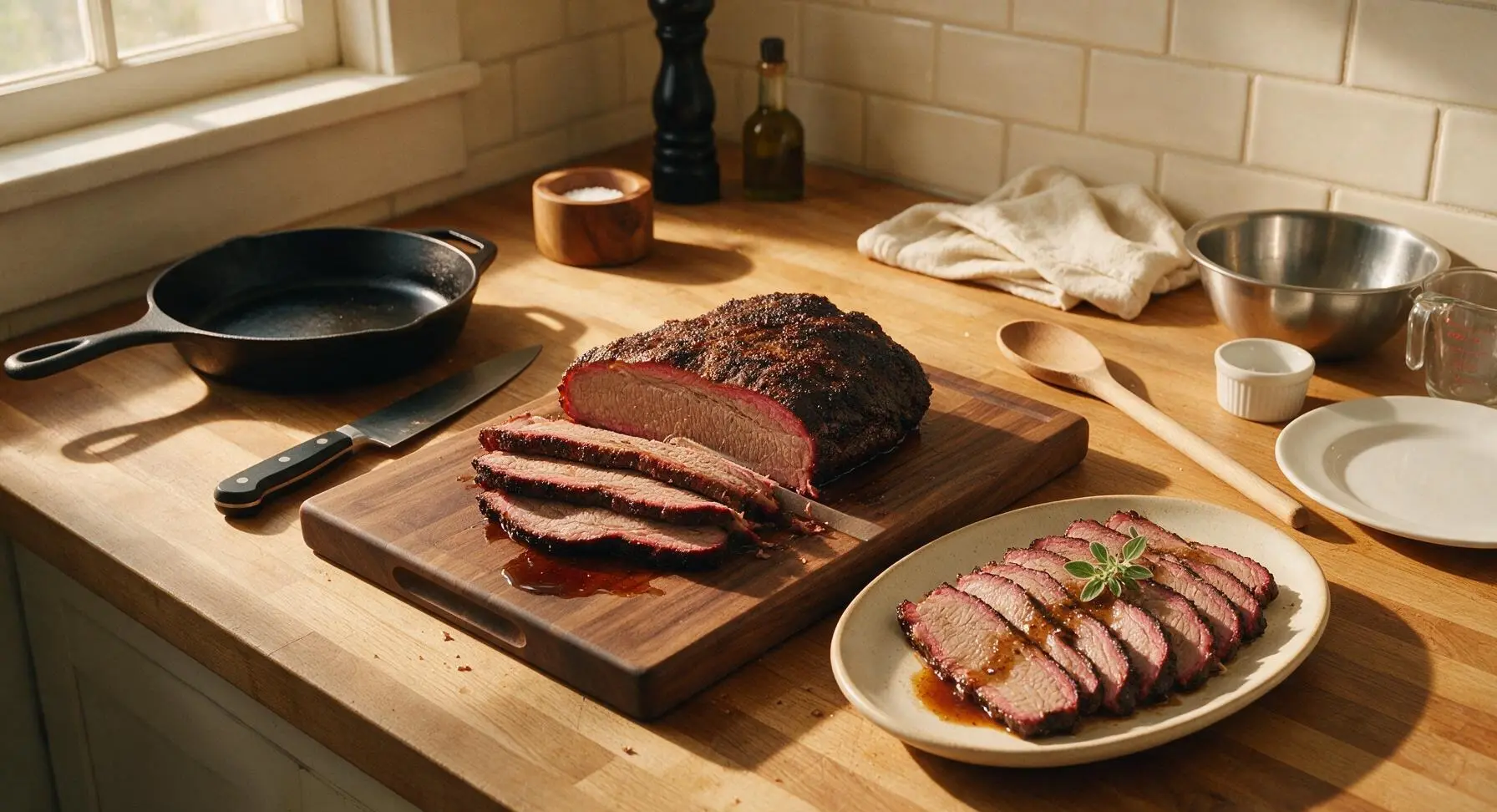
Tips
2.Don’t rush the temperature stall: when the brisket hits 150–165°F, internal temperature will plateau for 2–3 hours as surface moisture evaporates. Wrapping at 165°F cuts through this stall without turning the bark soggy, so avoid raising smoker heat or repeatedly peeking under the lid.
3.Slice against the grain at all times: Brisket muscle fibers run in different directions on the flat and point sections, so rotate the meat as you slice to cut across, not parallel to, the fibers. This guarantees every bite is tender, not stringy or chewy.
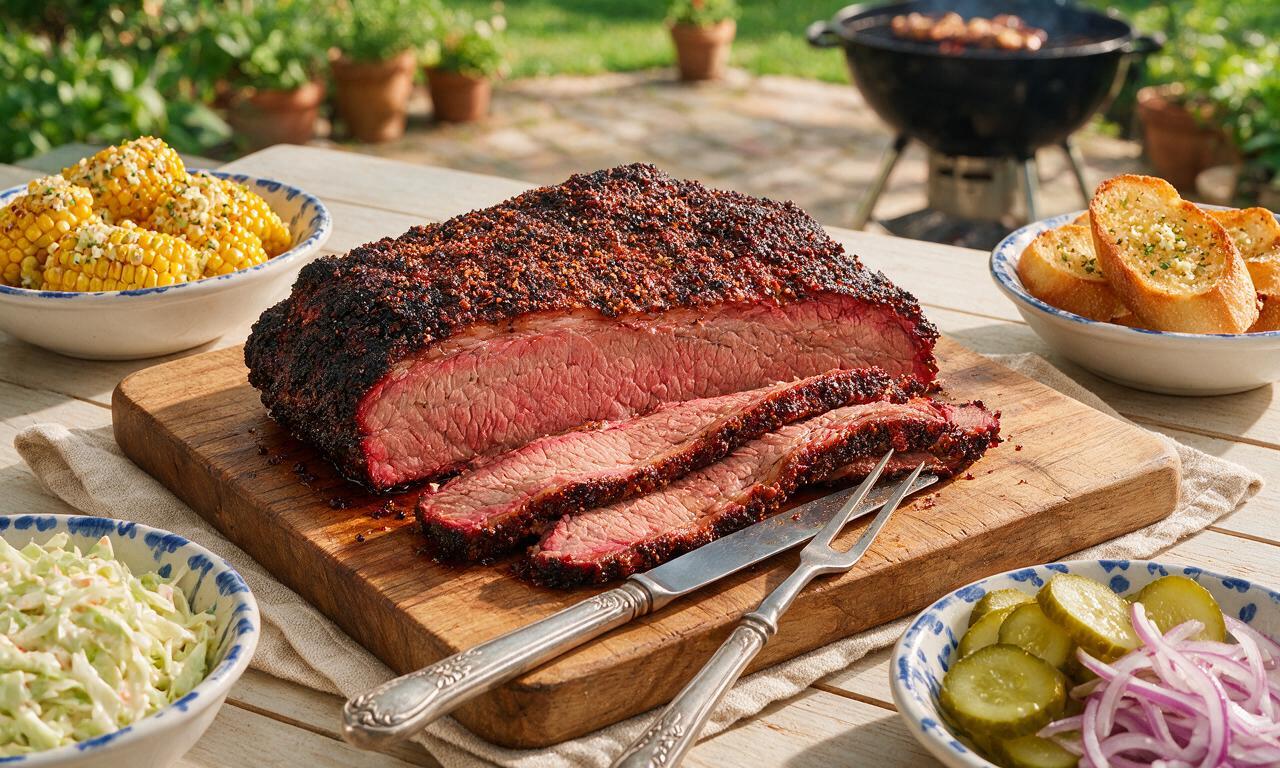
OMG, this brisket was a total game changer for our Sunday family dinner! I was so nervous to tackle brisket since it always felt so intimidating, especially for a medium-difficulty recipe, but the step-by-step instructions made it totally doable. My kids loved it so much they went back for seconds before my husband even finished his first plate, and my father-in-law (who is *obsessed* with Texas brisket and swears nothing beats the stuff he gets on road trips to Austin) said it was better than most restaurant versions he’s had! 10 hours felt like forever to wait, but the smell wafting through the house all day was chef’s kiss. 10/10, will be making this for our next neighborhood potluck for sure.
SO good. I meal prepped this for the week and ate slices for lunch every day with a little coleslaw and dill pickles, and it never got old. Only thing I messed up was letting the smoker temp spike a little at the 8 hour mark, so the point end was a tiny bit crispier than I wanted, but even that part tasted amazing. Pro tip: don’t skip the dry rub rest overnight! I let mine sit for 12 hours in the fridge before putting it on the smoker and the flavor went all the way through, zero bland bites at all.
Tried this for my husband’s birthday cookout last weekend and I’m still getting texts from our friends asking for the recipe! I was worried because I only have a basic charcoal grill, not a fancy offset smoker, but I followed the tips for indirect heat and it turned out perfectly smoky and fall-apart tender. The only tweak I made was adding a tiny bit more cayenne to the rub because we like extra heat around here, and it was chef’s kiss. Will be making this again and again!
Solid recipe, total cook time was spot on for my 12lb packer brisket. I’ve tried a handful of Texas brisket recipes over the years and this one is easily top tier. The bark came out perfectly crackly, the fat rendered down just right so there were no chewy unrendered bits, and the smoke ring was that perfect deep pink I’ve been chasing for years. My only tiny gripe is I wish there was a little more guidance on what wood to use— I went with post oak since that’s what I remember being standard in Texas and it worked great, but would love to see notes on other wood options for people who can’t find post oak locally.