chinese sausage

title 1
chinese sausage
⏱️ cook time 10 minutes
🍽️ servings 4
⚡ Difficulty easy

intro

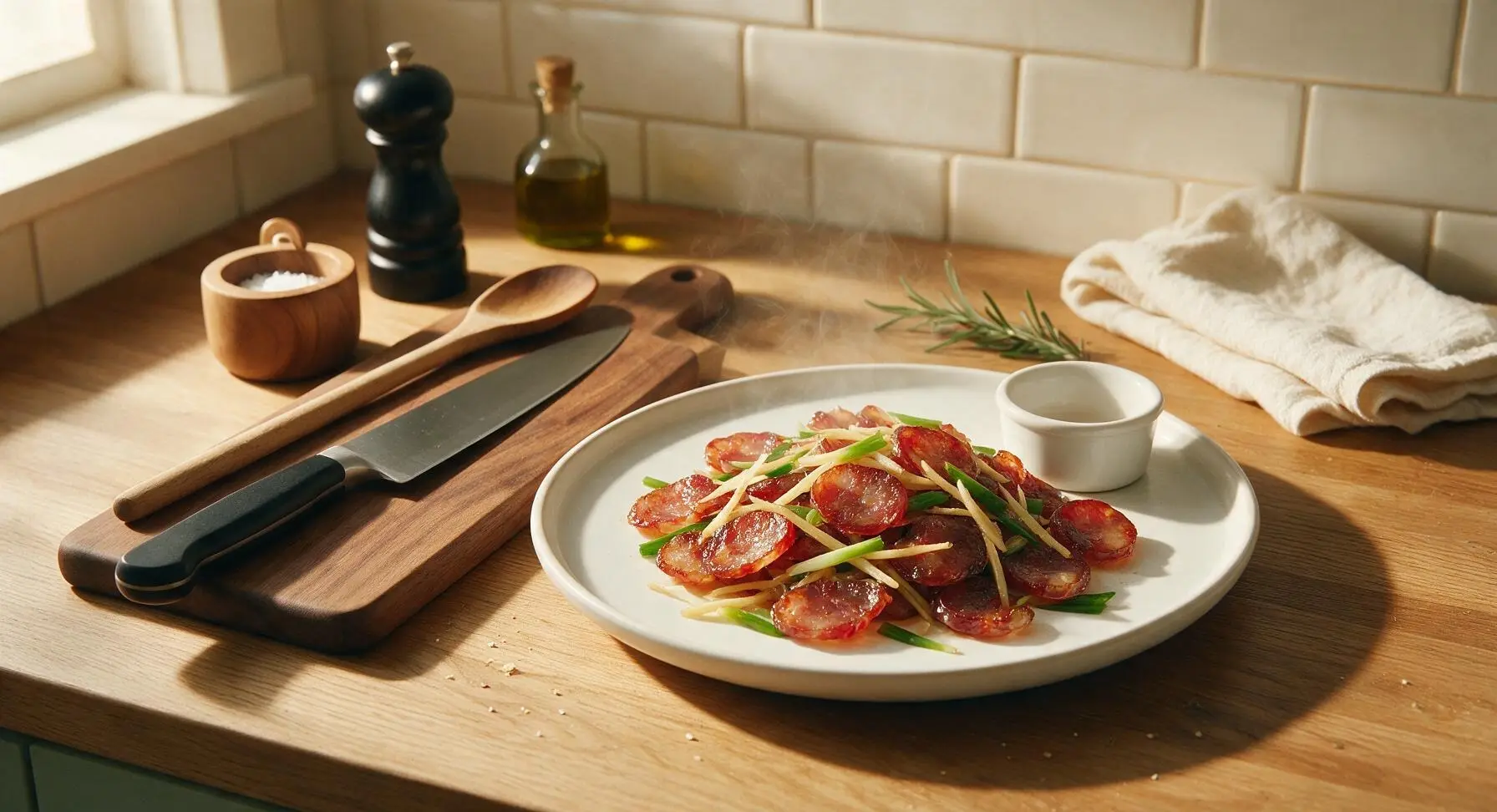
Sweet-savory cured Cantonese lap cheong (Chinese sausage), pan-seared to glossy perfection, tossed with aromatic ginger and scallion, a beloved comforting staple on Chinese home dinner tables.

Ingredients
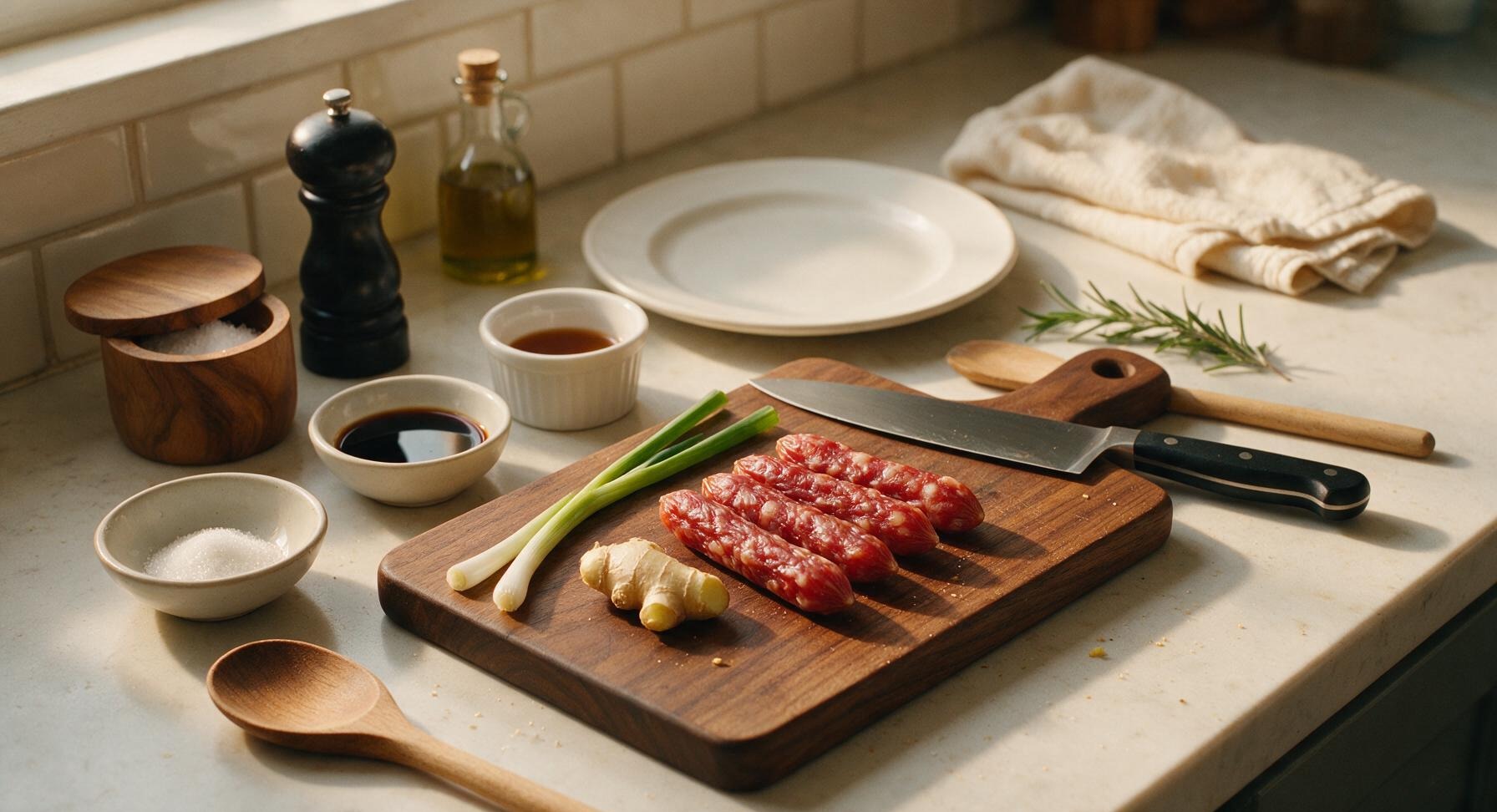
Cantonese cured Chinese sausage (lap cheong) 200g (4 links)
Fresh ginger 15g (1-inch knob)
Scallions (green onions) 2 stalks
Shaoxing rice wine 1 teaspoon
Light soy sauce 1/2 teaspoon
White granulated sugar 1/4 teaspoon

Steps

1

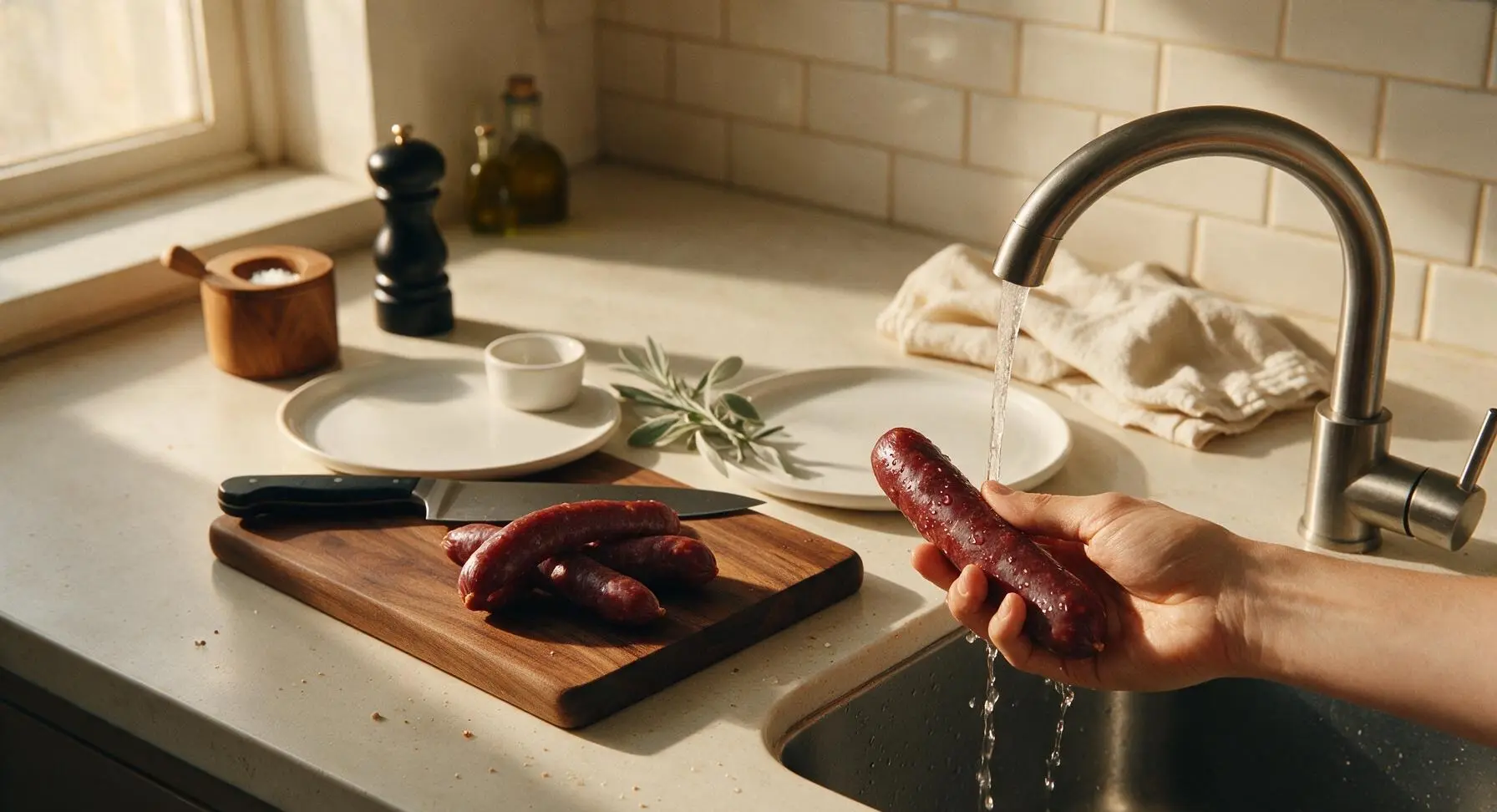
Rinse Sausage Links

Place the 4 Chinese sausage links under cool running water for 30 seconds at the right-side sink to gently rinse off any surface dust or residual curing salt from the natural casings. Pat completely dry with the edge of the striped cotton kitchen towel, taking care not to tear the thin casings. Do not soak the sausages, as this will wash away their signature sweet-savory flavor.
Step 1
step1:Rinse Sausage Links
2

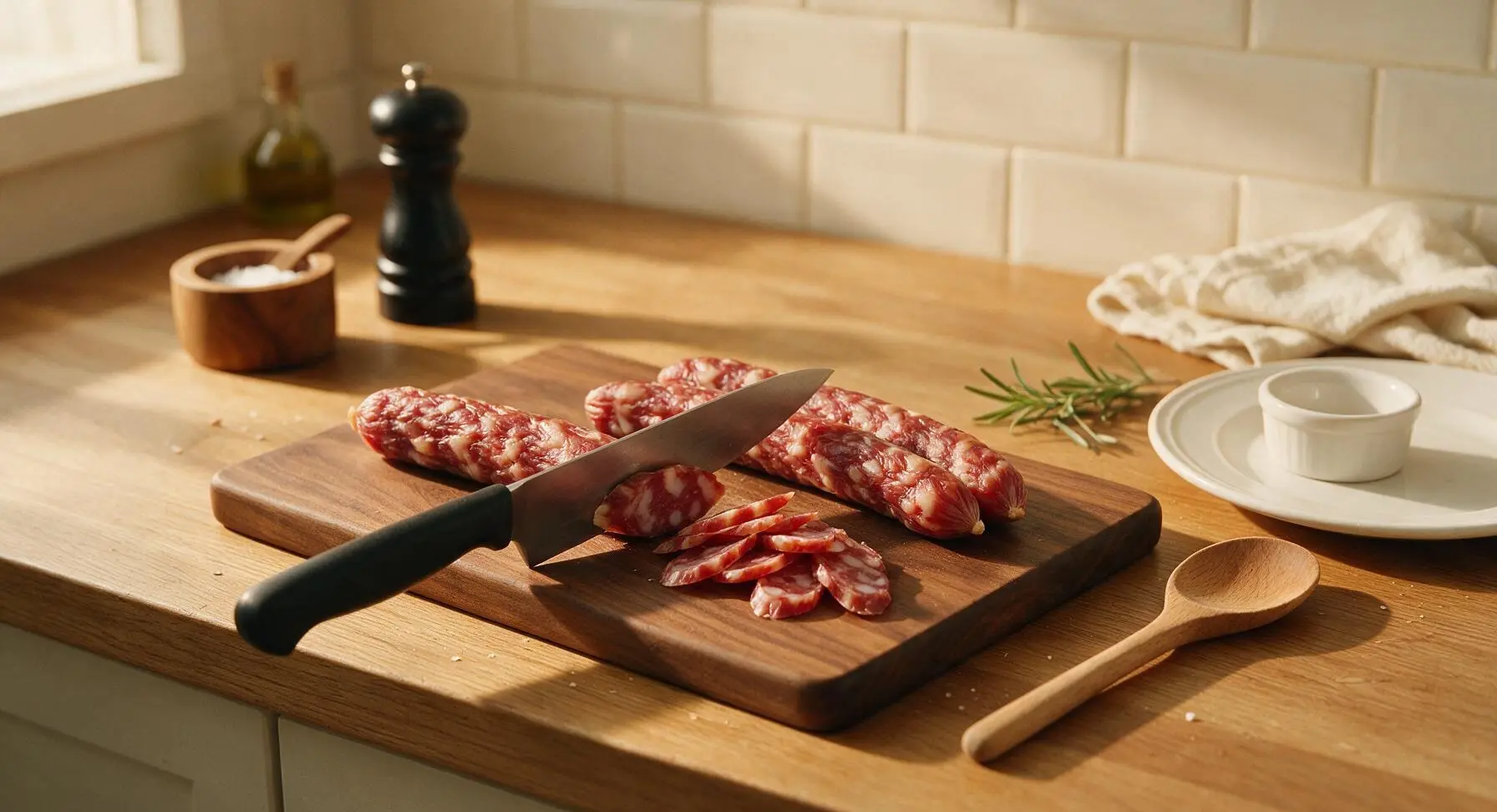
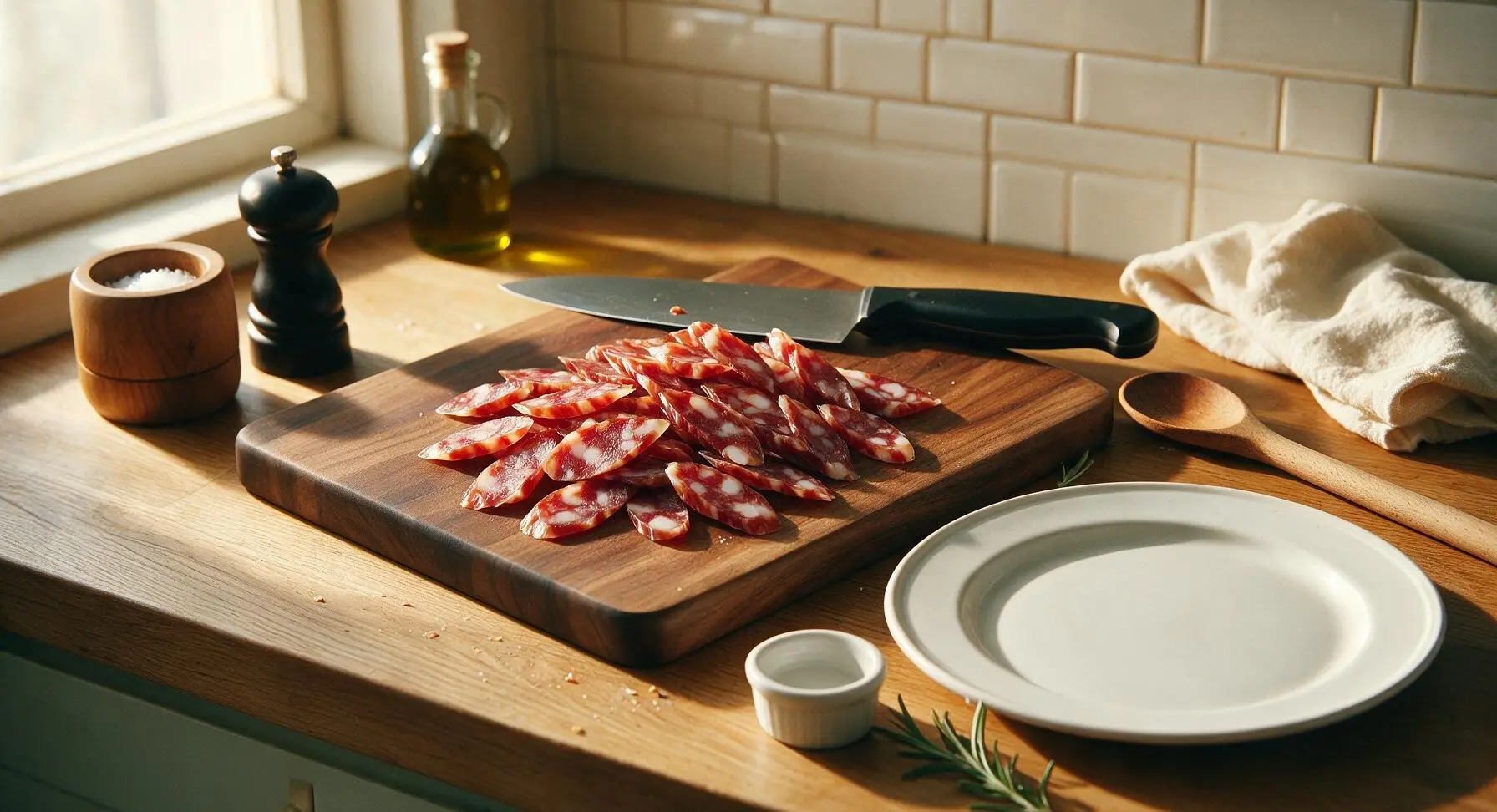
Slice Sausage Evenly

Place the dried, rinsed sausages on the bamboo cutting board. Using the 7-inch chef knife, cut the links into 5mm-thick diagonal slices. The diagonal cut creates more surface area for searing and better flavor release; aim for uniform thickness so all slices cook at the same rate. You will see thin flecks of white fat marbled through the deep red pork in each slice.
Step 2
step2:Slice Sausage Evenly
Step 2
step2:Slice Sausage Evenly
3

Prep Aromatic Garnish

Peel the 15g knob of fresh ginger, then cut it into thin 2mm matchstick strips. Trim the root ends off the 2 scallion stalks, then cut into 3cm long segments, separating the thicker white scallion parts from the tender green parts. Place the ginger strips and white scallion segments in the small white ceramic ramekin, and set the green scallion segments aside for final garnish.
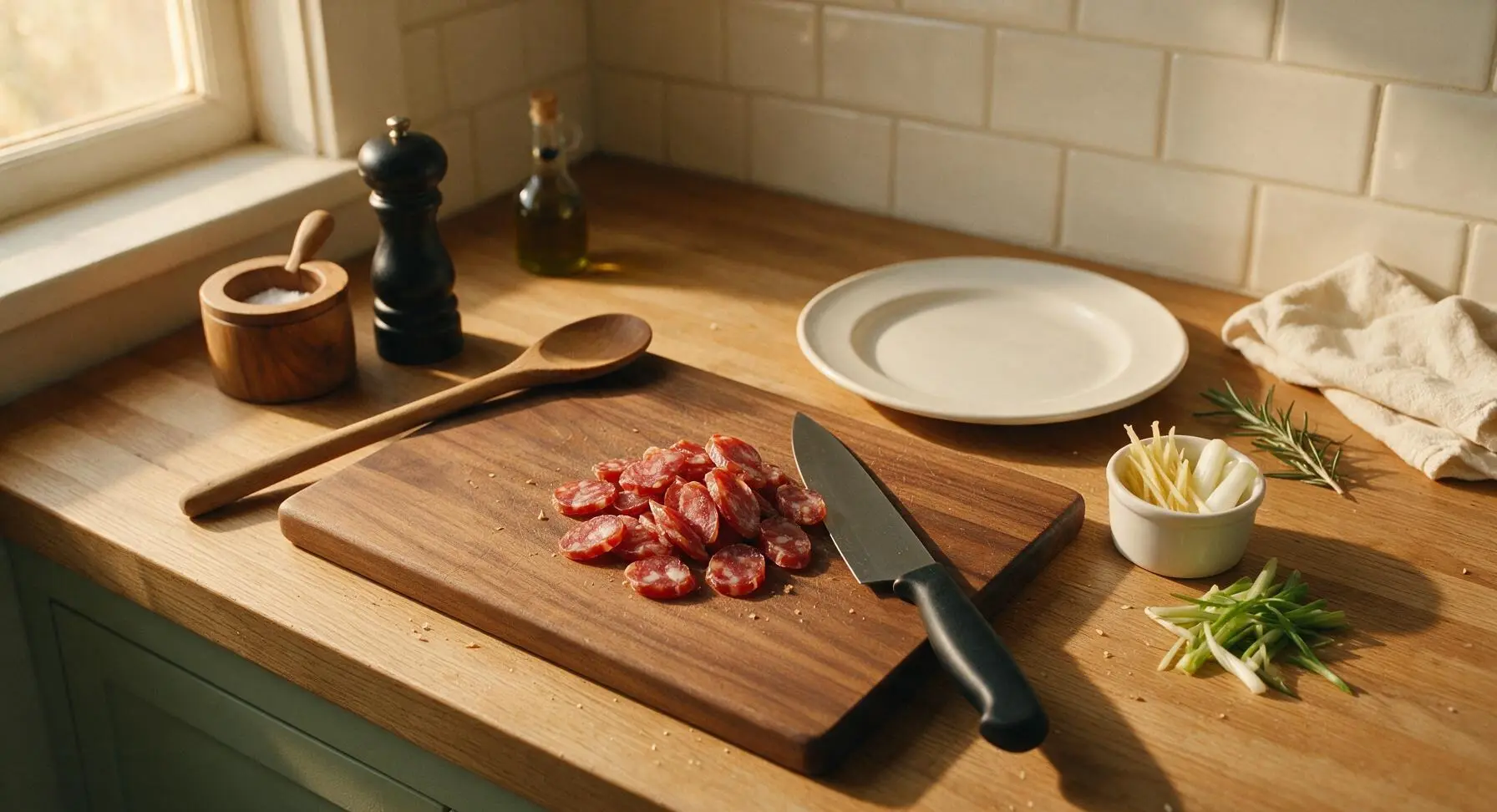
Step 3
step3:Prep Aromatic Garnish
4

Render Sausage Fat

Place the 20cm carbon steel frying pan on the back left gas burner over medium-low heat (140°C / 285°F). Do not add any cooking oil. Add the sliced sausage to the cold pan in a single layer, then cook slowly for 3-4 minutes, flipping occasionally with the silicone-tipped tongs. The sausage will release clear, golden rendered fat as it heats, and the edges will turn slightly translucent and curly. Watch carefully to avoid burning, as the high sugar content in the sausage caramelizes quickly.
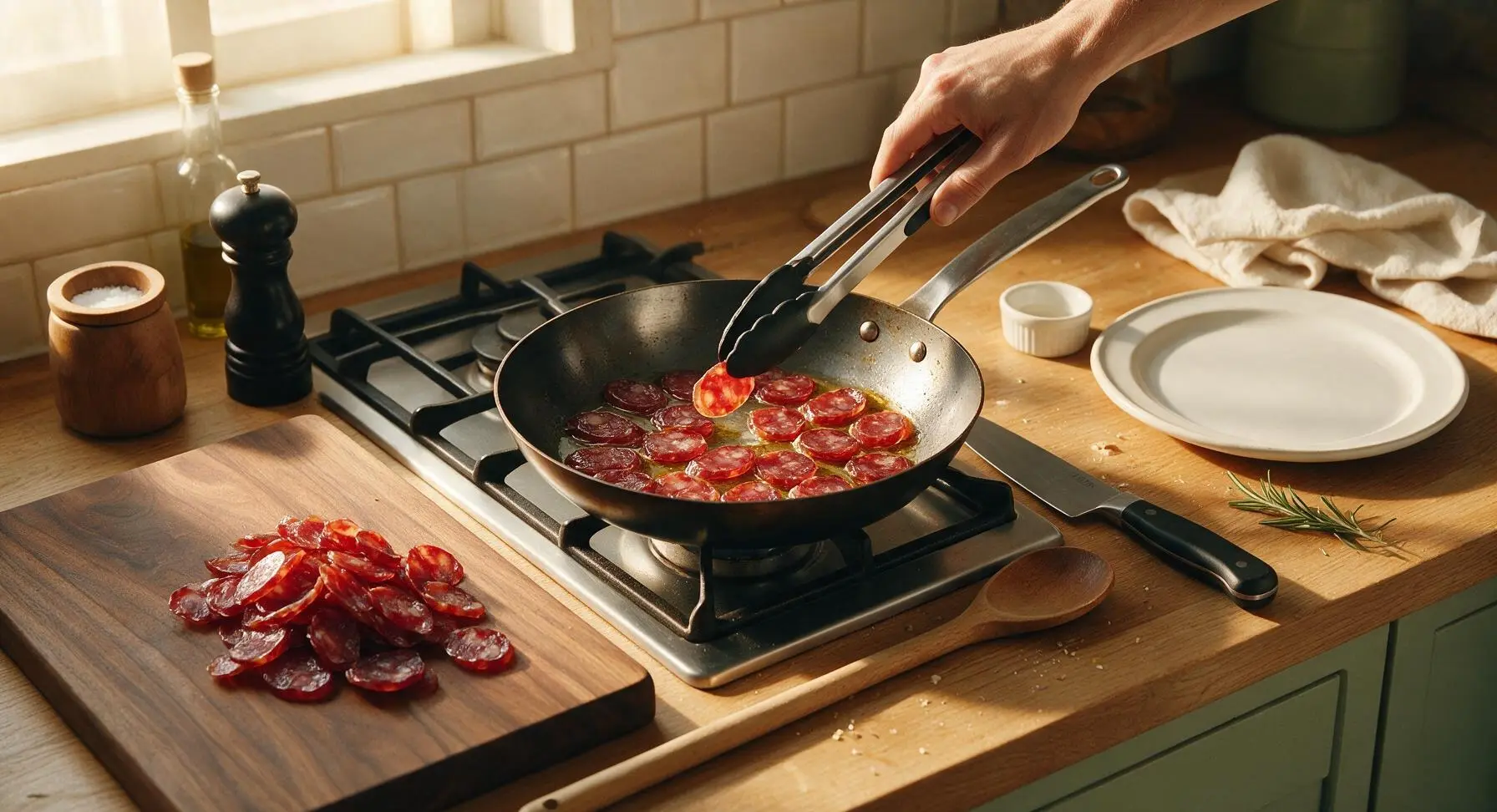
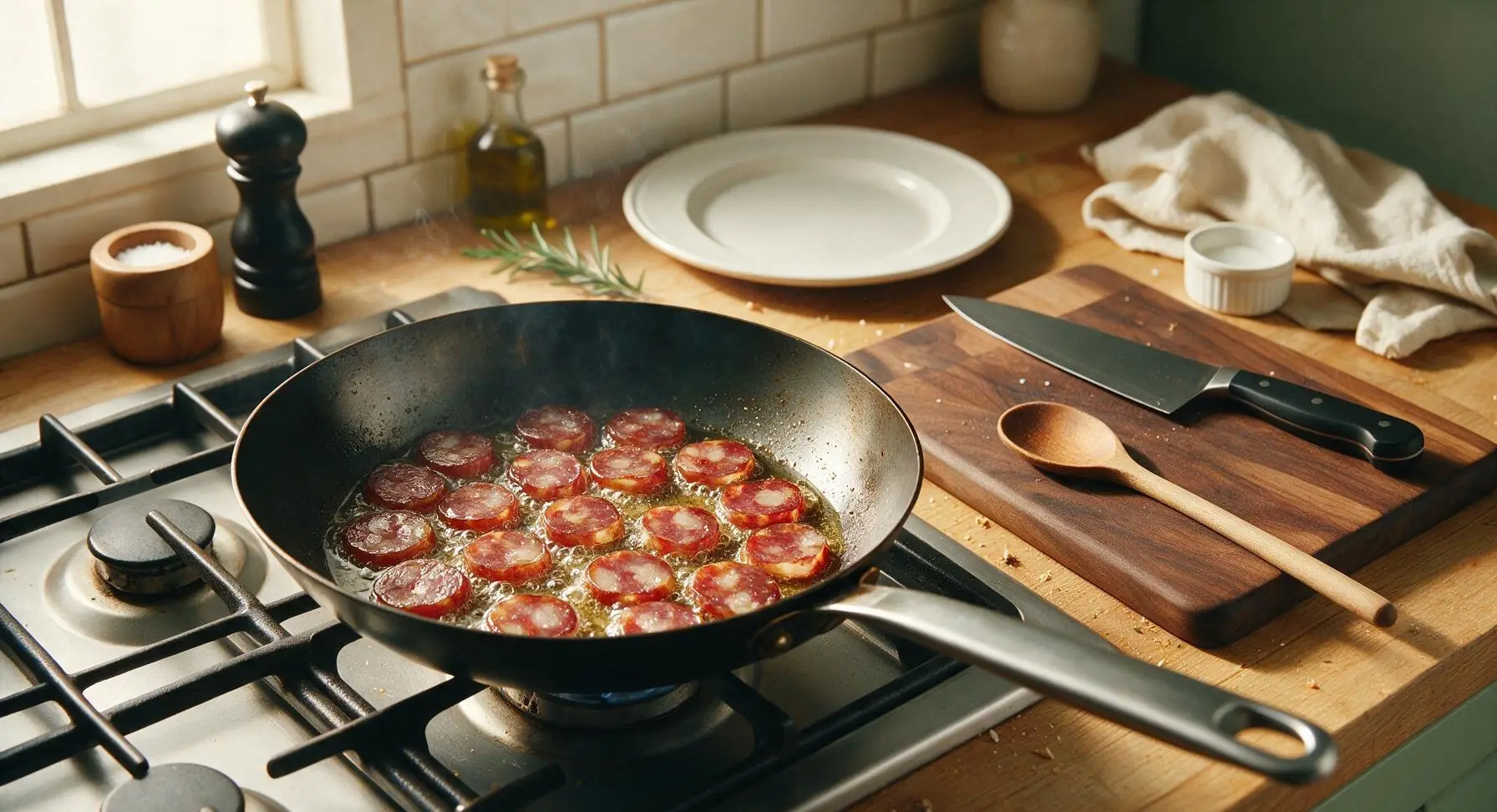
Step 4
step4:Render Sausage Fat
Step 4
step4:Render Sausage Fat
5

Add Aromatics and Season

When the sausage slices are lightly golden on both sides, push them to the edge of the pan. Add the ginger strips and white scallion segments from the ramekin to the rendered fat in the center of the pan, and stir-fry for 15 seconds until fragrant. Drizzle in 1 teaspoon Shaoxing rice wine and 1/2 teaspoon light soy sauce, then sprinkle in 1/4 teaspoon white sugar. Toss all ingredients together with the tongs to coat evenly, cooking for 1 more minute until the sauce glazes each slice.
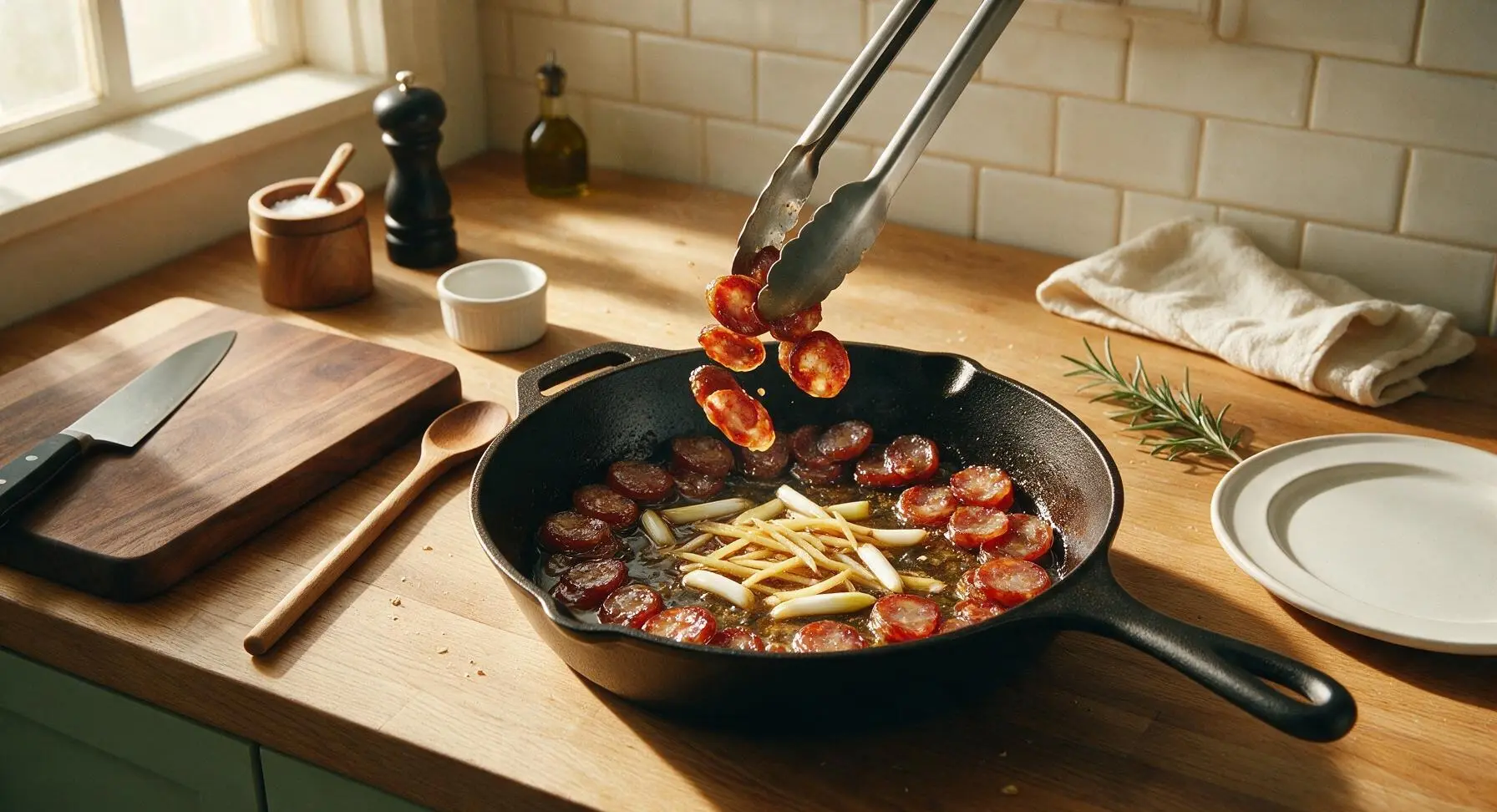
Step 5
step5:Add Aromatics and Season
6

Plate and Garnish

Turn off the heat. Use the tongs to transfer the glazed sausage slices to the matte warm white ceramic dinner plate, fanning the slices out in an overlapping layer across the plate center. Spoon any remaining rendered fat and glaze from the pan over the top of the sausage, then scatter the reserved green scallion segments evenly over the top as garnish. Let rest for 1 minute before serving, so the flavors settle.
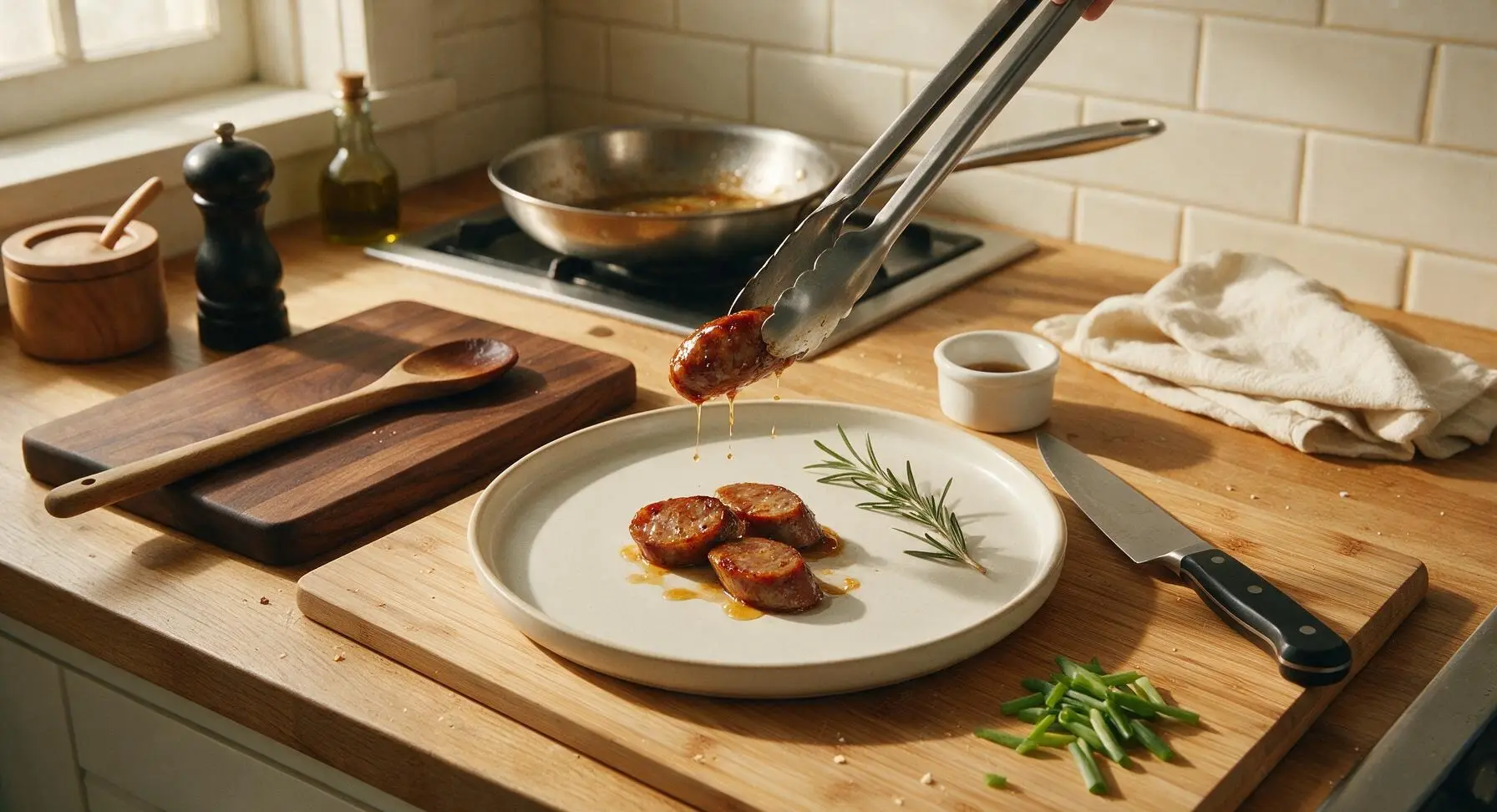
Step 6
step6:Plate and Garnish

Tips

1.Skip adding extra cooking oil when searing: Chinese sausage is roughly 35% fat by weight, which renders quickly as it heats; extra oil will make the finished dish overly greasy and dilute the sausage’s signature sweet-savory cured flavor.
2.Keep heat at medium-low throughout cooking: the sugar used in the sausage curing process burns quickly over high heat, turning bitter instead of forming the desired glossy, lightly caramelized coating on each slice.
3.For extra tender texture, steam whole sausage links for 5 minutes before slicing and searing: this softens the firm natural casings and plumps up the meat, ideal for drier, longer-aged sausage links that can be too chewy when pan-fried directly.
✨ You May Also Like

Side Dishes
🍜 India

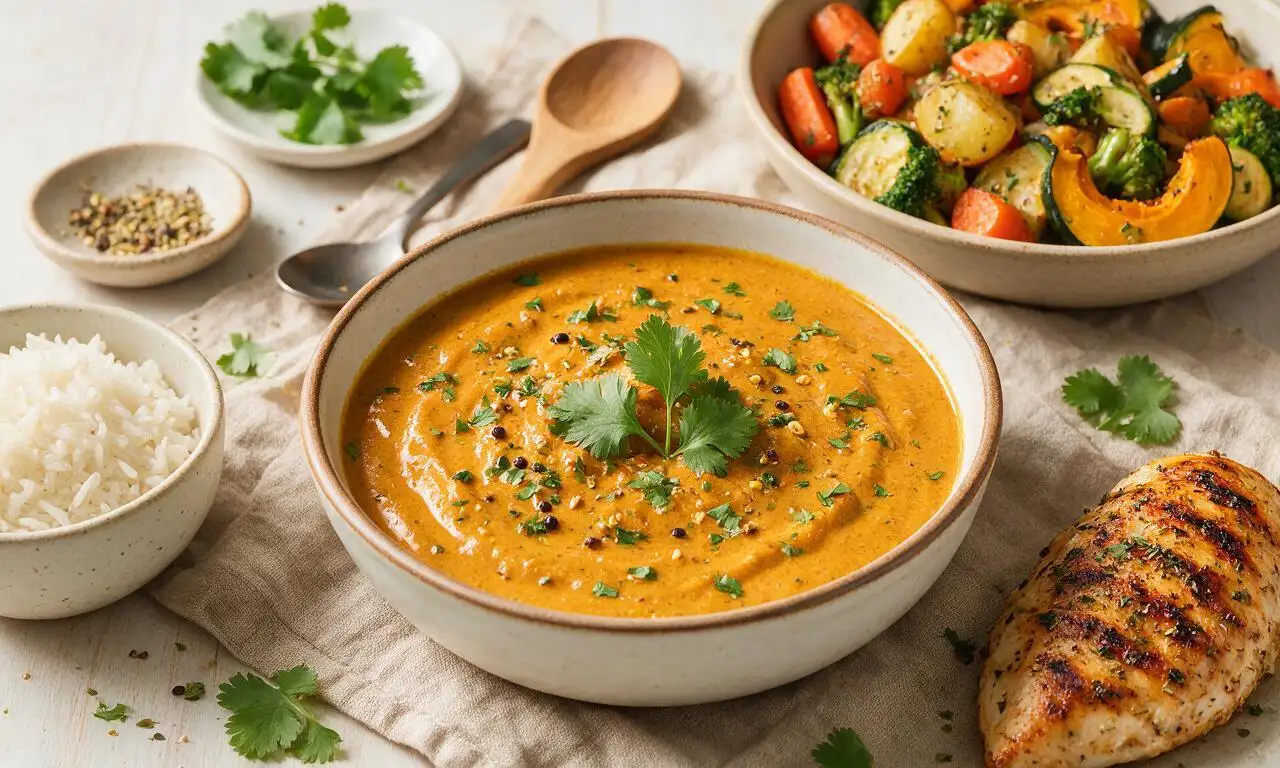
Velvety, aromatic all-purpose curry sauce perfect for tossing with roasted veggies, grilled protein, or rice for fast, cozy, flavorful meals.

⏱️ 25 minuteSide Dishes ★ 4.8
Side Dishes
🍜 Spain

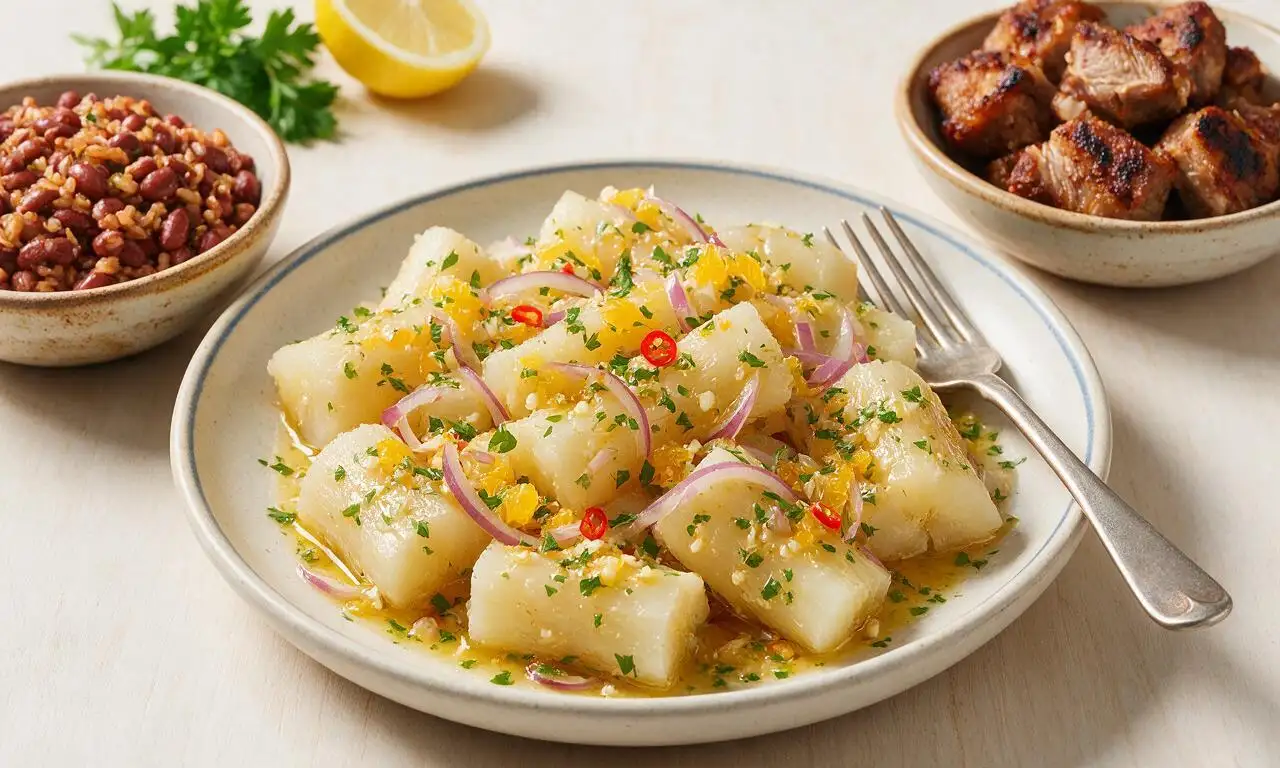
Tender, starchy boiled yuca tossed in bright, garlicky citrus mojo sauce—an iconic, zesty side that pairs beautifully with roasted pork, grilled meats, and rice and beans.

⏱️ 40 minuteSide Dishes ★ 5
Side Dishes
🍜 United States

Tender, paper-thin potato flatbread, a beloved Norwegian-American Minnesota Christmas staple, griddled until softly spotted and served warm with butter.

⏱️ 1 hour 30Side Dishes ★ 4.6
Side Dishes
🍜 United States

Rich, deeply savory cured salt pork, a long-lasting kitchen staple perfect for frying crispy as a side or adding umami to stews, beans, and chowders.

⏱️ 7 days (2Side Dishes ★ 4.9
Side Dishes
🍜 United States

Crispy, tangy classic Southern fried green tomatoes with a crunchy cornmeal crust, served hot for a nostalgic, comforting summery bite.

⏱️ 25 minuteSide Dishes ★ 4.9
Side Dishes
🍜 United States

Moist, golden-crusted savory muffins with sweet corn, zesty jalapeño, and melted cheddar, perfect for pairing with smoky summer grilled fare.

⏱️ 30 minuteSide Dishes ★ 4.9

chinese sausage:Frequently Asked Questions

1.Do I need to pre-cook lap cheong before pan-searing it? ▾
You don’t need to fully pre-cook it, but a quick 2-minute blanch in boiling water is a smart pro move. It softens the tough cured casing to prevent excessive curling, cuts excess surface cured fat, and won’t leach out that signature sweet-savory flavor if you keep the blanch short.
2.What heat level should I use to pan-sear lap cheong so it doesn’t burn? ▾
Stick to medium-low heat the whole time. Lap cheong is high in rendered sugar and fat, so high heat will quickly char the outside before the interior softens and warms through. Sear slowly, flipping occasionally, until edges turn glossy and slightly caramelized, about 4-5 minutes total.
3.Can I substitute Shaoxing rice wine if I don’t have it on hand? ▾
If you don’t have Shaoxing wine, dry sherry is the closest swap, as it has the same nutty, fermented depth that cuts through the sausage’s richness. Avoid plain rice vinegar or white cooking wine—those are too sharp and will throw off the dish’s balanced sweet-savory profile.
4.How thick should I slice the lap cheong for this recipe? ▾
Slice them on a sharp diagonal into ¼-inch thick pieces. This thickness gives you a perfect bite: edges will crisp up slightly during searing, while the center stays tender and juicy, rather than turning tough from cutting too thin, or under-seared if cut too thick.
5.Why does my lap cheong curl up so much when I sear it? ▾
Excessive curling almost always comes from two issues: skipping the quick pre-blanch to soften the casing, or searing on too high heat. If you notice curling mid-cook, just press slices gently with a spatula for a few seconds as they sear to keep them flat and evenly browned.
6.Do I need to add extra oil to the pan for searing? ▾
You only need a tiny ¼-teaspoon drizzle of neutral oil to start, if any. As lap cheong heats, it will render plenty of its own sweet, fragrant fat to sauté the ginger and scallion, so adding too much extra oil will make the finished dish feel greasy and heavy.
7.When do I add the ginger and scallions during cooking? ▾
Add thinly sliced ginger right after the lap cheong turns glossy and starts to render fat, about 2 minutes into searing, and sauté for 30 seconds until fragrant. Toss in scallion segments right at the end, after adding soy sauce and Shaoxing wine, so they stay bright and crisp-tender.
8.Do I need a specific type of lap cheong for this recipe? ▾
Standard Cantonese lap cheong made with pork and pork fat works beautifully here, but premium versions with a small amount of added rose wine or liver will deliver deeper, more complex flavor. Just avoid spicy Sichuan-style cured sausages, as they won’t match the classic sweet-savory Cantonese profile.
9.How do I know when the pan-seared lap cheong is done cooking? ▾
You’ll know it’s ready when slices turn a deep, glossy reddish-brown, edges have light caramelization, and rendered fat looks clear rather than cloudy. It only takes 5-6 minutes total—don’t overcook it, or fat will render out completely and leave the sausage tough and dry.
10.Can I make this dish ahead of time for meal prep? ▾
Absolutely. Cooked pan-seared lap cheong keeps well in an airtight container in the fridge for up to 4 days. Reheat it gently in a small pan over low heat with a tiny splash of water to refresh it, rather than microwaving, which can make the sausage tough and rubbery.
11.What should I serve with pan-seared lap cheong? ▾
This dish pairs perfectly with plain steamed white rice, congee, or stir-fried leafy greens like bok choy or gai lan. You can also toss it into fried rice or noodle dishes, but it’s traditionally served as a simple, comforting side for home-style Cantonese dinner spreads.
12.Can I use dark soy sauce instead of light soy sauce here? ▾
Stick to light soy sauce for the right balance of salt and umami without overpowering the sausage’s natural sweetness. Dark soy sauce is much thicker, sweeter, and more concentrated, and it will turn slices an overly dark color while masking the lap cheong’s delicate cured flavor.
13.My lap cheong came out really greasy—what did I do wrong? ▾
Greasiness usually comes from adding too much extra oil to the pan at the start, searing on too-low heat for too long so excess fat renders out, or skipping the quick pre-blanch that washes off surface cured fat. If you end up with extra fat in the pan, spoon a little out before adding seasonings.
14.Can I add other vegetables or ingredients to this basic recipe? ▾
Absolutely! Common home-style additions include thinly sliced garlic, a pinch of white pepper, or crisp veggies like sliced celery, bell pepper, or water chestnuts for extra crunch. Just keep additions simple so you don’t cover up the lap cheong’s signature sweet, cured flavor.
15.Should I peel the ginger before slicing it for this recipe? ▾
I recommend peeling fresh ginger with the edge of a spoon before slicing it into thin matchsticks, as the outer skin can be fibrous and slightly bitter. You don’t need to mince it—thin slices will mellow as they sauté in rendered sausage fat, adding warm, aromatic notes without overpowering bites.

Comments (9)

2 days ago

OMG this is so easy and SO good! I grabbed lap cheong from my local Asian market last week and had no clue how to cook it properly without it getting burnt. 10 minutes total? Game changer. Served it with jasmine rice and stir fried bok choy for dinner last night and my husband asked for seconds before he even finished his first plate!

yesterday

Same! I used to overcook mine all the time until I tried this method — the edges get perfectly crispy without the inside getting tough. So good with rice!

yesterday

So happy you and your husband loved it! The low-and-slow first render of the fat is key to avoiding burnt edges, glad that trick worked for you. Great call pairing it with bok choy too!

3 days ago

Super straightforward recipe! I only gave it 4 stars because I added a tiny splash of soy sauce at the end like my grandma used to, but the base method is perfect. Great for quick weeknight meals when I don’t feel like spending an hour in the kitchen.

2 days ago

Love that soy sauce addition! That sounds like such a tasty family twist, I’ll have to try that next time I make a batch. So glad the base method worked for your busy weeknights!

1 week ago

Made this for our Lunar New Year potluck at work and everyone was asking for the recipe! Even my coworkers who said they’d never tried Chinese sausage before went back for more. The pan sear brings out that sweet, savory flavor so much better than steaming imo. Will be making this on repeat!

5 days ago

My kids are so picky and they DEVOURED this! I cut the sausage into little bite-sized slices before searing so it was easier for them to pick up with their chopsticks (and sneak off the plate before dinner was ready, lol). Served with some fried rice and it was a full family win. 10/10 will be adding this to our weekly meal prep rotation.

3 days ago

Oh the bite-sized slice hack is genius! I always cook them whole and end up having to cut them after, which is a mess when they’re hot. Can’t wait to try that next time!

2 days ago

So stoked your kids loved it! Pre-slicing is such a great tip for little ones, and it also helps the fat render more evenly across every piece. Perfect call adding it to your meal prep — it holds up great in the fridge for quick bowls all week!

yesterday

Wait why did I never think to pan sear lap cheong instead of steaming it?? The crispy edges are unreal. I made a little bao bun platter with these, some pickled veggies, and hoisin sauce and my roommates lost their minds. So cheap, so fast, so flavorful.

2 weeks ago

Decent recipe, but my sausage got a little too charred for my taste. I think I had the heat too high when I first put them in the pan. Flavor was still great though, just wish I’d paid more attention to the heat level note.

1 week ago

Oh no, sorry to hear they got a little charred! Starting on medium-low heat to render the fat first before cranking it up slightly for crispiness is the trick to avoid that — give it another go with that adjustment and I bet they turn out perfect!

30 minutes ago

Just made this for a quick late lunch and WOW. I had a pack of lap cheong sitting in my fridge from my last grocery run to the Asian market that I’d been too intimidated to cook, and this was so foolproof. Sprinkled a little white pepper on top at the end and *chef’s kiss*. No fancy ingredients needed at all.

5 minutes ago

The white pepper addition is chef’s kiss for real! I do that too, it adds such a warm little kick that pairs so perfectly with the sweet sausage.

just now

Yay, so glad you gave it a try! White pepper is such an underrated addition, I love that idea. It pairs so well with the rich, sweet notes of the lap cheong — will have to add that as a variation note!

2 hours ago

As someone who can barely boil water without messing it up, I was shocked how easy this was! I followed the directions exactly and the sausage came out perfectly crispy on the outside, juicy on the inside. My roommate thought I ordered takeout, lol. 10/10 for beginner cooks.

30 minutes ago

Same here! I’m such a novice cook and this was totally foolproof. I’ve made it three times in the last two weeks now, it’s become my go-to quick dinner when I don’t have anything else planned.

just now

Tested this out ahead of our family dim sum night this weekend and it’s going to be a hit! I love that it only takes 10 minutes so I don’t have to add another time-consuming dish to my list. The crispy, savory-sweet flavor pairs so well with the turnip cake and har gow I’m making. Can’t wait for everyone to try it!