
Coconut Water Fermentation

title 1
Coconut Water Fermentation
⏱️ cook time 48 hours (inactive room-temperature fermentation)
🍽️ servings 4
⚡ Difficulty easy

intro

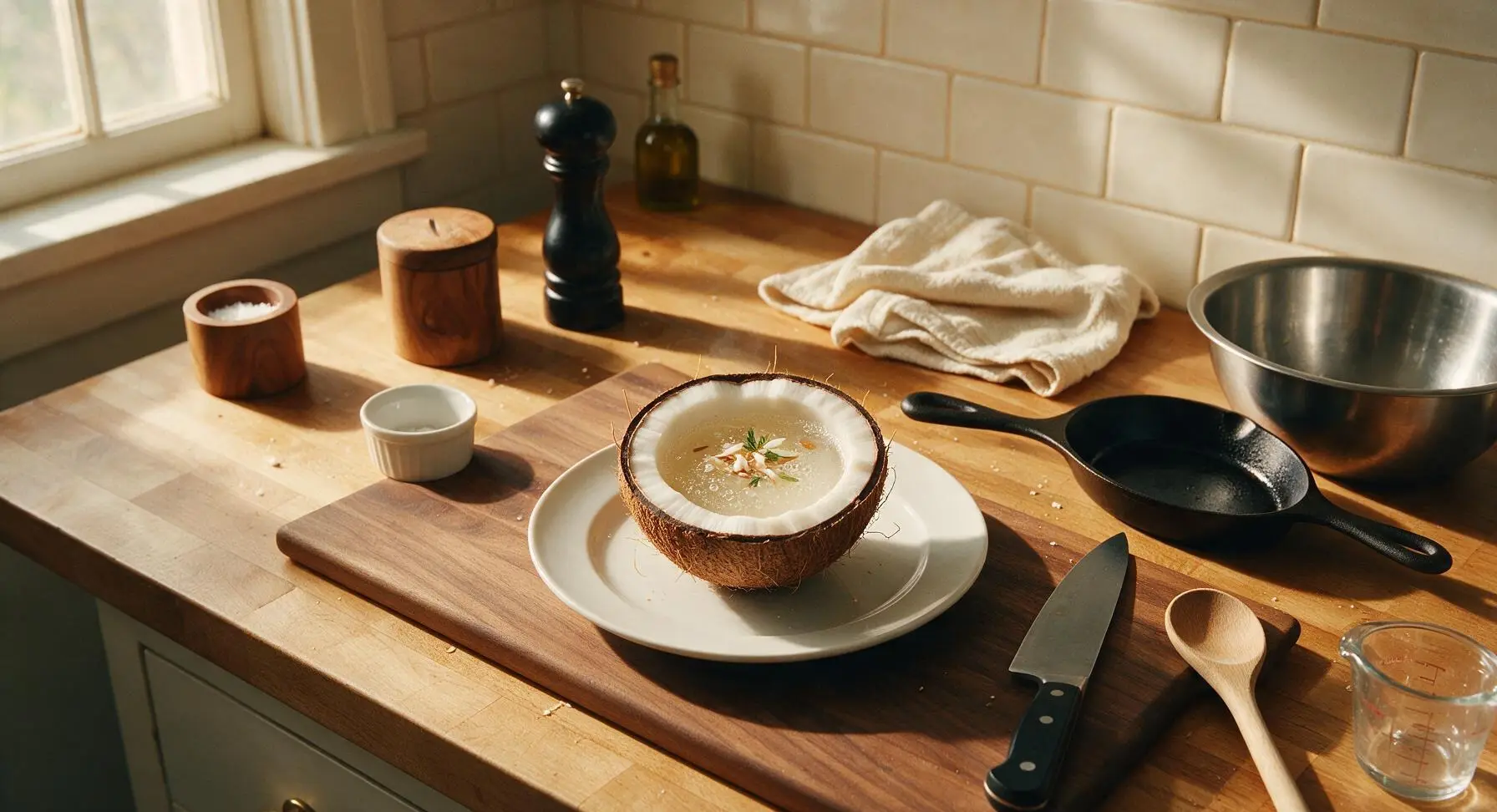
Lightly effervescent, tangy fermented coconut water is a probiotic-rich, dairy-free tropical drink, naturally sweet with bright, fresh notes, perfect for sipping ice-cold on sweltering summer days.

Ingredients
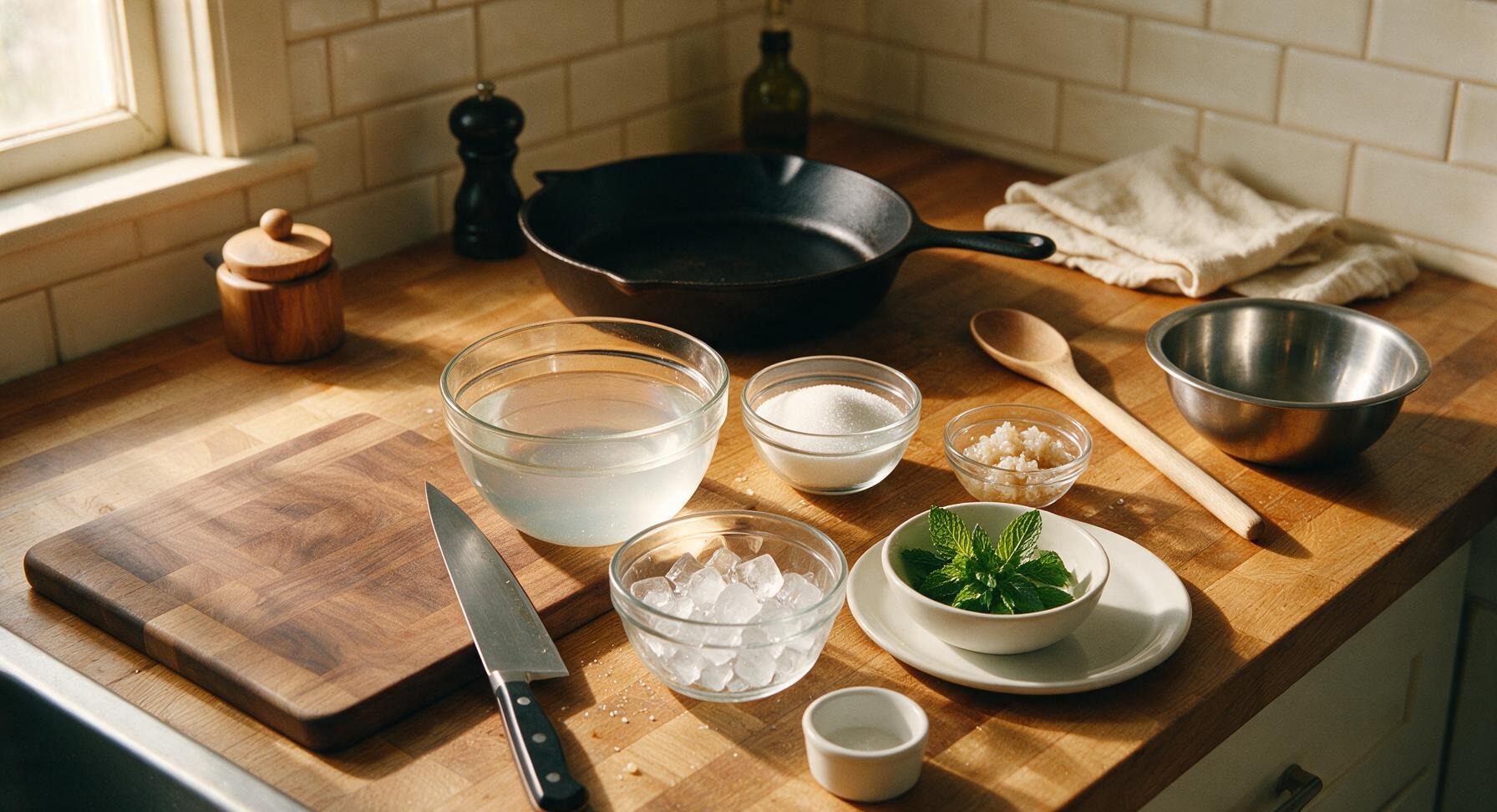
Fresh young coconut water 1L (4 cups)
White granulated sugar 2 tbsp (25g)
Active hydrated water kefir grains 3 tbsp (45g)
Fresh mint sprigs 1/4 cup (5g)
Clear ice cubes 2 cups

Steps

1

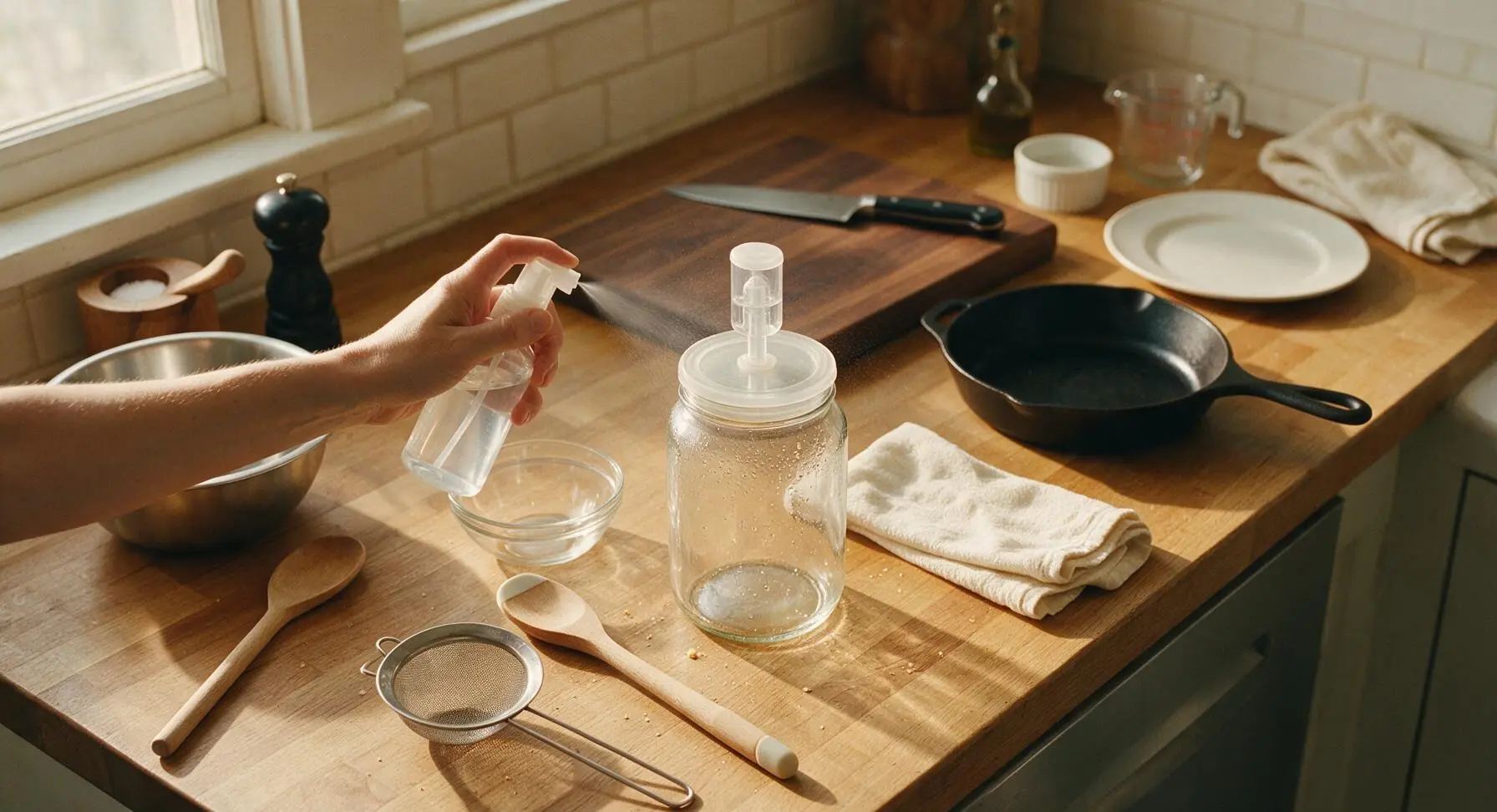
Sanitize Fermentation Gear

First, spray all fermentation equipment (the 1L glass fermentation jar, silicone airlock lid, silicone stirring spoon, small glass mixing bowl, and fine-mesh strainer) thoroughly with food-grade no-rinse sanitizer. Let sit for 60 seconds, then wipe excess sanitizer away with the clean cotton kitchen towel. Do not use regular dish soap, as soap residue can kill beneficial fermentation cultures. Every surface that will touch coconut water or kefir grains must be fully sanitized to prevent mold growth and off-flavors.
Step 1
step1:Sanitize Fermentation Gear
2

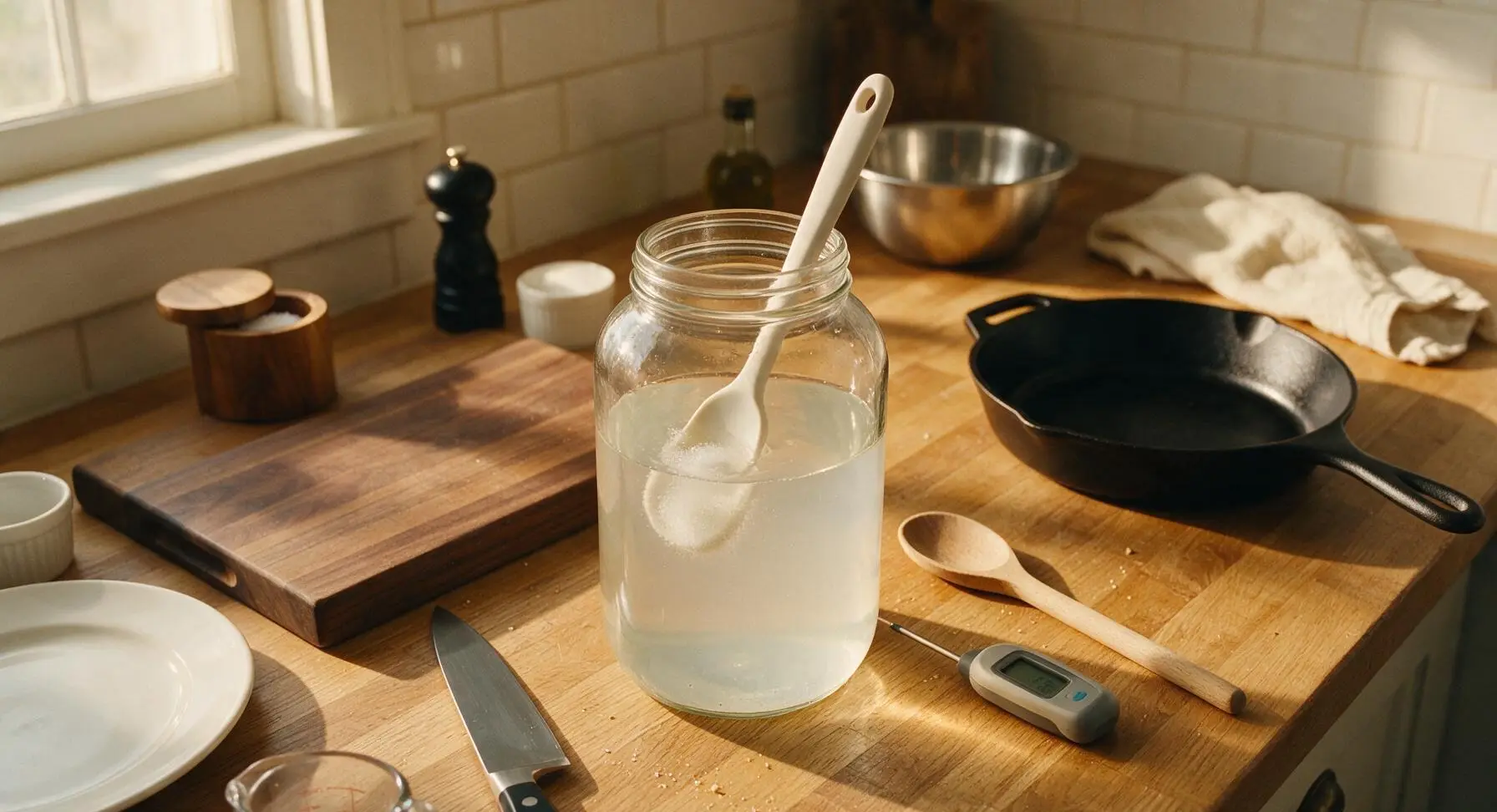
Dissolve Starter Sugar

Pour the full 1L of fresh young coconut water into the sanitized fermentation jar. Add the 2 tablespoons of measured white granulated sugar, then stir gently with the sanitized silicone stirring spoon for 30 seconds until the sugar is fully dissolved, with no grit visible at the bottom of the jar. Check the temperature of the liquid with the digital instant-read thermometer: it must be between 20-25C (68-77F), as temperatures above 30C (86F) will kill active kefir grains.
Step 2
step2:Dissolve Starter Sugar
3

Add Water Kefir Grains

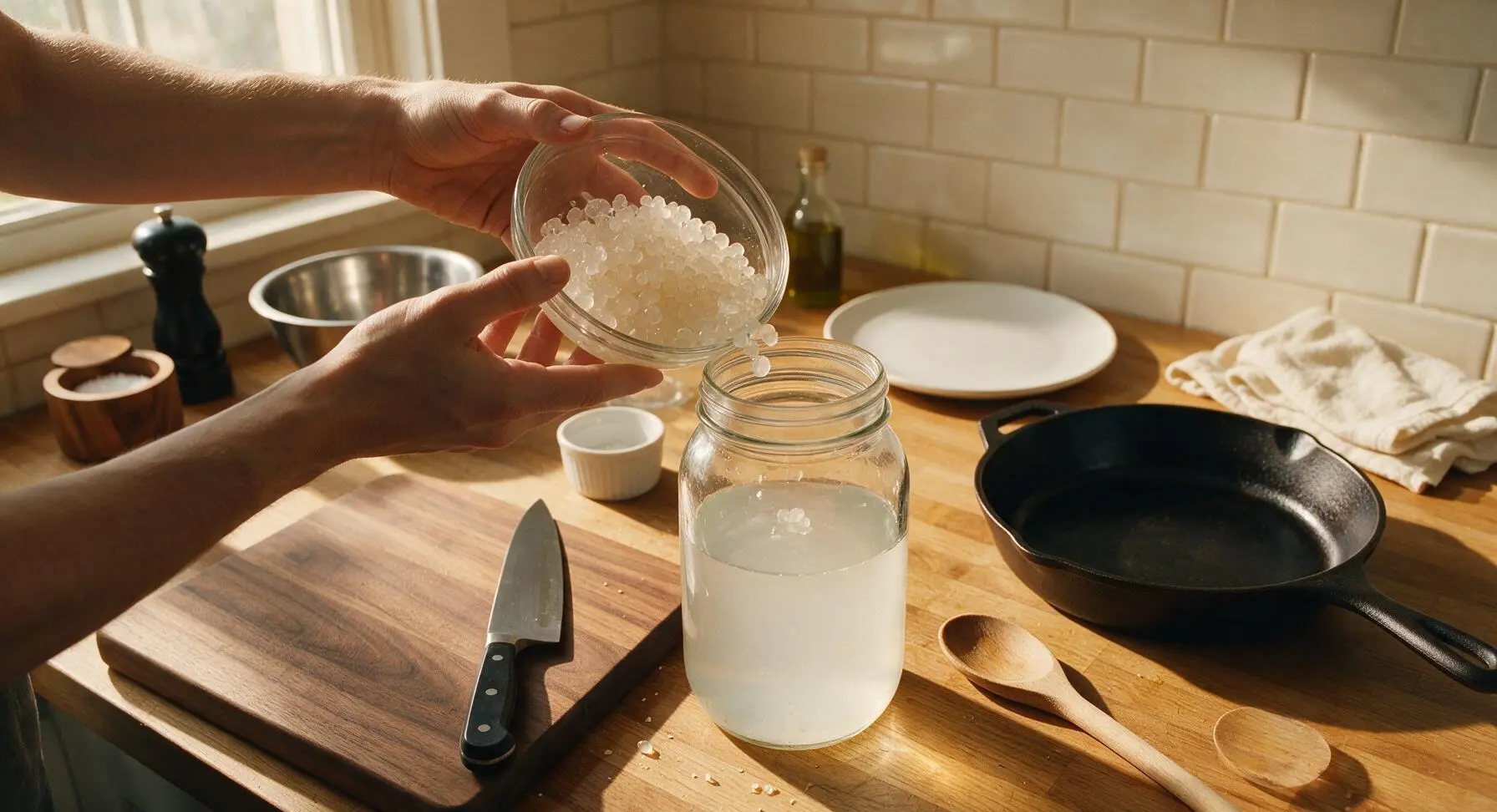
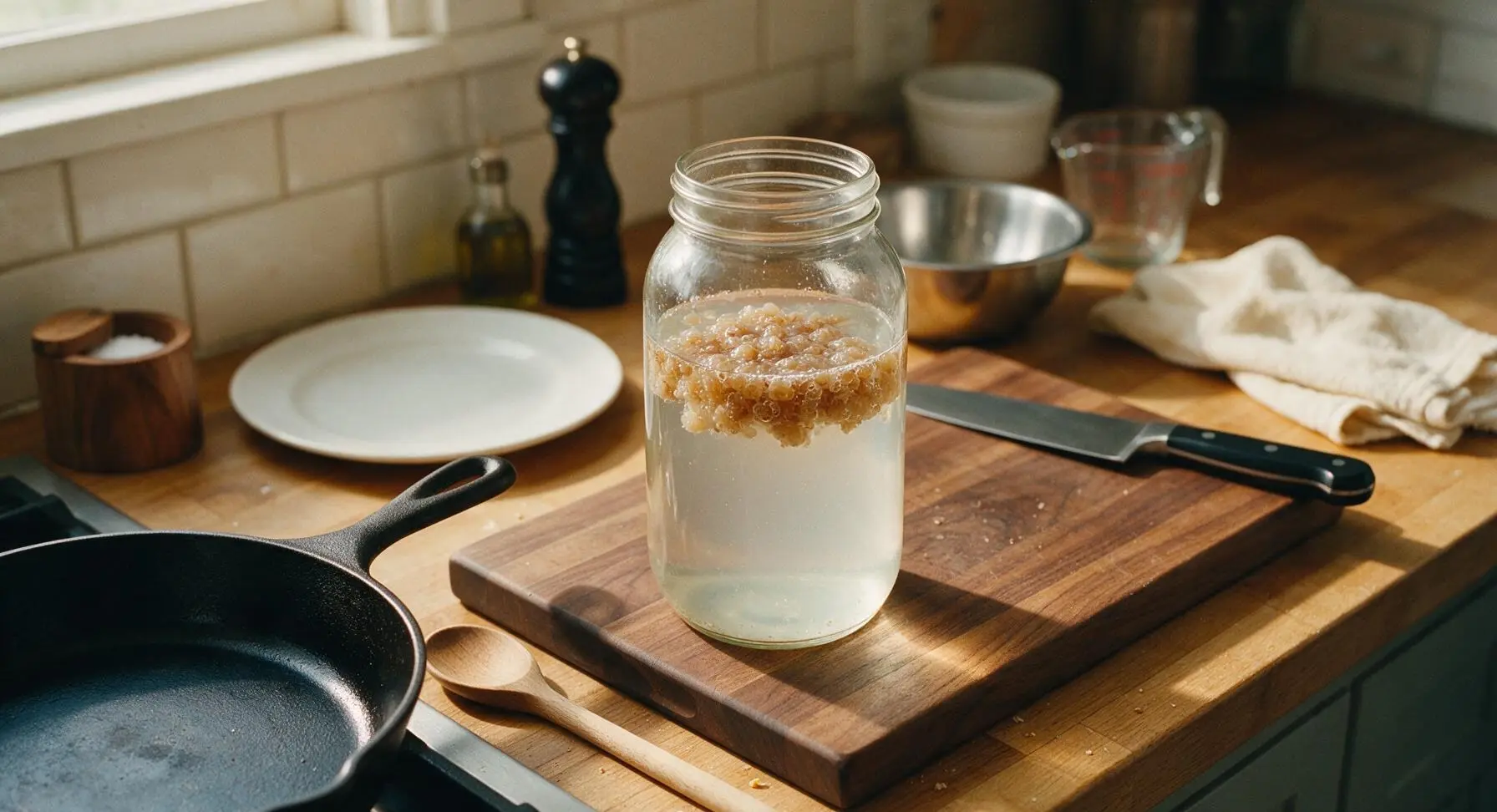
Gently pour the 3 tablespoons of hydrated, plump water kefir grains from the small glass mixing bowl into the sweetened coconut water. Do not stir aggressively, as kefir grains are delicate and can break apart with rough handling. Give the liquid one slow, gentle turn with the silicone spoon to distribute the grains evenly through the coconut water.
Step 3
step3:Add Water Kefir Grains
Step 3
step3:Add Water Kefir Grains
4

Seal Jar With Airlock

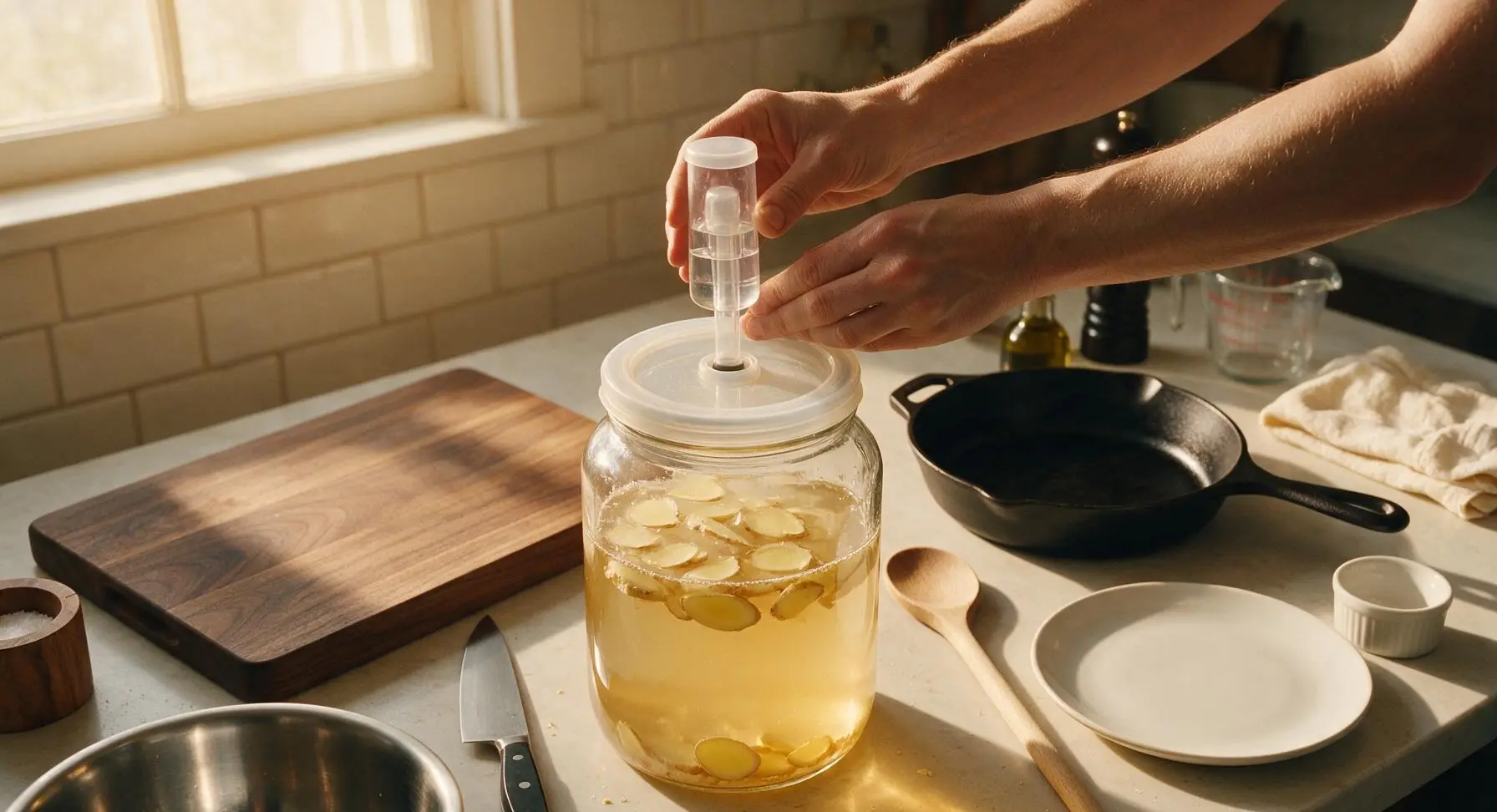
Place the sanitized silicone lid tightly on the fermentation jar, ensuring there are no gaps around the rim. Fill the airlock chamber to the marked fill line with clean, cool tap water, then insert the airlock snugly into the hole in the jar lid. The airlock allows built-up carbon dioxide to escape during fermentation while blocking airborne mold, bacteria, and wild yeast from contaminating the batch.
Step 4
step4:Seal Jar With Airlock
5

Ferment 48 Hours

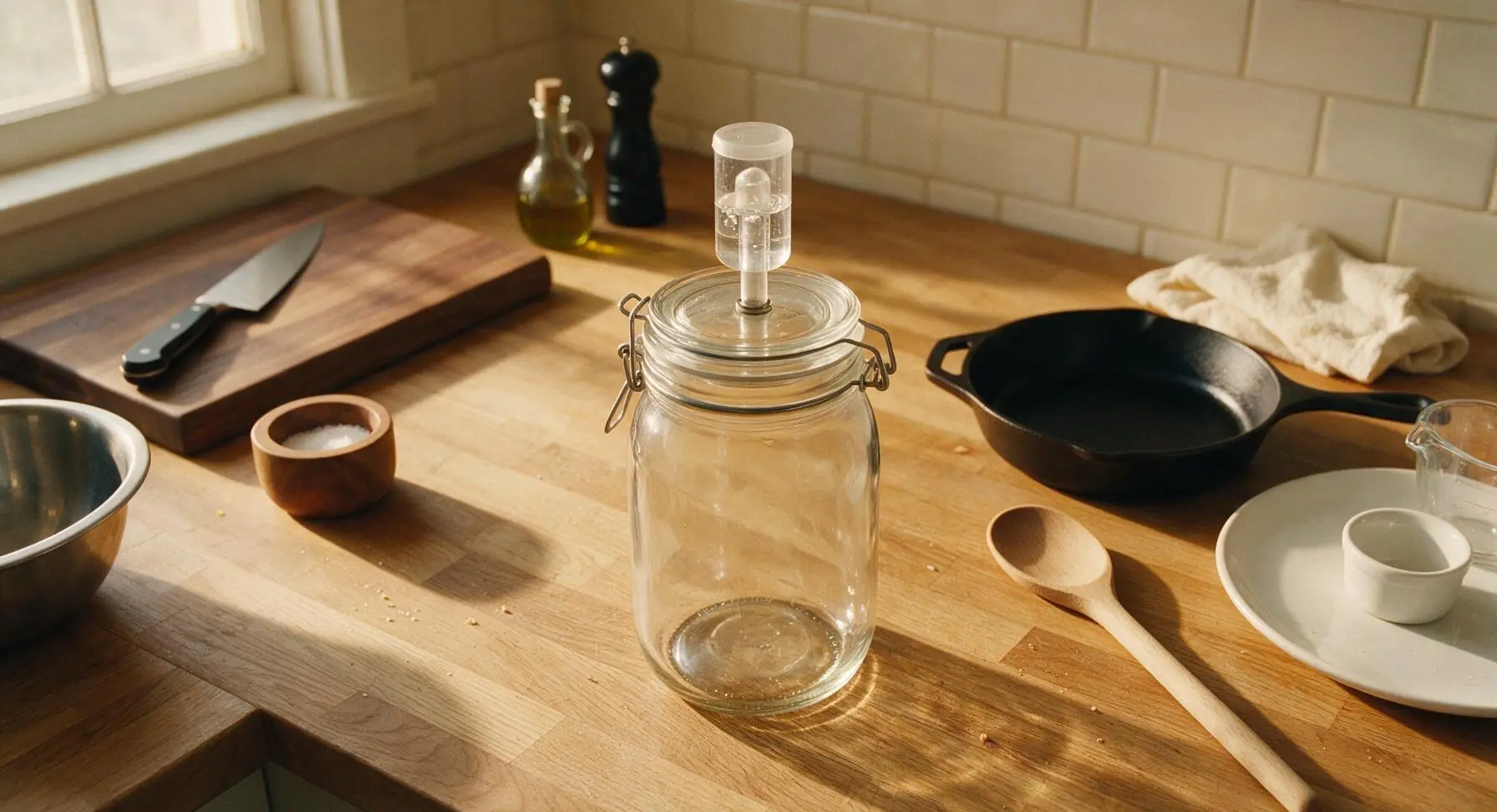
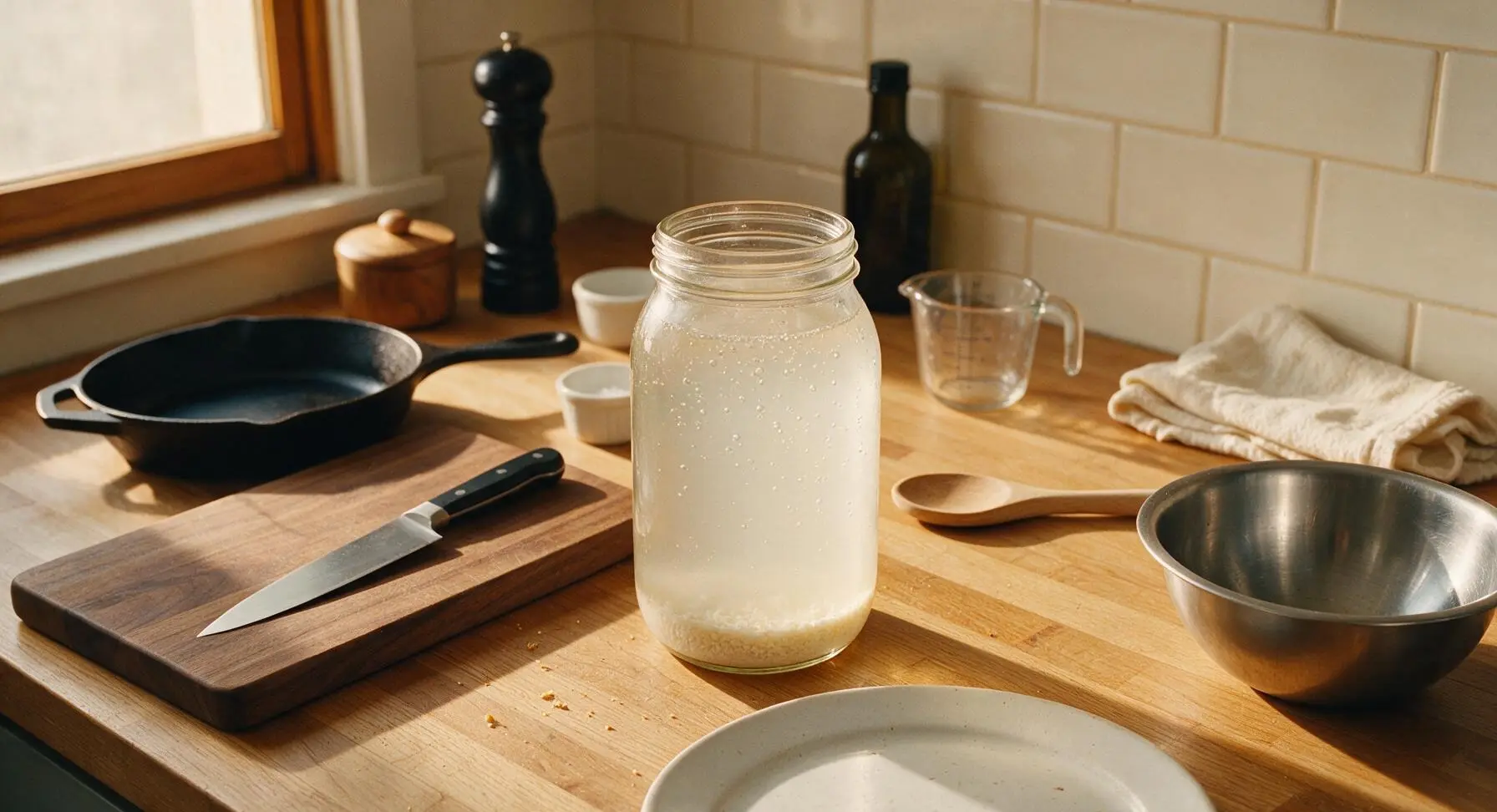
Leave the sealed jar in its spot on the counter (away from direct sunlight, at a steady 19-24C / 66-75F) to ferment for 48 hours. Do not jostle or open the jar during the first 24 hours. After 24 hours, you will see small bubbles rising and popping through the water in the airlock, a sign of active fermentation. At 48 hours, the liquid will be slightly hazy, taste mildly tangy, and be noticeably less sweet than the original coconut water, with a faint natural fizz.
Step 5
step5:Ferment 48 Hours
Step 5
step5:Ferment 48 Hours
6

Strain Out Kefir Grains

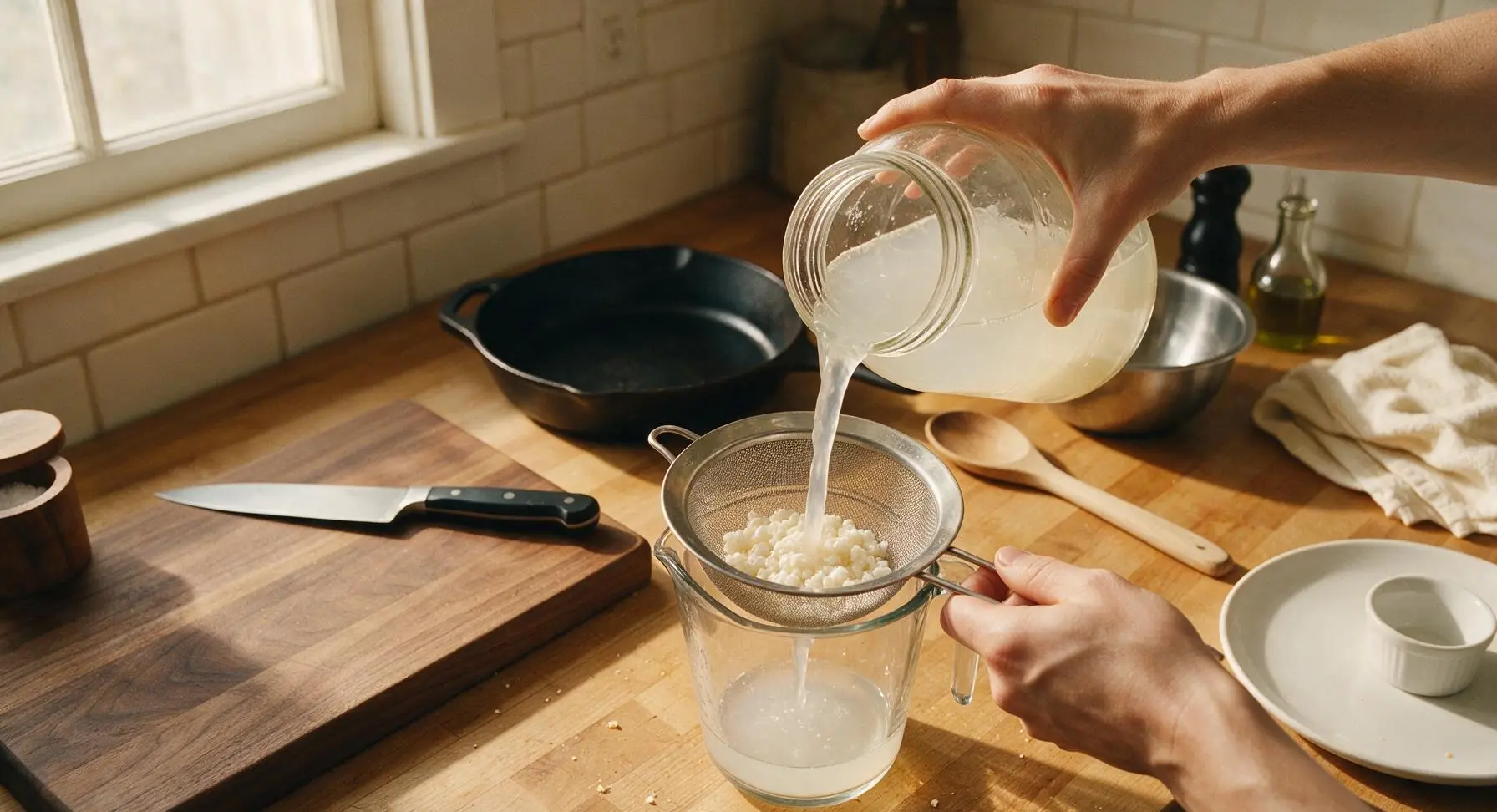
After 48 hours, gently remove the airlock and lid from the jar. Place the sanitized fine-mesh stainless steel strainer over the top of the 1L glass measuring cup, then slowly pour the full contents of the fermentation jar through the strainer. Let the liquid drain fully through the mesh without squeezing the collected kefir grains, as squeezing can damage grains and add bitter off-flavors to the drink. The strained grains can be stored in fresh sugar water in the fridge for use in future batches.
Step 6
step6:Strain Out Kefir Grains
7

Chill For Carbonation

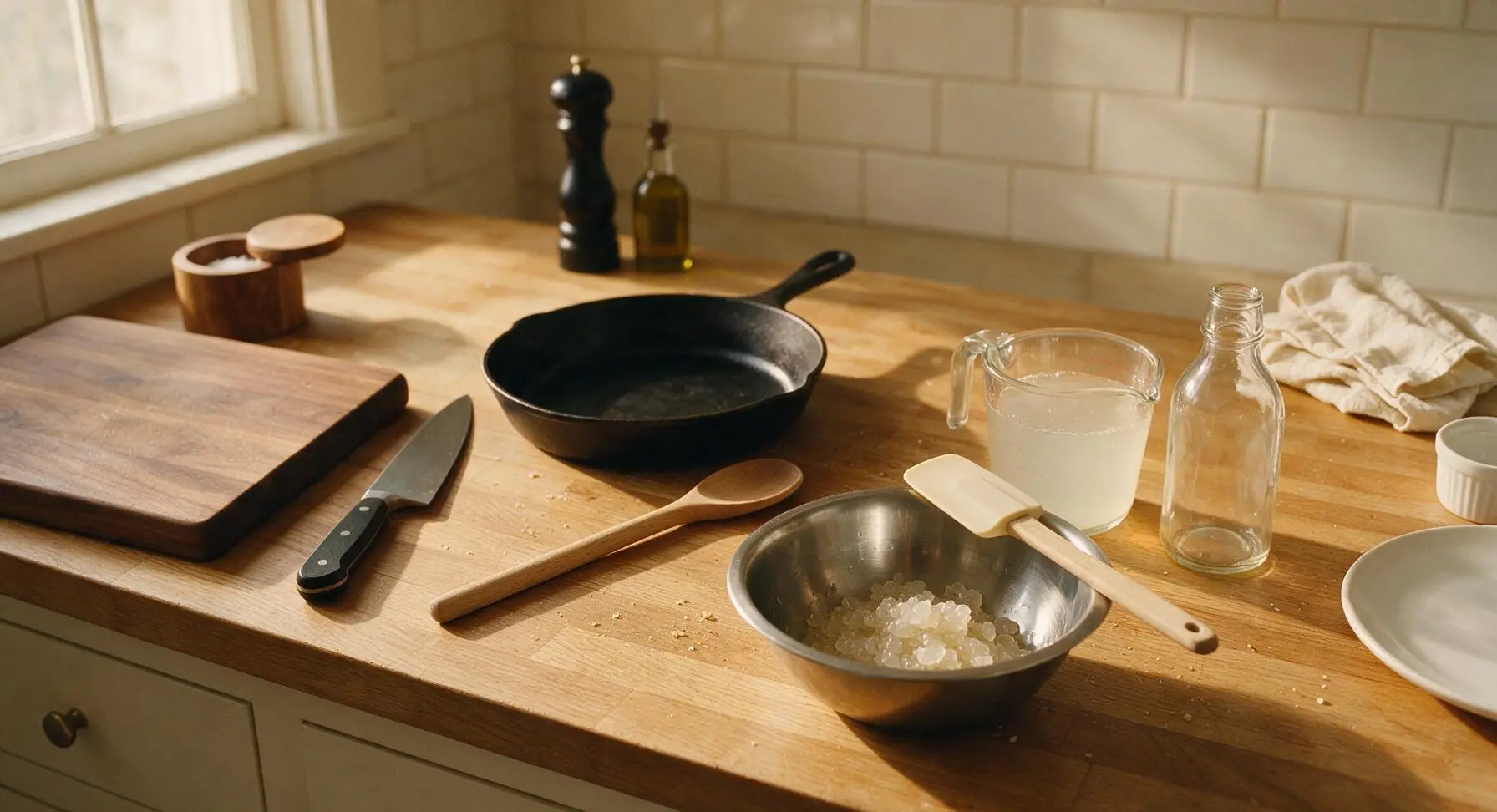
Pour the strained fermented coconut water into a sanitized sealed glass bottle, then place it in the refrigerator for 4-6 hours to chill completely. Chilling slows residual fermentation and helps the liquid retain its natural carbonation for a fizzier mouthfeel. Never leave a fully sealed bottle of fermented coconut water at room temperature for more than 2 hours, as built-up pressure can cause the bottle to burst.
Step 7
step7:Chill For Carbonation
8

Serve Ice-Cold

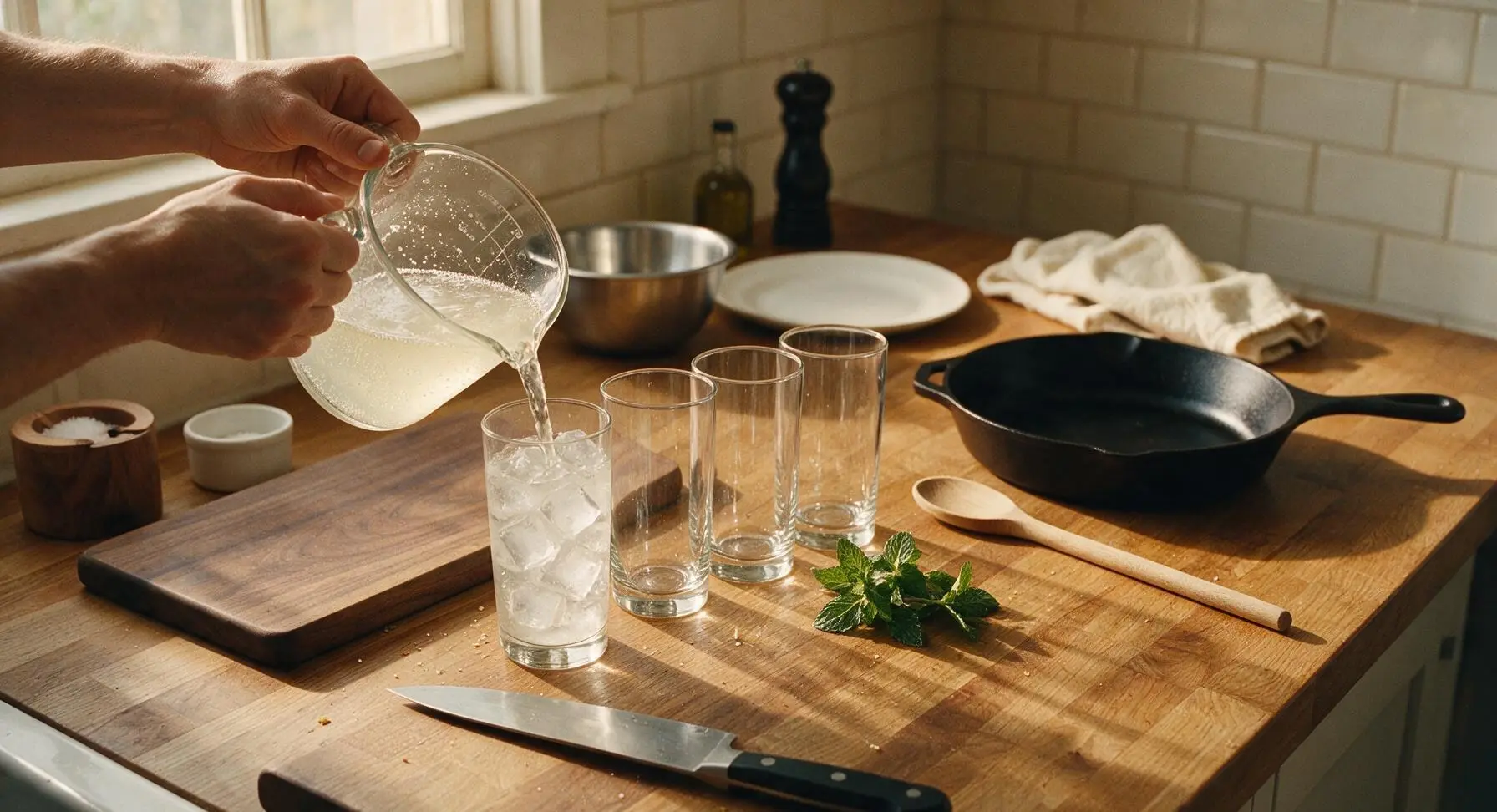
When ready to serve, fill each highball glass with 3-4 clear ice cubes, then pour 8oz of chilled fermented coconut water over the ice. Tuck one small fresh mint sprig into the rim of each glass for a bright, herbal aroma. Avoid stirring the drink after pouring, as this will release trapped carbonation and reduce fizz.
Step 8
step8:Serve Ice-Cold

Tips

1.Skip pasteurized, shelf-stable coconut water from cartons that list preservatives (like potassium sorbate or sodium benzoate): these additives are designed to prevent microbial growth, and will kill kefir grains before fermentation can start. Always use fresh, cold-pressed young coconut water with no added ingredients for the most reliable ferment and best flavor.
2.If you prefer a soda-like fizz, do a second sealed fermentation: after straining out kefir grains, pour the liquid into a tightly sealed swing-top glass bottle and leave it at room temperature for 12-24 hours before chilling. Burp the bottle once every 12 hours by quickly opening and closing the lid to release excess pressure, which prevents bottle breakage from built-up carbon dioxide.
3.Avoid prolonged contact between kefir grains and reactive metal utensils (like uncoated aluminum or copper), as these metals can leach into the acidic fermented liquid and weaken the kefir grain cultures over time. Stick to silicone, glass, or stainless steel tools when handling grains directly for long-lasting, healthy cultures.


✨ You May Also Like

Drinks & Beverages
🍜 Mexico

A bright, balanced tequila-based cocktail with zesty fresh lime, smooth orange liqueur, and a signature salt rim, perfect for warm summer sipping.

⏱️ 5 minutesDrinks & Beverages ★ 4.9
Drinks & Beverages
🍜 United States

Thick, creamy, nostalgic classic vanilla milkshake with a rich, smooth texture, topped with whipped cream and a cherry for cool, sweet refreshment.

⏱️ 5 minutesDrinks & Beverages ★ 4.7
Drinks & Beverages
🍜 United States

A bright, golden strong ale with fruity banana-clove notes, subtle hop spice, and soft carbonation, brewed in classic Trappist Tripel tradition.

⏱️ 2 hours aDrinks & Beverages ★ 4.5
Drinks & Beverages
🍜 United States

A frothy, nostalgic American soda fountain treat pairing bubbly cold root beer with creamy vanilla ice cream, perfect for cooling down at warm weather gatherings.

⏱️ 20 minuteDrinks & Beverages ★ 4.8
Drinks & Beverages
🍜 United States

Tart, funky, effervescent American Wild Ale is a complex fruity craft beer brewed with wild yeast, delivering bright, zesty notes perfect for warm-weather sipping.

⏱️ 2 hours aDrinks & Beverages ★ 4.4
Drinks & Beverages
🍜 United States

Bright, bubbly copycat of the iconic American caramel cola, balanced with citrus and warm spice, perfect for sipping ice-cold on hot days.

⏱️ 15 minuteDrinks & Beverages ★ 4.8

Coconut Water Fermentation:Frequently Asked Questions

1.Can I use store-bought coconut water instead of fresh young coconut water for this recipe? ▾
Fresh young coconut water gives the brightest, sweetest tropical flavor, but unsweetened, preservative-free pasteurized store-bought coconut water works too. Skip options with added flavors, preservatives, or stabilizers—those will damage your water kefir grains and prevent proper fermentation. Expect pasteurized versions to ferment 6-12 hours slower than fresh.
2.Why do I need to add white granulated sugar if this is supposed to be a healthy probiotic drink? ▾
The white granulated sugar isn’t there to sweeten the final drink—it acts as ideal food for your water kefir grains! The grains consume most of the sugar during fermentation to produce probiotics and that signature light, tangy fizz. The finished drink only has a small amount of residual, mild sweetness, no cloying sugary taste.
3.How do I tell when my fermented coconut water is finished and ready to drink? ▾
Start checking your batch after 24 hours of fermenting at 65–75°F (normal room temperature). It’s ready when it has a subtle tang, light fizz when you gently twist the lid, and tastes less sweet than plain coconut water. If it’s still very sweet, let it go another 6-12 hours, but don’t ferment past 48 hours or it will turn overly vinegary.
4.Can I use a different starter instead of active hydrated water kefir grains? ▾
Water kefir grains are the most reliable starter for this recipe because they thrive in coconut water’s low-nutrient, high-electrolyte environment. Whey or powdered probiotic starters can work in a pinch, but they won’t produce the same consistent light fizz, and you won’t be able to reuse the starter for future batches like you can with kefir grains.
5.How should I store finished fermented coconut water? ▾
Once it reaches your preferred tang and fizz level, strain out the kefir grains, transfer the liquid to a sealed glass bottle, and store it in the refrigerator for up to 1 week. The cold temperature halts fermentation so it doesn’t get too sour. Give it a gentle stir before serving over clear ice with mint, since small natural sediment may settle.
6.Is it normal for this drink to be less bubbly than commercial soda? ▾
Absolutely! Homemade fermented coconut water is lightly effervescent, not a heavily carbonated soda. If you want extra fizz, do a 2–4 hour sealed secondary ferment at room temperature after straining out the grains, then pop it in the fridge. Burp the bottle every hour during secondary ferment to avoid dangerous pressure buildup.
7.Will I ruin my water kefir grains if I leave them in the coconut water too long? ▾
Leaving grains in coconut water for over 48 hours at room temperature can stress them over time, since coconut water doesn’t have the same mineral balance as the sugar water kefir grains are typically grown in. After each batch, rinse grains gently with non-chlorinated water and return them to regular sugar water between uses to keep them healthy.
8.Can I add fresh mint sprigs during fermentation instead of when serving? ▾
I recommend adding fresh mint only when you’re ready to serve, poured over ice. Adding mint during fermentation can lead to odd, bitter, muted herb flavors as the leaves break down, and it makes it harder to strain out your kefir grains cleanly. For the brightest mint taste, slap a sprig between your palms first to release its aromatic oils.
9.Why did my fermented coconut water end up tasting like vinegar? ▾
That sharp, vinegary taste means it fermented too long, or the room temperature was too high during the process. Temperatures over 80°F speed up fermentation dramatically, leading to vinegary notes in as little as 36 hours. Next time, ferment in a cooler spot out of direct sunlight, and start tasting your batch at the 24-hour mark.
10.Do I have to use clear ice cubes for serving, or will regular ice work? ▾
Regular cubed freezer ice works totally fine, but clear ice has a slower melt rate and no off-flavors from trapped freezer air, so it won’t dilute your fermented coconut water as quickly or muddle its bright, tangy tropical taste. If you don’t have clear ice, use large dense ice cubes instead of crushed ice to cut down on fast dilution.
11.Is this fermented coconut water safe for kids and people avoiding alcohol? ▾
Like all naturally fermented drinks, this coconut water contains a tiny trace amount of alcohol (usually less than 0.5% ABV, the same as many non-alcoholic kombuchas) from fermentation. That level is considered safe for kids and most people avoiding alcohol, but if you have strict restrictions, use shorter fermentation times to lower trace levels even more.
12.Can I add extra fruit or flavors to my fermented coconut water? ▾
You can add small amounts of fresh fruit, ginger, or lime during a short secondary ferment after you strain out the kefir grains, but skip add-ins during the primary ferment. Extra ingredients can throw off pH balance, damage your kefir grains, or cause off flavors. Stick to 1–2 tablespoons of chopped fruit per cup to avoid over-fizzing.

Comments (5)

2 days ago

OMG this fermented coconut water is a total game changer! I was so intimidated to try fermentation at home but this was SO easy. My kids go crazy for the slightly tangy, bubbly taste—way better than the sugary soda they used to beg for. I brought a big pitcher of it to our neighborhood potluck last weekend and literally everyone was asking me for the recipe! Already on my third batch this month.

yesterday

Wait did you add any fruit to yours? I tossed a few slices of fresh mango into my second batch during the last 12 hours of ferment and it was chef’s kiss, tastes like a tropical soda!

2 hours ago

Love that you shared it at the potluck! Adding fruit like mango, pineapple, or even a handful of fresh berries during the final 12 hours of ferment is such a fun, flavorful twist. So glad your whole family is enjoying it!

3 days ago

Total game changer for my post-workout hydration! I used to drop $15+ a week on store-bought fermented coconut water and this tastes so much fresher for a fraction of the cost. Quick heads up for newbies: my first batch got SO bubbly it almost popped the mason jar lid off when I cracked it open after 48 hours, definitely don’t seal the lids super tight while it’s fermenting!

2 days ago

Great heads up about the lids! Natural carbonation builds up pretty quickly during fermentation, so keeping lids loose (or burping them once a day if you do seal them tight) prevents those surprising lid pops. So stoked this works for your post-gym routine!

5 days ago

I make a batch of this every Sunday for my weekly meal prep! It’s so nice having a cold, gut-healthy drink ready to grab and go on busy work mornings. I love that the fermented flavor is super mellow, not overpoweringly vinegary like some other fermented drinks I’ve tried. Will 100% be keeping this in my regular rotation.

2 hours ago

Super excited to try this! Quick question before I start: can I use fresh coconut water from the young coconuts they sell at my local Asian market, or do I need to use the cartoned stuff from the grocery store? Also, do I need any fancy fermentation lids or equipment?

30 minutes ago

Great questions! Fresh coconut water from young coconuts works perfectly for this (it actually tastes even brighter and sweeter than cartoned, in my opinion!). You don’t need any fancy equipment at all—just rest a regular mason jar lid loosely on top so gas can escape while it ferments, no special lids required!

2 weeks ago

I was so sure I’d mess this up after killing two kombucha scobys and ruining a whole batch of sauerkraut last year, but this recipe was totally foolproof! The tang is subtle, the fizz is just right, and I’ve been adding a splash of it to my morning orange juice for an extra gut boost. My 10-year-old granddaughter tried it when she visited over the weekend and said it tastes like “fancy coconut soda,” so now I’m making a double batch for her sleepover next Friday. SO good.

5 days ago

Oh I feel this so hard! I’ve messed up so many fermentation projects I almost gave up entirely, this makes me way more confident to give this a shot. I’ve been looking for a fun non-sugary drink to make for my kids’ after-school snacks!

3 days ago

So happy this recipe worked out for you even after past fermentation mishaps! It’s such a forgiving, easy recipe which makes it perfect for folks who are new to fermenting. Hope the double batch is a huge hit at the sleepover!



