
goats cheese
intro
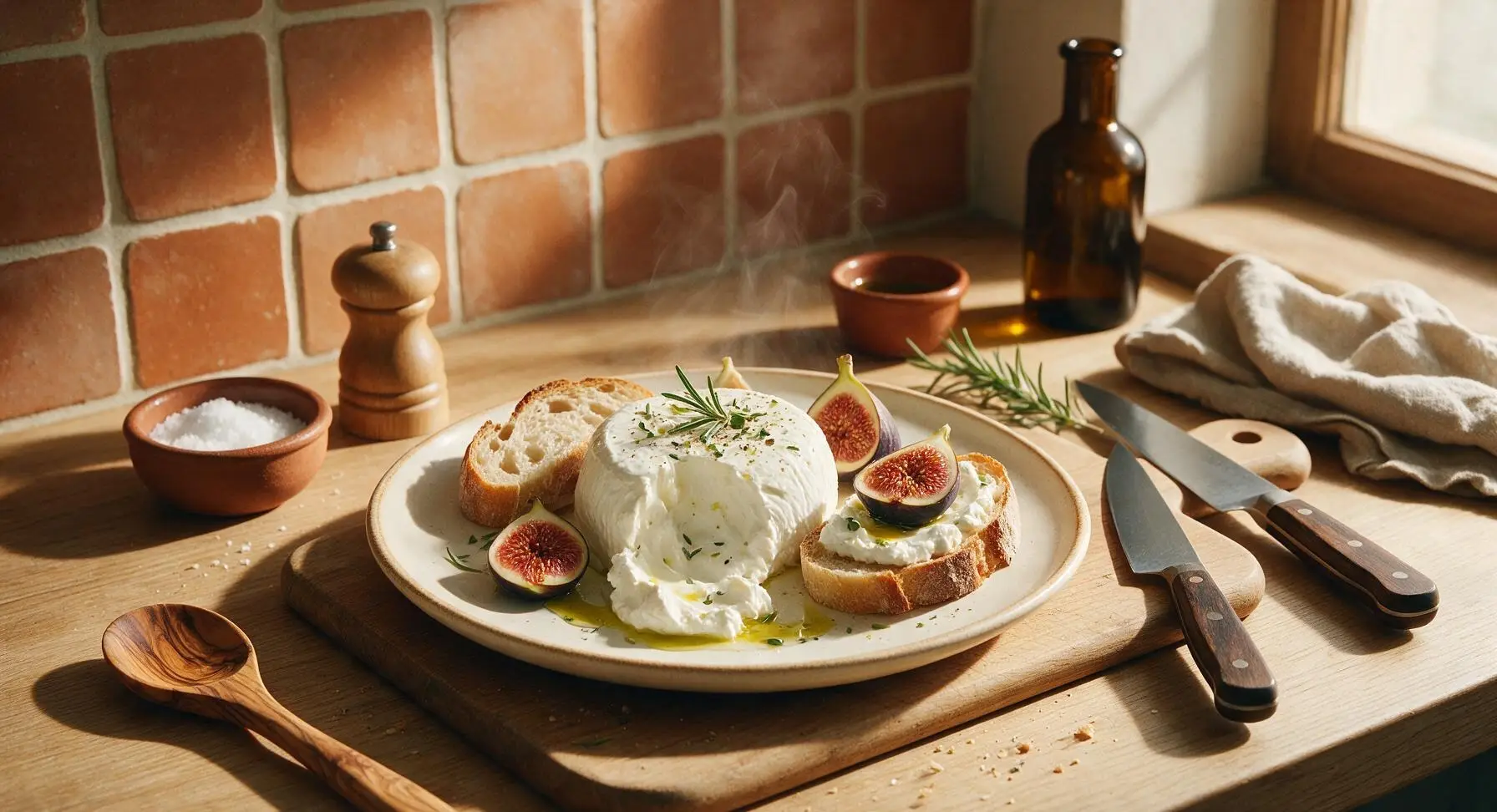
Creamy, tangy fresh homemade goat cheese (chèvre) with a smooth spreadable texture, perfect for pairing with crusty bread, ripe summer figs, and olive oil.
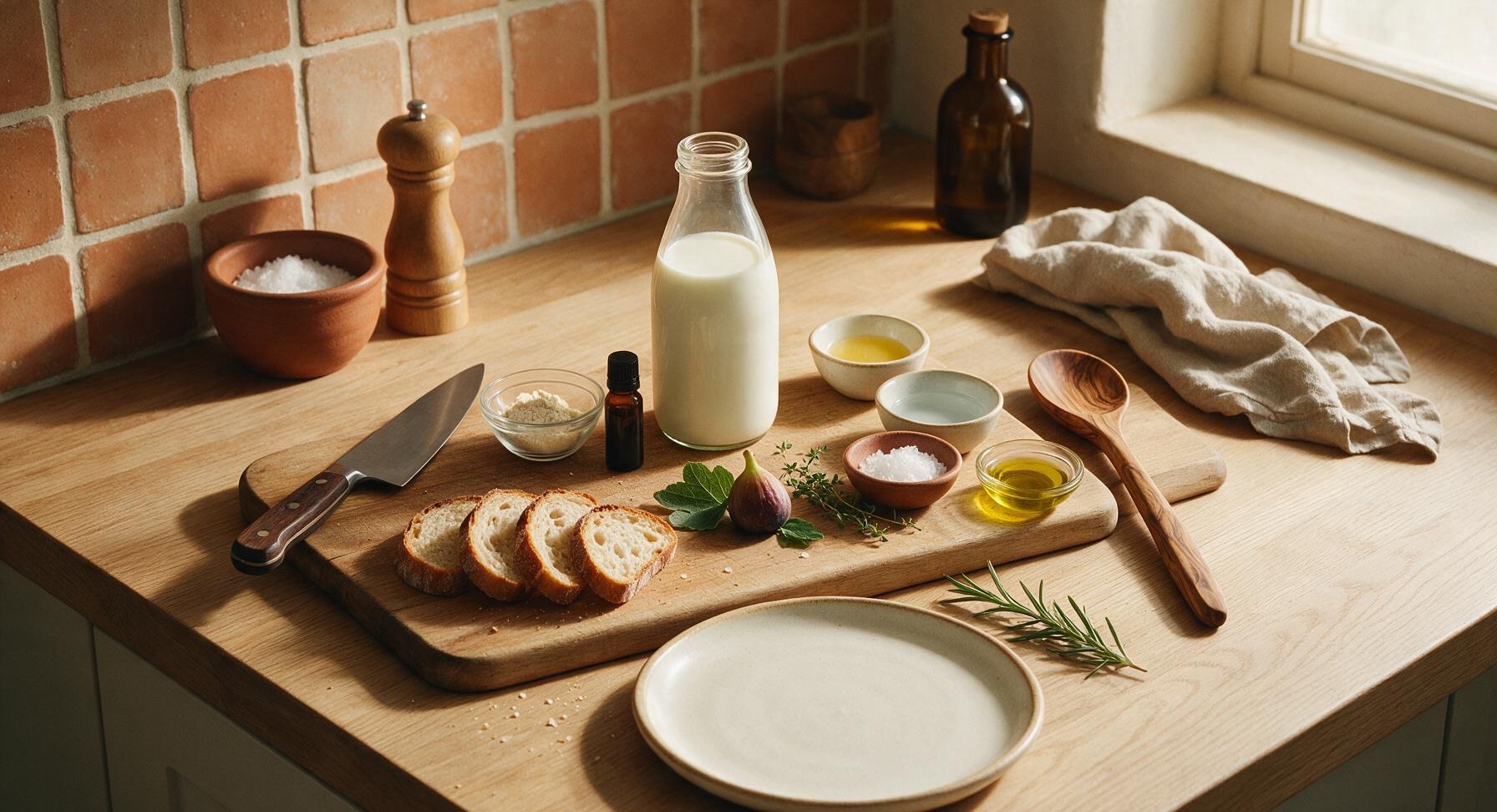
Ingredients
Steps
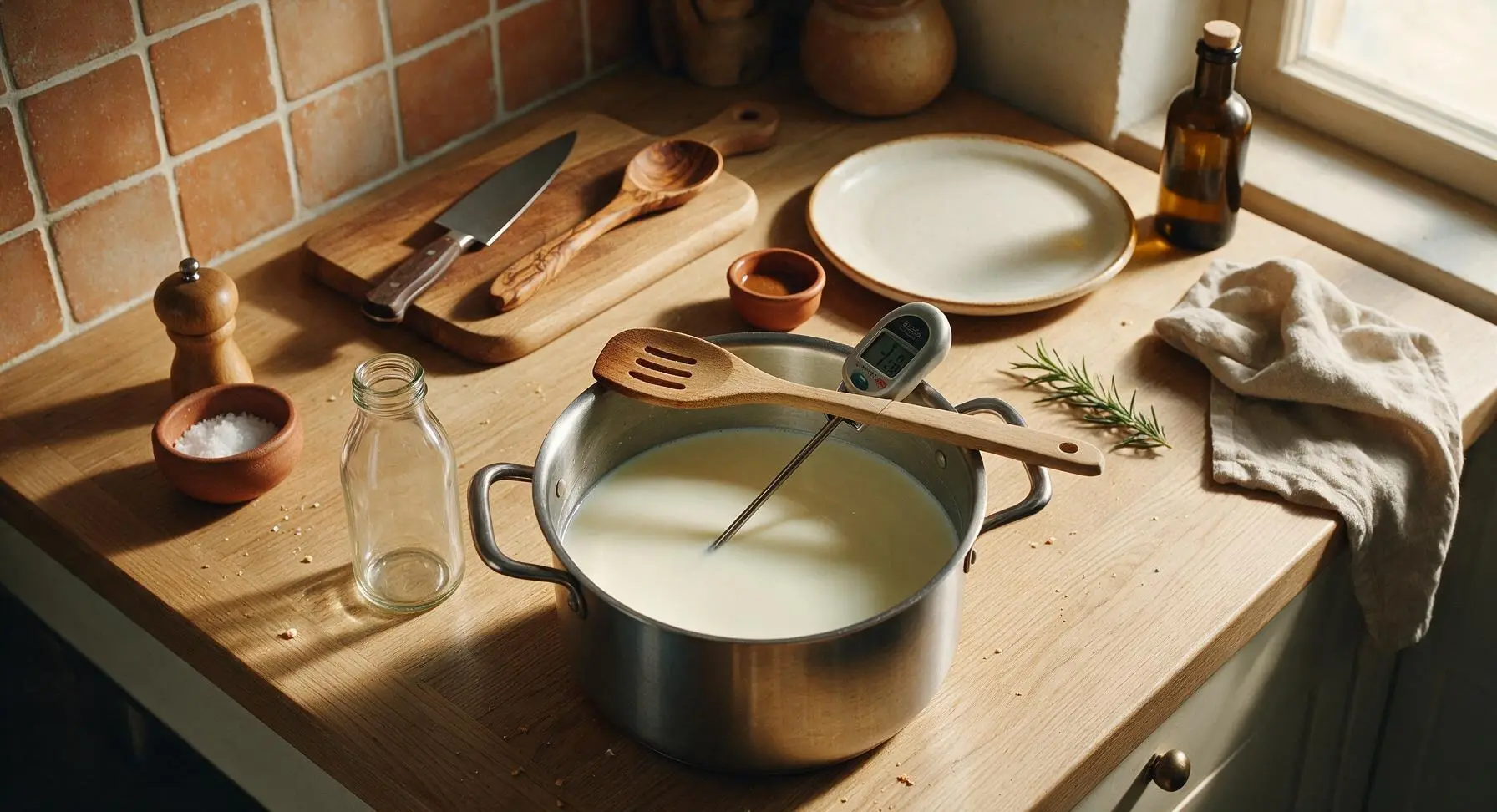
Heat Goat Milk Slowly
Pour the full 1 quart (946ml) of whole pasteurized goat milk into the 4L stainless steel pot, set over the lowest stovetop heat. Clip the digital instant-read thermometer to the pot rim so the probe is fully submerged in milk but not touching the pot bottom. Heat slowly, stirring occasionally with the beech wood slotted spoon, until the milk reaches exactly 86°F (30°C). Avoid heating faster than 2°F per minute to prevent scorching, which will create bitter off-flavors in the finished cheese.
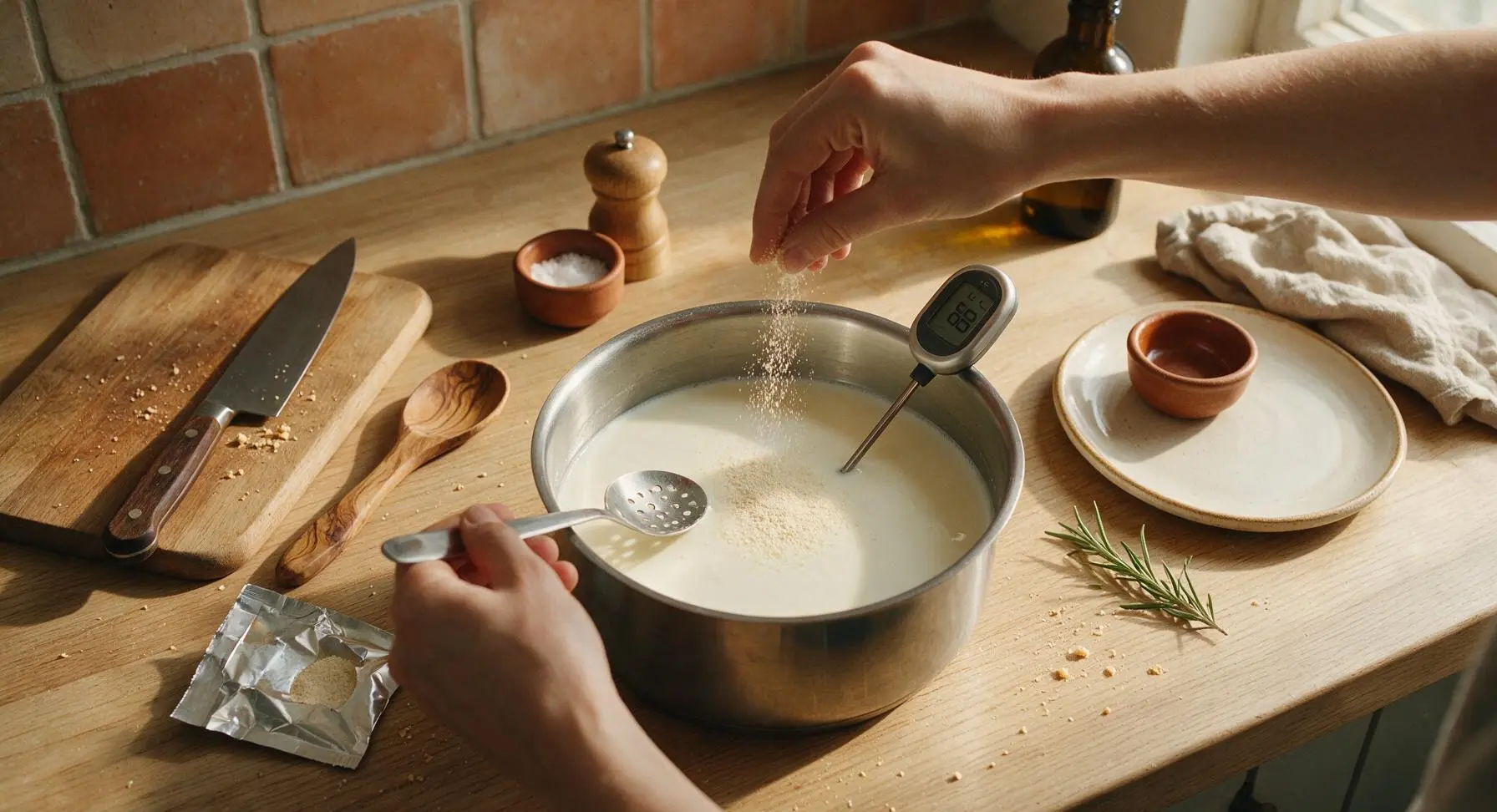
Add Mesophilic Culture
Once the milk holds steady at 86°F, sprinkle the 1/4 teaspoon of mesophilic cheese culture evenly across the warm milk surface. Let the culture sit undisturbed for 2 minutes to rehydrate, then stir gently with the beech wood slotted spoon using slow up-and-down motions to fully incorporate the culture without incorporating air. Cover the pot with its stainless steel lid, remove from heat, and let rest undisturbed for 45 minutes at room temperature to allow the culture to acidify the milk.
Add Diluted Rennet
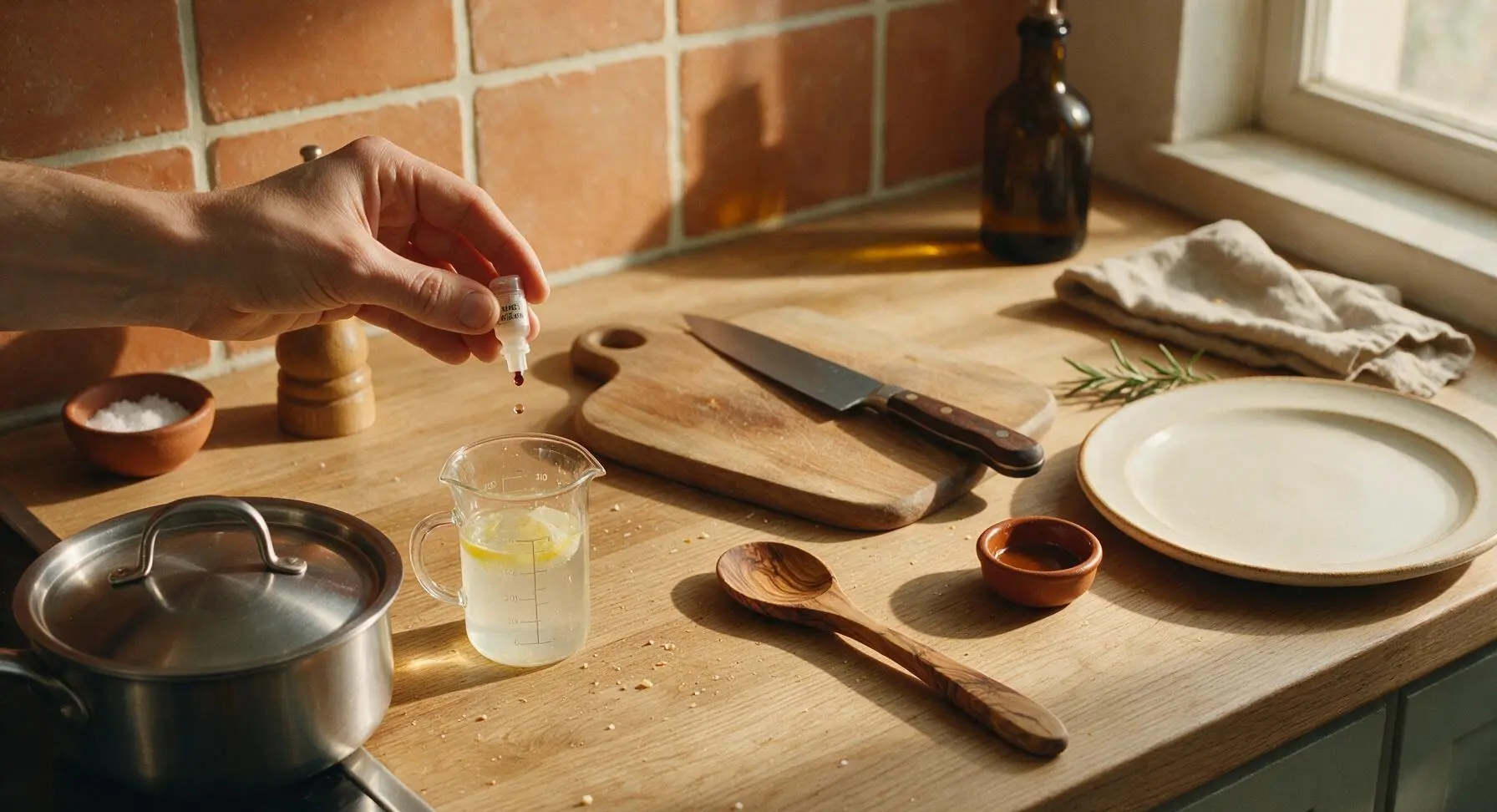
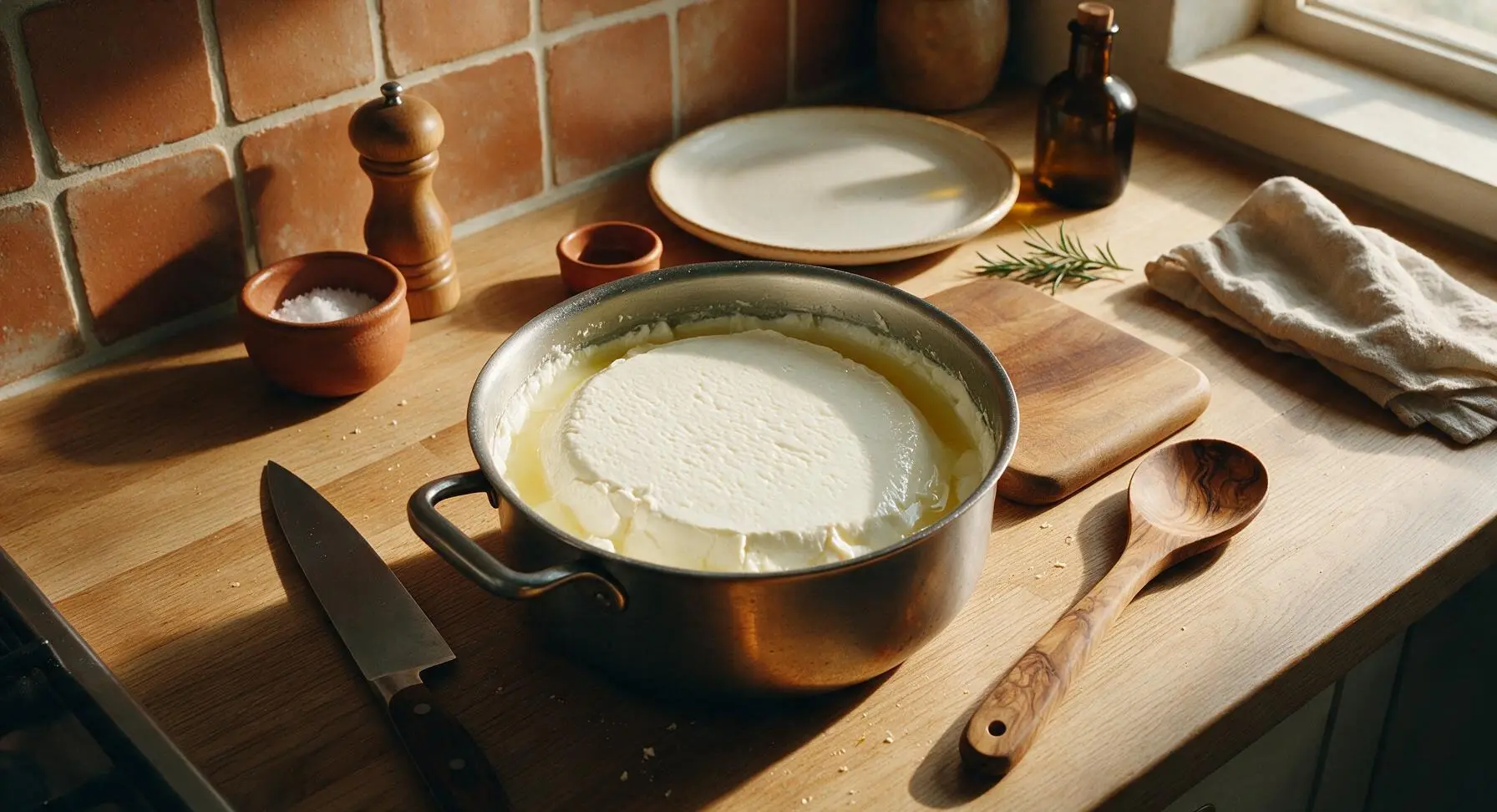
While the milk rests, mix 2 drops of liquid animal rennet and 1 tablespoon fresh lemon juice into 2 tablespoons of cool filtered water in the 150ml glass measuring cup. After the 45-minute culture rest, pour the diluted rennet mixture into the milk, stirring slowly for exactly 30 seconds to distribute evenly. Re-cover the pot and let it sit undisturbed for 12 hours at 68-72°F (20-22°C) until a clean curd forms: a solid white mass will pull away from the pot sides, with translucent pale yellow whey pooling around the edges, and a clean break will form when you insert a finger and lift the curd.
Cut Set Curds
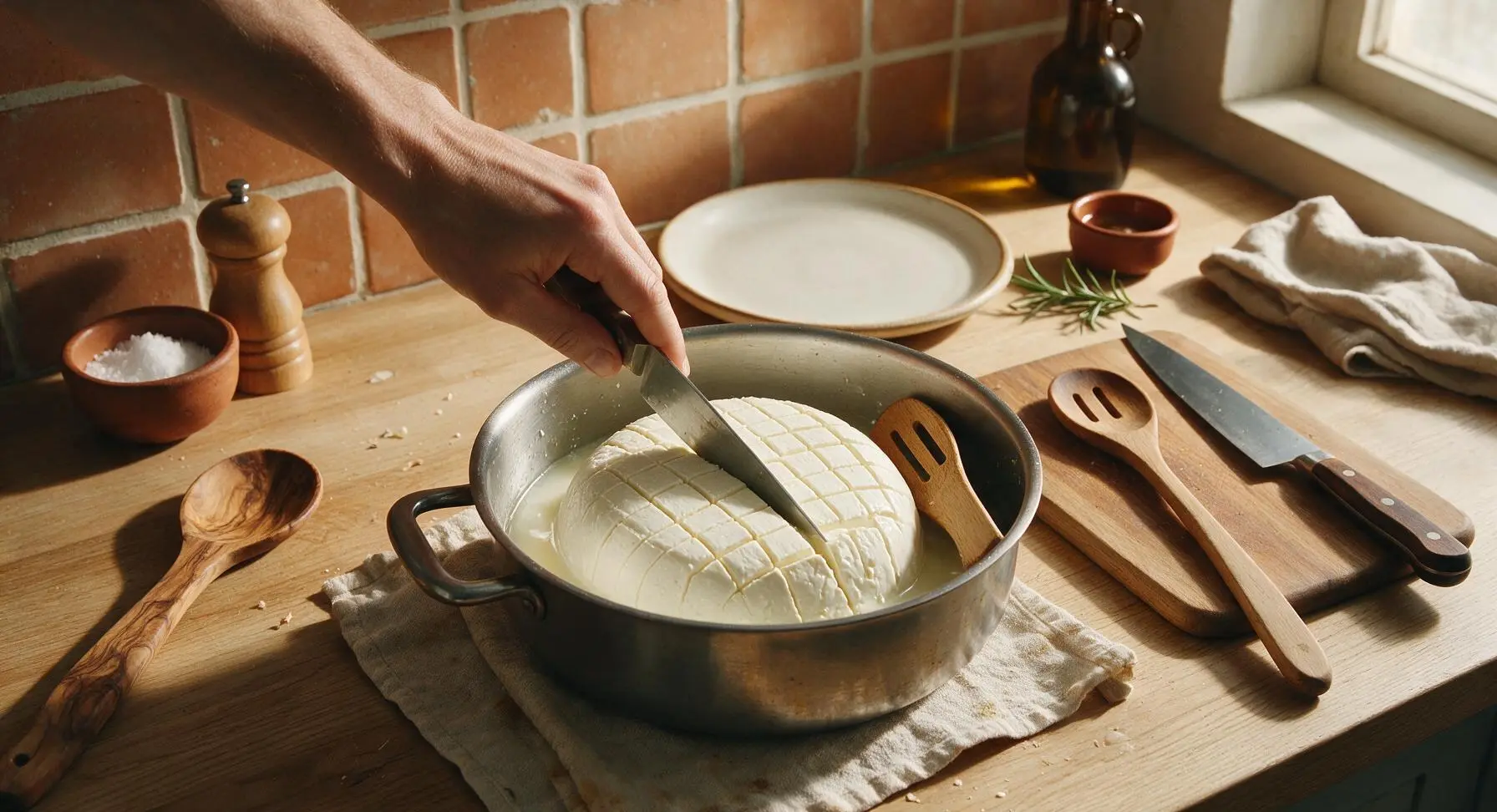
Remove the pot lid. Use the 8-inch curd knife to cut the solid curd into uniform 1/2-inch (1.25cm) cubes: first cut straight down in a parallel grid pattern across the entire pot surface, then cut at a 45-degree angle to reach curds at the pot bottom. Let the cut curds rest for 10 minutes to allow whey to seep out; curds will shrink slightly and sink into the whey as they rest.
Warm Curds Gently
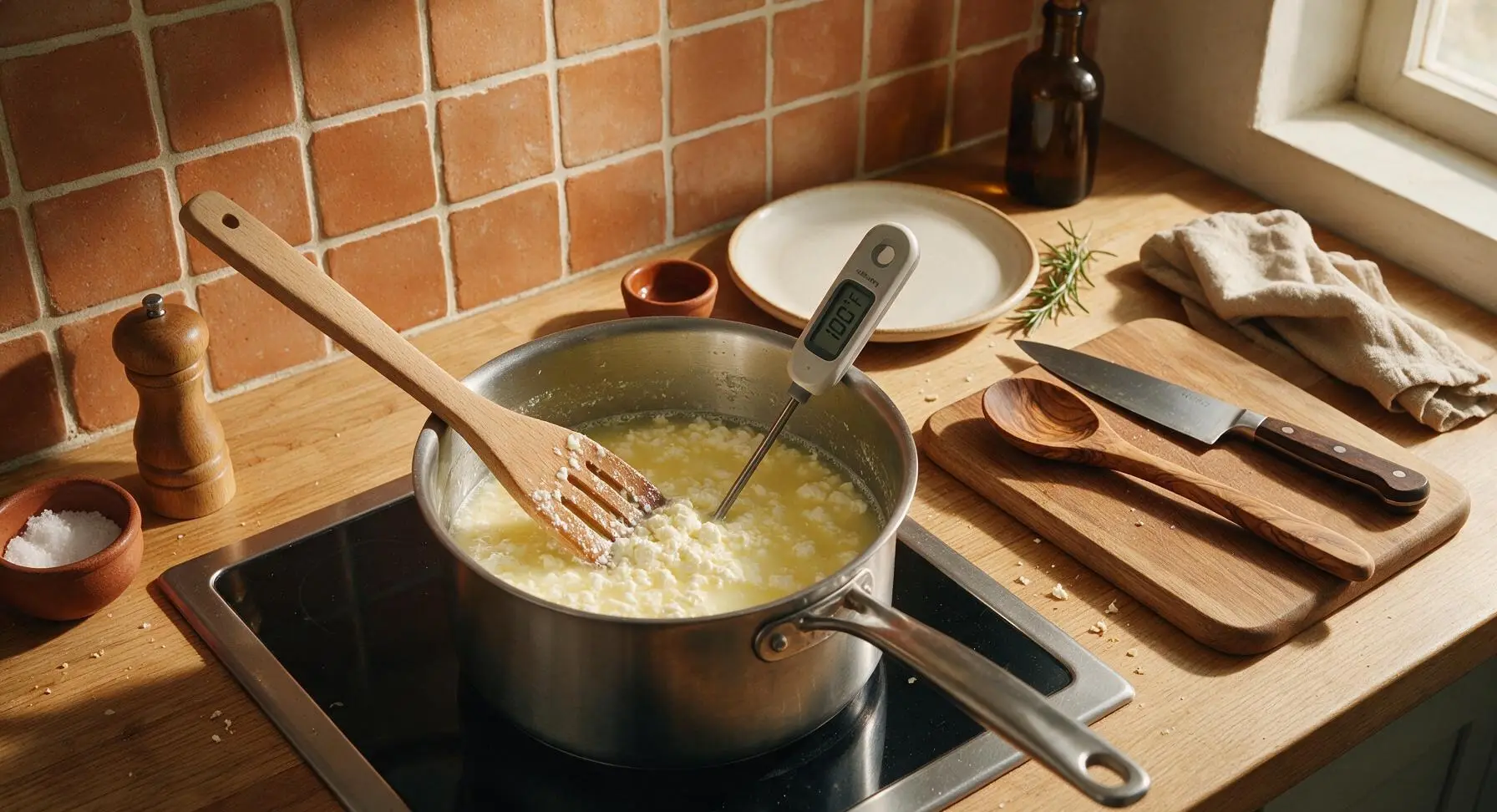
Return the pot to the lowest stovetop heat, stirring very gently with the beech wood slotted spoon every 2-3 minutes, until the curds and whey reach exactly 100°F (38°C). Hold this temperature for 10 minutes, continuing to stir occasionally to prevent curds from clumping together. Curds will become firmer, fully separate from the pale yellow whey, and sink to the pot bottom when stirring stops.
Strain Curds from Whey
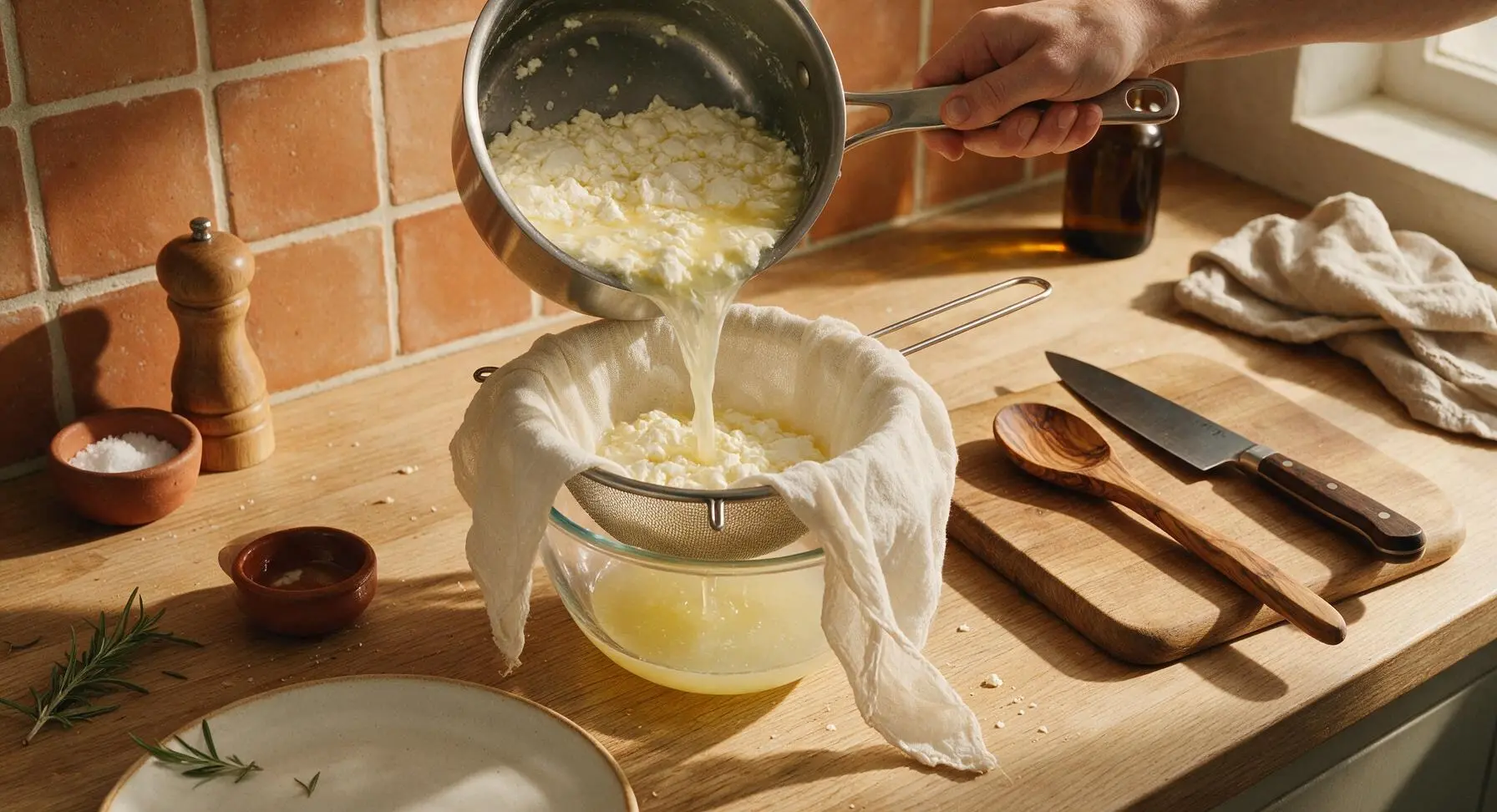
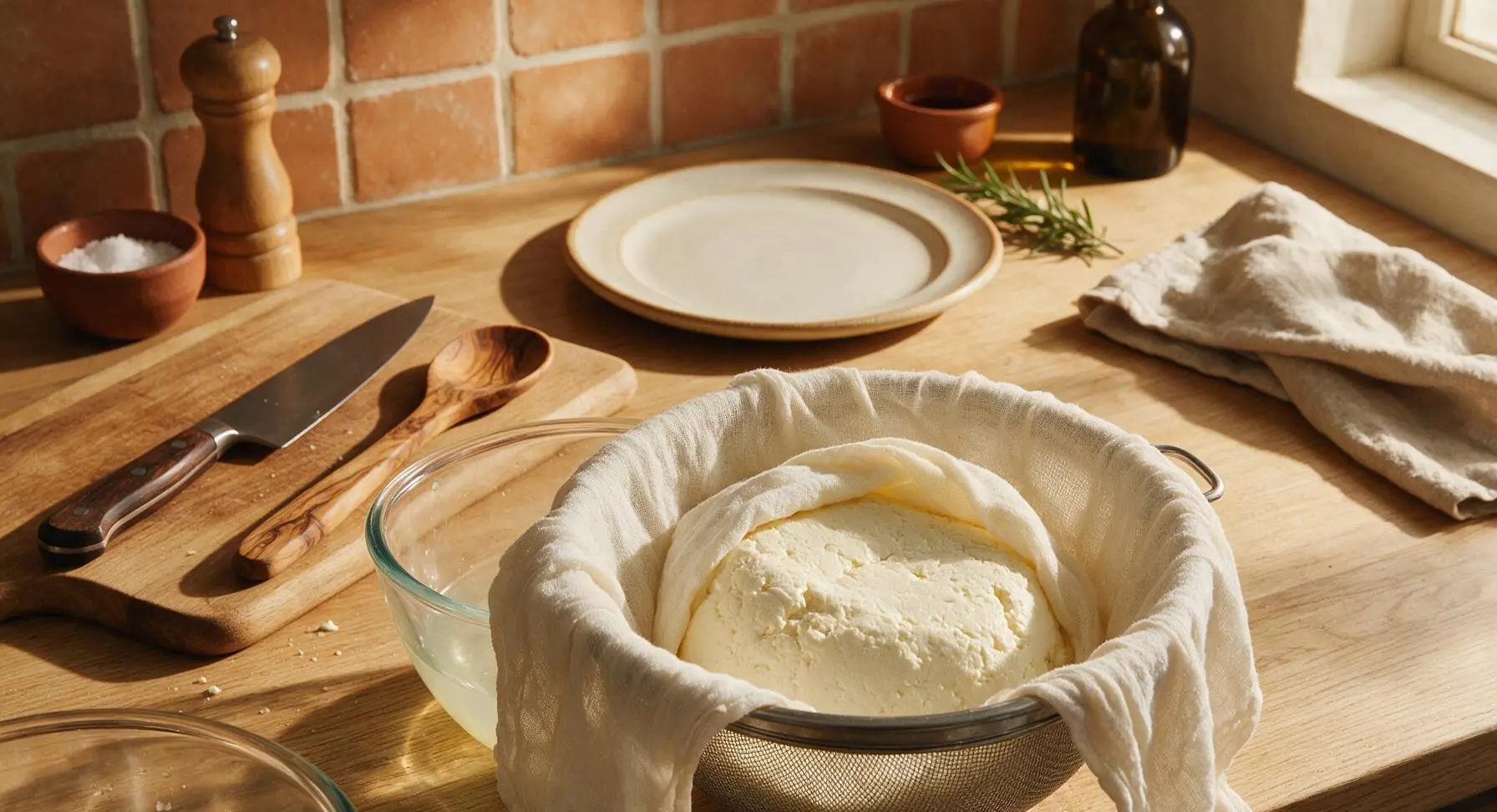
Set the fine-mesh stainless steel sieve over the 3L clear glass whey-catching bowl, positioned to the right of the pot. Line the sieve with a double layer of the unbleached cotton cheesecloth, letting excess cloth hang 10cm over the sieve edges. Carefully pour the curds and whey into the cheesecloth-lined sieve, letting whey drain through into the bowl below. Let curds drain for 2 hours at room temperature, until no more whey drips from the sieve bottom and curds form a thick, crumbly, matte ivory mass.
Season and Shape Cheese
Gather the cheesecloth edges to lift drained curds out of the sieve, transferring them to one of the small cream ceramic ramekins for mixing. Add 1 teaspoon of flaky sea salt, using clean hands to gently fold the salt into the curds, breaking up large clumps until curds have a smooth, spreadable consistency. Form the salted curds into a 10cm round log, wrap tightly in a fresh piece of cheesecloth, and refrigerate for 2 hours to firm up.
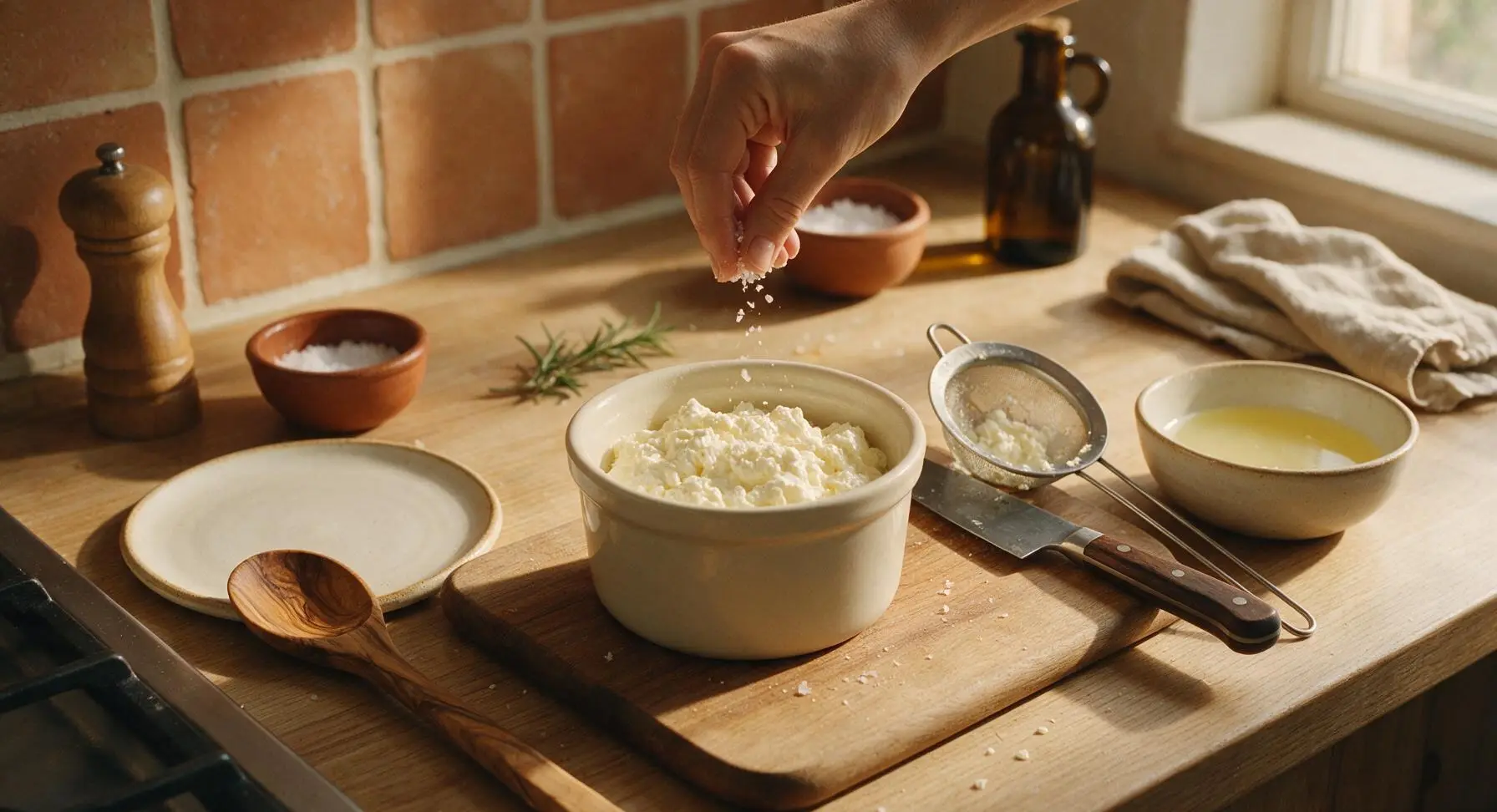
Plate and Finish
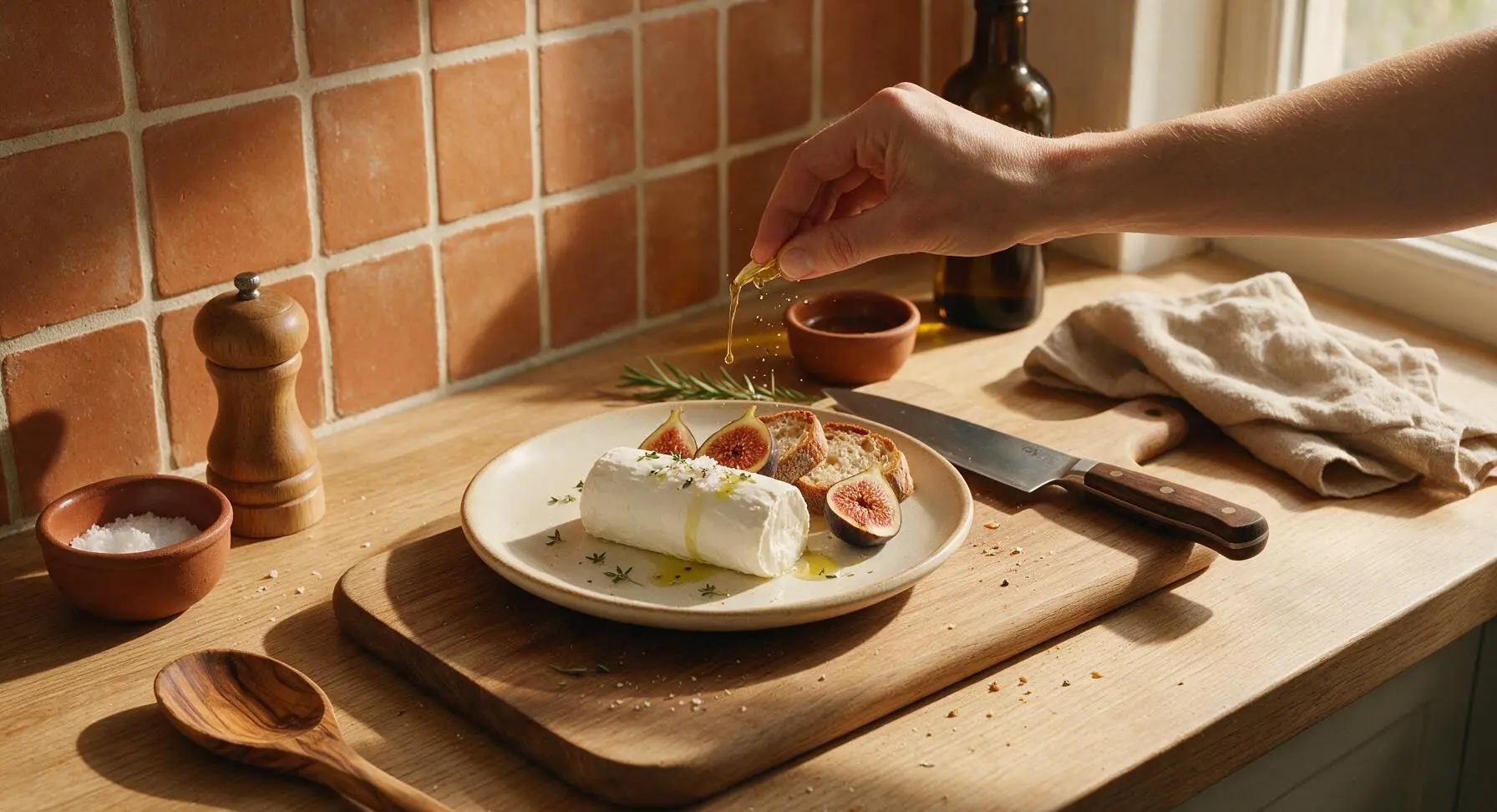
Unwrap the chilled goat cheese log and place it on the matte cream ceramic serving plate. Drizzle the top with 1 teaspoon of extra virgin olive oil, add a light crack of black pepper from the pepper grinder, and scatter fresh thyme leaves across the cheese. Arrange halved figs and sourdough slices alongside the cheese for serving.
Tips
2.Do not stir the milk vigorously after adding rennet: aggressive stirring breaks the delicate developing curd structure before it fully sets, leading to tiny curds that wash through the cheesecloth and reduce your final cheese yield by up to 30%.
3.For a tangier, more complex chèvre flavor, let the wrapped cheese log rest in the refrigerator for up to 7 days, turning it daily to release any remaining whey. This slow aging mimics traditional French farmhouse chèvre, with a brighter, more pronounced tang than fresh 2-hour cheese.



OMG this homemade chèvre is SO good! I slathered it on sourdough toast with honey and fig jam this morning and my husband asked if I bought it from the fancy farmers market stand. Total game changer for weekend brunches!
Brought this to our neighborhood potluck last weekend and people were hovering over the cheese plate the whole time! I rolled the logs in everything bagel seasoning and crushed pecans, zero leftovers. Will make again for sure.
This was way easier than I expected for a medium difficulty recipe! I prepped a batch on Sunday to add to salads and grain bowls all week, it holds up so much better than store bought. My kids even ate it plain with apple slices, win!
Took this on our car camping trip last week to pair with crackers and dried cherries, it traveled way better than I thought it would. Only note is I let it drain a little longer than the recipe said to get a firmer texture for packing, worked great.
Made this for my sister's bridal shower charcuterie board and everyone was raving! The fresh, tangy flavor is so much brighter than the pre-packaged chèvre I usually get from the grocery store. 10/10 for special occasions.
I messed up the temperature on my first try and the curds didn't set right, oops. Second attempt went way smoother once I used a candy thermometer to track the milk temp. Tastes great once you get the hang of it!
Wait, can I use pasteurized goat milk from the regular grocery store for this? I don't have a local dairy nearby and I really want to try making this this weekend!
I rolled my chèvre log in dried cranberries and orange zest for our Thanksgiving appetizer spread and it was the first thing gone! Even my cousin who swears he hates goat cheese went back for three helpings, wild.
How long does this keep in the fridge? I want to make a double batch but I don't want it to go bad before I can use all of it!
I added a little roasted garlic and fresh thyme to half my batch and OMG it's the perfect spread for morning bagels at my coffee shop. Customers keep asking where I buy it, little do they know it's homemade!
Wait this is only 25 minutes of cook time? I always thought fresh cheese took all day to make! I don't have any fancy cheese making equipment either, do I need a special press or anything?
Made this for my kid's 4-H food demonstration and I got so many questions about how to do it at home. It's such a fun, approachable project to do with older kids too, my 12 year old did almost all the steps herself!
I was worried the lemon juice would make it too tart, but the tang is perfectly balanced, not overpowering at all. I served it with roasted beets and arugula for a dinner party salad and everyone asked for the recipe.
I used raw goat milk from the farm down the road for my batch and the flavor is out of this world. So creamy, no weird additives or preservatives like the store bought stuff. Worth every penny.
First time making any kind of cheese at home and I'm low key proud of myself! Only issue is my curds were a little crumbly instead of that smooth spreadable texture I was expecting. Did I drain it too long?
Game changer for my client event menus! I used to spend a fortune on artisanal chèvre for cocktail parties, now I can make a huge batch for a fraction of the cost. Can I freeze portions of this to use later for events?
My granddaughter is obsessed with goat cheese so I made this for her birthday dinner last night. She said it was better than the fancy cheese we got on our trip to France last summer! I added a pinch of herbes de Provence to mine, so flavorful.
Wait I think I messed up? I added the lemon juice and let it sit but I barely got any curds, just mostly cloudy whey. I used ultra pasteurized milk because that's all the corner store had, is that why?
I mixed a little smoked paprika and honey into a third of my batch and oh my god, it's insane on top of burgers. Like, next level burger topping, I'll never buy pre-made cheese for cookouts again.
Made this last night for our weekly family dinner, served it drizzled with hot honey alongside roasted broccoli and grilled chicken. Even my super picky 8 year old asked for seconds of the cheese, which never happens. 10/10, will be a staple in our house.