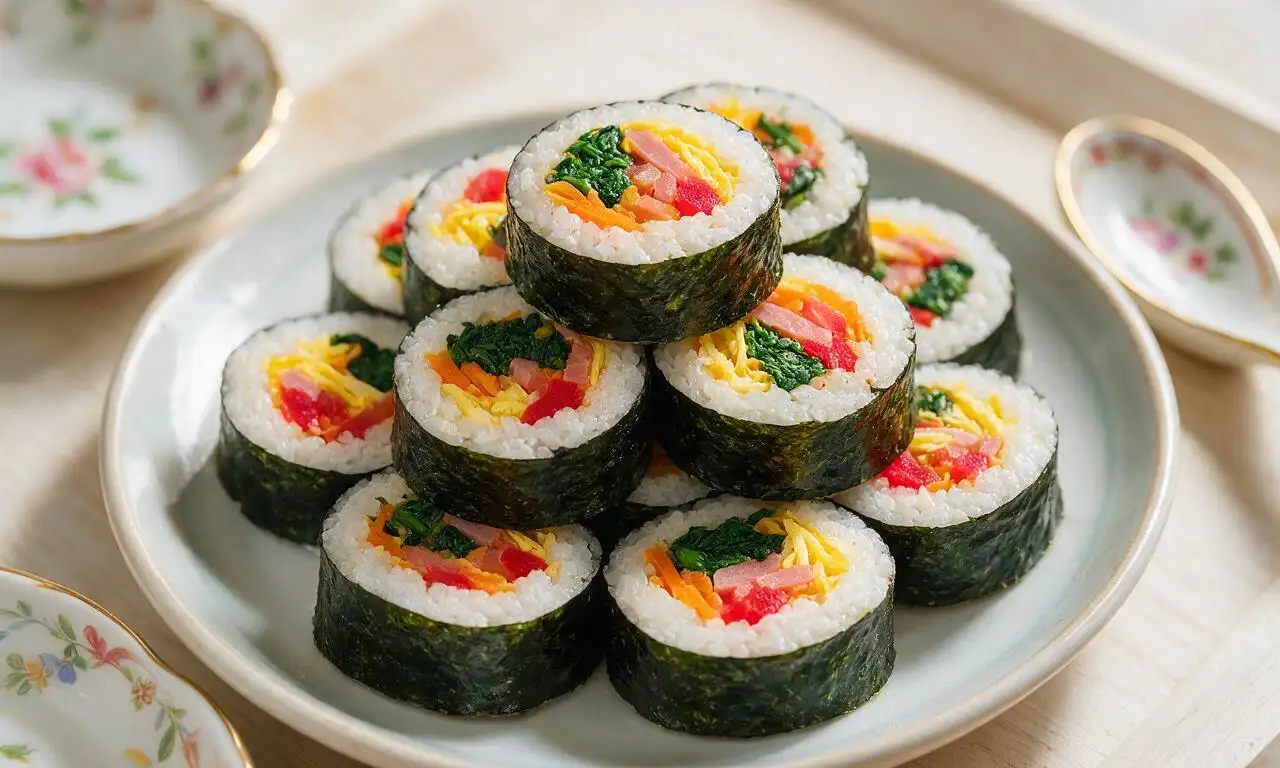
Kimbap

title 1
Kimbap
⏱️ cook time 45 minutes
🍽️ servings 4
⚡ Difficulty easy

intro

Vibrant, portable Korean seaweed rice rolls stuffed with seasoned veggies, egg, and ham, ideal for outings and quick, satisfying meals.

Ingredients

Short-grain white rice (uncooked) 320g (yields ~4 cups cooked)
Roasted seaweed (gim) sheets 8 full 20x20cm sheets
Yellow pickled radish (danmuji) 160g, cut into 1cm-wide strips
Fresh spinach 200g, trimmed
Large eggs 3 (150g total)
Carrot 1 medium (120g), julienned into 5mm strips
Cooked deli ham 150g, cut into 1cm-wide strips
Toasted sesame oil 30ml (2 tablespoons), divided
Unseasoned rice vinegar 15ml (1 tablespoon)
Fine sea salt 5g (1 teaspoon), divided
Toasted white sesame seeds 10g (1 tablespoon)

Steps

1

Cook and season rice

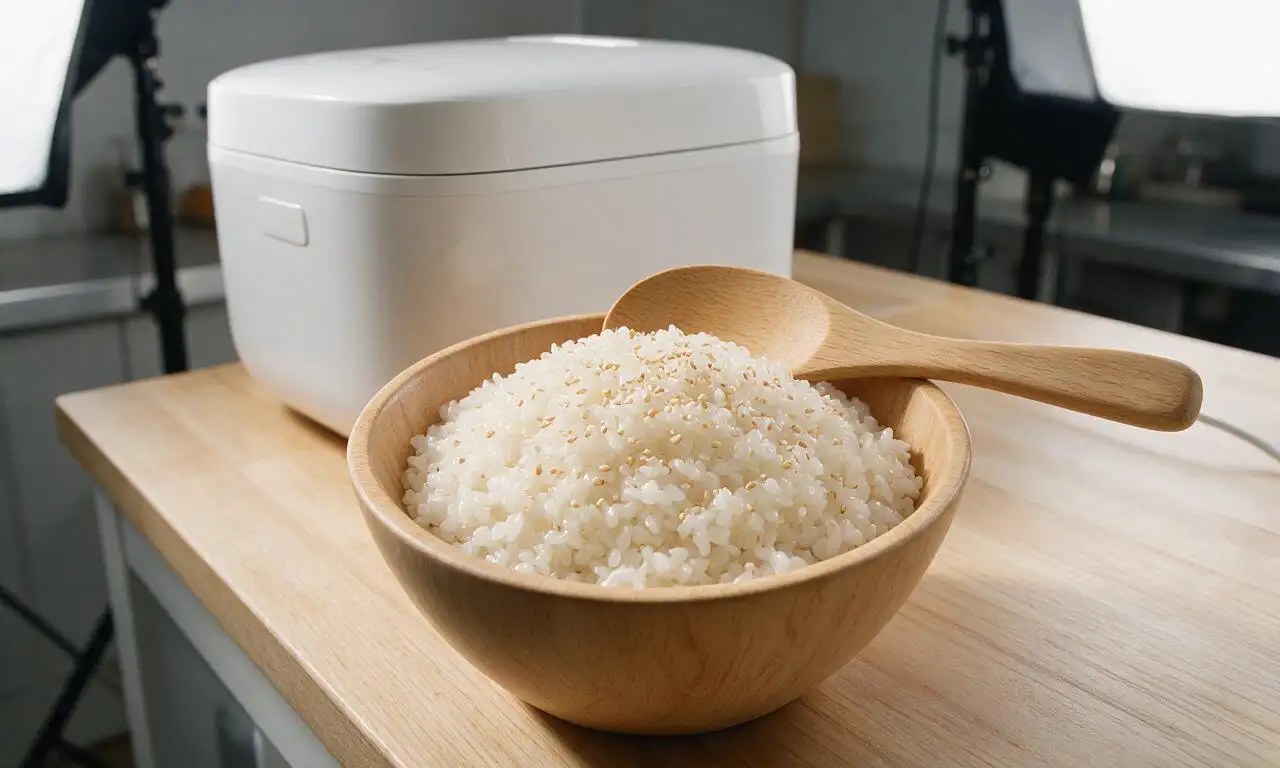
Rinse 320g short-grain rice under cold running water until the water runs clear, then cook in a rice cooker with 480ml water to yield firm, sticky rice. Once cooked, transfer to a large mixing bowl, stir in 15ml rice vinegar, 15ml (1 tbsp) toasted sesame oil, 3g (½ tsp) fine sea salt, and 10g toasted sesame seeds while rice is still warm. Let cool to room temperature (about 15 minutes) before use, as hot rice will wilt and sog out the seaweed wrappers.
Step 1
step1:Cook and season rice
2

Blanch and season spinach

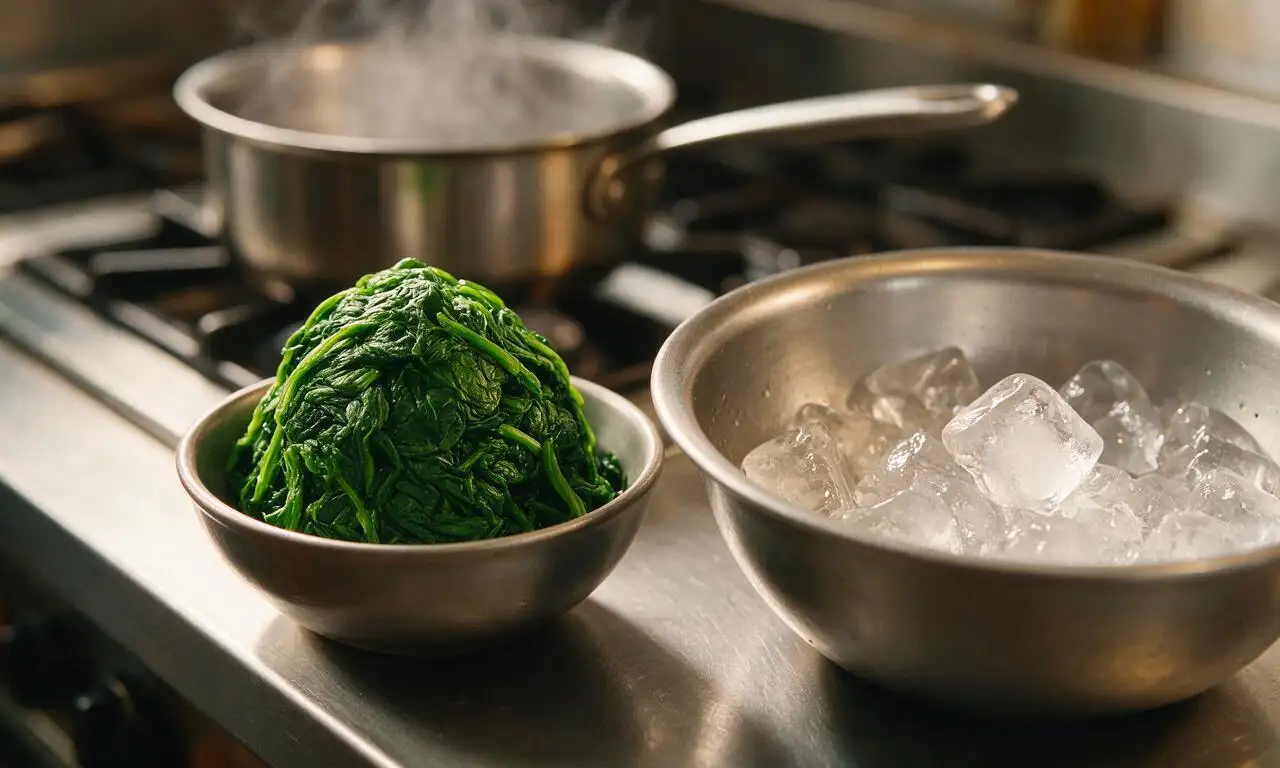
Bring 1 liter of water to a rolling boil over high heat. Add 200g trimmed fresh spinach and blanch for exactly 30 seconds, then immediately drain and plunge into a bowl of ice water to stop the cooking process and lock in bright green color. Squeeze all excess water out of the spinach (it should be completely dry to the touch), then toss with 5ml (1 tsp) toasted sesame oil and 1g (⅕ tsp) salt. Set aside.
Step 2
step2:Blanch and season spinach
3

Prep cooked fillings

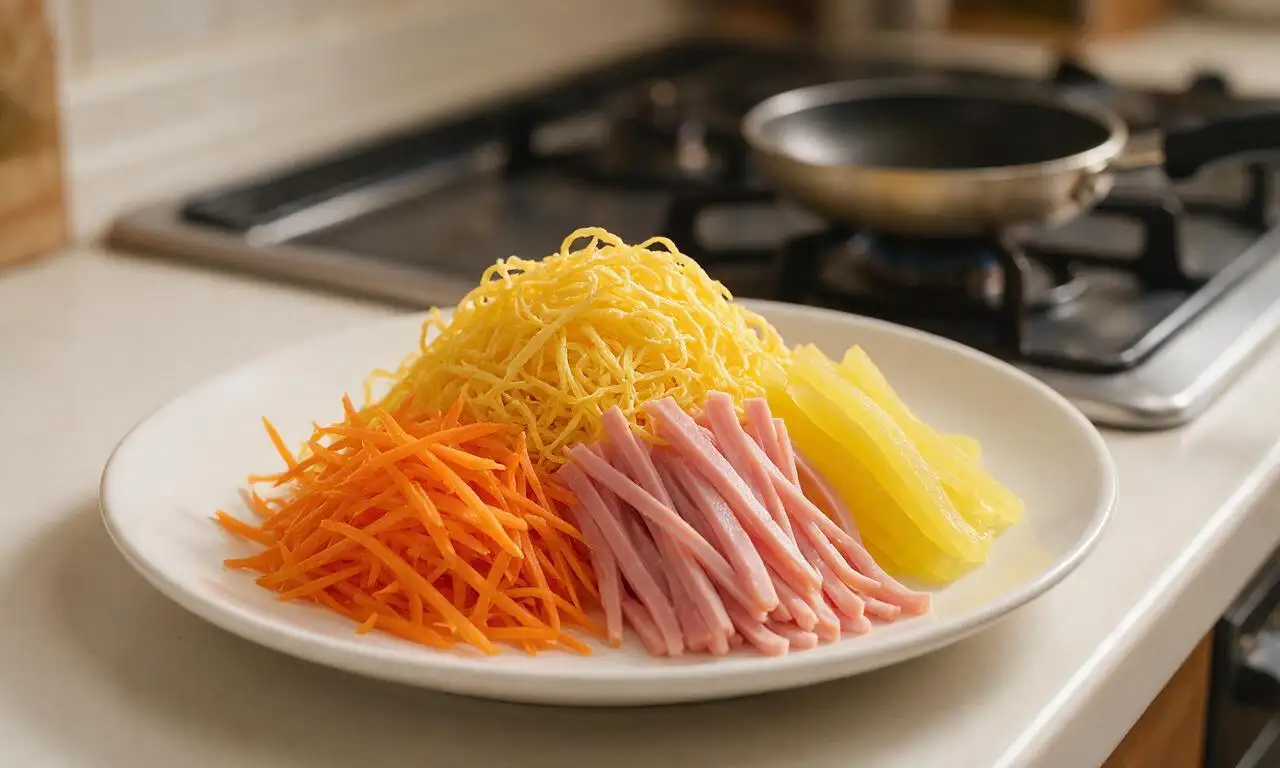
Crack 3 large eggs into a small bowl, whisk with 1g (⅕ tsp) salt until smooth. Heat a 25cm nonstick skillet over medium-low heat, pour in the whisked eggs to form a thin, even omelet, and cook for 2 minutes per side until fully set with no browned edges. Slide the omelet onto a cutting board, cool for 5 minutes, then cut into 1cm-wide strips. In the same skillet, add 5ml (1 tsp) sesame oil, turn heat to medium, add julienned carrot and remaining 1g salt, and sauté for 2 minutes until crisp-tender. Pan-fry ham strips for 1 minute per side to warm through, then arrange all cooked fillings in separate neat piles.
Step 3
step3:Prep cooked fillings
4

Set up rolling station

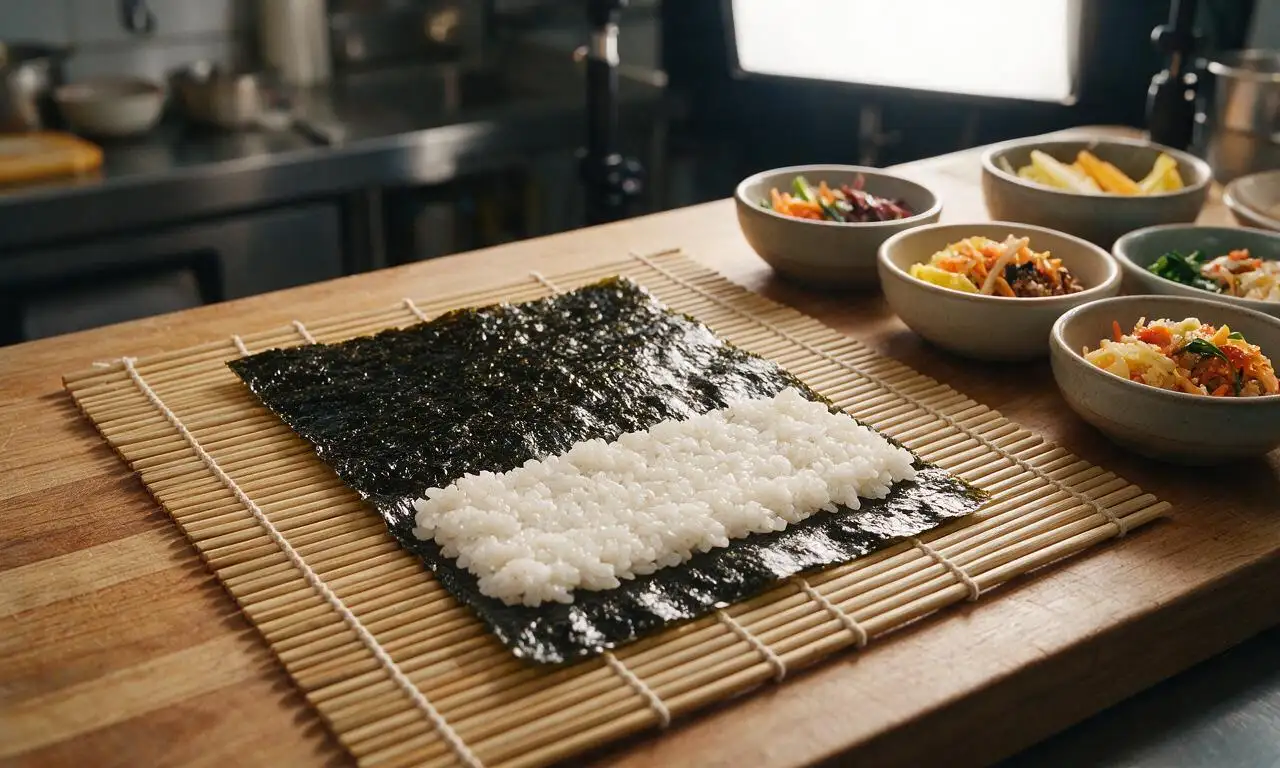
Lay a bamboo kimbap rolling mat on a clean, dry work surface. Place one roasted seaweed sheet shiny-side down on the mat. Spread roughly 120g (½ cup) of cooled seasoned rice evenly across the bottom ⅔ of the seaweed sheet, leaving a 5cm wide clear strip of seaweed at the top edge. Press the rice into a thin, even 5mm thick layer — avoid packing rice too densely, as this will create overly thick, hard-to-roll logs.
Step 4
step4:Set up rolling station
5

Roll kimbap tightly

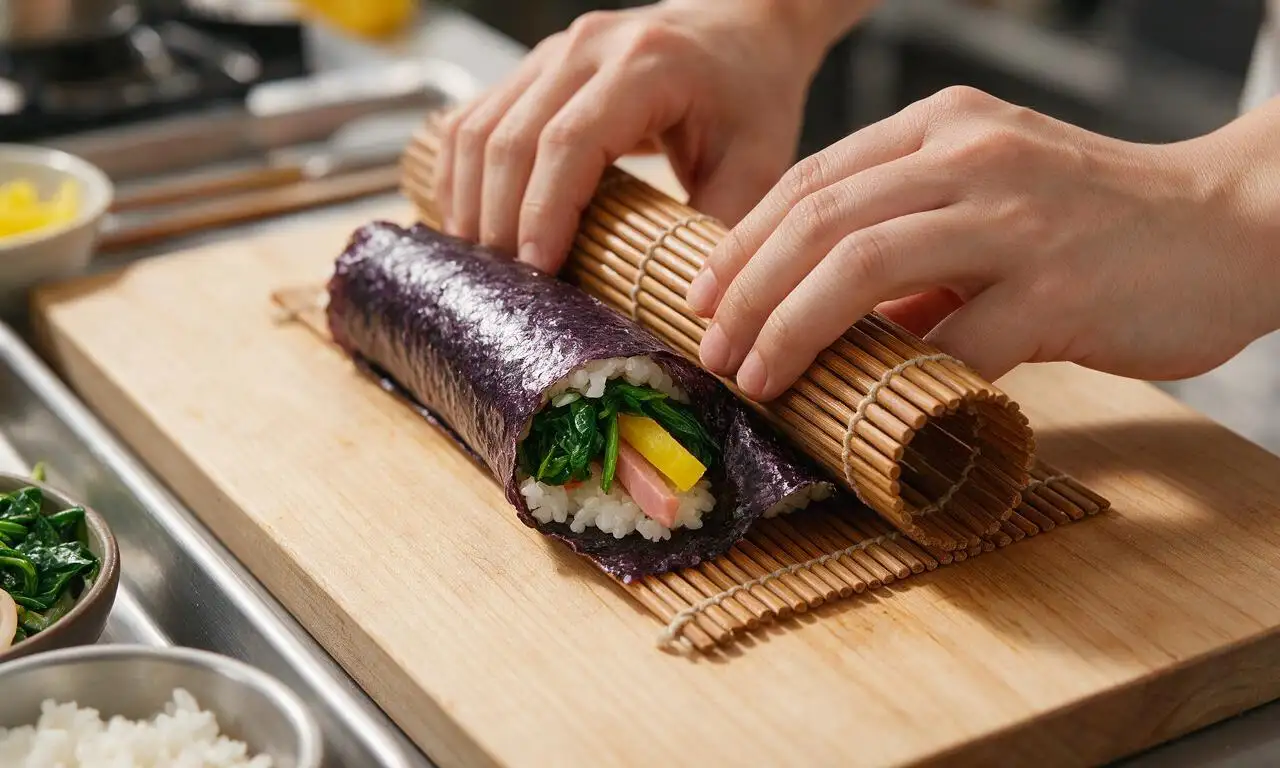
Lay one strip of each filling (spinach, egg, carrot, ham, pickled radish) in a single horizontal line across the center of the rice layer, parallel to the bottom edge of the seaweed. Lift the bottom edge of the bamboo mat over the fillings, tuck and press firmly to enclose the fillings in a tight first coil, then continue rolling upward toward the bare seaweed edge. Dab a tiny amount of cold water along the top bare seaweed edge to seal the roll closed, then squeeze the wrapped mat gently around the full roll to set its round shape. Repeat with remaining seaweed, rice, and fillings.
Step 5
step5:Roll kimbap tightly
6

Slice and serve rolls

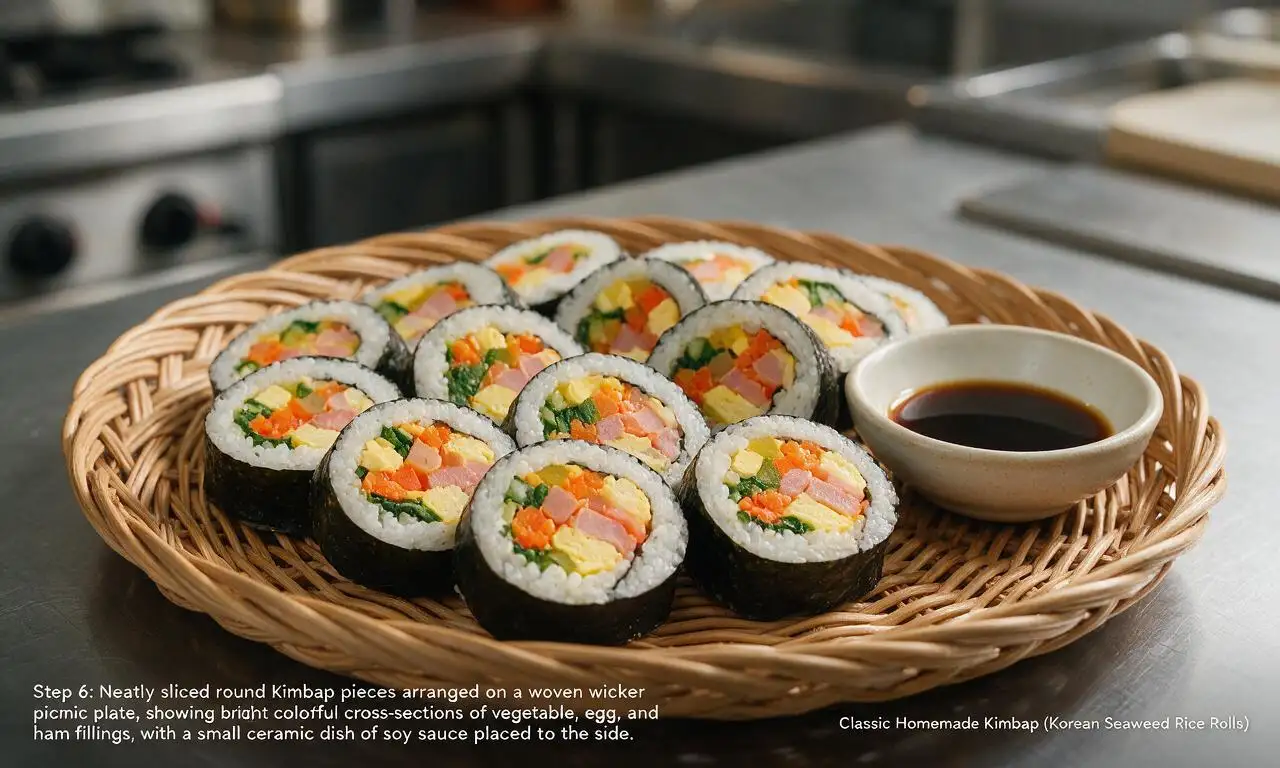
Brush the outer surface of each finished kimbap roll with the remaining 5ml (1 tsp) toasted sesame oil for a glossy sheen and nutty flavor. Use a very sharp, wet knife to cut each roll into 2cm thick round slices, wiping the knife blade with a damp cloth between every 2-3 cuts to prevent rice from sticking and mashing the rolls. Arrange slices on a serving platter, and serve with optional soy sauce or extra pickled radish for dipping.
Step 6
step6:Slice and serve rolls

Tips

1.Always use short-grain white rice for kimbap; long-grain rice varieties are not sticky enough to hold rolls together, and will cause slices to fall apart when picked up.
2.Squeeze as much excess moisture as possible out of blanched spinach and other wet fillings before rolling; trapped water will quickly make the seaweed soggy and cause rolls to split.
3.Keep your knife sharp and damp when slicing kimbap; a dry or dull knife will smash the rice, tear the seaweed, and leave messy, uneven slices.

✨ You May Also Like

Lunch
🍜 United States

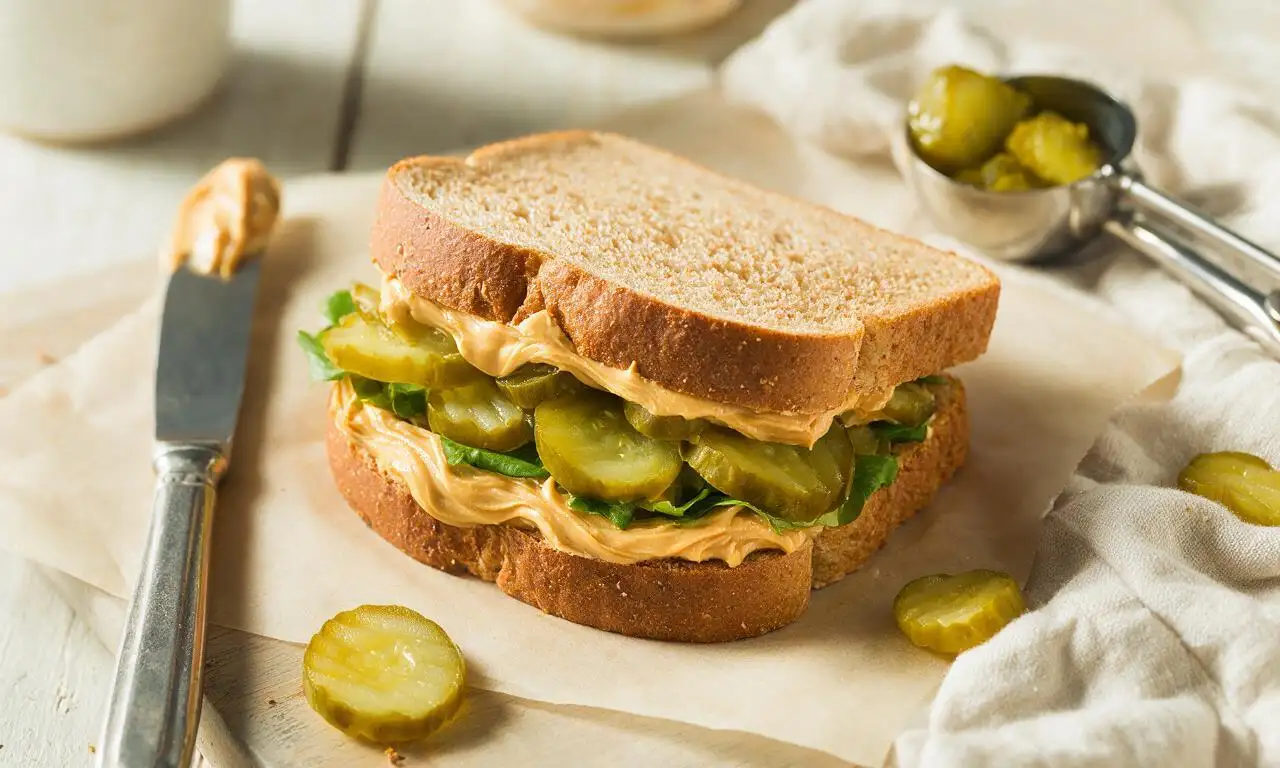
Creamy, salty, tangy nostalgic Midwestern sandwich pairing rich peanut butter with crisp briny dill pickles for a fast, satisfying no-cook meal.

⏱️ 5 minutesLunch ★ 4.6
Lunch
🍜 United States

Crispy, melty pressed sandwich layered with savory roast pork, ham, Swiss cheese, pickles, and tangy mustard: a beloved Cuban-American comfort classic.

⏱️ 25 minuteLunch ★ 4.9
Lunch
🍜 United States

Hearty, briny New Orleans pressed sandwich stacked with cured Italian meats, provolone, and zesty olive salad, served cold for bold, portable flavor.

⏱️ 1 hour 20Lunch ★ 4.7
Lunch
🍜 United States

A tangy, creamy Southern American staple, this no-cook cheesy sandwich is packed with sharp cheddar and sweet pimentos for a satisfying, portable bite.

⏱️ 1 hour 15Lunch ★ 4.8
Lunch
🍜 United States

Crispy Cajun-spiced fried shrimp piled on crusty French bread with tangy remoulade and fresh toppings, the iconic Louisiana street food sandwich.

⏱️ 35 minuteLunch ★ 4.4
Lunch
🍜 United States

Stacked, savory deli-style corned beef sandwich with melted Swiss, tangy mustard, and crisp griddled rye— a fast, hearty, satisfying classic.

⏱️ 15 minuteLunch ★ 4.9

Kimbap:Frequently Asked Questions

1.Why do I need to use short-grain white rice instead of long-grain rice for kimbap? ▾
Short-grain white rice has a higher starch content that creates the perfect sticky texture to hold rolls together without falling apart when sliced or bitten into. Long-grain rice cooks up fluffy and separate, which leads to loose, messy rolls. Let cooked rice cool to slightly warm before assembling, so it doesn’t wilt the seaweed or soften fillings prematurely.
2.My roasted seaweed (gim) sheets get soggy right after rolling—how do I prevent that? ▾
Soggy gim almost always stems from rice that’s too hot or too wet when you assemble. Let your seasoned rice cool to roughly body temperature before spreading, and don’t over-saturate it with sesame oil. Slice rolls right before serving if prepping ahead, and store uncut rolls tightly wrapped in plastic in the fridge for no more than 4 hours for the best texture.
3.Can I prep kimbap fillings like spinach and pickled radish ahead of time? ▾
Absolutely! Most classic kimbap fillings hold up beautifully when prepped 1 to 2 days in advance, which cuts down assembly time dramatically. Blanch and season your spinach, slice your danmuji into uniform strips, and cook and slice your egg and ham, then store each filling in separate airtight containers in the fridge. Pat excess moisture off fillings before rolling to avoid sogginess.
4.How thin should I spread rice on the seaweed sheet to get a tight, even roll? ▾
Aim for a ¼-inch thick, even layer of rice across roughly 90% of the seaweed sheet, leaving a 1-inch bare strip along the top long edge to seal the roll. Don’t pack the rice down too hard, as this will make your roll dense and overly chewy instead of light. A light, even spread gives you the perfect ratio of rice to filling in every bite.
5.Why does my kimbap split or fall apart when I try to slice it? ▾
Split rolls usually come from three easy-to-fix issues: you didn’t roll tightly enough as you tucked in the fillings, you used a dull knife, or you didn’t seal the bare seaweed edge with a tiny bit of water or rice starch. Use a sharp, clean knife, wipe the blade between slices, and apply gentle, even pressure instead of sawing for neat, clean slices.
6.Do I have to use yellow pickled radish (danmuji), or is there a good substitute? ▾
Danmuji adds that signature tangy, salty, slightly sweet crunch that balances softer, savory kimbap fillings, so it’s worth seeking out at a Korean market if possible. If you’re in a pinch, substitute with crisp, lightly sweetened pickled daikon, or even a tangy dill pickle spear patted very dry, though the flavor won’t match the traditional profile exactly.
7.How do I prep spinach for kimbap so it doesn’t make rolls watery? ▾
Start by blanching fresh spinach in boiling salted water for just 30 seconds, then immediately shock it in ice water to stop cooking and lock in its bright green color. Squeeze every last bit of excess water out of the spinach with your hands (this step is non-negotiable!), then toss it lightly with a pinch of salt, a dash of sesame oil, and toasted sesame seeds.
8.What’s the best way to cook eggs for classic kimbap? ▾
Whisk your large eggs with a tiny pinch of salt, then pour them into a lightly oiled nonstick pan over medium-low heat to make a thin, flat omelet (not fluffy scrambled eggs). Cook until the top is just set (you can cover the pan briefly to avoid flipping), then slide it out, let it cool, and slice it into ½-inch wide strips that match the length of your other fillings.
9.Can I add extra fillings beyond the classic veggies, egg, and ham? ▾
Of course! Classic kimbap is super customizable once you nail the base rice and rolling technique. Just stick to fillings that are firm, not overly wet or drippy, to keep your roll tight. Popular add-ins include imitation crab, cooked bulgogi, drained tuna mixed with a little mayo, blanched carrot strips, or even sliced cheese—just pat wet fillings dry before adding.
10.How long does assembled kimbap stay fresh, and how do I store leftovers? ▾
Assembled kimbap is best eaten the same day it’s made, since the seaweed will turn soggy and chewy with extended fridge time. If you have leftovers, wrap individual slices tightly in plastic wrap and store in an airtight container in the fridge for up to 24 hours. For the best texture, zap slices for 10 seconds in the microwave to soften the rice before eating.
11.Do I need a special bamboo rolling mat (makisu) to make kimbap at home? ▾
A bamboo makisu mat makes rolling tight, even kimbap much easier for beginners, and they’re inexpensive to pick up at most Asian markets or online, but you don’t strictly need one. If you don’t have a mat, use a sheet of parchment paper or stiff plastic wrap to help tuck and roll the seaweed tightly, applying even gentle pressure as you seal the edge.
12.How should I season the short-grain rice for authentic kimbap flavor? ▾
Once your short-grain rice is cooked and still slightly warm, gently fold in a mix of toasted sesame oil, a tiny pinch of fine salt, and a light sprinkle of toasted sesame seeds. Skip the rice vinegar you’d use for sushi rice—classic kimbap rice has a nutty, savory sesame note instead of sushi’s tangy vinegar profile, so add seasonings lightly and taste as you go.
13.My fillings always squish out the end of the roll when I tuck it—what am I doing wrong? ▾
Fillings squishing out almost always means you’re overstuffing the roll, or you’re not tucking the first fold tightly around fillings before you keep rolling. Don’t pile fillings high in the center—lay them in a single, neat line across the lower third of the rice-covered seaweed, then pull the mat tight to tuck the front edge firmly over fillings before rolling the rest of the way.
14.Is kimbap the same thing as Japanese sushi rolls? ▾
It’s easy to mix them up since both use seaweed and rice rolled around fillings, but they’re distinctly different dishes. Classic kimbap uses sesame-seasoned short-grain rice (no vinegar, unlike sushi rice) and fully cooked fillings like danmuji, ham, and seasoned veggies, served at room temperature as a casual portable meal, rather than sushi which often features raw fish and vinegared rice.
15.What’s the best way to pack kimbap for picnics or on-the-go meals? ▾
Kimbap is made for portability! Once you roll and slice it, pack slices in a rigid airtight container so they don’t get squished, and tuck a small paper towel in the container to absorb excess condensation that might make seaweed soggy. Since all fillings are fully cooked, it stays safe and tasty at room temperature for up to 2 hours, perfect for hikes, work lunches, or park outings.

Comments (10)

2 days ago

OMG this kimbap recipe is SO good! I made it for my kids’ after-school snack yesterday and they devoured every last roll before I even got a second piece. The ratio of rice to fillings is perfect, no messy oozing when I sliced them, which is always a win for me. Already planning to make a double batch for our neighborhood potluck this weekend!

1 day ago

Wait how did you keep them from getting soggy if you make them ahead for the potluck? I tried bringing kimbap to a work lunch once and the rice got all hard and the seaweed got chewy :(

22 hours ago

Great question! If you’re making kimbap ahead, wrap the whole uncut rolls tightly in plastic wrap and store them in the fridge for up to 24 hours, then slice right before serving. You can also add a tiny splash of rice vinegar to the rice when seasoning to help keep it soft and fresh longer!

1 week ago

Total game changer for my Sunday meal prep! This was way easier than I thought it would be—45 minutes flat from start to finish, and I had enough rolls for 4 days of work lunches. I swapped the pickled radish for extra carrots since I’m not a huge radish fan, and it still turned out amazing. 10/10 will be on my regular rotation.

6 days ago

So glad you loved it! Swapping fillings to match your taste is exactly what homemade kimbap is all about—great call with the extra carrots if that’s what you prefer!

3 days ago

I’ve been craving kimbap nonstop while binging my favorite Korean dramas and finally decided to try making it myself instead of ordering takeout. This recipe was so straightforward even for a total cooking newbie like me! I added a little extra spam to mine and it tasted exactly like the rolls I got from the food truck near my old college. Obsessed.

5 minutes ago

Wait, does anyone know if I can use gluten-free soy sauce for the rice seasoning? I have celiac so regular soy sauce is a no-go for me, but I’ve been dying to make kimbap at home forever! This recipe looks perfect otherwise.

2 minutes ago

I made this last week with gluten-free tamari instead of regular soy sauce and it tasted exactly the same! No weird aftertaste at all, my whole family didn’t even notice the swap.

1 minute ago

Great question! Gluten-free tamari is a perfect 1:1 swap for regular soy sauce here, it works just as well for seasoning the rice without compromising flavor. Hope you love the recipe when you make it!

yesterday

Made this for my girlfriend for our at-home date night last night and she said it was better than the kimbap we got at the fancy Korean restaurant downtown for our anniversary. Win for me! I added a little extra bulgogi to the rolls because we’re both meat lovers, and it was chef’s kiss.

12 hours ago

That is such a cute date night idea! Stealing this for my partner’s birthday next week, did you serve it with anything on the side? I was thinking of making tteokbokki to go with it.

2 weeks ago

Okay, full transparency: I burn almost everything I try to cook, but this recipe was actually impossible to mess up? The instructions are so clear, especially the tip about not overstuffing the rolls so they don’t burst when you roll them. My rolls were a little lumpy looking but they tasted incredible, so I’m counting that as a massive win.

2 weeks ago

We love a lumpy homemade kimbap win! Don’t worry about perfect looks—restaurant kimbap chefs roll hundreds a day, so lumpy rolls at home just mean they’re made with extra love. So glad you gave it a shot!

30 minutes ago

Perfect recipe for a broke college student! All the ingredients were cheap and easy to find at my local grocery store, no fancy Asian market trip required. I made a big batch on Sunday and ate kimbap for lunch and dinner all week, saved me so much money compared to ordering takeout every day. Will definitely be making this again.

5 days ago

Made this totally vegan by swapping the ham and egg for marinated tofu and extra spinach, and it was so flavorful! I was worried veggie kimbap would be boring but the sesame oil seasoning on the rice makes every bite taste so rich and nutty. Brought it to my book club meetup and all the other vegan members asked for the recipe immediately.

4 days ago

What did you marinate your tofu in? I’ve been trying to find a good tofu swap for kimbap but mine always comes out too bland!

3 days ago

I pressed extra firm tofu for 30 minutes, sliced it thin, and pan fried it with a little soy sauce, garlic powder, and sesame oil! It got super chewy and flavorful, perfect for the rolls.

2 hours ago

Made these for my son’s soccer team snack after practice yesterday and every single kid asked for seconds! Even the picky eaters who turn their nose up at anything that isn’t chicken nuggets loved them. I cut them into bite-sized pieces and they were perfect for little hands to grab on the go. So happy I found this recipe!

1 hour ago

That makes us so happy to hear! Bite-sized kimbap is such a perfect portable snack for kids’ sports and activities, no messy plates required. Thanks for sharing!

just now

I grew up eating my grandma’s homemade kimbap and was scared no recipe would live up to that memory, but this one comes so close! The sesame oil and salt ratio for the rice is exactly how she used to make it. I added a little pickled perilla leaf like she did and it felt like a little hug from home. Can’t wait to make this for my roommates.