
Maple Rye Barrel Aged IPL

title 1
Maple Rye Barrel Aged IPL
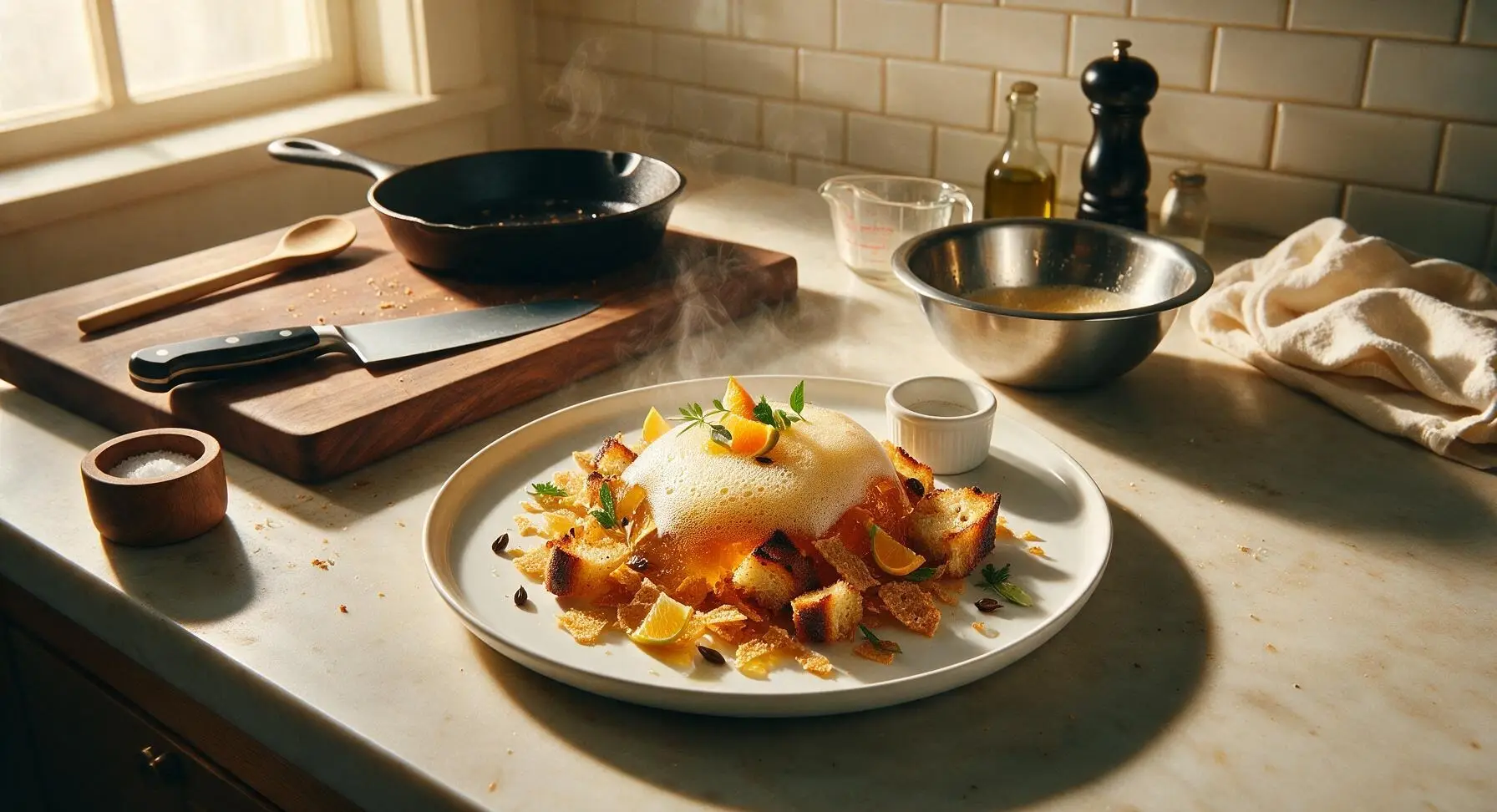
⏱️ cook time 2 hours
🍽️ servings 48
⚡ Difficulty medium

intro

Crisp, hop-forward India Pale Lager aged on charred rye whiskey oak with rich maple notes, balancing bright citrus hops, warm spice, and a smooth oaky vanilla finish.

Ingredients
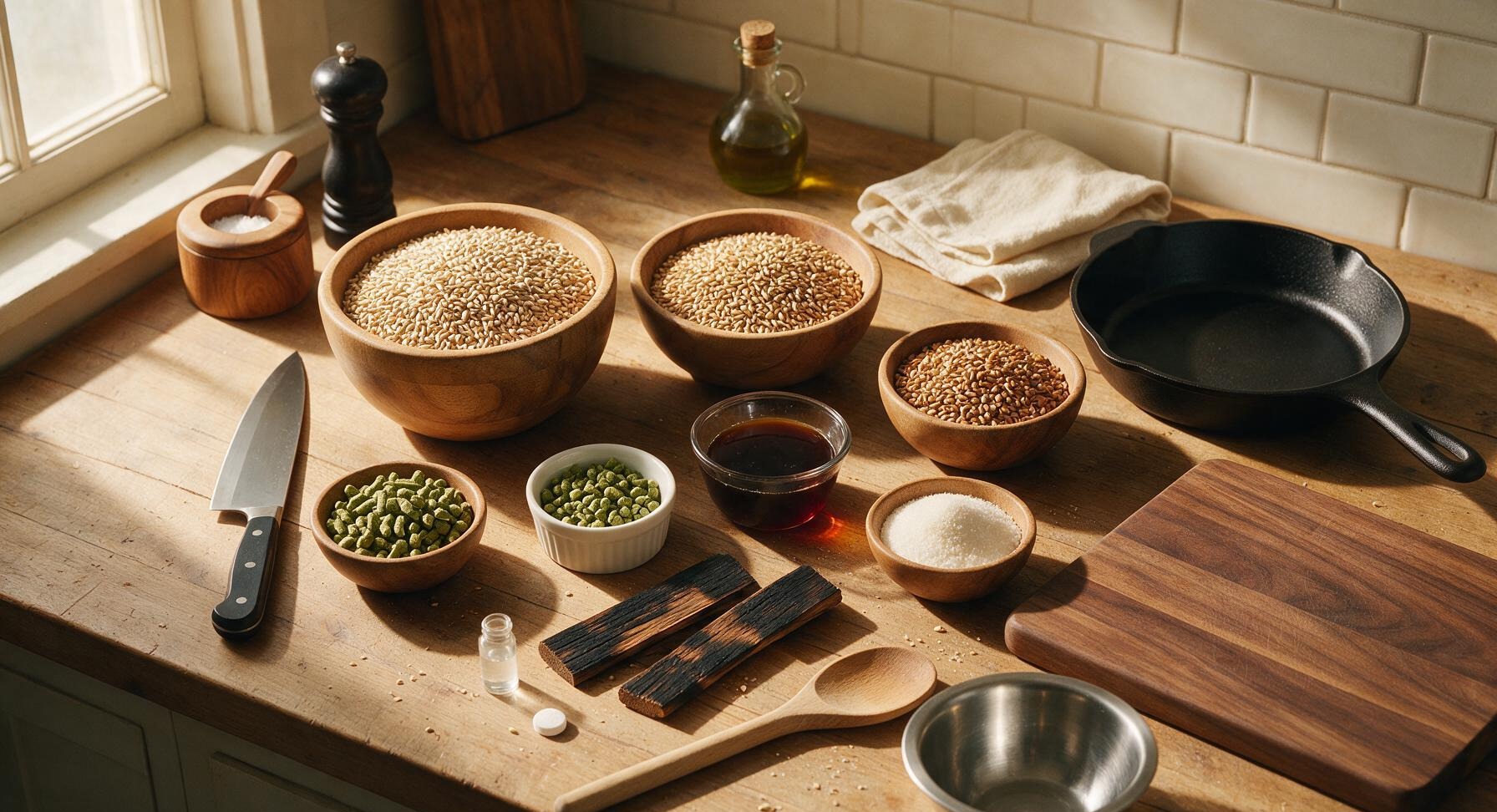
2-row pale brewers malt 4kg
Rye malt 500g
Carapils malt 250g
Cascade hop pellets 60g
Czech Saaz hop pellets 20g
Grade B dark maple syrup 250ml
California Lager yeast (WLP810) 1 packet (11g)
Medium-char rye whiskey oak staves 3 pieces (15cm each)
Campden tablet 1 unit
No-rinse brewing sanitizer 15ml
Corn priming sugar 80g

Steps

1

Sanitize All Equipment

Mix 15ml no-rinse brewing sanitizer with 19L cool filtered water in the stainless steel brew kettle. Submerge the slotted stirring spoon, instant-read thermometer, siphon tubing, airlock, rubber stopper, and the neck of the glass carboy in the solution for 60 seconds. Allow all pieces to air dry completely on the clean counter; no pooled sanitizer should remain on equipment before use to avoid off-flavors.
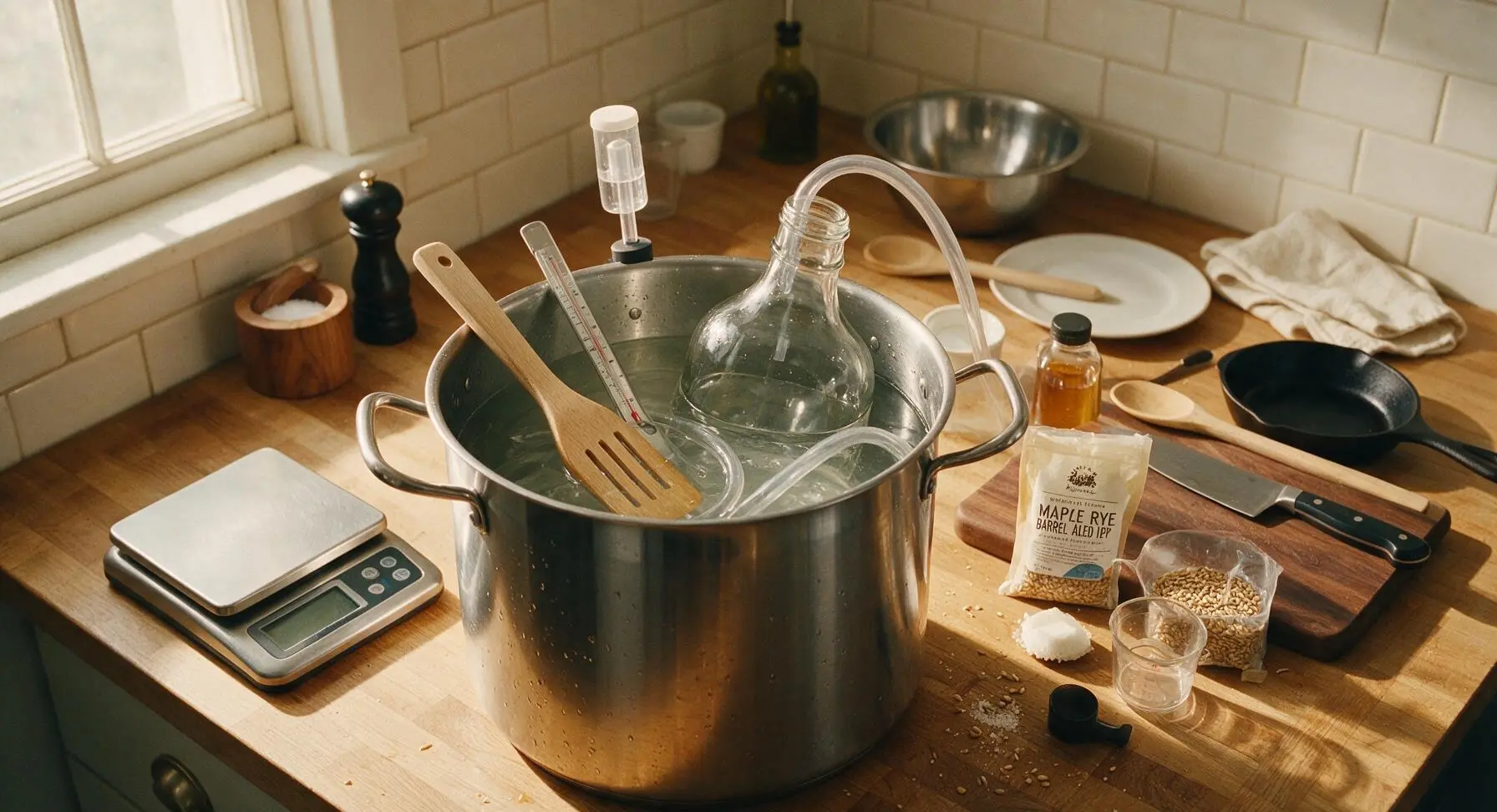
Step 1
step1:Sanitize All Equipment
2

Mill and Steep Grains

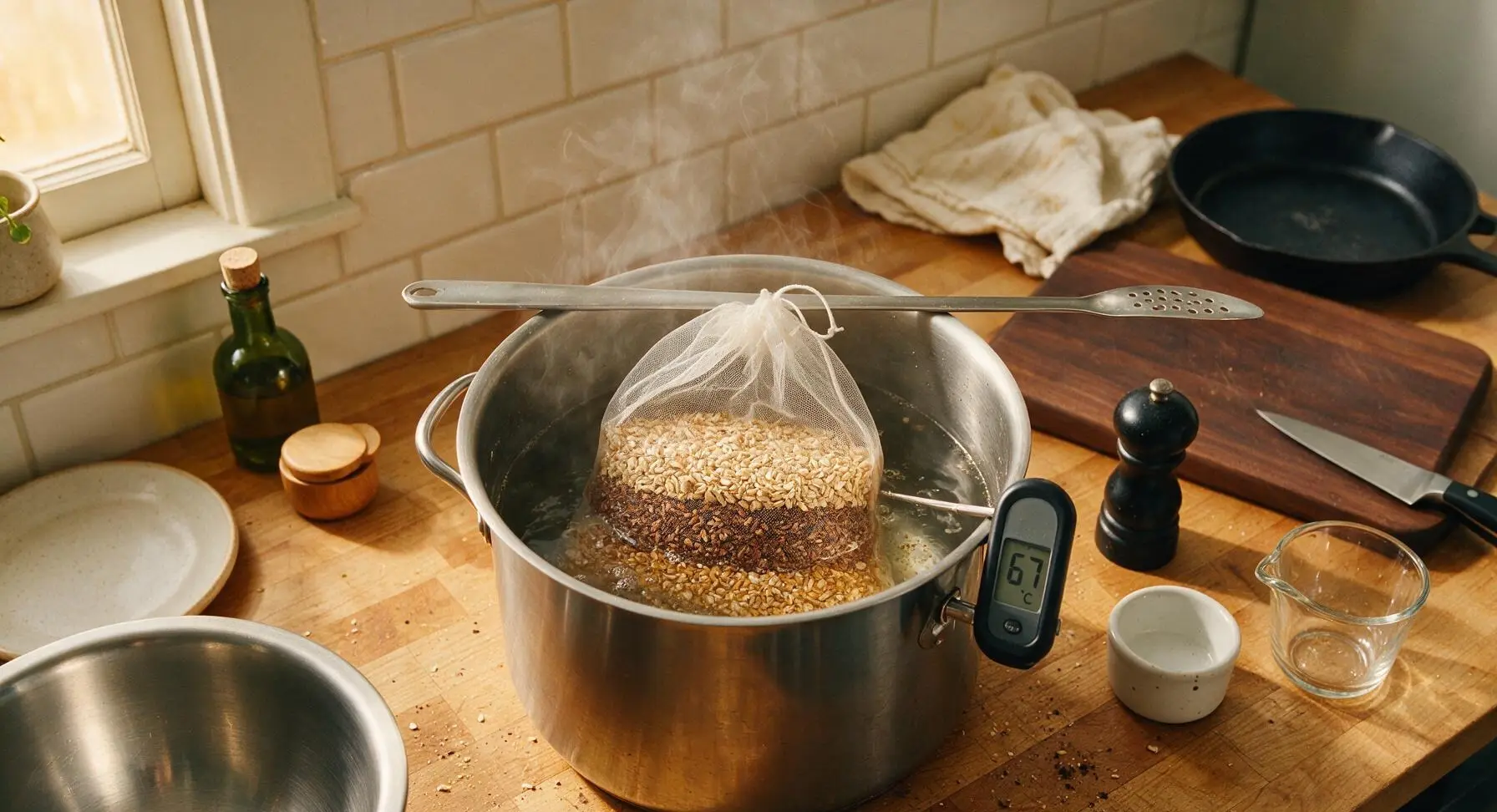
Use the hand-crank grain mill to crack the 2-row pale malt, rye malt, and Carapils malt to a coarse, cracked consistency (similar to steel-cut oats, not fine flour, to avoid stuck runoff later). Place cracked grain into the nylon mesh steeping bag, tying the drawstring loosely. Heat 12L filtered water in the brew kettle to 67C, then submerge the grain bag fully. Hold temperature steady at 65-68C for 60 minutes, stirring gently every 10 minutes with the slotted spoon, until the liquid (wort) tastes sweet and lightly malty.
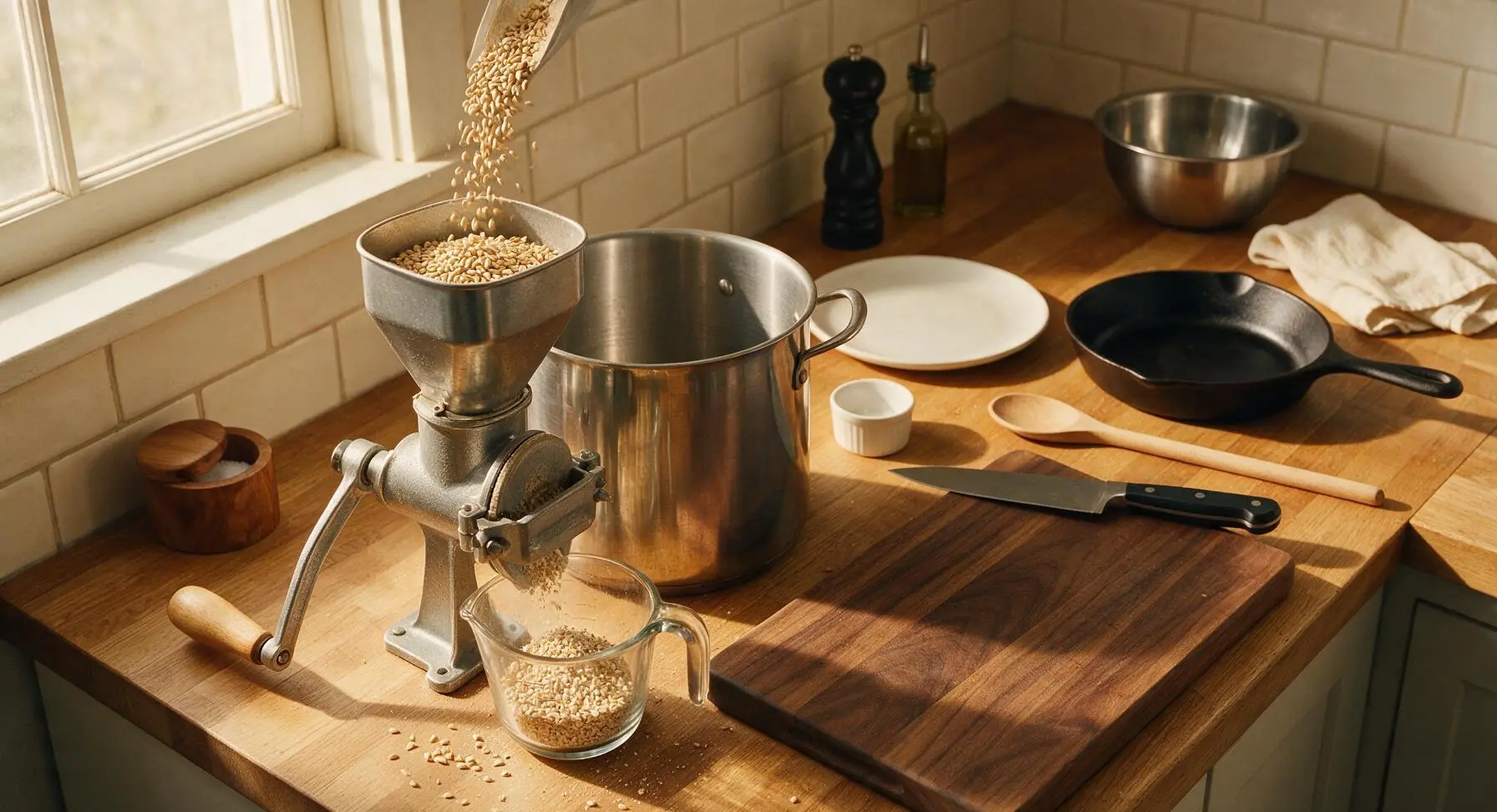
Step 2
step2:Mill and Steep Grains
Step 2
step2:Mill and Steep Grains
3

Bring Wort to Boil

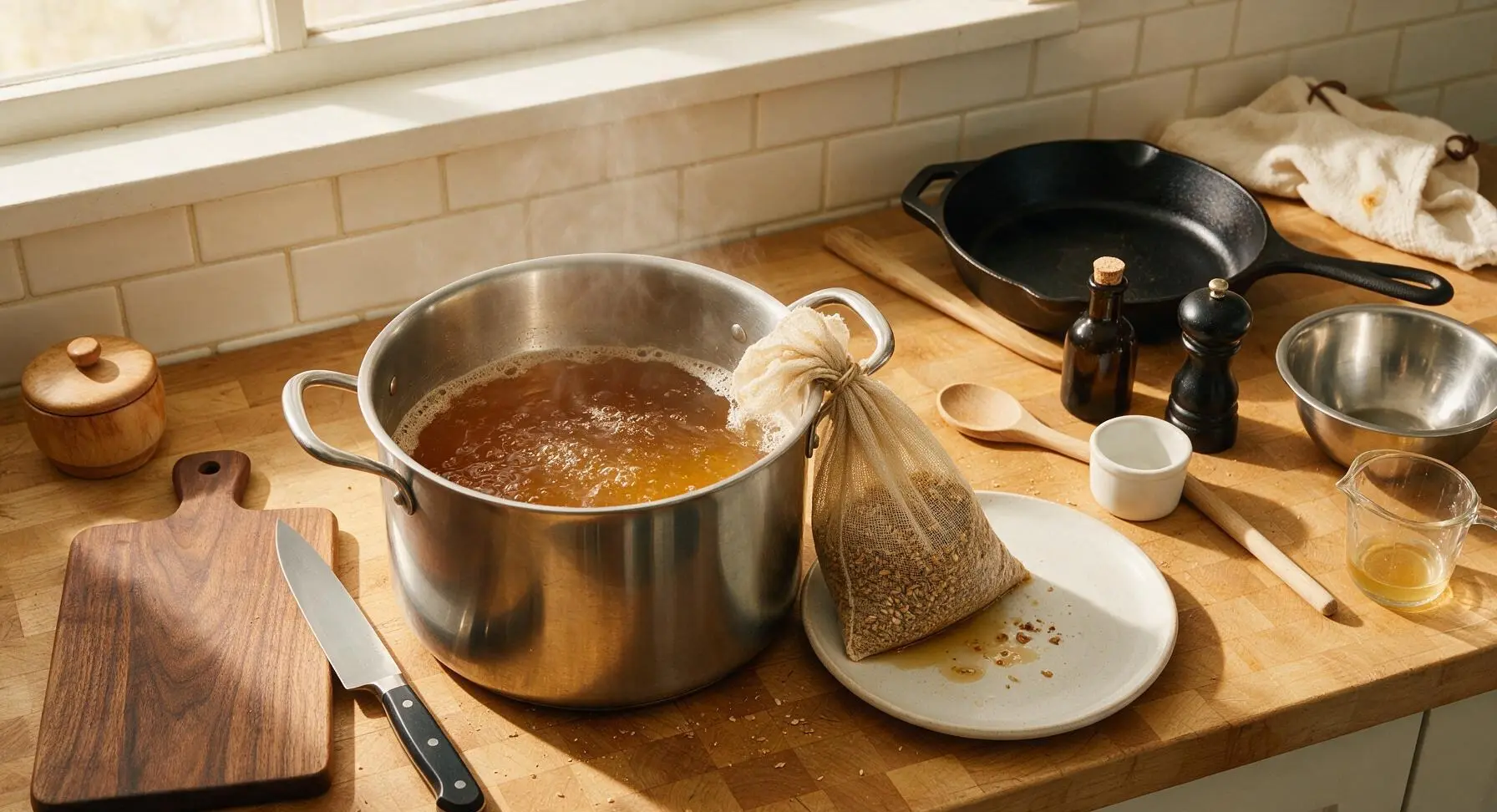
Lift the grain bag out of the kettle, allowing all sweet wort to drain back into the kettle naturally—do not squeeze the bag, as this extracts harsh tannins. Top up the kettle with filtered water to reach 19L total volume. Bring the wort to a gentle rolling boil (100C at sea level) over medium-high heat, adjusting heat as needed to prevent sticky, messy boilovers.
Step 3
step3:Bring Wort to Boil
4

Add Hops and Maple

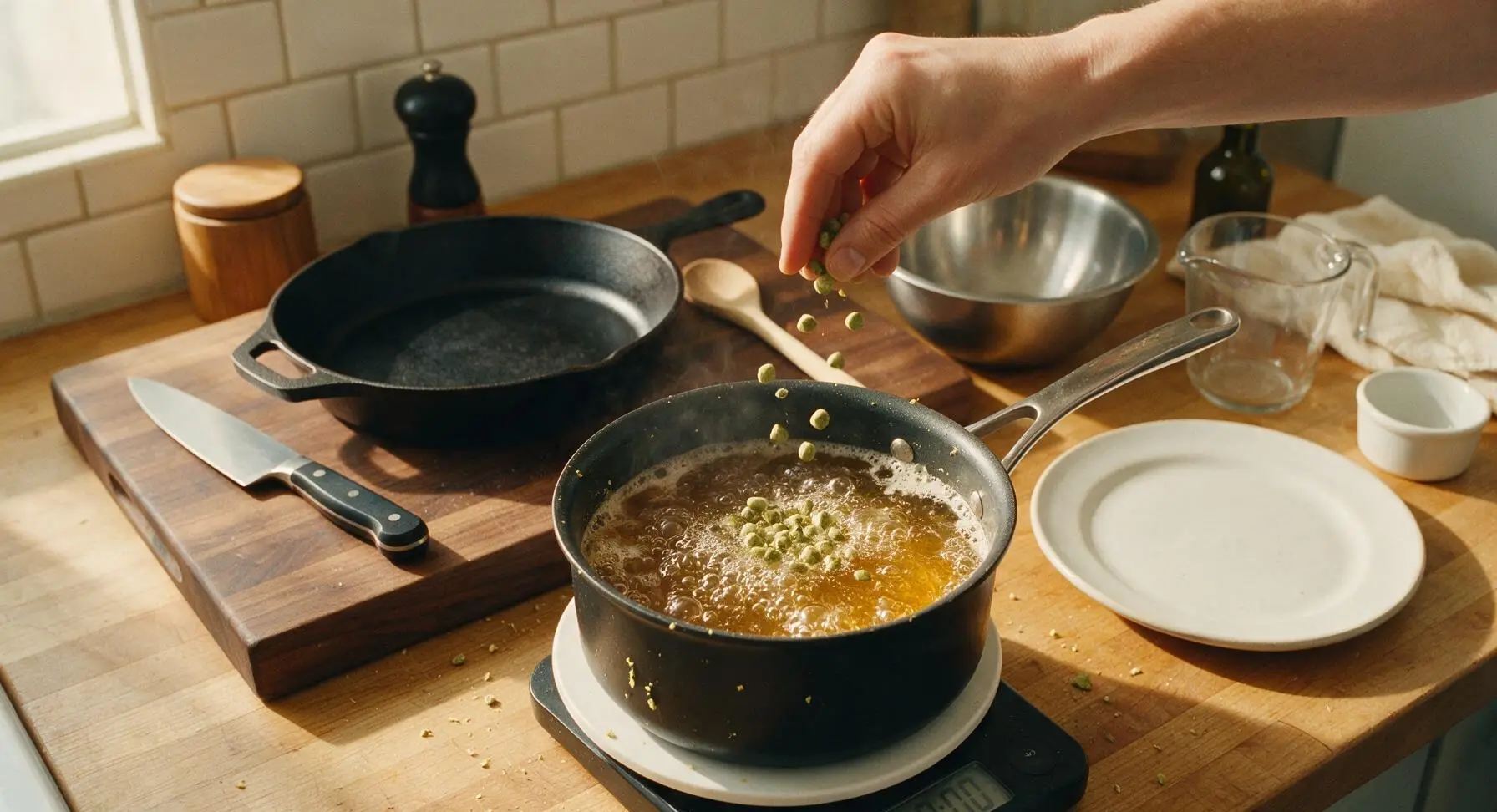
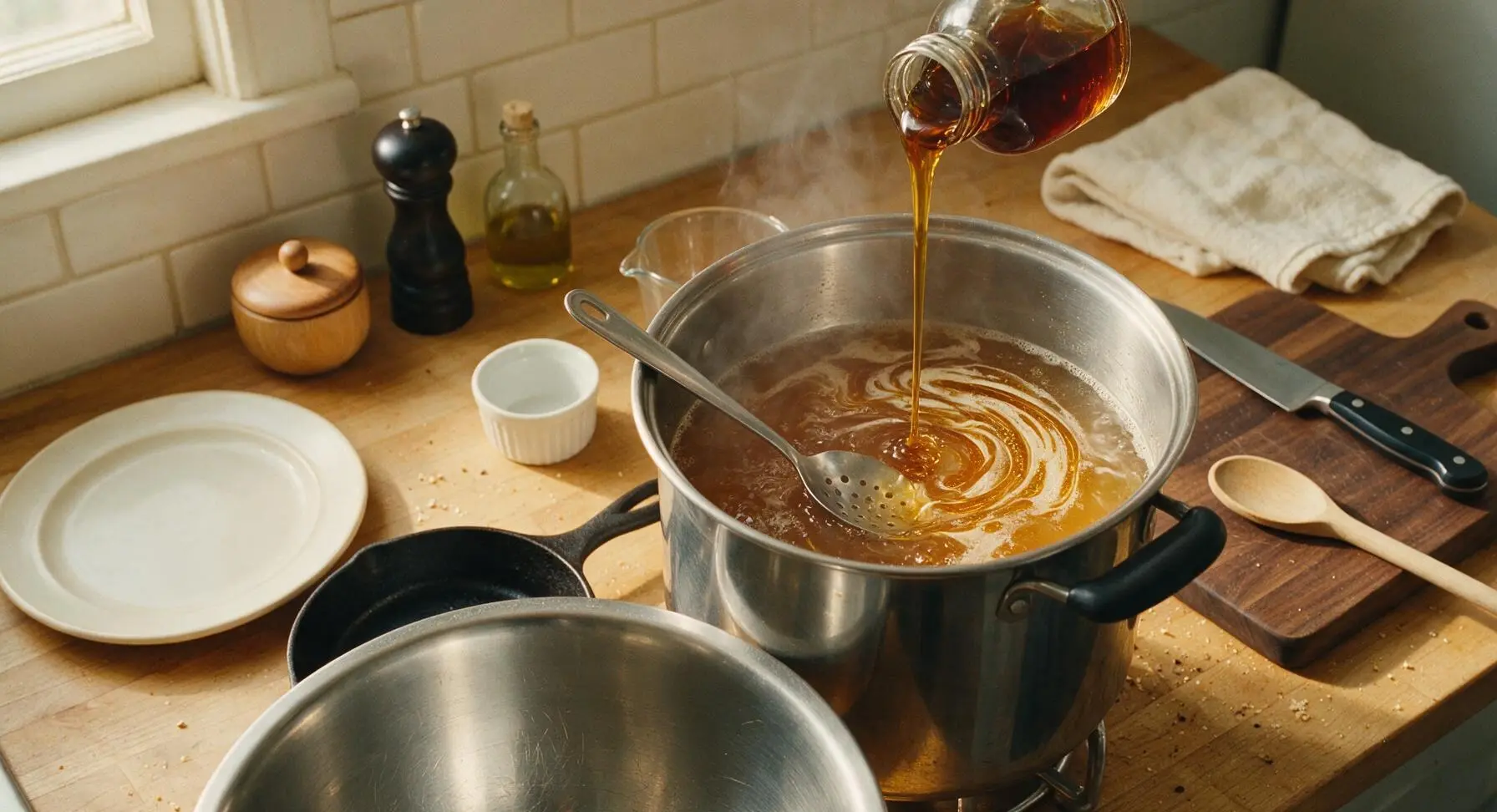
Once the wort reaches a steady rolling boil, start a 60 minute timer. Add 40g of Cascade hops at the start of the boil for clean, citrus-pine bitterness. With 15 minutes remaining in the boil, pour in all 250ml of Grade B maple syrup, stirring gently to fully incorporate. With 1 minute remaining in the boil, add the remaining 20g Cascade hops and all 20g Czech Saaz hops for bright, floral aroma. Turn off heat immediately when the 60 minute timer ends.
Step 4
step4:Add Hops and Maple
Step 4
step4:Add Hops and Maple
5

Cool and Pitch Yeast

Move the brew kettle to an ice bath to rapidly cool the wort to 12C (approximately 25 minutes), as rapid cooling prevents off-flavors and reduces risk of contamination. Once cooled, siphon the clear wort into the sanitized glass carboy using the clear siphon tubing, leaving all thick, cloudy sediment (trub) at the bottom of the kettle. Sprinkle the entire packet of California Lager yeast onto the wort surface, then seal the carboy with the rubber stopper and airlock filled halfway with sanitizer solution.
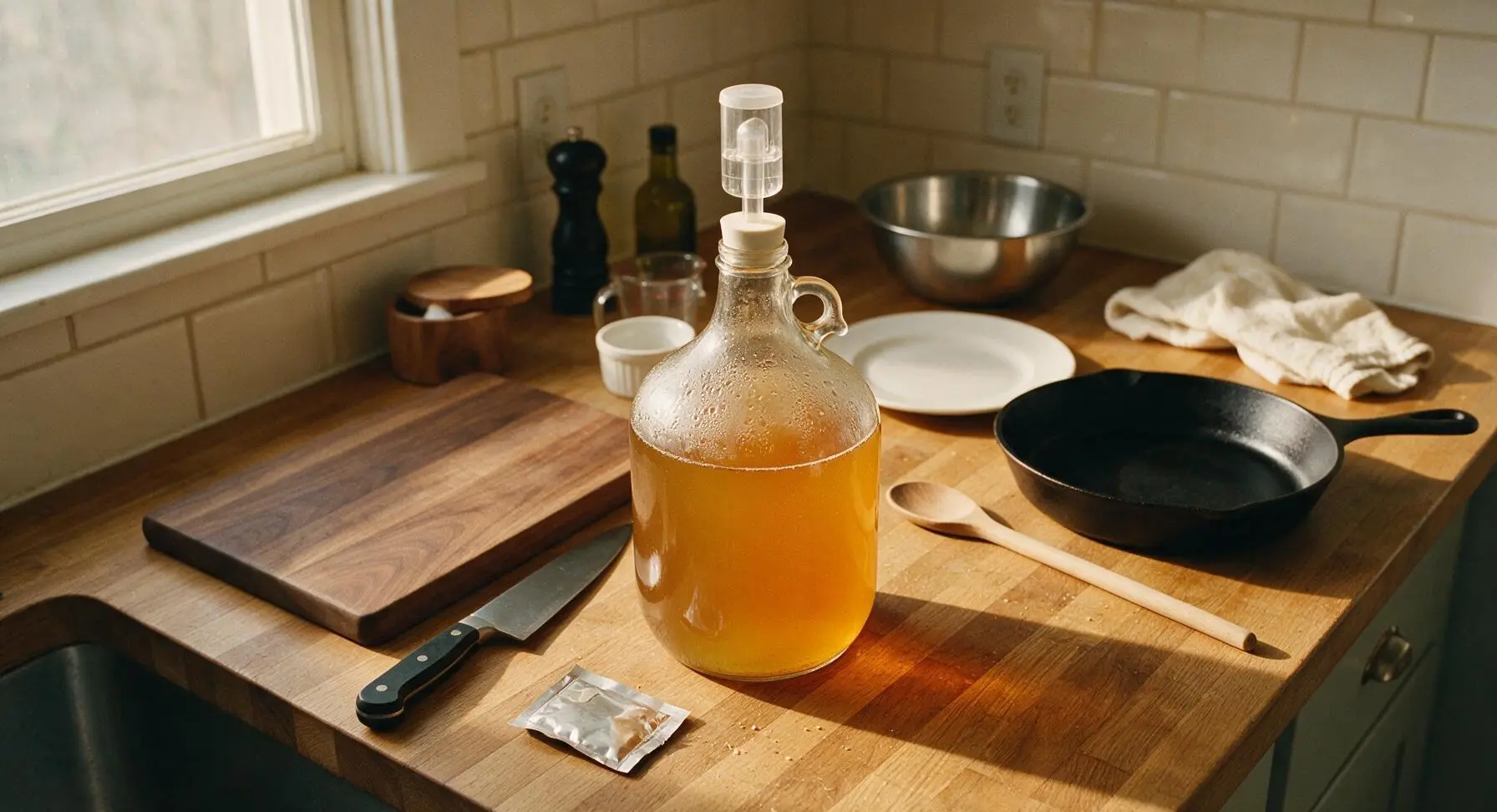
Step 5
step5:Cool and Pitch Yeast
6

Ferment the Lager

Keep the sealed carboy in a dark, temperature-controlled space held steady at 13C for 4 weeks. Monitor the airlock: steady bubbling will start 24-48 hours after pitching yeast as it converts sugar to alcohol, and slow to 1 bubble every 30 seconds when primary fermentation nears completion. The hazy wort will clarify to a deep, transparent amber as yeast settles into a tight layer at the carboy bottom.
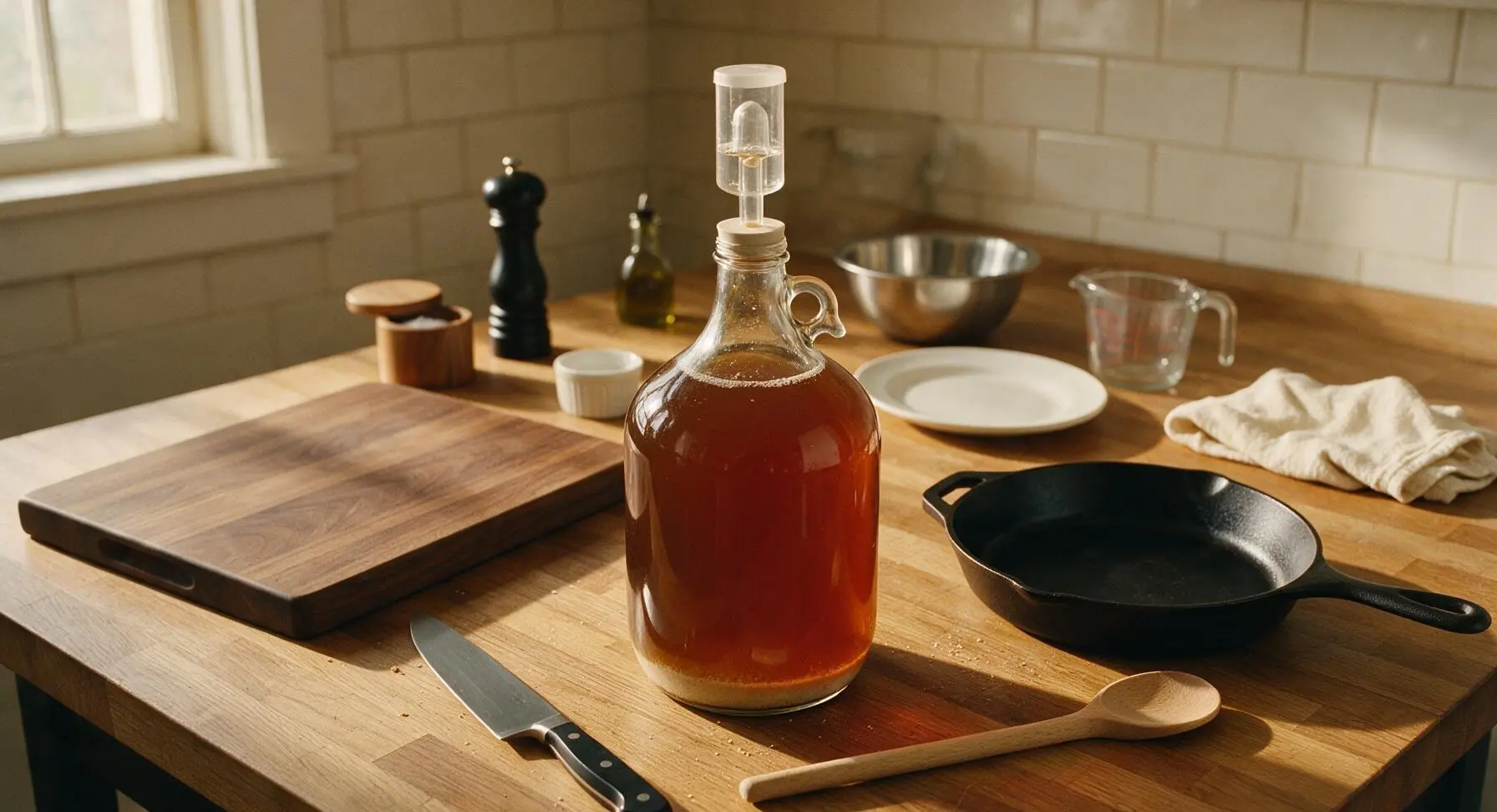
Step 6
step6:Ferment the Lager
7

Add Rye Oak Staves

Sanitize the three medium-char rye whiskey oak staves by soaking them in cool boiled water with 1 crushed Campden tablet for 15 minutes. Use the sanitized slotted spoon to lower the staves directly into the carboy on top of the finished beer. Reseal the airlock and allow the beer to condition on the staves for 2 weeks at 13C, until subtle notes of vanilla, rye spice, and toasted oak are present, with no harsh woody bite.
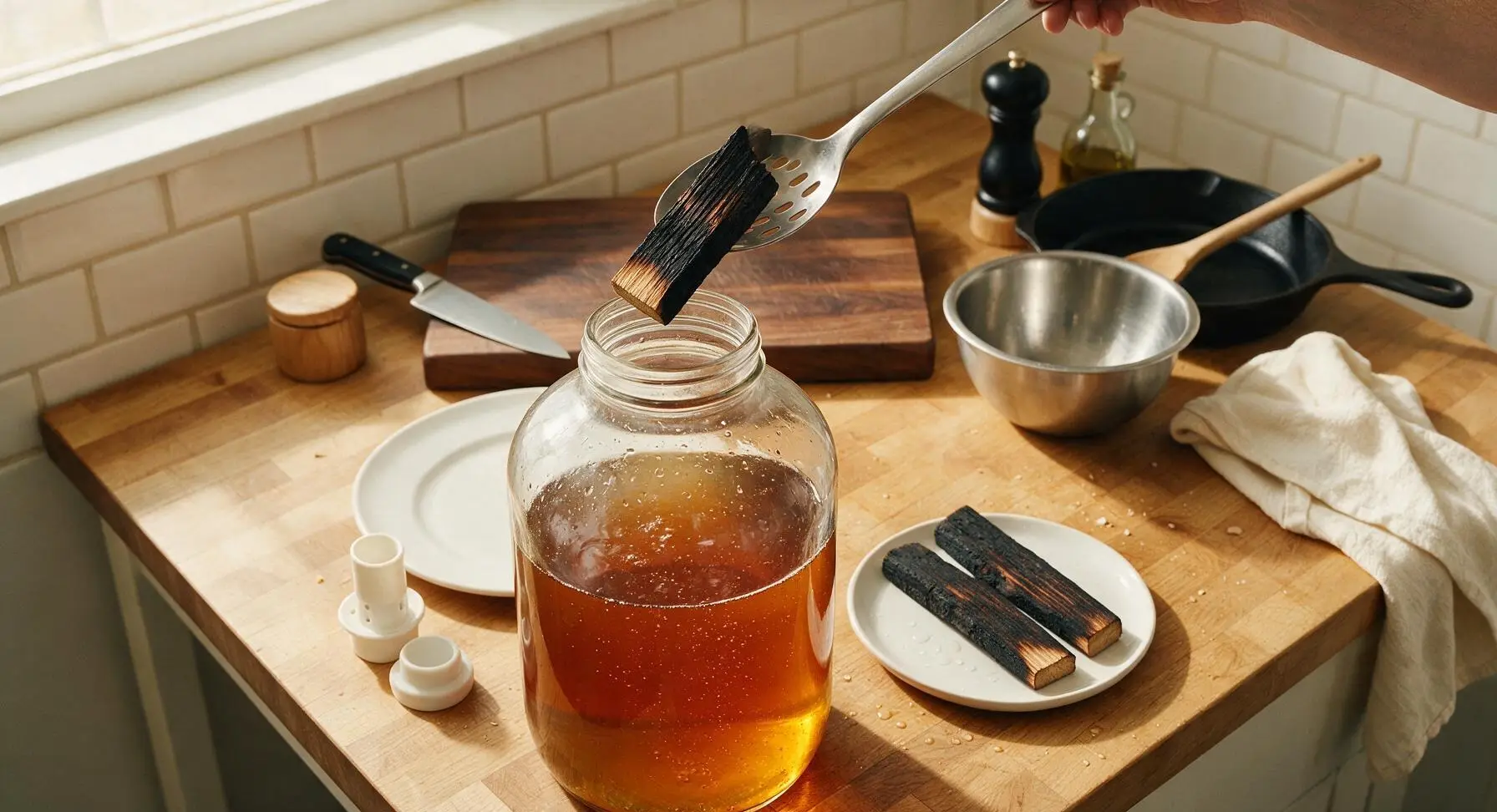
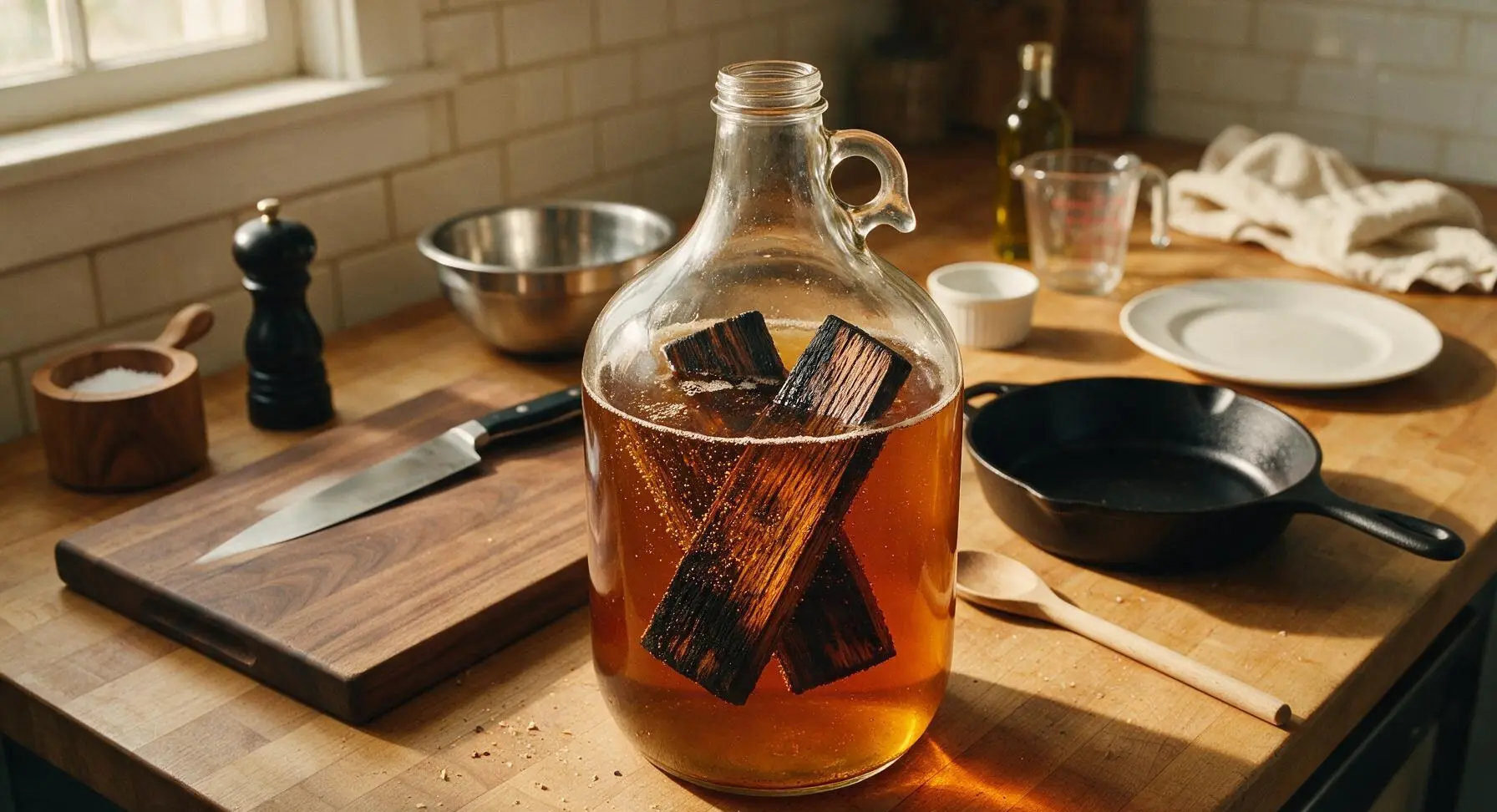
Step 7
step7:Add Rye Oak Staves
Step 7
step7:Add Rye Oak Staves
8

Bottle and Condition

After 2 weeks on oak, siphon the finished beer into sanitized 350ml glass bottles, adding 1 tsp of corn sugar to each bottle to create natural carbonation. Cap bottles tightly and store in a dark, 18C space for 2 weeks to carbonate, then chill to 4C for 48 hours before pouring.
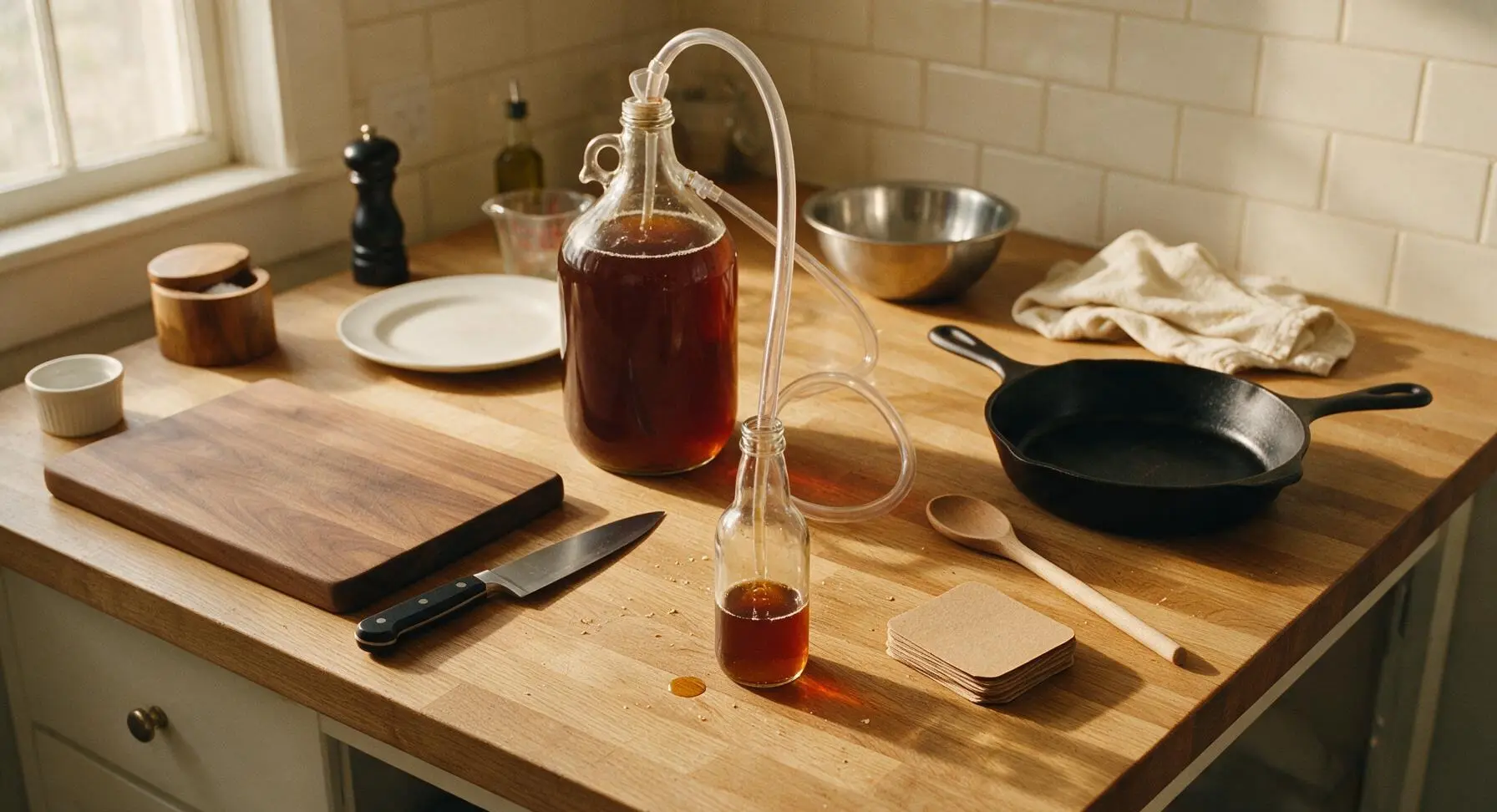
Step 8
step8:Bottle and Condition

Tips

1.Never squeeze the grain bag after steeping: pressing hard on the bag extracts harsh, astringent tannins from grain husks that will make the finished beer taste dry and bitter, rather than smooth and balanced with sweet malt notes.
2.Opt for Grade B maple syrup over Grade A: its deeper, caramelized, robust maple flavor stands up to bright hop bitterness and oak character, while milder Grade A syrup will break down during fermentation and leave almost no detectable maple note.
3.Taste the beer every 3 days after adding oak staves: over-oaking creates harsh, woody, overpowering bourbon flavors that mask the IPL’s crisp hop character, so pull a small sample with the tasting cup until you hit a smooth balance of oak, rye, and maple.


✨ You May Also Like

Drinks & Beverages
🍜 Mexico

A bright, balanced tequila-based cocktail with zesty fresh lime, smooth orange liqueur, and a signature salt rim, perfect for warm summer sipping.

⏱️ 5 minutesDrinks & Beverages ★ 4.9
Drinks & Beverages
🍜 United States

Thick, creamy, nostalgic classic vanilla milkshake with a rich, smooth texture, topped with whipped cream and a cherry for cool, sweet refreshment.

⏱️ 5 minutesDrinks & Beverages ★ 4.7
Drinks & Beverages
🍜 United States

A bright, golden strong ale with fruity banana-clove notes, subtle hop spice, and soft carbonation, brewed in classic Trappist Tripel tradition.

⏱️ 2 hours aDrinks & Beverages ★ 4.5
Drinks & Beverages
🍜 United States

A frothy, nostalgic American soda fountain treat pairing bubbly cold root beer with creamy vanilla ice cream, perfect for cooling down at warm weather gatherings.

⏱️ 20 minuteDrinks & Beverages ★ 4.8
Drinks & Beverages
🍜 United States

Tart, funky, effervescent American Wild Ale is a complex fruity craft beer brewed with wild yeast, delivering bright, zesty notes perfect for warm-weather sipping.

⏱️ 2 hours aDrinks & Beverages ★ 4.4
Drinks & Beverages
🍜 United States

Bright, bubbly copycat of the iconic American caramel cola, balanced with citrus and warm spice, perfect for sipping ice-cold on hot days.

⏱️ 15 minuteDrinks & Beverages ★ 4.8

Maple Rye Barrel Aged IPL:Frequently Asked Questions

1.What makes this Maple Rye Barrel Aged IPL different from a standard hoppy IPA? ▾
Great question! Unlike ale-based IPAs, which ferment warm with fruity ale yeast, this IPL ferments cool with lager yeast for a crisp, clean base. That neutral, smooth foundation lets bright Cascade citrus, peppery rye spice, rich maple, and oaky vanilla shine without competing cloying ale fruit esters getting in the way.
2.Do I need a full rye whiskey barrel to age this beer, or are smaller oak alternatives okay? ▾
You absolutely don’t need a full 53-gallon rye whiskey barrel! For standard 5-gallon homebrew batches, use 1–2 ounces of charred rye whiskey-soaked oak cubes, spirals, or chips, steeped for 1–3 weeks. Taste regularly during aging to avoid over-oaking that overwhelms the beer’s bright hop character.
3.When should I add maple to this recipe so it doesn’t get lost or make the beer too sweet? ▾
Add 100% pure dark Grade B maple syrup (skip artificial pancake syrup with added corn syrup) at the end of primary fermentation, right before transferring to your aging vessel with the rye oak. This preserves its rich, earthy sweetness without letting it ferment out entirely or create a cloying, syrupy finish.
4.What role does rye malt play, and can I skip it if I don’t have any on hand? ▾
Rye malt adds that signature warm, peppery spice that bridges the bright citrus hops and oaky rye whiskey notes, plus it lends a subtle, pleasant dryness to the finish. If you must skip it, swap it for an equal amount of 2-row pale malt, though you’ll lose that layered spice tie-in to the barrel character.
5.Why is Carapils malt included, and how much should I use for a 5-gallon batch? ▾
Carapils is a light dextrin malt that adds subtle mouthfeel and long-lasting head retention without adding harsh sweetness or dark color, which is critical for keeping this IPL crisp and golden, not heavy. For a 5-gallon batch, stick to 4–6 ounces of Carapils to avoid making the beer feel thick or syrupy.
6.When should I add Cascade and Czech Saaz hops to get that balanced bright citrus note? ▾
Add 70% of your Cascade hops at whirlpool and 3–5 days into active fermentation for bright, zesty grapefruit and lemon aroma, then save all the Czech Saaz for a dry hop addition 3 days before pulling the beer off oak. This avoids cooking off delicate hop aroma and keeps the finish smooth, not harshly bitter.
7.How long should I age this beer on charred rye oak for the best flavor balance? ▾
Start tasting your beer 7 days after adding the rye oak, and pull it off when you pick up subtle vanilla, toasted oak, and faint whiskey warmth—usually 10 to 21 days for 5-gallon batches. Any longer and the oak can turn overly tannic, woody, or bourbon-heavy, masking bright hop and maple notes.
8.What fermentation temperature works best to keep this IPL crisp, not fruity like an ale? ▾
Hold your lager yeast at 50–55°F for the first 7 days of active primary fermentation, then slowly ramp up to 60°F for a 3-day diacetyl rest before dropping to 35–40°F for lagering and oak aging. This prevents fruity, estery ale-like notes and preserves that signature clean IPL crispness.
9.Can I use cheap maple-flavored pancake syrup instead of pure maple syrup to save money? ▾
Skip the artificial maple-flavored pancake syrups entirely—they carry a flat, chemical, fake vanilla note that clashes badly with hops and oak, and their added corn syrup can make the beer thin and cloyingly sweet. Stick to pure, dark Grade B maple syrup for rich, earthy, authentic maple depth.
10.How bitter should the finished IPL be to balance the maple and oak sweetness? ▾
Target 45–55 IBUs, mostly from late Cascade additions rather than heavy early-boil bittering hops. This level of bright, citrusy bitterness cuts through smooth maple sweetness and oaky vanilla without making the beer harshly bitter, so every sip balances hop zing, spice, and sweet oak evenly.
11.Do I need to sanitize the oak pieces before adding them to my fermenter? ▾
Always sanitize your rye whiskey oak pieces before adding them to avoid contaminating your batch! You don’t need to boil them (that leaches out too much harsh tannin); instead, soak them for 20 minutes in no-rinse brewing sanitizer, or give them a quick 10-minute bake at 225°F to kill surface bacteria.
12.How long will this finished beer stay fresh once it’s bottled or kegged? ▾
Since it’s a hop-forward lager with delicate oak and maple notes, it will taste best for 3–4 months when stored cold at 35–40°F in a sealed, airtight keg or bottle. After that, bright citrus hop aroma fades fast, and oak notes turn flat and stale, so it’s best enjoyed fresh.
13.What’s the ideal serving temperature to show off all this beer’s layered flavors? ▾
Serve this beer at 42–45°F, a little warmer than standard mass-market lager but colder than a hazy IPA. This temp is cold enough to keep the finish crisp, but warm enough to let rye spice, maple sweetness, oaky vanilla, and Cascade citrus notes come through instead of being muted by extreme cold.
14.Can I make this recipe without barrel aging if I don’t have access to rye whiskey oak? ▾
You can absolutely make a delicious non-barrel-aged version! Skip the oak, add an extra half ounce of Czech Saaz for dry hopping, and toss in a tiny pinch of ground vanilla bean to mimic that smooth oaky depth. It won’t have subtle rye whiskey warmth, but it will still be a balanced, hoppy rye IPL.
15.Why use a mix of Cascade and Czech Saaz hops instead of just one variety? ▾
Cascade brings bold, bright grapefruit, lemon, and subtle pine that gives the beer that classic hoppy IPL punch, while Czech Saaz adds soft, earthy, floral spice that complements rye and oak without clashing. Using only Cascade would make the beer too sharp, and only Saaz would be too mellow to stand up to maple and oak.
16.How much maple syrup should I add to a 5-gallon batch to avoid making it too sweet? ▾
For a 5-gallon batch, start with 8 ounces of pure dark maple syrup, added right before oak aging. Taste a sample after 3 days, and add up to 4 more ounces if you want a stronger maple note. Remember, some maple sugar will ferment slightly, so adding too much upfront can make the beer overly boozy instead of sweet.
17.What kind of rye whiskey works best for soaking oak if I’m not using a used barrel? ▾
Use a mid-shelf, straight rye whiskey with bold peppery rye notes and minimal added caramel flavor to soak your oak cubes for 3–5 days before adding them to the beer. Skip super sweet, flavored rye whiskeys, as those add cloying artificial notes that throw off the balance of hops, spice, and clean lager character.

Comments (5)

2 days ago

OMG this Maple Rye Barrel Aged IPL is an absolute game changer! I brewed this for our annual fall potluck last weekend and every single person was asking for the recipe. The maple sweetness balances the rye spice so perfectly, not too heavy, just enough hop bite to keep it interesting. Already planning my second batch!

yesterday

Wait how long did you end up aging it for? I'm worried I'll rush the barrel step and mess up that smooth, malty flavor everyone's raving about!

2 hours ago

Great question! For the best depth of flavor, we recommend aging it in the rye barrel for a minimum of 3 weeks, tasting every few days after that to hit your preferred balance of rye and maple notes. No need to rush it!

1 week ago

Tried this last week for my husband's birthday cookout, it was SO good! The only reason I'm not giving 5 stars is I messed up the hop addition timing the first go round so it was a little more bitter than I wanted. My husband and his craft beer obsessed friends still demolished the whole batch though, will absolutely be trying again with a timer out next time!

5 days ago

So glad it was a hit even with the little timing misstep! Pro tip: set a timer for each hop addition when you're brewing, it makes such a difference for nailing that balanced IPL bitterness. Can't wait to hear how your second batch turns out!

3 days ago

I'm not even a big homebrew person but this recipe was so approachable for medium difficulty! I made it for our family dinner tailgate before the college football game and even my dad who only drinks cheap light lager said it was top tier. The maple note is subtle, not cloying at all, which I loved. Will be making this a fall staple!

5 days ago

Game changer for my homebrew rotation! I've been making IPLs for years but never thought to add the maple rye barrel element, it adds such a warm, cozy depth that's perfect for crisp PNW evenings. Brought a growler to my buddy's poker night last week and everyone was begging to take leftovers home. 10/10 will brew again.

3 days ago

Did you use a new rye barrel or a reused one? I have an old bourbon barrel I've been meaning to repurpose and wondering if that would work here!

2 weeks ago

This was a solid recipe, but I feel like the maple flavor got totally lost during fermentation for me? I followed the measurements exactly but ended up with a pretty standard rye IPL, barely any of that sweet maple note I was looking forward to. Cook time was right on 2 hours though, and the base recipe is tasty even without the maple pop, so I'll give it another shot and maybe add the maple a little later in the process next time.

1 week ago

Oh no, I had the same issue my first batch! I added the maple syrup during the boil like the recipe said and it all fermented out. Second time I added it right before barreling and the flavor came through perfectly!

5 days ago

Thanks for the honest feedback! If you want a more prominent maple flavor, we recommend adding half the maple during the last 10 minutes of the boil and the other half right before you transfer to the barrel for aging, like Meg mentioned. That helps keep that sweet, earthy maple note from getting eaten up during fermentation. Hope that tweak works for your next batch!



