1.Why do you recommend Russet potatoes for this recipe instead of other potato varieties?
▾
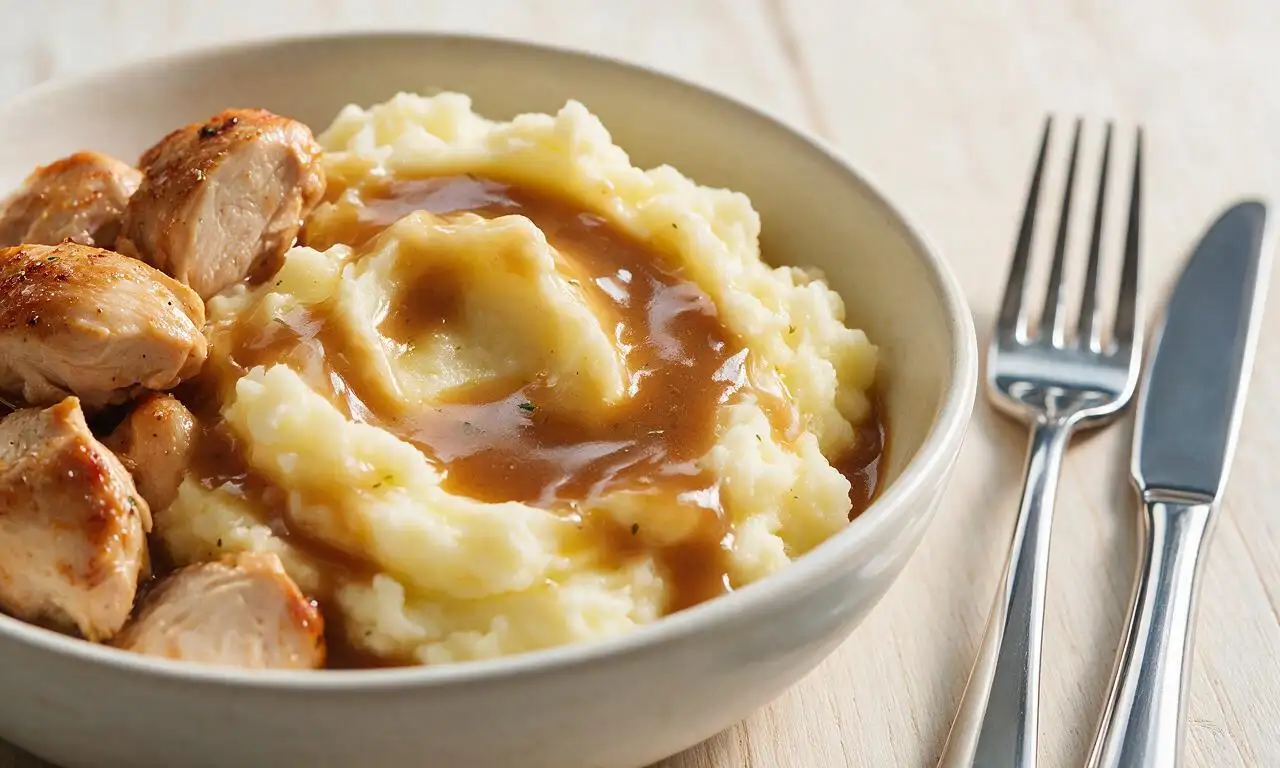
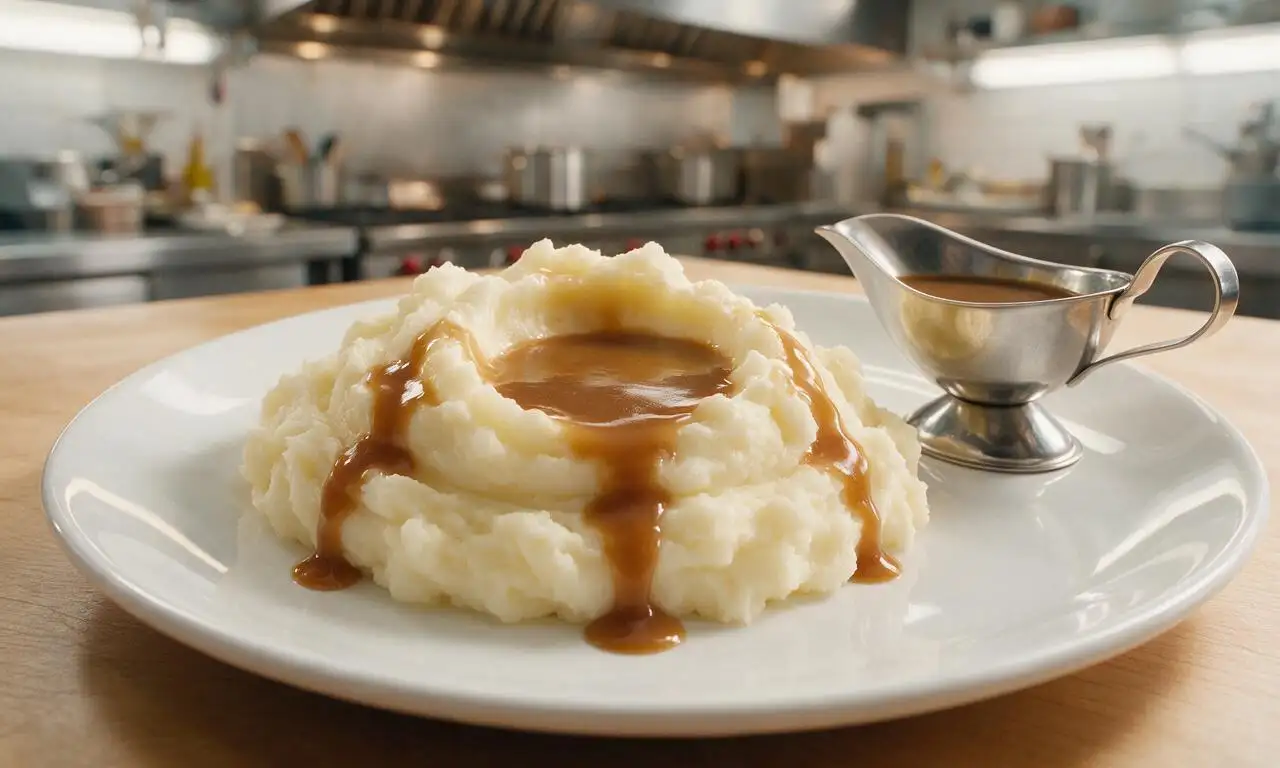
Russets have a high starch content that breaks down into a light, fluffy, cloud-like texture when cooked, which is ideal for smooth, non-gluey mash. Waxy varieties like red potatoes or Yukon Golds have lower starch, leading to denser, heavier results that don’t pair as nicely with the rich brown gravy.
2.Can I use salted butter instead of unsalted butter for the mash and gravy?
▾
You absolutely can, but unsalted butter lets you control total sodium levels across the whole dish, especially since we use low-sodium chicken broth for the gravy. If you swap in salted butter, cut any added salt in the mash and gravy by half, and taste as you go to avoid over-seasoning.
3.How do I keep my mashed potatoes from turning out gluey or gummy?
▾
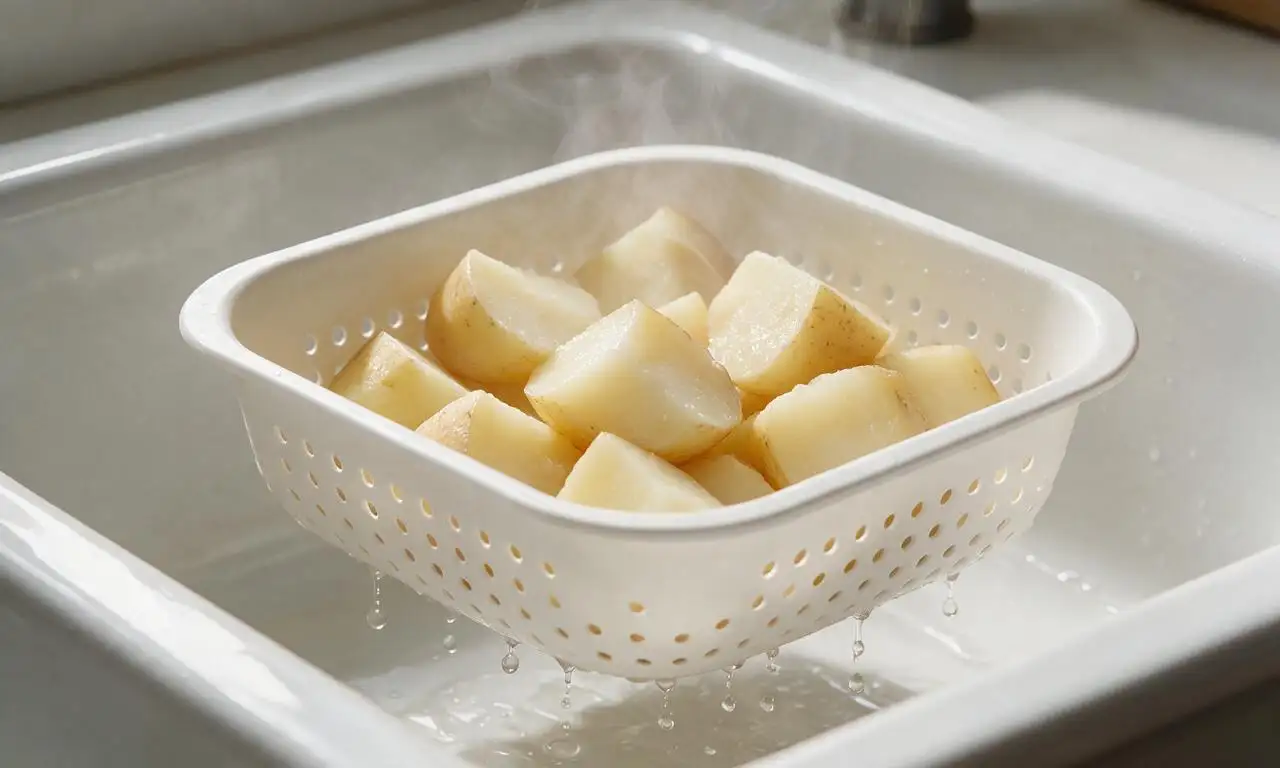
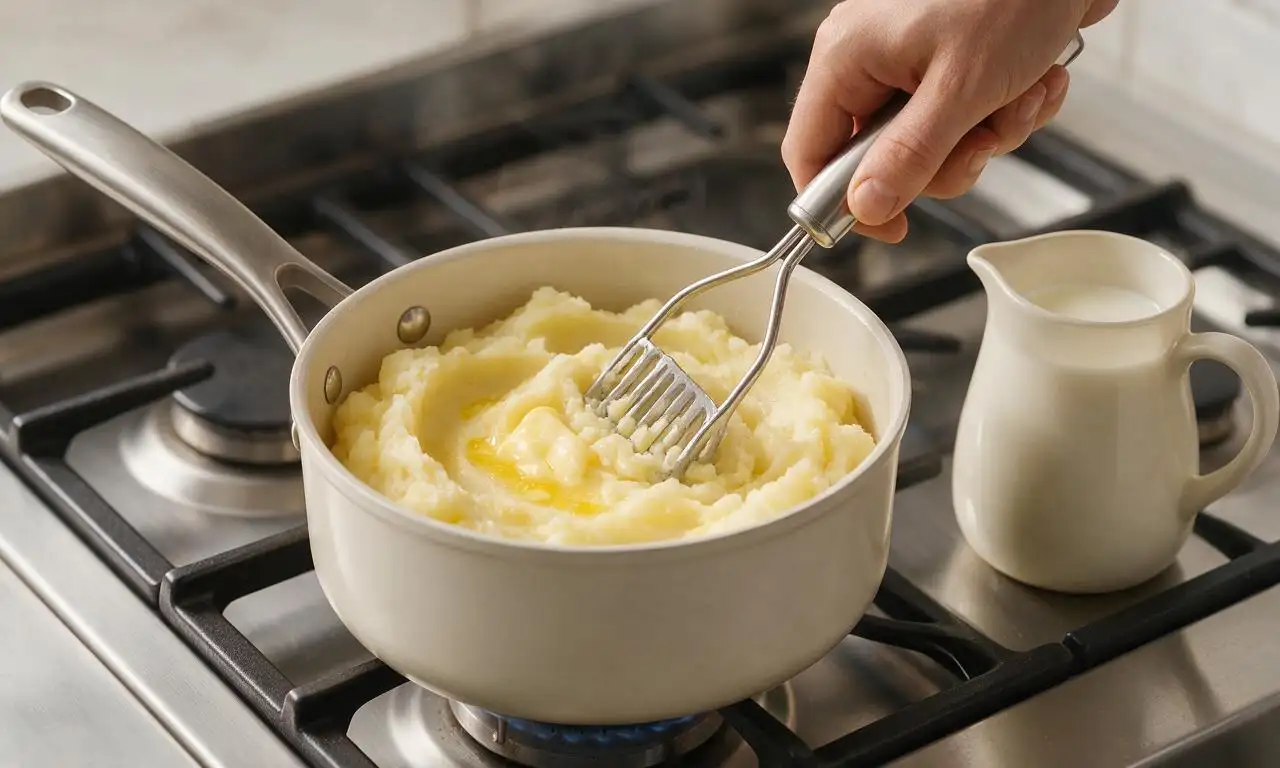
The two biggest culprits are overworking the potatoes and using too-cold dairy. Once drained, mash potatoes gently while they’re still hot, then fold in warmed whole milk and melted butter gradually. Never use a food processor or high-speed blender, as those overdevelop starch and turn mash sticky fast.
4.Do I have to peel the Russet potatoes for this recipe?
▾
Peeling gives you that ultra-smooth, classic restaurant-style mash that pairs perfectly with the silky brown gravy. If you prefer a little rustic texture, you can leave up to ¼ of the skin on—just scrub the potato skins really well before chopping to remove any dirt or rough, blemished spots first.
5.Why use low-sodium chicken broth for the brown gravy instead of regular broth?
▾
Low-sodium broth gives you full control over the gravy’s salt level, so you don’t end up with an overly salty final dish after adding butter, flour, and extra seasonings like black pepper. Regular broth works in a pinch, but hold off on adding extra salt until you’ve tasted the finished gravy.
6.My gravy came out lumpy—how do I fix the batch I’m making, and prevent it next time?
▾
Lumps happen when flour isn’t fully incorporated into the butter roux before adding broth. Whisk melted butter and flour constantly for 2 full minutes over medium heat before slowly streaming in broth. If you still have lumps, pour the finished gravy through a fine-mesh sieve to strain clumps for a smooth result.
7.Can I use plant-based milk instead of whole milk for the mashed potatoes?
▾
Whole milk adds a rich, creamy mouthfeel without being too heavy, but unsweetened oat milk or plain unsweetened soy milk are the best plant-based swaps. Avoid almond or coconut milk, as they add a distinct nutty or sweet flavor that clashes with savory gravy, and warm the milk before adding it.
8.How thick should the roux be for the savory brown gravy?
▾
Your roux—made from equal parts melted unsalted butter and all-purpose flour—should be the consistency of wet sand, and cook to a light golden brown color (2 to 3 minutes over medium heat) before you add chicken broth. This cooks out raw flour taste and gives the gravy a warm, nutty, deep base.
9.Can I make the mashed potatoes and gravy ahead of time for a holiday dinner?
▾
Absolutely! Store cooled mashed potatoes in an airtight container in the fridge for up to 3 days, and reheat slowly on the stovetop with an extra splash of warm milk. Gravy also keeps for 3 days refrigerated; reheat over low heat, whisking constantly, and add broth if it thickens too much.
10.Why do I need to warm the milk before adding it to the mashed potatoes?
▾
Adding cold whole milk straight from the fridge to hot cooked potatoes shocks the starch, which can make mash gummy and also cools the potatoes down too fast. Warm the milk in a small saucepan or 30-second microwave bursts until steamy (not boiling) so it mixes in smoothly for creamy, evenly warm mash.
11.Can I use a different thickener instead of all-purpose flour for the gravy?
▾
All-purpose flour creates a classic, smooth, velvety gravy that pairs perfectly with these potatoes, but if you need a gluten-free swap, use a 1:1 gluten-free all-purpose flour blend, or 1 tablespoon cornstarch mixed with 2 tablespoons cold broth. Whisk constantly as it simmers to avoid lumps.
12.How long should I boil the potatoes before mashing them?
▾
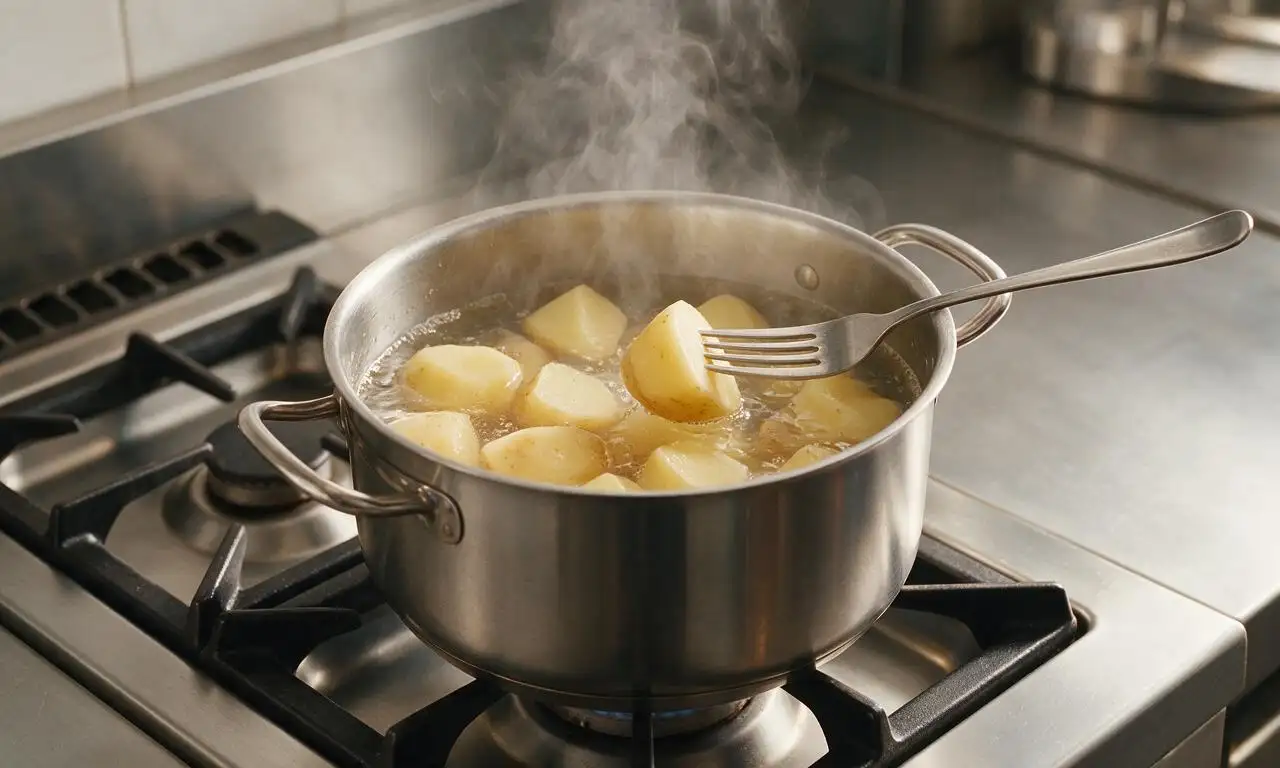
Chop your Russet potatoes into evenly sized 1.5-inch chunks so they cook at the same rate, then boil them in salted water for 12 to 15 minutes. They’re done when a fork slides all the way through a chunk with zero resistance—undercooked potatoes leave lumps, while overcooked ones make watery mash.
13.What’s the best ratio of butter to potatoes for rich but not greasy mashed potatoes?
▾
For a standard 4-serving batch (2 pounds of Russet potatoes), use 6 tablespoons of melted unsalted butter and ½ to ¾ cup of warmed whole milk. Add the milk a few tablespoons at a time until you hit your preferred consistency, so you don’t make mash too thin under the gravy.
14.My brown gravy turned out too thin—how can I thicken it up without creating lumps?
▾
If your gravy is runny after adding all the broth, let it simmer for 3 to 5 extra minutes to reduce and concentrate, whisking occasionally. If it’s still too thin, make a quick slurry of 1 teaspoon all-purpose flour and 2 tablespoons cold chicken broth, whisk it in, and cook 2 minutes more until thickened.
15.Can I use beef broth instead of chicken broth for the brown gravy?
▾
Low-sodium beef broth is a delicious swap if you prefer a deeper, meatier gravy flavor that pairs especially well with roast beef or meatloaf. Stick to the same roux ratio, and taste as you season—beef broth is richer, so you may add a pinch of pepper or dash of Worcestershire for extra savoriness.
16.What’s the best way to serve these potatoes and gravy so they stay warm for a crowd?
▾
Keep mashed potatoes warm in a slow cooker set to the “warm” setting, stirring occasionally, for up to 2 hours before serving. Keep gravy in a small insulated gravy boat or small saucepan over the lowest stovetop heat, and pour it over potatoes right before eating to keep mash fluffy instead of soggy.






Made this for our Sunday family dinner last night and OMG, it was a total hit! The mashed potatoes were so creamy and the gravy had that deep, savory flavor that tastes just like what my grandma used to make. My kids loved it so much they asked if we could have it again tonight for dinner. 10/10, no notes
Brought this to our neighborhood block party potluck last weekend and people were literally hovering around the serving table asking who made the potatoes and gravy. The gravy is so rich without feeling heavy or overly salty, and the potatoes stay creamy even when they cool down a little at potlucks. Absolute home run
Really tasty recipe! I made a big batch on Sunday to eat throughout the week for meal prep, and the only issue I had was my potatoes came out a little lumpy even after mashing for 10 whole minutes. Flavor was still chef’s kiss though, would make again!
OMG this was so easy to make even in my tiny dorm kitchen with basically zero fancy equipment! I always thought homemade brown gravy was gonna be super complicated and require a million ingredients, but it came together in like 10 minutes flat. Total game changer for quick weeknight meals between classes
This looks so good! I’m planning my Friendsgiving menu now and this is top of the list, but I have a quick question — can I swap the all-purpose flour in the gravy for cornstarch to make this gluten free for my cousin who has Celiac? Don’t want anyone to miss out!
Served this alongside my 12-hour smoked brisket last night and it was the perfect pairing. The savory brown gravy cut through the smoky, rich brisket so well, and the creamy potatoes balanced out all the bold BBQ flavors. My whole crew raved about it, this is gonna be my go-to side every time I fire up the smoker from now on
SO good! I was worried 40 minutes would be too long for a weeknight side with all the after-school chaos, but most of that time is just waiting for the potatoes to boil, so I was able to help my kids with their math homework while they cooked. No fancy skills required, which is perfect for me. Even my moody teenager who swears he hates “mushy food” went back for a second helping!