
Passionfruit Rye Barrel Aged IPL
intro
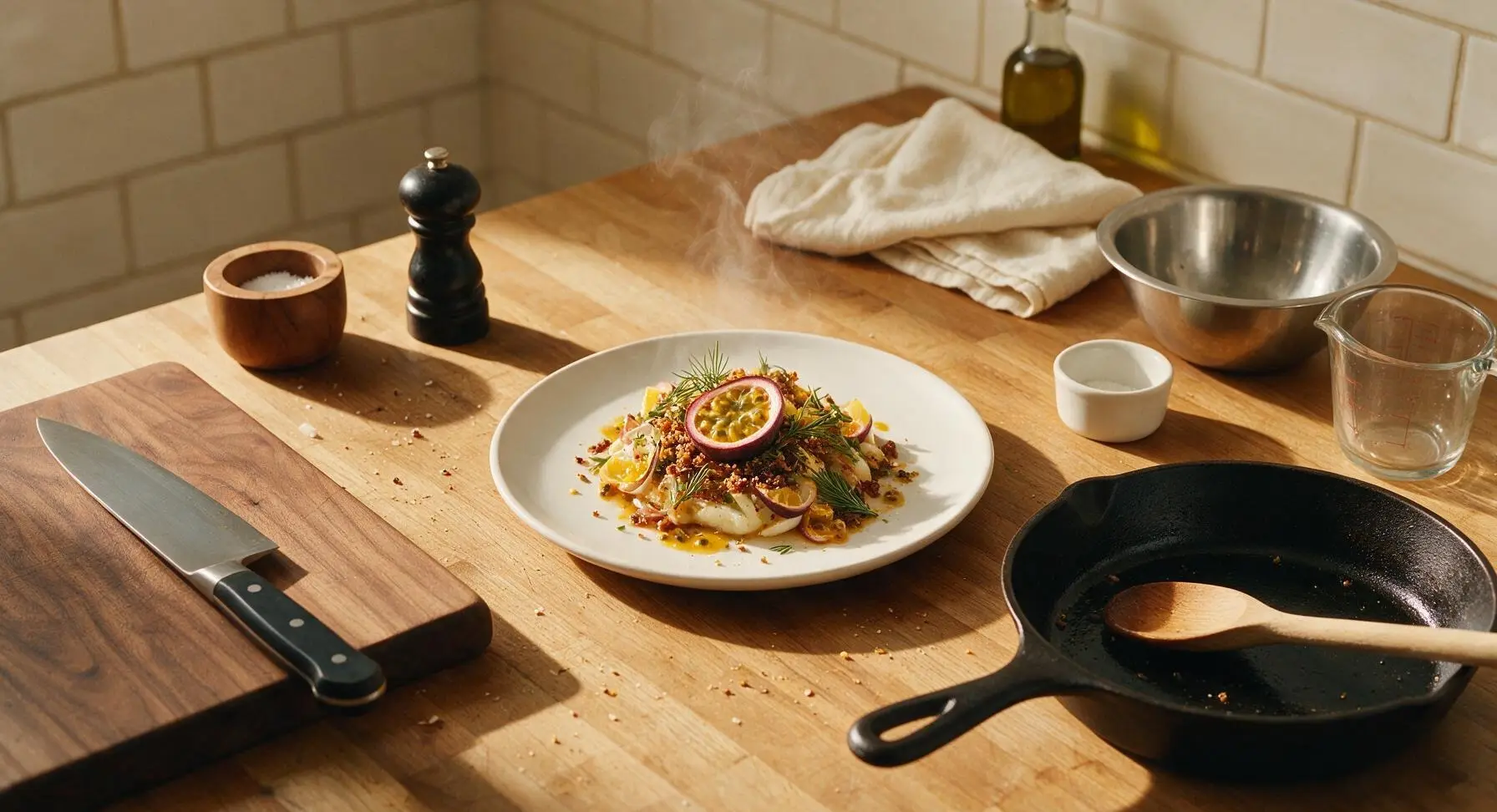
Bright zesty passionfruit, spicy rye, smooth lager malt, and piney hops meet subtle oak and rye whiskey notes for a crisp, balanced, refreshing summer sipper.
Ingredients
Steps
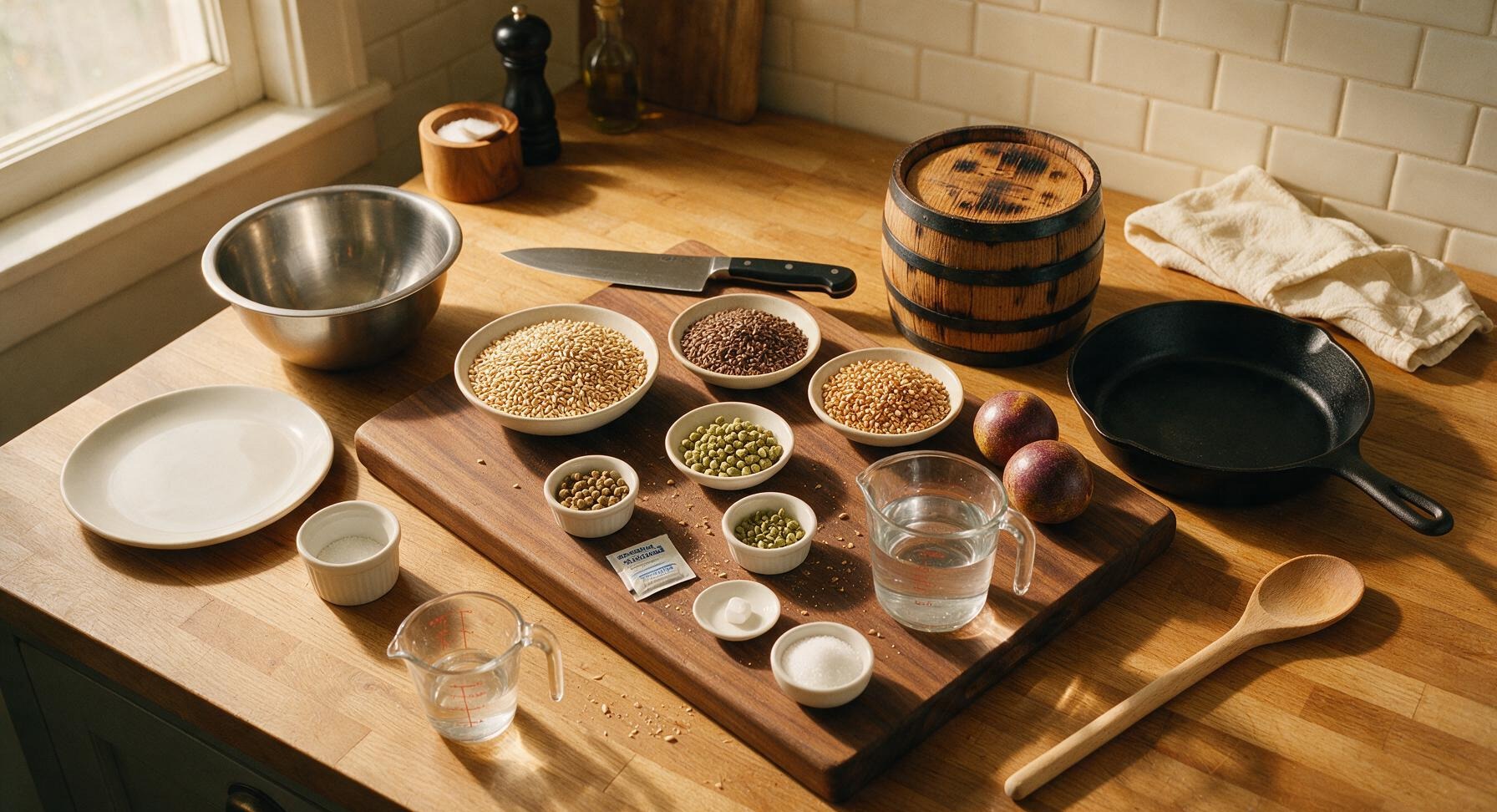
Mill Brewing Grains
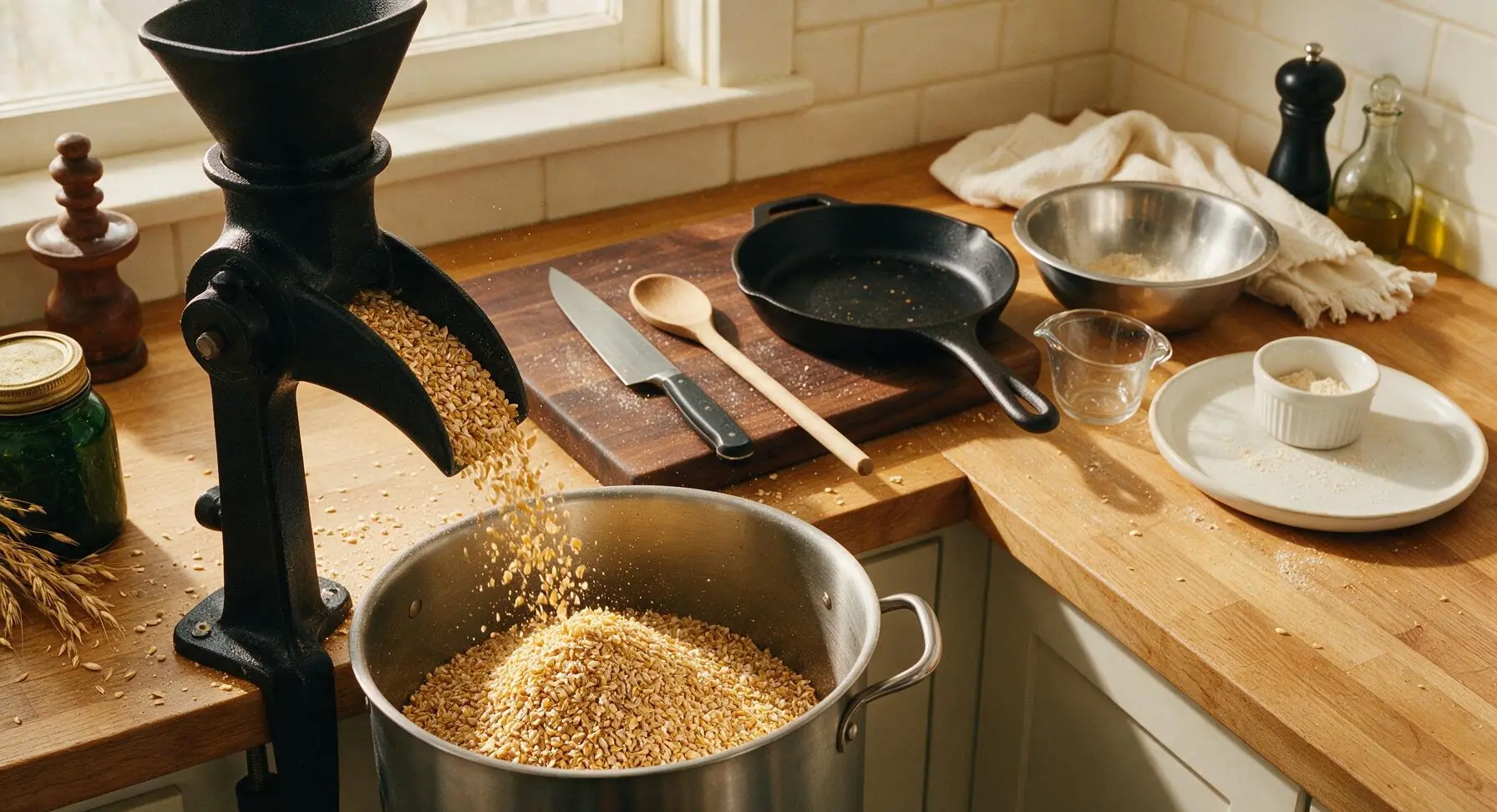
Secure the matte black cast iron hand-crank grain mill to the left edge of the counter, positioned over the 2 gallon stainless steel brew kettle. Mill the 1.2 lbs 2-row pale lager malt, 3.2 oz rye malt, and 1.6 oz carapils malt to a coarse crush, where grain husks are cracked but not pulverized, and starchy endosperm is broken into small grits. Avoid over-milling to prevent stuck sparges later. Target crush consistency is similar to coarse cornmeal.
Mash the Grain Bill
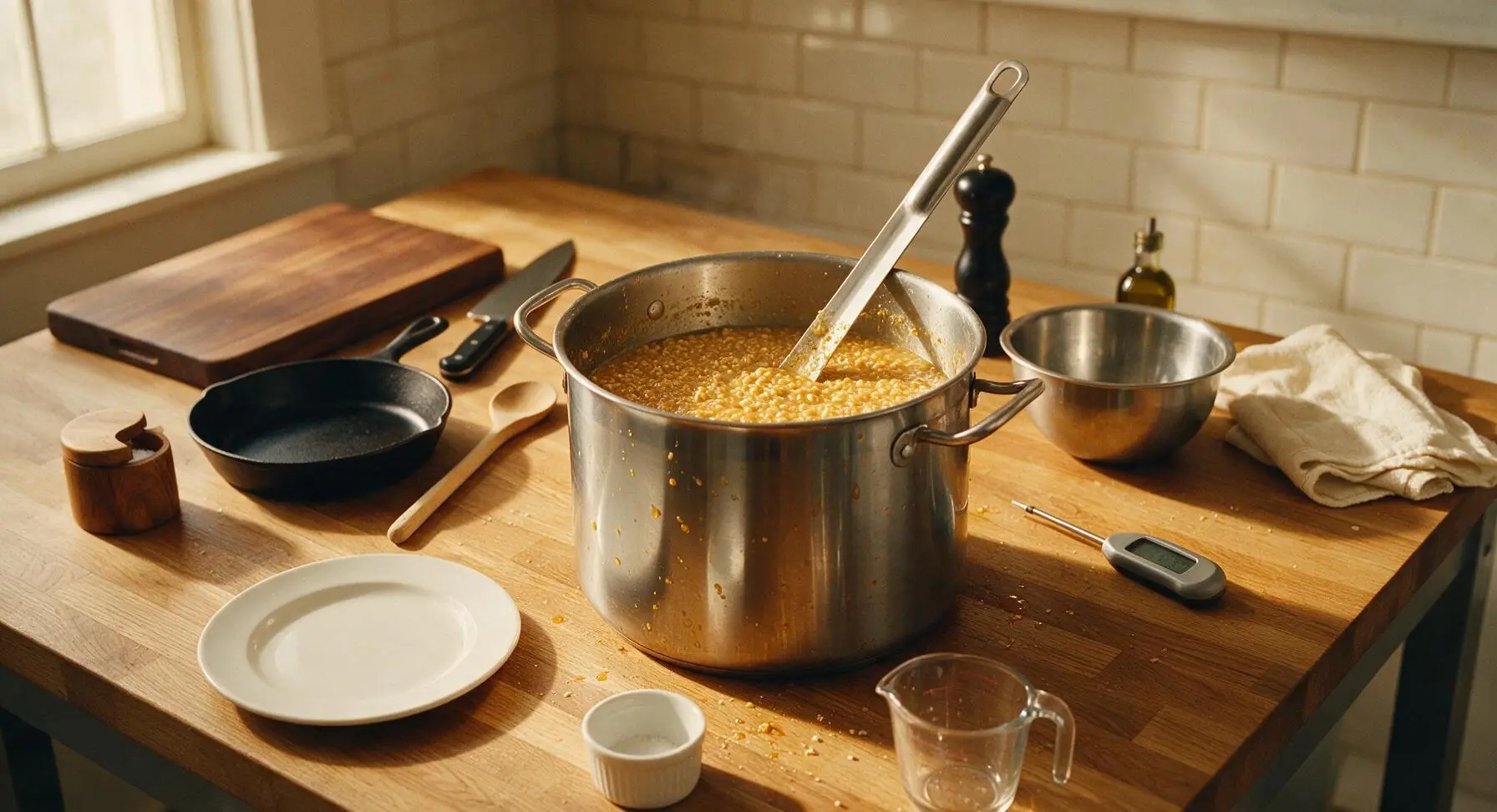
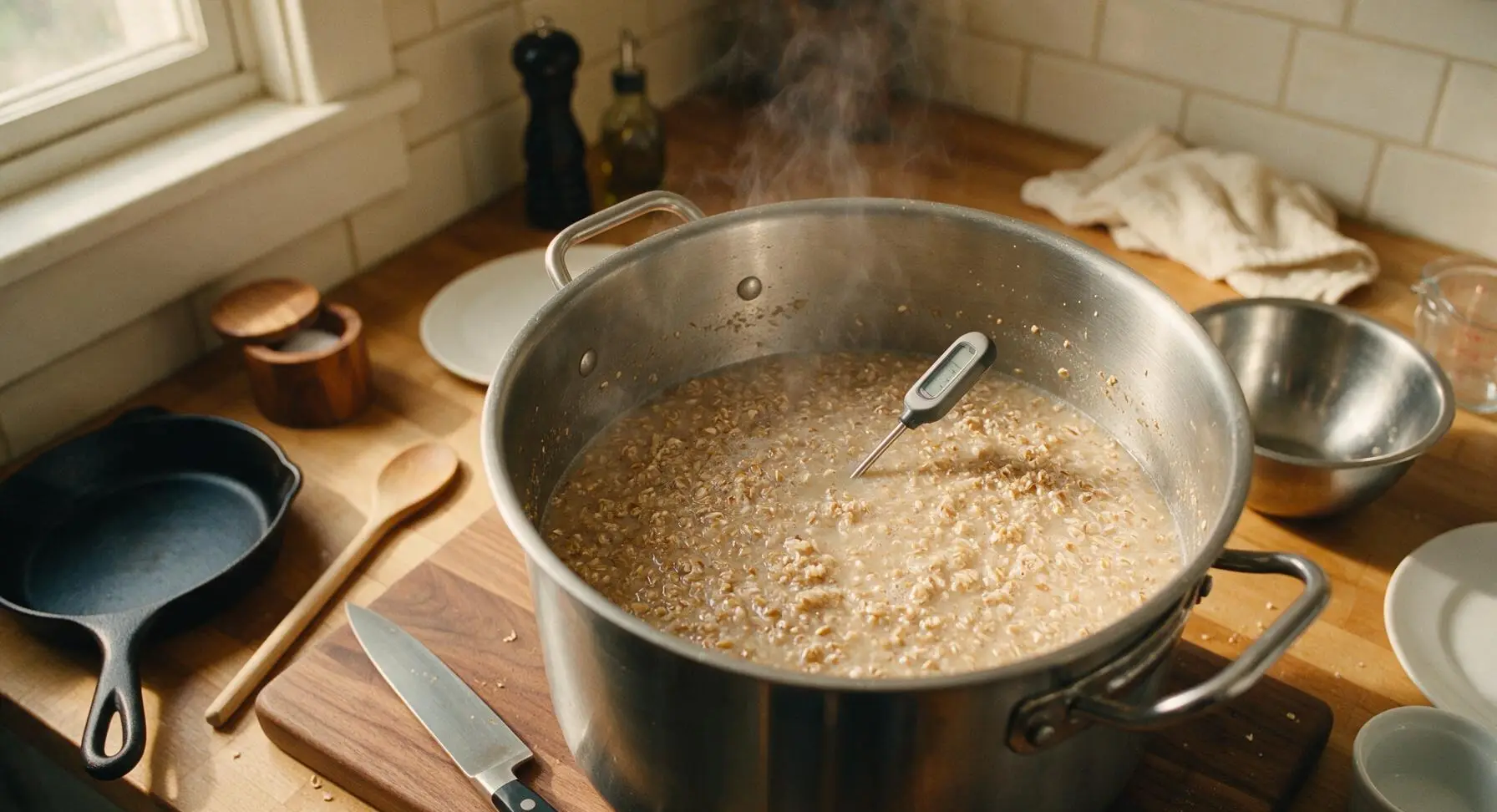
Heat 0.7 gallons of distilled water in the brew kettle to 152°F, then add the crushed grains, stirring thoroughly with the long stainless steel mash paddle to eliminate dry clumps. Hold the mash temperature steady at 150-152°F for 60 minutes, covering the kettle with its lid. The mash will smell sweet and bready, with a thick porridge-like consistency. Verify temperature every 10 minutes with the digital instant-read thermometer, adding small amounts of boiling water if temperature drops below 149°F.
Boil and Add Hops
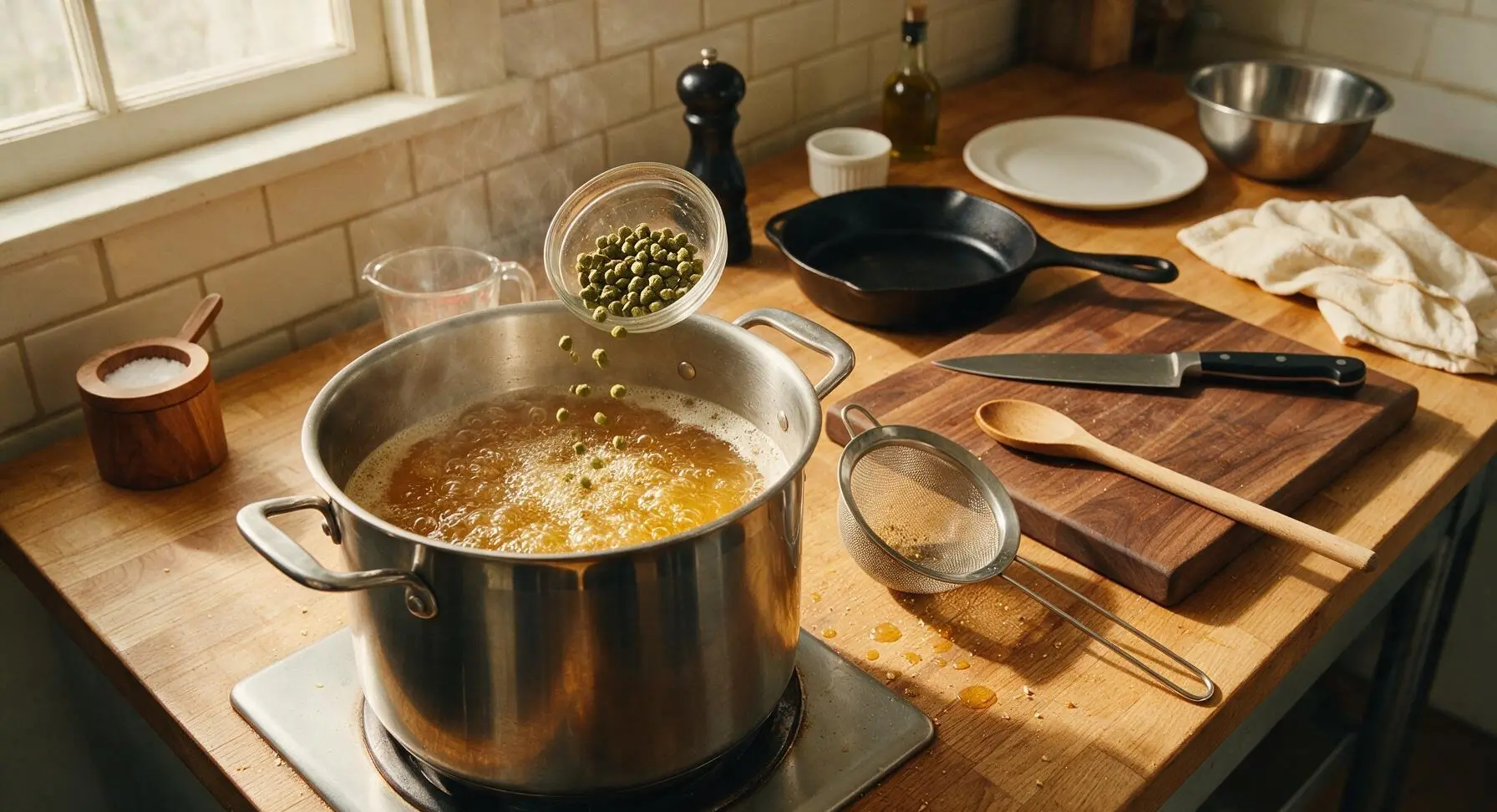
After the 60-minute mash, drain the sweet wort from the grains, sparge with 0.5 gallons of 170°F water to collect 1 gallon of wort in the kettle. Bring wort to a rolling, gentle boil (212°F at sea level) and hold for 60 minutes total. Add 0.2 oz Columbus hop pellets at the start of the boil for bittering, add 0.2 oz Mosaic hops and 0.1 oz Hallertau hops with 10 minutes remaining in the boil for bright aroma. Do not cover the kettle during boil to allow harsh volatile off-flavors to evaporate.
Cool and Pitch Yeast
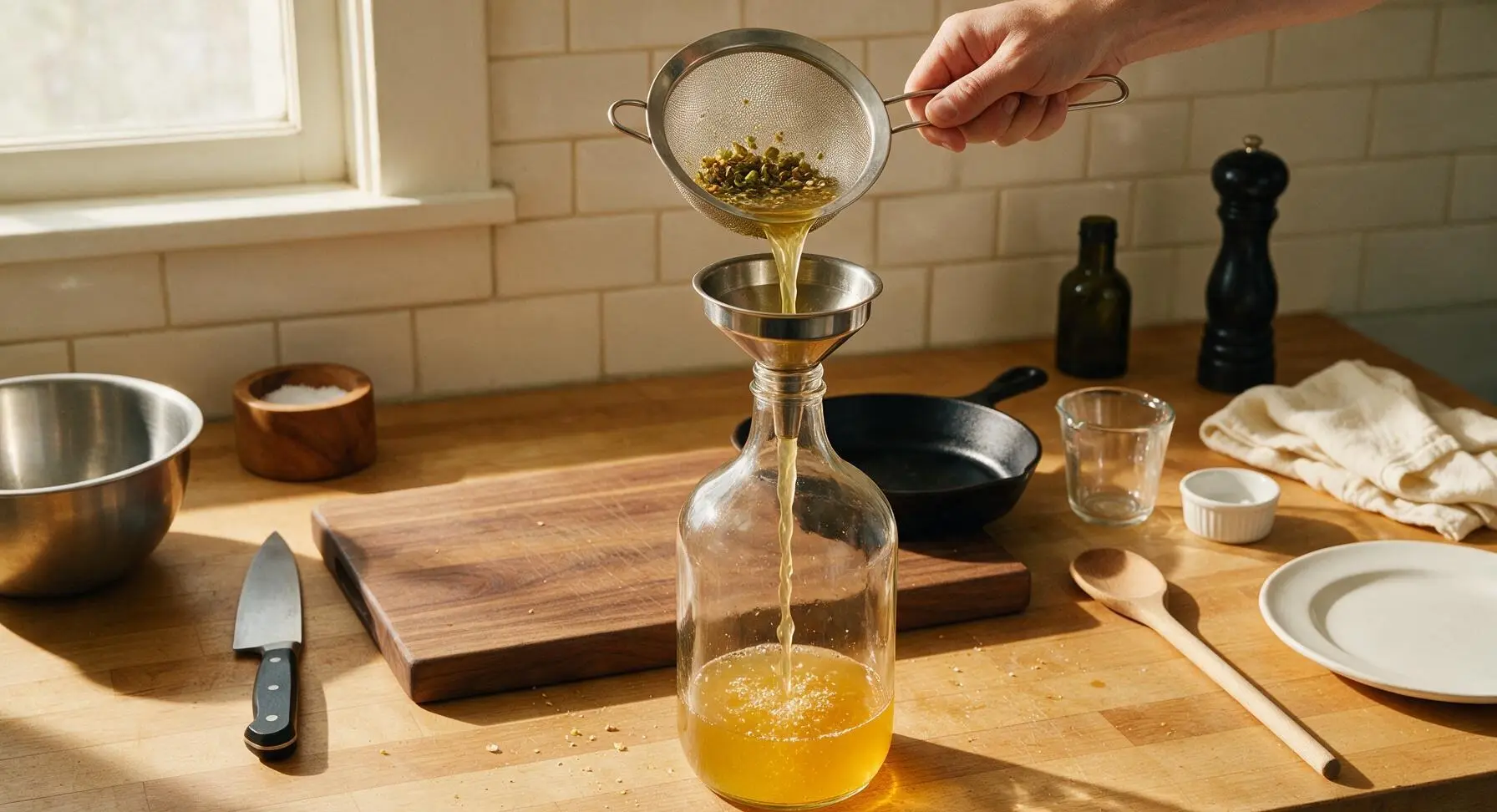
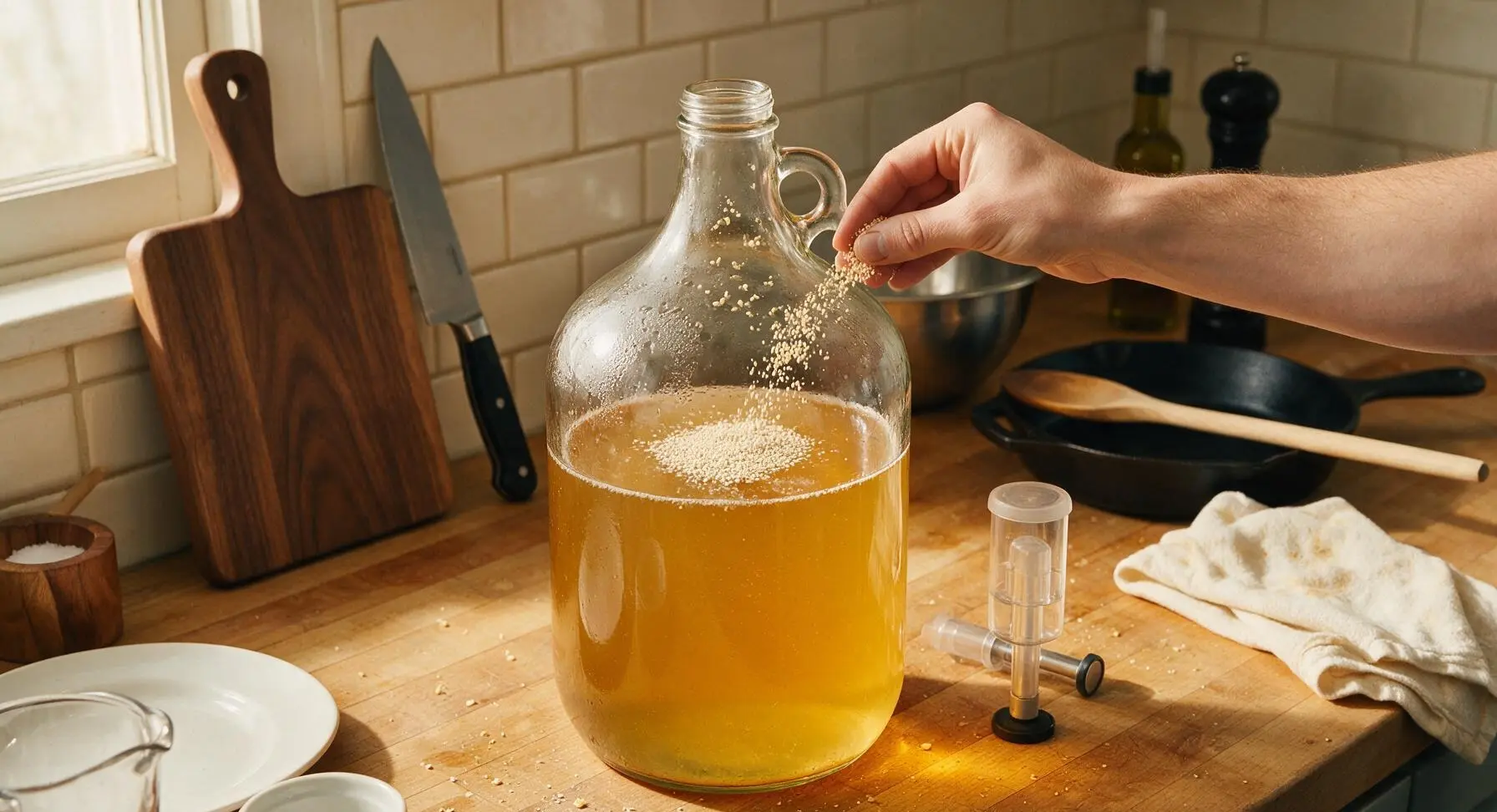
After the 60-minute boil, quickly cool the wort to 50°F using an ice bath set in the sink. Strain out all hop and grain debris through the fine mesh stainless steel strainer, funneling the clear golden wort into the 1 gallon clear glass carboy using the small stainless steel funnel. Sprinkle the half packet of Czech lager yeast onto the wort surface, seal the carboy with an airlock, and hold at a steady 50°F for 2 weeks of primary fermentation, until bubbling in the airlock stops completely and final gravity reads 1.012 when measured in the glass hydrometer test jar.
Transfer to Rye Barrel
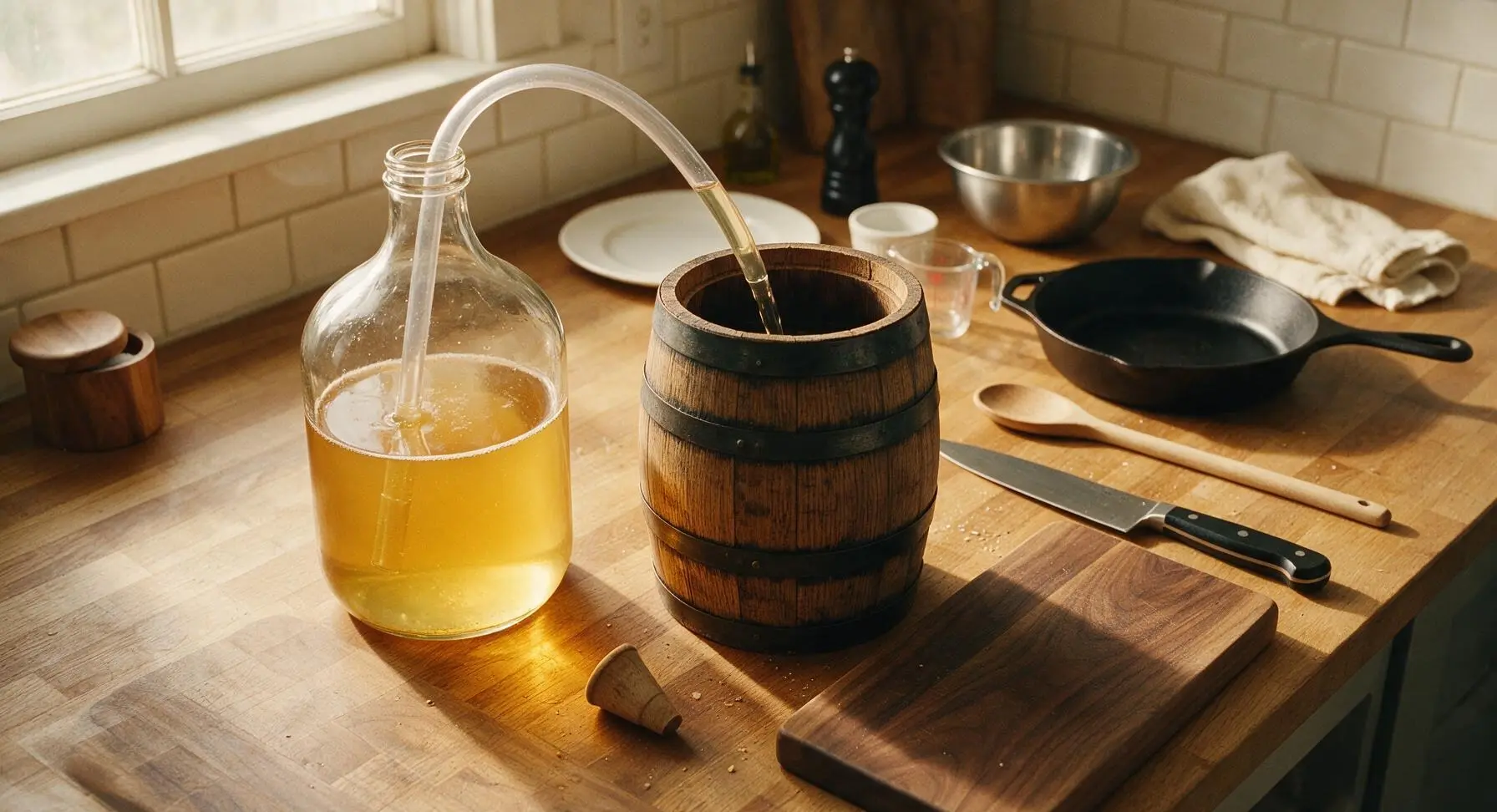
Once primary fermentation is complete, sanitize the 1L charred oak rye whiskey barrel by rinsing with a diluted campden tablet solution, then use the stainless steel auto-siphon to transfer the fully fermented young lager (approx 1L after trub loss) from the carboy into the barrel. Seal the barrel with the tapered oak bung, and store in a cool, dark 55°F space for 2 weeks to absorb oak and spicy rye whiskey notes. Avoid aging longer than 3 weeks to prevent overpowering woody astringency.
Add Passionfruit Pulp
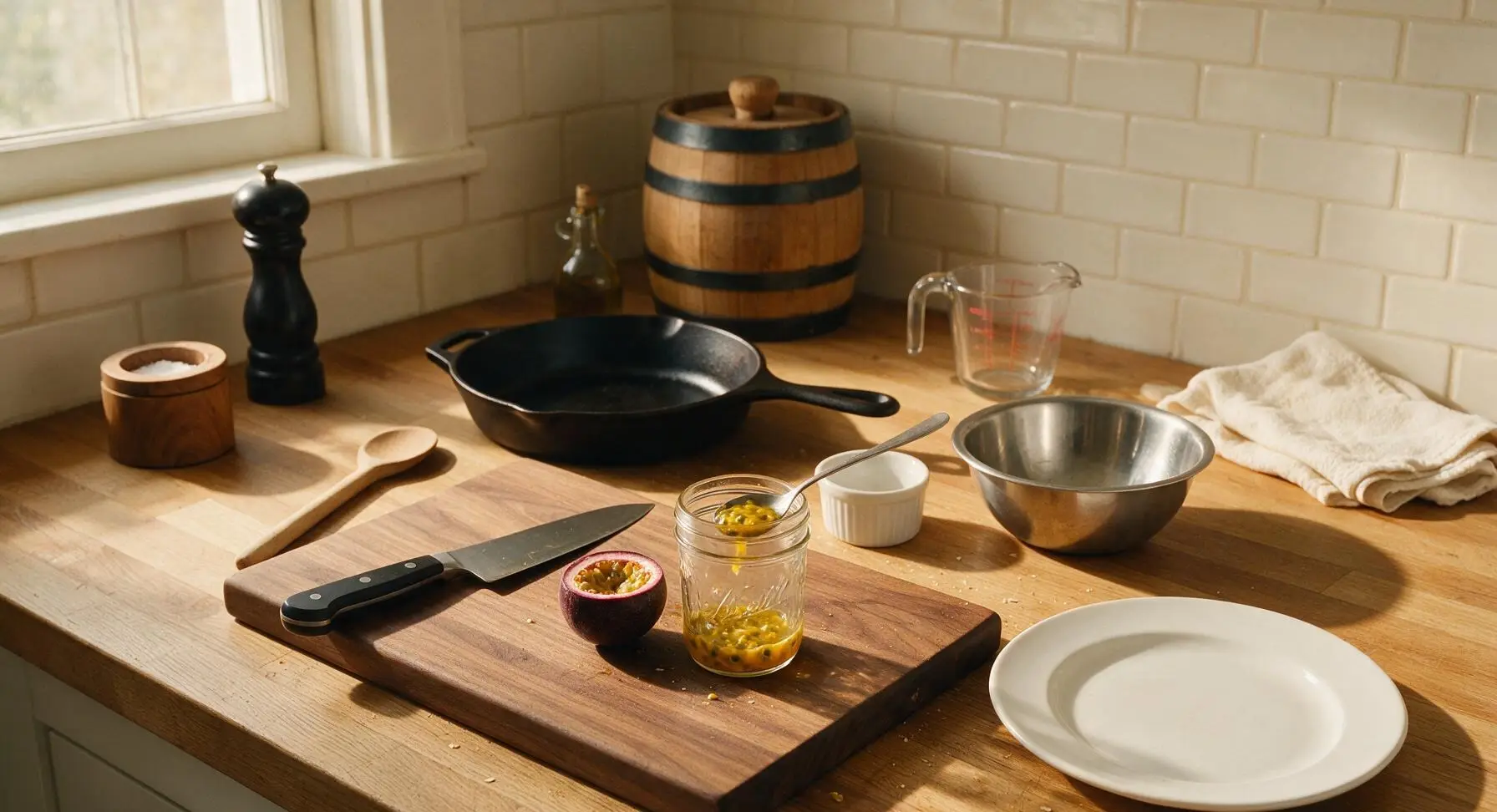
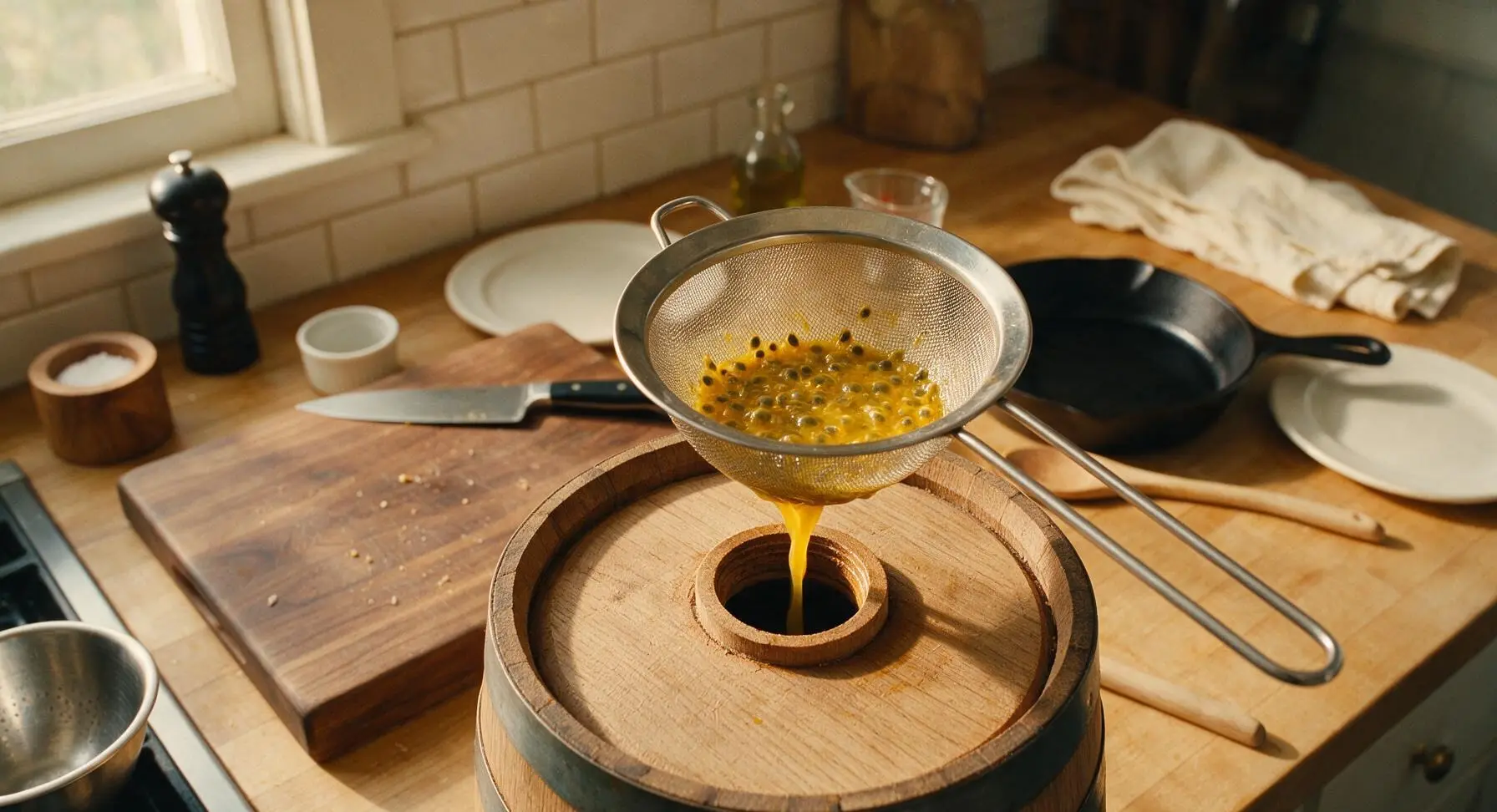
While the beer ages in the barrel, prepare the passionfruit: cut both fresh passionfruits in half, scoop the seedy bright yellow pulp into the 1 pint clear glass mason jar, add 1/4 crushed campden tablet to sanitize the pulp, seal the jar and refrigerate for 48 hours. After 2 weeks of barrel aging, strain the passionfruit pulp to remove large seed bits using the fine mesh strainer, then add the strained pulp directly into the barrel with the beer, reseal with the oak bung, and hold for 3 additional days to infuse bright tropical passionfruit flavor.
Bottle and Condition
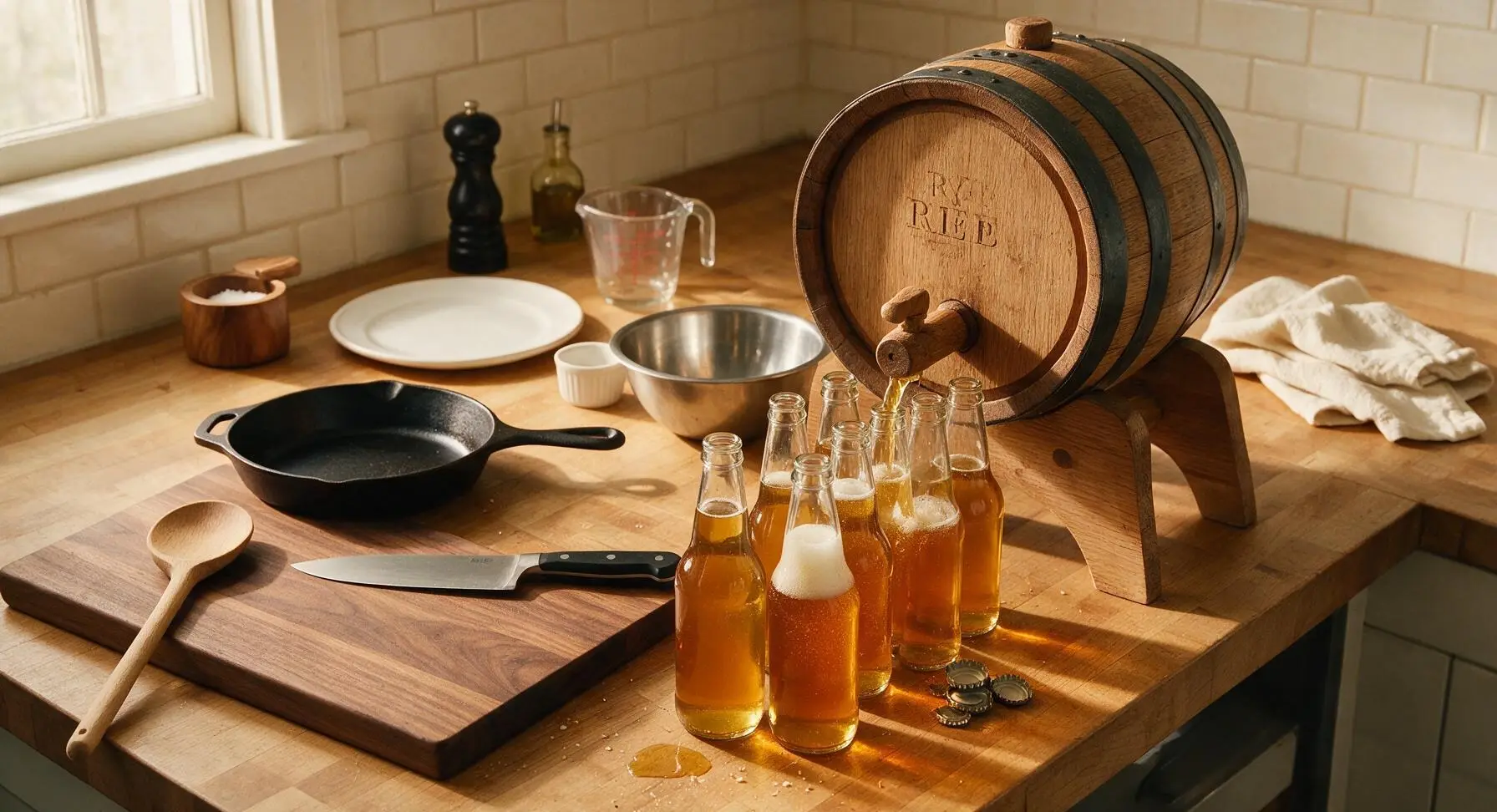
After the 3-day passionfruit infusion, use the auto-siphon to transfer the finished beer from the barrel into sanitized 12oz glass bottles, adding 1/4 tsp of corn sugar to each bottle to create natural carbonation. Cap bottles tightly, and store at 65°F for 1 week to carbonate, then move to refrigerator storage at 38°F for a minimum of 3 days to chill and condition before serving.
Tips
2.Always sanitize fresh passionfruit pulp with a diluted campden tablet solution before adding it to the barrel: raw fruit carries wild yeast and bacteria that can spoil beer by creating off-flavors like sour vinegar or rotten fruit, and the campden tablet neutralizes these contaminants without adding any noticeable flavor to the finished beer.
3.Do not skip the 3-day cold conditioning step after carbonation: this cold rest allows harsh hop bitterness to mellow, bright passionfruit aroma to integrate smoothly with spicy rye and oak notes, and fine yeast sediment to settle at the bottom of bottles for a clear, crisp, professional-tasting pour.






OMG, this was such a fun project even with the hard difficulty rating! I was nervous about the barrel aging step since I’d never done it before, but the final result is insane — that bright passionfruit tang cuts through the spicy rye and smooth lager base so perfectly. Brought a growler to our weekend potluck and everyone was begging for the recipe. Total game changer for my homebrew lineup!
Okay, I’ll admit I was intimidated by the 6 week timeline and hard difficulty, but I took it step by step and it was so worth the wait! The passionfruit comes through so bright without being cloying, and the rye adds that perfect little spicy kick. I served it at my husband’s birthday cookout and it was a huge hit at our family dinner — even my brother who swears he ‘hates fruity beer’ went back for two glasses! I will say I almost messed up the cold conditioning step by pulling it out 2 days early, so glad I waited it out. SO good.
Tried this recipe last month and swapped fresh passionfruit for frozen since it was out of season at my local market. Turned out great, though I’d probably add an extra ounce of puree next time to make that fruit note pop a little more. Perfect balance of malty rye, crisp lager, and tropical fruit, will absolutely make again.
Game changer! I’ve made a handful of IPLs before but never thought to pair rye and passionfruit, let alone barrel age it. The depth of flavor is unreal — you get that subtle oak vanilla from the barrel, the peppery rye, the bright tropical fruit, all wrapped up in that crisp, clean lager finish. Worth every minute of the 6 week wait.
This was my first ever barrel aged brew and it came out way better than I expected! I was worried the dry Arizona heat would mess with fermentation temps but I kept my fermenter wrapped in a temp control blanket and it went off without a hitch. The passionfruit aroma hits you first when you crack a can, it’s chef’s kiss.
Made this for our annual tailgate party and it was the first keg to kick! Everyone kept saying it tasted like something you’d pay $15 a four pack for at the fancy bottle shop. Only note: I’d recommend straining the passionfruit puree really well if you’re carbonating in bottles, I had a little bit of sediment in the bottom of a few bottles that threw off the texture for the first couple pours.