
Poke Sallet
intro
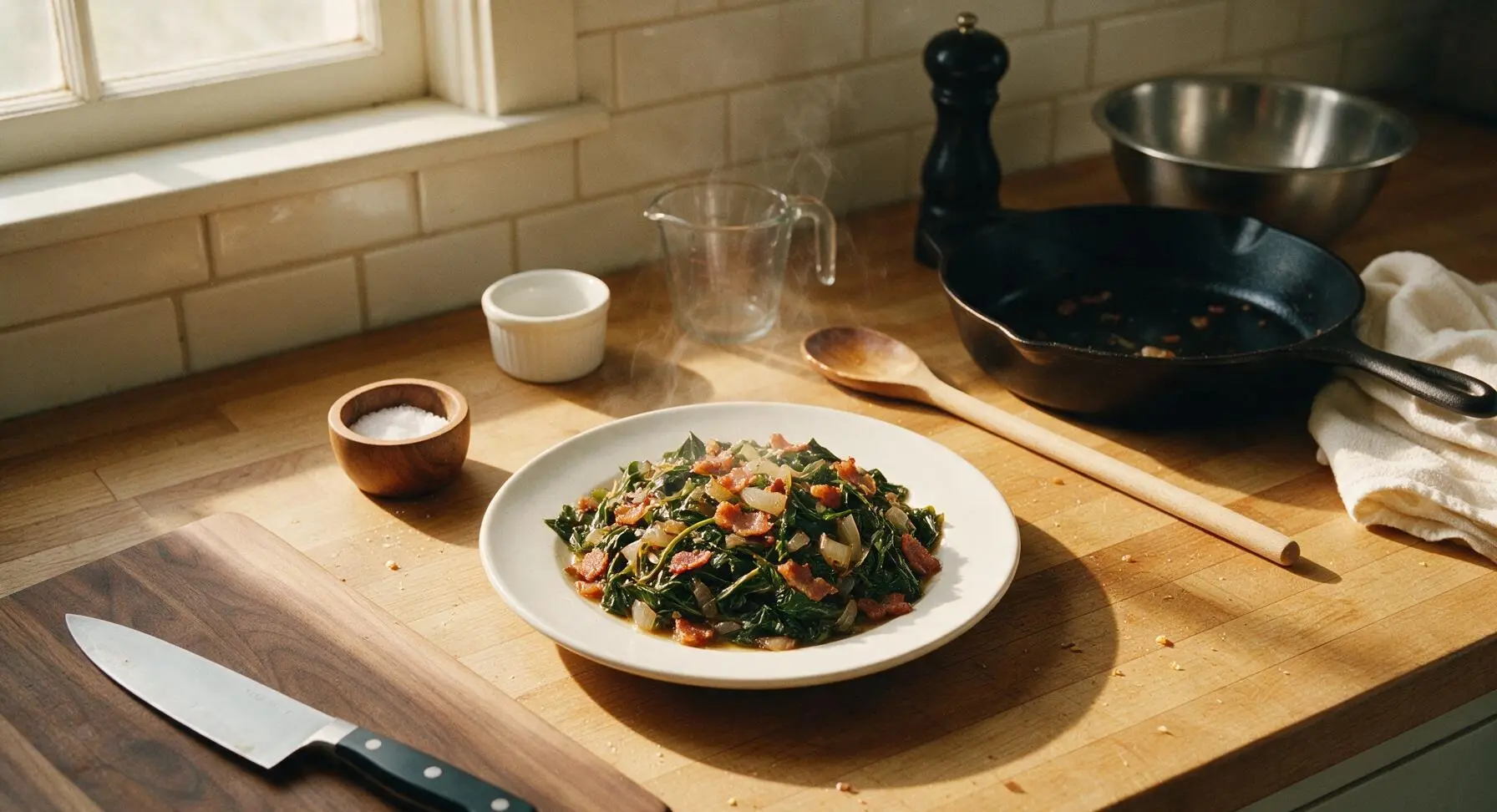
Tender, earthy foraged poke greens, slow-simmered and tossed with smoky bacon, sweet onion, and tangy vinegar: a beloved traditional Appalachian spring side with deep, rustic comfort flavor.
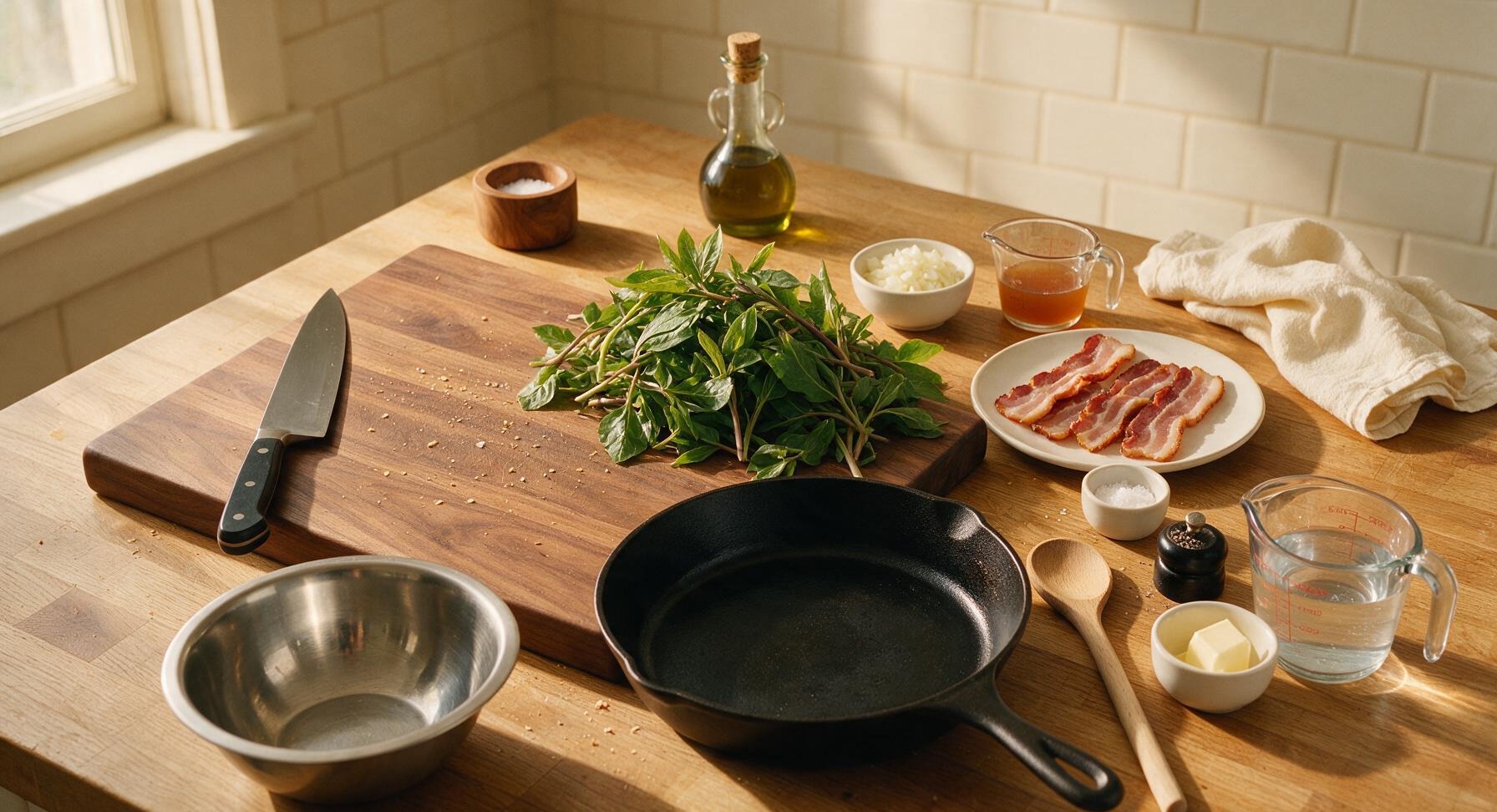
Ingredients
Steps
Trim and Wash Greens
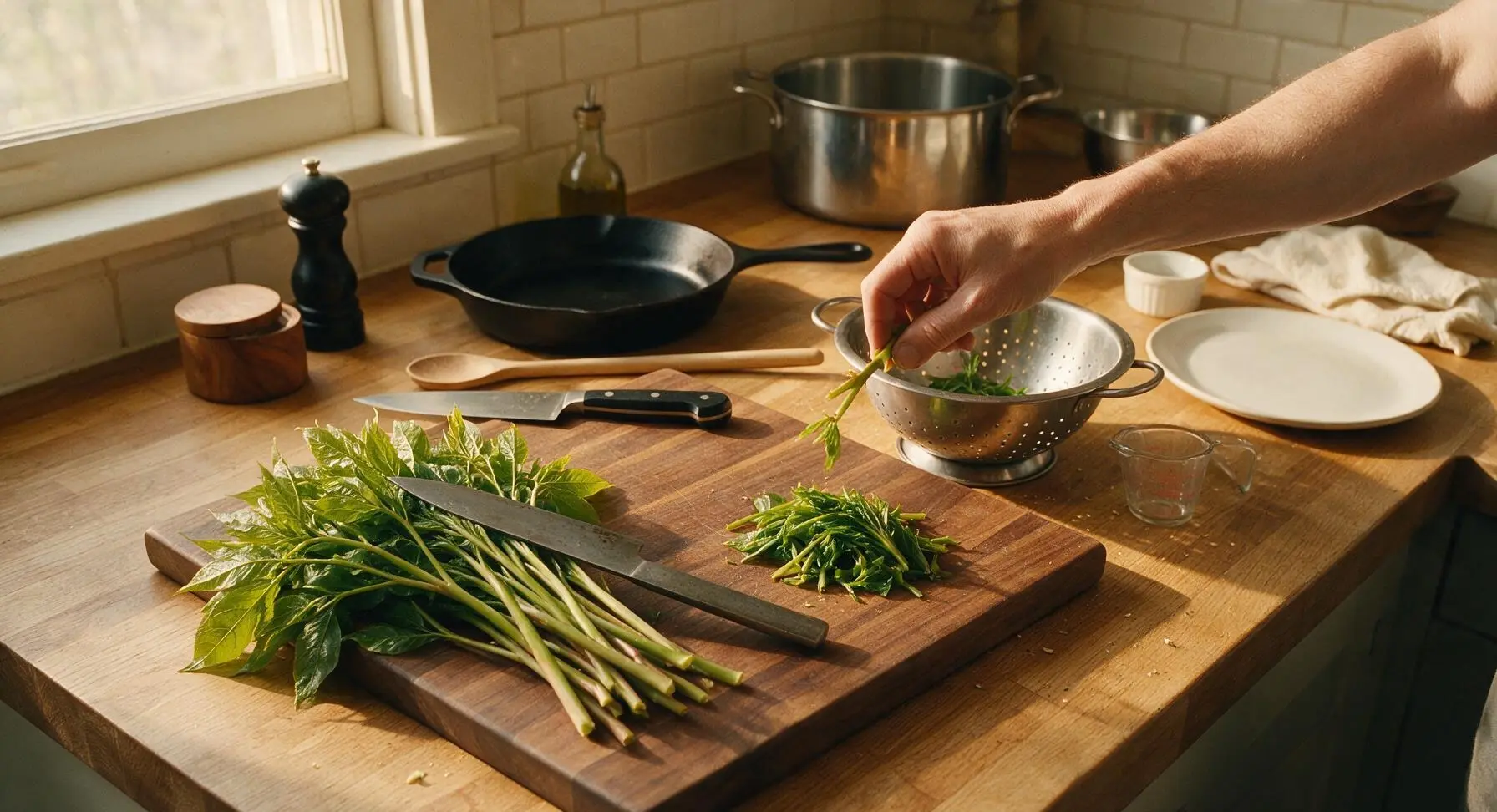
Sort through the bunch of young poke shoots, discarding any tough woody stems thicker than 1/4 inch, any discolored wilted leaves, and any shoots with red or purple stem coloring (these are too mature and toxic to eat). Place the trimmed tender leaves and stems in the stainless steel colander, rinse under cold running water for 2 minutes, swishing to dislodge all trapped grit, dirt, or small forest debris. Shake the colander gently to remove excess water from the cleaned greens, and set aside.
First Boil for Toxin Removal
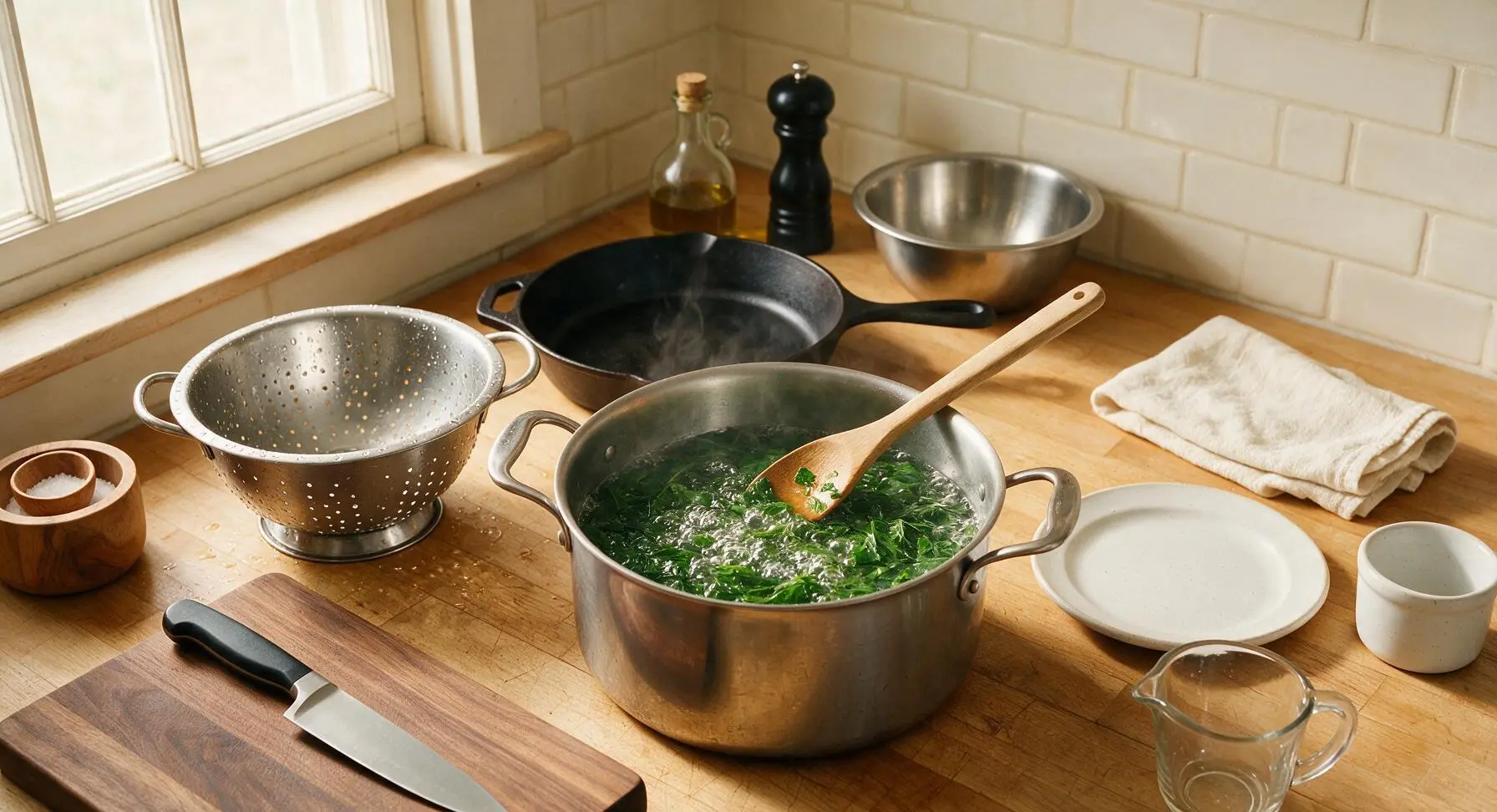
Fill the 8-quart stainless steel stock pot with 6 cups of cold water, place over high heat, and bring to a full rolling boil (212°F). Carefully add all the trimmed, washed poke greens to the boiling water, stirring once with the light maple wood spoon. Boil the greens, uncovered, for exactly 15 minutes. Do not cover the pot, as trapping steam will lock in bitter, unpleasant flavors. This first boil leaches out the majority of the plant's natural bitter compounds and mild toxins.
Drain and Refresh Water
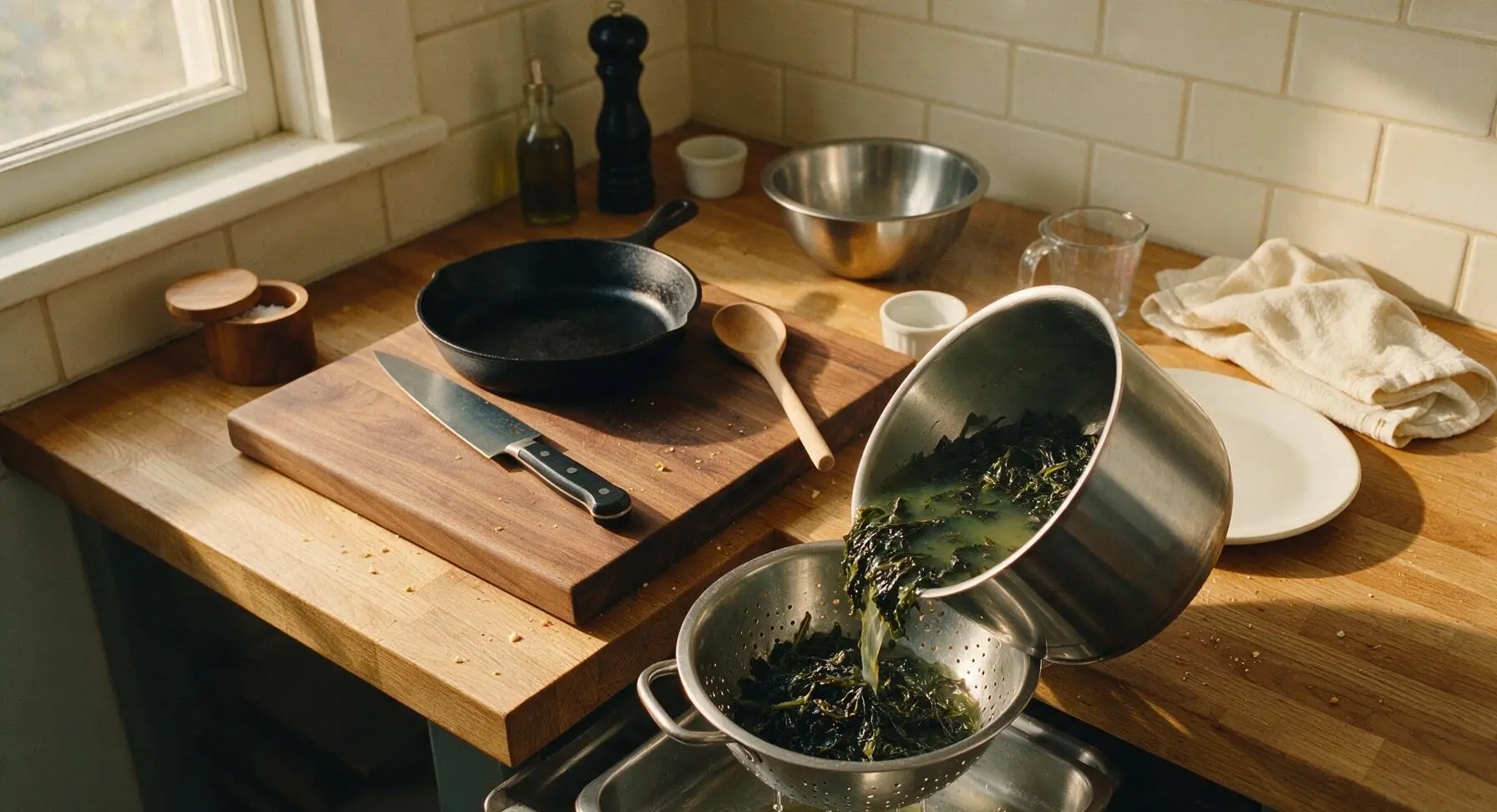
After 15 minutes of boiling, carefully lift the stock pot and pour all of the greens and cloudy pale green cooking water into the stainless steel colander, discarding every drop of the first boil water (this water contains leached toxins and bitter compounds, never reuse it). Rinse the drained greens under cold running water for 1 minute to stop the cooking process and wash away any remaining released bitter residue. Rinse out the stock pot to remove any leftover leaf debris, then refill with 6 cups of fresh cold water to prepare for the second boil.
Second Boil for Safety
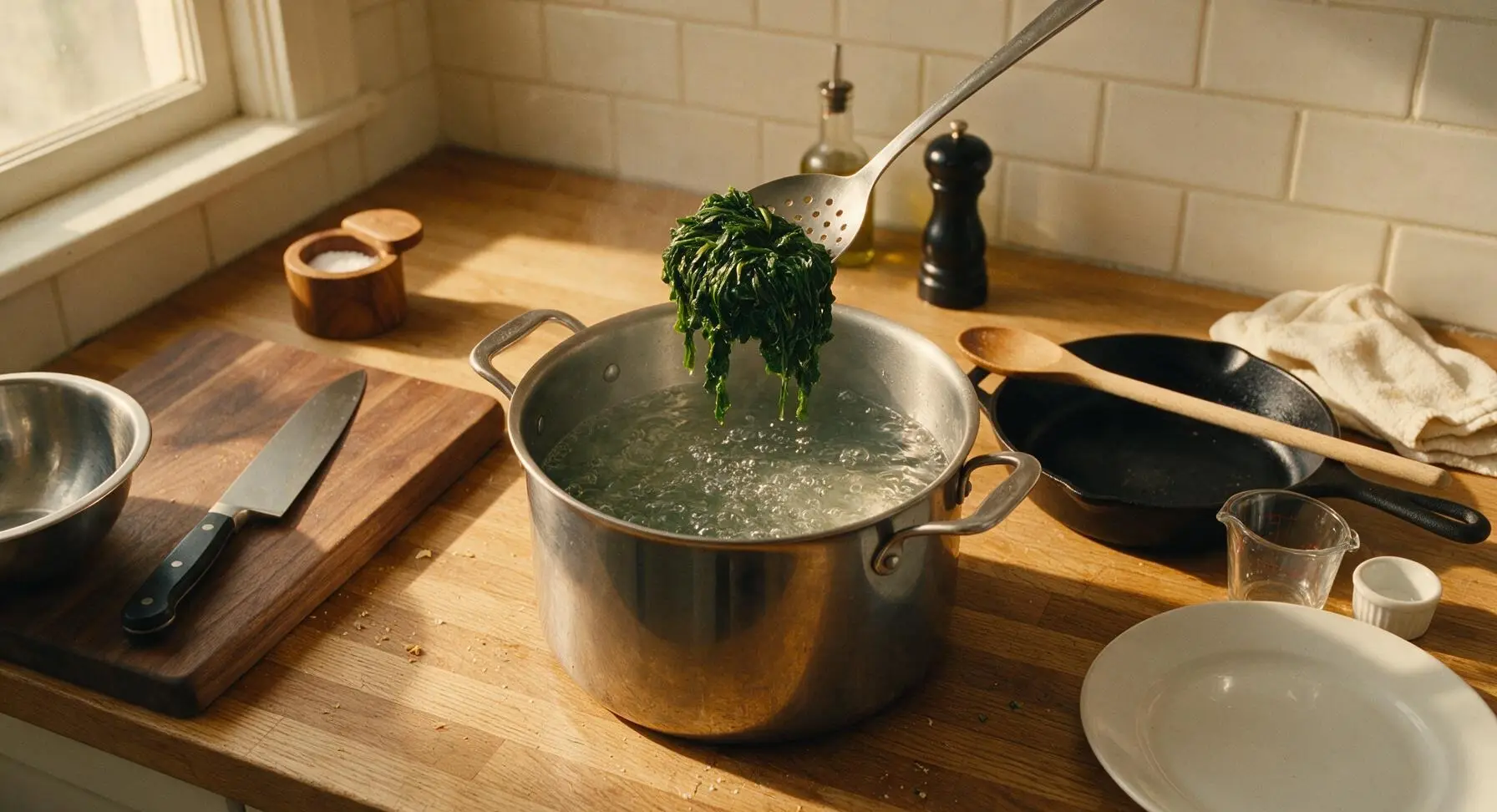
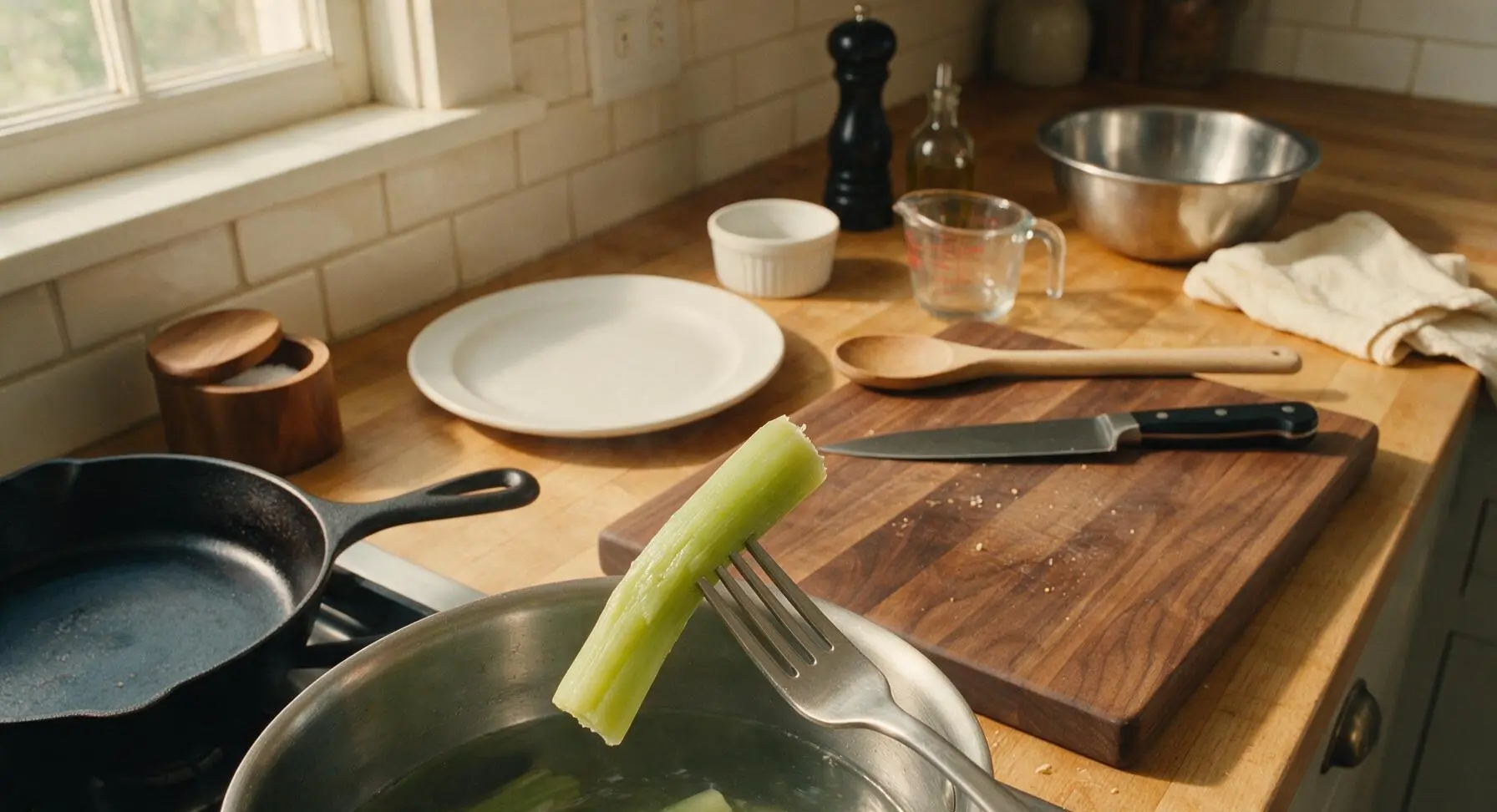
Bring the pot of fresh cold water back to a full rolling boil over high heat. Add the rinsed, once-boiled greens back to the fresh boiling water, stir, and boil uncovered for 10 additional minutes. After 10 minutes, test a small stem end for doneness and safety: it should be completely tender when bitten, with no sharp, tingling bitter aftertaste. If any tingle remains, boil for 5 more minutes in fresh water before proceeding.
Drain and Press Greens
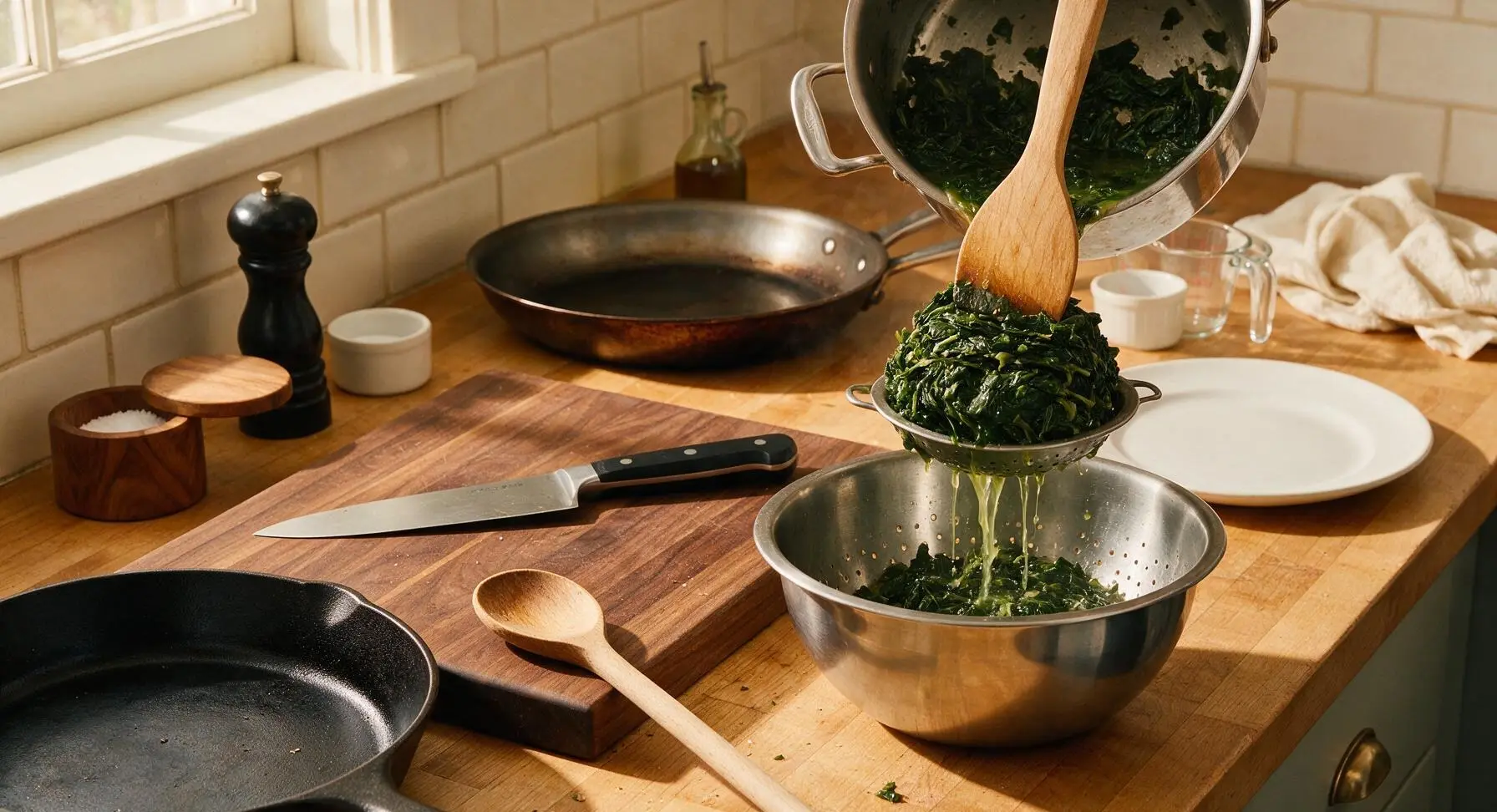
Once the second boil is complete, pour all greens and water into the colander again, discarding the second batch of cooking water fully. Use the back of the maple wood spoon to gently press the mound of greens to remove excess water—do not squeeze the greens completely dry, as a small amount of residual moisture will keep them tender during the final sauté. Set the drained greens aside.
Cook Bacon and Onion
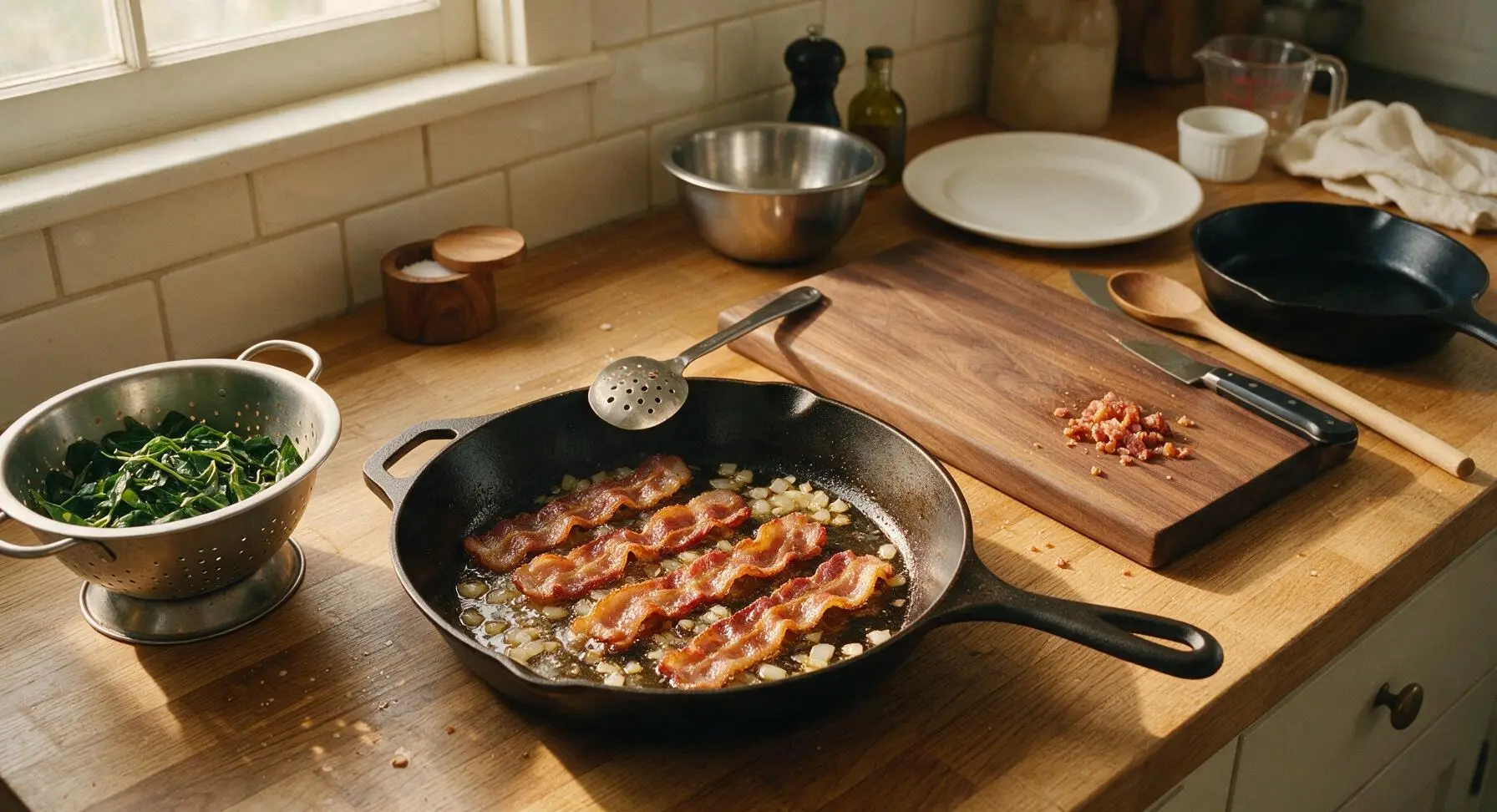
Place the 10-inch carbon steel skillet over medium heat (350°F). Lay the 4 thick-cut bacon slices in the unheated skillet, cook for 4 minutes on the first side, then flip and cook for 3-4 minutes on the second side until crispy and fully rendered. Use the slotted stainless steel spoon to transfer the cooked bacon to a small corner of the walnut cutting board to drain, leaving all 2 tablespoons of rendered bacon fat in the skillet. Add the diced yellow onion to the hot bacon fat, sauté for 3 minutes, stirring occasionally with the maple spoon, until soft, translucent, and just starting to turn golden at the edges. Once cool enough to handle, crumble the bacon into rough 1/4-inch bits.
Sauté and Season Greens
Add the drained, pressed poke greens to the skillet with the cooked onion and bacon fat, tossing to coat every leaf evenly in the smoky fat using the maple wood spoon. Sauté over medium heat for 5 minutes, stirring occasionally, until the greens are heated through and infused with bacon flavor. Stir in 1 tablespoon of unsalted butter, 1 teaspoon of coarse sea salt, 1/2 teaspoon of cracked black pepper, and 2 tablespoons of apple cider vinegar, tossing to combine fully. If the greens seem too dry, add 1-2 tablespoons of hot water to loosen them to a soft, tender consistency. Taste and adjust salt or vinegar to preference.
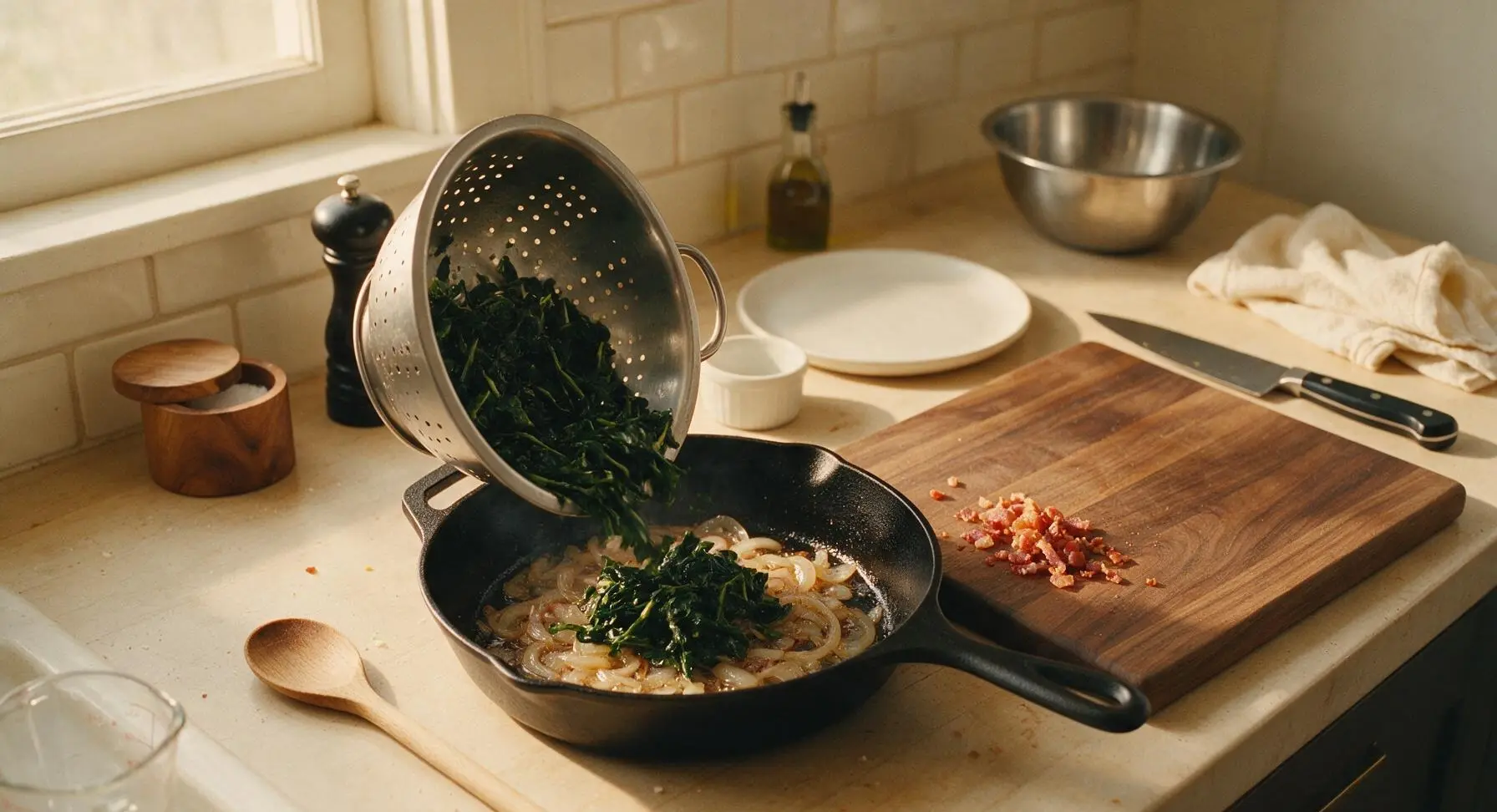
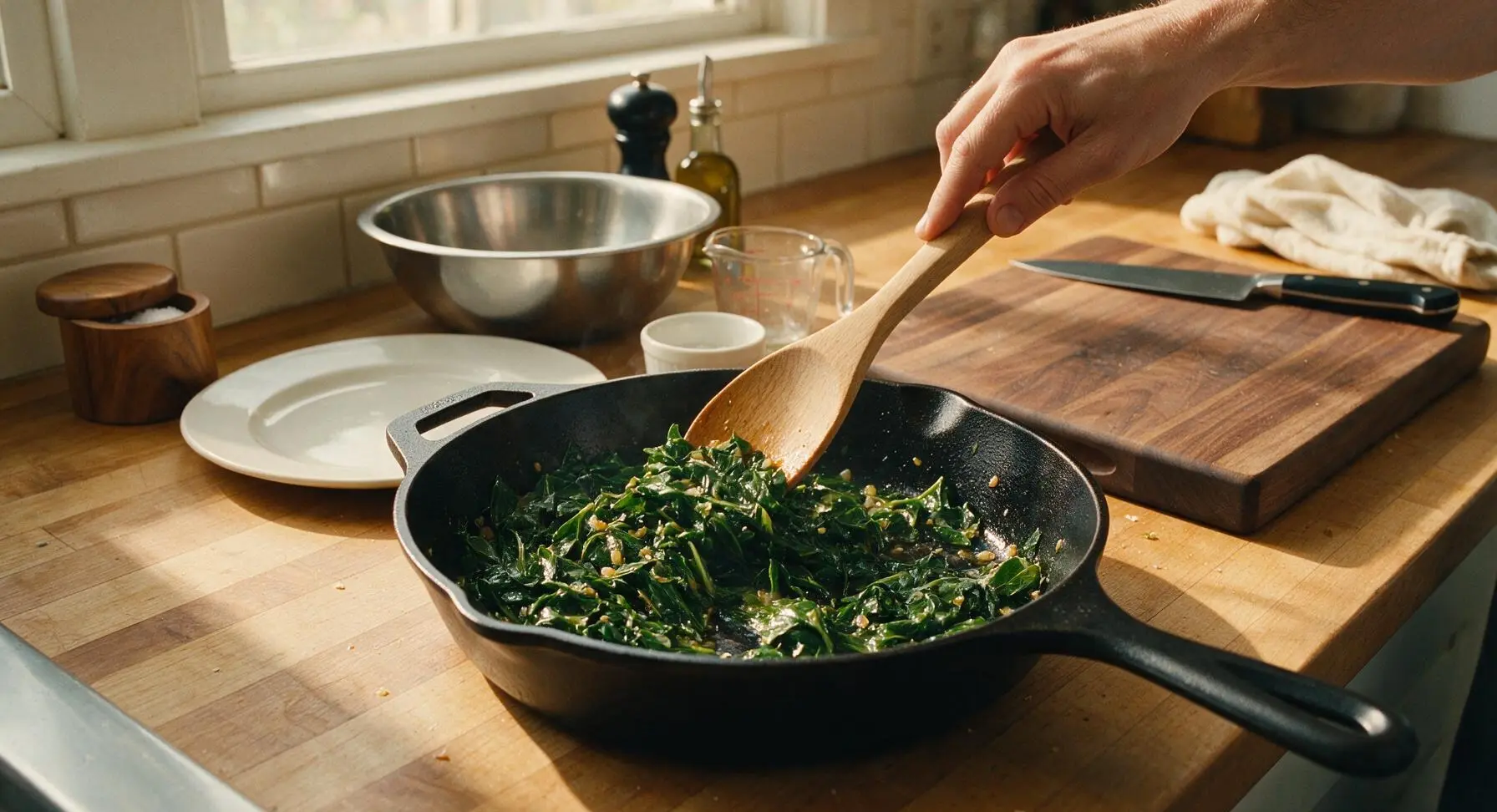
Plate and Serve Warm
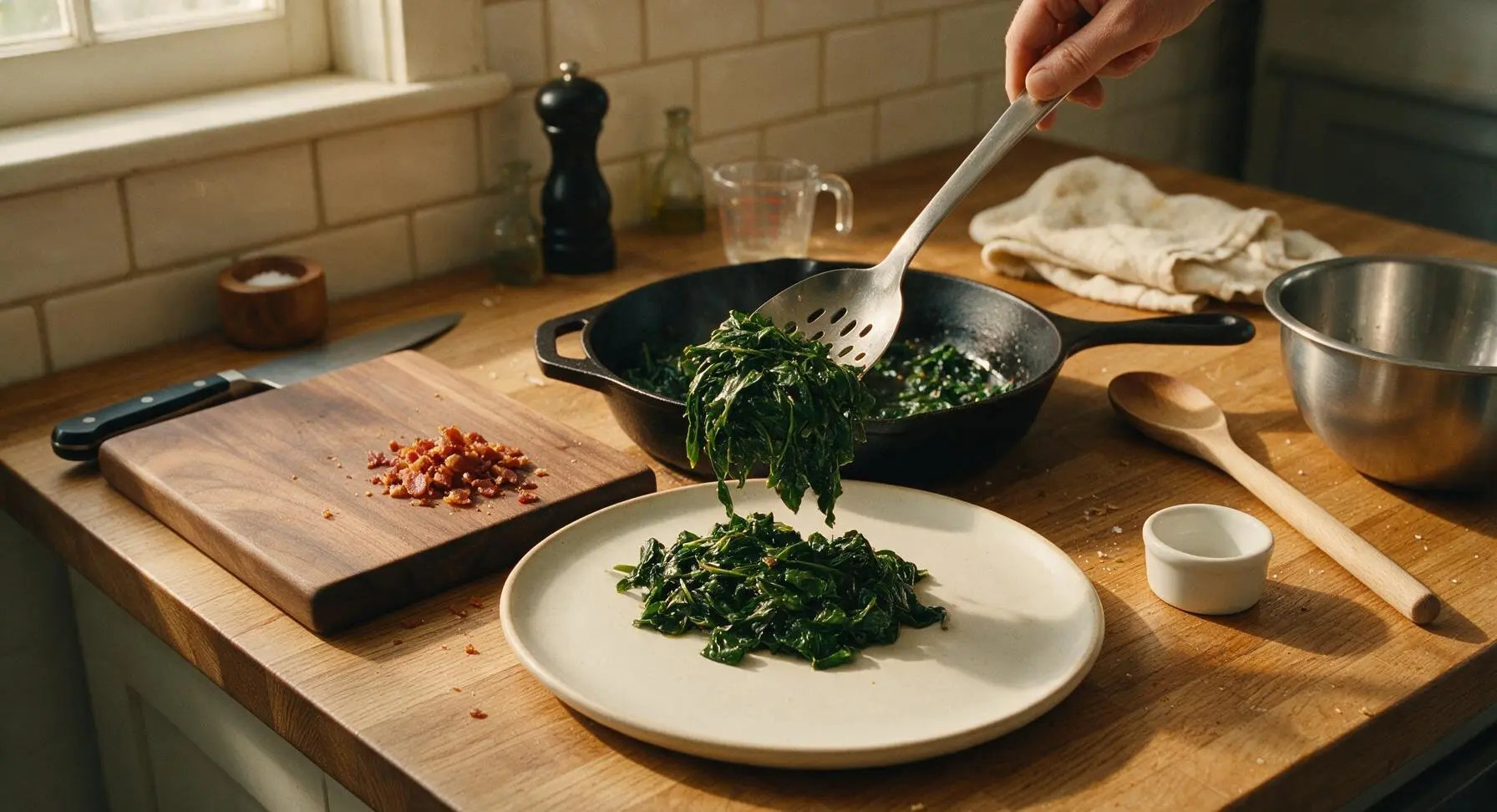
Use the slotted stainless steel spoon to transfer the finished seasoned poke sallet to the off-white ceramic serving platter, mounding it gently in the center. Sprinkle the crumbled crispy bacon bits evenly over the top of the greens, and add one light extra crack of black pepper if desired. Serve warm, traditionally alongside buttery cornbread, pinto beans, or crispy fried potatoes for a classic Appalachian spring meal.
Tips
2.Never skip the double boiling step, and always discard all water used to boil the greens. Unlike cultivated greens such as kale or spinach, raw poke contains bitter, mouth-irritating compounds that must be fully leached out with two separate boils in fresh water to produce mild, safe, great-tasting results.
3.Avoid squeezing the boiled greens completely dry after draining. Pressing gently to remove excess water prevents a soggy final dish, but leaving a small amount of residual moisture helps the greens absorb smoky bacon fat and tangy vinegar without becoming dry, stringy, or tough.





OMG I haven’t had proper poke sallet since my grandma moved out of her old holler in eastern Kentucky! I was so nervous to forage and cook it right because I remember her warning you have to boil it a bunch to make it safe, but this recipe walked me through every step perfectly. Served it with fried potatoes and pinto beans for Sunday dinner and my whole family went back for seconds. SO good, tastes exactly like I remembered!
First time ever cooking poke and I was low-key terrified I’d poison my roommates lmao. Followed the recipe exactly, did the three boil cycles like it said, tossed it with a little bacon grease and scrambled eggs at the end, and everyone was obsessed. Took the full 40 minutes like the recipe said, no shortcuts, and it was 100% worth it. Game changer for weekend brunch!
Brought this to our neighborhood spring potluck last week and I swear people were lined up to get the recipe! A couple folks had grown up eating it in western North Carolina and said it tasted just like their mom’s, and everyone else was shocked how tasty wild greens could be. Will absolutely be making this every spring from now on.
Tried making this last night and will admit I skipped the second boil because I was in a rush to get dinner on the table before my kid’s soccer practice. Big mistake! It was so bitter no one could eat it. Definitely going to block off the full 40 minutes next time and follow the steps to the letter, because the little bite I had before it got bitter was actually really good.
I make a big batch of cooked greens every Sunday for meal prep and this is my new go-to for spring! It holds up so well in the fridge for up to 4 days, tastes great reheated with a little splash of apple cider vinegar, and it’s way more flavorful than the boring kale I usually make. 10/10, adding this to my regular rotation.
Drove up to the mountains last weekend to forage poke with my uncle like we did when I was a kid, and used this recipe to cook it up when we got home. Tastes exactly like the summers I spent running around my papaw’s farm. The tip about adding a dash of hot sauce at the end? *Chef’s kiss* Never thought to do that before, it cuts the richness perfectly.
I’ve lived in the south my whole life and heard people talk about poke sallet forever but never actually tried it. Saw this recipe pop up and decided to grab some poke from the local farmers market instead of foraging it (no way I’m misidentifying a plant and getting sick, lmao) and WOW. Why did I wait so long to try this? It’s earthy, savory, so comforting. My 7 year old asked for seconds, which never happens with greens. Knocked a star off because I wish the recipe had a little note about what parts of the plant are safe to use, since I bought pre-cut I was fine but for people foraging that might help!
Cooked this up in my 100 year old cast iron skillet after boiling the greens, just like my dad used to. Served it with crispy fried catfish, hushpuppies, and coleslaw for a proper southern feast last night. The only change I made was adding a little diced garlic while sauteing, and it was chef’s kiss. Don’t sleep on this recipe, y’all.
So happy this recipe is naturally gluten free! I have celiac and so many southern green recipes sneak in flour or weird seasonings with hidden gluten, but this is just simple, whole ingredients. Made it for my family’s Easter dinner and even my gluten-eating cousins said it was the best side on the table.
This was really tasty, but I do wish the difficulty rating reflected how much attention the boil steps take! I consider myself a pretty solid home cook but juggling the three boil cycles while getting the rest of dinner ready was more work than I expected for a side dish. Flavor was great though, I’ll just make it on a night I don’t have a million other things going on.
I taught home ec in western Virginia for 30 years and this is the most accurate poke sallet recipe I’ve found online! So many recipes skip the multiple boils or add weird fancy ingredients that don’t belong, but this is the real, traditional deal. Shared it with all my former students who still message me asking for old Appalachian recipes, they’re all going to love it.