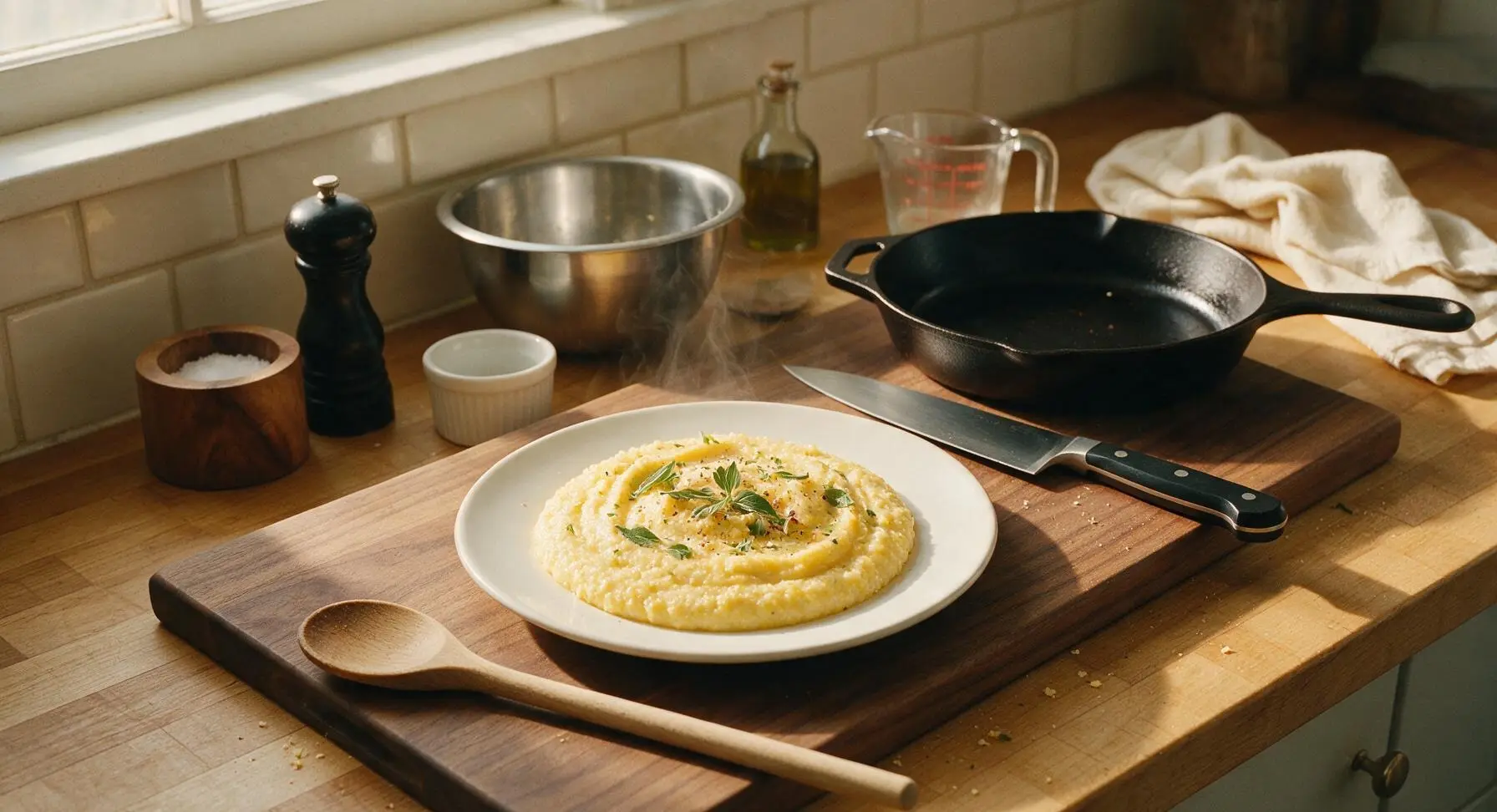
Polenta

title 1
Polenta
⏱️ cook time 30 minutes
🍽️ servings 4
⚡ Difficulty easy

intro

Creamy, velvety traditional Northern Italian polenta, slow-stirred to silky perfection, rich with butter and nutty parmesan— the ideal cozy companion to autumn braises, mushrooms, or roasted vegetables.

Ingredients
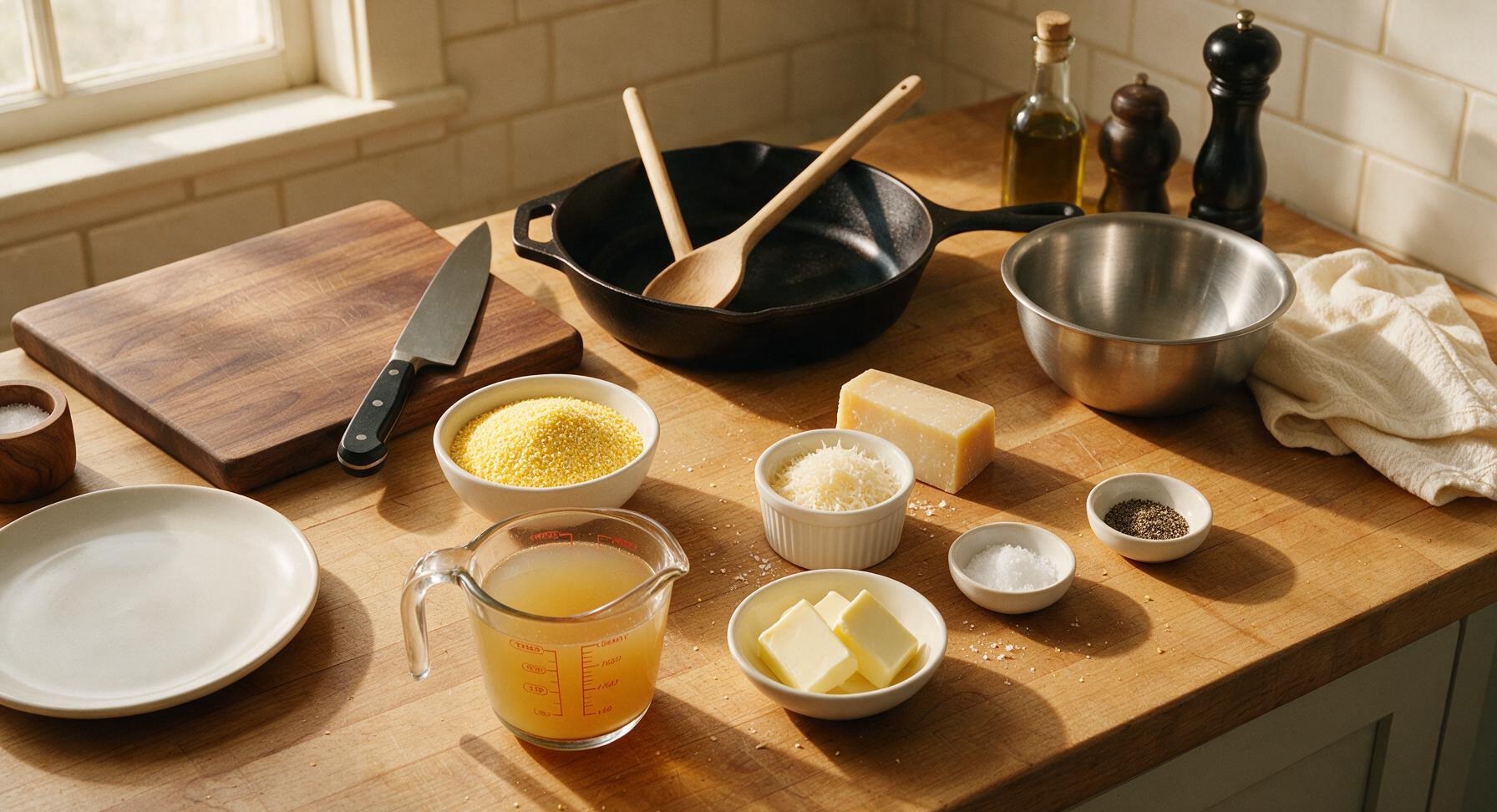
Coarse-ground yellow polenta (cornmeal) 1 cup (160g)
Low-sodium chicken broth 4 cups (960ml)
Unsalted butter 3 tbsp (42g)
Parmigiano-Reggiano cheese 1/2 cup (45g, freshly grated)
Coarse kosher salt 1 tsp
Freshly ground black pepper 1/2 tsp

Steps

1

Measure All Ingredients

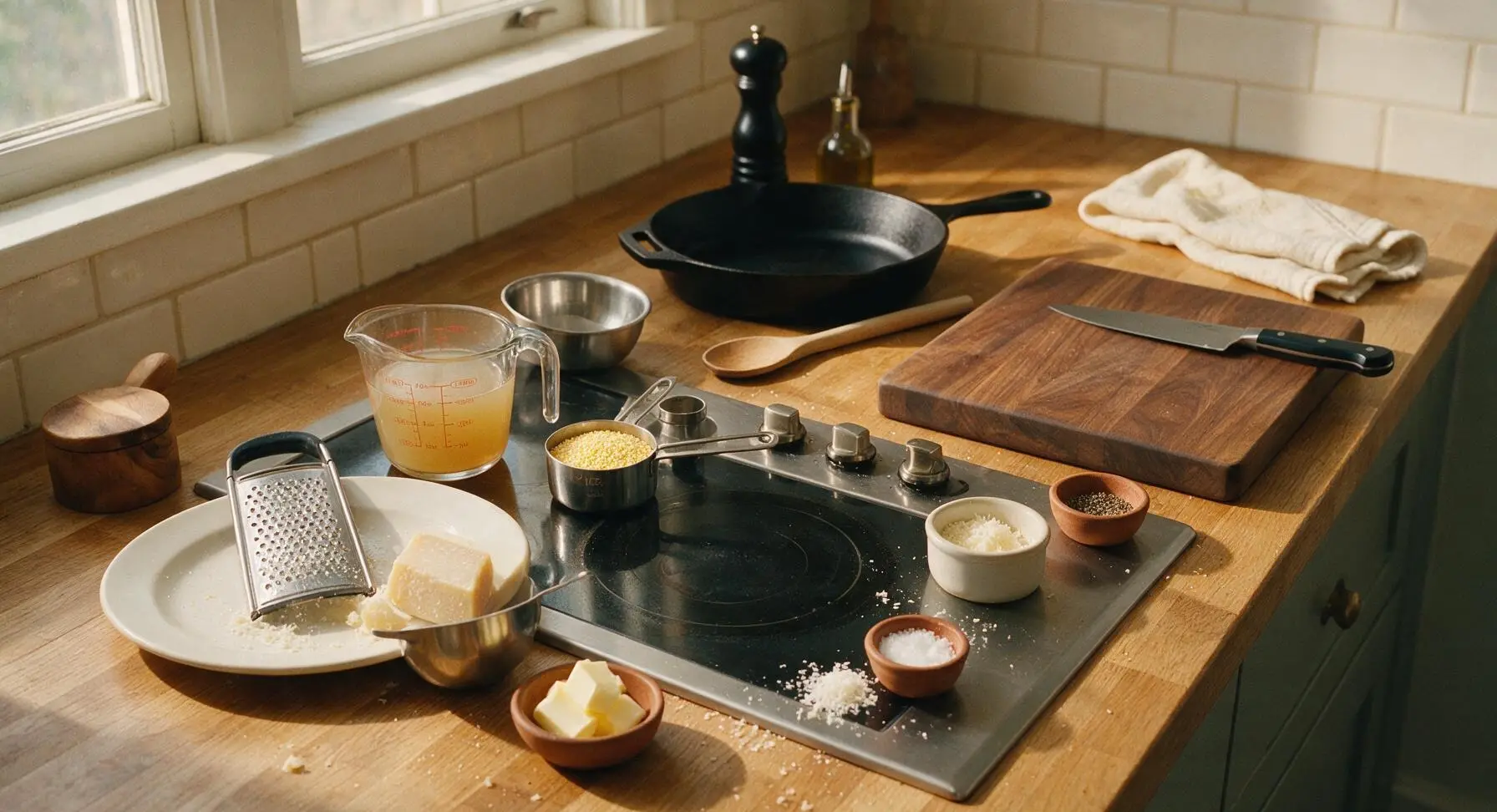
Use the stainless steel measuring cup set to portion 1 cup coarse polenta, 4 cups low-sodium chicken broth (poured into the glass 1L measuring cup), and 3 tablespoons unsalted butter cut into individual pats. Grate 1/2 cup Parmigiano-Reggiano using the coarse side of the stainless steel box grater, and place it in the small cream stoneware ramekin. Portion 1 teaspoon kosher salt and 1/2 teaspoon freshly ground black pepper into two separate terracotta pinch bowls. Arrange all pre-measured ingredients within arm’s reach of the stovetop to avoid rushed stirring later.
Step 1
step1:Measure All Ingredients
2

Bring Broth to Simmer

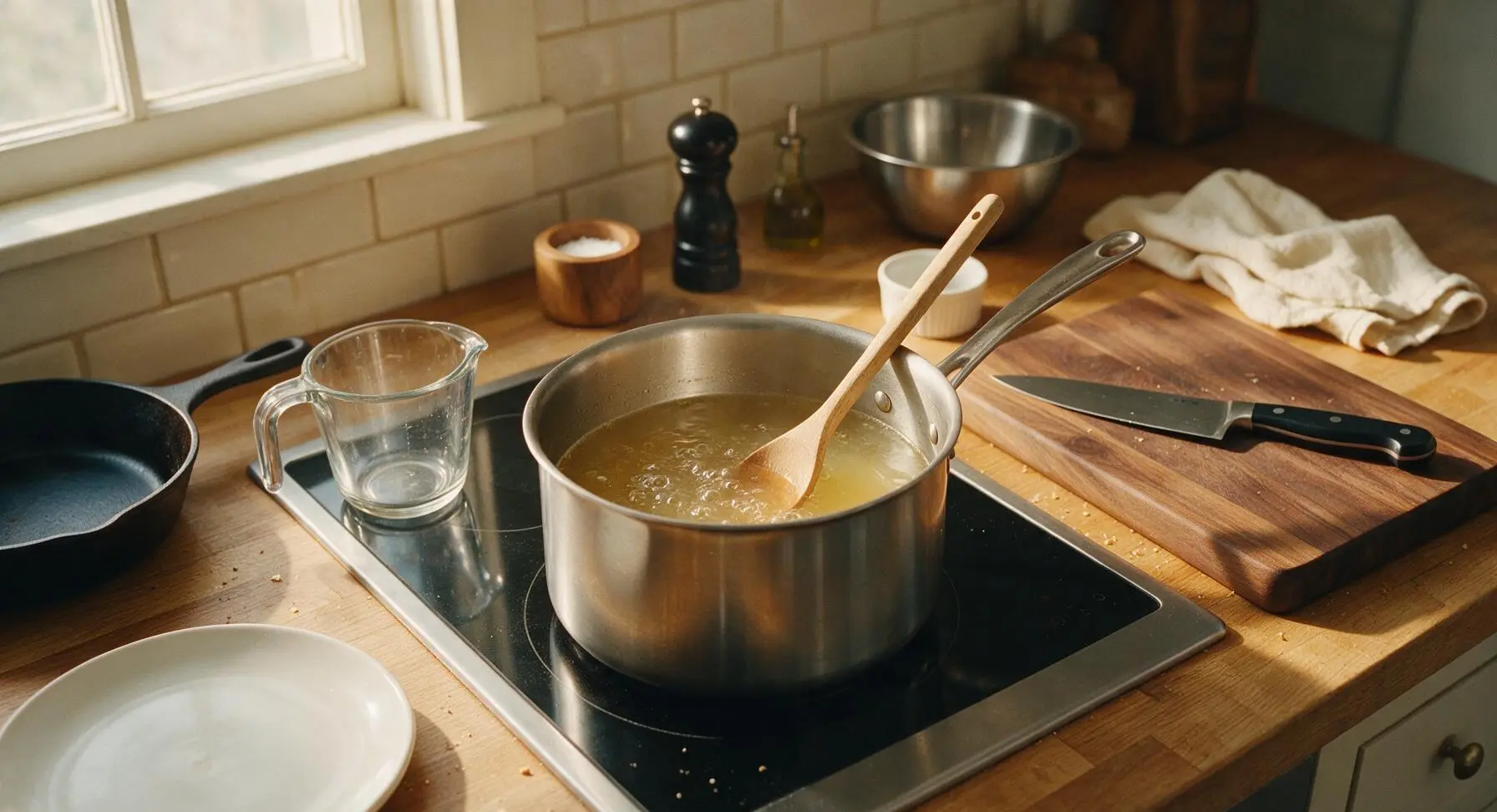
Retrieve the 4-quart stainless steel saucepan and place it centered on the induction stovetop. Pour the measured 4 cups of chicken broth into the pan, set heat to medium-high, and bring to a gentle steady simmer (190°F / 88°C), where small bubbles break consistently at the surface without a violent rolling boil. Have the beech wood stirring spoon ready, add the measured 1 teaspoon kosher salt to the broth, and stir once to fully dissolve the salt.
Step 2
step2:Bring Broth to Simmer
3

Whisk in Polenta Slowly

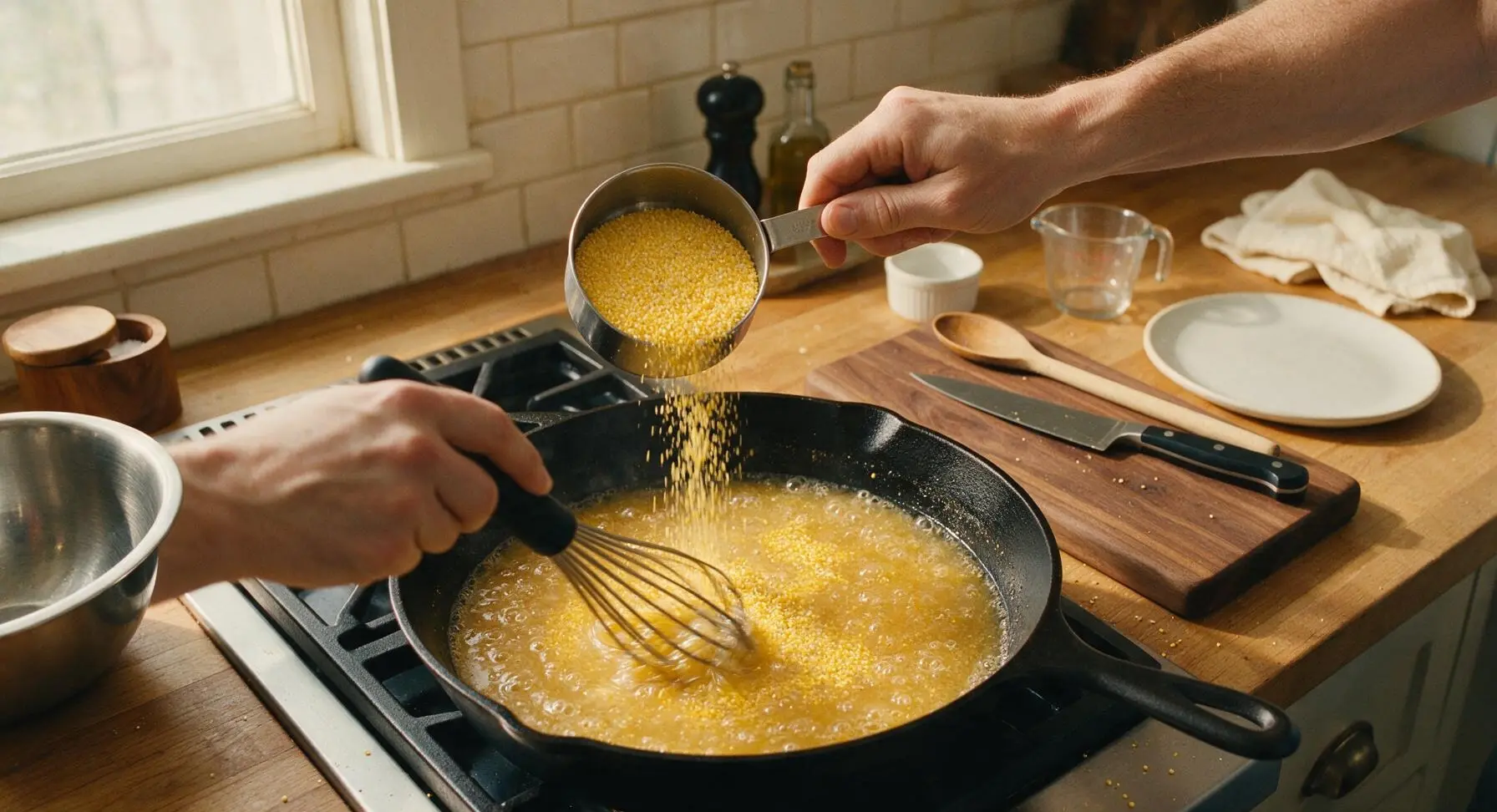
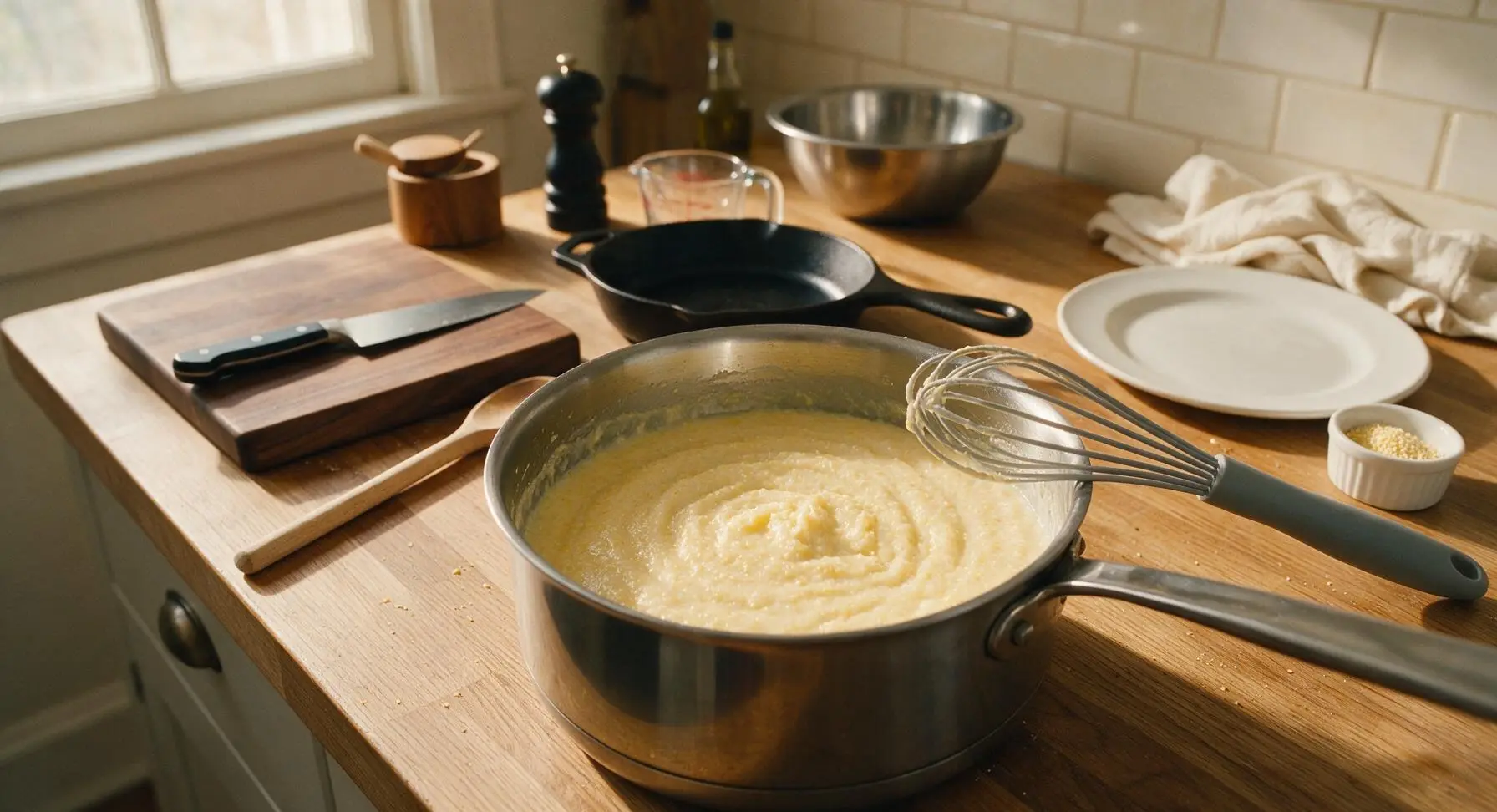
Retrieve the silicone whisk and hold it in your dominant hand. Pour the measured coarse polenta into the simmering broth in an extremely thin, slow, steady stream, whisking constantly in wide circular motions as you pour. Never dump the polenta in all at once, as this causes irreversible lumps. Once all polenta is added, whisk vigorously for 30 seconds to break up any tiny initial clumps.
Step 3
step3:Whisk in Polenta Slowly
Step 3
step3:Whisk in Polenta Slowly
4

Simmer Polenta Gently

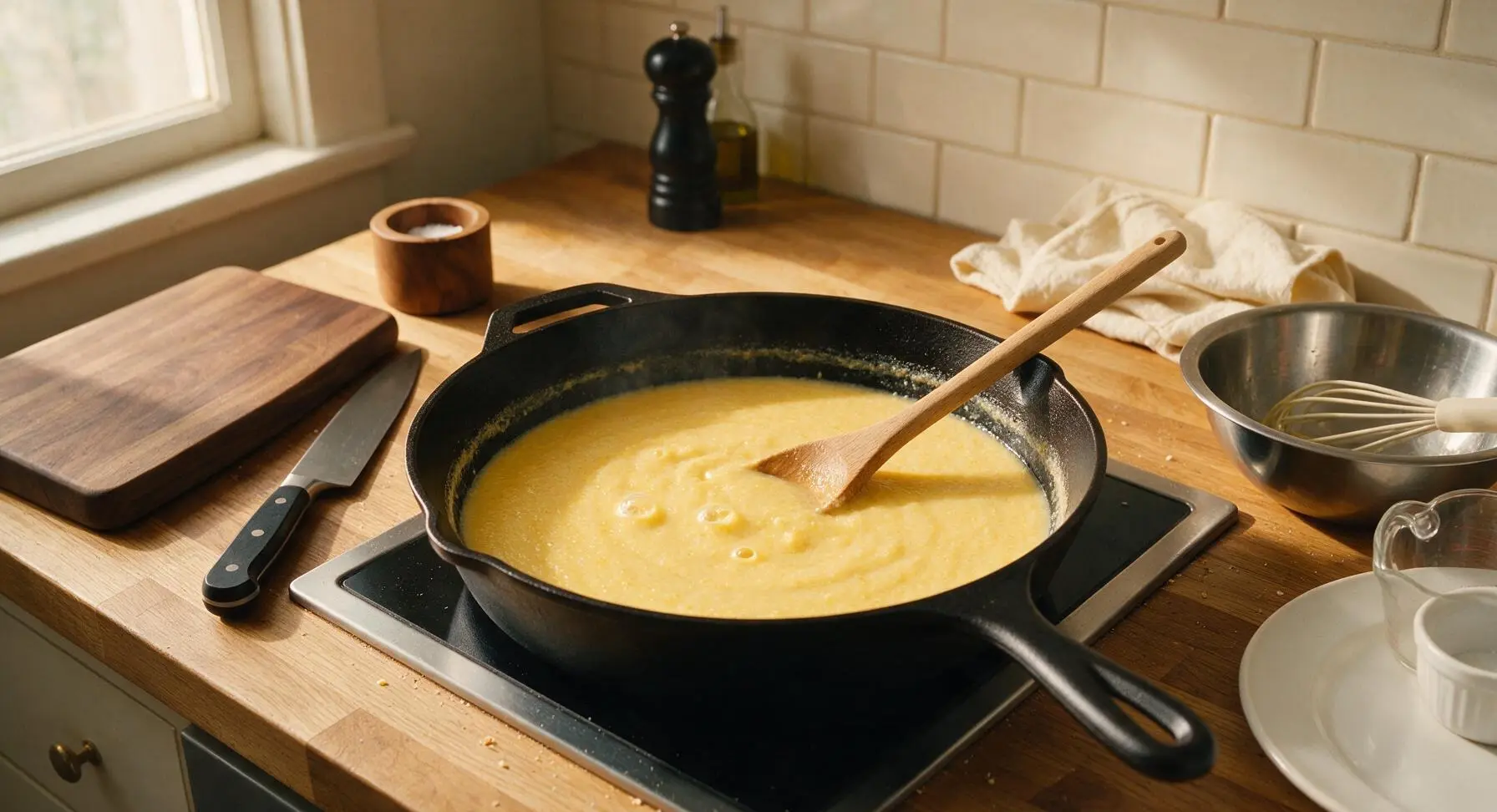
Turn the stovetop heat down to the lowest setting, so the polenta only bubbles very gently (1 or 2 small bubbles popping at the surface every few seconds). Do not cover the pan, as trapped steam causes boil-overs and a tough skin on the polenta surface. Cook for 25 minutes total, stirring thoroughly with the beech wood spoon every 3 to 4 minutes, making sure to scrape the bottom and tight corners of the pan to dislodge any polenta that sticks and cooks faster. Set the silicone whisk aside after the initial stir.
Step 4
step4:Simmer Polenta Gently
5

Check Polenta Consistency

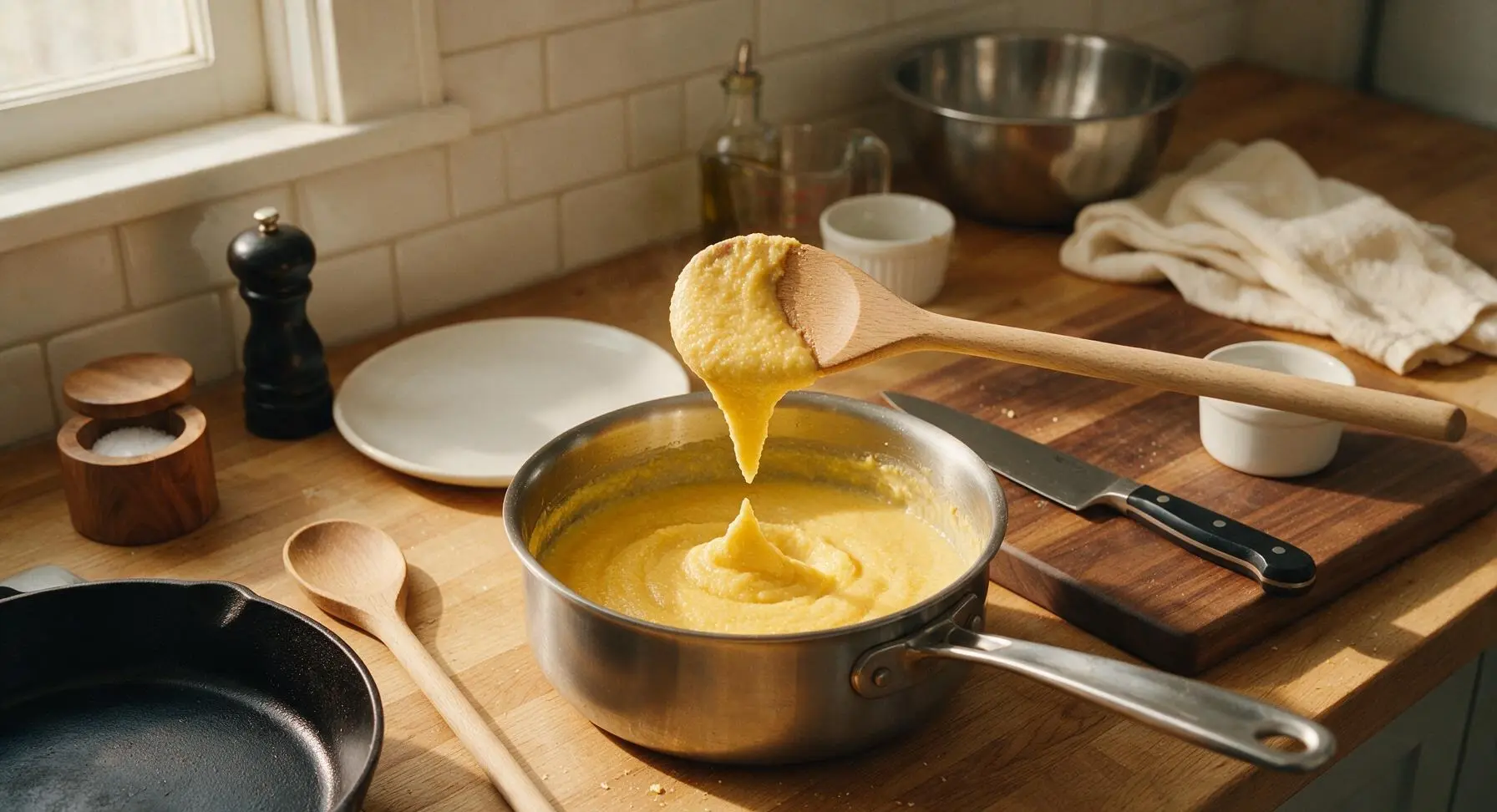
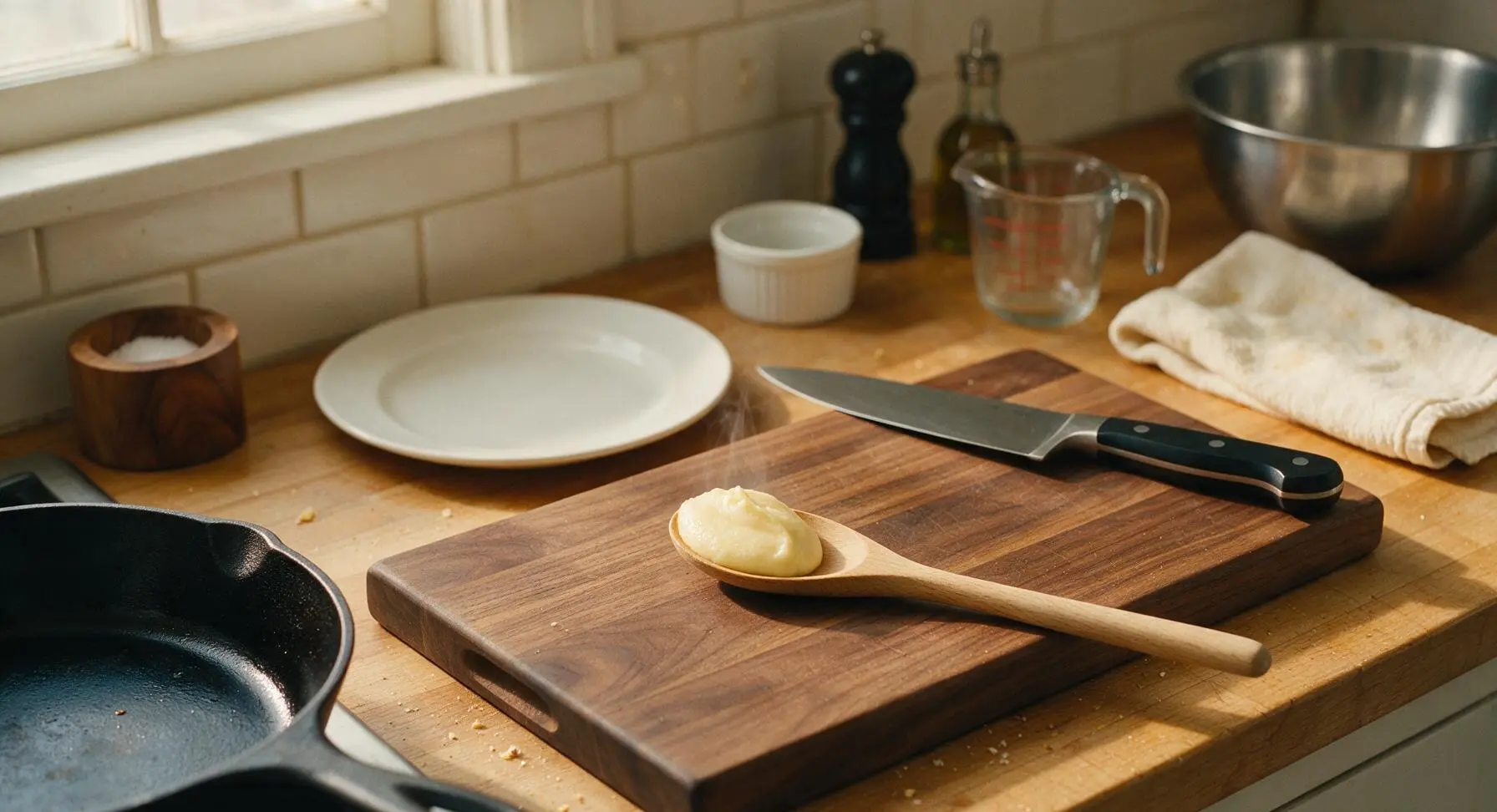
After 25 minutes of simmering, lift the beech wood spoon out of the polenta to check consistency: properly cooked polenta will heavily coat the back of the spoon, and pour off in a thick, slow ribbon. Taste a small cooled bite to confirm there is no gritty, raw cornmeal texture left. If gritty, stir in 2 tablespoons extra broth, cook 3 more minutes, and retest.
Step 5
step5:Check Polenta Consistency
Step 5
step5:Check Polenta Consistency
6

Stir in Butter and Cheese

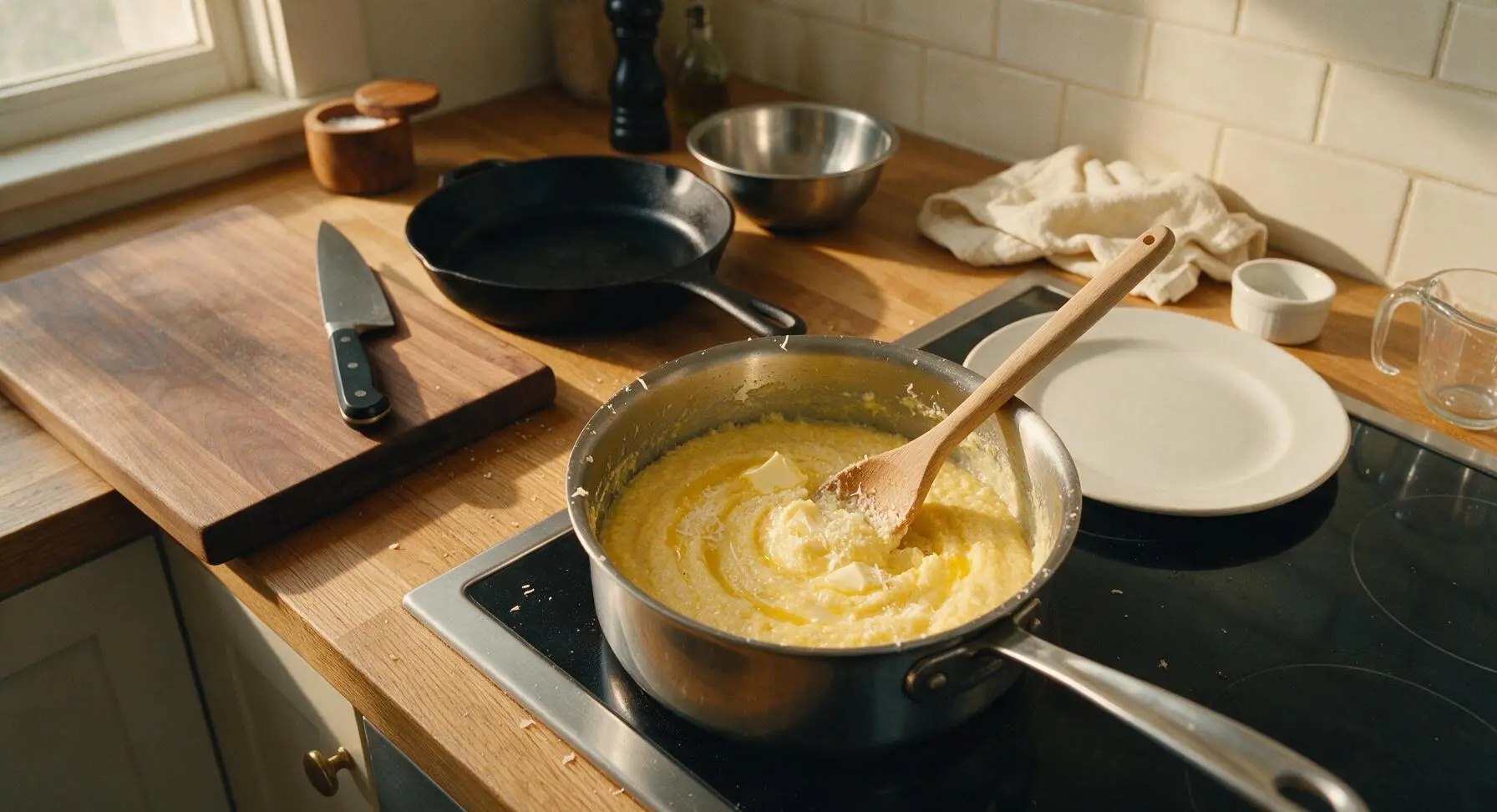
Pull the saucepan off the heat to the cool front edge of the stovetop. Add the measured 3 tablespoons unsalted butter and 1/2 cup freshly grated parmesan to the polenta, stirring vigorously with the beech wood spoon for 1 full minute until the butter is fully melted, the cheese is completely incorporated, and the polenta is glossy, velvety, and rich. Stir in the measured 1/2 teaspoon black pepper, and adjust salt to taste if needed.
Step 6
step6:Stir in Butter and Cheese
7

Let Polenta Rest Briefly

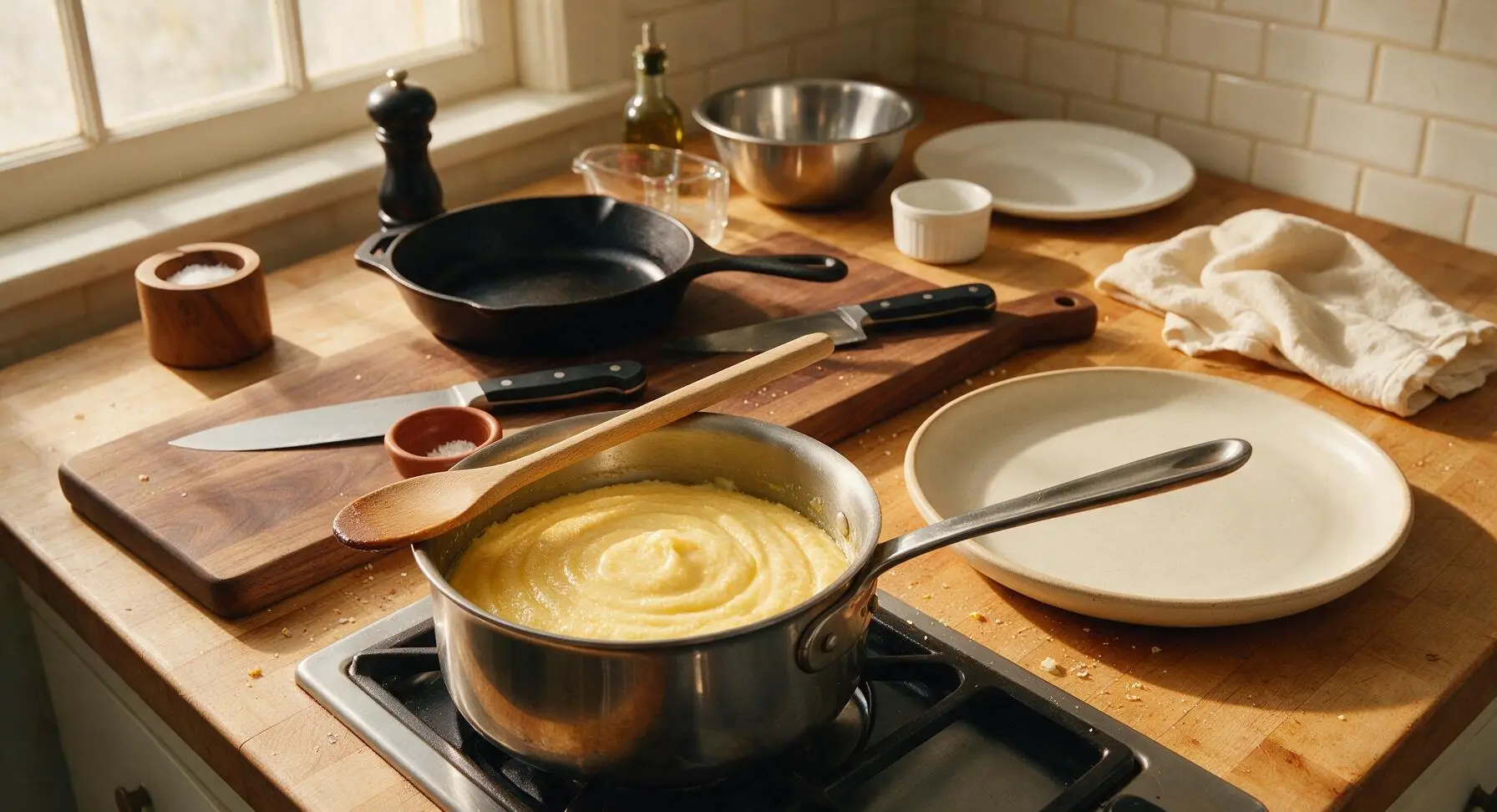
Let the polenta rest for 2 full minutes off the heat to allow the starches to set slightly, which creates the perfect soft, scoopable consistency. Give the polenta one final, thorough stir before plating to ensure it is completely smooth.
Step 7
step7:Let Polenta Rest Briefly

Tips

1.Never dump polenta directly into boiling broth without constant whisking. The outer layer of cornmeal grains gelatinizes instantly when hit by hot liquid, trapping dry, gritty lumps inside that cannot be stirred smooth no matter how long you cook the polenta.
2.Always use a heavy-bottomed saucepan for polenta. Thin, lightweight pans create concentrated hot spots that burn the polenta on the pan bottom before the grains fully soften, leaving a bitter, charred aftertaste in the finished dish.
3.Grate Parmigiano-Reggiano fresh right before stirring it in. Pre-grated cheese sold in shakers or bags is coated in potato starch anti-caking agents that prevent it from melting smoothly, leaving a grainy, clumpy texture instead of the signature silky finish.
✨ You May Also Like

Side Dishes
🍜 India

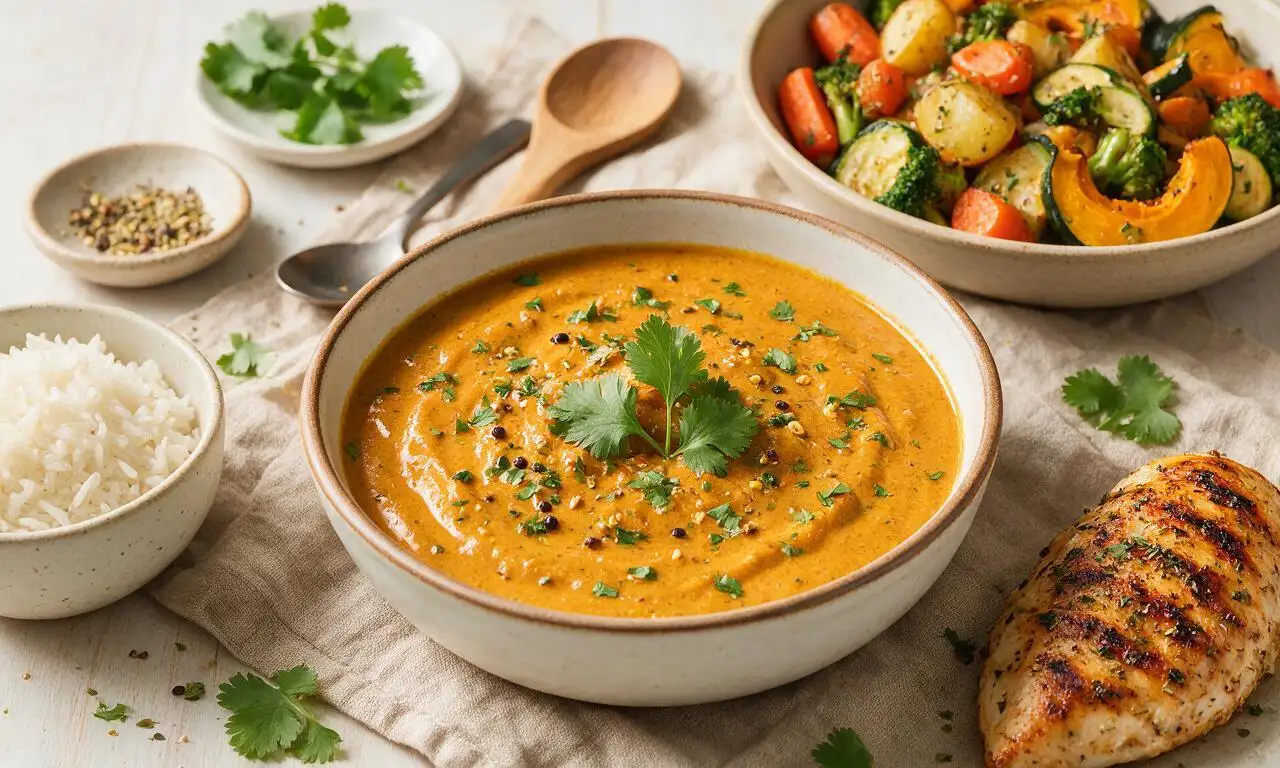
Velvety, aromatic all-purpose curry sauce perfect for tossing with roasted veggies, grilled protein, or rice for fast, cozy, flavorful meals.

⏱️ 25 minuteSide Dishes ★ 4.8
Side Dishes
🍜 Spain

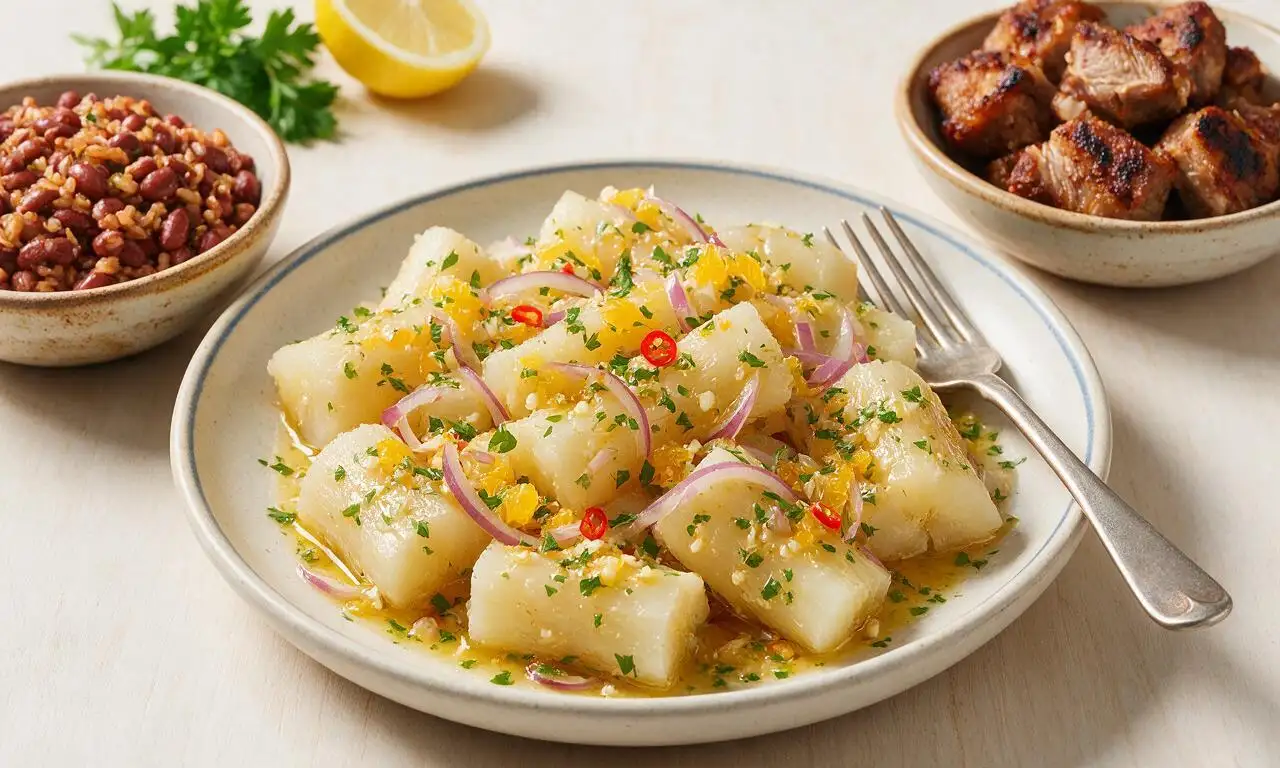
Tender, starchy boiled yuca tossed in bright, garlicky citrus mojo sauce—an iconic, zesty side that pairs beautifully with roasted pork, grilled meats, and rice and beans.

⏱️ 40 minuteSide Dishes ★ 5
Side Dishes
🍜 United States

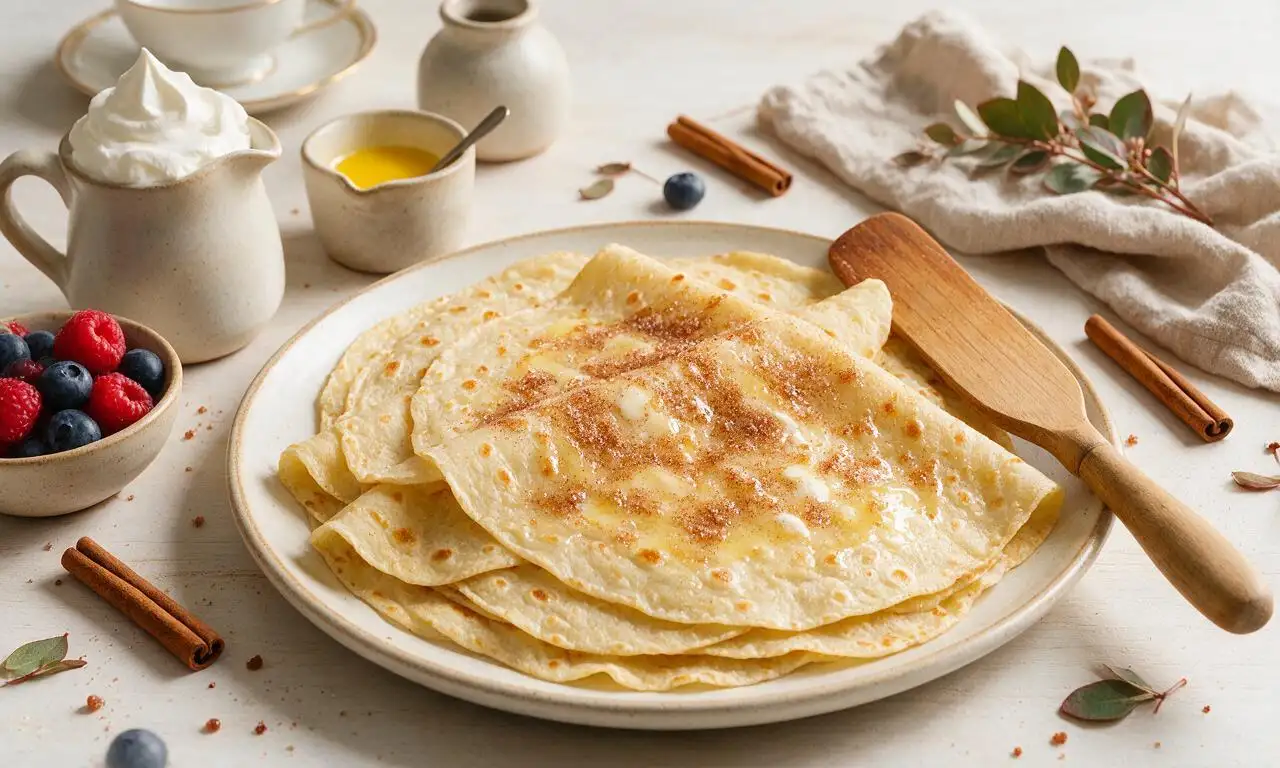
Tender, paper-thin potato flatbread, a beloved Norwegian-American Minnesota Christmas staple, griddled until softly spotted and served warm with butter.

⏱️ 1 hour 30Side Dishes ★ 4.6
Side Dishes
🍜 United States

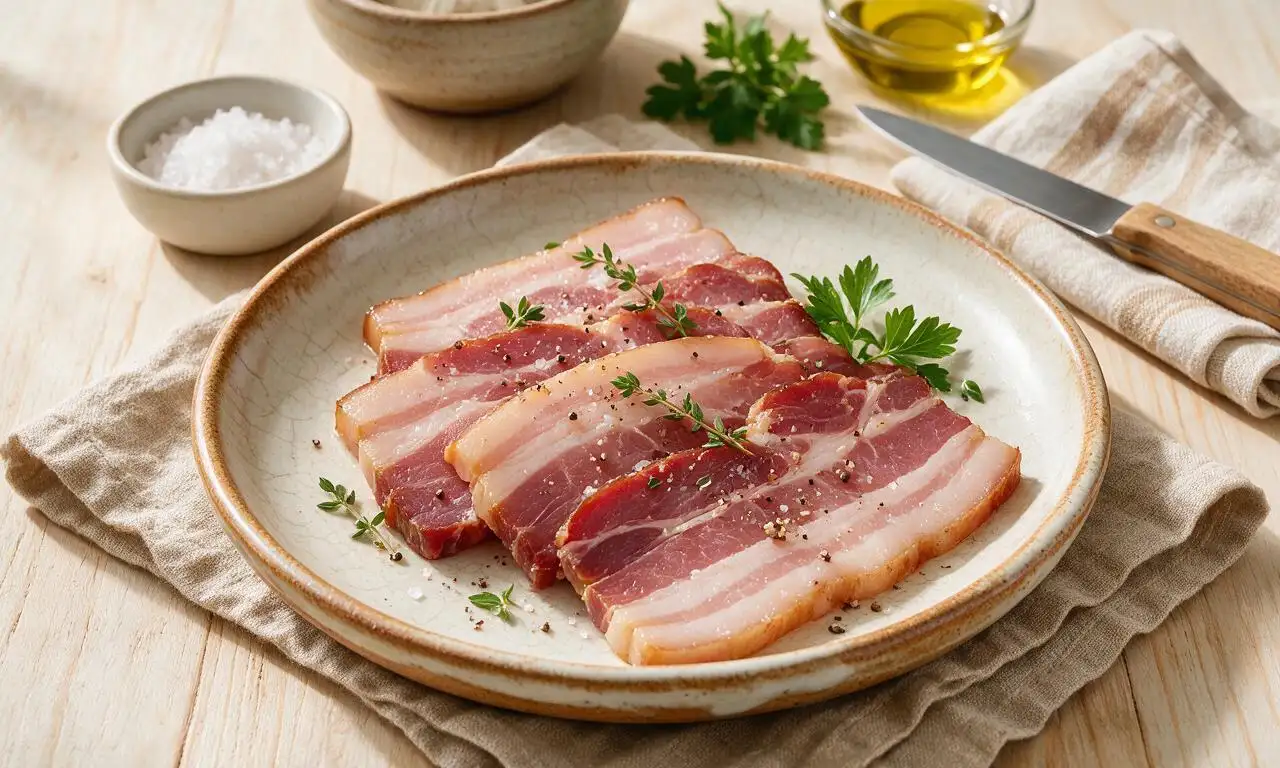
Rich, deeply savory cured salt pork, a long-lasting kitchen staple perfect for frying crispy as a side or adding umami to stews, beans, and chowders.

⏱️ 7 days (2Side Dishes ★ 4.9
Side Dishes
🍜 United States

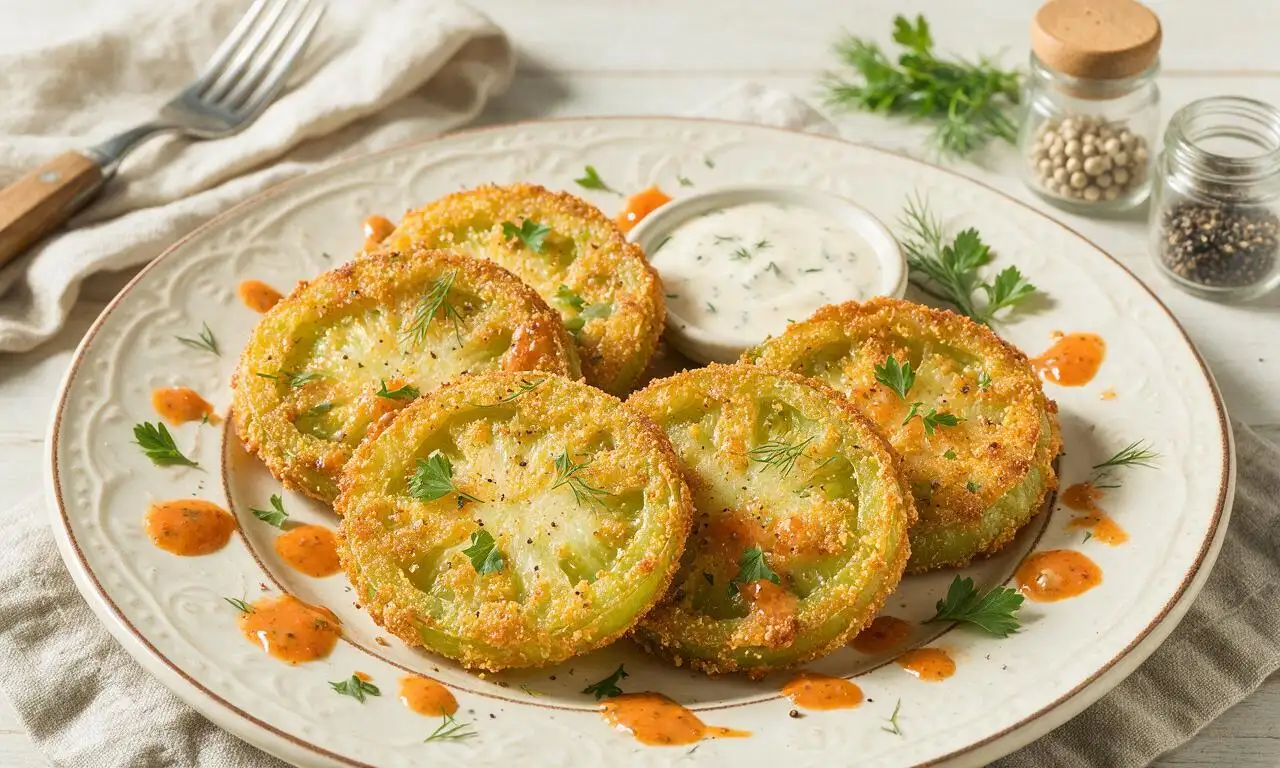
Crispy, tangy classic Southern fried green tomatoes with a crunchy cornmeal crust, served hot for a nostalgic, comforting summery bite.

⏱️ 25 minuteSide Dishes ★ 4.9
Side Dishes
🍜 United States

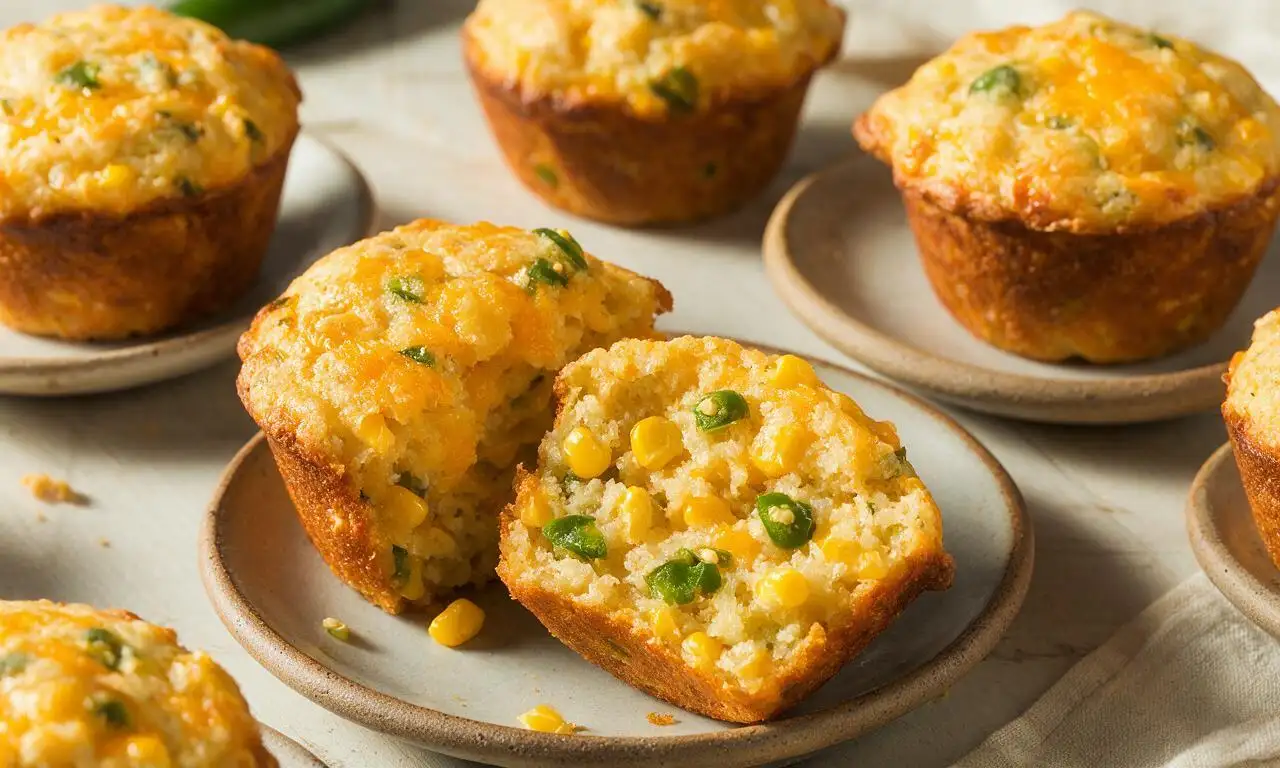
Moist, golden-crusted savory muffins with sweet corn, zesty jalapeño, and melted cheddar, perfect for pairing with smoky summer grilled fare.

⏱️ 30 minuteSide Dishes ★ 4.9

Polenta:Frequently Asked Questions

1.What’s the ideal polenta-to-liquid ratio for that perfect creamy, non-stiff texture? ▾
For velvety, spoonable traditional polenta, use a 1:4 ratio of coarse-ground yellow polenta to low-sodium chicken broth. If you prefer a looser consistency to serve under braises, bump that up to 1:4.5. Skip the 1:3 ratio used for firm, sliceable polenta meant for grilling or frying—it will be too dense for this creamy preparation.
2.Can I use fine-ground cornmeal instead of coarse-ground yellow polenta? ▾
You can, but note it will cook much faster (10–15 minutes instead of 30–40) and have a softer, less toothsome bite than traditional polenta. If fine cornmeal is all you have, stir more frequently to prevent lumps, and pull it off the heat earlier to avoid a gummy, mushy final texture.
3.Why does this recipe specify low-sodium chicken broth instead of regular? ▾
Low-sodium broth lets you fully control the final salt level of your polenta, which is key because Parmigiano-Reggiano adds significant salty, umami depth as it melts. Regular broth often leads to overly salty polenta once you add cheese and adjust seasoning, even if you skip adding extra salt early on.
4.Do I really need to stir polenta nonstop the entire time it cooks? ▾
You don’t have to stir nonstop for 40 minutes, but you do need to thoroughly scrape the pot bottom and sides every 2–3 minutes to prevent lumps and scorching. Keep the heat at the lowest setting once the polenta reaches a gentle simmer, and you’ll cut down on stirring work drastically without ruining the texture.
5.How can I make this polenta vegetarian without sacrificing flavor? ▾
Simply swap the low-sodium chicken broth for good-quality low-sodium vegetable broth, ideally one made with roasted mushrooms, carrots, and celery for deep, savory depth. If you want extra umami, add a tiny pinch of nutritional yeast before stirring in the butter and Parmigiano-Reggiano at the end of cooking.
6.What’s the easiest way to avoid lumpy polenta? ▾
The most reliable trick is to slowly stream coarse polenta into simmering broth while whisking constantly, rather than dumping all the cornmeal in at once. If small lumps do form, just keep stirring over low heat for 5 extra minutes—they’ll soften and break down completely, no straining required.
7.Can I use pre-grated parmesan instead of freshly grated Parmigiano-Reggiano? ▾
I don’t recommend it. Pre-grated parmesan is coated in anti-caking agents like potato starch that prevent it from melting smoothly, leaving your polenta grainy instead of silky. Freshly grated Parmigiano-Reggiano melts seamlessly and has a brighter, nuttier flavor that makes the dish feel luxuriously rich.
8.How do I fix polenta that turned out too thick and stiff? ▾
It’s a super easy fix! Just whisk in warm chicken broth (or hot water, if you’re out of broth) one tablespoon at a time over low heat until it loosens to your preferred velvety consistency. Remember polenta thickens as it sits, so err on the slightly looser side right when you finish cooking.
9.How do I fix polenta that came out too thin and runny? ▾
Let it simmer, stirring frequently, for 3–5 extra minutes to let the cornmeal absorb excess liquid. Keep in mind polenta thickens significantly once you take it off the heat and stir in cold butter and parmesan, so don’t over-thicken it before adding those final ingredients or it will end up too stiff.
10.Can I make this polenta ahead of time for a dinner party? ▾
Absolutely! Cook it up to 2 days in advance, store it in an airtight container in the fridge, and reheat gently on the stovetop over low heat. Whisk in a few splashes of warm broth and an extra pat of butter to bring it back to its original silky texture right before serving—guests won’t know it was prepped ahead.
11.Why do you add butter at the end of cooking instead of earlier? ▾
Adding cold unsalted butter off the heat at the very end, just like you would for a pan sauce, creates a glossy, rich emulsion that makes polenta feel luxuriously creamy without tasting greasy. Adding butter too early can cause it to separate and pool on the surface instead of blending smoothly.
12.What type of pot works best for cooking polenta? ▾
Reach for a heavy-bottomed saucepan or Dutch oven, which distributes heat evenly and drastically cuts down on scorching. Avoid thin, lightweight pots that create hot spots—these will burn polenta on the base even if you stir frequently, leaving a bitter, burnt aftertaste in the final dish.
13.Is traditional creamy polenta supposed to be completely smooth? ▾
Creamy Northern Italian polenta made with coarse-ground cornmeal has a soft, tender, slightly toothsome texture, not a perfectly baby-food-smooth puree. If you prefer an ultra-smooth consistency, give it a quick 10–15 second blend with an immersion blender after stirring in the butter and cheese.
14.How much salt should I add, and when is the best time to add it? ▾
Add a small pinch of coarse kosher salt to the broth before adding polenta, then taste and adjust at the very end after stirring in the parmesan. Since parmesan is naturally quite salty, you’ll likely only need ½ to 1 teaspoon of total salt for a full batch, depending on your broth and taste preferences.
15.Can I freeze leftover creamy polenta? ▾
You can, though it will separate slightly when thawed. Freeze it in airtight, portion-sized containers for up to 3 months. When ready to eat, thaw it in the fridge overnight, then reheat over low heat, whisking vigorously and adding a splash of broth and tiny pat of butter to restore its creamy texture.
16.What are the best dishes to serve with this creamy polenta? ▾
It’s the ideal cozy base for slow-braised short ribs, sautéed wild mushrooms, roasted root vegetables, tomato-braised sausage, or even a simple sprinkle of black pepper and extra parmesan for a light meal. It pairs especially well with rich, saucy dishes that let you sop up every last bit.
17.Why did my polenta turn out with a bitter taste? ▾
Bitter polenta almost always comes from scorching: cooking over too-high heat, or not stirring often enough, which lets cornmeal burn on the pot bottom. If you catch a slight burnt taste early, pour the polenta into a clean pot (don’t scrape the burnt bits!) and finish over low heat, adding extra butter to mellow the flavor.
18.Can I use water instead of chicken broth if that’s all I have on hand? ▾
You can, but your polenta will be far less flavorful. If using water, add an extra tablespoon of butter, an extra ¼ cup of parmesan, and adjust salt carefully to make up for the missing savoriness from broth. You can also stir in a dissolved chicken or vegetable bouillon cube for extra depth, if you have it.
19.Do I need to soak polenta before cooking to make it creamier? ▾
Soaking isn’t required, but soaking coarse polenta in your measured broth for 1–2 hours before cooking cuts cook time by about 10 minutes and creates an even silkier final texture, as the cornmeal grains hydrate more evenly. If you’re short on time, the standard slow-stir method works perfectly with no soaking needed.
20.Can I add extra flavors to this basic traditional polenta recipe? ▾
Definitely! This simple base is incredibly versatile. Stir in a pinch of freshly grated nutmeg, a clove of mashed roasted garlic, chopped fresh thyme or rosemary, a spoonful of mascarpone for extra richness, or a pinch of red pepper flakes right when you add the butter and parmesan at the end.

Comments (4)

2 days ago

OMG this creamy polenta was a total game changer for our Sunday family dinner! I was always intimidated to make polenta from scratch because I thought it’d be lumpy and fussy, but this recipe was so easy even my 10 year old helped stir. We served it with slow braised short ribs and everyone went back for seconds—my kids loved it! SO good, will be adding this to our regular rotation!

yesterday

Wait I did the same short rib pairing last night! Total chef’s kiss, I added a little extra parmesan at the end and my picky teen ate three servings lmao

yesterday

So happy to hear this was a hit for both of your family dinners! Adding a sprinkle of freshly grated parmesan right at the end is such a great pro tip—totally elevates that creamy texture even more. I love that this recipe is approachable enough for kids to help stir too!

1 week ago

This is my new go-to meal prep base for the week! I make a big batch on Sunday, portion it out, and top it with roasted veggies and grilled chicken for quick workday lunches. Cook time was exactly 30 minutes like the recipe said, no guesswork, and it stays creamy when reheated if you add a tiny splash of milk before microwaving. 10/10, no more sad desk lunches for me!

5 days ago

Love that you’re using this for meal prep! That splash of milk trick for reheating is such a smart hack—thanks for sharing it with other readers, I know so many people worry about polenta getting grainy when stored in the fridge. So glad the 30-minute cook time worked out perfectly for your Sunday prep routine!

3 days ago

Brought this to our neighborhood block party potluck last weekend and people kept coming up to ask for the recipe! I stirred in a little roasted garlic and fontina cheese to make it extra rich, and even the people who said they ‘don’t like polenta’ were raving. So easy to make in a big pot for a crowd, will absolutely make again for our next gathering.

2 hours ago

Wait I’m a total beginner in the kitchen and I was so nervous to make this for my girlfriend’s birthday dinner, but it came out perfect? No lumps, perfectly creamy, just like the fancy Italian place we go to downtown. I did accidentally add a little too much salt at first but I stirred in an extra splash of broth and it fixed it right up. So easy even someone who burns toast half the time can nail it, will definitely make again!

30 minutes ago

Pro tip for next time: season gradually at the end instead of salting early! I made the same over-salting mistake my first time making this too, it’s so forgiving though right? I love that this recipe is hard to mess up even for total new cooks.