1.Why do these pon de ring donuts use silken tofu instead of milk or eggs?
▾
Silken tofu is the secret to that iconic light, pull-apart chewy crumb without adding dense, heavy gluten or overpowering eggy aftertaste. It locks in moisture to keep donuts soft for hours, and when well-drained, it creates a smooth, workable dough. You won’t taste any tofu in the finished donut—it only boosts that signature bouncy texture.
2.Can I substitute tapioca starch with another starch if I don’t have it on hand?
▾
Tapioca starch is non-negotiable for that signature chewy, springy, bouncy pon de ring texture. Cornstarch, potato starch, or arrowroot will create a much firmer, crisper donut that lacks the iconic pull-apart, stretchy bite. If you must swap, you can replace up to ¼ cup of tapioca starch with glutinous rice flour, but the final texture won’t perfectly match the classic bakery version.
3.How do I properly drain silken tofu for this recipe so my dough isn’t too sticky?
▾
First, gently pour the tofu out of its package and discard all packing water. Set it on a stack of 3-4 paper towels on a plate, top with another paper towel layer and a light weight (like a small can of beans) for 15-20 minutes. Pat dry fully before mashing—you don’t need to press it completely firm, just remove excess loose water that would make dough unworkable.
4.Why won’t my dough hold the classic pon de ring shape with connected little balls when I fry it?
▾
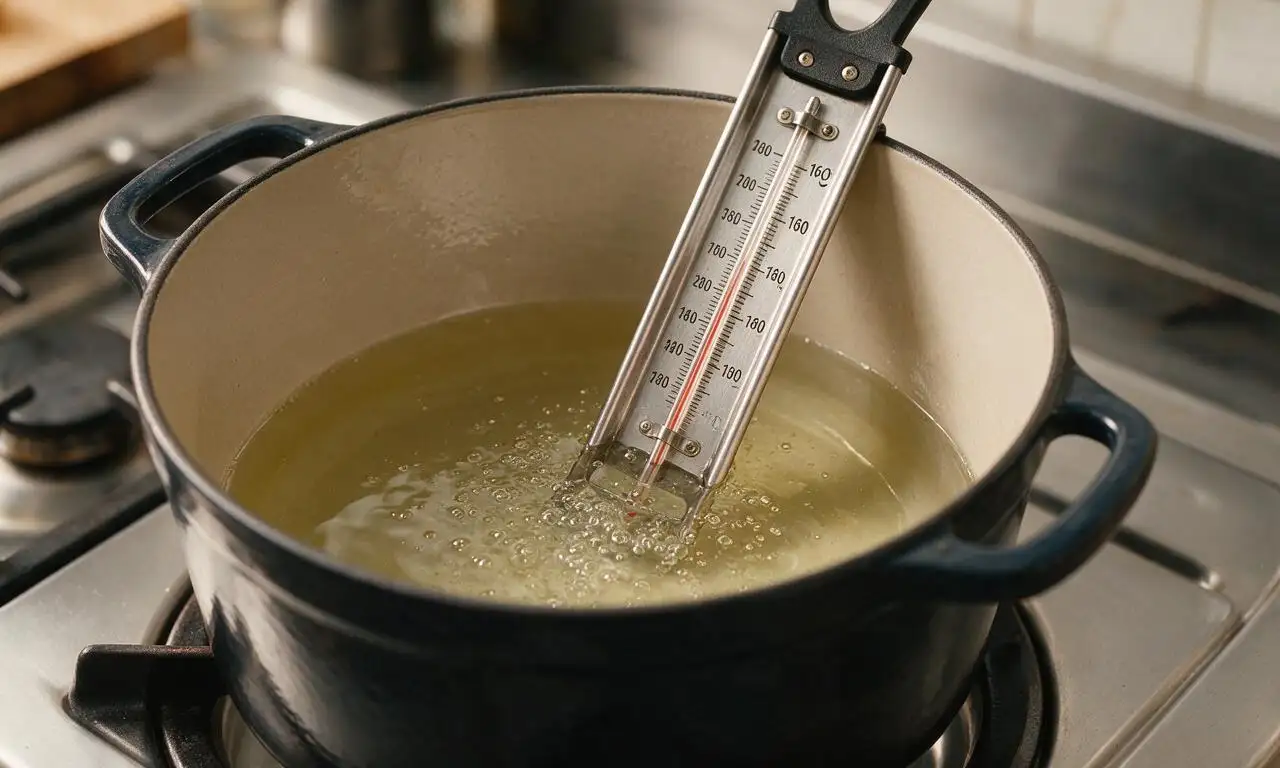
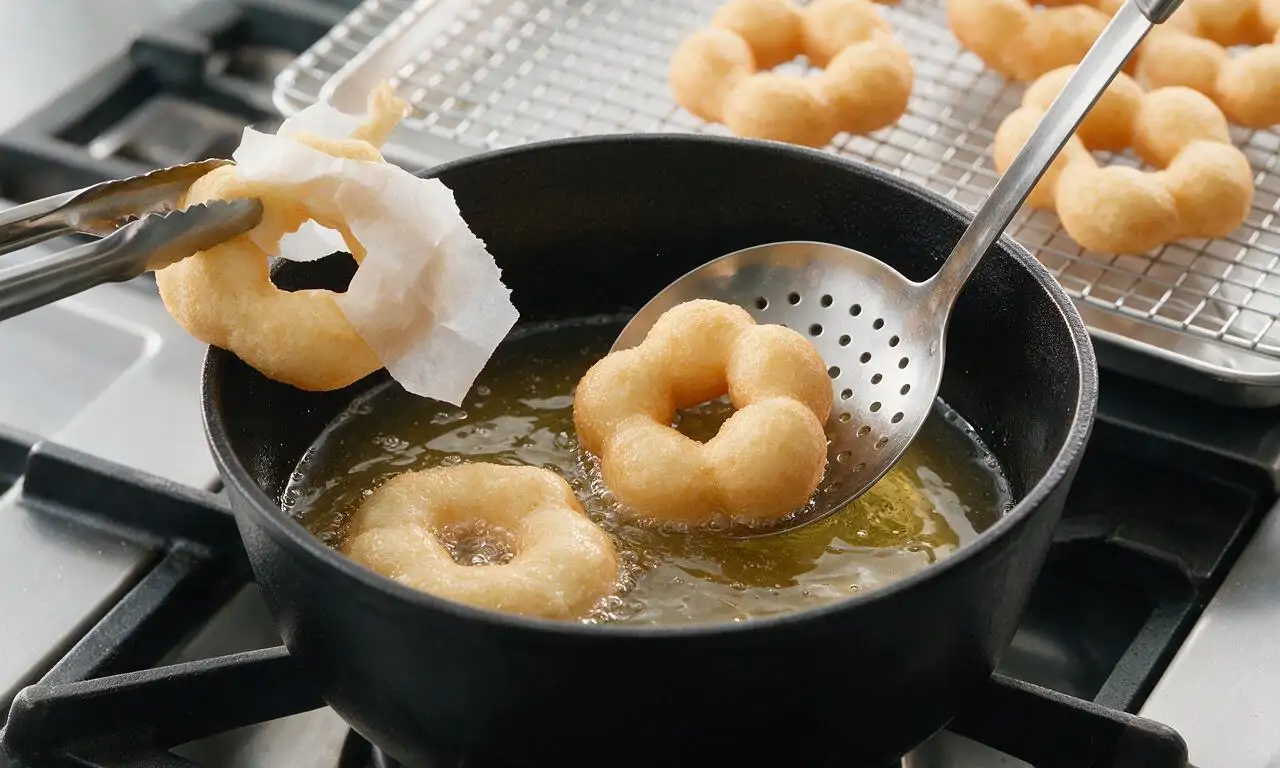
This almost always stems from two common issues: either your dough is too wet from under-drained tofu or excess added liquid, or your oil temperature is too low. Dough should be soft but not sticky enough to cling to lightly oiled hands, and oil should hold a steady 350°F during frying to set the shape fast before the dough spreads.
5.What oil is best for frying these mochi donuts to get a light, non-greasy finish?
▾
Neutral, high-smoke-point oils work best: refined canola, vegetable, peanut, or avocado oil are all ideal. Avoid strongly flavored oils like toasted sesame, extra-virgin olive oil, or unrefined coconut oil that will overpower the mild, sweet donut flavor. Keep oil steady between 340-350°F to prevent donuts from absorbing excess oil and turning soggy.
6.Can I bake these pon de ring donuts instead of frying them for a lower-fat version?
▾
You can, but the texture will be noticeably different—baked mochi donuts won’t have that light, crisp outer shell and soft, pull-apart interior, and they tend to turn denser and slightly gummy. If you bake, pipe rings onto a parchment-lined sheet, bake at 375°F for 12-14 minutes, and brush with melted butter before glazing to add richness.
7.How do I get that perfectly smooth, crack-free vanilla glaze that sets nicely?
▾
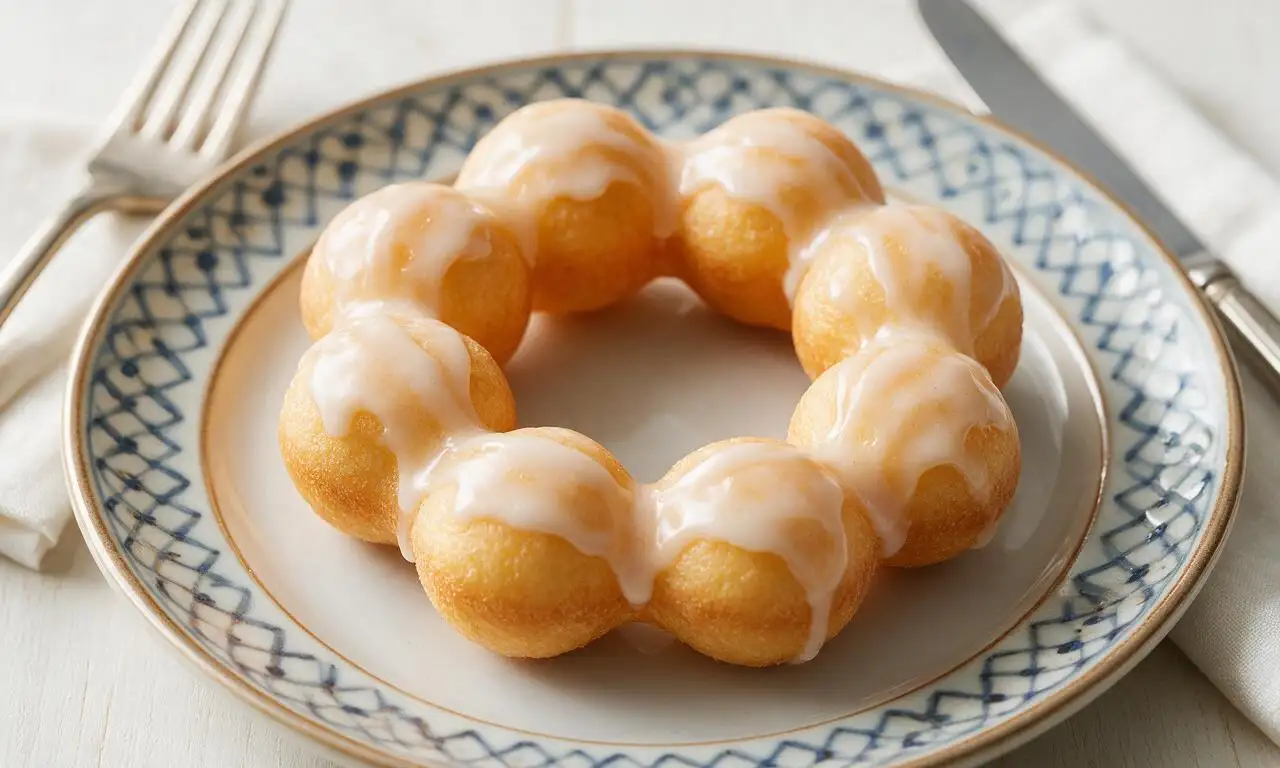
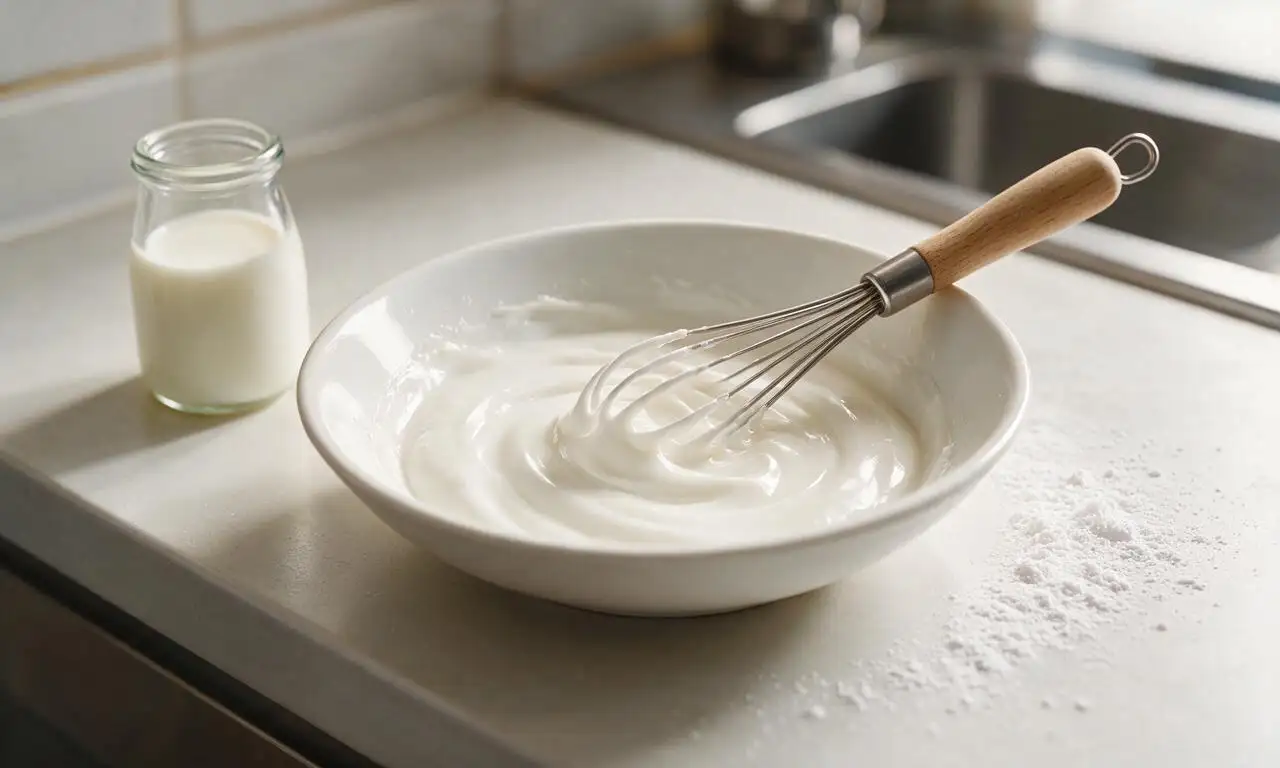
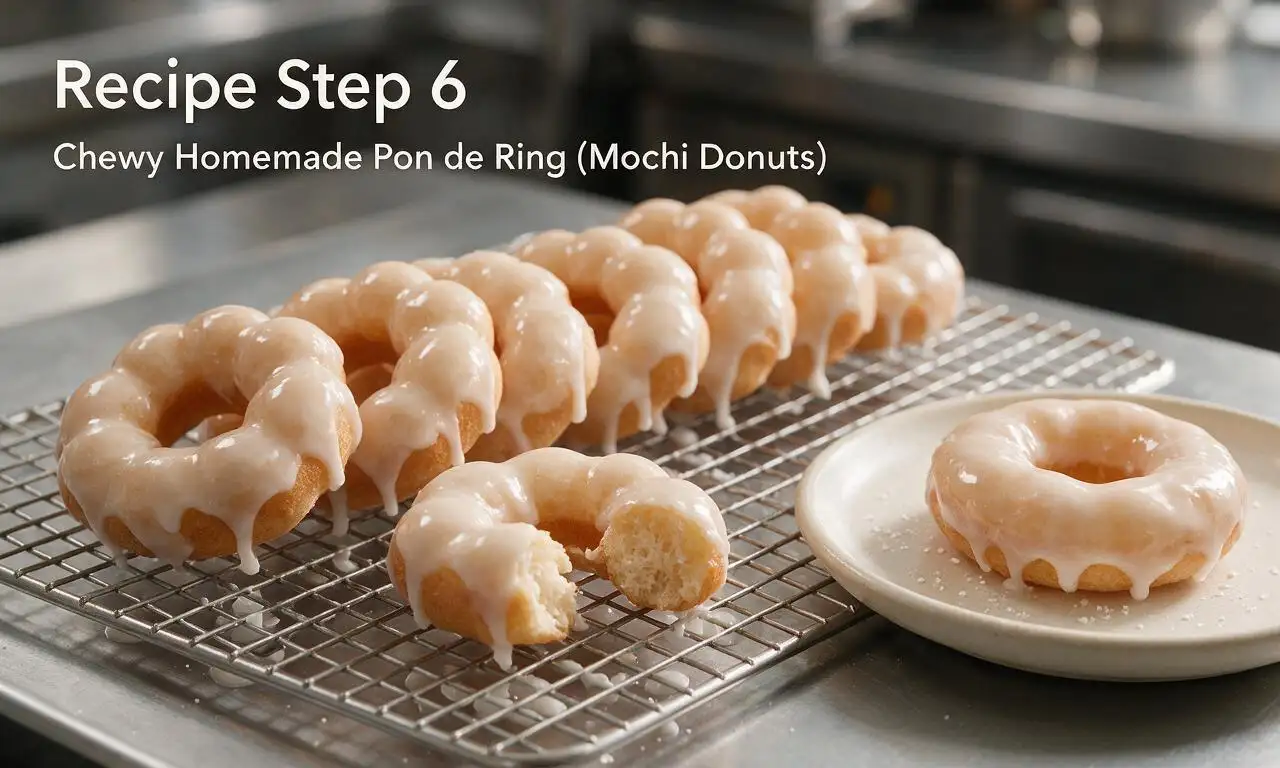
Whisk 1 cup of powdered sugar with 2 tablespoons of whole milk or heavy cream and 1 teaspoon of vanilla extract until completely lump-free, with a thick, honey-like consistency. If it’s too runny, add 1 tablespoon more powdered sugar at a time; if too thick, add ¼ teaspoon more milk. Dip cooled donuts straight in and let excess drip off on a rack for 10 minutes to set.
8.Why are my donuts hard and tough instead of soft and chewy after cooking?
▾
Tough donuts usually come from overmixing the dough or adding too much all-purpose flour. Mix the dough just until no dry streaks remain—overworking it develops excess gluten that makes the crumb tight and dense. Also, don’t fry donuts longer than 2-3 minutes total, as overcooking cooks out too much moisture and leaves them stiff and leathery.
9.Do I need a special donut pan or piping tip to make the classic pon de ring shape?
▾
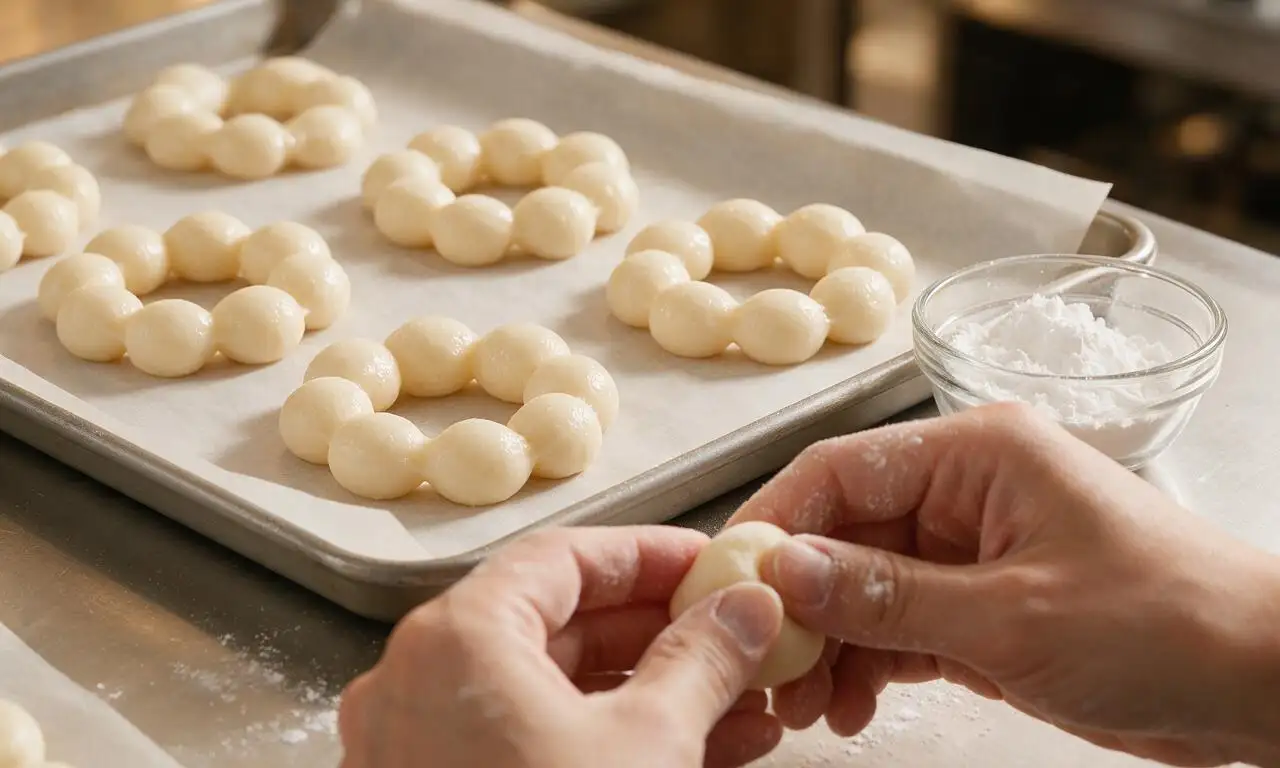
You don’t need any specialty equipment! The traditional connected-ball ring shape is easy to make by hand: pinch off 8 small 1-tablespoon balls of dough, arrange them in a tight circle on a small parchment square, and lower the whole square straight into hot oil. You can use a large round piping tip for more uniform shapes if you prefer.
10.How long do these homemade pon de ring donuts stay fresh, and how should I store them?
▾
These donuts taste best fresh, within 4 hours of frying, when their chewy texture is at its peak. If you have leftovers, store them in an airtight container at room temperature for up to 1 day—don’t refrigerate them, as cold temperatures make tapioca starch turn tough and gummy. Refresh day-old donuts with 10 seconds in the microwave to bring back their bounce.
11.Can I make the dough ahead of time to fry fresh for a morning breakfast?
▾
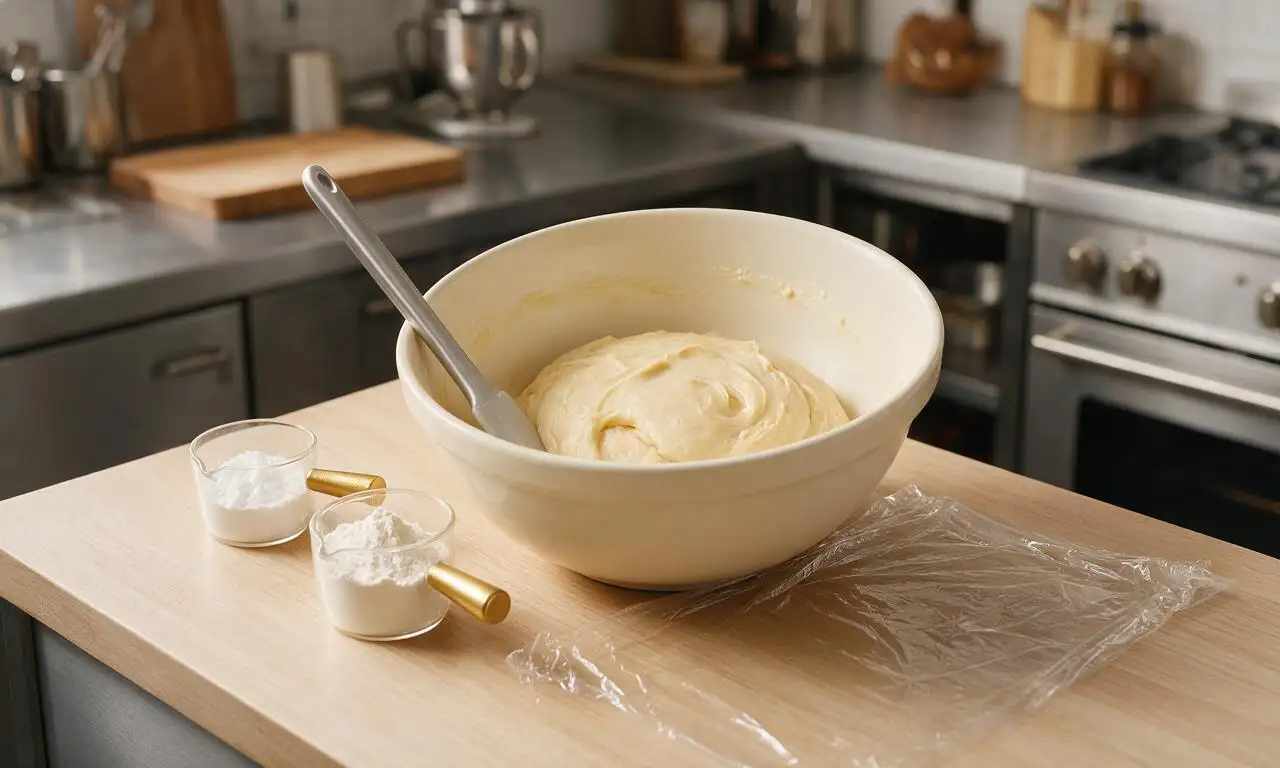
You can prep the dough up to 24 hours in advance! Wrap the dough tightly in plastic wrap, press out all air, and store it in the refrigerator. When you’re ready to fry, let the dough sit at room temperature for 15 minutes to soften slightly, then shape and fry as normal. Don’t freeze raw dough, as the tofu will separate and create a watery, uneven texture.
12.My donuts are raw in the middle even after the outside turns golden brown—what am I doing wrong?
▾
This happens when your oil temperature is too high: the outside browns fast before the interior has time to cook through. Use a clip-on candy thermometer to keep oil steady at 350°F, and don’t overcrowd the pot, which drops oil temperature suddenly. Donuts should take 1.5 minutes per side to turn pale golden and cook fully through without burning.
13.Can I add mix-ins or other glaze flavors to customize these donuts?
▾
Absolutely! For the dough, stir in 1 teaspoon of matcha powder, 2 tablespoons of freeze-dried strawberry powder, or ½ teaspoon of ube extract for fun flavored bases. For glazes, swap vanilla for chocolate, matcha, black sesame, or lemon, and top with sprinkles, crushed cookies, toasted coconut, or mochi bits right after glazing before the coating sets.
14.Is there a gluten-free version of this recipe I can make for friends with gluten sensitivities?
▾
It’s super easy to make these fully gluten-free! Just swap the all-purpose flour for a 1:1 gluten-free all-purpose baking mix that contains xanthan gum. Make sure your baking powder and tapioca starch are labeled gluten-free to avoid cross-contamination. The texture will be nearly identical to the original, with the same bouncy, chewy pull-apart crumb.
15.Why do my donuts puff up so much that the ring hole closes up when frying?
▾
A closed ring hole usually means you either made the center gap too small when shaping, added too much baking powder, or had the oil too hot which caused rapid, uneven puffing. Leave a 1-inch wide open gap in the center of your ring when arranging dough balls, measure baking powder accurately, and keep oil at a steady 350°F for even, controlled rise.
16.Can I use firm or extra-firm silken tofu instead of soft silken tofu for this recipe?
▾
Stick to soft silken tofu for the lightest, bounciest texture. Firm or extra-firm silken tofu has much less moisture and a denser, more curded texture that creates heavier, breadier donuts instead of the light pull-apart crumb. If firm silken tofu is all you have, mash it extremely smooth and add 1-2 teaspoons of plant milk to get the right soft dough consistency.
17.Do I need to let the dough rest before shaping and frying the donuts?
▾
You only need a 5-minute rest after mixing the dough to let the starches fully hydrate, which makes the dough less sticky and easier to shape. There’s no yeast in this recipe, so you don’t need a long rise time. If you rest the dough longer than 15 minutes at room temperature, it may get too soft and spread out when lowered into hot oil.
18.How do I prevent the donuts from sticking to the parchment paper when I lower them into the oil?
▾
Cut your parchment into 3x3 inch squares, and lightly spray or brush each square with a thin layer of cooking oil before placing the shaped dough ring on top. When you lower the donut into the oil, hold the parchment edge with tongs for the first 10 seconds of frying, then gently nudge the donut off—the paper will pull away easily once the dough sets.
19.These donuts taste bland even with the glaze—how can I boost flavor without ruining the chewy texture?
▾
First, add a tiny ¼ teaspoon of fine salt to the dry ingredients—salt cuts starchy blandness and amplifies sweet, vanilla notes without tasting salty. You can also add ½ teaspoon of almond extract or a pinch of lemon zest to the glaze for extra brightness. Avoid adding extra sugar to the dough itself, as that makes donuts brown too fast and turn crispy instead of chewy.


OMG these turned out SO chewy and perfect, exactly like the pon de rings I get at my local bubble tea shop! My kids loved them, devoured half the batch before I even finished glazing them. Total game changer for weekend snack time, will absolutely be making these for our next block potluck.
Took me a couple tries to get the dough consistency right (medium difficulty is no joke!) but once I nailed it? Chef's kiss. The chewy texture is unreal, way better than the grocery store mochi donuts I’ve been buying for months. Dipped mine in matcha glaze and toasted sesame seeds, 10/10.
Y’all, I messed up the first batch so bad because I overmixed the dough lmao. It came out super tough and not bouncy at all. Second batch I mixed until just combined and fried them at 350 instead of cranking the oil too hot, and they were perfect! Pro tip from my mess: don’t overwork the dough.
These look incredible! I made the regular version last month for a work potluck and everyone went crazy for them, but I have a kid with celiac and I’m dying to make a version they can eat—wondering if swapping the regular flour for a GF all purpose blend would mess with the chewy texture?
Made these for meal prep this week and they held up way better than I expected! I was worried they’d get hard in the fridge but a quick 10 second zap in the microwave brought that perfect chewy bounce right back. So good with my morning iced latte.
Made these for my partner’s birthday last night and they were a hit! I did a glaze with condensed milk and a little ube extract, and topped some with crushed Oreos. The only thing is mine came out a little greasier than I expected—did anyone else run into that?