raw steak dish

title 1
raw steak dish
⏱️ cook time 3 minutes
🍽️ servings 4
⚡ Difficulty medium

intro

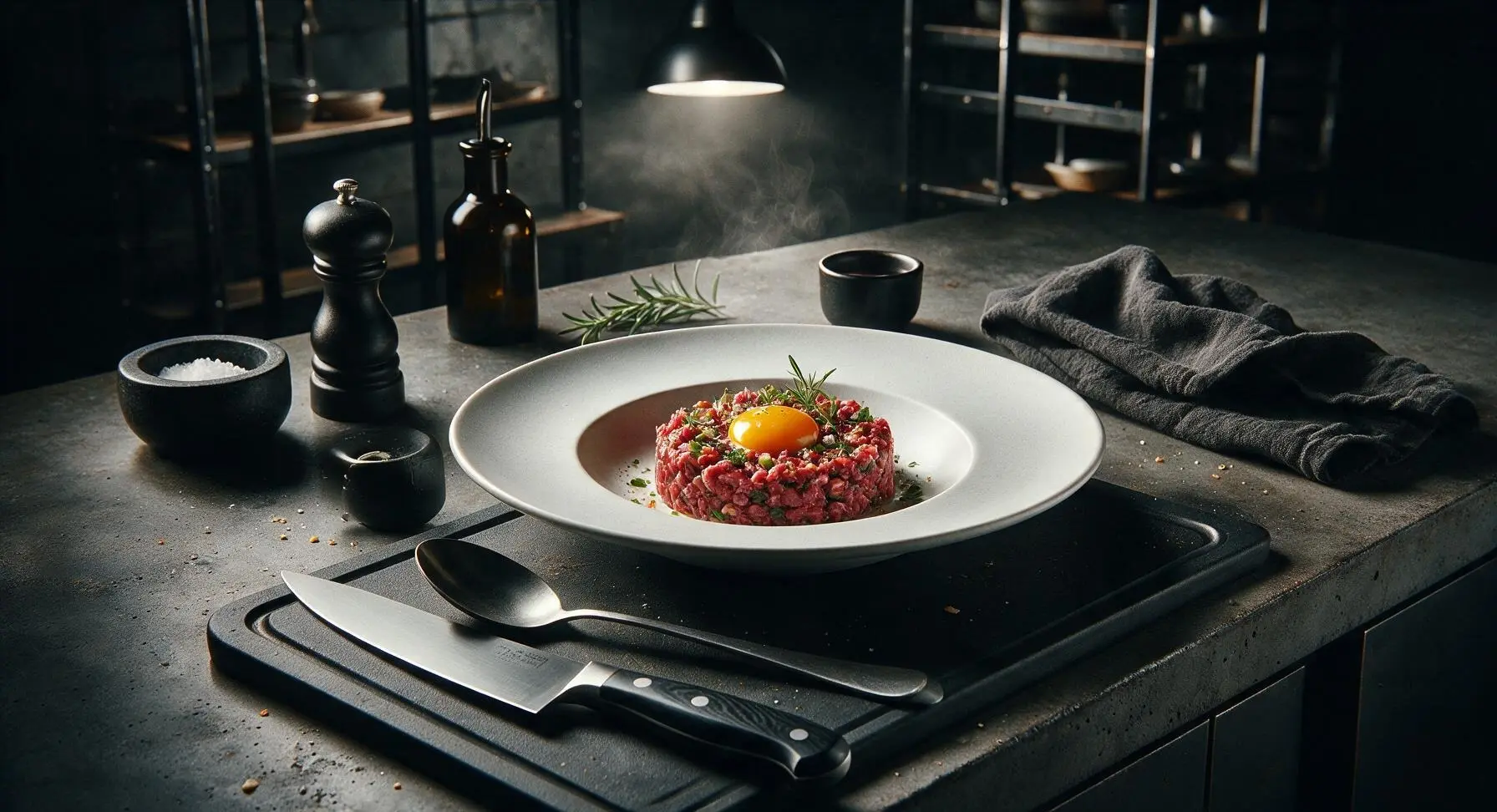
Silky hand-cut raw beef seasoned with bright tangy accents, topped with a runny golden egg yolk, the iconic elegant French bistro starter for special meals.

Ingredients
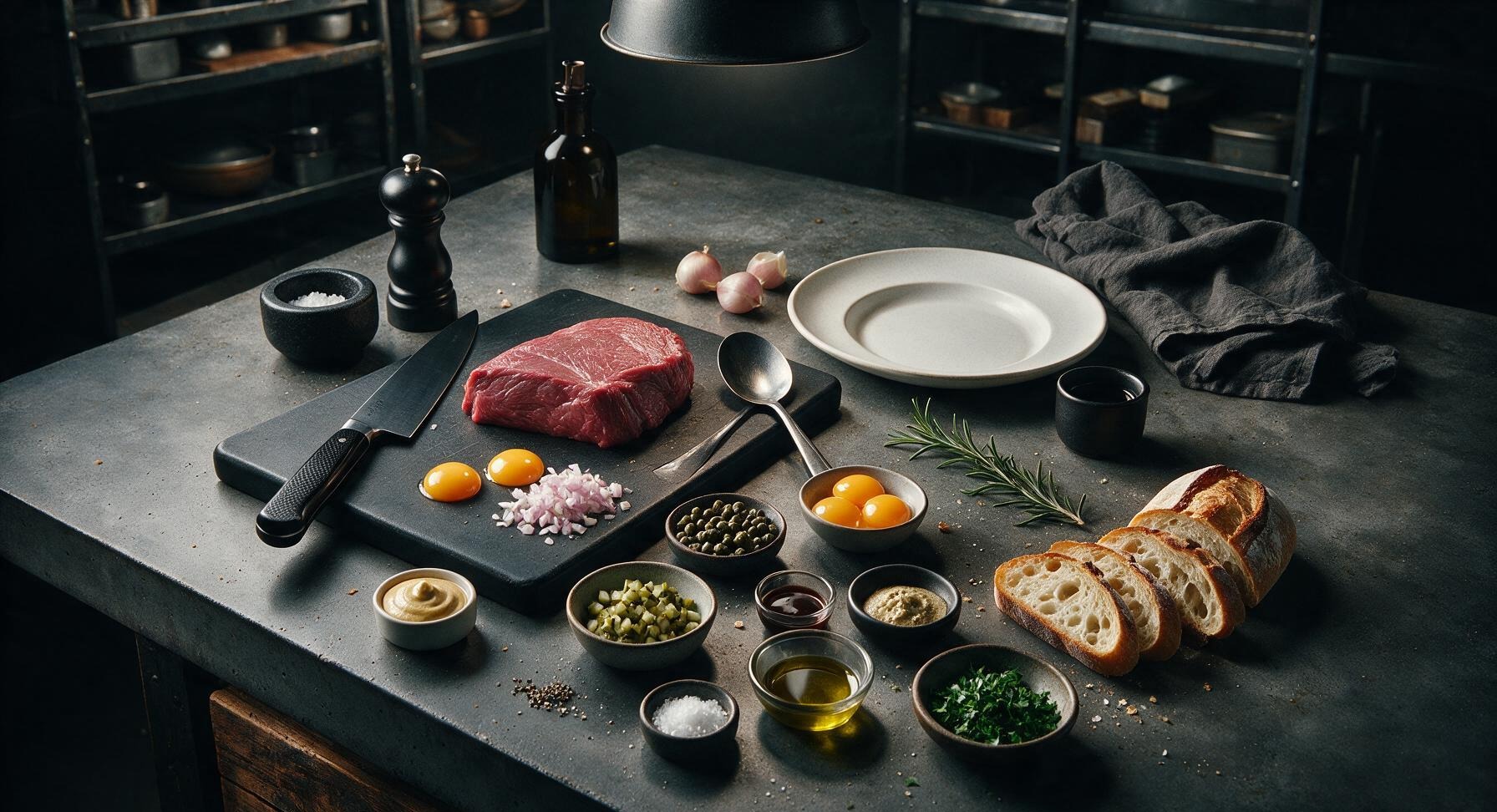
Beef tenderloin (center cut, trimmed) 400g
Pasteurized large egg yolks 4 each
Shallots, finely chopped 2 medium (30g)
Capers, drained and rinsed 2 tbsp
Cornichons, finely chopped 2 tbsp
Dijon mustard 1 tsp
Worcestershire sauce 1 tsp
Extra-virgin olive oil 1 tbsp
Flaky sea salt 1 tsp
Freshly cracked black pepper 1/2 tsp
Flat-leaf parsley, finely chopped 2 tbsp
Sourdough baguette 1/2 loaf (12 slices)

Steps

1

Chill and trim beef

Place 400g center-cut beef tenderloin in the freezer for 15 minutes until firm to the touch (but not frozen solid) to enable clean, even cuts. Set the chilled beef on the maple cutting board, then use the 8-inch chef knife to trim away every trace of silverskin, hard external fat, and connective tissue. Any remaining silverskin will be unpleasantly chewy in the finished tartare; the fully trimmed beef should be smooth, deep ruby red, with no pale tough patches visible.
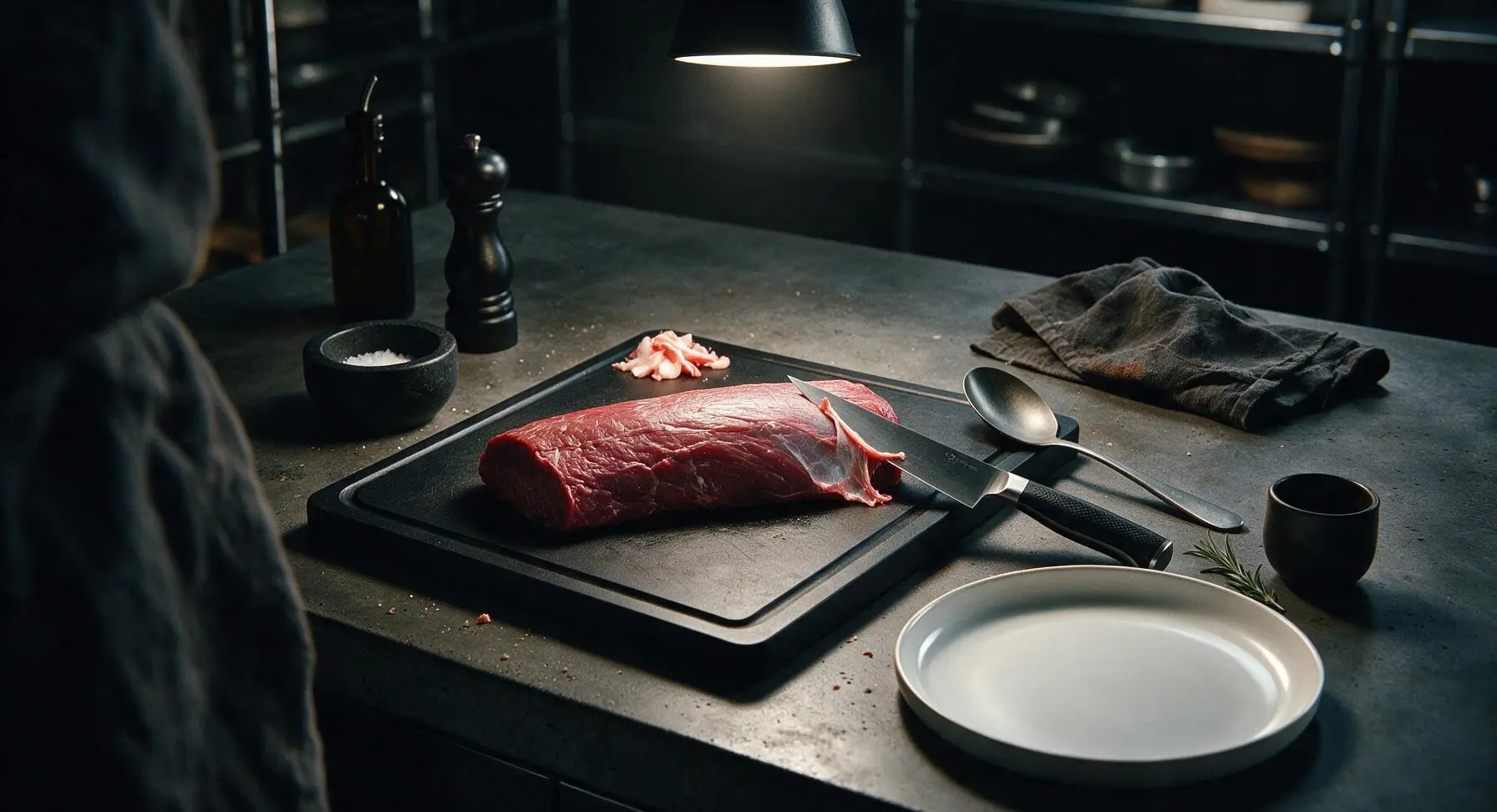
Step 1
step1:Chill and trim beef
2

Hand-cut beef evenly

Using the sharp 8-inch chef knife, slice the trimmed, firm beef against the grain into uniform 5mm thick slices. Stack 2-3 slices at a time, cut into 5mm wide strips, then turn the strips 90 degrees and dice into consistent 5mm cubes. Never use a food processor for this step, as it will mash the beef into a mushy, paste-like texture. Transfer all diced beef to the brushed stainless steel mixing bowl and return to the refrigerator to stay cold while prepping remaining ingredients.
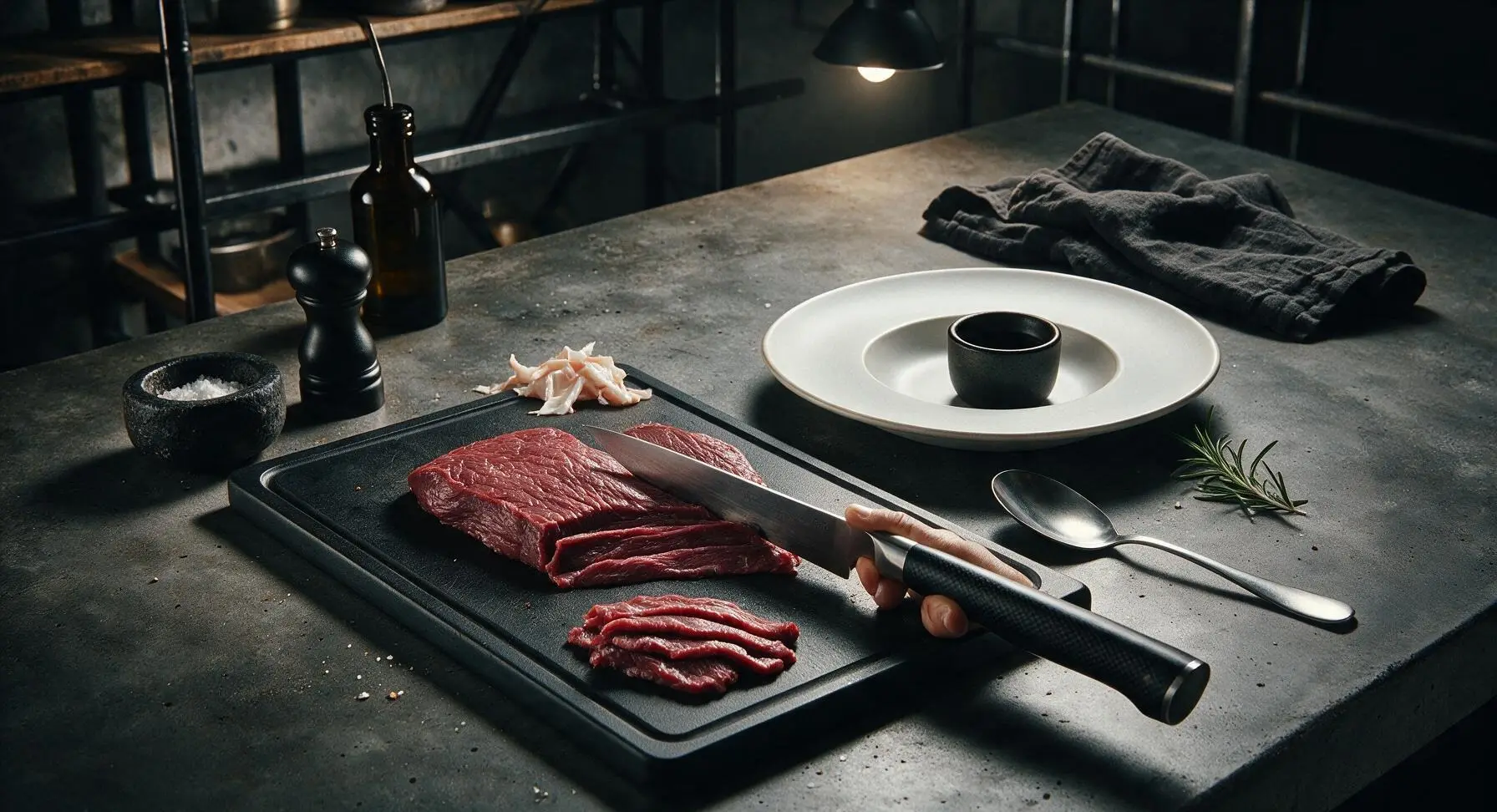
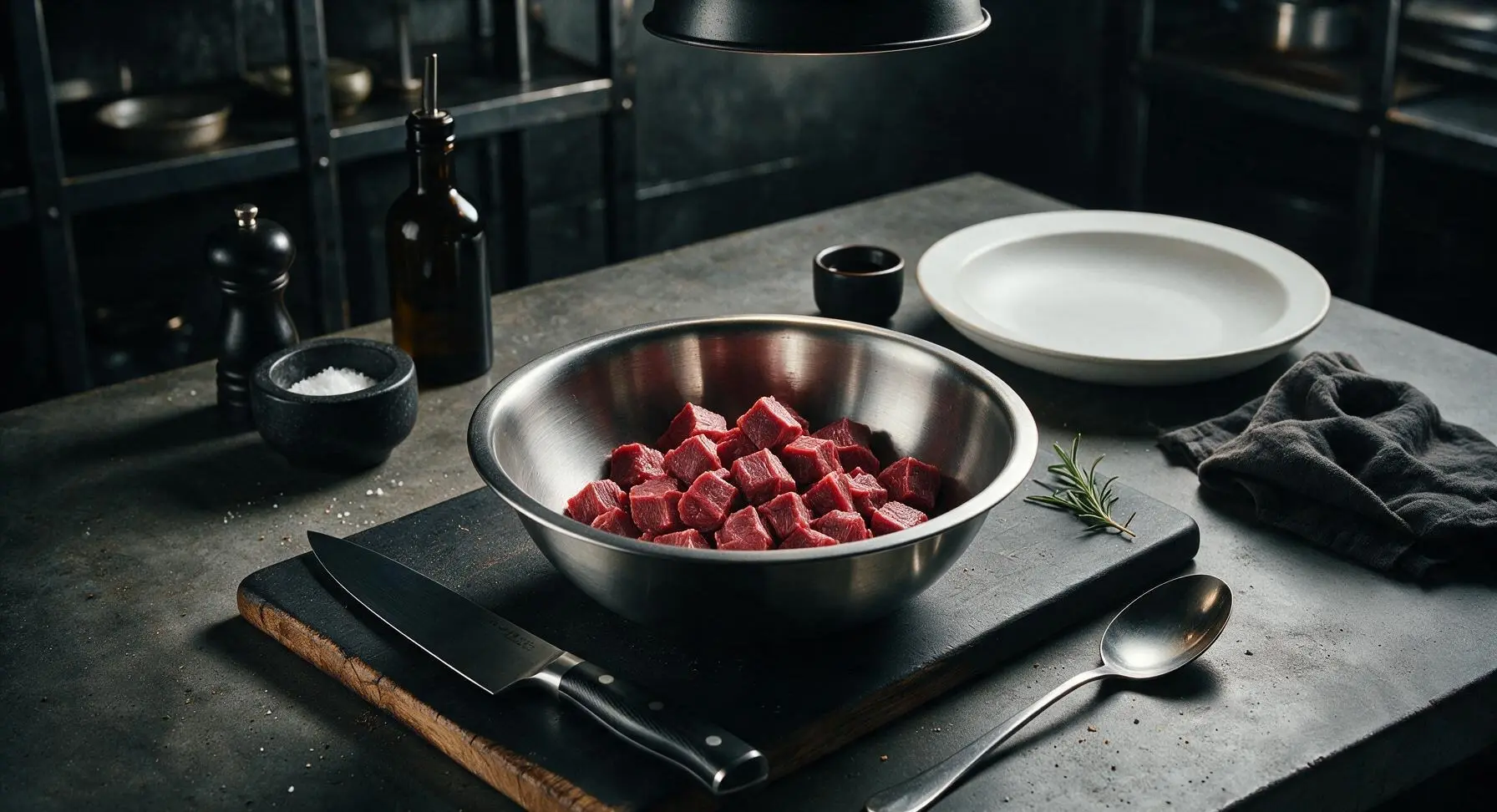
Step 2
step2:Hand-cut beef evenly
Step 2
step2:Hand-cut beef evenly
3

Toast baguette slices

Use the serrated bread knife to cut the half baguette into 12 thin 1cm slices, then lay the slices in a single layer on the chrome wire toaster rack. Toast for 3-4 minutes until light golden brown at the edges, with a crisp surface but slightly soft, chewy center. Over-toasted slices will crack when holding tartare, so remove them before they turn deep brown. Set toasted slices aside to cool completely to room temperature.
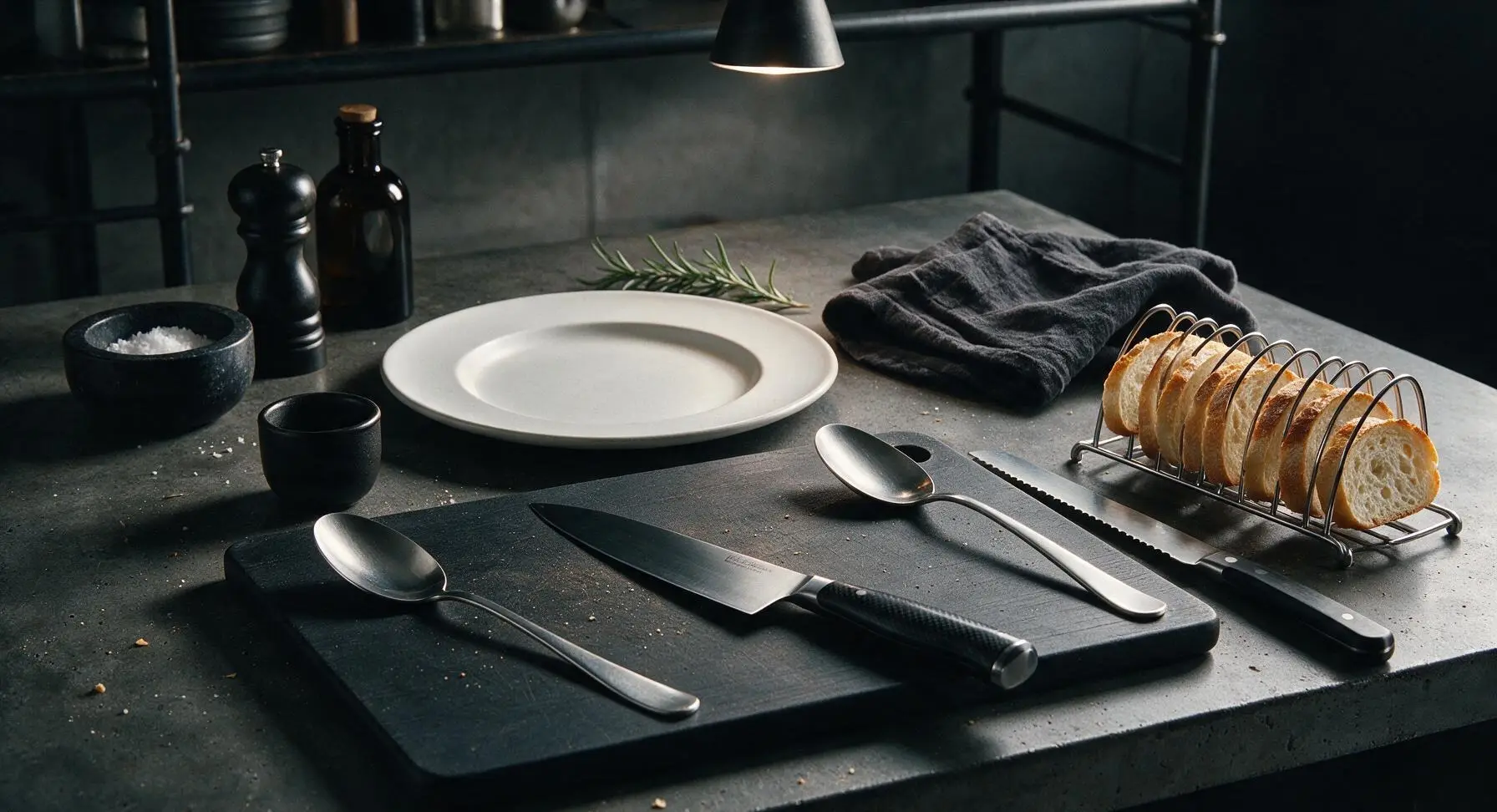
Step 3
step3:Toast baguette slices
4

Mix tartare seasoning

Remove the empty stainless steel mixing bowl from the fridge (keep the diced beef cold for now). Add 1 tsp Dijon mustard, 1 tsp Worcestershire sauce, 1 tbsp extra-virgin olive oil, 2 tbsp finely chopped shallots, 2 tbsp drained rinsed capers, 2 tbsp finely chopped cornichons, and 1 tbsp of the chopped flat-leaf parsley to the bowl. Stir gently with the stainless steel spoon until the mixture forms a loose, evenly combined dressing. Taste a tiny amount to adjust tang if needed.
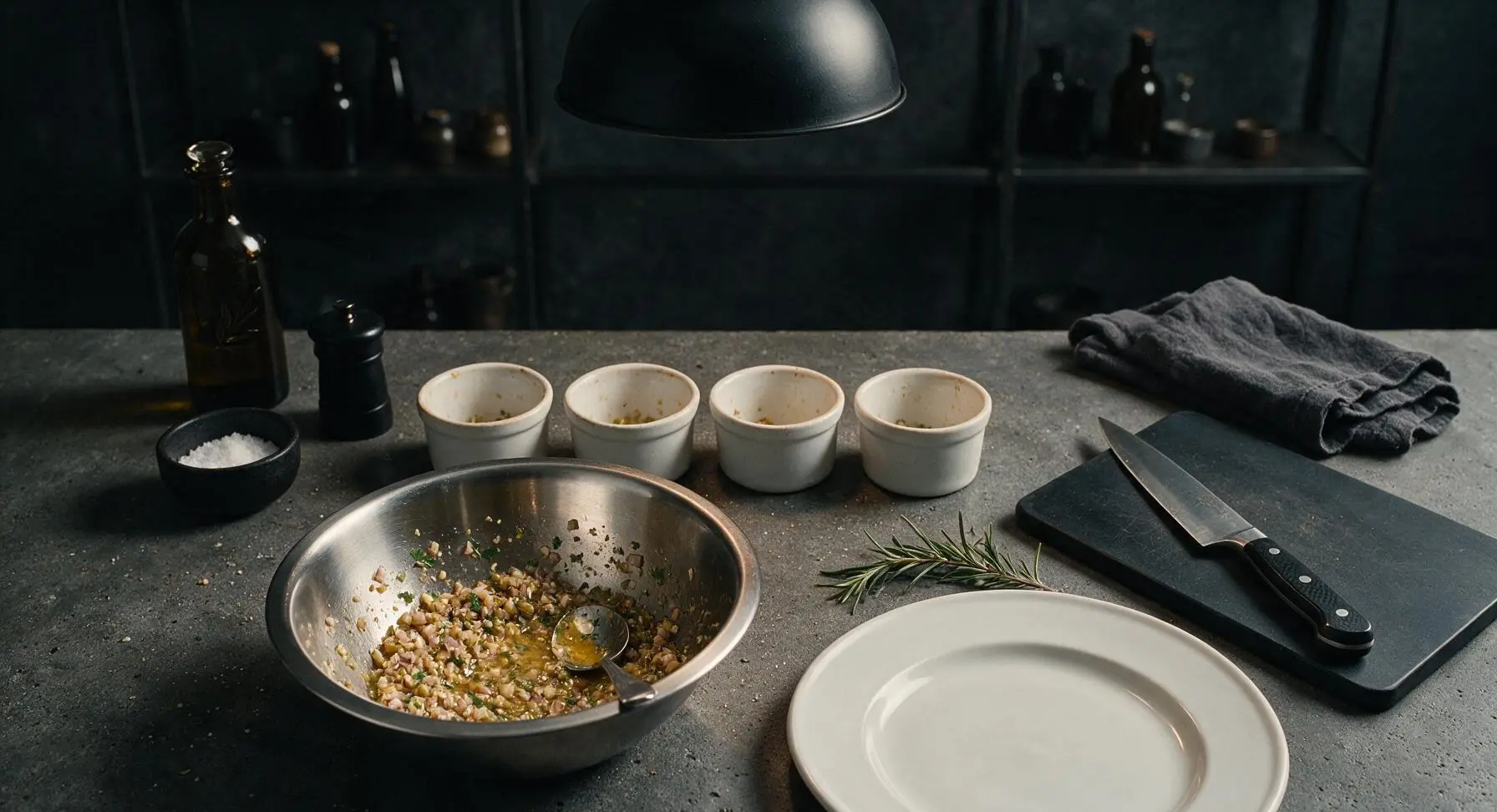
Step 4
step4:Mix tartare seasoning
5

Fold beef into seasoning

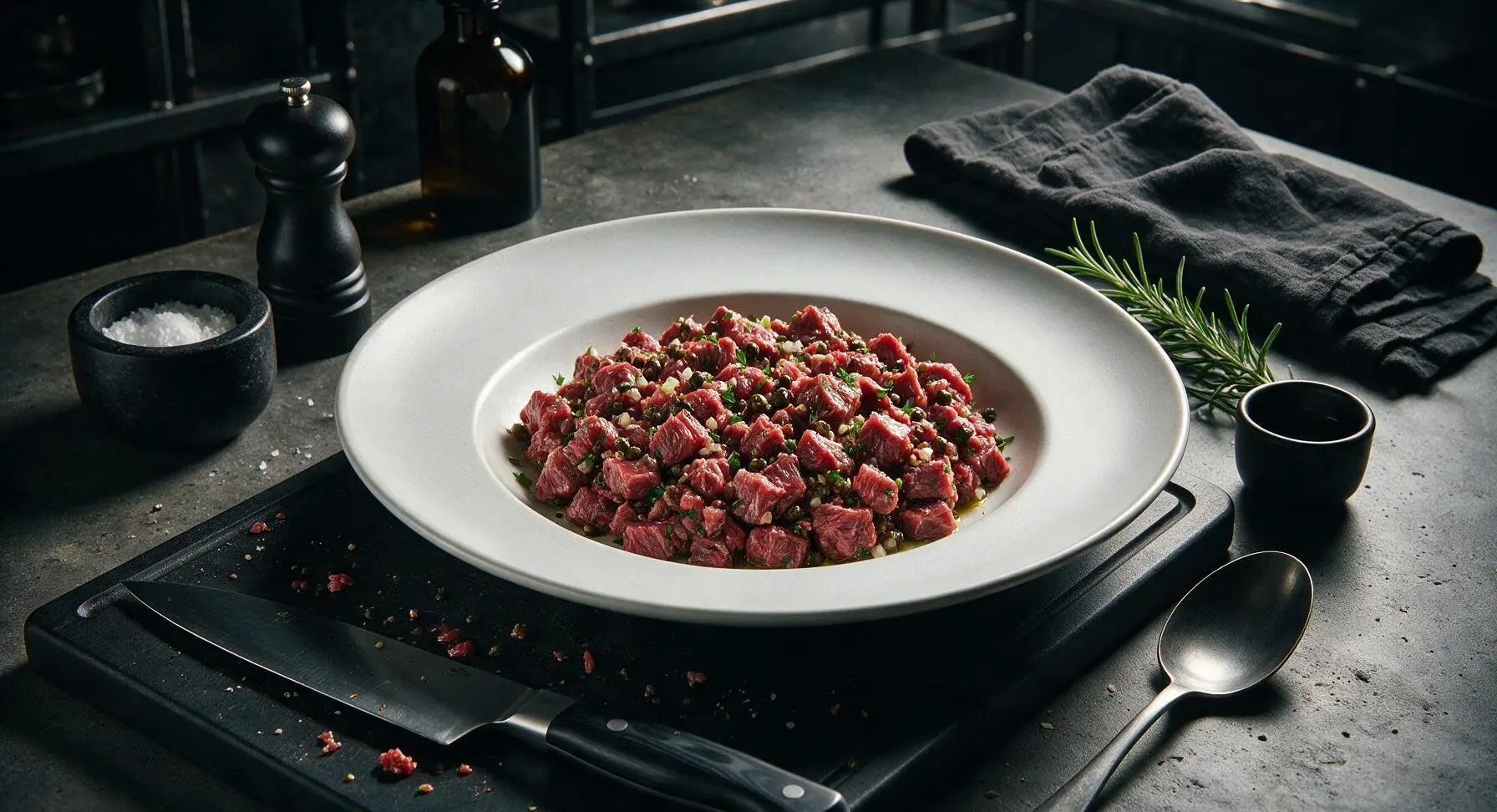
Retrieve the cold diced beef from the refrigerator, add it directly to the mixing bowl with the seasoning base. Use the stainless steel spoon to fold the mixture gently for 30-45 seconds, just until every beef cube is lightly coated in seasoning. Do not overmix or press the beef, as this will compress the cubes and create a dense, unpleasant texture. Season with 3/4 tsp flaky sea salt and 1/2 tsp freshly cracked black pepper, then fold once more to distribute evenly.
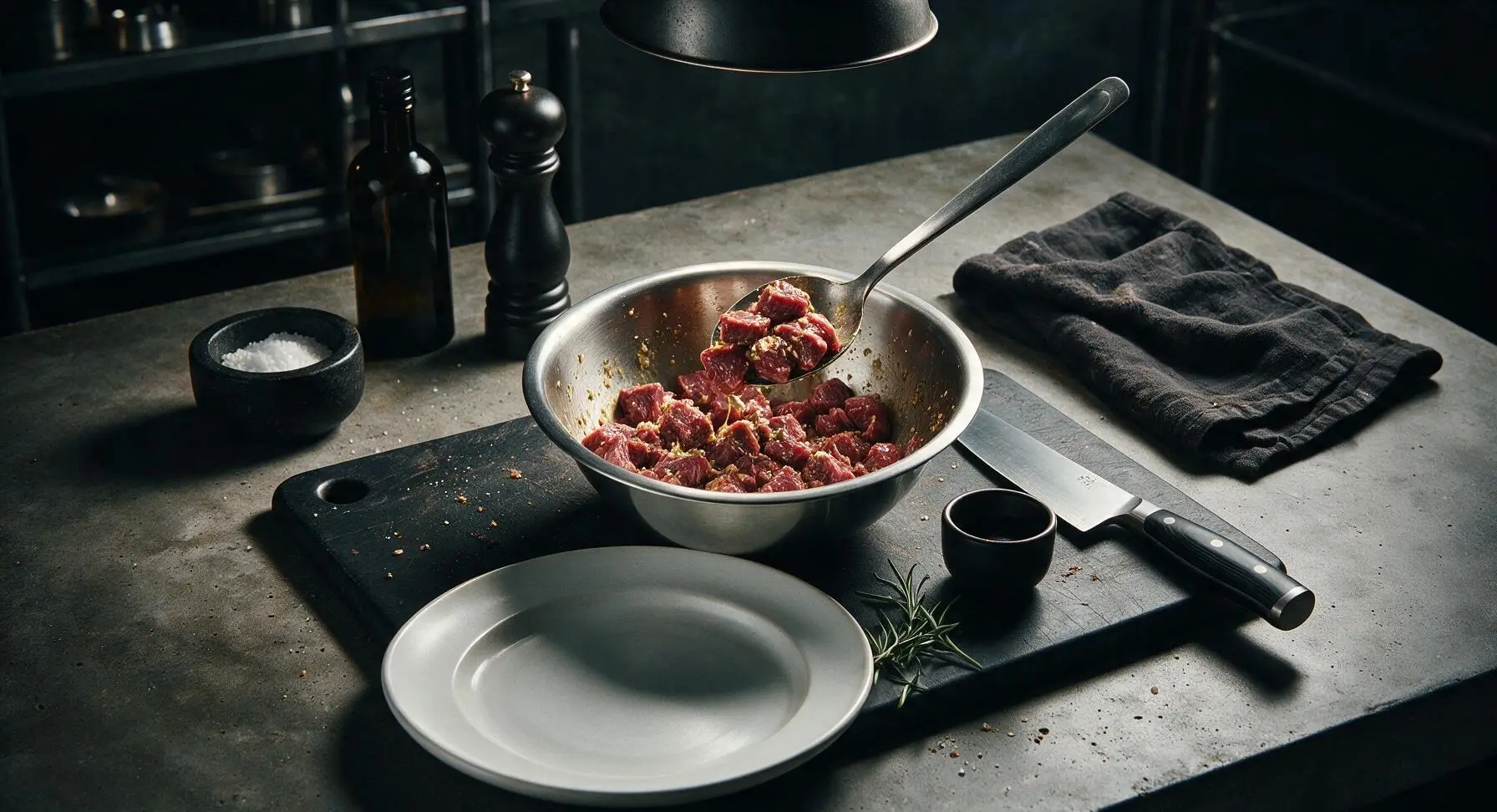
Step 5
step5:Fold beef into seasoning
Step 5
step5:Fold beef into seasoning
6

Mound tartare on plate

Spoon one quarter of the mixed tartare (about 100g) directly onto the center of the matte charcoal stoneware plate. Use the back of the stainless steel spoon to shape the tartare into a neat, 10cm wide round mound, pressing a 3cm wide shallow indent into the very top center to cradle the egg yolk. Do not pack the tartare tightly—it should hold its shape but feel light and loose when the plate is gently tapped.
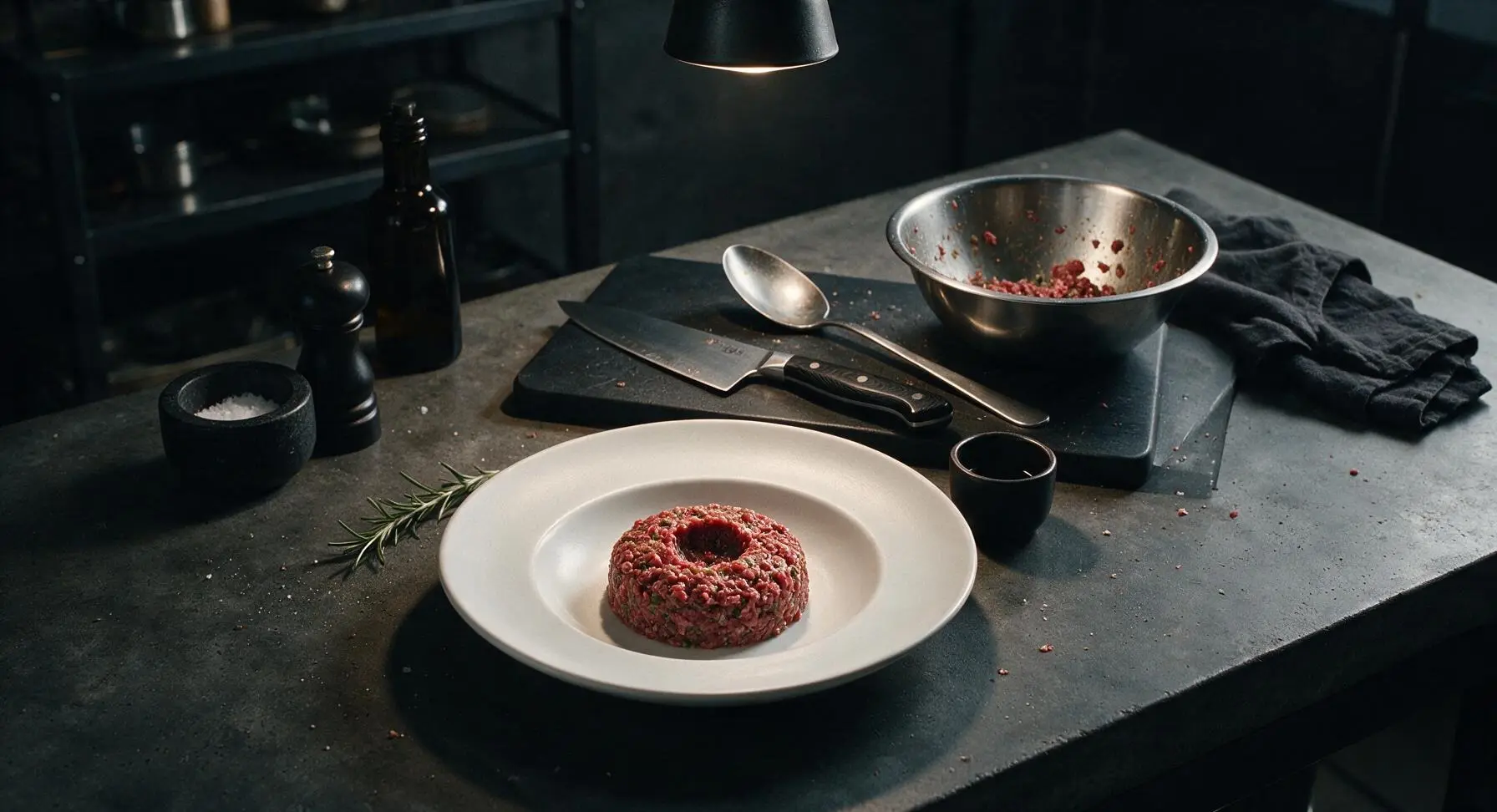
Step 6
step6:Mound tartare on plate
7

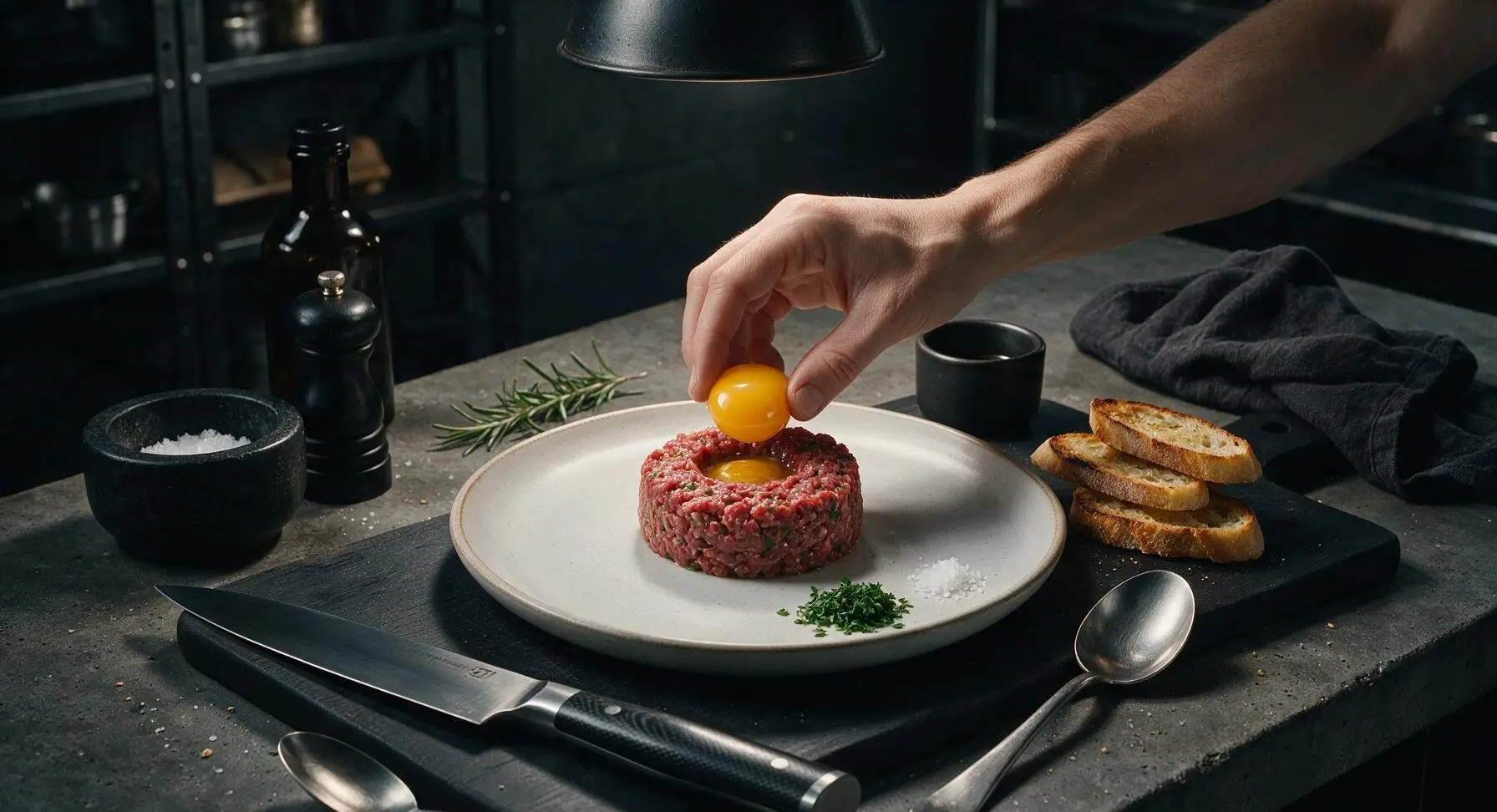
Top and finish plating

Carefully place one pasteurized egg yolk into the indent on top of the tartare mound. Sprinkle the remaining 1 tbsp of chopped parsley over the tartare, add a tiny pinch of flaky sea salt directly over the egg yolk, and twist a light crack of fresh black pepper over the whole plate. Tuck three cooled toasted baguette slices along the right rim of the plate, fanned slightly for visual appeal. Serve immediately, while the tartare is ice-cold.
Step 7
step7:Top and finish plating

Tips

1.Only use high-quality, fresh beef tenderloin from a trusted butcher: since the beef is served raw, there is no cooking step to kill surface bacteria, so ask your butcher for a fresh, whole piece of tenderloin that has not been previously ground or handled excessively, and keep it chilled at 40°F (4°C) or below at all times.
2.Freeze the beef for exactly 15 minutes before cutting: semi-firm beef cuts into clean, uniform cubes without mashing or smearing under the knife, which creates the signature light, tender texture of great steak tartare. Do not freeze the beef solid, as ice crystals will damage the meat fibers and create a watery texture when thawed.
3.Avoid over-seasoning or overmixing: the clean, sweet flavor of high-quality raw beef is the star of the dish, so season lightly to complement (not overpower) the meat, and fold gently to keep the cubes separate. Overmixing will compress the beef into a dense, paste-like texture that feels heavy instead of light and silky.

✨ You May Also Like

Snacks & Appetizers
🍜 Mexico

Crispy thick-cut tortilla chips piled high with seasoned beef, melted cheese, and bright fresh toppings for a shareable, crowd-favorite bite.

⏱️ 25 minuteSnacks & Appetizers ★ 4.8
Snacks & Appetizers
🍜 United States

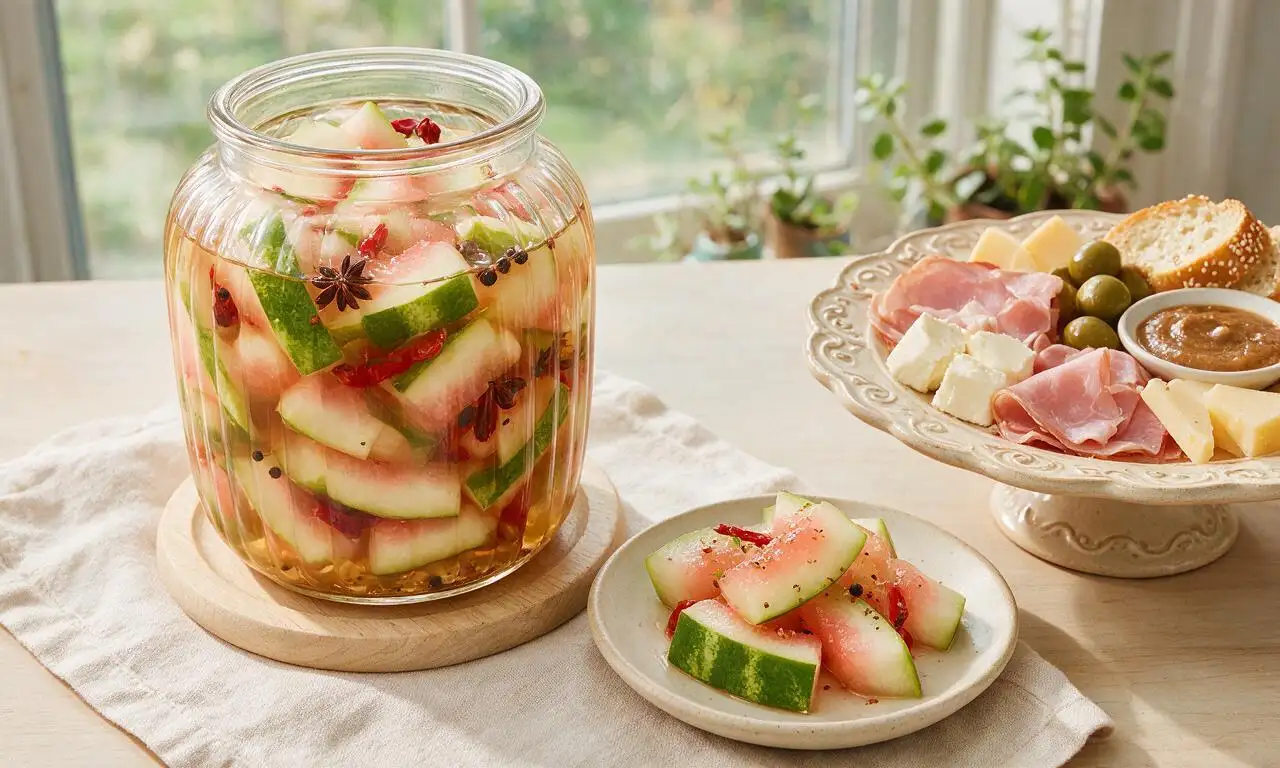
Crisp, sweet-tangy spiced pickled watermelon rind is a zero-waste summer staple, perfect with grilled meats, charcuterie, or eaten straight from the jar as a bright snack.

⏱️ 30 minuteSnacks & Appetizers ★ 4.6
Snacks & Appetizers
🍜 Germany

A tangy, jellied pork cold cut slow-simmered with aromatic spices, set into a firm sliceable loaf, served cold with mustard and crusty bread.

⏱️ 3 hours 4Snacks & Appetizers ★ 4.8
Snacks & Appetizers
🍜 United States

Creamy, tangy, perfectly seasoned hard-boiled egg halves filled with a rich, smooth yolk mixture, a timeless, crowd-pleasing bite for holiday and casual gatherings alike.

⏱️ 40 minuteSnacks & Appetizers ★ 4.8
Snacks & Appetizers
🍜 Russia

Silky, dill-forward no-smoke cured salmon, a Scandinavian classic with bright salty-sweet flavor, ideal for holiday starter platters and open-faced rye sandwiches.

⏱️ 48 hours Snacks & Appetizers ★ 4.7
Snacks & Appetizers
🍜 Japan

Crisp golden bottoms, juicy savory pork and vegetable filling, and tangy dipping sauce make these pan-fried gyoza a beloved shareable bite.

⏱️ 45 minuteSnacks & Appetizers ★ 4.8

raw steak dish:Frequently Asked Questions

1.Is homemade steak tartare safe to eat? ▾
It is completely safe when you follow basic food safety rules: use fresh, USDA-inspected beef tenderloin from a trusted butcher, keep all ingredients chilled below 40°F right up until serving, and use pasteurized egg yolks to reduce salmonella risk. Skip serving it to young kids, pregnant people, or immunocompromised folks to be extra cautious.
2.Why do you recommend hand-cutting the steak instead of using a meat grinder? ▾
Hand-cutting gives you distinct, silky bite-sized beef pieces that never turn mushy, unlike ground beef which gets compressed and pasty when pushed through a grinder. It also lets you remove every last bit of silverskin or tough connective tissue as you chop, for the smooth, luxurious texture that defines classic bistro tartare.
3.What’s the best cut of beef for steak tartare, and why? ▾
Center-cut beef tenderloin is the gold standard because it is ultra-lean, exceptionally tender, and has a mild, clean beefy flavor that doesn’t overpower the dish’s bright tangy seasonings. It has almost no tough connective tissue or chewy fat marbling, so it chops cleanly and feels silky on the tongue when served cold.
4.Do I really need to use pasteurized egg yolks for this recipe? ▾
Yes, pasteurized egg yolks are non-negotiable for safe home prep. Regular raw eggs carry a small but real risk of salmonella contamination, even if they look fresh and unblemished. Pasteurized eggs are gently heat-treated to kill harmful pathogens without cooking the yolk, so you get that rich, runny texture without the safety risk.
5.How finely should I chop the beef for tartare? ▾
Aim for uniform ¼-inch dice, roughly the size of a small lentil. If you chop it too fine, the tartare will turn mushy and lose its satisfying, distinct bite; if you leave chunks too large, it will feel chewy and hard to eat neatly with crostini or a fork. Keep your knife sharp for clean, even cuts.
6.How far in advance can I prep steak tartare before serving? ▾
You can prep and chill all separate mix-ins (chopped shallots, rinsed capers, chopped cornichons) up to 24 hours ahead, but only chop the beef and mix everything together 15 to 20 minutes right before serving. Holding mixed tartare longer will make the beef oxidize, turn gray, and develop an off, metallic flavor.
7.Why does the recipe say to rinse capers before adding them? ▾
Capers are packed in heavily salted brine that can make your tartare overly salty and one-note briny if you add them straight from the jar. Rinsing them under cold water and patting them dry removes excess surface salt, so you get their bright, tangy, pickled flavor without throwing off the dish’s seasoning balance.
8.What are the best things to serve with classic steak tartare? ▾
Traditional bistro pairings include thin, crispy toasted crostini, plain rye crisps, or lightly buttered toasted baguette slices. Many spots also serve it with a small side of peppery arugula tossed in lemon vinaigrette, a few extra cornichons on the side, and a light sprinkle of flaky sea salt right before eating.
9.Can I freeze beef tenderloin to use later for tartare? ▾
Freezing fresh, high-quality tenderloin for 24 to 48 hours at 0°F or below actually adds an extra layer of food safety, as it kills any potential parasites that can be present in raw beef. Just thaw it completely in the fridge for 24 hours before chopping, and pat it very dry before dicing to avoid watery tartare.
10.My tartare came out watery—what did I do wrong? ▾
Watery tartare almost always comes from two common mistakes: not patting the beef completely dry with paper towels before chopping, or mixing in wet ingredients that weren’t drained properly. Always pat rinsed capers and chopped cornichons dry too, and avoid salting too early, as salt draws moisture out of raw beef.
11.Can I add extra seasonings or mix-ins to the classic base recipe? ▾
You can absolutely tweak it to taste, but start with the classic base first to get the flavor balance right. Popular gentle additions include a tiny dash of Dijon mustard, a splash of Worcestershire sauce, fresh cracked black pepper, or a pinch of chopped parsley, but skip heavy, strong flavors that overpower the mild beef.
12.How cold should the beef be when I chop it for tartare? ▾
Keep the beef as cold as possible without freezing solid—aim for 32 to 36°F, right at regular fridge temperature. Chilled beef cuts much more cleanly, doesn’t smear as you chop, and stays food-safe longer while you prep. Pop chopped beef back in the fridge for 5 minutes if it starts to feel warm as you work.
13.What’s a good substitute for cornichons if I can’t find them? ▾
If you can’t find tiny, tangy French cornichons, use the crunchiest, least sweet dill pickles you can find, finely chopped, and pat them completely dry to remove excess brine. Avoid sweet bread-and-butter pickles or garlic-heavy deli dills, as their strong, sweet or pungent flavor will throw off the classic tangy balance.
14.Why do traditional recipes serve a whole egg yolk on top of tartare? ▾
The runny pasteurized egg yolk adds a rich, silky, luxurious texture that lightly binds the seasoned beef when you break it and mix it in at the table. It adds subtle creamy richness that cuts through the briny tang of capers and cornichons, perfectly balancing the savoriness of the raw beef.
15.Can I make this recipe without raw egg yolks for an egg-free version? ▾
You can skip the egg yolk, but you’ll want a small replacement to get that signature silky texture: try a teaspoon of high-quality extra-virgin olive oil mixed in, or a tiny dab of smooth Dijon mustard to help seasonings coat the beef evenly. The flavor will be slightly less rich, but still bright and delicious.
16.How do I keep shallots from making my tartare taste harsh or bitter? ▾
First, use fresh, firm shallots, not soft or sprouting ones, and chop them very finely. If you’re extra sensitive to sharp raw allium flavor, soak chopped shallots in ice cold water for 10 minutes, then drain and pat them completely dry before adding—this softens their harsh bite without losing their mild, sweet onion flavor.
17.How long do leftover mixed steak tartare stay safe to eat? ▾
Mixed steak tartare does not keep well, so it is always best to make only as much as you plan to eat in one sitting. If you do have leftovers, store them in an airtight container in the coldest part of your fridge for no more than 12 hours, and never freeze mixed tartare, as it turns mushy and grainy when thawed.

Comments (9)

2 hours ago

OMG, I was so nervous to make raw steak at home for our weekly neighborhood potluck but this recipe was a total game changer! The hand-cut tip makes such a huge difference vs the ground stuff I almost bought. Everyone was raving and asked for the recipe before they even left. SO good, will absolutely make this again for our next dinner party!

1 hour ago

So glad this was a total game changer for your potluck! You’re so right that hand-cutting the steak makes a world of difference in texture vs pre-ground—proud of you for taking the extra time to do that. Can’t wait to hear how it turns out for your next dinner party!

yesterday

Tried this for date night last weekend and my girlfriend swore we ordered it from the fancy French bistro downtown. Only thing I adjusted was adding a tiny extra dash of cognac because we love that depth. Cook time was barely 3 minutes like it said, zero stress once I got the steak cut properly. 10/10.

20 hours ago

Wait how fine did you cut the steak? I’m nervous about getting the texture wrong, I always end up chopping it too small or too big!

18 hours ago

Great question! Aim for uniform 1/4 inch cubes—no need to dice them super tiny, consistency matters way more than size so every bite is evenly tender. Also love that extra cognac tweak, that’s one of my favorite little upgrades to the classic recipe!

3 days ago

I was skeptical my teen boys would eat raw beef, but I told them it was “fancy fancy steak” and they both went back for seconds! Served it with the little toasted crostini like the recipe suggested and it was perfect for our Sunday family dinner. My husband already asked when I’m making it again.

2 days ago

Wait your teens ate this? Mine turn their nose up at anything that isn’t chicken nuggets or frozen pizza, I need to steal that “fancy fancy steak” trick on them for our next family dinner!

1 day ago

That “fancy steak” hack is genius! Kids (and even picky adults) are so much more open to trying new things when you frame it as a fun, special treat instead of something weird or unfamiliar. So glad your whole family loved it!

1 week ago

Solid recipe, but I do wish there was a little more guidance on what cut of steak to pick. I grabbed sirloin on my first try and it was a little chewy, swapped for filet mignon the second time and it was perfect. Still turned out edible the first time, just not as tender as I wanted.

6 days ago

Great feedback, thanks for sharing! I always recommend beef tenderloin (filet mignon) for the most buttery, tender texture since it has almost no tough connective tissue. I’ll add that note more prominently to the recipe card so folks don’t run into the chewy sirloin issue you had on your first try. So glad you gave it a second go!

5 minutes ago

Just finished mixing this up and OH MY GOODNESS it’s so much better than the restaurant version I paid $28 for last month. The capers and cornichons add the perfect tang, I didn’t skip a single ingredient. Can’t wait to dig in with a glass of pinot noir!

30 minutes ago

Wait hold on, is it actually safe to eat raw steak like this? I’ve always been scared of food poisoning from raw beef, would love to hear from people who’ve made this without issues.

20 minutes ago

As long as you get fresh, high-quality beef from a trusted local butcher and keep it ice cold the whole time you’re prepping, it’s totally safe! I’ve been making this for 40 years for family and friends and never had a single issue.

10 minutes ago

Totally fair concern, that’s a super common question! The keys to safe tartare are to buy fresh, whole-muscle beef from a reputable source, keep it chilled at 40°F or colder the entire time you’re prepping, and serve it immediately after mixing. Skip using meat that’s been sitting in your fridge for more than 2 days for this recipe!

2 weeks ago

Made this for my anniversary dinner and it was chef’s kiss! I did add a little extra dijon because I’m obsessed with mustard, and paired it with crispy fries like they do in Paris. My husband still talks about it, two whole weeks later.

5 days ago

I’ve been making steak tartare for decades and this is hands down the best classic version I’ve come across online. No weird add-ins, just the traditional flavor profile that lets the quality of the beef shine. Pro tip: pop your mixing bowl in the freezer for 10 minutes before you mix everything up to keep the meat super cold.

4 days ago

The frozen bowl tip is genius! I did that last night when I made this for my partner’s birthday and the meat stayed perfectly cold the whole time we ate, no mushy warm texture at all. Thanks for the pro tip!

just now

Wait, I was thinking of meal prepping this for the week but realized—can you store leftover steak tartare in the fridge, or do you have to eat it all right away? Don’t want to waste good steak!