1.How long do I need to let traditional PA Dutch red beet eggs pickle before they’re ready to serve?
▾
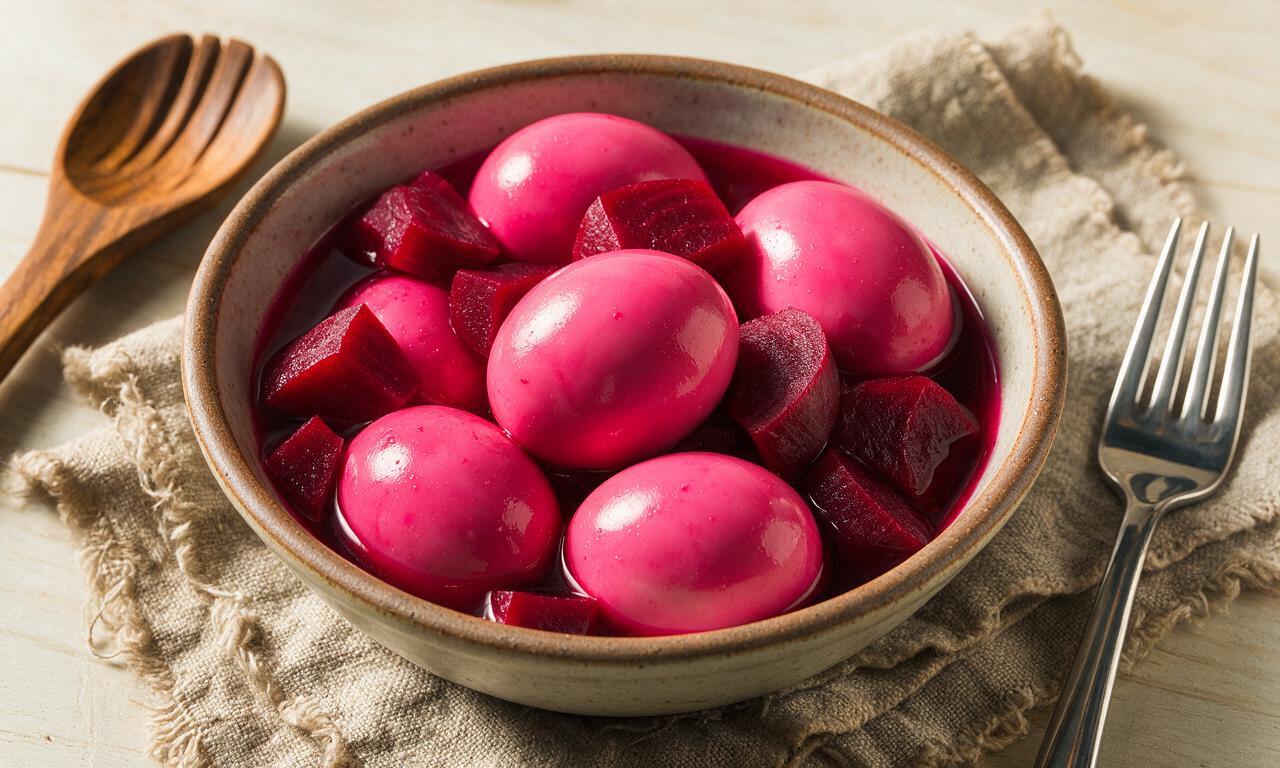
For a light blush color and mild tang, you can eat them after 24 hours of chilling in the brine. For the signature deep magenta hue and fully balanced tangy-sweet flavor PA Dutch recipes are known for, wait 3 to 4 days, flipping the jar gently once a day for even pickling.
2.Can I use fresh red beets instead of canned sliced beets for this recipe?
▾
Absolutely, though canned beets are the traditional convenience pick for this community staple. If using fresh, roast or boil 3 medium peeled, sliced beets until fork-tender before adding them to the brine, and reserve ½ cup of the cooking liquid to replace the canned beet juice called for.
3.How long do pickled red beet eggs stay good stored in the fridge?
▾
When kept fully submerged in the brine in a sealed, non-reactive glass jar in the coldest part of your fridge, these eggs will stay safe and tasty for up to 2 weeks. Skip freezing them, as the egg whites will turn rubbery and watery once thawed, ruining their classic firm texture.
4.Do I have to peel the hard-boiled eggs before adding them to the beet brine?
▾
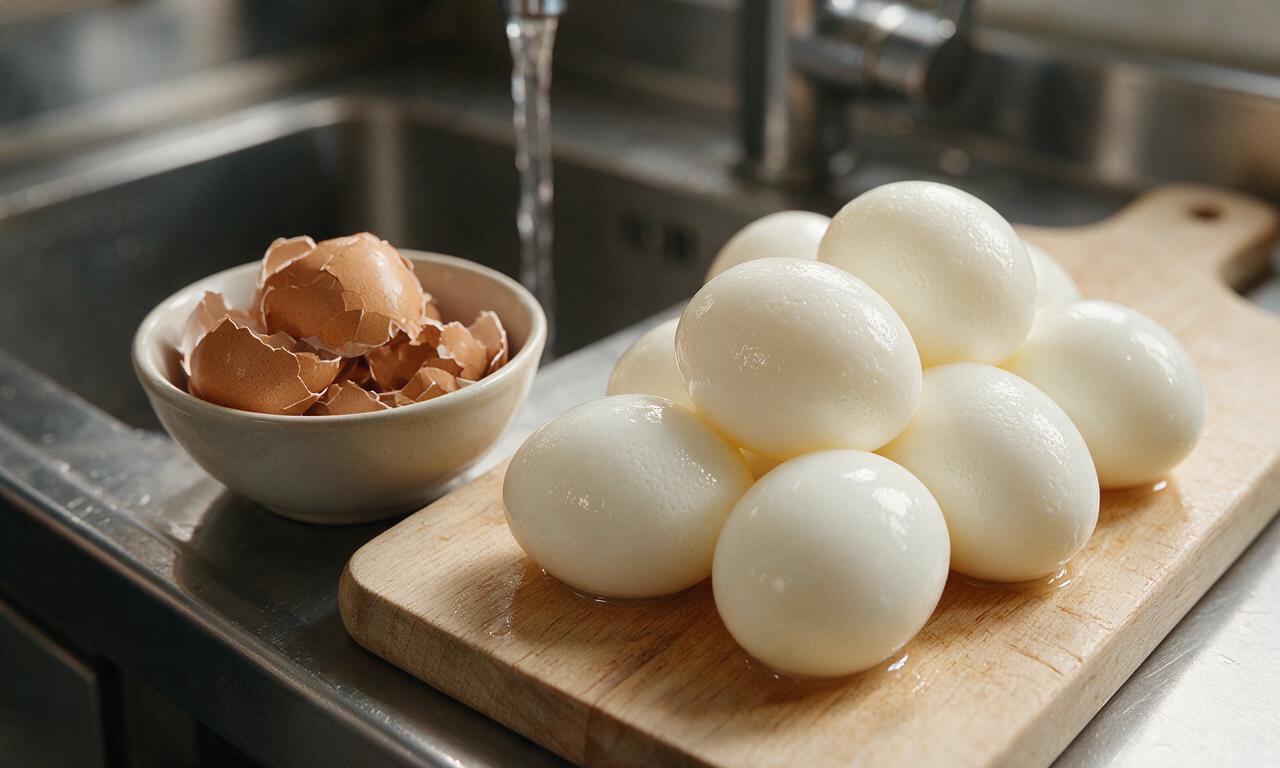
Yes, 100%! The brine can’t penetrate the porous egg shell to infuse that signature tangy-sweet beet flavor and bright magenta color if the shells are left on. Peel your fully cooled hard-boiled eggs completely, and give them a quick rinse to remove any tiny shell fragments before submerging them.
5.What’s the best way to hard-boil eggs so they peel easily for this recipe?
▾
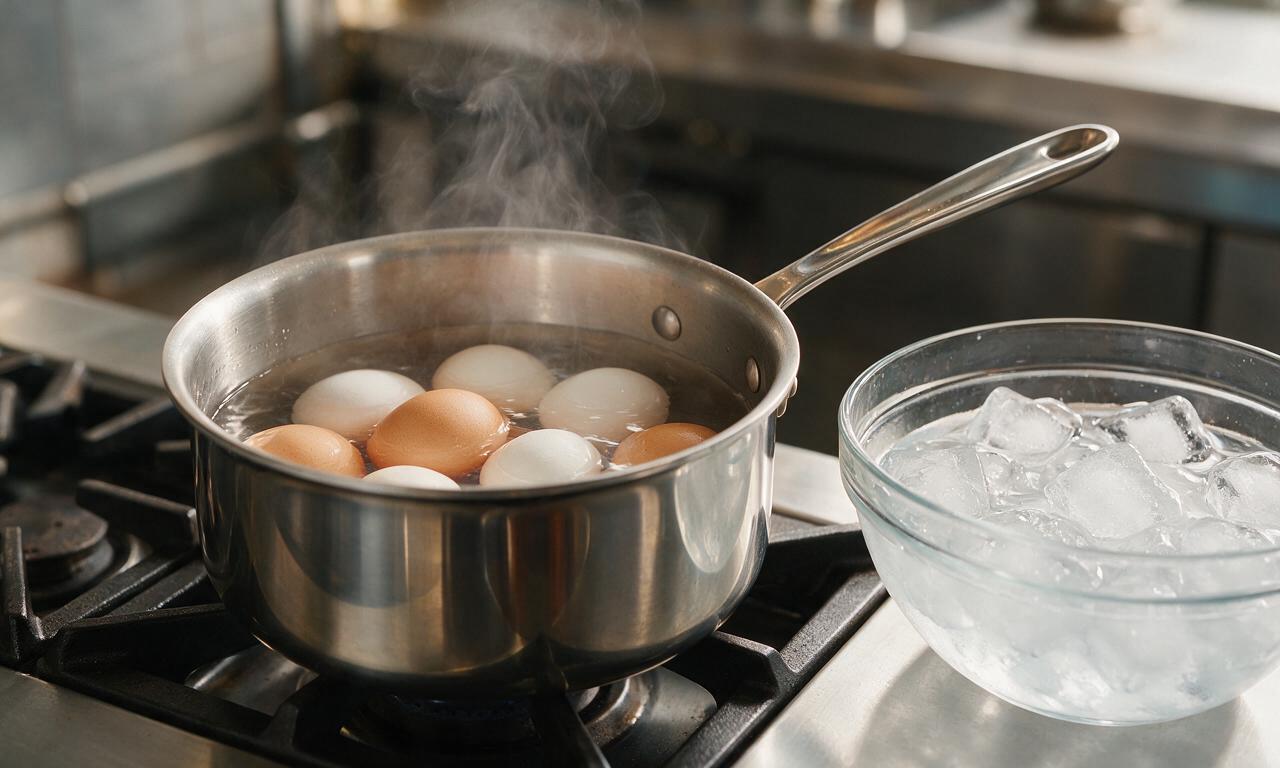
Start with eggs that are 1 to 2 weeks old, as fresher eggs stick stubbornly to their shells. Lower them into boiling water, cook for 9 minutes, then plunge immediately into an ice water bath for 10 minutes to stop cooking and loosen the membrane, making peeling fast and frustration-free.
6.Can I cut back on the granulated sugar to make these less sweet?
▾
You can adjust the sugar to taste, but keep in mind the classic PA Dutch profile balances bright apple cider vinegar tang with a noticeable sweet note. If you cut sugar by more than ⅓, the brine will be overly sharp and sour, rather than the well-rounded flavor that makes this dish a potluck favorite.
7.Do I have to cook the brine before pouring it over the eggs and beets?
▾
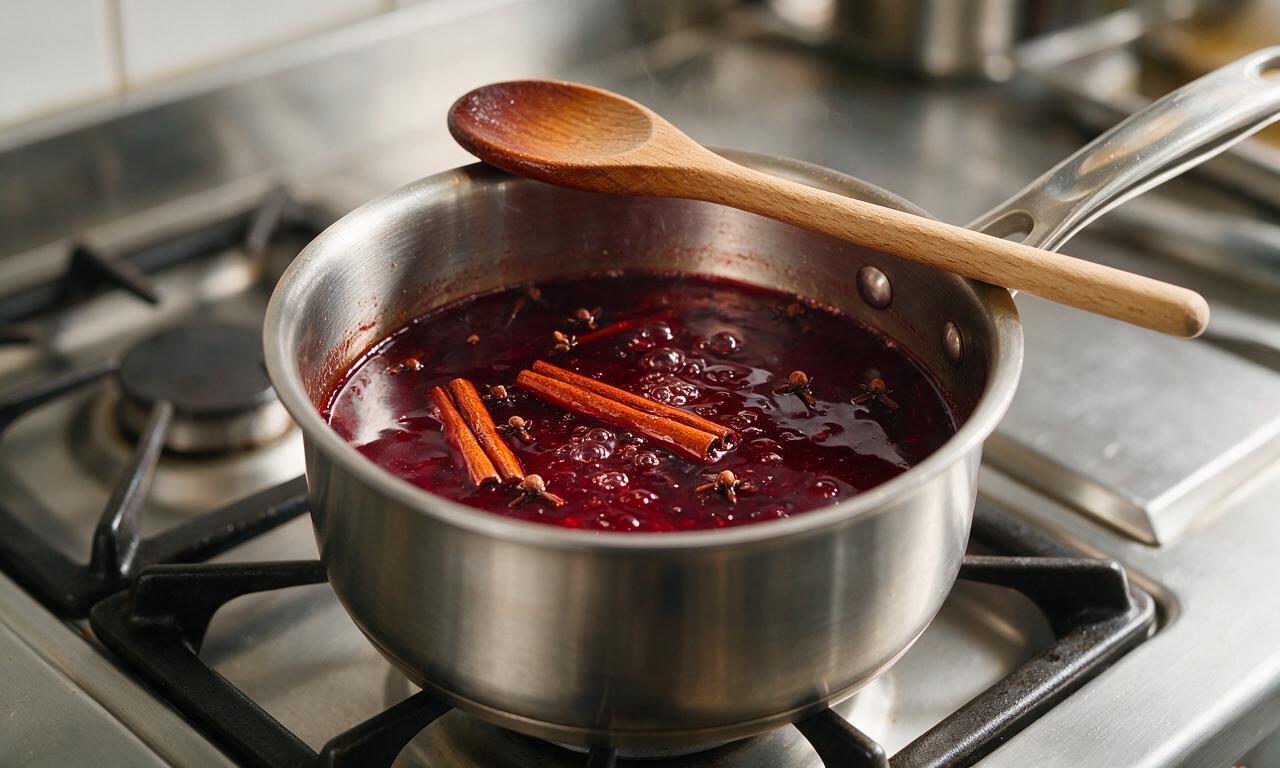
Yes, heating the apple cider vinegar, sugar, reserved beet juice, and sliced onion together just until the sugar fully dissolves helps meld flavors quickly and lets the onion mellow slightly. Let the brine cool completely to room temperature first, so you don’t cook the egg whites and leave them unpleasantly rubbery.
8.Why is yellow onion used in this recipe instead of red or white onion?
▾
Thinly sliced yellow onion has a mild, slightly sweet, well-rounded flavor when pickled that doesn’t overpower the beets and eggs, which is exactly the profile traditional PA Dutch recipes call for. Red onion adds a sharper bite, while white onion has a harsher, astringent note that throws off the classic balance.
9.Can I add extra spices to the brine for more flavor?
▾
Traditional recipes keep the flavor profile simple, but you can add small amounts of mild pickling spices if you like—think 1 teaspoon of whole black peppercorns, 2 whole cloves, or a small bay leaf. Skip strong spices like cinnamon sticks or hot peppers, as they will overpower the delicate beet and egg flavor.
10.Do I need to use a special type of jar to store these pickled eggs?
▾
Stick to non-reactive, airtight glass jars, like standard canning jars with tight-fitting lids, for best results. Metal containers will react with the acidic apple cider vinegar brine, leaving an off metallic taste and discoloration. Make sure the jar is tall enough to keep all eggs fully submerged under the brine.
11.Why are my pickled beet eggs coming out rubbery?
▾
Rubberiness almost always comes from one of two common mistakes: either you overcooked your hard-boiled eggs initially (cooking longer than 10 minutes makes whites tough), or you poured hot brine directly over cold eggs instead of letting it cool fully first. Fix those steps for perfectly firm, not rubbery, eggs every time.
12.Can I make these beet eggs with plain white pickling vinegar instead of apple cider vinegar?
▾
Stick to unfiltered apple cider vinegar for the authentic PA Dutch flavor, as its mellow, fruity tang pairs perfectly with sweet beets and sugar. Plain white pickling vinegar is much sharper and harsher, and will make the brine taste overly acidic without that subtle fruity depth the classic recipe is known for.
13.Are these red beet eggs served cold, or can I eat them warm?
▾
Traditional PA Dutch red beet eggs are always served thoroughly chilled, straight from the fridge. Serving them cold highlights their snappy, firm egg white texture and bright, refreshing tangy-sweet flavor. They’re a longstanding potluck and church supper staple that holds up well when kept chilled on a serving platter.
14.How thick should I slice the yellow onion for the brine?
▾
Slice your yellow onion into ¼-inch thick half-moons for the best texture and flavor. Super thin slices will turn mushy after a few days in the brine, while thick, chunky slices won’t release their mild, sweet onion flavor evenly. The pickled onion slices are tasty to serve right alongside the eggs and beets, too!
15.Why isn’t the beet brine coloring my eggs evenly?
▾
Uneven color usually happens if eggs aren’t fully submerged under the brine the entire pickling time, or if you don’t gently rotate the jar once a day. If eggs float up above the liquid, weigh them down with a small glass pickling weight, and flip the sealed jar slowly daily to circulate brine for uniform magenta color.
16.Can I use sugar substitutes to make a lower-sugar version of these eggs?
▾
You can use a granulated sugar substitute that measures 1:1 like sugar for a lower-sugar batch, but note the texture and flavor will be slightly different than the traditional recipe. Avoid liquid sweeteners like honey or maple syrup, as they make the brine cloudy and throw off the classic tangy-sweet balance.
17.Do I need to process these jars in a water bath canner to make them shelf-stable?
▾
No, this is a refrigerator pickled recipe, not a shelf-stable canned good. The acid levels aren’t calibrated for safe room-temperature storage, even if you water bath process the jars. Keep them sealed in the fridge the entire time, and skip home canning to avoid risk of foodborne illness.
18.What are the best ways to serve traditional PA Dutch red beet eggs?
▾
Serve them chilled as a simple side dish alongside cold cuts, potato salad, and coleslaw for a classic PA Dutch spread. You can also slice them to top green salads, chop them into egg salad for a colorful twist, or serve them as a tangy, protein-packed snack with a light sprinkle of salt and pepper.
19.Can I reuse the leftover beet brine to make another batch of eggs?
▾
You can reuse the brine for one extra batch, but note the second round will have a milder flavor and paler color, since some of the sugar, vinegar, and beet pigment gets absorbed by the first batch. Top it off with a splash of extra vinegar and pinch of sugar if needed, and discard the brine after the second use for food safety.

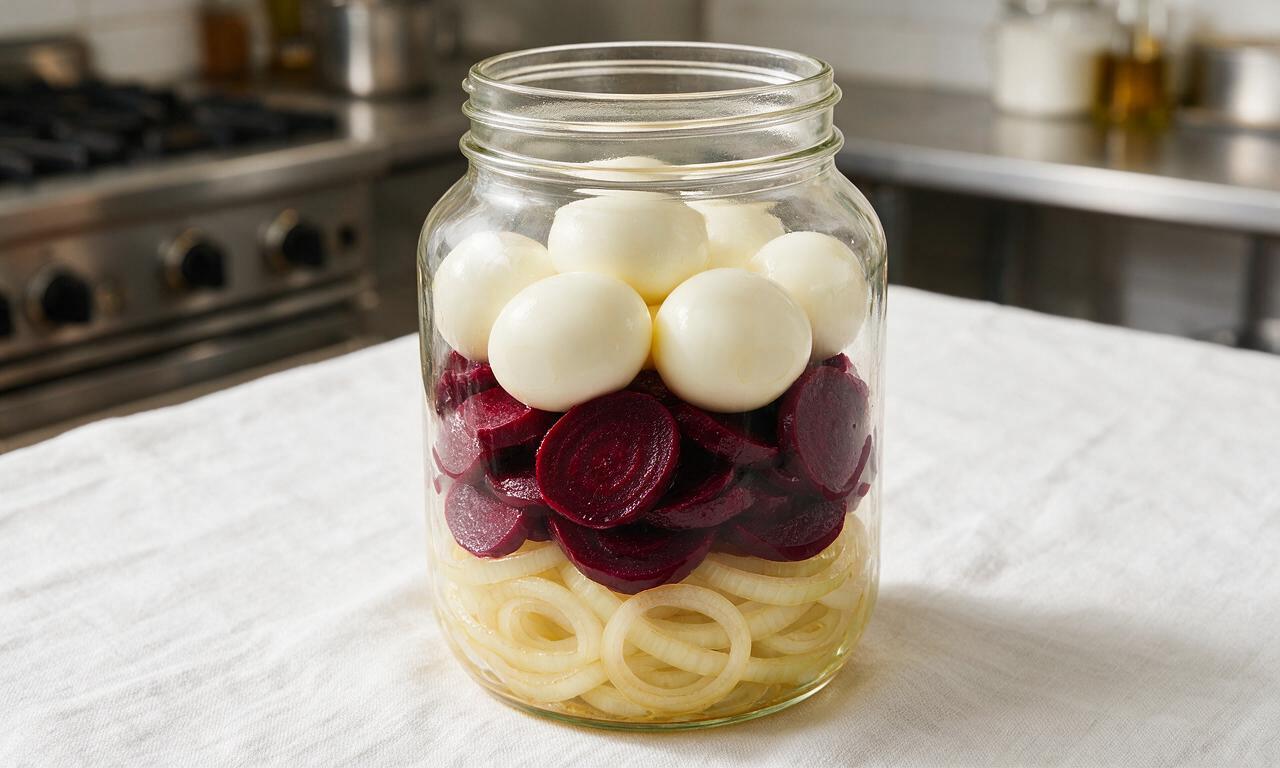
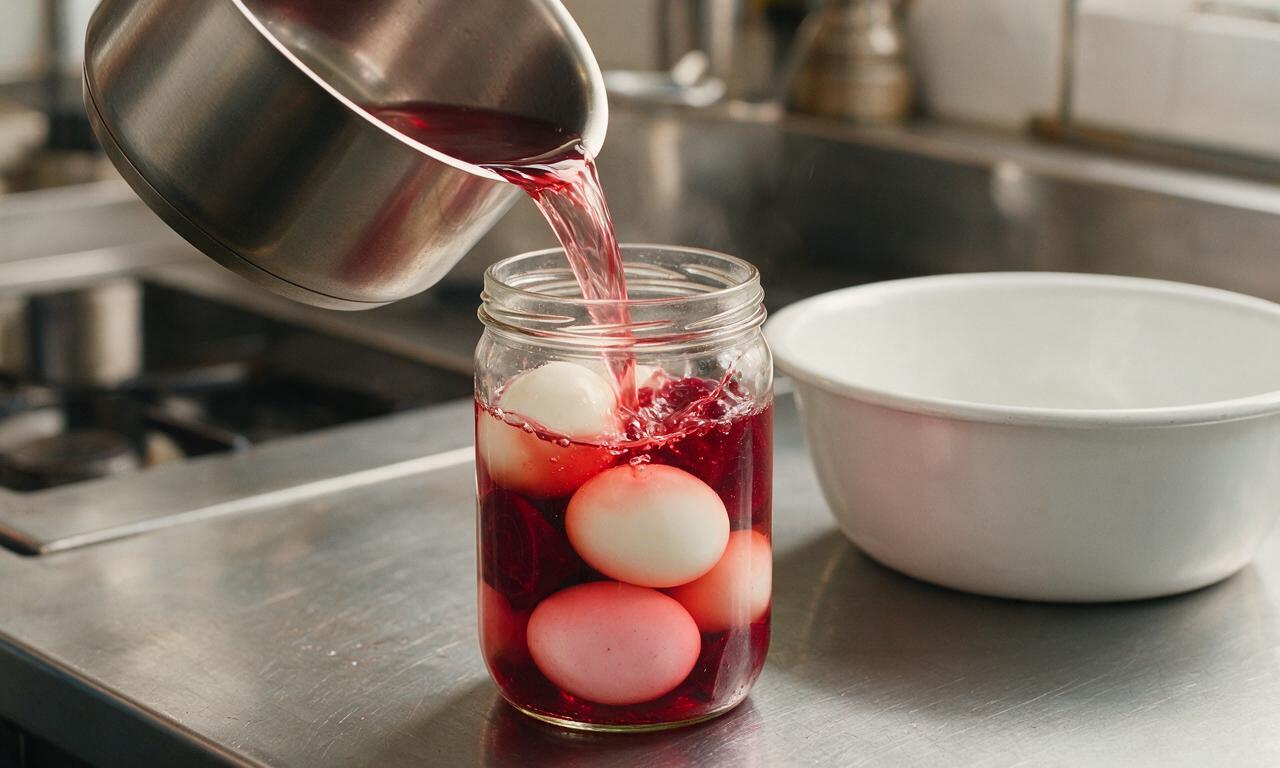
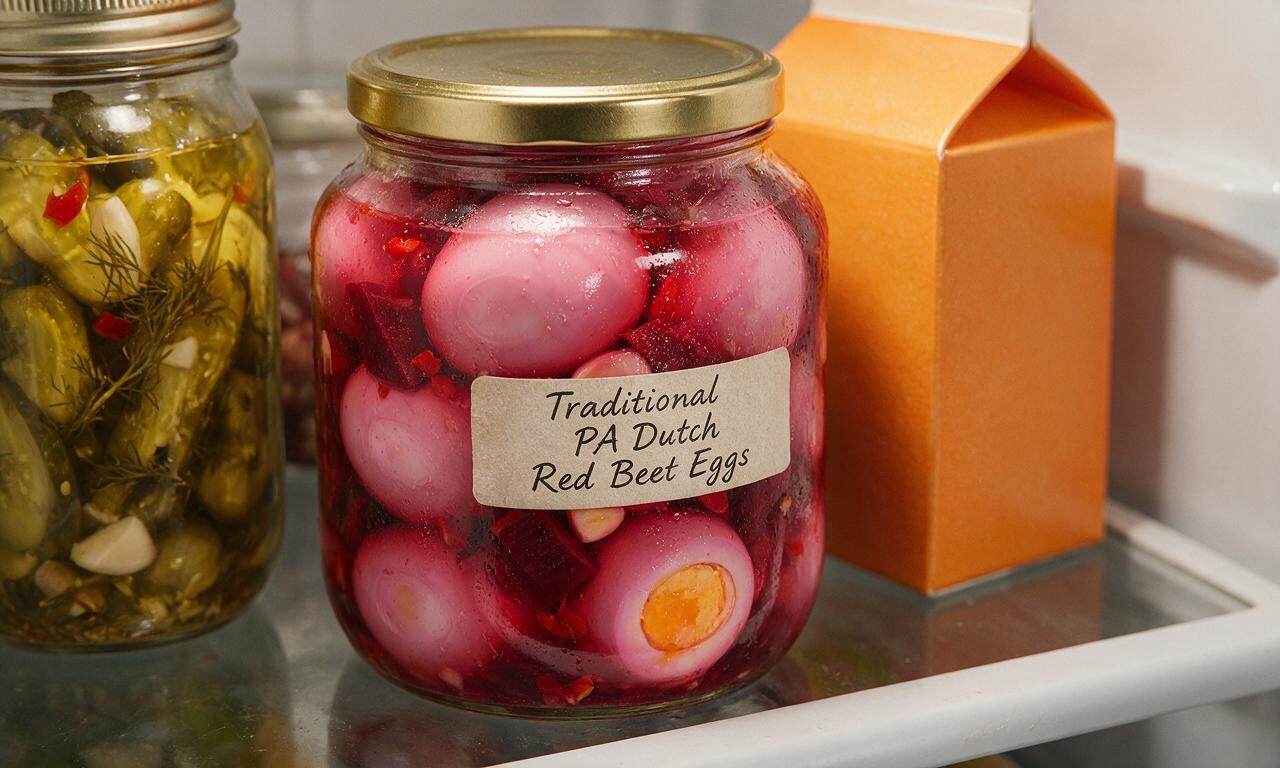

OMG these are SO good! My grandma used to make PA Dutch red beet eggs every Easter and I’ve been chasing that flavor for years. This recipe is spot on! I brought a jar to our church potluck last Sunday and people were begging me for the recipe before service even ended. Pro tip: don’t skip the 48 hour pickling time, I snuck one at 24 hours and it was fine but the flavor is so much deeper after the full wait. 10/10 will make again!
Game changer for meal prep! I make a batch of these every other week to keep in the fridge for quick protein snacks and salad toppers. They’re tangy, a little sweet, and that bright pink color makes every meal feel more fun. My teen even grabs them on his way out to practice instead of chips now, total mom win. Super easy to throw together too, the active cook time is totally accurate at 30 minutes – most of that is just waiting for the brine to cool!
Tried these for the first time last week after seeing a TikTok about PA Dutch picnic foods, and they were a hit at our family cookout! Only thing is, my eggs came out a little more pale pink than the deep red in the photo – did I do something wrong? I let them pickle the full 48 hours like the recipe said.
My kids loved it! I was worried they’d turn their noses up at pickled eggs but the bright pink color totally sold them. They thought it was so cool that the eggs turned pink, and they kept asking for seconds at dinner last night. I added a little extra clove to the brine because I love that warm spice note, and it was chef’s kiss. So easy even a beginner can pull this off, no fancy skills required.
Solid recipe, tastes exactly like the ones I used to get at the little farmers market outside Lancaster when I was a kid. Only note: if you like extra tang, swap a quarter cup of the water for extra apple cider vinegar, it kicks it up a notch. I left a batch in the fridge for almost a week once and they still tasted great, so don’t stress if you don’t eat them all right away.
I made these for a neighborhood block party last weekend and they were gone in 20 minutes flat! Everyone was raving. Quick question though: how long do these actually last in the fridge after the 48 hour pickling time? I wanna make a big batch but I don’t want them to go bad before I can eat them all! Also, can I reuse the brine for a second batch of eggs?