
sage sauce
intro
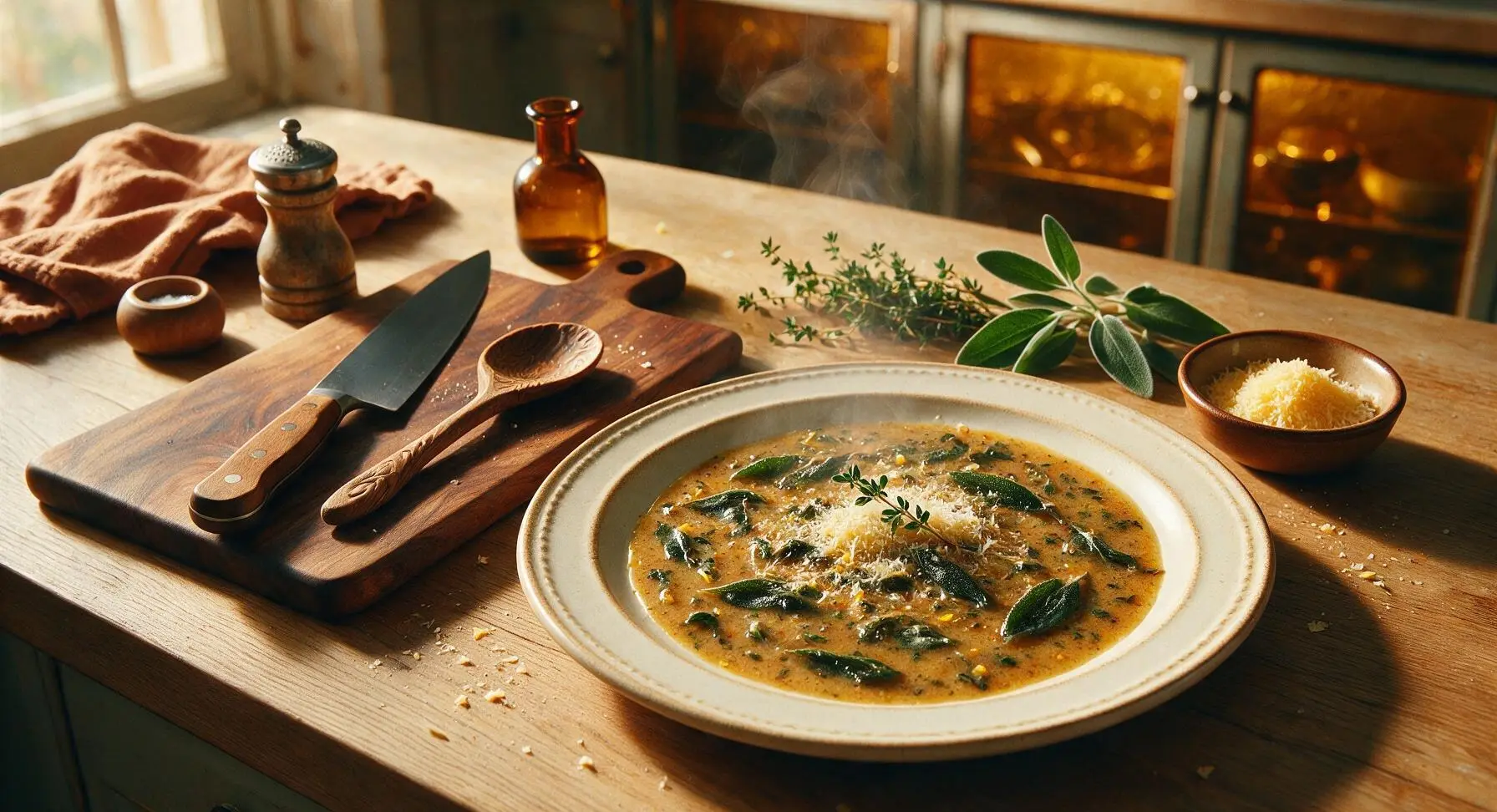
Rich, nutty brown butter infused with earthy crisp sage, brightened with a squeeze of fresh lemon. This quick, classic sauce elevates pasta, roasted turkey, and fall vegetables with minimal effort.
Ingredients
Steps
Prep Aromatics First
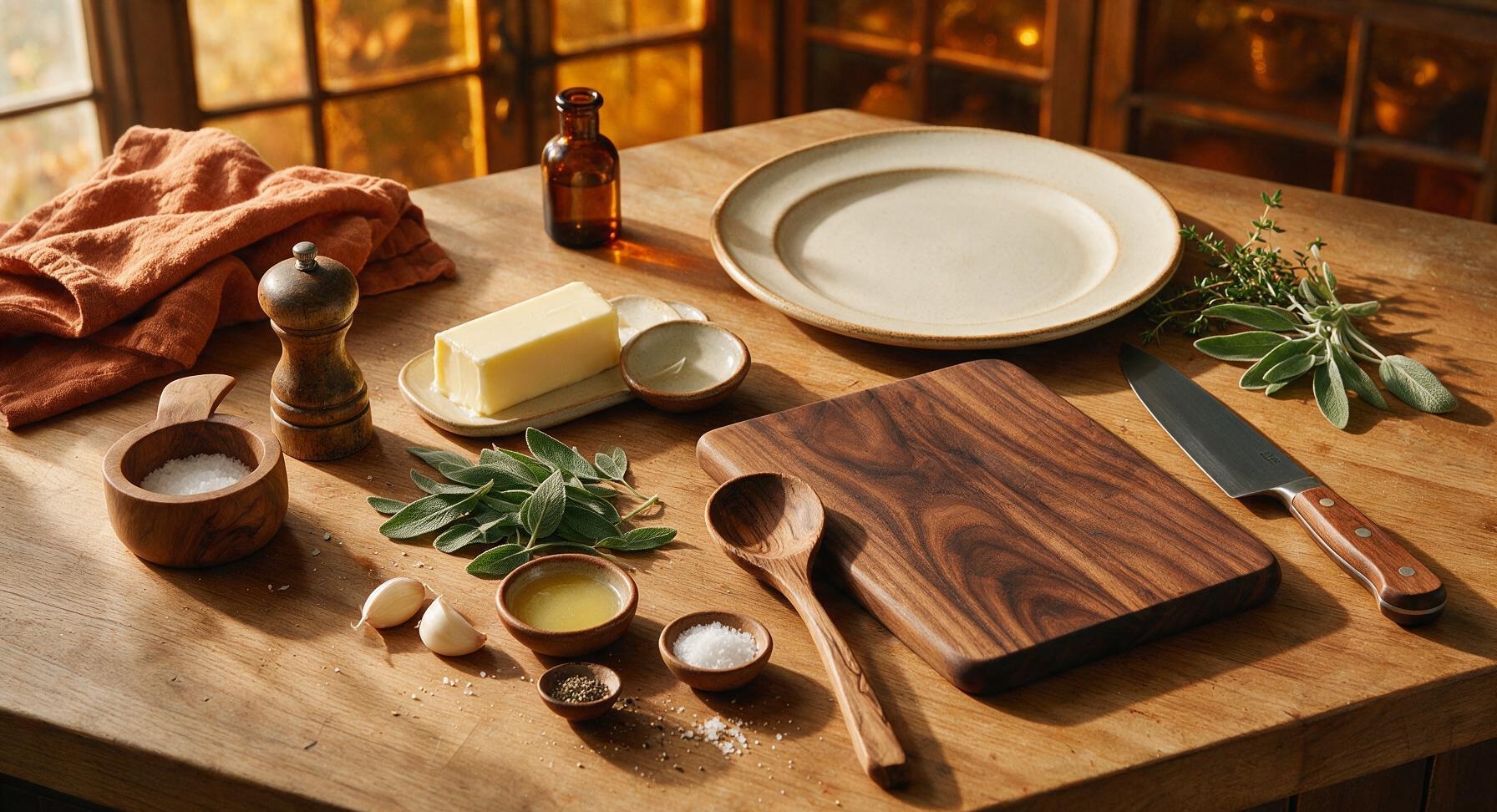
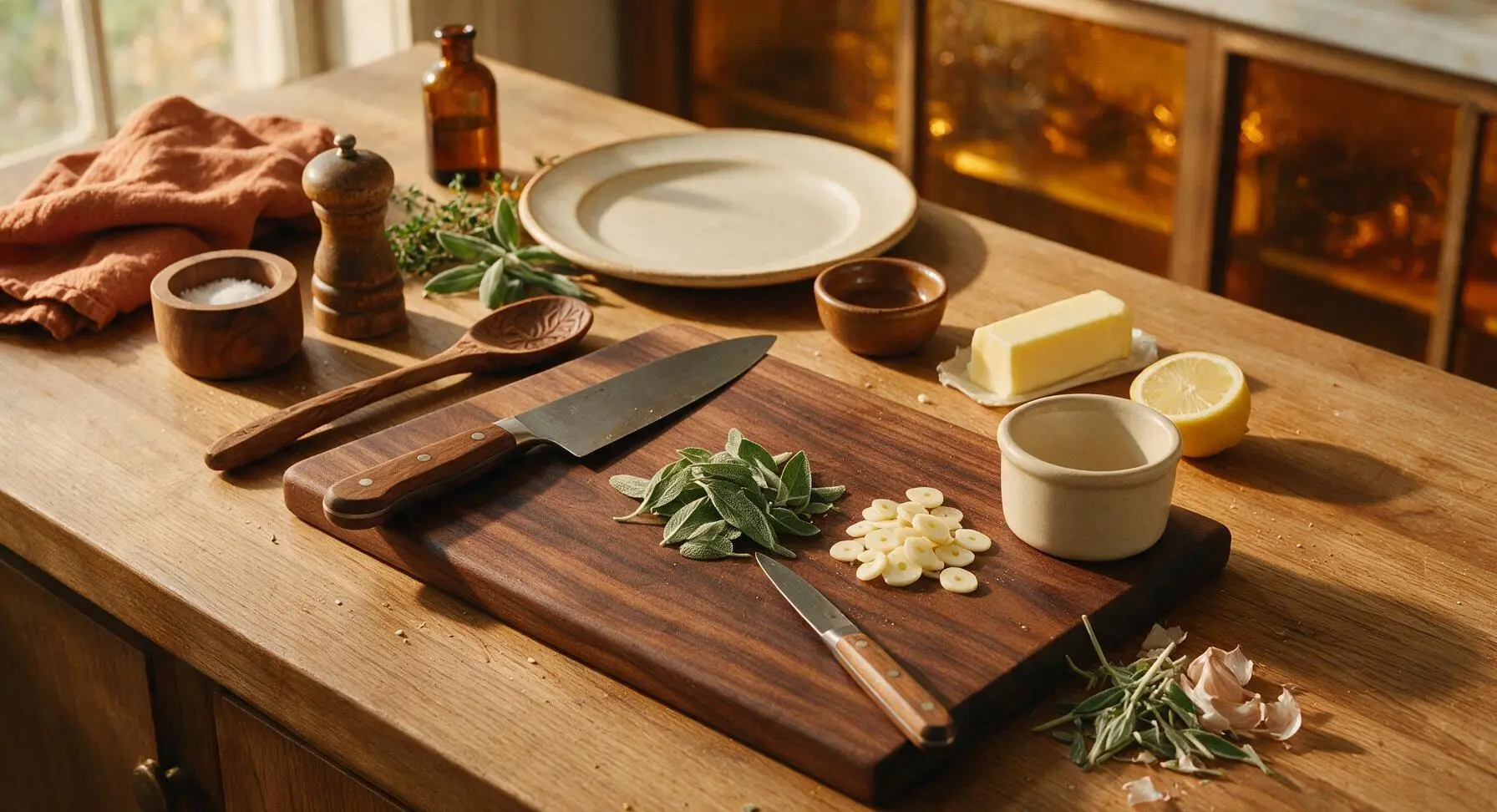
Place the acacia wood cutting board in the prep area left of the induction cooktop. Pick 20 intact, unblemished fresh sage leaves from the back-right sage bunch, discarding any wilted or browned leaves and tough stems. Use the paring knife to thinly slice the 2 garlic cloves into 1mm thick rounds, discarding the dry papery skins. Place prepped whole sage leaves and sliced garlic into the small matte cream ramekin set on the right edge of the cutting board. This prep takes approximately 10 minutes, with no heat applied.
Melt Butter Gently
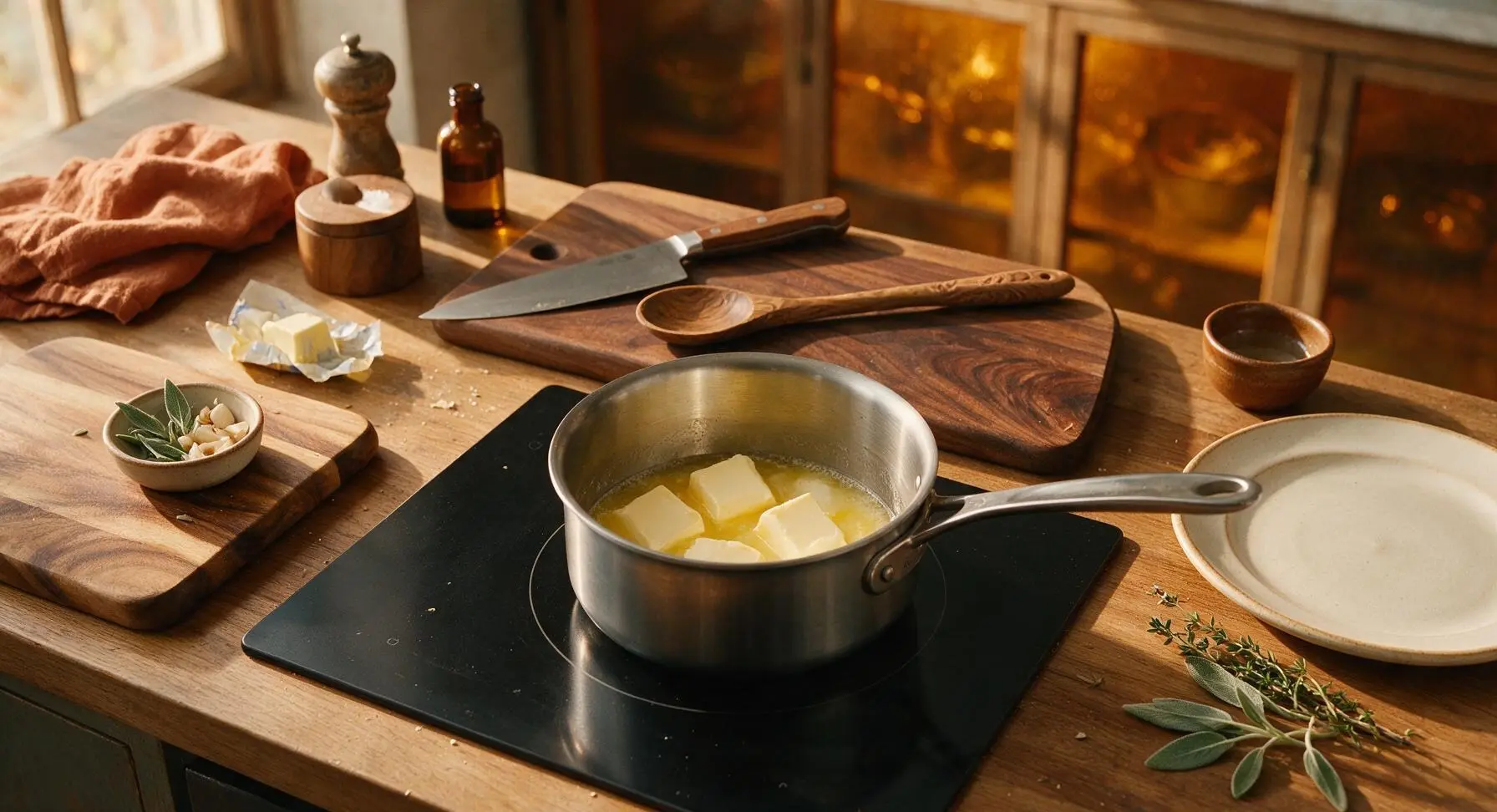
Retrieve the 1.5-quart stainless steel saucepan and place it centered on the matte black induction cooktop. Set heat to medium-low (300°F / 150°C). Unwrap the stick of unsalted butter, cut it into 4 equal tablespoon-sized pieces with the paring knife, and add the pieces to the pan. Melt slowly, swirling the pan occasionally, for 3-4 minutes until the butter is fully liquid and covered in a layer of fine, pale foam. Do not let the butter brown at this stage.
Fry Sage Leaves Crisp
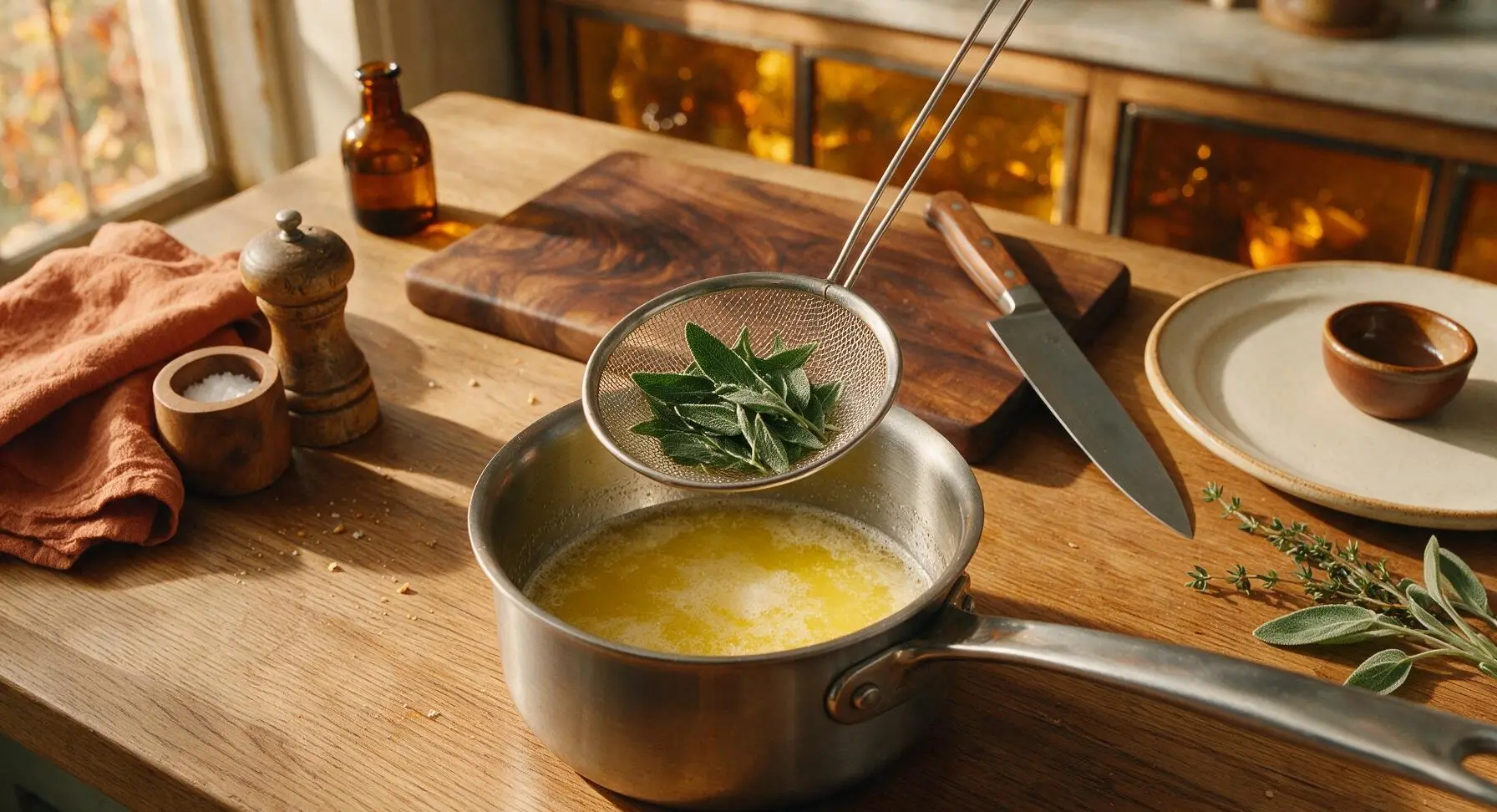
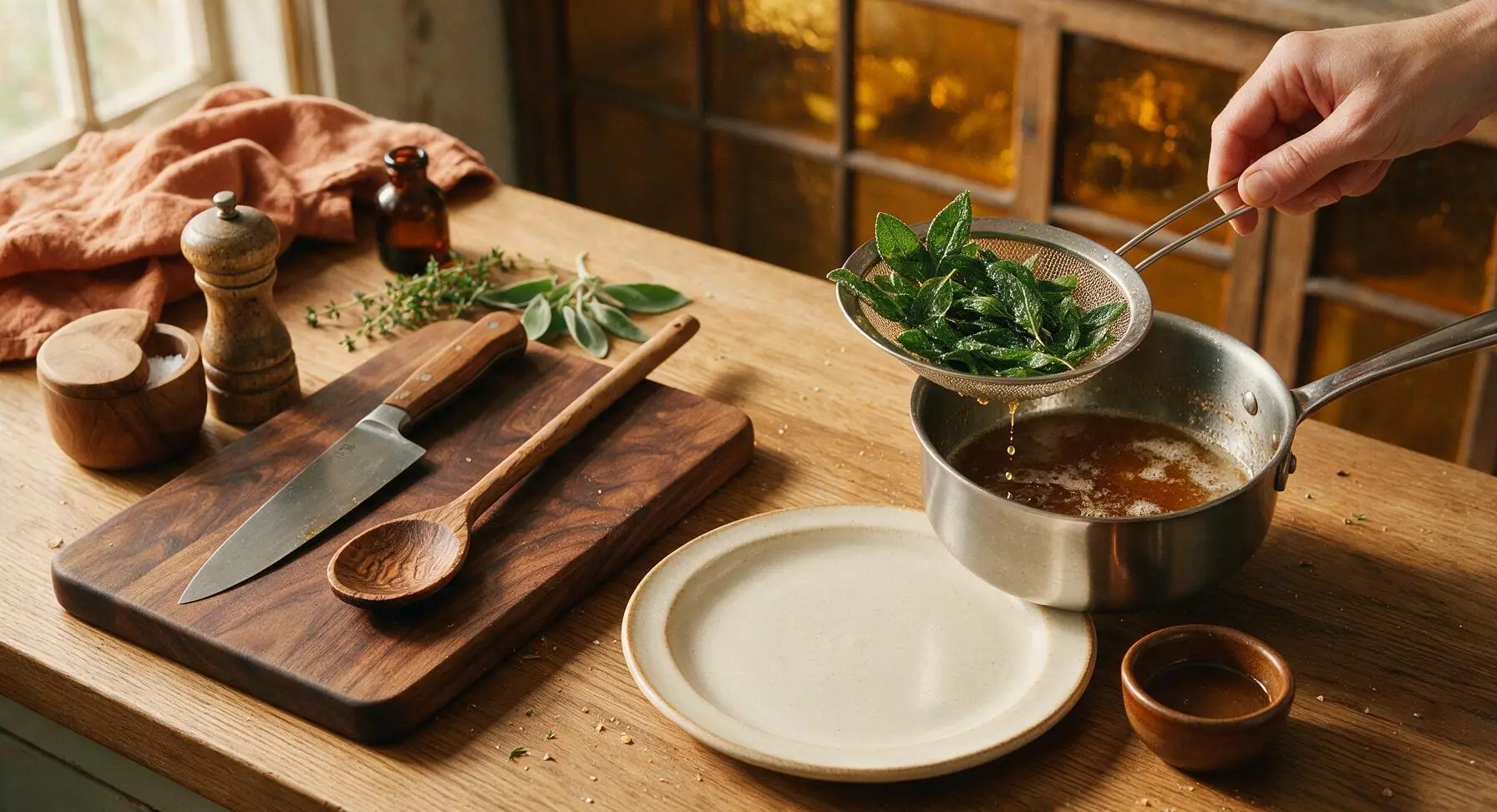
Once the butter is fully melted and foaming lightly, retrieve the fine-mesh stainless steel skimmer spoon. Add all whole prepped sage leaves from the ramekin to the hot butter. Fry for 15-20 seconds, using the skimmer to gently turn the leaves once halfway through, until the leaves are bright deep green and slightly curled at the edges. Do not let the leaves turn dark brown or black, as they will develop a bitter, charred flavor. Use the skimmer to lift the fried sage leaves out of the butter, letting excess butter drip back into the pan, and set the leaves on the empty corner of the acacia cutting board to drain, leaving the sage-infused butter in the pan.
Brown Butter Slowly
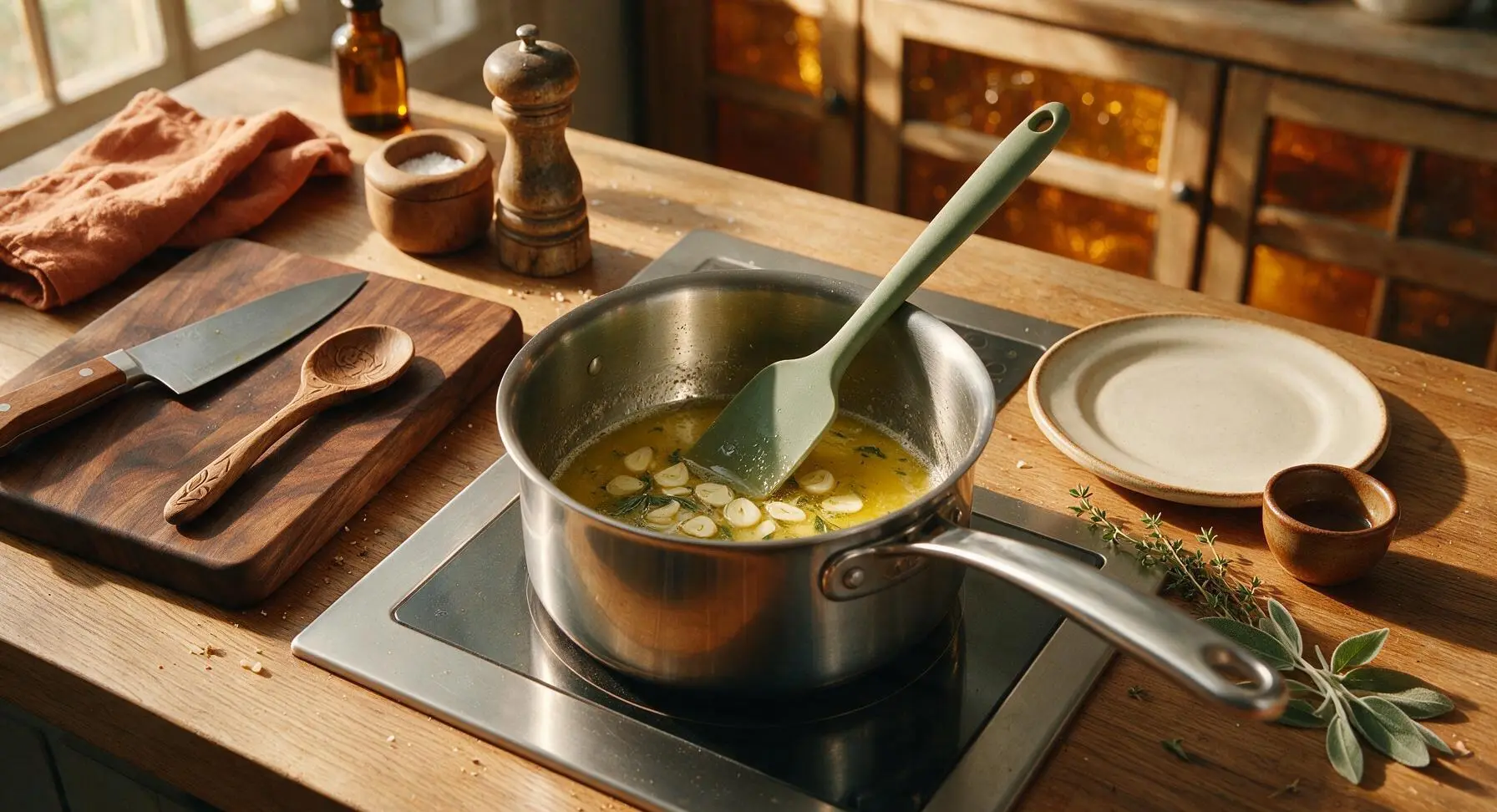
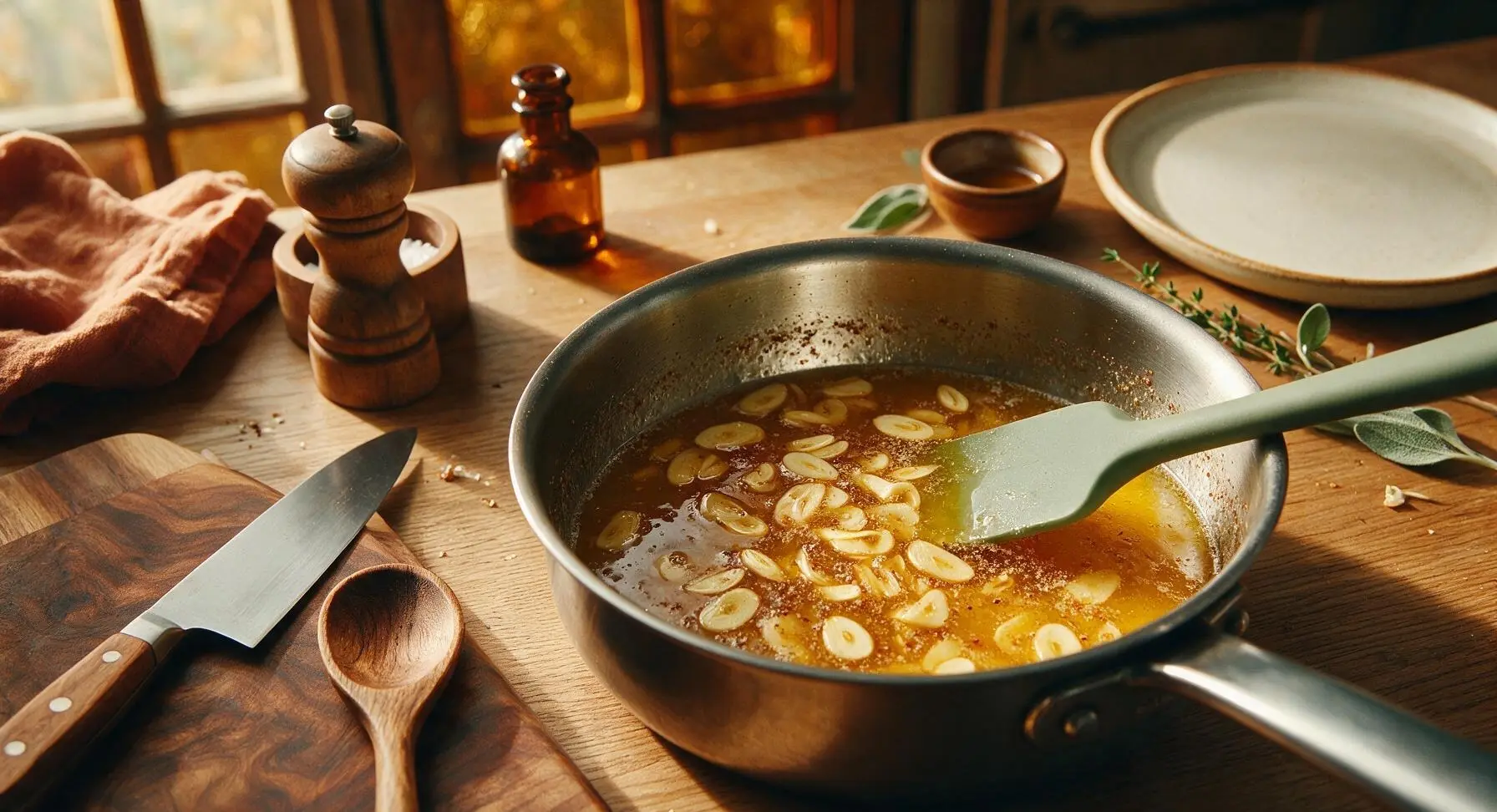
Retrieve the muted sage green silicone spatula. Keep the cooktop on medium-low heat, and add the thinly sliced garlic from the ramekin to the sage-infused butter. Cook, stirring and swirling the pan constantly with the silicone spatula, for 3-4 minutes. Watch closely as fine golden specks (toasted milk solids) begin to form on the pan bottom, and the butter develops a rich, nutty, toasted aroma. Immediately remove the pan from the induction cooktop the second the milk solids turn deep golden amber—these solids burn in as little as 20 seconds if left unattended.
Season and Balance
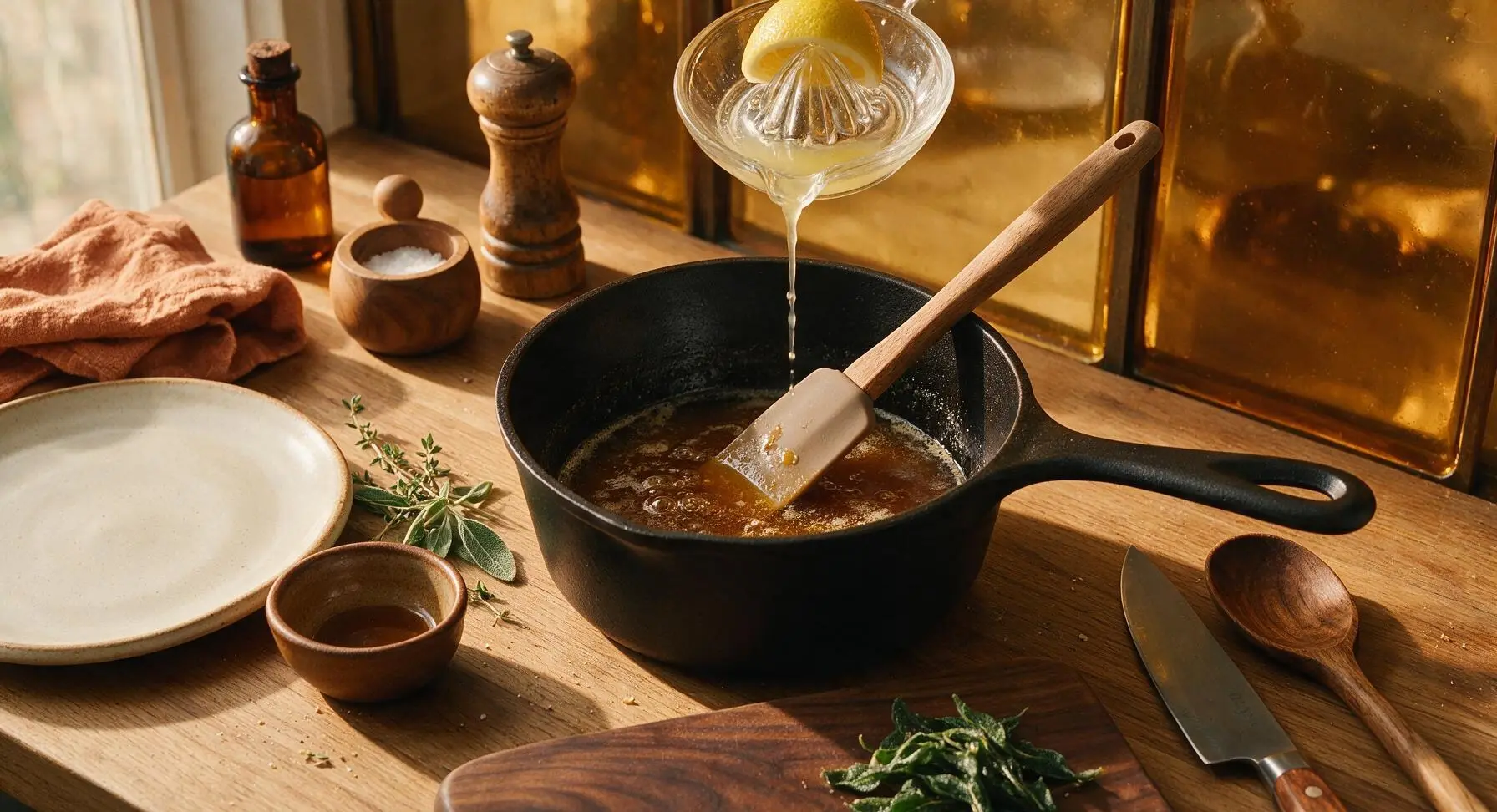
Squeeze 1 teaspoon of fresh lemon juice from the half lemon using the glass juicer, and add it to the warm brown butter. Add 1/4 teaspoon kosher salt from the salt cellar and 1/8 teaspoon freshly ground black pepper from the pepper grinder. Stir gently with the silicone spatula to fully combine all seasonings. Taste a small drop of the sauce on the tip of the spatula, and add a pinch more salt if needed to brighten the sage flavor. Do not return the pan to heat after adding lemon juice, as high heat can cause the butter to separate and turn greasy.
Return Crisp Sage
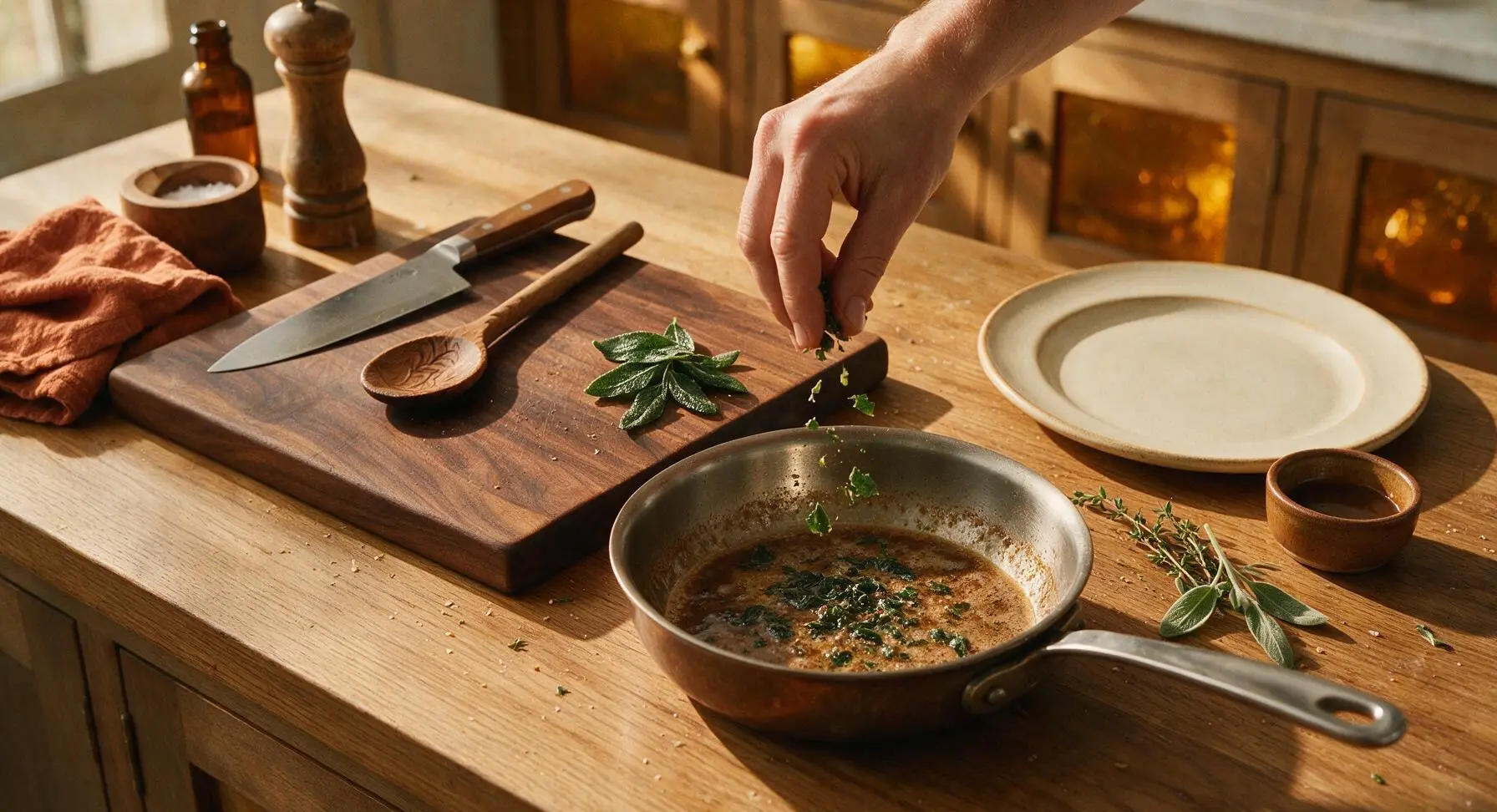
Select 4-5 of the most intact, perfectly curled fried sage leaves from the pile on the cutting board and set them aside to use as garnish. Crumble the remaining fried sage leaves into small, irregular pieces between your fingers, and drop the crumbled pieces back into the seasoned brown butter. Stir gently with the silicone spatula to distribute the crumbled sage evenly throughout the sauce, creating a speckled green and gold appearance.
Transfer to Serve
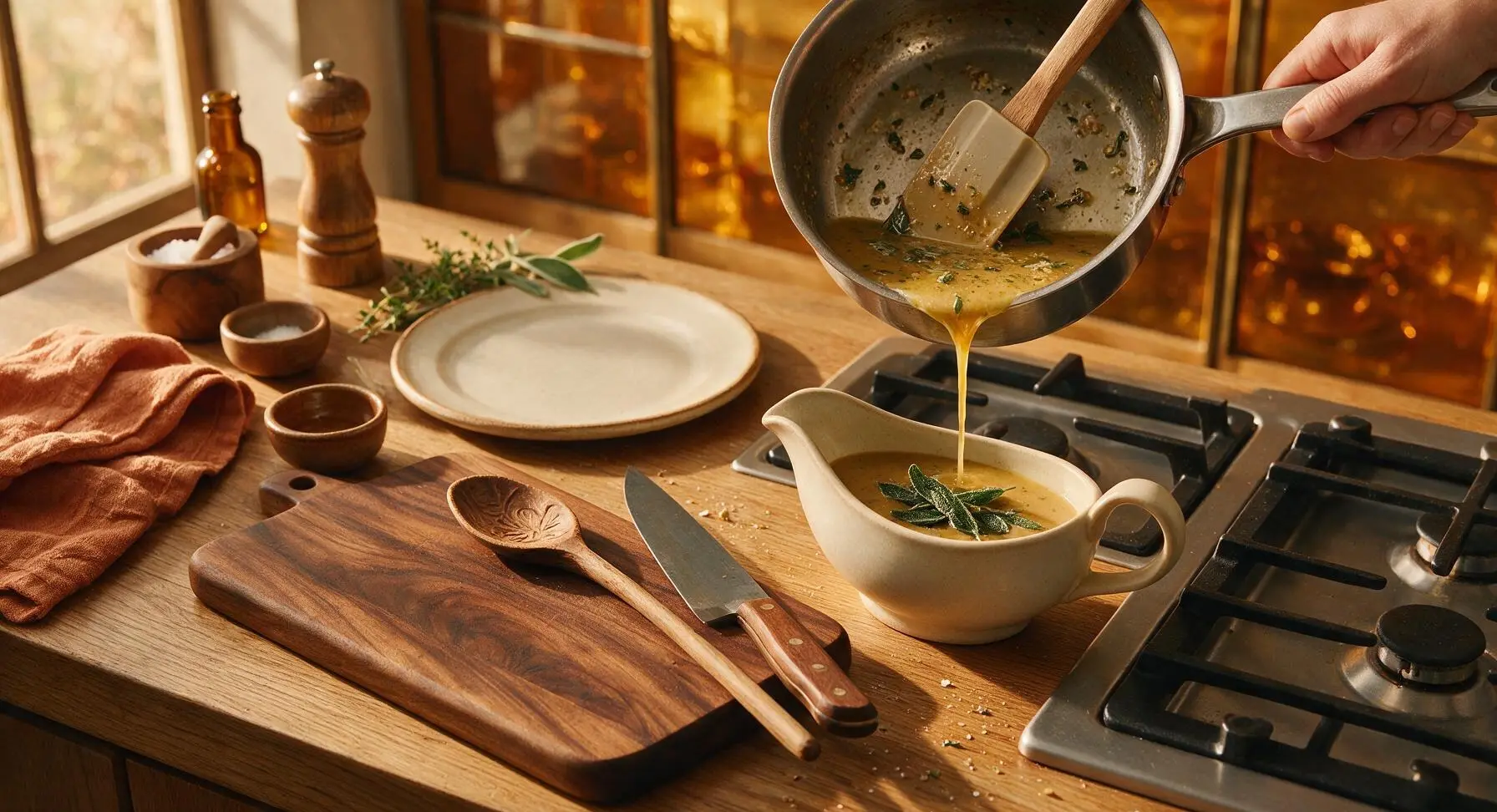
Retrieve the matte cream ceramic sauce boat and place it on the counter to the right of the cooktop. Carefully pour the warm sage sauce from the saucepan into the sauce boat, using the silicone spatula to scrape all the golden toasted milk solids and crumbled sage from the pan bottom into the dish. Arrange the reserved whole fried sage leaves across the top of the sauce as a garnish. Serve immediately while warm, paired with pumpkin ravioli, roasted Thanksgiving turkey, seared pork chops, or roasted butternut squash.
Tips
2.Fry sage leaves for no longer than 20 seconds: leaves turn bitter and unpleasant the moment they turn dark brown or black. Perfectly fried sage is bright deep green, crisp, and has a mild, earthy aroma without any charred notes.
3.If serving the sauce with pasta, stir in 2 tablespoons of starchy, salted pasta water right before tossing: the starchy water emulsifies the brown butter into a silky, clingy coating that sticks to noodles instead of pooling as a greasy layer at the bottom of the bowl.




OMG this brown butter sage sauce is a GAME CHANGER! I tossed it with roasted butternut squash ravioli for our Sunday family dinner and even my super picky 7 year old asked for seconds. It only took 8 minutes total, no fancy ingredients? Total weeknight win. 10/10 will be making this on repeat all fall.
Made this for a potluck last night and people were literally asking me for the recipe before they even finished their first bite. Nutty, fragrant, just the right amount of sage—SO good. I added a tiny pinch of red pepper flakes for a little kick and it slapped. Don’t skip toasting the butter just until it smells like nuts, that’s the secret.
This sauce was so easy to whip up for my meal prep this week! My only note is that I burned my first batch of butter because I looked away for 10 seconds oops. Second batch came out perfect though, and it’s amazing on roasted sweet potatoes and gnocchi. Any tips for how to store leftover sauce?
First time making brown butter anything and I was shocked how simple this was! Poured it over pan-seared pork chops last night and my wife said it tasted like something from a fancy steakhouse. Who knew 8 minutes and a handful of ingredients could make something that impressive?
Obsessed! I’m vegan so I swapped the regular butter for a high-quality vegan butter and used fresh sage from my windowsill planter, and it came out absolutely divine. Tossed it with roasted Brussels sprouts and quinoa for a quick weeknight lunch, no regrets. So glad I found this easy recipe!
Wait I’m a total beginner and I was so nervous I’d mess this up, but it was actually so easy? The nutty smell of the butter when it’s done is chef’s kiss. I put it on store-bought cheese ravioli and my roommate thought I ordered takeout from that fancy Italian place downtown lmao. Only thing is I wish I made more, we ate all of it in one sitting.